A Kinder, Gentler Internet: Youtube Algorithm Screens Comments

youtube_commentsThere’s scarcely a soul among us who hasn’t watched a video on YouTube. But have you ever stuck around long enough to read the comments section? It’s like a leper colony for the mind, a vindication for misanthropes everywhere. And after many years of being at the forefront of rudeness, racism, and generalized dumbassery, the YouTube comment section is getting a clean up.

Whereas the old system worked by placing the latest comments at the top nearest the video, regardless of their relevance or lack of redeeming content. The new system will employ a series of algorithms to determine what each viewer will find most relevant. This includes comments from your friends, from the video creator, and from “popular personalities” (i.e. celebs of one type or another).

youtube_convoBut it doesn’t stop there. Currently, since comments are displayed as they come in, making the act of following a conversation difficult at best. But from now on, the site will feature threaded conversations, which is consistent with Google policy, the site’s now owners. As for private conversations, the new platform will be powered by Google+, allowing users the option of deciding who they want their posts and videos to be visible to.

Additionally, there will be a sort of cross-posting between YouTube and Google+. If you post a YouTube video on Google+ and some one comments on it there, the comment will show up on the video over at YouTube, too. Alternatively, they could choose to have their comment only show up on YouTube, or only show up on Google+. There’s a lot more control.

googleplus-conversation

But perhaps most importantly of all, there are new filters that will be in place. As it stands, YouTube commenters enjoy total anonymity, which allows them to post racist, sexist, homophobic and vitriolic comments without fear. And while content creators can choose to allow all or no comments, or manually approve each comment, this is completely impractical for videos that garner millions of views a week.

But now, YouTube is introducing filters that will make it easier. The new filters basically allow content creators to not only be able to assign people to an Approved list or a Blocked list (which will auto-approve or auto-reject comments, respectively), they will be able to add keywords to a Blacklist. This will flag comments that contain those words and send them into a special list which can be reviewed and approved/rejected later.

ConversationPrism_2880x1800The threaded comments feature and began to be put into effect a little over a week ago. Filters were made available at the same time for channel pages only, but in the months to come they’ll become available for every individual video, giving content creators and commenters more control over the conversations they participate in. Basically, it will still be YouTube, but with some Facebook-like privacy and content filters.

And while many might deplore these new rules as an example of heavy handed “internet censorship”, there are many more who believe this change is overdue in coming. And given that the control rests with the users, who have the ability to share or be private, and to filter specific kinds of content, the basic spirit of a democratic, open forum remains.

Source: gizmodo.com

The Future is Here: Self-Healing Polymer

t1000I’ve heard of biomimetics – machinery and synthetics that can imitate organic materials – but this really takes the cake! In an effort to pioneer components and devices that would posses the regenerative powers of skin, a Spanish researcher Ibon Odriozola – who works for the CIDETEC Centre for Electrochemical Technologies in Spain – has created a polymer that could lead to a future where repairing machinery is as easy as suturing an open wound.

Comprised of a poly (urea-urethane) elastomeric matrix, the material is basically a network of complex molecular interactions that will spontaneously cross-link to “heal” most any break. In this context, the word “spontaneous” means that the material needs no outside intervention to begin its healing process, no catalyst or extra reactant.

healing-polymer-headerTo experiment with the material, Odriozola cut a sample in half with a razor blade at room temperature. And in just two hours, the cut healed itself with 97% efficiency. The reaction, called a metathesis reaction, has led Odriozola to dub the material his “Terminator” polymer, in reference to you-know-who (pictured above). Though the transition process takes a little longer, and involves polymers instead of metal, the basic principle is the same.

Unlike other self-healing materials, this one requires no catalyst and no layering. In addition to being very impressive to behold, this technology can extend the life spans of plastics that are under regular stress.  The group’s main goal now is to make a harder version, perhaps one that could be formed into such parts itself. As it exists today, the polymer is squishy and somewhat soft.

???????????In addition, a good self-healing material like this is a boon for ongoing efforts to find a viable material for artificial skin. Self-healing technology could also open the door to growth materials, as new units of the matrix could be incorporated as the material stretches and tears on the microscopic level. This would be especially useful when it comes to artificial skin, since it could grow over time and remove the need for replacement.

And if the healing mechanism proves strong enough, it could even be used as an adhesive or a sealant in other materials and even electronics. Just think of it! Everything from windows, to personal devices, to joints that are in need of padding. A simple injection of this type of material, and the breaks and aches go away. And given the progress being made with androids and life-like robots, its use as a source for artificial skin could go a long way to making them anthropomorphic.

And as usual, there’s a cool demonstration video. Enjoy!


Source: extremetech.com

News From Space: The Weird Atmospheres of Titan and Io

alien-worldStudying the known universe is always interesting, mainly because you never know what you’re going to find. And just when you think you’ve got something figured out – like a moon in orbit around one of the Solar Systems more distant planet’s – you learn that it can still find ways to surprise you. And interestingly enough, a few surprises have occurred back to back in recent weeks which are making scientists rethink their assumptions about these moons.

The first came from Io, Jupiter’s innermost moon and the most volcanically active body in the Solar System. All told, the surface has over 400 volcanic regions, roughly 100 mountains – some of which are taller than Mount Everest – and extensive lava flows and floodplains of liquid rock that pass between them. All of this has lead to the formation of Io’s atmosphere, which is basically a thin layer of toxic fumes.

Io_mapGiven its distance from Earth, it has been difficult to get a good reading on what the atmosphere is made up of. However, scientists believe that it is primarily composed of sulfur dioxide (SO2), with smaller concentrations of sulfur monoxide (SO), sodium chloride (NaCl), and atomic sulfur and oxygen. Various models predict other molecules as well, but which have not been observed yet.

However, recently a team of astronomers from institutions across the US, France, and Sweden, set out to better constrain Io’s atmosphere. Back in September they detected the second-most abundant isotope of sulfur (34-S) and tentatively detected potassium chloride (KCl). Expected, but undetected, were molecules like potassium chloride (KCl), silicone monoxide (SiO), disulfur monoxide (S2O), and other isotopes of sulfur.

Io_surfaceBut more impressive was the team’s tentative of potassium chloride (KCl), which is believed to be part of the plasma torus that Io projects around Jupiter. For some time now, astronomers and scientists have been postulating that Io’s volcanic eruptions produce this ring of plasma, which includes molecular potassium. By detecting this, the international team effectively found the “missing link” between Io and this feature of Saturn.

Another find was the team’s detection of the sulfur 34-S, an isotope which had previously never been observed.  Sulfur 32-S had been detected before, but the ratio between the 34-S and 32-S was twice that of what scientists believed was possible in the Solar System. A fraction this high has only been reported once before in a distant quasar – which was in fact an early galaxy consisting of an intensely luminous core powered by a huge black hole.

These observations were made using the Atacama Pathfinder Experiment (APEX) antenna – a radio telescope located in northern Chile. This dish is a prototype antenna for the Atacama Large Millimeter Array (ALMA). And while Io is certainly an extreme example, it will likely help terrestrial scientists characterize volcanism in general – providing a better understanding of it here on Earth as well as outside the Solar System.

TitanThe second big discovery was announced just yesterday, and comes from NASA’s Cassini space probe. In its latest find investigating Saturn’s largest moon, Cassini made the first off-world detection of the molecule known as propelyne. This simple organic compound is a byproduct of oil refining and fossil fuel extraction, and is one of the most important starting molecules in the production of plastics.

The molecules were detected while Cassini used its infrared spectrometer to stare into the hydrocarbon haze that is Titan’s atmosphere. The discovery wasn’t too surprising, as Titan is full of many different types of hydrocarbons including methane and propane. But spotting propylene has thus far eluded scientists. What’s more, this is the first time that the molecule has been spotted anywhere outside of Earth.

titan_cassiniThese finding highlight the alien chemistry of Saturn’s giant moon. Titan has moisture and an atmosphere, much like our own, except that its rains are made of hydrocarbons and its seas composed of ethane. Scientists have long wanted to explore this world with a boat-like rover, but given the current budget environment, that’s a distant prospect. Still, sales of propylene on Earth are estimated at $90 billion annually.

While no one is going to be mounting a collection mission to Titan anytime soon, it does offer some possibilities for future missions. These include colonization, where atmospheric propylene could be used to compose settlements made of plastic. And when it comes to terraforming, knowing the exact chemical makeup of the atmosphere will go a long way towards finding a way to make it breathable and warm.

And in the meantime, be sure to enjoy this video about Cassini’s latest discovery. With the government shutdown in effect, NASA’s resources remain offline. So we should consider ourselves lucky that the news broke before today and hope like hell they get things up and running again soon!


Sources: universetoday.com, wired.com

Coming Soon: A Universal Flu Vaccine?

flu_vaccineScientists have been making great strides in coming up with treatments and cures for illnesses that were previously thought to be incurable. While some of these are aimed at eliminating pandemics that have taken millions of lives worldwide (such as HIV/AIDS) others are aimed at treating the more common – but no less infectious – viruses, like the common flu.

When it comes to the latter, the difficulty is not so much in creating a cure, as it is a cure all. The flu is a virus that is constantly evolving, changing with the seasons and with each host. This requires medical researchers to constantly develop new vaccines year after year to address the latest strain, as well as specialized vaccines to address different  types – i.e. H1N1, swine, avian bird.

flu_vaccine1Luckily, a research team at Imperial College London say they have made a “blueprint” for a universal flu vaccine. Their report appeared in a recent issue of Nature Medicine. In their report, they specified that the key to creating a universal vaccine lies in targeting the core of the virus, rather than its ever-evolving DNA.

Just last year, researchers at the Friedrich-Loeffler Institute in Riems Island, Germany sought to create a similar vaccine that would target the virus’ RNA structure rather than the key proteins found in the DNA. By contrast, the Imperial researchers set about looking into T-cells, the crucial part of the immune system that is thought to be able to recognize proteins in the core.

2009_world_subdivisions_flu_pandemicTheir research began with a series of clinical examinations of the 2009 swine flu pandemic, which was produced by the combining of earlier strains of pig and bird flu. The team then compared levels of one kind of T-cells at the start of the pandemic with symptoms of flu in 342 staff and students at the university. They showed that the higher the levels of the T-cells a patient had, the milder their symptoms were.

Researchers then teased out the specific part of the immune system that offered some pandemic flu protection and which part of the virus it was attacking. from there, They began developing a vaccine that would trigger the production of these cells – known as CD8 T cells. These cells would attack the invading flu virus, ignoring the outer protein structure and focusing on the core which it had encountered before.

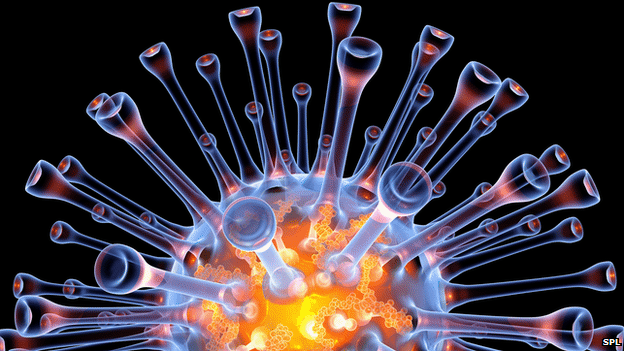
Influenza_virus_2008765Prof Ajit Lalvani, who led the study, told the BBC:

It’s a blueprint for a vaccine. We know the exact subgroup of the immune system and we’ve identified the key fragments in the internal core of the virus. These should be included in a vaccine. In truth, in this case it is about five years [away from a vaccine]. We have the know-how, we know what needs to be in the vaccine and we can just get on and do it.

The benefits of such a vaccine would be profound and obvious. While many of us consider the seasonal flu to be an inconvenience, it is important to note that it kills between 250,000 and 500,000 people worldwide each year. While this is a fraction of the total number of deaths attributed to AIDS (1.6 to 1.9 million in 2010, it is still a significant toll. What’s more, new pandemics have the potential to take doctors by surprise and kill large numbers of people.
t-cellHowever, the Imperial College researchers admit that it is generally harder to develop a T-cell vaccine than a traditional one designed to provoke an antibody response. The challenge will be to get a big enough of a T-cell response to offer protection and a response that will last. So while the blueprint is in place, medical researchers still have a long road ahead of them.

Prof John Oxford, of Queen Mary University of London, put it this way:

This sort of effect can’t be that powerful or we’d never have pandemics. It’s not going to solve all the problems of influenza, but could add to the range of vaccines. It’s going to be a long journey from this sort of paper to translating it into a vaccine that works.

AI-fightingfluWhat’s more, there are concerns that a T-cell vaccine would be limited when it comes to certain age groups. Jenner Institute at Oxford University, explains:

Live attenuated influenza vaccines which are given by nasal spray and will be used in children in the UK from this autumn are much better at increasing the number of influenza-specific T cells, but these vaccines only work in young children who haven’t yet had much exposure to influenza virus, so we need an alternative approach for adults.

Interestingly enough, this approach of stimulating the production of T-cells bears a striking resemblance to the work being done at the Vaccine and Gene Therapy Institute at OHSU, where researchers are working towards a vaccine that could also cure HIV. This research also appeared in Nature Medicine last month.

So not only could we be looking at a cure for both HIV and the flu in the near future, we could be looking at the containment of infectious viruses all over the world. As these two cases demonstrate, advances in medical science towards antivirals appear to be tied at the hip.

Sources: bbc.co.uk, gizmodo.com, nature.com

The Amplituhedron: Quantum Physics Decoded

amplutihedron_spanScientists recently made a major breakthrough that may completely alter our perceptions of quantum physics, and the nature of the universe itself. After many decades of trying to reformulate quantum field theory, scientists at Harvard University discovered of a jewel-like geometric object that they believe will not only simplify quantum science, but even challenge the notion that space and time are fundamental components of reality.

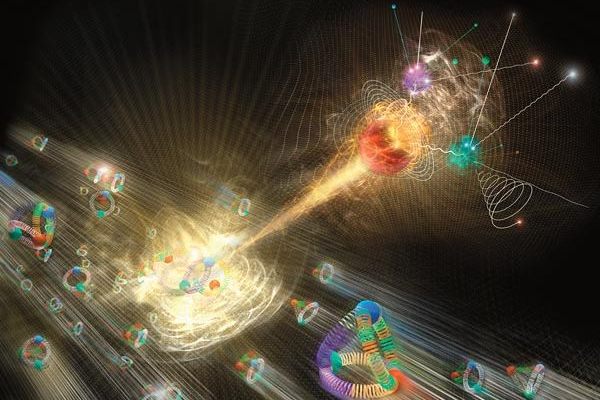
This jewel has been named the “amplituhedron”, and it is radically simplifying how physicists calculate particle interactions. Previously, these Interactions were calculated using quantum field theory – mathematical formulas that were thousands of terms long. Now, these interactions can be described by computing the volume of the corresponding amplituhedron, which yields an equivalent one-term expression.

theory_of_everythingJacob Bourjaily, a theoretical physicist at Harvard University and one of the researchers who developed the new idea, has this to say about the discovery:

The degree of efficiency is mind-boggling. You can easily do, on paper, computations that were infeasible even with a computer before.

This is exciting news, in part because it could help facilitate the search for a Grand Unifying Theory (aka. Theory of Everything) that manages to unify all the fundamental forces of the universe. These forces are electromagnetism, weak nuclear forces, strong nuclear forces, and gravity. Thus far, attempts at resolving these forces have run into infinities and deep paradoxes.

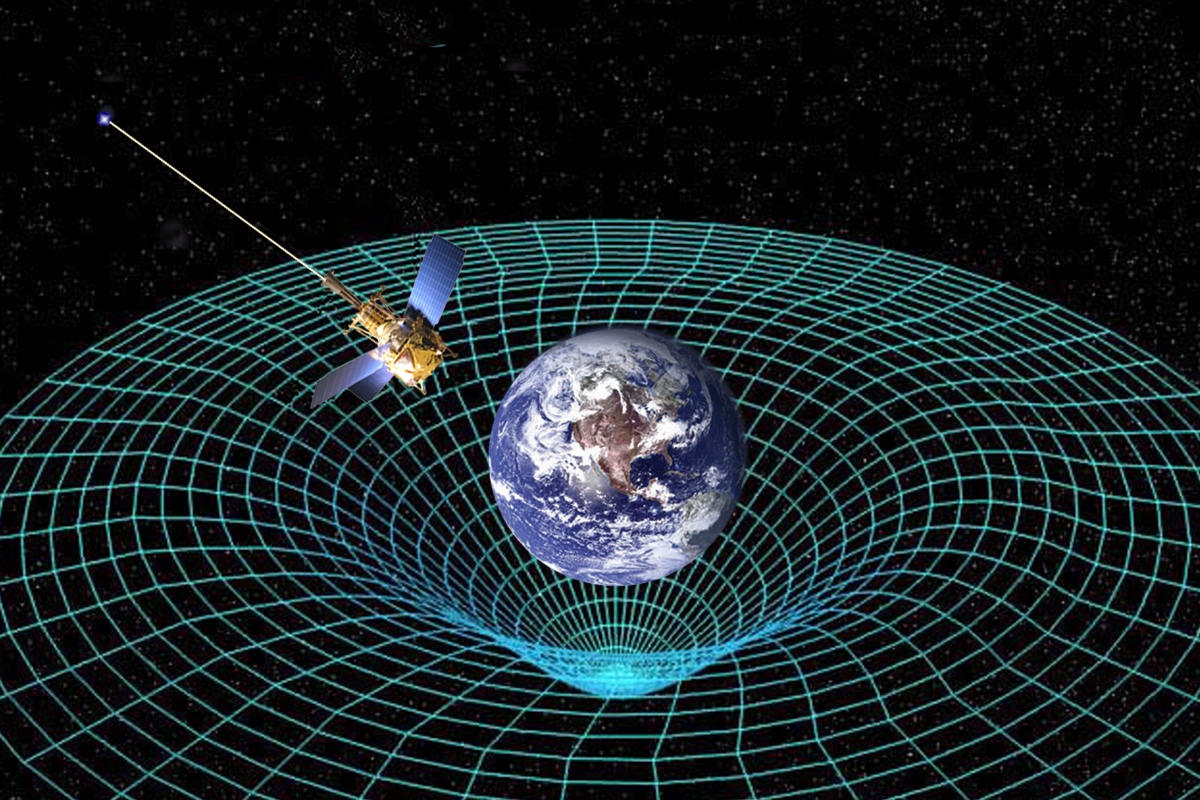
gravityWhereas the field of quantum physics has been able to account for the first three, gravity has remained explainable only in terms of General Relativity (Einstein’s baby). As a result, scientists have been unable to see how the basic forces of the universe interact on a grand scale, and all attempts have resulted in endless infinities and deep paradoxes.

The amplituhedron, or a similar geometric object, could help by removing two deeply rooted principles of physics: locality and unitarity. Locality is the notion that particles can interact only from adjoining positions in space and time, while unitarity holds that the probabilities of all possible outcomes of a quantum mechanical interaction must add up to one.

quantum_field_theoryThe concepts are the central pillars of quantum field theory in its original form, but in certain situations involving gravity, both break down, suggesting neither is a fundamental aspect of nature. As Nima Arkani-Hamed – a professor of physics at the Institute for Advanced Study in Princeton, N.J. and the lead author of the new work – put it: “Both are hard-wired in the usual way we think about things. Both are suspect.”

In keeping with this idea, the new geometric approach to particle interactions removes locality and unitarity from its starting assumptions. The amplituhedron is not built out of space-time and probabilities; these properties merely arise as consequences of the jewel’s geometry. The usual picture of space and time, and particles moving around in them, is a construct.

Photon_follow8And while the amplituhedron itself does not describe gravity, Arkani-Hamed and his collaborators think there might be a related geometric object that does. Its properties would make it clear why particles appear to exist, and why they appear to move in three dimensions of space and to change over time. This is because, as Bourjaily put it:

[W]e know that ultimately, we need to find a theory that doesn’t have [unitarity and locality]. It’s a starting point to ultimately describing a quantum theory of gravity.

Imagine that. After decades of mind-boggling research and attempts at resolving the theoretical issues, all existence comes down to a small jewel-shaped structure. I imagine the Intelligent Design people will have a field day with this, and I can foresee it making it into the new season of Big Bang Theory as well. Breakthroughs like this always do seem to have a ripple effect…

Source: simonsfoundation.org