The Council of Muraqaba – Part I

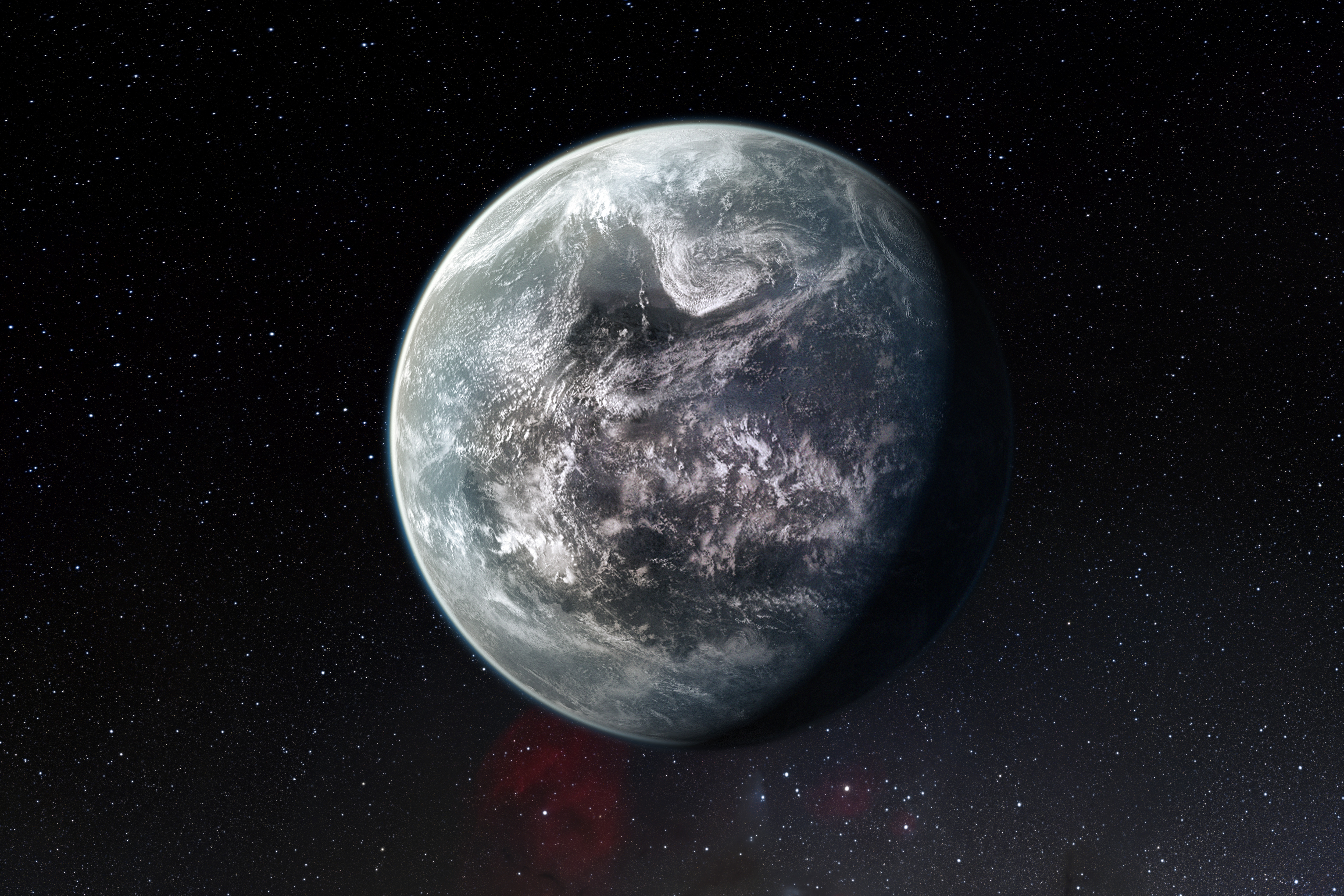
HD_85512_b_(Artists's_impression)Hello all! Now that I’ve finally finished with all my edits and revisions for Papa Zulu, I thought I might get back on the science fiction train and start working on some the ideas that have been piling up in my memory folder. Awhile back, I began proposing dusting off an old idea – the Council of Muraqaba – and making it see light again. And today, I managed to put the finishing touches on the first installment.

To recap, the story takes place in the distant future and is part of the Legacies universe I came up with many years ago. In this universe, Muraqaba is a colony that grew up around an institution started by Sufis seeking relief from the intense and rapid pace of progress taking place in the Core. However, over the course of many generations, it became an interfaith institution connected to the rest of the universe.

Within the Council, all matters pertaining to faith, belief, practice and the spirit could be contemplated and ironed out. People of all walks of life and faith were free to set up an annex in the place, either physically or virtually, and eventually, it would become a beacon for the establishment of a universal religion. But in this particular story, the institute becomes the site of something much more interesting.

Contact with a presence that is something else entirely. After generations of leading all of humanity in the contemplation of higher things, it seems a higher intelligence wants in on the discussion…
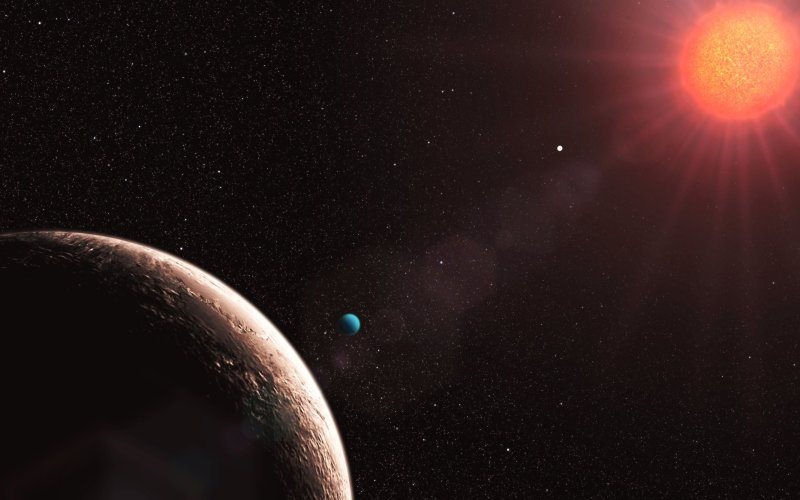
gliese-581-ePlanet Muraqaba, Gliese 581 d
Sol 66, 2278

“If the Qutb is indeed the pole and axis of the universe – a man through whom divine grace did flow – does it follow that men who demonstrated wilaya would have been invincible to attack?”

The specter of Mahdi Grasciano peered intently at the others in the circle, each of which had been rendered flawlessly amidst the background of the Rifa’i. At the moment, the prayer hall was bathed in the faint glow of artificial light, courtesy of the floating embers that ensured the circle could see each other clearly now that nighttime had fallen on the Mosque in real-time.

Standing on the far side of the circle, Imam Selvanayagam hummed thoughtfully and formulated a reply to this latest challenge.

“It does, necessarily, follow. The Qutb could not have been harmed by men, being under the protection of God.”

Grasciano was quick to jump on that:

“Alas, Mohammed, the example of the armed prophet, was unvanquished by men. But Jesus, Socrates, Siddhartha Gautama, and all other candidates mentioned here today, did not share that fate. They succumbed to treachery, judgement, and poisoning, thus demonstrated that they were of mortal condition.”

Imam Koteib, who had been standing quietly by the northeast column, chose to intervene on this point:

“And yet, in An-Nisa, it clearly states ‘but they killed him not, nor crucified him, but so it was made to appear to them, and those who differ therein are full of doubts, with no (certain) knowledge, but only conjecture to follow, for of a surety they killed him not. Nay, Allah raised him up unto Himself; and God is Exalted in Power, Wise.'”

Selvanayagam spoke again.

“Such a circumstance pertains to this one of God’s Prophets, but can it be said to extend to those others as well?”

The heads in the circle turned to Zahawi, who stood at to the south-west end of their circle. Being their host, the one who had selflessly offered the Rifa’i prayer hall to conduct it, his was the place of honor – his back facing towards holy Mecca.

Scratching at the white, wispy beard that covered his chin, he offered what insight he could. “Such a condition could be said to apply, in that all such men triumphed over death in their own fashion. Who can remember the names of the Athenian statesmen who sentenced Socrates to death. And did Sidharta’s wisdom not live on in the absence of his corporeal being?”

Yusuf finally saw an opportunity to offer a point of consensus and spoke from his spot at the east end. “Indeed. Shall it be agreed upon then that the condition of death does not rule out the existence of sanctity?”

“It so shall…” Koteib said, nodding. Grasciano smiled and appeared ready to reply, but the smile quickly faded. His next words sounded almost like a pained admission.

“Hmm, I’m not sure where that leaves us.”

Zahawi also began to look grave and added his voice to Grasciano’s. “Indeed. Have we determined the existence of Qutb, or merely found a way to redefine it?”

A pause followed as each specter groped for something more to add, a comment or illumination that might break the deadlock. Eventually, a number of the Imams began to laugh. There seemed little else to do under the circumstances. Many times, expounding on such matters only served to cloud them further, expanding upon the mystery rather than dispelling it.

One could only laugh in the face of such irony, and perhaps conclude that divine obfuscation was at work. In any case, the debate had run its course, a sort of consensus settling in after many hours of discussion. It now fell to Yusuf to conclude the transmission.

“I would like to thank you all, masters of your turuqs, for your continuing participation in these majalis. In so doing, you are a part of the greatest ongoing spiritual dialogue our species has ever conducted.”

“As-salamu alaykum,” the Imams said in near-unison. Yusuf replied in kind.

“Wa alaykumu al-salam.”

They concluded with the dhikr, citing the appropriate verses and repetition of His name. The simulation began to fade a moment later – the elaborate stone walls and flickering light from the suspended aerodrones that marked the interior of the Rifa’i slowly retreated from his consciousness and was replaced by his true surroundings.

Yusuf became aware of the room, the tall metal panels and the lighting that emerged from behind them, and the cool air like a man waking up from a dream. His mind responded to it all like a harsh reality intruding upon quiet sleep.

As always, he sat on the room’s central dais with his legs crossed, but his knees ached as if he had been upright for some time. The sensation of being offworld was so immersive that he truly felt that he had been standing for hours in an entirely different setting. But of course, that was the point of the experience, and an ongoing cause of concern amongst the more conservative elements in their turuq.

The sound of the door opening behind caught Yusuf’s attention. He turned his head just in time to see Mansur appear in the open doorway.

“Maruf!” he said informally, smiling. “You’re timing is impeccable.”

“I know, Master. I waited until you were finished. I did not wish to disturb you while you were conferring with the others.”

Yusuf slowly stood up and tried his best to hide the sudden sense of chagrin he felt.  It was sometimes difficult to tell how just long a session lasted. Even without the effects of dilation and correcting for local time, hours could feel like days. And knowing Mansur, he could be expected to wait indefinitely.

“So what can I do for you, Maruf?”

“It’s Lusserer, master. She asked that I come find you.”

“Ah, and what does the lady of technical support require of me?”

“Well, sir…” he said delicately. “It’s the signal. We seem to experiencing some trouble.”

“Trouble?” Yusuf stopped, turned to face him. “That’s a little vague, Maruf. Care to elaborate?”

“She did not say,” he replied. “In all truth, master, I don’t think she’s quite sure what the problem is either.”

Yusuf suppressed a scowl. Any sign of misgiving was likely to be taken on by the young Mansur, who was in the habit of taking on his master’s moods and amplifying them by varying degrees. He tried to sound as calm and even as possible as he replied.

“Then I shall go to her forthwith, and see what I can do to help.”

“She would be most pleased by that, I’m sure,” Mansur said and smiled happily. He stood there for a moment, idle and twitchy, as if expecting something more. Another quirk of the young man, always in search of a duty, and always in need of being dispatched before he could tell that a conversation had run its course.

“Perhaps she and I could do with some tea. Would you fetch us some and meet us in the ISIS lounge?”

“Certainly, master!” said the young man, quickly slapping his hands together and issuing a short bow. He was gone quickly after that, letting Yusuf address his own thoughts in private. At the moment, he only had two, and they were vying for just about every inch of his cortex.

A problem with the interstellar array and Lusserer is at a loss, he thought. This must be something of consequence…

The Future is Here: VR Body-Swapping

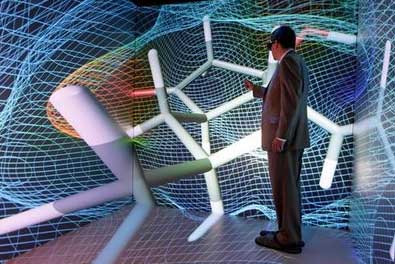
simstimOne of the most interesting and speculative things to come out of the William Gibson’s cyberpunk series The Sprawl Trilogy was the concept of Simstim. A term which referred to “simulated stimulation”, this technology  involved stimulating the nervous system of one person so that they could experience another’s consciousness. As is so often the case, science fiction proves to be the basis for science fact.

This latest case of science imitating sci-fi comes from Barcelona, where a group of interdisciplinary students have created a revolutionary VR technology that uses virtual reality and neuroscience to let people see, hear, and even feel what it’s like in another person’s body. The focus, though, is on letting men and women undergo a sort of high-tech “gender swapping”, letting people experience what it’s like to be in the others’ shoes.

VR_simstim2Be Another Lab is made up of Philippe Bertrand, Daniel Gonzalez Franco, Christian Cherene, and Arthur Pointea, a collection of interdisciplinary artists whose fields range from programming and electronic engineering to interactive system design and neuro-rehabilitation. Together, the goal of Be Another Lab is to explore the concepts of empathy through technology, science, and art.

In most neuroscience experiments that examine issues of empathy and bias, participants “trade places” with others using digital avatars. If a study wants to explore empathy for the handicapped, for example, scientists might sit subjects down in front of a computer and make them play a video game in which they are confined to a wheelchair, then ask them a series of questions about how the experience made them feel.

BeanotherlabHowever, Be Another Lab takes a different, more visceral approach to exploring empathy. Instead of using digital avatars, the group uses performers to copy the movements of a subject. For example, racial bias is studied by having a subject’s actions mirrored by a performer of color. And for something like gender bias, men and women would take a run at living inside the body of one another.

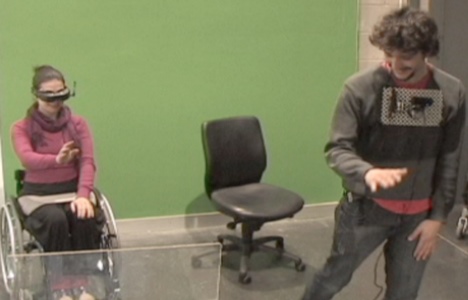
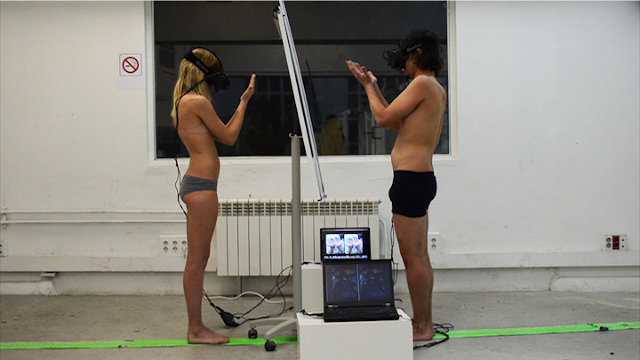
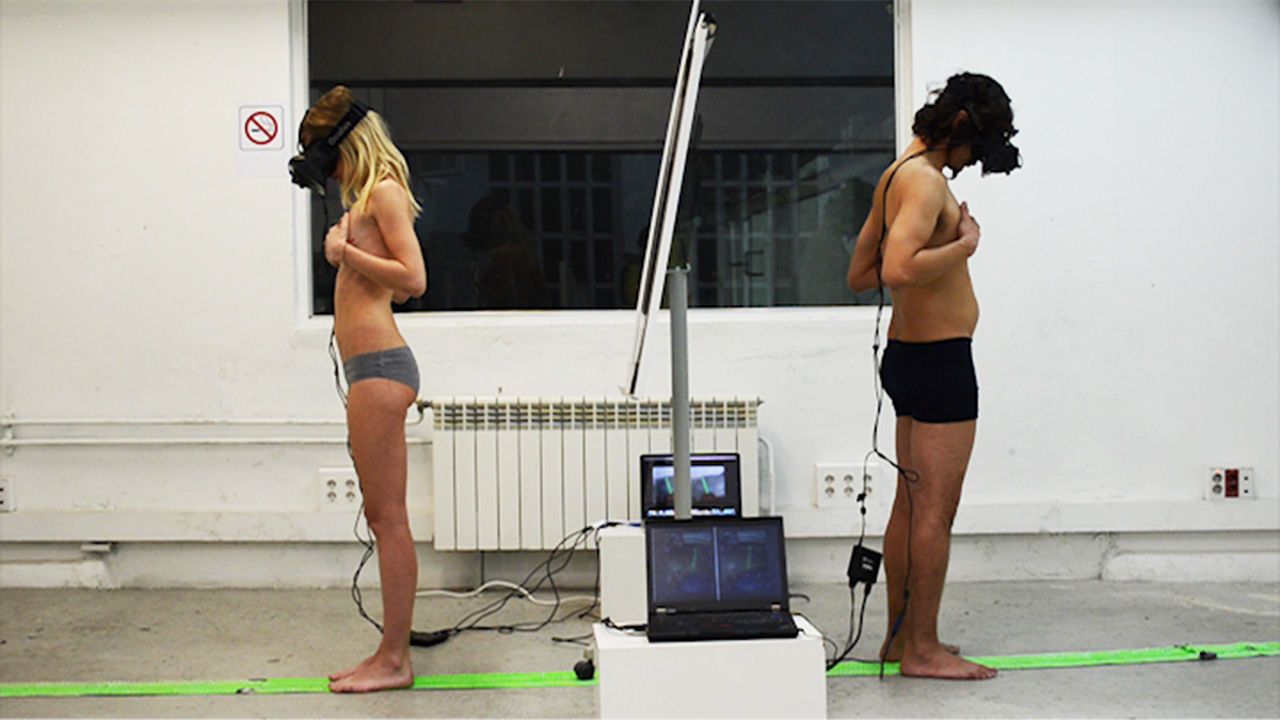
Bertrand and company have taken this approach to the next level by leveraging the tech of a paid Oculus Rift virtual reality headset, renaming it the Machine To Be Another. In the project, two participants stand in front of one another, put on their headsets, and effectively see out of one anothers’ eyes. When they look at each other, they see themselves. When they speak, they hear the other person’s voice in their ears.

VR_simstim1But things don’t end there! Working together, the two participants are encouraged to sync their movements, touching objects in the room, looking at things, and exploring their ‘own’ bodies simultaneously. Bertrand explains the experience as follows:

The brain integrates different senses to create your experience of the world. In turn, the information from each of these senses influences how the other senses are processed. We use these techniques from neuroscience to actually affect the psychophysical sensation of being in your body.

In other words, in combination with being fed video and sound from their partner’s headset, by moving and touching things at the same time, the Machine To Be Another can actually convince people that they are in someone else’s body as long as the two partners remain in sync.

VR_simstimIt’s a radical idea that Be Another Lab is only beginning to explore. Right now, their experiments have mostly focused on gender swapping, but the team hopes to expand on this and tackle issues such as transgender and homosexuality. The group is currently looking to partner with various organizations, experts and activists to help them further perfect their techniques.

It’s a unique idea, giving people the ability to not only walk a mile in another’s shoes, but to know what that actually feels like physically. I can foresee this sort of technology becoming a part of sensitivity training in the future, and even as education for sex offenders and hate criminals. Currently, such training focuses on getting offenders to empathize with their victims.

What better way to do that than making them see exactly what it’s like to be them? And in the meantime, enjoy this video of the Machine To Be Another in action:


Source:
fastcodesign.com

Powered by Wind: World’s Tiniest Windmills

tiny_windmillWind turbines are one of the fastest growing industries thanks to their ability to provide clean, renewable energy. And while most designs are trending towards larger and larger sizes and power yields, some are looking in the opposite direction. By equipping everyday objects with tiny windmills, we just might find our way towards a future where batteries are unnecessary.

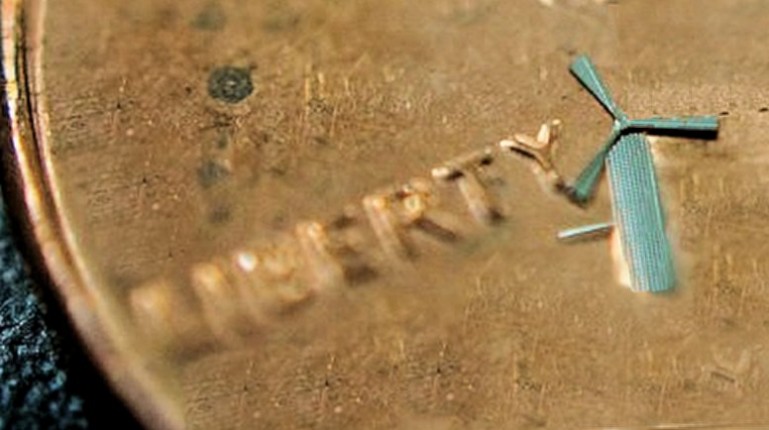
Professor J.C. Chiao and his postdoc Dr. Smitha Rao of the University of Texas at Arlington are two individuals who are making this idea into a reality. Their new MEMS-based nickel alloy windmill is so small that 10 could be mounted on a single grain of rice. Aimed at very-small-scale energy harvesting applications, these windmills could recharge batteries for smartphones, and directly power ultra-low-power electronic devices.

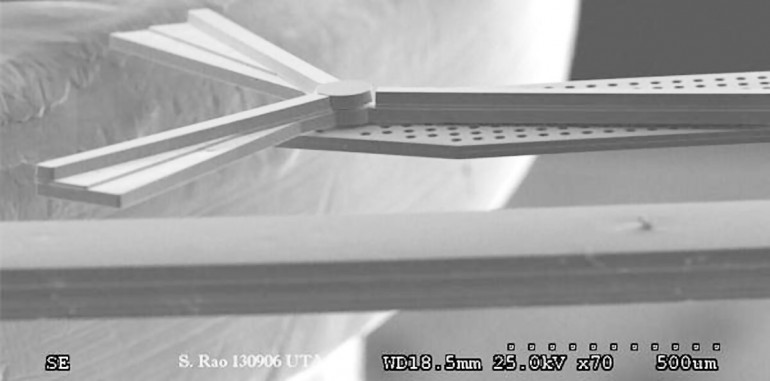
tiny_windmill1These micro-windmills – called horizontal axis wind turbines – have a three-bladed rotor that is 1.8 mm in diameter, 100 microns thick, and are mounted on a tower about 2 mm tall mount. Despite their tiny size, the micro-windmills can endure strong winds, owing to being constructed of a tough nickel alloy rather than silicon, which is typical of most microelectromechanical systems (MEMS), and a smart aerodynamic design.

According to Dr. Rao, the problem with most MEMS designs is that they are too fragile, owing to silicon and silicon oxide’s brittle nature. Nickel alloy, by contrast, is very durable, and the clever design and size of the windmill means that several thousands of them could be applied to a single 200 mm (8 inch) silicon wafer, which in turn makes for very low cost-per-unit prices.

tiny_windmill2The windmills were crafted using origami techniques that allow two-dimensional shapes to be electroplated on a flat plane, then self-assembled into 3D moving mechanical structures. Rao and Chiao created the windmill for a Taiwanese superconductor company called WinMEMS, which developed the fabrication technique. And as Rao stats, they were interested in her work in micro-robotics:

It’s very gratifying to first be noticed by an international company and second to work on something like this where you can see immediately how it might be used. However, I think we’ve only scratched the surface on how these micro-windmills might be used.

Chiao claims that the windmills could perhaps be crafted into panels of thousands, which could then be attached to the sides of buildings to harvest wind energy for lighting, security, or wireless communication. So in addition to wind tunnels, large turbines, and piezoelectric fronds, literally every surface on a building could be turned into a micro-generator.

Powered by the wind indeed! And in the meantime, check out this video from WinMEMS, showcasing one of the micro-windmills in action:


Source: news.cnet.com, gizmag.com

The Future is Here: VR Taste Buds and Google Nose

holodeck_telexOne of the most intriguing and fastest-growing aspects of digital media is the possibilities it offers for augmenting reality. Currently, that means overlaying images or text on top of the real world through the use of display glasses or projectors. But in time, the range of possibilities might expand far beyond the visual range, incorporating the senses of taste and smell.

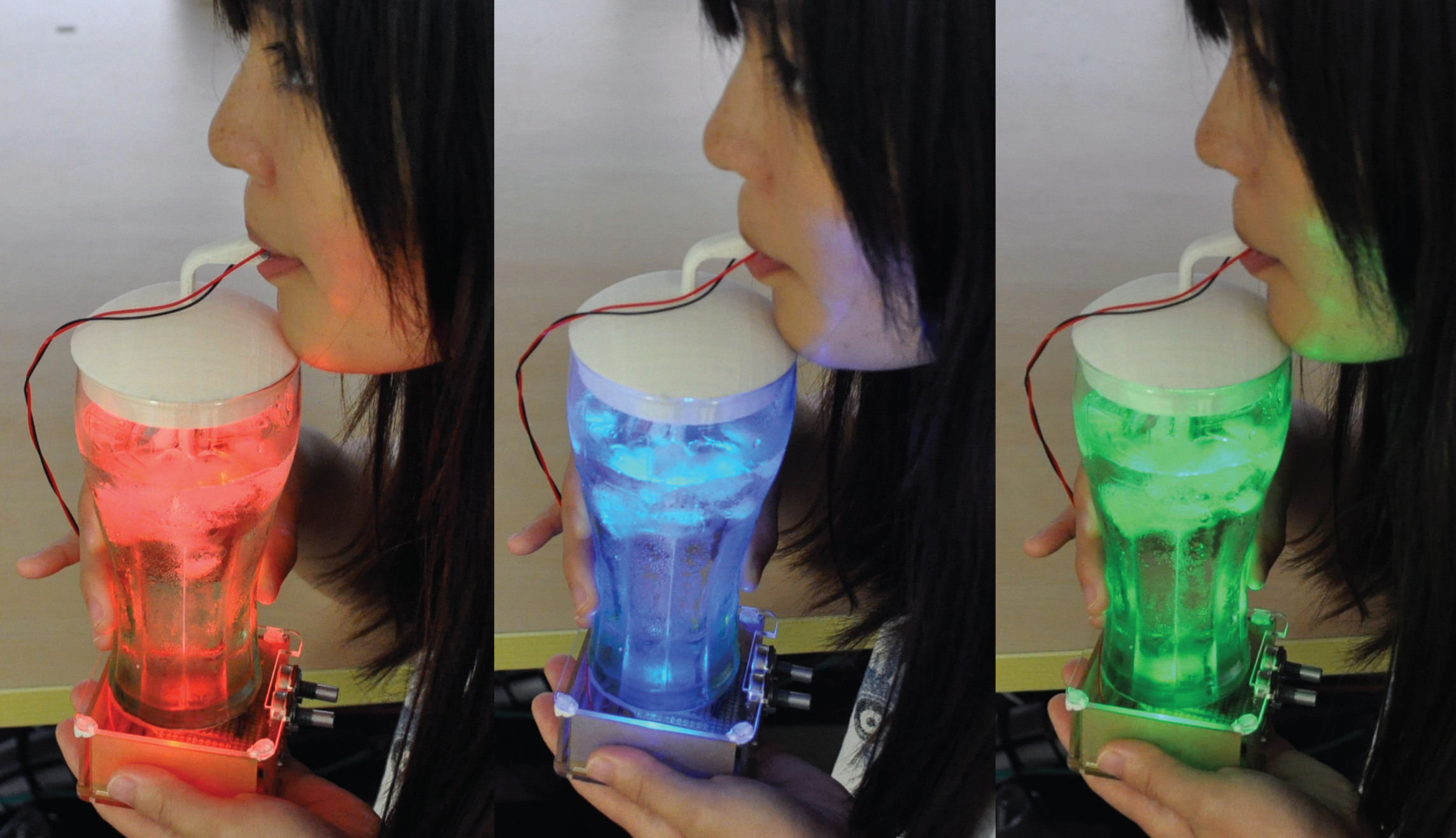
That’s where devices like the Digital Taste Interface comes into play. Developed by Nimesha Ranasinghe, an electrical engineer and the lead researcher of the team at National University of Singapore, this new technology seeks to combine the worlds of virtual reality and gestation. As Ranasinghe explained it in a recent interview with fastcompany.com:

Gustation is one of the fundamental and essential senses, [yet] it is almost unheard of in Internet communication, mainly due to the absence of digital controllability over the sense of taste. To simulate the sensation of taste digitally, we explored a new methodology which delivers and controls primary taste sensations electronically on the human tongue.

digital_taste_interfaceThe method involves two main modules, the first being a control system which formulates different properties of stimuli – basically, levels of current, frequency, and temperature. These combine to provide thermal changes and electrical stimulation that simulate taste sensations, which are in turn delivered by the second module. This is the tongue interface, which consists of two thin, metal electrodes.

According to Ranasinghe, during the course of clinical trials, subjects reported a range of taste experiences. These ranged from sour, salty and bitter sensations to minty, spicy, and sweet. But to successfully communicate between the control systems and sensors, Ranasinghe and her team created a new language format. Known as the TasteXML (TXML), this software specifies the format of specific taste messages.

digital_taste_interface1While the team is currently in negotiations to make the technology commercially available, there are a few pressing updates in the works for the Digital Taste Interface. The first is a more appealing way to use the tongue sensors, which currently are attached while the mouth is open. To that end, they want an interface that can be held in the mouth, called the digital lollipop because it looks like the candy.

In addition to making the system look more aesthetically pleasing and appetizing, it will also allow for a deeper understanding of how electrical stimulation affects taste sensors on different parts of the tongue. In addition, they also want to incorporate smell and texture into the experience, to further extend the range of sensations and create a truly immersive virtual experience.

digital_taste_interface2Ultimately, the Digital Taste Interface has many potential benefits and applications, ranging from medical advances to diet regimens and video games. As Ranasinghe explains:

We are exploring different domains such as entertainment (taste changing drink-ware and accessories) and medical (for patients who lost the sense of taste or have a diminished sense of taste). However, our main focus is to introduce the sensation of taste as a digitally controllable media, especially to facilitate virtual and augmented reality domains.

So in the coming years, do not be surprised if virtual simulations come augmented with a full-range of sensory experiences. In addition to being able to interact with simulated environments (i.e. blowing shit up), you may also be able to smell the air, taste the food, and feel like you’re really and truly there. I imagine they won’t even call it virtual reality anymore. More like “alternate reality”!

And of course, there’s a video:


Sources:
fastcompany.com

The Future of Building: Superefficient Nanomaterials

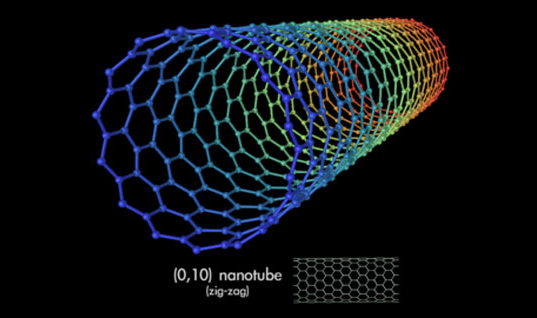
carbon-nanotubeToday, we are on the verge of a fabrication revolution. Thanks to developments in nanofabrication and miniaturization, where materials can be fashioned down the cellular (or even atomic) level, the option of making bigger and stronger structures that happen to weight less is becoming a reality. This is the goal of materials scientist Julia Greer and her research lab at Caltech.

As an example, Greer offers the The Great Pyramid of Giza and the Eiffel Tower. The former is 174 meters tall and weighs 10 megatons while the latter is over twice that height, but at five and half kilotons is one-tenth the mass. It all comes down to the “elements of architecture”, which allowed the Eiffel Tower to be stronger and more lightweight while using far less materials.

carbon_nanotube2Whereas the pyramids are four solid walls, the Eiffel Tower is skeletal, and vastly more efficient as a result. Greer and her colleagues are trying to make the same sort of leap on a nano scale, engineering hollow materials that are fantastically lightweight while remaining every bit as stiff and strong. Carbon nanotubes are one such example, but the range of possibilities are immense and due to explode in the near future.

The applications for this “Hierarchical Design” are also myriad, but its impact could be profound. For one, these ultralight wonders offer a chance to drastically reduce our reliance on fossil fuels, allowing us to make familiar goods with less raw stuff. But they also could also expand our idea of what’s possible with material science, opening doors to designs that are inconceivable today.

It’s all here on this video, where Greer explains Hierarchical Design and the possibilities it offers below:


Source: wired.com

New Video: Quantum Entanglement Explained

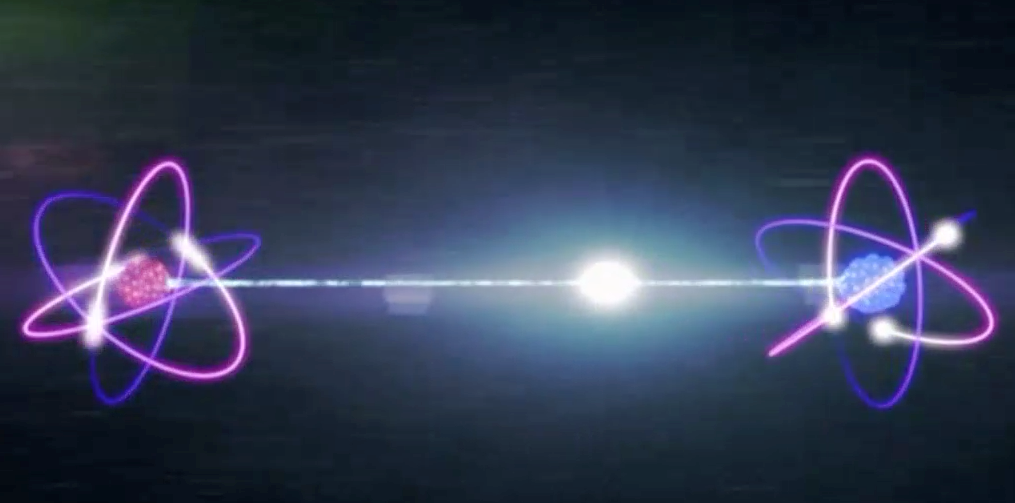
quantum-entanglement1If you’re like most people, the concept of quantum entanglements confuses and perplexes you. But considering its important to quantum science, the future of computing and (maybe, just maybe) space travel, it’s something we should all strive to understand. Luckily, this educational video produced by PHD Comics, and narrated by physicists Jeff Kimble and Chen-Lung Hung, explains it in easy-to-understand terms.

To break it down succinctly, quantum entanglement is the unusual behavior where elementary particles become linked so that when something happens to one, something happens to the other; no matter how far apart they are. This bizarre behavior of particles that become inextricably linked together is what Einstein supposedly called “spooky action at a distance.”

Understanding how this works may very well unlock the mysteries of the universe, shedding light on the unusual behavior of black holes, how gravity interacts with the other fundamental forces and yielding a Grand Unifying Theory/Theory of Everything (TOE)- and even let us circumvent “natural” barriers like the speed of light. So enjoy the video, and be sure to listen carefully. Simplified or not, this is still some pretty heavy stuff!


Source: universetoday.com

The Future is Here: Laser 3D Printing

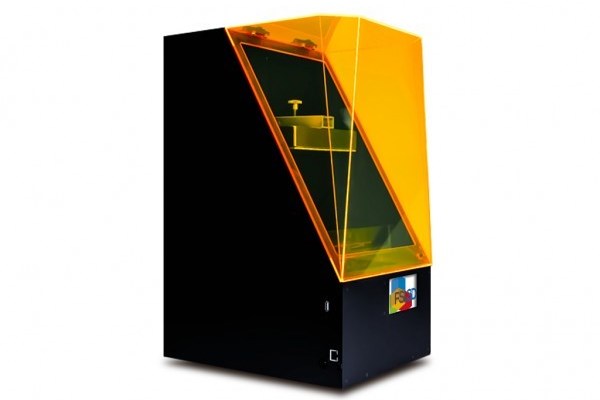
pegasus-touch3D printing has really come into is own in recent years, with the range of applications constantly increasing. However, not all 3D printers or printing methods are the same, ranging from ones that use layered melted plastic to ones that print layers of metal dust, then fuse them with microwave radiation. This range in difference also means that some printers are faster, more accurate, and more expensive than others.

Take the Pegasus Touch as an example. Built by a Las Vegas-based company Full Spectrum Laser (FSL), this desktop 3D printer uses lasers to create objects faster and in finer detail than most other printers in its price range. Available for as little as US$2,000 via a Kickstarter campaign, its performance is claimed to be comparable to machines costing 50 times more.


pegasus-touch-8Instead of building up an object by melting plastic filaments and depositing the liquid like ink from a nozzle, the Pegasus touch uses what’s called laser-based stereolithography (SLA). This consists of using a series of 500 kHz ultraviolet lasers moving at 3,000 mm/sec to solidify curable photopolymer resin. As the object rises out of a vat of resin, the laser focuses on the surface, building up layer after layer with high precision.

To be fair, the technology has been around for many years. What is different with the Pegasus Touch is that FSL has shrunk the printer down and made it more economical. Normally, SLA machines are huge and cost in the order of hundreds of thousands of dollars. The Pegasus Touch, on other hand, measures just 28 x 36 x 57 cm (11 x 14 x 22.5 inches) and costs only a few thousand dollars.

pegasus-touch-4This affordability is due in part to the wide availability of Bluray players has made UC laser diodes much more affordable. In addition, FSL is already adept at making laser cutting and engraving machines, which has allowed the company to base the Pegasus Touch on modelling software and electronics already developed for these machines. This allows the device to operate at tolerances equivalent to a $100,000 machine.

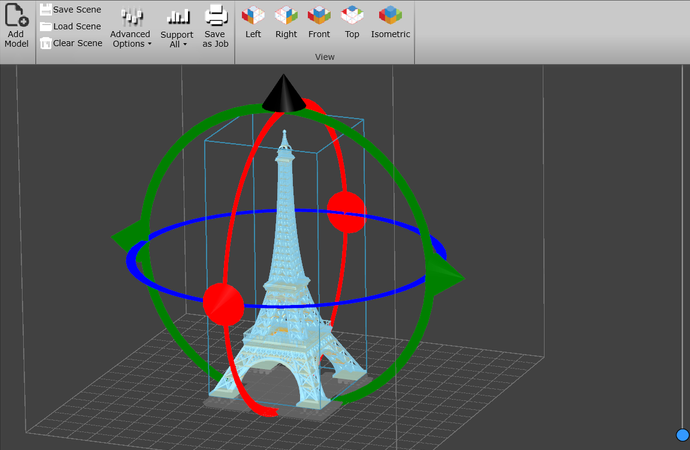
The device also has an on-board 1GHz Linux computer with 512 MB memory that can do much of the 3D processing computation itself, making a connected PC all but unnecessary. There’s also an internet-connected 4.3-in color touchscreen, which allows the user to access open-source models that are printer-ready, plus the machine comes with multi-touch-capable desktop software.

pegasus-touch-3It also has a relatively large build area of approximately 18 x 18 x 23 cm (7 x 7 x 9 inch), which is one of the largest in the consumer 3D printer market. The company also says that the Pegasus Touch is 10 times faster than a filament deposition modelling (FDM) printer, has finer control, and up to six times faster than other SLA printers, and can produces a better and more detailed finish.

The Pegasus Touch’s Kickstarter campaign wrapped up earlier this month and raised a total of $819,535, putting them well above their original goal of $100,000. For those who pledged $2000 or more, the printer was made available for pre-order. When and if it goes on sale, the asking price will be $3,499. Given time, I imagine the technology will improve to use metal and other materials instead of resin.

And of course, there’s a promotional video, showcasing the device at work:


Sources: gizmag.com, kickstarter.com, fsl3d.com

Papa Zulu’s First Sale!

shutterstock_102844133This past weekend, Papa Zulu went live on Amazon.com in paperback and ebook formats! I wanted to deliver the news the moment it happened, but as KDP and Createspace can take their time making books available to the public, I felt the need to hold off a little. However, that ended today when the book made its first sale. Yes, somebody out there is now the owner of an ecopy of Papa Zulu!

Granted, there are still a few kinks in the publication process. Right now, the ebook is only available on Amazon.ca, the store’s Canadian subsidiary, while the paperback is only available on Amazon.com. And neither are appearing on my Amazon author page. I can only assume my publishing services need to get their stuff together and expand its availability!

But in any case, I’ve gone ahead and posted the link for the ebook in the right hand column. If you liked the first one, be sure to check out the sequel. I’ve posted the respective links below to make it easier. And if you didn’t read the first one, didn’t like it, or just aren’t interested, then do what you like. I ain’t the boss of you!

Until next time, keep hammering those keys 🙂

Amazon.ca (ebook): amazon.ca

Amazon.com (paperback): amazon.com

Createspace store: createspace.com

News From Space: Asteroid Misses Earth (Again!)

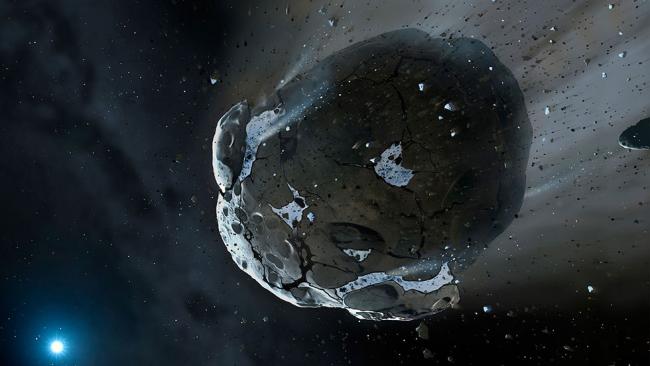
2000EM26_1Yesterday, an asteroid estimated to be the size of three football fields passed Earth by. Traveling at 43,000 kilometers per hour and passing at a distance of 8.8 lunar distances of Earth, the asteroid showed up just one year after a similar asteroid exploded over Russia and injured 1,200 people. The only problem was, the good people of Earth missed the show!

Slooh, an online “community observatory” that streams images from ground-based telescopes online during celestial events, was supposed to broadcast the approach of the asteroid as it raced past the planet, starting at 9 p.m. ET (2 a.m. MT).  Unfortunately, Slooh’s flagship observatory on Mount Teide in Spain’s Canary Islands was iced over and unable to catch the asteroid – named 2000 EM26 – as it passed us by.

2000EM26_2014_logoShortly thereafter, Slooh’s robotic telescope tried to snap pictures attempted to snap pictures of the asteroid but failed to capture an image at the predicted position. And now, the asteroid has gone missing in the deep sea of space, giving rise to the nickname “Moby Dick”. This means that either the asteroid’s predicted path was in error, or the object was much fainter than expected.

Paul Cox, Slooh’s technical and research director, said that the asteroid should be somewhere in the visible star field. And rather than accept failure at retracing its path, he and the other folks at Slooh are calling upon amateur astronomers to conduct a photographic search for it in the next few nights. Finding it is not just a matter of honor, but of determining how much the space rock has shifted over time.

2000EM26_2Since the asteroid was last observed 14 years ago for only 9 days, it isn’t too surprising that uncertainties in its position could add up over time, shifting its position and path to a different part of the sky by now. As Cox pointed out:

Discovering these Near Earth Objects isn’t enough. As we’ve seen with 2000 EM26, all the effort that went into its discovery is worthless unless follow­up observations are made to accurately determine their orbits for the future.  And that’s exactly what Slooh members are doing, using the robotic telescopes at our world­-class observatory site to accurately measure the precise positions of these asteroids and comets.

Naturally, there were some who worried that this elusive rock might threaten Earth, given its proximity to our own orbit and the fact that it’s path may have changed. But there is no reason to fear, as these changes are not likely to bring it into our path and it won’t be returning anytime soon. And before it does, we ought to have eyes on it again and be able to accurately chart its course.

2000EM26And above all, similar sized asteroids, including ones passing even closer to Earth, zip by every month. 2000 EM26 received a lot of coverage yesterday in part because it arrived close to the anniversary of the Chelyabinsk meteorite fall over Russia. And though it remains hidden for now, eyes are on the sky to find the asteroid again and refine its orbit.

Hopefully the beast won’t get away next time!


Sources: cbc.ca, universetoday.com

Making Tech Accessible: Helping Amputees in War-Torn Sudan

3Dprinting_SudanThe new year is just flying by pretty quickly, and many relevant stories involving life-changing tech developments are flying by even faster. And in my business and haste to deal with my own writing, I’ve sadly let a lot of stories slip through my fingers. Lucky for me that there’s no statute of limitations when it comes to blogging. Even if you cover something late, it’s not like someone’s going to fire you!

That said, here is one news item I’m rather of ashamed of having not gotten to sooner. It’s no secret that 3D printing is offering new possibilities for amputees and prosthetic devices, in part because the technology is offering greater accessibility and lower costs to those who need them. And one area that is in serious need is the developing and wartorn nation of Sudan.

robotic_hand2And thanks to Mick Ebeling, co-founder and CEO of Not Impossible Labs, 3D printed prosthetics are now being offered to victims of the ongoing war. After learning of a 14-year old boy named Daniel who lost both arms in a government air raid, he traveled to the Nuba Mountains to meet him in person. Having already worked on a similar project in South Africa, he decided to bring 3D printed prosthetics to the area.

Ebeling was so moved by Daniel’s plight that he turned to a world-class team of thinkers and doers – including the inventor of the Robohand, an MIT neuroscientist, a 3D printing company in California, and funding from Intel and Precipart – to see how they could help Daniel and kids like him. Fittingly, he decided to name it “Project Daniel”.

ProjectDaniel-Training-NotImpossibleAnd now, just a year later, Not Impossible Labs has its own little lab at a hospital in the region where it is able to print prosthetic arms for $100 a pop, and in less than six hours. Meanwhile, Daniel not only got his left-arm prosthetic in November, but he is currently employed at the hospital helping to print prosthetics for others children who have suffered the same fate as him.

Ebeling says the printed arm isn’t as sophisticated as others out there, but it did allow him to feed himself for the first time in two years. And while Daniel won’t be able to lift heavy objects or control his fingers with great precision, the prosthetic is affordable and being produced locally, so it also serves as an economically viable stand-in until the tech for 3D-printed prosthetics improves and comes down in cost.

Not-ImpossibleNot Impossible Labs, which has already fitted others with arms, says it hopes to extend its campaign to thousands like Daniel. It’s even made the design open source in the hopes that others around the world will be able to replicate the project, setting up similar labs to provide low-cost prosthetics to those in need. After all, there are plenty of war torn regions in the developing world today, and no shortage of victims.

In the coming years, it would be incredibly encouraging to see similar labs set up in developing nations in order to address the needs of local amputees. In addition to war, landmines, terrorism, and even lack of proper medical facilities give rise to the need for cheap, accessible prosthetics. All that’s really needed is an internet connection, a 3D printer, and some ABS plastic for raw material.

ProjectDaniel-Mohammad&Daniel-NotImpossibleNone of this is beyond the budgets of most governments or NGOs, so such partnerships are not only possible but entirely feasible. For the sake of kids like Daniel, it’s something that we should make happen! And in the meantime, check out this video below courtesy of Not Impossible Labs which showcases the printing technology used by Project Daniel and the inspiring story behind it.

And be sure to check out their website for more information and information on how you can help!


Source:
news.cnet.com, notimpossiblelabs.com