The Walking Dead has returned! After last year’s mid-season cliffhanger, the return of this show was one of the most anticipated events this television season. And in fact, yesterday’s premiere even beat out the Olympics in terms of ratings. Kind of a downer, really. But people love their zombies and were waiting for months for their WD fix. And we see the Winter Games every what, four years?
In any case, the midseason premiere opened much as expected. With the prison overrun and the survivors scattered to the four winds, the focus on the most important group in the diaspora – Rick and Carl. Along with the other members of the group, their struggle to carry on mirrors the groups, and humanity’s itself, in this post-post-apocalyptic world.
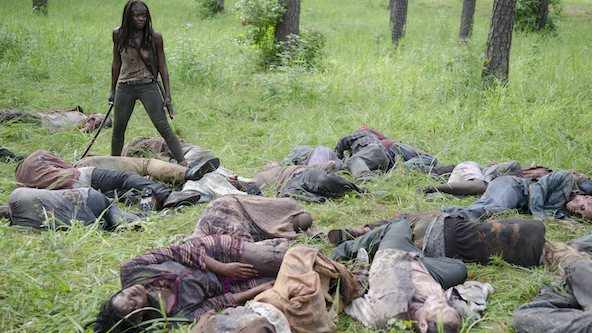
After: The episode opens with Michonne looking upon a ruined and overrun prison. After killing Hershel’s now resurrected corpse, she lures two Walkers into a trap, removes their arms and jaws, and binds their necks. With them as her protection, she sets off again on the road. Farther on, Rick and Carl are struggling along, looking for food and shelter for the night, with Rick lagging behind because of his wounds.
They find their way to a diner and procure some rations, and Carl seems visibly angry with Rick. Farther on, they find an empty house and set down for the night, and by morning, Carl wakes up and finds Rick comatose on the couch. After trying unsuccessfully to rouse him, he begins to voice all his anger, blaming Rick for their situation, the death of the Judith, and the loss of their friends.
His yelling draws two Walkers to their door which try to break in. Sneaking out back, Carl lures these two away quietly, but is then set upon by a third. He is forced to fire his gun multiple times, but survives. He then tells Rick he doesn’t need him anymore, goes out again in search of food, and once more runs afoul of a Walker, wastes the last of his ammo, and is forced to trap it in a bedroom and escape.
Elsewhere, Michonne sets down for the night and dreams of her life before the Walkers came. She recalls a time when she, her boyfriend, their mutual friend and her son were all together, but the dream quickly turns into a nightmare. We see here that these two men were her Walker escorts before, that she was forced to mutilate their bodies and use them for cover.
Continuing on, she begins to pick up many Walker followers, and begins to notice that one even resembles her. She eventually draws her sword and kills this woman, and then is forced to kill the rest as they close in on her. Eventually, she does, and even takes out her escort. Alone again, she breaks down and cries, but eventually manages to pick up Rick and Carl’s trail…
Back at their house, Carl is awakened by Rick making strange sounds and reaching out at him. He grabs his father’s gun, thinking Rick died in his sleep and has now turned. Carl is unable to pull the trigger and cries, telling Rick that he was wrong. But Rick then calls out his name and tells him to “go outside… stay safe.” Carl holds Rick and tells him he’s scared.
Finding her way to the diner where Rick and Carl passed before, Michonne rests and begins speaking to her departed boyfriend. She says she’s figured out the answer, by which she means why they should carry on amidst everything around them. Back at the house, Rick and Carl talk and resolve things. Carl apologizes for risking his life while Rick admits that things will never be the same again.
At last, Michonne comes to the house and sees Rick and Carl inside, and begins to cry. She knocks at the door, Rick looks through the peephole and begins to laugh. When Carl asks, Rick replies “It’s for you”.
Summary: Admittedly, this episode was pretty slow by the show’s own standards, placing it firmly in the category of pacing episode. But this is to be expected after the midseason climax, and it managed to still be effective. And it was quite cool to see Michonne do her thing, and accurately. Last season, her role was played down to a large extent that it was good to see out and about, and kicking ass!
This episode also gave them a chance to develop her character and get into some of things that has been glossed over previously. For example, we only hear about how she talks to her boyfriend once, which was something central to her character when she entered the story. Alone for so long, she comforted herself and found strength by imaging him there, talking to her and sharing in her trials.
Also, the interplay between Rick and Carl in this episode was pretty faithful to the comic book. After being caught in the wilderness together, Carl found himself having to take charge and at one point thought Rick had turned. But there, Rick was struggling with the death of Judith and Lori, and dealt with it by talking to her on a broken phone (which instead was moved up to season three).
At this point, I’d say the rest of the season has a pretty predictable arc. The rest of the crew will find their way through the wilderness, they will eventually meet up with Rick, Michonne and Carl, I anticipate Morgan will join them too, and they will find their way back to (*SPOILERS!) where they will meet (*SPOILERS!) and then head off to find (*BIG SPOILERS!)
But that still leaves plenty of room for surprises between now and then, and I will be watching!
The science behind cold fusion has been a source of constant controversy for decades. Not only has this pursuit turned up its share of phony claims, the fact that it also promises to yield clean, abundant energy on the cheap has led to no shortage of romantic endorsements and vocal detractors. But if it could be made to work, there is no doubt that our energy problems would be solved, and in a way that is not harmful to our environment.
Last February, NASA made waves by announcing that they were working towards cold fusion through low-energy nuclear reaction (LENR) technology. Then in September, the National Ignition Facility (NIF) in California announced a major milestone when they managed to produce a controlled reaction that provided more energy that was required to start it.
But all of that seemed to pale in comparison to the announcement by Andrea Rossi’s that he managed to create a fusion power plant that was reportedly capable of generated a single megawatt of power. Known as the E-Cat 1MW Plant (short for Energy-Catalyser), Rossi announced its creation back in November, and indicated that he and his company were taking pre-orders and that they would start deliveries by 2014.
Today, the big news is that a large US investment company has acquired the rights to the cold fusion LENR technology. That investment company is Cherokee Investment Partners, and they appear to be interested in deploying the cold fusion tech commercially in both China and the US to meet both countries existing and projected energy needs.
Relying on the same process as other LENR technology, the E-Cat generates cold fusion by taking nickel and hydrogen and fusing them into copper – a process that has 10,000 times the energy density of gasoline, and 1,000 times the power density. Rossi says he’s found a special catalyst that makes the process work, but many scientists remain unconvinced.
Regardless of whether or it not it can deliver, it now seems that Rossi’s previously allusions to an American partner are true after all. Much like everything surrounding Rossi, he chose to be nebulous about the identity of the company that was supporting him. However, with this latest deal, Cherokee and its CEO Thomas Darden, a man who has a history of investing in clean energy, is a believer in the design.
In addition to preparing the patents through a Limited Liability Company – known as Industrial Heat – there are also reports that Darden recently visited China to showcase the E-Cat to Chinese officials and businesspeople. China is reportedly looking at using the E-Cat to significantly reduce its carbon footprint and meet its the energy needs of its growing cities in a way that won’t generate more air pollution.
Needless to say, this deal has bolstered Rossi’s and the E-Cat’s credibility, but the technology remains unproven. Rossi says that he has a team of international scientists that are planning to do another round of tests on the E-Cat which are slated to end in March, with a peer-reviewed report to follow sometime after that. Fingers crossed, those rounds of test will provide conclusive proof.
Then, we can all get to work dreaming about a bright, clean future, and the thousands of applications such plants will have!
One of the greatest threats to our planetary ecosystem is the threat of bees going extinct, a phenomenon that is often filed under the heading of Colony Collapse Disorder (CCD). Because of their role in pollination, bees are an integral part of the environment, and their disappearance would mean the sudden collapse of all life on the planet in just a few years time.
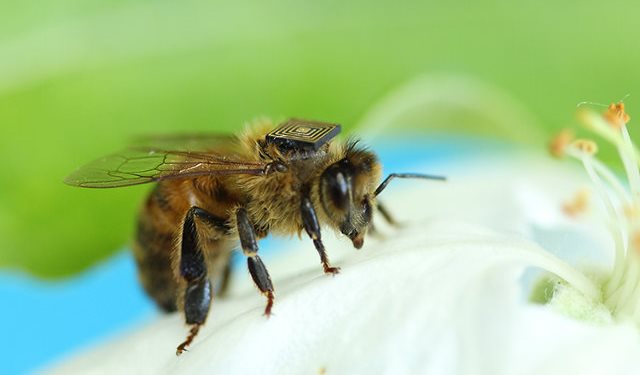
Because of this, environmentalists and entomologists are looking for ways to address the disappearance of bees. One solution, as put forward by a team of Australian scientists working in Tasmania, is to outfit bees with tiny microchip trackers to monitor their movements. By turning them into an army of mobile data-collectors, the team hopes to determine why the local bees are abandoning their hives.
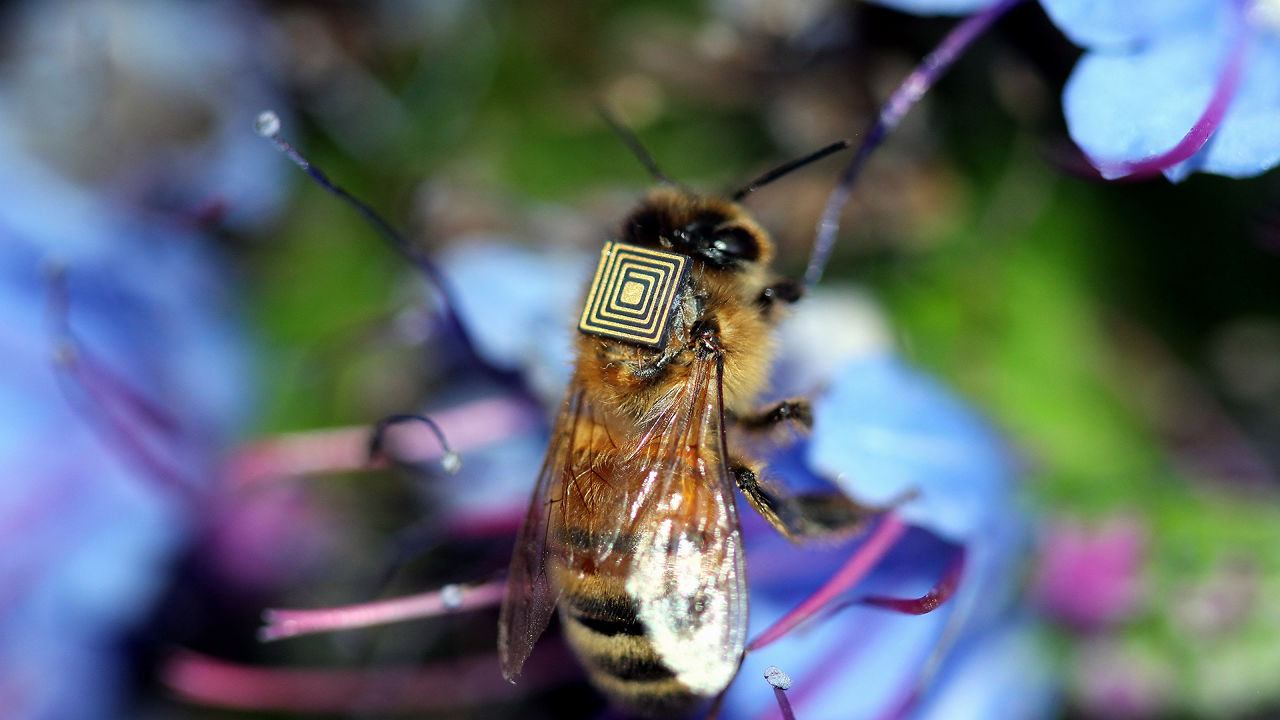
For the past five months, this team has been capturing hundreds of bees, refrigerating them, shaving them, and gluing tiny sensors – which weigh about 1/4000th of a paperclip – to their backs. So far, the team has captured, tagged and released hundred bees, but the team plans to engineer a total of 5000 with these chips for the sake of their research.
Dr. Paulo de Souza, the lead scientist on the project, explained the capture and tagging process as follows:
The bees are very sensitive to temperature. We take the bees to the lab in a cage, we put them in a fridge with temps around 5 degrees Celsius, and in five minutes, all the bees fall asleep, because their metabolism goes down. We rub a bit of glue on them, and then attach the sensor. We carry them back, and in five minutes the bees wake up again.
By monitoring their behavior, the scientists are trying to prevent Colony Collapse Disorder, the mysterious phenomenon in which worker bees suddenly abandon their hives.As it stands, no one is entirely sure what causes CCD, but biological diversity, diet, management of the hives, radiation, and pesticide use are all possible influences on the bees’ behavior.
Colony Collapse Disorder remains a mystery that not only effects bees, but entire industries. If bees don’t pollinate fruit crops well enough, production decreases, prices rise, and local ecosystems can collapse. Tasmania, who’s huge agricultural tracts accounts for 65% of all Australian crop exports, could be devastated. Hence why de Souza and his colleagues are using it as a testing ground for their research.
In addition to monitoring the bees movements and checking in with them via RFID readers installed near hives and feeding stations, they’ve also created an experiment which exposes some bees to environmental contaminants (like pesticides) where other hives remain pesticide-free. By examining the effect on bees’ movements, they’ll be able to determine which factors cause bee disorientation and abnormal behavior.
As DeSouza explains it, the tagging and tracking process works a lot like a swipe card:
When you go to your office, you swipe a card to gain access. We assign different numbers to the devices on the bees, so we have 5,000 of these micro-sensors with one specific number. We follow not only the swarm, but each of the individuals to see what they’re doing.
The scientists will also be able to examine bee data through several generations within the hive. When the contaminated pollen turns to nectar, other bees within the hive feed on it, and pass contamination on to their offspring. To de Souza’s knowledge, this is the first time scientists have attempted to measure hive contamination on this scale.
Right now, their main goal is to understand CCD before it reaches Australia’s shores and effects its agricultural operations. But the research is expected to have far-reaching implications, helping to address a major ecological concern that effects the entire world. And in the long run, de Souza and his team are looking to refine the process and take it even further.
This includes adding more features to the chips and applying them to other species of crucial and threatened insects. Key to this, says de Souza, is miniaturization:
As the chips go down in size, we’ll also be able to use this in other insects. Fruit flies, for example, are another insect incredibly important for biosecurity in Australia.
An interesting concept, isn’t it? Big data meets entomology meets ecology, and all for the sake of preserving a crucial part of the food industry and an integral part of our environment. Because ultimately, its not just about preventing colonies from collapsing, but the Earth’s ecosystems as well.
The Mars Reconnaissance Orbiter, which has been in operation around Mars since March of 2006, has provided ongoing observation of the planet. Because of this, scientists and astronomers have been able to keep track of changes on the surface ever since. This new impact crater, which was formed by a recent meteor impact, is just the latest example.
The image was taken by the Orbiter’s High Resolution Imaging Science Experiment (HiRISE) camera on Nov. 19, 2013. Since that time, NASA scientists have been working to enhance the image and rendering it in false color so the fresh crater appears.The resulting image shows the stunning 30-meter-wide crater with a rayed blast zone and far-flung secondary material surrounding.
Researchers used HiRISE to examine this site because the orbiter’s Context Camera had revealed a change in appearance here between observations in July 2010 and May 2012, when the impact was thought to have occurred. After examining the impact site, scientists estimate the impact and resulting explosion threw debris as far as 15 kilometers in distance.
Before-and-after imaging that brackets appearance dates of fresh craters on Mars has indicated that impacts producing craters at least 12.8 feet (3.9 meters) in diameter occur at a rate exceeding 200 per year globally. But most of those are much smaller than this new one, and leave scars are as dramatic in appearance. This latest impact was definitely one for the history books.
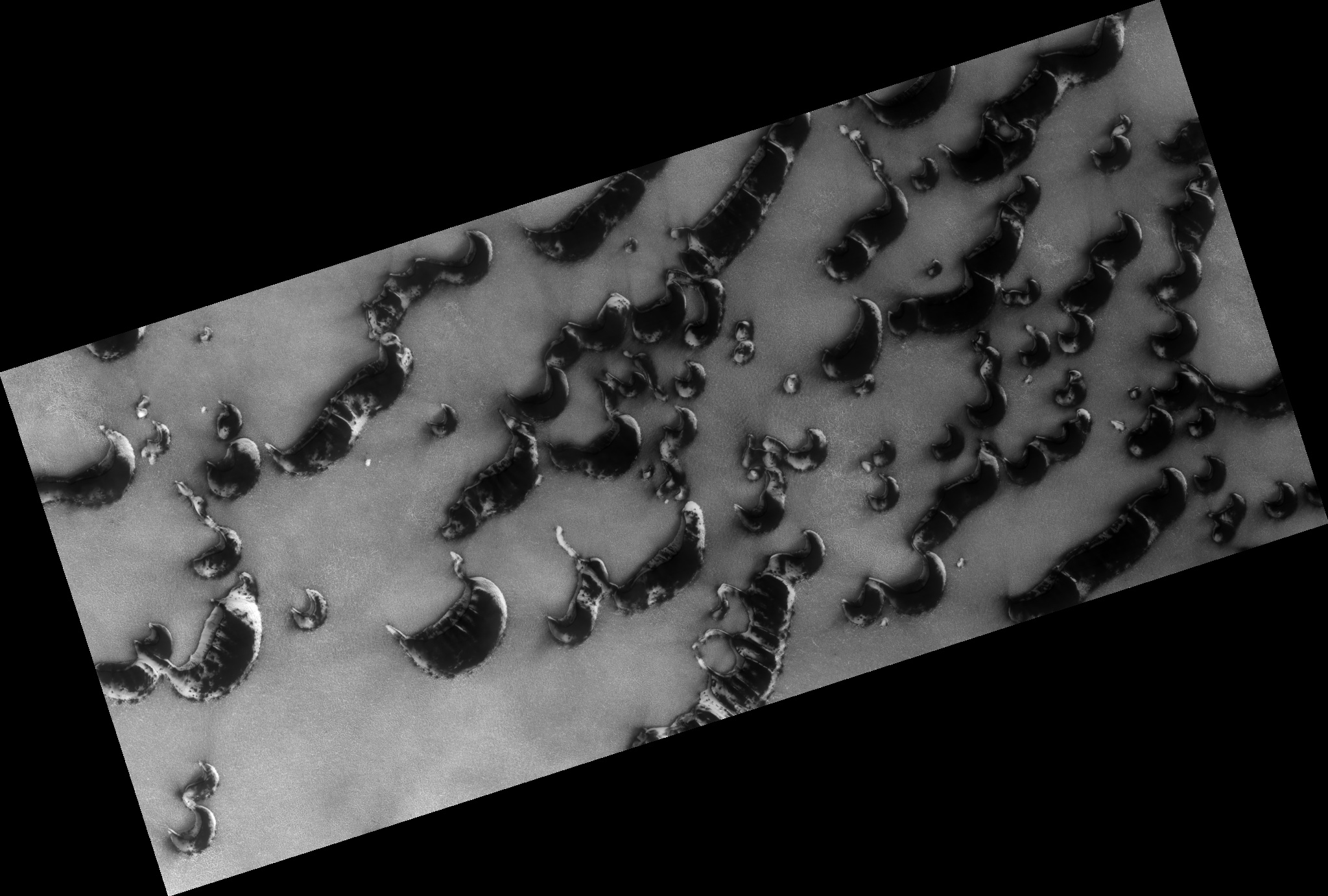
Speaking of dramatic, these recent releases from the HiRISE laboratory captured some truly magnificent activity, which included a series of avalanches and defrosting dunes on the surface. Snow, dust and wind are combining to make the incredible images that were captured. The raw images appear in black and white (as the snowy dunes pictured above).
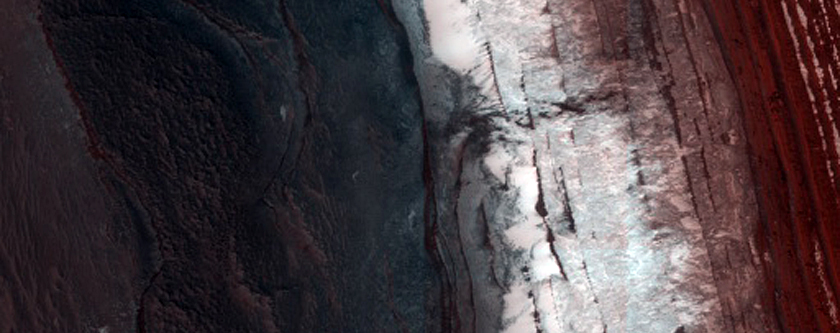
The colorized versions, as show below, indicate the presence of snow, ice and red surface dust. These latest pictures, perhaps more than any previous, illustrate the awe and wonder the Red Planet holds. And as humanity’s contact and involvement with the planet and continues, they remind us that nothing from that world is to be taken for granted.
And as we get closer to 2030, when a manned mission is scheduled to take place – not to mention private missions that aim to put colonists there by 2023 – chance encounters with the surface like this are certain to inspire excitement and anticipation. Right now, these events and surface features are being watched from above or by rovers on the surface.
But someday soon, people will be standing on the surface and looking upon it with their own eyes. Their feet will be crushing into red sand, romping through Martian snow and ice, and standing in the middle of craters and looking up at Olympus Mons. What will they be thinking as they do it? We can only wonder and hope that we’ll be able to share it with them…
Scientists and astronomers have learned a great deal about the universe in recent years, thanks to craft like the Kepler space probe and the recently launched Gaian space observatory. As these and other instruments look out into the universe and uncover stars and exoplanets, it not only lets us expand our knowledge of the universe, but gives us a chance to reflect upon the meaning of this thing we call “habitability”.
Basically, our notions of what constitutes a habitable environment are shaped by our own. Since Earth is a life-sustaining environment from which we originated, we tend to think that conditions on another life-giving planet would have to be similar. However, scientists René Heller and John Armstrong contend that there might be a planet even more suitable in this galaxy, and in the neighboring system of Alpha Centauri B.
For those unfamiliar, Alpha Centauri A/B is a triple star system some 4.3 light years away from Earth, making it the closest star system to Earth. The nice thing about having a hypothetical “superhabitable” planet in this system is that it makes it a lot easier to indulge in a bit of a thought experiment, and will make it that much more easy to observe and examine.
According to the arguments put forward by Heller, of the Department of Physics and Astronomy, McMaster University, Hamilton; and Armstrong, of the Department of Physics, Weber State University in Ogden, this planet may be even more suitable for supporting life than our own. It all comes down to meeting the particulars, and maybe even exceeding them.
For example, a habitable planet needs the right kind sun – one that has existed and remained stable for a long time. If the sun in question is too large, then it will have a very short life; and if it’s too small, it might last a long time. But the planet will have to be very close to stay warm and that can cause all sorts of problems, such as a tidally locked planet with one side constantly facing the sun.
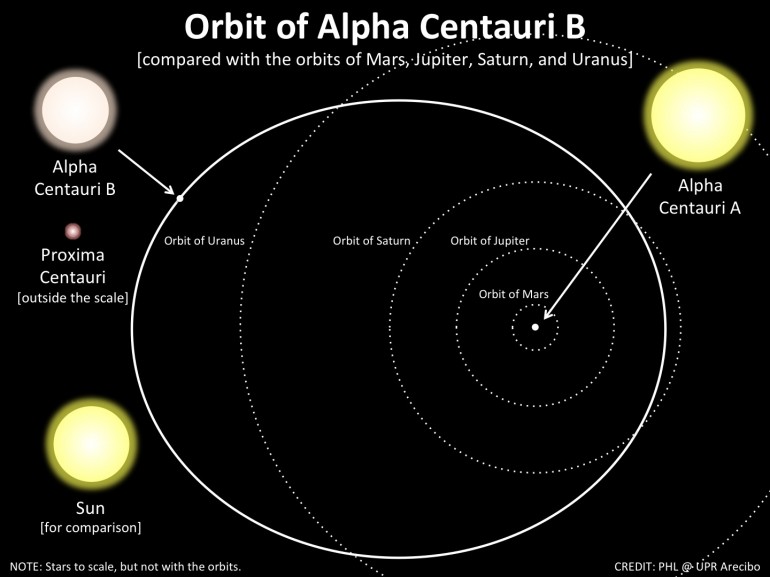
Our own sun is a G2-type star, which means it has been alive and stable for roughly 4.6 billion years. However, K-type dwarfs, which are smaller than the Sun, have lives longer than the age of the universe. Alpha Centauri B is specifically a K1V-type star that fits the bill with an estimated age of between 4.85 and 8.9 billion years, and is already known to have an Earth-like planet called Alpha Centauri B b.
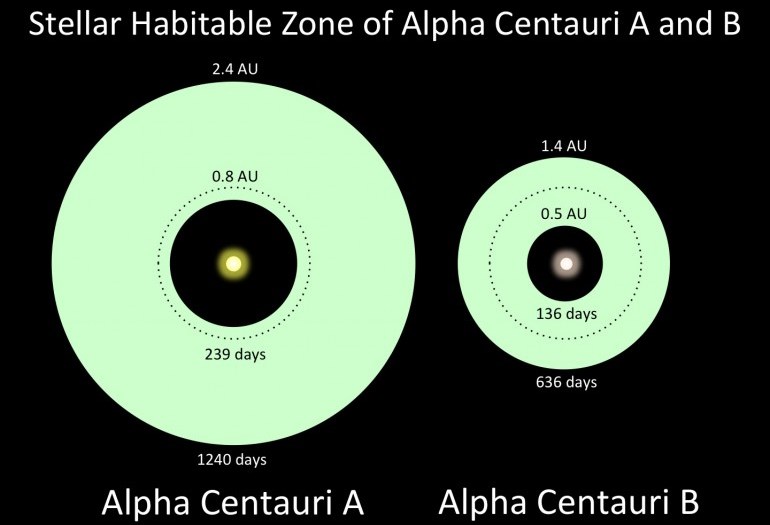
As to the superhabitable planet, assuming it exists, it will be located somewhere between 0.5 and 1.4 astronomical units (46 – 130 million mi, 75 – 209 million km) from Alpha Centauri B. All things being equal, it will have a circular orbit 1. 85 AU (276 million km / 172 million miles) away, which would place it in the middle of the star’s habitable zone.
Also, for a planet to sustain life it has to be geologically active, meaning it has to have a rotating molten core to generate a magnetic field to ward off cosmic radiation and protect the atmosphere from being stripped away by solar winds. A slightly more massive planet with more gravity means more tectonic activity, so a better magnetic field and a more stable climate.
However, the most striking difference between the superhabitable world and Earth would be that the former would lack our continents and deep oceans – both of which can be hostile to life. Instead, Heller and Armstrong see a world with less water than ours, which would help to avoid both a runaway greenhouse effect and a snowball planet that an overabundance of water can trigger.
Our superhabitable planet might not even be in the habitable zone. It could be a moon of some giant planet further away. Jupiter’s moon Io is a volcanic hellhole due to tidal heating, but a larger moon that Heller and Armstrong call a “Super Europa” in the right orbit around a gas giant could heat enough to support life even if it’s technically outside the star’s habitable zone.
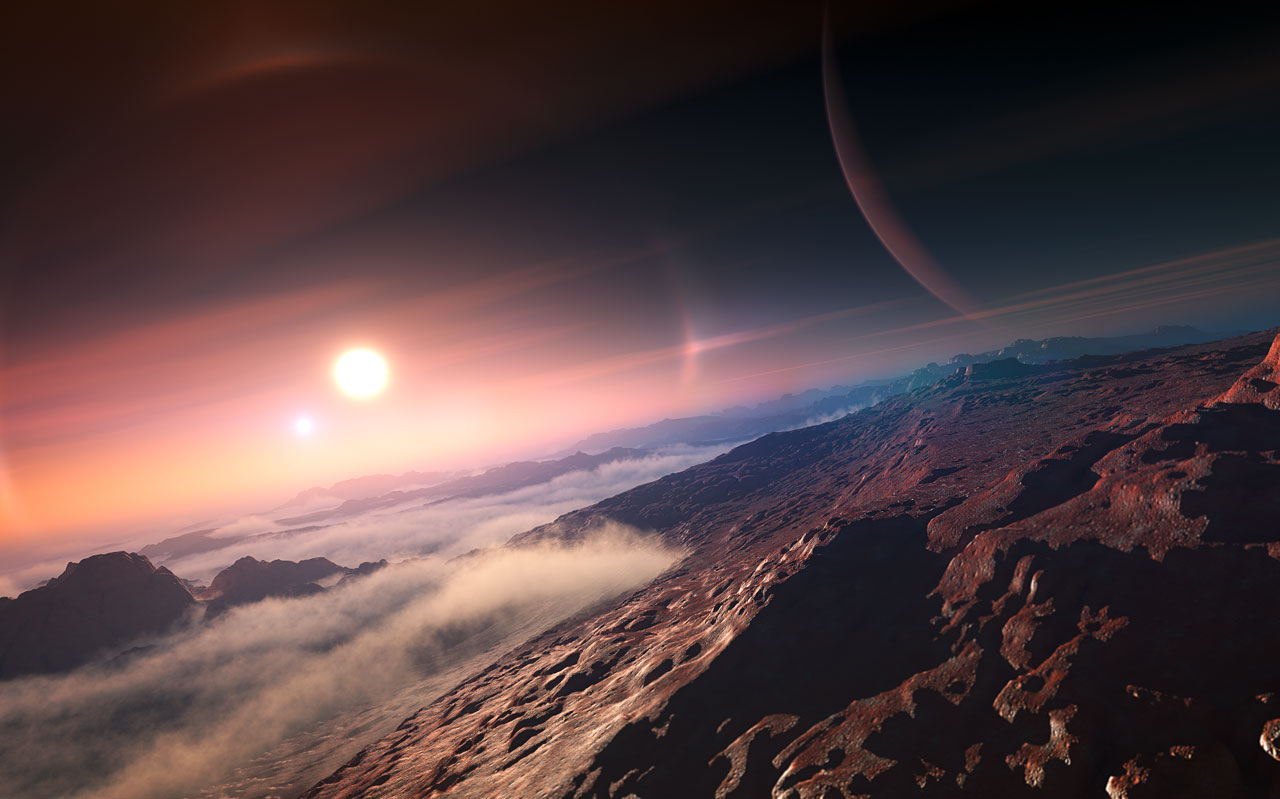
According to Heller and Armstrong, this world would look significantly different from our own. It would be an older world, larger and more rugged, and would provide more places for life to exist. What water there was would be evenly scattered across the surface in the form of lakes and small, shallow seas. And, it would also be slightly more massive, which would mean more gravity.
This way, the shallow waters would hold much larger populations of more diverse life than is found on Earth, while the temperatures would be more moderated. However, it would be a warmer world than Earth, which also makes for more diversity and potentially more oxygen, which the higher gravity would help with by allowing the planet to better retain its atmosphere.
Another point made by Heller and Armstrong is that there may be more than one habitable planet in the Alpha Centauri B system. Cosmic bombardments early in the history of the Solar System is how the Earth got its water and minerals. If life had already emerged on one planet in the early history of the Alpha Centauri B system, then the bombardment might have spread it to other worlds.
But of course, this is all theoretical. Such a planet may or may not exist, and may or may not have triggered the emergence of life on other worlds within the system. But what is exciting about it is just how plausible its existence may prove to be, and how easy it will be to verify once we can get some space probes between here and there.
Just imagine the sheer awesomeness of being able to see it, the images of a super-sized Earth-moon beamed back across light years, letting us know that there is indeed life on worlds besides our own. Now imagine being able to study that life and learning that our conceptions of this too have been limited. What a time that will be! I hope we all live to see it…
With the recent developments being made in the fields of domestic surveillance, unmanned aerial vehicles, and metadata-mining algorithms, it’s quite understandable how many people are afraid for their privacy and their freedom. And with things expected to get worse, thanks in part to mind-machine interfacing and brain scanning, it was only a matter of time before some began to develop countermeasures.
Not too long ago, I came upon a drone art campaign over at DeviantART that addressed the issue of a surveillance-society. In addition to some wonderful artwork, the campaign also showcased a new fashion line known as “Stealth Wear”. Created by Adam Harvey, these “anti-drone garments” were a form of metalized fabric that protect against thermal imaging surveillance, a technology used widely by UAVs/drones.
As it turns out, Harvey and his associates are hardly alone in this venture. Predicting the rise of mind-reading surveillance machinery, a group of designers in Italy began working on a series of thought-blocking accessories designed to maintaining private thoughts in an era when national security agencies and marketers want to get inside our heads.
Designers Lisa Kori Chung and Caitlin Morris, both researchers at Fabrica, started work on the project after they began thinking about the relationship between clothing and privacy – how it both protects and conceals. They researched current surveillance techniques, including facial recognition software, as well as brain scanning technology that’s beginning to accurately recognize emotions and thoughts.
Chung and Morris explained the conclusions they reached after extensive researcher, as well as their concept for a fashion-based solution, in a recent interview:
We imagined what it would be like for these things to converge, if clothing played a role in intellectual and emotional privacy as well as the physical privacy it’s always been associated with.
Predicting how the technology might continue to evolve, they created three accessories – a hat transmits sound through bone conduction, a collar that sends a tiny electric shock, and a mask that flashes bright lights. As they explain it, the accessories do not block scanners, but allow a person to distract a surveying machine from seeing whatever it is they want to keep private from it:
Aside from the realistic constraints of long-distance scanning, the premise of detecting people’s general thoughts and moods based on a low-resolution brain scan is a possibility that’s already proving very realistic. We looked into recent studies where researchers were able to detect precise emotions in subjects, and that data is already being used for information on brand recognition and advertising.
Each object has a detailed, almost Baroque design inspired by other protective objects. Each one is designed to draw attention away from telltale indicators like the person’s facial structure towards the art itself, along with its special, surveillance-busting features. As they explain, the merger came from existing security concepts, but was altered to look artistic:
We were fascinated by examples of devices intended for security, but designed to look ornamental–such as window bars, fences, the printing inside security envelopes. We wanted to build on this, and to design these technology-heavy pieces as beautifully crafted accessories. It’s an aesthetic that’s missing in a lot of future-wear, but the awareness of craft and textile is an important part of our connection to objects, especially objects that are increasingly technical.
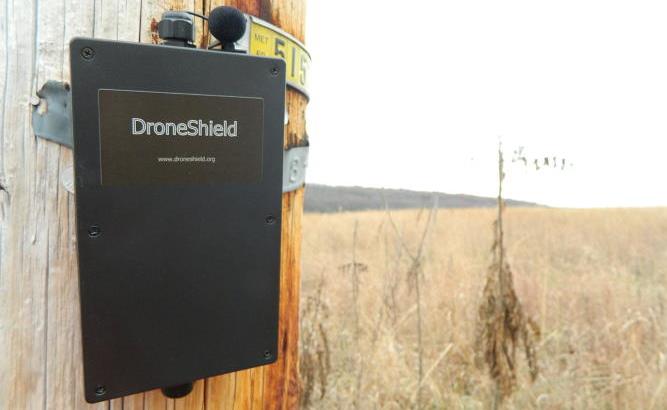
In addition, new technologies are emerging that are designed to counter unmanned aerial drones – something which is expected to become far more common – by alerting people to their presence. It’s known as the Drone Shield, a project that started out in May as an Indiegogo lark, but has since morphed into a serious business affair intended to protect people and businesses from unwanted intrusion.
With the growing popularity of hobbyist and commercial-grade drones, privacy and security are becoming much more than an abstract concern for a wide-range of interests. Many believe it’s only a matter of time before these kinds of simple drones are engaged for corporate espionage – like taking photos or landing on a roof and hacking into a Wi-Fi network. Or even a physical attack.
Designed by two engineers – Brian Hearing and John Franklin, both of whom spent most of their careers working in the defense and intelligence industry – the UAV detector is a small portable or mountable box that listens for drone noise and sounds an alert if one is close. Using a microphone tuned to pick up background noise, the box analyzes noise and identifies the characteristic acoustic signatures of different kinds of UAVs.
The company has sold about 130 devices for $100, and recently begun distributing a smaller $59 portable version. But according to Brian Hearing, the co-inventor, this is just the beginning:
The goal is to give you enough warning time to either go inside and shut your blinds … or for commercial uses, it’s to call the cops or alert your security… Our longer-term plan is to improve the product so it’s ready for enterprise sales; turn some of our pilot installations into long-term customers, and expand overseas. We’re envisioning installing one of our devices every place you have a security camera.
While the device isn’t sensitive enough to detect military-grade drones high overhead, Hearing claimed it can catch hobbyist devices and (with the help of more expensive and sensitive microphones) commercial drones as well. Another company has tried to detect radio frequency communications of UAVs with a person on the ground, but these signals are easy to mask and as drones grow more autonomous, they will be fewer.
But as Hearing explained, acoustics are another animal entirely because they are unique and difficult to fake or hide:
Acoustics are good because it’s very difficult to hide them. They sound really unique. There’s really not much else out there that sounds like it–it can tune out leaf blowers, weed whackers, and hair dryers.
Right now, Hearing and his co-founder John Franklin are improving the product to use higher-quality hardware and microphones and sell at a higher price than $100. Having raised the seed money they need through their Indiegogo campaign, they plan to grow their business and expand their current customer base to include major companies.
So in addition to major advances in the fields of biomedicine, nanotechnology and fabrication, the world of tomorrow may also be a place where surveillance wars are a constant, with companies and mischievous individuals constantly trying to get one-up on their competitors. And the rest of us, as usual, will be caught in the middle, looking to protect ourselves.
If there’s one thing medical science is looking to achieve, it’s ways of dealing with sickness and injuries that are less invasive. And now more than ever, researchers are looking to the natural world for solutions. Whether it is working with the bodies own components to promote healing, or using technologies that imitate living organism, the future of medicine is all about engineered-natural solutions.
Consider the elastic glue developed by associate professor Jeffrey Karp, a Canadian-born medical researcher working at Harvard University. Created for heart surgery, this medical adhesive is designed to replace sutures and staples as the principle means of sealing incisions and defects in heart tissue. But the real kicker? The glue was inspired by sticky natural secretions of slugs.
Officially known as hydrophobic light-activated adhesive (HLAA), the glue was developed in a collaboration between Boston Children’s Hospital, MIT, and Harvard-affiliated Brigham and Women’s Hospital. And in addition to being biocompatible and biodegradable (a major plus in surgery), it’s both water-resistant and elastic, allowing it to stretch as a beating heart expands and contracts.
All of this adds up to a medical invention that is far more user-friendly than stitches and staples, does not have to be removed, and will not cause complications. On top of all that, it won’t complicate healing by restricting the heart’s movements, and only becomes active when an ultraviolet light shines on it, so surgeons can more accurately bind the adhesive exactly where needed.
The technology could potentially be applied not just to congenital heart defects, but to a wide variety of organs and other body parts. In an recent interview with CBC Radio’s Quirks & Quarks, Karp explained the advantages of the glue:
Sutures and staples really are not mechanically similar to the tissues in the body, so they can induce stress on the tissue over time. This is a material that’s made from glycerol and sebacic acid, both of which exist in the body and can be readily metabolized. What happens over time is that this material will degrade. Cells will invade into it and on top of it, and ideally the hole will remain closed and the patient won’t require further operations.
In lab tests, biodegradable patches coated with HLAA were applied to holes in the hearts of live pigs. Despite the high pressure of the blood flowing through the organs, the patches maintained a leakproof seal for the 24-hour test period. HLAA is now being commercially developed by Paris-based start-up Gecko Biomedical, which hopes to have it on the market within two to three years.
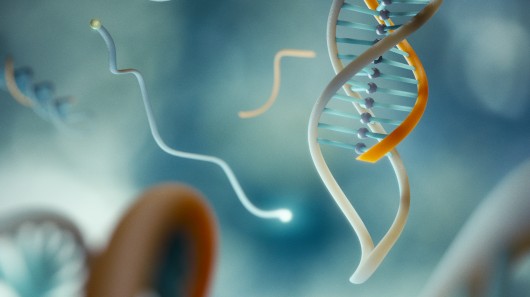
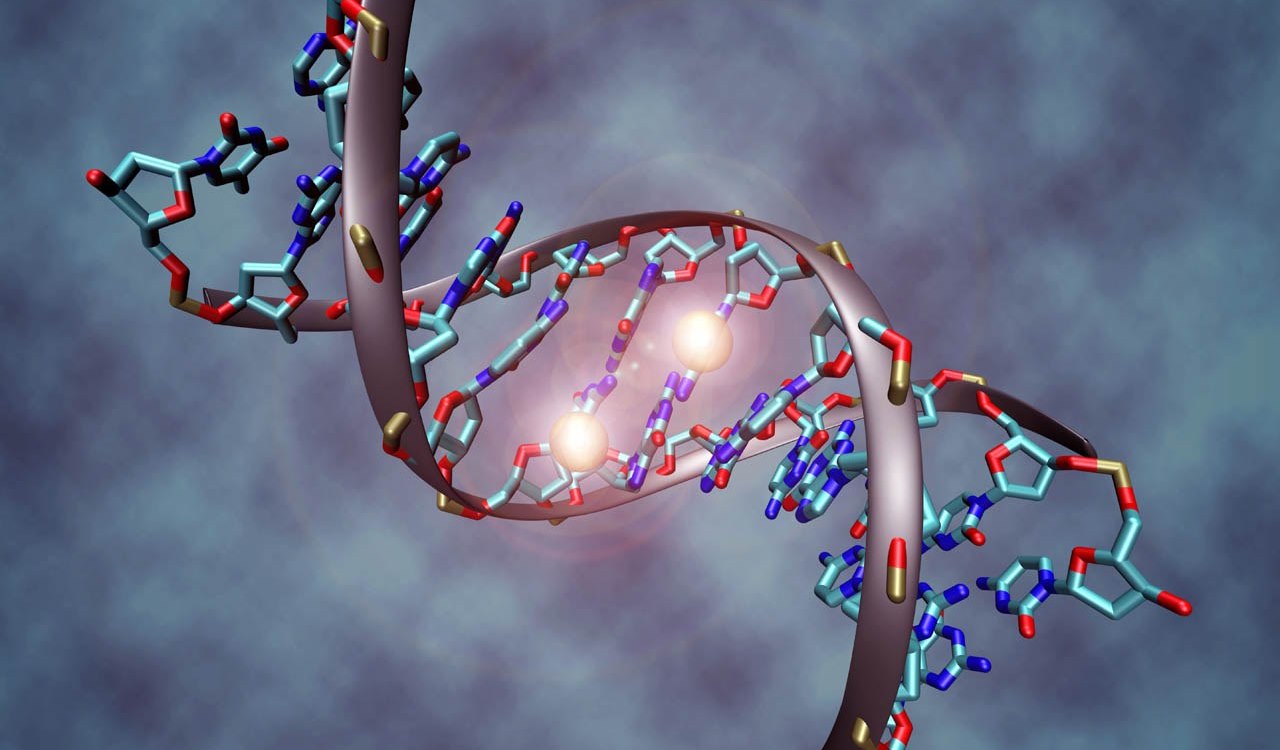
In another recent development, scientists at the Université de Montréal have created a new DNA clamp capable of detecting the genetic mutations responsible for causing cancers, hemophilia, sickle cell anemia and other diseases. This clamp is not only able to detect mutations more efficiently than existing techniques, it could lead to more advanced screening tests and more efficient DNA-based nanomachines for targeted drug delivery.
To catch diseases at their earliest stages, researchers have begun looking into creating quick screening tests for specific genetic mutations that pose the greatest risk of developing into life-threatening illnesses. When the nucleotide sequence that makes up a DNA strand is altered, it is understood to be a mutation, which specific types of cancers can be caused by.
To detect this type of mutation and others, researchers typically use molecular beacons or probes, which are DNA sequences that become fluorescent on detecting mutations in DNA strands. The team of international researchers that developed the DNA clamp state that their diagnostic nano machine allows them to more accurately differentiate between mutant and non-mutant DNA.
According to the research team, the DNA clamp is designed to recognize complementary DNA target sequences, binds with them, and form a stable triple helix structure, while fluorescing at the same time. Being able to identify single point mutations more easily this way is expected to help doctors identify different types of cancer risks and inform patients about the specific cancers they are likely to develop.
Diagnosing cancer at a genetic level could potentially help arrest the disease, before it even develops properly. Alexis Vallée-Bélisle, a Chemistry Professor at the Université de Montréal, explained the long-term benefits of this breakthrough in a recent interview:
Cancer is a very complex disease that is caused by many factors. However, most of these factors are written in DNA. We only envisage identifying the cancers or potential of cancer. As our understanding of the effect of mutations in various cancer will progress, early diagnosis of many forms of cancer will become more and more possible.
Currently the team has only tested the probe on artificial DNA, and plans are in the works to undertake testing on human samples. But the team also believes that the DNA clamp will have nanotechnological applications, specifically in the development of machines that can do targeted drug-delivery.
For instance, in the future, DNA-based nanomachines could be assembled using many different small DNA sequences to create a 3D structure (like a box). When it encounters a disease marker, the box could then open up and deliver the anti-cancer drug, enabling smart drug delivery. What’s more, this new DNA clamp could prove intrinsic in that assembly process.
Professor Francesco Ricci of the University of Rome, who collaborated on the project, explained the potential in a recent interview:
The clamp switches that we have designed and optimized can recognize a DNA sequence with high precision and high affinity. This means that our clamp switches can be used, for example, as super-glue to assemble these nano machines and create a better and more precise 3D structure that can, for example, open in the presence of a disease marker and release a drug.
Hmm, glues inspired by mollusc secretions, machines made from DNA. Medical technology is looking less like technology and more like biology every day now!
In the course of becoming an indie writer, there is one aspect of the creative process which keeps coming back to me. To put it simply, it is the challenges and delights of world building – i.e. creating the background, context, and location in which a story takes place. For years, I have been reading other people’s thoughts on the subject, be they authors themselves or just big fans of literary fiction.
But my own experience with the process has taught me much that I simply couldn’t appreciate before I picked up my pen and pad (or in this case, opened a word doc and began typing). Ad lately, the thoughts have been percolating in my mind and I felt the need to write them out. Having done that, I thought I might share them in full.
For starters, being a science fiction writer presents a person with particular opportunities for creative expression. But at the same time, it presents its share of particular challenges. While one is certainly freer to play around with space, place, and invent more freely than with most other genres, they are still required to take into account realism, consistency and continuity in all that they do.
Sooner or later, the world a writer builds will be explored, mapped, and assessed, and any and all inconsistencies are sure to stick out like a sore thumb! So in addition to making sure back-stories, timelines and other details accord with the main plot, authors also need to be mindful of things like technology, physical laws, and the nature of space and time.
But above all, the author in question has to ask themselves what kind of universe they want to build. If it is set in the future, they need to ask themselves certain fundamental questions about where human beings will be down the road. Not only that, they also need to decide what parallels (and they always come up!) they want to draw with the world of today.
Through all of this, they will be basically deciding what kind of message they want to be sending with their book. Because of course, anything they manage to dream up about the future will tell their readers lots about the world the author inhabits, both in the real sense and within their own head. And from what I have seen, it all comes down to five basic questions they must ask themselves…
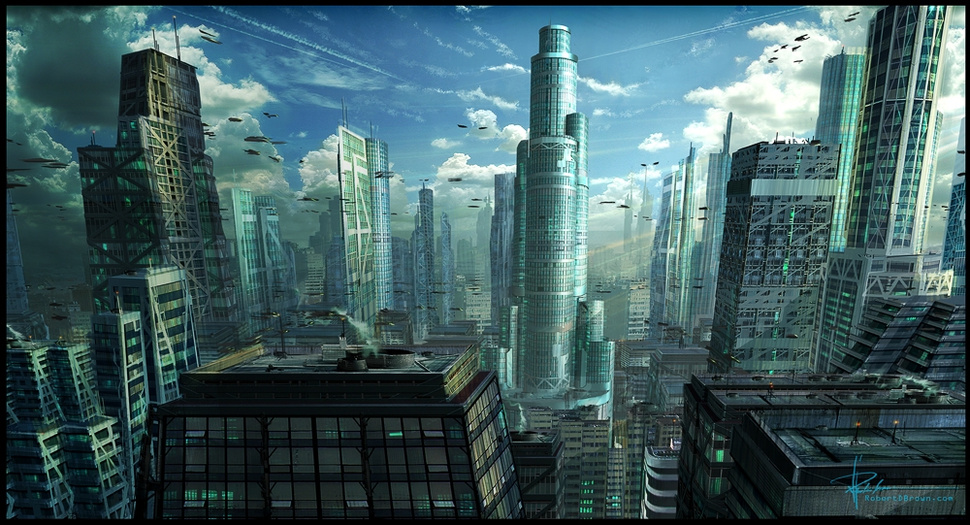
1. Near-Future/Far Future: When it comes to science-fiction stories, the setting is almost always the future. At times, it will be set in an alternate universe, or an alternate timeline; but more often than not, the story takes place down the road. The only question is, how far down the road? Some authors prefer to go with the world of tomorrow, setting their stories a few decades or somewhere in the vicinity of next century.
By doing this, the author in question is generally trying to show how the world of today will determine the world of tomorrow, commenting on current trends and how they are helping/hurting us. During the latter half of the 20th century, this was a very popular option for writers, as the consensus seemed to be that the 21st century would be a time when some truly amazing things would be possible; be it in terms of science, technology, or space travel.
Other, less technologically-inclined authors, liked to use the not-so-distant future as a setting for dystopian, post-apocalytpic scenarios, showing how current trends (atomic diplomacy, arms races, high tech, environmental destruction) would have disastrous consequences for humanity in the near-future. Examples of this include Brave New World, 1984, The Iron Heel, The Chrysalids, and a slew of others.
In all cases, the totalitarian regimes or severe technological and social regression that characterized their worlds were the result of something happening in the very near-future, be it nuclear or biological war, a catastrophic accident, or environmental collapse. Basically, humanity’s current behavior was the basis for a cautionary tale, where an exaggerated example is used to illustrate the logical outcome of all this behavior.
At the other end of the spectrum, many authors have taken the long view with their sci-fi world building. Basically, they set their stories several centuries or even millennia from now. In so doing, they are able to break with linear timelines and the duty of having to explain how humanity got from here to there, and instead could focus on more abstract questions of existence and broader allegories.
Examples of this include Frank Herbert’s Dune and Asimov’s Foundation series, both of which were set tens of thousands of years in the future. In both of these universes, humanity’s origins and how they got to where they were took a backseat to the historical allegories that were being played upon. While some mention is given to the origins of humanity and where they came from, little attempt is made to draw a line from the present into the future.
Instead, the focus is overwhelmingly on the wider nature of human beings and what drives us to do the things we do. Asimov drew from Gibbon’s Decline and Fall of the Roman Empire to make a point about the timeless nature of history, while Herbert drew on the modern age, medieval and ancient history, religion, philosophy, and evolutionary biology and ecology to investigate the timeless nature of humanity and what factors shape it.
For non-purists, Star Wars and Star Trek can also serve as examples of both tendencies in action. For decades, Star Trek used a not-too-distant future setting to endlessly expound on the human race and the issues it faces today. And always, this examination was done in the form of interstellar travel, the crew of the Enterprise going form world to world and seeing themselves in the problems, norms and social structure of other races.
Star Wars, on the other hand, was an entirely different animal. For the people living in this universe, no mention is ever made of Earth, and pre-Republic history is considered a distant and inaccessible thing. And while certain existential and social issues are explored (i.e. racism, freedom and oppression), the connections with Earth’s past are more subtle, relying on indirect clues rather than overt comparisons.
The Republic and the Empire, for example, is clearly inspired by Rome’s own example. The Jedi Code is very much the picture of the Bushido code, its practitioners a sort of futuristic samurai, and the smugglers of Tatooine are every bit the swashbuckling, gun toting pirates and cowboys of popular fiction. But always, the focus seemed to more on classically-inspired tales of destiny, and of epic battles of good versus evil.
And of course, whether we are talking near future or far future has a big influence on the physical setting of the story as well. Which brings me to item two…
2. Stellar or Interstellar:Here is another important question that every science fiction author has faced, and one which seriously influences the nature of the story. When it comes to the world of tomorrow, will it be within the confines of planet Earth, the Solar System, or on many different world throughout our galaxy? Or, to go really big, will it encompass the entire Milky Way, or maybe even beyond?
Important questions for a world-builder, and examples certainly abound. In the former case, you have your dystopian, post-apocalyptic, and near future seenarios, where humanity is stuck living on a hellish Earth that has seen better days. Given that humanity would not be significantly more adavanced than the time of writing, or may have even regressed due to the downfall of civilization, Earth would be the only place people can live.
But that need not always be the case. Consider Do Androids Dream of Electric Sheep? by Philip K Dick. In his dystopian, post-apocalyptic tale, Earth was devestated by nuclear war, forcing the wealthiest and healthiest to live in the Offworld Colonies while everyone who was too poor or too ravaged by their exposure to radiation was confined to Earth. Clearly, dystopia does not rule out space travel, though it might limit it.
And in the latter case, where human beings have left the cradle and begun walking amongst our System’s other planets and even the stars, the nature of the story tends to be a bit more ambiguous. Those who choose such a setting tend to be of the opinion that mankind either needs to reach out in order to survive, or that doing so will allow us to shed some of our problems.
Examples abound here again, but Alastair Reynolds’ Revelation Space universe seems like the ideal one here. In this series, humanity has access to near-light speed travel, nanotechnology, brain-computer interfacing, neural uploading, AI, smart materials, and has colonized dozens of new worlds. However, the state of humanity has not changed, and on many worlds, civil war and sectarian violence are common.
In either case, the setting also bears a direct relation to the state of technology in the story. For humans still living on Earth (and nowhere else) in the future, chances are, they are about as advanced or even behind the times in which the story was written. For those living amongst the stars, technology would have to advanced sufficiently to make it happen. Which brings me to the next point…
3. High-Tech or Low-Tech: What would a work of science fiction be without plenty of room for gadgets, gizmos, and speculation about the future state of technology? And once more, I can discern of two broad categories that an author can choose from, both of which have their share of potential positives and negatives. And depending on what kind of story you want to write, the choice of what that state is often predetermined.
In the former case, there is the belief that technology will continue to advance in the future, leading to things like space travel, FTL, advanced cyborgs, clones, tricorders, replicators, artificial intelligence, laser guns, lightsabers, phasers, photon torpedoes, synthetic humans, and any number of other fun, interesting and potentially dangerous things.
With stories like these, the purpose of high-tech usually serves as a framing device, providing visual evidence that the story is indeed taking place in the future. In other words, it serves a creative and fun purpose, without much thought being given towards exploring the deeper issues of technological progress and determinism. But this not be the case, and oftentimes with science fiction, high-tech serves a different purpose altogether.
In many other cases, the advance of technology is directly tied to the plot and the nature of the story. Consider cyberpunk novels like Neuromancer and the other novels of William Gibson’s SprawlTrilogy. In these and other cyberpunk novels, the state of technology – i.e. cyberpsace decks, robotic prosthetics, biotech devices – served to illustrate the gap between rich and poor and highlighting the nature of light in a dark, gritty future.
By contrast, such post-cyberpunk novels as Neal Stephenson’s The Diamond Age took a different approach. While high-tech and its effects on society were explored in great detail, he and other authors of this sub genre chose to break with their predecessors on one key issue. Namely, they did not suppose that the emergence of high-tech would lead to dystopia, but rather an ambiguous future where both good and harm resulted.
And at the other end of the spectrum, where technology is in a low state, the purpose and intent of this is generally the same. On the one hand, it may serve as a plot framing device, illustrating how the world is in a primitive state due to the collapse of civilization as we know it, or because our unsustainable habits caught up with us and resulted in the world stepping backwards in time.
At the same time, the very fact that people live in a primitive state in any of these stories serves the purpose of commentary. Simply by showing how our lives were unsustainable, or the actions of the story’s progenitor’s so foolish, the author is making a statement and asking the reader to acknowledge and ponder the deeper issue, whether they realize it or not.
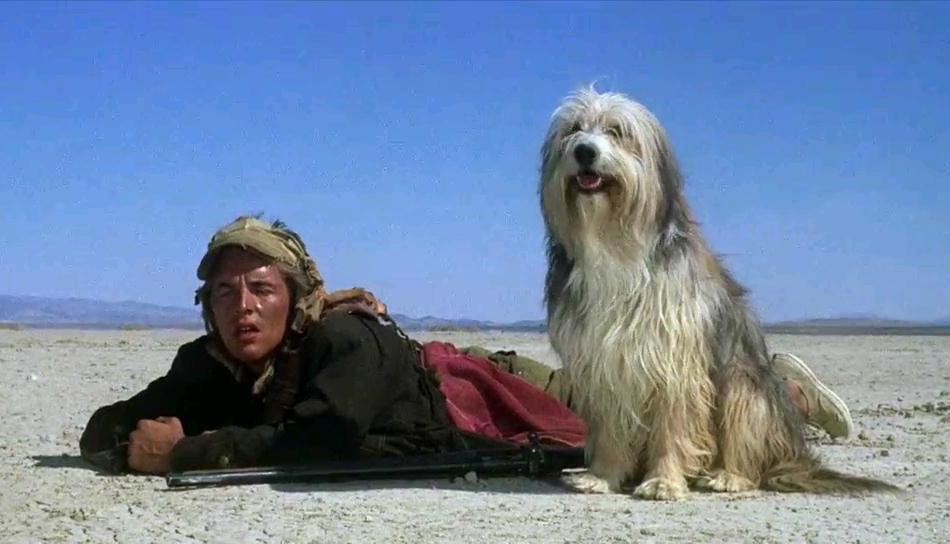
At this end of things, A Boy and His Dog and Mad Max serve as good examples. In the former case, the story takes place in a post-apocalyptic landscape where a lone boy and his genetically-engineered talking dog rove the landscape in search of food and (in the boy’s case) sexual gratification. Here, the state of technology helps to illustrate the timeless nature of the human condition, namely how we are essentially the products of our environment.
In Mad Max as well, the way roving gangs are constantly looking for gasoline, using improvised weapons, and riding around in vehicles cobbled together from various parts gives us a clear picture of what life is like in this post-collapse environment. In addition, the obvious desperation created by said collapse serves to characterize the cultural landscape, which is made up of gangs, tinpot despots, and quasi-cults seeking deliverance.
But on the other hand, the fact that the world exists in this state due to collapse after the planet’s supply of oil ran dry also provides some social commentary. By saying that the world became a dangerous, anarchistic and brutal place simply because humanity was dependent on a resource that suddenly went dry, the creators of Mad Max’s world were clearly trying to tell us something. Namely, conserve!
4. Aliens or Only Humans: Another very important question for setting the scene in a science fiction story is whether or not extra-terrestrials are involved. Is humanity still alone in the universe, or have they broken that invisible barrier that lies between them and the discovery of other sentient life forms? Once again, the answer to this question has a profound effect on the nature of the story, and it can take many forms.
For starters, if the picture is devoid of aliens, then the focus of the story will certainly be inward, looking at human nature, issues of identity, and how our environment serves to shape us. But if there are aliens, either a single species or several dozen, then the chances are, humanity is a united species and the aliens serve as the “others”, either as a window into our own nature, or as an exploration into the awe and wonder of First Contact.
As case studies for the former category, let us consider the Dune, Foundation, and Firefly universes. In each of these, humanity has become an interstellar species, but has yet to find other sentiences like itself. And in each of these, human nature and weaknesses appear to be very much a constant, with war, petty rivalries and division a costant. Basically, in the absence of an “other”, humanity is focused on itself and the things that divide it.
In Dune, for example, a galaxy-spanning human race has settled millions of worlds, and each world has given rise to its own identity – with some appearing very much alien to another. Their are the “navigators”, beings that have mutated their minds and bodies through constant exposure to spice. Then there are the Tleilaxu, a race of genetic manipulators who breed humans from dead tissue and produce eunuch “Face Dancers” that can assume any identity.
Basically, in the absence of aliens, human beings have become amorphous in terms of their sense of self, with some altering themselves to the point that they are no longer even considered human to their bretherin. And all the while, humanity’s biggest fight is with itself, with rival houses vying for power, the Emperor gaurding his dominance, and the Guild and various orders looking to ensure that the resource upon which all civilization depends continues to flow.
In the Foundation universe, things are slightly less complicated; but again, the focus is entirely inward. Faced with the imminent decline and collapse of this civilization, Hari Seldon invents the tool known as “Psychohistory”. This science is dedicated to anticipating the behavior of large groups of people, and becomes a roadmap to recovery for a small group of Foundationists who seek to preserve the light of civilization once the empire is gone.
The series then chronicles their adventures, first in establishing their world and becoming a major power in the periphery – where Imperial power declines first – and then rebuilding the Empire once it finally and fully collapses. Along the way, some unforeseen challenges arise, but Seldon’s Plan prevails and the Empire is restored. In short, it’s all about humans trying to understand the nature of human civilization, so they can control it a little better.
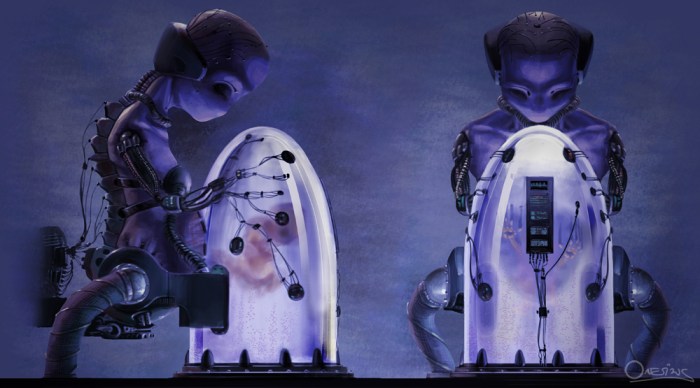
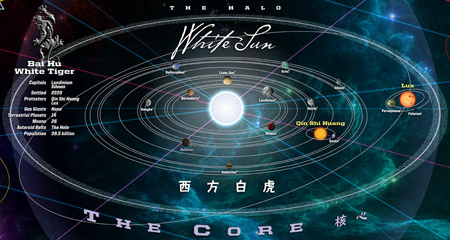
Last, but not least, their is the Firefly universe which – despite the show’s short run – showed itself to be in-depth and interestingly detailed. Basically, the many worlds that make up “The Verse” are divided along quasi-national lines. The core worlds constitute the Alliance, the most advanced and well-off worlds in the system that are constantly trying to expand to bring the entire system under its rule.
The Independents, we learn early in the story, were a coalition of worlds immediately outside the core worlds that fought these attempts, and lost. The Border Worlds, meanwhile, are those planets farthest from the core where life is backwards and “uncivilized” by comparison. All of this serves to illustrate the power space and place have over human identity, and how hierarchy, power struggles and divisiveness are still very much a part of us.
But in universes where aliens are common, then things are a little bit different. In these science fiction universes, where human beings are merely one of many intelligent species finding their way in the cosmos, extra-terrestrials serve to make us look outward and inward at the same time. In this vein, the cases of Babylon 5, and 2001: A Space Odyssey provide the perfect range of examples.
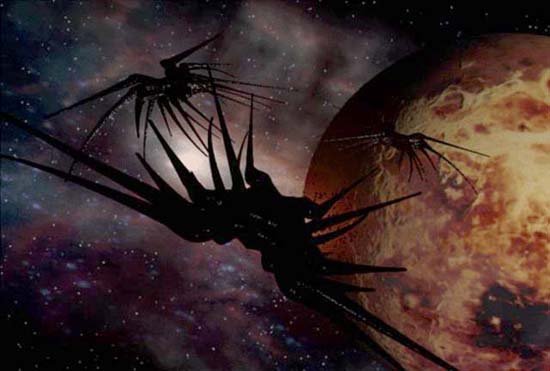
In B5 – much as with Stark Trek, Star Gate, or a slew of other franchises – aliens serve as a mirror for the human condition. By presenting humanity with alien cultures, all of whom have their own particular quarks and flaws, we are given a meter stick with which to measure ourselves. And in B5‘s case, this was done rather brilliantly – with younger races learning from older ones, seeking wisdom from species so evolved that often they are not even physical entities.
However, in time the younger race discover that the oldest (i.e. the Shadows, Vorlons, and First Ones) are not above being flawed themselves. They too are subject to fear, arrogance, and going to war over ideology. The only difference is, when they do it the consequences are far graver! In addition, these races themselves come to see that the ongoing war between them and their proxies has become a senseless, self-perpetuating mistake. Echoes of human frailty there!
In 2001: A Space Odyssey, much the same is true of the Firstborn, a race of aliens so ancient that they too are no longer physical beings, but uploaded intelligences that travel through the cosmos using sleek, seamless, impenetrable slabs (the monoliths). As we learn in the course of the story, this race has existed for eons, and has been seeking out life with the intention of helping it to achieve sentience.
This mission brought them to Earth when humanity was still in its primordial, high-order primate phase. After tinkering with our evolution, these aliens stood back and watched us evolve, until the day that we began to reach out into the cosmos ourselves and began to discover some of the tools they left behind. These include the Tycho Monolith Anomaly-1 (TMA-1) on the Moon, and the even larger one in orbit around Jupiter’s moon of Europa.
After making contact with this monolith twice, first with the American vessel Discovery and then the joint Russian-American Alexei Leonov, the people of Earth realize that the Firstborn are still at work, looking to turn Jupiter into a sun so that life on Europa (confined to the warm oceans beneath its icy shell) will finally be able to flourish. Humanity is both astounded and humbled to learn that it is not alone in the universe, and wary of its new neighbors.
This story, rather than using aliens as a mirror for humanity’s own nature, uses a far more evolved species to provide a contrast to our own. This has the same effect, in that it forces us to take a look at ourselves and assess our flaws. But instead of showing those flaws in another, it showcases the kind of potential we have. Surely, if the Firstborn could achieve such lengths of evolutionary and technological development, surely we can too!
5. Utopian/Dystopian/Ambiguous: Finally, there is the big question of the qualitative state of humanity and life in this future universe. Will life be good, bad, ugly, or somewhere in between? And will humanity in this narrative be better, worse, or the same as it now? It is the questions of outlook, whether it is pessimistic, optimistic, realistic, or something else entirely which must concern a science fiction writer sooner or later.
Given that the genre evolved as a way of commenting on contemporary trends and offering insight into their effect on us, this should come as no surprise. When looking at where we are going and how things are going to change, one cannot help but delve into what it is that defines this thing we know as “humanity”. And when it comes right down to it, there are a few schools of thought that thousands of years of scholarship and philosophy have provided us with.
Consider the dystopian school, which essentially posits that mankind is a selfish, brutish, and essentially evil creature that only ever seeks to do right by himself, rather than other creatures. Out of this school of thought has come many masterful works of science fiction, which show humanity to be oppressive to its own, anthropocentric to aliens and other life forms, and indifferent to the destruction and waste it leaves in its wake.
And of course, there’s the even older Utopia school, which presents us with a future where mankind’s inherent flaws and bad behavior have been overcome through a combination of technological progress, political reform, social evolution, and good old fashioned reason. In these worlds, the angels of humanity’s nature have won the day, having proven superior to humanity’s devils.
In the literally realm, 1984 is again a perfect example of dytopian sci=fi, where the totalitarian rule of the few is based entirely on selfishness and the desire for dominance over others. According to O’Brien, the Party’s mouthpiece in the story, their philosophy in quite simple:
The Party seeks power entirely for its own sake.We are not interested in the good of others; we are interested solely in power. Power is in inflicting pain and humiliation. Power is in tearing human minds to pieces and putting them together again in new shapes of your own choosing. If you want a picture of the future, imagine a boot stamping on a human face — forever.
Hard to argue with something so brutal and unapologetic, isn’t it? In Orwell’s case, the future would be shaped by ongoing war, deprivation, propaganda, fear, torture, humiliation, and brutality. In short, man’s endless capacity to inflict pain and suffering on others.
Aldous Huxley took a different approach in his seminal dystopian work, Brave New World, in which he posited that civilization would come to be ruled based on man’s endless appetite for pleasure, indifference and distraction. Personal freedom and individuality would be eliminated, yes, but apparently for man’s own good rather than the twisted designs of a few true-believers:
Universal happiness keeps the wheels steadily turning; truth and beauty can’t. And, of course, whenever the masses seized political power, then it was happiness rather than truth and beauty that mattered… People were ready to have even their appetites controlled then. Anything for a quiet life. We’ve gone on controlling ever since. It hasn’t been very good for truth, of course. But it’s been very good for happiness. One can’t have something for nothing. Happiness has got to be paid for.
But even though the means are entirely different, the basic aim is the same. Deprive humanity of his basic freedom and the potential to do wrong in order to ensure stability and long-term rule. In the end, a darker, more cynical view of humanity and the path that we are on characterized these classic examples of dystopia and all those that would come to be inspired them.
Imminent Utopia by Kuksi
As for Utopian fiction, H.G. Wells’ Men Like Gods is a very appropriate example. In this novel, a contemporary journalist finds himself hurled through time into 3000 years into the future where humanity lives in a global state named Utopia, and where the “Five Principles of Liberty” – privacy, free movement, unlimited knowledge, truthfulness, and free discussion and criticism – are the only law.
After staying with them for a month, the protogonist returns home with renewed vigor and is now committed to the “Great Revolution that is afoot on Earth; that marches and will never desist nor rest again until old Earth is one city and Utopia set up therein.” In short, like most Positivists of his day, Wells believed that the march of progress would lead to a future golden age where humanity would shed it’s primitive habits and finally live up to its full potential.
This view would prove to have a profound influence on futurist writers like Asimov and Clarke. In the latter case, he would come to express similar sentiments in both the Space Odyssey series and his novel Childhood’s End. In both cases, humanity found itself confronted with alien beings of superior technology and sophistication, and eventually was able to better itself by opening itself up to their influence.
In both series, humanity is shown the way to betterment (often against their will) by cosmic intelligences far more advanced than their own. But despite the obvious questions about conquest, loss of freedom, individuality, and identity, Clarke presents this as a good thing. Humanity, he believed, had great potential, and would embrace it, even if it had to be carried kicking and screaming.
And just like H.G Wells, Clarke, Asimov, and a great many of his futurist contemporaries believes that the ongoing and expanding applications of science and technology would be what led to humanity’s betterment. A commitment to this, they believed, would eschew humanity’s dependence on religion, superstition, passion and petty emotion; basically, all the things that made us go to war and behave badly in the first place.
Summary: These are by no means the only considerations one must make before penning a science fiction story, but I think they provide a pretty good picture of the big-ticket items. At least the ones that keep me preoccupied when I’m writing! In the end, knowing where you stand on the questions of location, content, tone and feel, and what your basic conception of the future, is all part of the creation process.
In other words, you need to figure out what you’re trying to say and how you want to say it before you can go to town. In the meantime, I say to all aspiring and established science fiction writers alike: keep pondering, keep dreaming, and keep reaching for them stars!
Interesting and full of potential, I must say. As an educator, I look forward to the day when kids can even explore things at the cellular and atomic level using AR and VR.
This is a guest post from Samantha Morra of EdTechTeacher.org, an advertiser on FreeTech4Teachers.com.
Augmented Reality (AR) blurs the line between the physical and digital world. Using cues or triggers, apps and websites can “augment” the physical experience with digital content such as audio, video and simulations. There are many benefits to using AR in education such as giving students opportunities to interact with items in ways that spark inquiry, experimentation, and creativity. There are a quite a few apps and sites working on AR and its application in education.
Elements4D, an AR app from Daqri, allows students explore chemical elements in a fun way while learning about real-life chemistry. To get started, download Elements4D and print the cubes.
There are 6 physical paper cubes printed with different symbols from the periodic table. It takes a while to cut out and put together the cubes, but it…
As documents that illustrate the NSA’s clandestine behavior continue to be leaked, the extents to which the agency has been going to gain supremacy over cyberspace are becoming ever more clear. Thanks to a new series of documents released by Snowden, it now seems that these efforts included two programs who’s purpose was to create a ““useful quantum computer” that would be capable of breaking all known forms of classical encryption.
According to the documents, which were published by The Washington Post earlier this month, there are at least two programs that deal with quantum computers and their use in breaking classical encryption — “Penetrating Hard Targets” and “Owning the Net.” The first program is funded to the tune of $79.7 million and includes efforts to build “a cryptologically useful quantum computer” that can:
sustain and enhance research operations at NSA/CSS Washington locations, including the Laboratory for Physical Sciences facility in College Park, MD.
The second program, Owning the Net, deals with developing new methods of intercepting communications, including the use of quantum computers to break encryption. Given the fact that quanutm machinery is considered the next great leap in computer science, offering unprecedented speed and the ability to conduct operations at many times the efficiency of normal computers, this should not come as a surprise.
Such a computer would give the NSA unprecedented access to encrypted files and communications, enadling them to break any protective cypher, access anyone’s data with ease, and mount cyber attacks with impunity. But a working model would also vital for defensive purposes. Much in the same way that the Cold War involved ongoing escalation between nuclear armament production, cybersecurity wars are also subject to constant one-upmanship.
In short, if China, Russia, or some other potentially hostile power were to obtain a quantum computer before the US, all of its encrypted information would be laid bare. Under the circumstances, and given their mandate to protect the US’s infrastructure, data and people from harm, the NSA would much rather they come into possesion of one first. Hence why so much attention is dedicated to the issue, since whoever builds the worlds first quantum computer will enjoy full-court dominance for a time.
The mathematical, cryptographical, and quantum mechanical communities have long known that quantum computing should be able to crack classical encryption very easily. To crack RSA, the world’s prevailing cryptosystem, you need to be able to factor prime numbers — a task that is very difficult with a normal, classical-physics CPU, but might be very easy for a quantum computer. But of course, the emphasis is still very much on the word might, as no one has built a fully functioning multi-qubit quantum computer yet.
As for when that might be, no one can say for sure. But the smart money is apparently anticipating one soon, since researchers are getting to the point where coherence on a single qubit-level is becoming feasible, allowing them to move on to the trickier subject of stringing multiple fully-entangled qubits together, as well as the necessary error checking/fault tolerance measures that go along with multi-qubit setups.
But from what it’s published so far, the Laboratory for Physical Sciences – which is carrying out the NSA’s quantum computing work under contract – doesn’t seem to be leading the pack in terms of building a quantum computer. In this respect, it’s IBM with its superconducting waveguide-cavity qubits that appears to be closer to realizing a quantum computer, with other major IT firms and their own supcomputer models not far behind.
Despite what this recent set of leaks demonstrates then, the public should take comfort in knowing that the NSA is not ahead of the rest of the industry. In reality, something like a working quantum computer would be so hugely significant that it would be impossible for the NSA to develop it internally and keep it a secret. And by the time the NSA does have a working quantum computer to intercept all of our encrypted data, they won’t be the only ones, which would ensure they lacked dominance in this field.
So really, thess latest leaks ought to not worry people too much, and instead should put the NSAs ongoing struggle to control cyberspace in perspective. One might go so far as to say that the NSA is trying to remain relevant in an age where they are becoming increasingly outmatched. With billions of terabytes traversing the globe on any given day and trillions of devices and sensors creating a “second skin” of information over the globe, no one organization is capable of controlling or monitoring it all.
So to those in the habit of dredging up 1984 every time they hear about the latest NSA and domestic surveillance scandal, I say: Suck on it, Big Brother!

 The Walking Dead has returned! After last year’s mid-season cliffhanger, the return of this show was one of the most anticipated events this television season. And in fact, yesterday’s premiere even beat out the Olympics in terms of ratings. Kind of a downer, really. But people love their zombies and were waiting for months for their WD fix. And we see the Winter Games every what, four years?
 The episode opens with Michonne looking upon a ruined and overrun prison. After killing Hershel’s now resurrected corpse, she lures two Walkers into a trap, removes their arms and jaws, and binds their necks. With them as her protection, she sets off again on the road. Farther on, Rick and Carl are struggling along, looking for food and shelter for the night, with Rick lagging behind because of his wounds.
 His yelling draws two Walkers to their door which try to break in. Sneaking out back, Carl lures these two away quietly, but is then set upon by a third. He is forced to fire his gun multiple times, but survives. He then tells Rick he doesn’t need him anymore, goes out again in search of food, and once more runs afoul of a Walker, wastes the last of his ammo, and is forced to trap it in a bedroom and escape.
 Continuing on, she begins to pick up many Walker followers, and begins to notice that one even resembles her. She eventually draws her sword and kills this woman, and then is forced to kill the rest as they close in on her. Eventually, she does, and even takes out her escort. Alone again, she breaks down and cries, but eventually manages to pick up Rick and Carl’s trail…
 Finding her way to the diner where Rick and Carl passed before, Michonne rests and begins speaking to her departed boyfriend. She says she’s figured out the answer, by which she means why they should carry on amidst everything around them. Back at the house, Rick and Carl talk and resolve things. Carl apologizes for risking his life while Rick admits that things will never be the same again.
 Also, the interplay between Rick and Carl in this episode was pretty faithful to the comic book. After being caught in the wilderness together, Carl found himself having to take charge and at one point thought Rick had turned. But there, Rick was struggling with the death of Judith and Lori, and dealt with it by talking to her on a broken phone (which instead was moved up to season three).



















 When it comes to science-fiction stories, the setting is almost always the future. At times, it will be set in an alternate universe, or an alternate timeline; but more often than not, the story takes place down the road. The only question is, how far down the road? Some authors prefer to go with the world of tomorrow, setting their stories a few decades or somewhere in the vicinity of next century.
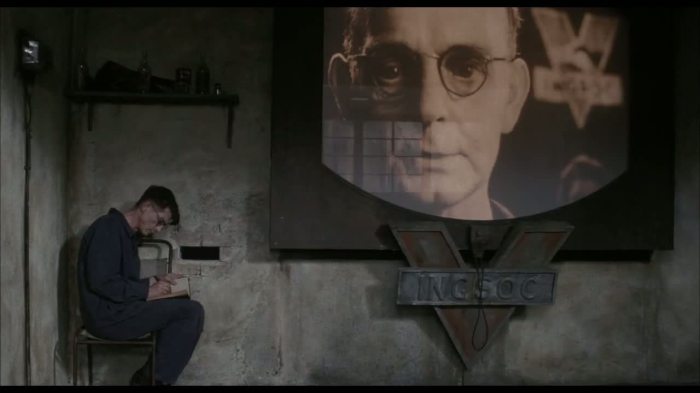 Other, less technologically-inclined authors, liked to use the not-so-distant future as a setting for dystopian, post-apocalytpic scenarios, showing how current trends (atomic diplomacy, arms races, high tech, environmental destruction) would have disastrous consequences for humanity in the near-future. Examples of this include Brave New World, 1984, The Iron Heel, The Chrysalids, and a slew of others.


 Here is another important question that every science fiction author has faced, and one which seriously influences the nature of the story. When it comes to the world of tomorrow, will it be within the confines of planet Earth, the Solar System, or on many different world throughout our galaxy? Or, to go really big, will it encompass the entire Milky Way, or maybe even beyond?

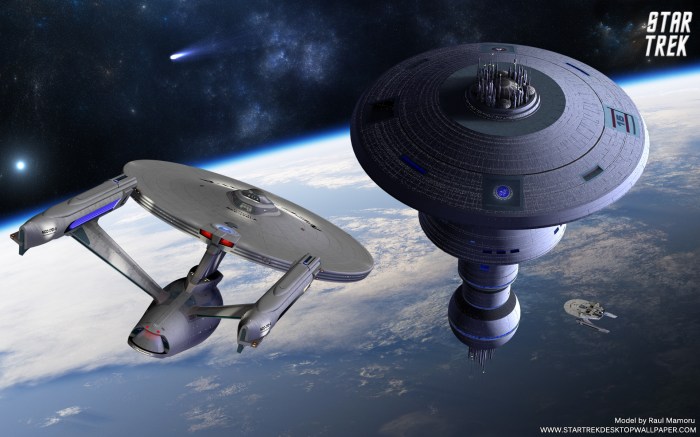 What would a work of science fiction be without plenty of room for gadgets, gizmos, and speculation about the future state of technology? And once more, I can discern of two broad categories that an author can choose from, both of which have their share of potential positives and negatives. And depending on what kind of story you want to write, the choice of what that state is often predetermined.
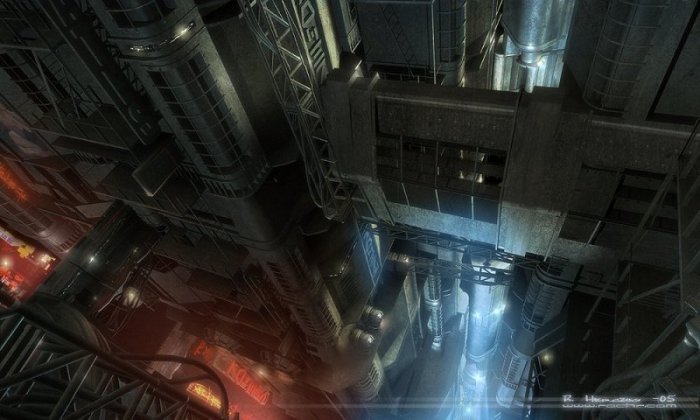 With stories like these, the purpose of high-tech usually serves as a framing device, providing visual evidence that the story is indeed taking place in the future. In other words, it serves a creative and fun purpose, without much thought being given towards exploring the deeper issues of technological progress and determinism. But this not be the case, and oftentimes with science fiction, high-tech serves a different purpose altogether.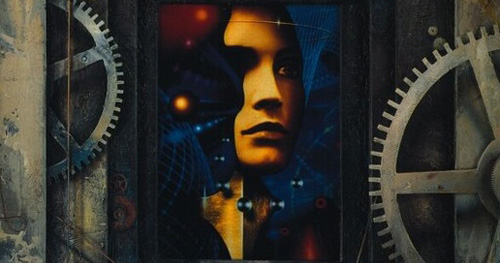
 In Mad Max as well, the way roving gangs are constantly looking for gasoline, using improvised weapons, and riding around in vehicles cobbled together from various parts gives us a clear picture of what life is like in this post-collapse environment. In addition, the obvious desperation created by said collapse serves to characterize the cultural landscape, which is made up of gangs, tinpot despots, and quasi-cults seeking deliverance.
 Another very important question for setting the scene in a science fiction story is whether or not extra-terrestrials are involved. Is humanity still alone in the universe, or have they broken that invisible barrier that lies between them and the discovery of other sentient life forms? Once again, the answer to this question has a profound effect on the nature of the story, and it can take many forms.

 The Independents, we learn early in the story, were a coalition of worlds immediately outside the core worlds that fought these attempts, and lost. The Border Worlds, meanwhile, are those planets farthest from the core where life is backwards and “uncivilized” by comparison. All of this serves to illustrate the power space and place have over human identity, and how hierarchy, power struggles and divisiveness are still very much a part of us.
 In B5 – much as with Stark Trek, Star Gate, or a slew of other franchises – aliens serve as a mirror for the human condition. By presenting humanity with alien cultures, all of whom have their own particular quarks and flaws, we are given a meter stick with which to measure ourselves. And in B5‘s case, this was done rather brilliantly – with younger races learning from older ones, seeking wisdom from species so evolved that often they are not even physical entities.
 After making contact with this monolith twice, first with the American vessel Discovery and then the joint Russian-American Alexei Leonov, the people of Earth realize that the Firstborn are still at work, looking to turn Jupiter into a sun so that life on Europa (confined to the warm oceans beneath its icy shell) will finally be able to flourish. Humanity is both astounded and humbled to learn that it is not alone in the universe, and wary of its new neighbors.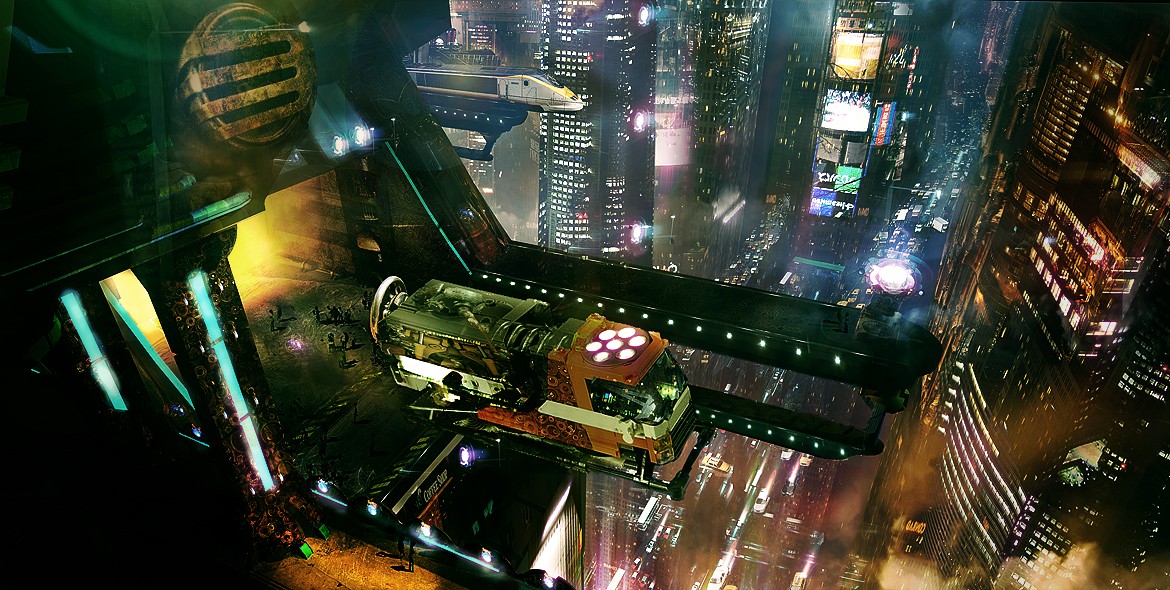


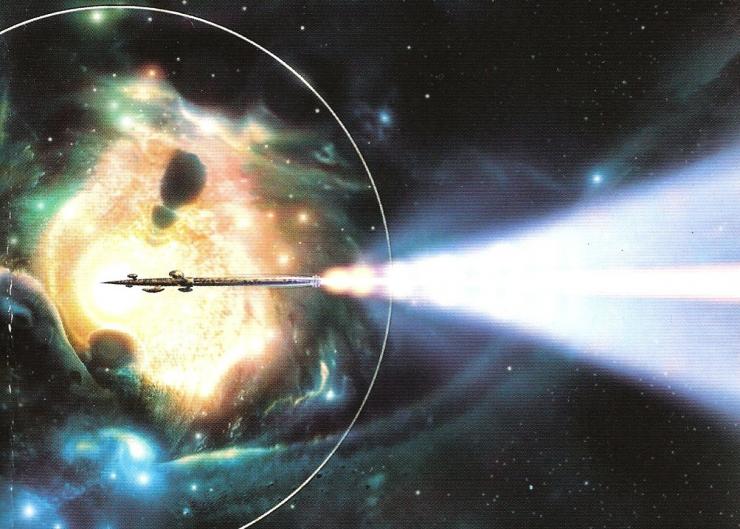

 As documents that illustrate the NSA’s clandestine behavior continue to be leaked, the extents to which the agency has been going to gain supremacy over cyberspace are becoming ever more clear. Thanks to a new series of documents released by Snowden, it now seems that these efforts included two programs who’s purpose was to create a ““useful quantum computer” that would be capable of breaking all known forms of classical encryption.


 Stories by Williams
