
 Tomorrow’s cars could have a feature that will reduce wind drag and allow them to go faster: smart, morphing skins that form dimples or go smooth on command. It is all part of a growing field of mechanics that seeks to make surfaces “smart”, and it is being considered for everything from increasing aerodynamics to reducing the damage caused by hurricanes and high winds.
The research comes from MIT, where engineers have developed a smart curved surface that can morph at will to reduce drag. Known as a “smorph” (short for smart morphable surface), they were able to get their creation to wrinkle into a dimpled pattern similar to a golf ball’s, with similar aerodynamic properties. In short, when the smorph wrinkles, it is able to travel faster than if it were smooth.
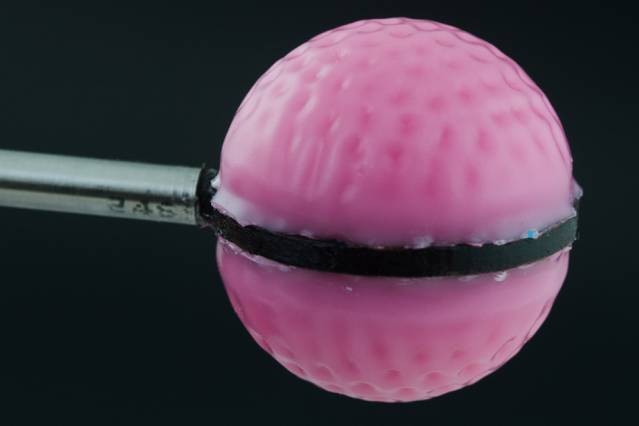 Scientists and golfers alike have long known that the dimples on the surface of a golf ball allow it to drastically reduce drag and travel much farther than would otherwise be possible. This happens because the small dents hold the airflow near the surface of ball for a longer time. This reduces the size of the wake, or zone of turbulence, as the ball takes off. However, the mechanics employed here are a bit more complex.
In recent years, in-depth aerodynamic studies have shown that the dimples reduce drag only at lower speeds. As you move toward faster speeds, the advantage of irregularities disappears and a smooth surface becomes the best way to minimize the wake. Now, researchers at MIT have married the best of both worlds by developing a surface that can it’s smoothness on the fly to maximize aerodynamic efficiency at all speeds.
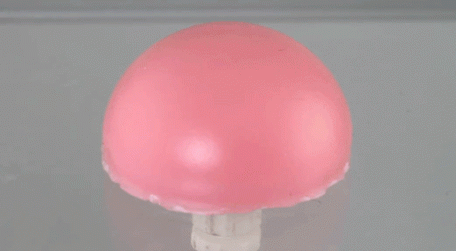 The smorph manages to change its shape by changing the balance between its materials. Basically, an empty core is surrounded by two different polymers. One is thick and squishy, while the outermost layer is stiff skin. As the volume of a the inner layer is reduced by sucking air out of its hollow core, the core shrinks. The squishy layer is soft enough to contract smoothly, but the skin is forced to wrinkle. The trick is controlling exactly how a smorph wrinkles.
Because the dimples look so much like those on a golf ball’s surface, the researchers were inspired to test their creation in a wind tunnel. Sure enough, when the researchers tested the smorph in a wind tunnel, they found that it was about twice as aerodynamically efficient when dimpled. But the sheath of vortices only form at relatively low speeds, and then convert back to a smooth surface at higher speeds in order to maintain aerodynamic velocity.
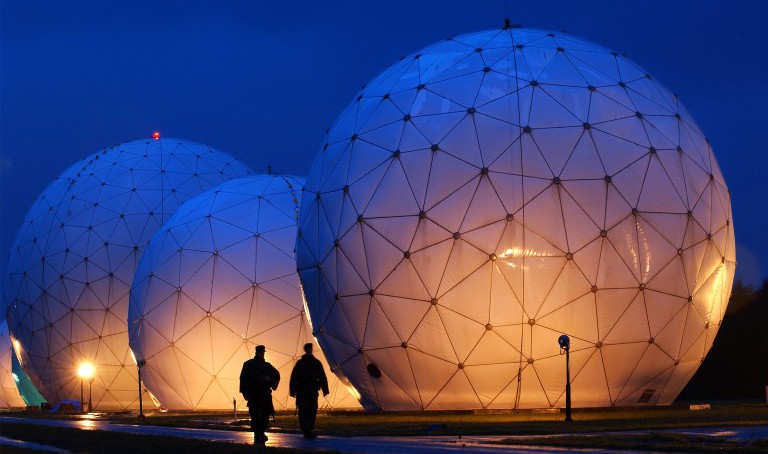 This is where smorphs could offer a huge advantage. By being able to morph to control drag, they could be especially useful in building structures that won’t collapse or incur significant damage when facing very high winds – one example being the so-called radomes, the spherical, weatherproof domes that enclose radar antennas. The researchers also say that the materials could also be used to minimize drag in cars in order to maximize fuel efficiency.
Earlier this year, Reis won an NSF grant to keep developing smorphs, which he hopes to someday scale up to use on cars, aircraft, and even buildings. There are some issues to overcome before this happens though, such as the fact that hexagonal dimples are unstable on flat surfaces. So far smorphs have only been used on a round, ball shape, but Reis and his co-authors believe they can figure out how to reproduce the pattern on slightly curved surfaces.
Alongside such concepts as morphing wings and self-adjusting and reconfigurable robots, the creation of surfaces that can change shape in order to better accommodate airflow, or be optimal for different tasks, is part of the manufacturing revolution that seeks to replace rigid structures and products with something that can adapt, flow and transform depending on what is being asked of it.
And be sure to check out this video from MIT of the smorph in action:
Sources: wired.com, gizmag.com


 Petra Nova will be using a scaled-up version of smaller amine-based CO2 CC systems. In these, CO2 is routed into a chamber where an amine-based solvent absorbs the gas. The resulting carbon-rich solution isl then sent through another chamber where low pressure steam is used to break the bond holding the carbon in solution so it can be captured while the solvent is reused.
 A new video was recently posted online that shows North Korean dictator Kim Jong Un breaking out the dance moves, getting pranked, and engaging in some serious fight scenes. The video has gone absolutely viral and has everybody laughing – except for Kim Jong Un himself. In fact, the “Great Leader’s” outrage was such that North Korea made a public statement denouncing the video and demanding it be taken down.
 The reaction is predictable, and the request certainly betrays the North Korean regime’s internet-phobic tendencies, not to mention their ignorance of how the internet actually works. For starters, once something is posted on the internet, it becomes part of the digital ether and can never be destroyed. In addition, drawing attention to an internet phenomenon only makes it stronger! By condemning it, Kim Jong Un’s people just ensured it’s viral nature!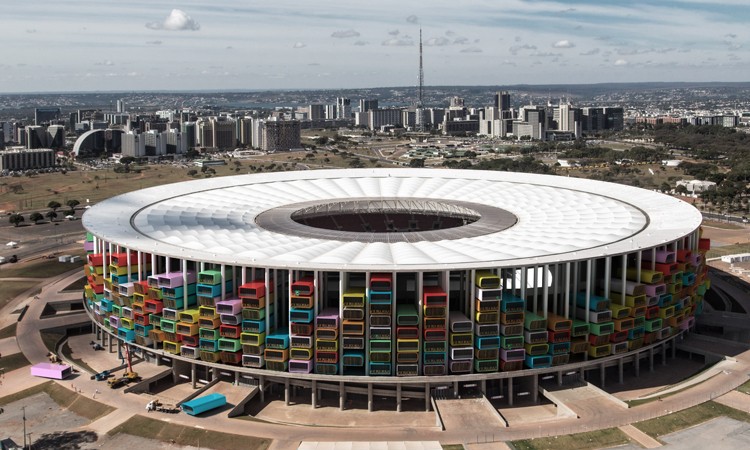


 While they don’t have current plans to take the Casa Futebol beyond the concept stage, it is hoped that the project can inspire more socially-conscious approaches to problems of this kind. Combined with 3-D printed housing and other prefab housing projects, this kind of re-purposing of existing infrastructure is a way of addressing the problem of slums, something which goes far beyond the developing world.
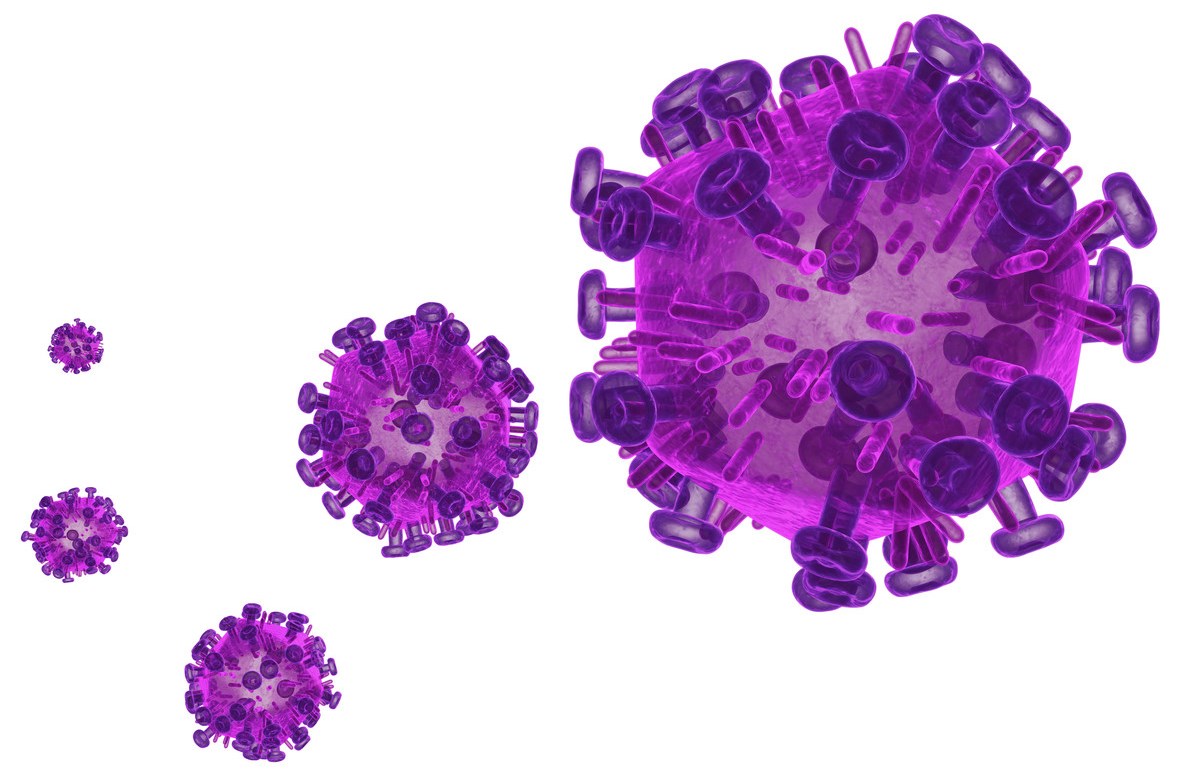
 The next step is to figure out why the body responds to a bone marrow transplant in a way that makes the virus retreat. One possible explanation is that the body’s immune response to the foreign cells of the transplant causes it to fight harder against HIV. This is because, while bone marrow transplant seems to be the most effective means of clearing the AIDS virus to date, it is not an acceptable risk for patients whose lives aren’t already endangered by bone cancer.




 Such ideas did inform Kim Stanley Robinson’s seminal novel Red Mars, where an international crew flew to the Red Planet and established the first human settlement that begins the terraforming process. But if international cooperation proves too difficult, perhaps a collaboration between commercial space agencies and federal ones could work. I can see it now: the Elon Musk Martian Dome; the Richard Branson Habitat; or the Gates colony…
 At the time of the initial announcement in January, Google said its prototypes were able to take one glucose reading per second and that they was investigating ways for the device to act as an early warning system for the wearer should glucose levels become abnormal. All that was needed was a partner with the infrastructure and experience in the medical industry to see the prototypes put into production.


 As Butow explained, it’s all about taking the next step in the development of the internet as we know it:
 More experienced women are encouraged to teach classes, and the Academy already boasts a variety of events, ranging from hackathons, makerfests, code getaways and study tours. The team is already organising the very first study tour, hoping to take Australian women to visit global startup hotspots such as Silicon Valley and Tel Aviv. And though women are the focus, men are welcome too, as long as they attend with a girl geek and are willing to lend a helping hand.
 With all the publicity New Zealand has been getting from the Lord of the Rings and Hobbit franchises, both of which use the scenic land as the setting of Middle Earth, it was only a matter of time before the country’s air carrier began pimping it for all it was worth! Entitled “An Unexpected Briefing”, this safety briefing video is being used by New Zealand Air to both entertain and inform their passengers.


 Stories by Williams