Candidates for De-Extinction

Woolly Mammoth Replica in Museum ExhibitIt’s no secret that humanity’s success on this planet we call Earth has come at a high cost. Since our ancestors began migrating out of Africa some 70,000 years ago, their passage and settlement have left marks on the natural environment and its species. In short, our ability to grow has always meant extinction for other species, be they other forms of high-order primates (such as Neanderthals) or animals hunted for their pelts and meat (such as wooly mammoths).

In fact, the Neolithic Revolution, which began some 15,000 years ago with the adoption of farming, was believed to have been motivated by the mass extinction of animals that were once hunted by our ancestors. And since that time, countless more species have been pushed to the brink or killed off entirely by our ever-expanding, consuming, and polluting ways. However, recent innovations in biology and bio-medicine might just be able to reverse this trend.

??????????????????????????????????????????????????????????????????????????????????Last Friday, at a at a National Geographic-sponsored TEDx conference, scientists met in Washington, D.C. to discuss which animals we should bring back from extinction, as well as the means and ethics involved in doing so. They called it “de-extinction”, and considered which species they would consider restoring to existence. The conference resulted in a list of 24 species that were selected for restoration, as well as some guidelines for the selection process.

Those chosen were based on the following criteria and future selections will be determined the same way:

  1. Are the species desirable — do they hold an important ecological function or are they beloved by humans?
  2. Are the species practical choices — do we have access to tissue that could give us good quality DNA samples or germ cells to reproduce the species?
  3. And are they able to be reintroduced to the wild — are the habitats in which they live available and do we know why they went extinct in the first place?

As you might imagine, dinosaurs didn’t make the cut. In addition to no longer serving and important ecological function, the habitats they once had access to are long gone (Earth’s climate and ecology have changed drastically since the Cretaceous Period), and most importantly, we no longer have access to their DNA.

TEDxDeExtinctionYes, despite what Michael Crichton told us, the DNA of dinosaur fossils is so far degraded that something like Jurassic Park would never be possible. And of course, despite being beloved by humans, they aren’t exactly safe customers to have around! But rest assured, the list of candidates is still very long.

Of the 24 species selected, the majority were families of birds which were pushed to extinction due to hunting, deforestation, urban sprawl, pollution, and loss of habitat. In addition, the famous Auroch, a species of cattle that is commemorated in myth but which actually existed until 1627. And then there’s the equally famous DoDo bird, the fearless bird which was rendered extinct by Portuguese settlers in its native Mauritius.

woolly-mammoth1And then there’s the venerable Wooly Mammoth, the great shaggy member of the Elephantidae family which went extinct some 4000 years ago. Not only is this animals demise directly associated with humanity’s ascendance to the top of the food chain, it is something which may now be entirely reversible. Thanks to frozen, preserved carcasses of Mammoths, which are still found in the north to this day, scientists have access to well-preserved strands of their DNA.

And as already noted, the issue of cost, ethics and desirability featured pretty prominently in the conference. For starters, those present had to consider whether or not it would be a good idea to bring animals back from the brink seeing as how it was human agency that led to their extinction in the first place. Is the world any better off than it was hundreds or even thousands of years ago? Would these animals find new purchase, or just end up dying off again?
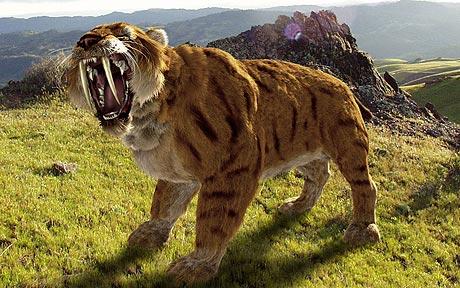
sabre-tooth-tiger-_1117360cSecond, there was the question of housing them and reintroducing them into the wild. Not only is it a question of them being able to find habitats again, it’s a question of whether or not we can ensure the kind of transition that would be needed. Sure, we’d all love to see Sabre-Tooth tigers alive and well again, but its not like we can just clone them and send them back out into the wild. Who’s to say how their reintroduction will impact species that are currently roaming about in the wild?

And of course, there was the consideration of what all this tampering amounts to. Given that human agency is responsible for all this loss of life, would resurrecting them simply be more of the same? Would we be, in effect, playing God and tampering with forces best left to nature? All good questions, and they force us to consider an alternative proposition.

Perhaps what would be best for the natural world and its remaining species would be for us to stop behaving so irresponsibly. Perhaps we should focus on sustainable living, cleaning up pollution, ending climate change, and getting our own population under control before we start trying to repopulate other species. Still, it is an intriguing possibility, and provides some reassurance that no matter how much damage we end up doing, that we might be able to undo some after the fact. Perhaps we just need to wait…

Too bad about Jurassic Park though. In the course of everything else discussed at this TED conference, I’m sure that the announcement that dinosaurs were as good as gone shattered the dreams of many an eccentric billionaire!

t-rex

Sources: businessinsider.com, nationalgeographic.com

Manned Mars Mission Update!

Mars_landerMillionaire and space enthusiast Dennis Tito surprised the world with his announcement that he plans to fund a couple’s expedition to Mars. Apparently, the trip is planned to take place in 2018 during a conjunction of our planet with Mars, will take 501 days, and will involve sending a married couple in a capsule roughly the size of a Winnebago. But as time goes on, more news is trickling out of the “Inspiration Mars” program, and some of it is raising eyebrows.

For example, there’s the news that the Mars capsule will involve a rather interesting form of radiation shielding… made of feces. You read that right, the capsule will contain shielding composed of human feces (among other things) that will shield the couple inside from harmful cosmic radiation. But before people begin visualizing some ugly, creepy concoction, let me assure them that this concept is not as unusual as it sounds.

tito-mars-mission-conceptWhen it comes right down to it, this is the greatest health threat the people who go will face, followed shortly thereafter by muscle atrophy, boredom and cramped conditions. And rather than line the capsule with expensive and heavy metals, such as lead, the engineers designing the Inspiration Mars capsule thought they might kill two birds with one stone.

According to Taber MacCallum, co-founder and CEO of the Paragon Space Development Corporation and member of the Inspiration Mars team, explained that the idea had to do with waste recycling and storage. Since the couple will be eating, drinking and defecating within the capsule for a full 501 days, the waste has to go somewhere.

Mars_orbitThe proposed solution? Put it in the walls, along with food and liquid waste, and then desiccate it all to recycle the water. Or, as MacCallum put it:

It’s a little queasy sounding, but there’s no place for that material to go, and it makes great radiation shielding… Dehydrate them as much as possible, because we need to get the water back. Those solid waste products get put into a bag, put right back against the wall.

But to be fair, this proposal is not exactly new. In fact, the idea was mentioned back in 2011 by Michael Flynn, a life support engineer at NASA Ames Research Center, who proposed using urine and feces to shield space stations. Packing for Mars author Mary Roach The Geek’s Guide to the Galaxyalso mentioned it in a 2011 edition of The Geek’s Guide to the Galaxy. NASA’s Innovative Advanced Concepts program is also working out the nuts and bolts of this concept under the name of “Water Walls Architecture”.

Source_croppedWater, MacCallum explained, is the key ingredient here, since it serves as a better radiation shield than metal. It’s the nuclei of atoms that block the radiation you see, and water contains more atoms (and therefore more nuclei) per volume than metal does. Food and waste also provide good radiation shielding, and because the food blocks rather than absorbs the radiation, it will remain safe to eat.

Naturally, McCallum was sure to note that they are still working out some of the logistical problems. For one, they still need to figure out how best to keep the Mars-bound couple from experiencing too many nasty sights and smells on their journey.

Gotta admit, this isn’t something you think about when you hear the word “space travel” do you? But then again, you have to account for things like this. Until people can survive without consuming food and water, and expelling waste, long-term space missions will have to figure out what to do about all the dirty, ugly business people get into!

Sources: newscientist.com, IO9

Higgs Boson Confirmed!

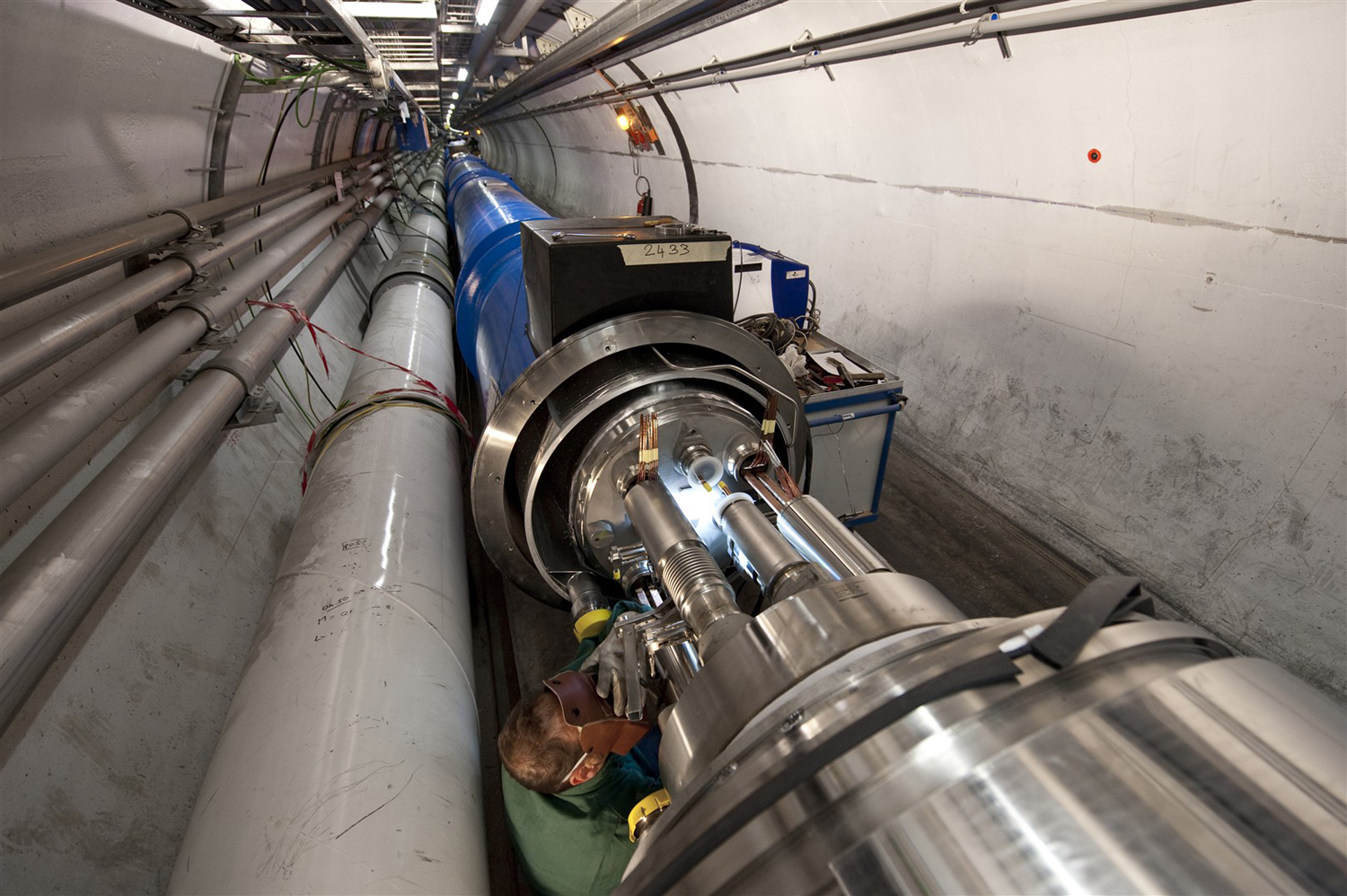
CERN_tunnelIn July of 2012, scientists working for the CERN Laboratory in Geneva, Switzerland announced that they believed they had found the elusive “God Particle” – aka. the Higgs Boson. In addition to ending a decades-long search, the discovery also solved one of the greatest riddles of the universe, confirming the Standard Model of particle physics and shedding light on how the universe itself came to be.

But of course, this discovery needed to be confirmed before the scientific community could accept its existence as fact. The announcement made in July indicated that what the CERN scientists had found appeared to be the Higgs Boson, in that it fit the characteristics of the hypothetical subatomic particle. But as of last Thursday, they claimed that they are now quite certain that this is what they observed.

CERNJoe Incandela, a physicist who heads one of the two main teams at CERN (both made up of over 3000 individuals) claimed that: “To me it is clear that we are dealing with a Higgs boson, though we still have a long way to go to know what kind of Higgs boson it is”. In essence, he and his staff believe that may be several types of Higgs to be found, each of which behaves a little differently.

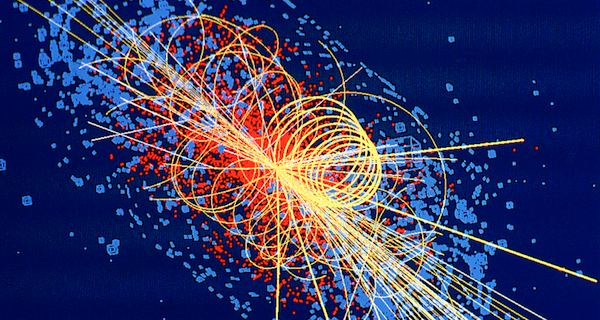
This was no small challenge, as the Higgs will only make an appearance once in every trillion collisions. Originally theorized in 1964 by British physicist Peter Higgs to explain why matter has mass, it has long been suspected that the Higgs stood alone, explaining how the six “flavors” of quarks, six types of leptons, and twelve gauge bosons, interact. Now, it may be the case that there are several, each of which moves differently and are responsible for different functions.

Higgs-bosonAnd of course, there are several larger mysteries that remain to be solved, which the discovery of the Higgs is expected to shed light on. These include why gravity is so weak, what the dark matter is that is believed to make up a large part of the total mass in the universe, and just how all the major forces of the universe work together to define this thing we know as reality.

These include gravity, weak and strong nuclear forces, and electromagnetism. The Theory of Relativity explains how gravity works, while Quantum Theory explains the other three. What has been missing for some time is a “Grand Unifying Theory”, something which could explain how these two theories could co-exist and account for all the basic forces of the universe.

If we can do that, we will have accomplished what Stephen Hawking has dreamed of for some time, and in effect be one step closer to what he described as: “understanding the mind of God”.

Source: nytimes.com

Powered by the Sun: Microbead Solar Cells

solar3Despite how far solar cells have come in recent years, issues like production and installation costs have remained an ongoing obstacle to their full scale adoption. But as they say, obstacles are meant to be overcome, and can often produce very interesting solutions. For example, peel and stick solar panels that can be manufactured by a 3D printer are one option. Another is the recent creation of a solar cell as thin as a strand of hair. And as it happens, a third has just been unveiled.

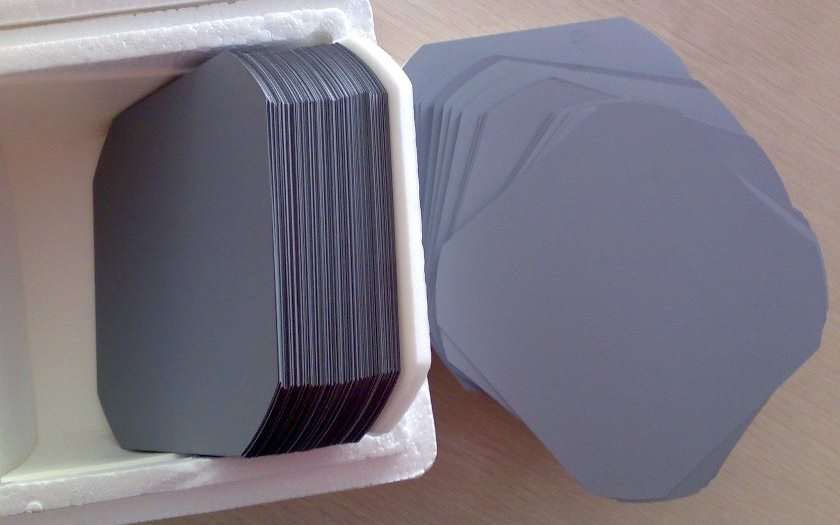
This latest one comes to us from the University of Oslo, where researchers have come up with a way to produce silicon solar cells that are twenty times thinner than commercial solar cells. Typically, solar cells are fashioned out of 200-micrometer-thick (0.2mm) wafers of silicon, which given their average rate of power generation works out to about five grams of silicon per watt of solar power. Combined with all the silicon wasted in the production process, this makes for a very inefficient process.

Solar-Wafer-Solar-CellsOne way around this is to reduce the thickness of solar wafers, but this presents its own problems. As the wafer gets thinner, more light passes straight through the silicon, dramatically reducing the amount of electricity produced by the photovoltaic effect. Blue light, which has a short wavelength, can be absorbed by a very thin solar cell; but red light, which has longer wavelengths, can only be captured by thicker wafers.

Enter into this the breakthrough created by the Oslo researchers. Using a revolutionary technique involving microbeads – tiny plastic spheres that create an almost perfect periodic pattern on the silicon. Apparently, these beads force the sunlight to “move sideways,” ensuring a more uniform and powerful rate of absorption. Another trick is to dot the backs of each cell with asymmetric microindentations,which can trap even more solar energy.

solar_beadsUsing these techniques, silicon wafers can be created that measure a mere 10 micrometers in thickness but can do the job of a 200 micrometer cell. By using 95% less silicon, the cost of production drops considerably, which will reduce the cost of solar power installations and – more importantly – increase profits. With current production methods and costs, the profit margin associated with solar power is pretty negligible.

This latter aspect is especially important as far as commercial production comes into play. If we are to expect industries to adopt solar power for their energy needs, it has to be worth their while. At the moment, the Oslo researchers are in talks with industrial partners to investigate whether these methods can be scaled up to industrial production. But given the nature of their work, they seem quite confident that their technology could come to the market within five to seven years.

Stay tuned for more installments in the PBTS series!

Source: Extreme.tech

1000th Post! Yaaaaaay!

fireworks1Gee, I don’t know what to say here… Aside from the fact that this post coincides quite nicely with the 2nd anniversary of this blog, which just came and went, and comes what I can only assume will be a week before the site reaches the milestone of 250,000 hits. So I guess there are a few reasons to celebrate. And at times like this, when we take the time to look back, I also like to look ahead and see about what goals need to be set.

Well, in the last year I wrote two zombie stories which still need to be edited and released. And on top of that, I’ve already begun plotting the third and final one in the trilogy. When they are complete, I hope to release them individually and as a box set, so zombie fans can decide for themselves just how much reading they want to do! Trust me, I’m not sparing with my use of words, but I do like to think I keep them interesting.

Whiskey_DeltaThen there’s Yuva, which is coming along nicely, but needs a big push to get to the finish line. And who better than yours truly, el editore-en-hefe (that’s editor-in-chief for those who don’t speak mangled Spanish)? Of the sixteen stories in the anthology (we started with twelve), fourteen are spoken for. Not bad, but as the editor, I need to whoop some butts to make sure we make our summer deadline!

Ah, which is itself a bit of news. After talking it over with my co-editor and inspirational muse, Khaalidah Muhammed-Ali, we decided that a hard deadline was needed. Some people specifically asked for one when initially signing on, but I’ve left that somewhat open, as I’m kind of loosely-goosey when it comes to timetables. I’m more of a flex-hours kind of guy, task-oriented rather than time-oriented. But as it stands, summer of 2012 is when I hope everyone will have their homework in!

gliese-581.jpgAnd of course, Data Miners had just come out, and it’s proposed sequel, Data Pirates, has been sitting on the shelf for some time. DM took me three years to write, so naturally I’m hoping for a speedier turnover on this one! And whereas the first one focused on the subject of “white-hat” hackers, people who believe in freedom and information, Pirates will focus on the darker aspects of hacker culture, on the so-called “black-hats”.

DatapiratesAssuming I can get all that done in a timely manner, there’s the matter or revisiting a very long-term project, one which I’ve been working on since late in 2009. As some may know, I released a novel called Source some time ago. Almost immediately after I finished writing it, before it was even published, I began work on the sequel, entitled Fortress.

As part of the dystopian, distant-future collection, it’s a old-school sci-fi romp that is dark, gritty, and has lots of war, struggle, and mysanthropic impulses. However, I decided to commit to some sequels to it in order to ensure some measure of a happy ending. No dystopian story, unless its purpose is to issue a stern warning (see 1984 or Brave New World), should offer its readers some slim ray of hope (see Catch 22).

FortressYeah, I design covers before the work is even complete. What can I say, I like to see how a book will look, long before it’s even finished! Hopefully, these covers will pack a good 40,000 plus words in between their two folds. Oh, and if anyone knows a good editor who works for cheap, I could sure use their help! I like to write, I do multiple projects, but when it comes to my own work, I suck horribly!

And of course, there’s the editing that needs to be done for Rami and other friends, still yet to be completed. And always, the research into the future and what course it will take must continue. Always, always continue. The world is not slowing down and neither is the future, despite what some weirdos might say! 🙂

The Future is Here: Signal and Camera Bike Helmets

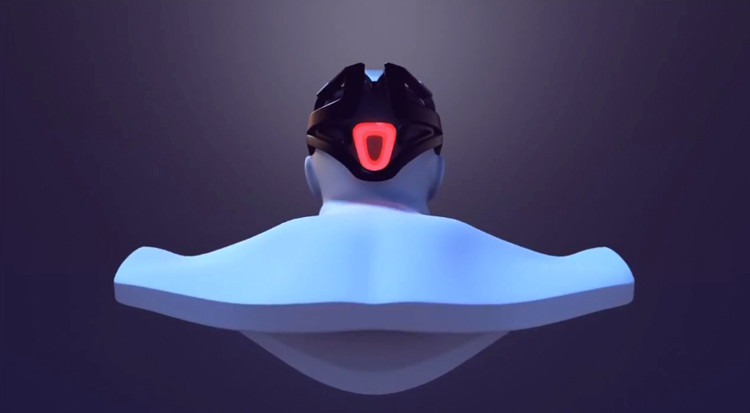
bike_helmet Today’s bikers have a wide assortment of gear to choose from. Everything from sport bikes with shocks in the front to streamlined, ergonomic body suits. And yet, bikers are still reliant on hand gestures to let traffic know what they are doing. Well, thanks to Hungarian designer Balázs Filczer new concept, hand signals will soon be a thing of the past.

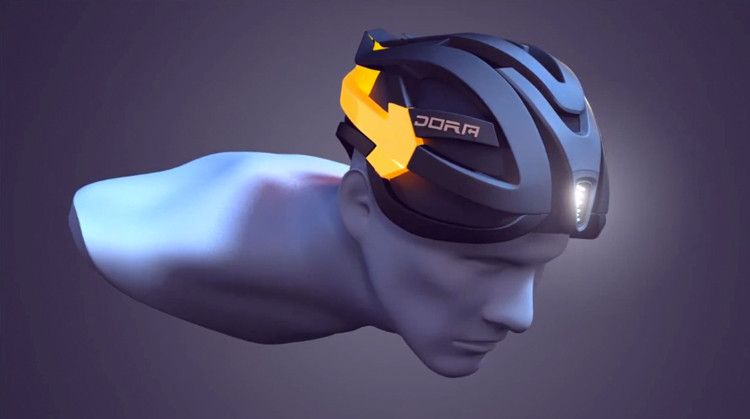
Known as the Dora, this bike helmet incorporates turn signals and a brake light into a futuristic design. Activated via a Bluetooth, the helmet’s signals through a series of controls that are attached to the handlebars. The design concept was first pitched at the International Bicycle Design Competition in October 2012, where it took home the award for its category of clothing and accessories.

bike_helmet1Though still in the conceptual phase, this product shows a great deal of promise because of the way it would allow bikers to speak the language of car drivers. In many cases, bicyclists are injured because their signalling is not interpreted correctly by vehicles driving around them. But should this helmet fail, perhaps because the driver in question is a total jerk, there’s always this next concept to fall back on:

bike_helmet2It’s called the Helmet of Justice, a concept created by John Poindexter and Texas-based mobile studio Chaotic Moon. After being himself involved in a hit-and-run accident, he committed himself to creating a bike helmet that would allow bikers to even the odds against inconsiderate drivers who commit accidents and then flee the scene.

Admittedly, bike helmets are a little outside Chaotic Moon’s repertoire. Ordinarily, the company is known for creating mobile products for big name clients like Fox, Microsoft, and Disney. Still, the company was dedicated to a design that incorporated seven recording devices along with a software solution to easily let people upload data.

mini_cameraThe seven mini-cameras, secured in the helmet’s air vents with a layer of foam, record video at 30 frames per second with a resolution of 720×480. They provide a 360-degree view of an accident as it happens. All of the core data is saved in a detachable USB drive integrated into the helmet which the rider can then upload to their computer after coming from a near-brush with vehicular homicide.

Chaotic Moon is now in talks with major helmet manufacturers about licensing the product, and the price for an individual helmet is estimated to be around $300. Not cheap, but considering that it could lead to a successful lawsuit, you might have to offset the cost by the average out of court settlement 😉

Sources: fastcoexist.com, (2)

The Future is Here: Batteries for Stretchable Implants

Stretchable-battery1One of the newest and greatest developments in medical technology of late has been the creation of electronics that can stretch and flex. Increasingly, scientists are developing flexible electronics like video displays and solar panels that could make their way into clothing or even bodies. But of course, some challenges remain, specifically in how to power these devices.

Thus far, researchers have been able to develop batteries that are thin and bendable, flexibility has proven more of a challenge. In addition, no stretchable batteries have thus far offered rechargeability with high the kind of storage capacity that one might expect from the lithium-ion technology now powering many smartphones, tablets, laptops and other mobile devices.

flexbatteryHowever, that may be changing thanks to two research scientists – Yonggang Huang from Northwestern University and John A. Rogers University of Illinois. Together, they have unveiled a rechargeable lithium-ion battery that can be stretched, twisted and bended, and is still capable of powering electronics. What’s more, the power and voltage of this battery are similar to a conventional lithium-ion battery and can be used anywhere, including the inside of the human body.

Whereas previous batteries of its type had a hard time stretching up to 100 percent of their original size, this new design is capable of stretching up to 300 percent. Huang and Rogers have indicated that this will make it ideal for powering implantable electronics that are designed for monitoring brain waves or heart activity. What’s more, it can be recharged wirelessly and has been tested up to 20 cycles of recharging with little loss in capacity.

Stretchable-batteryFor their stretchable electronic circuits, the two developed an array of tiny circuit elements connected by metal wire “pop-up bridges.” Typically, this approach works for circuits but not for a stretchable battery, where components must be packed tightly to produce a powerful enough current. Huang’s design solution is to use metal wire interconnects that are long, wavy lines, filling the small space between battery components.

In a paper published on Feb. 26, 2013 in the online journal Nature Communications, Huang described the process of creating their new design:

“We start with a lot of battery components side by side in a very small space, and we connect them with tightly packed, long wavy lines. These wires provide the flexibility. When we stretch the battery, the wavy interconnecting lines unfurl, much like yarn unspooling. And we can stretch the device a great deal and still have a working battery.”

No telling when the first stretchable electronic implant will be available for commercial use, but now that we have the battery issue worked out, its only a matter of time before hospitals and patient care services are placing them in patients to monitor their health and vitals. Combined with the latest in personal computing and wireless technology, I also imagine everyone will be able to keep a database of their health which they will share with their doctor’s office.

And be sure to check out the video of the new battery in action:

Source: neurogadget.com

The Walking Dead – Season 3 Episode 14

The-Walking-DeadMorning all and welcome to another episode review of AMC’s The Walking Dead! As usual, this week’s episode provided lots of suspense and tense plot development as things get closer to the big confrontation between the Governor and the prison camp. As I’m sure you’re all aware, we are now just two episodes away from the end of the season, and now is the time for the show to be prepping all its plot threads for completion.

After last week’s episode where a meeting took place between Rick and the Governor, we were left with unmistakable knowledge that war was inevitable. Rick could not bring himself to hand over Michonne, even if it meant peace for his people. On the other hand, the Governor had no intention of abiding by the peace terms he set and openly admitted that their standoff would only end with Rick’s demise. And of course, Andrea was now set to betray him, the only question was when and how..

Prey:
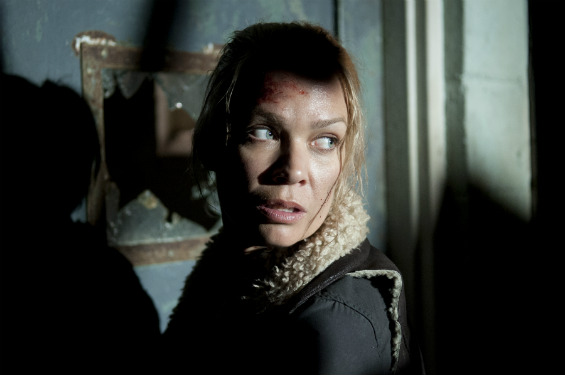
wd3_preyThe episode opens with a flashback, where we see Andrea and Michonne together before they found Woodbury. Huddling around a fire and eating beans out of a can, Andrea asks Michonne where her “companions” – the jawless, armless Walkers – came from. Michonne tacitly admits that she knew them before they turned, and she expresses anger for them, says they “weren’t human to begin with.”

We are then taken to Woodbury, where Martinez is busy overseeing their preparations for their next “meeting” with Rick and his people. Andrea is stripped of her sidearm and talks to Milton, who tells her the deal the Governor proposed in a sham. What’s more, he shows her to a secret room the Governor has prepared for Michonne, which is basically a torture chamber.

wd3_prey1Andrea heads for the wall, where she meets Tyreese and Sasha. After failing to trick them into leave their posts, she scales the wall and tells them she’s leaving. Tyreese tries to stop her but Andrea pulls her knife and he is forced to let her go. Allen, one of their people, is angry and worries that Tyreese’s failure will jeopardize their position within the community. What’s more, he is still angry over the way Tyreese mercy-killed his wife Donna after she was bit.

The Governor forgives Tyreese and Sasha, but becomes very angry with Milton when he realizes he knew Andrea intended to leave. He is even angrier when he learns that Milton told her about the deal, how he demanded Rick hand over Michonne. Rather than send anyone after her, he takes a truck and heads out to bring Andrea in himself. After spotting her in an open field, a chase ensues…

??????????????????????????????????????????????????????????????????????????????This leads them both into an abandoned warehouse where the Governor begins to stalk her. She refuses to come out and “come home”, so the Governor begins breaking windows with a shovel and attracting Walkers. After finding a service door, Andrea sees that it leads to a stairwell filled with Walkers. When the Governor corners her there, she slips through and forces him to deal with them, and escapes again to the forest.

Meanwhile, Martinez takes Tyreese, Sasha, Allen and Ben along on a mission to one of their Walkers traps. Tyreese realizes that they are being used as weapons and refuses to help. This leads to a fight between him and Allen, whom he almost throws in with the Walkers. He is sent back to town with Sasha, knowing that they will likely be kicked out. Later that night, a truck pulls up the to the trap and an unidentified begins dousing them in gasoline and setting them ablaze.

wd3_prey3Andrea finally makes it to the prison and sees Rick manning the tower, but the Governor catches her before she can get his attention. He returns to town and claims he never found her, and goes to speak with Tyreese and the others. He manages to assure them that the Walkers are just for show, and seems content that they had nothing to do with lighting them on fire.

He then meet with Milton, repeats the lie to him about Andrea, and is told “its a shame about the pits”. The Governor construes from this that it was Milton who set them on fire, and he replies that he already knows who did it. The episode ends with a slow return to the torture chamber, where he find Andrea dirty, bloodied, and restrained in the chair.

wd3_prey4

Summary:
What more can be said about this show now? They’ve put together a good season, and this week’s episode did everything it was meant to: making us worry more about Andreas fate, show the Governor descend further into madness, and set up Milton and Tyreese’s people for the coming showdown. Now that Andrea has made her choice and is due to suffer for it, that leaves Milton and the rest  to make up their mind on where they stand.

By now, its obvious Milton has lost all faith in the Governor, but Tyreese and his group are still ambivalent. At the same time, it seems like their group is subdivided, with Tyreese and Sasha doubting the Governor and his decision to go to war, and Allen and Ben who want stick by him. Not only is Allen desperate for a home where he and his son will be safe, it’s clear he harbor animosity towards Tyreese for killing his wife after she became infected.

And the show managed to hit on some more key elements from the comic book, which is good considering that it has diverged quite heavily from the source material at this point. For instance, Tyreese and his family were friends with Rick and their bunch long before anyone else. What’s more, he was a very important member of their crew, so the fact that they neglected to incorporate him until now seems a bit odd, frankly.

But they are managing to develop his character now and in such a way that it fits with the comic book. For one, Tyreese was a terrible shot, which they showed here when he and Sasha were doing target practice on top of Woodbury’s wall. He was strong but gentle man too, but after witnessing so much death (including that of his daughter) he began to lose his grip and went a little rampage-y. In this episode, they managed to convey some of that in the way he almost killed Allen.

And then there’s the big change with Michonne’s character. In the comic book, she was captured by the Governor, tortured and raped repeatedly by his men. They hinted at that a little with his treatment of Maggie, but now it seems that Andrea is standing in for her as his primary victim. Though they have established why the Governor hates Michonne – she killed his daughter and took his eye – they kind of sidestepped her reasons for doing that. In the comic, it was in revenge for his brutal treatment of her; whereas in the show, it just sort of happened in the course of a tense showdown between them.

But I digress. This week’s episode focused entirely on things inside Woodbury, which is to be expected given all the threads that are on that side of the story. Next week, we can expect an episode that shows both camps as they prepare for the final standoff. Rick is expected to return to their previous meeting place, where an ambush will be waiting.

But of course, he will be going in prepared and ought to have surprises of his own lined up. While we won’t see it all unfold until  the end of March, I anticipate they will be dropping more hints as to how it’s all going to go down and who will betray whom… Looking forward to it!

The Birth of an Idea: “Alpha Mike”

Zombie Apocalypse by geodex

I love it when an idea comes together! And what started as an experiment into zombie lit back in March of 2012 is coming together at last with a third and final installment. Yep, after a few weeks of hiatus, I’ve managed to finish my preliminary draft for the third act of Whiskey Delta, which I have decided to name Alpha Mike. Like the previous two installments, the name is an acronym based on the NATO phonetic alphabet.

And as with the previous two novels, this acronym has special significance. To break it down succinctly:

Whiskey Delta = WD = Walking Dead

Pappa Zulu = PZ = Patient Zero

Alpha Mike = AM = Ambulus Mortus

In each chapter, the name refers to the overriding theme of the story. Whereas Act I in any story is all about introductions, I chose to name in honor of the term used by the main characters to designate their enemy. In Act II, the war took a different coarse, as a new enemy emerged that wanted control over the cure. As such, this story was named after the first man infected by the virus – aka. Mance Harmonn, Patient Zero.

And for the final act of the trilogy, I chose the name of the virus itself. Those who have been following this series will (hopefully) recognize it as the Latin designation which literally translates to “walking dead”. Since the final installment will focus on bringing the war in its entirety to a close, I could think of no better name for it. For as the Mage, a central figure in the story, will be quoted as saying:

This is a war unlike any other in our history. We fight not against men or nations, not for spoils, honor, or revenge. Ours is a war against a contagion, an infection which turns our own against us and corrupts all life. Ours is a war against fear, chaos, despair, and death itself.

I plan to begin work on it just as soon as this season of the Walking Dead is over and I finish my work on a few outstanding projects. These would include “Arrivals”, my last contribution to the Yuva anthology, and editing Rami’s story Reborn City. Those are in various stages of completion and I shall not risk getting distracted at this point! As they say (or maybe I just made it up), overbooking is the enemy of completion!

So if you’re into zombie lit and liked the previous two, expect new chapters coming soon! As usual, they stand to be packed with plenty of zombie-smashing action, military misadventure, and post-apocalyptic goodness. Just watch for the title, Alpha Mike!

zombie_nightmare

Reconstructing the Earliest Languages

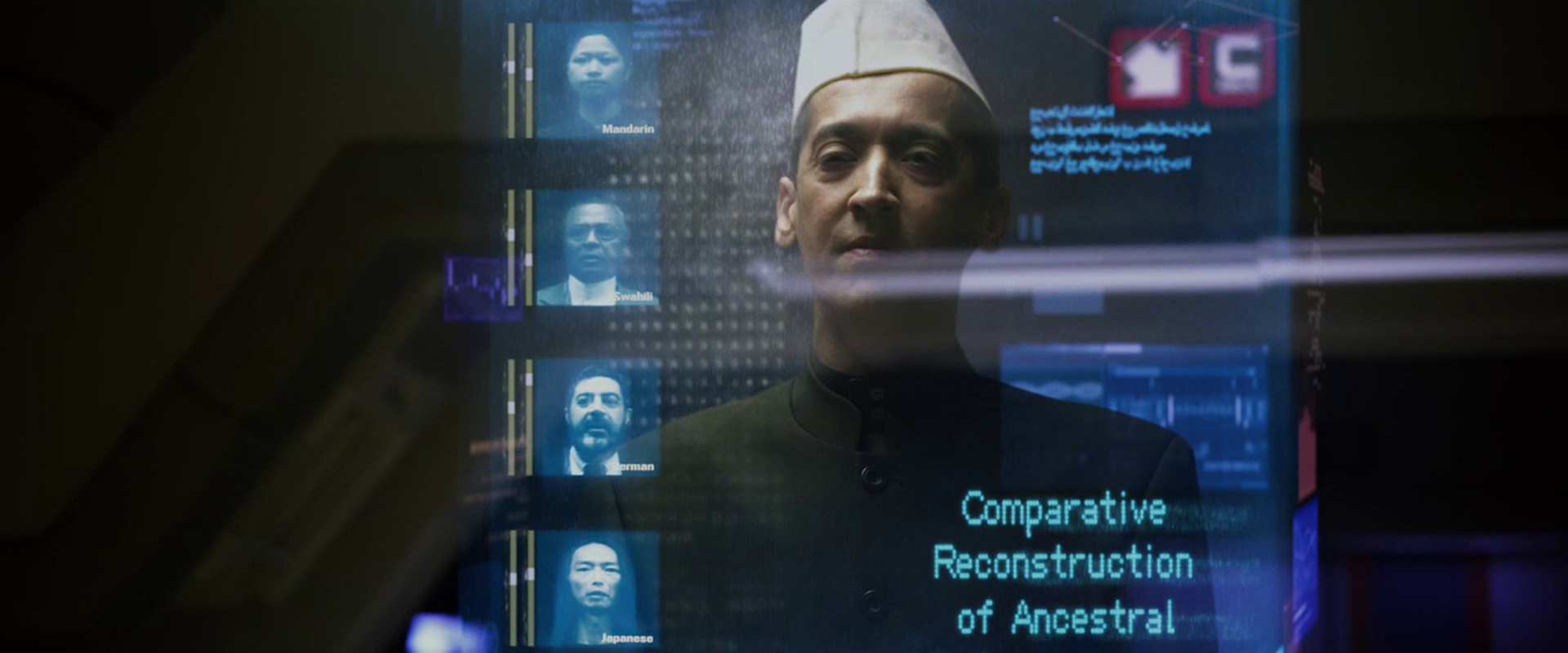
prometheus_engineer1Remember that scene in Prometheus when David, the ship’s AI, was studying ancient languages in the hopes of being able to speak to the Engineers? The logic here was that since the Engineers were believed to have visited Earth many millennia ago to tamper with human evolution, that they were also responsible for our earliest known languages. In David’s case, this meant reconstructing the ancient tongue known as Proto-Indo-European.

Given the fact that my wife is linguistics major, and that I love all things ancient and historical, I found the concept pretty intriguing – even if it was a little Ancient Astronauts-y. To think that we could trace words and meaning back through endless iterations to determine what the earliest language recognized by linguists sounded like. Given how many tongues it has “parented”, it would be cool to meet the common ancestor.

prometheus-lingua2And now there is a piece of software that can do just that. Thanks to a group of linguists and computer scientists in the US and Canada, this program has shown the ability to analyze enormous groups of languages to reconstruct the earliest human languages, long before there was writing. By using this program and others like it, linguists may one day know how people sounded when they talked 20,000 years ago.

Alexandre Bouchard-Côté, a University of British Columbia statistician, began working on the program when he was a graduate student at UC Berkeley. By using algorithms to compare sounds and cognates across hundreds of different modern languages, he found he could predict which language groups were most related to each other. Basically, a sound that remained the same across distantly-related languages most likely existed early in our linguistic evolutionary tree.

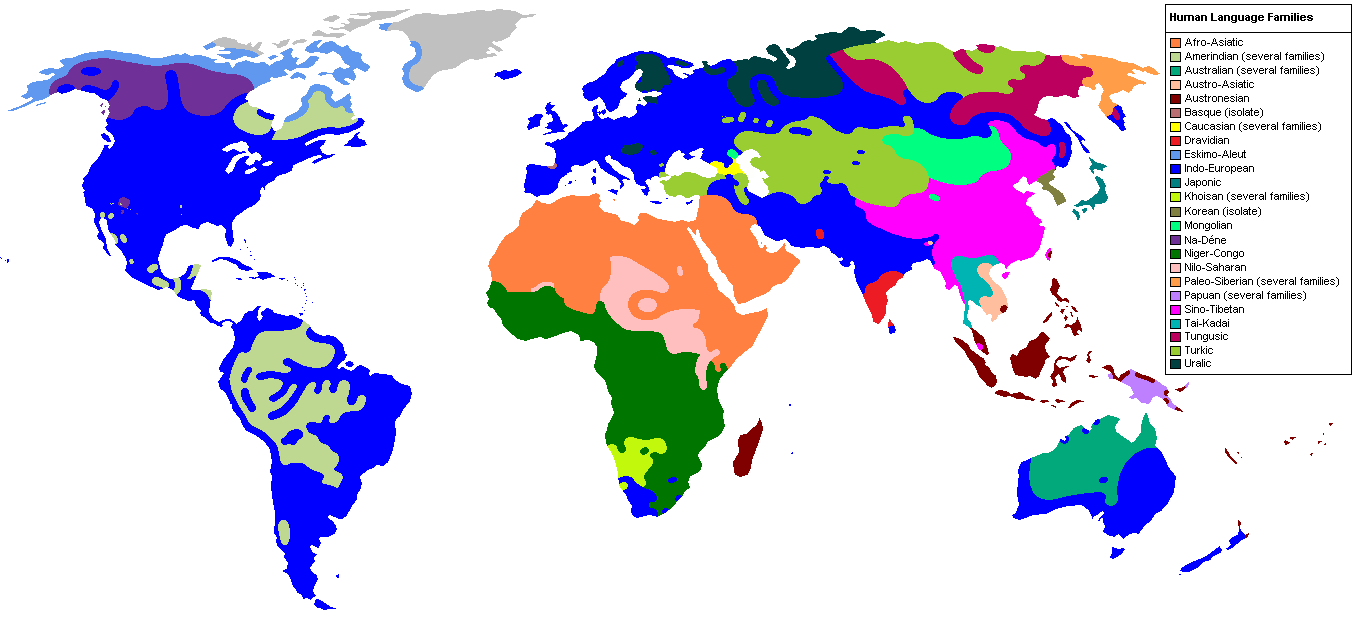
Primary_Human_Language_Families_MapModern linguists speculate that the earliest languages that led to today’s tongues include Proto-Indo-European, Proto-Afroasiatic and Proto-Austronesian. These are the ancestral language families that gave rise to languages like Celtic, Germanic, Italic and Slavic; Arabic, Hebrew, Cushite and Somali; and Samoan, Tahitian, and Maori. Though by no means the only language family trees (they do not account of Sub-Saharan Africa or the pre-Columbian Americas, for example), they do encompass the majority of spoken languages today.

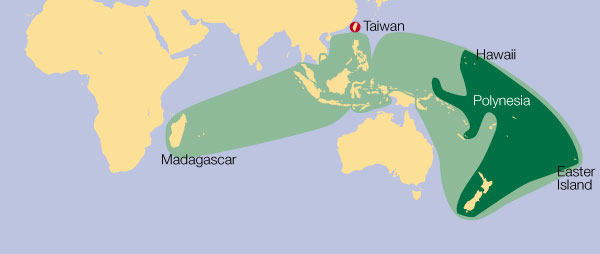
For their purposes, Bouchard-Côté and his colleagues focused on Proto-Austronesia, the family which led to today’s Polynesian languages as well as languages in Southeast Asia and parts of continental Asia. Using the software they developed, they were able to reconstruct over 600 ancient Proto-Austronesian languages and published their findings in the December issue of Proceedings of the National Academy of Sciences.

proto=austronesianIn their paper, Bouchard-Côté and his researchers said this of their new program:

“The analysis of the properties of hundreds of ancient languages performed by this system goes far beyond the capabilities of any previous automated system and would require significant amounts of manual effort by linguists.”

Ultimately, this program could allow linguists to hear languages that haven’t been spoken in millennia, reconstructing a lost world where those languages spread across the world, evolving as they went. In addition, it could be used for linguistic futurism, anticipating how languages may evolve over time and surmising what people will speak and sound like hundreds or even thousands of years from now.

Personally, I think the ability to look back and know what our ancestors sounded like is the real prize, but I’d be a poor sci-fi nerd if I didn’t at least fantasize about what our language patterns will sound like down the road. Lord knows its been speculated about plenty of times thus far, with thoughts ranging from Galego (a Slavic-English hybrid from Dune), the Chinese-English smattering used in Firefly, and City Speak from Blade Runner.

Hey, remember this little gem? Bonus points to anyone who can translate it for me (without consulting Google Translate!):

Monsieur, azonnal kövessen engem, bitte! Lófaszt! Nehogy már! Te vagy a Blade, Blade Runner! Captain Bryant toka. Meni-o mae-yo.

Sources: IO9, pnas.org