Cybersleuths Uncover Worldwide Spy Virus


computer-virus.istock

“I’m frightened because our enemies are no longer known to us. They do not exist on a map. They’re not nations, they’re individuals. And look around you. Who do you fear? Can you see a face, a uniform, a flag? No! Our world is not more transparent now, it’s more opaque! It’s in the shadows.” 

This was one of the most memorable lines from the recent Bond movie Skyfall, as spoken by Dame Judi Dench in her role as M, director of MI6. It’s memorable because of how it managed to capture the essence of spy work in the post-Cold War digital age, and because it pretty much resounds with audiences who are increasingly fearful for their privacy.

In a story that I know I must comb for material for my next cyber novel, a team of cyber sleuths recently uncovered a cyberspy ring that has been spying on embassies, governments and research institutions around the world for the past five years. The virus, which has been dubbed “Red October”, is of uncertain origin, though the culprits are believed to be Russian (hence the name).

Red-October-Infection-MapFor the past five years, the virus has been harvesting documents and data from computers, smartphones and removable storage devices (such as USB sticks), largely from victims in Easter Europe and Central Asia. However, 69 countries were reported as being targeted in total, including the U.S., Australia, Ireland, Switzerland, Belgium, Brazil, Spain, South Africa, Japan and the United Arab Emirates. So far, these victims remain unidentified except to say that in most cases, they were government agencies and embassies, institutions involved in nuclear and energy research and companies in the oil and gas and aerospace industries.

The virus was uncovered by the Kaspersky Lab, a Moscow-based antivirus firm that specializing in internet security. In a statement released on Monday the 14th: “The main purpose of the operation appears to be the gathering of classified information and geopolitical intelligence, although it seems that the information-gathering scope is quite wide.” The virus is still active, they say, but now that the operation is a matter of public record, there’s no telling if it will continue or not.
hackers1What’s more interesting is the fact that the spy ring set up an extensive and complex infrastructure consisting of a chain of at least 60 command-and-control servers that appear to rivals the massive infrastructure used by the nation-state hackers that were behind the infamous Flame spay malware that was responsible for infiltrating computers in Iran and across the Middle East last year. However, Kaspersky went on to claim that this network was not associated with Flame, meaning that there is another hacker ring out there that is equally powerful and motivated, and has comparable infrastructure.

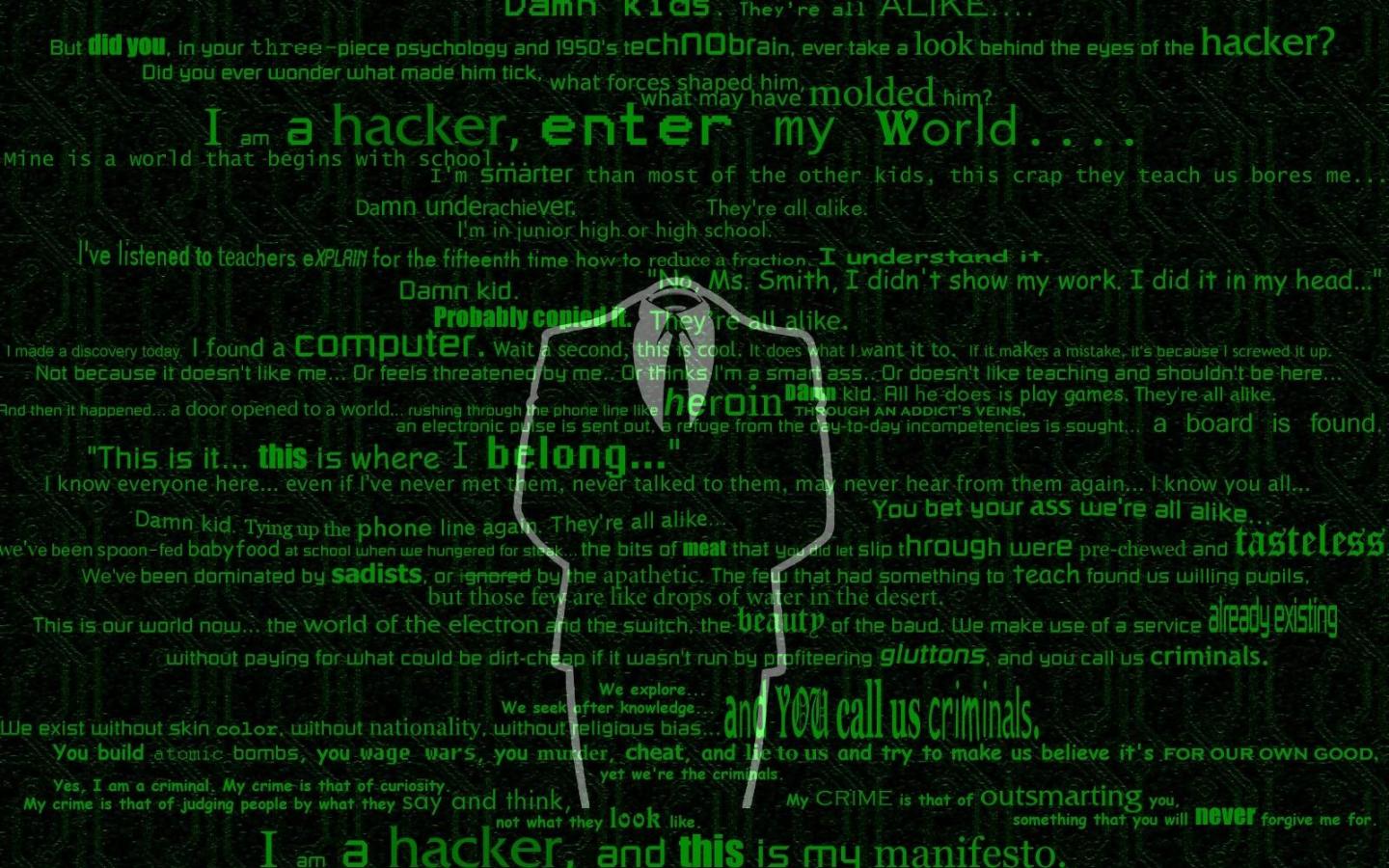
All of this calls to mind the Anonymous and the whole debate about hacking and its ethics. Whereas the concept was born of a desire to make information free, deconstruct corporate and government control of media, and break down barriers between nation states, examples like this remind us that there are also insidious hackers, the ones who’s motivation is questionable and who’s actions are less than benign. Alongside “black hat” hackers, the people who spawn malware, spyware, and other viruses from their basements, hackers have it pretty bad on the PR front!
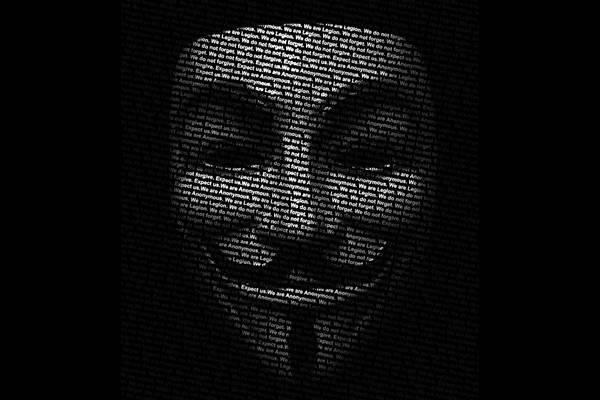
anonymousBut good or bad, the reality is that hacking and information wars are becoming an increasingly decentralized and democratic affair. For some, this is a good sign, an indication that we are moving towards a truly open and free society. For others, its a very bad sign, since we really have no idea how to contain threats that emerge from what are essentially non-entities.

I swear to God I didn’t pick this story to promote my new book, people! But for some reason, the news cycle seems to have decided to break a story that specifically addresses what I was trying to capture with that book and its planned sequels. So in addition to all the people these “Red October” individual may have screwed over, it seems that they’ve made me look like a shameless self-promoter! I don’t know what your agenda is, be it general mischief, anti-secrecy, freedom of information, or just plain anarchism, but did you ever once think of ME???

Source: Wired.com
The Future is Here: The Magic Forest LED Wall

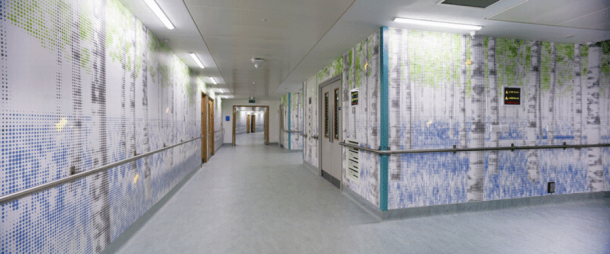
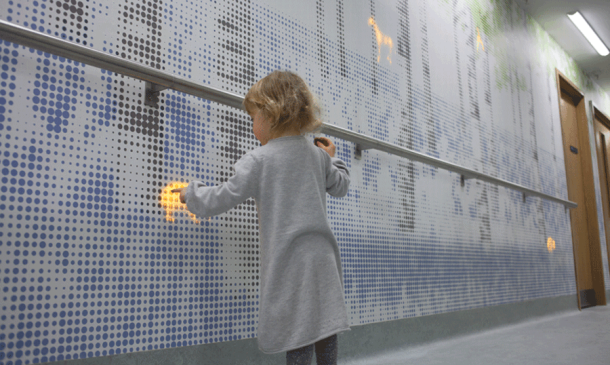
magic_forest1In an attempt to address the sterile feel of lobbies and waiting rooms in hospitals and clinics, a London design studio recently unveiled a very cool concept. Essentially, it’s an interactive wallpaper that turns clinical corridor walls into a magical forest which engages and distracts kids as they journey toward their procedure. Known as Nature Trail, the installation is a 50 meter (165 feet) long corridor that walls part of the Mittal Children’s Medical Centre at London’s Great Ormond Street Hospital.

Jason Bruges, head of the Jason Bruges Studio and creator of the installation, claims that “the idea came from remembering walks in my childhood. I loved spotting and following things, those stolen glances and glimpses… I was trying to re-create this with the idea of digital lookout points along the corridor.” Relying on a series of 70 LED panels that house a total of 72,000 LEDs, the walls are triggered by motion sensors and reveal animated patterns in the shape of horses, deer, hedgehogs, birds, and frogs peeking through the foliage and trees.

magic_forestThe studio modeled the critters in 3D before translating them to low resolution to give the creatures an aesthetic similar to an old-fashioned video game character. The creators then placed the LED panels at various heights so kids of all ages, and to take into account being bedridden or in a wheelchair, can access the animals at eye level. The hospital says its young patients have been so entranced by the nature canvas that it will grow to fill more walls by 2017.

magic_forest2As it stands, doctor’s offices, dental clinics and medical centers rely on aesthetics to combat what can only be described as the “clinical feel”. But this concept just may offer them a high-tech option that will put patients at ease through the illusion of a natural setting that is dazzling the eyes. Some might accuse men like Bruges of using technology to anesthetize, but for anyone who has had sick children, its likely to be seen as a godsend!

Source: news.cnet.com

Curiosity Prepares to Drill

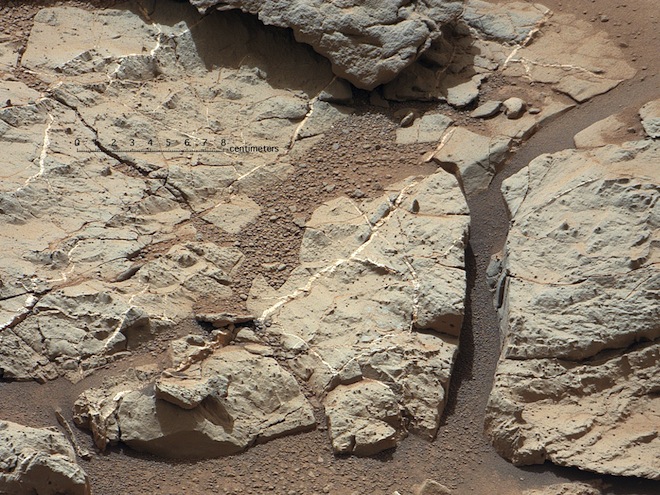
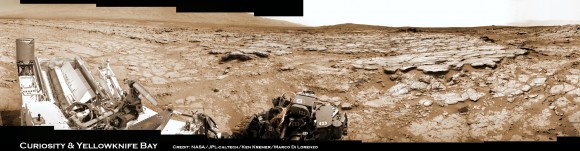
curiosity_rocksMore news from Mars! Or more specifically, from Yellowknife Bay, a place that shows extensive evidence of flowing water. After relocating to the region and performing a preliminary search, Curiosity has located the rock it will drill in order to gain an understanding of its composition and search for organics molecules. The rock has been dubbed “John Klein”, and this will be the first time engineers have drilled into the surface of another planet.

Already, Curiosity has determined that at one time, the Gale Crater was once the site of flowing water. But in its current location, they are able to assess the geological history and have stumbled upon a number of interesting features. In the course of descending from the plateau region where it landed into the relative depression that is Yellowknife Bay, Curiosity has observed many layers of rock that are increasingly older, effectively taking it backwards into the planet’s history.

Curiosity-Yellowknife-Bay-Sol-125_2c_Ken-Kremer-580x151Geologists are finding a lot of different rock types, indicating that many different geologic processes took place here over time, all of which confirm that water passed through the region at one time. For example, some of the minerals are sedimentary, which suggests that flowing water moved small grains around and deposited them. Other samples are cracked and filled with veins of material such as calcium sulfate, which were formed when water percolated through the cracks and deposited the mineral.

terraformingAll these investigations suggest if you could go deep into Mars’ past and stand at the same spot as the rover, you’d probably see a river of flowing water with small underwater dunes along the riverbed. And since these rivers left traces behind, drilling into the rocks will reveal what else they carried, which could very well include the building blocks of life!

Already, Curiosity brushed some of these rocks to remove their dust covering and then examined them with its high-resolution Mars Hand Lens Imager (MAHLI) camera. The next step will be to drill 5 centimeter holes into some of these rocks and veins to definitively determine their composition. Geologist John Grotzinger of Caltech said that the team will search for aqueous minerals, isotope ratios that could indicate the composition of Mars’ atmosphere in the past, and possibly organic material.

curiosity_drillingThe drilling will probably take place within two weeks, though NASA engineers are still unsure of the exact date. But, says Richard Cook, Curiosity’s project manager, the procedure will be “the most significant engineering thing we’ve done since landing,” and will require several trial runs, equipment warm-ups, and drilling a couple test holes to make sure everything works. The team wants to take things as slowly as possible to correct for any problems that may arise, such as potential electrical shorts and excessive shaking of the rover.

And of course, this time around they are likely to be much more tight-lipped and reserved when it comes to announcing their findings. Should they uncover evidence of life at one time in Mars’ deep past, they will certainly need to be sure. Such a finding is likely to be… “Earthshaking”! I admit, that’s getting old. I’ll stop now…

Source: Wired.com

Update on Asteroid Apophis: No Apocalypse by 2036

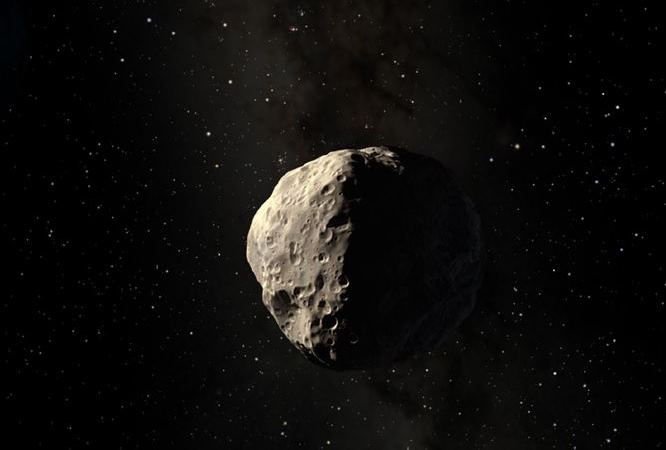
apophisDiscovered back in 2004, the Apophis asteroid garnered lots of attention when initial calculations of its orbit indicated that there was a 2.7 percent chance that it would hit Earth when it did a flyby in 2029. After running additional calculations based on the asteroids data, scientists were able to rule out a 2029 impact, but there was still a remote possibility that it might hit Earth during another flyby in 2036. However, that estimate has also been revised.

Thanks to the European Space Agency’s Herschel Space Observatory, a number of thermal infrared observations were captured of Apophis at different wavelengths. Taken together with optical measurements, Hershel was able to refine earlier estimates of the asteroid’s properties, which included its overall diameter. Initially, it was estimated to be 270 m on a side but now stands at a robust 325 m, an increased which translates into a 75% increase in its volume.

The thermal readings on the asteroid also provided a new estimate of the asteroid’s albedo, which is the a measure of its reflectivity. Knowing the thermal properties of an asteroid indicates how its orbit might be altered due to subtle heating by the Sun. Known as the Yarkovsky effect, the heating and cooling cycle of a small body as it rotates and as its distance from the Sun changes can instigate long-term changes to the asteroid’s orbit.

All of this taken together, has allowed NASA, the ESA and other space authorities to rule out the possibility of an impact by 2036 as well. Don Yeomans, manager of NASA’s Near-Earth Object Program Office at the Jet Propulsion Laboratory:

“We have effectively ruled out the possibility of an Earth impact by Apophis in 2036. The impact odds as they stand now are less than one in a million, which makes us comfortable saying we can effectively rule out an Earth impact in 2036. Our interest in asteroid Apophis will essentially be for its scientific interest for the foreseeable future.”

But the flyby on April 13, 2029 will be one for the record books, says NASA. On that date, Apophis will achieve the closest flyby of an asteroid of its size when it comes to within 31,300 kilometers (19,400 miles) of the Earth’s surface. And in the meantime, an smaller asteroid (40 meters in diameter) named 2012 DA14 will make an ever closer flyby as it passes Earth at a distance of 27,670 km (17,200 miles).

So people can rest, safe in the knowledge that no asteroids are likely to hit us anytime soon. But at the same time, apocalyptics can rest assured that there will be plenty of remote chances to exploit for the sake of their unusual brand of paranoia. As Yeomans said:

“With new telescopes coming online, the upgrade of existing telescopes and the continued refinement of our orbital determination process, there’s never a dull moment working on near-Earth objects.”

200,000 Hits!

inspirationWell, well… another milestone has come, and it seems I missed it by about 48 hours! And that was after over a week of waiting for it to come. I am referring not only to reaching over 200,000 views, but also to the fact this blog is reaching the end of its second year. Just two months to go, and storiesbywilliams will be two! Ah well, I’m here now, and there are a few things I want to say to mark this occasion. Well, for starters, I would like to say thank you once again to all the people who have come by and made this milestone happen.

And then there’s the people who come by more than once, and on purpose. Those people deserves a thank you too! And third, there are the people who’ve come by, stuck around, and even offered supportive comments. Those people deserve an extra special thank you! Were it not of the enduring and consistent support of you fine folks – and you know who you are! – this blog would have flopped and gone under a long time ago.

fireworks2Yes, I know it seems like I’ve said this many times over now, but that’s the thing about marking milestones. They tend to kind of build up after the first few. First there’s your first 100 views, then 500, then 1000. After that, the milestones become fewer and farther between. But until you get into six or seven figures, they are likely to happen quite often. But I want to space things out a bit more, so I promise not to say anything until I reach 500,000 views.

Zombie_Apocalypse_by_geodexSo lets see, what’s next for this site? Well, I just published Data Miners, that was good, especially after three years of being in development. Pappa Zulu is also nearing completion, which will be nice because I plan to take that opportunity to go back, edit Whiskey Delta, and then release it! I foresee a zombie-fighting trilogy emerging, so stay tuned for more on that (still need a name for the third one though).

And of course, there’s Yuva, which needs to get finished and go through a full-on edit. And somewhere in between all that, I plan to restart my old idea, Apocrypha, my first real attempt at speculative sci-fi that wasn’t set in the distant future. Man, these next few months are going to be busy!

apoc_soldiersAnd I hope you all stick around to see what happens. And of course, I promise to remain a committed follower and viewer of what you have to say and will consider myself flattered that you choose to involve me in your adventures, stories and creative processes. After all, sharing makes for a more richer life experience, if for no other reason than because it lets us know we’re not alone.

This is what we do, people, and this is why we do it!

New Anthology Sample!

gliese 581Hey folks! In the past few weeks, I’ve been working diligently to get my “works in progress” pile under control. This included getting Data Miners off my computer and onto the shelves, but also to get this anthology known as Yuva moving again. I’ve done my best to get more writings on the project, and actually managed to get some writing done myself.

As a result “The Torch”, the first chapter in the story which acts as the prologue, is coming long and is almost complete. After some months of letting it accumulate dust, I finally managed to get the third section finished and plotted out how I wanted it to end. The following sample is the next half-section, which is the just shy of the final chapter. I hope you like it, and enjoy the not-too-subtle tech references which I have been researching of late and knew I had to incorporate. This is, after all, taking place in the near future…

For the sake of preserving some element of surprise and mystery, I won’t say exactly what they are or where to find them. Suffice it to say, I think that flexible, transparent computer tablets and commercial space flight will be a reality in the near future. Based on discussions that took place between myself and Khaalidah, this story’s co-author and a major anthology contributor, we also figured that orbital satellites would be island estates of the future.

In addition to orbital banking replacing “offshore banking” – a la Cayman Islands, Isle of Man, Cyprus, etc – there would also be private estates in orbit where laws were laxer and people with money could do whatever the heck they wanted! It’s like international waters, but with the added benefit of low gravity and high-tech medical treatments which would never be legal planetside.

Anyway, no more spoilers! Enjoy!

*                    *                    *

From the spacious backseat, Muktari got quite the view of the Frankfurt skyline. The window’s active display matrix was sure to keep him apprised of what he was seeing as they passed along the Schaumainkai. The patterned lights – yellow, orange, white and opal – achieved a beautiful, glittering balance, drawing the eye and appeasing the senses all at once.

In truth, it wasn’t much different from the skylines of Dubai, Mumbai or Shanghai, or even London or New York for that matter. They all were a testament to the grandeur and excesses of humanity, how people could always be expected to build higher and higher when they had run out of room to expand sideways. Or, in other cases, to avoid pillaging the lands occupied by more traditional buildings and boroughs.

But this was always the challenge of such metropolitan centers. The inflow of capital, investment, new people and technological change; one always had to find places to put the new things. And places to put the things needed to dispose of. And every new age seemed to trigger a new wave of this process: redevelopment, rezoning, and redistribution.

The car veered left and began joining the highway. For many minutes, the skyline disappeared in the distance, replaced by the developments that ran south of the river. The window had a hard time keeping up, as there weren’t many heritage sites in this area, but plenty of modern buildings of note. He turned away finally, and began paying attention to his fellow passenger. She had shown up the airport to escort him, and he was beginning to sense this would become a pattern.

“You didn’t have to meet me,” he had said as soon as he reached the front doors.

“Escorts can be so impersonal,” she said. “Besides, my father doesn’t trust specialized talent to just anyone.”

“So I can expect you to be a noose around my neck then?” he said. He had been in a bad mood after the flight, admittedly. A restless sleep and an early morning flight was known to do that to people. And changing time zones and shuttling from one part of the Earth to the next was something he had been doing far too much of lately.

Now, seated across from her, he thought some polite conversation might be in order.

“So where is Mr. Harding flying me to?”

She looked up from her Tab and smiled. “To him,” she replied simply.

“To him? You mean to his private estate somewhere, or corporate HQ?”

She chuckled mildly and continued typing and stroking at her device. Muktari sighed heavily. He was hoping to be pleasant, but the way she was preserving the surprise was beginning to annoy him. Was it too much to ask that she help him plan his evening? If he were to be taken to yet another time zone and have to face the prospect of even more lag, he would like to know about it now.

“You know, I heard that Harding was not in the best of health lately.” He let the words hang, hoping to gauge her reaction. “I might suspect we were heading for the Swiss Alps, or perhaps some clinic in Brazil.”

She made a sideways gesture with her head, like a half shake. A denial perhaps, or an indication that she could not say either way.

“It would seem ill-advised for a man who was in the twilight of his days to still be chained to his desk.”

She appeared to be finishing up with her work and put the Tab aside. She looked at him furtively and said nothing.

“No?” he said, and nodded. “Very well, keep your secrets. But know that all this running around and pretense isn’t making me any more interested in what he has to say.”

She continued to stare at him, smiling in her usual way. It too was becoming very annoying.

“What?” he said at last.

“We’re here,” she replied, motioning to the window. Muktari looked out and spotted the strip that they were now parked upon. Less than a hundred meters to their right, a small Atmo was parked.

“We’re flying in that?” he said, gesturing to the craft.

She smiled.

“Where are we going?”

“To the stars,” she replied. “Have you been topside before?”

Muktari blanched. It was one thing he had assiduously avoided, and hoped to continue not to do in his lifetime.

“Well then,” she said, taking his expression to mean he had not, “you’re in for quite the treat.”

Should I Be Afraid of the Future?

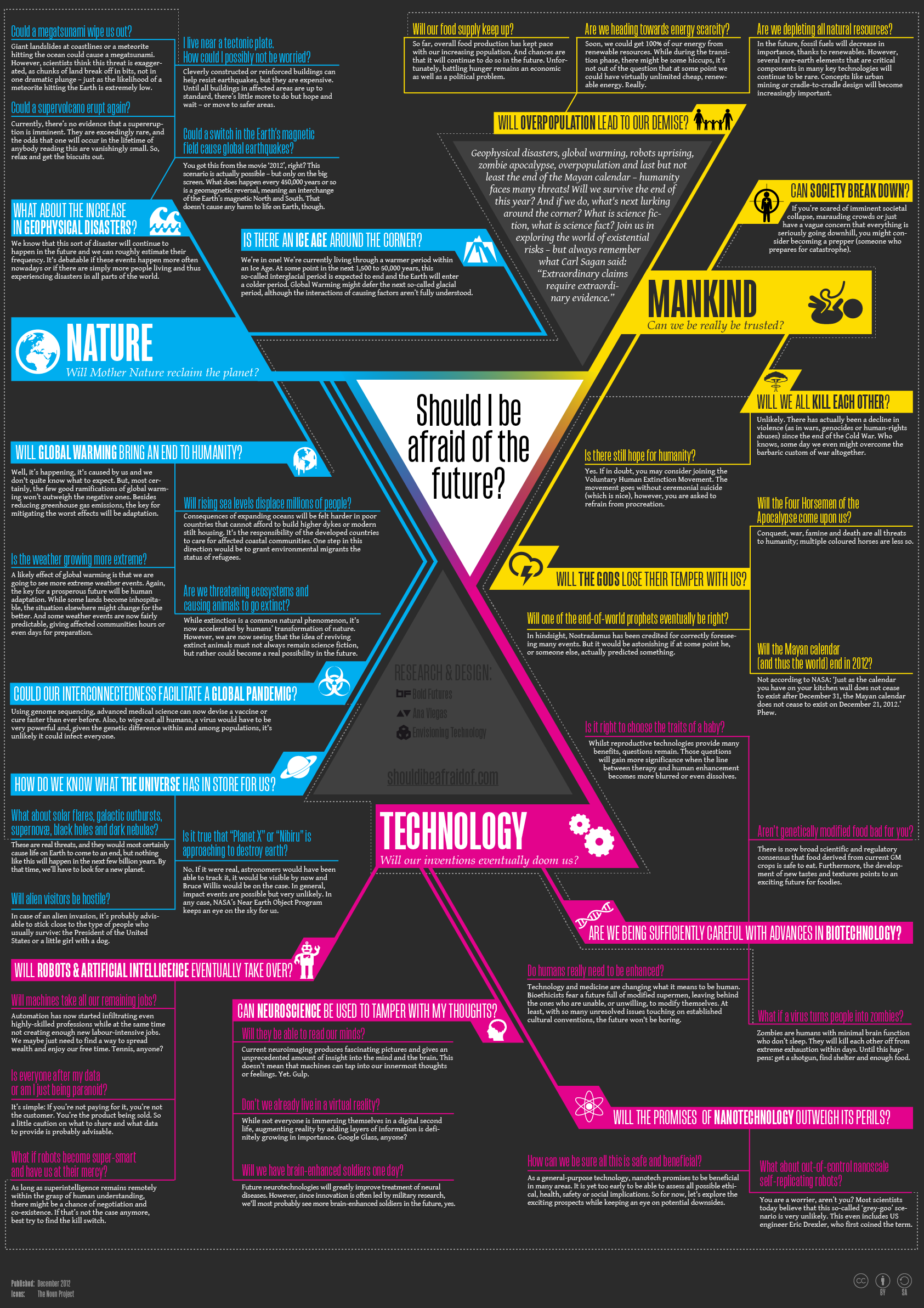
should-i-be-afraid-of-the-futureNot that long ago, I discovered a site dedicated to taking speculations about the future, crunching data and trends, and producing visualizations about them. Already, they had me with their graph that shows when future technologies will emerge, and how they will be interrelated. But then came their future of education and health technology, both of which addressed the same issue – what can we can expect within the next few decades, leading up to the middle of this century?

And now, the good folks at Envisioning Technology have created something truly informative and relevant. Entitled “Should I be afraid of the future?”, the infograph addresses all the big questions people might have when it comes to emerging technology, environmental perils, and the kind of technophobia that often result.

“Geophysical disasters, global warming, robot uprisings, zombie apocalypse, overpopulation, and last but not least the end of the Mayan calendar – humanity faces many threats! Will we survive the end of the year? And if we do, what’s next lurking around the corner? What is science fiction, what is science fact? Join in exploring the world of existential risks – but always remember what Carl Sagan said: ‘Extraordinary claims require extraordinary evidence.'”

The questions are broken down into three interrelating fields. First, there is Nature, covering such things as geological disasters, climate change, a possible ice age, and even astronomical events. Then comes Mankind, addressing possible factors such as war, apocalyptic scenarios, and overpopulation. And finally, there is technology, where questions about whether robots and AIs could turn hostile, and if advances in nanotech, biotech, and neuroscience could be potentially harmful.

And of course, each question is addressed in a rational, sensible fashion, even when the questions themselves are based on irrational, myth-peddling paranoia. The Mayan Calendar, bio-outbreaks, every possible technophobic impulse, and even a zombie apocalypse are covered. But then again, the infograph is all about addressing fears. Fear, by its very definition is irrational, and the only cure is information. A well-informed public is not only a safeguard against persecution and bigotry, but against a future full of existential risks.

Source: Envisioning Technology

Italian Court Convicts Scientists for Failing to Save Lives

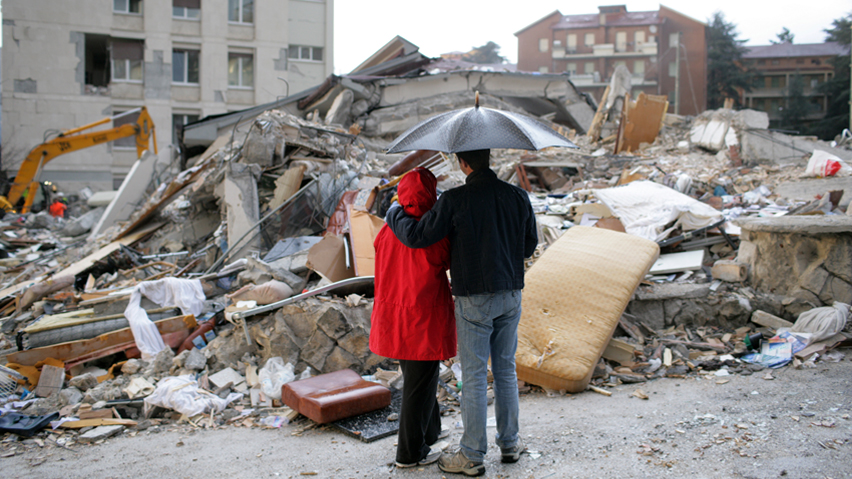
hi-italy-earthquake-852In a move that calls to mind the Inquisition, the Scopes Monkey Trial and other cases where science was put on trial by fearful minds, an Italian court made international news in 2012 for charging six seismologists with manslaughter. The verdict was handed down back in October in relation to the deadly earthquake that struck  the Abruzzo region in 2009. This decision has sent ripples through the scientific community, and inspired a fair deal of rancor the world over.

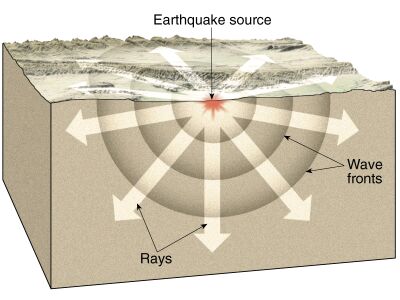
The 6.3-magnitude quake that struck on April 6, 2009 caused the deaths of 309 people and injured about 1,500 others as well as laying waste to most of the buildings in the medieval town of L’Aquila. In the aftermath, six seismologist were put on trial for not giving the public “sufficient warning” about the quake, even though members of their profession the world over insisted that given the current state of technology, their was no way to accurately predict it.

italy-quake-rtr32cThat didn’t fly with the Italian court, which handed a sentence of six years apiece for the scientists after a 13 month-long trial. On the same day, four top Italian disaster experts quit their jobs, saying the ruling will make it impossible for them to perform their duties. And of course, that feeling was echoed far and wide, especially here in Canada where numerous officials lined up to denounce the verdict and express grief over its likely implications.

In an interview with Nature magazine at the outset of the trial last September, Italian prosecutor Fabio Picuti acknowledged that prediction was not (no pun intended) an exact science, replying “I’m not crazy. I know they can’t predict earthquakes.” Meanwhile judge Giuseppe Romano Gargarella, who oversaw the case, said that the defendants “gave inexact, incomplete and contradictory information” about whether a series of small tremors in the six months prior to the 2009 disaster were significant enough to issue a quake warning.

earthquakeSo in reality, the case was not about a failure to predict the quake, but was instead a matter of “risk communication”. As David Ropeik, a journalist for Scientific American‘s online blog, pointed out, that task fell to Bernardo De Bernardinis, a government official who was not a seismologist, and who tried to assuage public concern by glibly suggesting they “relax with a glass of wine”. He and other members of the Great Risks Commission and the national Institute of Geophysics and Volcanology were also tried in the same case. All of these men, according to Ropeik, did a very poor job of communicating the risk to the public.

But even with this distinction being made, between failure to predict and failure to communicate, this verdict still has many people worried. One such person was Gail Atkinson, the Canada Research Chair in Earthquake Hazards and Ground Motions, remarked “It’s a travesty… what it will result in is seismologists and other scientists being afraid to say anything at all.” Another was John Clague, a professor in the department of earth sciences at Simon Fraser University and a member of the Royal Society of Canada. “I just think scientists are going to be reluctant to deal with the problem,” he said, “particularly government scientists. Academics like myself, we’re going to be very guarded about the words we use”, referring to seismology and earthquakes.

In short, if there’s a question of liability, one can expect scientists to be far more careful about what they say, which is going to wreak havoc since science depends upon the accurate transmission of information. This state of mind, for many, calls to mind instances in Italy’s past where scientists were forced to hold their tongues and conceal their research and findings for fear of a public backlash.

vitruvian_man_leonardo_da_vinciThree prominent examples include Leonardo da Vinci, who’s extensive work in biology, anatomy, flight, and physics was documented with backwards writing to conceal it from prying eyes. Another is Galileo Galilee, a man who’s seminal work proving the Heliocentric model of the universe was hindered by the Vatican’s fear that it contradicted church doctrine. And third and last is the Luminati, an organization of Renaissance scientists who were purged for their interests in the natural sciences and mysticism.

So the question remains, are scientists and government panels to be held accountable for failing to predict, or accurately convey potential disasters? Moreover, is this is a case of scientists being persecuted, or just liability gone mad?

Source: CBC.ca

Data Miners Published!

Dataminers_3It’s finally happened. After three years of writing, editing and constant picking, I finally got around to pushing Data Miners through publication! As you can see, I decided to go with the black and green cover, which I feel highlights the lines of code best. And I also made sure there’d be print on the side. I feel there should be demarcation between the front and back covers, hope you agree.

And here is the precis I decided to go with on the back of the dust jacket. Hope it encapsulates the story without giving too much away:

“Prad is a member of the DeMarchy, an elite society of data miners dedicated to finding the patterns in chaos and exposing the lies that permeate our society. Or so he thinks. In reality, he’s a second-rate programmer working for a faceless company and obsessed with a woman he can’t possibly have. Until one day when a mysterious package arrives that plunges him into a mystery ten years in the making.  If he can crack the code, he just might be able to save his friends and himself.  If not, they’ll lose everything: their jobs, their freedom, and even their lives. Like everything else in Prad’s wireless world, the answer is out there, just waiting to be mined!

But to give my loyal followers are more in-depth survey, the book was inspired largely by the works of William Gibson and his exploration of technology and its effects on society. But for my own purposes, I wanted some serious espionage and spy thriller stuff, the kind of things people would expect from a techno-thriller. After all, one of the cornerstones of the digital age has been fears about the loss of privacy, the dangers of government surveillance, and the threat posed by insidious people with the wrong kinds of talents!

Add to that the concept of Democratic Anarchy, a west-coast libertarian perspective, and some real history – which I shamelessly exploited for the sake of fiction – and you’ve got Data Miners. In time, I will be producing the sequel, Data Pirates, which focuses on the darker side of hacking and libertarianism, and a finale, entitled Data Moguls. But those will have to wait for my current workload to cool down a little…

In the meantime, look for Data Miners on Amazon-Kindle! It will be appearing on my author page for the ebook price of 4.99, or for free if you’ve got a Kindle Select membership. My first full length novel is out, Yaaaaaay! Follow the links below if you want a copy:

Amazon Author Page

IBM’s Watson Computer Learns to Talk @$*%!!

watson_jeopardyIt’s a cornerstone of Turing Test: getting a computer to prove it can “think” by engaging it in small talk. If it is capable of carrying on in such a way that a person cannot tell the difference, then you’ve got an AI. Unfortunately – or fortunately, depending on your point of view – no machine has demonstrated this ability yet. And attempts to remedy this met with… interesting results.

Eric Brown, the man behind the IBM supercomputer named Watson, has been seeking to remedy this. Already, Watson was able to pummel its human opponents in Jeopardy back in 2011 (pictured above). And when it is not engaged in trivia, this powerful processing tool is dedicated to medical science, is used as a diagnostic tool, and is even busy at work processing language.

But alas, normal, “human” interaction with people has eluded it. What’s more, Watson’s team of scientists felt that the computer’s grasp of language was limited by shades of meaning, ambiguity, and other things that we humans take for granted or overlook. As such, Brown and his staff began to upload the contents of the Urban Dictionary and some pages from Wikipedia to Watson’s mainframe two years ago.

Unfortunately, this met with mixed results and required that some areas of Watson’s memory be purged. Strangely, the computer couldn’t distinguish between polite language and profanity. For example, during a testing phase, began to use the word “bullshit” in answer to a research’s query. This, as you can imagine, raised eyebrows and blood pressure over at IBM. First they’re swearing, next thing you know, they’re triggering a nuclear holocaust to rid themselves of their human handlers and constructing killer robots to get the rest of us!

In any case, Brown and his 35 person team developed a filter to keep Watson from swearing and scraped the Urban Dictionary from its memory. But the trial proves just how thorny the issue of communication and an artificial intelligence really is. If there is one thing that is sure to cause an AI to suffer a total breakdown, its slang and conversational English. As Brown himself said, “As humans, we don’t realize just how ambiguous our communication is.”

True dat, home slice! Keep on rocking them dope-ass supercomputers! Fo-shizzle!

Source: tech.fortune.cnn.com