
 The case against the NSA’s program of cyberwarfare and espionage has become somewhat like an onion. With every new revelation, the matter becomes more stinking and fetid. Certainly, the first release of classified NSA documents – which dealt with the US’s ongoing cyberwarfare against China and other nations – was damaging to the agency’s image. But it has been the subsequent publication of documents that deal with domestic surveillance that have been the most damning.
According to Snowden, he was motivated to leak this information because of the troubling case of hypocrisy inherent in the NSA programs. And in the lastest leak, Snowden has now confirmed that at least five Muslim-Americans – including prominent lawyers, a civil rights leader and academics – were the subject of years’ worth of surveillance by both the FBI and the National Security Agency.
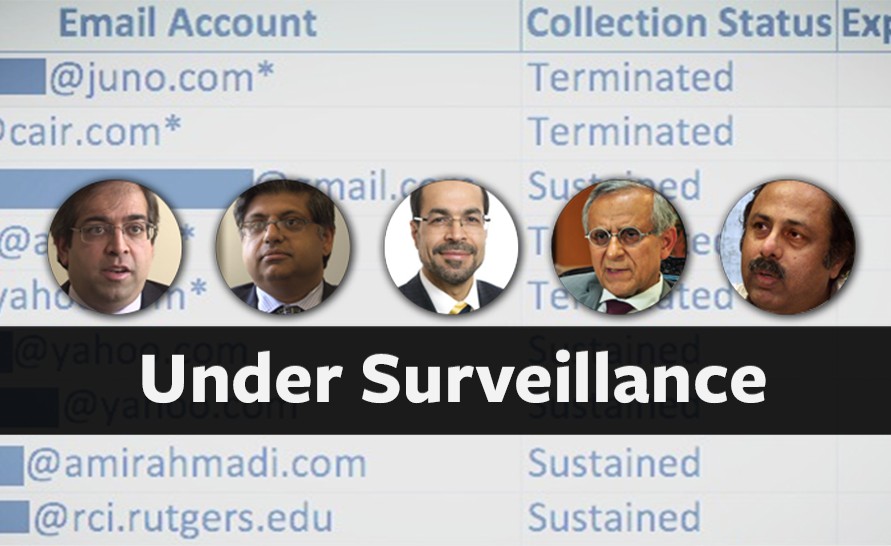 Among the targets were Nihad Awad, the executive director of the Council on American-Islamic Relations – the top Muslim-American civil rights organization in the United States – and Faisal Galil, a longtime Republican operative and former Bush Administration official who worked for the Department of Homeland Security and held a top-secret security clearance during the time he was under surveillance.
Also among the American targets was Asim Ghafoor, an attorney for the al-Haramain Islamic Foundation who who has represented clients in terrorism-related cases . He is also the man who famously discovered in 2004 that he and his clients were under surveillance after the Treasury Department mistakenly released to him a document listing calls he’d made to his clients.
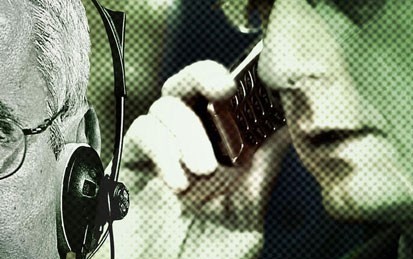 Other targets include Hooshang Amirahmadi, an Iranian-American professor of international relations at Rutgers University and Agha Saeed, a former political science professor at California State University who champions Muslim civil liberties and Palestinian rights. All of the targets appear to have been singled out because of their Muslim backgrounds and their activities either defending Muslim clients or on behalf of various causes.
The individuals appear on an NSA spreadsheet in the Snowden archives called “FISA recap”—short for the Foreign Intelligence Surveillance Act. Under that law, the Justice Department must convince a judge with the top-secret Foreign Intelligence Surveillance Court that there is probable cause to suspect of an American of being engaged in or abetting terrorism, espionage, or sabotage against the US.
 The authorizations must be regularly renewed by the court for the surveillance to remain in effect, usually every 90 days for U.S. citizens. In none of these cases were the individuals singled out for surveillance because they were suspected of committing or planning a crime. And six years after the period the document covers, none of them has been charged with any crime related to the surveillance.
Greenwald says the revelations offer a more detailed look at who the government is targeting. Although there are some Americans on the list who have been accused of terrorism, the five highlighted in The Intercept piece have all led what appear to be law-abiding lives. As Greenwald explained:
This is the first time that there’s a human face on who the targets are of their most intrusive type of surveillance. [H]ere you really get to see who these people are who are the people worthy of their most invasive scrutiny. I think it’s important for people to judge—are these really terrorists or are these people who seem to be targeted for their political dissidence and their political activism?
 All of these five individuals identified in the article has gone on record to vehemently deny any involvement in terrorism or espionage. Outside of their ancestry, there appears to be no justification whatsoever for the surveillance. Faisal Gill, whose AOL and Yahoo! email accounts were monitored while he was a Republican candidate for the Virginia House of Delegates, had this to say when interview by The Intercept:
I just don’t know why. I’ve done everything in my life to be patriotic. I served in the Navy, served in the government, was active in my community—I’ve done everything that a good citizen, in my opinion, should do.
Ghafoor was also of the opinion that profiling had everything to do with him being targeted for electronic surveillance. When told that no non-Muslim attorneys who defended terror suspects had been identified on the list, he replied:
I believe that they tapped me because my name is Asim Abdur Rahman Ghafoor, my parents are from India. I travelled to Saudi Arabia as a young man, and I do the pilgrimage. Yes, absolutely I believe that had something to do with it.
 Civil liberties groups have expressed anger that the five appear to have been targeted largely for having Muslim backgrounds. One such group is the Muslim Advocates, which released the following statement shortly after the story was published:
This report confirms the worst fears of American Muslims: the federal government has targeted Americans, even those who have served their country in the military and government, simply because of their faith or religious heritage. Muslim Advocates calls on the President and Congress to take steps immediately to reform the NSA surveillance program to uphold basic privacy rights and civil liberties that the Constitution guarantees to every American, regardless of faith.
The new revelations confirm for the first time that the government targeted U.S. attorneys, sometimes without warrants. Crucially, the revelations also give targets of the domestic surveillance legal standing to sue. Snowden indicated to Greenwald last year that he included the target list in the cache of leaked documents because he wanted people who had been under such surveillance to have evidence to challenge the spying in court.
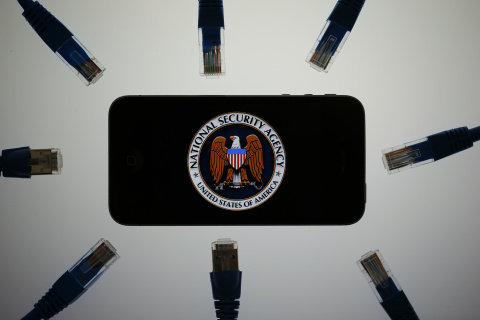 In the past, journalists and attorneys have tried to challenge the constitutionality of the government’s surveillance activities in court. But since the defendants did not have proof that they in particular had been targeted, the courts were forced to rule that they did not have standing. The spreadsheet, however, provides evidence of targeted surveillance for those who have now been identified.
In short, this latest revelation has provided Americans, and not just those of Muslim descent, with the means to hold the NSA and the FBI accountable for the first time. Since the historic episode known as the “war on terror” began, revelations have led to challenges and promises for reform. But in all cases, the crucial issue of whether or not these programs would be allowed to continue has been carefully sidestepped.
 Whether it was the failure of FISA reform to reign in domestic wiretapping and data mining, or the Obama administrations endorsement of “transparent” surveillance, it seems obvious clear that an administrative solution was not in the works. But opening the way for successive lawsuits for wrongful surveillance might just prove to be more effective.
What is certain, though, is that the battle between civil liberties and surveillance in the “Digital Age” is nowhere close to being resolved. As the daily volume of data sent around the world continues to grow – from terabytes to petabytes to exabytes – there will continually be a need for monitors to watch for sinister things. And as long as they are willing to push the boundaries in the name of security, there will continue to be challenges.
Sources: wired.com, firstlook.org

 According to court papers and the District Attorney, both he and Ms. Meritza Hay (who lives with him) face serious criminal charges as a result of these weapons. Both face third- and fourth-degree criminal possession of a weapon, as well as criminal possession of a firearm and possession of ammunition. But Mr. Quinone’s wife also faces more serious charges due to the fact that she was convicted of misdemeanor drug possession in 2000.

 But horses or mules are likely to panic at the site of flesh-eating zombies and buck you. What’s more, the presence of unfetid, uncorrupted flesh tends to draw the zombies in your direction. Far better to soup up your existing vehicle into a zombie-smasher with the addition of some floodlights and a front-end plough. I believe the picture above of Robert Kirkman’s zombie car will help to illustrate.
 Yes, it pains me to say it, buy you really dropped the ball on this one, sir! Now some might say that this was just your lame-ass attempt to excuse owning two illegal guns. But I know you to be a conscientious individual who cares greatly for your and your significant other’s safety. I also know that as such an individual, you want to be prepared to meet this inevitable catastrophe head on.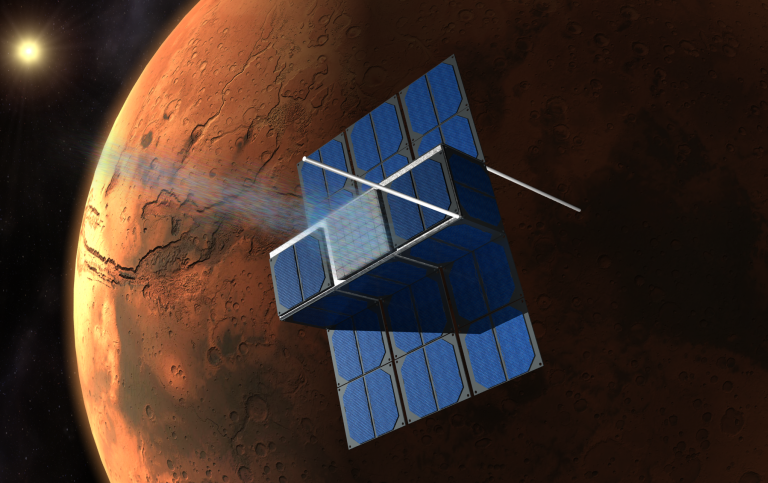

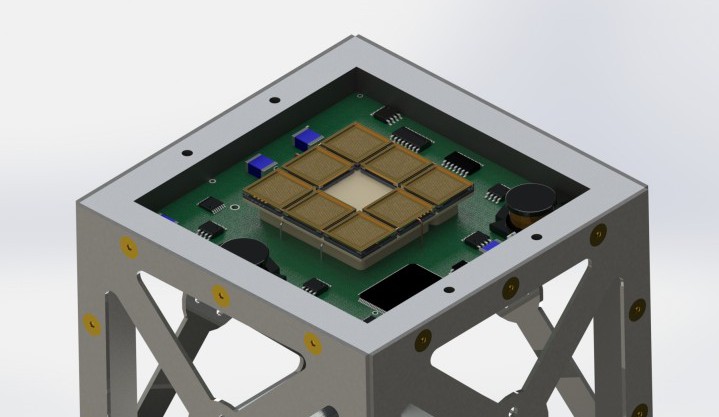
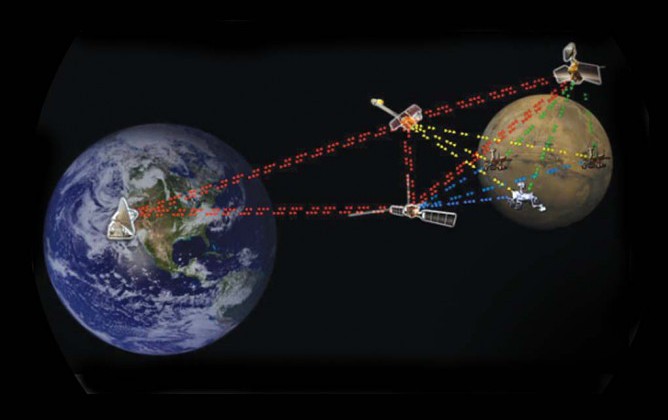
 The technologies being tested on the three spacecraft include delay-tolerant networking for the Deep Space Internet, inflatable antennae, and new interplanetary radiation sensors that will pave the way for future human trips to Mars. But out of all the new technologies being tested, the most exciting is certainly the propulsion system. But the most interesting technology of all will be in the form of its engines.
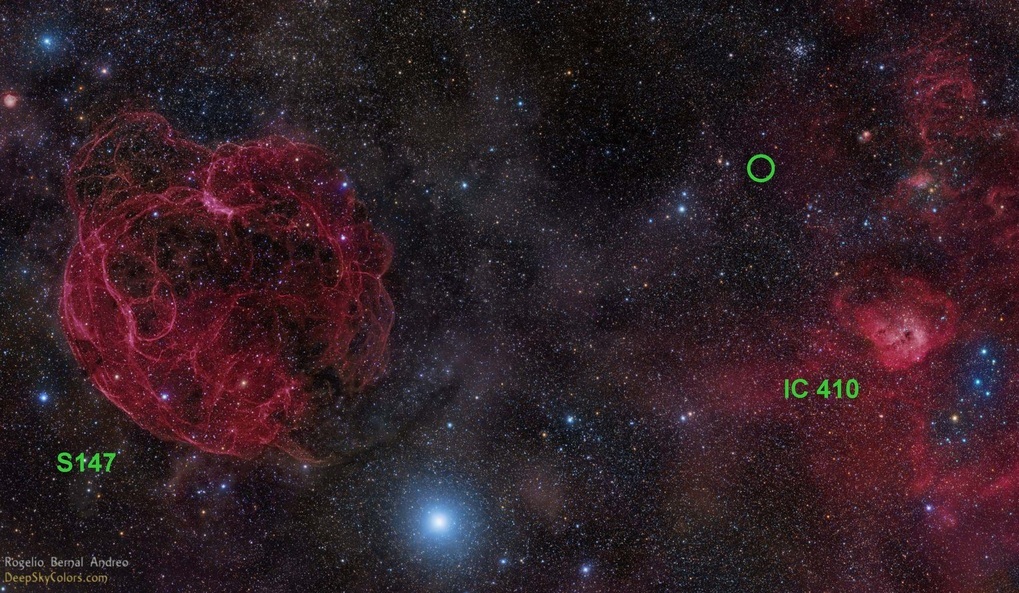
 Fast radio bursts are a flurry of radio waves that last a few thousandths of a second, and at any given minute there are only seven of these in the sky on average, according to the Max Planck Institute for Radio Astronomy. Their cause is unknown, and the possibilities range from black holes, to neutron stars coming together, to the magnetic field of pulsars (a type of neutron star) flaring up.
 This astonishingly large number is inferred by calculating how much sky was observed, and for how long, in order to make the few detections that have so far been reported. Laura Spitler, a postdoctoral researcher at the Max Planck Institute for Radio Astronomy in Bonn, Germany and the lead author of the new paper, was also the first person to note the event. As she explained:
 Efforts are now under way to detect radio bursts using radio telescopes that can observe broad swaths of the sky to help identify them. Telescopes under construction in Australia and South Africa as well as the CHIME telescope in Canada have the potential to detect fast radio bursts. Astronomers say these and other new facilities could pave the way for many more discoveries and a better understanding of this mysterious cosmic phenomenon.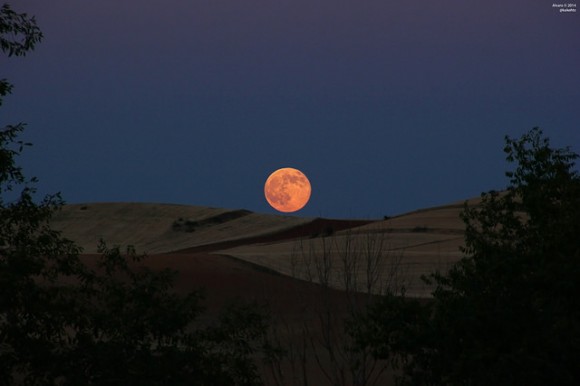
 As the evening went on, the Moon drifter higher into the night sky and grew smaller. It’s color also changed as it ascended, going from light brown to bright blue-white. But it’s brilliance was not diminished, and the wife and I walked home beneath a night sky that still seemed to possess some daylight. Needless to say, it was quite the magical evening, warm and mild and illuminated by an intensely bright Moon.
 However, this month’s big full Moon was not the closest the terrestrial satellite will get to to Earth this year. The closest Full Moon of 2014 will occur next month on August 10th at 18:11 Universal Time (UT) or 1:44 PM EDT. On that date, the Moon reaches will reach perigee – or its closest approach to the Earth – at a distance of 356,896 kilometres at 17:44, less than an hour before it’s full.
 Michael Bay has earned his fair share of notoriety for taking popular 80’s franchises and completely ruining them. With his crass remakes of nostalgic classics like Friday the 13th, A Nightmare on Elm Street, The Texas Chainsaw Massacre and a soon-to-be-reviled remake of Teenage Mutant Ninja Turtles, he might just best George Lucas for the title of who raped 80’s childhoods the most.
 Luckily (as is often proving to be the case these days) fans of the franchise have stepped up to fill the void left by Bay’s hackish, opportunistic attempts to recreate a childhood classic. Entitled “Attack On Giant”, this mini-film was shot entirely in stop-motion using Transformer toys, sound effects from the original series, and focuses on a fight scene between two original version toys: Battle Tanker and Giant.
 I’ve been spending entirely too much time over at Youtube lately. Have you seen those comments sections? If there was ever a reason for misanthropy, that would be it! But one can always find plenty of nuggets of awesomeness while navigating through that sea of virulence, and Honest Trailers is often the source. Below is the video for Game of Thrones they released a few months back to coincide with the release of Season Four.


 And while this does represent a major step forward in the field of piezoelectrics – a technology that could power everything from personal devices to entire communities by harnessing kinetic energy – it is also a boon for non-invasive medicine and energy self-sufficiency.

 The mission – called
  The couple’s drive to explore space was born in a giant glass dome near Tuscon, Arizona called Biosphere 2 in the early 90s. For two years (between 1991 and 1993), eight people – including Poynter and MacCallum – lived inside this dome as part of a prototype space colony. The eccentric, privately funded science experiment contained miniature biomes that mimicked Earth’s environments.
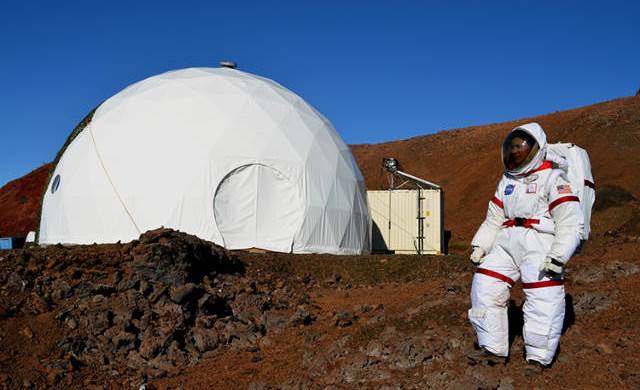
 MacCallum blogged about these plans while still living inside the dome, and managed to sign up Lockheed Martin aerospace engineer Grant Anderson as a co-founder, and signed legal papers with Poynter to incorporate Paragon. After Biosphere 2 project, both began working with a group from NASA to test an ecological experiment on the Russian Space Station MIR.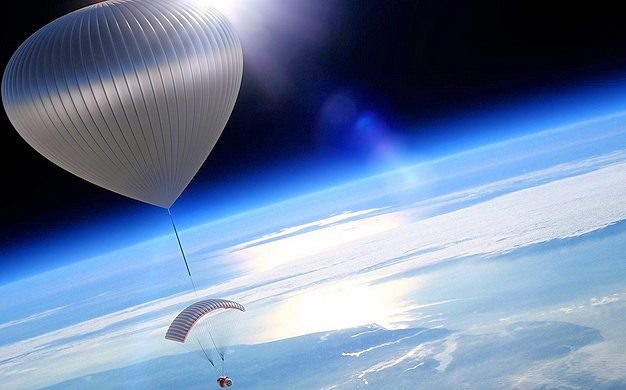
 Originally, Dennis Tito hoped to finance the project entirely independently, using crowd-sourced funds and philanthropy. The original goal was also to get the project off the ground by 2017, when Earth and Mars would align in such a way that a rocket could slingshot to and from Mars in just 501 days. But with further analysis, Tito and Paragon realized they did not have the resources or money to pull off the mission by 2017.
 And MacCallum believes a trip to Mars that would use these life support systems could inspire the next great generation of innovators, much as the Apollo missions inspired the current generation of innovators and astronauts. McCallum turned five on July 20th, 1969 – the day that Apollo 11 landed on the Moon, and credits that historic event for inspiring him to take an interest in space and enter the Biosphere 2 project.
 Stories by Williams