
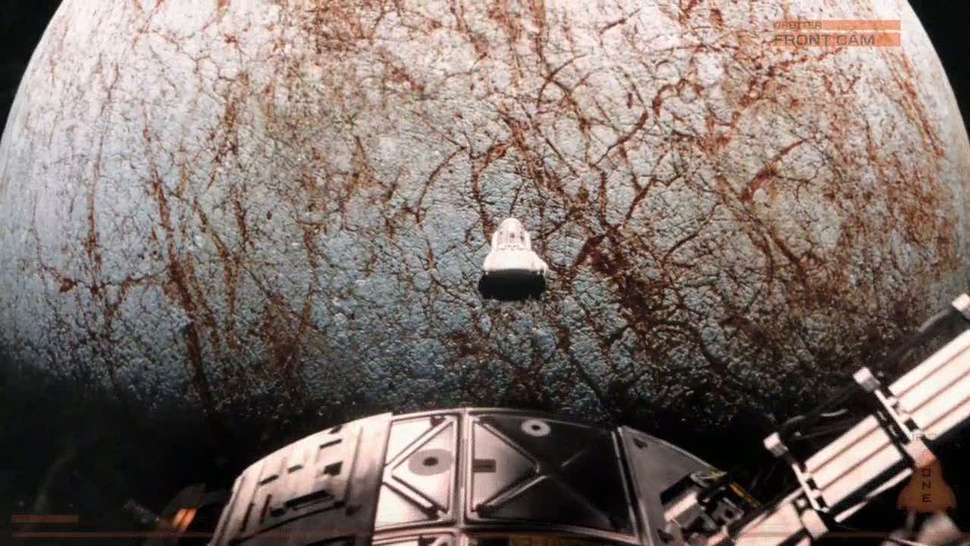
 The Jovian moon of Europa remains a mystery that is just dying to be cracked. Although covered in ice, scientists have long understood that tidal forces caused by its proximity to Jupiter have created a warm interior, one which can sustain warm oceans beneath the surface. In the coming years, NASA wants to fly a mission to this planet so we can finally get a look at what, if anything, is lurking beneath that icy crust.
Perhaps emboldened by the success of the Curiosity Rover and the plans for a manned mission to Mars in 2030, NASA has several possible plans for what a Europa mission might look like. If the budget environment proves hospital, then NASA will likely send a satellite that will perform several orbits of the moon, a series of flybys on it, and scout the surface for science and potential landing sites.
 Towards this end, they are looking for proposals for science instruments specifically tailored to the task. And within a year’s time, they plan to select 20 from a list of those proposed for the mission. At which point, the selectees will have $25 million to do a more advanced concept study. As John Grunsfeld, associate administrator for NASA’s science mission directorate, stated:
The possibility of life on Europa is a motivating force for scientists and engineers around the world. This solicitation will select instruments which may provide a big leap in our search to answer the question: are we alone in the universe?
The Europa mission is not a guarantee, and it’s unclear just how much money will be allocated to it in the long run. NASA has requested $15 million in fiscal 2015 for the mission, but the mission will naturally be subject to budgetary approvals by Congress. If it passes all obstacles, it would fly sometime in the 2020s, according to information released with the budget earlier this year.
 In April, NASA sent out a request for information to interested potential participants on the mission itself, which it plans to cost less than $1 billion (excluding launch costs). Besides its desire to look for landing sites, NASA said the instruments should also be targeted to meet the National Resource Council’s (NRC) Planetary Decadal Survey’s desires for science on Europa.
In NASA’s words, these are what those objectives are:
- Characterize the extent of the ocean and its relation to the deeper interior;
- Characterize the ice shell and any subsurface water, including their heterogeneity, and the nature of surface-ice-ocean exchange;
- Determine global surface, compositions and chemistry, especially as related to habitability;
- Understand the formation of surface features, including sites of recent or current activity, identify and characterize candidate sites for future detailed exploration;
- Understand Europa’s space environment and interaction with the magnetosphere.
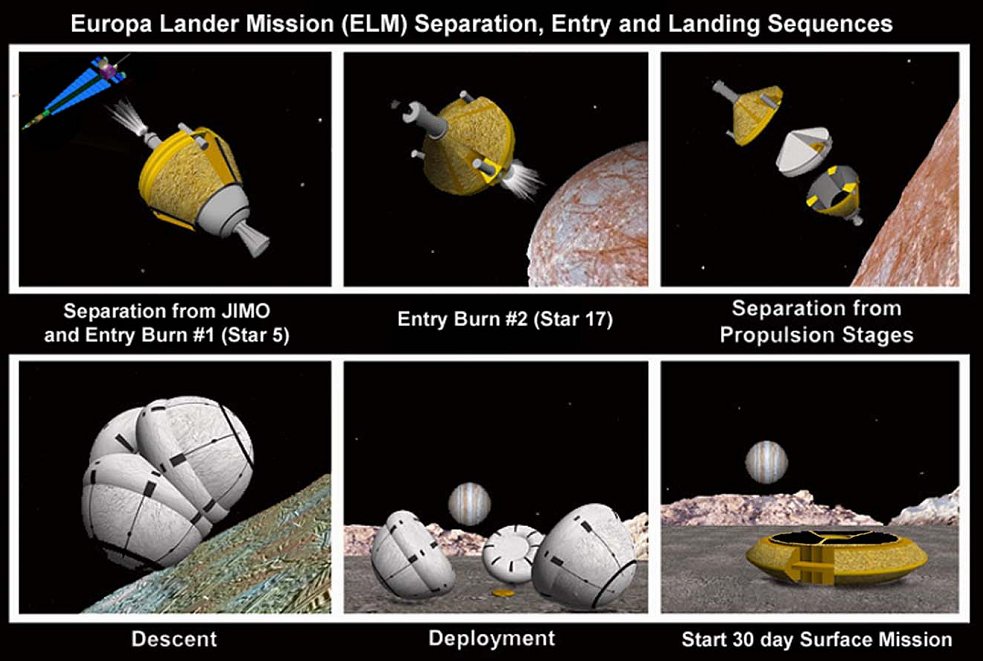 According to the agency, any instrument proposal must meet NASA’s landing scout goal or the NRC goals. The instruments must also be highly protected against the harsh radiation, and meet planetary protection requirements to ensure no extraterrestrial life is contaminated with our own. In essence, this means than any instruments must be safeguarded against carrying bacteria that could play havoc with Europan microbes or (do we dare to dream!) more complex organisms.
Solicitations are due by Oct. 17, so if you’ve got an idea and think it might make the cut, consult the following solicitation page and have a look at what NASA is looking for. Personally, I got nothing. But that’s why they don’t pay me the big bucks! No, like most of humanity, I will simply be sitting back and hoping that a mission to Europa happens within my lifetime, and that it uncovers – to quote Arthur C. Clarke’s 201o: Odyssey Two – “something wonderful”…
Source: universetoday.com, nspires.nasaprs.com


 Tomorrow’s cars could have a feature that will reduce wind drag and allow them to go faster: smart, morphing skins that form dimples or go smooth on command. It is all part of a growing field of mechanics that seeks to make surfaces “smart”, and it is being considered for everything from increasing aerodynamics to reducing the damage caused by hurricanes and high winds.
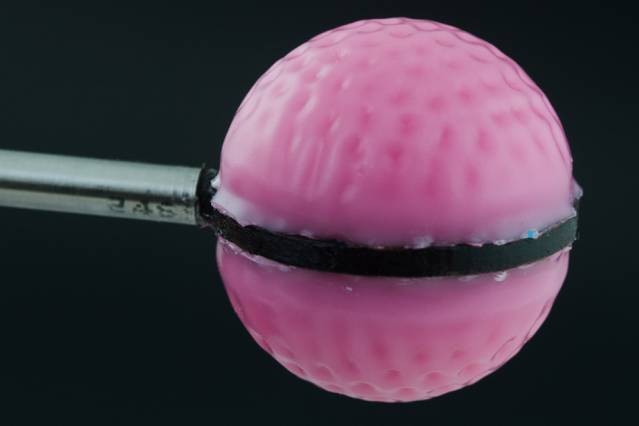 Scientists and golfers alike have long known that the dimples on the surface of a golf ball allow it to drastically reduce drag and travel much farther than would otherwise be possible. This happens because the small dents hold the airflow near the surface of ball for a longer time. This reduces the size of the wake, or zone of turbulence, as the ball takes off. However, the mechanics employed here are a bit more complex.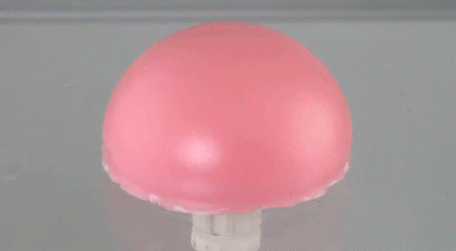


 Petra Nova will be using a scaled-up version of smaller amine-based CO2 CC systems. In these, CO2 is routed into a chamber where an amine-based solvent absorbs the gas. The resulting carbon-rich solution isl then sent through another chamber where low pressure steam is used to break the bond holding the carbon in solution so it can be captured while the solvent is reused.
 A new video was recently posted online that shows North Korean dictator Kim Jong Un breaking out the dance moves, getting pranked, and engaging in some serious fight scenes. The video has gone absolutely viral and has everybody laughing – except for Kim Jong Un himself. In fact, the “Great Leader’s” outrage was such that North Korea made a public statement denouncing the video and demanding it be taken down.
 The reaction is predictable, and the request certainly betrays the North Korean regime’s internet-phobic tendencies, not to mention their ignorance of how the internet actually works. For starters, once something is posted on the internet, it becomes part of the digital ether and can never be destroyed. In addition, drawing attention to an internet phenomenon only makes it stronger! By condemning it, Kim Jong Un’s people just ensured it’s viral nature!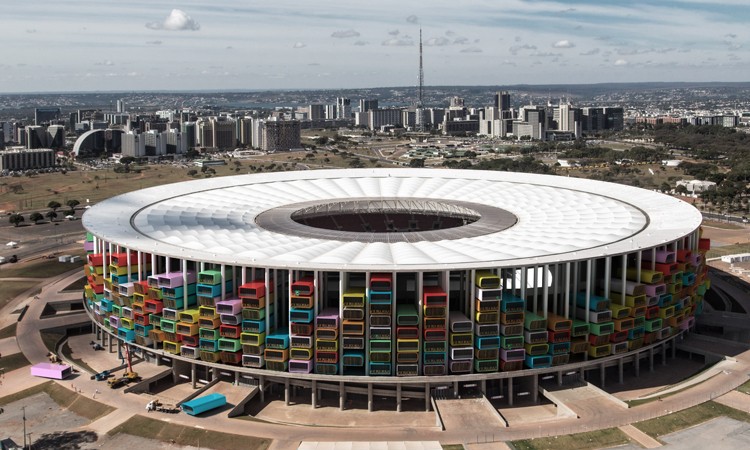


 While they don’t have current plans to take the Casa Futebol beyond the concept stage, it is hoped that the project can inspire more socially-conscious approaches to problems of this kind. Combined with 3-D printed housing and other prefab housing projects, this kind of re-purposing of existing infrastructure is a way of addressing the problem of slums, something which goes far beyond the developing world.

 The next step is to figure out why the body responds to a bone marrow transplant in a way that makes the virus retreat. One possible explanation is that the body’s immune response to the foreign cells of the transplant causes it to fight harder against HIV. This is because, while bone marrow transplant seems to be the most effective means of clearing the AIDS virus to date, it is not an acceptable risk for patients whose lives aren’t already endangered by bone cancer.
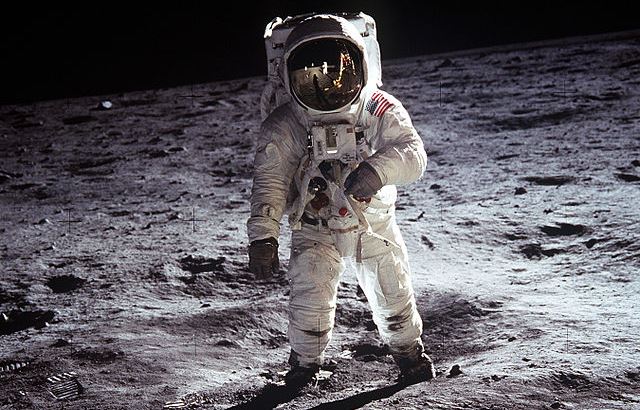


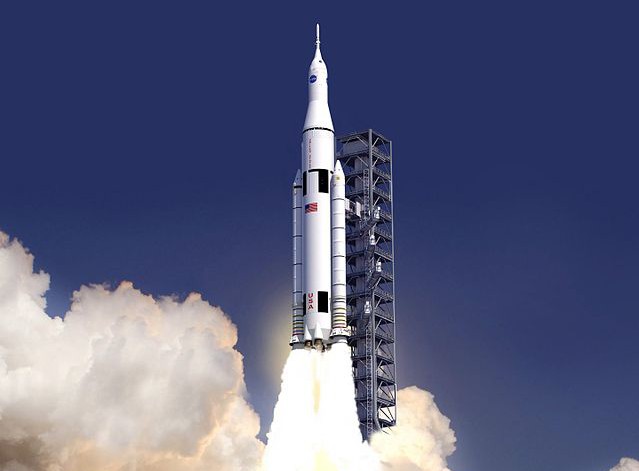
 Such ideas did inform Kim Stanley Robinson’s seminal novel Red Mars, where an international crew flew to the Red Planet and established the first human settlement that begins the terraforming process. But if international cooperation proves too difficult, perhaps a collaboration between commercial space agencies and federal ones could work. I can see it now: the Elon Musk Martian Dome; the Richard Branson Habitat; or the Gates colony…
 At the time of the initial announcement in January, Google said its prototypes were able to take one glucose reading per second and that they was investigating ways for the device to act as an early warning system for the wearer should glucose levels become abnormal. All that was needed was a partner with the infrastructure and experience in the medical industry to see the prototypes put into production.


 As Butow explained, it’s all about taking the next step in the development of the internet as we know it:
 More experienced women are encouraged to teach classes, and the Academy already boasts a variety of events, ranging from hackathons, makerfests, code getaways and study tours. The team is already organising the very first study tour, hoping to take Australian women to visit global startup hotspots such as Silicon Valley and Tel Aviv. And though women are the focus, men are welcome too, as long as they attend with a girl geek and are willing to lend a helping hand.

