The Future is Here: Driverless Army Trucks

TARDECAs Napoleon Bonaparte once said, “An army marches on its belly”. And like most tidbits of military wisdom, this is one that has not changed with the ages. Whether it’s leading an army of war elephants and hoplites through the Alps, a Grande Armee across the Steppes, or a mechanized division through Central Asia, the problem of logistics is always there. For an army to remain effective and alive, it needs to be supplied; and those supply trains has to be kept moving and safe.

In the modern world, this consists of ensuring that troop and supply trucks are protected from the hazards of enemy snipers, rockets, and the all-too-prevalent menace of improvised explosive devices (IEDs). Until now, this consisted of having armed convoys escort armored trucks through hostile terrain and contested areas. But in an age of unmanned aerial vehicles and robotic exoskeletons, it seems only natural that driverless trucks would be the next big thing.

TARDEC1That’s the thinking behind the Autonomous Mobility Appliqué System (AMAS), a program being developed by the U.S. Army Tank-Automotive Research, Development and Engineering Center (TARDEC) in collaboration with major defense contractor Lockheed Martin. This program, which was demonstrated earlier this month at Fort Hood, Texas, gives full autonomy to convoys to operate in urban environments.

In tests, driverless tactical vehicles were able to navigate hazards and obstacles including pedestrians, oncoming traffic, road intersections, traffic circles and stalled and passing vehicles. Similar to the systems used by the first generation of robotized cars, the AMAS program for the Pentagon’s ground troops uses standard-issue vehicles outfitted with a high-performance LIDAR sensor and a second GPS receiver, locked and loaded with a range of algorithms.
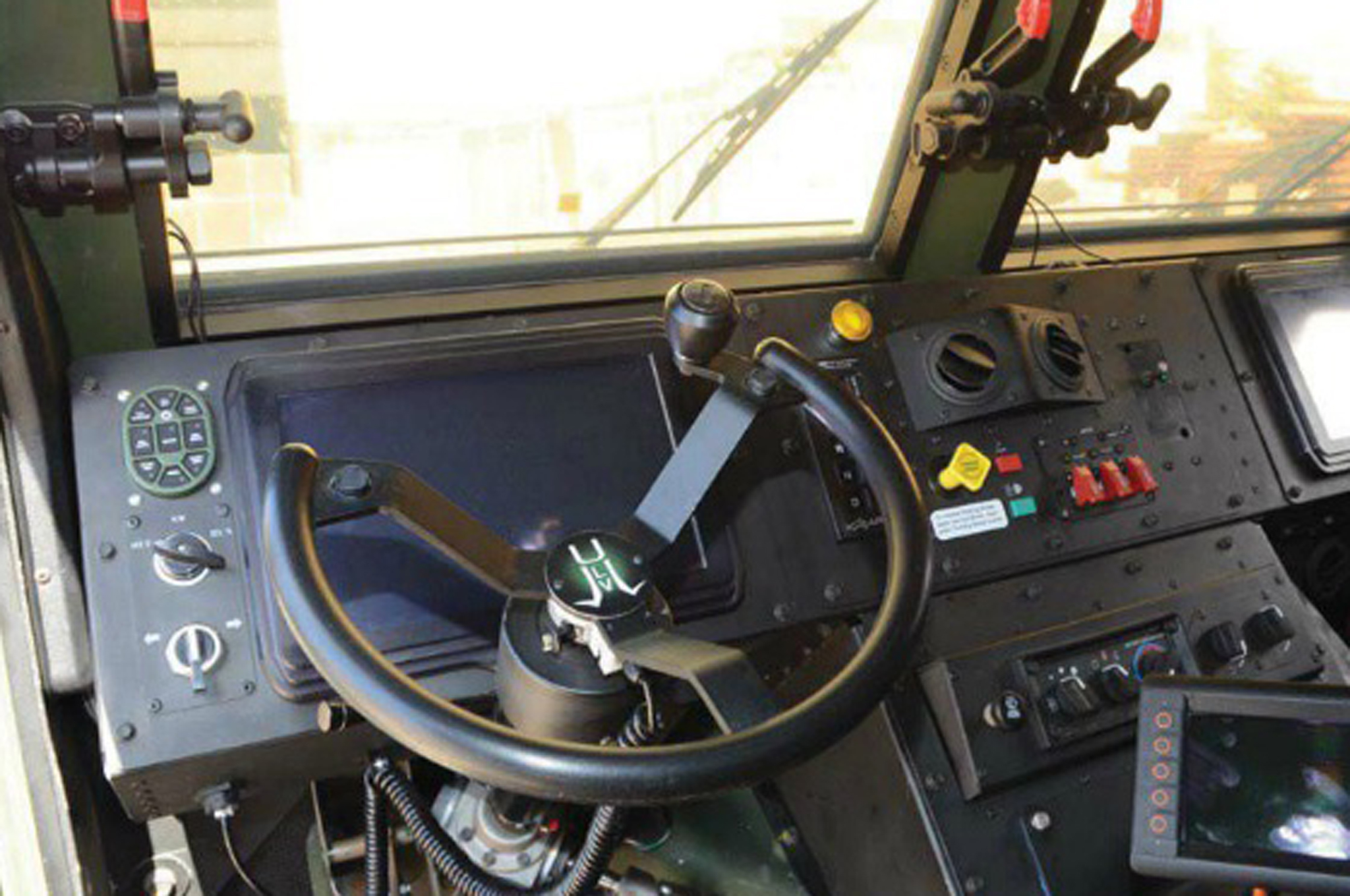
TARDEC-ULV-instrument-panelThat gear, Lockheed said, could be used on virtually any military vehicle, but in these tests was affixed to the Army’s M915 tractor-trailer trucks and to Palletized Loading System vehicles. According to Lockheed, AMAS also gives drivers an automated option to alert, stop and adjust, or take full control under user supervision. David Simon, AMAS program manager for Lockheed Martin Missiles and Fire Control, described the program in a statement:

The AMAS CAD hardware and software performed exactly as designed, and dealt successfully with all of the real-world obstacles that a real-world convoy would encounter.

Under an initial $11 million contract in 2012, Lockheed Martin developed the multiplatform kit which integrates low-cost sensors and control systems with Army and Marine tactical vehicles to enable autonomous operation in convoys. But not only do driverless convoys add a degree of safety under dangerous conditions, they also move the military closer its apparent goal of nearly total autonomous warfare.

squadmissionsupportsystemAMAS algorithms also are used to control the company’s Squad Mission Support System (SMSS), a more distinctive and less conventional six-wheeled unmanned ground vehicle that has been used by soldiers in Afghanistan. Combined with robots, like the Legged Squad Support System (LS3) by Boston Dynamics, the development of driverless trucks is not only a good counter to suicide bombers and IEDs, but part of a larger trend of integrated robotics.

In an age where more and more hardware can be controlled by a remote operator, and grunts are able to rely on robotic equipment to assist them whenever and wherever the 3D’s of hostile territory arise (i.e. dirty, difficult, or dangerous), trucks and armored vehicles that can guide themselves is just the latest in a long line of developments aimed at “unmanning the front lines”.

And of course, there’s a video of the concept in action, courtesy of the U.S. Army and TARDEC:


Sources: wired.com, news.cnet.com, lockheedmartin.com

The Future of Medicine: AR Treats Phantom Limb Pain

AR_plpStudies have shown that a good deal of amputees feel pain in their lost limbs, a condition known as Phantom Limb Pain (PLP). The condition is caused when the part of brain responsible for a limb’s movement becomes idle, and thus far has very difficult to treat. But a new study suggests therapy involving augmented reality and gaming could stimulate these unused areas of the brain, resulting in a significant reduction in discomfort.

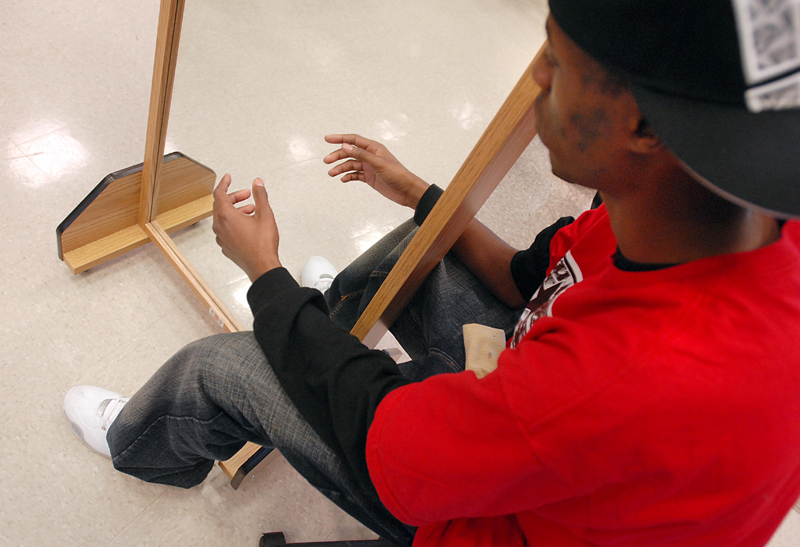
Previous attempts to ease PLP by replicating sensory feedback from an artificial hand have included prosthetics and a treatment known as mirror therapy, where a reflection of the patient’s remaining limb is used to replace the phantom limb. Virtual reality systems have resulted in more sophisticated mirror therapy, but the approach is only useful for the treatment of one-sided amputees.

Mirror TherapyA research team from Sweden’s Chalmers University of Technology sought to overcome this and achieve greater levels of relief by testing a treatment where the virtual limb would be controlled through myoelectric activity. This is a process where the muscle signals which would control the phantom limb at the stump are detected and then used to create a pattern that will predict the limb’s movements and provide the requisite stimulation.

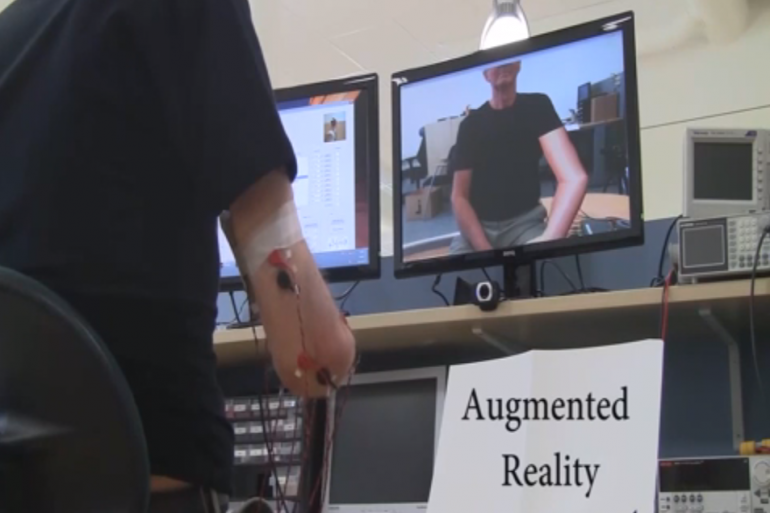
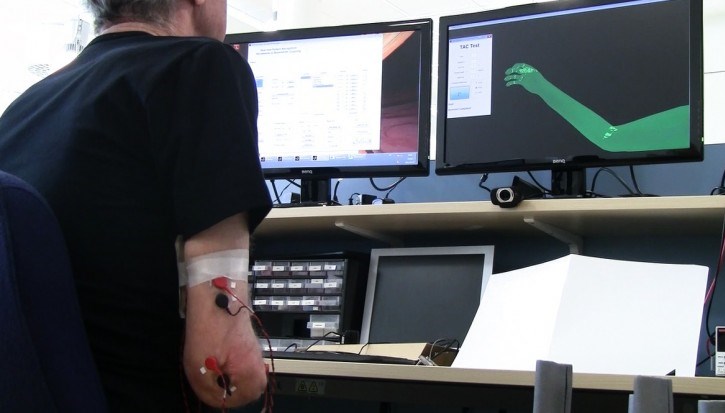
To test the treatment, the researchers connected amputee Ture Johanson – a man who have lived with PLP for 48 years – to a computer. Electrodes running from his stump to the machine provided the input signals, and on the computer screen, he was able to see and move a superimposed virtual arm. The electronic signals from his arm communicated to the computer and his movements were simulated before his very eyes, and then used to control a car in a racing game.

plp-augmented-realityWithin weeks of starting this augmented reality treatment in Max Ortiz Catalan’s clinic at Chalmers, his found his pain easing and even disappearing entirely. Mr Johanson says he has noticed other benefits, like how perceives his phantom hand to be in a resting, relaxed position rather than constantly a clenched fist:

The pain is much less now. I still have it often but it is shorter, for only a few seconds where before it was for minutes. And I now feel it only in my little finger and the top of my ring finger. Before it was from my wrist to my little finger… Can you imagine? For 48 years my hand was in a fist but after some weeks with this training I found that it was different. It was relaxed. It had opened.

Mr Johanson has also learned to control the movements of his phantom hand even when he is not wired up to the computer or watching the virtual limb.

AR_plp1Max Ortiz Catalan, the brains behind the new treatment, says giving the muscles a work-out while being able to watch the actions carried out may be key to the therapy. Catalan says it could also be used as a rehabilitation aid for people who have had a stroke or those with spinal cord injuries. As he put it:

The motor areas in the brain needed for movement of the amputated arm are reactivated, and the patient obtains visual feedback that tricks the brain into believing there is an arm executing such motor commands. He experiences himself as a whole, with the amputated arm back in place.

While he and his team points out that its research is based on the study of only one patient, the success in achieving pain relief following a series of unsuccessful treatments is a clear sign of efficacy and should lead to equally successful results in other test cases. Their research appeared in a recent issue of Frontiers in Neuroscience titled “Treatment of phantom limb pain (PLP) based on augmented reality and gaming controlled by myoelectric pattern recognition: a case study of a chronic PLP patient”.

Treatment of phantom limb pain (PLP) based on augmented reality and gaming controlled by myoelectric pattern recognition: a case study of a chronic PLP patient – See more at: http://journal.frontiersin.org/Journal/10.3389/fnins.2014.00024/full#sthash.BRadRPRS.dpuf

And in the meantime, be sure to check out this video of the therapy being demonstrated:


Source: gizmag.com, bbc.com, journal.frontiersin.org

Space Organizations Join the Hunt for Malaysian Jet

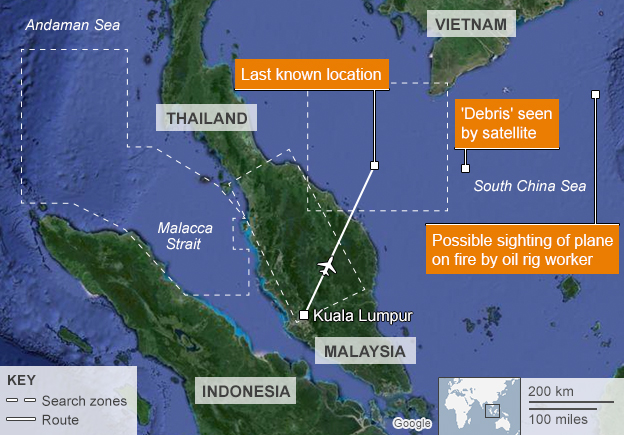
malaysia_missingplaneThe disappearance of Malaysian flight MH370, now into its eighth day, remains a mystery to investigators and the families of those who traveling aboard her. Since March 7th when it was first declared missing, the search for wreckage or any trace of what might have happened has produced little in the way of results or explanations, prompting numerous governments and private organizations to commit more in the way of technology and resources.

According to a report from the BBC, these have included the use of 42 sophisticated ships and 39 high-tech aircraft combing the waters according to the BBC. For example, listening devices are being lowered into the water to pick up the “ping” of the black box, and sophisticated MH60 Seahawk helicopters from the United States are employing Forward Looking Infra-red (FLIR) cameras that arm the searchers with night vision.

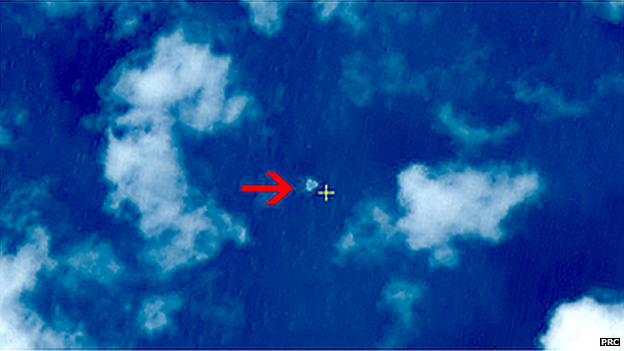
malaysia_plane_searchThis past Monday,  a crowdsourcing platform called Tomnod, along with parent company DigitalGlobe, launched a campaign to enlist the help of citizens to scour satellite images to search for the plane. On the following day, China followed that up by activating the International Charter on Space and Major Disasters. The goal of this charter is to enlist space data from 15 member organizations to provide assistance in the case of a “natural or technological disaster.”

The charter describes such a disaster as:

a situation of great distress involving loss of human life or large-scale damage to property, caused by a natural phenomenon, such as a cyclone, tornado, earthquake, volcanic eruption, flood or forest fire, or by a technological accident, such as pollution by hydrocarbons, toxic or radioactive substances.

malaysia_satimageNow that the charter has been activated, space scientists around the planet will enlist all available satellites to gather images from the suspected area in which flight MH370 disappeared. Upon activation, data normally starts coming in within 24 hours. The hope is that one of those images will pick up something that can direct search and recovery efforts, either by showing a crash sight or showing some trace of wreckage.

The charter has been activated 400 times in its history, but Tuesday represents the first time it was called into service to look for a missing aircraft. The only other transportation-related event for which it’s been used was to assist in gathering data after a train full of dynamite exploded in North Korea on April 23, 2004. It was most recently activated on February 13 to help with monitoring the Mount Kelud volcano explosion on the Indonesian island of Java.

malaysia_plane_seaPrior to all that, the International Charter on Space and Major Disasters was used exclusively to monitor flooding, forest fires, snowfalls, cyclones, oil spills and other damaging events around the world. It was also used to assist in recovery efforts from earthquakes, including the one that rocked Japan in March 2011 and caused a devastating tsunami and the meltdown of the Fukushima Daiichi Nuclear plant.

The charter, which began after Vienna’s Unispace III conference in 1999 with three agencies, has grown to its current membership of 15 organizations, with the Russian Federal Space Agency being the most recent to join in 2013. Other member organizations include the European Space Agency, the Korea Aerospace Research Institute and China’s National Space Administration. The US member organizations include the United States Geological Survey and the National Oceanic and Atmospheric Administration.

With this latest commitment of resources, technology and personnel, perhaps the world may finally know what took place aboard Malaysian flight MH370, and the families of those aboard her can finally get some peace of mind.

Sources: news.cnet.com, bbc.com, theguardian.com


The 3D Printing Revolution: The KamerMaker House

3dprint_canalhouseMany thanks to Rami for putting me onto this story in the first place. Thanks Rami! For years now, proponents of additive manufacturing (aka. 3D printing) have been looking for ways to expand the technology’s already impressive catalog to include the fabrication of buildings. Whether it is office buildings, apartment blocks, or individual houses, the next great leap for 3D printing is arguably the construction of entire domiciles – or at least the building blocks that go into making them.

Such is the goal of Dus, a Dutch architect bureau that announced last year that it was seeking to create the world’s first 3-D printed home along one of Amsterdam’s many iconic canals. Known as the “3D Print Canal House” project, the plan was to break ground within sixth months, before two other firms got there first with their own new-age designs. Now, almost a year to the day later, they have launched their demonstration project.

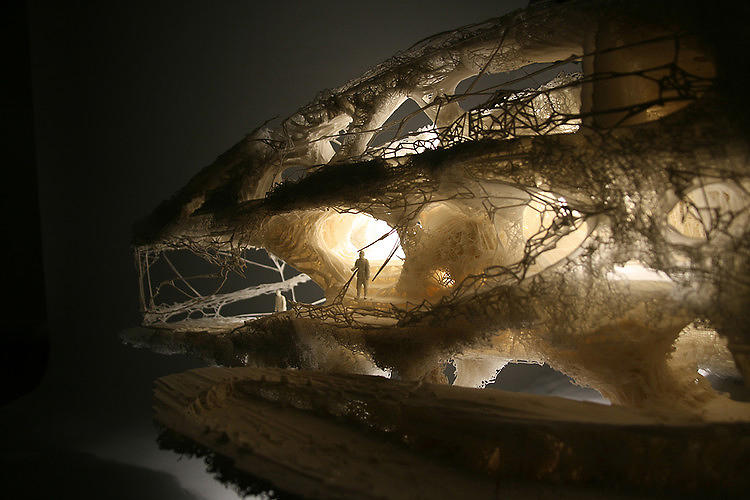
landscape_houseIn the long run, it still remains to be seen who will be the first company to create an actual 3D printed home, and Dus’ is up against some stiff competition from companies like fellow Dutchman Janjaap Ruijssenaars with his Möbius-strip shaped Landscape House, and the London-based Softkill Design’s fibrous, naturalistic ProtoHouse. Both design concepts seek to utilize 3-D printing in order to save time, energy, and eliminate the waste that is associated with traditional construction.

The Landscape House design calls for the economizing of space by turning the floor into the ceiling and the ceiling into the floor in an endless loop, providing all the living space a family needs while staying very compact. The latter concept looks like something out of the pages of a sci-fi novel – an organic, mollusk-like construction made out of fibrous threads of plastic that economize on weight and material usage.

protohouse But unlike these other projects, which rely in part on traditional construction methods (such as poured concrete), the Dus concept is built by printing all of the home components onsite. This is done using a massive printer called the KamerMaker, a 6-meter (20-foot) tall “room-builder” that rests inside a shipping container. This ensures that the manufacturing center is portable and can fabricate all the necessary components on-site, removing a significant amount of transport.

Basically, the KamerMaker is a scaled-up version of the open-source home 3D printer made by Ultimaker, a popular tool with hobbyists, and is currently one of the largest printers on the planet. Since it’s creation, the company has held public demonstrations to showcase the printer at work and fabricate furniture and other household objects. On the company website, they describe the machine as:

…a real architectural pavilion [that could play host to events]. In other words: The KamerMaker itself is a pavilion, that can reproduce small pavilions!

kamermaker-652322But ultimately, the goal of Dus’ demonstration project, which officially launched this month, is not so much to print a functioning house. Rather, as Hedwig Heinsman – a Dus architect and co-founder of the company- explains it, the aim is to discover and share the potential uses of 3D printing in construction by creating new materials, trying out designs and testing building techniques to see what works.

Heinsman also points out that parts of the house will likely be built and re-built several times over the next three years as 3-D printing technology develops. In the meantime, Dus has opened up an expo center at the site of the 3D Print Canal House so the public can witness the creation process and learn more about the technology involved. For those who may be in the of Amsterdam, tickets to the expo are € 2.50 (roughly $3.50 US/ $3.86 CA), and the hours of operation are available at their website.

And be sure to enjoy this video that talks the launch of the 3D Print Canal House, the KamerMaker, and the drive to create the world’s first 3D printed house – courtesy of 3DPI.TV:


Sources:
fastcoexist.com, (2), (3), aol.com, 3dprintcanalhouse.com

The Future of Medicine: Injectable Sponges and Foam

xstat-combat-injury-treatment-injectable-spongesMedicine may be advancing by leaps and bounds in certain fields – mind-controlled prosthetics and bioprinting come to mind. But in some respects, we are still very much in the dark ages. Considering gunshot wounds, for example. When it comes to modern warfare, uncontrolled hemorrhaging caused by a bullet is the biggest cause of death. In fact, “bleeding out” is responsible for 80% of deaths caused in battle, more than headshots, chest wounds, or IEDs combined.

This startling statistic doesn’t just apply to soldiers who are wounded in the field, as about the same proportion of those who sustain bullet wounds die after being evacuated to a medical treatment facility as a result of hemorrhaging. In the ongoing conflicts in Iraq and Afghanistan, about 5,000 US troops have been killed, and some 50,000 injured, while combined military and civilian losses are estimated to have been some 500,000 people killed.

xstat-combat-injury-treatment-injectable-sponges-5The immediate cause of death in most of these cases was bleeding out, which is usually associated with deep arterial wounds that simply cannot be treated using tourniquets. As a result, combat medics pack these wound with a special gauze coated with a material that stimulates the clotting process, then applies strong direct pressure over the wound in the hopes that a clot will seal off the artery. If the bleeding is not controlled, the medic has to remove the gauze and try again.

This process is so painful that, according to John Steinbaugh, a former Special Ops medic, the patient’s gun is first taken away so that he will not try to kill the medic or himself to stop the agony. And in the end, people still die, and all because medical science has yet to find an effective way to plug a hole. Luckily, RevMedX, a small Oregon startup, has developed an alternative approach to treat such potentially survivable injuries.

xstat-combat-injury-treatment-injectable-sponges-4That’s Revmedx and its new invention, the XStat, comes into play. Contained within this simple plastic syringe are hundreds of small sponges (1 cm, or 0.4 inches, in diameter) made from wood pulp and coated with chitosan, a derivative of crustacean shells that triggers clot formation and has antimicrobial properties. When they are injected into a deep wound, the sponges expand to fill the cavity, and apply enough pressure to stop arterial bleeding.

And since they adhere to wet surfaces, the sponges counter any tendency for the pressure to push them out of the wound. After conducting tests of early prototypes, the final development was carried under a US$5 million U.S. Army contract. In most cases, an arterial wound treated using XStat stops bleeding within about 15 seconds. The sponges are also marked with an x-ray absorbing material so they can be located and removed from the wound once surgical treatment is available.

????????????XStat is currently awaiting FDA approval, bolstered by a request from the US Army for expedited consideration. Combined with a new Wound Stasis Technology (aka. a medical foam) that earned its inventors a $15.5 million from the Defense Advanced Research Projects Agency (DARPA) back in Dec of 2012, army medics will likely be able to save a good many lives which in the past would have been written off as “casualties of war” or the all-too-common “collateral damage”.

Similar to the XStat, the idea for this injectable foam – which consists of two liquids that, when combined, form a solid barrier to stop bleeding – the inspiration for this idea comes from direct experience. As a military doctor in Iraq and Afghanistan, David King – a co-investigator of the foam project and a trauma surgeon at Massachusetts General Hospital – saw a great many deaths that were caused by uncontrolled internal bleeding.

DARPA-FoamLocated in Watertown, Massachusetts, Arsenal Medical designed this substance that consists of two liquids to fill the abdominal cavity and form a solid foam that does not interact with blood. This is key, since the hardened foam needs to remain separate and stop the blood from flowing. Comprised of polyurethane molecules, this foam belongs to a family of materials that is already used in bone cement, vascular grafts, and other medical applications.

The team began by testing the foam in pigs that were subjected to an internal injury that cut the liver and a large vein. With the treatment, nearly three-quarters of the pigs were still alive three hours later. Afterward, the team began monitoring how the pigs fared once the foam was removed. In 2013, the company began working with the U.S. Food and Drug Administration to determine how to test the technology on the battlefield (though no dates as to when that might have been available yet).

gun_violenceAs always, developments in the armed forces have a way of trickling down to the civilian world. And given the nature and prevalence of gun violence in the US and other parts of the world, a device that allows EMTs the ability to seal wounds quickly and effectively would be seen as nothing short of a godsend. Between saving young people for gang violence and innocent victims from mass shootings, NGOs and medical organizations could also save countless lives in war-torn regions of the world.

Source: gizmag.com, technologyreview.com, medcrunch.net

World Cup 2014 to Open with Exoskeleton Kick

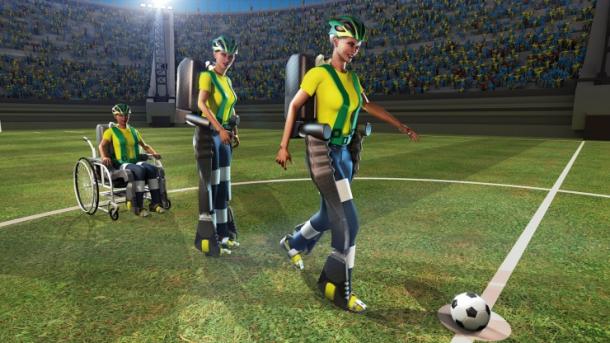
WorldCup_610x343This summer, the World Cup 2014 will be taking place in Sao Paulo, Brazil; an event that is sure to be a media circus. And to kick off this circus (no pun!), FIFA has decided to do something rather special. This will consist of a paralyzed teenager making the ceremonial first kick, courtesy of an exoskeleton provided by The Walk Again Project. In addition to opening the games, this even will be the first time that a mind-controlled prosthetic will ever be used in a sporting event.

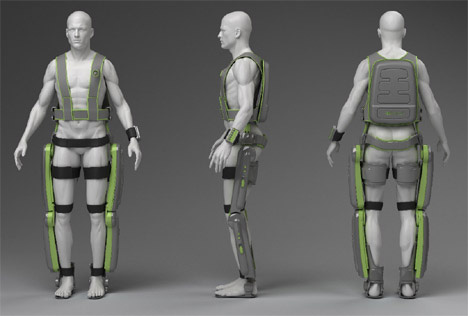
Though the teenager in question remains to be chosen, the event is scheduled and the exoskeleton tested and ready. Using metal braces that were tested on monkeys, the exoskeleton relies on a series of wireless electrodes attached to the head that collect brainwaves, which then signal the suit to move. The braces are also stabilized by gyroscopes and powered by a battery carried by the kicker in a backpack.

ReWalk1The Walk Again Project, a nonprofit collaboration dedicated to producing full-body mind-controlled prosthetics, represents a collaboration between such academic institutions as Duke University, the Technical University of Munich, the Swiss Federal Institute of Technology in Lausanne, the Edmond and Lily Safra International Institute of Neuroscience of Natal in Brazil, the University of California at Davis, the University of Kentucky, the Duke Immersive Virtual Environment facility.

Miguel Nicolelis, the Brazilian neuroscientist at Duke University who is leading the Walk Again Project’s efforts to create the robotic suit, had this to say about the planned event:

We want to galvanize people’s imaginations. With enough political will and investment, we could make wheelchairs obsolete.

miguelnicolelis_secom508x339Nicolelis is a pioneer in the field of mind-controlled prosthetics. In the 1990s, he helped build the first mind-controlled arm, which rats learned to manipulate so they could get a drink of water, simply by thinking about doing so. In that project, an electronic chip was embedded in the part of each rodent’s brain that controls voluntary muscle movements. Rows of wires that stuck out from the chip picked up electrical impulses generated by brain cells and relayed those signals to a computer.

Researchers studied the signals as the rats pushed a lever to guide the arm that gave them water, and they saw groups of neurons firing at different rates as the rats moved the lever in different directions. An algorithm was developed to decipher the patterns, discern the animal’s intention at any given moment and send commands from the brain directly to the arm instead of to the lever. Eventually, the rats could move the arm without pushing the lever at all.

neuronsUsing similar brain-machine interfaces, Nicolelis and his colleagues learned to translate the neural signals in primate brains. In 2000, they reported that an owl monkey connected to the Internet had controlled an arm located 600 miles away. Eight years later, the team described a rhesus monkey that was able to dictate the pace of a robot jogging on a treadmill half a world away in Japan.

Small groups of neurons, it seems, are surprisingly capable of communicating with digital devices. Individual cells learn to communicate with computer algorithms more effectively over time by changing their firing patterns, as revealed in a study of a mouse’s brain published last year in Nature. This capacity for extensive plasticity and the ability to learn comes in quite handy when designing a prosthetic.

exoskeleton_FIFA2014German-made sensors will relay a feeling of pressure when each foot touches the ground. And months of training on a virtual-reality simulator will have prepared the teenager — selected from a pool of 10 candidates — to do all this using a device that translates thoughts into actions. In an interview with New Scientist, the lead robotic engineer Gordon Cheng of the Technical University of Munich gave some indication of how the suit works

The vibrations can replicate the sensation of touching the ground, rolling off the toe and kicking off again. There’s so much detail in this, it’s phenomenal.

Capitalizing on that adaptability, several human quadriplegics have received implanted brain chips in FDA-approved clinical trials. One of the first was Matt Nagle, who lost the use of his extremities after being stabbed in the spine. With the aid of electrodes placed in his brain at Brown University in 2004, he learned to raise, lower and drop a piece of hard candy using a primitive jointed arm not connected to his body.

woman-robotic-arm_650x366In a widely publicized demonstration of that system, now owned by a company called BrainGate, a 58-year-old woman paralyzed by a stroke sipped a cup of coffee last year using a five-fingered robotic arm not attached to her body. Despite the slickness of the presentation, however, the woman actually had little control over the arm. Despite it being aesthetically pleasing, the design was a little rudimentary.

However, things have come a long way since then thanks to ongoing research, development and testing. In Nicolelis’s lab, monkeys showed the ability to feel virtual objects displayed on a computer screen when areas of the brain associated with the sense of touch were stimulated. The blueprints for next summer’s soccer exoskeleton include similar sensors that will provide an artificial skin for its human wearer, thus ensuring that they can both move the device and receive sensory feedback.

Walk-Again-Project-Kick-Ball-537x358With the world watching, Nicolelis hopes not only that his “bionic teenager” will be able to feel the ball but also that disabled people everywhere will feel a sense of hope. And why wouldn’t they? In this single, incredibly high-profile event, millions of people around the world who struggle with disabilities will witness something truly inspirational. A paralyzed teenager will rise from a wheelchair, kicks the World Cup ball, and bring countless millions to their feet.

And you’re waiting until June of 2014 to see this momentous event for yourselves, be sure to check out this promotional video from The Walk Again Project, featuring interviews with the people who made it happen and showcasing the exoskeleton itself:


Sources: news.cnet.com, washingtonpost.com, virtualreality.duke.edu


Space Video: Could Jupiter Become a Star?

jupiterMy buddy and mentor in all things space and internet-related, Fraser Cain, has produced yet another informative video that I wish to share today. The subject in question is, “Could Jupiter Become a Star”? Naturally, this question has a wider context which needs to be understood if it is to make any sense. You see, for decades scientists have wondered whether or not a gas giant could be converted into a smaller version of own sun.

This is mainly due to the fact that gas giants and brown dwarves are very similar; in some cases, it’s even considered acceptable to say that a gas giant represents a failed star. This is not entirely accurate, since a gas giant does not have the necessary mass to trigger a deuterium reaction (aka. fusion) in order to create one. But, as Fraser points out, there are those who have wondered if an explosion – like that created by the Galileo space probe crashing into Jupiter – could cause a sun-birthing explosion.

sun_magneticfieldThis question has become relevant once again thanks to Cassini’s ongoing mission around Saturn. Thanks to the prevalence of noble (and flammable) gases that make up this planet as well, some worry that crashing a nuclear powered satellite into it will trigger a massive thermonuclear reaction. But, as Cain points out in a blow-by-blow manner, the answer to this question is a “series of nos”. Put simply, the raw materials and mass simply aren’t there.

Still, it’s a cool idea, and it was the focal point of Arthur C. Clarke’s 2001: A Space Odyssey and all subsequent novels in the series. In this seminal collection of classic sci-fi, we are told that an ancient race (the First Born) tampered with our evolution eons ago, thus giving rise to the hominid we see every time we look in the mirror. By 2001, when the story opens up, we see a space-faring humanity uncovering evidence of this face, in the form of a strange Monolith buried on the Moon.

2010_3After learning that this strange object is sending signals towards Jupiter, several missions are mounted which determined that these same extra-terrestrials are one again at work, this time in the outer Solar System. Believing there is life trapped underneath the heavy ice sheets of Europa, the First Born use their superior technology and know-how to convert Jupiter into a sun, which in turn melts Europa’s ice, giving rise to an atmosphere and letting the life out to flourish.

So while it’s sci-fi gold, its not exactly science. But then again, that’s the beauty of science fiction – you can always postulate that the means will exist somewhere down the road. But until such time as we can manipulate matter, download our consciousness into rectangular monoliths with perfect dimensions, and travel through the cosmos in said same objects, we’re going to have to get used to NOT looking up at night and seeing this:

2010_4In the meantime, enjoy the video. Like all Universe Today videos, articles and podcasts, it’s really quite informative. And be sure to subscribe if you like having all your questions about space, science and the answers to the big questions addressed:


News from Space: Space Elevator by 2035!

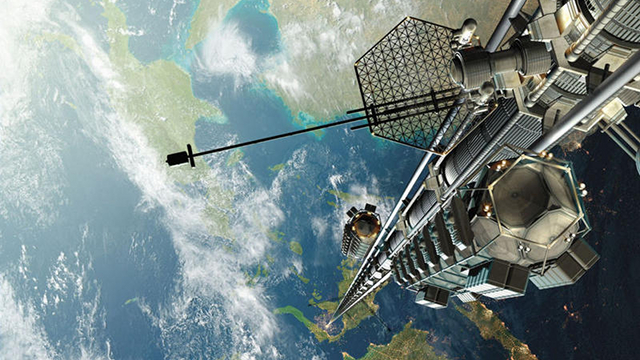
space_elevator2Imagine if you will a long tether made of super-tensile materials, running 100,000 km from the Earth and reaching into geostationary orbit. Now imagine that this tether is a means of shipping people and supplies into orbit, forever removing the need for rockets and shuttles going into space. For decades, scientists and futurists have been dreaming about the day when a “Space Elevator” would be possible; and according to a recent study, it could become a reality by 2035.

The report was launched by the International Academy of Astronautics (IAA), a 350-page report that lays out a detailed case for a space elevator. At the center of it that will reach beyond geostationary orbit and held taught by an anchor weighing roughly two million kilograms (2204 tons). Sending payloads up this backbone could fundamentally change the human relationship with space, with the equivalent of a space launch happening almost daily.

space_elevatorThe central argument of the paper — that we should build a space elevator as soon as possible — is supported by a detailed accounting of the challenges associated with doing so. The possible pay-off is as simple: a space elevator could bring the cost-per-kilogram of launch to geostationary orbit from $20,000 to as little as $500. Not only would be it useful for deploying satellites, it would also be far enough up Earth’s gravity well to be able to use it for long-range missions.

This could include the long-awaited mission to Mars, where a shuttle would push off from the top and then making multiple loops around the Earth before setting off for the Red Planet. This would cut huge fractions off the fuel budget, and would also make setting up a base on the Moon (or Mars) a relatively trivial affair. Currently, governments and corporations spend billions putting satellites into space, but a space elevator could pay for itself and ensure cheaper access down the line.

terraforming-mars2The report lays out a number of technological impediments to a space elevator, but by far the most important is the tether itself. Current materials science has yet to provide a material with the strength, flexibility, and density needed for its construction. Tethers from the EU and Japan are beginning to push the 100-kilometer mark, are still a long way off orbital altitude, and the materials for existing tethers will not allow much additional length.

Projecting current research in carbon nanotubes and similar technologies, the IAA estimates that a pilot project could plausibly deliver packages to an altitude of 1000 kilometers (621 miles) as soon as 2025. With continued research and the help of a successful LEO (low Earth orbit, i.e. between 100 and 1200 miles) elevator, they predict a 100,000-kilometer (62,137-mile) successor will stretch well past geosynchronous orbit just a decade after that.

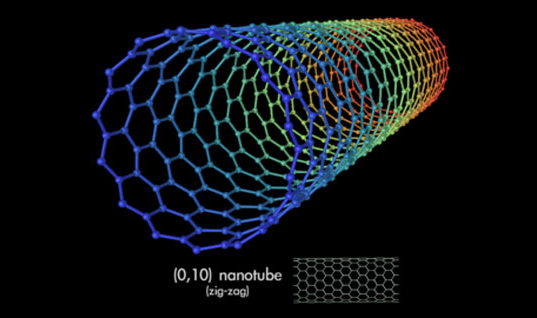
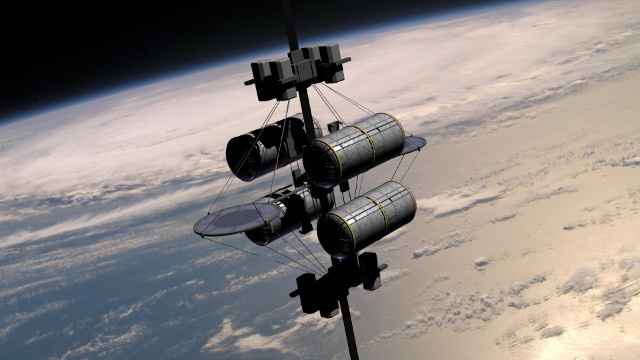
carbon-nanotubeThe proposed design is really quite simple, with a sea platform (or super-ship) anchoring the tether to the Earth while a counterweight sits at the other end, keeping the system taught through centripetal force. For that anchor, the report argues that a nascent space elevator should be stabilized first with a big ball of garbage – one composed of retired satellites, space debris, and the cast-off machinery used to build the elevator’s own earliest stages.

To keep weight down for the climbers (the elevator cars), this report imagines them as metal skeletons strung with meshes of carbon nanotubes. Each car would use a two-stage power structure to ascend, likely beginning with power from ground- or satellite-based lasers, and then the climber’s own solar array. The IAA hopes for a seven-day climb from the base to GEO — slow, but still superior and far cheaper than the rockets that are used today.

Space Elevator by gryphart-d42c7sp

One thing that is an absolute must, according to the report, is international cooperation. This is crucial not only for the sake of financing the elevator’s construction, but maintaining its neutrality. In terms of placement, IAA staunchly maintains that a space elevator would be too precious a resource to be built within the territory of any particular nation-state. Though every government would certainly love a space elevator of their very own, cost considerations will likely make that impossible in the near-term.

By virtue of its physical size, a space elevator will stretch through multiple conflicting legal zones, from the high seas to the “territorial sky” to the “international sky” to outer space itself, presenting numerous legal and political challenges. Attacks by terrorists or enemies in war are also a major concern, requiring that it be defended and monitored at all levels. And despite being a stateless project, it would require a state’s assets to maintain, likely by the UN or some new autonomous body.

space_elevator1In 2003, Arthur C. Clarke famously said that we will build a space elevator 10 years after they stop laughing. Though his timeline may have been off, as if often the case – for example, we didn’t have deep space missions or AIs by 2001 – sentiments were bang on. The concept of a space elevator is taken seriously at NASA these days, as it eyes the concept as a potential solution for both shrinking budgets and growing public expectations.

Space is quickly becoming a bottleneck in the timeline of human technological advancement. From mega-telescopes and surveillance nets to space mining operations and global high-speed internet coverage, most of our biggest upcoming projects will require better access to space than our current methods can provide for. And in addition to providing for that support, this plans highlights exactly how much further progress in space depends on global cooperation.

Source: extremetech.com

Cyberwars: Russia’s Cyber-Weapons Hit Ukraine

cyber_privacyAccording to Ukraine’s security services, the situation in the Crimea is escalating in ways that have nothing to do with the deployment of military forces or the enacting of sanctions. It seems that members of the country’s parliament, regardless of political affiliation, are being targeted by cyberattacks. While no shots have been fired and no official declarations have been made, this revelation shows that the crisis has entered a new phase – one of cyberwarfare!

The attacks began two days ago, when members of Ukraine’s parliament, regardless of their party affiliation, saw their mobile communications blocked by equipment in Russia-controlled Crimea. According to Ukrainian security officials, the phone access has been blocked thanks to equipment installed “at the entrance to (telecom) Ukrtelecom in Crimea.” Ukraine’s security teams are now working on restoring service to the parliament members, though it’s not clear when the blockade will be removed.

cyberattackSince that time, other cyber weapons have been detected, the latest of which is known as Snake (aka. “Ouroboros” after a serpent drawn from Greek mythology). This virus, which interestingly enough has the characteristics of both a product of the intelligence services and the military – it can both surveil and physically destroy computer networks – has been wrecking havoc on Ukrainian government systems.

By targeting the Ukrainian government with Ouroboros, the Russians are able to effectively engage in an aggressive, kinetic act without actually declaring war. This is due to the fact that in the digital age, cyber attacks fall into the category of being largely accepted as part of how countries exercise power. Much like how in the Cold War – where there were unspoken rules of what powers could do – these acts fall short of what is considered outright aggression.

cold_warHowever, this will not last forever. If certain capabilities of Ouroboros go live, then it will remain to be seen how the Ukraine reacts. And if the Russians deploy cyber weapons with network-destroying capabilities into other countries, there might well be one country that reacts as though the launch of a cyber weapon is no different than the launch of a missile. It all comes down to perception, and whether or not all sides see fit to limit themselves to cyber attacks.

cybergrenadeUltimately, the Cold War remained cold due to the fact that all sides were able to maintain an agreed upon set of rules. As long as no one stood to gain from the outbreak of full-scale war – due to the proliferation of nukes and the prospect of “mutually assured destruction” – everyone could expect to do what was in their own best interests. The absence of such a set of rules and treaties governing cyber weapons has not yet led to open hostilities, but it remains to be seen if they will hold.

One can only hope a modern day Russia, and Ukraine for that matter, can be expected to do what’s in their best interests as well and avoid an open state of war.

Sources: news.cnet.com, huffingtonpost.com

Happy Anniversary!

fireworks1Today, I got an all=important notification from WordPress.com. It tells me that today is the third anniversary of this here blog, also known as storiesbywilliams.com. Yes, it was on this day, three years ago to the day, that I started this little enterprise in order to publicize my work, share what inspires me, and connect with other writers and bloggers out there.

And as with all anniversaries on this site, I’d like to commemorate this by sharing a few facts and figures, just to put it all in context context. Three years on this site has resulted in the following numbers:

  • 3 years
  • 1095 days
  • 8760 hours
  • 1576800 minutes

Or, to put it in terms of what I’ve actually done with that time, which seems much more relevant:

  • 410,057 views
  • 6,417 comments
  • 2,039 followers
  • 1,541 posts

And as usual, I would like to thank all those who helped make this possible. Since starting this blog, I’ve managed to publish all my works from 2004 onward. These include Source, the Legacies: Preludes collection, Data Miners, Whiskey Delta, and most recently, Papa Zulu. And in the coming months, I plan to release Flash Forward, and finish work on the long-awaited Yuva Anthology.

And, just as importantly, I feel I’ve learned a great deal, thanks to the personal and professional connections I’ve made. And wherever possible, I’ve tried to pass that experience and knowledge onward; and shall continue to do so whenever possible. This site is, was, and always will be about inspiration, and that belongs to no one and everyone.

So expect to hear plenty more from me, and be sure to make yourself heard as well – as often and as much as possible. Here’s to three years more, and to forever looking onward!

space_camera