New Trailer: The Host

Behold the trailer for The Host, a science fiction flick based on the novel of the same name by Stephenie Meyer – author of the Twilight series. I’ll try not to hold that against this movie! Borrowing from the classic Invasion of the Body Snatchers, this story takes place long after the invasion has taken place and Earth is at peace, even though said peace came at a terrible price. Just about all human beings are now vessels for extra-terrestrial life forms.

But of course, there is a small resistance, human beings who remain free and unoccupied by alien minds and wish to stay that way. After after a young woman is seized and “possessed”, her new alien overlords try to access her memories in the hopes of findings others like her. However, soon her old mind reasserts itself and she escapes their custody, hoping to find her way back to the one she loves.

And of course, a chase follows as the alien bad guys try to reclaim her and force her to forget her love and forgo her human half. Kind of a love conquers all story with an alien possession angle! Enjoy the trailer. Several more have been released since this first one, but I personally found this one the most entertaining!

The World of “A Song of Ice and Fire”

a_song_of_ice_and_fire_version_2_by_scrollsofaryavart-d4rabm1After reading four of the five of the books in the ongoing Song of Ice and Fire series, I’ve come to realize something. I really like the world George RR Martin has created! In fact, you might say I haven’t found myself becoming so engrossed with a fictional universe since Dune or Lord of the Rings. In those fictional universes, as with this one, one gets an incredible sense of depth, detail and characterization.

And in honor of this realization, or perhaps because I couldn’t keep track of the names, places and events alluded to in the texts, I began doing some serious research. For one, I found several lovely maps (like the one above) that speculate as to the complete geography of Martin’s world – the continents of Westeros, Essos, and Sothoryos.

And when I say complete geography, I mean just that, not the snippets that are given in the book that leave out the all important sections of Qarth, Slaver’s Bay, and the Free Cities. While these places are described in relation to the rest of the world, keeping track of them can be tricky, especially if you’re a visual learner like myself! And seeing as how much of the story involves a great deal of travel, it helps to know where characters were going, how far, and which direction they were headed.

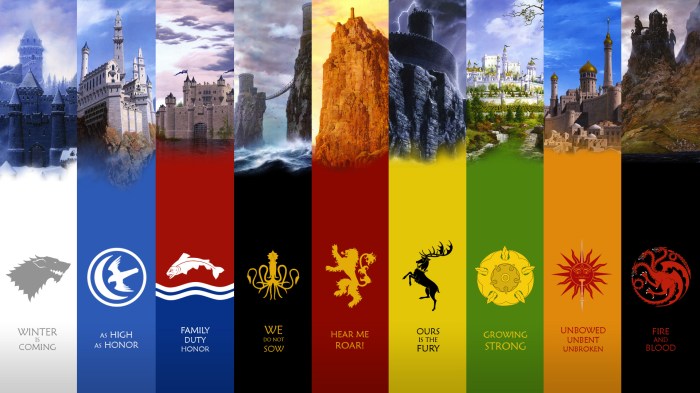
House-a-song-of-ice-and-fire-29965891-1920-1080Even before I began reading the books, I could tell that Westeros was very much inspired by the British Isles, with its tough and grizzled Northerners resembling the Scots, Picts, and Celts of old while the Southerners were more akin to the aristocratic Normans. “The Wall” was also a clear allegory for Hadrian’s Wall, with the people on the other side being portrayed much as the Roman’s would have viewed the “Northern Tribes” that threatened their domain.

King’s Landing also seemed very much inspired by London, with its pomp, opulence, and extensive moral decay. Yes, just like London of the Middle Ages, it was a fine patchwork of royal finery, castles, fortifications, religious ceremony, brothels and public executions! And it even lies upon a large river, the Blackwater, which seems every bit like the Thames.

Essos also seemed very much inspired by Asia of ancient lore. Here we had the Dothraki Sea where the Dothraki horsemen roamed free and pillaged in all directions, exacting tribute and taking slaves. Can you say Mongols and/or Huns? In addition, their capital – Vaes Dothrak – seemed in every respect to be an adaptation of Karakorum, Ghengis Khan’s one time capitol that was little more than a collection of temporary houses and tents. And Master Ilyrio, as if his name wasn’t enough, seemed to be every bit a Mediterranean at heart, living in a lavish sea-side estate and growing fat of off trade in cheese, olives and wine.

Upon cracking the books, I found that the metaphors only went deeper. In fact, they were so thick, you could cut them with a knife! In terms of Westerosi geography and character, the different regions of the continent called to mind all kind’s of archetypes and real-world examples. The Reach sounds very much like Cornwall, fertile, populous, and in the south-east relative to the capitol. Casterly Rock and the domain of the Lannister’s, though it resides in the west away from the capitol, seems every bit like Kent, the wealthiest region of old where the most lucrative trade and shipping comes in. And their colors, gold and red, are nothing if not symbolic of the House of Lancaster – of which Henry V and the VIII were descended.

And last, but certainly not least, there were the all-important cities of Qarth, Mereen, Astapor, and Yunkai. All eastern cities that inspire images of ancient Babylon, Cairo, Istanbul, Jerusalem and Antioch. With their stepped pyramids, ancient history, flamboyant sense of fashion, and lucrative slave trade, they all sounded like perfect examples of the ancient and “decadent” eastern civilizations that were described by Plato, Aristotle, and medieval scholars. The conquest of Westeros by the First Men, the Children of the Forest, the Andal and Valyrian Conquest; these too call to mind real history and how waves of conquerors and settlers from the east came to populate the Old World and the New, with genocide and assimilation following in their wake and giving rise to the world that we know today.

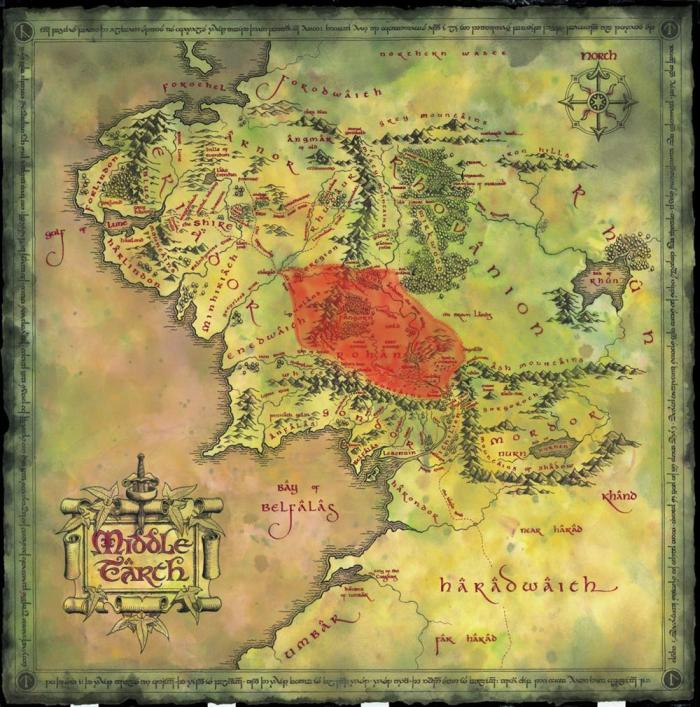
Middle-earthFans of Tolkien will no doubt be reminded of the map of Middle Earth, and for good reason. Martin’s knack for writing about space and place and how it plays a central role in the character of its inhabitants was comparable to that of Tolkien’s. And what’s more, the places have a very strong allegorical relationship to real places in real history.

In Tokien’s world, the Shire of the Hobbits seemed very much the metaphor for pre-industrial rural England. The inhabitants are these small, quirky people who are proud of their ways, lavish in their customs, and don’t care much for the affairs of the outside world. However, when challenged, they are capable of great things and can move heaven and earth.

In that respect, Gondor to the south could be seen as London in the early 20th century – the seat of a once proud empire that is now in decline. Given it’s aesthetics and location relative to the dark, hostile forces coming from the East and South, it’s also comparable to Athens and Rome of Antiquity.

And it was no mistake that the battle to decide the fate of Middle Earth happened here. In many ways it resembles the Barbarian Invasions of the late Roman Empire, the Persian Wars of Classical Greece, the Mongol Invasions or the Byzatine Empire’s war with the Turks in the High Middle Ages. In all cases, classical powers and the home of Western civilization are being threatened from Eastern Empires that are strange and exotic to them.

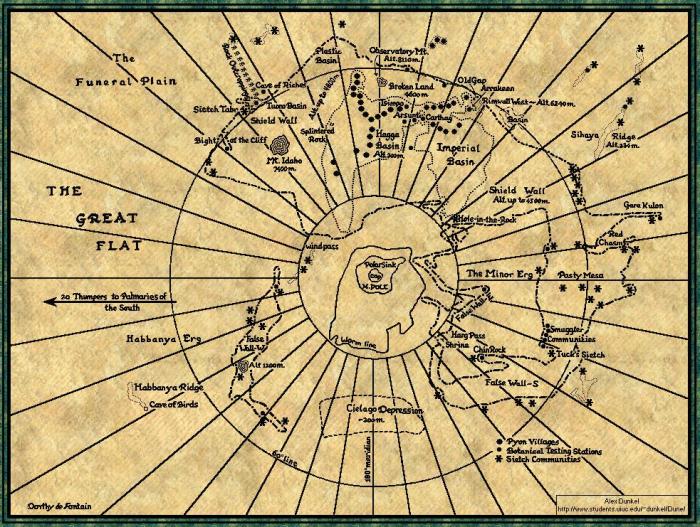
Dune_MapAnd let’s not forget Arrakis (aka. Dune) by Frank Herbert. Here too, we have a case where space and place are determining factors on their residents. And whereas several planets are described and even mapped out in the series, none were as detailed or as central as Arrakis itself. From its Deep Desert to its Shield Walls, from Arrakeen and Seitch Tabr; the planet was a highly detailed place, and the divide between Imperials and Fremen were played out in the ways both sides lived.

Whereas the Fremen were hardy folk who lived in the deep desert, took nothing for granted, and were a harsh folk sustained by prophecies and long-term goals, the Imperials were lavish people, pompous and arrogant, and used to doing things in accordance with the Great Convention. But far from being preachy or one-sided, Herbert showed the balance in this equation when it became clear that whereas the Imperials were governed by convention and thereby complacent, the Fremen were extremely dangerous and capable of terrible brutality when unleashed.

But as I said, other planets are also detailed and the influence their environments have on their people are made clear. Caladan was the ancestral home of the Atreides, covered in oceans, fertile continents, and a mild climate that many consider to be a paradise. As a result, according to Paul,  the Atreides grew soft, and it was for this reason that they fell prey to the Emperor’s betrayal and the machinations of their Harkonnen enemies.

And speaking of the Harkonnens, the world of Geidi Prime is described on a few occasions in the series as being an industrial wasteland, a world plundered for its resources and its people reduced to a status of punitive serfdom. What better metaphor is there for a people guided by sick pleasures, exploitation, and exceptional greed? Whereas the Atreides grew soft from their pleasures, the Harkonnens grew fat, and were therefore easily slaughtered by Paul and his Fremen once their rebellion was underway.

And of course, there is Selusa Secundus, a radioactive wasteland where the Emperor’s elite Sardukar armies are trained. On this prison planet, life is hard, bleak, and those who survive do so by being ruthless, cunning and without remorse. As a result, they are perfect recruits for the Emperor’s dreaded army, which keeps the peace through shear force of terror.

*                       *                        *

There’s something to be said for imaginative people creating dense, richly detailed worlds isn’t there? Not only can it be engrossing and entertaining; but sooner or later, you find yourself looking back at all that you’ve surveyed, you do a little added research to get a greater sense of all that’s there, and you realize just how freaking expansive the world really is. And of course, you begin to see the inspiration at the heart of it all.

Yes, this is the definitely the third time I’ve experienced this feeling in relation to a series. I count myself as lucky, and really hope to do the same someday. I thought I had with the whole Legacies concept, but I’m still tinkering with that one and I consider my research into what makes for a great sci-fi universe to be incomplete. Soon enough though, I shall make my greatest and final attempt, and there will be no prisoners on that day! A universe shall be borne of my pen, or not… Either way, I plan to blab endlessly about it 😉

A Feast For Crows!

a_song_of_ice_and_fire_version_2_by_scrollsofaryavart-d4rabm1We come to it at last, the fourth and final book in the Song of Ice and Fire Box Set! Wait, what? There’s a fifth book, and two more on the way? And I just bought the fifth book and promised to review it too??? Son of a bitch! Sigh… Alright, let’s get things moving and review this bastard. Lord knows George RR Martin isn’t done writing books, nor I in reading them, apparently.

Ha! I joke because it’s fun, and true. As I mentioned in a previous post, I had originally planned to quit after book four, but then decided some months back to buy the latest installment in the Song of Ice and Fire series thanks in part to the rave reviews it was getting from friends and critics. But the choice was cinched just the other night when I finally finished Crows and enjoyed how it ended.

To put it simply, A Feast For Crows felt like an afterthought to the series, a depository for the story lines that weren’t particularly important and didn’t make it into the previous volumes in the series. Hence why it took me so long to complete it – coupled with the many other books I started while in the middle of it – it really was a slow read! But upon completing it, I found that there were some rather interesting twists that made the story interesting gain, not to mention worth following!

What’s more, Martin ended the story with the misleading chapter entitled “Meanwhile, Back At the Wall”, which was really a letter to the audience stating that what they had just read was really only half of what he had planned as a fourth installment. At this point in the story, he had so much to say that he felt the only way he could say it all was to either write a massive single-volume or split it in two. And he could either write all the stories half-way, or write half the stories all the way, and leave the others for the next.

And of course, that’s what he did. Whereas the story lines of Cersei, Jaime, Samwell Tarly, Brienne, Arya, Sansa, and a host of other secondary characters get their due in this installment, the equally (if not more important) narratives of Jon Snow, Tyrion, Daenerys, Bran, and others would be reserved for book five. And like I said before, I could see the wisdom and crass commercial value in this! Damn you Martin, making me buy more of your books! Here’s what happens in this book:

Plot Synopsis:
The book opens with the War of Five Kings coming to an end. With most of the major player dead – Robb Stark, Joffrey Baratheon, Tywin Lannister, Renly Baratheon, and Balon Greyjoy – and Stannis defeated at King’s Landing, the war has reached a lull and it seems that House Lannister seems poised to inherit the entire realm. All that remains is for them to seize the last of the Stark’s strongholds (like Riverrun, which is still holding out) and to push the Ironmen back from all the ports they’ve seized.

However, the realm is still beset by intrigue as old scores are being settled and new plots put into action. At the same time, Cersei finds that despite the removal of all her enemies, as well as the death of her eledest son and father, she is unable to wield absolute power, and gradually begins to turn inward and succumb to paranoia and self-destruction. And of course, Sansa is still hiding in the Vale, doing her best to remain hidden and attending to Lord Baelish’s ongoing schemes…

King’s Landing: As is quickly becoming apparent, Cersei is incapable of running the realm on a day to day basis, which is made worse by the fact that her Council, which is staffed by loyalists, is ineffectual. At the same time, there is her growing distrust of the Tyrells and their apparent attempts to position Margaery to inherit the throne. As such. Cersei begins scheming to bring the House down.

At the same time, she has to come to terms with the crowns creditors, which include the Iron Bank of Braavos and the Faith of the Seven. In the former case, she fails and the crowns assets are entirely frozen. In the latter, she agrees to the restoration of the Faith Militant, a military order that is answerable only to the High Septon. However, in so doing, she allows for the accumulation of armed zealots in the capitol, most of whom believe her to be an adulterer. It also means the Faith now has its own army in place and is less compelled to accept her authority.

In her bid to lessen the Tyrell’s influence over the masses, the court and her son, she sends Ser Loras Tyrell to help with the siege of Storm’s End. He is mortally wounded in the assault and may not survive. Cersei then interrogates Grand Maester Pycelle and learns that he has been giving Margaery moon tea, and that she and her cousins have been having elicit sex with multiple suitors.

She turns Margaery and her maids over to the faith and has Ser Osney Kettleback, whom she has been bedding, testify to her falseness. This backfires however when Osney is interrogated by the Septon and reveals how he has been sleeping with Cersei and murdered the previous Septon on her orders. Cersei is jailed in the temple and hopes Jaime will return to fight for her…

The Riverlands: Jaime is sent north to assist in the siege of Riverrun and assist in bringing order to the war torn region. He succeeds in the former endeavor, ending the siege bloodlessly by convincing House Tully to surrender peacefully. The next step in his task is to locate the Brotherhood Without Banners, Lord Beric Dondarion, who is dead at this point, and Stoneheart (Catelyn Stark, who are still active in the Riverlands and hanging Lannisters, Freys everyone who had a hand in betraying House Stark. Afterwards, he gets word that Cersei needs his help, but tosses her letter into the fire.

Brienne is also in the Riverlands now after following the trail of Sansa Stark. Her companions include Ser Podrick Payne (former squire to Jaime) and Ser Hyle, one of Renly’s old knights. In time, they are set upon and captured by the Brotherhood and brought before Stoneheart, where she learns her true identity. Since she is carrying a Lannister sword, Catelyn believes she is in the service of the Lannister’s now, and demands she kill Jaime as a test of faith. Brienne refuses, and is sentenced to hang along with her companions.

Dorne: Picking up where A Storm of Swords left off, there is the growing plot by House Martell to avenge the death of the Elia and make Myrcella the queen of Westeros. They have not been appeased by the death of Ser Gregore Clegane, as they know it was Prince Oberyn who killed him, and that Tywin Lannister was behind the murder. Doran Martell, the ruler of Dorne, must now deal with the plotting of his bastard nieces – known as the Sand Snakes – who want war and to avenge their fathers death. He has them all locked in the tower, but soon finds that the plot is extending to his own daughter, Arianne.

For some time, she has been bedding Ser Arys Oakheart of the Kingsgaurd, and uses him to abduct Myrcella and try and install her as queen. When this fails, she too is placed in the tower and Ser Arys is killed. But before long, her father hauls her before him and tells her of his true plans. He too wants revenge, but has more subtle plans. This involves sending her brother Quentyn to the east to bring back “Fire and Blood” – Daenerys Targaryen – who he believes was prophesied to restore Westeros to its former glory.

Iron Islands: With the death of Balon Greyjoy and the ongoing war against the other Houses of Westeros, there is a question of who will lead the Ironmen. Aeron Damphair, the high priest of the Iron Islands, calls a Kingsmoot, a gathering to determine a successor, which becomes hotly contested by Asha and Victarion, Balon’s daughter and brother. However, Euron Greyjoy – Balon’s oldest brother, known as the exiled “Crow’s Eye”- is chosen as king due to his promise that he can control dragons with a recently acquired horn. He too sends out a party to travel to the east and find Daenerys with the intent of taking her dragons and conquering all of Westeros.

The East: Arya Stark arrives in Braavos and finds her way to the House of Black and White, a temple associated with the assassins known as the Faceless Men (of whom Jaqen H’gar was a member). She begins her training as an initiate and takes on a new identity, a girl who goes by the name of “Cat of the Canals”. However, her former identity continues to assert itself in the form of wolf dreams, and also when she comes across members of the Night’s Watch who are in town. This includes Samwell Tarly, whom she meets without knowing, and when she murders his companion Dareon for abandoning his brothers. The morning after Dareon’s murder, she admits to the Kindly Man that it was “Arya” who committed it, and is given a glass of warm milk as punishment. After drinking, she wakes up blind the following morning.

Meanwhile, Sam, Gilly and Maester Aemon stop on the way to Oldtown, where they hope to uncover the mystery of the one who has been prophesied. Aemon now believes this to be Daenerys as well, and seeks information about the “Lady with Dragons” to the east so he can help restore his niece to the throne. Sam finds a ships of Summer Islanders who claim to have seen the dragons firsthand and agree to take them to Oldtown. Aemon dies in transit, and Gilly and Sam become intimate over their shared sense of grief. When they arrive in Oldtown, Sam sends her to his family’s holdings for her own safety – as the Iron Men have been reeving in the region. He then proceeds to the Citadel, where he is told that Daenerys is the one prophesied to save the realm, and he begins training to go and find her.

Summary:
As I may have said already, this book largely felt like a depository for threads that were not part of the main story. After events in the previous three novels, one would think that the fourth book would have something on the Wall and the growing threat of “The Others.” However, the ongoing story about Arya’s new life in Braavos, the conspiracy in Dorne, Cersei’s own machinations at King’s Landing, and the leadership struggle amongst the Ironmen – all these felt like diversions from the climactic storyline. And after three books, I was beginning to get quite impatient for it. It’s like, C’mon, when are The Others going to attack? When is all this prophecy going to be revealed?

However, by the end, it became abundantly clear where Martin was going with this. At last, we find out that Daenerys is not just a contender for the Iron Throne, but the subject of the very prophecy that was being foretold since the second book, when the Red Comet first appeared. What’s more, by the end, it was abundantly clear that all the threads appearing in this book were closely related. The Iron Islanders, the Nights Watch, and the people of Dorne are all seeking Daenerys, and it’s clear at this point that she will be coming back to Westeros in force, and might even be seen as a force of liberation after all the infighting.

In addition, Cersei’s fate at King’s Landing was a welcome twist. While there are those who see her as a sympathetic character who’s only doing what any man in her position would do, I see that and all the talk of double standards as crap! Crap, crap, crap! She’s a cruel, selfish, and narcissistic woman who only cares about herself and condemns anyone who doesn’t do her bidding. So to see her get hers after all this time made me quite happy. It was also fitting that Jaime, whom she shunned when it became clear he wasn’t sympathizing with her, would spurn her appeals for help.

All of this was just enough to pique my interest in the series again, which was beginning to wane after Robb Stark was killed and it became clear the war was going to drag out and end in the Lannister’s favor. Not only that, but the War in the North, the prophecy involving the coming darkness (i.e. the Others) and Daenery’s own campaign to return in force; all of these seemed to be dragging inexorably on. As I said before, it seemed like the original story, with its three dominant threads, could have been wrapped up nicely in three books. And with book four beginning with all these secondary threads that seemed unrelated to the main plot, I was really beginning to tire.

However, Martin managed to wrap things up nicely. And coupled with all the nice reviews I’ve been hearing about book five, I will continue to read and report on what comes of things. I really, really hope for the sake of the series and his readers that things proceed towards a climax now. Because of this ends up being a “Wheel of Time” scenario after all, where the story just keeps going and going, I will be sorely disappointed and forced to give up. Here I go with A Dance of Dragons, wish me luck!

A Dance with Dragons, bought!

Hey all. I doubt if anyone remembers, but a few months back when I began reviewing A Song of Ice and Fire, I said that I would be ending the series with the fourth book. After completing A Storm of Swords, I figured one more book was enough. After all, with Dragons just released and the buzz claiming that there would be at least two more books to come, I was sure that I would have to cut myself off or risk being totally sucked in to Matrin’s “Wheel of Time”esque vortex.

But, and here where’s things get awkward, that was a lie… apparently! Last night, I finally finished A Feast for Crows and purchased A Dance with Dragons. And believe it or not, it was the not the cliffhanger ending in book four that made me want to do that, though that helped give me a final push. In truth, friends of mine, such as Goran Zidar, and a slew of other people have been saying how book five is really good and covers all the threads that were strangely missing from book four. So really, the decision to buy it was made several weeks ago, but after getting into the last few chapters, a number of sudden twists piqued my interest and I found myself wanting to know what happened right away!

And, interestingly enough, I also discovered that the final chapter of Crows was not a chapter at all, but a note from the author. In it, he explains that book four was the way it was –  namely, bereft of any information about Tyrion, Jon Snow, Daenerys, or Stannis and Melissandre – for a simple reason. Basically, he went this way because to include what he had planned for all of these characters – plus those of Samwell Tarly, Cersei, Sansa, Arya, Brienne, Jaime, et al, – would have turned Crows into a tome the likes of which had not been seen since War and Peace. Okay, he didn’t say it in those words, I’m just adding them for dramatic license 😉

Hence, he decided to break all he had planned for the fourth installment in the series into two volumes. And instead of telling all of the stories half-way, he chose instead to select half the stories and tell them in full, the rest to be followed up later. I can see the wisdom in this, and the marketing angle, because it certainly worked on me. Damn you, Martin! I swear that this is the last of your books that I’m going to read… It probably won’t be. I’m sure I’ll be checking out book six, especially if this one is as good as they say. I hate you, sir! Keep up the good work!

Arcology in Popular Culture

arcologyHello and good evening. Welcome to the third and final installment in my Arcology series, addressing the use of the concept in various popular culture sci-fi franchises. After researching the term and learning all about Paolo Soleri and the concept he created, I’ve come to see that his vision of future cities where the needs of ten of thousands of inhabitants could be met in sustainable ways helped to inspire the a great deal of speculative fiction.

Here are just a few examples that I can recall or have been able to find…

Chi-Town:
Many years ago, some friends of mine came to me with a new RPG by the name of RIFTS. A sort of sci-fi/fantasy crossover, the game was set in a post-apocalyptic world where inter-dimensional gateways, known as “Rifts” had led demons, monsters and mythical creatures into our universe, where they began wreaking havoc. After many years, several new nations emerged, the most powerful of which were the Coalition States, a dictatorship dedicated to fighting the invasion and reestablishing order.

The seat of this government is a large arcological city known as Chi-Town, which was built on the ruins of Old Chicago (hence the name). A self-contained city, the structure is somewhere between a pyramid and a rectangle in terms of shape. And of course, its hierarchical structure mirrors the social divisions at work within. The lower levels are the most densely populated, have the most indigents, and experience the most crime, while the upper levels are more spacious, opulent, and well-maintained.

In addition to being a fortress city and a safe haven for human beings in the ruins of the United States, Chi-Town is also a fitting example of an arcology. Within its walls, all things, including water, air, food and energy, are providing by internal systems and subject to recycling and treatment. Again, the issue of quality is dependent on where someone finds themselves within the structure, but the principle is still the same. In a world that has been devastated and rendered inhospitable, the response was to create a mega-structure that could both shield and provide for its many, many inhabitants.

Coruscant:
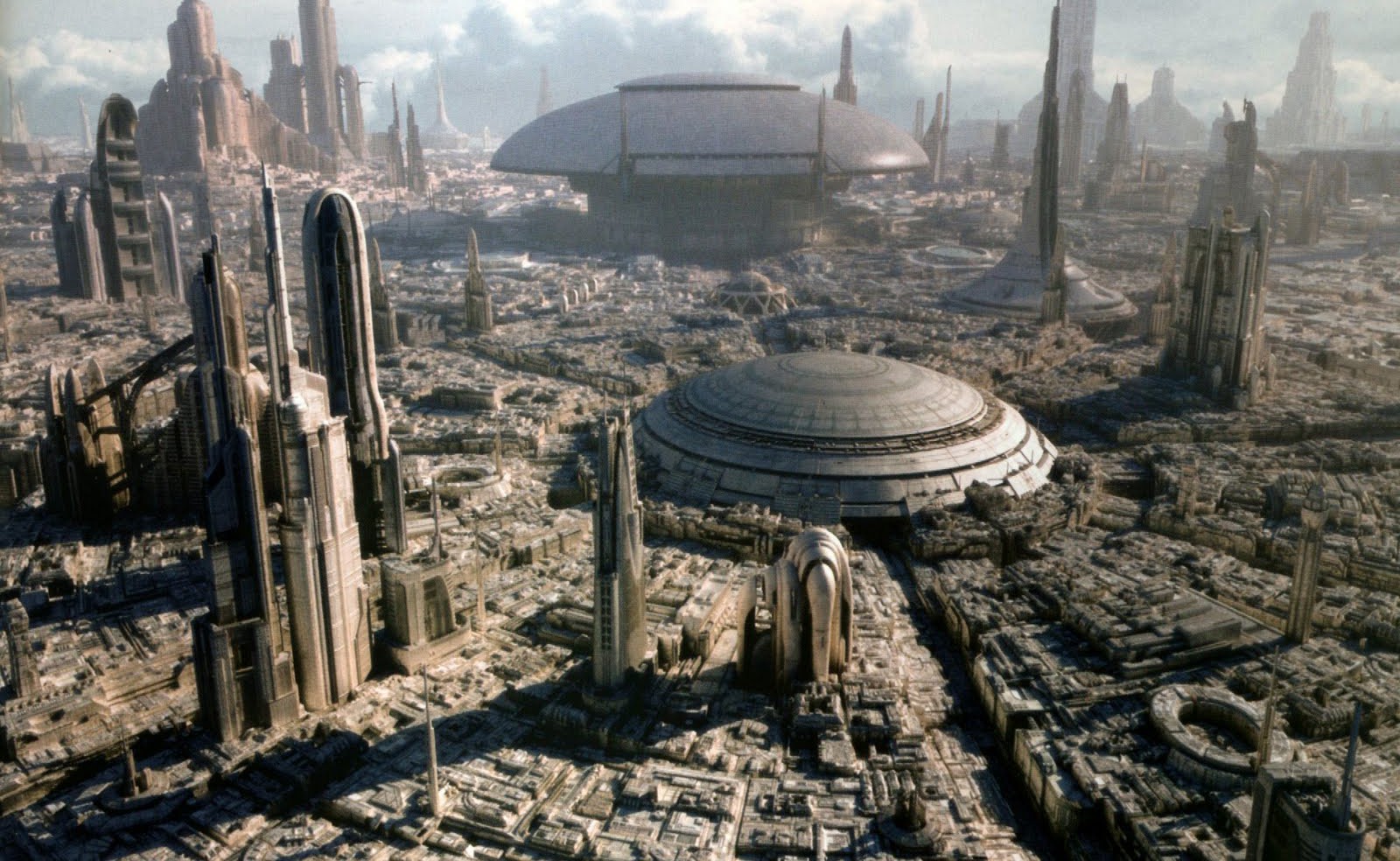
coruscantFans of the Star Wars franchise are certainly familiar with this planet-encompassing city, even before it was featured in the prequel trilogy. As the capitol of the Old Republic, Empire and New Republic, respectively, it has a very long history of habitation, and a very sizable population! As a result, its architects and engineers had to get very creative with the use of space on this planet, and several massive buildings were the result.

In truth, Coruscant was not so much a single city as thousands upon thousands of interconnected arcologies that ran across its surface. These various mega structures measured roughly a kilometer in height, dwarfing even the nearby mountain chains, and housed hundreds of thousands of residents each. In addition, the need to feed and provide for the staggering number of inhabitants required that every structure come equipped with a massive network for recycling water, waste and food.

Officially divided into megablocks and levels, every section of the city had its own means for providing food, water, and manufactured goods. This in turn required the presence of internal systems for processing air, drinking water, food waste, human waste, and industrial waste from its manufacturing warrens. In addition, in the sub-city where natural light did not reach, holograms and artificial lights were also built in to the environment to provide its inhabitants with illumination. In addition, it is also indicated in a number of sources that agricultural operations were housed in various sections and relied on recycled water and either artificial or filtered light.

Though food and waste still required a great deal of shipping and processing, which resulted in a staggering amount of transport traffic, much of the cities needs were taken care of by means of these internal measures. This ensured that the roughly three trillion inhabitants of the planet would never become wholly dependent on outside sources of food and goods, as well as ensuring that pollution and harmful waste wouldn’t accumulate to disastrous levels.

Habitats:
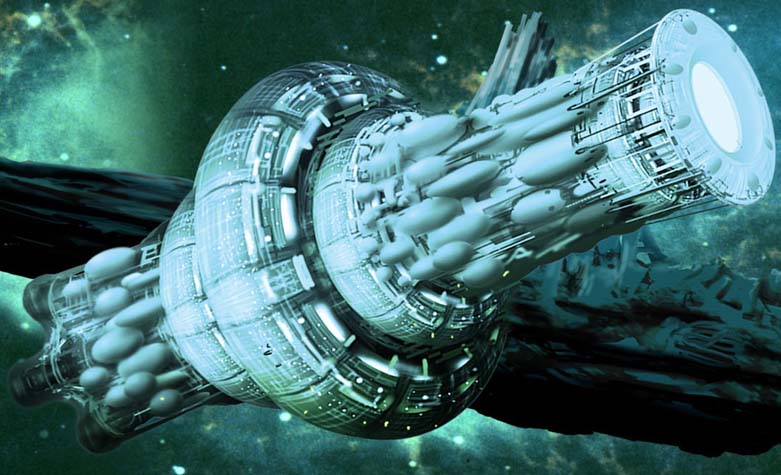
In the works of Peter F. Hamilton, particularly the Night’s Dawn Trilogy, much attention is given to the kinds of futuristic living spaces humanity will someday occupy. For starters, there is planet Earth in this future setting, which is so overrun by human beings that all cities have evolved to become self-contained arcologies. On top of that, there are what’s known as “Habitats”, floating megacities which exist out amongst the stars.

One of the most notable of these is Eden, the first ever habitat to be created, and in orbit around Jupiter. As the closest thing to a capitol in the Edenic culture, it was built using Bitek – aka. Biotechnology – which resulted in a living structure that was psychically linked to its inhabitant through a process known as affinity.

Here, as with other Habitats, the structures are massive, measuring several kilometers in length and width. In addition, each is entirely self-supporting, providing food, water, electricity and artificial gravity to its inhabitants. The latter is created through the rotation of the whole structure around its axis, while a central light tube which runs the length of the station provides light. Food and water are produced via biological processes and are recycled to ensure minimal waste, which in turn is also processed and converted for later use. In addition, interstellar material is frequently intercepted by the habitat and converting into any and all goods which its people require.

Ultimately, the only thing a habitat needs is a supply of external matter which it will use to grow and mature during its formative cycle, and an external power supply to maintain its functions. This is last necessity is provided by a series of external conductor cables which grow on the outer hull of the structure where they are positioned to pick up charges. Due to the rotation, these cables then cross the electromagnetic flux of the nearby gas giant and thus produce electrical energy. All is provided and nothing goes to waste. A true future city!

Urban Monads:
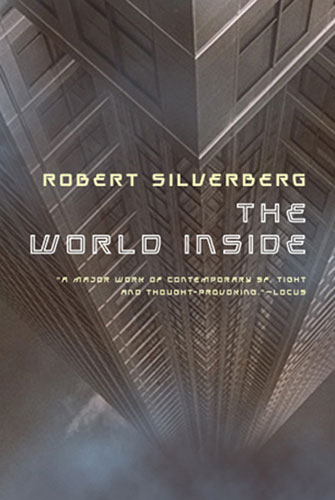
The setting of Robert Silverberg’s fictional study in overpopulation, The World Inside occurs almost entirely within the hyperstructure known as Urban Monad 116. As the name implies, this massive, three-kilometer high city tower is but one of many on the planet, which have become necessary now that war, disease and starvation have been eliminated, but people still continue to procreate without restriction. During the telling of the story, which takes place in 2381, the total population has reached 75 billion.

Much attention is given in the novel to how urban monads (or “Urbmons”) are arranged and meet the needs of their 800,000 respective inhabitants. For starters, groups of these skyscrapers are arranged in “constellations” so that one’s shadow does not fall upon another. Each Urbmon is divided into 25 self-contained “cities” with 40 floors each, in ascending order of status, with administrators occupying the highest level with population and production centers sequestered below.

In order to see to the needs of this rapidly expanding population, all arable land not currently occupied by Urbmons is dedicated to agriculture. However, within the Urbmon communities,  resource management still counts for a lot, with all foods and goods being held in common and the people expected to share them. Beyond that, however, sustainability is not exactly the name of the game, as the right to engage in free expressions and sex and reproduction are considered the highest forms of activity.

Hence, Silverberg’s Monads break a few of the basic rules of arcology, but the basic premise is still there. Designed to house a rapidly expanding population that threatens to overpower the Earth, Urbmons take advantage of the concepts of megastructures and 3-D planning to ensure that every living soul is housed and provided for. Now if they could just stop reproducing so much, they’d be in business!

Tyrell Corp Building:
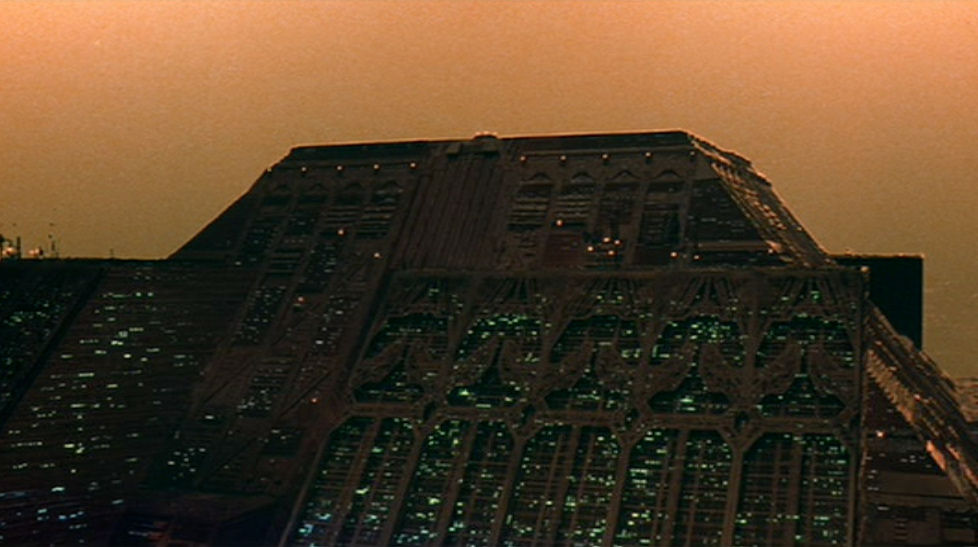
Though not specified as an arcology in the strictest sense, I couldn’t possibly make this list without including the infamous Tyrell Corp building. I mean just look at the thing. Imposing, Gothic, and very, very big! And let’s not forget highly symbolic, as the design, size and scale of the thing was meant to evoke the feeling of awesome power that the corporation held.

Though not much is made clear of what life inside the building is like, it was clear that it was made up of many, many levels and sections, each of which fulfilled a different purpose. At ground level, the building was protected by automated systems which “fried” one of the story’s Nexus 6’s when they tried to break in. Farther up are various industrial areas that are dedicated to the production of the company’s Replicants, as well as office spaces and administrative areas. Another Replicant was detected in one of these sections, right before it shot the man who had detected it – Detective/Blade Runner Holden.

At the apex of the building is the living area for Tyrell and Rachel, the experimental Nexus unit that was modeled on his niece. This level is accessible only by elevator which runs along the outer edge of the building, and can only be accessed by authorized personnel. Here, Tyrell lives amidst opulent surroundings, vast marble floors, stone columns, and even an aviary for his pet owl. Although it is not explicitly said, it appears that Tyrell spends all of his time here, never venturing to the outside city or to another domicile. Hence, we can only assume that all of his needs are seen to here, even if everything he consumes is flown in and all the waste produced is shipped out.

Mega-City One:
judge-dredd-megacity-oneThe setting of the Judge Dredd franchise, Mega-City One is essentially a massive urban sprawl which stretches from the Quebec-Windsor City corridor to the peninsula of Florida in the south, growing out of the Northeast Megalopolis to occupy Southern Ontario the entire Eastern Seaboard. And in addition to stretching so very far and wide, this city is also made up of arcologies in order to see to the needs of its roughly 800 million inhabitants.

These arcologies come in the form of huge apartment blocks which house roughly 50,000 people each. Within each block, citizens are attended to by automated systems which recycle everything, waste, water, and even food. As for manufactured products and consumer goods, these too are largely created in industrial warrens that housed within specific blocks.

This system of every need being handled by automated systems and machines was designed to ensure that the survivors of the nuclear holocaust (aka. The Apocalypse War) would be tended to. However, it had the unwanted side-effect of also leading to rampant unemployment and listlessness amongst the population. This is one of the main reasons why Mega-City One is awash in petty criminals and organized crime syndicates. This, in turn, is what led to the creation of the Judicial System and its army of Street Judges.

Trantor:
Perhaps the first example of a ecumenopolis appearing in fiction, Trantor went on to become a source of inspiration for many science fiction franchises. And according to Asimov, it represented what he believed would be the end result of industrialization and human technology, which was an encapsulated population living in cities that spanned entire planets.

Consisting of buildings that reached deep into the ground and reached several kilometers above sea level, Trantor was home to roughly 45 billion people at the height of the Empire. It’s overall population density was 232 per km², and just about every human being was dedicated to the administration of the Empire or the needs of its population. Though by the time of Foundation, most of the population’s needs were met by importing food and basic necessities from every major planet in the region.

However, according to Prelude to Foundation, Trantor’s basic food needs were once fulfilled by the planet’s vast system of subterranean microorganism farms. Here, yeast and algae were produced as basic nutrients, which were then processed with artificial flavors to create palatable food sources. These farms were tended to entirely by automated robots, but their eventual destruction during an uprising forced the planet to turn to external sources

The Sprawl:
Also known as the Boston-Atlanta-Metropolitan-Axis (or BAMA for short), this mega-city is the setting for the majority of William Gibson’s Sprawl Trilogy. Encompassing the classic cyberpunk tales of Neuromancer, Count Zero, and Mona Lisa Overdrive, the concept of arcology is raised on numerous occasions in reference to the massive apartment blocks that make up the city.

On such building is Barrytown, an arcology in the projects which is the setting for much of the second novel. Throughout the novel, it is indicated that the people here generate their own food, such as the catfish farms that exist near the top of the building. Trees are also grown on specific levels to generate oxygen which is then fed into the building’s air recirculation system. And finally, mentions are made that there are air turbines on the roof of many project buildings which generate electricity for the inhabitants.

Being such a massive, futuristic city, the Sprawl features many such structures, all of which are described as giant skyscrapers that house tens of thousands of people within their tall frames. And ultimately these are all contained beneath the a series of geodesic domes which encapsulate the city and generate peculiar weather patterns consistent with micro-climates. In this way, the BAMA itself is one massive structure, containing hundreds of millions of people under a single roof.

Zion:
The last remaining free city that humanity could still call home, Zion was not a megastructure per se, but nevertheless fit the definition of an arcology to a tee. An underground habitat that was home to roughly 250,000 men, women and children, Zion was the picture perfect representation of a self-contained living space that handled all the needs of its inhabitants internally.

As Councilman Hamann intimated in Matrix Reloaded as he and Neo walked along the Life0-Support Level, all of Zion’s needs are attended to by machines. These provide power, heat, water, and are constantly recirculating and recycling them.  Meanwhile, food seems to be either grown in special hydroponic areas, or synthesized in bio facilities dedicated to that purpose.

In terms of its internal layout, Zion is ovoid in structure and consists of many levels, each with its specific purpose. At the apex rests the Dock, where Zion’s army of hovercrafts are stationed and automated defenses protect against intruders. Beneath that are the Gathering Spaces, where new arrivals who have not yet been assigned permanent quarters are temporarily housed.

The middle section is entirely dedicated to habitation, made up of family quarters, and the Council Chambers which houses Zion’s ruling council. The lower levels consist of the Meeting Hall, Life-Support Level, and Geo-Thermal Generation, where the cities power and heat are supplied from. At the very bottom lies the Temple, a large cavern where religious gatherings are held and people gather to hold celebrations and mourn the dead. This area also serves as a last defensive position in the event that the automated defenses were destroyed and the Dock overrun. This of course became the case in Matrix: Revolutions when the machines attacked Zion and nearly destroyed it.

___

What did I tell ya? Clearly, the idea has made the rounds since Soleri’s time. And in all likelihood, we are sure to see the concept popping up more and more as the problems of overpopulation and environmental impact become more acutely felt. There are some who might express disgust and even fear at the idea of living an encapsulated existence, but given the growing need for sustainability and places to put people, will we really have a choice? One can only hope!

Hilarious Game of Thrones “Birther” Video

In spite of their annoying tendency to cling to stupid, conspiratorial notions that are quite racist in nature, the so-called “Birther” movement is at least good for a laugh or two – especially when their antics inspire videos like this one. Using Game of Thrones as their subject matter, the political satirists from Mother Jones Video have produced this movie which questions King Joffrey’s lineage, as well as blame him for everything that’s gone wrong in the kingdom. Enjoy!

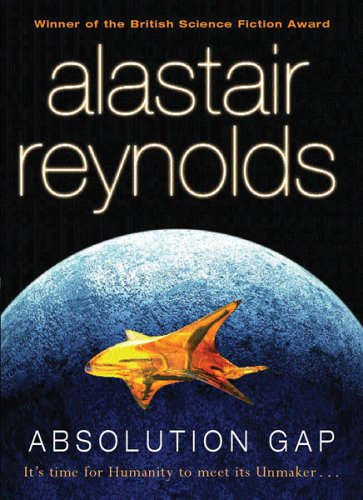
Absolution Gap

Good afternoon all – or morning or evening, as the case may be – and welcome to the final installment in my Revelation Space review. Today, I shall be covering the third and final installment in the trilogy, otherwise known as Absolution Gap. As the conclusion to the series, it brought together the apocalyptic trends established by the first two and wrapped them up pretty nicely, while also introducing some ideas and threads of its own.

These included the threat of the Inhibitors, the attempts by Neville Clavain and his rogue group of Conjoiners, Hyperpigs and refugees to stop them, and the growing awareness of those within the universe at large of their approaching doom. And, true to form, Reynold’s also tells the story through multiple threads which seem unrelated at the beginning, but ultimately come together to reveal a single plot arc that brings everyone and everything together.

And last, but not least, this book also brought the series full circle in terms of the quasi-religious motifs that play an important role in the story. As I mentioned in a previous post, concerning sci-fi and religion, Alastair Reynolds was not one to shy away from the subject of spirituality and religion. One look at the titles in this series (Revelation Space, Redemption Ark, Absolution Gap) are proof enough of that. However, Reynolds went a step beyond, weaving a narrative which begins with knowledge, proceeds to contrition, and then culminates in a sort of forgiveness for all humanity. In the end, the acts of the few who would risk all to save others provides the whole with a sort of reprieve, a second chance for them to contemplate their ambiguous future.

I also should mention that, much like in Redemption Ark, Reynolds chose to include characters and/or elements from his short stories and prequels into this book. In Redemption‘s case, this involved bringing Sky Haussmann back in the form of H, the man who helped Clavain and his friends find their way to Resurgam in time to witness the Inhibitors at work and help save the population. Here, we see hints of how the Revelation Space universe will end, which comes to us from the short story “Galactic North” which is to be found in the collection of the same name. But more on that later! In the meantime, let’s get into this book from the beginning…

Plot Synopsis:
The story opens in 2615, with aboard a lighthugger known as the Gnostic Ascension, a freelance treasure-hunter which is run by a sado-masochist named Jasmina. After waking her crewman Quaiche from reefersleep, she informs him that his attempts to lead them to valuable artifacts have failed for the last time. In order to ensure his success during their next stop, a planet in orbit of 107 Piscium, she places his lover Morwenna (an Ultra and fellow crewmember) in a scrimshaw suit on the outside of his exploratory ship until he returns with some goods.

While surveying a moon in orbit of the gas giant Haldora, he discovers what appears to be an alien bridge in a chasm, but is then attacked by automated defense systems. He then crashes on the planet and sends out a distress signal, knowing that since his ship is on the other side of Haldora, it will not be notified in time to save him. He begins to succumb to an indoctrination virus which he has been carrying for some time, and then notices a miracle has occurred. His shuttle has arrived in time to save him, tough the acceleration has killed Morwenna. During recovery, he realizes it was because Haldora disappeared for a fraction of a second, allowing his radio signal to reach his ship directly…

In the second thread, events take place on Ararat in 2675, twenty three since the crew of the Nostalgia for Infinity landed on the planet. After receiving a capsule from space, Scorpio seeks out Clavain, who has withdrawn from society and left him in charge. This was apparently due to the death of his daughter Felka, who wandered into the sea to contact the Pattern Jugglers and never returned. They discover that the capsule is from Ana Khouri, whom they have not seen since events around Resurgam took place.

Ana informs them that they are fighting the Inhibitors using advanced tech that they have retrieved with the help of Ana’s daughter, Aura. Having come into contact with the Hades Matrix, the alien moon which was an actual data storage device, she now has visions and is able to convey alien technology to their forces which they have begun to incorporate. Unfortunately, Skade has returned from where they had left her last time and kidnapped Auna from Ana’s womb, and is now holding her hostage. After being attacked by Inhibitors, her ship crashed on Ararat.

Making their way to the ship, Skade demands that they kill Clavain in exchange for Auna. Clavain agrees and asks Scorpio to do it for him, since he trusts him as a comrade as arms. He also asks that his body be thrown into the ocean so it might join with Felka and Galiana, his daughter and wife. After killing Clavain and rescuing Auna, the ship is attacked by Inhibitors, but they are saved by the Conjoiner Remontoire who defends them from orbit.

Back at the colony, the leaders decide that its time to load up the Nostalgia and leave the planet and confer with Captain Brannigan (now part of his ship) who reveals that he has been preparing to do so for some time. Apparently, he has been aware of what’s been going on in space, the mounting fight between Inhibitors and their allies, and knew the day would come when he had to lift them off Ararat. Bringing what colonists they can with them, they break for orbit and are met by Remontoire who helps outfit them with their new weapons.

After debating their ultimate destination, they decide to go to Yellowstone to help evacuate the people there before the Inhibitors lay it to waste. Aura tells them to go to a moon called Hela, though they don’t understand why and choose to ignore her advice. When they arrive at Yellowstone, they find the planet overrun and few, if any, ship attempting to depart the system are uninfested by Inhibitor machinery. As a result, Scorpio’s leadership is challenged and a new council is formed, which elects to go to Hela as Aura suggested.

In the third and final thread, the place is Hela and the year is 2727. On this world, a young 17 year old named Rahsmika Els runs away from home to find her long lost brother Harbin, who joined the “Cathedrals” long ago. This is basically a mobile city made up of religious institutions that travel the planet, keeping its eyes on the sky so they may witness what their leader – Quaiche – witnessed many years ago. The disappearance of Haldora, which is the basis of their faith, is something they are waiting on, and all initiates are injected with Quaichist blood to receive the same virus that converted him.

When Quaiche becomes aware of her, he becomes very interested. Els apparently has the ability to discern lies from truth. What’s more, her principle interest lies in xenoarchaelogy, and her theories on the extinct insectoids which were indigenous to the planet (the Scuttlers) are quite fascinating. Apparently, this race was also wiped out by the Inhibitors, and their whereabouts are another subject of fascination for the cult that has grown up around Quaiche. Because of all this, he lures her to his Cathedral and takes her on as an apprentice, never revealing that her brother is in fact dead.

Meanwhile, Els becomes plagued by nightmares about a race known as the “Shadows”, a people that live in a brane (dimension or universe) parallel to our own. In the course of speaking to them through her dreams, she learns that their universe was consumed by a rogue terraforming agent and they are trying to pass through into our own. Eons back, they had showed the Scuttlers how to build a machine that could bring them across, which was apparently hidden inside Haldora. Hence, the gas giant is not a natural planet, but a giant cloaking field which sometimes malfunctions. Hence its disappearance from time to time.

Shortly thereafter, the Nostalgia shows up and begins entering into negotiations with Quaiche to protect the planet. While this is happening, he attempts to seize the ship, but Scorpio and his people defeat them. He then takes Khouri and Els hostage, who we now learn is actually Aura (now 17 years old). Her identity was a cover to infiltrate the planet and learn all she could about their society, and her gifts the result of her enhanced mind. Quaiche then reveals that he wants the Nostalgia to anchor itself to Hela and stop it from rotating, so that he may watch Haldora permanently. Brannigan agrees and lands the ship, but also deploys a Cache Weapon which fires on Haldora, destroying its cloaking field and revealing the machine within.

A fight ensues, in which Quaiche is killed and Nostalgia/Brannigan is destroyed. Aura and Khouri are rescued and reunited with the crew. However, the question remains of what to do about the Shadows. When a digital envoy enters into a scrimshaw suit and begins to speak to them, it claims the offer to destroy the Inhibitors is still open. However, Scorpio claims that their is a better way. He claims that materials found on Ararat match ones found on Hela, which they originally took to be massive seashell deposits, but which turned out to be advanced building materials.

He now knows that these were left behind by a race known as the Nestbuilders, an ancient species which move unseen throughout our galaxy to elude the Inhibitors. He suggests appealing to them for help against the Inhibitors, rather than trusting in these Shadows. He advised Remontoire to tell Aura and Khouri of this, and they escape the Cathedrals before it is destroyed. Scorpio, injured and having gone through cryogenics too many times, dies out on the planet surface…

In the epilogue, the year is 3125 and the place is a Pattern Juggler planet. This brings the story full circle, back to the beginning where this same woman was standing on the world right before it was to be evacuated. She reflect on everything that has happened and realizes Scorpio was right. After finding the Nestbuilders, which had been hiding between stars, they used their weaponry and eventually pushed the Inhibitor menace back. The war is still not over, but victory seems assured. However, in doing so, they created a greater problem: the so called “Greenfly” machines. These are a self-replicating race of terraformers that programmed to destroy every object in a solar system and reorganize them into trillions of vegetation-filled habitats.

Apparently, the Inhibitors had kept them in check, but without the Inhibitors, the Greenfly are now out of control. This is very similar to what the Shadows described as having destroyed their own universe, which leads Aura to conclude that they were not from a parallel brane, but from the future. As such, humanity is evacuating towards the Pleiades, but before they leave, Aura decides that she will swim with the Pattern Jugglers one last time. In so doing, she hopes to warn and warn the people they have assimilated about what is coming, and enters the water just as the story ends…

Summary:
I should start this last section by stating that this was my least favorite book of the three. This does not mean I didn’t enjoy it, but as usual, there were the elements I had come to know and expect from Reynolds which detracted from the overall story. These include his use of convoluted plots, multiple twists, and some rather weird and out there concepts.

For starters, Clavain and Skade are both killed off pretty quickly in the beginning in a way that suggests that they were simply being done away with. In reality, Skade’s involvement in the story pretty much ended in book II when her ship blew up. Bringing her back and having her take Clavain with her just seemed like a way to write Clavain out, which I really didn’t see the need for (aside from making him a Jesus-like figure). Also, the concept of Ana’s daughter, which is the source of their ideas for fighting the Inhibitors, also seemed a bit weird. I mean a psychic, talking baby?

The Hades Matrix being a source of valuable information I could see, but why not just have it that they went back there to get as much information as they could in the intervening 23 years? And if they were going for a messiah-type figure in her daughter, why not let her grow up before she becomes this impressive psychic figure. It would go a long way to furthering the Judea-Christian elements that are prevalent in the story.

Which brings me to the next issue, that of the many plot twists. For starters, why was it necessary to blank out Aura’s mind so she could pretend to be a 17 year old native to Hela? Why not just send her in as is, posing as a religious convert who had come from off world? All kinds of people came to Hela everyday for this exact reason, so why not simply slip her in with them? Or, why didn’t they simply contact Quaiche directly when they got there instead of going through all this cloak and dagger? Things really didn’t materialize until they did anyway, so why go through all that? Granted, it tied the threads together quite succinctly, but by the time it is revealed, I began to feel that the story was trying to do too much.

And finally, there is the matter of the twist ending. At the time of reading, I felt like it came out of nowhere. Who were these Nestbuilders? Why hadn’t we heard of them until now? And why the last minute introduction of them? Naturally, I would later learn that the Nestbuilders did not so much come out of nowhere, but were instead an adaptation of something from an earlier work. Essentially, they are a species who make an appearance in “Galactic North” and who are related to the “Slugs” from Chasm City – i.e. the species that had taken to hiding between star systems to avoid the Inhibitors. This made sense and wrapped things up nicely by tying it back to his previous work. But much like with the character of H in the Redemption, I felt that things had not been explained fully.

What’s more, this does not explain how Scorpio was able to discern their existence and learn all he needed to know – like the fact that they could trust them or they would be able to help them beat the Inhibitors – from one tiny shard of shell they left behind. Perhaps if he revealed that Felka told them as much after meeting with the Pattern Jugglers one last time, or that Galiana had conveyed some hints in one of her visions before dying. But as I recall, no explanations were made and we’re simply handed this solution shortly before the book ends. Again, not well explained, and kind of comes off as a third act twist that feels contrived.

And now for the things I liked! As usual, Reynold’s characteristic knack for combining cool technology, hard science, a gritty take on the universe, and some interesting conceptualizations of alien civilizations proved very interesting. On top of all that, there was a rather intriguing commentary on organized religion and apocalypticism which ran through the entire story, which achieved a truly artistic climax in the way he envisioned the “Cathedrals”. I am forced to wonder if he adapted that from somewhere, or it was a Reynold’s original. Either way, very cool!

And in hindsight, I actually appreciate the way he managed to weave elements from Chasm City and Galactic North into this story. The way it ended on a note of uncertainty, due to the fact that their universe was beginning to resemble the very one the Shadows had told them about, really brought the story home and gave the impression of a tightly knit universe. Lastly, the way Reynolds took this opportunity (again) to get into some hard scientific concepts, most notably membrane theory (aka. M-theory), was quite welcome. Much like how he incorporating Galactic Collisions in volume two, it was not only educational but enjoyable to see real scientific theories being adapted into fiction.

All in all, I consider the Revelation Space trilogy to be one of the most influential and poignant series I have ever read. While it might not rank up there with Dune or LOTR, it remains a source of inspiration and ideas for me. Hell, Reynolds practically taught me all I know about nanotechnology, not to mention time dilation and relativistic space travel. Without his hard scientific  influence, I would still be believing in a universe where FTL had to happen in order for good sci-fi to occur!

Note: Alas, I have yet to read the Prefect, the fifth and final novel in the Revelation Space universe. And in point of fact, several short stories make up the universe as well, some of which I believe I have yet to read. So really, I cannot say in all honesty that I’ve read the entire series or have commented on it fully. However, the novels of Revelation Space, Redemption Ark, and Absolution Gap are the only ones in the series that have a common plot and characters, hence why I refer to them as a “trilogy” and treat them as a contained set. And in that respect, I have finished with the Revelation Space Universe and my review thereof. Anything else at this point would just be gravy… 😉

Religion in Sci-Fi

Since its inception as a literary genre, religion has played an important role in science fiction. Whether it took the form of informing the author’s own beliefs, or was delivered as part of their particular brand of social commentary, no work of sci-fi has ever been bereft of spirituality.Even self-professed atheists and materialists had something to say about religion, the soul and the concept of the divine, even if it was merely to deny its existence.

And so, I thought it might make for an interesting conceptual post to see exactly what some of history’s greats believed and how they worked it into their body of literature. As always, I can’t include everybody, but I sure as hell can include anyone who’s books I’ve read and beliefs I’ve come to know. And where ignorance presides, I shall attempt to illuminate myself on the subject. Okay, here goes!

Alastair Reynolds:
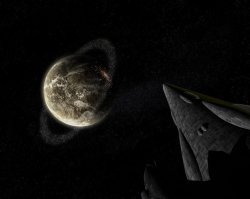
Despite being a relative newby to the field of sci-fi authors, Reynolds has established a reputation for hard science and grand ideas with his novels. And while not much information exists on his overall beliefs, be they religious or secular, many indications found their way into his books that would suggest he carries a rather ambiguous view of spirituality.

Within the Revelation Space universe, where most of his writing takes place, there are many mentions of a biotechnological weapon known as the “Indoctrination Virus”. This is an invasive program which essentially converts an individual to any number of sectarian ideologies by permeating their consciousness with visions of God, the Cross, or other religious iconography.

In Chasm City, these viruses are shown to be quite common on the world of Sky’s Edge, where religious sects use them to convert people to the official faith of the planet that claims Sky Haussmann was a prophet who was unfairly crucified for his actions. In Absolution Gap, they also form the basis of a society that populates an alien world known as Hela. Here, a theocratic state was built around a man named Quaiche, who while near death watched the moon’s gas giant disappear for a fraction of a second.

Unsure if this was the result of a strain he carries, he created a mobile community that travels the surface of the planet and watches the gas giant at all times using mirrors and reclining beds, so that they are looking heavenward at all times. Over the years, this community grew and expanded and became a mobile city, with each “believer” taking on transfusions of his blood so they could contract the the strain that converted him and allowed him to witness all that he did.

While this would indicate that Reynolds holds a somewhat dim view of religion, he leaves plenty of room for the opposite take. All throughout his works, the idea of preserving one’s humanity in a universe permeated by post-mortal, post-human, cybernetic beings remains a constant. In addition, as things get increasingly dark and the destruction of our race seems imminent, individual gestures of humanity are seem as capable of redeeming and even saving humanity as a species.

In fact, the names of the original trilogy allude to this: Revelation Space, Redemption Ark, Absolution Gap. Like with everything else in his books, Reynold’s seems to prefer to take a sort of middling approach, showing humanity as an ambiguous species rather than an inherently noble one or foul one. Religion, since it is a decidedly human practice, can only be seen as ambiguous as well.

Arthur C. Clarke:
At once a great futurist and technologist, Clarke was nevertheless a man who claimed to be endlessly fascinated with the concept of God and transcendence. When interviews on the subjects of his beliefs, he claimed that he was “fascinated by the concept of God.” During another interview, he claimed that he believed that “Any path to knowledge is a path to God—or Reality, whichever word one prefers to use.”

However, these views came to change over time, leading many to wonder what the beliefs of this famed author really were. At once disenchanted with organized religion, he often found himself subscribing to various alternative beliefs systems. At other times, he insisting he was an atheist, and nearing the end of his life, even went so far as to say that he did not want religious ceremonies of any kind at his funeral.

Nowhere were these paradoxical views made more clear than in his work. For example, in 2001: A Space Odyssey, the theme of transcendence, of growing to the point of becoming god-like, is central. Early hominid’s evolution into humanity is seen as the direct result of tampering by higher forces, aliens which are so ancient and evolved that they are virtually indistinguishable from gods. Throughout the series, human beings get a taste of this as they merge with the alien intelligence, becoming masters of their own universe and godlike themselves.

In the last book of the series – 3001: Final Odyssey, which Clarke wrote shortly before his death – Clarke describes a future where the Church goes the way of Soviet Communism. Theorizing that in the 21st century a reformist Pope would emerge who would choose to follow a similar policy as Gorbachev (“Glasnost”) and open the Vatican archives, Clarke felt that Christianity would die a natural death and have to be replaced by something else altogether. Thereafter, a sort of universal faith built around an open concept of God (called Deus) was created. By 3001, when the story is taking place, people look back at Christianity as a primitive necessity, but one which became useless by the modern age.

So, in a way, Clarke was like many Futurists and thoroughgoing empiricists, in that he deplored religion for its excesses and abuses, but seemed open to the idea of a cosmic creator at times in his life. And, when pressed, he would say that his personal pursuit for truth and ultimate reality was identical to the search for a search God, even if it went by a different name.

Frank Herbert:
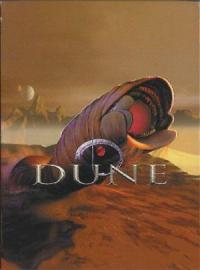
Frank Herbert is known for being the man who taught people how to take science fiction seriously all over again. One of the reasons he was so successful in this regard was because of the way he worked the central role played by religion on human culture and consciousness into every book he ever wrote. Whether it was the Lazarus Effect, the Jesus Incident, or the seminal Dune, which addresses the danger of prophecies and messiahs, Frank clearly believed that the divine was something humanity was not destined to outgrow.

And nowhere was this made more clear than in the Dune saga. In the very first novel, it is established that humanity lives in a galaxy-spanning empire, and that the codes governing technological progress are the result of a “jihad” which took place thousands of years ago. This war was waged against thinking machines and all other forms of machinery that threatened to usurp humanity’s sense of identity and creativity, resulting in the religious proscription “Thou shalt not make a machine in the likeness of a human mind.”

Several millennium later, the Bene Gesserit Sisterhood, a quasi-religious matriarchal society, are conspiring to create a messianic figure in the form of the Kwisatz Haderach. The name itself derives from the Hebrew term “Kefitzat Haderech” (literally: “The Way’s Jump”), a Kabbalic term related to teleportation. However, in this case, the name refers to the individual’s absolute prescience, the ability to jump through time in their mind’s eye. In preparation for the arrival of this being, they have been using their missionaries to spread messiah legends all over the known universe, hoping that people will respond to the arrival of their superbeing as if he were a messianic figure.

When the main character, Paul Atreides – the product of Bene Gesserit’s breeding program – arrives on the planet Arrakis, where his family is betrayed and killed, he and his mother become refugees amongst the native Fremen. They are one such people who have been prepped for his arrival, and wonder if he is in fact the one who will set them free. In order to survive, Paul takes on this role and begins to lead the Fremen as a religious leader. All along, he contends with the fear that in so doing, he will be unleashing forces he cannot control, a price which seems too high just to ensure that he and his mother survive and avenge themselves on their betrayers.

However, in the end, he comes to see that this is necessary. His prescience and inner awareness reveal to him that his concepts of morality are short-sighted, failing to take into account the need for renewal through conflict and war. And in the end, this is exactly what happens.By assuming the role of the Kwisatz Haderach, and the Fremen’s Mahdi, he defeats the Emperor and the Harkonnens and becomes the Emperor of the known universe. A series of crusades followers as his followers go out into the universe to subdue all rebellion to his rule and spread their new faith. Arrakis not only becomes the seat of power, but the spiritual capital of the universe, with people coming far and wide to see their new ruler and prophet.

As the series continues, Paul chooses to sacrifice himself in order to put an end to the cult of worship that has come of his actions. He wanders off into the desert, leaving his sister Alia to rule as Regent. As his children come of age, his son, Leto II, realizes the follies of his father and must make a similar choice as he did. Granted, assuming the role of a God is fraught with peril, but in order to truly awaken humanity from its sleep and prepare it for the future, he must go all the way and become a living God. Thus, he merges with the Sandworm, achieving a sort of quasi-immortality and invincibility.

After 3500 of absolute rule, he conspires in a plot to destroy himself and dies, leaving a huge, terrible, but ultimately noble legacy that people spend the next 1500 years combing through. When they come to the point of realizing what Leto II was preparing them for, they come to see the wisdom in his three and half millennia of tyranny. By becoming a living God, by manipulating the universe through his absolute prescience, he was preparing humanity for the day when they would be able to live without Gods. Like the Bene Gesserit, who became his chosen after the fact, he was conspiring to create “mature humanity”, a race of people who could work out their fates moment by moment and not be slaved to prophecies or messiahs.

As you can see, the commentary ran very deep. At once, Herbert seemed to be saying that humanity would never outlive the need for religion, but at the same time, that our survival might someday require us to break our dependency on it. Much like his critique on rational thought, democracy and all other forms of ideology, he seemed to be suggesting that the path to true wisdom and independence lay in cultivating a holistic awareness, one which viewed the universe not through a single lens, but as a multifaceted whole, and which was really nothing more than a projection of ourselves.

For those seeking clarity, that’s about as clear as it gets. As Herbert made very clear through the collection of his works, religion was something that he was very fascinated with, especially the more esoteric and mystical sects – such as Kaballah, Sufism, Zen Buddhism and the like. This was appropriate since he was never a man who gave answers easily, preferring to reflect on the mystery rather than trying to contain it with imperfect thoughts. Leto II said something very similar to this towards the end of God Emperor of Dune; as he lay dying he cautions Duncan and Siona against attempts to dispel the mystery, since all he ever tried to do was increase it. I interpreted this to be a testament of Frank’s own beliefs, which still inspire me to this day!

Gene Roddenberry:
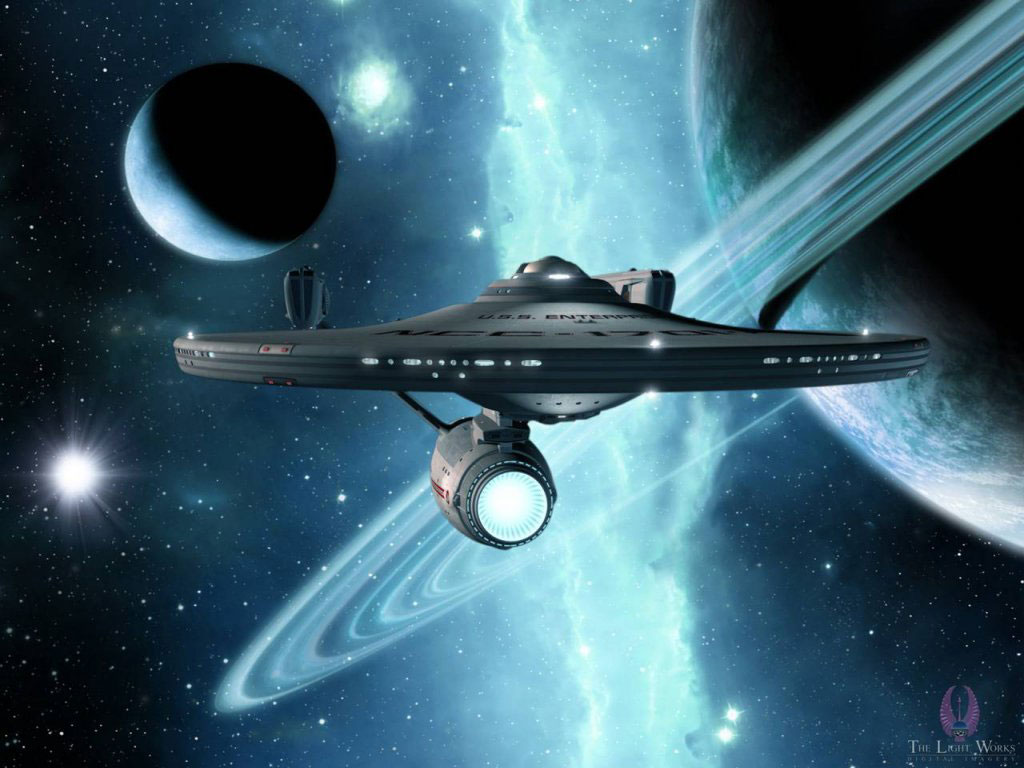
For years, I often found myself wondering what Roddenberry’s take on organized religion, spirituality, and the divine were. Like most things pertaining to Star Trek, he seemed to prefer taking the open and inclusive approach, ruling nothing out, but not endorsing anything too strongly either. Whenever religion entered into the storyline, it seemed to take the form of an alien race who’s social structure was meant to resemble something out of Earth’s past. As always, their was a point to be made, namely how bad things used to be!

Behind the scenes, however, Roddenberry was a little more open about his stance. According to various pieces of biographical info, he considered himself a humanist and agnostic, and wanted to create a show where none of his characters had any religious beliefs. If anything, the people of the future were pure rationalists who viewed religion as something more primitive, even if they didn’t openly say so.

However, this did not prevent the subject of religion from coming up throughout the series. In the original, the crew discovers planets where religious practices are done that resemble something out of Earth’s past. In the episode “Bread and Circuses”, they arrive on a planet that resembles ancient Rome, complete with gladiatorial fights, Pro-Consuls, and a growing religion which worships the “Son”, aka. a Jesus-like figure. This last element is apparently on the rise, and is advocating peace and an end to the cultures violent ways. In “Who Mourns Adonais”, the crew are taken captive by a powerful alien that claims to be Apollo, and who was in fact the true inspiration for the Greek god. After neutralizing him and escaping from the planet, Apollo laments that the universe has outgrown the need for gods.

In the newer series, several similar stories are told. In the season one episode entitled “Justice”, they come Edenic world where the people live a seemingly free and happy existence. However, it is soon revealed that their penal code involves death for the most minor of infractions, one which was handed down by “God”. This being is essentially an alien presence that lives in orbit and watches over the people. When the Enterprise tries to rescue Wesley, who is condemned to die, the being interferes. Picard gains its acquiescence by stating “there can be no justice in absolutes”, and they leave. In a third season episode entitled “Who Watches the Watchers”, Picard becomes a deity to the people of a primitive world when the crew saves one of their inhabitants from death. In an effort to avoid tampering with their culture, he lands and convinces him of his mortality, and explains that progress, not divine power, is the basis of their advanced nature.

These are but a few examples, but they do indicate a general trend. Whereas Roddenberry assiduously avoided proselytizing his own beliefs in the series, he was sure to indicate the ill effects religion can have on culture. In just about every instance, it is seen as the source of intolerance, injustice, irrationality, and crimes against humanity and nature. But of course, the various crews of the Enterprise and Starfleet do not interfere where they can help it, for this is seen as something that all species must pass through on the road to realizing their true potential.

George Lucas:
Whereas many singers of space opera and science fiction provided various commentaries on religion in their works, Lucas was somewhat unique in that he worked his directly into the plot. Much like everything else in his stories, no direct lines are established with the world of today, or its institutions. Instead, he chose to create a universe that was entirely fictional and fantastic, with its own beliefs, conflicts, institutions and political entities. But of course, the commentary on today was still evident, after a fashion.

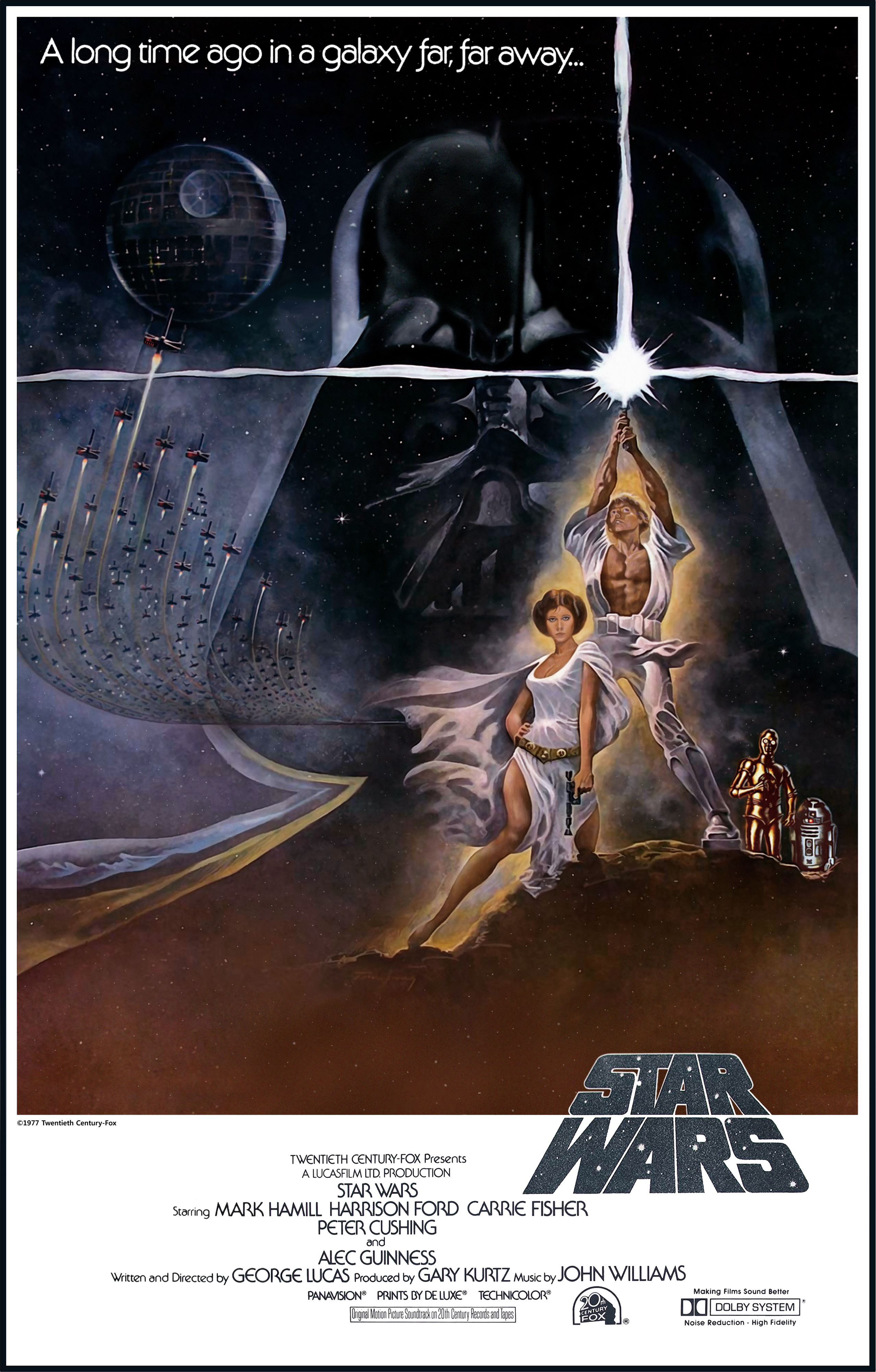
In the Star Wars universe,religion (if it could be called that) revolves around “The Force”. As Obi-Wan described it in the original movie “It is an energy field created by all living things. It surrounds us and penetrates us. It binds the galaxy together.” In Empire, Yoda goes a step farther when he says “Life creates it, makes it grow. Its energy surrounds us and binds us. Luminous beings are we, not this crude matter.”Sounds rather pantheistic, doesn’t it? The idea that all life emits an essence, and that the fate of all living things is bound together in a sort of interdependency.

What’s more, the way the Force was governed by a Light Side and a Dark Side; here Lucas appeared to be relying on some decidely Judea-Christian elements. Luke’s father, for example, is a picture perfect representation of The Fall, a Faustian man who sold his soul for power and avarice. The way he and the Emperor continually try to turn Luke by dangling its benefits under his nose is further evidence of this. And in the end, the way Darth Vader is redeemed, and how he is willing to sacrifice himself to save his son, calls to mind the crucifixion.

In the prequels, things got even more blatant. Whereas Anakin was seen as a sort of Lucifer in the originals, here he became the prodigal son. Conceived by the “Will of the Force”, i.e. an immaculate conception, he was seen by Qui Gonn as “The Chosen One” who’s arrival was foretold in prophecy. The Jedi Council feared him, which is not dissimilar to how the Pharisees and Sanhedrin reacted to the presence of Jesus (according to Scripture). And of course, the way Anakin’s potential and powers became a source of temptation for him, this too was a call-back to the Lucifer angle from the first films.

All of this was in keeping with Lucas’ fascination with cultural mythos and legends. Many times over, Lucas was rather deliberate in the way he worked cultural references – either visually or allegorically – into his stories. The lightsaber fights and Jedi ethos were derived from medieval Europe and Japan, the architecture and many of the costumes called to mind ancient Greece, Rome and Byzantium, the setting and gun fights were regularly taken from Old Westerns, and the Imperial getup and rise to power of the Emperor were made to resemble Nazi Germany.

However, Lucas also dispelled much of the mystery and pseudo-religious and spiritual quality of his work by introducing the concept of the “midi-chlorians”. This is something I cannot skip, since it produced a hell of a lot of angst from the fan community and confounded much of what he said in the original films. Whereas the Force was seen as a mystic and ethereal thing in the originals, in the prequels, Lucas sought to explain the nature of it by ascribing it to microscopic bacteria which are present in all living things.

Perhaps he thought it would be cool to explain just how this semi-spiritual power worked, in empirical terms. In that, he failed miserably! Not only did this deprive his franchise of something truly mysterious and mystical, it also did not advance the “science” of the Force one inch. Within this explanation, the Force is still a power which resides in all living things, its just these microscopic bacteria which seem to allow people to interact with it. Like most fans, I see this as something superfluous which we were all better off without!

H.G. Wells:
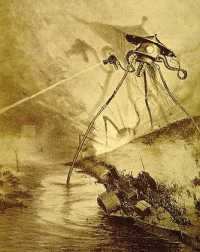
Prior to men like Herbert and the “Big Three” (Asimov, Clarke, and Robert A. Heinlein), Wells was the master of science fiction. Since his time, during which he published a staggering amount of novels, short-stories and essays, his influence and commentaries have had immense influence. And when it came to matters of faith and the divine, Well’s was similarly influential, being one of the first sci-fi writers to espouse a sort of “elemental Christian” belief, or a sort of non-denominational acceptance for religion.

These beliefs he outlined in his non-fiction work entitled God the Invisible King, where he professed a belief in a personal and intimate God that did not draw on any particular belief system. He defined this in more specific terms later in the work,  aligning himself with a “renascent or modern religion … neither atheist nor Buddhist nor Mohammedan nor Christian … [that] he has found growing up in himself”.

When it came to traditional religions, however, Wells was clearly of the belief that they had served their purpose, but were not meant to endure. In The Shape of Things to Come, he envisioned the creation of a global state (similar to Zamyatin’s “One State” and Huxley’s “World State”), where scientific progress was emphasized and all religions suppressed. This he saw as intrinsic to mankind’s progress towards a modern utopia, based on reason and enlightenment and the end of war.

In War of the Worlds, a similar interpretation is made. In this apocalyptic novel, one of the main characters is a clergyman who interprets the invasion of the Martians as divine retribution. However, this only seems to illustrate his mentally instability, and his rantings about “the end of the world” are ultimately what lead to his death at the hands of the aliens. Seen in this light, the clergyman could be interpreted as a symbol of mankind’s primitive past, something which is necessarily culled in the wake of the invasion my a far more advanced force. And, as some are quick to point out, the Martians are ultimately defeated by biology (i.e. microscopic germs) rather than any form of intervention from on high.

Isaac Asimov:
Much like his “Big Three” colleague Clarke, Asimov was a committed rationalist, atheist and humanist. Though he was born to Jewish parents who observed the faith, he did not practice Judaism and did not espouse a particular belief in God. Nevertheless, he continued to identify himself as a Jew throughout his life. In addition, as he would demonstrate throughout his writings, he was not averse to religious convictions in others, and was even willing to write on the subject of religion for the sake of philosophical and historical education.

His writings were indicative of this, particularly in the Foundation and I, Robot series. In the former, Asimov shows how the Foundation scientists use religion in order to achieve a degree of influential amongst the less-advanced kingdoms that border their world, in effect becoming a sort of technological priesthood. This works to their advantage when the regent of Anacreon attempts to invade Terminus and ends up with a full-scale coup on his hands.

In the Robot series, Asimov includes a very interesting chapter entitled “Reason”, in which a robot comes to invent its own religion. Named QT1 (aka. “Cutie”) this robot possesses high-reasoning capabilities and runs a space station that provides power to Earth. It concludes that the stars, space, and the planets don’t really exist, and that the power source of the ship is in fact God and the source of its creation.

Naturally, the humans who arrive on the station attempt to reason with Cutie, but to no avail. It has managed to convert the other robots, and maintains the place in good order as a sort of temple. However, the human engineers conclude that since its beliefs do not conflict with the smooth running of the facility, that they should not attempt to counterman it’s belief system.

What’s more, in a later story entitled “Escape!” Asimov presents readers with a view of the afterlife. After developing a spaceship that incorporates an FTL engine (known as the hyperspatial drive), a crew of humans take it into space and perform a successful jump. For a few seconds, they experience odd and disturbing visions before returning safely home. They realize that the jump causes people to cease exist, effectively dying, which is a violation of the Three Laws, hence why previous AI’s were incapable of completing the drive.

Taken together, these sources would seem to illustrate that Asimov was a man who saw the uses of religion, and was even fascinated by it at times, but did not have much of a use for it. But as long as it was not abused or impinged upon the rights or beliefs of others, he was willing to let sleeping dogs lie.

Philip K. Dick:
Naturally, every crowd of great artists has its oddball, and that’s where PKD comes in! In addition to being a heavy user of drugs and a fan of altered mental states, he also had some rather weird ideas when it came to religion. These were in part the result of a series of religious experiences he underwent which began for him in 1974 while recovering from dental surgery. They were also an expresion of his gnostic beliefs, which held that God is a higher intelligence which the human mind can make contact with, given the right circumstances.

Of Dick’s hallucinations, the first incident apparently occurred when a beautiful Christian woman made a delivery to his door and he was mesmerized by the light reflecting off of her fish pendant, which he claimed imparted wisdom and clairvoyance. Thereafter, Dick began to experience numerous hallucinations, and began to rule out medication as a cause. Initially, they took the form of geometric patterns, but began to include visions of Jesus and ancient Rome as well. Dick documented and discussed these experiences and how they shaped his views on faith in a private journal, which was later published as The Exegesis of Philip K. Dick.

As he stated in his journal, he began to feel that his hallucinations were the result of a greater mind making contact with his own, which he referred to as the “transcendentally rational mind”, “Zebra”, “God” and “VALIS” (vast active living intelligence system). Much of these experiences would provide the inspiration for his VALIS Trilogy, a series that deals with the concept of visions, our notions of God and transcendent beings.

In addition, many of Dick’s hallucinations took on a decidedly Judea-Christian character. For instance, at one point he became convinced that he was living two parallel lives; one as himself, and another as “Thomas” – a Christian persecuted by Romans in the 1st century AD. At another point, Dick felt that he had been taken over by the spirit of the prophet Elijah. These experiences would lead him to adapt certain Biblical elements into his work, a prime example being a chapter in Flow My Tears, the Policeman Said, which bore a striking resemblance to the a story from the Biblical Book of Acts, which Dick claimed to never have read.

All of this is a testament to the rather profound (and possibly nuts!) mind of PKD and his fascination with all things divine and spiritual. Though not a man of faith in the traditional sense, he was very much a part of the counter-culture in his day and experimented with drugs and alternative religious beliefs quite freely. And while most of his ideas were dismissed as outlandish and the result of drug abuse, there were many (Robert A Heinlein included) who saw past that to the creative and rather gifted artistic soul within. It is therefore considered a tragedy that PKD died in relative obscurity, having never witnessed how much of an impact and influence he would have on science fiction and modern literature.

Ray Bradbury:
Next up, we have the late great Ray Bradbury, a science fiction writer for whom all literature was of immense import. This included the Bible, the Tanakh, the Koran, and just about any other religious text ever written by man. What’s more, many of his works contain passages which would seem to indicate that Bradbury held religion in high esteem, and even believed it to be compatible (or at least not mutually exclusive) with science.

For example, in his seminal novel Fahrenheit 451, one of the most precious volumes being protected by the character of Faber, a former English professor, is the Bible itself. When Montag confronts him and begins ripping the pages out of it, Faber tells him that it is one of the last remaining copies in the world that actually contains God’s words, instead of the newer versions which contain product placements.

As the story progresses and World War III finally comes, Montag joins Faber and a community of exiles, all of whom are responsible for “becoming a book” by memorizing it. In this way, they hope to preserve whatever literature they can until such a time as civilization and the art of writing re-emerges. Montag is charged with memorizing the Book of Ecclesiastes, and joins the exiles on their journey.

In the Martian Chronicles, Bradbury is even more clear on his stance vis a vis religion. In the short story “-And the Moon Be Still as Bright”, the Fourth Expedition arrives on Mars to find that the majority of the Martians have died from chickenpox. A disillusioned character named Jeff Spender then spends much time in the alien ruins and comes to praise the Martians for how their culture combined religion and science.

Humanity’s big mistake, according to Spender, was in praising science at the expense of religion, which he seemed to suggest was responsible for modern man’s sense of displacement. Or has Spender put it: “That’s the mistake we made when Darwin showed up. We embraced him and Huxley and Freud, all smiles. And then we discovered that Darwin and our religions didn’t mix. Or at least we didn’t think they did. We were fools. We tried to budge Darwin and Huxley and Freud. They wouldn’t move very well. So, like idiots, we tried knocking down religion.”

In short, Bradbury saw humanity as lost, largely because of it deification of reason at the expense of faith. However, he did not appear to be advocating any particular religion, or even religion over science. When it came right down to it, he seemed to be of the opinion that faith was important to life, an outlet for creativity and inspiration, and needed to be preserved, along with everything else.

Robert A. Heinlein:
As yet another member of the “Big Three”, Heinlein’s own religious view bear a striking resemblance to those of his contemporaries. Much like Clarke and Asimov, he was a committed rationalist and humanist, and varied from outright atheism to merely rejecting the current state of human religion. According to various sources, this began when he first encountered Darwin’s Origin of the Species at the age of 13, which convinced him to eschew his Baptist roots.

These can be summed up in a statement made by Maureen, one of his characters in To Sail Beyond the Sunset, when she said that the purpose of metaphysics was to ask the question why, but not to answer. When one passed beyond the realm of questions and got into answer, they were firmly in religious territory. Naturally, the character of Maureen preferred the former, as the latter led to intolerance, chauvinism, and persecution.

In Stranger In A Strange Land, one of the most famous science fiction novels of all time, plenty of time is dedicated to the main character’s (the Martian Smith) experiences with religion. After becoming disillusioned with humanity’s existing institutions, he decides to create a new faith known as the “Church of All Worlds”. This new faith was based on universal acceptance and blended elements of paganism, revivalism, and psychic training. In short, it was an attempt to predate major religions by reintroducing ancient rites, nature worship, and the recognition of the divine in all things.

What’s more, Stranger’s challenge to just about every contemporary more, which included monogamy, fear of death, money, and conventional morality could only be seen by religious authorities as an indictment of traditional values. In that respect, they were right. Heinlein plotted out the entire novel in the early fifties, but did begin writing it for a full decade. He would later of say of this, “I had been in no hurry to finish it, as that story could not be published commercially until the public mores changed. I could see them changing and it turned out that I had timed it right.”

But just in case his work did not suffice, Heinlein expressed his opinions quite clearly in the book entitled Notebooks of Lazarus Long (named after one of his recurring characters): “History does not record anywhere at any time a religion that has any rational basis. Religion is a crutch for people not strong enough to stand up to the unknown without help. But, like dandruff, most people do have a religion and spend time and money on it and seem to derive considerable pleasure from fiddling with it.” These and other quotes illustrated his issues with religion, which included their irreconcilable nature with reason, their inherent contradictions, and the ludicrous things done in their names.

Summary:
And that’s what the masters had to say on the subject, at least those that I chose to include. As you can plainly see, their opinions ran the gambit from outright condemnation of religion (but not necessarily of faith) to believing that religion had it’s place alongside science as an equally worthy form of expression. And of course, there were those who fell somewhere in the middle, either seeing religion as an ambiguous thing or something that humanity would not outgrow – at least not for the foreseeable future. Strangely, none of them seemed to think that religion trumped science… I wonder why 😉

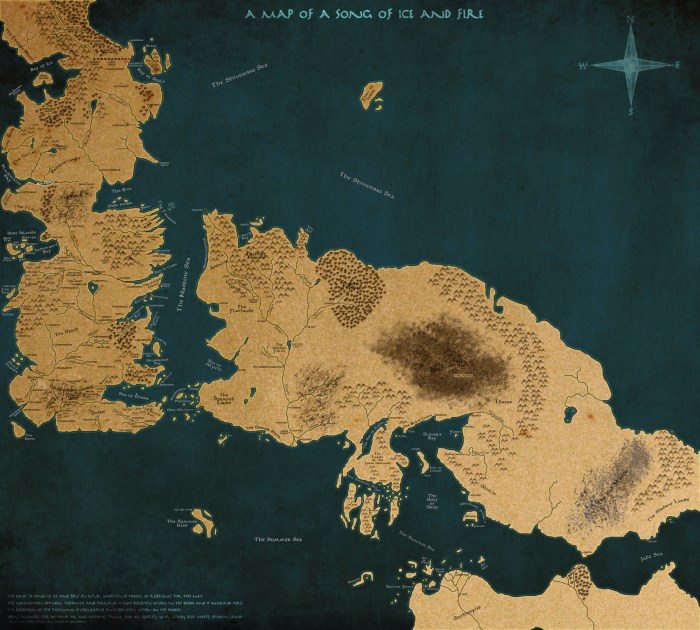
The Birth of an Idea: Fascis Ardens!

Inspiration is a funny, fickle thing! As I’m sure anyone who’s ever attempted to write knows, ideas seem to come when you least expect them. On the one hand, a person can go months without coming up with an original idea. And then, just like that, inspiration can strike suddenly and without warning. You find yourself not only coming up with an idea, but the concept for a full-length novel!

That’s what happened to me this weekend. Myself and my wife were preparing to head up island to see her family. I was contemplating books that deal with the concept of alternate history, and how ones that deal with alternate outcomes to World War II and the Civil War seem to be especially popular. In the former case, you have The Man In the High Castle by Philip K Dick and Fatherland by Robert Harris, two seminal novels that address what would have happened had Germany won the war.

In the latter case, you have stories like A Rebel In Time by Harry Harrison and The Guns of the South by Harry Turtledove, which merge time travel and alternate history to examine what would have happened if The South had won the Civil War.

In both novels, the plot revolves around a single or group of White Supremacists who use a time machine to bring modern guns to the Confederate Army. This allows the South to prevail, which they hope will prevent the rise of the Civil Rights movement, the end of Apartheid, and other equality movements.

That’s when it hit me! Why the heck hasn’t anyone done an alternate history story where White Supremacists go back in time to make sure Germany won the Second World War? Sounds like something that ought to have been done by now; but to my knowledge, no one’s tackled it yet. I got to thinking long and hard about it, about the plot, characters and potential twists. Eventually, I had what I felt was the bare bones of an idea. It varies slightly from the premise I just mentioned, but in ways I think work! I plan to call it…

Fascio
For those familiar with the Fascist movement of the 20th century, the concept of the Fascio is probably a familiar one. This was basically just a bundle of sticks with an axe tied on that was set afire at public gatherings. The ritual dates back to Ancient Rome, where the burning of these ceremonial bundles was meant to symbolize lighting the way to the future. Italian Fascists, under Mussolini, especially loved this ancient ritual, which they used to draw a connection to the past as much as to point to the future. Like all Fascist rituals, it was an inherent contradiction, more regressive than progressive in nature. But hey, the Fascists didn’t do logic…

Plot:
The story opens in 2050, where the world is reeling from the worst ravages of climate change and Fascist parties are once again taking hold of Europe and North America in response to numerous humanitarian crises. Two young history enthusiasts, believing that the worst is coming, decide to take advantage of an experimental new technology: Time Travel!

Using a machine they gain access to, the duo plan to travel back in time to Germany in 1920, where they plan to find a despondent young military officer named Hitler. Using futuristic technology, they plan to kill him without leaving a trace, and return to the future where things are surely to be much better.

Unfortunately, the time machine sends them to 1941 by accident. Unsure that they will be able to use the machine again in the future, they resolve to kill Hitler during the height of World War II, before he can enact the Final Solution and invade Russia. Relying on their knowledge of history and advanced technology, they manage to kill Hitler at his headquarters weeks before the Battle of Britain was to end and Operation Barbarossa (the invasion of Russia) began. After making a hasty retreat, they jump in the return module and set course of the future.

However, once again the machine drops them off in the wrong year. Rather than traveling 109 years into the future, they arrive in 1962, at roughly the same time as the Cuban Missile Crisis from their own timeline, and find a world starkly different than the one they read about in history books. Rather than finding a world dominated by the two superpowers of the United States and the Soviet Union, two different but equally menacing empires are in place. On the one side, there’s the Pan-American Alliance, led by the US, and on the other, the Axis Forces.

After combing through some records at the local library, they learn the terrible truth: assassinated Hitler in 1941, rather than ending the Second Word War, led Germany to victory. Without Hitler’s questionable and erratic leadership, Germany avoided making several mistakes which were directly attributable to him. For one, Germany did not give up the Battle of Britain a few weeks shy of victory. By choosing to maintain their operations against the RAF and its coastal airfields, they eventually overcame Britain’s air defenses. This allowed them to come to a cease fire agreement which took Britain out of the war.

Then, in 1942, they invaded Russia and were successful in capturing Moscow, Leningrad and Stalingrad, all within the space of a year. This led to the creation of Germania, an Empire which reached from Northern France to the Ural Mountains. In the Mediterranean, Italy became the dominant power, with possessions in the Balkans and all across North Africa. The US still went to war with Japan in the Pacific, where they were victorious, but in Europe, the Nazis and their Fascist allies were never defeated.

Thus the world was divided into two major power blocs. The US, Canada, Mexico and all of South America joined together and maintained alliances with India, Japan, China and Australia to safeguard against expansion into Asia and the Pacific. Germany, Italy, and their subservient allies came together to dominant Eurasia and set their eyes on the Middle East, Africa, and further East. Both sides developed nuclear weapons, and by 1960, tensions had reached an all-time breaking point.

Hence, the two historians bear witness to a different “Missile Crisis”, which still takes place in 1962, but was between the Axis and Allies, and actually took place. When the bombs begin to fall, they die, since the future they left is now erased from existence. In their last few moments, they realize the folly of tampering with timelines. Such things are just too complicated for people to handle!

And I was thinking about a possible epilogue chapter where the two main characters meet each other in the alternate future they have now created. The world they live in is a post-apocalyptic landscape, roughly ninety years since World War III, where life is hard and people live by a new form or “Iron Rule” – the rule of survival at all costs. Not sure, we’ll see…

So that’s my latest idea, a time traveling alternate future addressing World War II and the rise of neo-fascism in today’s world. I humbly submit to my followers for their approval. So tell me, what do you think?

Cloud Atlas Trailer

Last night, I uncovered this trailer for the upcoming movie Cloud Atlas. An adaptation of the 2004 novel by David Mitchell, the novel tells the story of six characters who’s lives are interwoven across time. Beginning in the South Pacific in 1850, the novel moves through time periods, with each story being read or observed by the main character in the next. Eventually, things ends up in a distant, dystopian world before finally circling back to the 19th century where it all started.

In the end, all characters are apparently linked through reincarnation, the underlying theme being that human nature is universal. That much is made clear from this trailer, where the main characters appear to know each other in spite of never meeting in their current lives. Directed by Lana and Andy Wachowski and Tom Tykwer, the movie also stars such international heavyweights as Tom Hanks, Halle Berry, Susan Sarandon, Hugo Weaving, Keith David, Zhou Xun, Jim Broadbent, Donna Bae, and Hugh Grant.

Check out the trailer!