Reducing Energy Use Through AI

hal9000Interesting fact: household energy consumption accounts for about a third of an individuals carbon footprint. You know that energy that powers your water-heater, lighting, thermostat, stove, refrigerator, A/C, television, personal devices, computer… Yes, all that. As long as our current methods of generating energy cause carbon emissions, environmental problems with persist.

But of course, there are plenty of things we could be doing to curb our use of power at the same time. Turning off the lights, shutting down unused devices, turning down the heat; all good energy-saving habits. And if we forget, perhaps a kindly voice could remind us. Say… an artificial intelligence with an eerily polite voice that monitors our energy usage and tells us how to do better.

AI'sThat’s the idea being explored by Nigel Goddard, a professor at the University of Edinburgh’s School of Informatics who is trying to solve consumption problems by using cutting-edge AI techniques. In the multi-year IDEAL project that will be launching in 2013, Goddard and his colleagues will outfit hundreds of British homes with sensors that monitor temperature, humidity, and light levels, as well as gas and electricity use, and wirelessly report their readings.

The concept used here is known as “machine learning”, a branch of AI that involves the development of systems that can learn from data and anticipate behaviors. Once Goddard and his team have used this technique to process all the data returned by their sensors, they will rely on another cutting-edge technology – known as natural language synthesis – to generate automatic text messages that give people feedback about their energy use.

Green-TechnologyThe goal is not just to reduce people’s carbon footprint, but save them money as well. At least that’s the approach Goddard and his team are taking when it comes to their automated texts. Naturally, the amount of money saved will be based on household size and income, among other factors. But Goddard and his team anticipate that the inclusion of these sensors in people’s homes will save them 20 % off their utility costs across the board.

Taken in conjunction with numerous developments in the fields of clean energy, touchscreen displays and and solar power, a utility-monitoring computer program could be just what the doctor ordered for every futuristic home. Provided of course, you don’t mind taking instruction from a friendly AI…

Maybe now would be a good time to institute the Three Laws of Robotics!

Source: fastcoexist.com

Space Junk: The of Bane of the Space Age

janitorOneSpace, or at least the portion which sits in low orbit around our planet, is quite literally a junkyard. Currently, it is estimated that there over 500,000 bits of debris floating above our world, which takes the form of satellite and rocket components, as well as broken down satellites that ceased functioning long ago. Naturally, these objects pose hazards for space flight, and collisions between objects have been known to occur.

In fact, just three years ago, a U.S. and Russian satellite collided over Siberia, generating an estimated 1,000 pieces of new debris at least 4 inches across. In addition, the International Space Station has to periodically adjust its orbit just to get out of the way of traffic. And since exploration and commercial travel to and from the Moon is expected within the near future, something needs to be done to take the garbage out.

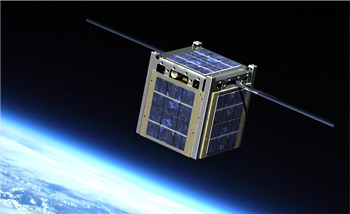
cubesatAnd that’s where CleanSpace One comes into play, a janitor satellite that the Swiss Space Center in the Swiss Federal Institute for Technology (EPFL) began developing last year. Specifically designed to target derelict satellites that threaten our communications and information networks. The satellite has a price tag of 11 million dollars, and is expected to be deployed in three to five years.

Naturally, the task before it is a tricky one. In order to do a “launch and seize” operation, the satellite would have to get onto the same orbital plane as its target, latch onto it at high speed, and then de-orbit it. To do this, EPFL is working on an “ultra-compact motor” to get the janitor onto the right track, as well as a grasping mechanism to grab hold of the space junk once its aligned and within distance of it.


And then there’s the efficiency factor. As it stands, a vessel like the CleanSpace One is a one-shot deal design. Once it’s latched onto space junk, it essentially re-enters the atmosphere with it and drops it below, meaning it is unable to gather up multiple pieces of debris and dispose of them discreetly. As such, it would take even a large fleet of janitor satellites quite a long time before they made a dent in all the space junk.

Luckily, there’s another option that has been on the table even longer than the janitor satellite. The reasoning behind this concept is, if you don’t the means to de-orbit all that space junk, just hit it with some photons! When you consider all the debris in orbit and the havoc it plays with the space lanes, not to mention how its only getting worse, a “targeted” approach may just be what the doctor ordered.

space_laserBack in 2011, James Mason, a NASA contractor at the Universities Space Research Association in Moffett Field, Calif., and his colleagues presented a paper claiming that an anti-collision laser system which would target space debris was feasible. Although they acknowledged that more study was required before it could be implemented, they also claimed that lab simulations suggested that the idea would work in practice.

The idea would center around the deployment of a medium-powered laser of 5 to 10 kilowatts to essentially nudge debris off a potential collision course. Rather than eradicate the junk that clutters up the space lanes, this system would be responsible for anticipated crashes and preventing them by ensuring space junk didn’t cross paths with the ISS, satellites, or orbiting shuttles.

space_debrisAnd even that doesn’t represent the entirety of proposed solutions. In addition to janitor satellites and laser, the Russian Space Agency has also been batting around an idea for an orbital pod that would sweep away satellite debris. Details remain sketchy and little information has been released to the public, but the RSA has claimed that they hope to have such a craft ready to go no later than 2023.

Yes, it seems we as a species are entering into phase two of the Space Age. And in this segment of things, orbital pods, offworld habitations, and exploration into the outer Solar System may very well be the shape of things to come. As such, we’re going to need clearer skies above our heads if anything hopes to make it off of Earth without a series fender bender!

space_debris_wide

Sources: news.cnet, cbsnews.com

The Future is Here: MMI Electronic Tattoos!

patchIt’s known as Mind-Machine-Interface, the ability to interface and control machines using only your mind. And thanks to a number of dedicated researchers in various fields, it’s no longer the stuff of science fiction. With mind-controlled prosthetics, bionic limbs, and the growing field of machine-enabled telepathy, the day may soon come when people can interface, access and control machinery with just a few thoughts.

But of course, that raises all kinds of concerns about invasive procedures, whether surgery will be needed in order to implant devices into the human brain that can translate brainwaves into commands. Alternately, where non-invasive means are involved, it can take some time to calibrate the machinery to respond to the user’s nerve impulses. As those awful infomercials say, “there has be a better way!”

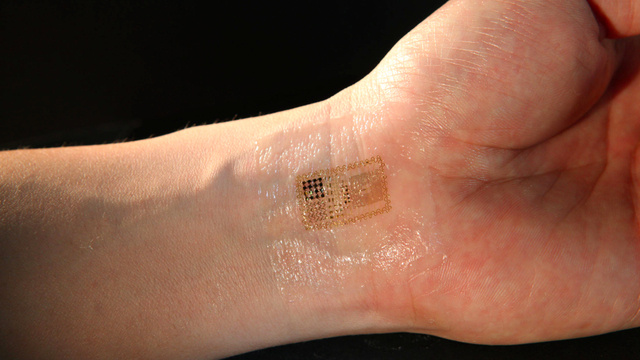
patch_headAs it turns out, electrical engineer Todd Coleman and his team at the University of California at San Diego has been working on a way to use wireless flexible electronics that one can apply on the forehead just like temporary tattoos. Building on the emerging field of biomedical electronics, these tattoos will be able to read brainwaves and allow a person to control electronic devices without the need for surgery or permanent implants.

The devices are less than 100 microns thick, the average diameter of a human hair, and consist of circuitry embedded in a layer or rubbery polyester that allow them to stretch, bend and wrinkle. The devices can detect electrical signals linked with brain waves and incorporate solar cells for power and antennas that allow them to communicate wirelessly or receive energy.

patch_breakdownOf course, other elements can be added as well, like thermal sensors to monitor skin temperature and light detectors to analyze blood oxygen levels, making it both a health monitoring patch and a fully-integrated control device. Combined with health patches that are being developed for use internally, an entire health network can be created that allows for every aspect of a patients health to monitored in real-time, anticipating and predicting health problems before they flare up.

Currently, Coleman and his colleagues are pursuing the application of using these patches to monitor premature babies to detect the onset of seizures that can lead to epilepsy or brain development problems. The devices are also being commercialized for use as consumer, digital health, and medical device. But the potential for their use is staggering, even alarming.

droneFor example, these devices can also be put on other parts of the body, such as the throat. When people think about talking, their throat muscles move even if they do not speak, a phenomenon known as subvocalization. Electronic tattoos placed on the throat could therefore behave as subvocal microphones through which people could communicate silently and wirelessly to each other.

However, a more alarming application is in the industrial and defense field, which is being pursued by the startup MC10 in Cambridge, Mass. In the course of their research, Coleman and his colleagues found that individuals who were hooked up to a computer through large caps studded with electrodes were able to remotely control airplanes and a UAV over cornfields in Illinois. Such is not possible with these tattoos at present, but Coleman admits that he and his colleagues are “working on it”.

telepathyBut even more alarming than this is the long term implications of what this could mean for us as a species, which is that electronics could one-day enable wireless peer-to-peer brain communication – aka. machine-enabled telepathy. With devices that can read and transmit brainwaves and vocal information, it would no longer be necessary for people to use radios, phones, email, or any other means of communication to talk to one another.

Simply tune in, subvocalize or think what you want to convey – and boom! instant messaging and perfected! Lord knows the art of diplomacy might suffer, and we can forget about sarcasm, tact, or shades of meaning. Society may very well breakdown or people will just have to grow thicker skin as everyone is forced to communicate what they really think to each other!

Source: txchnologist.com

The Future is Here: The 3D Scanner!

makerbot3dOkay, that title might be a bit of a mislead, but after years of developing the technology, it seems that we might have something which is essentially the next best thing. Until recently, 3D printers were designed for use exclusively by trained technicians. And despite the ease with which modern 3D printers can be used, it is still difficult to design and prep the requisite models, which still requires expertise in modelling software.

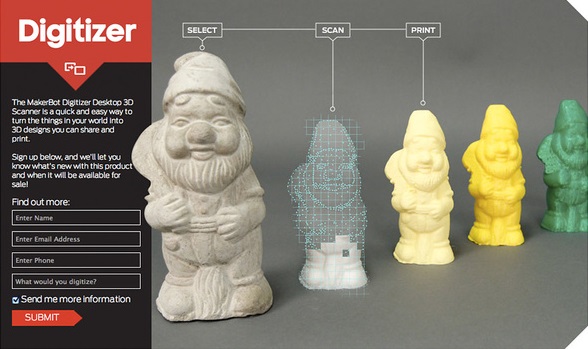
But that too could be changing, thanks to the new MakerBot’s Digitizer Desktop 3D Scanner. Designed to supplement their printer (the Replicator 2) this device is capable of scanning any object, creating a three-dimensional model, and then uploading it to your printer where it will then be molded into solid form, bit by bit. In effect, people can now create objects as easily as they could print off an inkjet document.

makerbot-replicator2The Digitizer was revealed for the first time at the South by South West (SXSW) Conference in Austin, Texas earlier today, where emerging technologies are being showcased alongside the latest in entertainment and music. And while the device was merely a prototype, one which is still undergoing testing and refining, MakerBot announced that they plan to begin commercial production very soon.

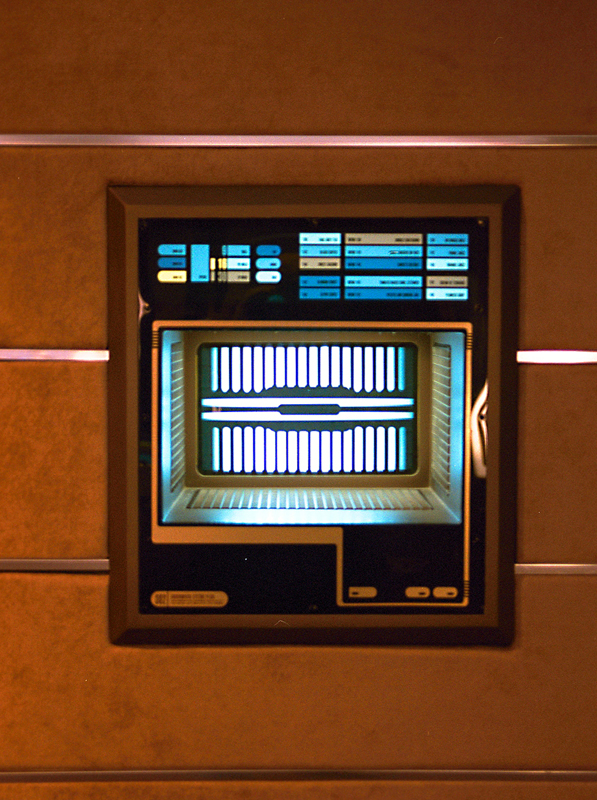
Which makes it official. Human beings now have access to Replicator technology and is one step closer to living in a Star Trek universe! Granted, were not quite to the point where we can generate anything, including food and precious metals, but this latest development has revealed to us a future where DIY can encompass just about anything. If a an appliance breaks in your home, just scan the faulty component and download it into your printer. No need to contact the manufacturer and activate that troublesome warranty!

Foods comes out here
Foods comes out here, waste goes in the recycling unit!

Naturally, there are concerns about the controversy this will create as well. While the Digitizer Desktop 3D Scanner will certainly be another big step towards making 3D printing more accessible, it’s also sure to add fuel the debate over the legality and copyright issues of duplicating real world objects. What’s more, the cost of each unit (most likely a few thousand dollars each) is pretty prohibitive for most households, raising the question of real access.

Nevertheless, this is still pretty exciting news. Since the beginning of recorded history, our collective economic models have been based on the idea of resource scarcity. But with further refinements and the ability to generate objects out of more materials (including the organic), all our economic models are likely to change and we could very well be embarking on a future where scarcity has effectively become obsolete.

Yes, with a little more time, research and cool gadgets, we could be witnessing the collapse of financial history. Where all units of value will be made useless and as a species, we’ll be one step closer to economic equilibrium! And I have to admit, this is one area of change that I find exciting, as opposed to scary!

Source: Gizmodo.com

The Future is Here: The 3D Doodler

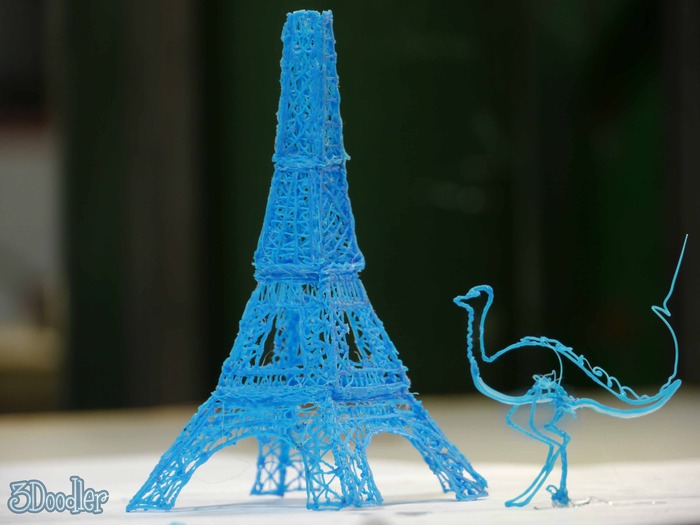
3d_doodler_home3D printing technology has been making some serious waves in the scientific, engineering and biomedical community. It seems that every day, more and more possibilities and applications are being discovered for this revolutionary new process. However, cost remains an obvious issue. With an individual printers being large, expensive and trying to maintain, most people can’t exactly afford to put one in their home and go town with it.

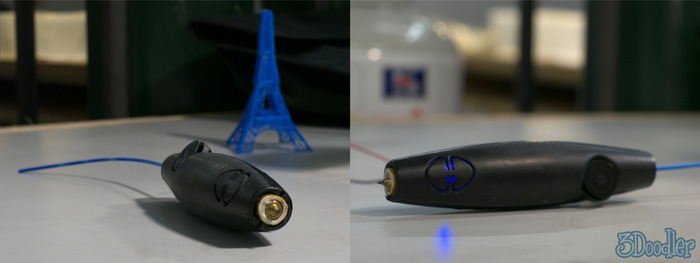
Enter the 3D Doodler, the world’s first 3-dimensional printing pen that allows you to draw in the air. Much like a standard 3D printer, it employs heated ABS plastic which then cools the moment it is excreted from the devices, instantly cooling and taking shape. And much like a pen or pencil, it is compact, hand-held, and allows people to literally draw designs into being! It also requires no software or computers, making it inexpensive and easy to use.

3D_doodlerAnd the range of what one can create is pretty much limitless. Using stencils, one can create 3D models for architecture, design specs, and proposed prototypes. Or, if you should so choose, just put the pen to any surface and begin composing shapes, designs and words out of thin air. Art is also an obvious application, since it give the user the ability to create an endless array of abstract or realistic designs. And of course, modeling, as shown in the video, could become a very popular (and competitive) outlet for its use.

3D_doodler1

And in another ultra-modern twist, the designers of the 3D Doodler are using their website to elicit funds to help them crowd-fund their idea and make it commercially viable. No trouble there! Of the $30,000 needed to get the prototype off the ground, they have managed to illicit a total of $2,106,977 as of this article’s publication. Guess people really do want to see these things getting onto the shelf. Look for it at your local hardware or art supply store!

And while you’re waiting, check out the video below to see the pen in action and what things it can make.

The Future is Here: Brain to Brain Interfaces!

?????????????????And I thought the month of February was an already exciting time for technological breakthroughs! But if a recent report from Nature.com is any indication, February will go down in history as the biggest month for breakthroughs ever! Why just last week, researchers in Natal, Brazil created the first ever electronic link between the brains of two living creatures.

The creatures in question were rats, and the link between their brains enabled one to help the other solve basic puzzles in real time — even though the animals were separated by thousands of kilometers of distance. The experiment was led by Miguel Nicolelis of Duke University, a pioneer in the field of brain-machine interfaces (BMIs), and a team of neurobiologists who’ve been working in the field for some time.

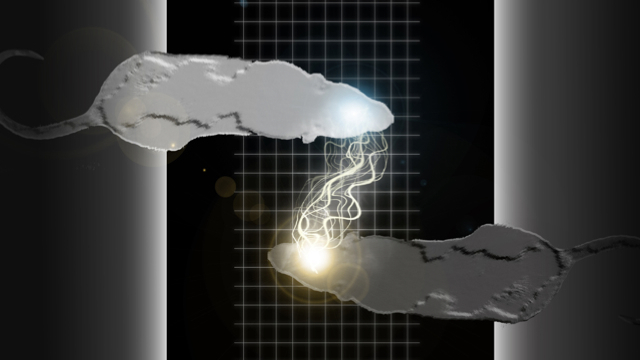
BMIHere’s how it works: An “encoder” rat in Natal, Brazil, trained in a specific behavioral task, presses a lever in its cage which it knows will result in a reward. A brain implant records activity from the rat’s motor cortex and converts it into an electrical signal that is delivered via neural link to the brain implant of a second “decoder” rat. The second rat’s motor cortex processes the signal from rat number one and – despite being thousands of km away and unfamiliar with what rat one is up to — uses that information to press the same lever.

MMIBack in 2011, Nicolelis and his colleagues unveiled the first such interface capable of a bi-directional link between a brain and a virtual body, allowing a monkey to not only mentally control a simulated arm, but receive and process sensory feedback about tactile properties like texture. And earlier this month, his team unveiled a BMI that enables rats to detect normally invisible infrared light via their sense of touch.

However, this latest experiment really takes the cake. Whereas brain-machine interfaces have long been the subject of research, generally for the sake of prostheses, a brain-to-brain interface between two living creatures in something entirely new, especially one that enables realtime sharing of sensorimotor information. And while it’s not telepathy, per se, it’s certainly something close, what Nicolelis calls “a new central nervous system made of two brains.”

Obviously, this kind of breakthrough is impressive in its own right, but according to Nicolelis, the most groundbreaking application of this brain-net (or n-mind) is yet to come:

These experiments demonstrated the ability to establish a sophisticated, direct communication linkage between rat brains, so basically, we are creating an organic computer that solves a puzzle. We cannot predict what kinds of emergent properties would appear when animals begin interacting as part of a brain-net. In theory, you could imagine that a combination of brains could provide solutions that individual brains cannot achieve by themselves.

neural-networksNaturally, there are some flaws in the process, which were made evident by the less-than-perfect results. For starters, the untrained decoder rats receiving input from a trained encoder only chose the correct lever around two-thirds of the time. Those results could not be the result of random odds, but they are also a far cry from the 95% accuracy where the signals were reversed, going from the untrained decoder to the trained encoder. As any student of science knows, one-way results are not the basis of a sound process.

And I imagine the people who are lobbying to make biosoldiers illegal and limit the use of autonomous drones will be on this like white on rice! Hence why we can probably look forward to many years of research and development before anything akin to human trials or commercial applications of this technology seem realizable.

And of course, there is a video demonstrated the mind link at work. a word of warning first though. If you’re an animal lover, like me, the video might be a little difficult to take. You be the judge:


Source:
IO9, nature.com

The Future is Here: The Apple iWatch!

iWatchLeave it to Apple to once again define the curve of technological innovation. Known as the iWatch, this new design for a smartwatch is expected to make some serious waves and spawn all kinds of imitations. In addition to keeping time, it will boast a number of new and existing abilities that will essentially make it a wrist-mounted computer. As a result, there are many who claim this device is a response to Google’s Project Glass, since it signals that Apple is also looking to stake a big claim to the portable computing revolution.

According to Bruce Tognazzini, a principal with the Nielsen Norman Group and former Apple employee who specializes in human-computer interaction, an Apple iWatch is likely to have a serious impact on our lives. In addition to some familiar old features that were created for the iPhone, Apple has filed numerous patents and made plans to incorporate several new options for this one device. For example:

  • The iWatch will apparently make use of wireless charging, something Apple holds the patent for
  • Voice interaction through Siri, removing the need for a complicated control interface
  • Networking with your iPhone, iPod and other devices
  • Health monitor, including pedometer, bp monitor, calorie tracker, sleep tracker, etc.
  • NFC chip for personal, mobile banking
  • The phone acts as an ID chip, eliminating the need for passwords and security questions

Wearable ComputerSo in essence, the phone combines all kinds of features and apps that have been making the rounds in recent years. From mobile phones to PDAs, tablets and even fitness bands, this watch will combine them into one package while still giving the user the ability to network with them. This ensures that a person has a full range of control and can keep track of their other devices when they’re not on their person.

Apple also indicated that with this portable computer watch, people could take part in helping to correct faulty maps and other programs that require on the spot information, allowing for a degree of crowd-sourcing which has previously been difficult or impossible to provide. And since it’s all done through a device you strap on your wrist, it will be more ergonomic and portable than a PDA or smartphone.

Paper-Thin-Pamphlet-Smartphone-Concept-2And with other companies working on their own smartwatches, namely Cookoo, Pebble, and even Google, this could be the end of the smartphone as we know it! But in the course of making technological progress, some inventions become evolutionary dead ends, much like over-specialized creatures. I’m sure Steve Jobs would approve, even if the iPhone was one of his many, many babies!

Envisioning The Future of Finance

BrightFutureA few times now, the website known as Envisioning Technology has snared me with their predictive posters. First there was their “Emerging Technologies” infographic for the year of 2012. That was followed shortly thereafter by “The future of health” and “The future of education“. They even took a look at popular dystopian and apocalyptic scenarios and asked the question “Should I be afraid“?

And now, in their latest infographic, they’ve tackled the future of finance. Looking at the financial industry as a whole, they attempt to gauge its readiness to technological change. While looking at trends that are likely to influence the very notion of value in the coming decades, they ask the question “are [organizations] paying enough attention to the imminent changes that will define the future of society or if they are running the risk of letting accelerating change vanquish existing business models?”

And as usual, the information is presented in an interconnected, multi-layered fashion. Dividing all aspects of the financial sector into the categories of Data, Automation, Security, Disintermediation (i.e. removing the “middle men”), Crowds (crowd-sourcing, crowd-funding), Mobile technology, Currencies, and Reputation, potential technologies are then listed based on whether or not they are under development, likely to be in development in the near future, or are currently being overlooked.

Take a gander and see what you think. As usual, its packed full of interesting concepts, speculative reasoning, and a ton of statistical data. And be sure to check out the website in case you have yet to see their other infographics.

Source: Envisioning Technology

The Future is Here: The Personal Fitness Band

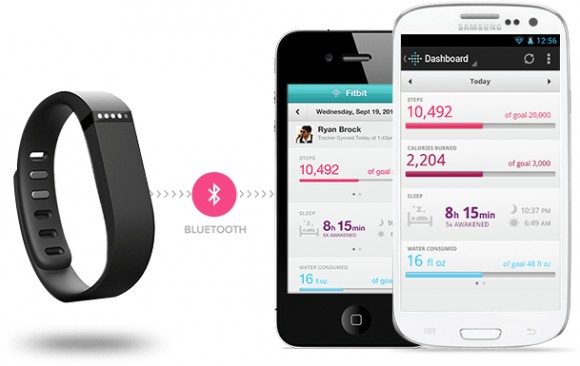
Fitbit-FlexOf all the important new gadgets to make it to the Consumer Electronics Show this year, one stood out as far as morning joggers and fitness gurus were concerned. It’s called the Fitbit Flex, an activity tracker designed to be worn all day and monitor movement, sleep, and calories burned. In an age where electronics are getting more personal, flexible, and wearable, it seems that fitness industry is determined not to be left behind.

While the concept of a wearable fitness tracker is not entirely new, the Flex incorporates a number of new developments in the field of personalized technology. For starters, as the name suggests, its a flexible bracelet that is comfortable enough to be worn all day long and malleable enough to stay firmly wrapped around your wrist. And unlike pedometers or heart rate monitors which monitor a single vital function or activity, the Flex is designed to monitor all simultaneously and in terms of the individuals stated fitness goals.

fitbit_flex_syncAnd to top it all off, the band uses a wireless Bluetooth connection to sync with PCs and smartphones. This last aspect is something Fitbit is quite proud off, as the Flex is the first fitness band to sync using the latest Bluetooth 4.0 standard. In addition, the company has announced that it will eventually support Bluetooth syncing of fitness data with Android devices once an update becomes available, hopefully by late January or early February.

nike-fuelband-01Already, other companies have released fitness monitors similar to this new product. The Nike Fuelband is one such competitor, a flexible band that also used LED lights to indicate heart rate, distance, and overall fitness performance. It is also designed to sync up with mobile devices using the Nike+ iPod accessory. What’s more, the company claims that the band and a users Nike+ account will keep long-term track of a person’s fitness and offer incentives (such as awards badges) and motivational tips.

jawbone-upA third contender is the Jawbone Up band, another monitoring band that is even slimmer and more ergonic, as far as wearing it all day is concerned. Like it’s co-competitors, it too is syncable to an iPhone thanks to its specialized app. But unlike the others, it is designed to literally be worn 24/7, thus painting a more complete picture of a person’s health and fitness. What’s more, it has no screen, making its results only available through syncing.

All told, these bands and those like them range in cost from $100 to $269.99, and are somewhat limited in that not all are Bluetooth capable or able to link up with devices other than iPhones or unless you have an account with them (Nike+ being the big example here). But of course, that’s par for the course when it comes to competition between designers, who only want you to use their products and those they have business ties with.

All that aside, these and other products like them made a big impact at CES this year because they signaled that the fitness industry is on board with some of the latest trends and innovations. As technology continues to improve, we can expect more and more of our needs and wants to be handled by portable, wearable and (coming soon!) implantable electronics that are capable of interfacing with external computers to monitor, store and share our data.

Source: news.cnet.com, (2), (3)

DARPA’s New Sub-Hunting Robot

robot_sub-hunterWhen it comes to planning for the next possible conflict, military planners are often forced to take into account emerging trends in technology, and find both uses and countermeasures for them. And when it comes to future wars at sea, possibly fought in the Straight of Hormuz or the Sea of Japan, a number of startling developments are being taken into account, and solutions drawn up!

One such “solution” is the new robot sub-hunter being jointly created by the Science Applications International Corporation and DARPA – the Defense Advanced Research Projects Agency. That unmanned maritime robot, called the Anti-Submarine Warfare Continuous Trail Unmanned Vehicle, or ACTUV, doesn’t exist yet and won’t for years. But the SAIC’s plan does have the backing it needs, and presents an idea that is likely to inspire fear in submariners everywhere!

knifefish-drone-640x353For one, the unmanned vehicle will be capable of operating for periods ranging between 60 and 90 days, significantly longer than any aerial drone is capable of staying airborne. What’s more, SAIC is designing the ACTUV to be way more autonomous than contemporary drone aircraft. Once powered up, all a ship need do is release the drone and allow it to rely on its long-range acquisition sonar and other advanced sensors to scan for submarines, while at the same time steering clear of any nearby surface ships.

And then there is the advanced technology powering the drone’s sonar arrays. Unlike other ships, the ACTUV’s sensors create an acoustic image of its target to know it has the right one. Once the ACTUV thinks it’s got something, it pings nearby Navy ships through a satellite link, which they can either confirm or deny, either giving the ship the green light to hunt or instructions to search elsewhere.

And last, but not least, the ACTUV can operate alongside its surface fleet, remain in constant communication with a mothership as well as naval aircraft as they deploy sonar charges to help it hunt subs. This is a level of coordination that is rarely seen in aerial drones, which are either sent into action far from the front lines or controlled remotely by infantry in the field to offer fire support.

X-47BAh, but there’s one thing: the drone isn’t armed. Primarilyy developed to help Naval ships with hunting silent subs and/or cheap diesel-electric models, the ship may be capable of operating autonomously, but cannot take action to end lives. This feature may be the result of the Pentagon’s recent decision to limit the killing powers of UAV and autonomous drones, which amounted to ensuring that a human being will always be at the helm wherever the death of human beings is involved.

What’s more, the drone is designed with all kinds of futuristic and present-day scenarios in mind. While silent subs – ones that use advanced drive systems to generate little to no noise (a la The Hunt for Red October) – are one likely scenario, there is also the possibility of the US Navy running into the cheap diesel models which are technologically inferior, but can be much quieter and harder to track than anything nuclear. Russia is known to sell them and Iran claims to have them, so any military analyst worth his salt would advise being prepared to meet them wherever they present themselves.

And of course, the SAIC was sure to create a video showing the ACTUV in action:


Source:
Wired.com