The Future is Here (and See-Through): The Intimacy Dress!

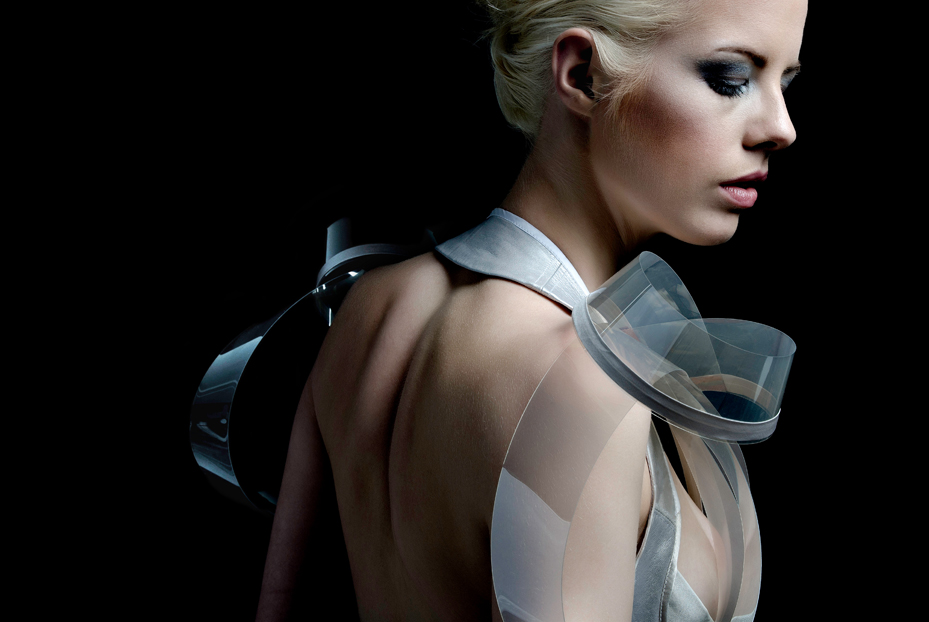
intimacy_dressLeave it to engineers to make our world a little more transparent! In what is sure to be a novelty amongst clothiers, perfect for one-on-one social occasions and soirees – but definitely not dress parties! – designer Daan Roosegaarde has unveiled a design he calls the “Intimacy Dress”. A first amongst fashion designers, this article of clothing responds to the wearers level of arousal, and responds by turning see-through, at least in some sections.

In short, the dress works thanks to a series of “e-foils,” which are opaque coils made of “electronics, LEDs, copper and other media” that are embedded in the fabric. In response to your heartbeat, the coils become highly transparent, enhancing a romantic “close and personal encounters with people.” The only possible drawback is that the dress could just as easily turn transparent due to elevated stress levels or anger, so avoid wearing it at family occasions!

Though it has been in development for many years, the 2.0 model will be hitting the market just in time for Valentine’s Day. Good news for anyone into high-fashion, high-tech, or both! Happy Valentines to all, and in the meantime, check out this (tasteful) video of the Intimacy Dress in action!

Source: IO9.com

The Future is Here: The Chevy EN-V

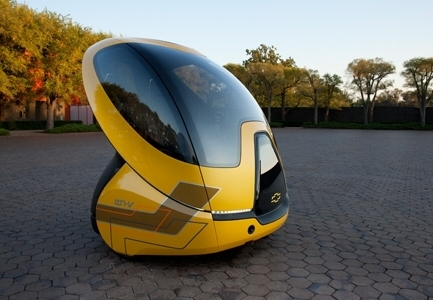
chevy_envImagine a future where cars never crash, never break down, can be dispatched automatically to pick people up, and emit no carbon whatsoever. Well, that’s the idea behind the Chevy EN-V, an “Electric Networked Vehicle” that represents GM’s concept for a next-generation automobile that combines green technology and wireless networking.

Currently under development by General Motors, the vehicle combines four major features, all of which have been in the works for some time. These include autonomous driving, an electric engine, hydrogen fuel cells and mobile applications. Whereas most hybrid vehicles today rely on a combination of gas and electric power cells, this vehicle intends to do away with petroleum altogether.

What’s more, systems such as adaptive cruise control, side blind zone warning and automatic park assist are combined with a new advanced communication technology that allows for the first, fully-autonomous drive in history. Not only is this machine able to drive itself with the passenger in the vehicle, it is capable of being dispatched to an address and driving itself. In short, no driver necessary!

And finally, there’s networking features such as OnStar’s RemoteLink, Chevrolet MyLink, Buick and GMC IntelliLink and Cadillac CUE, all of which comes standard on the vehicle. These allow the driver to obtain directions, remotely lock the doors, and get up to date maintenance and fuel specifications, either through the dashboard display or through their smartphone. These effectively allow the driver to interface with the vehicle through their smartphone.

And it’s a timely creation, given mounting concerns over climate change and the proliferation of wireless technology and applications. And might I say, it’s about freaking time! It seems like only yesterday that GM was doing all it could to bury this kind of technology, buying up the patents and making sure they were staying on the shelf, or electing people who would make sure it wouldn’t see the life of day for another few years. Guess their finally seeing the writing on the wall!

Source: GM.com

The Future is Here: Paper Thin, Flexible Batteries

flexbatteryAs Yogi Berra would say, “It’s like deja vu, all over again.” Designed to be paper thin, flexible, and printable using a 3D printer device, this latest advancement combines several technological breakthroughs into one package. But instead of being a display device, a PDA, a smartphone, or some high-tech component, this latest piece of future tech is a simple battery. And in a world where technology is becoming increasingly smart, thin and ergonomic, it just may be the way of the future for electrical devices.

Well, simple might be a bit of a stretch. Developed by Imprint Energy, the key piece of technology here is a polymer electrolyte that allows the zinc-based battery to be recharged. In typical batteries, liquid electrolytes are used, which tend to experience the formation of “fingers” which bridge across the lithium interior of the battery and make charging impossible. But in this case, the flexible and customizable zinc anode, electrolyte, and metal oxide cathode of the battery are printed in the form of electrochemical inks.

This is turn leads to the creation of a battery that is not only flexible and printable, but also rechargeable, safer, cheaper, and more powerful than anything currently on the market. The printing process is similar to old-fashioned silk-screening where material is deposited in a pattern by squeezing it through a mesh over a template. While this screen printing is different from what we tend to think of nowadays as 3D printing, it is in keeping with the concept of printing where manufacturing is done on the micro-level, leading to the creation of all kinds of consumer products.

smart-tattooAnd like all technological advancements, this one occurred not in a vacuum but amidst a backdrop of cool and interesting breakthroughs. For example, numerous tech c0mpanies and start-ups are using screen printing to fabricate electronic components that will address the need for cheap and disposable electronics in the next few years.

Norway-based Thin Film Electronics is one such group, which has created a prototype all-printed devices that includes temperature sensors, memory, logic, and uses Imprint Energy’s new battery. In addition, smart tattoos are being created to monitor patient vitals, blood pressure, pulse rate, and blood glucose levels. Printable “smart stickers” for time-sensitive food or medicines are being contemplated as well, patches that would be able to store details of  a products temperature, chemical exposure, freshness, and history of shock and vibe during handling.

All of this, coupled with ultra-thin devices, could led to a future where all devices and electronics are the size of a business card, as thin as a sheet of construction paper, and can be worn on a person’s body. Hey, there’s a reason they call it “smart technology” 😉

Source: Extremetech.com


The Future is Here: Information Encoded in DNA!

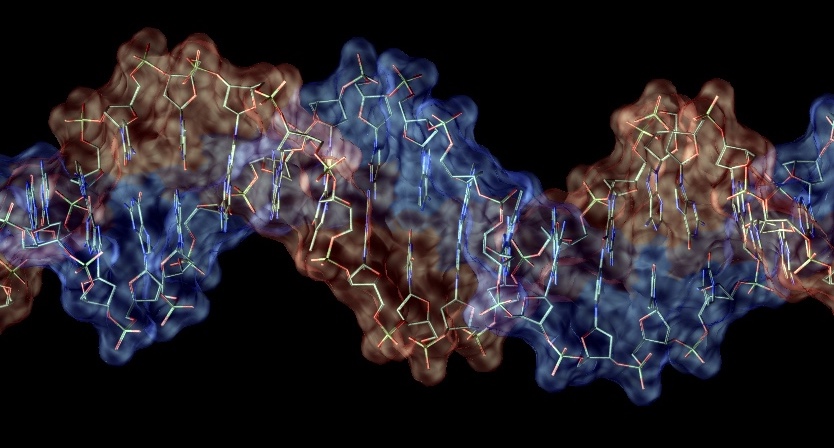
dna-computingScientists and researchers have been taking a closer look at DNA in recent years, and not just for the reasons you may know if. No, in addition to unlocking the human genome, some are considering DNA as a new means of data storage. When you think about it, DNA is already used as a storage device, specifically for containing all the information necessary to generate millions of species of plants and animals from a single cell. But as it stands, scientists are considering using artificially-generated DNA to handle the the growing storage needs of today’s information society.

In fact, this past Wednesday an international team of researchers led by Nick Goldman of the European Bioinformatics Institute (EBI) reported that they had managed to successfully store all 154 Shakespeare sonnets, a photo, a scientific paper, and a 26-second sound clip from Martin Luther King Jr.’s “I Have a Dream” speech on a sample of DNA so small it was barely discernible to the naked eye and able to fit into a tiny vial.

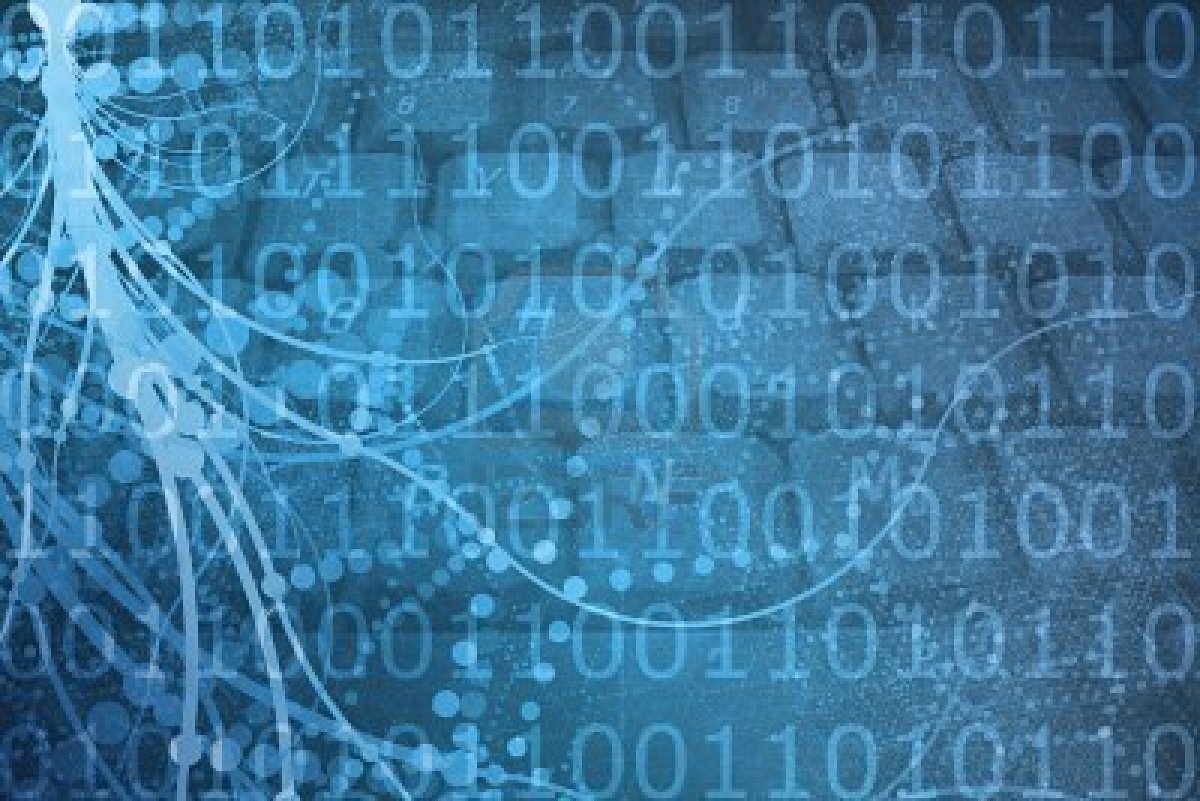
binaryMight sound like something out of science fiction, but in fact the process is really quite straightforward thanks to existing technology. Marrying elements of cellular biology to computing, the concept calls for converting digital information from binary code (1’s and 0’s) into the four-letter alphabet of DNA code. Once that code is compiled, synthetic strands of DNA are then created which are then “read” by a machine specifically programmed to recover the encoded information.

At present, the reading process took two weeks, but that’s expected to change in coming years. By accomplishing this act of DNA-writ storage, Goldman and his research team was able to show that the process is feasible. And given time, we could be looking at external hard drives that are little more than a tiny thimble full of genetic material, but which are capable of storing terabytes of information. And given that they themselves are composed of genetic material, it might even be possible to store these devices within our own living tissues. Biotechnological implants, people!

DNA-molecule2At the same time, Goldman and Ewan Birney – another member of the European Bioinformatics Institute – released a research paper which explained the potential of this means of data storage. In it, they stated that in the short term, DNA storage will be useful for storing large amounts of information for centuries, like national historical records or huge library holdings, provided it’s not accessed very often. However, they were also quick to point out that with time and development, it could be commercial viable and much more accessible.

biotech_alienThey also took the opportunity to address potential fears and ethical issues, saying that storage in a human being was not something they intended to pursue, and that encoded information would not be able to mix with a person’s normal DNA. According to the report, artificial DNA is specially encoded and therefore unable to combine with natural DNA, which does not use the same “programming language”.

Well… that is good news for those of us worried about a new form of genetic diseases huh, or the possibility that DNA archives could contain viruses capable of infected both our machinery and our bodies! But of course, the paper didn’t rule out that it would be possible to store information inside a person’s body using this new form of “biotechnology”. Once it’s perfected, it might even become the mainstay of consumers to buy bioelectronics that are stored within their very bodies. I mean, if it’s safe and won’t result in a new age of bio warfare, who’s to say it won’t become all the rage?

NJust one question: will this put us several steps closer to creating artificial humanoid AI’s, aka. Cylons? Just asking…

Source: CBC.ca

The Future is Here: The ASB Glassfloor!

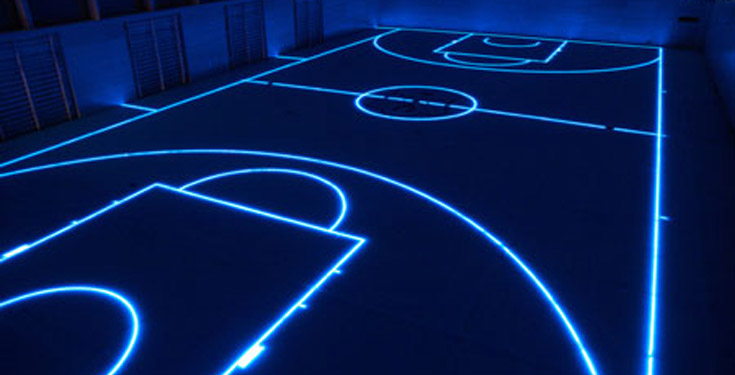
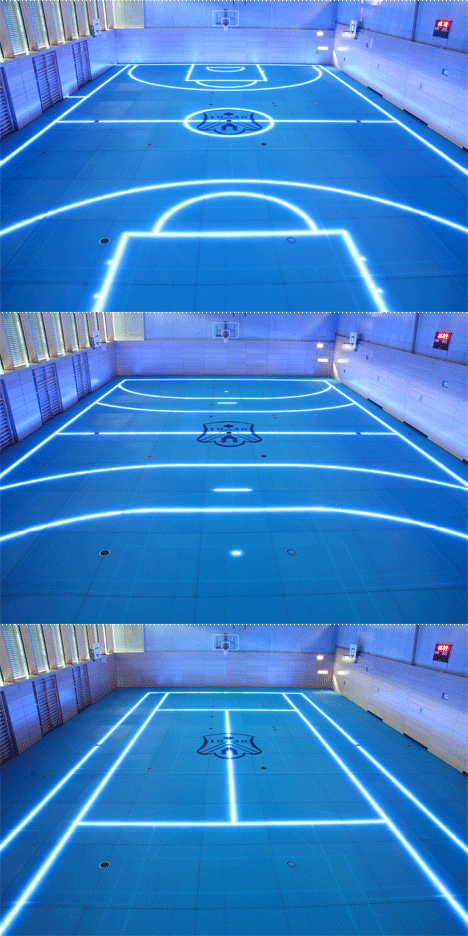
GlassFloor_TitelIt looks like something out of Tron, doesn’t it? In truth, its LED lights underneath a glass surface, but the end result is nothing short of awesome, not to mention convenient. It’s known as the ASB Glassfloor, the latest creation from German manufacturer Germany’s ASB Systembau. Using a system where an aluminum substructure supports the surface and LED’s provide light lines, a gymnasium or sports arena can be converted from a volleyball court, to a basketball court, to a series of tennis courts by simply pushing a button.

What’s more, ceramic dots on the glass re-create the feel of a wooden surface, while special etchings diffuse the LED light and prevent glare from bothering athletes. And for those who worry that the entire thing will shatter as soon as the home team takes the floor, know that this “glass” is actually a high-tech tempered security variety that is actually more durable and longer lasting than a conventional wood floor, meaning it can bear the weight of multiple teams, and is even available in different colors.

And finally, the company also indicated that since the floor’s are basically one large display device, that they can be programmed to broadcast ads in certain spaces, and that the entire floor itself can be turned into a single screen. Hence, while the player’s are playing, people can also enjoy small ads running in the end zone or sidelines, just in case they felt sports weren’t saturated by enough product placements! And at halftime, the floor can put on a show, either on its own or with the help of cheerleaders and a marching band.

My, with all the new display technologies and high-tech surfaces coming out, one would think the entire future is going to be made of “smart glass” and inundated with images and texts. Seems nobody can be satisfied with a simple, non-augmented window or floor anymore. Oh well, it looks cool and that’s what matters!

ASBGlassFloor-3xTo see the Glassfloor in action, click on the gif image above, or watch the video below:

The Future is Here: Smart Tattoos!

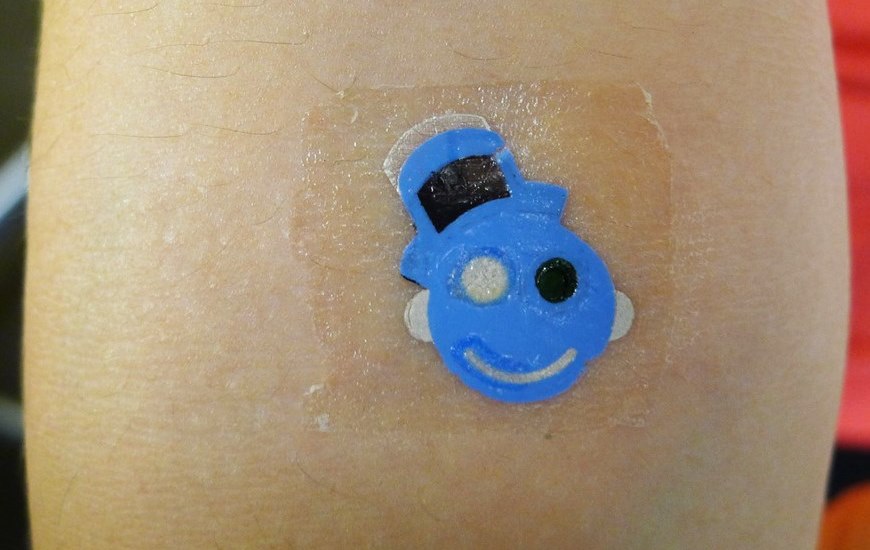
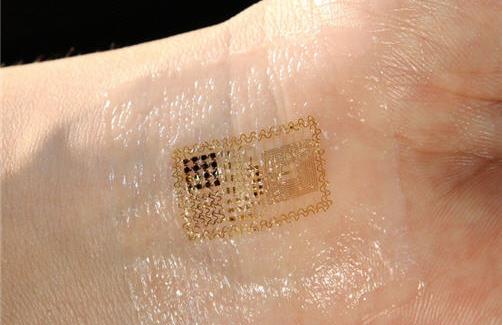
electronic_skin_patchIn recent years, scientists have been working towards electronics that come in flexible and ultra-thin packages. Back in 2011, this bore fruit as researchers from the University of Illinois unveiled the world’s first health monitoring patch, an ultra-thin device which looked like a temporary tattoo, but packed enough sensors in its flesh to monitor a person’s vitals. As a testament to the rate at which technological developments happen these days, improvements are already being made on the concept and design.

For example, a team of researchers from the University of Toronto and the University of California recently announced the creation of what they are calling the “smart tattoo”.  This device is a step up from the previous one, as it contains “ion-selective electrodes” which go beyond monitoring just your vitals. According to the collaborative team, this patch is made up of “sensors that detect the pH or salt levels of the skin, as well minerals like potassium, and even blood oxidation.”

In other words, this patch can monitor athletic performance at a granular level, but without any of the bulk or wiring of older sensors. It also means that for the first time, detailed athletic response testing would no longer be limited to the walls of a sports clinic, but could be done daily by the athlete herself. What’s more, the nature of the design and relative cost are in keeping with a mass production model and mass market appeal.

bloodstreamThis last aspect is an important indicator since one of the hallmarks of technological progress is the ability to create devices which go beyond matters of life and death and are able to address our daily concerns. In addition to proving that the technology is becoming more commonplace, it’s also a sign of growing affordability and availability. With this latest development, it seems that smart tattoos are doing just that.

Another example comes from Sano intelligence, a 2012 health startup that announced that they are in the testing phase of a smart tattoo that reads a wearer’s blood markers. This patch would be especially useful to diabetics, for whom blood monitoring is a constant hassle and often required invasive measures, such as needles. If the patch proves successful, diabetics everywhere would not only be able to forgo finger pricking and needles, but would also be freed of the burden of having to carry around bulky devices.

stretchable-electronicsFinally, there was the news from Cambridge Massachusetts, where another startup company named MC10 announced early in 2012 that they had created a “stretchable electronics” patch that was applicable not only to skin, but to human clothing and even organs. By mounting nanoscale electronics to a flexible, stretchable patch, the company hopes to be able to produce sensors that can monitor any number of health functions, from the more mundane things like heart-rate and hydration, to brain, heart, tissue, and organ function.

What is especially exciting about all of this is not so much the technology involved, but the fact that it is leading to an era where patients will have a far greater degree of control over their own health and monitoring. No longer will we be dependent on clinics and doctors for every single matter relating to our health, from checkups to surgery. Now we can take care of the former ourselves, making our information available to our doctor or specialist as needed, and going in for only serious or life-threatening procedures. This, in addition to leading to a more health-conscious public, could also bode well for medical costs.

Sources: takepart.com, technologreview.com, factcoexist.com

The Future is Here: The tDCS Headband!

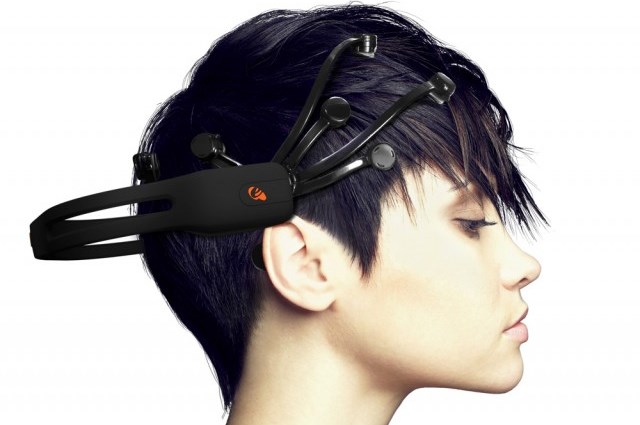
tcdsOh what a time to be alive, when more and more science fiction concepts that once seemed hokey are now becoming a reality! Take the transcranial direct current stimulation for example, otherwise known as the tDCS. It’s essentially a high-tech headband, one which is used to trigger the release of the powerful opioids – the human body’s most powerful, euphoria-inducing painkillers that are very similar to opiates such as morphine.

A team of international researchers headed up by the University of Michigan tested this noninvasive device and realized it could be both safe and effective. By applying a very small current to your scalp (2 milliamps), the headband alters the behavior of neurons in the brain, triggering the release of opioids that relieve pain, relax the body and create a general sense of well-being. This is big news for the medical industry and patients, since it means that artificial painkillers may not be necessary for much longer.

sniperTo be fair, the tDCS is not entirely new. Back in March of 2012, DARPA announced that it was using this device to assist in the training of military sniper. Essentially, the device was created to alter brain chemistry since the application of current to the brain was shown to make neurons fire faster and improve their neurolasticity. In short, the device could improve reaction time and help users to learn things faster.

However, Alexandre DaSilva and a team of researchers out of the University of Michigan found that the tDCS, when the electrodes are placed above the motor cortex, releases endogenous μ-opioid. In their study, the patient’s threshold for pain improved by 36% and the researchers seem confident that repeated uses of tDCS would also reduce clinical, chronic pain. By boosting the release of natural painkillers, less pharmaceutical opiates are required for managing pain, thus reducing the side effects and the risk of addiction.

neurozeneFurther analysis and long-term trials are needed to confirm these initial results, and I’m thinking a study on the possible effects of tDCS abuse might be needed as well. Sure, patients can avoid getting hooked on Oxycontin, morphine, and codeine with this device, but couldn’t they also get hooked on their headband? Yes, I can see it now. “I don’t need to wear my TransCranBand! I can quite whenever I want!”

Source: Extremetech.com

Should I Be Afraid of the Future?

should-i-be-afraid-of-the-futureNot that long ago, I discovered a site dedicated to taking speculations about the future, crunching data and trends, and producing visualizations about them. Already, they had me with their graph that shows when future technologies will emerge, and how they will be interrelated. But then came their future of education and health technology, both of which addressed the same issue – what can we can expect within the next few decades, leading up to the middle of this century?

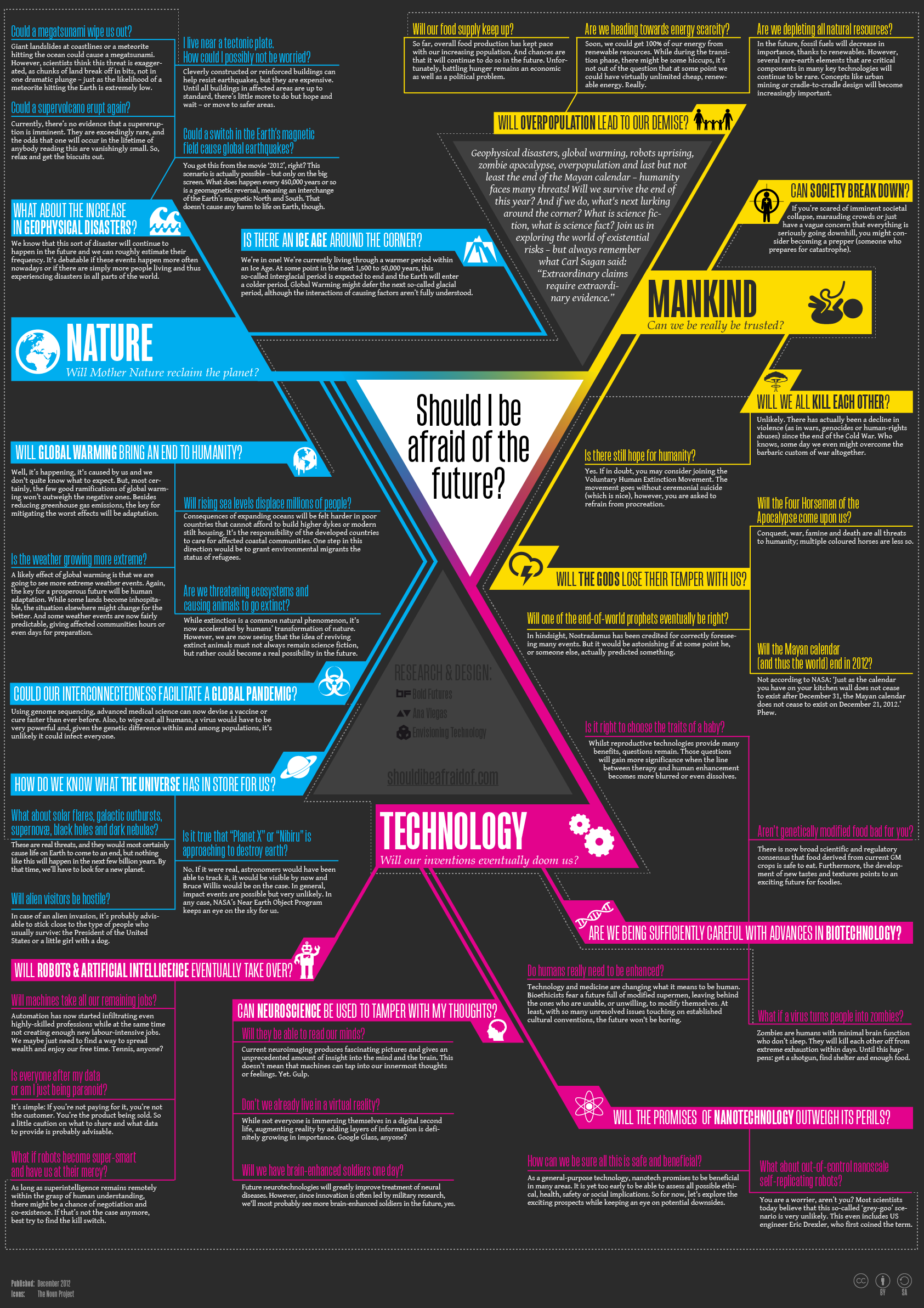
And now, the good folks at Envisioning Technology have created something truly informative and relevant. Entitled “Should I be afraid of the future?”, the infograph addresses all the big questions people might have when it comes to emerging technology, environmental perils, and the kind of technophobia that often result.

“Geophysical disasters, global warming, robot uprisings, zombie apocalypse, overpopulation, and last but not least the end of the Mayan calendar – humanity faces many threats! Will we survive the end of the year? And if we do, what’s next lurking around the corner? What is science fiction, what is science fact? Join in exploring the world of existential risks – but always remember what Carl Sagan said: ‘Extraordinary claims require extraordinary evidence.'”

The questions are broken down into three interrelating fields. First, there is Nature, covering such things as geological disasters, climate change, a possible ice age, and even astronomical events. Then comes Mankind, addressing possible factors such as war, apocalyptic scenarios, and overpopulation. And finally, there is technology, where questions about whether robots and AIs could turn hostile, and if advances in nanotech, biotech, and neuroscience could be potentially harmful.

And of course, each question is addressed in a rational, sensible fashion, even when the questions themselves are based on irrational, myth-peddling paranoia. The Mayan Calendar, bio-outbreaks, every possible technophobic impulse, and even a zombie apocalypse are covered. But then again, the infograph is all about addressing fears. Fear, by its very definition is irrational, and the only cure is information. A well-informed public is not only a safeguard against persecution and bigotry, but against a future full of existential risks.

Source: Envisioning Technology

Relaunching an Idea: Apocrypha!

future-city-1Recently, I began to seriously contemplate revisiting an old idea. Not just any old idea, mind you. This was an idea that went back to 2008, to the point where I first decided I wanted to move away from far-reaching, distant future speculative writing. It was also my first real stab at social commentary, predating Data Miners by several months, and which called for a lot of research.

The name I had in mind for it was Apocrypha. Basically, the two threads that came together to form this idea for me were the ideas of Demarchy and Apocalypticism. At the time, the idea that digital technology and wireless communication might one day lead to direct democracy, while religious fervor might actually spike within the current century due to climate change and the social impacts thereof.

singularity.specrepHowever, after a lot of tinkering and writing the story halfway, I found I couldn’t really make the idea work. It was my first attempt to write something contemporary and it really didn’t go so well. I’ve since tried to reboot it at least once and found I could only get a few chapters out of myself. But I couldn’t dispose of it entirely, not after all the work I put into it and all the bits of wheat I felt were buried in the chaff. And so, its lingered in my files for years.

And now, years later and after all the tech research I’ve done, I find myself coming back to the idea. This is due in part to to trends which I’ve been researching in the last few months. The way I see it, by the middle of this century, two trends will be coming together, and its anybody’s guess which will come to determine our future. The one is technological growth and change – culminating in a future of post-scarcity – and the other is Climate Change, which will lead to a future of nothing but!

Megalopolis'And that’s where this story opens up. The year is 2030, and the world is a fast-changing place. On the one hand, mega-cities have taken root in several places, such as the Nanjing Peninsula, the Gangetic Plain, Cascadia, the Northeast Megalopolis, the “Blue Banana”, and the west coast of Japan. Life in these megalopolis’ is increasingly characterized by violence, poverty, unemployment, bigotry, and an ever increasing fast-pace of life due to increasingly advanced technologies trickling down to the street.

Meanwhile, the wealthy and privileged continue to buy up property and move to higher altitudes and latitudes in order to avoid the coming difficulties. It is widely accepted that within the next few decades, waves of immigration and refugees will pour into the coastal and border regions of the developed parts of the world (those that exist outside the equatorial regions that is) and life is likely to get more difficult.

In the midst of all this, a new group is taking to the streets, a group of quasi-apocalyptics who claim that the End of Days is coming. Their message is code-named Apocrypha, since it is really a cover for their more deeply laid plans to usher about something far more sinister. As they say, some spend their lives waiting for the apocalypse, while others are determined to make it happen in their lifetime.

Crashland.ebookThis story was actually the basis for my short Hunluan, which is part of the proposed Grim5Next anthology known as World’s Undone. It’s also the basis for the serial novel Crashland that I began posting over Story Time.me back when 2012 first started. Funny thing, the year 0f 2012 was marked by a lot of dystopian and apocalyptic lit. Maybe that’s why I want to revisit it now, seeing as how we’re in the clear for the time being!

In any case, as soon as Yuva is complete, Pappa Zulu is all wrapped up, and I’m done editing and releasing Data Miners (one of these days I’ll get that damn book finished!), I plan to return to this concept and give it my full attention. There’s plenty of potential to make some predictions about the future and that’s something I can’t pass up! In addition, it was my first attempt at something truly speculative and relevant and I definitely want to pursue that again.

It is my dream, after all, to produce something that capture the spirit of this age, and since Climate Change, break-neck progress, and fears for the future seem to be the dominant trends as I see them, this might just be the book to do it with! Look for it soon, I hope it will please the discerning reader!

climatewars

Microsoft Concept Video: The Future of Smartphones and Computers

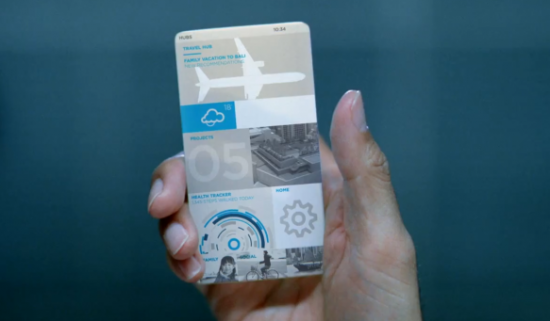
futurvision5-550x321Ah, I imagine people are getting tired of these. But permit just one more! In the midst of so many new products and developments in the fields of smartphones, tablets, augmented reality, and wireless technology, Microsoft was sure to add its two cents. Releasing this concept video back in 2011, shortly after the Consumer Electronics Show, amidst all the buzz over flexible screens and paper-thin displays, Microsoft produced this short entitled “Productivity Future Vision”.

In addition to showcasing their Window Phone (shameless!), the video also features display glasses, “smart” windows, self-driving cars, 3D display technology, virtual interfacing, paper-thin and flexible display tablets, touchscreens, teleconferencing, and a ton of internet browsing and wireless connectivity. All of the technologies featured are those that are currently under development, so the video is apt in addition to being visually appealing.

But of course, the real purpose of this video is to demonstrating to the world that Microsoft can bring these technologies and build the future of business, travel, education and play. Or at the very least, they seeks to lay their claim to a good portion of it. It’s Microsoft, people, they didn’t get to being a mega-corporation by writing checks or playing nice.

And based on this video, what can be said about the future? All in all, it looks a lot like today, only with a lot more bells and whistles!