“How Nanotech Could Reengineer Us.”

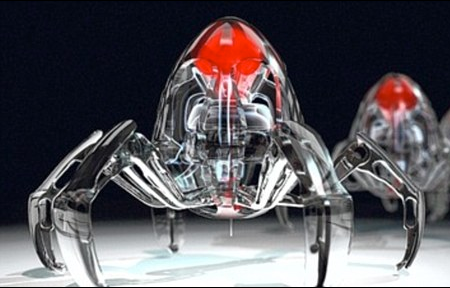
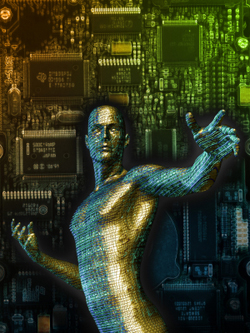
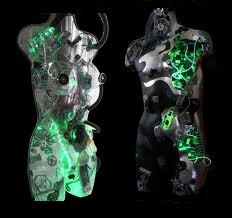
My personal thanks to kwolph, the unidentified fellow who was nice enough to stop by and forward me the link to this rather interesting infographic. Courtesy of the Keithley Center, which designs electronic systems for measurement and analysis, this infographic shows how advances in nanotechnology might aid us in reinventing and augmenting the human body.

These include augmenting our brain chemistry by either delivering drugs directly to our receptors (which can include anti-depressants, stimulants, or pain killers), or the more audacious approach of enhancing our thought pattens and memory by actively building and repairing neural tissue. As such, things like mental illness, brain injuries and trauma could be overcome at last.

In addition, there’s plenty of enhancing our hearts, lungs, reinforcing our bones, repairing muscle tissue, enhancing our eyes, reflexes, strength, endurance. And, as they point out, by virtue of the female model, the scourge of breast cancer, which effects one in eight women, could be be wiped out. No mother’s or young women dying before their time anymore!

And of course, other entirely too common ailments, heart disease, prostate cancer, ovarian cancer, lung cancer, and every form of degenerative disease, could be nipped in the bud either through regular maintenance of the bodily tissues, or by correcting the fault at the genetic level.

There’s really no limit to what programmable nanomachines could do, once the technology was realizable of course. And above all, proven to be safe and effective. And since it would mean that human beings no longer would be subject to disease or degenerative conditions (a la aging), lives could be extended indefinitely, which is part and parcel of the whole “transhuman”, “posthuman” and “postmortal” concept.

Naturally, they used the image of a very pretty young woman for the display. Had it been a man I’m guessing they would have gone with a six foot tall dude with washer board abs and only 1 percent body fat. Why can’t they ever use a porked out old dude with man boobs? That’s what I’d like to know? Well, for one, such regular individuals don’t exactly inspire confidence in the consumer market, do they?

Transhumanism… The Shape of Things to Come?

“Your mind is software. Program it. Your body is a shell. Change it. Death is a disease. Cure it. Extinction is approaching. Fight it.”

-Eclipse Phrase

A lot of terms are thrown around these days that allude to the possible shape of our future. Words like Technological Singularity, extropianism, postmortal, posthuman, and Transhuman. What do these words mean? What kind of future do they point to? Though they remain part of a school of thought that is still very much theoretical and speculative, this future appears to be becoming more likely every day.

Ultimately, the concept is pretty simple, in a complex, mind-bending sort of way. The theory has it that at some point in this or the next century, humanity will overcome death, scarcity, and all other limitations imposed on us by nature. The means vary, but it is believed that progress in any one or more of the following areas will make such a leap inevitable:

Artificial Intelligence:
The gradual evolution of computers, from punch cards to integrated circuits to networking, shows an exponential trend upwards. With the concordant growth of memory capacity and processing speed, it is believed that it is only a matter of time before computers are capable of independent reasoning. Progress is already being made in this domain, with the Google X Labs Neural Net that has a connectome of a billion connections.

As such, it is seen as inevitable that a machine will one day exist that is capable of surpassing a human being. This sort of machinery could even be merged with a human’s own mind, enhancing their natural thought patterns, memory, and augmenting their intelligence to the point where their intelligence is immeasurable by modern standards.

Just think of the things we could think up once that’s possible. Well… you can’t exactly, but we can certainly postulate. For starters, such things as the Grand Unifying Theory, the nature of time and space, quantum mechanics, and other mind-bendingly complex fields could suddenly make sense to us. What’s more, this would make further technological leaps that much easier.

Biology:
Here we have an area of development which can fall into one of three categories. On the one hand, advancements in medical science could very well lead to the elimination of disease and the creation of mind-altering pharmaceuticals. On the other, there’s the eventual development of things like biotechnology, machinery that is grown rather than built, composed of DNA strands or other “programmable” material.

Lastly, there is the potential for cybernetics, a man-machine interface where organic is merged with the artificial, either in the form of implants, prosthetic limbs, and artificial organs. All of these, alone or in combination, would enhance a human beings strength, mental capacity, and prolong their life.

This is the meaning behind the word postmortal. If human beings could live to the point where life could be considered indefinite (at least by current standards), the amount we could accomplish in a single lifetime could very well be immeasurable.

Nanotechnology:
The concept of machines so small that anything will be accessible, even the smallest components of matter, has been around for over half a century. However, it was not until the development of microcircuits and miniaturization that the concept graduated from pure speculation and became a scientific possibility.

Here again, the concept is simple, assuming you can wrap your head around the staggering technical aspects and implications. For starters, we are talking about machines that are measurable only on the nanoscale, meaning one to one-hundred billionths of a meter (1 x 10⁻⁹ m). At this size, these machines would be capable of manipulating matter at the cellular or even atomic level. This is where the staggering implications come in, when you realize that this kinds of machinery could make just about anything possible.

For starters, all forms of disease would be conquerable, precious metals could be synthesized, seamless, self-regenerating structures could be made, and any and all consumer products could be created out of base matter. We’d be living in a world in which scarcity would be a thing of the past, our current system of values and exchange would become meaningless, buildings could build themselves, and out of raw matter (like dirt and pure scrap) no less, societies would become garbage free, pollution could be eliminated, and manufactured goods could be made of materials that are both extra-light and near-indestructible.

Summary:
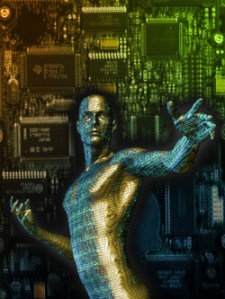
All of this progress, either alone or in combination, will add to a future that we can’t even begin to fathom. This is where the concept of the Technological Singularity comes in. If human beings were truly postmortal (evolved beyond death), society was postscarce (meaning food, water, fuel and other necessities would never be in short supply), and machines would be capable of handling all our basic needs.

For Futurists and self-professed Singularitarians, this trend is as desirable as it is inevitable. Citing such things as Moore’s Law (which measures the rate of computing progress) or Kurzweil’s Law of Accelerating Returns – which postulates that the rate of progress increases exponentially with each development – these voices claim that it is humanity’s destiny to conquer death and its inherent limitations. If one looks at the full range of human history – from the Neolithic Revolution to the Digital – the trend seems clear and obvious.

For others, this prospect is both frightening and something to be avoided. When it comes right down to it, transhumanity means leaving behind all the things that make us human. And whereas some people think the Singularity will solve all human problems, others see it as merely an extension of a trend whereby our lives become increasingly complicated and dependent on machinery. And supposing that we do cross some kind of existential barrier, will we ever be able to turn back?

And of course, the more dystopian predictions warn against the cataclysmic possibilities of entrusting so much of our lives to automata, or worse, intelligent machines. Virtually every apocalyptic and dystopian scenario devised in the last sixty years has predicted that doom will result from the development of AI, cybernetics and other advanced technology. The most technophobic claim that the machinery will turn on humanity, while the more moderate warn against increased dependency, since we will be all the more vulnerable if and when the technology fails.

Naturally, there are many who fall somewhere in between and question both outlooks. In recent decades, scientists and speculative fiction writers have emerged who challenge the idea that technological progress will automatically lead to the rise of dystopia. Citing the undeniable trend towards greater and greater levels of material prosperity caused by the industrial revolution and the post-war era – something which is often ignored by people who choose to emphasize the down sides – these voices believe that the future will be neither utopian or dystopian. It will simply be…

Where do you fall?

The Future is Here: The Airport Virtual Assistant

You ever walk into a Walmart, look at the greeter and think to yourself, “I bet a hologram could do that guy’s job.” Yeah, I’m guessing probably not, huh? But in all seriousness, these individuals and other members of the service industry may find themselves being declared redundant pretty soon. Thanks to the introduction of the AVA (Airport Virtual Assistant) by airportONE, the job of being the happy, smiling face that people see when they arrive and leave and get their helpful info from may soon be filled by a virtual lady. That’s right, holograms are taking our jobs!

Already, the technology has been installed in three major New York City Airports, including La Guardia, Newark, and JFK. Washington Dulles and Boston Logan are following suit, and expect to have theirs up and running soon. At present, the capabilities of the AVA are limited to reciting a 90 second loop of general airport information to anyone looking for guidance. However, airportONE is looking to expand on that by adding voice-recognition software and a fully interactive program which can answer people’s questions. They also plan to make future versions multilingual so that they can assist international travelers.

According to the company’s own promotional material, which isn’t creepy at all, the benefits of this technology are obvious:

“She works 24 hours a day, seven days a week and doesn’t charge for overtime. She never gets sick and doesn’t require a background check.”

Isn’t that exactly what Mr. Dyson, the guy who built Skynet, said in Terminator 2? Anyone remember how that out? And according to airportONE, plans are underway to create new and different models that can be used in hospitals, business offices, stores and museums. Very soon, the entire service industry could be outsourced once more… to a land of microchips and directed photons.

So far, reaction to the AVA has been a bit mixed. But I can imagine what the folks at South Park have to say about this act of technological outsourcing!

Envisioning Emerging Technology

Where are we headed when it comes to technology? Which fields will advance before others? When will certain devices and tools be available? How long before we can expect things like flying cars, interactive holograms, space travel, and intelligent robots? These are the questions currently being addressed by Envisioning Technology and its founder, Mitchell Zappa.

The purpose is pretty straightforward: by examining the wider context, one can see not only where technology is going in the near future, but how developments in one field will stimulate others. Once we have a better understanding of what lies ahead, according to Zappa, we can make better decisions of what to create today.

To illustrate this, ET has prepared a helpful interactive infographic, one which allows users to hover over an item and see a detailed description. The target dates range from 2012 to 2040, beginning with tablets and cloud computing and culminating in the development of Avatars, Space Elevators, and AIs. Some additional predictions include:

  • 2018: Self-driving cars
  • 2019: Space tourism
  • 2026: Domestic robots
  • 2030: Blood-powered displays embedded into human skin
  • 2033: Remote presence
  • 2035: Human missions to Mars
  • 2035: Thorium reactors
  • 2036: Space elevators
  • 2036: Climate engineering
  • 2037: Anti-aging drugs
  • 2039: Nanotechnology utility fogs
  • 2040: Arcologies (massive cities)

For a more detailed breakdown and description, check out the infographic below, or follow the link to the website for a more detailed interactive experience:

Immortality Is On The Way!

William Gibson must get a kick out of news items like these. According to a recent article over at IO9, it seems that an entrepreneur named Dmitry Itskova and a team of Russian scientists are developing a project that could render humans immortal by the year 2045, after a fashion. According to the plan, which is called the 2045 Initiative, they hope to create a fully functional, holographic avatar of a human being.

At the core of this avatar will be an artificial brain containing all the thoughts, memories, and emotions of the person being simulated. Given the advancements in the field of computer technology, which includes the Google Neural Net, the team estimates that it won’t be long before a construct can be made which can store the sum total of a human’s mind.

If this concept sounds familiar, then chances are you’ve been reading either from Gibson’s Sprawl Trilogy or Ray Kurzweil’s wishlist. Intrinsic to the former’s cyberpunk novels and the latter’s futurist predictions is the concept of people being able to merge their intelligence with machines for the sake of preserving their very essence for all time. Men like Kurzweil want this technology because it will ensure them the ability to live forever, while novelists like Gibson predicted that this would be something the mega-rich alone would have access to.

Which brings me to another aspect of this project. It seems that Itskova has gone to great lengths to secure investment capital to realize this dream. This included an open letter to roughly the world’s 1226 wealthiest citizens, everybody on Forbes Magazine’s list of the world’s richest people, offering them a chance to invest and make their mark on history. If any of them have already chosen to invest, it’s pretty obvious why. Being so rich and powerful, they can’t be too crazy about the idea of dying. In addition, the process isn’t likely to come cheap. Hence, if and when the technology is realized, the world’s richest people will be the first to create avatars of themselves.

No indication of when the technology will be commercially viable for say, the rest of us. But the team has provided a helpful infographic of when the project’s various steps will be realized (see above). The dates are a little flexible, but they anticipate that they will be able to create a robotic copy of a human body (i.e. an android) within three to eight years. In eight to thirteen, they would be able to build a robotic body capable of housing a brain. By eighteen to twenty-three, a robotic humanoid with a mechanical brain that can house human memories will be realizable. And last, and most impressive, will be a holographic program that is capable of preserving a person’s memories and neural patterns (aka. their personality) indefinitely.

You have to admit, this kind of technology raises an awful lot of questions. For one, there’s the inevitable social consequences of it. If the wealthiest citizens in the world are never going to die, what becomes of their spoiled children? Do they no longer inherit their parent’s wealth, or simply live on forever as they do? And won’t this cramp this style, knowing that mommy and daddy are living forever in the box next to theirs?

What’s more, if there’s no generational turn-over, won’t this effect the whole nature and culture of wealth? It is, by its very nature, something which is passed on from generation to generation, ensuring the creation of elites and their influence over society. In this scenario, the same people are likely to exert influence generation after generation, wielding a sort of power which is virtually godlike.

And let’s not forget the immense spiritual and existential implications! Does technology like this disprove the concept of the immortal soul, or its very transcendent nature? If the human personality can be reduced to a connectome, which can in turn be digitized and stored, then what room is left for the soul? Or, alternately, if the soul really does exist, won’t people who partake in this experiment be committing the ultimate sin?

All stuff to ponder as the project either approaches realization or falls flat on its face, leaving such matters for future generations to ponder. In the meantime, we shouldn’t worry to much. As this century progresses and technology grows, we will have plenty of other chances to desecrate the soul. And given the advance of overpopulation and climate change, odds are we’ll be dying off before any of those plans reach fruition. Always look on the bright side, as they say 😉

The Future is Here: Cyborg Flesh!

My thanks to Futurist Foresight for turning me onto this article. I would have reblogged, but it was just easier to follow the links and post on my own. You may recall some weeks back when the news hit the airwaves, about how researchers at Caltech developed the medusoid, a cybernetic jellyfish that was capable of mimicking the behavior of the original. Well, it turns out bioengineers at Harvard University have gone a step a further.

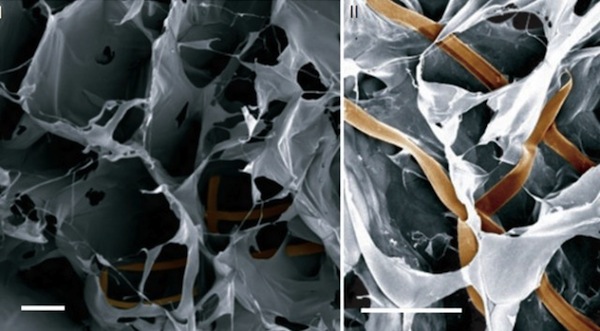
Merging the neurons, muscle cells, and blood vessels of various rats with nanowires and transistors that can monitor bioelectric impulses, these researchers were able to create the world’s first hybrid living/electronic cells. Much like the medusiod, the cells were controlled through electrical impulses, which allowed them to function like normal cells, except controlled via a computerized interface.

In time, they anticipate that this will lead to the development of nanotechnology that will allow them to make subtle changes in a person’s biochemistry. More than that, they could become the basis of tiny medical machines, such as microscopic pacemakers, or as microcircuits for prosthetics and silicate implants. On top of all that, this research is a big step along the road to the development of nanorobots, machines so tiny that they alter or maintain a person’s health at a cellular level.

“It allows one to effectively blur the boundary between electronic, inorganic systems and organic, biological ones,” said Charles Lieber, the team leader in an interview with New Scientist. And he’s absolutely right. With developments such as these and the boundaries they are pushing, human-machine interface, implant technology, robotic prosthetics and upgrades, and even the merging of our minds with computers could all be on the horizon. For some, this will mean the arrival of the long awaited Homo Superior, the new age man. For others, its a chance to tremble at the specter of a cybernetic future!

Both are fine choices, whatever floats your boat 😉

Masdar City

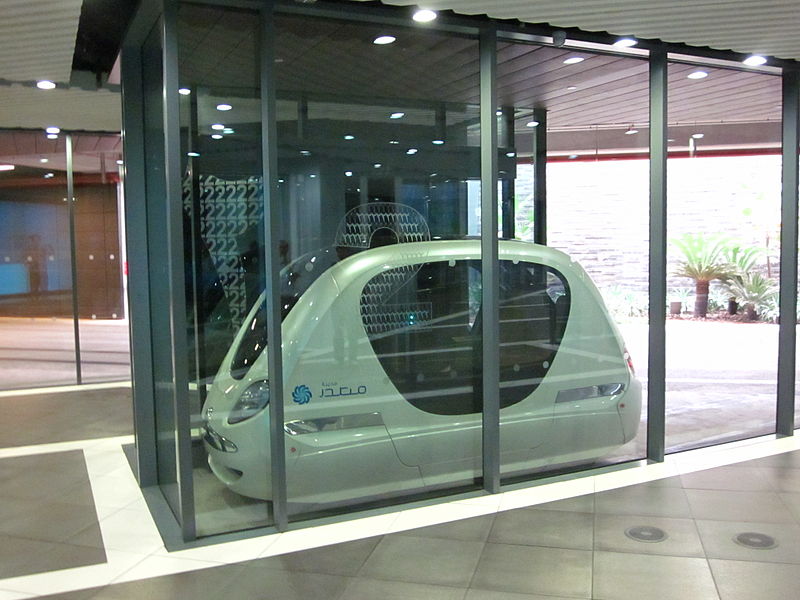
Imagine a city that runs entirely on solar energy and other renewable energy source. A city that generates entirely no carbon and no waste, with mass transit that relies on electronic, computer-controlled pod cars. That is the concept behind Masdar City, a planned urban environment located 17 km south-east of the capital of the United Arab Emirates (Abu Dhabi).

Designed by the British architectural firm Foster and Partners, and with the majority of the seed capital coming from the government of Abu Dhabi, Masdar is a blueprint for future cities based on sustainability, clean energy, and the latest and best in manufacturing, recycling and waste management technology. On top of that, it will contain some of the most advanced facilities in the world, dedicated to science, commerce and eduction.

In essence, it is the answer of what to do about rapidly advancing technology, urban growth, and development in the developing world. Point of interest include:

Masdar Institute:
Wouldn’t you know it? At the heart of a city based on sustainability and clean energy is an institute dedicated to the furtherance of these very things. Known as the Masdar Institute of Science and Technology (MIST), this research-oriented university was developed in conjunction with the Massachusetts Institute of Technology and focuses on the development of alternative energy, sustainability, and the environment.

In addition, its facilities use 70% less electricity and potable water than normal buildings of similar size and is fitted with a metering system that constantly observes power consumption. It’s full range of programs include Chemical Engineering, Mechanical Engineering, Material Science and Engineering, Engineering Systems and Management, Water and Environmental Engineering, Computing & Information Science, Electrical Power Engineering and Microsystems.

Renewable Energy:
In addition to its planned 40 to 60 megawatt solar power plant, which will power further construction projects, with additional solar panels to  be placed on rooftops, for a total output of 130 megawatts. In addition, wind farms will be established outside the city’s perimeter capable of producing up to 20 megawatts, and the city intends to utilise geothermal energy as well.In addition, Masdar plans to host the world’s largest hydrogen power plant, a major breakthrough in terms of clean energy!

Water Management:
When it comes to water consumption, that too will be handled in an environmentally-friendly way that also utilizes solar energy. At the hear of this plan lies a solar-powered desalination plant. Approximately 80 percent of the water used will be recycled and waste greywater will be reused for crop irrigation and other purposes.

Waste Management:
As already noted, the city will also attempt to reduce waste to zero. Biological waste will be used to create nutrient-rich soil and fertiliser, and plans exist to incinerate it for the sake of generating additional power. Industrial waste, such as plastics and metals, will be recycled or re-purposed for other uses. The exterior wood used throughout the city is Palmwood, a sustainable hardwood-substitute developed by Pacific Green using plantation coconut palms that no longer bear fruit.

Transportation:
Initially, the planners for Masdar considered banning the use of automobiles altogether, focusing instead on mass transit and personal rapid transit (PRT) systems, with existing road and railways connecting to other locations outside the city. This systems utilize a series of podcars, designed by the company 2getthere, contains 10 passenger and 3 freight vehicles and serves 2 passenger and 3 freight stations connected by 1.2 kilometers of one-way track.

The cars travel at an average of 20km/h (12mph), trips take about 2 and a half minutes and are presently free of charge. Last year, a system of 10 Mitsubishi i-MiEV electric cars was deployed as part of a one-year pilot to test a point-to-point transportation solution for the city to complement the PRT and the freight rapid transit (FRT).

Summary:
Given the mounting environmental crisis this planet faces, cities like Masdar may very well be the solution to future urban planning and expansion. But of course, as an incurable sci-fi geek, I also consider cities like this to be a handy blueprint for the day when it comes time to plan extra-solar and even exoplanet settlements. Not only are they effective at curbing our carbon footprint and environmental impact, they are also a  good way to start over fresh on a new world!

Related links:
Masdar Institute (http://www.masdar.ac.ae/)
Masdar City (http://www.masdar.ae/en/home/index.aspx)

The Future…

A recent article from The Futurist concerning trends in the coming decade got me thinking… If we can expect major shifts in the technological and economic landscape, but at the same time be experiencing worries about climate change and resource shortages, what will the future look like? Two competing forces are warring for possession of our future; which one will win?

To hear Singularitarians and Futurists tell it, in the not-too-distant future we will be capable of downloading our consciousness and merging our brains with machine technology. At about the same time, we’re likely to perfect nanobots that will be capable of altering matter at the atomic level. We will be living in a post-mortal, post-scarcity future where just about anything is possible and we will be able to colonize the Solar System and beyond.

But to hear environmentalists and crisis planners tell it, we will be looking at a worldwide shortage of basic commodities and food due to climate change. The world’s breadbaskets, like the American Midwest, Canada’s Prairiers, and the Russian Steppe, will suffer from repeated droughts, putting a strain on food production and food prices. Places that are already hard pressed to feed their growing populations, like China and India, will be even harder pressed. Many countries in the mid-latitudes that are already suffering from instability due to lack of irrigation and hunger – Pakistan, North Africa, the Middle East, Saharan Africa – will become even more unstable.

Polar ice regions will continue to melt, wreaking havoc with the Gulf Stream and forcing Europe to experience freezing winters and their own crop failures. And to top if off, tropical regions will suffer from increased tropical storm activity and flooding. This will be create a massive refugee crisis, where up to 25% of the world’s population will try to shift north and south to occupy the cooler climes and more developed parts of the world. And this, of course, will lead to all kinds of political upheaval and incidents as armed forces are called out to keep them away.

Makes you wonder…

To hear the future characterized in such dystopian and utopian terms is nothing new. But at this juncture, it now seems like both of these visions are closer to coming true than ever before. With the unprecedented growth in computing, information technology, and biology, we could very well be making DNA based computers and AI’s in a few decades. But the climate crisis is already happening, with record heat, terrible wildfires, tropical storms and food shortages already gripping the world. Two tidal waves are rising and heading on a collision course, both threatening to sweep humanity up in their wake. Which will prove successful, or will one come first, rendering the other completely ineffective?

Hard to say, in the meantime, check out the article. It proves to be an interesting read!

The Futurist – Seven Themes For the Coming Decade

The Future is Here: Hoverbike for Sale!

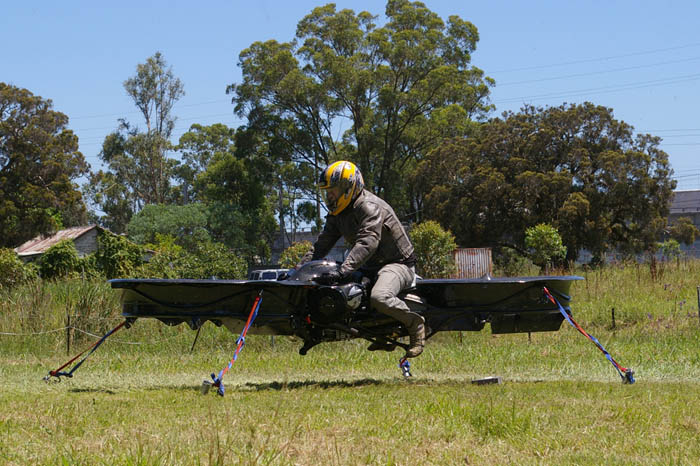
Boy, I’m behind the times here! But that’s what you get when you go away for two weeks and don’t keep up with the latest in trade and tech news. According to Next Big Future, a prototype hoverbike is now available for purchase. Apparently, inventor Chris Malloy, who built the prototype last June, is now offering to custom build one for anyone willing to cough up $84,500 US (or $80,000 Australian).

Powered by ducted fans, mounted at the front and rear, the bike is like something out of Star Wars, except that the science is perfectly sound ;). So far, Malloy has conducted tests with the bike tethered to the ground, which demonstrates that it is capable of hovering just fine. However, he is still working out the kinks when it comes to riding freely.

This is especially true when it comes to turning and rolling, which any biker will tell you is when stability counts for everything. Initially, Malloy was hoping to let the driver turn the vehicle simply by leaning this way and that. However, he soon abandoned that idea in favor of a computerized control system that would ensure stability. This, he has yet to finish, but he’s hopeful that with the right investment capital, he can make it work.

According to his own website, he is eliciting donations to fund the development of his project through to completion. His requested total is 1.1 million dollars to bring the project to fruition and begin commercial production. When he reaches that goal, he will be giving the prototype away for free. Pretty cool of him huh? I recommend people get their names in now and pledge a few dollars. That prototype is not going to be around for long!

In the meantime, check out this video posted by Malloy himself, where he tests the scale model of the bike to show how the fans work.

The Future is Here: Real Mechas!

It’s official. Now you can buy a real mechanized suit of armor… provided you have 1.3 million dollars just lying around. Unveiling their latest invention this past weekend during this years Wonder Festival in Tokyo, Suidobashi Heavy Industry has created the world’s first fully operational mecha! It seems that all that anime was right after all.

Unlike their previous work – the giant robot named Vaudeville which could only move it’s arms – the new Kuratos model can moves its arms, torso, and even wheel itself around, though only at a modest speed of 10km/h. Still, beats the hell out of walking!

It also comes equipped with a full-on master-slave control system, a state-of-the-art display and targeting system, an integrated cockpit with display devices, and even some curious weapons! This includes an H2O rocket launcher, perfect those summer water-pistol fights, and two arm-mounted Gatling guns that are capable of firing 6000 BB’s a minute. Oddly enough, the gun’s controls are linked to the cockpits interactive display device which fires the gun when the pilot-controller smiles!

Oh God, that’s going to be hard to control! One minute, you’re walking along in downtown Tokyo, the next minute, you’ve triggered a shooting spree because you can’t stop thinking about that funny joke somebody told the night before. You ever try not laughing in church or some other public forum? Well, it’s a little like that, except with heavy firepower!

And given the nature of this invention, it’s only a matter of time before someone puts some serious money into weaponizing it. For the rich and world-weary, it’s also the perfect toy for alleviating stress and making an impression on those snooty neighbors. I don’t envy the traffic cops which have to pull them over and issue a ticket though!

And yes, it’s not exactly Macross or Full Metal Panic material, but once again, it’s a step in that direction. Soon enough, we may be seeing mechas designed for the military use and crowd control. I can see how those water rockets would prove useful, and if the BB guns were upgraded to fire rubber bullets instead of tiny, put-your-eye-out shards of metal, then so much the better. And Robocop would have his work cut out for him having to compete with SWAT mechas like these!

Below is a helpful instructional video provided by Suidobashi. Enjoy and try not laugh. It makes the robot open fire!