The GPS Armband: The Aid Workers Best Friend

gps_armbandForeign aid workers often face extreme perils as a result of their job. Especially those who choose to monitor civil rights situations in foreign countries, where military dictators, corrupt police and/or wartime conditions pose a constant threat to their well-being. Luckily, Civil Rights Defenders – a Swedish civil rights advocacy group – has a proposed solution to this problem: The Natalia Project.

The project takes its name from Natalia Estemirova, a social worker who was kidnapped and swiftly murdered while investigating human rights violations in Chechnya in 2009. In her honor, Civil Rights Defenders announced a new piece of technology designed to prevent similar crimes in the future. Basically, its a GPS-equipped armband that immediately sends a signal back home and via social media to alert the wearer’s friends and colleagues the moment they go missing.

RUSSIA-OPPOSITION-PROTEST-CRIMEThe group says that had such technology been available at the time, Estemirova’s life could’ve been saved since the authorities could have been made aware of her disappearance immediately after her kidnapping. So far, the group has distributed five armbands and plans to equip 55 civil rights field workers with them over the next year and a half, if the project can find enough funding to produce them en masse.

In a statement, the group released information about the project and what it means:

…the Natalia Project bracelet has the capability to inform of an attack to potentially millions of people within seconds, by using Facebook and Twitter. The bracelet uses a mobile signal as notification of an attack and issues a real-time GPS location of the victim directly to Civil Rights Defenders’ headquarters. Nearby contacts will also be alerted so that they can act instantly, and the alarm is also forwarded to social media followers.

Looking ahead, I have to wonder if this same technology might not be incredibly useful in helping to address kidnapping here at home. In Canada, First Nations communities continue to be plagued by disappearances, particularly involving young women. All too often, these people are never found, or when they are, are shown to have been victims of terrible hate crimes.

Missing-Justice-web-sliderWhat’s more, investigations are often complicated by the prejudicial attitudes authorities have, and an inherent distrust of First Nation communities towards said authorities. As it stands, the federal government is under pressure to launch an investigation into these disappearances because of the nature of it and these complications. But with locators and the ability to know when a person is kidnapped, this problem could begin to be curbed and even eliminated altogether.

In addition, vacationers could also feel more protected when traveling abroad. The problem of kidnapping and ransoms in foreign lands, especially those marred by human trafficking, drugs, poverty, and corruption, are well known. With a GPS/GSM armband, alerts could be given out immediately, saving investigators much time and even helping them to locate the person in question.

As we all know, time is a factor when a person is kidnapped. Anything that helps families, communities and authorities even the odds against traffickers and abusive regimes would be a welcome thing indeed.

To learn more about The Natalia Project, Civil Rights Defenders, or even to donate, click here to visit their website.

Sources: fastcoexist.com, natalia.civilrightsdefenders.org

The World’s First Completely 3D-Printed Gun

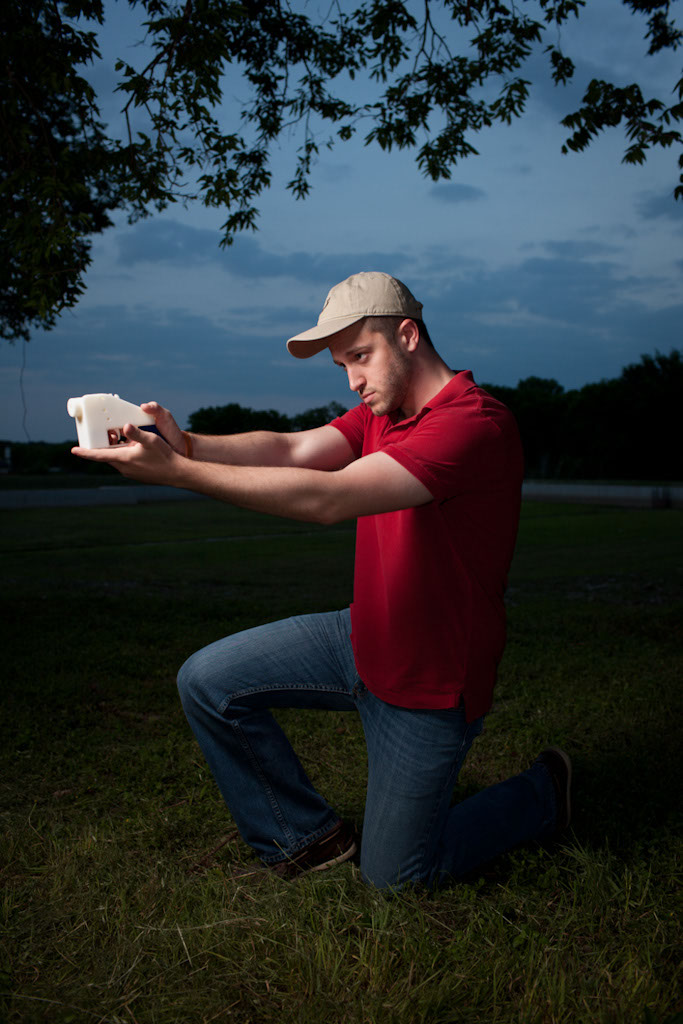
liberatorSince it’s inception, 3D printing has offered people a wide range of manufacturing possibilities, ranging from the creation of intricate prototypes to drugs and even human tissue. However, one of the most controversial manufactured items to come from the technology has been what the Texas-based organization known as Defense Distributed refers to as “Wiki-weapons”, guns that can be made by anyone using downloaded blueprints and a public printer.

DD_gunsNot long ago, the group announced that they had successfully created a working AR-15 assault weapon using some printed parts. This drew sharp criticism from advocates of gun control, in part because the same weapon was used in the Newton, Connecticut school shooting. However, Cody Wilson, founder of DD, announced that they would continue to pursue their goal of making printed guns, stating that their commitment to the 2nd Amendment took precedence over a single tragedy.

And now, it appear that they have gone a step further, unveiling the world’s first fully 3D-printed weapon. Save for a nail which is used as the firing pin, the gun is made up entirely of printed parts, can fire normal ammunition and is capable of making it past a metal detector. It’s called the Liberator, the product of eight months of labor by Cody and his group, and named in honor of the one-shot pistols that were airdropped by the Allies on France during the Second World War.

DD_liberatorIn an interview with Forbes, Cody and his group demonstrated their first test firing, which was a success. He also claimed that the Liberator will be capable of connecting to different barrels, allowing it to fire various calibers of ammunition. He also plans to publish the files necessary to print it at home as well as details on its operation so that anyone can produce their own.

This is all in keeping with Cody’s vision – being a hardcore libertarian and anarchist – to create a class of weapon that anyone can produce, circumventing the law and the regulatory process. At the same time though, Distributed Defense did decide to include a small chunk of metal in the final design to ensure that the gun couldn’t pass through a metal detector undetected. This is in compliance with the Undetectable Firearms Act, and may have been motivated by the group’s sagging public image.

Defense_DistributedHowever, this has not stopped the group from obtaining a federal firearms license this past March, making it a legal gun manufacturer. And once the file is online, anybody will be able to download it. What’s more, all attempts to limit DD’s activities, which include printing firms purging gun parts from their databases, has made Cody even more eager to pursue his aims. In a statement made to Forbes magazine, he said:

You can print a lethal device. It’s kind of scary, but that’s what we’re aiming to show… Everyone talks about the 3D printing revolution. Well, what did you think would happen when everyone has the means of production? I’m interested to see what the potential for this tool really is. Can it print a gun?

Well, Mr. Wilson, we’re about to find out! And if I were a betting man, I would say it the “potential” will include more unregistered firearms, a terrorist act or shooting that will involve a partially printed weapon, and Wilson’s continued intransigence to reform his ways, citing the 2nd Amendment as always. Libertarians are nothing if not predictable!

Sources: tech.fortune.cnn.com, forbes.com


Cyberwars: The Credit Card Info Stealing App

theft_creditcard1Want to steal someone’s credit card information? There’s an App for that! Yes, it seems that smartphones are the latest tool in the identity and info thief’s arsenal, just a few years after it was reported that laptops were being used for to read people’s passports. And the worst part of it is, it can be done using a technology that is perfectly legal, and worse, was designed to make the life of consumers that much easier.

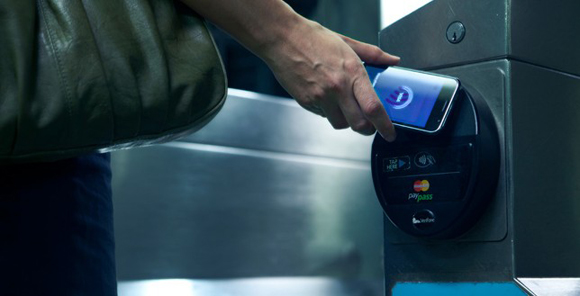
MasterCard calls the App PayPass, while Visa calls it payWave. Simply wave your credit card over a sensor and you’ve made a transaction, without the hassle of having to remember or enter a PIN number. But one of the unintended downsides is that it also makes it that much easier for a third party to steal your credit card information, and just as quickly and conveniently.

theft_creditcard3An investigative report was recently performed by CBC News and Mandy Woodland, a St. John’s lawyer who specializes in technology and privacy law. Using a Samsung Galaxy SIII, one of the most popular on the market today, the team downloaded a free app from the Google Play store to read information such as a card number, expiry date and cardholder name simply holding the smartphone over a debit or credit card.

According to their report, a thief can simply walk by, pause and read the information through an unwitting person’s coat and wallet, and then the information can be sent to another phone. The entire process only takes five minutes to download the App, and just seconds to obtain the credit card info. After conducting the process with a team members credit card, they used the stolen information to buy a coke.

??????????????Naturally, the process could be used to pay for gas, a new computer, or plane tickets to a vacation paradise! And as Woodlands said in an interview with CBC:

It’s always a concern when a stranger could obtain my personal information and my banking and financial information just from a simple walk by, particularly the fact that that worked so quickly.

Furthermore, Michael Legary, who runs a security company called Seccuris Inc., claims they have investigated cases where phones paired with these apps were used to commit credit card fraud. Legary also claims that the app has become a tool for organized crime in Europe:

They don’t even need to talk to you or touch you, they can get information about who you are. That may make you more of a target for certain types of crime.

theft_creditcardBut of course, credit card companies would like their clients not to worry. In a written statement, Visa claimed that there have been no reports of fraud perpetrated by reading its payWave cards, in the manner shown by the CBC. Citing the many layers of protection and identity security, Visa points to its record, which it claims shows historic lows of fraud. Mastercard similarly claimed that its customers are protected, specifically their MasterCard’s Zero Liability Policy. My only answer to that is, wait a while…

At the same time, Google has announced, in response to this investigation, that it would remove any app that violated Google’s developer distribution agreement or content policies. However, the app in question is still available on Google’s download site.

In conjunction with other forms of identity theft and RFID skimming, this latest revelation only adds to the growing concern that technologies which are designed for convenience are being abused to make our lives more harassed and insecure. It also raises an important issue about corporate security in the digital age.

Much like with internet security and hackers, there appears to be a constant back and forth between thieves and credit card companies, the one erecting more and more barriers of security and the other coming up with more elaborate ways to beat them. As for the rest of us, it seems we can only be vigilant. But if possible, it might be smart to purchase an Faraday pouch for your personal effects!

In the meantime, here is a demonstration of the credit card “skimming” at work.


Sources: CBC.ca, huffingtonpost.ca

Drone Wars: Hiding Your Home from a UAV

(U.S. Air Force photo/Staff Sgt. Brian Ferguson)(Released)In a world increasingly permeated by surveillance systems, especially ones that are airborne and remotely operated, it was only a matter of time before some struck back. Much like Steve Mann’s concept of sousveillance – using camera devices and wearable computers to help people spy back against “Big Brother” – it seems that there are individuals out there looking for ways to help the common people avoid UAV detection.

In this case, the individual is Tim Faucett, CEO of APlus Mobile. When his company is not manufacturing mobile computer units that manage robots and UAVs for clients like the U.S. Navy and Lockheed Martin, they are contemplating ways to shield us from the technology they help create. Might seem a bit ironic, but looking to the future, Faucett and his colleagues are concerned about people other than government and military having access to the technology.

drone_target_1Alongside the FAA, which estimates that there could be tens of thousands of unmanned aircrafts circling overhead by the end of this decade, Faucett believes the future will be permeated by privately-owned unmanned aerial vehicles:

There are going to be private drones, there’s going to be commercial drones. Everybody’s going to have access to a drone. And people are going to have good intentions with them, and people are going to have bad intentions with them.

An interesting idea, and not one the public has fully considered yet. Most concerns vis a vis UAVs and their unlawful use are targeted at the governments who use them, mainly with the intention of “combating terrorism” overseas. But to Faucett, the real threat comes from our neighbors and private groups, people who are harder to discern, identify and fight than a monolithic organization.

drone-laser-targeting_620x374In keeping with this mindset, a few weeks ago, his startup Domestic Drone Countermeasures filed its first of what he said would be nine patents for a system that will detect and disable drones before they have the chance to film their targets. Few details have been made available yet as to what these systems involve, mainly because it’s new and Faucett hopes to keep the cat in the bag until its time to unveil.

Still, some details have managed to trickle out, such as Faucett’s own reference to a system that includes software and sensors that will be able to identify nearby UAVs based on their electromagnetic signature, alert the owner of the system, and then “neutralize the drone’s capability to see you with its camera.” But Faucett was also sure to emphasize the non-military nature of all this, responding to rumors that his company is developing some sort of weaponry:

We don’t interfere with the drones navigation in any way. We don’t jam anything. We don’t intercept anything … This is non-combative. That’s really important. We’ve taken great pains to design systems that aren’t going to get shut down or be outlawed or become illegal. … We’ve taken the combat elements out so [the former military technology] can’t be viewed as unlawful.

???????????????????In fact, the new system may actually be capable of doing something creative and comical, should anyone attempt to spy on you. And all without causing harm to the camera that’s attempting to see you :

The camera just won’t be able to look at you. Actually, at some point, we can show the operator at the other end a little movie or something.

So try to misuse a UAV, and you may end with an eye full of porn bombs, or several hours of Desperate Housewives, playing on a loop. Take that, nosy neighbor! You too, Big Brother!

Faucett says his team of three full-time engineers and several part-time staffers should be able to bring the system to market in a matter of months. It’ll be scalable to suit the needs of someone who just wants their home protected, ranging from a home owner who some added security, to larger property owners or institutional clients. You might say, spying will become the new type of Cold War, with government, security and surveillance companies all engaged in a game of one-upmanship.

And as usual, I sense an idea for a novel… Patent Pending!

Source: fastcoexist.com


Selling Yourself: The Future of Advertising

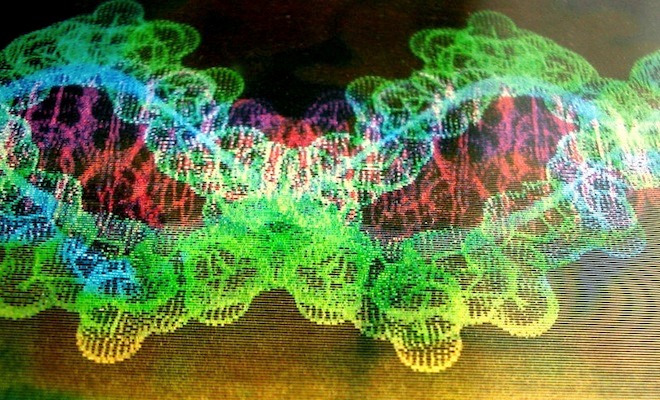
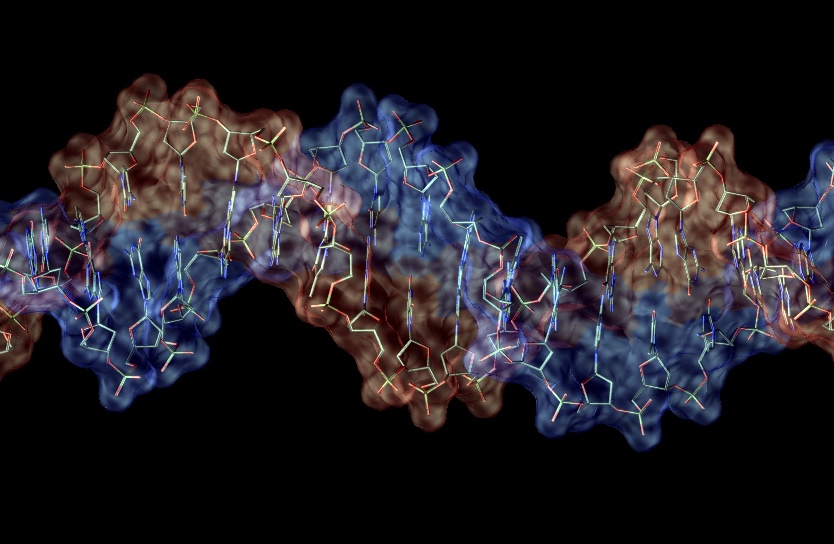
DNA-1If you thought your world was already permeated enough by adspace, hang on to your hat! According to =researchers and geneticists, the age of genetic-based advertising is right around the corner, and is likely to be even more profitable than internet, television, radio or billboard ads ever were! Yes, in this brave new future, selling yourself will take on literal dimensions, with people signing over their genetic information and tailoring what ads they receive based on that very same thing.

Call it another unintended consequence of the Human Genome Project and ENCODE, which the latter of which recently finished cataloging the function of every part of the human genome. Or it could just be a case of advertising and the commercial industry making inroads, following the path traced by researchers and scientists in the hopes of finding the next place to saturate with ads.

dna_selfassemblyRegardless, geneticist Michael Schatz of the Cold Spring Harbor Laboratory sums up the possibility as follows:

Today, it’s such a niche market, but there’s tremendous growth opportunities there. In the endgame, it’s certain [genetics is] going to become one of the factors that big retailers would consider, but I think that’s pretty far off.

But as it turns out, it may not be as far off as he thinks. Already, a Minneapolis-based startup named Miinome is building a platform that will help consumers control what offers they get from retailers based on their genetic makeup, and to possibly cash in on the value of their DNA by selling the data back to marketers and researchers.

Through an open API, Miinome plans to collect genetic and environmental data mined from social networks like Twitter, Facebook and LinkedIn and run that through their proprietary algorithm to come up with a profile of you that’s richer than anything that exists on the internet today. Then, they will be able to infer what environmental factors and personal traits are likely to cause you concern, or gives rise to special needs.

dna-computingThese could something along the work-related stress and the problems associated with it – i.e. weight gain, hair loss, erectile dysfunction, etc. – and then recommend ads that would help the person address these. If a person so chooses to broadcast this kind of information to Miinome’s business partners, they could show you very targeted ads for weight loss supplements, hair care products, boner pills and anything else you might want.

The company, which is launching in closed beta this spring, will essentially be a repository and brokerage firm for your genetic information that will allow its members to choose what academic institutions, pharmaceutical companies or marketing firms can take a peek at which of their genes. Miinome, which boasts geneticist George Church and Autodesk’s Andrew Hessel as advisers, will essentially make money every time one of your traits is accessed by companies.

DNA-molecule2Whether you are for or against such an idea, you have to admit, it’s a pretty shrewd and sound business plan. In a company statement, Miinome CEO Paul Saarinen put forth the following mission statement:

We believe we can make your genetic information useful every day, not just when you’re sick. We’re the first member-controlled, portable human genomics marketplace.

Well, that’s one way to look at it. Another way would be to say that this is yet another invasion of people’s privacy, reaching beyond cookies and web-surfing habits to find a truly effective and intrusive way to spam them. Naturally, Saarinen also pointed out that everything will be opt-in and Miinome business partners won’t be able to get their hands on raw genetic data.

Still, one can expect privacy and human rights advocates to have something to say about this real soon!

 Source: Wired.com

New Drones Art Campaign

UAVsOver at deviantART, a constant source of inspired art for me, there’s an interest new campaign designed to raise awareness and stimulate debate on a rather controversial issue. I am referring, as the topic line would suggest, to the use of drones and UAV’s and all that it entails.

As one of the greatest concerns facing developed nations today, not to mention the developing world where they are being increasingly used, this campaign is not only timely and relevant, but an intriguing display of artwork motivated by social conscience. In short, it asks the question: how is this debate reflected in art and what will future generations think of it?

looking for a hole, by arcas art

Inspired by similar projects which are taking place around the world, the purpose of the campaign is to draw attention to the fact that were are living in a world increasingly characterized by surveillance and killing machines. Or as technognotic puts it:

Drones have become the white hot center of debate for a multitude of deeply consequential concerns for the entire Earth Sphere. No matter the digital end point or theatre of conversation, whether it be politics, war, privacy, pop culture, or the rise of machines – Drones or UAV’s (unmanned aerial vehicles) are the current catalyst du jour in any number of flashpoint discussions…

Even more interesting is the tone of inevitability of outcome. Core discussion seems to focus on a coming drone-filled sky and how we might govern our selves accordingly as this fact becomes a reality… Is this the dark side of human creativity and inquisitiveness that will ultimately one day spell our doom or the first signs of a coming technological Utopia.

galaxy saga - white gryphon, by ukitakumuki
galaxy saga – white gryphon, by ukitakumuki

In addition, the campaign features the thoughtful essay of the same name by Jason Boog (deviantART handle istickboy), who takes a look at how killing machines and drones have been explored through art and popular culture. Beginning with a short romp through history, identifying the first “drone” to ever be used, he goes on to examine how several generations of artists chose to portray them and their use.

Things culminate in the modern age, where spending on drone development and humanitarian concerns have culminated to make this a truly global and auspicious concern. With remote-controlled drones giving way to autonomous models and UAV’s being used for domestic surveillance, there’s no telling where things could go.

mysterious journals, by sundragon83

On the one hand, a concerned and mobilized public could place limits and controls on them, or counter using their own form of “sousveillance” (public counter-surveillance). On the other hand, we could be headed for a police state here privacy is non-existent and robots decide who lives and who dies – maybe entirely on their own!

As you can certainly imagine, when I first learned of this campaign I could tell that it was right up my alley. Being such an obsessive geek for all things technological and how innovation and progress affect us, I knew I had to post about it. And as you can certainly tell from the samples posted here, the artwork is pretty damn badass!

I would recommend checking it out for the aesthetic appeal alone. Knowing you’re taking part in a campaign dedicated to public awareness is just a big bonus!

For more information, and to take a gander at some galleries, visit the campaign at techgnotic.deviantart.com.