The Star Wars That I Used To Know

You know that song that’s been getting stuck in your head over and over for the last year or so, thanks to viral videos and constant radio exposure? Well, if you’re not thinking of “Somebody That I Used to Know” – the Gotye original that was recently covered and re-popularized by Walk of the Earth – then we are on two completely different wavelengths!

But I’m not here to talk about our psychic disparities. The point is that a group named Teddiefilms has breathed new life into this song and Lucas-bashing by producing a satire of this song. Entitled “The Star Wars That I Used To Know”, this song does an amazing job of capturing fan angst and the spirit of the song. Ably written, performed, and directed in a way that calls to the mind the original video, this parody has it all!

Check it out…

New Total Recall Trailer

Yep, as the title line says, a new trailer has come out for the upcoming remake of Total Recall. Ordinarily, this wouldn’t be that big a deal, except that this one shows how they are including a key part from the old movie: the three-breasted hooker! It seems that she will be featured in this movie as well, which geeks everywhere were sure to be asking. It goes without saying that anyone who saw the original remembers that woman. But for true sci-fi geeks and pubescent boys, she was right up there with Princess Leia in the bikini, inspiring more than her share of nerdgasms!

And since the movie is getting nearer, I am wondering if I am going to bother to see it. Sure, I’m curious and kind of intrigued by the reboot of a movie I appreciated as an adolescent, but is it worth it? Given the price of tickets these days (punitive!), I had to make a list of reasons for and against. First up…

Reasons to see this movie:

  • It looks pretty cool. If nothing else, it would be interesting to see what the updated special effects amount to. The old movie contained many instances of animatronics that didn’t look too realistic. Personally, I’d like to see if the CGI looks better.
  • Clearly, the technology has been updated, and includes flying cars, robot policemen and cooler weapons.
  • The trailers seem to indicate an apparent loyalty to the old storyline, even if it’s not a scene for scene remake. This is good seeing as how the plot was the original movie’s biggest strength, in my opinion.

Okay, not bad, not bad. But if I comb through these points, I notice that curiosity and the allure of eye candy – special effects, not Jessica Biel or Beckinsale! – are pretty much the only reason. I would like to see what they do with the storyline, but it’s not like there are going to be any surprises.

Reasons to wait for the DVD:

  • If the movie IS loyal to the original, then couldn’t it just as easily be argued that it’s not worth the theater price?
  • The original was based on a PKD short story named “We Can Remember It for You Wholesale”, which the screen writers altered and expanded upon greatly. So the updated version isn’t really a re-imagining of a classic sci-fi story, but of a popular movie.
  • I get the feeling the only reason they made this movie is because Hollywood producers have gotten incredibly lazy and would rather pull a Lucas (aka. redoing an old movie with updated special effects) than make anything new.

Huh… perfectly good counter-points. If I did see this movie, it wouldn’t out of loyalty to Philip K. Dick, but rather than some dudes who worked for the Hollywood machine. And what the hell have they done for me? Okay, they did give me Blade Runner, 2001, the Star Wars trilogy, the Back to the Future trilogy, Alien, Aliens, Terminator 1 and 2, Serenity, and the Matrix… but what have they done for me LATELY?

Well, that’s my appraisal of it, at any rate. Luckily, I’ve been doing some reading today that says there are a whole slew of movies coming out in 2012 that are not remakes, reboots, or re-imaginings. And some of these are well overdue, as far as fans of classic science fiction are concerned. Of that, more later. In the meantime, check out the updated trailer. Note the absence of actual boobs…

The Post-Apocalypse in Sci-Fi

Thanks to the announcement of “Revolution”, and my impending lawsuit against NBC, JJ Abrams and anyone else who ripped me off, I’ve been thinking a lot about post-apocalyptic stories. This is a very fertile area, and some friends here once again had the foresight to mention examples in advance which I was sure to include. I tell ya, the more time I spend with people, talking about creative stuff, the more we seem to be on the same wavelength… creepy!

I sense another story in the making, so I better patent it soon lest someone try to steal it. You hear that NBC? PATENT PENDING! You too Abrams!

Anyhoo, here is a list of all the post-apocalytpic tales I was able to find from over the years. As usual, this list is just a sampling of some of the ones I and other people have read, watched, and generally enjoyed. In truth, there are far too many examples to list. So, also as usual, any additional suggestions are welcome.

A Boy and His Dog:
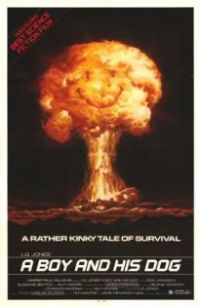
This novella, and the 1974 movie which it inspired, takes place in an alternate timeline where JKF survived his assassination attempt and history followed a different course. For starters, instead of the space race, western society focused on the advancement of other technologies, such as household androids, ESP, telepathy, and even animal intelligence.

This new tech race intensified the Cold War, which resulted in WWIII breaking out. This war lasted for many years and was fought with conventional weapons, until a peace was brokered by the Vatican in 1983. After 25 years of uneasy truce and economic turmoil, WWIV broke out in 2007 and nuclear weapons were used, leaving the Earth desolated and scarred. As such, the story takes place in 2024, where the survivors are forced to forage and fight for survival and men outnumber women by a significant margin.

The main character is Vic, a young man who lost both parents in the war and never received any real education or upbringing. As such, his only real concern is gratifying his sexual urges. His companion is a wise-cracking telepathic dog named Blood, the result of genetic engineering in the previous century. While he depends on Vic for food, Vic depends on him for guidance and education, which he accepts only reluctantly.

The plot revolves around the couple’s discovery of a place that is known in myth as “Over the Hill” or “The Promised Land”, an underground colony that survived the nuclear war. Vic finds himself lured in because, in spite of their self-sufficiency, the colonists need sperm donors to keep their reproductive cycle going. He learns that a totalitarian council rules the place and maintains authority by “disappearing” anyone who resists them.

After meeting a young woman named Quilla, he becomes embroiled in a conspiracy to overthrow the council. She asks him, “Do you know what love is?”, something which he has never before pondered. The two have a short-lived affair, which seems to be out of necessity since she soon needs to escape when their conspiracy is foiled and her friends killed. They escape to the surface to find that Blood has nearly starved in his absence. In a twist ending, it is implied that Vic kills Quilla and cooks her flesh to save Blood. He contemplates the question she asked him, and concludes that “A boy loves his dog.”

Chock of full of dark humor, irony and a pretty low appraisal of human nature, a Boy and His Dog remains a cult-classic amongst cinema buffs and fans of the post-apocalyptic genre. Though it was by no means as commercially successful, amongst its fans it is right up there with films like Mad Max and other such classics.

The Hunger Games:

Following in the tradition of such greats as Brave New World and 1984, The Hunger Games presents us with the a world where apocalyptic evens have given rise to dystopia. Though it not fully specified what these events entailed, it seems relatively clear that it involved nuclear war or some kind of global fallout, possibly economic in nature. It is for this reason that a tyrannical government has taken over control of the 12 districts in the future, ruling the nation of Panem with an iron fist.

Naturally, this oppression involves both police action and forced deprivation, with people in “the capitol” enjoying a lavish, comfortable life while people in the districts live in varying degrees of poverty. However, the truest symbol of the capitol’s power comes in the form of the Hunger Games, a death-match style tournament where every district must send two “tributes” – young people who either teens or pre-teens – to compete for the prize.

The story focuses almost entirely on Katniss Everdeen’s trials as she is unleashed in the arena, trying to survive against the other competitors while at the same time outwitting the game masters. Through all of this, we are made aware of the relationship between the Games and Panem’s odd social structure, where favoritism is common and it is treated as entertainment. We also see how it is used to keep the population of Panem divided, in a state of fear, and otherwise distracted.

Combining gladiatorial combat with the concept of making the oppressed fight each other for the scraps from the head table, the games act as a form of dystopian social control and are also a very apt metaphor for teenage angst and coming of age! In the end, even those who survive are forever marked and must still fear for their lives, knowing that they are never entirely beyond the grasp of the capitol or the rulers who fear and oppress them.

Mad Max:
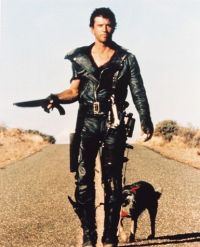
The franchise that made Mel Gibson’s career – may God have mercy on their souls! – Mad Max takes place in a post-apocalyptic Australia where law and order have broken down. As the franchise goes on, we learn that this was the result of a nuclear war which began after the world’s oil supplies ran out. As a result, gasoline is the most precious commodity of all, with roving bands of thugs and mercenaries fighting and raiding just so they can keep their vehicles running.

The story’s main character, Max Rockatansky, is part of the Main Force Patrol (MFP), a police force that is dedicated to maintaining order on the highways. After his family is murdered by gang members, he hijacks their fastest car and heads out on a personal mission of revenge. Having killed them all, he becomes a roamer, going from place to place in his V-8 Pursuit Special with only a dog as his companion.

In all subsequent movies, events focus on him becoming embroiled in adventures where he must help people in need, all the while looking out for himself as well. More often than not, his journeys take him to shantytowns that have been built around refineries, where small colonies of people are ruled by matriarchs, patriarchs, and are threatened by roaming hoards who want what they have.

In essence, Max’s journeys serve as a vehicle for the story which enable the audience to get a first hand look at what a post-apocalyptic landscape would look like. Key to this is the strange balance of modern and primitive, where gasoline engines, electrical appliances and guns co-exist with improvised weapons, brutal gangs, and lawlessness. All the while, you’ve got bands of people desperately seeking deliverance either in some fabled utopia or safe haven. In the end, the tone and feel of this movie set a new standard for apocalyptic movie making, one which has been imitated many times since.

On The Beach:
Next up is Nevil Shute’s classic tale of nuclear war and how Australia became the last remaining outpost of life and civilization. Published in 1957, during the height of the Cold War, this book was required reading when I was in school, and for good reason! Far from merely telling a tale of nuclear war and the fallout that resulted, it also delved into the psychology of the survivors, how they chose to live out their lives knowing that sooner or later, they would die like the rest.

Taking place in Australia, the story focuses on the lives of people and families who have relocated to the last safe place on Earth. This includes native Australians, ex-pats, and several American military officers who have fled south. Knowing that the Northern Hemisphere has been devastated and is now devoid of all life, the people initially resort to binge drinking and partying, but eventually turn to improving their lives through education, hobbies, and spending time with their families.

Things come to a head when a garbled Morse code reaches them from Seattle, prompting Towers (the American commander) and his fellow officers to mount a mission in their sub. When they arrive, they find that the signal, which is coming from an abandoned naval headquarters, is the result of a broken window sash swinging around and hitting a telegraph key. Their trip also determines that contrary to some hopes, radiation levels are not dissipating.

In the end, all services grind to a halt, people take their suicide pills, and Towers and his officers decide to sail their sub out to international waters and scuttle the ship. In the end, Towers chooses die still serving his country, and avoids having a romance with a woman (Moira) who loves him out of loyalty to his dead wife. The story ends with Moira watching from the beach, imagining him with her as she pops her suicide pill and dies.

What is most interesting about this story is not the plot per se, but the realistic tone it strikes. For starters, how the people of Australia and the government choose to confront the inevitability of death was told with a fair degree of understanding. Instead of looting, rioting, and generally resorting to barbarity, the people, by and large, choose to spend the time they have left enjoying themselves, being with family, and then ending it all painlessly. And the contrast between the people who chose to spend their time partying, versus the stalwart nature of Towers, was also a nice comparison, showing the range of reactions.

It is also interesting in how it speculates on how WWIII began. Rather than being the result of a stand-off between the US and the Soviets, the war began when second-parties, such as Albania and Italy, began bombing each other, forcing their allies to intervene. China and the Soviets even bombed each other when territorial disputes and the general chaos resulted in them invading one another. Thus, much like in WWI, we see a general state of war resulting from tangled alliances and arms races. Oh, the lessons of history…

Planet of the Apes:

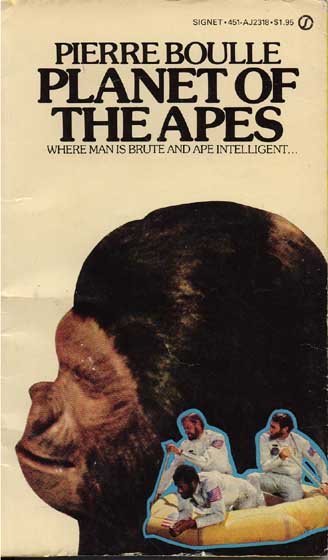
Originally a novel that was published in 1963, this book went on to be adapted into film twice, first in 1968 and again in 2001. The story tells the tale of a group of explorers who go into deep space on an exploratory mission, but who end up finding a world where chimpanzees are capable of speech, build cities, wear clothing, and hunt humans for sport. In the end, the explorers flee back to Earth, only to discover that a similar fate has befallen it as well.

Ultimately, the story is being told in a note left by the protagonist, which is uncovered by a young couple who are taking a vacation in their space ship. It is only at the very end that it is revealed that they are intelligent apes, and they conclude that no human could have written this note, as they are not believed to be intelligent enough.

Though different in terms of its overall plot, much of the original story survived the movie adaptation. Here, the explorers were scientists who entered cryogenic sleep, hoping to wake up in a future where mankind was more evolved. Instead, they wake up to find that they are (seemingly) marooned on a mysterious planet where humans live in a primitive state and intelligent apes rule.

When they are attacked, all of the protagonist’s (Taylor, played by Charlton Heston) friend are killed, leaving him alone in a compound where humans are experimented on. He finds an unlikely ally in an ape named Zira who seeks to prove that humans are intelligent and hence worthy of rights (echoes of animal rights activists). All the while, Dr. Zaius, a conservative scientists, expresses strong doubts, though it is clear he is trying to bury Zira’s evidence.

In time, Taylor escapes with the help of the two scientists – Zira and Cornelius – who sought to prove his intelligence, and they flee to the Forbidden Zone. This taboo area contains a cave where Cornelius claims to have found the remains of a non-simian civilization a year earlier. They are intercepted by Zaius and some soldiers, but they manage to convince him to enter the cave and see what lies within. There, they find a number of artifacts, including a set of dentures, a pair of glasses, a heart valve, and (the real prize of the collection!) a talking doll.

Zaius reveals that he already knew of this, and that the Forbidden ZOne was once a paradise that human beings turned into a wasteland. He lets Taylor and his new female companion go, but orders the cave be destroyed and Zira and Cornellius brought back to stand trial for treason. Taylor travels up the coast and eventually reaches the remains of the Statue of Liberty and realizes the awful truth. His party never left Earth at all, but has entered a future where human civilization fell, most likely after a nuclear war, and apes have evolved to take their place.

Between the novel and the film adaptations, the evolutionary allegory is clear. Due to its inherent barbarity, human civilization is destroyed, its people fall into decline, and nature is left selecting from its predecessors to fill the void. In a sense, Boulle and the film adaptations his book inspired were mocking the idea of humanity seeing itself as being at the top of the evolutionary pyramid. In another way, they were demonstrating that the very excesses that make humanity corruptible (i.e. vanity, anthropocentrism) are not reserved to them.

The Postman:
This science fiction novel, written in 1985 by David Brin, tells the story of a post-apocalyptic United States where warlords rule the countryside and terrorize the local people. Enter into this a drifter who stumbles across the uniform of an old US Postal Services letter carrier and begins using it and a letter bag to bring hope to a small community.

Initially, he trades the letters in his mail bag for supplies, not intending to take part in a forgery. However, the letters give people hope that there is a “Restored United States of America”, which eventually leads him to maintain the illusion. He then stumbles upon a facility in Oregon State University where scientists are apparently pretending that an AI they built is still working, as a means to maintain people’s hope that knowledge and science are being kept alive.

Together, they face off against a group of ultra-survivalists who are moving south through the region. The Postman and the scientists join forces to fight them, and in the end find that the survivalists are being beaten back from the south as well, by armies bearing the standard of the State of California. Apparently, the intersection of these symbols, the letter, the scientists, and the state flag, act as a synthesis to show the path towards rebuilding the shattered nation.

This book is not only a celebrated example of a post-apocalyptic tale of hope and redemption; it’s also a fitting commentary on politics and ideology in the modern age. Many times over, the super-survivalist Nathan Holn is parodied in the book, with the survivalists of the story being called Holnists. It is even suggested that it was the followers of Holn who destroyed the government in the not-too-distant future, not nuclear war, biological agents, or even economic fallout. So in the end,  we learn that the nation is wrecked by brutal and ignorant minds, and saved by a combination of true patriots, keepers of knowledge, and those motivated to help their fellow man.

The movie adaptation that was released in 1997 did very poorly, with many critics seeing it as the latest in a string of flops for Kevin Costner. Having not seen the movie, I can’t comment on its quality either way. All I know is, it’s a shame given the value of the source material.

Second Variety:
This short story by Philip K Dick, which was adapted into the movie “Screamers”, deals with the line between artifice and authenticity and is set in a post-apocalyptic world. Hence, much like Do Androids Dream Of Electric Sheep?, it is all about machines that can impersonate humans and what happens when technical progress gets away from us.

Though the movie was set on a distant world, the original story takes place on Earth, where World War III has taken place and Soviet forces occupy much of the US. This has prompted the US to develop a race of self-replicating robots that tunnel underground and pop up to slice the enemy to pieces. After many years of death and brutality, where the machines have turned the entire countryside into a mess, the US government has relocated to the moon, leaving what forces they have left on the ground in a series of bunkers.

The story begins when a unexpected message arrives in the US camp from the other side, asking for a ceasefire. The commander heads out to the enemy bunker to speak with the soldiers, who claim that new breeds of robots that can imitate humans have infiltrated them. Apparently, the underground facility that is making the machines has been producing all kinds of upgrades, consistent with its autonomous nature and aim to create better killing machines.

Suspicion soon turns everyone against each other, and eventually only the commander and a lone woman make it back to his bunker. There, he finds that humanoid-machines have taken over the base. They fight their way free, and the commander determines that they must fly to the Moon base and alert the government that the machines are threatening to take over Earth. When they make it to an emergency craft, the commander finds that it has only one seat and gives it to the woman. Shortly after she flies away, he is attacked by a group of robots, many of which look exactly like her…

Basically, this story tells the tale of how desperation led to the creation of a technology that was so effective, it threatened to completely destroy humanity, friend and foe alike. Much like nuclear devices and biological weapons, the “varieties” of killing machines proved to be a breed of weapon that was designed to fight a war, but eventually turned and consumed its own makers.

The Stand:
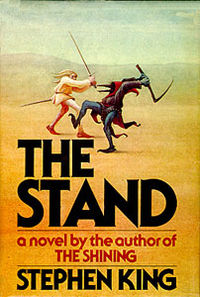
Stephen King’s classic tale of mankind’s fall and redemption, all taking place against the backdrop of the American countryside. Written in 1978, this story is based on the now classic concept of a government super-virus that got out and wreaked havoc on society, and those survivors who were left to pick up the pieces. Adding to this the theme of the Rapture and a post-apocalyptic war between good and evil, this book was steeped in metaphor and was a fitting allegory about good and evil and the eventual redemption of humankind.

The story begins when a government facility suffers a fatal accident with the release of an influenza virus, a strain of super flu that is 99% infectious and fatal. Once it gets out, society begins to fall to pieces as everyone, including the government agents responsible for containment, become infected and die. Those who are left behind begin to be contacted in their dreams by one of two people, an old lady and a strange man, each telling them to make their way to one of two places.

The old lady, named Mother Abagail, clearly represents good and is inviting people to form a commune in Boulder, Colorado. The man, named Randall Flagg (who clearly represents the Devil) is bringing people to Las Vegas, where they are arming for an eventual war. In time, the two sides come together after a terrorist attack leaves several dead and Mother Abagail suffers a heart attack and dies. She asks that the main characters walk to Las Vegas to confront the evil there. They do, and become prisoners upon their arrival.

However, things come to a head when the Trashman, one of Flagg’s minions, shows up in the city with an atomic bomb. Obsessed with fire and having suffered a psychotic break, he seems intent to detonate the bomb. The heroes experience a vision where a hand composed of white light and the voice of Mother Abagail appears to them, telling them they will be delivered. The bomb detonates, and Las Vegas and all of Flagg’s followers are killed.

The story ends with the surviving heroes bringing the first post-apocalyptic baby into the world, a baby which is apparently immune to the super flu. With evil vanquished and the knowledge that subsequent generations will survive the plague, humanity’s future seems safe at last.

And that’s the first installment. Tune in again soon for part II, featuring more examples of post-apocalyptic tales. As I said, suggestions are welcome. Get em in before its too late!

2012: the Year of Reboots

If you’ve been paying attention to the trailer circuit lately, you might have noticed some new previews making the rounds. A few weeks ago, it was the trailer for the reboot of Spider-Man, this time with the prefix “The Amazing”. Shortly thereafter, a new trailer came out previewing the relaunch of the 1990 movie Total Recall, this time starring Colin Farrell, Jessica Biel and Kate Beckinsale. And now, there’s a third trailer making the rounds. This last one previews a relaunch of the 1994 Judge Dredd, the one-time Stallone vehicle that will star sci-fi/fantasy veteran Karl Urban and Lena Headey, who’s fame is exploding due to her role as Cersei in Game of Thrones.

What do all these movies have in common? Well, for one, they are relaunches of relatively recent movies. Second, all these movies are scheduled for relaunch in 2012. That means for anyone old enough to have seen the originals, this summer is going to be jammed packed with remakes of movies they’ve already seen… I’m thinking Hollywood needs to just come out and admit that they have no new ideas left!

Now to be fair, some of these movies can get away with being remade. The original Total Recall came out 22 years ago, but for most people in my generation, it was a hit while we were tweens. I can’t imagine many people are going to be seeing it for more than the nostalgic appeal, even if it is packed with headliners. And you can just tell that casting it with Ferrell, Biel and Beckinsale and pitching it as a big FX romp was done to ensure it has a big draw. Still, expect people to comparing it endlessly to the Schwarzenegger original!

Dredd is even more recent, with most fans of the comic being the age of majority when it came out. But a relaunch of this movie seems good given that the last one was such a disappointment. But judging by the trailers, it seems like just another excuse to shoot something in 3D. The storyline also looks pretty contained, focusing on a single mission rather than the larger picture of Mega City One, the Judges and the irony of trusting quasi-fascists to bring order to a chaotic society.

And Spider-Man? Hell, the third movie in that trilogy aired just five years ago! And the original was produced when, in 2002? That’s just a ten year gap between this new one and the first of the originals! Isn’t there a statute of limitations on this kind of thing? Why does this movie even need to be remade, and now of all times? The others featured perfectly good CGI effects and good story lines, and was ably acted by Toby McGuire and Kirsten Dunst. And of course, most people seeing this one already saw all the others.

So really, what possible reason is there for making this version? I have heard some people speculate that it’s because they want to include Spider-Man in the next Avengers movie. So… what happened to Toby McGuire? Is he too old? Was he not returning the studios calls? Did he say there was no POSSIBLE way he’d ever do a Spider-Man movie again? Is that why they’re doing this, so people won’t be surprised when a new guy shows up to play Spidey in Avengers 2? That seems silly!

Oh Hollywood. When did you lose your way? Was it the money, the phoniness, the mountains and mountains of blow? Yeah, I’m betting somewhere between the money and the nose candy, you all just went a little batty and stopped being able to come up with new ideas. So here’s a few ideas. Hire some new people. Pitch to new writers. Try making something though-provoking and avant-garde. Do something other than throw up the same old formulaic crap and rebooting old concepts!

And before you make the excuse that audiences are stupid and won’t buy into something half-way decent and brainy, might I remind that you guys pioneered those low expectations in the first place? Were it not for you constantly trying to appeal to the lowest-common denominator, you wouldn’t be in this creative tailspin. You might say this trend is the end result of underestimating the intelligence of the average person for so very long. Them chickens roosting in your backyard seem to have brought a batch of avian flu with them! In short, Hollywood, back your shit up, get your shit together, and then get your shit off our floor!

Sorry, that got a little rant-y towards the end there. But for me, this is just the straw that broke the camels back. I’d like to see some better movies, and these guys are the one making it hard for independent producers and studios simply because they suck up so much money and produce so much PR. Still, I might see one of these movies. During Prometheus, my wife was more than impressed by the preview for Total Recall, so we’ll see. If I seem stupider once I get back, blame Hollywood!

Alien Versus Predator (2010 game)

Welcome all to my first video game review! It took me awhile to figure out which I’d start with, but after some thought, I figured AVP – the 2010 game – would be as good a place as any. And given the recent release of Prometheus, I thought it would also be appropriate, not the least of which was because some of that movie’s content ruled out certain aspects of this game.

But mainly I’ve decided to review it because it was very cool. The game play, the graphics, and the storyline were all consistent with some of the best traditions of the Alien versus Predator franchise. And of course, there were plenty of weaknesses too, which were also consistent with the AVP game series. And above all, it was a fun play, assuming you can get it to work. No offense to the makers, but this game required a beast of a machine to run at a decent resolution and with all the bells and whistles!

Oh yes, I should also mentioned that this is a Steam game, meaning it’s uploaded and played through the Steam interface and is networked to the site during game play. As such, players get to unlock achievements and gain points for completing various levels, beating difficulty settings, and accomplishing assorted tasks. Now that’s all covered, onto the game’s story!

Storyline:
The plot of the game involves three intertwining plot threads which come together in a grand climax once all three campaigns are played. The first involves the perspective of the Colonial Marines, which have been dispatched to the planet to deal with a Xenomorph outbreak.

As usual, they are enforcing Weyland Yutani company policy, which as usual involves rescuing a research outpost which has been conducting Xenomorph research. Once in orbit, the Marine ship is attacked by an unidentified alien ship which blows it apart and sends its drop ship tumbling towards the surface.

The Marine campaign begins shortly after the dropship forced to crash land on the planet. The gamer then wakes up on a stretcher in the cargo bay, the others having left you behind to go off and deal with the problem. This necessitates that you find your way to them and begin reinforcing them. For the most part, this involves fighting xenos on your own, but here and there, you get to shoot it out with some backup. Of course, they usually die in the process…

Things change when your team leader, Tequila, is captured and you have to go and rescue her. At this point, you are being directed by an android who is deep within the facility and reveals what’s being going on there. And of course, this leads to an eventual confrontation with a Predator (aka. “Hunter”), which just happens to be one of the most challenging parts of the game. But of course, confrontations with a Queen and Praetors (queens that have not fully matured) are also pretty tough. Once that is done, you work your way to Tequila who has been placed inside a cocooning room, a la Aliens, and who is already infected.

Once you save Tequila, you and she work your way to the android helper and the medical facility where the outbreak took place. Here, she explains that the experiment went wrong (as always) and begins a procedure to remove the parasite from Tequila’s stomach. This is interrupted when another android, who has been programmed with the mind of Mr. Weyland (played by Lance Henriksen), cuts off the power to the lab. You are therefore forced to put Tequila into cryo-stasis to keep her safe and alive until help arrives.

Your next mission is to find your way to the Weyland droid and find the tracker he has so you can summon a new dropship to you. He is currently hiding in an underground temple which WY have been excavating. The temple, like just about everything else on the planet, is of Hunter construction and its hundreds of thousands of years old. And of course, they came upon preserved specimens of Xenomorph eggs, which prompted them to begin hatching them. Once you defeat the Weyland droid and grab a hold of the transmitter, the dropship arrives and carries you and Tequila to safety in orbit.

But of course, there’s a double-cross. It seems that the personnel aboard the dropship are taking their orders from another of the Weyland droids. They signal that they have a live Xenomorph specimen (in her) and also the emergency transmitter, which just happens to contain all of Weyland’s research. The key bit of information, which he uncovered from his extensive research inside the underground temple, is the location of the Xenomorph homeworld!

Onto the Alien campaign where things take place from a single Xenomorph that has been bred inside the WY facility. This campaign, as noted, overlaps with the Marine (and later Hunter) campaigns, and involves the Xenomorph’s mission to escape the facility and begin breeding. The first step is to escape confinement from the medical bay and set the others free.

Once this is done, you work your way through the facilities sewers, taking down all personnel you see and attaching “Facehuggers” to them. All the while, the Queen directs you via pheromones, which act as a sort of telepathy, to help her establish a hive on the planet’s Refinery. Here she rests, until the arrival of the Marines causes things to come to a head.

From this point onward, your job is to fight and kill the Marines while simultaneously taking out the facilities systems. After that’s done, you work your way into the temple complex where Hunters show up to intercept you. After killing them, you are forced to battle an Elite Hunter until he’s weak enough to be subdued and then infected by a Facehugger. This gives rise to the hybrid Hunter-Xenomorph (aka. Predalien) that is central to the Hunter campaign.

However, things go awry when the Refinery is destroyed and the Queen is trapped inside. This event, which is part of the Marine campaign, causes the Xenomorph to be stunned and captured. It is taken back to the Marine vessel, where it then escapes and sets up a new hive, becoming the new Queen!

And thus the Predator campaign begins, with the arrival of the Hunter ship and its destruction of the Marine vessel. As an Elite Hunter you are then deployed to the planet to begin hunting the Marines, as punishment for desecrating their temple site, and killing any Xenomorphs that have escaped. You are also responsible for locating any dead Hunters and retrieving their trophies, as well as collecting weapons and sacred artifacts.

Your missions then involve infiltrating the Marines bases, disabling their systems, and releasing the xenomorphs. You then find yourself following the “Rookie” Marines path, which leads to the sacred temple where you are forced to battle Praetorians. Moving inside to the underground temple, you come upon the Weyland Yutani party and its compliment of combat androids. After destroying them and retrieving the last Hunter artifacts, you are forced to do battle with the hybrid Predalien.

Once this is done, you are ordered to set the temple to self-destruct, in order to cleanse the taint of the human’s presence and ensure that none of the secret’s within ever fall into their hands again. However, unbeknownst to you, WY has already retreived the vital inro about the xenomorph’s homeworld. Once you return to your ship. the same info is shared from the sacred Hunter mask which you retrieved from the planet below. Apparently, this information has been lost to the Hunters, who have been breeding Xenomorph’s in captivity for training and now seek to contain them, lest someone else (i.e. the human race) try to breed them as a weapon.

Hence, all three storylines come together and point in one direction: the Xenomorph homeworld, where the next chapter is sure to take place!

Good Points:
This game’s positive aspects should be obvious to anyone. As an AVP game, the game play is automatically very fun and intense. This applies to the Marine campaign, with its assortment of Pulse Rifles, Incinerators and Smartguns, though I honestly didn’t care much for the hand guns, shotguns and sniper rifles. Those weapons just seemed clunky and kind of primitive, given the time period in which everything is happening.

And of course, the Predator campaign was pretty damn awesome, given the claws and plasmacasters. The way the equipment was updated to be a little more limiting in terms of energy requirements was also a nice touch, since in AVP2 the Predator’s arsenal was a little too easy to maintain and hence pretty overwhelming. However, the new limitations they put on available weapons was something I did not like. Aside from your claws and plasma gun, all you get is the disc and the combistick. What happened to the net guns and claw launchers?

But what really impressed me was the Xenomorph campaign, where your cheif weapons are your claws, tail, and sheer mobility. You can climb walls, jump from surface to surface, and sneak attack like nobody’s business! You can also facebite with your little mouth, which is pretty damn gory and awesome! The way you can retrain people to put a Facehugger on them also adds to the overall level of detail and coolness of this aspect.

On top of it all, the feel of the game is spot on. When dealing with AVP, one immediately expects a level of intensity and intrigue which can only come from dealing with scary Xenomorphs and deadly Hunters! As the Marine, you constantly have the feeling of vulnerability and impending doom. And in the end, the only way to win is to stay mobile and be conservative with your ammo supply. As the Hunter, stealth and patience are your ally. If you engage too quickly or easily, you will be discovered and overwhelmed by superior numbers of Marines or Xenomorphs. And as the Xenomorph, the ability to move hide, move quickly, and use the surrounding environment to your advantage is the key to success. This balance of abilities and weaknesses is key to making the gaming experience feel faithful to the franchise and as realistic as possible.

Bad Points:
But alas, there are some weaknesses. The first is the most obvious, and one I mentioned already. This game has some pretty cool graphics and game play features, such as the blurring effect which you can turn off and on. With it active, you experience blurring whenever you turn fast. This adds to the overall suspense and intensity of the game and makes it that much harder. But this, like everything else in this game, requires you have a fast machine with a good graphics card. Otherwise, expect things to be slow, choppy, and look pretty grainy!

Second, there’s the rather tired duty of the storyline where reasons have to keep being given for why you are on your own as the Marine. With the Hunter, it’s obvious why you’re fighting solo. That’s simply the way they fight, every Hunter in his own domain stalking and killing his prey and taking trophies. But for the Marines, the standard deployment tactic is by squad, coordinated and covering each others’ back. The fact that you’re constantly alone as a Marine just doesn’t make sense.

Sure, in previous versions, when the game just wasn’t sophisticated enough, this was understandable. A single person, first-person-shooter was simply the best they could do with what resources and money they had available. But now? With the kinds of AI’s and sophistication the latest games boast, there really isn’t much of a reason for making the majority of the Marine campaign single person FPS . That, and the constant reasons for why you’re on your own (i.e. the rest of the squad got killed, the last dropship got shot down, the door slammed shut and separated you from them) just gets annoying after awhile.

And lastly, there is the storyline which is a bit confusing. The part about scientists in a WY facility breeding Xenomorphs, that’s perfectly understandable. In fact, that’s the setup of every single AVP story: the evil corporate goons breed Xenos, they get loose, the Marines go in to clean up, they find Hunters there doing the same thing, and everything devolves into a three way fight.  But why are they breeding Xenos if the purpose of the colony was to uncover ancient Hunter ruins? Kind of seems like the traditional plot was laid on top of this other one in order ensure that all the plot elements are there.

Prometheus’ Plot Changes (Spoiler Alert!):
In the end, the purpose of this game was to bring all sides together so they could learn the location of the Xenomorph homeworld. That way, something that was never revealed in the original franchise was now being previewed, the gamer being left with the distinct impression that it would serve as the backdrop for the next game. Unfortunately, the movie Prometheus ruled this out by saying that the Xenos were a “Engineer” (aka. Space Jockey) bioweapon. If they are in fact weapons this race engineered, then they don’t have a homeworld.

Granted, this can be explained away by simply saying that the Engineers set up a “colony” for the Xenos, an entire world that was set aside for keeping them and breeding them in isolation. Since the retreat of the Engineers, this colony could have since evolved to become a festering hive of Xenos, with multiple Queens battling for supremacy and conflict giving rise to new and frightening sub-species. That could work, and it could be downright interesting.

And hey, if there is to be no sequel to this latest AVP game, someone will probably do some fan fic dealing with it. Who knows, it might even be me. I’m a fan, I can kinda write! Pay me to do it!

The Summer of “At Long Last!”

It seems like the summer of 2012 is just loaded with anticipatory events. I say this because after many months of waiting, repeats and teaser trailers, favorite shows and much anticipated movies seem to be coming out all at once. Strange, wasn’t this the year the world was supposed to end? It would seem in bad taste for it to go now, just when everything fun is happening at once!

Last week, True Blood began its long-awaited fifth season. And having watched the first two episodes, I am pretty pleased with the direction it’s been taking so far. While I’ve not dedicated much attention specifically to vampires in pop culture on this site, as a true geek, I would be remiss if I didn’t indulge in at least one of them. Personally, I think this show is one of the best expressions of this whole vampire trend, and were it not for the zombie craze that seems to be paralleling it, I would have said something about it a long time ago!

Second, Futurama is premiering tonight! Yes, after a multi-year hiatus where it too was cancelled by the inexplicably stupid executives over at the Fox Network, Matt Groening’s animated commentary on sci-fi and pop culture is back for another season of hilarious antics and high-brow spoofing. As a big-time fan of this show, I entertained hopes that its skyrocketing DVD sales and rentals would convince some executive to bring it back.

Why, just look at Family Guy. After two and a half years, Fox got wise to the fact that if they didn’t renew the show, TBS would! And then all that money and ratings would be lining some other executives’ pockets. However, it seemed that in Futurama’s case, Fox remained bullheaded and dumb! And so the good folks at Comedy Central swooped in and gave them a slot! It just goes to show you that one network’s loss – their stupid, shortsighted, and obviously politically motivated loss – will be another’s gain.

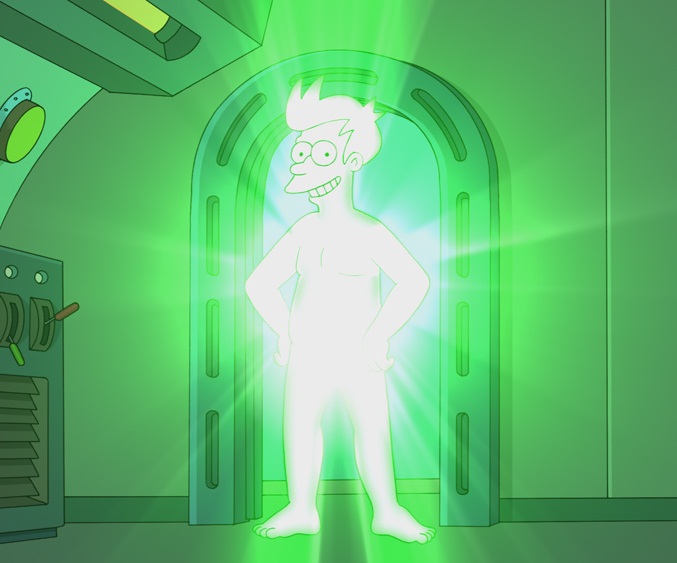
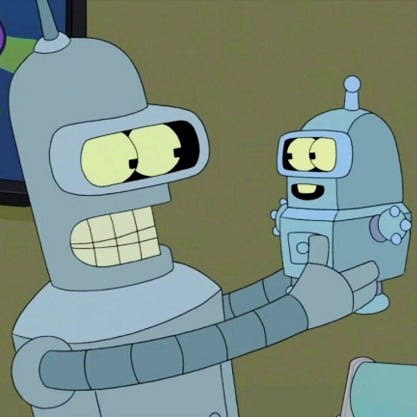
And according to Groening’s podcasts where he shared news about the upcoming debut, this seventh season will begin with a story of Bender becoming a dad. Entitled “Bender Squared”, we see him playing with a younger version of himself, no doubt teaching him how to steal and smack talk and generally be an alcoholic, kleptomaniac bending unit! Can’t wait to see it.

And of course, this is also the summer when both Prometheus and the new Batman movie are premiering! In fact, The Dark Knight Rises open in one month, and since there were no press screenings, no one outside of the test audiences have seen it yet. I sincerely hope people have booked their advance tickets… I need to get on that soon! Don’t want to be tardy to the party like I was with Prometheus!

And since its debuting this very evening, I think one final trailer to get us all psyched up is in order. Here’s the “exclusive” Nokia trailer, which means the same ol’ footage spliced by some other corporate sponsor. It’s fun anyway, check it out!

New Trailers for Spider-Man

Columbia Pictures, in collaboration with Wal-Mart, has been making a major push to promote the soon-to-be-released Spider-Man reboot. I have to admit, I don’t really see the point in this movie. I mean, didn’t we just do a Spider-Man movie trilogy? Wasn’t it hailed as a prime example of movie making and a faithful adaptation? And I seem to remember the last one came out just a few years ago. So really, what’s to be gained with this reboot other than a whole lot of money?

But I can’t deny, the promos have got me kind of interested, especially the first one. Here, we have a scene from the movie where Parker, now amped up on Spidey-power, decides to take down a carjacker. The second video is an extended behind the scenes look at the new movie and what the new focus will be. Granted, there do appear to be some differences between this version and the last, and even from the source material. I might just see it after all!

Worlds of Star Trek

In honor of the other sci-fi franchises I’ve covered in my “Worlds Of” series, which includes my own (shameless!), I’ve decided to throw some credit and attention Gene Rodenberry’s way. His Star Trek franchise is not only one of the most popular science fiction franchise of all time, it’s also hailed as one of the most detailed and in depth, owning to many years of existence and countless contributing minds. And so, here’s my list of the franchises hot spots, in alphabetical order:

Bajor:
The homeworld of the Bajoran people and situated near the Bajoran Wormhole, this planet and the system are the setting for the spinoff series DS9. Throughout the series, many details are given about the Bajoran’s culture, history and people, most of which revolve around the occupation of their planet by the Cardassian Empire and their worship of “The Prophets” (aka. the wormhole aliens).

At one time, Bajor was the home of one the oldest civilizations in the Alpha Quadrant, characterized by art, poetry, and a caste system where the priestly caste were at the top. During the occupation of Bajor, which last fifty years, the Cardassians murdered millions of inhabitants, destroyed much of their infrastructure and even poisoned large tracts of land. To mark the occupation, they built a large space station named Terok Nor in orbit.

In order to fight against the occupation, the Bajorans abandoned the caste system so that everyone could become fighters. After fifty years, the Cardassian government chose to cut its losses and abandoned the world. The Bajorans took control of Terok Nor shortly thereafter, the provisional government invited the federation to take control of it, and it was renamed Deep Space 9. After the discovery of the wormhole, Commander Sisko ordered the station to relocate to guard the entrance.

It was learned shortly thereafter that the wormhole was an artificial phenomena that connected the Alpha Quadrant to the other side of the Milky Way Galaxy (the Gamma Quadrant), and was inhabited by a race of super-evolved beings that had made contact with the Bajorans in the past. Because these beings were non-corporeal and had no concept of time, they were named “The Prophets”, mainly because of their ability to see into the future.

When the Dominion was discovered on the other side of the wormhole, Bajor would become the front lines in the Alpha Quadrant alliance’s war against them. During the course of this war, DS9 would become occupied by the Cardassian-Dominion alliance. Before abandoning the station, Sisko and the crew of DS9 made sure that the entrance to the wormhole was mined so as it ensure that the Dominion could not bring in reinforcements. Due to the articles of the Bajoran treaty with the Dominion, Cardassian forces were also forbidden from occupying the planet again. As a result, Bajor would remain free until the Federation and its allies retook the station a year later and once again controlled entrance to the wormhole.

Betazed:
Home to the telepathic race known as the Betazoids, this planet is a member of the Federation and a major contributor to its ranks, particularly in the field of diplomacy and counseling services. Deanna Troi and her mother, Lwaxana, both call this planet home, as do many other secondary characters in the TNG and spinoff series’.

In the course of the TNG series, many aspects of Betazoid culture are made clear. For one, the planet appears to have a semi-matriarchal culture, where the eldest woman of the family holds the title for the house and all its honors. This was particularly true of Lwaxana, who in addition to being a decorated diplomat, was named “daughter of the Fifth House, holder of the Sacred Chalice of Rixx, heir to the Holy Rings of Betazed”.

The planet was mentioned many times in the TNG series, usually in conjunction with the Enterprise’s many contacts with Lwaxana. During the Dominion War, Betazed was occupied for a brief time when Dominion forces caught the local fleet off guard. This development is what prompted Sisko to attempt a rapprochement with Romulan forces to bring them into the war.

Cardassia Prime:
Also known simply as Cardassia, this world is home to the Cardassian people and the seat of power for the Cardassian Union. Based on the many descriptions from DS9, Cardassia is apparently a warm, humid environment that favors reptilian creatures, which is apparently the basis of Cardassian biology.

Prior tot he militarization of their culture, Cardassia was home to thriving civilization that produced renowned works of art and architecture. However, the civilization soon fell into severe decline and decay, resulting in mass starvation. As a result, martial law was declared and the foundations for the Cardassian government were laid.

This consisted of the Central Command on the one hand, which controlled the military, and the Obsidian Order which acted as the secret police. Between the two was the relatively impotent civilian government which exercise little real power, but which occasionally was called upon to enact policy which Command knew would be unpopular. One such decision was the removal of Cardassian forces from Bajor after 50 years of unsuccessful occupation.

Cardassia was the first to ally themselves with the Dominion after their discovery in the Gamma Quadrant. This was after a disastrous war with the Klingon Empire, which the Dominion instigated through one of their shape-shifter replacement of General Martok. As a result, Cardassia Prime would remain occupied by Dominion forces for many years, until the arrival of Allied forces and the defection of the Cardassian military. In retaliation, the Dominion ordered the destruction of the Cardassian people, and over 800 million perished before the Founder officially surrendered.

Earth:
In the original series, TNG, DS9, and other spinoffs, much is made of how life has improved on Earth since the late 20th century. Though we don’t get to see much of it beyond San Francisco or Paris, it remains one of the most important planets in the Star Trek universe. As the seat of the Federation, it was the home of the Federation Council and of the office of the Federation President, and serving as the central headquarters of Starfleet.

In addition, Starfleet Academy is located in San Fransisco, just in view of the Golden Gate Bridge. It was here that all characters in the franchise received their education and commission as officers. Between Kirk, Picard, Sisko and Janeway, many stories are told of memorable and nostalgic incidents, and all allude to rather trying curriculum in which their abilities and aptitude were strenuously tested.

In the course of the original series, TNG and DS9, several major events are alluded to which had a drastic effect on Earth and the human race. These include the “Eugenics War” of the late 20th century, where genetically-modified human beings attempted to take over the planet. This ended when the last of the modified humans, under the leadership of Khan Noonien Soong, fled aboard the spaceship Botany Bay. During the early 22nd century, Earth was devastated in what was referred to as the “Atomic Horror”. This causes the destruction of most major cities, 600 million deaths, and the emergence of totalitarian regimes.

However, all that appeared to have changed with the development of the warp engine by doctor Zefram Cochrane and First Contact. Thereafter, Earth became united in the goal of reaching the stars and building a better future. Starfleet was created to acheive this goal, and the United Federation of Planets established between the Vulcans and humanity, and many subsequent races thereafter. Beyond that, not much is specified about Earth of the 23rd and 24th century, other than saying that it is a “paradise” where no crime, hunger, war, or poverty exist.

Ferenginar:
Wet, mucky, swampy, and perennially rainy, this moldy planet is home to the enterprising race known as the Ferengi. The seat of power for the Ferengi Alliance, it is also the home of the Tower of Commerce, the Sacred Marketplace, and the Ferengi Commerce Authority, the ruling body of their species.

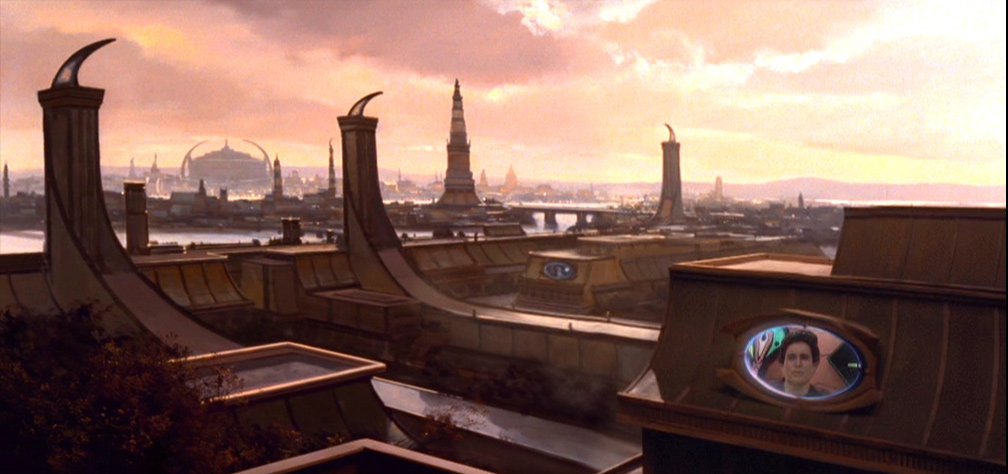
Though it was never shown in TNG, Ferenginar makes a few appearances in the DS9 series. Here, it is depicted as a rainy, wet and extremely humid place where most people live in low-domed structures. In the capitol, the majority of architecture consists of these types of dwellings, expect of course for the central spire of the Tower of Commerce, where the Authority is centered.

The leader of the Ferengi people is known as the Grand Nagus, the head of all commerce for the Ferengi and the leader of the Authority. In addition to the sacred text, “The Rules of Acquisition”, the Ferengi are governed by the Bill of Opportunities, a quasi-constitution which sets out the rights of individual citizens. These revolve mainly around the right to own a business and make a profit, provided they don’t violate any of the sacred Rules or the regulations of the Commerce Authority.

Though women have traditionally had no rights under the law, amendments made by Grand Nagus Sek during the course of the DS9 series granted them the right to wear clothes and make profits. A ruling council was also established to pass several sweeping social reforms, which including the imposition of taxes, social programs, and laws banning monopolies and the mistreatment of workers. According to expanded universe sources, over 78 billion Ferengi live on their homeworld, and the civilization has been warp capable for some time.

Qon’oS:
The home of the Klingon people and seat of the Klingon High Council, the ruling body of their Empire. Though very little information was given about this planet in the original series, it appeared repeatedly in TNG and subsequent spinoffs, and was mentioned repeatedly in relation to the character of Worf and the Federation’s dealings with the High Council.

Due to the prolonged state of tension between the Klingon Empire and the Federation, very little was known about this world until the late 23rd century, when the destruction of its mining moon of Praxis forced the Klingons to sign the First Khitomer Accord with the Federation.

However, it was not until Khitomer Massacre, where Romulan forces commited a sneak attack on the Klingon delegation, that an alliance was formed between the Federation and Klingon Empire. This was apparently due to the fact that the Enterprise C responded to the Klingon’s distress signal and was destroyed while attempting to defend the colony against four warbirds. Thereafter, the Klingons became convinced of the Federation’s honorable nature and committed to a joint-defense pact.

It is often been suggested that the Qon’oS of the original series is not the same planet as that of the Next Generations. This is because of events in the movie The Undiscovered Country, where  the evacuation of Qon’oS became necessary because of the destruction of Praxis. Though it was never made clear if Qon’oS was simply established on another world or was somehow saved with the help of the Federation, the name of their homeworld remains the same even if the locations has changed.

Risa:
Originally a dismal, rain-soaked and geologically unstable environment, the native Risans have managed to transform their world into the pleasure capitol of the known universe. This was accomplished with weather control satellites, seismic regulators, and ecological engineering, all of which resulted in a planet wide paradise that is known throughout the quadrant.

Noted for its vast beach resorts and tropical climate, Risa’s greatest attraction lies in the open sexuality of its population. Identified by a decorative emblem between their eyes, Risians often initiate or respond to the desire for sexual relations through the use of a small statuette called a horga’hn, the Risian symbol of sexuality or fertility.

As was made clear to Captain Picard during his first visit, to own a horga’hn is to call forth its pleasures. To display one is to announce that the owner wishes to participate in jamaharon, a Risian sexual rite. Riker has apparently visited the planet many times, and often relates why its his favorite vacation spot in the galaxy.While Picard was on leave, he also discovered the local of the Tox Uthat, a 27th century weapon which had was hidden on Risa and passed into local legend.

The crew of DS9 also went to Risa during shore leave, during which time a group of extremists planned to sieze the planet to demonstrate how the Federation was not prepared to deal with the threats facing it. In the course of the visit, it was also revealed that Dax’s former host, Curzon, died there as a result of engaging in jamaharon. Death by pleasure. No wonder the place is so popular!

Romulus:
Along with its sister-planet Remus, Romulus is the home of the Romulan species and the seat of power for the Romulan Star Empire. Settlement of this planet took place in 4th century by Earth standards, when Vulcan colonists discovered it at the end of a long exodus. Shortly thereafter, the Vulcan society changed with the strict institution of logic and repression of emotion.

As a result, Romulans society bears little resemblance to their Vulcan forebears, though they are genetically related. Known for their arrogance and innate sense of superiority, the Romulans are one of the dominant powers in the galaxy, located in the Beta Quadrant adjoining Klingon and Cardassian Space. Because of this strategic location, they have been involved in skirmishes with virtually every civilization that borders there own.

The planet is the home of the Romulan Hall of State and the Imperial Romulan Senate. In the TNG series, Picard and Data also traveled here seeking Ambassador Spock. After finding him, they discovered that his presence was part of an effort known as “Reunification”, a movement between Romulans and Vulcans who wanted their worlds to come together again after centuries of being apart. During the Dominion War, the planet also hosted a Federation Alliance Conference to help them plan strategy and address wartime concerns.

Additional events took place in the franchise’s movies, particularly the TNG movie Nemesis and the JJ Abrams Star Trek relaunch. In the former, Romulus became the focal of a plot by Reman agents, led by a Picard clone, to take over the Romulan government and incite a war with the Federation. In the latter, Spock indicates that in 2387, a supernova destroyed Romulus before he could contain it using a “red matter” singularity device.

Vulcan:
The homeworld of the Vulcan race, the birthplace of their philosophy, and the center of their star-faring civilization. Noted for its higher than normal gravity and thinner atmosphere, the climate of this planet had much to do with fact that the Vulcan race, in their primordial form, are physically very strong, fast, and quite aggressive.

Much is mentioned of the history of Vulcan in the original series, TNG, and the various spinoff. After contact with Earth, it became one of the major worlds of the Federation and home to several key installations. In addition, many key events took here in the expanded franchise because of its importance in the Star Trek universe as the homeworld of Spock.

During the original series, Spock was summoned back to his homeworld to take part in the ritual of Pon farr, where he ended up Kirk to the death for the honor of his less-than-honorable betrothed. During the movie Search for Spock, the crew was forced to come to Vulcan aboard a captured Klingon vessel so that Spock’s regenerated body could be reunited with his consciousness.  This ritual, known as fal tor pan and conducted on Mount Seleya, was successful in restoring Spock’s mind, which had previously been sojourning in Dr. McCoy’s head.

In the TNG series, some details are given about Vulcan’s prehistory, before the adoption of logic and the repression of emotions. This period, known as the “Time of Awakening” was marked by civil war between several different factions, and even involved the use of nuclear and psionic weapons. One of these weapons, known as the Stone of Gol, survived the wars and was being sought by a Romulan agent posing as a Vulcan.

In the relaunch movie, Vulcan was a key setting, mainly in relation to Spock’s upbringing and his decision to join Starfleet rather than the Vulcan Science Academy. It is was later destroyed when Nero, the Romulan Captain of the Narada, used the red matter device to trigger an artificial singularity at the center of the planet. Because of these events, the Vulcan race has become an endangered species in this alternate timeline, though resettlement efforts did begin in earnest by the end.

Alright, that’s Star Trek done. Now that I’ve covered this franchise, Star Wars, Dune, and even my own, there’s only one or two left that I think deserve mention. The first is the Firely universe, which I’ve already talked about at length. And then there’s the Babylon 5 universe, which I’ve talked about WAY more! Like to the point of nausea, tedium, and even boring myself! But if people are even the slightest bit interested, I’d be happy to cover them. Just give me a week or two to decompress… all this writing about fictional planets has got me nerded out!

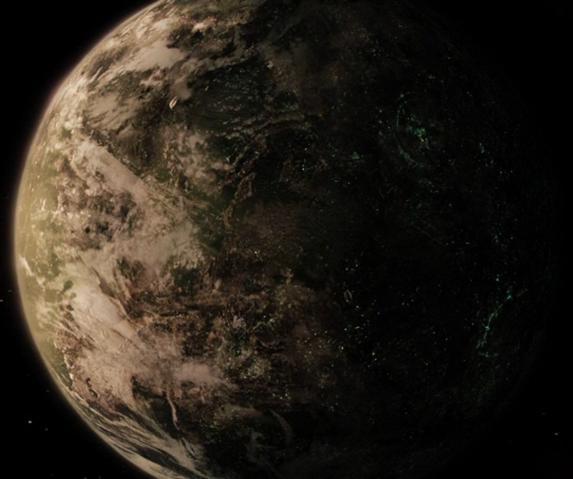
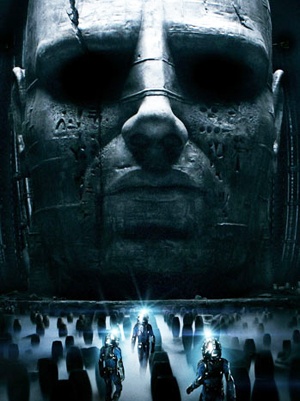
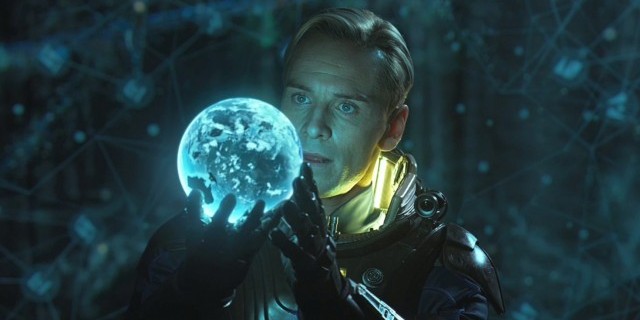
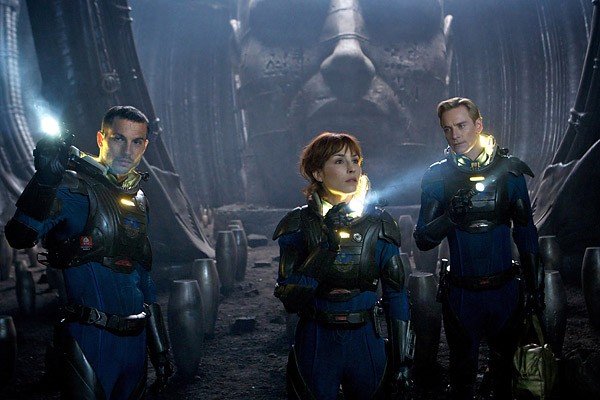
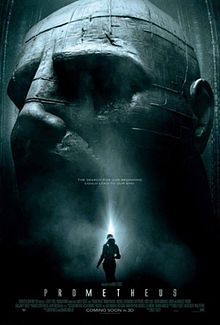
Back from seeing Prometheus!

As Stewie said when he learned that Child Services would be taking him away, “Finallllly!” Yes, that’s how I felt when we hopped in the car and were on our way to the theater. And though I am a week late in getting this review done, because last weekend we were diverted to see The Avengers, I think the wait was worth it!

And I should get some bonus points for doing it today. Because, as often proves the case with me, the cold has doubled back and reinfected me. You could say I was extra sympathetic to some of the characters in the this movie! But I don’t want to give anything away, I promised myself in advance that I would rate this movie without giving anything crucial away. So here goes…

First impressions:
The movie was pretty damn cool! The premise of ancient astronauts, which I knew they were employing here, is one I think pretty highly of. And the fact that they were going back to the Alien universe in such a way that they really wanted to capture the feel of the original was also pretty pleasing. And just about everyone I’ve heard speak on the subject has said that the visuals and effects were state of the art. They weren’t wrong.

That being said, I think they could have done the whole “Engineers” thing a bit better. In fact, what they had to say about their coming to Earth and what they looked like (which I shan’t get into for fear of spoilers) kind of called to mind how Stargate and AVP tackled the whole “aliens tampered with our history”. Still, Scott is nothing if not a master of crafting worlds and believable settings, so it was by no means in the same category. While I felt it could be better, it was still pretty damn good!

The Big Questions:
What’s more, this movie also filled in a great deal of details from the Alien franchises back story. Questions like what are the Xenomorphs, where did they come from, do their hosts and environments influence their appearance, why were they found aboard the Space Jockeys (“Engineers”) ship, and just who are the Jockeys anyway? All of these questions were addressed in this film and answered in one way or another. And of course, they left just enough mystery to keep the option open for further explorations in the Alien universe.

And I was pretty pleased with how they went about answering them, mainly because I’ve been studying them for some time now and heard quite a few theories. And sure, covering all this stuff did generate a certain “prequel duty” feel here and there, but Scott’s handling of all that seemed far superior to most others efforts. For one, I never really felt like they were wrapping things up in a neat little package, which is an annoying tendency to be found in most prequels. Take the Star Wars prequels, did those not feel like they were simply trying to connect the threads irrespective of plot? Yeah, well that wasn’t the case here.

Overall:
And that, I think, is what is best about this movie. Though it is technically a prequel, Scott and the makers seemed determined that it feel like a standalone story. I recall him saying as much in the course of an interview, and I truly felt like they succeeded. Granted, there were some flaws and some holes here and there, but these were hardly fatal and didn’t leave me thinking, “holy crap, that movie made no sense and was totally pointless and stupid!” Expectations and hopes were certainly high for this film, leading some to come away disappointed. But what can be said about them?

Sure, this movie wasn’t Alien, but there’s a reason for that! Scott already made that movie thirty-three years ago, and several directors have since taken the franchise in many different (and some would say wrong) directions. Going back to the before the beginning was the only option left really, reopening the franchise at a point before the original to answer all the tough, enduring questions that have fans have raised over the years. And that was no easy task and I could see beforehand how it would be riddled with potential pitfalls.

But in the end, I came away pretty pleased. Not only was this movie pretty good viewing, it was also a faithful return to the Alien universe… Frankly, I’d like to see what they come up with next!

Off to see Prometheus!

Finaaaaally! Today the wife and I will finally be making our trip to see the latest installment in Ridley Scott’s Alien franchise. I say in his franchise because it is really is his baby. Sure, Cameron did a good job with the sequel, a really good job in fact. But those who’ve followed, especially those who filmed the fresh hell known as AVP and AVPR, pretty much pissed it away!

Mr. Scott pretty much said so, when interviewed he stated that part of his reasons for making this film was to ensure that he wanted his old franchise to be remembered for something other than all the abortive sequels other people made. I really don’t blame him! If I were Scott, I’d be looking for the bastards with blood lust in my heart and a shiv in my hand!

Despite my best efforts, I have heard some things about this movie. I’ve avoided reading the details wherever possible, but it’s hard not to notice when people rave or complain about something. Hell, they say so right in the title lines! But I’m still going in with a relatively open mind and so real expectations. I hope it’s good, naturally; but even if it’s only mediocre, it will be light years ahead of AVPR.

Review to follow, not to mention some themed posts that delve into various aspects of the movie. In fact, I think I’ll revisit the Ancient Aliens post I did awhile back, where the concept of ancient astronauts came up. I know it’s a thematic element of this film, can’t wait to see what they do with it! Did I mention it will be in Imax 3D? Woohoo!