News From Space: Earth Organisms Found In Space!

space_organismDuring a routine spacewalk to clean the outside of the space station, a team of Russian astronauts reportedly found organisms clinging to the side of the International Space Station. After analyzing the samples they took, they identified the organisms as sea plankton that likely originated from Earth, but couldn’t find a concrete explanation as to how these organisms made it to the ISS — or how they managed to survive.

Though NASA has so far been unable to confirm whether or not the Russians truly did discover sea plankton clinging to the exterior of the station. But according to the chief of the Russian ISS orbital mission, Vladimir Solovjev, these findings are legitimate and “absolutely unique.” And there is some scientific precedent for certain creatures being able to survive the vacuum of space.


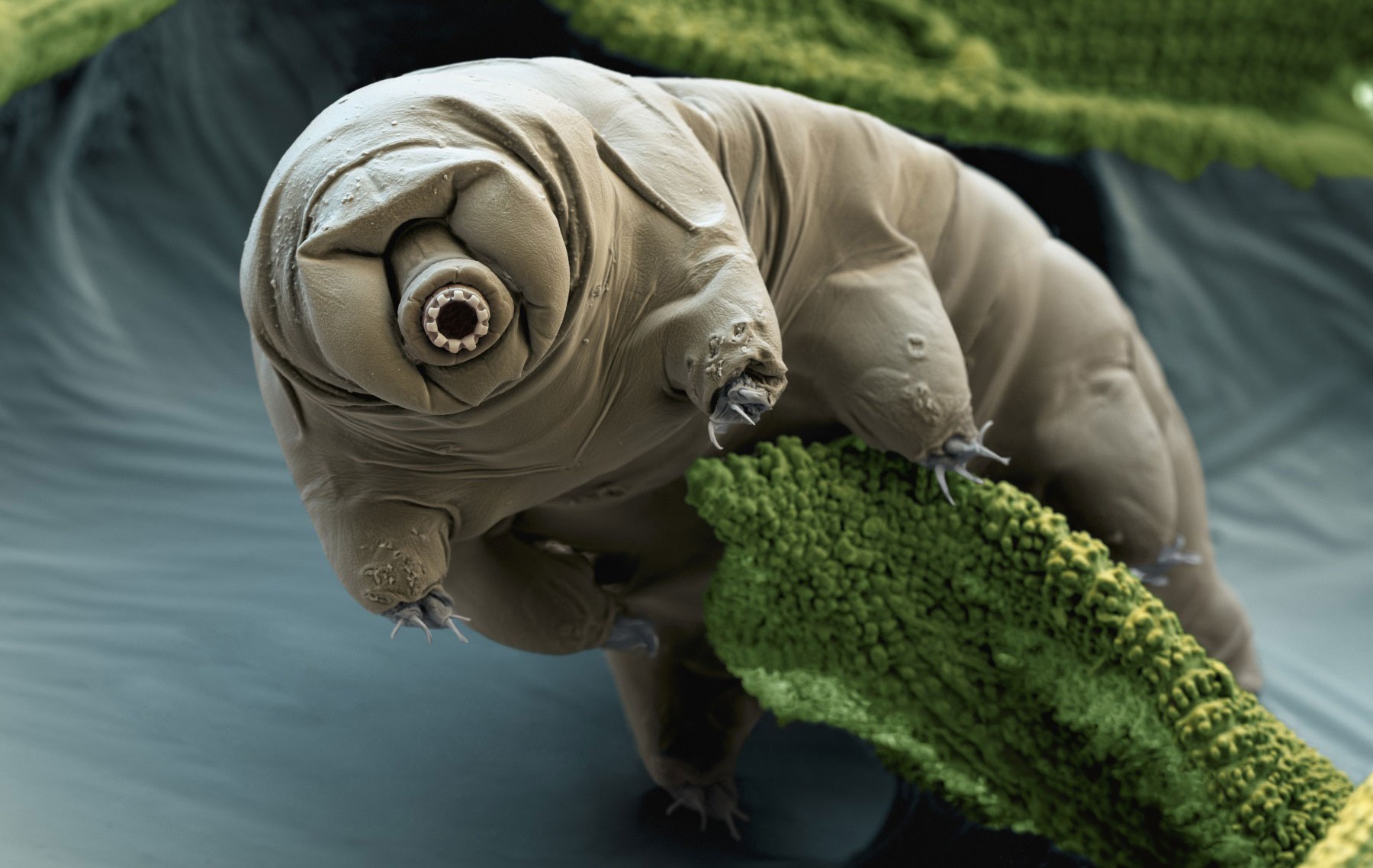
tardigrade-electron-scanning-colorizedConsider tardigrades, for example. These water-dwelling microscopic invertebrates that are known to be able to survive a host of harsh environments. They can survive extreme temperatures (slightly above absolute zero to far above boiling), amounts of radiation hundreds of times higher than the lethal dose for a human, pressure around six times more than found in the deepest parts of the ocean, and the vacuum of space.

The organisms found on the ISS aren’t tardigrades, but the little invertebrates show that some living organisms from Earth can indeed survive the harshness of space. But the real mystery is how they made it all the way up there, 330 km (205 miles) above Earth. The scientists have already dismissed the possibility that the plankton were simply carried there on a spacecraft from Earth, as the plankton aren’t from the region where any ISS module or craft would’ve taken off.

International-Space-Station-ISS-580x441The working theory is that atmospheric currents could be scooping up the organisms then carrying them all the way to the space station, though that would mean the currents could travel to astonishing altitudes. Living organisms have been found far above Earth before, such as microbes and bacterial life discovered at altitudes of 16 to 40 kms (10 and 24.8 miles) respectively into the atmosphere.

Though these numbers are a far cry from 330 km. For now, all that can be done is to wait and see if the Russian team confirms the findings with NASA. Then, maybe the two factions can work together in order to figure out how plankton made it all the way up into space, and perhaps even discover exactly why the plankton can survive. The organisms aren’t exactly the first confirmed discovery of alien life, but they do pose another fascinating mystery.

Sources: extremetech.com, sploid.gizmodo.com, en.itar-tass.com

News from Space: Dream Chaser Airframe Unveiled

dream-chaser-dockedWith the cancellation of the Space Shuttle program, and the termination of NASA’s operations with the Russian Federal Space Agency (Roscosmos), NASA has been pushing ahead with several programs designed to restore their access to low Earth orbit and the International Space Station (ISS). One such program is the Dream Chaser, a joint venture between the Sierra Nevada Corporation and Lockheed Martin that aims to create a winged mini-shuttle.

Earlier this month, the program reached an important milestone when the composite airframe structure was unveiled at a joint press conference by Sierra Nevada Corporation and Lockheed Martin at the Fort Worth facility. The assembly of the airframe took place at NASA’s Michoud Assembly Facility (MAF) in New Orleans, where Lockheed Martin is busy fabricating the structural components for the composite structure.

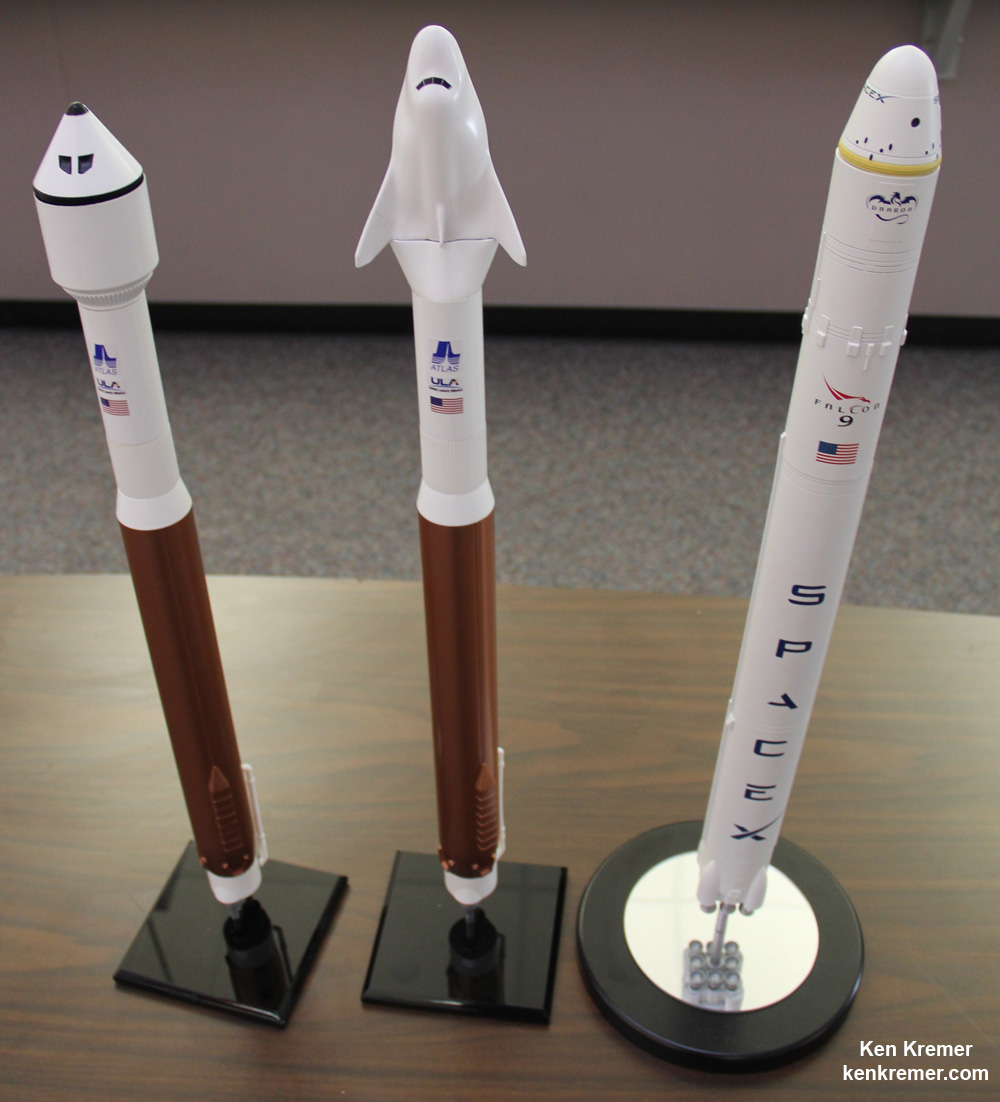
Dream Chaser at autoclave FP141497 07_31_14From here, the completed components are shipped to Lockheed Martin’s Aeronautics facility in Fort Worth, Texas for integration into the airframe and assembly. Designed to be launched into orbit atop a United Launch Alliance (ULA) Atlas V rocket and then fly back and land on its power, the Dream Chaser will carry a mix of cargo and up to a seven crewmembers to the ISS before landing on commercial runways anywhere in the world.

According to Mark N. Sirangelo, corporate vice president of Sierra Nevada’s Space Systems, the company chose to partner with Lockheed Martin because of its long history in the development of commercial aerospace technology:

As a valued strategic partner on SNC’s Dream Chaser Dream Team, Lockheed Martin is under contract to manufacture Dream Chaser orbital structure airframes… We competitively chose Lockheed Martin because they are a world leader in composite manufacturing, have the infrastructure, resources and quality control needed to support the needs of an orbital vehicle and have a proven track record of leading our nation’s top aviation and aerospace programs. Lockheed Martin’s diverse heritage coupled with their current work on the Orion program adds an extra element of depth and expertise to our program. SNC and Lockheed Martin continue to expand and develop a strong multi-faceted relationship.

dream-chaser-test1Dream Chaser measures about 9 meters (29 feet) long with a 7 meter (23 foot) wide wing span, and is about one third the size of the Space Shuttle Endeavor and all other NASA orbiters – which were retired beginning in 2011. Upon completion of the airframe manufacturing at Ft Worth, it will be transported to SNC’s Louisville, Colorado, facility for final integration and assembly.

SNC announced in July that they successfully completed and passed a series of risk reduction milestone tests on key flight hardware systems that brought the private reusable spacecraft closer to its critical design review (CDR) and first flight. The Sierra Nevada Corporation is now moving ahead with plans for the Dream Chaser’s first launch and unmanned orbital test flight in November of 2016, which will take place atop an Atlas V rocket from Cape Canaveral, Florida.

dream_chaserDream Chaser is among a trio of US private sector manned spaceships being developed with seed money from NASA’s Commercial Crew Program in a public/private partnership to develop a next-generation crew transportation vehicle to ferry astronauts to and from the International Space Station by 2017 – a capability totally lost following the space shuttle’s forced retirement in 2011.

These include the SpaceX Dragon and Boeing CST-100 ‘space taxis’, which are also vying for funding in the next round of contracts to be awarded by NASA around September 2014. Between a reusable mini-shuttle, a reusable space capsule, and reusable rockets, NASA not only hopes to restore indigenous space capability, but to drastically cut costs on future space missions.

Commercial-Crew-vehicles_Ken-Kremer-

Source: universetoday.com

Climate Crisis: Visualizing the Effects of Climate Change

future-summer-heat-20140709-001Climate Change means more than just on average hotter temperatures year round. There are also numerous consequences for sea levels, glaciers, weather patterns, weather stability, crop growth, fisheries, wildlife, forest fires, disease, parasites, rivers and fresh water tables. Explaining it can be a challenge, which is why visual tools like tables, maps and charts are so very useful.

Unfortunately, these too can seem bland and technocratic, and fail to capture the true extent and critical nature of Climate Change. Luckily, this past summer, a season that has been marked by uncharacteristically cool and hot temperatures, two particularly useful visual aids have been produced that seek to remedy this. By combining data-driven predictions with aids that are both personal and global in outlook, they bring the consequences of Climate Change home.

1001-blistering-summersThe first is known as 1001 Blistering Future Summers, a tool produced by the Princeton-based research and journalist organization Climate Central. This interactive map illustrates much hotter summers will become by the end of the century if nothing is done to stem global warming. Users simply type in the name of their hometown and the map compares current temperatures in their town to how high they will be and finds the geographic equivalent.

On average, according to Climate Central, daytime summer temperatures will be 4 to 6° Celsius (7 to 10° Fahrenheit) warmer across U.S. cities. That translates to most cities in the U.S. feeling like Florida or Texas feel in the summer today. For example, in the future, Boston will feel like North Miami Beach. And Las Vegas, where temperatures are projected to an average of 111 degrees, will feel more like Saudi Arabia.

dynamics_ccAs you can imagine, changes like these will have drastic effects that go far beyond scorching summers and inflated AC bills. Furthermore, when one considers the changes in a global context, and they will be disproportionately felt, they become even more disconcerting. And that is where the series of maps, collectively known as the “human dynamics of climate change”, come into play.

Developed by the U.K. Met Office (the official British weather forecast service) with the U.K. Foreign Office and several universities, they start with a “present-day” picture map – which shows trade in various commodities (wheat, maize, etc), important areas for fishing, routes for shipping and air freight, and regions with high degrees of water stress and political fragility.

dynamics_ccwThen the maps get into specific issues, based on climate forecasts for 2100 that assume that nothing will be done to stop global warming. You can see, for example, how higher temperatures could increase demand for irrigation water; how parts of the world could see increases and decreases in water run-off into rivers; how different areas are set for more flooding; and how the warmest days in Europe, parts of Asia, and North America are projected to be 6°C warmer.

The poster also has summaries for each region of the world. North Africa, for instance, “is projected to see some of the largest increases in the number of drought days and decreases in average annual water run-off.” North America, meanwhile, is forecast to see an increase in the number of drought days, increasing temperatures on its warmest days, and, depending on the region, both increases and decreases in river flooding.

climate-changeThe overall impression is one of flux, with changing temperatures also resulting in vast changes to systems that human beings heavily rely on. This is the most frightening aspect of Climate Change, since it will mean that governments around the world will be forced to cooperate extensively to adapt to changes and make do with less. And in most cases, the odds of this aren’t good.

For instance,the Indu River, a major waterway that provides Pakistan and India with extensive irrigation, originates in Pakistan. Should this country choose to board the river to get more use out of its waters, India would certainly attempt to intervene to prevent the loss of precious water flowing to their farmers down river. This scenario would very easily escalate into full-scale war, with nuclear arsenals coming into play.

climate_changetideThe Yangtze, China’s greatest river, similarly originates in territory that the country considers unstable – i.e. the Tibetan Plateau. Should water from this river prove scarcer in the future, control and repression surrounding its source is likely to increase. And when one considers that the Arab Spring was in large part motivated by food price spikes in 2010 – itself the result of Climate Change – the potential for incendiary action becomes increasingly clear.

And Europe is also likely experience significant changes due to the melting of the Greenland’s glaciers. With runoff from these glaciers bleeding into the North Atlantic, the Gulf Stream will be disrupted, resulting in Europe experiencing a string of very cold winters and dry summers. This in turn is likely to have a drastic effect on Europe’s food production, with predictable social and economic consequences.

Getting people to understand this is difficult, since most crises don’t seem real until they are upon us. However, the more we can drive home the consequences by putting into a personal, relatable format – not to mention a big-picture format – the more we can expect people to make informed choices and changes.

Sources: fastcoexist.com, (2), climatecentral.org, metoffice.gov.uk

News From Mars: Curiosity Celebrates 2 Years!

curiosity_peakEarlier this month, Curiosity marked its second year on the Red Planet, and this anniversary comes amidst plenty of exciting news and developments. Ever since the rover touched down at the Bradbury Landing site inside the Gale Crater on August 5, 2012 at 10:31 pm PDT (August 6, 05:31 GMT), it has been busily searching for signs that life once existed on Earth’s neighbor. And as it enters into its third year of exploration, it is getting closer to accomplishing this lofty goal.

The nuclear-powered explorer is the largest, most advanced rover ever built. And since nothing like it had ever flown before and the maintenance facility was over 160 million kilometers (1oo million miles) away, the first months that Curiosity spent on Mars involved an array of system tests before it took it first tentative rolls across the Martian sands on its roundabout path to Mount Sharp.

curiosity_roadmap1Curiosity’s main mission was to find out if there are any places on Mars where life could have once existed – specifically, areas displaying minerals and geology that could have been produced by water. The Bradbury Landing site, where it touched down, turned out to be very close to an ancient dried lake bed in an area named Yellowknife Bay. According to NASA, this lake bed may have been able to sustain microbial life billions of years ago.

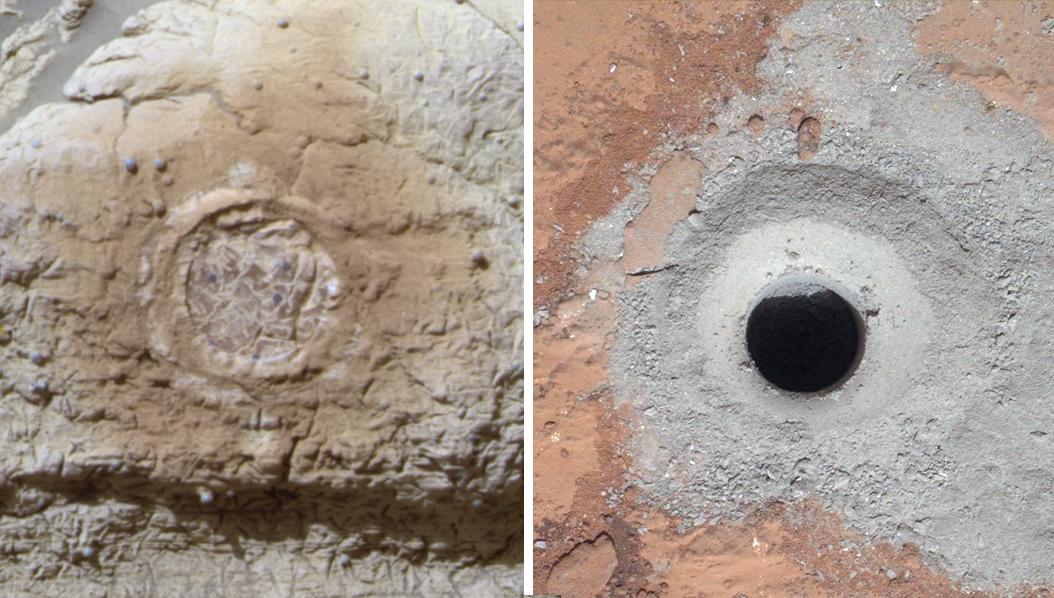
And then, barely six months after landing, the scientists struck gold when they drilled into a rock outcrop named “John Klein” at Yellowknife Bay and unexpectedly discovered the clay bearing minerals on the crater floor. This was the first instance of Curiosity finding clay-bearing minerals. or phyllosilicates, which are a key sign that organic molecules could exist on the planet.

Curiosity_drillingsAs Curiosity Project Scientist John Grotzinger of the Caltech said in a statement to mark the anniversary:

Before landing, we expected that we would need to drive much farther before answering that habitability question. We were able to take advantage of landing very close to an ancient streambed and lake. Now we want to learn more about how environmental conditions on Mars evolved, and we know where to go to do that.

Compared to its first year, which was marked by many firsts – such as the first drilling operation on Mars, the first laser firing, and first UV night scans – Curiosity’s second year on the Red Planet has been more routine. However, it hasn’t been without its share of excitement. In February, the rover cleared a dune that blocked its progress and in July it negotiated a detour around rocky terrain at Zabriskie Plateau.

curiosity-2nd-year-2However, by far, the majority of the rovers second Earth year on the Red Planet has been spent driving as fast as possible towards a safe entry point to the slopes of Mount Sharp. To date, Curiosity’s odometer totals over 9.0 kilometers (5.5 miles) since landing inside Gale Crater on Mars in August 2012, and her on board camera has snapped over 174,000 images – many of which have been transformed into panoramic shots of the surface.

The desired destination for the rover is now about 3 kms (2 miles) southwest of its current location. This consists of a bedrock unit that for the first time is actually part of the humongous mountain known as Mount Sharp. As the primary destination on her ongoing mission, this layered mountain in the Gale Crater towers 5.5 kilometers (3.4 miles) into the Martian sky, and is believed to hold the most compelling evidence of life yet.

mountsharp_galecraterThe sedimentary layers in the lower slopes of Mount Sharp are the principal reason why the science team specifically chose Gale Crater as the primary landing site. Using high resolution spectral observations collected by NASA’s powerful Mars Reconnaissance Orbiter (MRO), they were able to determine the presence of deposits of clay-bearing minerals. or phyllosilicates, a key sign that organic molecules could exist on the planet.

In late July of this year, the rover arrived in an area of sandy terrain called “Hidden Valley” which is on the planned route ahead leading to “Pahrump Hills”. Scientists anticipated that the outcrops here would offer a preview of a geological unit that is part of the base of Mount Sharp for the first time since landing. However, the sharp edged rocks caused significant damage to the rovers six aluminum wheels, forcing it to make a detour.

Mars_rovermapThis detour will take Curiosity to a similar site called “Bonanza King” to carry out its fourth drilling mission. According to NASA, this is no great loss because the two areas are geologically connected and the space agency is keen to look at a formation that is different from the crater floor formations encountered so far. Engineers are studying Bonanza King to see if its is suitable for drilling by assessing whether or not the plates seen on the surface are loose.

When drilling operations resume, NASA will study alternative routes to Mount Sharp and determine how well the rover’s wheels can handle sand ripples. However, as Dr. Jim Green, NASA’s Director of Planetary Sciences, said during an interview during the rover’s second anniversary in Washington, DC : “Getting to Mount Sharp is the next big step for Curiosity and we expect that in the Fall of this year.”

Godspeed, little rover! And I do hope that it finds the long-sought-after organic particles it has been looking for since the mission began. This discovery will not only show that life once existed on Mars (and still does in some capacity) it will also be one of the greatest scientific finds of all time, and maybe even serve as the starting point for ensuring that it can exist again.

terraforming

Sources: universetoday.com, gizmag.com, (2)

Climate Wars: Cropland Destruction and Improvement

cereals-agriculture-earClimate Change is currently recognized as one of the greatest threats to the stability and well being of the world and its people. But far worse than rising sea levels, unpredictable weather patterns, and an increase in forest fires is the threat that it could have on the global food supply. As our population increases by several billion over the next few decades, these problems will make it even harder to feed everyone.

Up until now, predictions and projections have taken into account rising temperatures, drought, erosion, and longer growing seasons. But a recent study, produced by researchers at MIT and Colorado State University shows that air pollution is also a major factor. In their report, which was published in Nature Climate Change, they claim that ground-level ozone could exacerbate the effects on staple food crops like wheat, soybeans, maize, and rice.

crop_failureUsing two scenarios, researchers mapped out the tandem relationship between pollution and climate change. As a baseline, the MIT and Colorado State researchers estimate that climate change alone will result in a 11% decrease in global crop production. But if countries fail to substantially curb greenhouse gas emissions (the first scenario), the scientists’ model shows that air pollution could trigger an additional 4% of crop failures.

That means that barring significant changes, croplands could see a 15% drop in productivity in the next 40 years. But if countries work to decrease greenhouse gas emissions after 2040, the researchers’ model shows that reduced air pollution could actually offset other negative impacts of warming on crops. They calculate that reduced air pollution in this second scenario could actually increase yields by 3%.

Pollution over Mexico CityThe link between air quality and food production may seem a bit odd, but the logic is actually very straightforward. Basically, the atmosphere forms ozone when sunlight energizes pollutants generated from sources like cars and power plants. Ozone concentrations can also increase at higher temperatures, the kind that already wither temperature-sensitive crops like maize. On top of the heat, increased ozone levels attack pollution-sensitive crops, like wheat.

In the climate scenario where emissions decrease after 2040, the reduction in ozone alone would be enough to increase wheat production in the U.S. and China, the researchers say. Their findings show that reducing air pollution could slow the negative impacts of climate change–even enough to reverse some of them. But some regions will be negatively impacted no matter what.

trafficAs Amos Tai, one of the study’s co-authors, explained:

It appears that South Asia will be the most hard-hit by the combination of warming and ozone trends, where ozone is expected to increase even in the more optimistic scenario. African countries with low domestic production and heavily reliant on food imports are also expected to suffer more in terms of climate-pollution-driven food insecurity.

In short, food production is likely to suffer no matter what, but the effects could be confined to certain areas of the world. With proper management, and the provision of food to these regions from those that are unaffected (say, a pollution-fighting US and China), the worst could be avoided. And there’s some good news coming from another report, which claims we can further increase our food production without taxing the environment.

crop_growthAccording to a new report by researchers at the University of Minnesota’s Institute on the Environment, by focusing efforts to improve food systems on a few specific regions, crops and actions could make it possible to both meet the basic needs of three billion more people while simultaneously decreasing agriculture’s environmental carbon footprint. The report, published in Science back in July, may sound like fantasy, but the argument offered is logical and compelling.

The report focuses on 17 key crops that produce 86 percent of the world’s crop calories and account for most irrigation and fertilizer consumption. It then proposes a set of key actions in three broad areas that have the greatest potential for reducing the environmental impact of agriculture while boosting production. For each, it identifies specific “leverage points” where NGOs, foundations, governments, businesses and citizens can have the greatest impact.

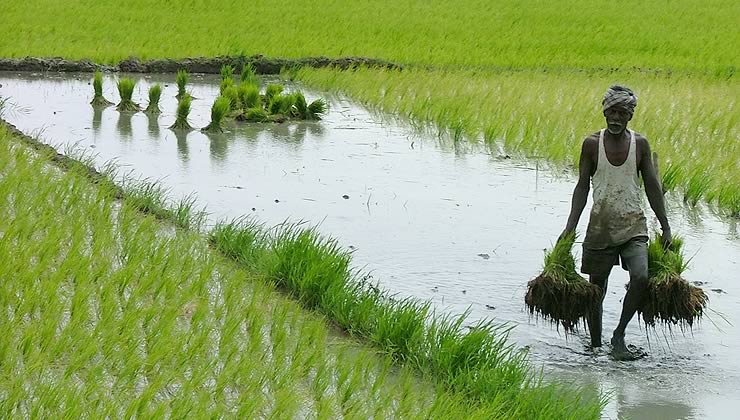
agriculture_indiaThe biggest opportunities cluster in six countries – China, India, U.S., Brazil, Indonesia and Pakistan – along with Europe. As the report’s lead author Paul West, co-director of the Institute on the Environment’s Global Landscapes Initiative, explains:

This paper represents an important next step beyond previous studies that have broadly outlined strategies for sustainably feeding people. By pointing out specifically what we can do and where, it gives funders and policy makers the information they need to target their activities for the greatest good.

Overall, the report identified a number of major areas of opportunity and key leverage points for improving the efficiency and sustainability of global food production. First, there is reducing the “yield gap” – i.e. the difference between potential and actual crop yields – in many parts of the world. Currently, the largest gaps are to be found in Africa, Asia and Eastern Europe, and reducing it by just 50% could provide enough calories to feed 850 million more people.

china agriculture researchSecond, there is improving growth efficiency. The study identified two key areas where major opportunities exist to reduce climate impacts and improve efficiency of crop growth. These included the reduction of emissions of global greenhouse gas – which agriculture is responsible for 20 t0 35 percent of – in the form of CO2, tropical deforestation and methane, as well as improved efficiency in water usage.

In the case of emissions, the biggest opportunities are in Brazil and Indonesia where deforestation is a major problem, and in China, India and the US, where the production of rice, livestock, and crop fertilization all lead to sizable carbon and methane emissions. With respect to nutrient use, the study found that worldwide, 60 percent of nitrogen and nearly 50 percent of phosphorus applications exceed what crops need to grow.
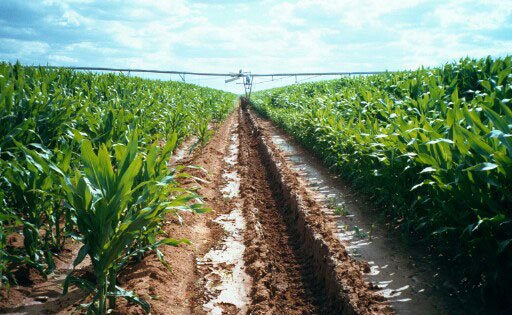
agribusinessIn the case of water usage, the greatest opportunities are in China, India and the US, where the production of rice, wheat and corn create the most demand for irrigation. India, Pakistan, China and the U.S. also account for the bulk of irrigation water use in water-limited areas. Thus, by boosting crop water use efficiency could also reduce water demand by 8 to 15% without compromising food production.

Third, the report calls for improved efficiency in crop use, which can be done by shifting crops from livestock to humans use and reducing food waste. Currently, the amount of crops fed to animals is sufficient to meet the calorie needs of 4 billion people. The U.S., China and Western Europe account for the bulk of this “diet gap,” with corn being the main crop diverted to animal feed. Shifting these crops could also form a “safety net” in the event of an unforeseen shortfall.

Last, but not least, the report calls for the elimination of food waste, which accounts for some 30 to 50 percent of food production worldwide. Again, the U.S., China and India are the major players, and reducing waste in these three countries alone could yield food for more than 400 million people. All told, these changes could allow for enough food for an additional 3 billion people, which is what the world population is expected to reach by 2050.

world_hungerOverall, West summarizes the report and its recommendations as follows:

Sustainably feeding people today and in the future is one of humanity’s grand challenges. Agriculture is the main source of water use, greenhouse gas emissions, and habitat loss, yet we need to grow more food. Fortunately, the opportunities to have a global impact and move in the right direction are clustered. By focusing on areas, crops and practices with the most to be gained, companies, governments, NGOs and others can ensure that their efforts are being targeted in a way that best accomplishes the common and critically important goal of feeding the world while protecting the environment. Of course, while calories are a key measure of improving food security, nutrition, access and cultural preferences must also be addressed. But the need to boost food security is high. So let’s do it.

As always, the good news is contained within the bad. Or more precisely, every crisis present us with an opportunity for change and advancement. Though Climate Change and air pollution may threaten current and future levels of food production, there are solutions. And in all cases, they present opportunities for healthier living, more efficient use of land and water, and a more sustainable way of meeting our most basic needs.

Sources: fastcoexist.com, sciencedaily.com

Flash Forward Is Done!

FlashForward_2After many months on the back burner, I finally took a big step while house-sitting for my family this weekend and completed Flash Forward. For those who don’t know, this book is an anthology of short sci-fi stories I did back in April of 2013, with a few additions from both before and after. All told, it works out to 19 short stories, 140 pages, and just over 51,000 words.

For some time, I had been wanting to do some fiction that explored the world of emerging technologies, artificial intelligence, autonomous machines, space exploration and the coming Technological Singularity. And a project involving a short story a day for 26 days was just the excuse I needed. After collecting the resulting stories together, I grouped them into three parts based on common time period and theme.

transhumanismPart I: Transitions deals with the near future, where climate change, militarized borders, and explosive growth in portables, social media, and synthetic foods will have a major effect on life. Part II: Convergence deals with the ensuing decades, where space exploration, artificial intelligence, digital sentience, and extropianism will become the norm and fundamentally alter what it is to live, work, and be human.

And Part III: Infinitum finishes things off, looking to the distant future where the seed of humanity is planted amongst the distant stars and our species passes the existential singularity. It was fun to write, but what I’ve been looking forward to for quite some time is the chance to hold a physical copy. Somehow, that’s always the best moment of the whole creative process for me. Seeing the book in print, as a real, physical thing you can touch and leaf through.

hyperspace4And now if you’ll excuse me, I have a book to edit, a million and one ideas for critical revision to consider, and a whole heap of what Aldous Huxley referred to as “Chronic Remorse” to deal with. Writing, huh? There’s a reason not everybody does it!

Oscar Mike 1/3 Complete!

zombies-city-and-the-crowdMore good zombie-related news everybody! With 22 chapters, 116 pages, and over 40,000 words (the length of a conventional novel), Oscar Mike is now one-third complete and on its way towards being finished! Granted, this is just an estimate based on the rough outline I have for the novel, but it’s a pretty good estimate.

And let’s be honest. Given the choice, I would rather not write a book that exceeds 66 chapters, 348 pages, or 120,000 words. I’m not Tolstoy, dammit. I don’t DO epics with more than 500 characters! Anyway, at the risk of previewing things a little, I decided I wanted to offer a brief synopsis of what can be expected in book III:

  1. Zombie Attack: For starters, it picks up shortly after where Papa Zulu left off. During the final chapters of that book, the Rattlesnakes had managed to drive the Eastern Faction (which is what the military units from the east are known as in book III), out of their hometown. However, the violent noise of this attack awoke countless zombies that had been living and hiding in the nearby hills. Now, the Rattlesnakes must deal with the aftermath of this latest assault by the zombie hordes.
  2. Change in Leadership: Major-General Michael Thur (aka. The Mage), was severely injured in Papa Zulu and fell into a coma. In Oscar Mike, his immediate subordinate, Colonel Haynes, has risen to take command of the Rattlesnakes. He is known for being a hard liner and a ruthless man, and his assumption of command will have dire consequences for some.
  3. Braun is MIA: After the events in Papa Zulu, Lieutenant Braun was stripped of his rank and command and sent to Santa Fe to live out his life as a civilian. Naturally, the people of 1st Platoon, Bravo Company are not too pleased with this. But for Braun, it means adapting to a new life, one where he is being compelled to make a difference in the lives of ordinary citizens.
  4. Danger Approaching: In the aftermath of the assault by the Eastern Faction, a small band of survivors is found. They carry with them a message, and some dangerous knowledge which could alter the course of the war. (Hint: Second Wave!)
  5. Zombie Revelations: For some time, it has been apparent to the people fighting the war against the Whiskey Delta that they are not all that they appear to be. For one, they continue to demonstrate that are capable of more than mere instinctive behavior, even a modicum of intelligence. And soon, a new weakness will be revealed. In addition to learning of a new threat, the Rattlesnakes will realize that they just might possess a weapon that could bring the Whiskeys down!

And that is what’s coming in the third installment of the Whiskey Delta series. Some time ago, I hoped to make it the final installment, but found that I had way too much to say to fit it all in one volume. But I am committed to ending it in five. I’m not George RR Martin either, dammit! Someone tell that guy to get back to work and finish the series!

More to follow on this and other writing ventures. In the meantime, always remember…

zombie_keepcalm

Good Zombie-Related News Everyone!

shutterstock_107588285Good evening all! I hope this August weekend finds you all happy, safe and having fun in the sun. But never mind that right now, I got some good news to share! For several months now, I have been trying to get Whiskey Delta placed on Goodread’s Listopia – a place where people can list their favorite works by genre.

And with a little push from some of my Goodreads friends, it finally happened! As of the writing of this post, it is placed at #220 on a list of 1139 original works. This list expands all the time as people vote to have their favorite works included, and books move up with each added vote.

If you have time, access, and would like to help a zombie fiction-writing indie writer out, here’s the link:

https://www.goodreads.com/list/show/933.Zombies_?page=3

Just scan the page for #220 (I will post again if it moves up in the queue) and vote for this humble work of fiction which I am working so hard to pimp out!

New Milestone: 500 Follows!

fireworks1The good people that run WordPress have just informed me that this humble blog o’ mine has reached an important milestone. As of 3:00 AM this morning (Pacific Daylight Time) I received my 500th follow! Combined with followers from Facebook, Yahoo, and Twitter, that brings the grand total to 2,091!

I’m especially happy about this because for some time now, I’ve had trouble breaking the 2050 mark. It seemed that with every new follower, I would lose one, and that’s never nice. Sounds greedy, I know. But it seems that the more people you have willing to listen to you, the more concerned you are about keeping that following.

https://wordpress.com/wp-content/mu-plugins/achievements/followed-blog-500-1x.png?m=1391188133i

Naturally, I want to thank all those people who have signed on to follow Storiesbywilliams. This past March marked its third anniversary, and for those who have chosen to stick with me over the past few years, I am especially thankful. The support and encouragement I have received since deciding to go public with my writing have made quite the difference.

Not only has it helped me to bring my written work to publication by giving it the feedback and constructive criticism it needed, it has been the difference between toiling in anonymity and making meaningful connections with people. This is why I began writing in the first place, and knowing that there is a receptive public makes all the difference.

Here’s to three years more and (fingers crossed) another 500 followers! And to those I’ve been following myself, I hope I have managed to make a similar contribution to your work. None of us is alone on this journey and we all need to know that we are doing matters to others. May it lead us all to somewhere joyous, fruitful and (God willing) profitable as well!

Combatting Suicide: Blood Testing for Predisposition

rip-robin-williams-1951-2014The recent suicide of Robin Williams has left people all over the world in a state of shock. As is so often the case with suicides, the people who knew him best are left wondering how someone who seemed so full of life, so buoyant, and so happy could have become so hopeless and depressed that they felt compelled to take their own life. I myself, who looked up to the man and am so often asked if I’m related, was completely buffaloed by the news.

So when I came across this story, I decided to skip it past the queue and write about it straight away. As I’m sure many people are aware, mental illness has long been a question of nurture vs. nature. Whereas some believe that environmental factors are the chief cause, others have been looking for genetic indicators that could show that certain people are predisposed to mental illness.

https://i0.wp.com/images.gizmag.com/gallery_lrg/suicidebloodtest.jpgHowever, some recent findings from the John Hopkins School of Medicine may have settled the debate. Led by Dr. Zachary Kaminsky, a John Hopkins research team came to the conclusion that suicidal tendencies can largely be traced to a genetic mutation in those people who are more likely to commit suicide. What’s more, this mutation can be detected with a simple blood test.
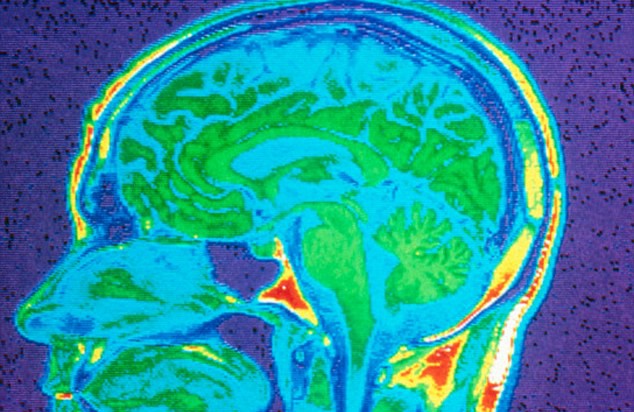
Based on the analysis of brain samples taken from the cadavers of both mentally ill and healthy people, they found that in  cases where the people had died by suicide, there was a lower-than-normal concentration of a gene known as SKA2. This gene is expressed in the prefrontal cortex of the brain – an area involved in inhibiting negative thoughts and controlling impulsive behavior.

depression_brainscanThis gene plays a part in the brain’s handling of stress hormones. If it isn’t functioning properly or lacking, stressful situations that would ordinarily be bearable can drive a person to contemplate or even attempt killing themselves. It was also found that the mutation not only reduced the levels of the gene, but also added chemicals called methyl groups to the SKA2 that was present.

This finding was backed up by an analysis of blood samples taken from 325 living test subjects. Based on the levels of methyl groups in the SKA2 genes within those samples, the scientists could predict with 80 percent overall accuracy which of the participants had contemplated or attempted suicide. The accuracy went up to 90 percent for test subjects who posed a severe suicide risk, and 96 percent for the youngest group of participants.

blood_testIf the data is confirmed by larger studies, it is hoped that such testing could ultimately be used to predict how likely mentally-ill people are to commit suicide, and to then tailor their treatment accordingly. It could also be utilized to screen patients before administering medication that can cause suicidal thoughts, or as a reference for monitoring people who have recently returned from stressful military service.

This is good news for people who have a family history of mental illness, or know somebody who has begun struggling with it, or has been for their entire life. As mental health experts will attest, knowledge is the best means of prevention, so that the illness can be predicted and preempted, and its onset properly addressed. What’s more, knowing that a genetic mutation is involved will go a long way toward developing genetic treatments that can correct the mutation.

RIP-Robin-WilliamsIt is always a tragic thing when a person dies before their time, but it is especially so when they take their own life. In addition to the grief, there are also the terrible, burdensome questions of why they did it, and what could have been done to save them. One can only hope that developments like these will lead to an age where mental illness is no longer such a terrible, unpredictable thing.

Rest in peace, Robin Williams. Wish I could have been there for you, buddy. And know that you will be sorely missed!

Sources: gizmag.com, dailymail.co.uk