
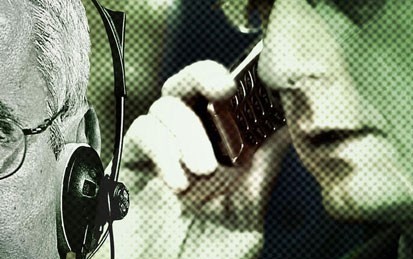
 In another landmark decision, the Supreme Court issued a far-reaching defense of digital privacy by declaring that law enforcement officials are henceforth forbidden from searching cell phones without a warrant at the scene of an arrest or after. The decision was based on two cases in which police searches of mobile devices led to long prison sentences. This decision is just the latest nail in the coffin of warrantless surveillance, a battle that began over a decade ago and has persisted despite promises for change.
The ruling opinion notes that cell phones have in fact become tiny computers in Americans’ pockets teeming with highly private data, and that gaining access to them is now fundamentally different from rifling through someone’s pockets or purse. This contradicts the argument from U.S. prosecutors that a search of a cell phone should instead be treated “as materially indistinguishable” from a search of any other box or bag found on an arrestee’s body.
 The Court ruling takes this into consideration, and asserted the counter-argument in the ruling opinion:
That is like saying a ride on horseback is materially indistinguishable from a flight to the moon. Modern cell phones, as a category, implicate privacy concerns far beyond those implicated by a cigarette pack, a wallet or a purse… A decade ago officers might have occasionally stumbled across a highly personal item such as a diary, but today many of the more than 90% of American adults who own cell phones keep on their person a digital record of nearly every aspect of their lives.
In one of the two cases at issue, a California man was charged with assault and attempted murder in relation to a street gang in which he was allegedly a member. The connection between his actions and gang activity were made when police searched his smartphone without a warrant and found videos and photos that prosecutors claimed demonstrated that he was associated with the “Bloods” gang. In short, the contents of his phone were used to put his crime into a context that carried with it a stiffer penalty.
 In the second case, a Boston man had his cell phone searched when he was arrested after an apparent drug sale. By finding his home address on his flip phone, police were able search his home and find a larger stash of drugs. Both defendants argued that the warrantless searches violated the fourth amendment. The Supreme Court’s Wednesday ruling sided with both defendants and declared that the searches were unconstitutional.
Privacy groups celebrated the ruling, with Hanni Fakhoury of the Electronic Frontier Foundation (EFF) calling it a “bright line, uniform, pro-privacy standard.” The American Civil Liberties Union, the long-time champion of privacy rights and an opponent to all forms of warrantless surveillance, declared the decision “revolutionary.” As Steven R. Shapiro, the ACLU’s national legal director, said in a statement:
By recognizing that the digital revolution has transformed our expectations of privacy, today’s decision…will help to protect the privacy rights of all Americans. We have entered a new world but, as the court today recognized, our old values still apply and limit the government’s ability to rummage through the intimate details of our private lives.
 In its ruling, the court also rejected prosecutors’ notion that the ability to remotely wipe or lock a phone required police to search the devices immediately upon arrest before evidence could be destroyed. The court responded that police can easily prevent evidence from being remotely destroyed by turning the phone off or removing its battery, or putting it into a Faraday cage that blocks radio waves until a search warrant can be obtained.
But perhaps the most remarkable portion of the ruling was its recognition of the unique nature of modern smartphones as personal objects. Even calling them mere “cell phones” is a misnomer. As the ruling reads:
The term ‘cell phone’ is itself misleading shorthand. Many of these devices are in fact minicomputers that also have the capacity to be used as a telephone. They could just as easily be called cameras, video players, rolodexes, calendars, tape recorders, libraries, diaries, albums, televisions, maps or newspapers.
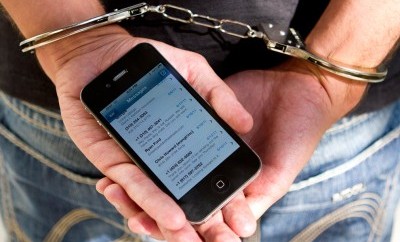 The EFF’s Fakhoury pointed to language in the ruling about how the sheer volume of data stored on cell phones makes them fundamentally different from other personal objects that might contain private information. This statement that the quantity of information searched matters – rather than merely the kind of information – might influence other privacy cases. As Fakhoury stated, this could have implications for other NSA data-collection programs:
The court recognizes that two pictures reveal something limited but a thousand reveals something very different. Does it mean something different when you’re collecting one person’s phone calls versus collecting everyone’s phone calls over five years? Technology allows the government to see things in quantities they couldn’t see otherwise.
Granted, the court did provide for some exceptions, but only in cases of extraordinary and specific danger – like child abduction or the threat of a terrorist attack. But such specifications require that police establish that an emergency exists before taking drastic action. Occurring on the heels of the Supreme Court decision that outlawed the use of cell phones to track people’s movements, this latest decision is another victory in the battle of privacy versus state security.
And given the precedent it has set, perhaps we can look forward to some meaningful ruling against everything the NSA has been doing in Fort Meade for the past few years. One can always hope, can’t one?
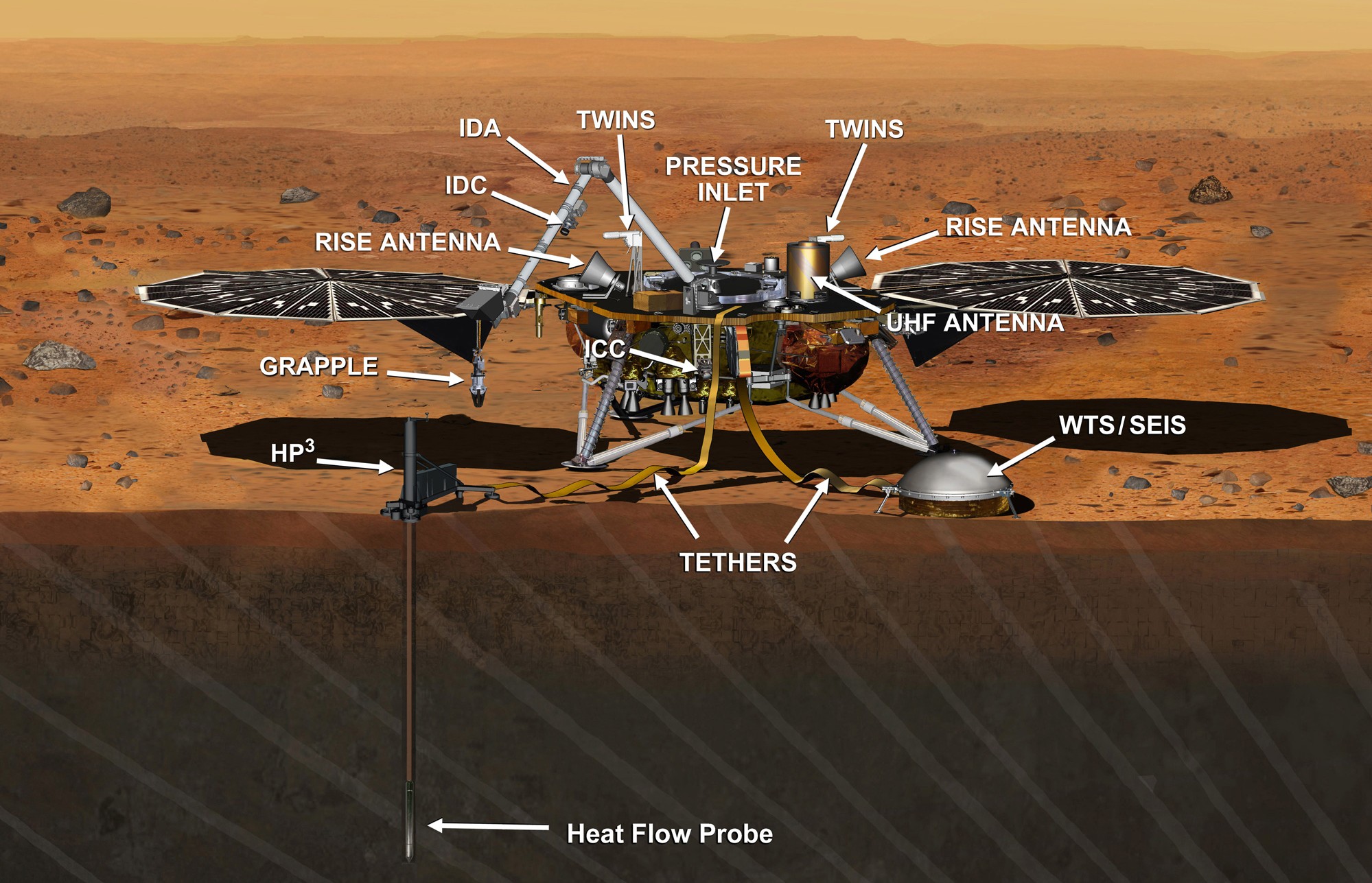


 After the daring new type of landing that was performed with the Curiosity rover, NASA went back to the drawing table to come up with something even better. Their solution: the “Low-Density Supersonic Decelerator”, a saucer-shaped vehicle consisting of an inflating buffer that goes around the ship’s heat shield. It is hopes that this will help future spacecrafts to put on the brakes as they enter Mar’s atmosphere so they can make a soft, controlled landing.


 Jack Andraka is at it again! For those who follow this blog (or subscribe to Forbes or watch TED Talks), this young man probably needs no introduction. But if not, then you might not known that Andraka is than the young man who – at 15 years of age – invented an inexpensive litmus test for detecting pancreatic cancer. This invention won him first prize at the 2012 Intel International Science and Engineering Fair (ISEF), and was followed up less than a year later with a handheld device that could detect cancer and even explosives.

 As part of the project, Diggs and Andraka also developed an inexpensive water filter made out of plastic bottles. Next, they hope to do large-scale testing for their sensor in Maryland, where they live. They also want to develop a cell-phone-based sensor reader that lets users quickly evaluate water quality and post the test results online. Basically, its all part of what is fast becoming the digitization of health and medicine, where the sensors are portable and the information can be uploaded and shared.


 After holding a hearing on net neutrality in Vermont this past summer, Leahy came to an invariable conclusion:
 The new bill would provide a mandate regarding how the FCC deals with any sort of paid prioritization, but it wouldn’t reclassify providers. Also, the new bill would only apply to connections from internet service providers to customers’ homes, commonly referred to as last mile connections. It wouldn’t pertain to “peering”, the deals governing the ways that internet service providers connect with each other or with content providers like Netflix and Google.
 The bill may face serious challenges, however. Republicans control the House and have proposed their own bill to block the FCC from reclassifying internet service providers. In this respect, net neutrality is dividing lawmakers along partisan lines, and Republicans are not expected to support the proposed Leahy-Matsui bill. But in theory, a bipartisan agreement could be reached, especially since the Leahy-Matsui bill leaves reclassification off the table.
 Earlier this month, Computex 2014 wrapped up in Taipei. And while this trade show may not have all the glitz and glamor of its counterpart in Vegas (aka. the Consumer Electronics Show), it is still an important launch pad for new IT products slated for release during the second half of the year. Compared to other venues, the Taiwanese event is more formal, more business-oriented, and for those people who love to tinker with their PCs.
 For example, big name brands like Asus typically use the event to launch a wide range of products. This year, this included such items as the super-slim Asus Book Chi and the multi-mode Book V, which like their other products, have demonstrated that the company has a flair for innovation that easily rivals the big western and Korean names. In addition, Intel has been a long stalwart at Computex, premiered its fanless reference design tablet that runs on the Llama Mountain chipset.
 And then there was the Asus wireless storage, a gadget that looks like an air freshener, but is actually a wireless storage device that can be paired with a smartphone using near-field communication (NFC) technology – essentially being able to transfer info simply by bringing a device into near-proximity with it. And as always, there were plenty of cameras, display headsets, mobile devices, and wearables. This last aspect was particularly ever-present, in the form of look-alike big-name wearables.
 In his keynote speech, Microsoft’s Nick Parker talked about the age of ubiquitous computing, and the “devices we carry on us, as opposed to with us.” What this means is, we may very well be entering a PC-less age, where computing is embedded in devices of increasingly diminished size. Eventually, it could even be miniaturized to the point where it is stitched into our clothing as accessed through contacts, never mind glasses or headsets!
 The Davis case brought this issue to the fore because the tracking was used to make an arrest. Basically, mobile phones send signals to the nearest cell towers so that the communications network system knows where to route a call should one come in. Many providers collect and store the location of towers a customer connects to at the beginning and end of the call for billing purposes. In this case, FBI agentsobtained these records without a search warrant and used them to place the defendant, Quartavious Davis, near the scene of a number of robberies.
 Additionally, Smith built on the 1976 case of United States v. Miller, which held that a person does not have Fourth Amendment rights in their bank records because they are the bank’s business records and not the customer’s private data. Together the cases are known as the “third-party doctrine,” which says that you have no Fourth Amendment interest in a third party’s business records because you have voluntarily disclosed information to the business and assumed the risk of that information being further disclosed to the government.
 Last December, a District of Columbia judge held that the bulk collection of phone records violates the Fourth Amendment – regardless of Smith – and called the program “almost Orwellian.” Shortly thereafter, a different district court judge relied on Smith to give the program his stamp of approval. This month, a third federal judge was obligated to allow the warrantless collection of records to continue, but opined that the Supreme Court should overturn Smith v. Maryland.
 If you know the sequence of letters down one strand of the helix, you always know what other letter is. This “complementarity” is the fundamental reason why a DNA helix can be split down the middle, and then have the other half perfectly recreated.
  As long as the new chemicals were available, the bacterium continued to reproduce normally, copying and passing on the new DNA, alien plasmid and all, and continued to carry on flawlessly for almost a week.
 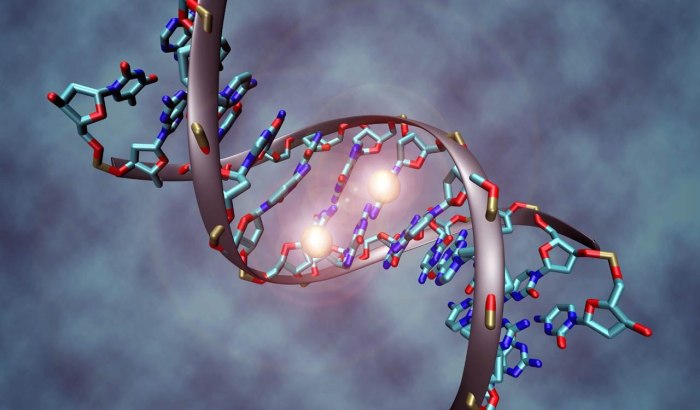 Ultimately it may even be possible to create a wholly synthetic organism with DNA that contains dozens (or hundreds) of different base pairs that can produce an almost infinitely complex library of amino acids and proteins. At that point, we’d basically be rewriting some four billion years of evolution. The organisms and creatures that would arise would be unrecognizable, and be capable of just about anything that a researcher (or mad scientist) could dream up.
 The acquisition makes sense given that Silevo’s technology has the potential to reduce the cost of installing solar panels, Solar City’s main business. But the decision to build a huge factory in the U.S. seems daring – especially given the recent failures of other U.S.-based solar manufacturers in the face of competition from Asia. Ultimately, however, Solar City may have little choice, since it needs to find ways to reduce costs to keep growing.
 Silevo isn’t the only company to produce high-efficiency solar cells. A version made by Panasonic is just as efficient, and SunPower makes ones that are significantly more so. But Silevo claims that its panels could be made as cheaply as conventional ones if they could scale their production capacity up from their current 32 megawatts to the factory Musk has planned, which is expected to produce 1,000 megawatts or more.
 Stories by Williams