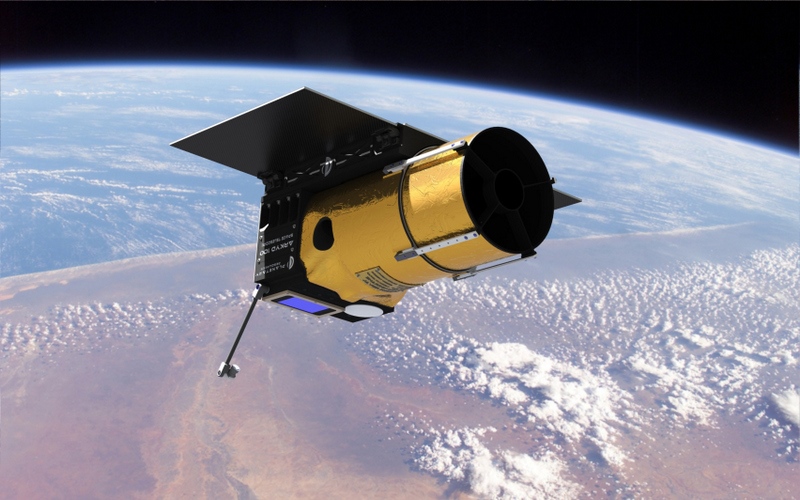
The Arkyd 100: Crowdfunding Space Exploraiton

ARKYD-in-SpacePlanetary Resources made quite the impression last year when they announced their plans to begin prospecting near-Earth asteroids with in the intention of mining them in the near future. Alongside such companies as SpaceX and Golden Spike, they are part of a constellations of private interests looking to establish commercial space travel and tourism. But their latest proposal goes a step further, bringing crowdfunding and the realm of space exploration together.

That’s the idea behind a Kickstarter campaign that the company began to raise money for a crowdfunded space telescope. Known as the Arkyd 100, the company claims that this new telescope will provide unprecedented public access to space and place the most advanced exploration technology into the hands of students, scientists and a new generation of citizen explorers.

asteroid_miningTo make their campaign successful, they need to raise $1 million in Kickstarter pledges by the end of June 2013. Once the telescope is up and running, it will allow them to better map the asteroid belt, thus assisting them in finding the rocks they want to mine for precious metals and trace elements. And with public financial backers making it happen, anyone pledging money will be able to own a piece of the prospector!

During a webcast on May 28th to announce the Kickstarter campaign, Chris Lewicki, President and Chief Engineer for Planetary Resources, gave a rundown on the details of the telescope. And interestingly enough, the Planetary Resources’ technical team that designed it also worked on every recent U.S. Mars lander and rover. So if you do choose to invest, you will do so with the knowledge that the same people who helped build the Opportunity and Curiosity rovers are behind this project. If that doesn’t inspire investor confidence, I don’t know what will!

ARKYD-Space-SelfieA wide array of scientists, space enthusiasts and even Bill Nye the Science Guy have voiced their support for Planetary Resources’ new public space telescope. And those who invest will have the chance of recouping certain rewards, depending on how much they choose to pledge. Those pledging the minimum donation of $25 will receive the “Your Face in Space” benefit, where you will have you picture placed on the Arkyd and receive a picture of said photo the telescope with Earth in the background. Higher pledges will provide access to the telescope for students and researchers worldwide.

After less than 2 hours into their campaign, Planetary Resources had raised over $100,000. And as of this article’s writing, just one day shy of a week, the campaign has reached $710,945 of their $1 million goal, and they still have 27 days left. I guess people want a piece of this project. And who can blame them, since it is a scientific and historic first!

Check out the promotional video for the Arkyd and Planetary Resources below. To make a donation or get information about the Kickstarter campaign, visit the campaign page here.


Source:
universetoday.com

The Future is Here: The Anti-Gravity 3D Printer

anti-grav3d2Three-dimensional printing is without a doubt one of the greatest growth industries of the 21st century. And yet, surprisingly enough, there are those who seem to think that there is room for improvement when it comes to current concepts and designs. Two such individuals are Petr Novikov and Saša Jokic, a group of architecture students who recently began interning at the Joris Laarman Lab in Amsterdam. While there, they came up with a revolutionary method for 3D printing that reboots the concept!

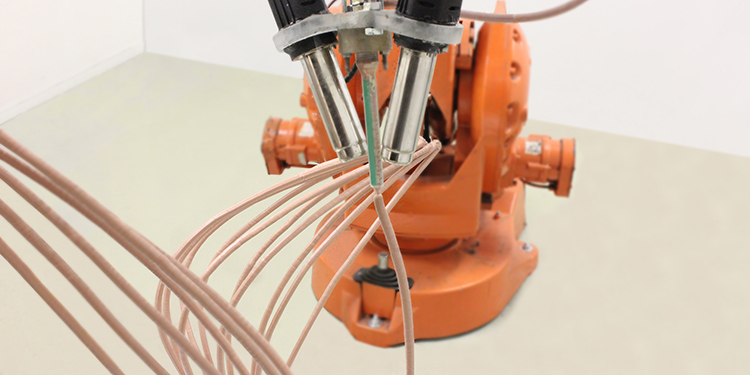
It’s called Mataerial, a new and patented process where polymers are squeezed from a nozzle similar to how bakers squeeze icing from a tube to frost a cake, except there’s a robot involved. Ultimately, their concept was based on the fact that all conventional printing works with layers, which they considered grossly inefficient. Not only do such methods require the presence of a support structure, they also take additional time, materials, and increase the risk of damage if the object is removed from its support structure.

anti-grav3d1As Novikov explains:

The material that comes out of the nozzle is still kind of viscous–It’s not a liquid already but its not a solid material, so what we wanted to do is make it solid the same exact moment it comes out of the nozzle. And that’s the hardest part. Because if it solidifies before it comes out of the nozzle, then its going to make a clog… but if it solidifies after it leaves the nozzle, than its going to be weak and fall down.

The key was to find two liquid polymers that, when mixed, quickly harden, which allows for mid-air solidification. They’re calling the resulting method “Anti-Gravity Object Modeling,” since the material’s just-in-time solidification eschews the need for any sort of support structure. The new method is exciting for a number of reasons. The first is scale, in that this method could be adapted for manufacturing large and well as small scale objects easily.

anti-grav3dDepending on the size of nozzle used, the technology could be used to print materials and objects that are on the scale of millimeters (like components for consumer electronics), 3D models (the kinds that are printed by standard professional printers), or larger objects such as furniture or even parts used in large-scale architectural construction. Basically, anything from the tiniest object to the largest structure could be created by robots equipped with specialized nozzles and Mataerial printers.

But perhaps most exciting is the possibility that this new method would be able to print objects in low or even zero gravity. Given NASA’s recent interest in building a Moon base using 3D printing, such a process could come in mighty useful. Already, the technology known as “sintering” has been considered for the purposes of building a Lunar settlement, but given its “anti-gravity” application, the Mataerial process just might have a shot at winning some lucrative contracts.

In fact, Navikov indicates that they considered the possibility and put it to the test. As he indicated: “We did an investigation and we are pretty sure that this could be used as 3-D printer in zero gravity.” Did you get that NASA? Anyway to make this technology work with regolith? Regardless, it sure could be useful here on planet Earth!

Source: fastcoexist.com

Asteroid 1998 QE2 Flies Past Earth

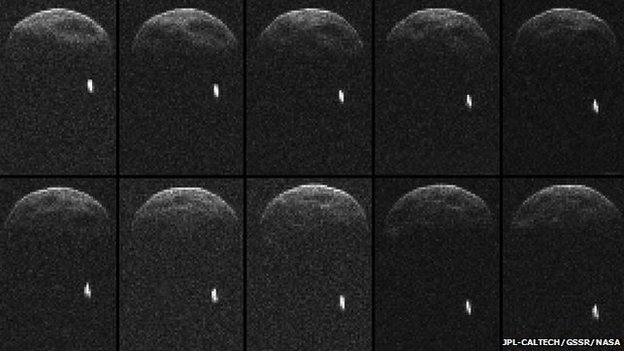
1998_QE2Today, at approximately 20:59 GMT, a rock so big that it has its own moon safely flew past Earth. It’s name is 1998 QE2, an asteroid that is roughly 500,000 times larger than the one which made that near-Earth flyby back in February. But of course, scientists had been letting the public know well in advance that this one would miss us to, and by a much wider margin.

In fact, whereas the last rock missed us by a mere 27,700km (17,200mi), this one passed at a much safer distance of about 5,800,000 km (3,600,000 miles). Good news for anyone who’s been caught up in all the asteroid/meteoroid frenzy of late. And while it might seem that a lot more stellar objects have been hurling towards us lately, a simple review of our Solar Systems turbulent history will confirm that this is pretty much business-as-usual.

1998_QE2_caltechWhat’s more, this most recent flyby provided scientists and astronomers with yet another opportunity to study an asteroid as it passed close to Earth. Using radar telescopes, they were due to record a series of high-resolution images, the purpose of which was to study what the asteroid was made of and where exactly in the Solar System it came from.

Prof Alan Fitzsimmons, an astronomer at Queen’s University Belfast, said:

It’s a big one. And there are very few of these objects known – there are probably only about 600 or so of this size or larger in near-Earth space… We already know from the radar measurements, coupled with its brightness, that it appears to be a relatively dark asteroid – that it’s come from the outer part of the asteroid belt.

What’s more, the curious nature of the asteroid – in that it has its own moon – is something which makes it a scientific curiosity. Approximately 15% of asteroids have the mass that they are capable of supporting their own satellite, but rarely does one fly this close to Earth. Early observations of this “moon” indicated that it is roughly 600m in diameter, and would have been visible during the flyby to amateur astronomers with a sufficient enough telescope.

1998_QE2_trajAfter this, asteroid 1998 QE2 will hurtle back out into deep space where it will stay for some time. In fact, Friday’s visit was the closest it has been to Earth for at least two centuries. And not surprisingly, researchers are becoming increasingly interested in potential hazards in space. So far they have counted more than 9,000 near-Earth asteroids, and they spot another 800 new space rocks on average each year.

And given the potential for harm if one made contact with Earth, as they have been known to do in the past, the information gleamed from observation and study is sure to come in handy as far as planetary defense is concerned. As Fitzsimmons himself pointed out about this particular asteroid:

…if something this size did hit us one day in the future, it is extremely likely it would cause global environmental devastation, so it is important to try and understand these objects.

Source: bbc.co.uk

Supercomputer Creates Atomic Model of HIV

DNA-1The ongoing fight to end HIV has been a long and arduous one, but progress is being made. In addition to potential treatments being created that have shown promise, there are also efforts being mounted to understand how the virus works at an atomic level. This is great news, for as any practitioner of medicine will tell you, understanding a disease and knowing how to strike at the heart of it is the key to stopping it and making sure future generations don’t have to fear it.

In recent years, several major breakthroughs were announced for the treatment of HIV, treatments which many heralded as cures. In January of last year, the Danish Research Council awarded funding to a group of researchers who demonstrated that HIV could be “flushed” from infected cells where it tends to congregate and protect itself. Combined with vaccinations that turbocharge the body’s immune system, this method proved effective at eliminating the HIV virus in infected cells.

HIV-budding-ColorAnother came back in November, when researchers at Caltech were even able to successfully spawn a significant amount of HIV antibodies in lab mice by using a new approach, known as Vectored ImmunoProphylaxis (VIP). An inversion of the traditional vaccination method, this new method produced plenty of HIV-preventing antibodies which they believed could be fashioned into a  vaccine.

And finally, there were the experiments being conducted over at the Washington University School of Medicine, where researchers designed a solution that employed bee venom and a nanoparticle delivery system. Knowing that bee venom is capable of killing HIV, and that the virus is thousands of times smaller than your average cell, the solution proved quite effective at filtering out the virus and killing it while leaving surrounding tissue unharmed. Taken together, these two proposed solutions have left many thinking a cure is just around the corner.

blue-waters-super-computer-at-petascale-020908Nevertheless, in order for this virus to truly be beaten, we need to understand it better. Hence why a group of scientists – using the University of Illinois’ “Blue Waters” supercomputer — have developed a new series of computer models that are finally giving researchers an atomic-level look at the formidable barrier mechanism enclosing the heart of the virus.

For example, its been known for some time that the HIV virus it’s covered in several layers of protective proteins. But beneath that outer shell resides a conical structure called the capsid, which houses the virus’ payload of genetic material. (See diagram below.) When HIV invades a cell, it’s the capsid that opens up to initiate the takeover process, allowing the virus to replicate inside the healthy host cell. Better understanding of how this mysterious delivery system operates could be one of the final steps to finding a cure.

HIVAnd that’s where the modelling software really comes into play. How and when the HIV cell opens to deliver the capsid has long eluded researchers, and as Klaus Schulten, a physicist that was part of the team that modeled the virus, pointed out: “The timing of the opening of the capsid is essential for the degree of virulence of the virus.”

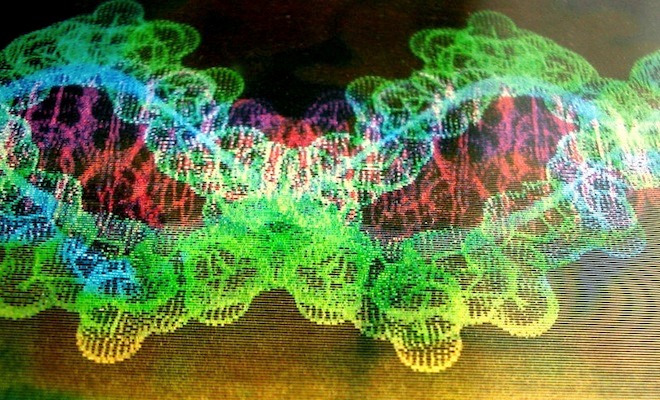
Using the Blue Waters, Schulten and his associates managed to map out the model all 64 million of the capsid’s atoms. Through countless simulations, they also discovered that the capsid’s microscopic outer casing is composed of 216 hexagon-shaped proteins that fit together in a honeycomb formation. These hexagonal structures are what give the capsid it’s tough outer shell and allow it to be such a harmful and insidious killer.

AIDS_memorialThis painstakingly delicate process would have been unthinkable until just a few years ago, and represents the most complete picture of the HIV virus to date. What’s more, knowing what HIV looks like at the atomic level will help scientists to understand the timing of the virus’ delivery system. Since the opening of the virus’ protective layer is when it’s most vulnerable, Schulten and his colleagues hope to determine the precise timing of this event so a treatment can be developed that could attacks the virus at this exact moment.

Think of it as throwing a bomb into the mouth of a terrible war machine, right as it opens up its armored maw to bite you! Better yet, think of it as another step on the road to ending one of the greatest plagues humankind has ever had to deal with. Safety for the future, and justice for the victims!

Sources: popularscience.com, theweek.com, (2)

More Terminator 5 News!

terminator1Despite rumors that T5 was stuck in a development phase known as “development hell”, Mr. Terminator himself recently came forward to offer an update which set the record straight put fans of the franchise in a much better mood. In a recent interview with Metro magazine, Arnold Schwarzenegger claimed that the movie was on track and that they are busy writing the script for it as we speak.

In addition, he claimed that other projects which will be involving him in the next few months were green lighted and getting the go-ahead. This included the much-anticipated T5, as well as some other sequel/relaunches:

We’re writing it now. There are three projects being written that involve me. One is Terminator 5, the other is a Conan movie that Universal is doing and there’s the sequel to Twins, which is called Triplets. We’ll all look quite different in that. The third triplet is Eddie Murphy, so figure that one out.

Really? Still doing the Conan relaunch, huh? And Twins too? Wow, these are a few candidates for download! I can see the Conan relaunch making sense, given how poorly the last relaunch did. But isn’t there a statute of limitations on how many times you can relaunch a series? Or did I just make that up?

terminator2In any case, no indications have been given yet as to what role Arnie himself will be playing. No doubt that is a detail which the studio will keep closely guarded until they finish hammering out the script, or figure it out for themselves! But we can safely assume that he was referring to Patrick Lussier and Laeta Kalogridis when he referred to the writers.

One thing is clear. Whatever they make couldn’t be much worse than the last two Terminator movies. Let’s just hope they ditch the continuity thing and go back to their roots on this one. That’s what Superman Returns did and I can’t recommend it enough. Though not everyone liked that relaunch, it did present a good idea for franchises that were tired and washed up: Make a movie that picks up where the last good one left off and pretend like the abortive sequels never happened.

And while they’re at it, do you think could Hollywood should relaunch Predator and Alien, preferably to a point before AVP was spawned? There’s a concept that has huge potential, but for some reason can’t seem to express it on the silver screen!

avp-alien-pov1Source: IO9.com

Alien Matter Found on the Moon!

blue moonYes, it may sound like the setup for a really bad movie. And in truth, it’s more than just a little misleading. But in this case, “alien matter” refers to minerals deposits that were recently discovered on the surface of the Moon which may not belong there. These deposits include Magnesium-rich spinel and olivine found in the central peaks of lunar craters, which scientists previously believed to be indigenous to the surface.

Spinel forms, it should be noted, can be found here on Earth and are the product of high-pressure and temperatures, conditions which do not exist on the Moon’s surface. Hence, scientists were forced to conclude that the presence of such minerals on the surface had to have come from somewhere else. Most likely a meteoric impact, which the Moon – as its pockmarked surface can attest to – get’s no shortage of.

moon-asteroid-impact-1600However, in the past, it was generally accepted that any collision that big would melt or vaporize the impacting material, leaving behind only geochemical traces and tiny fragments. The quantities that were noticed more recently defied this interpretation, consisting or relatively large deposits and not mere fragments.

However, Jay Melosh and his colleagues from Indiana’s Purdue University were able to show through a series of computer simulations that asteroids are capable of still producing these craters at lower impact speeds, giving them greater chance of survival. What’s more, this would leave their mineral compositions unvaporized, allowing for more generous deposits of material.

In a paper recently published in Nature Geoscience, the team explains their process and what they were able to determine:

We find that for … impact velocities below about 12 kilometres per second, the projectile may both survive the impact, and be swept back into the central peak of the final crater as it collapses… We focused on a simulation of the 93-kilometre diameter Copernicus crater because of the reports of olivine and magnesium-spinel in its central peak… The olivine observed in the central peaks of Copernicus and other lunar craters may be a remnant of the projectile and thus does not indicate deep excavation of the lunar mantle or lower crust.

Overall, their simulations revealed that roughly a quarter of lunar impacts occur at speeds below 12 kilometres per second, which is slow enough for a significant fraction of the impacting object to remain largely intact. According to astronomer Michael Brown of Melbourne’s Monash University, their conclusions about low-velocity asteroid impacts are entirely plausible.

NASA_moonWhat’s more, Brown indicated that previously-held notions about meteors and asteroids impacting the Moon may be biased by our experience here on Earth, where impacts occur at much higher velocities.

When a large asteroid hits Earth, because of the Earth’s gravity and because of the velocity of the asteroid, you’re looking at impact speeds of 20-30 kilometres per second.

But of course, he also added that there are concentrations of spinel on the Moon’s surface which cannot be explained by impact events. How and why these were brought to the surface is something that future generations of astronauts will have to study, no doubt with the help of interior examinations of the planet and surface digs.

ESA_moonbaseWhich brings up another important aspect of this information. Given that the Moon is prone to meteors and asteroids, something we don’t have to worry nearly as much about on Earth due to our protective atmosphere, any plans to colonize it will have to take surface impacts into account. How exactly are people going to be able to live, work, and enjoy themselves on the surface if they have to contend with periodic massive impacts?

And in the meantime, check out this video from CBC about the March 17th impact, the largest impact in recent history which was visible from Earth:

http://www.cbc.ca/player/News/TV%2BShows/The%2BNational/Technology%2B&%2BScience/ID/2387906092/

Sources: cbc.ca, (2)


Opportunity Finds Evidence of Life!

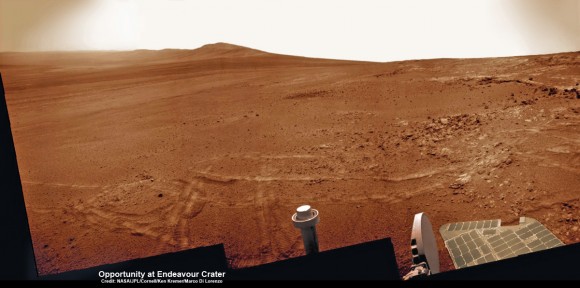
opportunityThe Opportunity Rover is at it again! A little over a week ago, it set the record for longest distance traveled by a vehicle on another planet. Well it seems that NASA’s longest-running rover wasn’t finished hogging the limelight just yet. Yes, after ten years of service on what was originally planned to be a three-month journey, Opportunity struck gold by discovering the strongest evidence to date for an environment favorable to ancient Martian biology.

It began just two weeks ago, when Opportunity conducted an analysis of a new rock target named “Esperance”. According to a statement released by NASA, the rover confirmed that the rock target was composed of a “clay that had been intensely altered by relatively neutral pH water – representing the most favorable conditions for biology that Opportunity has yet seen in the rock histories it has encountered.”

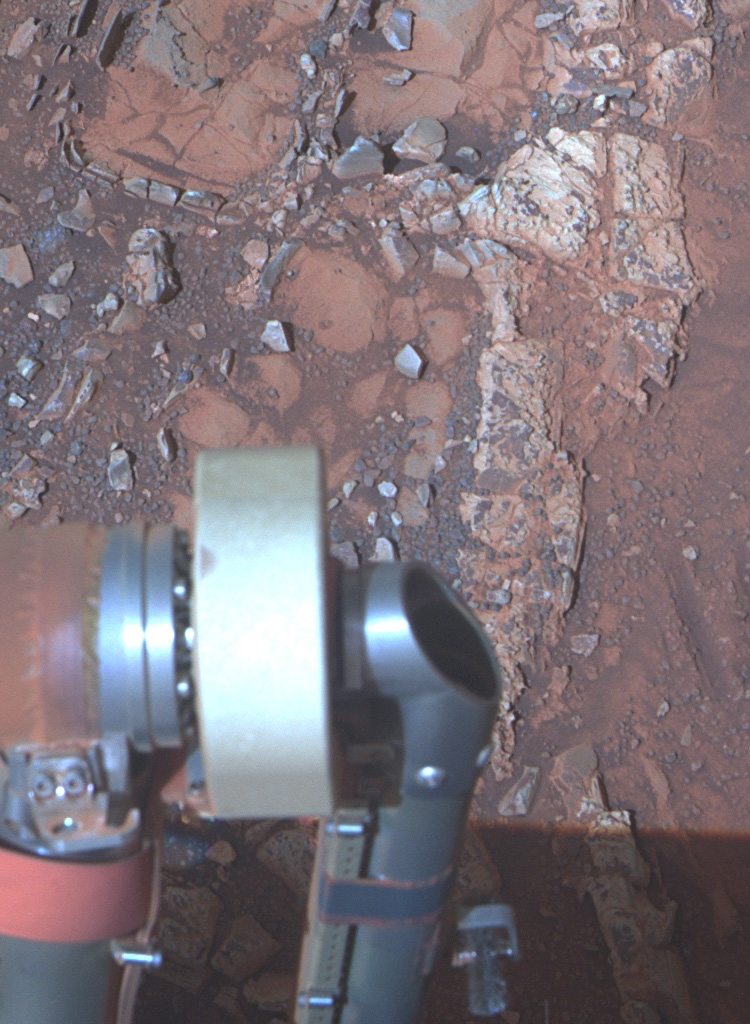
Opportunity-Sol-3309_Aa_Ken-Kremer-580x288The process involved Opportunity using it still-functioning Rock Abrasion Tool (RAT) to expose the interior of Esperance and then examine it with its microscopic camera and X-Ray spectrometer, both of which that are mounted at the end of her nearly 1 meter (3 foot) long robotic arm. Inside, it found a rock surface loaded with clay minerals that was clearly formed with the help of flowing liquid water.

The robot made the discovery at the conclusion of a 20 month long science expedition circling around a low ridge called “Cape York”, a region of great important to Mars scientists. Scott McLennan of Stony Brook University, a long-term planner for Opportunity’s science team, explained why:

What’s so special about Esperance is that there was enough water not only for reactions that produced clay minerals, but also enough to flush out ions set loose by those reactions, so that Opportunity can clearly see the alteration.

opportunity_esperanceEsperance is unlike any rock previously investigated by Opportunity, containing far more aluminum and silica which is indicative of clay minerals and lower levels of calcium and iron. Most, but not all of the rocks inspected to date by Opportunity were formed in an environment of highly acidic water that is extremely harsh to most life forms. Clay minerals typically form in potentially drinkable, neutral water that is not extremely acidic or basic.

These findings amount to the discovery of an environment in which life could have thrived, which amounts to a scientific home run for the senior rover. As Prof. Steve Squyres of Cornell University, the mission’s principal scientific investigator, put it:

Water that moved through fractures during this rock’s history would have provided more favorable conditions for biology than any other wet environment recorded in rocks Opportunity has seen.

What’s next for Opportunity? Well, now that she’s finished at Cape York, Opportunity has set sail for her next crater destination at “Solander Point”, an area about 2.2 km (1.4 miles) south of the Cape. Eventually, she will continue further south to a rim segment named “Cape Tribulation” which holds huge caches of clay minerals. Along the way, there’s likely to be plenty more evidence of what Mars looked like many millions of years ago.

You know, with all this Opportunity-related news coming in, I’m beginning to wonder what Curiosity is up to. While it’s nice to see her partner-in-crime breaking records and turning up such important finds, I do wonder if Curiosity is likely to feel a little left out. At this rate, one might think a game of one-upmanship could break out between the rovers teams!

Source: universetoday.com

NASA’s Eyes the Bennu Asteroid

Osiris_spacecraftNot long ago, NASA announced its plan to to visit an asteroid in our Solar System and towing it closer to Earth. And with their funding secure, NASA announced earlier this month that they had taken some key steps towards making this happen.  The first came on Wednesday, May 15th, when the spacecraft that will be performing the mission – the Origins-Spectral Interpretation Resource Identification Security Regolith Explorer, or Osiris-Rex – got the green light for development.

The second came shortly thereafter, when NASA announced where the robot craft would be headed – the asteroid now known as Bennu. Originally known as 1999 RQ36, the rock was renamed as part of a contest involving suggestions from thousands of schoolchildren. It was a nine-year-old named Michael Puzio who suggested the name, claiming that the the Touch-and-Go Sample Mechanism (Tagsam) arm and solar panels on Osiris-Rex resembled the neck and wings of Bennu, better known as the Phoenix.

Asteroid-ToutatisNASA claims that Bennu could hold clues to the origin of the solar system, hence why samples will be brought back to determine their composition. The new spacecraft will rendezvous with Bennu in 2018 and begin collecting measurements and samples of surface material, and then return to Earth by 2023. Ultimately, the mission is part of NASA’s larger aim at capturing an asteroid and towing it back it to Earth so that the entire body can be studied.

Of course, there are larger plans at work here too. NASA’s truly long-term aims also involve improving asteroid defense, which includes capturing asteroids that are on a potential collision course with Earth and towing them off course. And then there’s the plan to put astronauts on an asteroid by the 2020’s, establishing a Moon outpost in the same decade, and on Mars by 2030. In the end, all roads converge on putting boots on soil that is not of Earth!

And be sure to check out the video simulation of the Osiris-Rex in action, courtesy of NASA:


Source: cnet.news.ca

The Science of Sleep: Seeing Dreams and Augmenting Your Z’s

sleepingBeautySleep is a preoccupation the vast majority of human beings simply cannot shake. Unlike those lucky few who seem to be able to get by on a few hours a night, most people require a good eight hours of rest to be able to work, play, and function properly. Given that so much of our lives are spent in sleep – a full third, if we’re lucky – it’s little wonder then why the science of sleeping continues to fascinate us and garner so much attention.

Just this past April, Yukiyasu Kamitani and his colleagues at the ATR Computational Neuroscience Laboratories in Kyoto, Japan, announced that they were close to realizing their goal of being able to visualize people’s dreams. By this, of course, they meant the ability to take what a person was seeing while in deep REM sleep and project it onto a screen.

brain-activityThe process relies on a functional magnetic resonance imaging (fMRI) device, which examines the flow of blood in the brain to monitor activity. Using this data, the team then managed to create an algorithm that they claim can accurately display in real time what images are appearing in the subject’s dream. This is the first time, it is believed, that objective data has been collected from dreams.

But of course, the concept is predicated on the idea that when you experience a thought, your brain behaves in a specific, repeatable function. Assuming that this much is true, then the results could very well be quantifiable and rendered. The technology has already been demonstrated to work with a fair degree of effectiveness, as shown as the 2011 experiment at the University of California, where subjects watched movie trailers and had the images they were watching reconstructed.

Science-can-tell-what-you-are-dreamingAnd while some researchers are working on seeing dreams, others are working to reduce the time we spend doing it. Yes, given the hectic pace people who live in the modern, industrialized world are now forced to live by, there are actually research teams out there looking to find ways – pharmaceutical and neurological – to reduce our dependency on sleep.

The purpose is simple, to increase the amount of time we have in which live, produce and enjoy ourselves not by living longer, but by increasing the efficiency of sleep so we can spend more of our lives awake. In an extended essay that is available at Aeon magazine, Jessa Gamble – a writer specializing in the science of sleep – explains how new technologies could make this a reality.

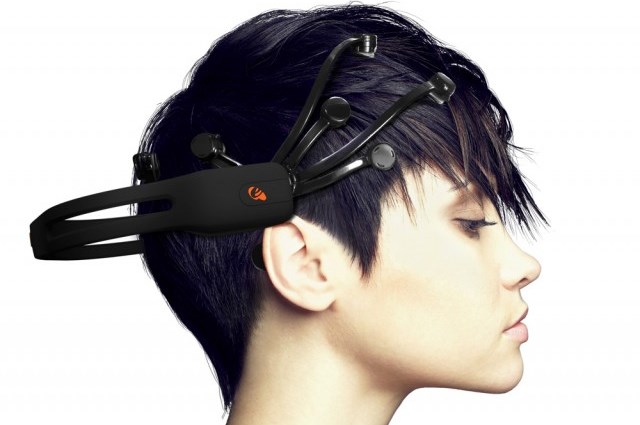
tcdsSuch technologies include things like the Somneo Sleep Trainer, a special mask that is being developed by Advanced Brain Monitoring and DARPA to help US servicemen and women combat fatigue, sleep deprivation, and experience more restful sleeps when they take them. By using a device that combines an EEG monitor and a series of blue-LED lights to supress melatonin, the mask is able to restrict the wearer’s sleep to only the most restorative phases of sleep.

And then there is the technology of transcranial direct-current stimulation, which involves such devices as the tDCS headband. Here, an electrical current is sent through the sleep-important parts of the brain, specifically the dorsolateral prefrontal cortex. The mild stimulation augments awareness and allows subjects, according to Gamble, to “learn visual search skills at double the speed.” They also sleep better later on, with “briefer waking periods and longer deep-sleep sessions.”

Using a technique called transcranial magnetic stimulation whichA third potential technology that could be used is known as “transcranial magnetic stimulation” (TMS), a process which induces “slow-wave oscillations” in the brain, pushing the subject into a state of deep sleep in less time. Whereas the Somneo Sleep mask puts people into a lighter phase of sleep quicker, TMS will allow them to achieve a deeper state of sleep almost instantaneously. Add to that a better sleep cycle and better periods of wakefulness, and you’ve got what can only be described as “augmented sleep”.

But of course, this technology is being spearheaded for the sake of armed services, but has immense civilian applications as well. According to the CDC, roughly 30% of Americans live with less than adequate amounts of sleep, which drastically increases the risks of chronic disease. So realistically, this technology has the power to remediate the problem of those not getting enough sleep before it begins “enhancing” the sleep of others.

And I for one wonder where I might get myself a tCDS headband. While I have no intention of cutting down on the total number of hours I spend in the sack, I do like the idea of making the sleep I get more sound and my waking hours more wakeful. Then people can expect me to be a lot more productive. I know there have been some complaints about my output on this site lately 😉

Sources: cnet.news.com, fastcoexist.com, theloop.ca

The Future is Here: The Real-Life Tricorder

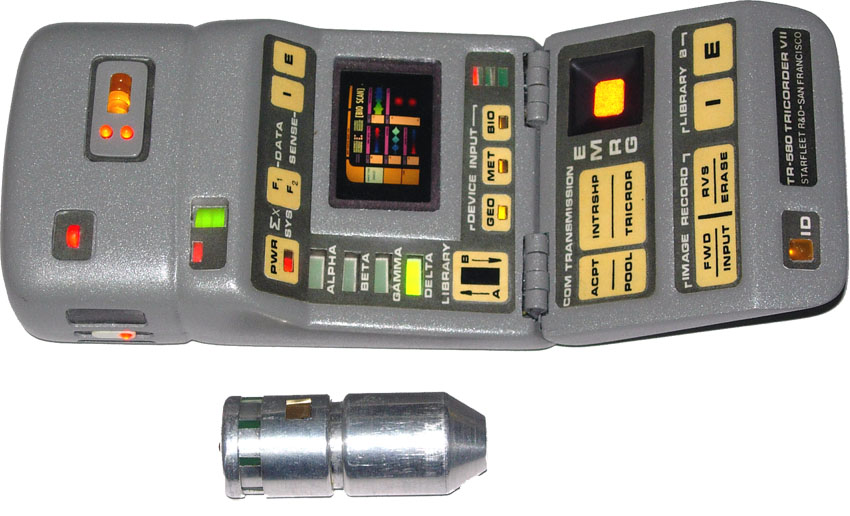
medical_tricorderIt was only a matter of time, I guess. But we really should have known that with all the improvements being made in biometrics and biotechnology – giving patients and doctors the means to monitor their vitals, blood pressure, glucose levels and the like with tiny devices – and all the talk of how it looked like something out of science fiction that it wouldn’t be long before someone took it upon themselves to build a device right out of Star Trek.

It’s known as a the Scanadu Scout, a non-invasive medical device that is capable of measuring your vitals simply by being held up to your temple for a mere 10 seconds. The people responsible for its creation are a startup named Scanadu, a group of research and medtech enthusiasts who are based at the NASA Ames Research Center. For the past two years, they have been seeking to create the world’s first handheld medical scanner, and with the production of the Scout, they have their prototype!

scanaduAll told, the device is able to track pulse transit time (to measure blood pressure), temperature, ECG, oximetry, heart rate, and the breathing rate of a patient or subject. A 10 second scan of a person’s temple yields data that has a 99% accuracy rate, which can then be transmitted automatically via Bluetooth to the user’s smartphone, tablet or mobile device.

The device has since been upgraded from its original version and runs at a rate of 32 bits (up from the original 8). And interestingly enough, the Scouts now runs on Micrium, the operation system that NASA uses for Mars sample analysis on the Curiosity rover. The upgrade became necessary when Scanadu co-founder Walter De Brouwer, decided to add an extra feature: the ability to remotely trigger new algorithms and plug in new sensors (like a spectrometer).

medtechOne would think that working with NASA is effecting his thinking. But as Brouwer points out, the more information the machine is capable of collecting, the better is will be at monitoring your health:

If we find new algorithms to find relationships between several readings, we can use more of the sensors than we would first activate. If you know a couple of the variables, you could statistically predict that something is going to happen. The more data we have, the more we can also predict, because we’re using data mining at the same time as statistics.

One of the Scout’s cornerstone algorithms, for example, allows it to read blood pressure without the inflating cuff that we’ve all come to know and find so uncomfortable. In the future, Scanadu could discover an algorithm that connects, age, weight, blood pressure, and heart rate with some other variable, and then be able to make recommendations.

2009_world_subdivisions_flu_pandemicEveryone who pre-orders a Scout has their data sent to a cloud service, where Scanadu will collect it in a big file for the FDA. Anyone who opts-in will also gain access to the data of other users who have also elected to share their vitals. Brouwer explains that this is part of the products early mission to test the parameters of information sharing and cloud-medical computing:

It’s going to be a consumer product in the future, but right now we are positioning it as a research tool so that it can be used to finalize the design and collect data to eventually gain regulatory approval. In the end, you have to prove how people are going to use the device, how many times a day, and how they are going to react to the information.

In the future, De Brouwer imagines this kind of shared information could be used for population scanning, kind of like Google Flu Trends does, except with data being provided directly from individuals. The focus will also be much more local, with people using the Scout’s stats to able to see if their child, who suddenly has flu symptoms, is alone of ir other kids at their school are also sick. Pandemics and the outbreaks of fatal diseases could also be tracked in the same way and people forewarned.

medical-technologyNaturally, this raises some additional questions. With it now possible to share and communicate medical information so easily between devices, from people to their doctors, and stored within databases of varying accessibility, there is the ongoing issue of privacy. If in fact medical information can be actively shared in real-time or with the touch of a button, how hard will it be for third parties to gain access to them?

The upsides are clear: a society where health information is easily accessible is likely to avoid outbreaks of infectious disease and be able to contain pandemics with greater ease. But on the flip side, hackers are likely to find ways to access and abuse this information, since it will be in a public place where people can get at it. And naturally, there are plenty of people who will feel squeamish or downright terrified about the FDA having access to up-to-the-moment medical info on them.

It’s the age of cloud computing, wireless communications, and information sharing my friends. And much as people feel guarded about their personal information now, this is likely to take on extra dimensions when their personal medical info is added to the mix. Not a simple or comfortable subject.

But while I’ve still got you’re here, no doubt contemplating the future of medicine, take a look at this video of the Scanadu Scout in action:


Source:
fastcoexist.com, google.org/flutrends/