The Future of Space: A Space Elevator by 2050?

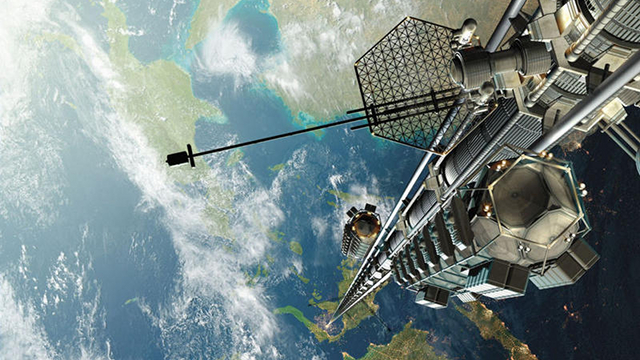
space_elevatorIn the ongoing effort to ensure humanity has a future offworld, it seems that another major company has thrown its hat into the ring. This time, its the Japanese construction giant Obayashi that’s declared its interest in building a Space Elevator, a feat which it plans to have it up and running by the year 2050. If successful, it would make space travel easier and more accessible, and revolutionize the world economy.

This is just the latest proposal to build an elevator in the coming decades, using both existing and emerging technology. Obayashi’s plan calls for a tether that will reach 96,000 kilometers into space, with robotic cars powered by magnetic linear motors that will carry people and cargo to a newly-built space station. The estimated travel time will take 7 days, and will cost a fraction of what it currently takes to bring people to the ISS using rockets.
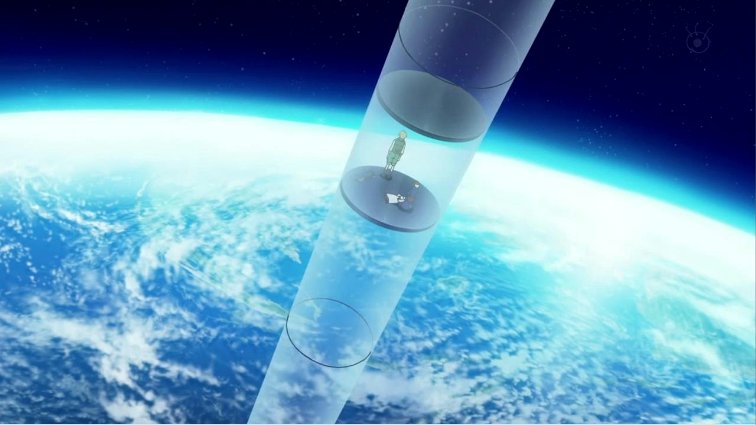
space_elevator_liftThe company said the fantasy can now become a reality because of the development of carbon nanotechnology. As Yoji Ishikawa, a research and development manager at Obayashi, explained:

The tensile strength is almost a hundred times stronger than steel cable so it’s possible. Right now we can’t make the cable long enough. We can only make 3-centimetre-long nanotubes but we need much more… we think by 2030 we’ll be able to do it.

Once considered the realm of science fiction, the concept is fast becoming a possibility. A major international study in 2012 concluded the space elevator was feasible, but best achieved with international co-operation. Since that time, Universities all over Japan have been working on the engineering problems, and every year they hold competitions to share their suggestions and learn from each other.

space_elevator3Experts have claimed the space elevator could signal the end of Earth-based rockets which are hugely expensive and dangerous. Compared to space shuttles, which cost about $22,000 per kilogram to take cargo into space, the Space Elevator can do it for around $200. It’s also believed that having one operational could help solve the world’s power problems by delivering huge amounts of solar power. It would also be a boon for space tourism.

Constructing the Space Elevator would allow small rockets to be housed and launched from stations in space without the need for massive amounts of fuel required to break the Earth’s gravitational pull. Obayashi is working on cars that will carry 30 people up the elevator, so it may not be too long before the Moon is the next must-see tourist destination. They are joined by a team at Kanagawa University that have been working on robotic cars or climbers.

graphene_ribbonsAnd one of the greatest issues – the development of a tether that can withstand the weight and tension of stresses of reaching into orbit – may be closer to being solved than previously thought. While the development of carbon nanotubes has certainly been a shot in the arm for those contemplating the space elevator’s tether, this material is not quite strong enough to do the job itself.

Luckily, a team working out of Penn State University have created something that just might. Led by chemistry professor John Badding, the team has created a “diamond nanothread” – a thread composed of carbon atoms that measures one-twenty-thousands the diameter of a single strand of human hair, and which may prove to be the strongest man-made material in the universe.

diamond_nanothreadAt the heart of the thread is a never-before-seen structure resembling the hexagonal rings of bonded carbon atoms that make up diamonds, the hardest known mineral in existence. That makes these nanothreads potentially stronger and more resilient than the most advanced carbon nanotubes, which are similar super-durable and super-light structures composed of rolled up, one atom-thick sheets of carbon called graphene.

Graphene and carbon nanotubes are already ushering in stunning advancements in the fields of electronics, energy storage and even medicine. This new discovery of diamond nanothreads, if they prove to be stronger than existing materials, could accelerate this process even further and revolutionize the development of electronics vehicles, batteries, touchscreens, solar cells, and nanocomposities.

space_elevator2But by far the most ambitious possibility offered is that of a durable cable that could send humans to space without the need of rockets. As John Badding said in a statement:

One of our wildest dreams for the nanomaterials we are developing is that they could be used to make the super-strong, lightweight cables that would make possible the construction of a ‘space elevator’ which so far has existed only as a science-fiction idea,

At this juncture, and given the immense cost and international commitment required to built it, 2050 seems like a reasonable estimate for creating a Space Elevator. However, other groups hope to see this goal become a reality sooner. The  International Academy of Astronautics (IAA) for example, thinks one could be built by 2035 using existing technology. And several assessments indicate that a Lunar Elevator would be far more feasible in the meantime.

Come what may, it is clear that the future of space exploration will require us to think bigger and bolder if we’re going to secure our future as a “space-faring” race. And be sure to check out these videos from Penn State and the Obayashi Corp:

John Badding and the Nanodiamond Thread:


Obayashi and the 2050 Space Elevator:


Sources:
cnet.com
, abc.net.au, science.psu.edu

Restoring Ability: Project NEUWalk

neuwalkIn the past few years, medical science has produced some pretty impressive breakthroughs for those suffering from partial paralysis, but comparatively little for those who are fully paralyzed. However, in recent years, nerve-stimulation that bypasses damaged or severed nerves has been proposed as a potential solution. This is the concept behind the NEUWalk, a project pioneered by the École Polytechnique Fédérale de Lausanne (EPFL) in Switzerland.

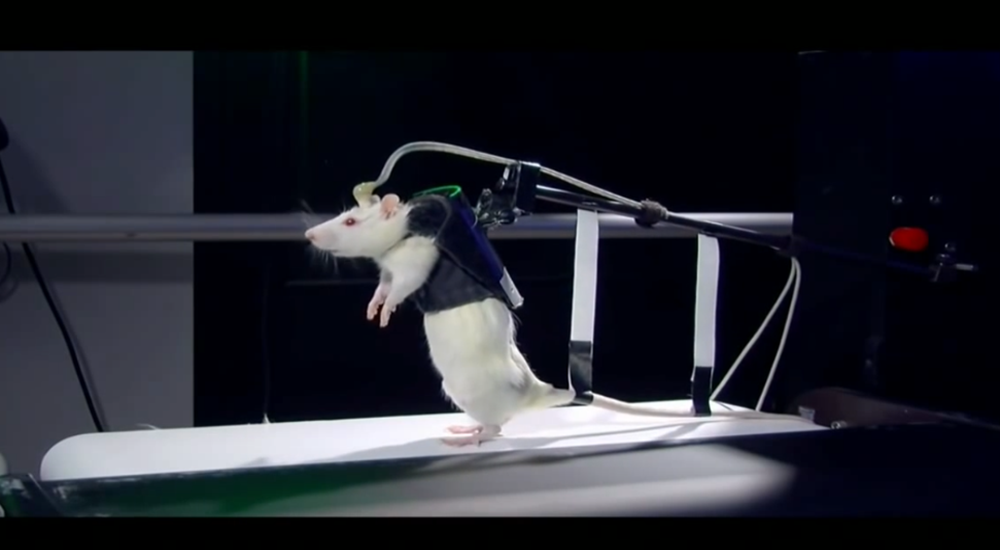
Here, researchers have figured out a way to reactivate the severed spinal cords of fully paralyzed rats, allowing them to walk again via remote control. And, the researchers say, their system is just about ready for human trials. The project operates on the notion that the human body requires electricity to function. The brain moves the body by sending electrical signals down the spinal cord and into the nervous system.

spinal-cord 2When the spinal cord is severed, the signals can no longer reach that part of the spine, paralysing that part of the body. The higher the cut, the greater the paralysis. But an electrical signal sent directly through the spinal cord below a cut via electrodes can take the place of the brain signal, as the team at EPFL, led by neuroscientist Grégoire Courtine, has discovered.

Previous studies have had some success in using epidural electrical stimulation (EES) to improve motor control where spinal cord injuries are concerned. However, electrically stimulating neurons to allow for natural walking is no easy task, and it requires extremely quick and precise stimulation. And until recently, the process of controlling the pulse width, amplitude and frequency in EES treatment was done manually.

brainwavesThis simply isn’t practical, and for two reasons: For starters, it is very difficult for a person to manually adjust the level of electrostimulation they require to move their legs as they are trying to walk. Second, the brain does not send electrical signals in an indiscriminate stream to the nerves. Rather, the frequency of the electrical stimulation varies based on the desired movement and neurological command.

To get around this, the team carefully studied all aspects of how electrical stimulation affects a rat’s leg movements – such as its gait – and was therefore able to figure out how to stimulate the rat’s spine for a smooth, even movement, and even take into account obstacles such as stairs. To do this, the researchers put paralyzed rats onto a treadmill and supported them with a robotic harness.

NEUWalk_ratsAfter several weeks of testing, the researchers had mapped out how to stimulate the rats’ nervous systems precisely enough to get them to put one paw in front of the other. They then developed a robust algorithm that could monitor a host of factors like muscle action and ground reaction force in real-time. By feeding this information into the algorithm, EES impulses could be precisely controlled, extremely quickly.

The next step involved severing the spinal cords of several rats in the middle-back, completely paralyzing the rats’ lower limbs, and implanted flexible electrodes into the spinal cord at the point where the spine was severed to allow them to send electrical signals down to the severed portion of the spine. Combined with the precise stimulation governed by their algorithm, the researcher team created a closed-loop system that can make paralyzed subjects mobile.

walkingrat.gifAs Grégoire Courtine said of the experiment:


We have complete control of the rat’s hind legs. The rat has no voluntary control of its limbs, but the severed spinal cord can be reactivated and stimulated to perform natural walking. We can control in real-time how the rat moves forward and how high it lifts its legs.

Clinical trials on humans may start as early as June 2015. The team plans to start testing on patients with incomplete spinal cord injuries using a research laboratory called the Gait Platform, housed in the EPFL. It consists of a custom treadmill and overground support system, as well as 14 infrared cameras that read reflective markers on the patient’s body and two video cameras for recording the patient’s movement.

WorldCup_610x343Silvestro Micera, a neuroengineer and co-author of the study, expressed hope that this study will help lead the way towards a day when paralysis is no longer permanent. As he put it:

Simple scientific discoveries about how the nervous system works can be exploited to develop more effective neuroprosthetic technologies. We believe that this technology could one day significantly improve the quality of life of people confronted with neurological disorders.

Without a doubt, restoring ambulatory ability to people who have lost limbs or suffered from spinal cord injuries is one of the many amazing possibilities being offered by cutting-edge medical research. Combined with bionic prosthetics, gene therapies, stem cell research and life-extension therapies, we could be looking at an age where no injury is permanent, and life expectancy is far greater.

And in the meantime, be sure to watch this video from the EPFL showing the NEUWalk technology in action:


Sources:
cnet.com, motherboard.com
, actu.epfl.ch

Cyberwars: “Bigger than Heartbleed”

Shellshock-bash-header-664x374Just months after the Heartbleed bug made waves across the internet, a new security flaw has emerged which threatens to compromise everything from major servers to connected cameras. It is known as the Bash or Shellshock bug, a quarter-century old vulnerability that could put everything from major internet companies and small-scale web hosts to wi-fi connected devices at risk.

This  flaw allows malicious code execution within the bash shell – commonly accessed through Command Prompt on PC or Mac’s Terminal application – to take over an operating system and access confidential information. According to the open-source software company Red Hat, bash shells are run in the background of many programs, and the bug is triggered when extra code is added within the lines of Bash code.

heartbleed-iconBecause the bug interacts with a large percentage of software currently in use, and does in ways that are unexpected, Robert Graham – an internet security expert – claims that the Bash bug is bigger than Heartbleed. As he explained it:

We’ll never be able to catalogue all the software out there that is vulnerable to the Bash bug. While the known systems (like your Web server) are patched, unknown systems remain unpatched. We see that with the Heartbleed bug: six months later, hundreds of thousands of systems remain vulnerable.

According to a report filed by Ars Technica, the vulnerability could affect Unix and Linux devices, as well as hardware running Max OS X – particularly Mac OS X Mavericks (version 10.9.4). Graham warned that the Bash bug was also particularly dangerous for connected devices because their software is built using Bash scripts, which are less likely to be patched and more likely to expose the vulnerability to the outside world.

shellshock_bashAnd since the bug has existed for some two and a half decades, a great number of older devices will be vulnerable and need to be patched because of it. By contrast, The Heartbleed bug was introduced into OpenSSL more than two years ago, allowing random bits of memory to be retrieved from impacted servers. And according to security researcher Bruce Schneier, roughly half a million websites could be vulnerable.

For the time being, the administrative solution is to apply patches to your operating system. Tod Beardsley, an engineering manager at security firm Rapid7, claims that even though the vulnerability’s complexity is low, the level of danger it poses is severe. In addition, the wide range of devices affected by the bug make it essential that system administrators apply patches immediately.

cyber_virusAs Beardsley explained during an interview with CNET:

This vulnerability is potentially a very big deal. It’s rated a 10 for severity, meaning it has maximum impact, and ‘low’ for complexity of exploitation — meaning it’s pretty easy for attackers to use it… The affected software, Bash, is widely used so attackers can use this vulnerability to remotely execute a huge variety of devices and Web servers. Using this vulnerability, attackers can potentially take over the operating system, access confidential information, make changes etc. Anybody with systems using bash needs to deploy the patch immediately.

Attackers can potentially take over the operating system, access confidential information, and make changes. After conducting a scan of the internet to test for the vulnerability, Graham reported that the bug “can easily worm past firewalls and infect lots of systems” which he says would be “‘game over’ for large networks”. Similar to Beardsley, Graham said the problem needed immediate attention.

cyber-hackIn the meantime, Graham advised people to do the following:

Scan your network for things like Telnet, FTP, and old versions of Apache (masscan is extremely useful for this). Anything that responds is probably an old device needing a Bash patch. And, since most of them can’t be patched, you are likely screwed.

How lovely! But then again, these sorts of exploitable vulnerabilities are likely to continue to pop up until we rethink how the internet is run. As the Heartbleed bug demonstrated, the problem at the heart (no pun!) of it all is that vast swaths of the internet run on open-source software that is created by only a handful of people who are paid very little (and sometimes, not at all) for performing this lucrative job.

In addition, there is a terrible lack of oversight and protection when it comes to the internet’s infrastructure. Rather than problems being addressed in an open-source manner after they emerge, there needs to be a responsible body of committed and qualified individuals who have the ability to predict problems in advance, propose possible solutions, and come up with a set of minimum standards and regulations.

cryptographyEnsuring that it is international body would also be advisable. For as the Snowden leaks demonstrated, so much of the internet is controlled the United States. And as always, people need to maintain a degree of vigilance, and seek out information – which is being updated on a regular basis – on how they might address any possible vulnerabilities in their own software.

I can remember reading not long ago that the growing amount of cyber-attacks would soon cause people to suffer from “alert fatigue”. Well, those words are ringing in my ears, as it seems that a growing awareness of our internet’s flaws is likely to lead to “bug fatique” as well. Hopefully, it will also urge people to action and lead to some significant reforms in how the internet is structured and administered.

Source: cnet.com, arstechnica.com, blog.erratasec.com, securityblog.redhat.com

The Future is Here: The Soft Robotic Exosuit

aliens_powerloaderRobotic exoskeletons have come a long way, and are even breaking the mold. When one utters the term, it tends to conjure up images of a heavy suit with a metal frame that bestows the wearer super-human strength – as exemplified by Daewoo’s robot worker suits. And whereas those are certainly making an impact, there is a burgeoning market for flexible exoskeletons that would assist with everyday living.

Researchers at Harvard’s Wyss Institute for Biologically Inspired Engineering have developed just such a device, a flexible fabric exoskeleton that earned them a $2.9 million grant by DARPA to continue developing the technology. Unlike the traditional exoskeleton concept, Harvard’s so-called “Soft Exosuit” is not designed to give the wearer vastly increase lifting capacity.

Exosuit-640x353Instead, the Soft Exosuit works with the musculature to reduce injuries, improve stamina, and enhance balance even for those with weakened muscles. In some ways, this approach to wearable robotics is the opposite of past exoskeletons. Rather than the human working within the abilities and constraints of the exoskeleton, the exoskeleton works with the natural movements of the human wearer.

The big challenge of this concept is designing a wearable machine that doesn’t get in the way. In order to address this, the Wyss Institute researchers went beyond the usual network of fabric straps that hold the suit in place around the user’s limbs. In addition, they carefully studied the way people walk and determined which muscles would benefit from the added forces offered by the Exosuit.

softexosuitWith a better understanding of the biomechanics involved, the team decided to go with a network of cables to transmit forces to the joints. Batteries and motors are mounted at the waist to avoid having any rigid components interfering with natural joint movement. This allows the wearer the freedom to move without having to manually control how the forces are applied.

Basically, the wearer does not have to push on a joystick, pull against restraints, or stick to a certain pace when walking with the Exosuit. The machine is supposed to work with the wearer, not the other way around. The designers integrated a network of strain sensors throughout the straps that transmit data back to the on-board microcomputer to interpret and apply supportive force with the cables.

Warrior_Web_Boston_Dynamics_sentDARPA is funding this project as part of the Warrior Web program, which seeks to reduce musculoskeletal injuries for military personnel. However, Harvard expects this technology to be useful in civilian applications as well. Anyone who needs to walk for long periods of time at work could benefit from the Soft Exosuit, which is less expensive and more comfortable that conventional exosuits; and with a little rescaling, could even be worn under clothing.

But the greatest impact of the Soft Exosuit is likely to be for those who suffer from a physical impairment and/or injuries. Someone that has trouble standing or walking could possibly attain normal mobility with the aid of this wearable robot. And people working their way through physiotherapy would find it very useful in assisting them with restoring their muscles and joints to their usual strength.

exosuit_cyberdyneHALThe team plans to collaborate with clinical partners to create a version of the exosuit for just this purpose. What the Wyss Institute has demonstrated so far has just been the general proof-of-concept for the Soft Exosuit. In time, and with further refinements, we could see all sorts of versions becoming available – from the militarized to the medical, from mobility assistance for seniors, to even astronauts looking to prevent atrophy.

And as always, technology that is initially designed to assist and address mobility issues is likely to give way to enhancement and augmentation. It’s therefore not hard to imagine a future where soft robotic exosuits are produced for every possible use, including recreation and transhumanism. Hell, it may even be foreseeable that an endoskeleton will be possible in the not-too-distant future, something implantable that can do the same job but be permanent…

Cool and scary! And be sure to check out this video from the Wyss Institute being tested:


Source:
extremetech.com
, wyss.harvard.edu, darpa.mil

500,000 Hits!

fireworks1This morning, I became aware that this blog, storiesbywilliams, has just reached another milestone. Yes, after three and a half years, this humble site has reached half a million hits. And as usual, I’d like to include a few other pertinent numbers to help put this all in perspective. For example, since this blog went public, it has reached the following:

  • 500,180 hits (as of writing this)
  • 7041 Comments
  • 2089 Followers
  • 1834 Posts

Once again, I can only say thank you to all those folks who have helped make this possible. You know who you are 😉 And just for once, I thought I might let be things brief and poignant. So thanks and congrats all around, and onto the next thing!

The Future of Computing: Towards a Quantum Internet

quantun_internetFor decades, the dream of quantum computing – a system that makes direct use of quantum-mechanical phenomena, such as superposition and entanglement, to perform operations on data- has been just that. Much the same is true of principles that expand on this concept, such as quantum encryption and a quantum internet. But thanks to ongoing studies and experiments by researchers and scientists, that dream may be closer to fruition than ever.

This time the progress comes from a research team out of Professor Nicolas Gisin lab’s in the physics department at the University of Geneva. The team achieved the teleportation of the quantum state of a photon – this time, the photon’s polarization – to a crystal-encased photon more than 25 kilometers (15.5 miles) away. The distance breaks the previous record of 6 kilometers (3.7 miles) set 10 years ago by the same team using the same method.

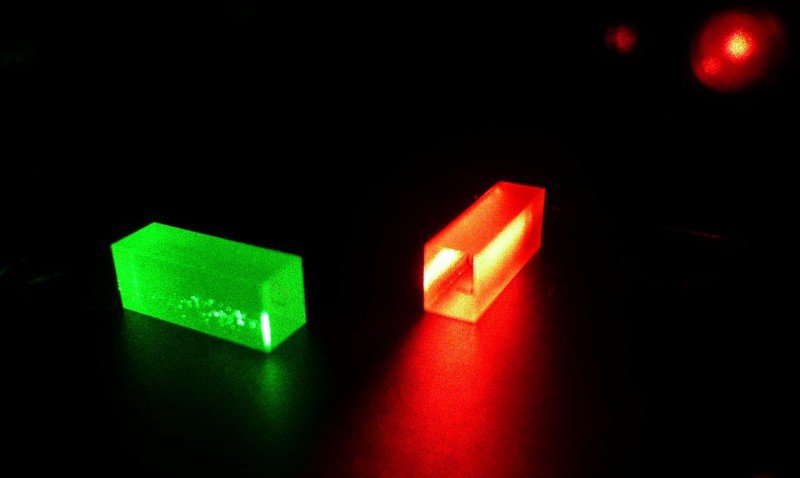
quantum_crystalThis is the latest in a series of experiments the group, led by physicist Félix Bussières, have conducted over the last decade in an effort to better understand quantum data transfer. In this particular experiment, the researchers stored one photon in a crystal, essentially creating a solid-state memory bank. They sent another photon of a different wavelength 25 km away through optical fiber, whereupon they had it interact with a third photon.

Because the first two photons were entangled – a quantum property whereby particles can speak to each other across an infinite distance – the interaction sent the data to the photo stored in the memory bank, where the team was able to retrieve it. Or as the team explained, using pool balls as an anology:

It is a bit like a game of billiards, with a third photon hitting the first which obliterates both of them. Scientists measure this collision. But the information contained in the third photon is not destroyed – on the contrary it finds its way to the crystal which also contains the second entangled photon.

quantum-entanglement3This is all in keeping with the concept of quantum teleportation – the moving of quantum data from one location to another without having to travel the distance between them. That means that the speed at which data moves isn’t necessarily limited by the constraints of space and time. In that sense, it’s easier to think of this kind of teleporting not as a “beam me up” scenario, but as a kind of instantaneous awareness between two points.

While this may not sound as exciting as Ursula K. Le Guin’s Ansible communicator, the Alcubierre warp drive, or the “Star Trek”-style transporter, it opens up startling possibilities. For instance, in addition to bringing us closer to hard drives that can store quantum bits (aka. qubits), this is a major step in the direction of a quantum internet and encryption- where information is sent around the world instantaneously and is extremely secure.

quantum-teleportation-star-trails-canary-islands-1-640x353This also opens doors for space exploration, where astronauts in space, rovers on Mars, and satellites in deep space will be able to communicate instantly with facilities here on Earth. For non-quantum physicists, the novel aspect of this experiment is that the team achieved teleportation of data across the kind of optic fiber that forms the basis of modern-day telecommunications, which means no major overhaul will be needed to make quantum internet a reality.

As physicists continue to push the boundaries of our understanding about the quantum world, we’re getting closer to translating these kinds of advancements in market applications. Already, quantum computing and quantum encryption are making inroads into the sectors of banking security, medical research and other areas in need of huge computing muscle and super-fast information transfer.

^With the rise of a potential quantum Internet on the horizon, we could see the next jump in communication happen over the next couple of decades. So while we’re a long way off from trying to pry quantum teleportation and entanglement from the grip of the theoretical realm, scientists are making headway, if only a handful of kilometers at a time. But every bit helps, seeing as how routing stations and satellites can connect these distances into a worldwide network.

In fact, research conducted by other labs have not only confirmed that quantum teleportation can reach up to 143 km (89 miles) in distance, but that greater and greater properties can be beamed. This distance is especially crucial since it happens to be close to what lies between the Earth and a satellite in Low-Earth Orbit (LEO). In short, we humans could construct a quantum internet using optic cables or satellites, mirroring the state of telecommunications today.

And when that happens, get ready for an explosion in learning, processing and information, the likes of which has not been seen since the creation of the printing press or the first internet revolution!

Sources: cnet.com, technologyreview.com, nature.com

Biotech Breakthrough: Fully-Functioning Organ Grown

artificial-thymusOrgan transplants are one of the greatest medical advances of the 20th century. Where patients once faced disability or even death, they’ve been given a new lease on life in the form of donated organs. The problem is that the supply of suitable donor organs has always been in a state of severe shortage. Not only is it entirely dependent on accident victims who have signed their organ donor card, there is also the issue of genetic suitability.

For decades, scientists have worked on producing lab-grown organs to pick up the slack left by the donor system. The research has yielded some positive results in the form of simple organs, such as the artificial esophagus and “mini-kidneys.” Nevertheless, the creation of whole, complex, functional organs that can be swapped for damaged or destroyed ones has remained out of reach. That is, until now.

fibroblastScientists at the University of Edinburgh have grown a fully-functional organ inside a mouse, a breakthrough that opens up the possibility of one day manufacturing compatible organs for transplant without the need for donors. Using mouse embryo cells, scientists at the MRC Centre for Regenerative Medicine created an artificial thymus gland with the same structure and function as an adult organ.

The University of Edinburgh team produced the artificial thymus gland using a technique that the scientists call “reprogramming.” It involves fibroblast cells, which form connective tissue in animals, being removed from a mouse embryo and then treated with a protein called FOXN1 to change them into thymic epithelial cells (TEC). These were then mixed with other thymus cells and transplanted into living mice by grafting them to the animal’s kidneys.

T-cellThen, over a period of four weeks, the cells grew into a complete, functioning thymus gland that can produce T cells – an important part of the immune system. According to the scientists, this development goes beyond previous efforts because the thymus serves such a key part in protecting the body against infection and in eliminating cancer cells. This is clearly the first step on the road towards complete organ development.

The team is currently working on refining the reprogramming technique in the hope of developing a practical medical procedure, such as creating bespoke thymus glands made to match a patient’s own T cells. They see the development of a lab-grown thymus as a way of treating cancer patients whose immune system has been compromised by radiation or chemotherapy, and children born with malfunctioning thymuses.

bioprintingAccording to Rob Buckle, Head of Regenerative Medicine at the MRC, the potential is tremendous and far-reaching:

Growing ‘replacement parts’ for damaged tissue could remove the need to transplant whole organs from one person to another, which has many drawbacks – not least a critical lack of donors. This research is an exciting early step towards that goal, and a convincing demonstration of the potential power of direct reprogramming technology, by which one cell type is converted to another. However, much more work will be needed before this process can be reproduced in the lab environment, and in a safe and tightly controlled way suitable for use in humans.

Combined with “bioprinting” – where stem cells are printed into organs using a 3-D printer – organs transplants could very well evolve to the point where made-to-order replacements are fashioned from patient’s own genetic material. This would not only ensure that there is never any shortages or waiting lists, but that there would be no chance of incompatibility or donor rejection.

Another step on the road to clinical immortality! And be sure to check out this video of the artificial thymus gland being grown, courtesy of the Medical Research Council:


Source:
gizmag.com, crm.ed.ca.uk

Ending Cancer: Cancer-Hunting Nanoparticles

cancer_hunting_nanoparticleWhen it comes to diseases and conditions that have long been thought to be incurable – i.e. cancer, diabetes, HIV – nanoparticles are making a big impact. In the case of HIV, solutions have been developed where gold nanoparticles can deliver bee venom or HIV medication to cells of the virus, while leaving healthy tissue alone. As for diabetes and cancer, the same concept has proven useful at both seeking out and delivering medication to the requisite cells.

However, a new breakthrough may be offering cancer patients something more in the coming years. In what appears to be a promising development, researchers at the University of California Davis (UC Davis) Cancer Center have created a multi-tasking nanoparticle shown to be effective both in the diagnosis of a tumor and attacking its cells – a flexibility that could lead to new treatment options for cancer patients.

gold_nanoparticlesOne of the big challenges in developing multitasking nanoparticles is that they are traditional designed with one purpose in mind. They are constructed using either inorganic or organic compounds, each with strengths of their own. Inorganic nanoparticles, such those made from gold, are effective in imaging and diagnostics. Organic nanoparticles, on the other hand, are biocompatible and provide a safe method of drug delivery.

The nanoparticles developed at UC Davis are made from a polymer composed of organic compounds porphyrin and cholic acid, which is produced by the liver. The researchers then added cysteine – an amino acid that prevents it from releasing its payload prematurely – to create a fluorescent carbon nanoparticle (CNP). The team then tested the new nanoparticle with a range of tasks, both in vitro and in vivo (aka. in a solution of cells and in living organisms).

cancer_killing_laserThey found the particle was effective in delivering cancer-fighting drugs such as doxorubicin (commonly used in chemotherapy). In addition, they found that while applying light (known as photodynamic therapy), the nanoparticles release reactive molecules called singlet oxygen that destroy tumor cells, while heating them with a laser (known as photothermal therapy) provided another way for the particles to destroy tumors.

One notable finding was that the release of a payload sped up as the nanoparticle was exposed to light. The researchers claim this ability to manipulate the rate at which the particles release chemotherapy drugs from inside the tumor could help to minimize toxicity. This is a big plus considering that all known cancer treatments – i.e. chemotherapy, medication, radiation – all come with side effects and have a high risk causing damage to the patient’s healthy tissue.

NanoparticlesIn relation to imaging and phototherapy, the nanoparticle remained in the body for extended periods and bonded with imaging agents. And because CNPs are drawn more to tumor tissue than normal tissue, it helps to improve contrast and light them up for MRI and PET scans. This effectively makes the UC Davis nanoparticle a triple threat as far as cancer treatments are concerned.

As Yuanpei Li, research faculty member from the UC Davis Cancer Center, explains it:

This is the first nanoparticle to perform so many different jobs. From delivering chemo, photodynamic and photothermal therapies to enhancing diagnostic imaging, it’s the complete package.

The team is now focusing on further pre-clinical studies, with a view to advancing to human trials if all goes to plan. And this is not the only breakthrough inolving cancer-fighting nanoparticles to be made in recent months. Back in April, scientists at MIT reported the creation a revolutionary building block technique that’s enabled them to load a nanoparticle with three drugs, and claim it could be expanded to allow one to carry hundreds more.

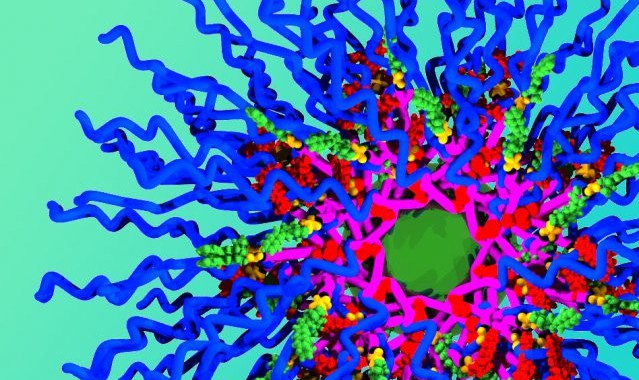
MIT_nanoparticleTypical nanoparticle designs don’t allow for scaling, since they call for building a nanoparticle first, then encapsulating the drug molecules within it or chemically attaching the molecules to it. Attempting to add more drugs makes assembling the final nanoparticle exponentially more difficult. To overcome these limitations, Jeremiah Johnson, an assistant professor of chemistry at MIT, created nanoparticle building blocks that already included the desired drug.

Called “brush first polymerization,” the approach allows the researchers to incorporate many drugs within a single nanoparticle and control the precise amounts of each. In addition to the drug, each tiny building block contains a linking unit enabling it to easily connect to other blocks, and a protective compound to ensure that the drug stays intact until it enters the cell.

MIT_nanoparticle1The approach not only allows different drug-containing blocks to be assembled into specific structures, but it also enables each drug to be released separately via different triggers. The team has tested its triple threat nanoparticles, containing drugs typically used to treat ovarian cancer – such as doxorubicin, cisplatin and camptothecin – against lab-grown ovarian cancer cells.

The results demonstrated the new nanoparticles’ ability to destroy cancer cells at a higher rate than those carrying fewer drugs. As Johnson explained it:

This is a new way to build the particles from the beginning. If I want a particle with five drugs, I just take the five building blocks I want and have those assemble into a particle. In principle, there’s no limitation on how many drugs you can add, and the ratio of drugs carried by the particles just depends on how they are mixed together in the beginning… We think it’s the first example of a nanoparticle that carries a precise ratio of three drugs and can release those drugs in response to three distinct triggering mechanisms.

In this case, the cisplatin is delivered the instant the particle enters the cell, as it reacts to the presence of an antioxidant found in the cells called glutathione. When the nanoparticle encounters a cellular enzyme called esterases it releases the second drug, camptothecin. Shining ultraviolet light triggers the release of the remaining doxorubicin, leaving behind only the biodegradable remnants of the nanoparticle.

nanoparticle_cancertreatmentThe researchers believe this approach can potentially be used to link hundreds of building blocks to create multidrug-carrying nanoparticles, and pave the way for entirely new types of cancer treatments, free from the damaging side effects that accompany traditional chemotherapy. The MIT team is currently working on making nanoparticles that can deliver four drugs, and are also engaged in tests that treat tumor cells in animals.

Until recently, the fight against cancer has been characterized by attrition. While treatments exist, they tend to be a balancing act – inflicting harm and poisoning the patient in small doses with the hope of killing the cancer and not the host. Smarter treatments that target the disease while sparing the patient from harm are just what is needed to turn the tide in this fight and bring cancer to an end.

Sources: gizmag.com, (2), nature.com, ucdmc.ucdavis.edu

Judgement Day Update: Cheetah Robot Unleashed!

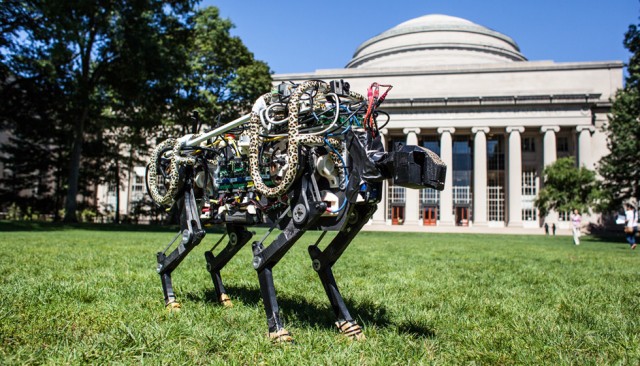
MIT-Cheetah-05-640x366There have been lots of high-speed bio-inspired robots in recent years, as exemplified by Boston Dynamics WildCat. But MIT’s Cheetah robot, which made its big debut earlier this month, is in a class by itself. In addition to being able to run at impressive speeds, bound, and jump over obstacles, this particular biomimetic robot is also being battery-and-motor driven rather than by a gasoline engine and hydraulics, and can function untethered (i.e. not connected to a power source).

While gasoline-powered robots are still very much bio-inspired, they are dependent on sheer power to try and match the force and speed of their flesh-and-blood counterparts. They’re also pretty noisy, as the demonstration of the WildCat certainly showed (video below). MIT’s Cheetah takes the alternate route of applying less power but doing so more efficiently, more closely mimicking the musculoskeletal system of a living creature.

mit-cheetahThis is not only a reversal on contemporary robotics, but a break from history. Historically, to make a robot run faster, engineers made the legs move faster. The alternative is to keep the same kind of frequency, but to push down harder at the ground with each step. As MIT’s Sangbae Kim explained:

Our robot can be silent and as efficient as animals. The only things you hear are the feet hitting the ground… Many sprinters, like Usain Bolt, don’t cycle their legs really fast. They actually increase their stride length by pushing downward harder and increasing their ground force, so they can fly more while keeping the same frequency.

MIT’s Cheetah uses much the same approach as a sprinter, combining custom-designed high-torque-density electric motors made at MIT with amplifiers that control the motors (also a custom MIT job). These two technologies, combined with a bio-inspired leg, allow the Cheetah to apply exactly the right amount of force to successfully bound across the ground and navigate obstacles without falling over.

MIT-cheetah_jumpWhen it wants to jump over an obstacle, it simply pushes down harder; and as you can see from the video below, the results speak for themselves. For now, the Cheetah can run untethered at around 16 km/h (10 mph) across grass, and hurdle over obstacles up to 33 centimeters high. The Cheetah currently bounds – a fairly simple gait where the front and rear legs move almost in unison – but galloping, where all four legs move asymmetrically, is the ultimate goal.

With a new gait, and a little byte surgery to the control algorithms, MIT hopes that the current Cheetah can hit speeds of up to 48 km/h (30 mph), which would make it the fastest untethered quadruped robot in the world. While this is still a good deal slower than the real thing  – real cheetah’s can run up to 60 km/h (37 mph) – it will certainly constitute another big step for biomimetics and robotics.

Be sure to check out the video of the Cheetah’s test, and see how it differs from the Boston Dynamics/DARPA’s WildCat’s tests from October of last year:


Source:
extremetech.com

The Future is Here: Google X’s Delivery Drones

google-x-project-wing-prototypesThere are drones for aerial reconnaissance, drones for domestic surveillance, and drones for raining hell, death and destruction down on enemy combatants. But drones for making personal deliveries? That’s a relatively new one. But it is a not-too-surprising part of an age where unmanned aerial vehicles are becoming more frequent and used for just about every commercial applications imaginable.

After working on secret for quite some time, Google’s secretive projects lab (Google X) recently unveiled its drone-based delivery system called Project Wing. On the surface, the project doesn’t look much different from Amazon’s Prime Air aut0nomous quadcopter delivery service. However, on closer inspection, Project Wing appears to be much more ambitious, and with more far-reaching goals.

Amazon-Google-780x400The original concept behind Project Wing — which has been in development for more than two years — was to deliver defibrillators to heart attack sufferers within two minutes. But after running into issues trying to integrate its tech with the US’s existing 911 and emergency services systems, the focus shifted to the much more general problem of same-day deliveries, disaster relief, and delivering to places that same- and next-day couriers might not reach.

For their first test flights, the Google team traveled to Australia to conduct deliveries of dog food to a farmer in Queensland. All 31 of Project Wing’s full-scale test flights have been conducted in Australia, which has a more permissive “remotely piloted aircraft” (i.e. domestic drones) policy than the US. There’s no word on when Project Wing might be commercialized, but it is estimated that it will be at least a couple of years.

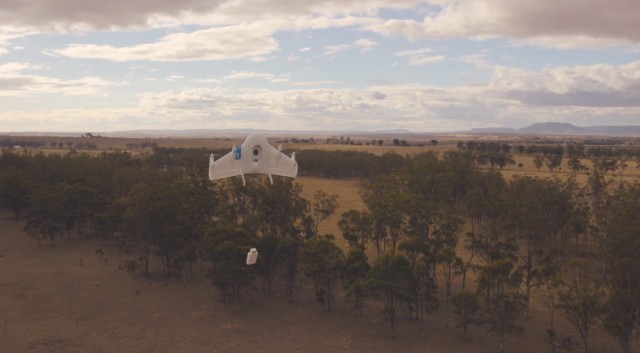
google-drones-290814While most work in small-scale autonomous drones and remotely piloted aircraft generally revolves around quadcopters, Google X instead opted for a tail-sitter design. Basically, the Project Wing aircraft takes off and lands on its tail, but cruises horizontally like a normal plane. This method of vertical-takeoff-and-landing (VTOL) was trialed in some early aircraft designs, but thrust vectoring was ultimately deemed more practical for manned flight.

The Project Wing aircraft has four electric motors, a wingspan of around 1.5m (five feet), and weighs just under 8.6 kg (19 pounds). Fully loaded, the drones apparently weigh about 10 kg (22 pounds) and are outfitted with the usual set of radios and sensors to allow for autonomous flight. But there’s also a camera, which can be used by a remote pilot to ensure that the aircraft drops its package in a sensible location.

google-project-wing-delivery-drone-640x353As you can see from the video below, the packages are dropped from altitude, using a winch and fishing line. Early in the project, Google found that people wanted to collect packages directly from the drone, which was impractical when the engines were running. The air-drop solution is much more graceful, and also allows the drone to stay away from a large variety of low-altitude obstacles (humans, dogs, cars, telephone lines, trees…)

This is another major different with Amazon Prime Air’s drones, which carry their package on the drone’s undercarriage and land in order to make the delivery. And while their octocopters do have slightly better range – 1.6 km (1 mile), compared to Project Wing’s 800 meters (half a mile) – Google is confident its delivery system is safer. And they may be right, since its not quite clear how small children and animals will react to a landing object with spinning rotors!

Google-Wing-3For the moment, Google has no specific goal in mind, but the intent appears to be on the development for a full-scale same-day delivery service that can transport anything that meets the weight requirements. As Astro Teller, director of Google X labs, said in an interview with The Atlantic:

Throughout history there have been a series of innovations that have each taken a huge chunk out of the friction of moving things around. FedEx overnight delivery has absolutely changed the world again. We’re starting to see same-day service actually change the world. Why would we think that the next 10x — being able to get something in just a minute or two — wouldn’t change the world?

Nevertheless, both projects are still years away from realization, as both have to content with FAA regulations and all the red tape that come with it. Still, it would not be farfetched to assume that by the 2020’s, we could be living in a world where drones are a regular feature, performing everything from traffic monitoring and aerial reconnaissance to package delivery.

And be sure to check out these videos from CNET and Amazon, showing both Project Wing and Prime Air in action:


Sources:
extremetech.com
, zdnet.com, mashable.com