The issue of transhumanism, the rise of a new type of humanity characterized by man-machine interface and augmented intelligence, is being debated quite fervently in some circles right now. But it seems that groups other than Futurists and speculative fiction writers are joining the discussion. Recently, the National Intelligence Council, a US policy think-tank, released a 140 page report that outlined major trends and technological developments we should expect in the next 20 years.
The report, entitled “Global Trends 2030: Alternative Worlds”, predicted several trends which are likely to come true in the near future. Amongst them is the end of U.S. global dominance, the rising power of individuals against states, a growing middle class that will increasingly challenge governments, and ongoing shortages in water, food and energy. However, predictions were also made concerning a future where humans have been significantly modified by various technologies, what is often referred to as the dawn of the Transhuman Era.
Intrinsic to this new era is the invention of implants, prosthetics, and powered exoskeletons which will become regular fixtures of human life. These will go beyond merely correcting for physical disabilities or injury, to the point where average humans are enhanced and become more productive. 2030 is key year here, because it is by this point that the authors predict that prosthetics will exceed organics, and people will begin getting them installed in order to augment themselves.
In addition, life extension therapies and medical advances which will be used predominantly by the elderly will become a means for otherwise healthy people to prolong their lives and maintain health and vitality for longer periods of time. Brain implants are expected to become a reality as well, ostensibly to allow people to have brain-controlled prosthetics, but also for the sake of enhanced memory and augmented thinking.
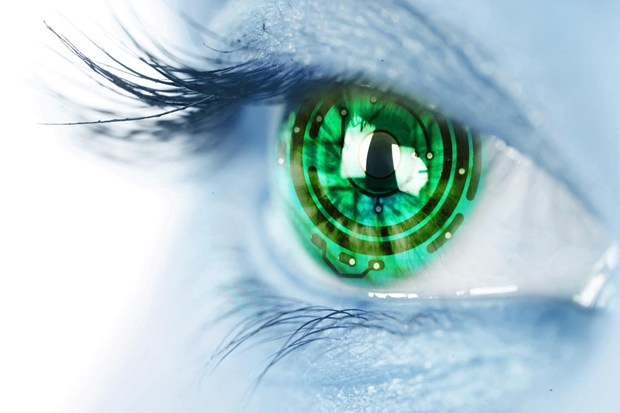
And of course, bionics are an important factor in all this. Already, researchers have achieved breakthroughs with bionic limbs, but retinal attachments, artificial eyes, and even fully-functioning organs are expected before 2030. On top of that, improvements in drugs, such as neuropharmaceuticals – drugs that enhance memory, attention, speed of thought – and implants which assist in their delivery are expected to be making the rounds.
Finally, there is the matter of virtual and augmented reality systems, which are already becoming a reality thanks to things like Project Glass and recent innovations in PDAs. As the report notes: “Augmented reality systems can provide enhanced experiences of real-world situations. Combined with advances in robotics, avatars could provide feedback in the form of sensors providing touch and smell as well as aural and visual information to the operator.”
However, the big issue, according to the report, is cost and security. Most of these technologies will be not affordable to all people, especially for the first few years of their existence. This could result in a two-tiered society where the well-to-do live longer, healthier and have a competitive advantage over “organics”, people of lesser means who are identifiable by their lack of enhancements. Also, developers will need to be on their guard against hackers who might attempt to subvert or infect these devices with tailor-made viruses.
Naturally, the importance of maintaining uniform scientific progress was stressed, and the need for a regulatory framework is certainly needed. What the CSER recently recommended is certainly worth keeping in mind here, which was to ensure that some kind of regulatory framework be put in place before all of this becomes a reality. What’s more, public education is certainly necessary, so that the current and next generation of human beings knows what to expect and how to go about making informed choices therein.
To see the full report and learn more about the NIC, follow the link below:
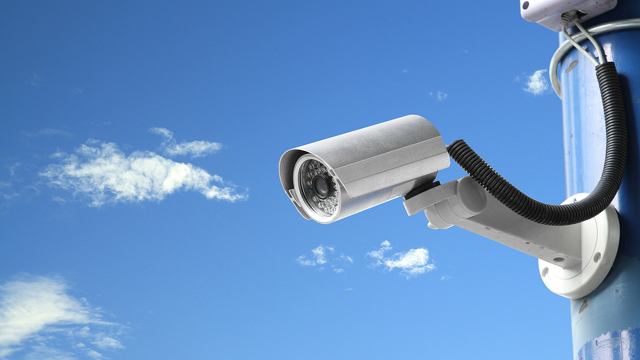
Consider the possibility that surveillance cameras might someday be automated, that there would be no need for security clerks to sit and wade through endless hours of footage to find indices of criminal behavior. That’s the reasoning behind the Pentagon and DARPA’s new project, which is named Mind’s Eye. Far from just being automated, the camera will be the first “smart” camera ever built, capable of predicting human behavior as well as monitoring it.
Using a concept known as “visual intelligence”, the project draws on a research proposal made by researchers working for the Carnegie Mellon School of Computer Science. The proposal calls for the creation of a “high-level artificial visual intelligence system” which, once operational, will be able to recognize human activities and predict what might happen next. Should it encounter a potentially threatening scene or dangerous behavior, it could sound the alarm and notify a human agent.
In essence, the camera system will rely on a series of computer visual algorithms that will allow it to classify behavior as well discriminate between different actions in a scene and predict their outcomes. Might sound like a case of coldly rational machine intelligence evaluating human actions; but in fact, the algorithm was designed to approximate human-level visual intelligence.
According to Alessandro Oltramari and Christian Lebiere, the researchers responsible for the proposal, humans evolved the ability to scan and process their environment for risks, at times relying on experience and guessing correctly what a person might do next. By using a linguistic infrastructure that operates in conjunction with a set of “action verbs”, along with a “cognitive engine,” the researchers are trying to get their camera to do the same thing.
Sound scary? Well that’s natural considering the implications. Any such technology is sure to bolster private and public security efforts by relieving human beings of the humdrum activity of watching security cameras while at the same time keeping them notified about potential risks. On the other hand, a machine intelligence would be responsible for monitoring human beings and judging their actions, which raises many issues. Sure, it’s not exactly PreCrime, but it does raise some ethical and legal concerns, not to mention worries over accountability.
Luckily, the AI that would run such a system is still several years away, which leaves us time to debate and regulate any system that uses “smart surveillance”.
It seems NASA spends untold resources trying to debunk conspiracy theories and doomsday predictions. Sad, when you consider all the wonderful uses this time and energy could be dedicated towards, like putting people on Mars! In any case, and in anticipation for this coming Friday (and Saturday, if all goes well!), I thought I’d share this video NASA released to put people’s minds at ease. The world will NOT end on Dec. 21st, 2012, it claims, and presents the scientific findings that say so.
Set on Dec. 22nd, 2012, the video approaches the apocalypse as if it is something that has already come and gone and proceeds to explain how the myth of the 2012 End of the World scenario began in the first place. In examining the actual Mayan Calendar, the reasons for why the calendar ends when it does, and taking a look at all the stellar and terrestrial phenomena which are believed to coincide with the date (but which won’t), NASA shows why we have nothing to worry about.
In fact, if anything, the date in question will be a time of rejoicing. Not only is it the holiday season for people worldwide, it is also the natural turning point in the Mayan Calendar, the date at which the ancient astronomers reckoning of time would “reset” in accordance with their ancient theology. This was a regular pattern as far as the Yucatan-based civilization was concerned, and is a testament to their long and expansive concepts of time and cosmology.
Nothing destructive was ever mentioned or implied in the Mayan belief system, merely a rolling over of the odometer and an entrance into a new age. If anything, it was western apocalyptics and cultists, with their preconceived notions of the End of Days and astrology, that attached this significance to the date. Astrological phenomena, such a meteor striking Earth, an inversion of our gravitational field, a massive solar flare, or another planet colliding with us, were all added as a means of explaining how. But, as the experts as NASA show, none of this stuff is happening or in danger of happening in the next few days.
In short, we can all look forward to another holiday season with plenty of food, family, in-laws and swag. As my grandpa used to say “the sun will still rise in the east and set in the west”, the world will keep on spinning, and people will keep on waiting for the end of the days to come. Fear not the End of Days, fear waking up tomorrow and realizing that you still have to get up, go to your job, and tolerate all the little annoyances we all deal with on a daily basis. And while your at it, be thankful you’re alive and STOP WISHING FOR IT ALL TO END!
And if that is still not enough to convince the doomsayers that life will go on, perhaps a quick look at their track record will be enough to convince the rest of us of how often they are wrong. Consider…
30-36 – 2012 C.E:After the death of Jesus and the spread of early Christianity, believers begin to prepare for the “coming of the Lord”. After several centuries, it is clear that the End of Days isn’t just around the corner, so believers begin to settle in and create Monasteries in the hopes of living how the Savior would have wanted. Two-thousand years later, we’re all still waiting!
410 C.E.: Rome is sacked, leading many Christians to fear that the Barbarian hordes are the harbingers of the Apocalypse. However, St. Augustine of Hippo allays much of these fears with his book City of God, where he states that though the corporeal capital of Christianity may have been sacked, the city of God abides. People promptly calm down…
900 C.E.: The fall of the Western Roman Empire leads to renewed fears that the world is ending. However, despite the decline in education, wealth, central leadership, life expectancy, and an upsurge in violence, life goes on…
1000 C.E.: Europe becomes consumed by apocalyptic predictions with the coming of the Millennium. On Dec. 31st, 999, nothing happens! The sun rises on the following day and people go back about their business…
1206-1294 C.E.: The Mongol Hordes, a vast and terrible army, reach Europe from Asia and begin a campaign of conquest and slaughter. People everywhere believe they are the Four Horsemen of the Apocalypse foretold in the Book of Revelation. However, Mongol expansion soon ceases, the Empire is subdivided amongst Ghengis Khan’s sons and vassals, and life continues. Just another Horde from the East that failed to deliver on the Apocalypse I guess!
1348-1350 C.E.: The Black Death strikes Europe. People everywhere believe this is God’s judgement and the Rapture is sure to follow. Flagellants punish themselves for the good of humanity, witches are burned, Jews are murdered, cats hung, and any and all traces of “wicked behavior” and people are scapegoated and purged. However, within two years, the plague passes, one-third of Europe has died, but life goes on and a period of rapid recovery soon follows.
1914 C.E.: The outbreak of the Great War leads many to believe that Armaggedon, the last great battle that will signal the end of time, is upon them! After four years of brutal, protracted warfare, all sides agree to a ceasefire and previously held romantic notions of warfare are shattered. Henceforth, Remembrance Day, Veteran’s Day, Memorial Day, and a series of other national and international holidays mark the occasion and remind us how foolish and horrible war really is. However, the world does not end…
1918 C.E.:“Red October” shakes the world, with many predicting that the victory by the “Godless Communists” is a sign of the Apocalypse. However, despite the terrible crimes that follow in the Marxist-Leninists wake, especially where Joseph Stalin, Mao Zedong and Pol Pot are concerned, the world keeps on spinning, even after the conflict becomes nuclear in scope (see next).
1945 – 1991 C.E.: The advent of nuclear weapons and the beginning of the Cold War lead to a resurgence in Apocalyptic predictions, with many claiming that “The End is Near” on a regular basis. However, numerous close shaves pass without incident, the Cold War ends by 1991, and all predictions as to how “Nuclear Holocaust” will take place fail to be realized. In the end, many people realize that the human race isn’t suicidal or quite as stupid as previously thought. Others continue to ponder how WWIII will happen, but produce no realistic scenarios.
1948 C.E. – : The Arab-Israeli Conflict begins and escalates with such events as the Suez Crisis (1956), the Six Day War (1967), and Yom Kipper (1973). Religious scholars and believers begin to claim that these events were foretold in Scripture, and foretell of the coming battle of Armageddon – which will take place at Tel Meggido in modern day Israel. However, land for peace and a detente have prevented any full-scale wars since 1973, and the Oslo Accords of 1992 seem to suggest that a permanent peace between Israel and the Palestinians is just a matter of time.
1980’s C.E.: The growing awareness of the AIDS virus prompts many religious nuts and homophobes to claim that “Gods Judgement is Here” and is taking the form of a virus that strikes down sinners. However, public education and about thirty years with no Rapture lead most to conclude that this is a terrible disease which merits no religious condemnation. Public decrying of victims remains, but few people take them seriously.
1994/5 C.E.: Renewed outbreaks of the Ebola virus leads to new fears of a global pandemic. Movies like The Stand, Outbreak and just about any scenario involving biological warfare do great at the box office, but the apocalyptic nightmare never comes true. And when people realize that casualties are largely reserved to African nations, they generally stop caring!
1990 – 2000 C.E.: Y2K histeria sets in as people get wind of a possible bug that could shut down the world’s computers. People begin hoarding and stocking their shelves in preparation for the pandemonium and chaos that is expected. When the clock strikes midnight of Dec. 31st 1999, nothing happens! The world keeps spinning, the computers keep working, and the nuts go looking for another reason to panic. There are still plenty to choose from…
And let’s not forget 9/11, Hurricane Katrina, the Bath Salts Zombies and every other major disaster that has befallen the world in recent years. Seems every day weirdos and nutjobs are finding reasons to think we’re all going to die. One would think they wanted it to happen or something…
In the meantime, enjoy the video and all its sane and sensible points!
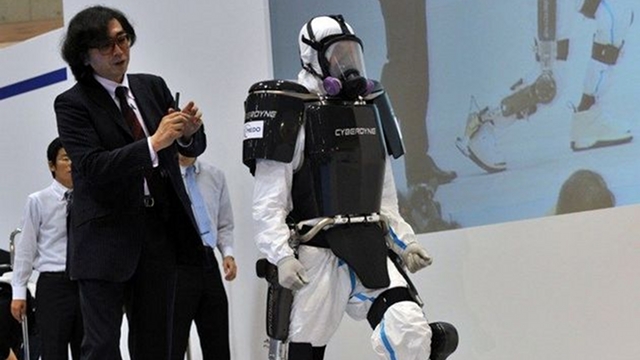
Back in October, some rather interesting news came out of Japan. It appears that a research company known as Cyberdyne produced a robot suit named HAL. No joke, the company is seriously named after the company from Terminator franchise that developed Skynet and the robot suit – who’s name stands for Hybrid Assisted Limb – is named after the HAL 9000 from 2001: A Space Odyssey.
Still, the company is the legit and the new robotic suit is quite impressive. Like many before it, it is a powered suit that gives the wearer enhanced strength and protection. But unlike previous models, this one comes equipped with a network of sensors that monitor the electric signals coming from the wearer’s brain, allowing them to seamlessly control the suit’s movements.
This is expected to remedy a problem which has plagued exoskeletons since their inception, which is the problem of speed. While all exos allow for greater strength and load-bearing capacity, the motors that power the limbs tend to respond slowly to the users commands. By anticipating the wearer’s movements by reading them directly from the brain, this new suit will be able to move in synchronicity with the wearer’s limbs.
The suit is also expected to be helpful with Japan’s ongoing cleanup efforts with the crippled Fukushima nuclear power plant. In addition to the new mind-control interface, the suit’s load-bearing capacities are expected to come in handy for workers who are forced to wear a 60 kg (132 lbs) tungsten vest while working in radiation zones. Even for a husky man, that’s quite the load to bear on top of all the additional weight they’ll need to be carrying.
Naturally, there are anticipated hazards as well, like what will happen if the power supply were to suddenly run out. Essentially, the wearer would be trapped inside. However, these and other bugs are expected to be addressed before any units are pressed into service. And with luck, suits like these could available for HazMat workers, construction crews, and people who work in dangerous conditions in just a few years time.
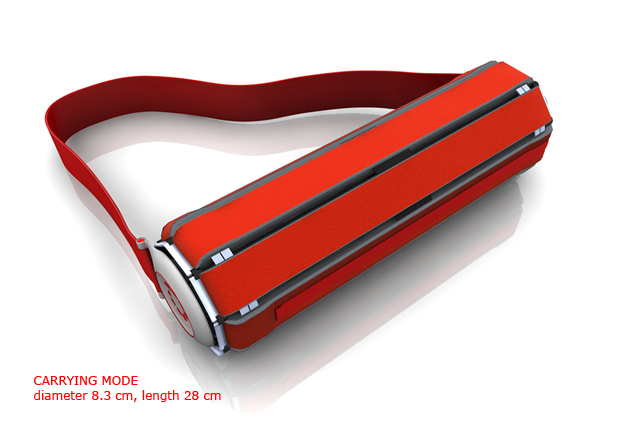
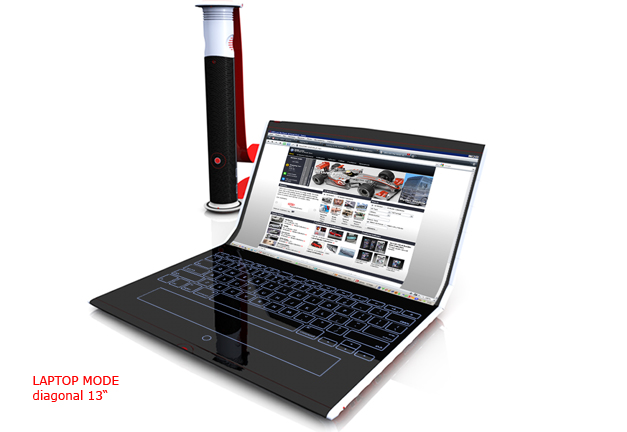
Presenting the Rolltop laptop, a proposed next-generation portable computer that is made to look and act like a scroll. As a concept, this idea was first started in 2009 by the people of Rolltop, a team of researchers, IT developers and business administrators. By combining recent advancements in the field of OLED-Display and multi-touchscreen technology, the plan was to create a flexible computer that would combine the utility of a laptop computer with the weight of a mini notebook.
In addition, it can be switched from a laptop with 13 inch diagonal screen to a 17 inch graphics tablet. Or, stand it up against its rear-mounted support arm and use it as a primary monitor. When rolled up, it measures a mere 8.3 in width and 28 centimeters in length, and has a carrying strap which allows it to be carried around like a small case. When unrolled, the laptop is separated from a central core which contains the battery, power plug-in, and loudspeaker.
Initially, the project was merely a proposal by the Rolltop team to demonstrate their vision and ideas. However, due to the overwhelming response from the technical and consumer community, they set to work on making it happen. As it stands, the device is still in the planning and development phase, but Rolltop has everything it needs to make it a reality. Well almost… The technology exists, the concept is feasible; all that’s needed is a little more time and investment capital.
In the meantime, check out this promotional video of the Rolltop at work. And if you’re really keen, click on this link to get to the company website to pledge a donation.
Out in the far reaches of the Solar System, the Cassini Space Probe continues to send us mind-bogging images of Saturn and it’s moons. This latest was released by NASA just two days ago, a photograph which shows a massive river on Titan, Saturn’s appropriately-named largest moon. Already, Cassini confirmed the existence of a large, methane lake in Titan’s “tropical” region. But this latest find would seem to indicate the Titan is even more Earth-like than previously thought.
For example, the river is not only comparable in relative size and shape to the Nile here on Earth, it is also filled with a cold, hydrocarbon liquid (most likely ethane or methane). This is a historic find, since it is the first time images have revealed a river system this vast and in such high resolution anywhere beyond Earth. But of course, it’s what the river implies that has many scientists especially excited. For example, Jani Radebaugh, a Cassini radar team associate at Brigham Young University, USA, claims that the river may be an indication of plate tectonics:
“Though there are some short, local meanders, the relative straightness of the river valley suggests it follows the trace of at least one fault, similar to other large rivers running into the southern margin of this same Titan sea. Such faults – fractures in Titan’s bedrock – may not imply plate tectonics, like on Earth, but still lead to the opening of basins and perhaps to the formation of the giant seas themselves.”
In short, the river is another indication that Titan may be an early version of Earth. At one time, it is believed Earth’s own surface was covered with lakes that were much different in chemical composition than the one’s we know today. The process of change is what may have given rise to certain colonies of cell bacteria, which in turn created more complex organisms and eventually vertebrates. Intrinsic to all of this were shifts in the planet’s plates, which corresponded to several life-creating epochs in Earth’s history – the most notable being the “Cambrian Explosion”.
Naturally, there are plenty of difference between this “alien” river and it’s Earth-bound cousin too. For one, the Nile extends for a whopping 6,650 kilometers (4,132 miles), whereas Titan’s big river is roughly 400 km long. What’s more, Titan cycles hydrocarbons instead of water, as our life-friendly planet does. On top of all that, Titan is able to maintain these hydrocarbons in a liquid state because of its cold temperatures, much colder than what we enjoy here on the comparatively balmy Earth.
Still, I think you’ll agree, the resemblance is quite startling 😉 Stay tuned for more news from our Solar System. It becomes more exciting every day!
Imagine, if you will, a revolutionary new technology that sidesteps visual impairment and allows a blind person to process visual information by transmitting braille patterns directly into their retina. Might sound like the stuff of science fiction (a la Geordi LaForge), but thanks to a recent development by the company Second Sight, it is scientific fact. In what was a medical first, researchers tested the device by streaming Braille patterns directly into a patient’s retina, allowing them to read visually with almost 90% accuracy.
“It’s basically a cochlear implant, but for the eyes,” says Thomas Lauritzen, Senior Research Scientist at SMP and lead author of the study. But whereas the cochlear implant circumvents dead hair cells on the inner ear that respond to acoustic signals, the Argus II device circumvents photoreceptors, the cells in the human eye that measure light. By combining a retinal implant with the headset which work together to read the environment and transmit the information to the optical nerve, the device will allow the visually impaired to see color, movement, and objects.
Unfortunately, according to Lauritzen, the new eye device is about 30 years behind the technology of the cochlear implant. Whereas the device is capable of translating larger objects reliably, it has some troubles conveying smaller visual cues, such as letters and short sentences. It was for this reason that Lauritzen and his research team turned to streaming braille instead of normal text. This test bypassed the usual configuration of a camera and the neuroprosthetic implant and sent the electrical information directly into the implant itself. So instead of feeling Braille with their finger tips, the patient was actually able to see the succession of Braille symbols streaming onto their retina.
And the results were incredibly encouraging, with tests being conducted with 50 patients. According to the team’s report: “For this specific visual Braille project, we were able to increase reading speeds by more than 20-fold.” What’s next for the Argus II? Hopefully, FDA approval to begin large-scale production and distribution in the United States and elsewhere. And with time and improvements, it just might result in vision loss being restored for countless people!
Check out a video of the Argus II in action below:
November saw some rather interesting developments in the field of robotics. First, there was the unveiling of Disney’s charming juggling robot, an automaton capable of playing catch with a human being. This robot is intended for use in Disneyland parks as a form of entertainment for guests, but many people wonder if this is an eerie precursor to a machine that is capable of throwing other things as well…
While Disney was scant with the details of how the robot works, they did explain that a camera tracks the balls being thrown, while an algorithm works out exactly where the ball is going to land and positions the robot arm accordingly. Combining video tracking and software, the robot is able to anticipate where its catching hand needs to be, much like the human brain does. Check out the video of it playing catch with a human stand-in below:
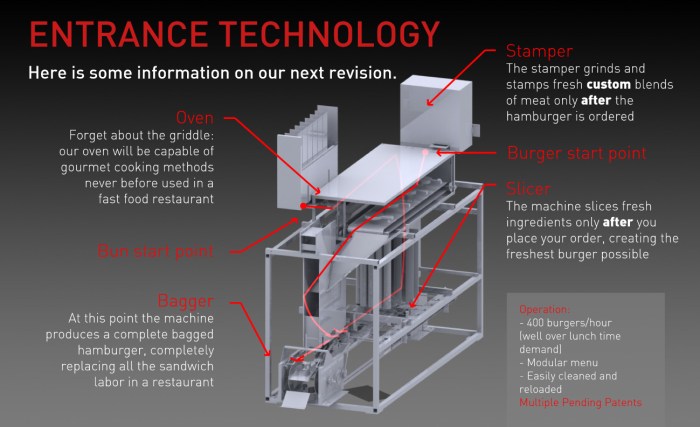
Also in the news, Momentum Machines unveiled a new automated burger robot chef last month. After being successfully tested on the line, the company announced its plans to introduce this robot to fast food chains everywhere, saving companies millions of dollars in staffing costs. According to projections, Momentum Machines says that its automated burger robot — which does everything from flipping burgers, to slicing tomatoes, to toasting the bun — could save the fast food industry $9 billion in wages.
Of as yet, no video is available of the burger robot doing a demonstration, but this helpful infographic does give a breakdown of the robots structure and basic functions (below). Granted, this might seem like a callous and insensitive move, especially to the over 2 million workers currently employed in fast food in the US alone. But with just about every other production line having been automated already, this seems to many like the next logical step. Good luck Momentum Machines; hope the angry mob outside your offices doesn’t scare you!
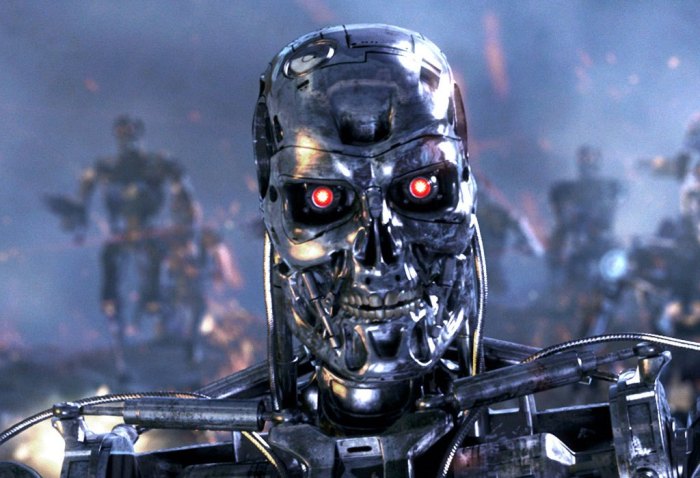
Granted, this may all still seem like a far cry from Skynet and Cylons, but under the circumstances, is it any wonder that Cambridge University founded the Center for the Study of Existential Risk (CSER) to evaluate new technologies? Clearly, some people are worried robots are going to be doing more than just chucking balls and flipping our burgers.
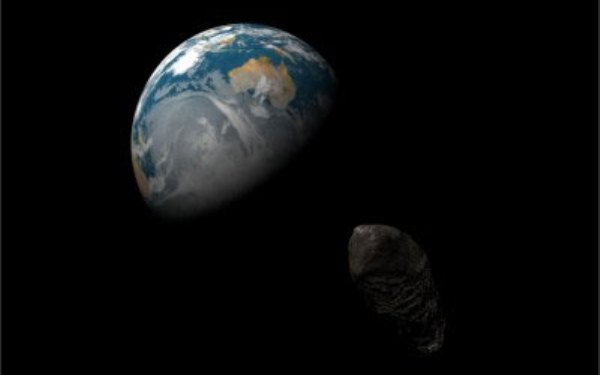
Thank you to Raven Lunatick for bringing this to my attention! It seems that while everyone was watching Toutatis the other day, another asteroid slipped past Earth with few noticing. Luckily, researchers had been observing this newly-discovered asteroid, named 2012 XE54, since Dec. 9th and knew that like the much larger Toutatis, this one would pass Earth by without incident.
But whereas Toutatis avoided Earth by a whopping 7 million kilometers, roughly 18 times the orbit of the Moon, XD54 passed within 230,000 km of Earth. That’s within the Moon’s orbit in case you don’t know, which is a far closer shave for those keeping track!
Granted, this asteroid was substantially smaller than Toutatis, measuring in at 36 meters at its widest point compared to Toutatis’ hefty 4.5 km length. However, that does not mean that such a small object does not have considerable destructive power. For the sake of perspective, consider the case of the asteroid that landed in Siberia in 1908. Here, the stellar object in question was similar size to XD54, and flattened some 2000 square km of forest when it exploded above Siberia’s Podkamennaya Tunguska River.
In addition, XD54 shares another characteristic to the much larger Toutatis, in that its orbit is similar to our own. Scientists now predict that it takes the stellar object 2.72 years to complete a single lap of around the sun. This means that, like Toutatis, we can expect to see it again in the not-too-distant future. However, that’s not likely to be for many years and there’s no indication of if and when it will collide with our planet. So as far as the Doomsayers are concerned, humanity just might make it out of 2012 alive!
Astronomers were keeping their eyes on the skies yesterday as the asteroid known as 4179 Toutatis passed Earth by. While it was never a direct threat to Earth, its passage presented an opportunity for scientists to study it and the history of the early Solar System.
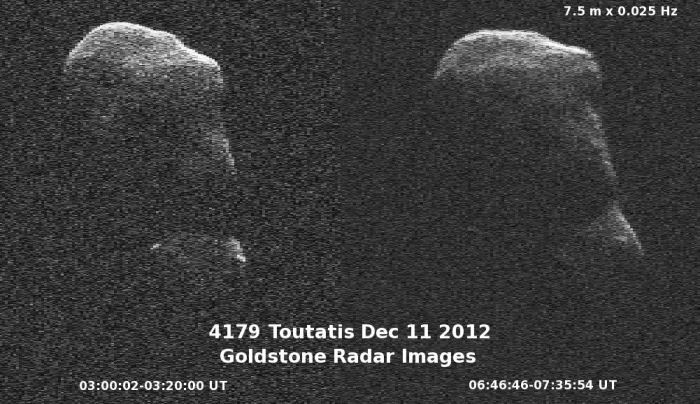
At its closest approach, 4179 Toutatis was 7 million km away from Earth, or roughly 18 times farther than the Moon. But that was close enough for NASA’s Goldstone Observatory to snap some radar images of the object (shown below). The timing could not have been more fortuitous, since NASA had recently upgraded to a new digital imaging system. And numerous amateur astronomers were able to get some interesting pics and even video.
Already, there are some preliminary findings from this 4.5-kilometer- long (3-mile-long) asteroid’s flyby. According to Michael Busch, a radar team member of the National Radio Astronomy Observatory: “Toutatis appears to have a complicated internal structure. Our radar measurements are consistent with the asteroid’s little lobe being ~15% denser than the big lobe; and they indicate 20% to 30% over-dense cores inside the two lobes.”
In truth, this is not the first time that Toutatis has passed Earth by. As it passes by Earth’s orbit every 4 years, it is one of the largest known potentially hazardous asteroids (PHAs) to have an orbit around the Sun so closely resembling our own. This presents another opportunity for study of the object. As Lance Benner of NASA’s Near Earth Object Program (NEOP) puts it: “We already know that Toutatis will not hit Earth for hundreds of years. These new observations will allow us to predict the asteroid’s trajectory even farther into the future.”
As they say, “an ounce of preservation…” And in the meantime, check out the photos and video taken of 4179 Toutatis as it passed Earth between the days of Dec. 11th and 12th, 2012.

 The issue of transhumanism, the rise of a new type of humanity characterized by man-machine interface and augmented intelligence, is being debated quite fervently in some circles right now. But it seems that groups other than Futurists and speculative fiction writers are joining the discussion. Recently, the National Intelligence Council, a US policy think-tank, released a 140 page report that outlined major trends and technological developments we should expect in the next 20 years.
 Intrinsic to this new era is the invention of implants, prosthetics, and powered exoskeletons which will become regular fixtures of human life. These will go beyond merely correcting for physical disabilities or injury, to the point where average humans are enhanced and become more productive. 2030 is key year here, because it is by this point that the authors predict that prosthetics will exceed organics, and people will begin getting them installed in order to augment themselves.
 And of course, bionics are an important factor in all this. Already, researchers have achieved breakthroughs with bionic limbs, but retinal attachments, artificial eyes, and even fully-functioning organs are expected before 2030. On top of that, improvements in drugs, such as neuropharmaceuticals – drugs that enhance memory, attention, speed of thought – and implants which assist in their delivery are expected to be making the rounds.
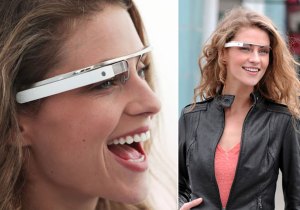 Finally, there is the matter of virtual and augmented reality systems, which are already becoming a reality thanks to things like Project Glass and recent innovations in PDAs. As the report notes: “Augmented reality systems can provide enhanced experiences of real-world situations. Combined with advances in robotics, avatars could provide feedback in the form of sensors providing touch and smell as well as aural and visual information to the operator.”