Scientists Raise the Alarm on Human Enhancements

enhancementThe concept of technological progress and its potential consequences has been the subject of quite a bit of attention lately. First, there was the announcement  from Harvard University and Human Rights Watch that a ban on killer robots was needed before the current pace of innovation led to the machines that could so without human oversight.

Then came the University of Cambridge’s announcement about the creation of the Center for the Study of Existential Risk (CSER) to evaluate new technologies. And last, there was the news the news that the DOD had signing a series of instructions to “minimize the probability and consequences of failures that could lead to unintended engagements,” starting at the design stage.

bionic_handConcordantly, back in early November, the Royal Society along with the Academy of Medical Sciences, British Academy, and Royal Academy of Engineering concluded a workshop called “Human Enhancement and the Future of Work” in which they considered the growing impact and potential risks of augmentation technologies. In their final report, they raised serious concerns about the burgeoning trend and how humanity is moving from a model of therapy to one in which human capacities are greatly improved. The implications, they concluded, should be part of a much wider public discussion.

Specifically, the report raised concerns on drugs and digital enhancements that will allow people to work longer, hard and faster. Such technologies could easily give rise to a culture of enhanced competitiveness, more than we currently know, where the latest in cybernetics, bionics and biomedical devices are used to gain and edge, not to remedy medical problems. Currently, things like bionic prosthesis are being created to aid amputees and injury victims; but as the technology improves and such devices become more effective than organic limbs, the purpose could change.

cyberpunk-eyeWhat’s more, there are the ethical implications of having such technology available to human beings. If people can upgrade their bodies to enhance their natural abilities, what will it means for those who get “left behind”? Will the already enormous gulf between the rich and poor expand even further and take on a new dimension? Will those who want to succeed in the business world be forced to scrounge so they can get the latest upgrades.

Or, as the panel’s final report put it:

“Work will evolve over the next decade, with enhancement technologies potentially making a significant contribution. Widespread use of enhancements might influence an individual’s ability to learn or perform tasks and perhaps even to enter a profession; influence motivation; enable people to work in more extreme conditions or into old age, reduce work-related illness; or facilitate earlier return to work after illness.”

At the same time however, they acknowledge the potential efficacy and demand for such technologies, prompting the call for open discourse. Again, from the report:

“Although enhancement technologies might bring opportunities, they also raise several health, safety, ethical, social and political challenges, which warrant proactive discussion. Very different regulatory regimes are currently applied: for example, digital services and devices (with significant cognitive enhancing effects) attract less, if any, regulatory oversight than pharmacological interventions. This raises significant questions, such as whether any form of self-regulation would be appropriate and whether there are circumstances where enhancements should be encouraged or even mandatory, particularly where work involves responsibility for the safety of others (e.g. bus drivers or airline pilots).”

In many ways, this report is overdue, as it is offering some rather obvious commentary on a subject which has been the subject of speculation and fiction for some time. For example, in the Sprawl Trilogy, William Gibson explored the idea of human enhancement and the disparity between rich and poor at length. In his world, the rich were ensured clinical immortality through AI and biotech while everyone else was forced to spend their savings just to afford the latest tech, merely so they could stay in the running.

However, just about all of the panel’s recommendations were most appropriate. They included further investigations into ensuring safety, affordability, and accessibility, not to mention that some of these enhancement technologies —  be they pharmaceutical, regenerative medicines, or cybernetics — should be regulated by the government. This last article is especially appropriate given the potential for personal misuse, not to mention the potential exploitation by employers.

With all the harm that could result from having technologies that could render human beings “postmortal” or “posthuman”, some degree of oversight is certainly necessary. But of course, the real key is a public educated and informed on the issue of cybernetics, bionics, and human enhancement, and what they could mean for us. As with so much else, the issue is one of choice, and awareness of what the consequences could be. Choose wisely, that’s the only guarantee! Hey, that rhymed… I smell a quote!

Source: IO9.com

3-D Printing Now Offering Cartiledge!

3-D cartilageSince it’s development as a viable technology, 3-D printing has presented us with some very interesting possibilities. In addition to objects made of plastic, metal, and possibly meat (a proposed idea still in development), printers may be used to create something else entirely: cartilage! Yes, in a recent announcement, scientists at the Wake Forest Institute of Regenerative Medicine claimed to have pioneered an approach to replace damaged cartilage.

The process combines two low-cost techniques – electronspinning and inkjet/bioprinting – to create the world’s first class of synthetic implantable biomaterial. The first is a method that that is used to create synthetic, polymer-based nanoscale-fibrous materials for implants and wound dressing, while the second is currently used to create tissue and organ material.

cartilage1Each process is viable, but comes with its own share of shortcomings. Electrospun materials typically don’t have the ability to promote cellular growth, nor do they have the flexibility needed for cartilage replacement. And inkjet printed materials lack the structure and strength needed to support the loads that cartilage carries. But by merging to two systems together, the researchers at Wake Forest to overcome these limitations and create something viable.

Their hybrid approach alternates microscopic layers of electrospun fiber and printed, living cartilage cells cultivated from rabbit ears, thus generating an artificial cartilage pad that is suitable for implanting. An eight-week study in mice showed that the implanted pads developed cellular structure similar to natural cartilage, while separate mechanical strength tests demonstrated that it was equivalent to the real thing.

For medical practitioners, the benefits of this breakthrough are obvious. Natural cartilage not only takes a long time to heal, it has almost no ability to regrow itself. At present, doctors rely on approach that combines removing small sections of damaged cartilage with microscopic grafts. However, neither of these methods are effective at restoring the cushioning, lubricating tissue that allows for full range of motion or impact on the limbs. What’s more, the long term effects of bone on bone contact can require eventual joint replacement.

Though the research is still in the early stages, the initial results have been quite positive. With time, and assuming the results continue to be as positive, we could be looking at a cheap and effective way to rehabilitate damaged limbs.

Source: Wired.com

News From The Center of the Galaxy!

sagittarius A_flareAt least once a day, the black hole that resides at the center of the Milky Way Galaxy – aka. Sagittarius A* – shoots out an x-ray flare. These flares range in luminosity and intensity, but are usually only on the magnitude of a few dozens times its normal output. However, back in February of 2012, astronomers using the Chandra X-Ray Observatory detected the brightest flare ever observed from the central black hole, measured at 150 times its normal output.

Located some 26,000 light years from Earth, Sagittarius A* emits X-rays on a regular basis, and no one is sure why. However, a group of researchers postulated that it may be the results of asteroids or planets that wander too close to the hole and are consumed. Essentially, they believe Sagittarius A* is taking in rocky objects, eating them up, and then shooting out x-rays as exhaust.

The supermassive black hole at the center of the Milky Way galaxy.According to Michael Nowak, a research scientist at MIT Kavli and co-author of a new paper in the Astrophysical Journal, a sudden increase in consumption might explain the flare. “Suddenly, for whatever reason, Sagittarius A* is eating a lot more,” he said. “One theory is that every so often, an asteroid gets close to the black hole, the black hole stretches and rips it to pieces, and eats the material and turns it into radiation, so you see these big flares.”

This is the standard procedure that astronomers use to detect black holes – i.e. by the light energy given off as they swallow nearby matter – since they are invisible to the naked eye. Not only are black holes notorious for consuming matter, even light and gravity, the very fabric of time and space, are consumed in their maws. However, through an x-ray telescope, the centers of galaxies can appear extremely bright, giving off massive amounts of energy as they devour their surroundings. As they age, they tend to slow down, consuming less and appearing fainter.

Another MIT alumnist, Frederick K. Baganoff, has been conducting observations on Sagittarius A* with the Chandra X-ray Observatory since 2003, and in that time he has noted some interesting things. For example, he calculated that, given the amount of gas in its surroundings, Sagittarius A* should be about a million times brighter than it is — a finding that suggested the black hole throws away most of the matter they would otherwise consume.

Or as he puts it: “Everyone has this picture of black holes as vacuum sweepers, that they suck up absolutely everything. But in this really low-accretion-rate state, they’re really finicky eaters, and for some reason they actually blow away most of the energy… We’re really studying the great escape, because most of the gas escapes, and that’s not what we expect.”

The physics that underlie this process are still a mystery, but researchers like Baganoff hope to learn more through more observation. In the end, the real pay off is that it will help us to understand the history of activity at the center of our Galaxy, a history which goes back billions of years and can tell us volumes about the formation of our Milky Way and even the universe itself.

News From The Red Planet!

mars_lifeIt’s been quite the busy month for NASA and the Curiosity Rover Team. In addition to the hectic research schedule and the excitement over all the potential finds, there’s also been a lot of planning as to what future mission will be like. Already, NASA announced that they plan to send another rover (InSight) to Mars in 2016, this one for the purpose of conducting interior planet studies. But given the success of Curiosity thus far, NASA announced recently that the multi-year, robotic rover program will continue, and will include an additional launch in 2020.

Apparently, this has much to do with the reelection of Barack Obama, whose commitment to space exploration also means that NASA can go ahead with its plans to create an outpost on the Moon. According to NASA Administrator Charles Bolden, this and the planned 2020 launch will ensure that “America remains the world leader in the exploration of the Red Planet, while taking another significant step toward sending humans there in the 2030s.”

The planned mission portfolio includes the Curiosity and Opportunity rovers, two NASA spacecraft and contributions to one European spacecraft currently orbiting Mars, the 2013 launch of the Mars Atmosphere and Volatile EvolutioN (MAVEN) orbiter to study the Martian upper atmosphere, the Interior Exploration using Seismic Investigations, Geodesy and Heat Transport (InSight) mission, and participation in the European Space Agency’s 2016 and 2018 ExoMars missions.

That alone is pretty exciting  news. But in and around these grand announcements, the Mars Science Labs also released some information a week ago concerning the Martian soil samples which were thought to contain organics. Though the samples did prove to be “earthshaking” as was hoped, they did present some rather interesting findings which are now being released.

curiosity_samplesApparently, the samples taken with the “Rocknest” inside the Gale Crater showed signs of water, sulfur and chlorine-containing substances, among other ingredients, that were delivered by Curiosity’s arm to the analytical laboratory inside the rover. Lamentably, this does not confirm the existence of organic compounds, as the team hoped. But the find does confirm what Curiosity team and NASA scientists have been postulating for some time – which includes the existence of water on Mars and the existence of complex chemical compounds.

Also, it’s important to note that this kind of soil surveying was not possible with any previous rovers or exploratory missions in space. Curiosity is the first Mars rover that is able to scoop soil into analytical instruments and conducts tests in the way it has, so really, any findings should be considered a windfall. Detection of the substances during this early phase of the mission also demonstrated the ability of the rover laboratory to analyze diverse soil and rock samples, which will continue over the course of the next two years.

And as the team was sure to mention in a Tweet made shortly after the “earthshaking” discovery did not materialize, there’s still plenty of time to find all that they are looking for. Curiosity’s mission is far from over, and she will hardly be the last surveyor – man-made or manned – that will be roving the landscape of the Red Planet.

Source: NASA Jet Propulsion Laboratory

Nominated for Blog of the Year 2012!

Blog of the Year Award 6 star jpegIt’s just an honor to be nominated! Actually, its wonderful to be part of a community of people who inspire you, appreciate you, and share themselves with you. Getting nominated for an award is just a reminder of this process, and that’s what really nice about it.

So thank you so much to Renee Heath and Carolyne Page, the lovely ladies who are responsible for my nomination. You do such great work and are such great people, I hope to live up to your standard!

Like all Blogger Awards, the 2012 BOTY has rules which must be followed. They are as follows:

  1. Select the blog(s) you think deserve the ‘Blog of the Year 2012’ Award.
  2. Write a blog post and tell us about the blog(s) you have chosen – there’s no minimum or maximum number of blogs required – and ‘present’ them with their award.
  3. Please include a link back to this page ‘Blog of the Year 2012’ Award – http://thethoughtpalette.co.uk/our-awards/blog-of-the-year-2012-award/ and include these ‘rules’ in your post (please don’t alter the rules or the badges!).
  4. Let the blog(s) you have chosen know that you have given them this award and share the ‘rules’ with them.
  5. You can now also join our Facebook group – click ‘like’ on this page ‘Blog of the Year 2012’ Award Facebook group and then you can share your blog with an even wider audience.
  6. As a winner of the award – please add a link back to the blog that presented you with the award – and then proudly display the award on your blog and sidebar … and start collecting stars…!

Well then, here’s to the people I wish to nominate for this years “Blog of the Year”!

  1. Raven Lunatick – Science fiction, fantasy, and weird-stuff enthusiast, this woman and indie writer is a real go getter who regularly produces flash fiction and interesting articles on the world of weird and scary things! Also, her selfless dedication to protecting the rest of us from such literature as Fifty Shades of Grey cannot be under-appreciated. Man, this woman is a trooper!
  2. Rami Ungar – Dedicated indie writer, sci-fi fan and enthusiast of all things geeky, like me! Our paths are converging in many, weird ways, makes me think our destinies might be intertwined… spooky! And of course, he’s got a superhero alter ego – Revenger codename: Judgement!
  3. Audrey Johnson – World traveler, social activist, humanist and all around adventurer, there’s very little Audrey hasn’t seen and done, and hearing about it is a real treat 😉 Also, were it not for her constant encouragement, writers like me couldn’t produce.
  4. Nicola Higgins – Fellow writer, sci-fi geek, futurist and martial artist, Nicola is also a regular favorite of mine. And it’s not just because we have so much in common… necessarily 😉  Read her stuff, you’ll see what I mean!
  5. Lady Romp – Dedicated intellectual, fashionista, pop culture commentator, and speaker for women everywhere. Her philosophical investigations, social commentary and inspirational quotes are always interesting to read.
  6. Mike’s Craft Beer – One of the best reviewers of beer and craft brewing I’ve known who’s passion and knowledge for the malted nectar of the gods is even greater than my own!
  7. Khaalidah – The hardworking wife, mother, medical practitioner, writer and self-professed geek! I nominate her pretty regularly, but there’s a reason for that 😉 Her ongoing dedication to life, plus her thoughts on the world, on literature, on science fiction, and her active involvement in writing with myself and others is an inspiration. Oh, and did I mention her Revenger alter ego is the Veiled Tsunami?
  8. Greta van der Rol – Action, science fiction and romance are this ladies trademark styles, and her passion for the written word (especially the production thereof) is encouraging and astounding. Hope to rival her vast collection of tomes one day!
  9. Nina D’Arcangela – The Dark Angel lady – which is not only the meaning of her last name but her alter ego (she’s part of the Revengers too!) – her regular infusions of deep, gothic poetry and literature are nothing if not spine-tingly-dingly! But somehow, she still manages to be a bright and spunky lady and a breath of fresh air!

Congrats to all of you and all of us! I’m sure we deserve it (darn tootin’ we do!)

NASA’s Next Mission to the Moon

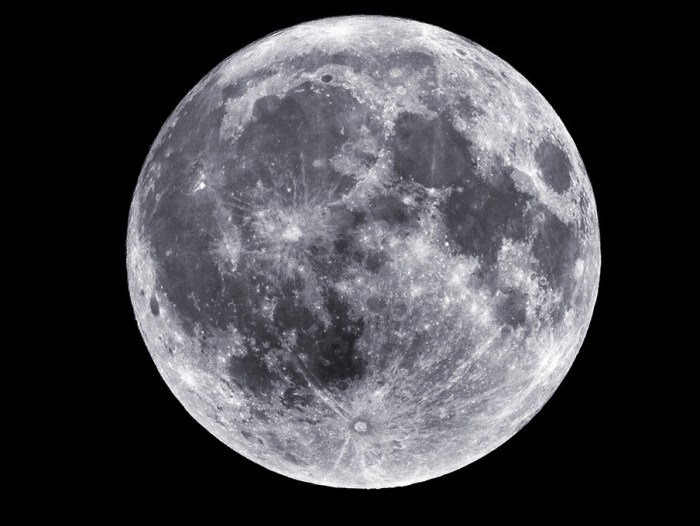
moonThe buzz about NASA is that the human race is once again going to the moon, and planning to stay there! According to space policy expert John Logsdon, there are plans to establish a manned base on the dark side of the moon under the Obama administration. He further indicated that with the election pending, this news has been kept under wraps. But with Obama now secure in a second term, it is expected that there will be an announcement soon.

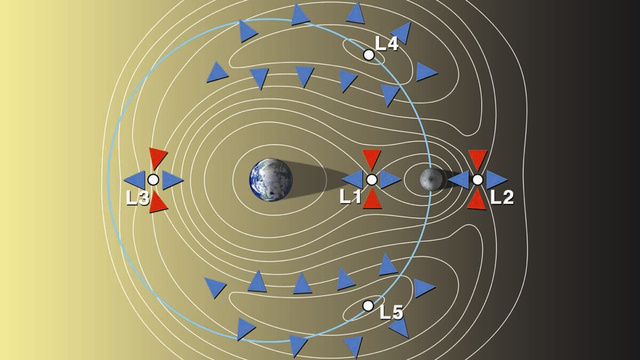
“NASA has been evolving its thinking, and its latest charts have inserted a new element of cislunar/lunar gateway/Earth-moon L2 sort of stuff into the plan,” said Logsdon in a recent interview with SPACE.com. “They’ve been holding off announcing that until after the election, noting that NASA’s mission, direction, and budget could have been revised under a Romney administration.”

For those who have been following the Obama administration’s plans for space, this should not come as a surprise. In 2010, the president signed the NASA 2010 Authorization Act into law, a bill which freed up $60 billion for NASA through 2013. This move was intended to reignite space exploration at a time when the US found itself lagging behind Russia, China, the European Union and India in terms of bold new space projects.

These project include a planned asteroid visit by 2025 and a manned mission to Mars in 2030. A manned outpost at the Earth-moon L2 “gateway” (shown in the diagram below) could serve as an important stepping stone to the outer solar system. But right now, NASA’s eyes are firmly fixed on Mars itself, since a manned mission is the next logical step in their research of the Red Planet.

NASA_moon“There are many options – and many routes – being discussed on our way to the Red Planet. In addition to the moon and an asteroid, other options may be considered as we look for ways to buy down risk – and make it easier – to get to Mars.” At a conference held this past September, NASA deputy chief Lori Garver went even further to outline NASA’s goals for the coming years:

“We just recently delivered a comprehensive report to Congress outlining our destinations which makes clear that SLS  – NASA’s new heavy-lift “Space Launch System” – will go way beyond low-Earth orbit to explore the expansive space around the Earth-moon system, near-Earth asteroids, the moon, and ultimately, Mars. Let me say that again, we’re going back to the moon, attempting a first-ever mission to send humans to an asteroid and actively developing a plan to take Americans to Mars.”

Suffice it to say, NASA is happy the election turned out the way it did. With their budget secure, the course of future space exploration has been set and remains in effect. Who’s to say where it will take us beyond Mars? To the Jovian satellites of Europa, Ganymede and Io? The Saturnalian moons of Titan, Rhea, Dione and Enceladus? I call Gliese 581 after that. I want to know for sure if the fourth planet (the setting of our story Yuva) is inhabitable or not already!

These are exciting times we live in, aren’t they?

Source: IO9, Space.com

Planning For Judgement Day…

TerminatorSome very interesting things have been taking place in the last month, all of concerning the possibility that humanity may someday face the extinction at the hands of killer AIs. The first took place on November 19th, when Human Rights Watch and Harvard University teamed up to release a report calling for the ban of “killer robots”, a preemptive move to ensure that we as a species never develop machines that could one day turn against us.

The second came roughly a week later when the Pentagon announced that measures were being taken to ensure that wherever robots do kill – as with drones, remote killer bots, and cruise missiles – the controller will always be a human being. Yes, while Americans were preparing for Thanksgiving, Deputy Defense Secretary Ashton Carter signed a series of instructions to “minimize the probability and consequences of failures that could lead to unintended engagements,” starting at the design stage.

X-47A Drone
X-47A Drone, the latest “hunter-killer”

And then most recently, and perhaps in response to Harvard’s and HRW’s declaration, the University of Cambridge announced the creation of the Centre for the Study of Existential Risk (CSER). This new body, which is headed up by such luminaries as Huw Price, Martin Rees, and Skype co-founder Jaan Tallinn, will investigate whether recent advances in AI, biotechnology, and nanotechnology might eventually trigger some kind of extinction-level event. The Centre will also look at anthropomorphic (human-caused) climate change, as it might not be robots that eventually kill us, but a swelteringly hot climate instead.

All of these developments stem from the same thing: ongoing developments in the field of computer science, remotes, and AIs. Thanks in part to the creation of the Google Neural Net, increasingly sophisticated killing machines, and predictions that it is only a matter of time before they are capable of making decisions on their own, there is some worry that machines programs to kill will be able to do so without human oversight. By creating bodies that can make recommendations on the application of technologies, it is hopes that ethical conundrums and threats can be nipped in the bud. And by legislating that human agency be the deciding factor, it is further hoped that such will never be the case.

The question is, is all this overkill, or is it make perfect sense given the direction military technology and the development of AI is taking? Or, as a third possibility, might it not go far enough? Given the possibility of a “Judgement Day”-type scenario, might it be best to ban all AI’s and autonomous robots altogether? Hard to say. All I know is, its exciting to live in a time when such things are being seriously contemplated, and are not merely restricted to the realm of science fiction.Blade_runner

Game of Thrones Season 3 Preview

Here’s a new GOT Season 3 trailer that actually tells us something! Combining snippets from cast interviews, shots on location, and never-before-seen footage, this preview for Season 3 is definitely a teaser, but is far more humane and considerate than that last one! Enjoy!


700th Post!

fireworks1Yes, I know its a bit of an odd number. But I was still pleased and kind of blown away to find out that I was nearing this landmark recently. And I thought, what better excuse for a little retrospective and a chance to say thanks for the support? My my, where to begin? Well, how about the beginning? Since just the other day I was looking back at the first posts I’d made with this site, I think I’ll start there. Seems as good a place as any…

The very first thing I ever wrote on this site was a simple Hello World message. Nothing too flamboyant or special about that one, just the obligatory “how do you do?” It was my second post where I said the things that I wanted to say and really took the time to state what my mission was:

sci_fi“I love science fiction, always have, always will.  But it’s the kind of science fiction that I love which I think is an important distinction. I’ve always subscribed to the idea that sci-fi comes in two varieties: classic and commercial.  The classical kind is the traditional variety that people take seriously… Commercial sci-fi, by contrast, is your basic stuff that owes much to the original masters but really didn’t follow in their footsteps.”

That’s still true of me. I still subscribe to the idea that the real science fiction is the kind that really makes you think and chooses to appeal to the highest possible standard. Might sound elitist, but given the sheer amount of pulp out there that does little more than entertain, I’d say I’m more of a hopeful optimist. I think people are capable of great genius when you give them a chance, and would like nothing better than to create something myself that appeals to the best in us – be it intellectual, moral, or metaphysical.

My first few reviews were really quite simple. I spoke of Frank Herbert – arguably my biggest inspiration – William Gibson, 1984 and Brave New World. I spoke of my own writing and posted some podcasts of Source’s earliest chapters (no longer available), and pasted some reviews my work had received. However, I was nowhere near as prolific as I am today. It was actually quite surprising to see that the first year of my site being operational could be summed up in just over a dozen posts. Especially when I am now at 700 and just over two and a half years into it!

In any case, I began doing movie reviews shortly thereafter, tackling such sci-fi greats as Blade Runner and the Alien franchise, and such guilty pleasures like Independence Day and Starship Troopers. This went on for some time, with me going back and forth between reviewing movies and great books, and once in a while dropping something in about a favorite miniseries, TV show, or something I happened to find inspiring.

brazil53And then something happened. Something which, I gotta admit, I didn’t even know was possible until it happened to me. I got freshly pressed. At the time, I was minding my own business, doing a post about Dystopian Literature, in honor of the fact that I just joined Writer’s Worth and our first project was an anthology of original, dystopian narratives. Feeling inspired by the fact that I was getting a chance to write within my favorite genre, I compiled a list of the most historically relevant and renowned examples I could think of.

That opened the floodgates! Having never exceeded a few dozen views in one day, you can imagine my surprised when I came home for lunch that day and discovered my views numbered in the high hundreds! I checked back as the afternoon progressed, only to see that it had reached into the thousands. By afternoon the following day, the torrent stopped and I was able to take stock of all that had happened. Roughly half my subscribership began following me in that one twenty-four hour period. I got more comments than I knew what to do with and more likes in that one day than the previous year! It felt nice, and I certainly learned something about how this thing called WordPress works!

Since that time, I won’t lie, I’ve been hoping to snag a second FP! No luck yet, but what can you do? Once was nice enough, and since it’s led to my current circulation amongst my fellow bloggers and the general internet-surfing public, I really can’t complain! Besides, several milestones have happened since then, so I shall not linger on this one event. Suffice it to say, as the days and weeks continued to pass, I found my traffic had increased exponentially from my pre-FP days. Not to the point of thousands, but higher than a hundred. That too was nice…

After finishing up the series of Dystopian posts, mainly to address examples other people poitned out and to cover examples of dystopic movies, I began to move onto other ideas. For instance, I had decided it was time to tackle themed-posts, like Cool Guns, Cool Ships, Giant Robots, and the like. These were mighty fun to do and provided endless suggestions from people who knew and liked the same franchises I did, and also saw these lists as an opportunity to stroll down memory lane.

apocalypse-04I also got into serial novel work, as attested to by Crashlands over at Story Time, and posts dealing with futuristic concepts and news. I guess I’d grown a bit tired just talking concepts, books and movies at this point and really wanted to delve into the everday stuff that drives science fiction and the creative imagination that guides people’s writing. At the same time, I continued to pimp any and all work that I was doing with Writer’s Worth, which at this point had morphed into its current group name of Grim5Next, in honor of our first project!

Then came two significant developments, back to back. In June of 2012, I began working with a select group of members from Grim5Next on a new project idea. With the passing of Ray Bradbury and Venus’ transit in front of the sun, it seemed that some of us were bit by the inspiration bug. I can still remember how it all began, in the form of a conversation between my friend and fellow writer, Khaalidah, and myself:

Khaalidah: Four nerds verging on geeks live in my house, of which I am one. One of our nerdiest but fun conversations centered around the question “Would you rather go to space or the bottom of the ocean?” Hands down the answer was space.
I once dreamed that my son, now 21, would one day go to space and walk on Mars. He is no longer a child who dreams of space, although it still intrigues, and space seems a distant childhood dream of his. But even for myself, at the ripe old age of 41, the idea of going to space is a bright hope, even though I know it is unattainable and unrealistic. But, given the chance, I would go.
This post reminds me of the awesomeness of our great universe, of the chaotic randomness, of the beauty of this world and the things we have to be grateful for, and of how utterly minuscule we people really are in the grand scheme of things

Me: Okay, you need to write this down. I foresee you doing a story where a family does go into space. Ho boy, I smell another anthology here!

Khaalidah: An anthology about space, going to space or anything related sounds awesome. I vote for you to be the editor. What do we need to do to get started?”

Yuva_coverThat was the beginning of Yuva. In the days that followed, we two enlisted the help of many people: Goran, Jenna, William, and Melanie. Through much conversation, back and forth and debate, we determined the location of our story (Gliese 581g), the tone, the structure, and even began producing the first few installments. As time progressed, we were joined by more writers – Charles, Danielle and Cara – who wanted to contribute and began scooping up the later installments in the series.

The second development was the rash of face-eating and zombie-like behavior which seemed to break out throughout that summer. Feeling compelled to comment on the sort of hysteria which had set in, I wrote a post called “Bath Salts and the Zombie Apocalypse”. Much like my post on Dystopia, that one earned me quite a few views, thought it was not Freshly Pressed. I am thankful it wasn’t, as I began to feel a bit iffy about getting lots of traffic over a series of rather sick and tragic events. But I knew I had to comment since it was a relevant issue and I had something to say about it. I also swore I’d never publicize the names of the psychos responsible ever again, since I didn’t want to contribute to the buzz that so often surrounds twisted criminals.

Since that times, its been more of the same. Every day, I do my best to maintain the pace I’ve now set for myself, and am happy when plenty of people come by to see what I’ve written and tell me they are thankful that I post what I do. Naturally, I often complain that I should be getting paid to do this, but that’s just talk. No, this is something I’d gladly do for free, though ideally I would love it if it was a source of income so I could write indefinitely and not have to worry about money. My hope is one day that all of this culminates and I can write something truly meaninful and influential. That way, this site will represent a beginning to something truly big, and I’ll be able to share that with everyone who’s been here from the beginning.

Okay, that got a little mushy there towards the end. Suffice it to say, I’m very thankful for all that I’ve been able to do with this site thus far, and for being able to connect with all the people that I have. I hope very much to be able to write as many or more posts before I use up my allotted memory and either have to pay for an upgrade or move to another web address. Hopefully, the whole “getting paid to do this” thing will work itself out before then so I have the option of throwing money at the problem 😉

Rest assured, I aint going nowhere anytime soon. So expect to see plenty of me around these parts. Peace out, and thanks to everyone for stopping by, then and now. Bless you all!

fireworks

NASA Designing World’s First FTL

alcubierre-warp-drive-overviewA few months ago, physicist Harold White shocked and stunned the world when he announced that he and his team at NASA were beginning work on the world’s first faster-than-light warp drive. Naturally, this produced a whole slew of questions, not the least of which was what model his team would be considering. After all, there have been countless theories put forth over the years as to how humanity could one day break the “light barrier”. Which theory White and his team would pursue was naturally the first on everybody’s mind.

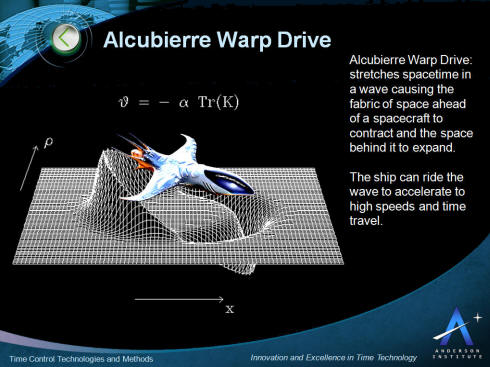
Apparently, White’s proposed design will be a re-imagining of the Alcubierre Drive, a concept which has already been extensively popularized in science fiction and pop culture. Proposed by Miguel Alcubierre in 1994 in his seminal paper: “The Warp Drive: Hyper-Fast Travel Within General Relativity,” Alcubierre suggested a mechanism by which space-time could be “warped” both in front of and behind a spacecraft. After going over the equations in detail, White believed he found a way to make the theory work.

All of this began in October of last year, where White was preparing for a talk he was to give as part of the kickoff of the 100 Year Starship project in Orlando, Florida. While putting together his presentation on warp, he began toying with Alcubierre’s field equations, mainly out of curiosity. After making some adjustments, he came to the conclusion that something truly workable was there, and presented his findings this past October in Atlanta, where the 100 Year Starship project was meeting once again.

alcubierre-warp-drive-overviewThe equations and theory postulates that since space-time can be contracted and expanded, empty space behind a starship could be made to expand rapidly, pushing the craft in a forward direction. Passengers would perceive it as movement despite the complete lack of acceleration, and vast distances (i.e. light years) could be passed in a matter of days and weeks instead of decades. What’s more, this “warp drive” would allow for FTL while at the same time remaining consistent with Einstein’s theory of Relativity.

This has been a major hurdle for physicists looking for ways around the speed of light, since all previous theories required a cosmic model where Relativity – fundamental to our understanding of the universe – would not apply. At the same time, the physics described in the Alcubierre process sound like something directly out of Star Trek, something all sci-fi geeks are sure to notice! It begins with a spheroid object being placed between two regions of space-time (one expanding and one contracting), which in turn generates a “warp bubble” that moves space-time around the object, effectively repositioning it.

The end result is faster-than-light travel without the spheroid having to move with respect to its local frame of reference. In short, those aboard the object would notice the repositioning of their spacecraft, but would experience no “time dilation”, where their perception of time differs greatly from those in a different frame of reference. Or to put it another way, the Alcubierre drive could transport people from Earth to Mars and back again, and for all concerned (the passengers and people Earthside) there would be little difference in the amount of time experienced. None of this, “I’m a year older, but everybody I knew is dead!” stuff. You have to admit, that’s a real perk!

But of course, there are a lot of challenges ahead for White and his team. For example, in an interview with IO9, White said: “Remember, nothing locally exceeds the speed of light, but space can expand and contract at any speed. However, space-time is really stiff, so to create the expansion and contraction effect in a useful manner in order for us to reach interstellar destinations in reasonable time periods would require a lot of energy.” Luckily, his reworking of the equations has brought that requirement done somewhat, but the amounts required mean that a great deal of research and development is still needed.

Perhaps if we can find a way to work cold fusion in the mix, or build an anti-matter reactor. Maybe some hydrogen ramscoops and a Heisenberg compensator, then we’d be in business! Might we need some dilithium crystals too? I’ll call Jordie LaForge and tell him to get on it! 😉

warp_drive