The Future is Here: Electronics that Dissolve

electronicsIt is no secret that research into nanotechnology is bearing fruit these days. Back in February, both Standford and MIT unveiled implantable devices which would be capable of delivering drugs directly into the human blood stream and detecting health problems. However, despite all the progress being made in terms of nano-miniaturization, there are still numerous barriers which need to be overcome.

For example, having microelectronics in the body, while initially beneficial, might prove problematic with time. What’s to happen when they are finished their jobs, become obsolete, or simply stop working after awhile? As anyone who’s ever owned a computer, PDA, mobile device or laptop can tell you, the stuff breaks! And if it does happen to live past its warranty, chances are it will be obsolete in six months… tops!

Such machines need a way to be removed, but given their size (o.oooooooo1 meters), that’s not exactly practical. And even if it were, there’s the question of disposal. Once commercially viable, there are likely to be billions of nanomachines in circulation. Even at their miniscule scale, such machinery could pose environmental hazards, especially if its likely to malfunction. Ever heard of Grey Goo? Well that’s a scenario that researchers have to consider.

Luckily, researchers at the University of Illinois have come up with a possible solution: electronics that dissolve! Composed of silicon, magnesium, magnesium oxide and contained within a protective layer of silk, these “transient electronics” are built to melt away just as soon as their tasks are complete.

In the process, they will reduce or remove the need to pass or surgically remove medical implants. Using rats as test subject, the researchers built their implants out of extremely thin sheets of silicon called nanomembranes to get the electronics to dissolve in hours or days instead of years.
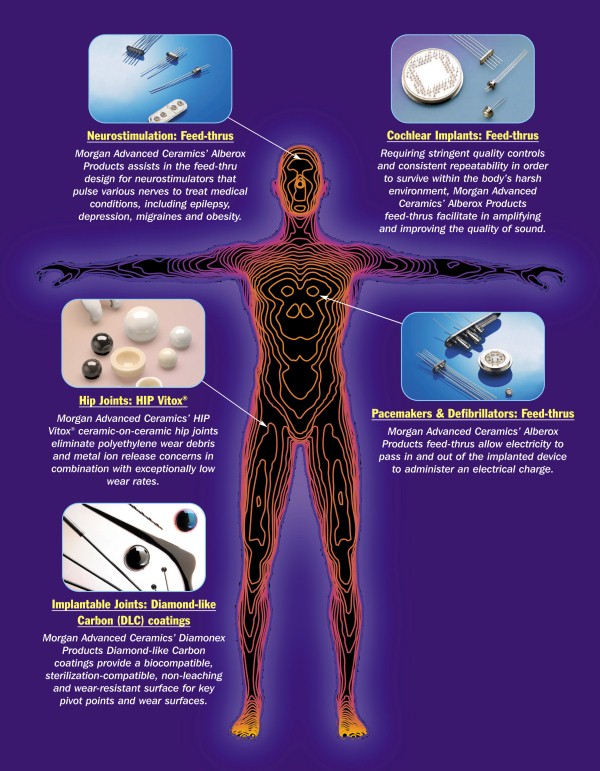
Of course, the medical applications are clear. Already, electronics are being tailor made for the delivery of drugs, sensors implanted in internal organs to monitor of problems, and temperature monitors created to safeguard against infection and disease. Combined with external sensors, doctors would be able to do a full medical workup within seconds, and much of the guess work involving symptoms and patient history could be eliminated. Exploratory surgery could also become a thing of the past, since doctors would be able to use internal sensors to diagnose unexplained problems.

The researchers also used silk collected from silkworm cocoons to control the speed of disintegration. This is part of a growing field of electrical engineering that seeks to create biodegradable microchips and other electronics, in part for the sake of implantation but also to ensure the elimination of computer waste.

Such waste, which includes disposable cell phones, cameras, and computers, currently accounts for 50 million tons of waste a year. Sixty percent of that is produced in the US, but could rise by as much as 500 percent over the next decade in developing nations such as India and China. Designing these types of components now could ensure the aversion of a possible ecological disaster.

Source: news.cnet.com
The Next Big Thing: Blog Hop!

Yeah, apparently there’s this new thing making the rounds known of late. Lord knows this here internet is filled with memes, but when you get tagged as part of a new one, you gotta go play. My thanks to Casey Sheridan for being the one to tag me, and now I go on to spread the word! Of course, it behooves me to post the rules of this particular meme. Here they are:

  • Give credit to the person/blog that tagged you (already done!)
  • Post the rules for this hop (in progress!)
  • Answer these ten questions about your current WIP (Work In Progress) on your blog
  • Tag five other writers/bloggers and add their links so we can hop over and meet them.

And now, here are the author questions which I shall begin to answer in sequential order:

  1. What is the working title of your book?
    Data Miners
  2. What genre does the book fall under?
    Thriller/suspense, but with some clear science fiction elements since a lot of it is speculative
  3. Which actors would you choose to play your characters for the movie rendition?
    C.S. Lee (who plays Vince Masuka on Dexter) as Yamal Pradchaphet, Lyndsy Fonseca as Agent Righetti, and Mila Kunis as Angela Thompson.
  4. What is the one-sentence synopsis of your book?
    A second-rate programmer by day and hacker by night finally stumbles onto a real-life conspiracy that is ten years in the making.
  5. Will your book be self-published or represented by an agency?
    Self-published to begin with, with the intent that it will be represented at some later date
  6. How long did it take you to write the first draft of your manuscript?
    Three y
  7. What other books would you compare this story to within your genre?
    If pressed, I’d say Neuromancer, Cryptonomicon, and Fierce Invalids Home From Hot Climates, the works that most directly inspired it.
  8. Who or What inspired you to write this book?
    Reading plenty of William Gibson and other thrillers about technological trends, cryptology and espionage.
  9. What else about your book might pique the reader’s interest?
    The book explores the mysteries of the human mind, with inspirations from Arthur Koestler, B.F. Skinner, and Gilbert Ryle; the concept of digital immortality; and several ongoing questions about what really happened to the Stealth Fighter that was shot down during the Kosovo War.

And last, but certainly not least, are the five people I want to tag next. Naturally, this is 100% volunteer participation, so if you can’t join, don’t worry about it:

Rami Ungar – http://ramiungarthewriter.wordpress.com
Nina D’Arcangela – http://sotetangyal.wordpress.com
Nicola Higgins – http://nicolahigginsfiction.wordpress.com
Lesley Carter – http://lesleycarter.wordpress.com
Margaret E. Alexander – http://addictivestory.wordpress.com

Thanks again to Casey, and hope everyone has a good week!

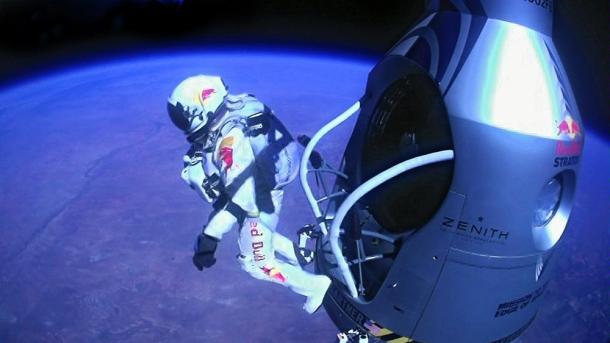
Baumgartner Makes Historic Space Jump!

It happened! The extreme skydiving daredevil made his historic, record-setting jump, after only one false start. The first attempt took place on Tuesday, but unfortunately high wind conditions forced them to cancel the jump. Despite the high altitude and extremely daring nature of the entire enterprise, minor variations in atmospheric and wind conditions had to be taken into account

Luckily, today things went off without a hitch. Launching from their base camp in Roswell New Mexico, Baumgartner ascended via his high-altitude balloon to the upper reaches of Earth’s atmosphere. Then, at an altitude of approx. 38.5 km above sea level, he jumped with the hopes of achieving supersonic free fall.

And that is precisely what he did, and then some. In fact, according to the  Red Bull Stratos team, Baumgartner’s achieved a top speed of 1,173 km/hour, or 729 mph. The team’s expectation was that 690 mph would be sufficient to get Baumgartner to Mach 1, considering the extreme elevation. The previous record, one of several he sought to beat was 614 mph, which was set back in 1960 and has stood ever since.

Naturally, there were a few technical glitches along the way. These included some issues with Baumgartner’s visor and the balloon’s power supply. After making the jump, he found himself spinning faster and faster, and almost lost consciousness at one point. This is apparently what prevented him from feeling the sonic boom that he eventually made. All in all, Baumgartner admitted it was a lot harder than he thought it would be. Hmm, jumping out a balloon on the edge of space and free falling towards the planet at speeds so fast you break the sound barrier? What’s hard about that?

Kudos to Baumgartner for the record-setting jump and making history. And be sure to check out the video of his jump, freefall and landing below:

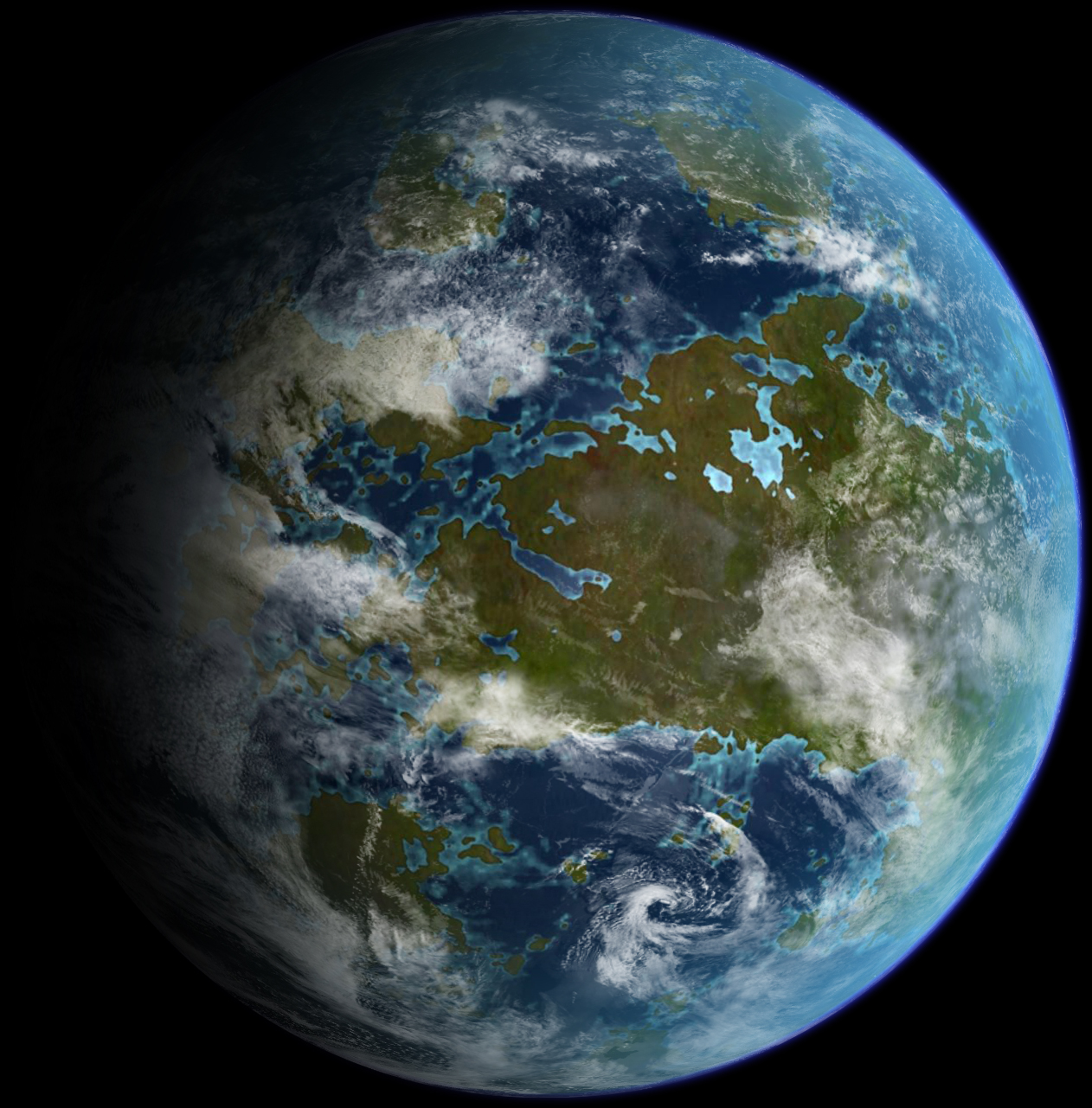
The Case for Terraforming Venus

This weekend appears to be shaping up with a theme: news from space that isn’t about Mars. I swear that it’s entirely accidental. First there was the discovery of the diamond planet, 55 Cancri e, and now a story about the merits of terraforming another planetary neighbor. And wouldn’t you know it, it’s not Mars for a change.

Yes, it seems that there is a strong case for terraforming Venus instead of the Red Planet, and it comes from numerous scientists who claim that altering the climate on that planet could help us save our own. The reason being – and stop me if this sounds frightening – is because our planet could one day look just like our lifeless, acid ridden, cloud covered neighbor.

In short, Venus underwent a carbon-dioxide fueled cataclysm a long time ago, when it was still young and was believed to have oceans. In those early days, and as the sun got brighter, Venus’s oceans began to boil and evaporate into the atmosphere. As a result, carbon dioxide accumulated in the atmosphere, due in part to the lack of carbon recycling which depends on the presence of oceans and seaborne algae. This is essentially a magnified version of the Greenhouse Effect, which scientists identify as the reason for rising temperatures and melting polar ice caps here at home.

Because of this, Venus became the hot, deadly planet that we are familiar with today, with surface temperatures that average 467°C (872°F), hot enough to melt lead. What’s more, its atmosphere consists of 96% carbon dioxide, which appear as thick layers of clouds that float 50-70 km above the surface. Above that, clouds and mist of concentrated sulfuric acid and gaseous sulfur dioxide lead to acid rains that could literally melt the flesh off your bones and the metal off a landing craft. Combined with the amount of sunlight it gets (twice that of Earth) and the lack of a magnetosphere, Venus is a pretty damn awful place to visit!

Of course, some would say that this makes terraforming the planet a pretty dangerous and poor prospect, at least compared to Mars. However, the benefits of terraforming Venus are far greater, certainly when we consider that the lessons gleamed from it could help us reverse the Greenhouse Effect here on Earth. In addition, it’s closer than Mars, making it easier and quicker to travel back and forth. And like the Earth, it resides within the solar system’s habitable zone and has its own atmosphere, not to mention it is nearly the same mass and size as Earth.

All of this, when taken together, would make Venus a far more suitable place to live once the terraforming process was complete. In short, its easier to convert an existing atmosphere than to create one from scratch. And, as noted, the process of converting the CO2 and sulfur-rich atmosphere into one that a breathable one that is rich with water and precipitation would go a long way to helping us device solutions to cleaning up our own atmosphere here at home.

This may sound like pure speculation, but in truth, many solutions have already been proposed. In fact, Carl Sagan began proposing that we introduce genetically-modified airborne algae into Venus atmosphere 50 years ago. Thought not 100 percent practical, it was a stepping stone to some more recent ideas which may prove doable. In 1981, NASA engineer James Oberg proposed that all the CO2 could be blown out into space. Again, not the most practical idea, but they were thinking and that’s what matters!

More recently, Paul Birch, a writer for the British Interplanetary Society, proposed flooding Venus with hydrogen. Once it interacting with the high concentrations of CO2 in the atmosphere, the end products would be graphite and plenty of water. Other plans involve carbon capture, nanotechnology, and other advanced forms of ecological engineering. These, alone or in combination, could prove to be the difference between thick glass clouds and sulfuric oceans and a lush green planet covered with water and vegetation.

A pretty interesting prospect; and if it all works out, humanity could end up with three habitable planets within the Solar System alone. Combined with pressure domes and sealed arcologies on the system’s various moons and larger asteroids, planet Earth could one day retire as the sole host of humanity and this thing we call “civilization”. In fact, I could foresee a time when our world goes on to become hallowed ground, hosting only a few hundred million people and free of heavy industry or urban sprawl. Hello idea for a story!

And, to mix up what I usually say at the end of every one of these posts, stay tuned for more news from Mars and other planets within our Solar System. There’s a lot of them out there, and someday, they might all places that our species calls “home”.

Source: IO9

A Diamond Bigger Than Earth

Some interesting news from space these days, and for once didn’t have to do with Mars. For many years, scientists at NASA and other space agencies have known about 55 Cancri e, an extrasolar planet that orbits the Sun-like star 55 Cancri A that is approximately 41 years from our system. Up until recently, it was believed that this planet was a “Super-Earth”, a planet many times the mass of Earth composed of granite.

Recently, however, scientists have announced that the planet may in fact be composed of carbon. That means, in essence, that the surface is composed of graphite and diamond. These findings come as part of a study that was released by the Institut de Recherche en Astrophysique et Planetologie in Toulouse, France. Nikku Madhusudhan, a Yale researcher who was part of the project, estimates that at least a third of the planet’s mass, the equivalent of about three Earth masses, could be diamond.

Imagine that, three entire Earth’s worth of diamonds! The mind reels at the staggering amount of wealth and opulence that this planet could produce, if only human mining teams were able to access it. However, surface conditions might complicate that a little. According to that same report, the planet is incredibly hot, with temperatures on its surface reaching 1,648 Celsius (3,900 degrees Fahrenheit). Not exactly cozy, by Earth standards.

Speaking of which, this is another aspect of the discovery which is proving exciting. According to Madhusudhan, “This is our first glimpse of a rocky world with a fundamentally different chemistry from Earth,” adding that the discovery of the carbon-rich planet meant distant rocky planets could no longer be assumed to have chemical constituents, interiors, atmospheres, or biologies similar to Earth. And he’s not alone is suspecting that discoveries like this are just the tip of the iceberg, as we work our way further out into the universe and discover more examples of strange and exotic exoplanets.

Source: Yahoo News.ca

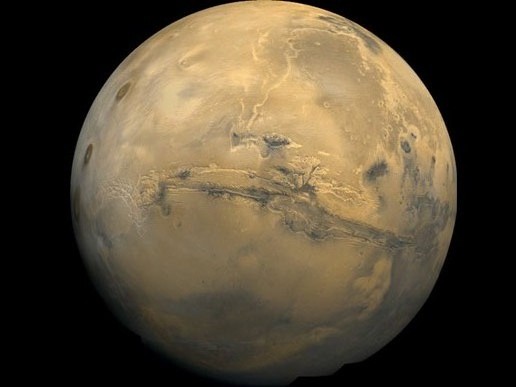
More News From the Red Planet!

Big news from and about Mars this week! Yes, the Red Planet is showing no signs of slowing down when it comes to making the headlines. But in the past week, the biggest stories have been roughly 100 million kilometers apart. That’s the current distance between the Earth and Mars, give or take a few meters.

The first bit of news came three days ago, when NASA scientists went batty over the discovery of a shiny object sitting in Curiosity’s path, which it quickly began to examine. The second came from Morocco, where a meteorite that landed in the desert 14 months ago was revealed to have come from the Red Planet itself, prompting a team of scientists from the University of Alberta to bring it back for research.

Though seemingly unrelated, both stories had one thing in common. By examining objects on the martian surface, and those which break off from time to time and fall to Earth, scientists may be able to reconstruct what conditions on the surface of the planet were once like.

Unfortunately, the first bit of news turned out to be a bit of a hoax. After examining the shiny object, the Curiosity team determined that it had come from Curiosity itself. At least, that was there initial conclusion when they realized that the object was most likely plastic, which is not something you find sitting on the surface of a dead planet. An image of the object taken by the rover’s micro-imager ChemCam shows it looking very different from the Martian surface around it (click to get a better view).

As for the meteorite, research there may prove to be more lucrative. According to Chris Herd, a geologist with the University of Alberta, the meteorite holds traces of Mars’ atmosphere from when it split off, roughly 600 million years ago. Apparently, the meteorite started out as a typical volcanic rock on the surface of Mars until it was launched off the planet by the impact of an asteroid.

As Herd puts it, when the meteorite struck the martian surface, “a shock wave shot through the rock. Cracks and fissures within the rock were sealed instantly by the heat, trapping components of Mars’ atmosphere inside, and forming black, glassy spots.” These glassy spots are the real point of interest because they reveal “evidence of weathering at the Martian surface.”

This is further evidence that Mars boasted water on its surface, and as recently as within the last few hundred million years. It does not definitively prove whether or not it also boasted life, but at least it helps to confirm what Curiosity has been observing in recent weeks. It’s also exciting news because it means that Mars could one day be made to accommodate water again. This will come in mighty handy should humans ever decide to settle there!

Stay tuned for more Red Planet news!

Sources: cbc.ca, news.cnet.com

3D GIF of Rotating Nebula

click to see 3D animation

Pretty freakishly cool isn’t it? Personally, I never really got onto this GIF thing. It’s like, if it fits on the page and looks cool, it’s all good. However, this one was too cool to ignore. The brain-child of Finnish astrophotographer J-P Metsävainio, this GIF depicts IC 1396, a nebula where stars are born.

This nebula is a little over 2000 light years away, toward the constellation of Cepheus, and is well over a hundred light years across. Even at its tremendous distance, it’s wider than six full Moons in our sky. For some time, Metsävainio has been making impressive images of this nebula, but that didn’t seem to be enough for the erstwhile stargazer. And so, he began playing with 3D images in the hopes of creating a model of the structure of the nebula, one which showed it from different angles.

Granted, some have gone on record as saying this is more art than astronomy, and not all the features are one-hundred percent accurate. But the animation does give you a good sense of the nebula’s composition, as well as a glimpse of what the heart of a star-birthing nebula looks like. Notice the large blue star in the middle that is the ionizing source – i.e. the hot, young, massive star blasting out ultraviolet light which makes the nebula glow. The dark strands on the outside are filaments of dust which appear that way because absorb the visible light emitted from the center of the nebula.

The color pattern is also quite accurate, with blue on the inside and red without. This color change is due to the presence of oxygen gas within the cloud which glows blue because of its proximity to the central stars. Farther out, the starlight is too weak to make oxygen glow, so all you see is the ruddy glow from hydrogen. And fyi, that star is mu Cephei, a massive red supergiant which happens to be one of the most luminous stars in the Milky Way, possibly over 300,000 times more luminous than the Sun.

Pretty cool huh? Hat’s off to you Metsävainio. I can’t speak for everyone, but you’ve certainly blown my mind! Click on the photo to watch the animation, and if you want to download it, don’t be surprised if it takes a while. The damn thing is 7 megabytes!

Source: discovermagazine.com/badastronomy

The Most Ambitious Skydive in History

Skydiving is something that just about everyone contemplates at some point in their existence, but few of us really get around to. In fact, I’d wager that just about every “Bucket List” that has ever been made has skydiving on it, most likely in the top ten. However, just about all of these “controlled descents” involve a tandem jump with an instructor, and rarely exceed ten to fifteen thousand feet.

But imagine, if you will, that a certain extreme athlete named Felix Baumgartner sought to attempt the most ambitious skydive in history by jumping from a staggering 120,000 feet. That would place him at the very edge of space, making it an stratospheric HALO jump and the longest freefall in human history to boot. As the culmination of Red Bull Stratos Project, the jump will involve a balloon, a space suit, and a chute which will not be deployed until he is well withing Earth’s atmosphere.

Already, Felix has performed his test flight, jumping from a staggering 96,000 feet to test out his suit, the ascension balloon, and all the assorted equipment that is making this jump possible. However, the 120,000 feet will be distinguished by being the jump that breaks not one, but four world records.The first three were all set by a U.S. Air Force Captain named Joe Kittinger, who accomplished the highest skydive, manned balloon flight, and longest freefall in human history back in 1960.

However, Felix’s jump will also accomplish something which no human being has ever accomplished. In the course of his jump, his body will accelerate to to supersonic speeds, making him the first human who has ever broken the speed of sound without the use of an aircraft. Even NASA scientists say that they have no idea what effect this will have on a human body, though it is assumed that his spacesuit will protect him from the worst effects of it. And by the time he reaches the lower atmosphere, wind resistance should slow him down enough that by the time he pulls his chute, his organs won’t be turned to pulp from the sudden deceleration.

The big jump was scheduled for this morning; unfortunately, the jump was aborted at the last minute due to weather. For this jump to be successful, Felix must be jumping into conditions where there can be no clouds, storms, and wind speed closest to the ground are no more than 3.2 km/hour. Seems kind of finicky for a man risking life and limb to break so many records, but what do I know? I’m not an extreme sport, HALO jumping daredevil!

Check out the footage from Felix’s test jump below, and stay tuned for more updates on this historic jump:

Source: CTV.ca, IO9.com

Word Counts and Serial Novels

Good news everybody! Well, it’s kind of a moot point, but I was pleased to see it happen. After a few months of writing and posting Whiskey Delta on this site, I am pleased to note that it has officially reached the requisite length where it can safely be considered a novel!

As of my most recent publication, Chapter 26, Whiskey Delta has reached a whopping 51,181 words! And based on the guidelines provided by Wikepedia, which were in turn provided from novelist Jane Smiley, anything over 40,000 words is considered a novel-length work. Check it out:

  Classification          Word Count

Novel                 over 40,000 words
Novella              17,500 to 40,000 words
Novellette          7,500 to 17,500
Short Story        under 7,500

Yes, as of the latest posted chapter, Whiskey Delta has reached 51,181 words. And it’s still several chapters away from completion. Don’t know why, but that feels kinda cool. Perhaps it’s something left over from my school days, a time when meeting the mandated word count was important. Not that that’s every been a problem for me. If anything, I’ve been known to go way too long. I really gotta learn to be more concise!

Stay tuned for more Whiskey Delta and a slew of other writing projects!

Dealing With Rejection

As all successful writers will tell you, rejection is part of the process. From Ray Bradbury, to Frank Herbert, to George Orwell and James Joyce, every great has always admitted that before they were well known, they were a nobody. Publishing houses wouldn’t take risks on their manuscripts, editors told them it simply wasn’t what they were looking for, and friends and family told them to simply persevere. Sooner or later, their genius would be recognized for what it was.

That’s what I tell myself whenever I get the form rejection letter that I found in my Inbox this morning. For some months, I have been trying to get my short story “Domicile 4.5” published with a magazine. It’s a story of the not-too-distant future, of nanotechnology, avarice, and the dangers of constantly trying to “keep up”. And this is the third magazine to tell me, in essence, “thanks, but not what we’re looking for.”

Of course, I will try again. There are other magazines who have specified that they interested in speculative fiction and technologically based stories, so all hope is not lost yet. But it does get me down, right? One can’t help but feel personally rejected when a  form letter like this arrives. Whenever you express yourself creatively and someone says “no, thanks”, you can’t help but go through gambit of emotions. Self-doubt, sadness, and maybe even a little anger. What am I doing wrong? What was wrong with it? Surely, there must be a reason right?

Of course, I know that everyone out there knows precisely what I’m talking about. Whether it was a job application, a relationship, a petition to join a group – we’ve all been there. So I thought I might open the floor and ask my friends and colleagues out there, what kind’s of rejection stories do you have? More importantly, what did you do to soldier on when it happened? Is there a magical elixir to let yourself know that you are the problem, that this is just part of the process, or that you’re efforts are worth and just haven’t been recognized yet? Feel free to share because I’m interested to know 🙂

In the meantime, I thought I might post it here, just to see if people might actually find it worth reading. Stay tuned!