Episode 66 of SfS – The Cosmic Philosopher: Konstantin Tsiolkovsky – is Now Live!

Episode 66 of SfS – The Cosmic Philosopher: Konstantin Tsiolkovsky – is Now Live!

This week’s episode is dedicated to the life, times, and enduring influence of Russian rocket scientist, philosopher, and cosmologist Konstantin Tsiolkovsky (1857-1935). To many, he’s known as the “father of rocketry and astronautics,” whereas others credit him with being one of the “forefathers,” alongside Hermann Julius Oberth, Robert Esnault-Pelterie, and Robert Goddard (namesake of the NASA Goddard Spaceflight Center).

Regardless of titles, Tsiolkovsky’s influence was immeasurable, and his contributions to science are still felt today. His many treatises on spaceflight, his famous “Rocket Equation,” and his designs for rockets and space stations remain foundational to spaceflight. His speculations about the future of humanity in space inspired generations of futurists, rocket scientists, and science fiction writers – in particular, Sergei Korolev and Werner von Braun, the lead Soviet and German-American rocket engineers during the Space Race.

In addition, Tsiolkovsky’s philosophical ideas were groundbreaking and anticipated future developments, such as the Search for Extraterrestrial Intelligence (SETI) and the Fermi Paradox (“Where are all the aliens?”). For those who believe humanity’s future lies in space, Tsiolkovsky was a pioneer and progenitor who was ahead of his time. As he famously said, “Earth is the cradle of humanity, but one cannot remain in the cradle forever.”

Where to Listen:

Episode 65 of SfS – Mars by 2040? Why Must We Wait? – is Now Live!

Episode 65 of SfS – Mars by 2040? Why Must We Wait? – is Now Live!

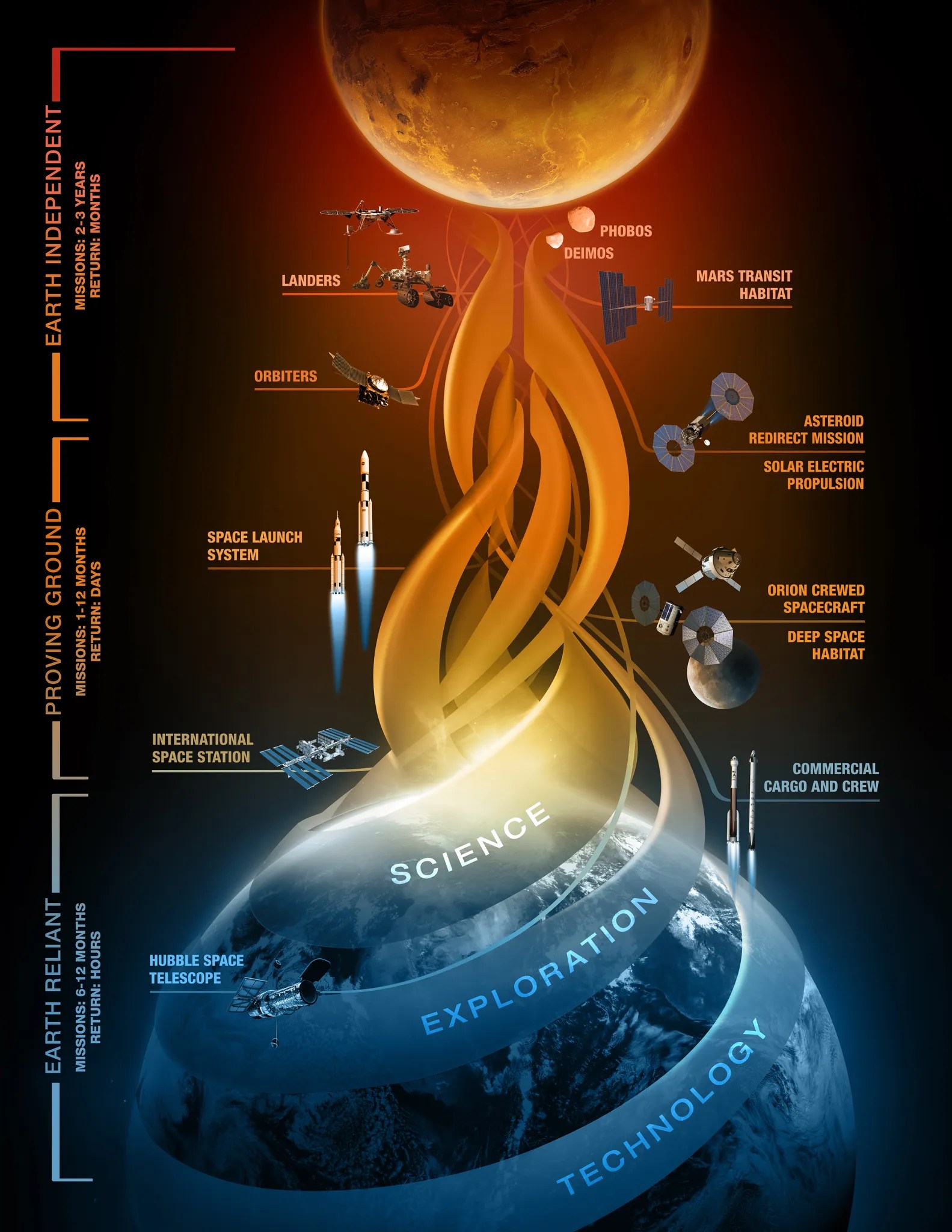
This week was a bit of a treat for me because it allowed me to talk about something that has been unfolding over at NASA for many years. As a science communicator, I have been privileged enough to watch it unfold and have had the opportunity to comment along the way. I am referring to NASA’s long-held plans for sending crewed missions to Mars in the next decade and the many decades’ worth of planning that went into it.

Since 2010, the plan has been to send missions back to the Moon in this decade, build habitats and other infrastructure there, and use it as a testing ground to prepare for Mars. The next step was to send the first crewed mission in 2033, followed by additional missions every 26 months (coinciding with Mars being at its closest to Earth). While there have been doubts for years that NASA could accomplish this goal in that timeline, it was announced this past summer that 2033 won’t happen.

While a flyby mission could occur that year, a crewed mission where astronauts land on the surface is not likely to happen until 2040 – and that would be an ambitious goal. Meanwhile, China is still hoping to make it there by 2033, and SpaceX wants to land there even sooner. But they aren’t in any position to promise that right now since they are dealing with similar challenges and delays. Check out the episode below to learn more about how we got here and what’s likely to follow:

Where to Listen:

Episode 64 of SfS – “The Europa Clipper Mission: A Conversation with Dr. Steve Vance” – is now Live!

Episode 64 of SfS – “The Europa Clipper Mission: A Conversation with Dr. Steve Vance” – is now Live!

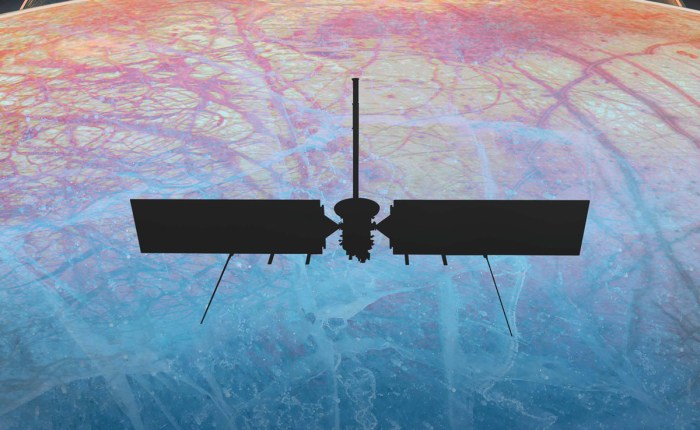
In this week’s episode, I had the good fortune to sit down with NASA scientist and astrobiologist Dr. Steve Vance so we could talk about NASA’s upcoming Europa Clipper mission. This mission, which was decades in the making, will launch this coming October, sending a spacecraft to Jupiter to explore its satellite Europa. Ever since the Voyager probes flew past Jupiter and its moons in 1979, scientists have speculated that there might be an ocean beneath this moon’s icy crust.

The mission will arrive around Jupiter by 2030, where it will begin making flybys of Europa and studying its surface with an advanced suite of instruments. Among its objectives are the characterization of Europa’s surface, investigating surface plume activity, and determining the existence and chemistry of its interior ocean. Another major objective is the search for potential biosignatures, indications that this interior ocean may harbor life!

We got into all of that and a number of other things – including Europa’s depiction in Arthur C. Clarke’s famed Space Odyssey series. As Vance told me during our chat, Clarke played a role in the mission planning, and (contrary to the monoliths told humanity in his stories) we do have permission to “attempt a landing there.”

Where to Listen:

Episode 63 of SfS – “The Rare Earth Hypothesis” – is now Live!

Episode 63 of SfS – “The Rare Earth Hypothesis” – is now Live!

This week’s episode revisits the Fermi Paradox, the question that launched a thousand scientific papers! To recap, this paradox takes its name from Erico Fermi, the physicist who helped build the first nuclear reactor and one of the scientists who worked on the Manhattan Project. In 1950, during a lunchtime conversation with colleagues, Fermi famously asked: “Where is everybody?” (aka. where are all the aliens?)

One proposed resolution is the idea that the conditions for life are far more stringent than we think. When it comes to astrobiology, scientists tend to be optimistic, thinking that rocky planets with fluffy atmospheres that orbit within their suns’ habitable zones have everything they need to give rise to life. But using Earth as a template, things like plate tectonics, a large moon, a large gas giant in the outer reaches of the system, and other factors may be necessary.

If this is true, then life (and, by extension, intelligent life) is likely to be rarer than previously thought. Perhaps that’s why we’re not hearing from any of them! Check out the links below to hear more.

Where to Listen:

Episode 61 of Stories from Space – A Mars Sample Return Mission – is Now Live!

Episode 61 of Stories from Space – A Mars Sample Return Mission – is Now Live!

This week’s episode is focused on the upcoming Mars Sample Return (MSR) mission, a joint NASA-ESA venture to send a robotic mission to Mars to collect the Perseverance samples. This will constitute the first sample-return mission from Mars, something that scientists have been planning for decades. In 2028, the mission will launch and is expected to return the samples to Earth no sooner than 2033. Unfortunately, due to recent budget cuts, the mission may be delayed or scaled back significantly.

Meanwhile, China is planning its own sample-return mission as part of the Tianwen-3 mission. This mission will launch in 2028 but is scheduled to return by July 2031. As we enter the new Space Race, it is clear that the brass ring is the Red Planet! But regardless of who secures samples from Mars and returns them to Earth first, the scientific returns will be immeasurable. Much like the Moon rocks returned by the Apollo astronauts, scientists will be able to study these samples for generations using the most cutting-edge instruments available.

These studies could finally answer questions that have remained unresolved since the days of the Viking missions. Was there ever life on Mars? Is there life there today (and where can it be found)? When did it go from being a warmer, wetter environment to the freezing, desiccated world we see today? Check out the episode to learn more:

Where to Listen:

Episode 60 of Stories from Space – The Dark Universe – is now Live!

Episode 60 of Stories from Space – The Dark Universe – is now Live!

This week was a bit of a treat for me personally since I got to delve into something really astrophysical and theoretical! To break it down, in 1916, Einstein placed the finishing touches on his Theory of General Relativity (GR), which explained how gravity alters the curvature of spacetime, matter and energy are equivalent, and time and space are one. His theory was confirmed almost immediately, but by the 1950s and 60s, astronomers finally had the telescopes they needed to really test GR!

Ah, but there was a snag! When observing massive galaxies, astronomers noticed that their rotational curves suggested there was a lot more mass out there than what they could see. This led to the speculation that the Universe was filled with a mysterious invisible mass (“Dark Matter”) that interacted with “normal matter” only through gravity. The existence of this mass was needed for GR to be correct, which had been confirmed nine ways from Sunday by this point.

In the 1990s, the Hubble Space Telescope provided the most breathtaking and deep images of the cosmos. The primary mission of this observatory was to test Hubble’s Law – i.e., that the Universe is in a state of expansion. When looking back through space and time upwards of 10 billion light-years (or more), astronomers hit another snag. Essentially, the rate at which the cosmos was expanding (the Hubble Metric) was speeding up over time!

This led to speculation that Einstein’s theory about a force that “held back gravity” – the Cosmological Constant, which he described as the “biggest blunder of his career” – was actually correct. This unknown force, “Dark Energy,” became another mysterious phenomenon scientists needed to include in their cosmological models. To this day, neither has been confirmed directly. But next-generation telescopes are coming that could resolve this mystery.

Where to Listen:

Episode 59 – “Where is Everybody: The Aurora Hypothesis” – is now Live!

Episode 59 – “Where is Everybody: The Aurora Hypothesis” – is now Live!

This week, I got into another proposed resolution to the Fermi Paradox (i.e., “Where is everybody?”) Inspired by Kim Stanley Robinson‘s novel of the same name, the Aurora Hypothesis basically states that we aren’t seeing evidence of extraterrestrial civilizations because settling on other planets is hard! And it certainly makes sense. As we all know, space is inherently hostile to life as we know it. There’s the extreme cold and vacuum of space, the elevated levels of radiation, and it takes forever to get anywhere.

But what about so-called “habitable exoplanets”? Just how habitable are they to life that has evolved under entirely different circumstances. Even if a planet checks all our boxes and has oxygen, water, and temperatures that are in our comfort range, there’s no guarantee that indigenous life forms will take kindly to our presence. This could include everything from single-celled bacteria to poisonous plants and ferocious animals. There’s also the possibility that our presence will have a tremendous impact on the local life forms and environment, which raises massive ethical questions.

I highly recommend people check out Aurora by Kim Stanley Robinson and to follow the links below to learn more about this hypothesis he inspired.

Where to Listen:

Episode 58 – The Great Migration: Living on Jupiter’s Moons! – is Now Live!

Episode 58 – The Great Migration: Living on Jupiter’s Moons! – is Now Live!

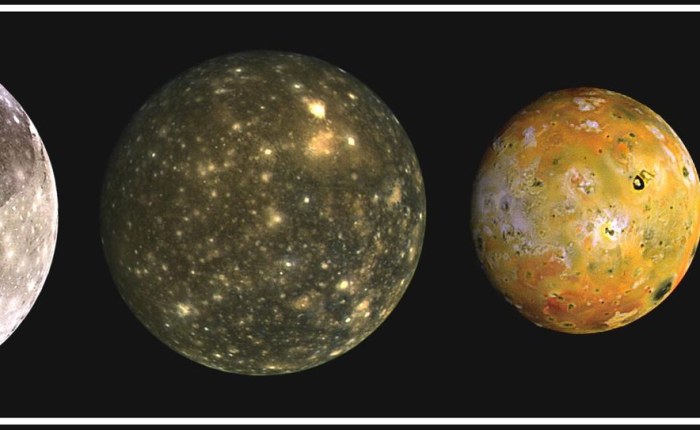
In 1610, Galileo Galilee turned his telescope towards Jupiter and discovered something incredible. What initially appeared like stars surrounding the planet were, in fact, natural satellites! These four satellites, Io, Europa, Ganymede, and Callisto, were named the “Galilean Moons” in his honor. With the dawn of the Space Race, our knowledge and fascination with this system has only deepened. While Jupiter has countless moons and moonlets (95 and counting!), the Galileans are not only the largest but have some pretty unique features as well.

Io is a volcanic moon composed of silica and metals, with mountains on its surface higher than Everest and over 400 active volcanoes, some of which spew lava 400 km (250 miles) high. Europa and Ganymede are frozen worlds largely composed of water ice and volatiles but which have warm and salty oceans in their interior. Callisto is an icy moon covered in massive craters and ringed features, the largest being Valhalla (3000 km; 1864 mi) and Asgard (1400 km; 870 mi).

Since 1979 when the Voyager 1 and 2 probes passed through the system, scientists have speculated that there could be life beneath Europa’s and Ganymede’s icy surfaces. Similarly, science fiction writers and scientific organizations have speculated how humans could live on some (if not all) of these moons with the right strategies, technology, know-how, and precautions. Therefore, living among these moons would present tremendous opportunities but also challenges and ethical considerations.

Follow the links below to get the full story and treatment!

Where to Listen:

Episode 57 – Space is for All: An Interview with Space Policy Analyst Ruvimbo Samanga – is now Live!

Episode 57 – Space is for All: An Interview with Space Policy Analyst Ruvimbo Samanga – is now Live!

This week, I finally got the chance to sit down and speak with a rising star of the modern space age, renowned space policy analyst Ruvimbo Samanga. Samanga began her journey by earning her Master of Law and participating in the Manfred Lachs Space Law Moot Court Competition. In 2018, she was part of the first team from Africa to win the competition. She then became the national point of contact for Zimbabwe with the Space Generation Advisory Council (SGAC).

This global network promotes participation from students and young professionals in the space industry in support of the United Nations Office of Outer Space Affairs (UNOOSA). Since then, she has become a powerful voice in the international community, advocating for sustainable development, education and outreach, and increasing access to space for people worldwide.

She has worked for multiple international organizations and initiatives, including the Space Arbitration Association, Access Space, Inter Astra, and the Charles F. Bolden Group, and is currently an ambassador for the Milo Space Science Institute. She is not slowing down! Have a listen to our conversation by following the links below.

Where to Listen:

Episode 56 – “The Ancient Astronaut Theory – is now Live!

Episode 56 – “The Ancient Astronaut Theory – is now Live!

This week’s episode is dedicated to a theory that is both fascinating and highly controversial. This theory is that in the distant past, extraterrestrial explorers may have visited Earth and even influenced our evolution (cultural or biological). Known as “paleocontact,” this idea has been explored extensively in science fiction, which includes 2001: A Space Odyssey – based on the short stories “Encounter at Dawn” and “The Sentinel” by Arthur C. Clarke – The X-Files, Stargate, and Prometheus.

A number of prominent scientists have also recommended that this idea be taken seriously. This includes Carl Sagan and Igor Shklovskii in their seminal book Intelligent Life in the Universe and Prof. Avi Loeb in his book Interstellar: The Search for Extraterrestrial Life and our Future in the Stars (which I recently reviewed). That being said, there’s also the pseudoscientific and conspiracy theory-laden version of this school of thought, which is epitomized by the theories of Von Daniken and shows like “Ancient Aliens.”

Like I said, it’s controversial, but mainly because there are those who have taken what is fascinating food for thought and turned it into something ignorant and reminiscent of 19th-century racial dogma. Check out the episode to hear more about this idea, where it comes from, and where it departs from scientific curiosity and becomes the kind of stuff that inspires satirical memes (you know the ones I mean!)

Where to Listen: