Generation Ships

systems___cryogenics_1Ever since my writing group and I got on the subject of space and colonization, some recurring themes have come up. For starters, there’s the concept of interstellar space travel, the kind that doesn’t involve fictitious Faster-Than-Light drive systems and cannot exceed the speed of light. In those situations, which are far more likely to happen in this and the next century, the question of how to keep crews alive until your arrival keeps popping up.

One way is to utilize some kind of cryogenic procedure, where passengers are put into “reefersleep” for the duration of the journey and awakened upon arrival. Though it might sound a bit crude, it’s actually a very practical solution to the problems of how to keep a crew preserved and provided for during the incredibly long voyages that space travel entails. This procedure has come up repeatedly in the realm of science fiction, particularly H.P. Lovecraft’s Cool Air, Robert A Heinlein’s The Door into Summer, Clarke’s 2001: A Space Odyssey, PKD’s Ubik, the Alien franchise, and the Revelation Space universe, just to name a few.

RAMAThe other solution, which is the subject of this post, is to construct generational ships. These are basically “interstellar arks” where people and even entire biospheres are transported from one location to another. Crews are kept in waking conditions, experience subjective time, and entertain themselves in interactive, simulated, or virtual environments in order to stay sane until they complete their voyage. Though much more expensive to build, these ships are an equally elegant solution for what to do about non-FTL space travel and settlement.

These two have made many appearances in science fiction, and I’ve compiled a list of all the Generation Ships, Space Arks, and O’Neil Cylinders I could find.

Firefly:
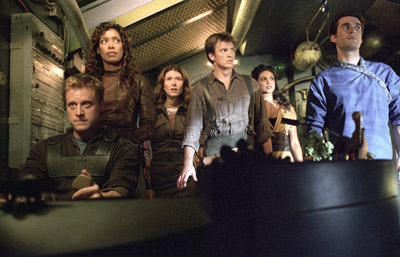
At the beginning of each episode, it was explained how Earth was used up, prompting humanity to seek out a new home. This is what eventually led them to 34 Tauri in the 22nd century, where they began the process of terraforming and settling the many worlds and moons. Though it was never explained in detail, mainly because the show was canceled before they could (screw you, Fox!), indications are given in the movie Serenity and the expanded universe that this migration involved Generation Ships.

In the movie, this was done mainly through visuals, where a large flotilla dusts off from Earth and eventually finds its way to the system of the White Sun. It was also said that the process of terraforming took decades, which would require that the crews had somewhere to stay while the terraformers did their work. Also, speculative point here, but it would stand to reason that the fleet would have to have some pretty large ships to accommodate both settlers and the kind of equipment they would need.

Chasm City:
This novel, set in Alastair Reynold’s Revelation Space universe, involves a large thread that follows the settlement of the world known as Sky’s Edge. This took place early in the universe’s backstory, before the development of “lighthuggers,” and therefore required that the ships be able to support crews for long periods of time.

From Reynold’s descriptions, these ships were large, cylindrical vessels that boasted vast bays to hold their many cryogenically frozen passengers. At the same time, the waking crew needed vast facilities to provide for their needs. These included mess halls, sleeping quarters, medical bays, and recreational facilities. Sky Haussmann, one of the children amongst the crew, had a nursery with a robotic clown and virtual backgrounds.

This divide, between a waking crew and frozen settlers, represents a sort of compromise between the cryo-ship design and the generation ship. On the one hand, you’ve got the majority of your crew at near-frozen temperatures and perfectly preserved for the voyage. On the other, you’ve got a crew walking about and looking for food, rest, and entertainment. However, it still qualifies and even inspired my group in our quest to design the perfect story for settlement!

Orphans of the Sky:
One of the earliest known examples of the use of generation ships in sci-fi, this two-novella set was also one of Heinlein’s first works. Like Clarke’s Rendezvous with Rama, it features a massive cylindrical ship that is drifting through space. But unlike Rama, Heinlein’s ship, known as the Vanguard, has become a derelict that is permanently adrift in space.

As the story goes on, we learn that this was due to a mutiny that killed all the piloting officers many generations back. Since that time, the descendants of the surviving loyal crew have forgotten the purpose and nature of their ship and lapsed into a pre-technological culture marked by superstition. In fact, they now view their ship as the cosmos itself and interpret its “voyage” as a metaphor.

The crew is also ruled by an oligarchy of “Officers” and “Scientists”, the head of which is the descendent of the original captain. Much like pre-industrial times, most crew members are dedicated to a simple life where they tend to agriculture and are illiterate. Seldom does anyone ever venture to the “upper decks” where the “muties” (aka. “mutants” or “mutineers”) are kept. These individuals, it is learned, know the truth of the ship’s purpose, another reason why they are ostracized from the rest of the crew.

As you can plainly see, this book not only featured a generation ship and some rather hard science when it came to colonization, but it also raised some valid and interesting questions about how space travel and confining environments could affect subsequent generations of people. Those who were born into an enclosed environment would come to know it as their whole world. And in the absence of external, verifiable facts (such as messages from Earth or historical records), they could even be led to believe there was nothing beyond their walls.

Paradises Lost:
Similar in tone and setting to Heinlein’s Orphans, this story by Ursula K. LeGuin focuses instead on the psychological impact that generational travel would have on a human crew. Adapted into a musical, this story explores the basic question of what happens when you spend your whole life (and entire generations) traveling toward a goal, only to find that the endpoint has become otherworldly and unattainable?

The story takes place aboard a generation ship known as the Discovery, where people are born and die on a trip to colonize a distant planet. Much like the Orphans, the ship becomes their entire universe and begins to seem more tangible to them than Earth or their mission to colonize a new world. The reason for this is quite simple; as the journey goes on, those who once lived on Earth are slowly dying off, and subsequent generations know about these things only through tales and lore.

As a result, a new religion is born that teaches that the ship is “spaceship heaven” and that it is bound for eternity. This religion is known as Bliss, and the younger generation is embracing it against the wishes of the older. The story is told through the eyes of two elder characters – Hsing and Luis. They know their lives will end on board the ship and that their mission lies in the hands of future generations. Naturally, they worry since said generations are convinced that they should never leave the ship they call heaven.

Rendezvous with Rama:
One of the best examples of a generational ship that is extra-terrestrial in origin! Known as Rama, this massive space cylinder was basically a self-contained world that was carrying the Raman civilization from one corner of the galaxy to another. When a crew from Earth arrives and begins to survey the interior, they begin to notice several tell-tale features.

For one, the interior contains several structures that appear to be arranged in “cities” – odd blocky shapes that look like buildings and streets with shallow trenches in them, looking like trolley car tracks. In addition, there is a sea that stretches in a band around Rama, dubbed the Cylindrical Sea, and trenches cut into the sides that appear to be windows.

In time, all the machinery comes to light, thanks in part to the admission of light through the ship’s long windows. Small creatures that appear to be biological machines (aka. “biots”) also begin to come out to conduct routine maintenance. In time, they come to the conclusion that the buildings constitute factories and the cylindrical sea contains trace elements and bio-matter, which they will begin to convert into “Ramans” as soon they get within range of their destination.

In the end, it seemed that the Ramans determined that the best way to spread their species was to break them down into their component parts, place them aboard ships that would float for generations through space, and begin recompiling them once they got to where they wanted to go. Ultimately, Sol was just a stopover on their long journey, and more ships were coming in subsequent novels. Still, this first exposure to the alien generation ship was an educational experience!

Ringworld:
Written by Larry Niven, the Ringworld series is considered one of the greatest examples of exploratory sci-fi. Set in the Known Space universe of the distant future, the story revolves around the discovery and exploration of the Ringworlds, an artificial habitation ring built by an extinct civilization. With the makers of these rings long dead, the rings themselves are adrift and their engineered inhabitants degenerated into a primitive state.

These artificial rings are roughly one million kilometers wide and one thousand kilometers across, approximately the diameter of Earth’s orbit. Each one encircles a Sol-type star which provides both life-sustaining energy and light. And, of course, they rotate, thus providing artificial gravity that is 99.2% as strong as Earth’s through the action of centrifugal force. Nighttime is provided by an inner ring of shadow squares which are connected to each other by thin, ultra-strong shadow square wire.

The ringworld has a habitable flat inner surface that is equivalent in area to approximately three million Earth-sized planets. Hence, it is able to sustain extensive ecosystems and all forms of life. This appears to be the purpose of the rings, in the end, the creation of habitable areas in space that were removed from terrestrial environments. An added bonus was the ability to transport said life and ecosystems over vast distances through space without having to stick them in an enclosed environment.

So really, these things were like a gigantic version of a generation ship, capable of moving an entire species or civilization through space.

Stargate Atlantis:

The series Stargate Atlantis contained a few mentions of vessels that fit the profile of generation ships. For starters, there was the Ancients City Ship, a self-contained city that was also a spaceship. Though it was capable of FTL travel, the vessel was capable of sustaining a city-sized population for extended periods of time as it traveled through space.

In addition, in the third season episode entitled “The Ark”, Colonel Sheppard’s team discovers a facility inside a hollowed-out moon that turns out to be an ark created by the people of the planet around which the moon is in orbit. The ark was built to preserve the existence of the people from the planet so that they could reemerge and rebuild their civilization. Generations prior, these people had fought a disastrous war with the Wraith in which they were almost exterminated.

Though not a vessel per se, the moon base served the same purpose as a generation ship. Though the moon orbited their original homeworld and the people really weren’t traveling through space (except in orbit around their planet), the principle was essentially the same. People were kept in stasis until the day came when they could awaken to transplant themselves on the intended world, thus ensuring the survival and expansion of their civilization.

Yes, the examples abound! In fact, the concept of the generation ship and related ideas are so fertile that I’m kind of surprised that it took me so long to really appreciate it. But then again, I came to a lot of the classics a little late in life. Ah well, it doesn’t really matter when you get to the destination, provided that you get there and enjoy the journey – which is kind of the concept behind a generation ship, isn’t it? If you can’t just warp your way across the Universe – if you have to take your time and drift slowly – you might as well travel in style!

Worlds of Star Trek

In honor of the other sci-fi franchises I’ve covered in my “Worlds Of” series, which includes my own (shameless!), I’ve decided to throw some credit and attention Gene Rodenberry’s way. His Star Trek franchise is not only one of the most popular science fiction franchise of all time, it’s also hailed as one of the most detailed and in depth, owning to many years of existence and countless contributing minds. And so, here’s my list of the franchises hot spots, in alphabetical order:

Bajor:

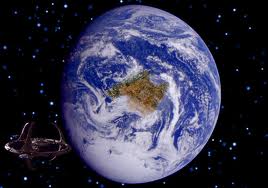
The homeworld of the Bajoran people and situated near the Bajoran Wormhole, this planet and the system are the setting for the spinoff series DS9. Throughout the series, many details are given about the Bajoran’s culture, history and people, most of which revolve around the occupation of their planet by the Cardassian Empire and their worship of “The Prophets” (aka. the wormhole aliens).

At one time, Bajor was the home of one the oldest civilizations in the Alpha Quadrant, characterized by art, poetry, and a caste system where the priestly caste were at the top. During the occupation of Bajor, which last fifty years, the Cardassians murdered millions of inhabitants, destroyed much of their infrastructure and even poisoned large tracts of land. To mark the occupation, they built a large space station named Terok Nor in orbit.

In order to fight against the occupation, the Bajorans abandoned the caste system so that everyone could become fighters. After fifty years, the Cardassian government chose to cut its losses and abandoned the world. The Bajorans took control of Terok Nor shortly thereafter, the provisional government invited the federation to take control of it, and it was renamed Deep Space 9. After the discovery of the wormhole, Commander Sisko ordered the station to relocate to guard the entrance.

It was learned shortly thereafter that the wormhole was an artificial phenomena that connected the Alpha Quadrant to the other side of the Milky Way Galaxy (the Gamma Quadrant), and was inhabited by a race of super-evolved beings that had made contact with the Bajorans in the past. Because these beings were non-corporeal and had no concept of time, they were named “The Prophets”, mainly because of their ability to see into the future.

When the Dominion was discovered on the other side of the wormhole, Bajor would become the front lines in the Alpha Quadrant alliance’s war against them. During the course of this war, DS9 would become occupied by the Cardassian-Dominion alliance. Before abandoning the station, Sisko and the crew of DS9 made sure that the entrance to the wormhole was mined so as it ensure that the Dominion could not bring in reinforcements. Due to the articles of the Bajoran treaty with the Dominion, Cardassian forces were also forbidden from occupying the planet again. As a result, Bajor would remain free until the Federation and its allies retook the station a year later and once again controlled entrance to the wormhole.

Betazed:
Home to the telepathic race known as the Betazoids, this planet is a member of the Federation and a major contributor to its ranks, particularly in the field of diplomacy and counseling services. Deanna Troi and her mother, Lwaxana, both call this planet home, as do many other secondary characters in the TNG and spinoff series’.

In the course of the TNG series, many aspects of Betazoid culture are made clear. For one, the planet appears to have a semi-matriarchal culture, where the eldest woman of the family holds the title for the house and all its honors. This was particularly true of Lwaxana, who in addition to being a decorated diplomat, was named “daughter of the Fifth House, holder of the Sacred Chalice of Rixx, heir to the Holy Rings of Betazed”.

The planet was mentioned many times in the TNG series, usually in conjunction with the Enterprise’s many contacts with Lwaxana. During the Dominion War, Betazed was occupied for a brief time when Dominion forces caught the local fleet off guard. This development is what prompted Sisko to attempt a rapprochement with Romulan forces to bring them into the war.

Cardassia Prime:
Also known simply as Cardassia, this world is home to the Cardassian people and the seat of power for the Cardassian Union. Based on the many descriptions from DS9, Cardassia is apparently a warm, humid environment that favors reptilian creatures, which is apparently the basis of Cardassian biology.

Prior tot he militarization of their culture, Cardassia was home to thriving civilization that produced renowned works of art and architecture. However, the civilization soon fell into severe decline and decay, resulting in mass starvation. As a result, martial law was declared and the foundations for the Cardassian government were laid.

This consisted of the Central Command on the one hand, which controlled the military, and the Obsidian Order which acted as the secret police. Between the two was the relatively impotent civilian government which exercise little real power, but which occasionally was called upon to enact policy which Command knew would be unpopular. One such decision was the removal of Cardassian forces from Bajor after 50 years of unsuccessful occupation.

Cardassia was the first to ally themselves with the Dominion after their discovery in the Gamma Quadrant. This was after a disastrous war with the Klingon Empire, which the Dominion instigated through one of their shape-shifter replacement of General Martok. As a result, Cardassia Prime would remain occupied by Dominion forces for many years, until the arrival of Allied forces and the defection of the Cardassian military. In retaliation, the Dominion ordered the destruction of the Cardassian people, and over 800 million perished before the Founder officially surrendered.

Earth:
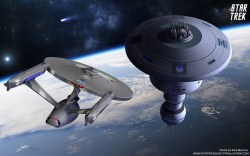
In the original series, TNG, DS9, and other spinoffs, much is made of how life has improved on Earth since the late 20th century. Though we don’t get to see much of it beyond San Francisco or Paris, it remains one of the most important planets in the Star Trek universe. As the seat of the Federation, it was the home of the Federation Council and of the office of the Federation President, and serving as the central headquarters of Starfleet.

In addition, Starfleet Academy is located in San Fransisco, just in view of the Golden Gate Bridge. It was here that all characters in the franchise received their education and commission as officers. Between Kirk, Picard, Sisko and Janeway, many stories are told of memorable and nostalgic incidents, and all allude to rather trying curriculum in which their abilities and aptitude were strenuously tested.

In the course of the original series, TNG and DS9, several major events are alluded to which had a drastic effect on Earth and the human race. These include the “Eugenics War” of the late 20th century, where genetically-modified human beings attempted to take over the planet. This ended when the last of the modified humans, under the leadership of Khan Noonien Soong, fled aboard the spaceship Botany Bay. During the early 22nd century, Earth was devastated in what was referred to as the “Atomic Horror”. This causes the destruction of most major cities, 600 million deaths, and the emergence of totalitarian regimes.

However, all that appeared to have changed with the development of the warp engine by doctor Zefram Cochrane and First Contact. Thereafter, Earth became united in the goal of reaching the stars and building a better future. Starfleet was created to acheive this goal, and the United Federation of Planets established between the Vulcans and humanity, and many subsequent races thereafter. Beyond that, not much is specified about Earth of the 23rd and 24th century, other than saying that it is a “paradise” where no crime, hunger, war, or poverty exist.

Ferenginar:
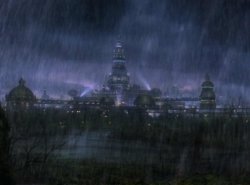
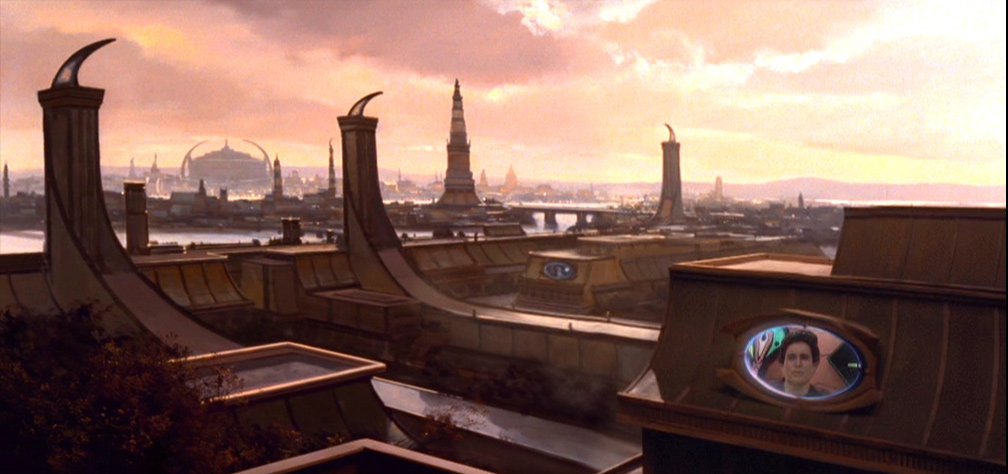
Wet, mucky, swampy, and perennially rainy, this moldy planet is home to the enterprising race known as the Ferengi. The seat of power for the Ferengi Alliance, it is also the home of the Tower of Commerce, the Sacred Marketplace, and the Ferengi Commerce Authority, the ruling body of their species.

Though it was never shown in TNG, Ferenginar makes a few appearances in the DS9 series. Here, it is depicted as a rainy, wet and extremely humid place where most people live in low-domed structures. In the capitol, the majority of architecture consists of these types of dwellings, expect of course for the central spire of the Tower of Commerce, where the Authority is centered.

The leader of the Ferengi people is known as the Grand Nagus, the head of all commerce for the Ferengi and the leader of the Authority. In addition to the sacred text, “The Rules of Acquisition”, the Ferengi are governed by the Bill of Opportunities, a quasi-constitution which sets out the rights of individual citizens. These revolve mainly around the right to own a business and make a profit, provided they don’t violate any of the sacred Rules or the regulations of the Commerce Authority.

Though women have traditionally had no rights under the law, amendments made by Grand Nagus Sek during the course of the DS9 series granted them the right to wear clothes and make profits. A ruling council was also established to pass several sweeping social reforms, which including the imposition of taxes, social programs, and laws banning monopolies and the mistreatment of workers. According to expanded universe sources, over 78 billion Ferengi live on their homeworld, and the civilization has been warp capable for some time.

Qon’oS:
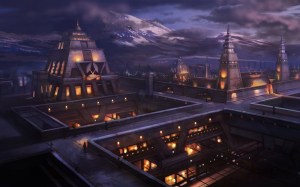
The home of the Klingon people and seat of the Klingon High Council, the ruling body of their Empire. Though very little information was given about this planet in the original series, it appeared repeatedly in TNG and subsequent spinoffs, and was mentioned repeatedly in relation to the character of Worf and the Federation’s dealings with the High Council.

Due to the prolonged state of tension between the Klingon Empire and the Federation, very little was known about this world until the late 23rd century, when the destruction of its mining moon of Praxis forced the Klingons to sign the First Khitomer Accord with the Federation.

However, it was not until Khitomer Massacre, where Romulan forces commited a sneak attack on the Klingon delegation, that an alliance was formed between the Federation and Klingon Empire. This was apparently due to the fact that the Enterprise C responded to the Klingon’s distress signal and was destroyed while attempting to defend the colony against four warbirds. Thereafter, the Klingons became convinced of the Federation’s honorable nature and committed to a joint-defense pact.

It is often been suggested that the Qon’oS of the original series is not the same planet as that of the Next Generations. This is because of events in the movie The Undiscovered Country, where  the evacuation of Qon’oS became necessary because of the destruction of Praxis. Though it was never made clear if Qon’oS was simply established on another world or was somehow saved with the help of the Federation, the name of their homeworld remains the same even if the locations has changed.

Risa:
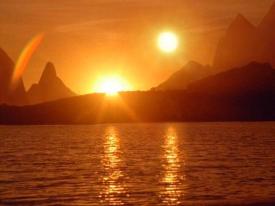
Originally a dismal, rain-soaked and geologically unstable environment, the native Risans have managed to transform their world into the pleasure capitol of the known universe. This was accomplished with weather control satellites, seismic regulators, and ecological engineering, all of which resulted in a planet wide paradise that is known throughout the quadrant.

Noted for its vast beach resorts and tropical climate, Risa’s greatest attraction lies in the open sexuality of its population. Identified by a decorative emblem between their eyes, Risians often initiate or respond to the desire for sexual relations through the use of a small statuette called a horga’hn, the Risian symbol of sexuality or fertility.

As was made clear to Captain Picard during his first visit, to own a horga’hn is to call forth its pleasures. To display one is to announce that the owner wishes to participate in jamaharon, a Risian sexual rite. Riker has apparently visited the planet many times, and often relates why its his favorite vacation spot in the galaxy.While Picard was on leave, he also discovered the local of the Tox Uthat, a 27th century weapon which had was hidden on Risa and passed into local legend.

The crew of DS9 also went to Risa during shore leave, during which time a group of extremists planned to sieze the planet to demonstrate how the Federation was not prepared to deal with the threats facing it. In the course of the visit, it was also revealed that Dax’s former host, Curzon, died there as a result of engaging in jamaharon. Death by pleasure. No wonder the place is so popular!

Romulus:
Along with its sister-planet Remus, Romulus is the home of the Romulan species and the seat of power for the Romulan Star Empire. Settlement of this planet took place in 4th century by Earth standards, when Vulcan colonists discovered it at the end of a long exodus. Shortly thereafter, the Vulcan society changed with the strict institution of logic and repression of emotion.

As a result, Romulans society bears little resemblance to their Vulcan forebears, though they are genetically related. Known for their arrogance and innate sense of superiority, the Romulans are one of the dominant powers in the galaxy, located in the Beta Quadrant adjoining Klingon and Cardassian Space. Because of this strategic location, they have been involved in skirmishes with virtually every civilization that borders there own.

The planet is the home of the Romulan Hall of State and the Imperial Romulan Senate. In the TNG series, Picard and Data also traveled here seeking Ambassador Spock. After finding him, they discovered that his presence was part of an effort known as “Reunification”, a movement between Romulans and Vulcans who wanted their worlds to come together again after centuries of being apart. During the Dominion War, the planet also hosted a Federation Alliance Conference to help them plan strategy and address wartime concerns.

Additional events took place in the franchise’s movies, particularly the TNG movie Nemesis and the JJ Abrams Star Trek relaunch. In the former, Romulus became the focal of a plot by Reman agents, led by a Picard clone, to take over the Romulan government and incite a war with the Federation. In the latter, Spock indicates that in 2387, a supernova destroyed Romulus before he could contain it using a “red matter” singularity device.

Vulcan:
The homeworld of the Vulcan race, the birthplace of their philosophy, and the center of their star-faring civilization. Noted for its higher than normal gravity and thinner atmosphere, the climate of this planet had much to do with fact that the Vulcan race, in their primordial form, are physically very strong, fast, and quite aggressive.

Much is mentioned of the history of Vulcan in the original series, TNG, and the various spinoff. After contact with Earth, it became one of the major worlds of the Federation and home to several key installations. In addition, many key events took here in the expanded franchise because of its importance in the Star Trek universe as the homeworld of Spock.

During the original series, Spock was summoned back to his homeworld to take part in the ritual of Pon farr, where he ended up Kirk to the death for the honor of his less-than-honorable betrothed. During the movie Search for Spock, the crew was forced to come to Vulcan aboard a captured Klingon vessel so that Spock’s regenerated body could be reunited with his consciousness.  This ritual, known as fal tor pan and conducted on Mount Seleya, was successful in restoring Spock’s mind, which had previously been sojourning in Dr. McCoy’s head.

In the TNG series, some details are given about Vulcan’s prehistory, before the adoption of logic and the repression of emotions. This period, known as the “Time of Awakening” was marked by civil war between several different factions, and even involved the use of nuclear and psionic weapons. One of these weapons, known as the Stone of Gol, survived the wars and was being sought by a Romulan agent posing as a Vulcan.

In the relaunch movie, Vulcan was a key setting, mainly in relation to Spock’s upbringing and his decision to join Starfleet rather than the Vulcan Science Academy. It is was later destroyed when Nero, the Romulan Captain of the Narada, used the red matter device to trigger an artificial singularity at the center of the planet. Because of these events, the Vulcan race has become an endangered species in this alternate timeline, though resettlement efforts did begin in earnest by the end.

Alright, that’s Star Trek done. Now that I’ve covered this franchise, Star Wars, Dune, and even my own, there’s only one or two left that I think deserve mention. The first is the Firely universe, which I’ve already talked about at length. And then there’s the Babylon 5 universe, which I’ve talked about WAY more! Like to the point of nausea, tedium, and even boring myself! But if people are even the slightest bit interested, I’d be happy to cover them. Just give me a week or two to decompress… all this writing about fictional planets has got me nerded out!

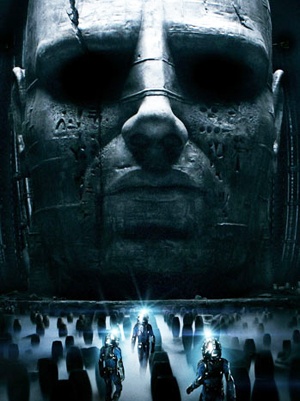
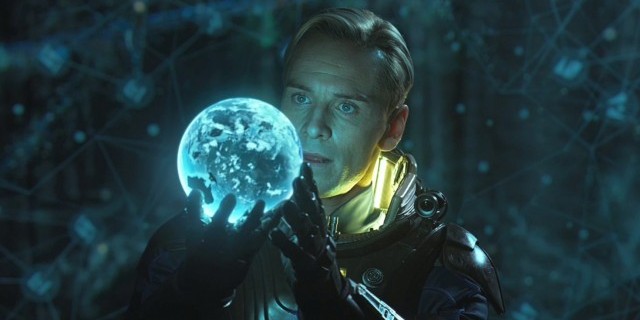
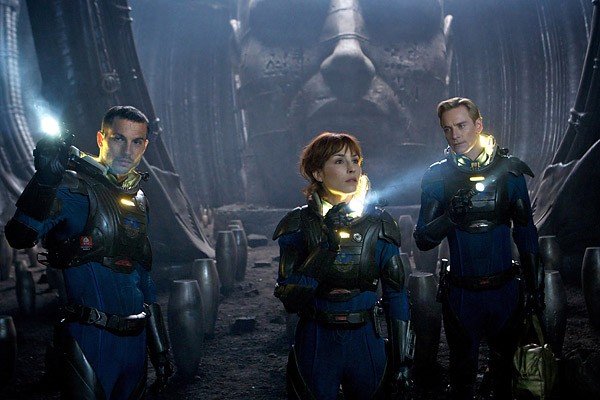
Back from seeing Prometheus!

As Stewie said when he learned that Child Services would be taking him away, “Finallllly!” Yes, that’s how I felt when we hopped in the car and were on our way to the theater. And though I am a week late in getting this review done, because last weekend we were diverted to see The Avengers, I think the wait was worth it!

And I should get some bonus points for doing it today. Because, as often proves the case with me, the cold has doubled back and reinfected me. You could say I was extra sympathetic to some of the characters in the this movie! But I don’t want to give anything away, I promised myself in advance that I would rate this movie without giving anything crucial away. So here goes…

First impressions:
The movie was pretty damn cool! The premise of ancient astronauts, which I knew they were employing here, is one I think pretty highly of. And the fact that they were going back to the Alien universe in such a way that they really wanted to capture the feel of the original was also pretty pleasing. And just about everyone I’ve heard speak on the subject has said that the visuals and effects were state of the art. They weren’t wrong.

That being said, I think they could have done the whole “Engineers” thing a bit better. In fact, what they had to say about their coming to Earth and what they looked like (which I shan’t get into for fear of spoilers) kind of called to mind how Stargate and AVP tackled the whole “aliens tampered with our history”. Still, Scott is nothing if not a master of crafting worlds and believable settings, so it was by no means in the same category. While I felt it could be better, it was still pretty damn good!

The Big Questions:
What’s more, this movie also filled in a great deal of details from the Alien franchises back story. Questions like what are the Xenomorphs, where did they come from, do their hosts and environments influence their appearance, why were they found aboard the Space Jockeys (“Engineers”) ship, and just who are the Jockeys anyway? All of these questions were addressed in this film and answered in one way or another. And of course, they left just enough mystery to keep the option open for further explorations in the Alien universe.

And I was pretty pleased with how they went about answering them, mainly because I’ve been studying them for some time now and heard quite a few theories. And sure, covering all this stuff did generate a certain “prequel duty” feel here and there, but Scott’s handling of all that seemed far superior to most others efforts. For one, I never really felt like they were wrapping things up in a neat little package, which is an annoying tendency to be found in most prequels. Take the Star Wars prequels, did those not feel like they were simply trying to connect the threads irrespective of plot? Yeah, well that wasn’t the case here.

Overall:
And that, I think, is what is best about this movie. Though it is technically a prequel, Scott and the makers seemed determined that it feel like a standalone story. I recall him saying as much in the course of an interview, and I truly felt like they succeeded. Granted, there were some flaws and some holes here and there, but these were hardly fatal and didn’t leave me thinking, “holy crap, that movie made no sense and was totally pointless and stupid!” Expectations and hopes were certainly high for this film, leading some to come away disappointed. But what can be said about them?

Sure, this movie wasn’t Alien, but there’s a reason for that! Scott already made that movie thirty-three years ago, and several directors have since taken the franchise in many different (and some would say wrong) directions. Going back to the before the beginning was the only option left really, reopening the franchise at a point before the original to answer all the tough, enduring questions that have fans have raised over the years. And that was no easy task and I could see beforehand how it would be riddled with potential pitfalls.

But in the end, I came away pretty pleased. Not only was this movie pretty good viewing, it was also a faithful return to the Alien universe… Frankly, I’d like to see what they come up with next!

Off to see Prometheus!

Finaaaaally! Today the wife and I will finally be making our trip to see the latest installment in Ridley Scott’s Alien franchise. I say in his franchise because it is really is his baby. Sure, Cameron did a good job with the sequel, a really good job in fact. But those who’ve followed, especially those who filmed the fresh hell known as AVP and AVPR, pretty much pissed it away!

Mr. Scott pretty much said so, when interviewed he stated that part of his reasons for making this film was to ensure that he wanted his old franchise to be remembered for something other than all the abortive sequels other people made. I really don’t blame him! If I were Scott, I’d be looking for the bastards with blood lust in my heart and a shiv in my hand!

Despite my best efforts, I have heard some things about this movie. I’ve avoided reading the details wherever possible, but it’s hard not to notice when people rave or complain about something. Hell, they say so right in the title lines! But I’m still going in with a relatively open mind and so real expectations. I hope it’s good, naturally; but even if it’s only mediocre, it will be light years ahead of AVPR.

Review to follow, not to mention some themed posts that delve into various aspects of the movie. In fact, I think I’ll revisit the Ancient Aliens post I did awhile back, where the concept of ancient astronauts came up. I know it’s a thematic element of this film, can’t wait to see what they do with it! Did I mention it will be in Imax 3D? Woohoo!


Cool Cars

Just yesterday I was busy hearing about the new Zombie Car, an invention which is going to be unveiled at the next Comic Con. A collaboration between The Walking Dead’s Robert Kirkman and Hyundai, the car will essentially incorporate all the zombie-fighting features that a post-apocalyptic vehicle needs.

As it happens, one of my followers mentioned how this vehicle reminded her of the Batmobile and other cool cars. Between that and the allusions to Mad Max that the Zombie Car inevitably inspires, I got to thinking that this site is in need of a list of Cool Cars! And here it is, all the cool vehicles that have appeared in pop culture over the years, more often than not, as part of a science fiction franchise.

M577 APC:
Not so much a car as a tank, but she drives on four wheels and is VERY cool. So I don’t see why the M577 from the Aliens franchise shouldn’t be included on this list. Much like all APC’s, the purpose of this low-sitting but heavy hitting vehicle was to act as a battle taxi, deploying a squad of Marines to the field and then pulling them out in a hurry if things got harry. Designed to fit aboard a Cheyenne Dropship, it was part of the Colonial Marines quick deployment strategy.

As Hudson so righteously bragged in the movie, the M577 is decked out with some pretty impressive weaponry. For instance, the foldable turret mounted on the top carries a twin 20mW Boyars PARS-150 phased plasma cannon which is capable of making 1000 discharges. At the front end of the vehicle, a dual set of RE700 20mm Gatling cannons is built on a small swivel turret. In addition, it also carries plenty of small arms and munitions for its Marine compliments, consisting of pulse rifles, smart guns, flame units, grenades, rockets and even canisters of nerve gas.

Batmobile:
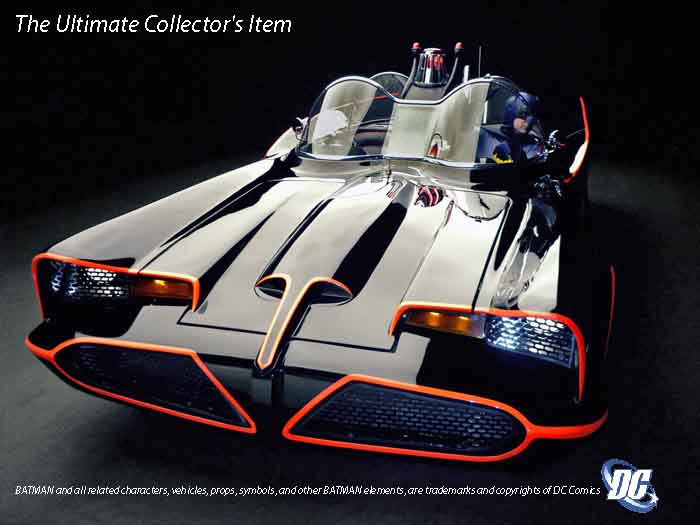
Now here’s a popular vehicle, so popular that’s gone through several variations over the years. From the campy 60’s version of the original Adam West series to the sculpted Burton remake to the Tumbler of the Nolan series, the Batmobile is a nostalgic icon which is constantly being reinvented. But all versions have two things in common. One, they’re crime-fighting specials, which means they have all kinds of gadgets and features. Two, they’re none to shabby to look at and probably a hell of a lot of fun to drive!

In the earliest Batman comics, the Batmobile was simply a sedan that served as Batman’s car. As time went on, it began to reflect Batman’s motif, including wing-shaped tailfins, dark colors, and even armor. Additional customizations, like crime-fighting gadgets also found their way into the design, and soon, a classic was born!

By the time of the original series, the Batmobile was based around the chassis of a Lincoln Futura and featured fully-functioning gadgets. These included a gas turbine, a Cable Cutter Blade, the Bat Ray Projector, a Batscope, Bat Eye Switch, Antenna Activator, Police Band Cut-In Switch, Automatic Tire Inflation Device, the Remote Batcomputer, the Batphone, Emergency Bat Turn Lever, Anti-Fire Activator, Bat Smoke, Bat Photoscope, and two rear-mounted ten-foot Deist parachutes.

Updated for the relaunch, Burton’s Batmobile built around the original concept but recieved a does of his characteristic grit and Gothic nature. As such, the new Batmobile’s aesthetics and gadgets were updated for the modern era and included a sleeker design, a more comprehensive turbine system, a sliding canopy, and of course retractable body armor! It also retained the idea of a 180 degree “Bat turn”, which this time around was made possible from lateral harpoons, and two .30 cal machineguns.

As the second movie demonstrated, the vehicle was also capable of shedding much of its body and collapsing into a narrow version of itself in case it needed to fit through tight spots. By the third movie, the design concept had changed considerably to feature bright sections beneath its segmented chassis. Over the top and impractical, this design was in keeping with Schumacher’s vision of a Batman where everything glittered and was campy, like the original series.

And last, the Nolan version. Here, the Batmobile was apparently inspired by Frank Miller’s The Dark Knight Returns, where it was depicted as a tank rather than a car, and the Spinners of the Blade Runner movie. In the first film, it is indicated that the design came from a military vehicle known as “The Tumbler”, which Bruce Wayne then modified for his personal use.

It’s features included a propane fueled jet engine, front-firing rockets, autocannons, caltrops, rear airbrakes, and a stealth mode. In the Dark Knight, it was also shown that in emergency situations, the front wheels can deploy to form the Batpod. Rumors also abound that the new version featured in The Dark Knight Rises will be capable of flight as well. Oooooh, five more days!

Delorean:
This time-traveling vehicle has placed this short-lived 80’s experiment permanently on people’s radar. Were it not for Back to the Future and it’s unapologetically 80’s feel, the Delorean would probably have faded into obscurity a long time ago. Much like the Futura, it was a short-lived concept that caught on because of its appearance on screen.

But of course, were it not for its unusual design features, such as the gull-wing doors, stainless steel paneling and fiberglass underbody, it would never have made its cinematic appearances in the first place. The set designers were looking for something futuristic-looking to fashion a time-machine out of, and this is what they found!

It’s futuristic features are quite straightforward: A flux capacitor which allows for time travel, a plutonium engine that fuels it, a series of internal controls to set and monitor the time computations, and some rear facing exhaust fans to give it that ultra-futuristic look! Only three remain in existence once filming of the three movies was finished. Two are the property of Universal Studios and are display items, the third is owned by a private collector who assembled and restored the original model.

Ecto-1:
I shall not be making a “Who you gonna call?” reference here! Too obvious! Instead, let me just say that this car ought to be instantly familiar to anyone who grew up in the 80’s. If not, I’d be forced to wonder if you spent the entire decade in a cave or a cell somewhere, in which case, my sincere condolences!

Moving on, the Ecto-1 was the primary means of transport for the Ghostbusters. The car was built around the chassis of a 1959 Cadillac Miller-Meteor, which had been converted to act as an ambulance car. This is apparent from the realoader trunk and the car’s siren, which was retained by the Ghostbusters so they could make sure people stayed out of their way, and also to announce their arrival!

Additional features including a a special pull-out rack in the rear containing the staff’s proton packs, which facilitates a quick retrieval without the complication of having to reach into the vehicle’s rear. There are also various gadgets mounted on the top, whose function is never revealed in the movies. However, in the course of the cartoon adaptation, it is said that the vehicle carries a “proton cannon” on its roof, and has a vertical jump system built into the bottom. These allow the Ghostbusters to take on ghost with some heavy artillery, as well as clearing fences and other obstacles that lie between them and their deployment.

KITT:
Also known as Knight Industries Two Thousand, this talking car was featured in the popular 80’s show Knight Rider. In addition to being the “vehicle” (ha!) that launched Hasselhoff’s career, this car is one of the earliest instances where an AI was merged with a high-performance car.

Built around the chassis of a 1982 Pontiac Trans Am, the car was souped up with a number of features to give it that AI look and feel. These included the red-laser scanner bar at the front – which like the Cylons’, allowed KITT to “see” – a turbo boost that allowed him to make big jumps, an “alpha circuit” which allows KITT to drive himself, a Tri-Helical Plasteel 1000 MBS (molecular bonded shell) plating, a flame thrower, tear gas launcher, and even a laser.

Inspiring several TV movies and a 2008 relaunch, the vehicle has gone through several redesigns and upgrades. In the updated series, the Trans Am chassis was traded in for a Mustang GT500KR and the molecular armor was traded in for nanotech polymer skin which is not only impregnable, but also capable of regeneration. Much of the other features, including the AI, scanners and defensive systems remained very much the same. However, the show only lasted single season, a possible indication that not all things 80’s are an instant success anymore.

Pursuit Special:
With all this talk about Mad Max, it was only a matter of time before this one crept into the list! Making multiple appearances in the franchise, the first car to hold this name was a modified Holden Monaro that was stolen and used by the “Night Rider” (not to be confused with Haffelhoff’s character). However, the more famous model was a modified 1973 Ford Falcon XB GT.

It was this car that Mad Max was offered as an incentive to stay with the force as their top pursuit man. Thought he initially refused it, he later used this same vehicle as his personal revenge weapon when evil men murdered his wife and child and had to be dealt with!

In terms of features, the main modifications on this car were the front nosecone, the eight individual exhaust side pipes, and a supercharger protruding through the bonnet. All of these alluded to the fact that the Pursuit Special was the fastest car in the force, capable of chasing down any road warriors that happened to be barreling down the highway.

In the sequel, the car was modified even further thanks to the success of the first film and a correspondingly larger budget. The new features included large petrol tanks fitted in the back to show that just how important a steady supply of petrol was to this car, not to mention within the context of the post-apocalyptic setting of Mad Max. The front end was also modified by removing the bottom section, which was in keeping with the design concept of making the car look more used and stressed.

Spinner:
So… it’s the 21st century, and yet there aren’t any flying cars. Screw hybrids and electrics, I was promised FLYING CARS! Well, according to the movie Blade Runner, we still have seven years before they are supposed to be a regular feature, at least as far as police cars go. And that’s the concept of a Spinner, in a nutshell –  a flying car used by the police of the future noire city of LA.

In addition to being able to drive as a ground car, the Spinner is also capable of vertical takeoff and landings and hovering at relatively high altitudes. Conceived by Syd Mead, the same man who designed concepts for Tron and Aliens, the vehicle was originally described as an “aerodyne” – a vehicle which directs air downward to create lift, though press kits for the film stated that the spinner was propelled by three engines: “conventional internal combustion, jet, and anti-gravity”.

I hope for their sake, they exaggerate! It’s going to be hard to come up with anti-gravity engines in just seven years time! In any case, the concept designs were built by Gene Winfield, the man who brought concepts to life for Batman, The Last Starfighter and Robocop as well as this. No indication was given as to what they used for a chassis, so I can only assume they built it up from spare parts and a classic was born!

So… seven years before these cars are supposed to be available, right? Ford, Toyota, GM, Hyundai, Subaru; all of you guys, get on it! Don’t make me come down there!

XXX GTO:
Last, but not least, we have the super-charge spy car on steroids from the movie XXX. As anyone who has seen this movie knows, Mr Vin Diesel, once undercover amongst a bunch of Russian mafia scumbags, decided he needed to have a classic muscle car. This he found in a 1967 Pontiac GTO hardtop. When circumstances demanded he start kicking some ass, he demanded that his spy buddies take all their precious gear and put it into the car.

Yes, that’s exactly how it happened. A table of guns, harpoons launchers, and assorted high tech gear lay in front of them. Behind the wheel, Diesel said “I want all of that… in here!” Within a few days, he got his wish. Featuring a folding seat which turns over to reveal a weapons rack, missiles mounted behind the lights, a flame thrower, and built-in machineguns.

And of course, all of this equipment had corresponding controls in the interior. These were to be found in a confusing array of millions of buttons and switches, along with an on-board GPS system built into the dashboard. Unfortunate that the car made only a brief appearance as part of the final chase scene.

Well that’s I got for this first installment in the series. I imagine people might have suggestions so please send them my way. Between ships, robots, guns, and now cars, I think we can just pay homage to just about every cool thing that’s ever come out of the realm of sci-fi and pop culture!

Dystopia and Deathmatches in Sci-Fi

Battle Royale:
This controversial story, also adapted into a film, takes place in an alternate universe where Japan is a member region of a totalitarian state named the Republic of Greater East Asia. Alluding to the Greater East Asia Co-Prosperity Sphere of WWII, it is clear that this a world in which Japan won the Second World War and continued on the path of fascist Imperialism.

In any case, the story revolves around what is called “The Program”. Under the guise of a “study trip”, a group of junior high school students from a fictional town are gassed on a bus. They awaken in the school of an isolated, evacuated island and learn that they have been placed in an event where they must battle each other to the death, or all will die.

Officially a military research project, it is a means of terrorizing the population, of creating such paranoia as to make organized insurgency impossible. Every year, fifty classes are selected to participate where students from a single class are isolated and are required to fight the other members. It ends when only one student remains, with that student being declared the winner.

Their movements are tracked by metal collars, which contain tracking and listening devices; if any student should attempt to escape the Program, or enter declared forbidden zones, a bomb will be detonated in the collar. If no one dies within any 24-hour period, all collars will be detonated simultaneously and there will be no winner.

Banned in many countries (the novel and the film) because of its controversial and graphic nature, Battle Royale has gone on to inspire such books as The Hunger Games.  Combining a Lord of the Flies-style appraisal of human psychology with a indictment of reality TV, this story remains one of the most effective pieces of modern dystopian literature featuring death matches.

Dune:
Fans of Dune will remember the lovely scene in the novel where Count Fenrig travels to Geidi Prime to speak with the Baron. Once he arrived, and in honor of Feyd Rathau’s birthday, he was treated to a gladiator match between Feyd and a slave gladiator. This is a common feature on Geidi Prime where death matches are considered public entertainment and every major city has its own arena.

And what better place for this kind of entertainment than Geidi Prime, a world run by ruthless overlords and characterized by harsh, perverse brutality? And that was the point after all. The Harkonnen’s were the bad guys in this tale and everything about them, their appearances, ethics, and homeworld was designed to match.

Robot Jox:
Taking place in a post-apocalyptic world where conventional warfare is forbidden between nations, Robot Jox tells the tale of a gladiator-style sport where giant mechs do battle in open arenas. This is how the two super-nations – the American-influenced Western Market and the Russian Confederation – work out their differences.

Of course, espionage and betrayal remain an integral part of the games, mirroring the Cold War. What’s more, the games often rigged to ensure that one bloc can get a leg up on the other. And in the end, the entertainment factor is also a driving force behind the games. In a post-apocalyptic world, the masses need some form of entertainment to distract them from the shock and horror of their daily lives.

The Hunger Games:
Following in the same vein as Battle Royale and Lord of the Flies, The Hunger Games tells the tale of a not-too-distant future where the United States has degenerated into a tyrannical government ruled from a political seat known only as “The Capitol”. Every year, the rulers of this city force all the outlying districts to send two young people – one boy and one girl – to compete in a free-for-all known as the Hunger Games.

The purpose of these games is simple, to keep all districts in a state of awe and fear so they won’t be able to contemplate another uprising. Years back, it is said that the 13 districts committed to one such uprising, the result being that District 13 was destroyed. The remaining twelve now send their competitors and try to exploit the incentives, which just happen to be rations.

Throughout the book, several things are made clear about the games which highlight its satirical nature. Satirizing reality TV shows, we learn that the games are televised, incentives are offered to keep the games going, and contestants draw sponsors based on their popularity. In addition, extra elements like romances and collaborations are encouraged to ensure that the games remain interesting and dramatic.

In the end, the games serve the purpose of keeping people down but also exploiting their destitute nature by offering them a shot at something better. When the games are over and only one person remains, they will receive enough rations to last them a lifetime. Many times over, it is also shown how life in the capitol is opulent and comfortable, whereas the outlying districts are malnourished and must do things like hunt illegally for food. And of course, the farther the district from the capitol, the more difficult life is, another aspect which the capitol exploits to ensure its continued survival.

The Running Man:
Written by Stephen King under the pen name Richard Bachman, The Running Man is also a near-future dystopian tale set in 2025 where the US has become a totalitarian state because of economic fallout and wide-scale starvation. For a population dogged by hunger and martial law, the only real source of enjoyment is a televised TV show where convicts are forced to engage in gladiator-style combat against seasoned “hunters”.

Aptly named “The Running Man”, the show begins when a series of “enemies of the state” – i.e. convicts – are released into a massive arena where they are pursued by a group of network-employed hitmen. For every hour they remain alive, they earns 100 dollars, plus a bonus for every Hunter they kill. If they survive 30 days, they earn a total of 1 billion “New Dollars” and a full pardon. Or so they say…

Though the novel and the movie differ in terms of plot and resolution, the basic elements are the same. In a future where the vast majority of the population is indigent and desperate, brutal spectator sports are seen as the only outlet. In both versions, much is made of how popular the games are and how important they are to both the network and the government, hence why every attempt is made to ensure that the Hitmen always win.

This serves to reinforce the notion that enemies of the state will always lose when faced with the governments brand of justice, which in this respect is similar to a show trial. It also ensures that the most profitable business in that day and age, since the show grosses billions of dollars in sponsorship and betting on convicts is also a big side-business, stays up and running. So in addition to serving as a source of social control, the games are also an example of corporatism, where the government has a lucrative arrangement with its biggest corporations.

Unreal Tournament:
Don’t laugh! Yes, this may have been a glorified (and gory) first-person shooter in it’s time, but that doesn’t mean it wasn’t also inspired. Though gamers cared little for the storyline, the fact remains that Unreal Tournament actually had a dystopian theme that drew from several classical sources. Set in a future where the Earth government creates a no-holds-barred arena deathmatch game to settle disputes between deep space miners.

However, when it became clear just how profitable and popular the games were, the games expanded to become an interstellar affair where anyone could fight and the prizes were astronomical. In turn, the corporate responsible for creating the games also became incredibly powerful and used every tool in its crooked arsenal to make sure that competitors were in good supply and things always worked in their favor.

Any player who survived long enough to make it to the end would square off against the companies own cyborg. If they were fortunate enough to kill him too, they received the grand prize and rank of Tournament Champion! All of this, though it took the form of a first-person shooter, calls to mind all the previously mentioned examples of dystopian science fiction and psychological realism. By pitting the desperate, the brutal and the avaricious against each other, a company was able to make an obscene amount of money and keep people blind to the true abuses of power in their universe.

Final Thoughts:
In the end, all of these examples have one thing in common. Whether the setting is a post-apocalyptic world or just a destitute nation dealing with economic downturn, the element of social control is always there. By throwing the powerless, hungry and greedy into an arena and ordering them to kill or be killed, a government ensures that it not eliminates potential threats but channels discontent into something truly atavistic and brutal. Though this is in many ways inspired by the Roman example, modern developments seem to be the true inspiration.

Like all dystopian literature, it seems that developments within the late 19th and early 20th century were the crucial factor. It was here that writers and social commentators truly came face to face with humanity’s abundant capacity for distraction, atavistic behavior, and indifference to suffering. That is another thing that all these pieces of literature have in common. Whether it is the brutal cynicism of those who profit from the games, or the uncaring nature of those who enjoy them, a disgusting lack of empathy runs through them all like a vein.

For what is worse than exploiting misery for the sake of entertainment? It’s one thing to persecute people directly, but making the oppressed and exploited fight each other for the scraps off your own table? That’s a real dick move!

Speaking of which, stay tuned for my review of The Hunger Games. I’ve finally gotten to the end of the book and will sharing my long-promised thoughts on them real soon! Thank you all, and remember: don’t let the bastards pit you against each other! FIGHT THE POWER!

Reality TV gets the Hunger Games treatment!

My wife forwarded me this gem, which was shared with her by one of her friends on Pinterest. Man, that thing is becoming the new Facebook! But that’s a separate satirical issue. Mainly I think this hilarious recommendation is perfect at combining reality TV with a satire thereof. The Hunger Games, true to the best traditions of dystopian sci-fi, depicted a future in which young people were pitted against each other for the entertainment of the privileged. Who says this is not an elegant solution to our current problem with reality TV stars? Wouldn’t it solve all our issues with them?

Think about it… they annoy the hell out of us. And yet, the more we talk about them, the more press they get. The more press they get, the more famous and rich they become. It’s a terrible, viscous cycle! Turn them loose in an arena with orders to kill each other, with the remaining person getting set for life, and we’d pretty much kill all those birds with one stone. Actually, its more like we’d be ordering the birds to kill each other, but the point remains. All but one reality star is gone, and the remainder never need bother us again.

Sounds kind of twisted, but what better way to introduce my next concept piece: gladiator-style death matches in sci-fi!

P.S. Wouldn’t you know it? This just happens to be my 300th post! Yaaaaay, another milestone!

Another G5N Anthology in the works!

Don’t you just love it when things come together, and by things I mean talented people and a good concept? Well that seems to be happening once again. A few months back, I joined Writer’s Worth over at Goodreads, a writer’s group dedicated to promoting new talent and aspiring authors. We have since morphed into Grim5Next, an online community with its own site and members all over the world. Our first anthology, World’s Undone, is coming together nicely and should be finished in a few months.

But more recently, a couple of Grim5Next people got together and decided we wanted to get to work on another anthology. Maybe we’re all a little driven, but somehow, we just couldn’t wait for the first to be released. And with the departure of the master-singer of sci-fi, Ray Bradbury, and the news of the Venus transit, we felt ourselves inspired. In fact, it all began with a single conversation between Mrs. Khaalidah Muhammed-Ali and myself:

Khaal­i­dah: Four nerds verg­ing on geeks live in my house, of which I am one. One of our nerdi­est but fun con­ver­sa­tions cen­tered around the ques­tion “Would you rather go to space or the bot­tom of the ocean?” Hands down the answer was space. I once dreamed that my son, now 21, would one day go to space and walk on Mars. He is no longer a child who dreams of space, although it still intrigues, and space seems a dis­tant child­hood dream of his. But even for myself, at the ripe old age of 41, the idea of going to space is a bright hope, even though I know it is unat­tain­able and unre­al­is­tic. But, given the chance, I would go. This post reminds me of the awe­some­ness of our great uni­verse, of the chaotic ran­dom­ness, of the beauty of this world and the things we have to be grate­ful for, and of how utterly minus­cule we peo­ple really are in the grand scheme of things.

Me: Okay, you need to write this down. I fore­see you doing a story where a fam­ily does go into space. Ho boy, I smell another anthology here!

Khaalidah: An anthol­ogy about space, going to space or any­thing related sounds awe­some. I vote for you to be the edi­tor. What do we need to do to get started?

That’s how it all got started. After some initial brainstorming, we plotted out what we wanted this all to be about. Space and Colonization! In the near future, such endeavors might just become a reality. In fact, they might have to be if we want to survive as a species. And inspired by the dearly departed Ray Bradbury’s Martian Chronicles, I thought we ought to tackle some of the same issues he did, taking into account some more recent historical developments. Like Bradbury’s chronicles, it will be a series of interlinked stories, but told from different points of view in different time frames.

After some astrological research, your humble editor selected a location. 61 Cygni, the star system that sits roughly 11 and a half light years away from Earth. Though there’s no hard evidence to support the theory, it has been ventured that there may be a system of planets in the system, including three small objects, two gas giants, and one mega-planet. At right, you will see the little map I prepared for our, and your, viewing pleasure.

And in time, we picked up some more dedicated souls, William J Joel and Goran Zidar, who you may remember from Story Time fame (he’s the inventor). Already, these two have signed up for slots in the opening part of the anthology. Divided into four stories, Part I will tell the tale of how colonization is getting underway here at Earth in the not too distant future. And before it ends, it will address the issues of converting the new world over to human needs, and how the local flora and fauna are not too happy about it!

And of course, I got a few more people who’ve volunteered to help just as soon as they have the time. Courtney, Jinn and Doremy, I’m looking in your direction. You’re initiative is most appreciated and there’s still plenty of stories to be written and slots to be filled. And of course, Parts II and III are still in development, and slots remain open for more writers. Though it’s still in development, I know it’s going to be inspired, thanks to the people we got working on it. I also know we are going to have fun doing it.

Worlds of the Legacies Universe

Aquinas:
The chief colony world of the Altair system, located 16.73 light years away from Sol. Colonized in 2205, this colony was named in honor of its founders greatest hero, Saint Thomas Aquinas. After a century of growth, this colony grew to become a major trading hub and tourist draw, due in large part to its vast oceanfront vistas and fertile stretches of land.

Because of its location relative to Sol, Aquinas is also a gateway to many inner colony worlds and trade routes. As a result, its capital of Roccasecca and its moons of Lucca and New Venice are major hubs, with large spaceports, extensive shipping facilities and a large service industry. However, this does not alter the overall feel of the colony, which observers describe as “kindly”, “tolerant” and “reverential”.

However, its main attraction is known as the Council of Altair, an interstellar organization dedicated to the exchange of spiritual and religious ideas. Established in 2267, this establishment became a meeting place for representatives of every faith to commune with each other and send their messages into deep space.  In time, the institute even drafted a declaration of principles, known as “Transcendental Philosophy”, which it hoped would form the basis of a universal religion.

Attica:
The colony world of Alpha/Beta Centauri, and one of the largest population centers outside of Sol. Beginning in 2165, almost thirty years after the development of FTL, the colony was the first to be settled using advanced terraforming technology. In keeping with its classical theme, most major cities are named in honor of Greek mythology and history – such as the capital city of Piraeus and the colony moons of Mycenae and Ilium.

This is further demonstrated in the cities’ architecture, all major buildings having been designed in a neo-classical, contemporary motif. Though there are numerous underdeveloped regions that are considered eyesores by comparison, the inner regions of every major city are renowned for their appealing sense of aesthetics.

Attica has been the center of some controversy over the years. Within a generation of the first settlers arriving, stories began to circulate about the formation of a new religious sect. These believers claimed that artifacts which proved that Jesus had arrived and died on Attica were found in the mountain chain just outside of Piraeus. Investigations were mounted by the Vatican and other religious authorities, but the results were declared fraudulent and the matter dropped.

Nevertheless, this new breed of worship began to spread amongst the original colonists and gave rise to the Colonial Mennonite culture. Their impenetrable belief structure often proved to be a cultural barrier as new waves of colonists arrived and attempts at achieving consensus and conformity faltered. In time, this gave rise to the first of several conflicts which would later be known as the “Sectarian Wars”. On Attica, this involved the militarization of Mennonite settlements after a series of incidents were perpetrated against them by neighboring factions.

After years of conflict and escalation between rival militias and government forces, the TDF was eventually called in to put and end to the dispute. This and the nature of the conflict left deep scars on Attican society, especially between the major cities and the outlying settlements where the population remains largely Mennonite. Regardless, Attica remains the spiritual home of the Mennonite population and its beliefs attained recognition under interstellar law.

In addition, this world was also the sight of what would appropriately be named the “Attican Incident” by historians. This took place on the night of April 23rd, 2278, standard calendar, when a paramilitary group attacked the gubernatorial palace in Piraeus, killing dozens of civil service workers, guards and even Governor Kirin himself who was working late into the night. In response, TDF forces were dispatched to the system to dispatch this paramilitary group and restore order.

But of course, the local population did not respond well to the occupation, largely because many suspected the incident had been perpetrated by Earth itself to crush the independence movement which had been mobilizing in recent years. Due to ongoing tensions between TDF forces and the local, martial law was never rescinded and the occupying forces were not withdrawn.

These  events touched off many more “incidents’ that eventually culminated in the Terran Civil War. It would take roughly twenty years for the occupation to end, by which time forces loyal to the Alliance entered the system and dispatched the TDF forces. Governor Namguhng, an Earth appointee, was quick to welcome the Alliance as liberators. Thereafter, he made several positive moves which would see Attica integrated into the new interstellar government as a fully-represented member.

Hephaestus:
As one of two colony worlds in the Arcturus system, Haphaestus is renowned for being the industrial capital of the inner colonies and a haven for tourists looking to spend their hard earned credits. At least that’s the official story. Unofficially, Hephaestus is notorious for its high level of organized crime, its lucrative drug trade, and for being the murder capital of the quadrant, rivaled only by Rostov.

But of course, much of these seedier aspects of the planet are confined to the inner regions of New Detroit. And in all fairness, the capitol itself is a major center for technological innovation, trade, culture and the arts. In addition to its many public theaters, festivals and performing arts centers, it is also home to the Interstellar Museum of Colonization, an institution dedicated to the preservation of historical artifacts and from three centuries of space travel and settlement.

The planet’s industrial capacities also extend into orbit. The Chimaeras Installation, one of the few major space installations in the quadrant, resides here. Not far from Chimaeras is the Aberdeen Shipyards, a major ship-building facility that sits in a wider orbit and its defended by  many remote platforms. Between these TDF assets and the planet, there is a veritable cloud of service platforms and stations as well as countless  communications and navigation satellites.

Hephaestus is also home to the Akuma, one of the most brutal and ruthless crime syndicates in the known universe. Garnering its power from the sale and transport of illegal narcotics, particularly Shine and various psychotropic substances, the Akuma has insinuated itself into just about every aspect of Hephaestus’ society. This reach extends beyond this system, reaching even into worlds nominally controlled by other syndicates.

Hephaestus is orbited by two moon colonies, New Luzon and Gloucester, both of which are major shipping hubs, a stopover for travelers, and even high-end real estate for Hephaestus’ elite. Gloucester is a particularly popular destination for those with money who are seeking an off-world place to relax. Literally all members of Hephaestus upper crust have property on this moon, including many of its mayors and council members. While New Luzon also remains a popular destination, its terrestrial domes are dedicated more towards family-friendly tourism, which stands in distinction to the kinds of entertainment people can get planetside!

Khalafa:
The sixth planet of the Sirius binary star system, located approximately 8.6 light years away from Sol. Settled in 2182, the planet was quickly terraformed due to the presence of rich nitrogen soils and a relatively breathable atmosphere. In time, it became the known universe’s largest agricultural colony and even expanded to become the largest population center outside of Sol.

Settled predominantly by West and Central Asian families, the planet was named Khalafa in honor of the majority Sunni population. Though it has become an incredibly diverse colony in terms of its demographics, nationalities and faiths, the overall character of the planet has remained largely consistent. In terms of its art, architecture, and culture, Khalafa is a beacon of Islamic culture combined with modern technology.

In orbit around Khalafa rest the two colonies of Akheton and Memphis, which in turn are home to much of the planet’s heavy industry and mining operations. Regularly, drone ships coming to and from the system’s asteroid belt travel to these moons to dump ore for processing.

The system is also home to the Trinity Installation, one of the largest and most important installations in all of known space. It was here that representatives from every colonized system met after the end of the Civil War to draft the Interstellar Terran Alliance into existence. It is neighbored by the Riga Shipyards, one of the largest ship-building assets in Terran space.

Logos:
The fifth planet of the 61 Cygni binary system, this jungle world was colonized in 2191, and quickly gave rise to one of the most successful social experiments in human history. Settled in large part by a select group of artists, scientists and intelligentsia, the world quickly earned the name Logos because of its commitment to learning and the empirical tradition.

This commitment only grew as time went on and the colony attracted more and more settlers, eventually achieving its truest expression with the creation of the Academician Institute of Higher Thought (aka. The Academy) in 2201. Initially an institute for higher education, it soon expanded to include elementary and early childhood development too. These programs were augmented thanks to the advent of cybernetic technology and virtual interfacing.

A further indication of the Logosian commitment to learning is reflected in the name of the planet’s capital, Alma Mater. Other major cities include New Oxford, Takshashila, Nalanda, al-Azar, Alexandria, and Niẓāmiyyah, all named in honor of centers of higher learning from various respective cultures, which also reflects the planets demographic diversity. And while each city has its own educational facilities, each maintains a chapter associated with the Academy in Alma Mater.

Through its extensive education programs and research facilities, The Academy went on to produce some of the greatest minds the universe ever knew, not to mention many technologies. Academy officials were also wise enough to ensure that every technology, process, or innovation to come out of their facilities was patented and licensed to ensure them a steady stream of profits. It is widely rumored that the Logos is able to sustain itself on this source of revenue alone.

Pasaragad:
Chief colony of the Vega system, located on the eight planet, roughly 25 light years from Sol. Settled in 2183 by a largely Shia population from Central Asia, the planet was named in honor of the ancient Persian capital. Though much of the planet is dry and inhospitable, the planets exposure to solar radiation and vast supplies of aquifers made it a prime location for large scale hydroponics operations. In time, this drew a significant number of settlers to the planet, who were also able to turn their talents to small-scale terraforming.
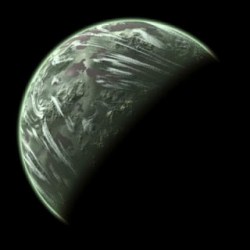
Within a few generations, Pasaragad began to boast natural forests and lakes. Underground sources of water were also liberated to create large-scale bodies of water which further served agricultural operations. As a result, Pasaragad became a major producer of off-world delicacies such as dates, citrus fruits,palm oil, palm sugar, saffron, and other assorted fruits and spices. It’s strategic location close to Sol also made it a major trading hub once colonization efforts expanded beyond the inner worlds.

Pasaragad has also been the source of a great deal of controversy over the years. For example, a short-lived conflict between the settlers and the colonial government took place in 2223. This incident was the first in a series that would later come to be known as the “Sectarian Wars”, and proved to be one of the most bloody. It began after a self-declared prophet named Azan declared that the colonial government was a group of pretenders who were running the colony through graft and corruption. After his arrest by authorities, clashes began between his supporters and security forces, culminating in the intervention of the TDF.

The arrival of Terran Marines led to a short-lived peace, but soon, fighting was underway again as the occupation forces found themselves becoming the new target of Azan’s condemnation and his supporters anger. Not wanting the situation to spiral out of control, the Terran government arrived at a compromise with the settlers. In exchange for the removal of the current administration and several reforms, most of which were in tune with Azan’s religiously-inspired demands, the matter was settled and all TDF forces removed. Azan went on to become a prophet to the people of Pasaragad, the city of Azanabad being built in in his honor shortly after his death. Later generations would also call him the “Fourth Prophet”, claiming he had led a reinterpretation of Islam for the age of colonization.

During the Civil War, Pasaragad would also be a major hotspot for resistance and TDF forces. After the Attican incident led to the imposition of martial law on that planet, the people of Vega began to stage widespread protests against Terran authority. With the escalation of tensions in other systems, the TDF was dispatched here as well to keep the peace, but instead became embroiled in war. For years, resistance forces on Pasaragad and the moon colony of Kurosh were engaged in a series of back and forth with local forces. The situation became extremely bloody and led to widespread death and crimes committed by both sides.

This led to the rise of many popular sayings and quips. For example, after the Civil War period, the word Vegan was often associated with fanaticism or extreme dedication, “crazy like a Vegan” being the popular usage. It was also widely rumored that during the war, officers would threaten to send unruly or insubordinate soldiers to Vega as punishment. The heat, hatred of the locals, and likelihood of being shot at was usually enough to put anybody in line!

It was perhaps for this reason, or just in keeping with the fierce spirit of independence on the Vegan people, that it became the focal point for the independence movement once the war was over. Contrary to the Alliance’s platform of a better arrangement between Earth and its colonies, this movement demanded that all colonies be entitled to independence now and forever. Luckily, Alliance leader Jessica Freidman was able to win over the leader of the independence movement – Lev Parva – by insisting he form the opposition party in the first Alliance cabinet.

Rostov:
The seventh planet and second colony world of the 61 Cygni binary system. Named in honor of its cool climate, thriving industrial base, and predominantly Eastern EU population, the planet was named Rostov. And much like other industrial centers – i.e. Hephaestus – it has a reputation for many things, both positive and negative.

On the plus side, Rostov has been a major manufacturing center for the centuries, the home of the labor movement for the sector, and the source of many key technological innovations, often working in collaboration with Logosian scientists. On the minus side, it has also been the home of ruthless crime syndicates (the foremost being the Sadruzhestva and Lumbre cartels), labor disputes, drugs, and violent crime.

And yet, despite its reputation for hard living, the Rostovian people are amongst the most proud and nostalgic people in the known universe. Apparently, it is this very essence of hard life that makes them feel proud to be where they are from. The logic being that if life were easy on their world, anyone could live there.

And of course there are several features about this planet that deserve mention. It’s rugged landscapes remain some of the most beautiful and inspiring in the galaxy. It’s capital of New Petrograd contains some of the most beautiful architecture in the quadrant. And it’s artistic and literary scene remains one of the most inspired. In short, Rostov may be a cold and ruthless world, but its inhabitants have found ways to turn that to their advantage.

And that’s my universe, in a nutshell. Hope you enj0yed the little tour, because most of it remains relatively undeveloped in terms of putting it into book form. I intend to remedy that, in time, which seems to be the one thing I don’t have enough of! But there’s only so many hours in the day right, and right now I got multiple projects vying for my attention. More to follow from this and other universe. See you soon!

My Sci-Fi Drugs!

Hey all, again! Last time I talked about drugs and sci-fi, I mentioned all the examples I could draw from classic science fiction franchises. Today I thought I’d share the one’s I came up with myself, which were partially inspired by some of the examples I mentioned. They all come from the same place, known as the Legacies universe. This is the setting of my short stories, Eyes in the Dark, Flights of the Icarus, Turncoats and Vega Rising. I’ve listed them based on where they emerged in the course of the expanded storyline. Here they are:

Tar:
Adapted from THC and multiple strains of genetically modified cannabis, Tar is the street name for a form of superhash that grew in popularity during the 21st century. Widely used as an inhalant, usually with the help of a vaporizer, it can also be consumed in solid or liquid form.

With the development of stronger and more effective synthetics, the use of Tar and other cannabis drugs diminished by the late 21st century. However, the drug remained in use well into the late 22nd century and was even a source of income for remote agricultural colonies.

Though it never constitutes more than a small portion of the interstellar drug trade, Tar remains a controlled substance on many worlds. However, authorities have often been known to turn a blind eye when it comes to enforcement. In some port cities, it is even legal and distributed by licensed authorities, often in the same places where one can purchase Tröpic (see below).

Shine:
By the mid-21st century, deep-space mining operations and off-world colonization began in earnest As a result, private and governmental aeronautics agencies began collaborating on a drug that would ensure their pilots would stayed sharp at the helm and passengers could be brought out of cryosleep and assume their duties without a lengthy recovery period.

Thus the designer drug EBME (endormorphinbenzoylmethylecgonine)was created, aka. “Shine”. Chemically engineered to be a stimulant devoid of side effects, with the exception of a mild euphoric state, the drug became widely used by miners, spacers, and those forced to enter into cryosleep for long journeys through space.

However, it did not take long for long-term effects, such as growing dependency, mood swings, hallucinations and even psychosis to become evident. In controlled use, Shine was a relatively harmless drug with obvious benefits and a low likelihood of chemical dependency. Unfortunately, the psychological addiction factor was underestimated and non-commercial (i.e. recreational) use became widespread.

By 2137, the development of the FTL subspace drive system meant that Shine was no longer needed for as cryosleep slowly became obsolete. Thus the UNE officially made Shine illegal on Earth, while colonial administrations, under the Directorate’s power, were slower to respond. It was felt that with the lives of colonists, often marked by hardship and tough conditions, required a little “chemical cheer” to keep things running smoothly.

It was not until the late 22nd century that Shine was officially banned in every corner of the known universe. It remains a popular black market item on every colonized world and the distribution of it is usually handled by one syndicate or another. The most notable of these are the Akuma, the Sadruzhestva, the Lumbre and the Shé, who are responsible for the distribution of this and other drugs on the inner colonies.

Tröpic:
In all times, a little departure from reality is always sought after. And if that departure should take you to a place renowned for its bright colors and ecstatic feel, so much the better! That was the idea behind MDD (methylenedioxydiethylamide), otherwise known as Tröpic. Although it is unclear how and where it first appeared, this powerful hallucinogen was in widespread use by the late 21st, early 22nd century.

Initially, its use was confined to Earth to the Solar colonies, where bohemian art cultures and psychedelic music gave rise to Tröpic clubs. In time, the practice of combining this drug with the music scene, specifically music geared to stimulate users (known as trope), became widespread throughout the inner colonies. However, within the outer colonies, where conditions are harder and there is less of an “artistic scene” to speak of, it is considered somewhat pretentious!

Sharp:
The development of cybernetics as a commercially-available option also led the emergence of new drugs. In this case, it was the medicinal narcotic known as Enkavelazepam, a drug designed for the maintenance and regeneration of nerve tissue after cybernetic surgery. Patented for use on many worlds, this drug was also known by the trade names shinkei, koltaziz and nevrikon, and the street name Sharp.

Though it was never officially banned, recreational use of the drug is considered a crime on all colony worlds, particularly when used in conjunction with Pump or Juice to achieve performance enhancing effects. In addition, it would often be used on its own by mercenaries, enforcers and anyone who’s livelihood depended on sharp reflexes and fast reactions.

Pump:
Here we have another example of a drug that began as a legal substance designed to combat the effects of deep space travel. During the 21st and much of the 22nd century, spacers were forced to travel for extended periods of time in low-gravity of zero-gravity environments. Even with the invention of the subspace engine in 2137, artificial gravity was not an option until several decades later.

As a result, Luyten corporation, a shipping magnate, mandated the use of Hydorzene, a synthetic steroid that promoted muscle growth and bone density. Going by its street name “Pump”, the drug began a wide system of black market distribution, being used by everyone from professional athletes to bodyguards and hired muscle.

Paired with other enhancing substances, such as Sharp and Juice, the term “Juicer” emerged to describe anyone who underwent artificial muscle enhancement.

Juice:
Much like Pump, Juice was a synthetic steroid and growth hormone that was developed for commercial use. However, in this case, the developer was the TDF (Terran Defense Forces) who developed it give their soldiers the ability to carry heavy weapons and equipment, as well as the ability to function in high-gravity environments.

Naturally, this drug was also made available alongside Pump for civilian use, particularly among planetary miners. Much like military personnel, these were people for whom added strength and the ability to withstand gravity in excess of 1 g was not only desirable but necessary to survive.

Use of the drug was short-lived however, as lightweight nanomaterials and the development of mechs and exoskeletons eliminated the need for augmented strength. But once again, the black market was quick to pick up the slack and ensure that the drug maintained production and was available to all those willing to use it.

Oblivion:
By the early 22nd century, the popularity of Tröpic led to the development of even more powerful psychotropics. One such development was known as Oblivion, a Hermian invention which was apparently designed in a chemical engineers own home, presumably in an attempt to attract the attention of the Akuma.

Named in honor of its chief effect, helping its users to achieve oblivion, this inhalant became all the rage amongst connoisseurs and the underclass alike. Reported users quickly became addicted due to the drugs tendency to induce powerful visions, usually of transcendent phenomena or death. It is for this reason that Oblivion has been reported as being used as part of religious ceremonies within several cults and sub-sects as well.

Aside from its addictive nature, side effects include a diminished ability to distinguish reality from fantasy, waking visions, psychosis, and delusions of a messianic nature. It is also for this reason why Oblivion remains a banned substance on all colonized worlds, and the manufacture and distribution of it remain a bone of contention between the Akuma and Sadruzhestva cartels.

Neurozene:
Last, but certainly not least, we have the pharmaceutical drug known as Neurozene. Known by its street name “Blinding Light”, this painkilling neurostimulant saw widespread use after it was invented during the early-mid 22nd century. Originally developed as a surgical painkiller, neurozene was different from hydromorphone or diacetylmorphine in that it blocked pain and triggered euphoria through the targeted stimulation of neurons in the brain.

Unlike other drugs, the syndicates do not maintain much in the way of control over this drug’s distribution. Since it is not physically addictive and remains legal and regulated for medicinal use, it is not typically sought after by users and underworld elements very much. For the most part, recreational use is limited to those looking for a positive high without much in the way of side effects.

Well, that’s my list of fictional drugs, all written up by me some eight years ago. I’ve added some here and there, but the core group remains the same. Assuming people don’t mind hearing about sci-fi stuff that strictly mine, I think I’ll do one or two more. I’ve had awhile to invent this stuff, so there’s a fair bit to share ;)!