“Spirit Levitation: Out of Body Experience” by Loutish.Pixel
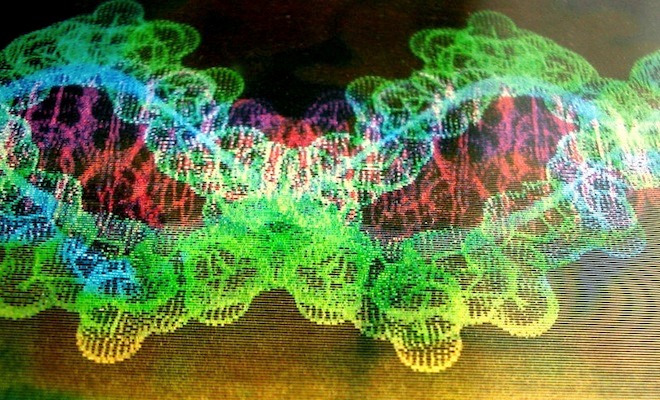
An out-of-body experience (OBE) is one of the most mysterious and inexplicable things a human being can endure. But thanks to new science, triggering one may be as easy as getting a person to watch a video of themselves with their heartbeat projected onto it. According to the study, it’s easy to trick the mind into thinking it belongs to an external body and manipulate a person’s self-consciousness by externalizing the body’s internal rhythms.
These findings were made by a team consisting of Dr Jane Aspell – Senior Lecturer in Psychology at Anglia Ruskin University in the UK – and Lukas Heydrich, a Phd Student at the Ecole Polytechnique Fédérale de Lausanne (EPFL) in Switzerland. Together, the two set out to see find how our internal organs contribute to bodily self-consciousness and whether they can be manipulated to induce an OBE.
The underlying goal, according to Ruskin, was finding out how our body merges information such as the visual, auditory, and olfactory with information coming from within. How this leads to the perception we call “reality”, and how it could be altered, is what is being studied here for the first time;
If you think about your body, you have several sources of information about it: you can see your hands and legs, you can feel the seat you’re sitting on via vision, you know you are standing upright thanks to your sense of balance etc. There is also a vast number of signals being sent to your brain from inside of your body every second that you are alive: about your heartbeat, your blood pressure, how full your stomach is, what electrolytes are in your blood, how fast you are breathing.
For their experiment, they attached 17 participants to electrocardiogram sensors and had them view videos of their own bodies through virtual reality goggles so that their body appeared to be two meters (6.5 ft) in front of them. Participants were then shown their own heartbeats in the form of a flashing outline around their “body doubles” that pulsed in sync with their own.
After a few minutes, many of the participants reported sensations of being in an entirely different part of the room rather than their physical body and feeling that their “selves” were closer to their virtual doubles. According to the team, this is the first study that clearly shows how visual signals containing information about the body’s internal organs (i.e. heartbeat) can change their perception of themselves. As Aspell put it:
It confirms that the brain is able to integrate visual information with cardiac information. It seems that the brain is very sensitive to patterns in the world which may relate to self – when the flashing was synchronous with the heartbeat this caused changes to subjects’ self-perception.
While it may sound like technologically-inspired mysticism, the research has several medical applications. One option is to help people with distorted views of themselves – i.e. anorexia, bulimia or other perceptual disorders – to connect with their actual physical appearance. Aspell is currently studying “yo-yo” dieters and says she plans to continue investigating how the internal body shapes who we are.
The Swiss National Science Foundation and the Fondation Bertarelli supported the study which is slated for publication in the APS journal Psychological Science.
For decades, the Big Bang Theory has remained the accepted theory of how the universe came to be, beating out challengers like the Steady State Theory. However, many unresolved issues remain with this theory, the most notable of which is the question of what could have existed prior to the big bang. Because of this, scientists have been looking for way to refine the theory.
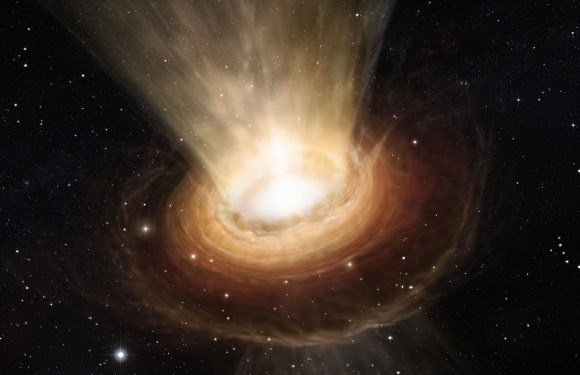
Luckily, a group of theoretical physicists from the Perimeter Institute (PI) for Theoretical Physics in Waterloo, Ontario have announced a new interpretation on how the universe came to be. Essentially, they postulate that the birth of the universe could have happened after a four-dimensional star collapsed into a black hole and began ejecting debris.
This represents a big revision of the current theory, which is that universe grew from an infinitely dense point or singularity. But as to what was there before that remain unknown, and is one of a few limitations of the Big Bang. In addition, it’s hard to predict why it would have produced a universe that has an almost uniform temperature, because the age of our universe (about 13.8 billion years) does not give enough time to reach a temperature equilibrium.
Most cosmologists say the universe must have been expanding faster than the speed of light for this to happen. But according to Niayesh Afshordi, an astrophysicist with PI who co-authored the study, even that theory has problems:
For all physicists know, dragons could have come flying out of the singularity. The Big Bang was so chaotic, it’s not clear there would have been even a small homogenous patch for inflation to start working on.
The model Afshordi and her colleagues are proposing is basically a three-dimensional universe floating as a membrane (or brane) in a “bulk universe” that has four dimensions. If this “bulk universe” has four-dimensional stars, these stars could go through the same life cycles as the three-dimensional ones we are familiar with. The most massive ones would explode as supernovae, shed their skin and have the innermost parts collapse as a black hole.
The 4-D black hole would then have an “event horizon”, the boundary between the inside and the outside of a black hole. In a 3-D universe, an event horizon appears as a two-dimensional surface; but in a 4-D universe, the event horizon would be a 3-D object called a hypersphere. And when this 4-D star blows apart, the leftover material would create a 3-D brane surrounding a 3-D event horizon, and then expand.
To simplify it a little, they are postulating that the expansion of the universe was triggered by the motion of the universe through a higher-dimensional reality. While it may sound complicated, the theory does explain how the universe continues to expand and is indeed accelerating. Whereas previous theories have credited a mysterious invisible force known as “dark energy” with this, this new theory claims it is the result of the 3-D brane’s growth.
However, there is one limitation to this theory which has to do with the nearly uniform temperature of the universe. While the model does explain how this could be, the ESA’s Planck telesceop recently mapped out the universe and discovered small temperature variations in the cosmic microwave background (CBM). These patches were believed to be leftovers of the universe’s beginnings, which were a further indication that the Big Bang model holds true.
The PI team’s own CBM readings differ from this highly accurate survey by about four percent, so now they too are going back to the table and looking to refine their theory. How ironic! However, the IP team still feel the model has worth. While the Planck observations show that inflation is happening, they do not show why the inflation is happening.
Needless to say, we are nowhere near to resolving how the universe came to be, at least not in a way that resolves all the theoretical issues. But that’s the things about the Big Bang – it’s the scientific equivalent of a Hydra. No matter how many times people attempt to discredit it, it always comes back to reassert its dominance!
Recently, a team of researchers at the University of Rochester conducted an experiment where they managed to suspend a nano-sized diamond in free space with a laser. The purpose of the experiment was to measure the amount of light emitted from the diamond, but had the added bonus of demonstrating applications that could be useful in the field of quantum computing.
For those unfamiliar with the concept, quantum computing differs from conventional computing since it does not rely on sending information via a series of particles (electrons) through one-way channels. Instead, quantum computing relies on the process of beaming the states of particles (i.e. a photons quantum properties) from one location to the next.
Since this process occurs faster than the speed of light (as no movement takes place) and qubits (quantum bits) have the ability to be in more than one state simultaneously, computations done using this model would be exponentially faster. But despite many advancements made in recent years, the field remains largely theoretical and elusive.
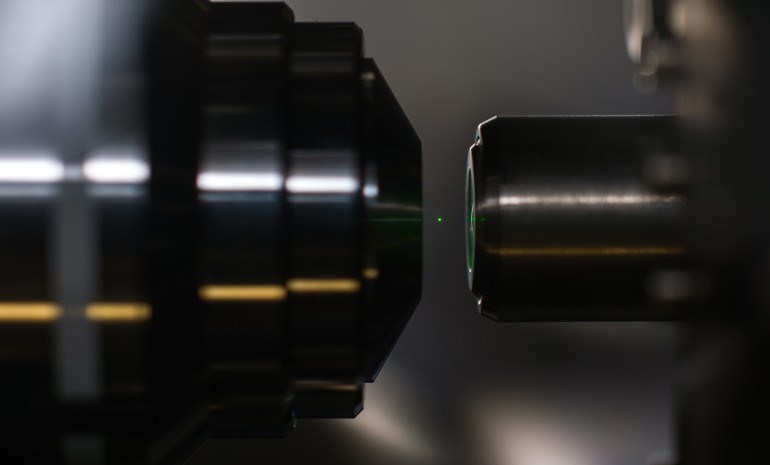
To conduct their experiment, the researchers focused a laser into a 25 cm (10 inch) chamber and then sprayed an aerosol containing dissolved nanodiamonds inside. These nanodiamonds were attracted to the laser in a technique known as “laser trapping”, until a single particle was isolated and made to levitate. Once the tiny gem was levitating in free space, the researchers used another laser to make defects within the diamond emit light at given frequencies.
This process is known as photoluminescence – a form light emission that is caused by defects in the tiny diamond that allows for the absorptions of photons. When the system is excited, it changes the spin; and when the it relaxes after the change, other photons are emitted. This occurs because nitrogen atoms replace some of the carbon atoms in the diamond. Once the nitrogen is nested in the diamond’s atomic structure, it is possible to excite electrons with a laser.
According to the researchers, this photoluminescence process has the potential to excite the system and cause what is known as Bohr spin quantum jumps, which are changes in spin configuration of the internal defect. This occurs because nitrogen atoms replace some of the carbon atoms in the diamond. Once the nitrogen is nested in the diamond’s atomic structure, it is possible to excite electrons with a laser.
In addition, the potential also exists to turn the nanodiamond into an optomechanical resonator. According to Nick Vamivakas, an assistant professor of optics at the University of Rochester, these are structures in which the vibrations of the system can be controlled by light. Optomechanical resonators have the potential to be used as incredibly precise sensors, which could lead to uses in microchips.
In addition, these resonator systems have the potential to create Schrödinger Cat states, which are typically not found in microscopic objects. As anyone who’ familiar with Futurama or Big Bang Theory may recall, this refers to the thought experiment where a cat is inside a box with poison, and until someone opens the box and determines its whereabouts, the cat could be considered simultaneously both alive and dead.
Being able to stimulate matter so that it can exist in more than one state at any given time is not only revolutionary, it is a clear step towards the creation of machines that exploit this principle to perform computations. According to Nick Vamivakas, an assistant professor of optics at the University of Rochester, explained:
Cat or cat-like states contradict our everyday experiences since we do not see common things in quantum states. The question is: where is this boundary between microscopic and macroscopic? By generating quantum states of larger and larger objects, we can hone in on a boundary … if there is one.
Naturally, the Rochester team is still a long way from achieving their big breakthrough, and Vamivakas himself admits that he does not know how far away a quantum computing truly is. In terms of this latest experiment, the team still needs to cool the crystal better, which they are hoping can be achieved with a few technical improvements. And then they hope to find a better way of running the experiment than spraying nanodiamond dust into a tube.
In the meantime, check out this video of the experiment. It promises to be “illuminating” (sorry!):
Its been an exciting 48 hours for the scientific community. It began when a team of British scientists floated a balloon up into the stratosphere, more than 25 km (16 miles) up, and when it came down they found it was carrying tiny organisms. The scientists claimed that there is no way that such organisms could have come from Earth and found their way into the stratosphere, so they must have come from space.
Specifically, they must have come from a comet, given their particular characteristics, and they could even be evidence that all life on Earth really did originate in the stars. This theory is known as Exogenesis (or Panspermia), and contends that this is how organisms are spread throughout the universe – spawning in certain environments, but flourishing on worlds where they are deposited and conditions are just right.
According to Professor Milton Wainwright of the Department of Molecular Biology and Biotechnology at the University of Sheffield, they are “about 95 percent convinced” of that fact, though he admits that it’s hard to be absolutely certainty. But apart from the height of the organisms, which would make it hard to imagine them being from Earth, Wainwright and his team also noted that they bear no physical signs of ever being earthbound.
As Wainwright said in the course of announcing the team’s findings:
There is no known mechanism by which these life forms can achieve that height. As far as we can tell from known physics, they must be incoming. The particles are very clean. They don’t have any dust attached to them, which again suggests they’re not coming to earth. Similarly, cosmic dust isn’t stuck to them, so we think they came from an aquatic environment, and the most obvious aquatic environment in space is a comet.
In addition, the science team ruled out the possibility that the particles were originally from Earth and were blasted into the stratosphere by a volcano, noting that it’s been too long since the last volcanic eruption on Earth for the particles to have maintained such a height. So the tentative conclusion remains, that the organisms were placed in orbit by a passing comet.
What’s even more exciting is the prospect that the organisms, though they are all likely dead at this point, are likely to contain alien DNA. If this proves to be true, it could further the idea that life on Earth may have had its beginnings in cosmos. Next month, the team plans to try the balloon test again to see if they can both confirm their results and find new organisms in upcoming meteor shower tied to Halley’s Comet.
Exciting prospects indeed. But almost immediately after the announcement been made, dissenting voices began to come forward to poke holes in the team’s theory. One such person is Phil Plait, an astronomer who upon reading the findings in the Journal of Cosmology, raised a number of concerns and criticisms about the team’s research.
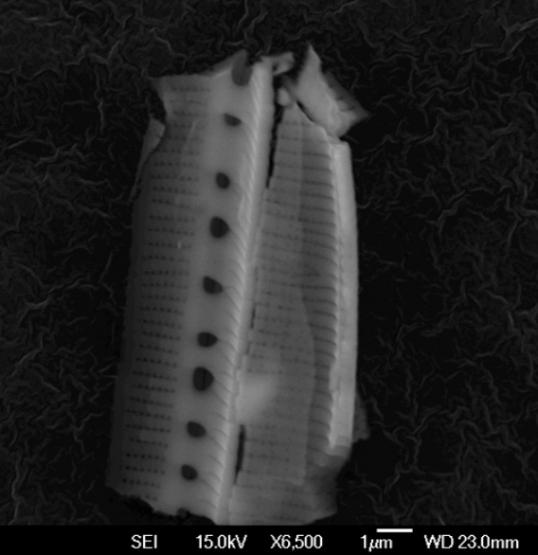
First, Plait notes, one member of the research team, Chandra Wickramasinghe, has claimed numerous times that he’s discovered diatoms – a type of phytoplankton found in meteorites – and this particular paper also includes similar diatom findings. Wickramsinghe also, according to Plait, has a long history of making dubious claims about extraterrestrial life, using less-than-thorough research.
Plait also noted that the Journal of Cosmology, where the paper was published, has a less-than-spotless reputation. In the past, the quality of peer review at the journal has been questioned, and they have also been accused of promoting fringe and speculative viewpoints on astrobiology, astrophysics, and quantum physics. Of particular concern is the journal’s apparent bias that the theory of Panspermia is established fact, which remains a theory.
But as to the scientific findings themselves, there’s the question of whether the diatom really came from space or became attached to the balloon as it transited from the surface into orbit. While the team claims that precautions were taken and the sample was too clean, extended testing may prove this conclusion to be wrong, and possibly premature.
Second, Plait disputes the conclusion that the diatom could not have been put up in the atmosphere by a volcanic eruption. Specifically, he noted that the researchers didn’t seem to take into account things like turbulence in the stratosphere that could have kept objects previously hurled up there by volcanoes floating around for quite some time.
Then there’s the claim that evidence points that the organisms came from a comet. The fact that it was “remarkably clean and free of soil or other solid material,” works against this conclusion, according to Plait. If indeed it came embedded in rock, there would surely be samples of soil, dust, ice or minerals attached to it, as these are things commonly found in a comet.
And finally, there’s the theory the researchers developed that these organisms are evidence that life actually began somewhere in space, then came to Earth. While Panspermia is a good theory, Plait claims that the scientists are going about arguing it in a way that is not strictly scientific:
Panspermia is worth investigating, but it’s worth investigating correctly. Outrageous claims on thin evidence with huge conclusion-jumping don’t comprise the best way to do it. Stories like this one are sexy and sure bait for an unskeptical media, of course. But at the very least they don’t help the public understand science and the scientific process, and I know some scientists take an even dimmer view of it.
But of course, the announcement was just made and there’s still plenty of checking to do. In the meantime, we can all certainly speculate, and I would like to hear from the people out there. What do you think? Does this discovery constitute a scientific breakthrough, or is it an elaborate hoax or a case of eager scientists jumping to conclusions?
And let’s not forget, this announcement comes not long after Professor Steven Benner’s similar announcement that new evidence connects the origin of life on Earth to life on Mars. No reason why Exogenesis and the Martian hypothesis can’t coexist now is there?
It’s a rare angle for those who’ve been raised on a heady diet of movies where the robot goes mad and tries to kill all humans: an artificial intelligence using its abilities to help humankind! But that’s the idea being explored by researchers like Raul Rabadan, a theoretical physicist working in biology at Columbia University. Using a new form of machine learning, they are seeking to unlock the mysteries of flu strains.
Basically, they are hoping to find out why flu strains like the H1N1, which ordinarily infect pigs and cows, are managing to make the jump to human hosts. Key to understanding this is finding the specific mutations that transform it into a human pathogen. Traditionally, answering this question would require painstaking comparisons of the DNA and protein sequences of different viruses.
But thanks to rapidly growing databases of virus sequences and advances made in computing, scientists are now using sophisticated machine learning techniques — a branch of artificial intelligence in which computers develop algorithms based on the data they have been given — to identify key properties in viruses like bird flu and swine flu and seeing how they go about transmitting from animals to humans.
This is especially important since every few decades, a pandemic flu virus emerges that not only infects humans but also passes rapidly from person to person. The H7N9 avian flu that infected more than 130 people in China is just the latest example. While it has not been as infectious as others, the fact that humans lack the antibodies to combat it led to a high lethality rate, with 44 of the infected dying. Whats more, it is expected to emerge again this fall or winter.
Knowing the key properties to this and other viruses will help researchers identify the most dangerous new flu strains and could lead to more effective vaccines. Most importantly, scientists can now look at hundreds or thousands of flu strains simultaneously, which could reveal common mechanisms across different viruses or a broad diversity of transformations that enable human transmission.
Researchers are also using these approaches to investigate other viral mysteries, including what makes some viruses more harmful than others and factors influencing a virus’s ability to trigger an immune response. The latter could ultimately aid the development of flu vaccines. Machine learning techniques might even accelerate future efforts to identify the animal source of mystery viruses.
This technique was first employed in 2011 by Nir Ben-Tal – a computational biologist at Tel Aviv University in Israel – and Richard Webby – a virologist at St. Jude Children’s Research Hospital in Memphis, Tennessee. Together, Ben-Tal and Webby used machine learning to compare protein sequences of the 2009 H1N1 pandemic swine flu with hundreds of other swine viruses.
Machine learning algorithms have been used to study DNA and protein sequences for more than 20 years, but only in the past few years have scientists applied them to viruses. Inspired by the growing amount of viral sequence data available for analysis, the machine learning approach is likely to expand as even more genomic information becomes available.
As Webby has said, “Databases will get much richer, and computational approaches will get much more powerful.” That in turn will help scientists better monitor emerging flu strains and predict their impact, ideally forecasting when a virus is likely to jump to people and how dangerous it is likely to become.
Perhaps Asimov had the right of it. Perhaps humanity will actually derive many benefits from turning our world increasingly over to machines. Either that, or Cameron will be right, and we’ll invent a supercomputer that’ll kill us all!
Climatologists and environmental scientists have been cataloging the global warming trend for decades, examining multiple fields of data that show fluctuations over a period of eons. And despite what appears to be a consistent trend warming that has been taking place since the 18th century – when levels of atmospheric CO2 began to climb steadily – there have been anomalies in the data.
One period was the three decades that fall between the 1940’s and 1970’s when no significant terrestrial warming took place, and the Pacific Ocean was anomalously cold. The Pacific is somewhat of a wild card when it comes to our climate, since it is responsible for the weather patterns known as El Niño and La Niña that can swing global average temperatures by as much as 0.3 degree Celsius.
For the past decade or so the tropical Pacific has again gone cold and a new study suggests that it may once again be related to the recent “pause” in global warming of average temperatures. Although the past decade also qualifies as the hottest on record, the trend has been milder than expected, with average surface temperatures plateauing for many years.
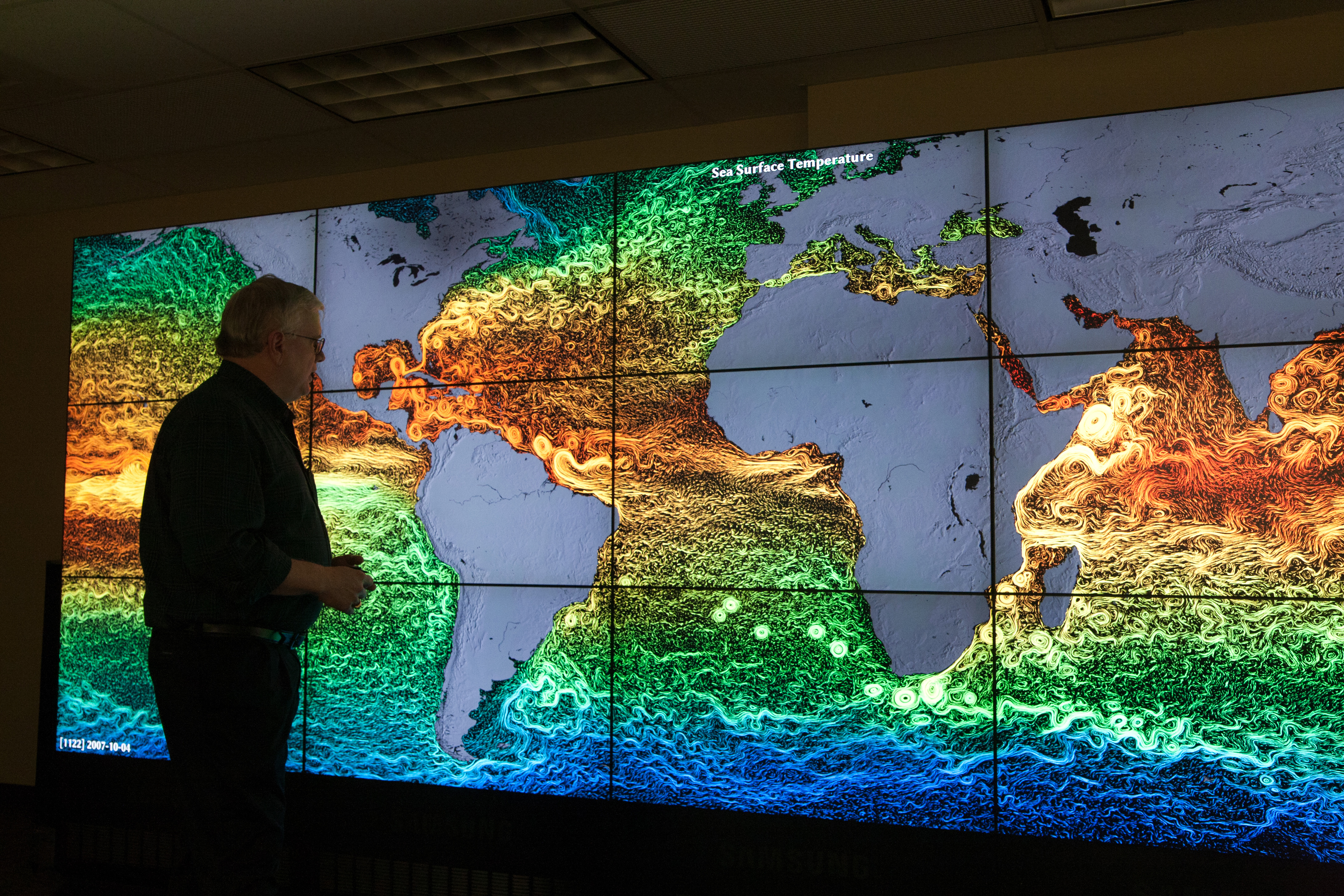
This is in stark contrast to the end of the 20th century, when rising concentrations of greenhouse gases in the atmosphere accelerated warming to new heights. To explain this, climate scientists Shang-Ping Xie and Yu Kosaka of the Scripps Institution of Oceanography at the University of California looked to the Pacific Ocean, using observable data and an advanced computer model.
The latter came from the US Department of Commerce’s Geophysical Fluid Dynamics Laboratory computer model of the oceans and atmosphere. By adding in sea-surface temperatures of an oceanic area covering roughly 8 percent of the globe, the researchers were able to mimic the recent hiatus in global warming as well as weather phenomena like the prolonged drought in the southern US.
The results were published in the Aug. 29th edition of Nature Magazine. In it, Xie observed that the “tropical Pacific is the engine that drives the global atmosphere and climate. There were epochs of accelerated and stalled warming in the past.” This included the pause in a global warming trend between the 1940s and 1970s, which has often been attributed to sunlight-blocking air pollution from Europe, the Soviet Union and the US.
Other factors have also been considered – volcanoes, an unusually weak solar cycle, air pollution from China – when looking at restraining trends in global warming. Some of the observed climate effects may also stem from other ocean dynamics such as variations in the mixing of surface and deep ocean waters. And the meltdown of significant ice from Greenland or Antarctica might even cool oceans enough to offset the extra heat trapped by rising levels of greenhouse gases for a time.
What is less clear at this point is what is driving cycles of cooling and heating of tropical Pacific Ocean waters. But it is clear that the cool Pacific pattern cannot persist forever to cancel out the extra heat trapped by rising CO2 concentrations, Xie notes. As climate modeler Gavin Schmidt of the NASA Goddard Institute for Space Studies recently stated:
We need updates to the forcings and a proper exploration of all the different mechanisms together. This has taken time but will happen soon-ish.
And despite any pause in the trend toward hotter temperatures, the first decade of the 21st century was still the hottest recorded decade since the 1880s, and it included record heat waves in Russia and the US as well as a precipitous meltdown of Arctic sea ice and surging sea level rise. Atmospheric concentrations of CO2 touched 400 parts per million on Mauna Loa in May, a first in the time line of human existence.
A cooler Pacific due to prolonged La Niña activity may have restrained global warming for the past decade or so, but it is unlikely to last. As Xie noted:
This effect of natural variability will be averaged out over a period of 100 years. and cannot argue away the threat of persistent anthropogenic warming that is occurring now.
These warnings are key since any changes or anomalous readings are often seized upon by Climate Change deniers as evidence that the problem does not exist, is not man-made, or is at least not as severe as otherwise predicted. But in the coming decades, even the most benign scenarios are still fraught with peril. If the worst is to be averted, extensive and positive changes need to be made now.
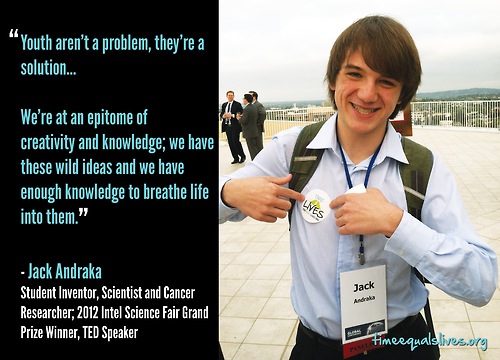
Folks, today I have a rare privilege which I want to share with you. Not that long ago, I reached out to a certain brilliant mind that’s been making waves in the scientific community of late, a young man who – despite his age – has been producing some life saving technologies and leading his own research team. This young man, despite his busy schedule, managed to get back to me quite quickly, and agreed to an interview.
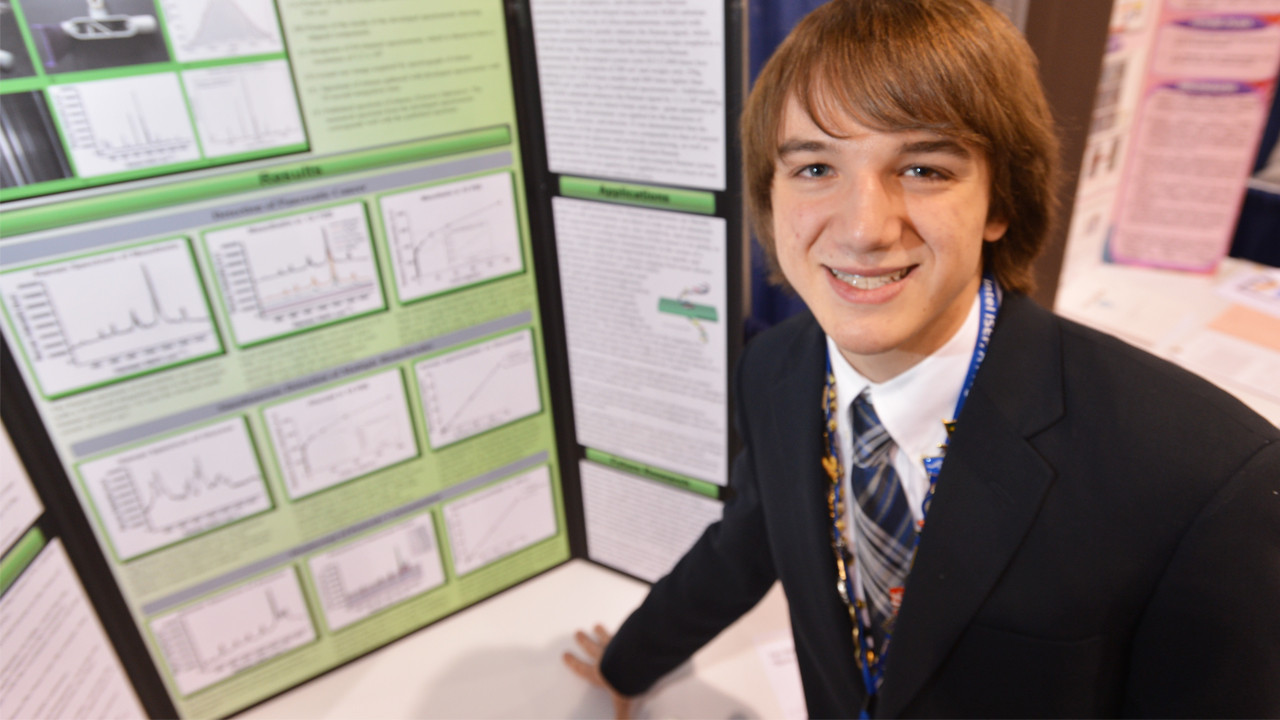
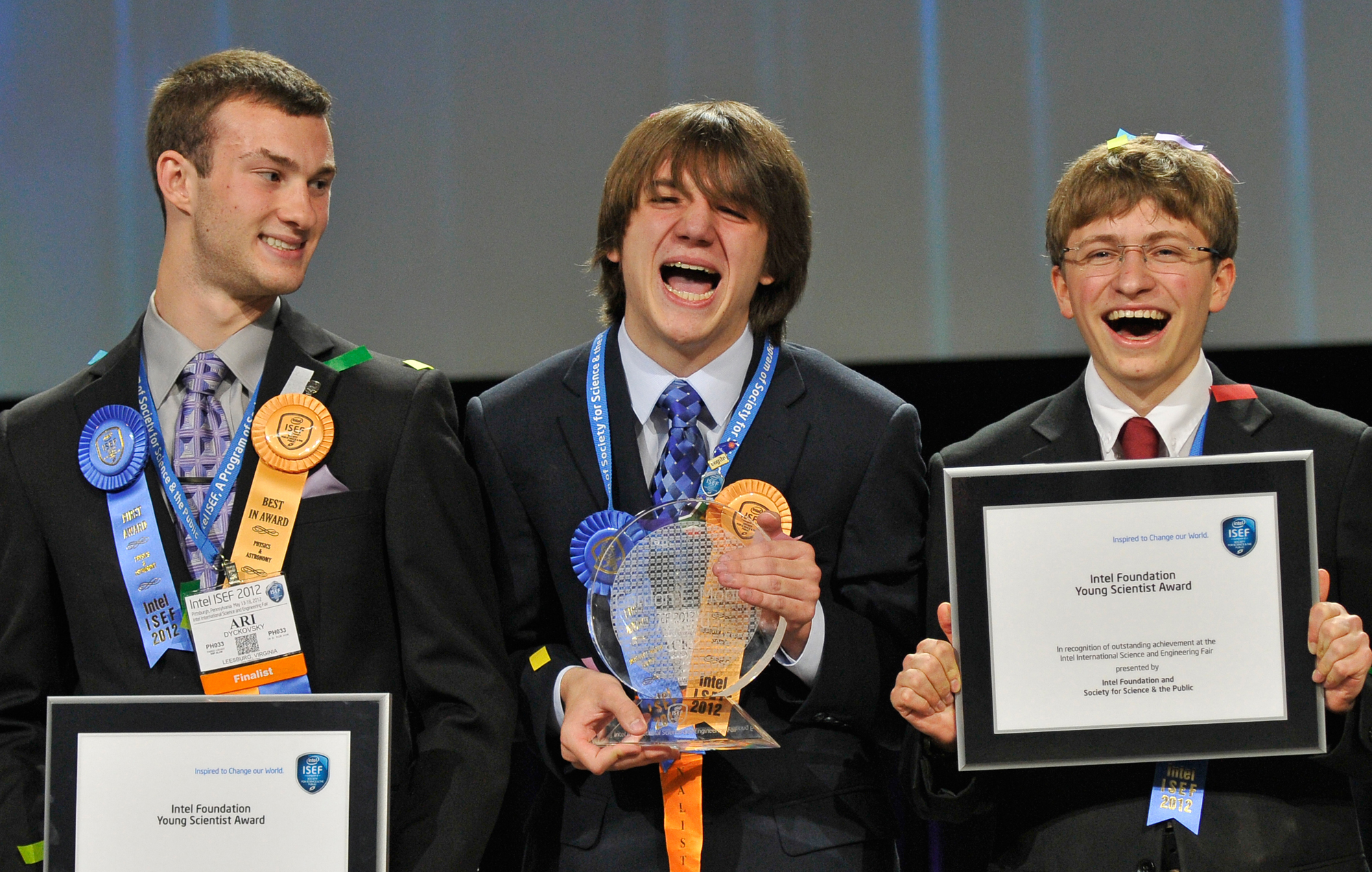
I am of coarse referring to Jack Andraka, a man who’s medical science credentials are already pretty damn impressive. At the age of 16, he developed a litmus test that was capable of detecting pancreatic cancer, one that was 90% accurate, 168 times faster than current tests, and 1/26,000th the cost. For this accomplishment, he won first place at the 2012 Intel International Science and Engineering Fair (ISEF).
Winning at the 2012 ISEF
Afterward, he and the other finalists formed their own research group known as Generation Z, which immediately began working towards the creation of a handheld non-invasive device that could help detect cancer early on. In short, they began working on a tricorder-like device, something for which they hope to collect the Tricorder X PRIZE in the near future.
While this project is ongoing, Andraka presented his own concept for a miniature cancer-detecting device at this year’s ISEF. The device is based on a raman spectrometer, but relies on off-the-shelf components like a laser pointer and an iPod camera to scan tissue for cancer cells. And whereas a raman spectrometer is the size of a small car and can cost upwards of $100,000, his fits in the palm of your hand and costs about $15.
Talking with the Prez
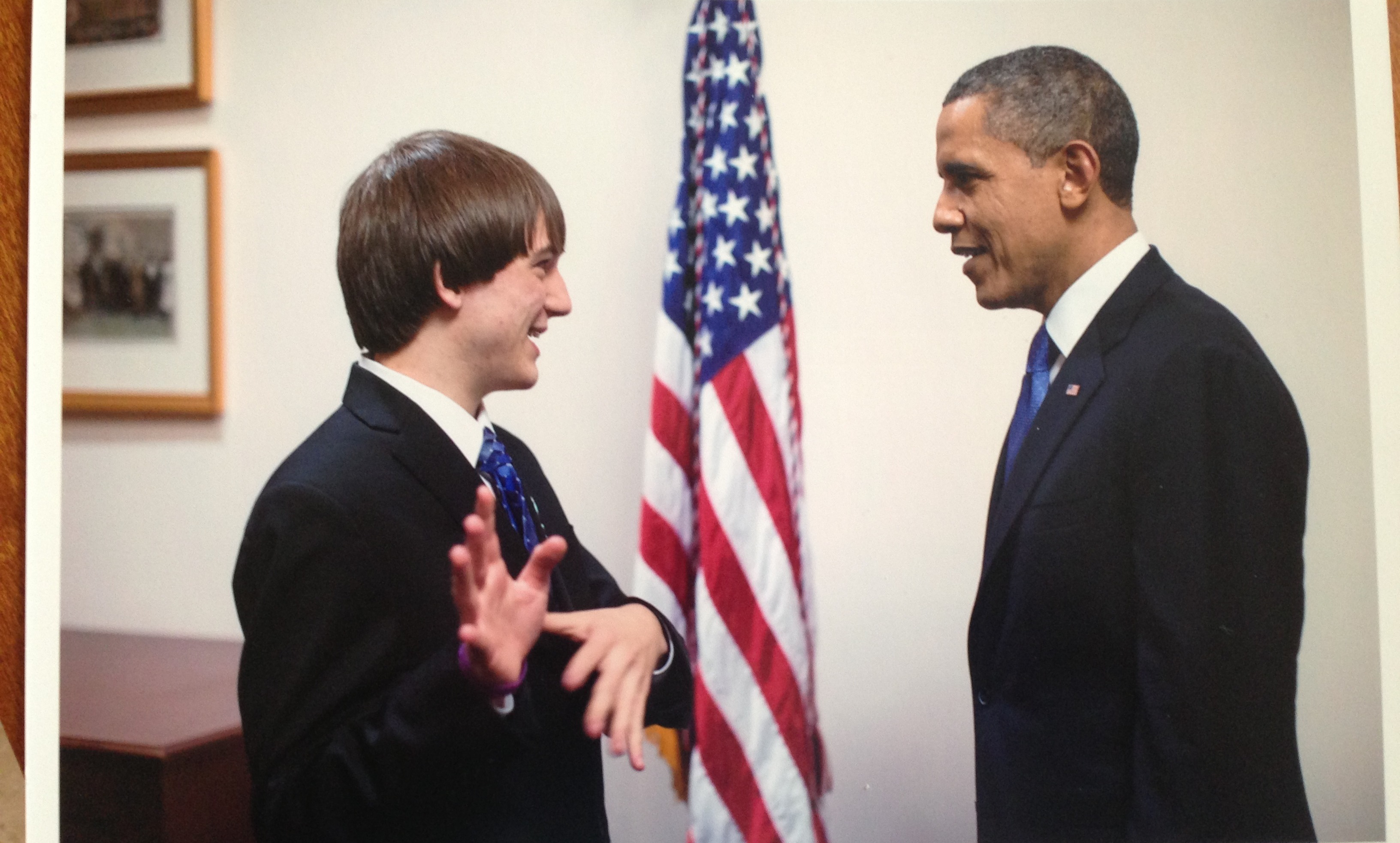
Oh, and I should also mention that Jack got to meet President Obama. When I asked what the experience was like, after admitting to being jealous, he told me that the President “loves to talk about science and asks great questions. [And] he has the softest hands!” Who knew? In any case, here’s what he had to tell me about his inspirations, plans, and predictions for the future.
1. What drew you to science and scientific research in the first place?
I have always enjoyed asking questions and thinking about how and why things behave the way they do. The more I learned about a subject, the more deeply I wanted to explore and that led to even more questions. Even when I was 3 I loved building small dams in streams and experimenting with what would happen if I built the dams a certain way and what changes in water flow would occur.
When I entered 6th grade, science fair was required and was very competitive. I was in a charter school and the science fair was really the highlight of the year. Now I did not only love science, but I was highly motivated to do a really good project!
That’s him, building his dams
2. You’re litmus test for pancreatic cancer was a major breakthrough. How did you come up with the idea for it?
When I was 14 a close family friend who was like an uncle to me passed away from pancreatic cancer. I didn’t even know what a pancreas was so I turned to every teenager’s go-to source of information, Google and Wikipedia, to learn more. What I found shocked me. The 5 year survival rate is just awful, with only about 5.5% of people diagnosed achieving that time period. One reason is that the disease is relatively asymptomatic and thus is often diagnosed when a patient is in an advanced stage of the cancer. The current methods are expensive and still miss a lot of cancers.
I knew there had to be a better way so I started reading and learning as much as I could. One day in Biology class I was half listening to the teacher talk about antibodies while I was reading a really interesting article on carbon nanotubes. Then it hit me: what if I combined what I was reading (single walled carbon nanotubes) with what I was supposed to be listening to (antibodies) and used that mixture to detect pancreatic cancer.
Of course I had a lot of work left to do so I read and read and thought and thought and finally came up with an idea. I would dip coat strips of inexpensive filter paper with a mixture of single walled carbon nanotubes and the antibody to mesothelin, a biomarker for pancreatic cancer. When mesothelin containing samples were applied the antibody would bind with the mesothelin and push the carbon nanotubes apart, changing the strips’ electrical properties, which I could then measure with an ohm meter borrowed from my dad.
Then I realized I needed a lab (my mom is super patient but I don’t think she’d be willing to have cancer research done in her kitchen!). I wrote up a proposal and sent it out to 200 professors working on anything to do with pancreatic research. Then I sat back waiting for the acceptances to roll in.
I received 199 rejections and one maybe, from Dr Maitra of Johns Hopkins School of Medicine. I met with him and he was kind enough to give me a tiny budget and a small space in his lab. I had many many setbacks but after 7 months, I finally created a sensor that could detect mesothelin and thus pancreatic cancer for 3 cents in 5 minutes.
3. What was your favorite thing about the 2012 Intel International Science and Engineering Fair – aside from winning, of course?
My brother had been a finalist at Intel ISEF and I attended as an observer. I was blown away by the number and quality of the projects there and loved talking to the other finalists. It became my dream to attend Intel ISEF as well. My favorite thing about getting to be a finalist was the sense that I was among kids who were as passionate about math and science as I was and who were curious and creative and who wanted to innovate and push their limits. It felt like I had found my new family! People understood each other and shared ideas and it was so exciting and inspiring to be there with them, sharing my ideas as well!
4. What was the inspiration behind you and your colleagues coming together to start “Generation Z”?
I met some other really interesting kids at Intel ISEF who were making huge advances. I am fascinated by creating ways to diagnose diseases and pollutants. We started talking and the subject of the X Prize came up. We thought it would be a fun challenge to try our hand at it! We figure at the very least we will gain valuable experience working on a team project while learning more about what interests us.
5. How did people react to your smartphone-sized cancer detector at this years ISEF?
Of course people came over to see my project because of my success the previous year. This project was not as finished as it could have been because I was so busy traveling and speaking, but it was great to see all my friends and make new ones and explain what I was aiming for.
6. Your plans for a tricorder that will compete in Tricoder X are currently big news. Anything you can tell us about it at this time?
My team is really coming together. Everyone is working on his/her own piece and then we often Skype and discuss what snags we are running up against or what new ideas we are thinking about.
7. When you hear the words “The Future of Medicine”, what comes to mind? What do you think the future holds?
I believe that the future of medicine is advancing so fast because of the internet and now mobile phones. There are so many new and inexpensive diagnostic methods coming out every month. Hopefully the open access movement will allow everyone access to the knowledge they need to innovate by removing the expensive pay walls that lock away journal articles and the important information they contain from people like me who can’t afford them.
Now kids don’t have to depend on the local library to have a book that may be outdated or unavailable. They can turn to the internet to connect with MOOCs (Massive Open Online Courses), professors, forums and major libraries to gain the information they need to innovate.
8. What are your plans for the future?
I plan to finish my last 2 years of high school and then go to college. I’m not sure which college or exactly what major yet but I can’t wait to get there and learn even more among other people as excited about science as I am.
9. Last question: favorite science-fiction/fantasy/zombie or superhero franchises of all time, and why do you like them?
I like the Iron Man movies the best because the hero is an amazing scientist and engineer and his lab is filled with everything he would ever need. I wonder if Elon Musk has a lab like that in his house!!
Yeah, that sounds about right! I’m betting you and Musk will someday be working together, and I can only pray that a robotic exoskeleton is one of the outcomes! And I would be remiss if I didn’t point out that we had a Superhero Challenge here on this site, where we designed our own characters and created a fictional crime-fighting league known as The Revengers! We could use a scientifically-gifted mind in our ranks, just saying…
Thank you for coming by and sharing your time with us Jack! I understood very little of what you said, but I enjoyed hearing about it. I think I speak for us all when I say good luck with all your future endeavors, and may all your research pursuits bear fruit!
In addition to their ongoing plans to explore Mars for signs of life, the Jovian moon of Europa, and tow an asteroid closer to Earth, NASA also has plans to explore the surface of Venus. For decades, scientists have been yearning to get a closer look at this world’s pockmarked surface, but the volcanic activity, clouds of sulfuric acid and extreme heat are not exactly favorable to robotic rovers.
But according to NASA’s Innovative Advanced Concepts program, a windsailing rover could be just the means through which the hellish surface environment could be surveyed. This rover, nicknamed Zephyr, would use the high speeds and hot temperatures of Venus to its advantage, deploying a sail after entering the atmosphere and sailing to the ground.
The rover would not be able to move around the surface, but would have electronics inside that are able to withstand the temperatures of 450 degrees Celsius (840 degrees Fahrenheit). Whenever the science team wanted to move some distance, however, they would deploy another sail that could use the wind to transport it across the surface. But mainly, the rover would remain on the ground conducting surface analysis.
Geoffrey Landis, who is with NASA’s Glenn Research Center and a part of the project to develop Zephyr, has long been an advocate of exploring Venus. This has included using solar powered airplane to explore the atmosphere, and colonizing the planet with floating cities. On the subject of Zephyr, he stated that:
A sail rover would be extraordinary for Venus. The sail has only two moving parts-just to set the sail and set the steering position-and that doesn’t require a lot of power. There’s no power required to actually drive. The fundamental elements of a rover for Venus are not beyond the bounds of physics. We could survive the furnace of Venus if we can come up with an innovative concept for a rover that can move on extremely low power levels.
In addition to providing volumes of information on the planet’s, exploring the surface of Venus could yield some interesting clues as to how it came to look like something out of Dante’s Inferno. It has been suggested that at one time, Venus may have boasted an atmosphere and surface water similar to Earth’s, but was transformed into a toxic nightmare thanks to a runaway Greenhouse Effect.
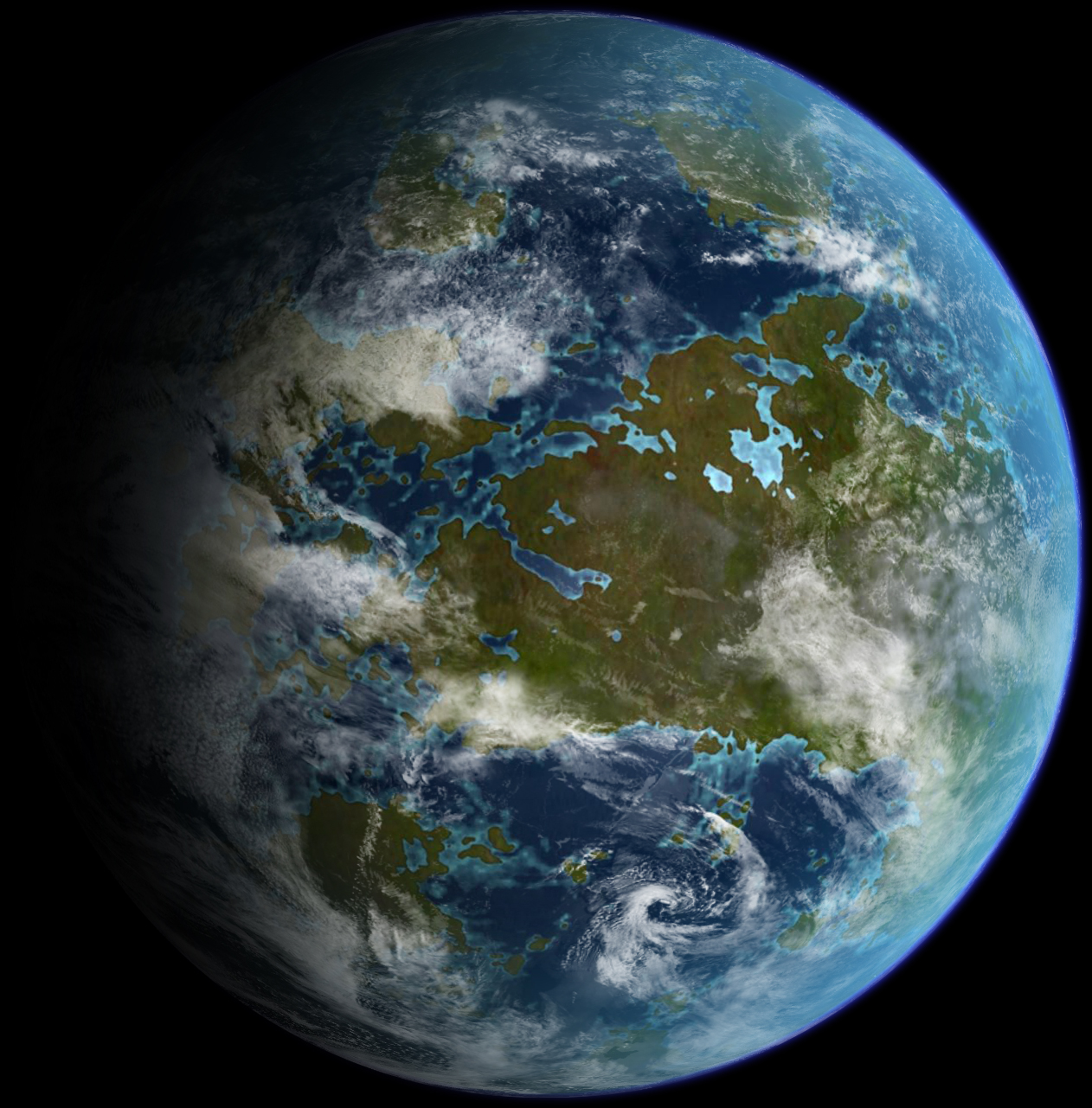
Studying how this came to happen would go a long way to helping scientists understand Climate Change here on Earth, and as well as give them the chance to test out possible solutions. And of course, any working solutions might go a long way towards terraforming Venus itself, which is something many scientists are currently advocating since it might be cheaper and less time consuming than transforming Mars.
Then again, if the resources and budget are there, there’s no reason why we can’t try to retool both for human settlement. After all, we might not have much a choice in the coming centuries. Human beings aren’t exactly known for their slow population growth or conservation skills!
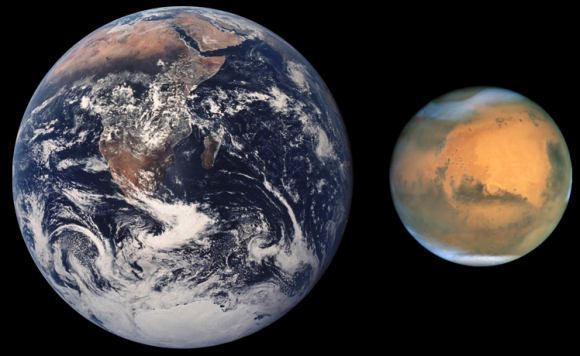
Men are from Mars, women are… also from Mars? That is the controversial theory that was proposed yesterday at the annual Goldschmidt Conference of geochemists being held in Florence, Italy. The proposal was made by Professor Steven Benner of the Westheimer Institute of Science and Technology in Florida and is the result of new evidence uncovered by his research team.
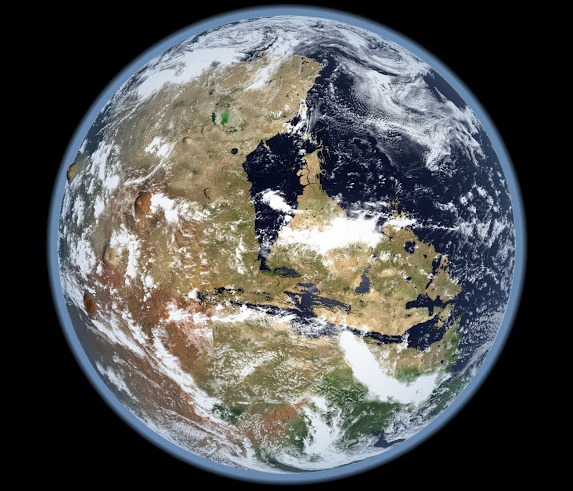
The theory that life on Earth originated on Mars has been argued before, but has remained contentious amongst the scientific community. However, Benner claims that new evidence supports the conclusion that the Red Planet really is our ancestral home by demonstrating that the elements for life here could only form on Mars, and came here via a Martian meteorite.
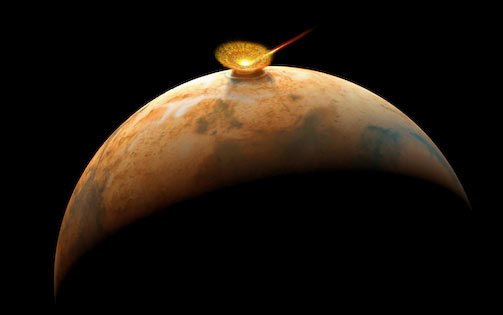
According to the theory, rocks violently flung up from the Red Planet’s surface during mammoth collisions with asteroids or comets then traveled millions of kilometers across interplanetary space to Earth. Once they reached Earth’s atmosphere. they melted, heated and exploded violently before the remnants crashed into the solid or liquid surface.
All that would be needed is for a few of those space born rocks to contain microbes from Mars surface. These building blocks of life would have to survive the journey through space and the impact on Earth to make this happen. But research into Exogenesis – the possibility that life was transplanted on Earth by meteorites – has already shown that this is possible.
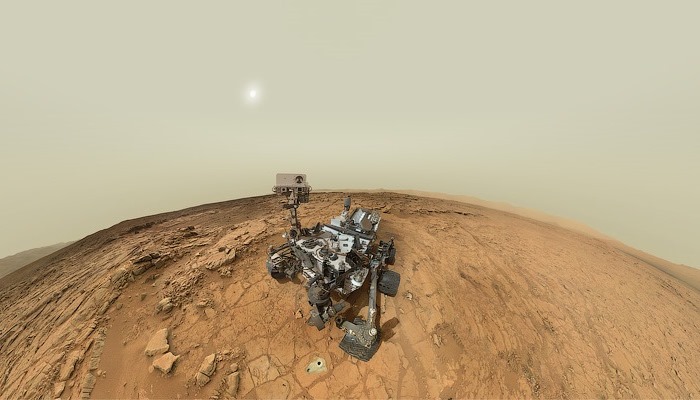
What’s more, NASA’s Curiosity Rover was expressly created to search for the the environmental conditions that would support life. Less than half a year into its mission it accomplished just that, locating proof of the existence of water and a habitable zone. Between it and the Opportunity Rover, the search to determine if life still exists – in the form of organic molecules – continues and is expected to yield results very soon.
But of course, Benner was quick to point out that there is a difference between habitability (i.e. where can life live) and origins (where might life have originated). The presence organic molecules alone is not enough when it comes to the mystery of life’s creation, and when it comes to making the great leap between having the necessarily elements and the existence of living organisms, scientists remain hung up on two paradoxes.
These are known as the tar paradox and the water paradox, respectively. The former paradox addresses how life as we know it comes down to the presence of organic molecules, which are produced by the chemistry of carbon and its compounds. However, the presence of these compounds does not ensure the creation of life, and laboratory experiments to combine and heat them has only ever produced tar.
As he puts it, the origin of life involves “deserts” and oxidized forms of the elements Boron (B) and Molybdenum (Mo) – namely borate and molybdate. Essentially, these elements are the difference between the formation of tar and RNA, the very building block of life:
Certain elements seem able to control the propensity of organic materials to turn into tar, particularly boron and molybdenum, so we believe that minerals containing both were fundamental to life first starting. Analysis of a Martian meteorite recently showed that there was boron on Mars; we now believe that the oxidized form of molybdenum was there too.
The second paradox relates to water, which is believed to be intrinsic for life to flourish, but can be also hazardous to its formation. According to modern research, RNA forms prebiotically, requiring mineral species like borate to capture organic elements before they devolve into tar and molybdate to arrange the material to give it ribose – organic sugars, also intrinsic to life.
This can only occur in deserts, he claims, because water is detrimental to RNA and inhibits the formation of borates and molybdates. And from a geological standpoint, there was simply too much water covering the early Earth’s surface to allow for this creation process to take place:
[W]ater is corrosive to RNA, which scientists believe was the first genetic molecule to appear. Although there was water on Mars, it covered much smaller areas than on early Earth. Various geologists will not let us have these [borates and molybdates] on early Earth, but they will let us have them on Mars. So IF you believe what the geologists are telling you about the structure of early Earth, AND you think that you need our chemistry to get RNA, AND IF you think that life began with RNA, THEN you place life’s origins on Mars,
All of this has served to throw the previously-held theory – that life came to Earth through water, minerals and organics being transported by comets – into disarray. Based on this new theory, comets are a bad candidate for organic life since they lack the hot, dry conditions for borate and molybdate formation.
If the new theory is to be believed, Mars boasted the proper conditions to create the elements for life, while Earth possessed the water to help it flourish. If such a partnership is needed for the creation of organic life, then scientists will need to reevaluate the likelihood of finding it elsewhere in the universe. Between the existence of water and hot dry environments, life would seem to require more specialized conditions than previously though.
But of course, the debate on whether Earthlings are really Martians will continue as scientific research progresses and definitive proof is discovered and accepted by the majority of the scientific community. In the meantime, Curiosity is expected to rendezvous with Mount Sharp sometime next spring or summer, where it will determine if organic molecules and elements like Boron and Molybdenum exist there.
And on Nov. 18th, NASA will launch its next mission to Mars – the MAVEN orbiter – which will begin studying the upper Martian atmosphere for the first time, determining its previous composition, and where all the water went and when was it lost. So we can expect plenty more news to come to us from our neighboring Red Planet. Wait and see!
It finally happened! It seems like only yesterday, I was talking about the limitations of Brain to Brain Interfacing (BBI), and how it was still limited to taking place between rats and between a human and a rat. Actually, it was two days ago, but the point remains. In spite of that, after only a few months of ongoing research, scientists have finally performed the first human-to-human interface.
Using a Skype connection, Rajesh Rao, who studies computational neuroscience at the University of Washington, successfully used his mind to control the hand of his colleague, Andrea Stucco. The experiment was conducted on Aug. 12th, less than month after researchers at Harvard used a non-invasive technique and a though to control the movement of a rat’s tail.
This operation was quite simple: In his laboratory, Rao put on a skull cap containing electrodes which was connected to an electroencephalography (EEG) machine. These electrodes read his brainwaves and transmitted them across campus to Stocco who, seated in a separate lab, was equipped with a cap that was hooked up to a transcranial magnetic stimulation (TMS) machine.
This machine activating a magnetic stimulation coil that was integrated into the cap directly above Stocco’s left motor cortex, the part of the brain that controls movements of the hands. Back in Rao’s lab, he watched a screen displaying a video game, in which the player must tap the spacebar in order to shoot down a rocket; while in Stocco’s lab. the computer was linked to that same game.
Instead of tapping the bar, however, Rao merely visualized himself doing so. The EEG detected the electrical impulse associated with that imagined movement, and proceeded to send a signal – via the Skype connection – to the TMS in Stocco’s lab. This caused the coil in Stocco’s cap to stimulate his left motor cortex, which in turn made his right hand move.
Given that his finger was already resting over the spacebar on his computer, this caused a cannon to fire in the game, successfully shooting down the rocket. He compared the feeling to that of a nervous tic. And to ensure that there was no chance of any outside influence, the Skype feeds were not visible to each other, and Stucco wore noise cancelling headphones and ear buds.
In the course of being interviewed, Rao was also quick to state that the technology couldn’t be used to read another person’s mind, or to make them do things without their willing participation. The researchers now hope to establish two-way communications between participants’ brains, as the video game experiment just utilized one-way communication.
Additionally, they would like to transmit more complex packets of information between brains, things beyond simple gestures. Ultimately, they hope that the technology could be used for things like allowing non-pilots to land planes in emergency situations, or letting disabled people transmit their needs to caregivers. And in time, the technology might even be upgraded to involve wireless implants.
One thing that should be emphasized here is the issue of consent. In this study, both men were willing participants, and it is certain that any future experimentation will involve people willingly accepting information back and forth. The same goes for commands, which theoretically could only occur between people willing to be linked to one another.
However, that doesn’t preclude that such links couldn’t one day be hacked, which would necessitate that anyone who chose to equip themselves with neural implants and uplinks also get their hands on protection and anti-hacking software. But that’s an issue for another age, and no doubt some future crime drama! Dick Wolf, you should be paying me for all the suggestions I’m giving you!
And of course, there’s a video of the experiment, courtesy of the University of Washington. Behold and be impressed, and maybe even a little afraid for the future:


 The underlying goal, according to Ruskin, was finding out how our body merges information such as the visual, auditory, and olfactory with information coming from within. How this leads to the perception we call “reality”, and how it could be altered, is what is being studied here for the first time;
 After a few minutes, many of the participants reported sensations of being in an entirely different part of the room rather than their physical body and feeling that their “selves” were closer to their virtual doubles. According to the team, this is the first study that clearly shows how visual signals containing information about the body’s internal organs (i.e. heartbeat) can change their perception of themselves. As Aspell put it: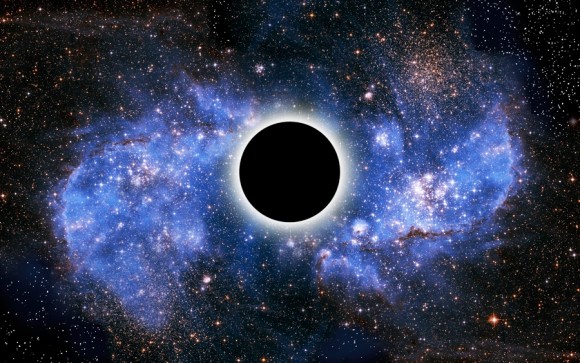




















 Stories by Williams