A Tribute to Israeli Scientific Achievements

jerusalem_israelWelcome everyone to my first special-request piece! As some of you who read this blog regularly may know, I was recently done a solid by a friend who brought the existence of my latest book (Whiskey Delta) to the attention of Max Brooks, Mr. World War Z man himself! Because of this, I told him he was entitled to favor, redeemable whenever he saw fit. Especially if the favor he did me allowed me to make it big!

Emblem_of_Israel.svgMuch to my surprise, he called it in early. Yes, instead of waiting for me to become a success and demanding 50 grand and pony, he asked that I do a tribute piece in honor of Israeli Independence Day, one that acknowledges the collective scientific, medical and technological achievements of this nation.

So hang tight. Not the easiest thing in the world to sum up an entire nation’s contributions in several fields, but I shall try. And for the sake of convenience, I broke them down into alphabetical order. So to my Israeli readers and those with family in the Levant, Shalom Aleichem, and here we go!

Aerospace:
GurwinTechSatModel
When it comes to space-based research, aviation and aeronautics, Israel has made many contributions and is distinguished as one of the few nations outside of the – outside of the major space players – that is able to build and launch its own communications, navigation and observation satellites. This is performed through the Israel Aerospace Industries(IAI), Israel’s largest military engineering company, in cooperation with the Israel Space Agency, which was created in 1982.

What’s more, Technion, the Israeli Institute of Technology,  is home to the Asher Space Research Institute (ASRI), which is unique in Israel as a university-based center of space research. In 1998, the Institute built and launched its own satellite – known as the Gerwin-II TechSAT – in July 1998 to provide communications, remote sensing and research services for the nation’s scientists.

Israel’s first ever satellite, Ofeq-1, was built and launched using the locally-built Shavit launch vehicle on September 19, 1988. Over the course of its operational history, Ofeq-1 has made important contributions in a number of areas in space research, including laser communication, research into embryo development and osteoporosis in space, pollution monitoring, and mapping geology, soil and vegetation in semi-arid environments.

AMOS-1 and AMOS-2, which were launched in 1996 and 2003 respectively. AMOS-1 is a geostationary satellite that also has the honor of being Israel’s first commercial communications satellite, built primarily for direct-to-home television broadcasting, TV distribution and VSAT services. AMOS-2, which belongs to the Spacecom Satellite Communications company, provides satellite telecommuncations services to countries in Europe, the Middle East and Africa.

Additional space-based projects include the TAUVEX telescope, the VENUS microsatellite, and the MEIDEX (Mediterranean – Israel Dust Experiment), which were produced and launched in collaboration the Indian Space Research Organizations (ISRO), France’s CNES, and NASA, repsectively. In addition to conducting research on background UV radiation, these satellites are also responsible for monitoring vegetation and the distribution and physical properties of atmospheric desert dust over the a large segment of the globe.

Ilan_RamonIlan Ramon, Israel’s first astronaut, was also a member of the crew that died aboard the Space Shuttle Columbia. Ramon was selected as the missions Payload Specialist and trained at the Johnson Space Center in Houston, Texas, from 1998 until 2003.  Among other experiments, Ramon was responsible for the MEIDEX project in which he took pictures of atmospheric aerosol (dust) in the Mediterranean. His death was seen as a national tragedy and mourned by people all over the world. 

According to the Thomson Reuters agency, in a 2009 poll, Israel was ranked 2nd among the 20 top countries in space sciences.

Alternative Fuel and Clean Energy:
When it comes to developing alternative sources of energy, Israel is a leader in innovation and research. In fact – and due in no small part to its lack of conventional energy resources – Israel has become the world’s largest per capita user of solar power, with 90% of Israeli homes use solar energy for hot water, the highest per capita in the world.

Solar_dish_at_Ben-Gurion_National_Solar_Energy_Center_in_IsraelMuch of this research is performed by the Ben-Gurion National Solar Energy Center, a part of the Ben-Gurion University of the Negev (in Beersheba). Pictured above is the Ben-Gurion parabolic solar power dish, the largest of its kind in the world. In addition, the Weizman Institute of Science, in central Israel, is dedicated to research and development in the field of solar technology and recently developed a high-efficiency receiver to collect concentrated sunlight, which will enhance the use of solar energy in industry as well.

Outside of solar, Israel is also heavily invested in the fields of wind energy, electric cars, and waste management. For example, Israel is one of the few nations in the world that has a nationwide network of recharching stations to facilitate the charging and exchange of car batteries. Denmark and Australia have studied the infrastructure and plan to implement similar measures in their respective countries. In 2010, Technion also established the Grand Technion Energy Program (GTEP), a multidisciplinary task-force that is dedicated to alternative fuels, renewable energy sources, energy storage and conversion, and energy conservation.

Private companies also play a role in development, such as the Arrow Ecology company’s development of the ArrowBio process, which takes trash directly from collection trucks and separates organic from inorganic materials. The system is capable of sorting huge volumes of solid waste (150 tons a day), salvaging recyclables, and turning the rest into biogas and rich agricultural compost. The system has proven so successful in the Tel-Aviv area that it has been adopted in California, Australia, Greece, Mexico, and the United Kingdom.

Health and Medicine:
Israel also boasts an advanced infrastructure of medical and paramedical research and bioengineering facilities. In terms of scientific publications, studies in the fields of biotechnology, biomedical, and clinical research account for over half of the country’s scientific papers, and the industrial sector has used this extensive knowledge to develop pharmaceuticals, medical equipment and treatment therapies.

In terms of stem cell research, Israel has led the world in the publications of research papers, patents and studies per capita since the year 2000. The first steps in the development of stem cell studies occurred in Israel, with research in this field dating back to studies of bone marrow stem cells in the early 1960s. In 2011, Israeli scientist Inbar Friedrich Ben-Nun led a team which produced the first stem cells from endangered species, a breakthrough that could save animals in danger of extinction.
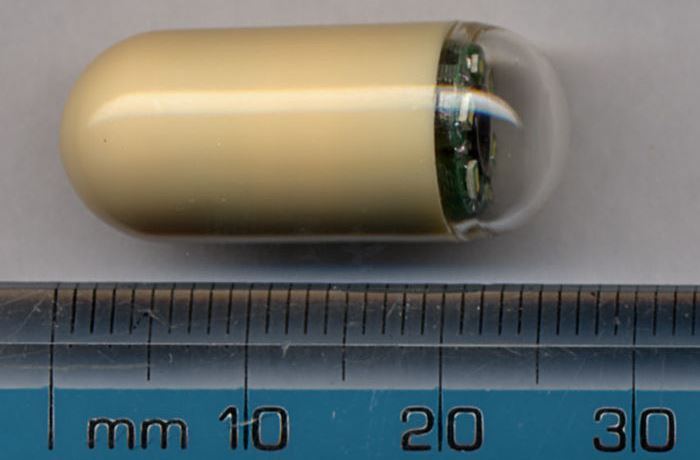
capsule_camNumerous sophisticated medical advancements for both diagnostic and treatment purposes has been developed in Israel and marketed worldwide, such as computer tomography (CT) scanners, magnetic resonance imaging (MRI) systems, ultrasound scanners, nuclear medical cameras, and surgical lasers. Other innovations include a device to reduce both benign and malignant swellings of the prostate gland and a miniature camera encased in a swallowable capsule used to diagnose gastrointestinal disease.

ReWalkIsrael is also a leading developer of prosthetics and powered exoskeletons, technologies designed to restore mobility to amputees and people born without full ambulatory ability. Examples include the SmartHand, a robotic prosthetic hand developed through collaboration between Israeli and European scientists. ReWalk is another famous example, a powered set of legs that help paraplegics and those suffering from partial paralysis to achieve bipedal motion again.

Science and Tech:
In addition, Israeli universities are among 100 top world universities in mathematics (Hebrew University, TAU and Technion), physics (TAU, Hebrew University and Weizmann Institute of Science), chemistry (Technion and Weizmann Institute of Science), computer science (Weizmann Institute of Science, Technion, Hebrew University, TAU and BIU) and economics (Hebrew University and TAU).
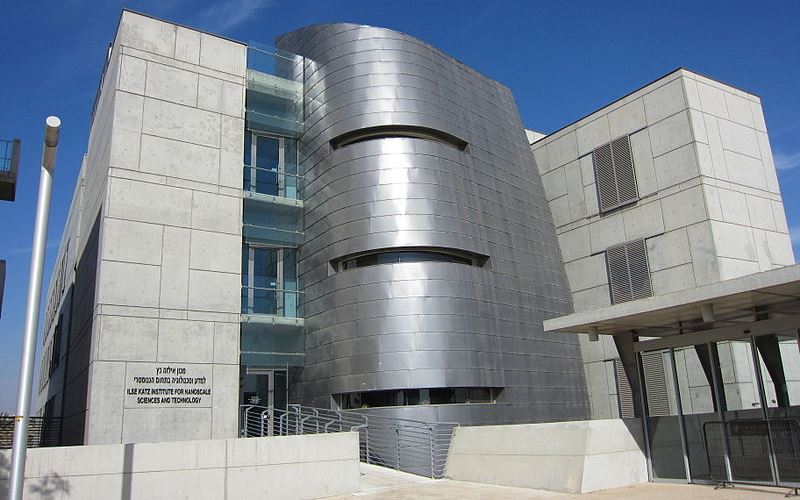
 

Ilse Katz Institute for Nanoscale Science and Technology - Ben-Gurion University
Ilse Katz Institute for Nanoscale Science and Technology – Ben-Gurion University

Israel is also home to some of the most prestigious and advanced scientific research institutions in the world. These include the Bar-Ilan University, Ben-Gurion University of the Negev, the University of Haifa, Hebrew University of Jerusalem, the Technion – Israel Institute of Technology, Tel Aviv University and the Weizmann Institute of Science, Rehovot, the Volcani Institute of Agricultural Research in Beit Dagan, the Israel Institute for Biological Research and the Soreq Nuclear Research Center.

Israel has also produced many Noble Prize Laureates over the years, four of whom won the Nobel Prize for Chemistry. These include Avram Hershko and Aaron Ciechanover of the Technion, two of three researchers who were responsible for the discovery ubiquitin-mediated protein degradation in 2004. In 2009, Ada Yonath of the Weizmann Institute of Science was one of the winners for studies of the structure and function of the ribosome. In 2011, Dan Shechtman of the Technion was awarded the prize for the discovery of quasicrystals.
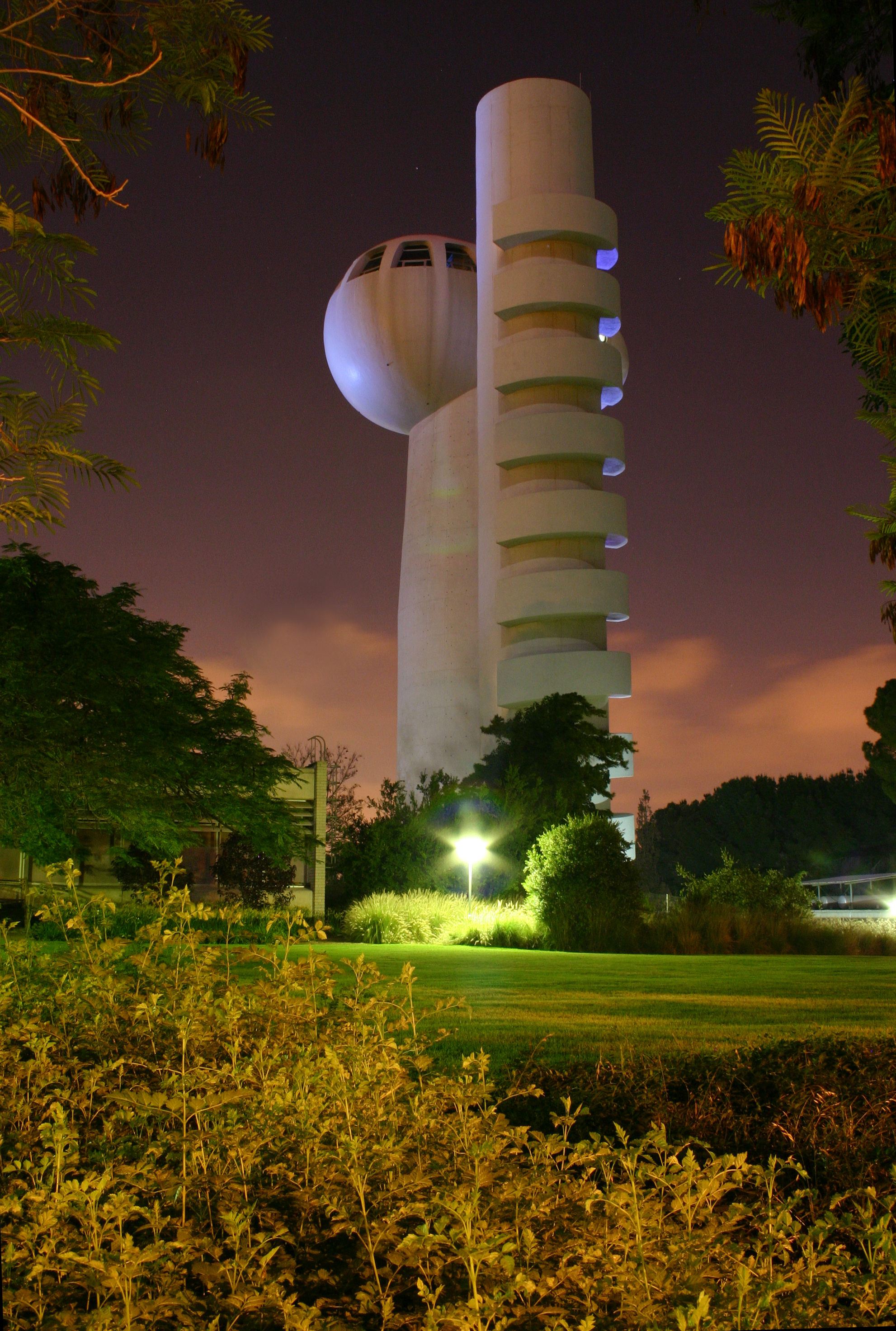
Koffler Accelerator - Weizman Institute of Science
Koffler Accelerator – Weizman Institute of Science

In the social sciences, the Nobel Prize for Economics was awarded to Daniel Kahneman in 2002, and to Robert Aumann of the Hebrew University in 2005. Additionally, the 1958 Medicine laureate, Joshua Lederberg, was born to Israeli Jewish parents, and 2004 Physics laureate, David Gross, grew up partly in Israel, where he obtained his undergraduate degree.

In 2007, the United Nations General Assembly’s Economic and Financial Committee adopted an Israeli-sponsored draft resolution that called on developed countries to make their knowledge and know-how accessible to the developing world as part of the UN campaign to eradicate hunger and dire poverty by 2015. The initiative is an outgrowth of Israel’s many years of contributing its know-how to developing nations, especially Africa, in the spheres of agriculture, fighting desertification, rural development, irrigation, medical development, computers and the empowerment of women.

Water Treatment:
WaTecAnd last, but certainly not least, Israel is a leader in water technology, due again to its geography and dependence and lack of resources. Every year, Israel hosts the Water Technology Exhibition and Conference (WaTec) that attracts thousands of people from across the world and showcases examples of innovation and development designed to combat water loss and increase efficiency.

Drip irrigation, a substantial agricultural modernization, was one such developed which comes from in Israel and saved countless liters of farm water a year. Many desalination and recycling processes have also emerged out of Israel, which has an abundance of salt water (such as in the Dead Sea and Mediterranean), but few large sources of freshwater. The Ashkelon seawater reverse osmosis (SWRO) plant, the largest in the world, was voted ‘Desalination Plant of the Year’ in the Global Water Awards in 2006.

In 2011, Israel’s water technology industry was worth around $2 billion a year with annual exports of products and services in the tens of millions of dollars. The International Water Association has also cited Israel as one of the leaders in innovative methods to reduce “nonrevenue water,” (i.e., water lost in the system before reaching the customer). By the end of 2013, 85 percent of the country’s water consumption will be from reverse osmosis, and as a result of innovations in this field, Israel is set to become a net exporter in the coming years.

Summary:
It’s hard to sum up the accomplishments of an entire nation, even one as young and as geographically confined as Israel. But I sincerely hope this offering has done some justice to the breadth and width of Israel’s scientific achievements. Having looked though the many fields and accomplishments that have been made, I have noticed two key features which seem to account for their level of success:

  1. Necessity: It’s no secret that Israel has had a turbulent history since the foundation of the modern nation in 1948. Due to the ongoing nature of conflict with its neighbors and the need to build armaments when they were not always available, Israel was forced to establish numerous industries and key bits of infrastructure to produce them. This has had the predictable effect of spilling over and inspiring developments in the civilian branches of commerce and development as well. What’s more, Israel’s location in a very arid and dry region of the world with few natural resources to speak of have also demanded a great deal of creativity and specialized resource management. This in turn has led to pioneering work in the fields of energy, sustainable development and agricultural practices which are becoming more and more precious as Climate Change, population growth, hunger and drought effect more and more of the world.
  2. Investment: Israel is also a nation that invests heavily in its people and infrastructure. Originally established along strongly socialist principles, Israel has since abandoned many of its establishment era practices – such as kibbutz and equality of pay – in favor of a regulated free market with subsidized education and health care for all. This has led to a successive wave of generations that are strong, educated, and committed to innovation and development. And with competition and collaboration abroad, not to mention high demand for innovation, this has gone to good use.

And with that, I shall take my leave and wish my Israeli readers at home and abroad a happy belated Independence Day! May peace and understanding be upon you and us all as we walk together into the future. Shalom Aleichem!


Patenting Genes: New Questions over Property Rights

People walk in front of the Supreme Court building in WashingtonToday, in Washington DC, the US Supreme Court heard arguments made for and against the belief that the human genome can be claimed as intellectual property. For almost thirty years now, US authorities have been awarding patents on genes to universities and medical companies. But given the recent publication of the human genome, this practice could have far reaching consequences for human rights.

Ever since USC researchers published ENCODE – The Encyclopedia of DNA Elements Project – scientists and law-makers have been scrambling to determine what the next step in human genetics research will be. In addition to using the complete catalog of genetic information for the sake of bioresearch, medicine and programmable DNA structures, there are also legal issues that go back decades.

encodeFor example, if companies have the right to patent genes, what does that say about the human body? Do property rights extend to our mitochondrial DNA, or do the rights over a particular gene belong to those who discovered it, mapped its functions, or those who just plain planted their flag in it first? One of the most interesting aspects of the 21st century may be the extension of property wars and legal battles down to the cellular level…

Currently, researchers and private companies work to isolate genes in order to use them in tests for gene-related illnesses, and in emerging gene therapies. According to researchers at Weill Cornell Medical College in the US, patents now cover some 40% of the human genome, but that is expected to increase in the coming years, accounting for greater and greater swaths of human and other living creature’s DNA.Genes1This particular lawsuit, filed by the American Civil Liberties Union in conjunction with the Public Patent Foundation, relates to seven specific patents that were made on two human genes held by US firm Myriad Genetics. These genes are linked to breast and ovarian cancer, and Myriad has developed a test to look for mutations in these genes that may increase the risk of developing cancer.

The company argued that the genes patented were “isolated” by them, making them products of human ingenuity and therefore patentable. But of course, The ACLU rejected this argument, saying that genes are products of nature, and therefore can’t be patented under US or any other man-made law.

genesWithout a doubt, there concerns are grounded in what this could mean for future generations, if people themselves could be subject to patents simply because they carry the gene that a company holds the patent on. And who can blame them? With almost half of the stuff that makes our bodies tick belonging to private companies, how big of a stretch would it be for companies to effectively own a human being?

Alternately, if companies are not allowed to patent genes, what will this mean for medical and bio research? Will cures, treatments, and medical processes become a complete free for all, with no one holding any particular distribution rights or having their exclusive work recognized. And of course, this would have the effect of hurting a research or corporate firms bottom line. So you can expect them to have something to say about it!

It’s a new age, people, with patents and prospecting extending not only into space (with asteroids), but into the human genome as well. Predictable I suppose. As humanity began expanding its field of view, focusing on wider and more distant fields, as well as gaining a more penetrating and deeper understanding of how everything works, it was only a matter of time before we started squabbling over territory and boundaries again!

Sources: bbc.co.uk, reuters.com

Dinosaur Eggs Found With Embryos Still Inside

Dinosaur-eggsThis past week, a Canadian group of paleontologists from the University of Toronto announced a rather amazing find. In the course of examining a large fossil bed in China’s Yunnan province, they discovered a series of fossilized dinosaur eggs that are apparently the oldest ever found. But it’s gets even better. Within the nest, they learned that many of these eggs had been crushed, and the remains of several dinosaur embryos perfectly preserved.

The eggs belong to the Late Jurassic, a geologic period that occurred roughly 190 million years ago. It was during this time that a group of huge, long-necked plant-eating dinosaurs called Lufengosaurus gathered together at the site in China’s Yunnan province to lay clutches of softball-sized eggs. It is here that Robert Reisz, leader of the paleontologist group, and his colleagues found the rare preserved remains.

UofT_reiszThese included the crushed eggshells —the oldest dinosaur eggshells ever found — and 200 tiny bones from at least 20 Lufengosaurus embryos, including some that amazingly still appeared to have some protein attached to them. Reisz said it appears that Lufengosaurus chose a nesting site close to a river and some years the nesting site flooded, smothering the embryos. At the time of the dinosaurs, the area had a tropical climate and was likely prone to monsoons during the wet season.

In an interview, Reisz claimed that “[the] eggs were caught at different stages of development. That’s what makes this project really exciting.” It’s exciting because it allows paleontologists to examine how dinosaurs grew while still in the earliest phase of their development. And already, the returns on this discovery are proving very intriguing.

UofT_fossilsFor example, by examining at the thigh bones of embryos of different ages, Reisz and his researchers found evidence that this particular species moved around inside their eggs as birds do, and similar to the way developing mammals move around inside the womb. This is the first time that phenomenon has been documented in a fossil animal, but the real breakthrough was the detection  of the chemical fingerprint of a protein inside the bones.

Ordinarily, paleontologist do not expect to find any protein samples in fossils dating back this far. However, the Taiwanese members of the research team were insistent that they look for proteins using synchrotron radiation and an infrared spectrometer, which looks for the telltale chemical signatures caused by specific molecules absorbing characteristic colours of light. Given what it turned up, Reisz was happy they did!

t-rexThe protein that was detected is believed likely to be collagen, a common protein found in connective tissues such as bones and tendons. Once again, the significance of this is in how it will allow future generations of researchers to examine the links between today’s species and those from previous eras. According to Reisz: “If this is collagen, then the potential for extracting collagen and comparing to those of living animals really opens a new area of research.”

And who knows? If the protein sample proves to be in good enough shape, this particular species of dinosaur might actually find itself being added to the list for de-extinction, right alongside Aurochs, Wooly Mammoths, Do Do birds, and Sabretooth Tigers. Hmm… I guess Jurassic Park isn’t as farfetched as previously thought. In fact, it could one of many geological era-themed parks put all over the world. Personally, I’d hate to be the zoning board that has to find places to host them!
Source: cbc.ca/news

News From Space: The NASA-Funded Fusion Rocket

fusion-rocket-university-of-washington-640x353NASA scientists have been saying for some time that they plan to send a manned mission to Mars by 2030. At the same time, space adventurist Dennis Tito and his company Inspiration Mars want to send a couple on a flyby of the Red Planet in 2018. With such ambitions fueling investment and technological innovation, its little wonder why people feel we are embarking on the new era of space exploration.

However, there is one sizable problem when it comes to make the Mars transit, which is the wait time. In terms of Tito’s proposed flyby, a trip to Mars when it is in alignment with Earth would take a total 501 days. As for NASA’s round-trip excursions for the future, using current technology it would take just over four years. That’s quite the long haul, and as you can imagine, that longer transit time has an exponential effect on the budgets involved!

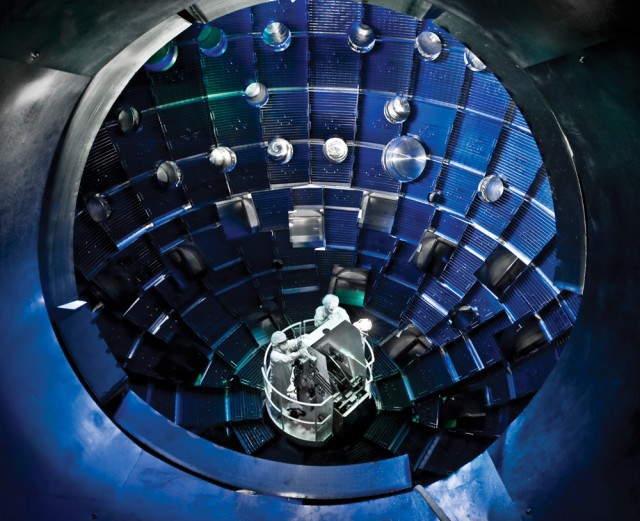
Mars_landerBut what if it were possible to cut that one-way trip down to just 30 days. That’s the question behind the new fusion rocket design being developed at the University of Washington and being funded by NASA. Led by John Slough, this team have spent the last few years developing and testing each of the various stages of the concept and is now bringing the isolated tests together to produce an actual fusion rocket.

The challenge here is to create a fusion process that generates more power than it requires to get the fusion reaction started, a problem which, despite billions of dollars of research, has eluded some of the world’s finest scientists for more than 60 years. However, researchers continue to bang their head on this proverbial wall since fusion alone – with its immense energy density – appears to be the way of overcoming the biggest barrier to space travel, which is fuel weight and expense.

spacecraft_marsUltimately, the UW fusion rocket design relies on some rather simple but ingenious features to accomplish its ends. In essence, it involves a combustion chamber containing rings made of lithium and a pellet of deuterium-tritium – a hydrogen isotope that is usually used as the fuel in fusion reactions. When the pellet is in the right place, flowing through the combustion chamber towards the exhaust, a huge magnetic field is triggered, causing the metal rings to slam closed around the pellet of fuel.

These rings then implode with such pressure that the fuel compresses into fusion, causing a massive explosion that ejects the metal rings out of the rocket and at 108,000 km/h (67,000 mph) and generating thrust. This reaction would be repeated every 10 seconds, eventually accelerating the rocket to somewhere around 320,000 km/h (200,000 mph) — about 10 times the speed of Curiosity as it hurtled through space from Earth to Mars.

NASA_fusionchamberHowever, things still remain very much in the R&D phase for the fusion rocket. While the team has tested out the imploding metal rings, they have yet to insert the deuterium-tritium fuel and propel a super-heated ionized lump of metal out the back at over 100,000 kilometers and hour. That is the next – and obviously a very, very – big step.

But in the end, success will be measured when it comes to two basic criteria: It must work reliably and, most importantly, it must be capable of generating more thermal energy than the electrical energy required to start the fusion reaction. And as already mentioned, this is the biggest challenge facing the team as it is something that’s never been done before.

However, most scientific minds agree that within 20 years at least, fusion power will be possible, and the frontiers it will open will be vast and wonderful. Not only will we be able to fully and completely lick the problem of clean energy and emissions, we will have rockets capable of taking us to Mars and beyond in record time. Deep space flight will finally become a possibility, and we may even begin considering sending ships to Alpha Centauri, Bernard’s Star and (fingers crossed!) Gliese 581!

daedalus_starship_630pxSource: Extreme.tech

Towards a Cleaner Future: Fuel Cell Breakthrough!

hydrogen-fuel-cellOne of the greatest challenges facing renewable energy is making it affordable and cost effective, to the point where it will naturally offset such sources as fossil fuels and coal. And when it comes to hydrogen fuel cells, a recent development may have accomplished just that. Quite surprising when you consider that it came from Alberta, home of the Athabasca Oil Sands and an output of roughly 4 million barrels of crude a day.

It all happened late last month, when researchers at the University of Calgary published a paper in the Journal of Science that they had come up with a much cheaper and easier way to build an electrolyzer. This is the device that uses electricity to break up water into hydrogen and oxygen, which are then used to power hydrogen fuel cells.

Picture shows the refuelling hydrogen syFor some time now, these fuel cells have been considered the most promising means of powering automobiles with a clean, renewable energy source. By recombining the two basic elements of hydrogen and oxygen, energy is generated and the only waste product is water. The only difficulty is the means of production, as electrolyzers often depend on expensive and sometimes toxic metals.

The most common of current methods involves the use of expensive rare earth metals in precise crystalline arrangements to catalyze, or speed up, the reaction. But with the new process developed by Chris Berlinguette and Simon Trudel comes into play, which involves catalyzers built out of common metals without the need for the crystal structure, the process will not only be vastly simplified but extremely cheaper.

solar_arrayBased on the estimates presented in their paper, Trudel and Berlinguette estimate that their new eletrolyzer will deliver results comparable to current techniques but at a cost of about one-one-thousandth the norm. The implications for clean, renewable energy,  such as wind or solar generators, could be enormous. Not only would it be far cheaper and more efficient, there would be far less toxic waste materials produced.

Not only that, but another major stumbling block for clean energy could be overcome. As is the case with just about any type of renewable power source – wind, solar, tidal – is that it is dependent on conditions which limit when power can be generated. But stored hydrogen energy can be used at anytime and could easily replace gas and coal, just as long as the production process is cost-effective.

hydrogencarAs Berlinguette himself pointed out, making and electrolyzer cost-effective means being able to produce power on demand and to scale:

If you think of a wind turbine producing electricity at two o’clock in the morning, there’s no one around to actually use that electricity, so it just gets dumped. If you could set that up with an electrolyzer, you could convert that electricity into hydrogen, then the next day, when there is demand, you can sell that electricity at a premium during periods of high demand.

In anticipation of the inevitable investment this will attract, Berlinguette and Trudel have already formed a company called FireWater Fuel Corp. to market their work and expect to have a commercially available electrolyzer by next year. So for those of you with money to invest and a socially-responsible, environmental outlook, get out your check books out and be prepared to invest!

Source: huffingtonpost.ca


The Future is Here: The Invisibility Cloak!

quantum-stealth-fieldInvisibility cloaks have long been considered the next frontier of modern warfare. With stealth aircraft, stealth ships and even stealth tanks in service or on well on their way, it seems like the time is ripe for a stealth soldier. But difficulties remains. Whereas cloaking planes, ships and tanks is a matter of simply coating them in materials that can obscure them from radar and thermal imagine, soldiers need camouflage that can move, bend and flex with them.

In recent years, the efforts to produce a working “invisibility cloak” have born considerable fruit. And while most of these took the form of large, cumbersome, desk-mounted constructions that were more of a proof of concept for the material being tested, they did demonstrate that the technology itself worked. This was certainly true of the “cloak” which was created by scientists at Duke University in November of 2012.

INVISIBILITY-CLOAKAnd then came news the following month that a Canadian company named Hyperstealth developed a material that renders the wearer “completely invisible by bending light waves around the target.” Known as “Quantum Stealth”, this true cloak is an apparent follow-up to their SmartCamo – a material that could reportedly adjust its camouflage markings to match its surroundings – that was released at the International Camouflage Symposium in 2010.

Unfortunately, due to security reasons, little was ever known about SmartCamo other than its reported abilities. The same holds true for Quantum Stealth, which the company has been forced to remain clandestine about due the demands of the US Army, to whom they are contracted. So until such time as it enters widespread use, the details and inner workings of the technology will remain inaccessible.

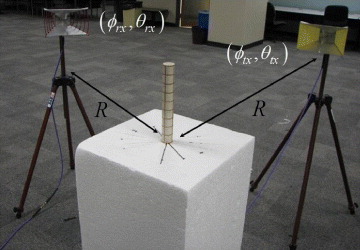
invisibility_cloak1Luckily, the University of Texas in Austin is under no such constrictions, and it is from them that the latest and greatest news comes. In addition to being composed of conventional materials, their new cloak measures a mere 166 micrometers thick and is capable of obscuring an object from multiple directions at once. And though it may not be able to render a soldier truly invisible, it does render them all but invisible to radar detection, which is the intent here.

The fabrication process involved placing a 66µm-thick sheet of carbon (or a metascreen) onto a a 100µm-thick sheet of flexible polycarbonate. The copper is patterned specifically so that the scattered light from the cloak and the cloaked object cancel each other out. This flexible sheet also allows the cloak to conform to the shape of the object, or person, and provides cloaking from microwave radiation from all directions.

invisibility_cloak_uoftNow here’s where things get literal. The researchers responsible for this breakthrough have indicated that, in theory, this cloak could be used to cloak visible light as well. After all, microwaves, infrared and visible light are all physically identical; they are just waves that oscillate at different frequencies. And their design would be more capable of doing this than any cloak composed of metamaterials.

Still, size and scale are still an issue. Whereas their new patterned material scattering technique is capable of hiding an object from multiple directions, it also inversely scales with wavelength. That means that it is only capable of hiding micrometer-scale objects from 400-800THz of visible light. Still, this is exciting news and a step in the right direction!

Before we know it, stealth troopers could be marching all over the planet, invisible to the naked eye and any means of radar detection… Holy crap, what a scary thought! Is it too late to rethink this technology?

future_soldierSource: Extremetech.com, (2)

The Future is Here: The (Super) Supercapacitor

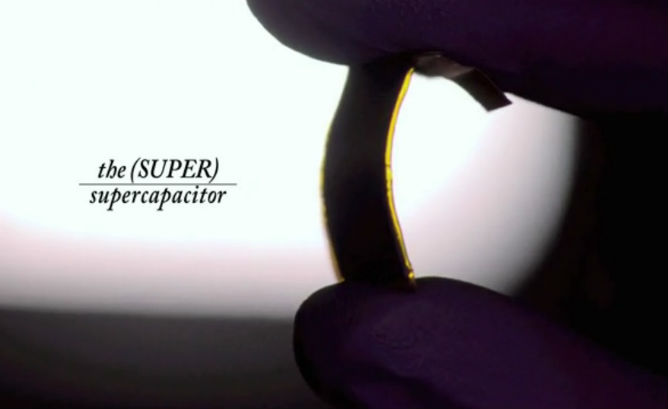
supercapacitor_movieLast year, researchers at UCLA made a fantastic, albeit accidental, when a team of scientists led by chemist Richard Kaner devised an efficient method for producing high-quality sheets of graphene. This supermaterial, which won its developers the 2010 Nobel Prize in Physics, is a carbon material that is known for its incredible strength and flexibility, which is why it is already being considered for use in electronic devices, solar cells, transparent electrodes, and just about every other futuristic high-tech application.

Given the fact that the previous method of producing graphene sheets (peeling it with scotch tape) was not practical, the development of the new production process was already good news. However, something even more impressive happened when Maher El-Kady, a researcher in Kaner’s lab, wired a small square of their high quality carbon sheets to a lightbulb.

supercapacitor1After showing it to Dr. Kaner, the team quickly realized they had stumbled onto a supercapacitor material – a high-storage battery that also boasts a very fast recharge rate – that boasted a greater energy storage capacity than anything currently on the market. Naturally, their imaginations were fired, and their discovery has been spreading like wildfire through the engineering and scientific community.

The immediate benefit of batteries that use this new material are obvious. Imagine if you will having a PDA, tablet, or other mobile device that can be charged within a matter of seconds instead of hours. With batteries so quick to charge and able to store an abundant supply of volts, watts, or amperes, the entire market of consumer electronics would be revolutionized.

electric_carBut looking ahead, even greater applications become clear. Imagine electric cars that only need a few minute to recharge, thus making the gasoline engine all but obsolete. And graphene-based batteries could be making an impact when it comes to the even greater issue of energy storage with regards to solar and other renewable energy sources.

In the year since they made their discovery, the researchers report that El-Kady’s original fabrication process can be made even more efficient. The original process involved placing a solution of graphite oxide on a plastic surface and then subjecting it to lasers to oxigenate and turn the solution into graphene. A year ago, the team could produce only a few sheets at a time, but now have a scalable method which could very quickly lead to manufacturing and wide-scale technological implementation.

solar_array1As it stands, an electric car with a recharge rate of a few minutes is still several years away. But Dr. Kaner and his team expect that graphene supercapacitors batteries will be finding their way into the consumer world much sooner than anyone originally expected.  According to Kaner, his lab is already courting partners in industry, so keep your eyes pealed!

Combined with the new technologies of lithium-ion and nanofabricated batteries, we could be looking at a possible solution to the worlds energy problem right here. What’s more, it could be the solution that makes solar, wind, and other renewable sources of energy feasible, efficient, and profitable enough that they will finally supplant fossil fuels and coal as the main source of energy production worldwide.

Only time will tell… And be sure to check out the video of Dr. Kaner and El-Kady showing off the process that led to this discovery:


Source: IO9.com

News From Space: MESSENGER and Mercury

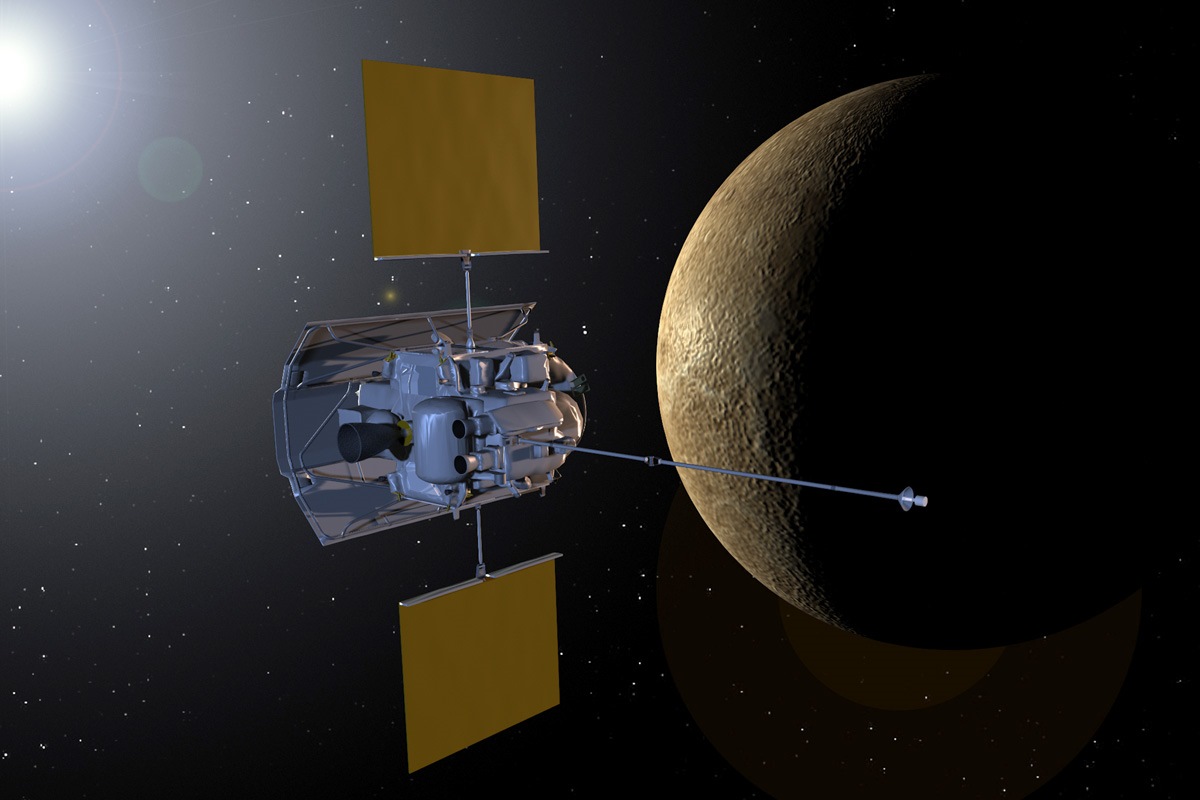
messengerWith Curiosity’s ongoing research and manned missions being planned for Mars by 2030, it seems that the other planets of the Solar System are being sadly neglected these days. Thankfully, the MESSENGER spacecraft, which has been conducting flyby’s of Mercury since 2008 and orbiting it since 2011, is there to remind us of just how interesting and amazing the planet closest to our sun truly is.

And in recent weeks, there has been a conjunction of interesting news stories about Earth’s scorched and pockmarked cousin. The first came in March 22nd when it was revealed that of the many, many pictures taken by the satellite (over 150,000 and counting), some captured a different side of Mercury, one which isn’t so rugged and scorched.

Messenger_smooth1The pictures in question were of a natural depression located northeast of the Rachmaninoff basin, where the walls, floor and upper surfaces appear to be smooth and irregularly shaped. What’s more, the  velvety texture observed is the result of widespread layering of fine particles. Scientists at NASA deduced from this that, unlike many features on Mercury’s  ancient surface, this rimless depression wasn’t caused by an impact from above but rather explosively escaping lava from below.

In short, the depression was caused by an explosive volcanic event, which left a hole in the surface roughly 36 km (22 miles) across at its widest. It is surrounded by a smooth blanket of high-reflectance material, explosively ejected volcanic particles from a pyroclastic eruption, that spread over the surface like snow. And thanks to Mercury’s lack of atmosphere, the event was perfectly preserved.

Messenger_smooth2

Other similar vents have been found on Mercury before, like the heart-shaped depression observed in the Caloris basin (seen above). Here too, the smooth, bright surface material was a telltale sign of a volcanic outburst, as were the rimless, irregular shapes of the vents. However, this is the first time such a surface feature has been captured in such high-definition.

And then just three days later, on March 25th to be exact, Mercury began to experience its greatest elongation from the Sun for the year of 2013. In astronomy, this refers to the angle between the Sun and the planet, with Earth as the reference point. When a planet is at its greatest elongation, it is farthest from the Sun as viewed from Earth, so its view is also best at that point.

Mercury_31-03-13_0630What this means is that for the remainder of the month, Mercury will be in prime position to be observed in the night sky, for anyone living in the Northern Hemisphere that is. Given its position relative to the Sun and us, the best time to observe it would be during hours of dusk when the stars are still visible. And, in a twist which that may hold cosmic significance for some, people are advised to pay special attention during the morning of Easter Day, when the shining “star” will be most visible low in the dawn sky.

And then just three days ago, a very interesting announcement was made. It seems that with MESSENGERS ongoing surveys of the Hermian surface, nine new craters have been identified and are being given names. On March 26th, the International Astronomical Union (IAU) approved the proposed names, which were selected in honor of deceased writers, artists and musicians following the convention established by the IAU for naming features on the innermost world.

crater_names

The announcement came after MESSENGER put the finishing touches on mapping the surface of Mercury earlier this month. A good majority of these features were established at Mercury’s southern polar region, one of the last areas of the planet to be mapped by the satellite. And after a submission and review process, the IAU decided on the following names of the new craters:

Donelaitis, named after 18th century Lithuanian poet Kristijonas Donelaitis, author of The Seasons and other tales and fables.

Petofi, named after 19th century Hungarian poet Sandor Petofi, who wrote Nemzeti dal which inspired the Hungarian Revolution of 1848.

Roerich, named after early 20th century Russian philosopher and artist Nicholas Roerich, who created the Roerich Pact of 1935 which asserted the neutrality of scientific, cultural and educational institutions during time of war.

Hurley, named after the 20th century Australian photographer James Francis Hurley, who traveled to Antarctica and served with Australian forces in both World Wars.

Lovecraft, named after 20th century American author H.P. Lovecraft, a pioneer in horror, fantasy and science fiction.

Alver, named after 20th century Estonian author Betti Alver who wrote the 1927 novel Mistress in the Wind.

Flaiano, named after 20th century Italian novelist and screenwriter Ennio Flaiano who was a pioneer Italian cinema and contemporary of Federico Fellini.

Pahinui, named after mid-20th century Hawaiian musician Charles Phillip Kahahawai Pahinui, influential slack-key guitar player and part of the “Hawaiian Renaissance” of island culture in the 1970’s.

L’Engle, named after American author Madeleine L’Engle, who wrote the young adult novels An Acceptable Time, A Swiftly Tilting Planet & A Wind in the Door. L’Engle passed away in 2007.

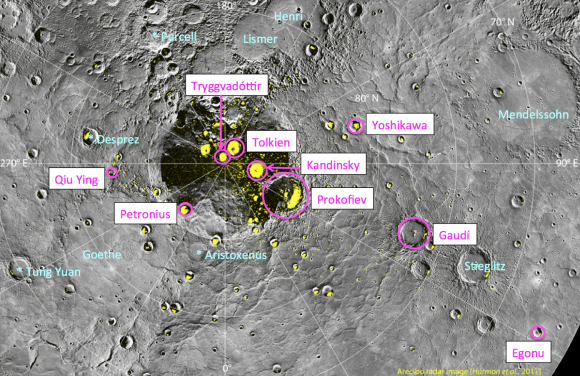
Crater_names_August2012-580x376The campaign to name Mercury’s surface features has been ongoing since MESSENGER performed its first flyby in January of 2008. Some may recall that in August of last year, a similar process took place for the nine craters identified on Mercury’s North Pole. Of these, the names of similarly great literary, artistic and scientific contributors were selected, not the least of which was Mr. J RR Tolkien himself, author of Lord of the Rings and The Hobbit!

It’s no secret that the MESSENGER spacecraft has been a boon for scientists. Not only has it allowed for the complete mapping of the planet Mercury and provided an endless stream of high resolution photos for scientists to pour over, it has also contributed to a greater understanding of what our Solar System looked like when it was still in early formation.

Given all this, it is somewhat sad that MESSENGER is due to stand down at the end of the month, and that the next mission to Mercury won’t be until 2022 with the planned arrival of the joint ESA/JAXA BepiColombo mission. But of course, we can expect plenty of revelations and stories to emerge from all the scientific data collected on this latest trip. And I’m sure Mars will be more than willing to provide ample entertainment until 2022 comes to pass!

While we’re waiting, be sure to check out this informative video of MESSENGER’s contributions over the past few years:

Source: universetoday.com, (2), (3)

Powered By the Sun: The Solar Island

solar4As Climate Change becomes an ever increasing problem, nations are turning to alternative technologies and geological engineering to offset the effects. This means significant investments being made in technologies such as solar cells and other clean energies. However, the question of where to put all the resulting arrays is one which cannot be overlooked. Since we are trying to save the environment, it doesn’t exactly make sense to clear more tracts of land to make room for them.

Already, there is a land rush to build more solar power plants all around the world. In the U.S., the Department of Interior is currently processing leases for roughly 1.8 million acres in the West alone. Globally, solar photovoltaic (PV) capacity has been doubling annually, with another 16 gigawatts of power added just in 2010. At this rate, and considering how much space is needed to set up the average array, we could run out of room real fast!

solar_islandAnd yet, the one thing that accounts for the majority of the planet’s surface area has been sadly neglected up until this point. I am of course referring to the oceans, lakes, reservoirs, retention ponds, and all other natural or unnatural bodies of water. As they account for over three-quarters of the planet’s real estate, they are quickly being targeted as the new frontier for floating solar power plants, with companies and locations being considered from India to Europe, to Napa Valley.

One of the more ambitious plans comes to us from Switzerland, will a proposed array will be built on Lake Neuchâtel later this year. As a collaborative effort between the solar developer Nolaris and the Swiss energy company Viteos, the proposed floating array will be the first of three set upon the lake. Each island will measure some 25 meters in diameter, be built from plastic and steel, and support 100 photovoltaic cells that will rotate with the sun.

solar_island1What’s more, this is just one of several ideas under consideration. Other companies pursuing this concept are favoring floating pontoons with individual photovoltaic assemblies on the water’s surface. In this case, concentrating lenses will focus the sunlight on a solar cell while a simple motor, light sensors, and software rotate the cells to maximize power generation. In tropical climes, where many pilot projects are being considered and storms are quite common, the entire array will be able to submerge as the winds rise.

In other places, where land is particularly expensive, floating solar may even come to rival its land-based counterpart. In Australia, for example, a company named Sunengy is pushing the concept of “Liquid Solar Array” technology, which they claim will be able to match the power output of a typical hydroelectric dam and cover less than 10% of the reservoir’s surface. They are currently teaming up with the Indian giant Tata Power to build India’s first floating solar power plant, and estimate that if India used just 1% of its 11,500 square kilometers of captured water it could generate the equivalent of 15 large coal-fired power stations.

As the saying goes, necessity is the mother of invention. And as it stands, planet Earth needs energy, and needs to generate it in such a way that won’t mess up the environment any further or usher in the scourge of Climate Change. When the survival of our planet and our species is at stake, you can expect people to get very inventive. Very, very inventive!

Source: factcoexist.com

The Walking Antarctic Research Station

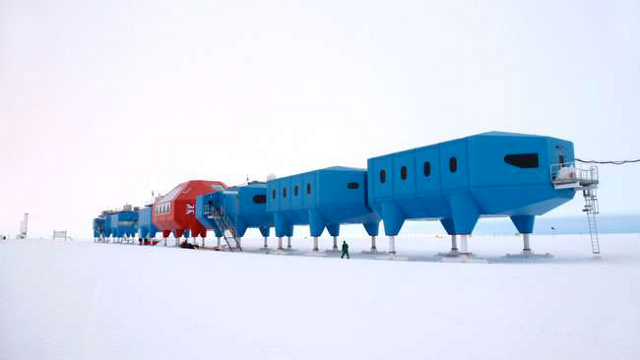
antarctic_walkerFor years, Antarctic research stations have been plagued by environmental conditions that go far beyond the extreme cold. For one, there’s the problem of moving ice, which recedes towards the ocean at a rate of about 0.4 kilometers a year. On top of that, literally, there is the ice and snow accumulation, which threatens to bury any building placed on the continent. Because of this, research stations have a top life expectancy of about ten years in Antarctica. But that may be about to change…

Meet the Halley VI Antarctic research station, a mobile structure which began operations this past February. The brainchild of Hugh Broughton Architects, and established by the British Antarctic Survey (BAS), the station features extendable legs on giant skis. Comprised of eight interconnected modules, the station rests atop a series of retractable hydraulic legs which enable the structure to clear the rising ground each year. And when the station needs to be moved, a bulldozer can simply tow it to a new location.

Cutaway of an individual module
Cutaway of an individual
module

The base can also accommodate 50 research scientists in its segmented hull. Living accommodations and laboratories, clad in blue glass-reinforced plastic, are positioned on either side of a larger unit clad in red, which serves as a social nexus. This space is especially crucial to the well-being of the station, since its crew will live in it year-round and have to endure the permanent darkness, -60 degree temperatures, and 125-kilomer (100 mph) winds the continent is known for.

Home comforts include a hydroponic salad garden and a climbing wall within a double-height central space lined with Lebanese cedar, selected for its scent. The architect also worked with a color psychologist to identify “refreshing and stimulating” shades, and developed a bedside lamp with a daylight bulb to simulate sunrise.

Said architect Hugh Broughton of the creation of Halley VI:

It has been a fascinating project because it combines microscopic examples of many different building types – an operating theater, air traffic control, a power plant – rolled into 20,000 square feet.

And since this project has led to similar appeals being made by other national research groups – which include scientists from Spain, India and Korea – this could be merely the first of many such stations standing near the South Pole. Almost makes the idea of being there for a year conducting research sound fun, doesn’t it?

Sources: archrecord.construction.com, IO9.com