For years, Richard Branson has been promising the world commercial spaceflight with his proposed aerospace line, Virgin Galactic. And with the advent of SpaceShipTwo, the rocket-powered vehicle designed for this end, the company has been promising to conduct a successful test flight by the end of the year. This past Wednesday, Virgin and the development company – Scaled Composites – delivered on that promise, as SS2 conducted its first fully-loaded glide test successfully and landed safe and sound.
Granted, the company has yet to test out the ship’s rocket motor, the propulsion that will be used to put the ship into the Earth’s atmosphere. However, it was the first flight where the space craft was deployed by itself, without assistance from its carrier, WhiteKnightTwo. It was also the first time the vehicle conducted a glide test with all its components and fuel tanks installed. By showing that it is capable of gliding while fully-loaded, Virgin Galactic has proven that SS2 is capable of making safe landings, which is just as important as getting into space when you think about it!
“It was also the first flight with thermal protection applied to the spaceship’s leading edges,” said Virgin in a press statement. “It followed an equally successful test flight last Friday which saw SpaceShipTwo fly in this configuration but remain mated to its WhiteKnightTwo carrier aircraft.”
Virgin also claims it intends to conduct two more glide tests before attempting a powered flight, where the rocket motor will be put to the test and the ship will finally acheive suborbital flight. And once all the bugs are ironed out, Virgin Galactic will then be able to finally offer the sub-orbital rides that have been the subject of talk for many years. One of the first to go with be Branson himself, along with five others who will travel aboard SS2 as it acheive a suborbital flight which will take it over 115,000 meters (350,000 feet) above the Earth and acheive weightlessness for the crew.
It seems NASA spends untold resources trying to debunk conspiracy theories and doomsday predictions. Sad, when you consider all the wonderful uses this time and energy could be dedicated towards, like putting people on Mars! In any case, and in anticipation for this coming Friday (and Saturday, if all goes well!), I thought I’d share this video NASA released to put people’s minds at ease. The world will NOT end on Dec. 21st, 2012, it claims, and presents the scientific findings that say so.
Set on Dec. 22nd, 2012, the video approaches the apocalypse as if it is something that has already come and gone and proceeds to explain how the myth of the 2012 End of the World scenario began in the first place. In examining the actual Mayan Calendar, the reasons for why the calendar ends when it does, and taking a look at all the stellar and terrestrial phenomena which are believed to coincide with the date (but which won’t), NASA shows why we have nothing to worry about.
In fact, if anything, the date in question will be a time of rejoicing. Not only is it the holiday season for people worldwide, it is also the natural turning point in the Mayan Calendar, the date at which the ancient astronomers reckoning of time would “reset” in accordance with their ancient theology. This was a regular pattern as far as the Yucatan-based civilization was concerned, and is a testament to their long and expansive concepts of time and cosmology.
Nothing destructive was ever mentioned or implied in the Mayan belief system, merely a rolling over of the odometer and an entrance into a new age. If anything, it was western apocalyptics and cultists, with their preconceived notions of the End of Days and astrology, that attached this significance to the date. Astrological phenomena, such a meteor striking Earth, an inversion of our gravitational field, a massive solar flare, or another planet colliding with us, were all added as a means of explaining how. But, as the experts as NASA show, none of this stuff is happening or in danger of happening in the next few days.
In short, we can all look forward to another holiday season with plenty of food, family, in-laws and swag. As my grandpa used to say “the sun will still rise in the east and set in the west”, the world will keep on spinning, and people will keep on waiting for the end of the days to come. Fear not the End of Days, fear waking up tomorrow and realizing that you still have to get up, go to your job, and tolerate all the little annoyances we all deal with on a daily basis. And while your at it, be thankful you’re alive and STOP WISHING FOR IT ALL TO END!
And if that is still not enough to convince the doomsayers that life will go on, perhaps a quick look at their track record will be enough to convince the rest of us of how often they are wrong. Consider…
30-36 – 2012 C.E:After the death of Jesus and the spread of early Christianity, believers begin to prepare for the “coming of the Lord”. After several centuries, it is clear that the End of Days isn’t just around the corner, so believers begin to settle in and create Monasteries in the hopes of living how the Savior would have wanted. Two-thousand years later, we’re all still waiting!
410 C.E.: Rome is sacked, leading many Christians to fear that the Barbarian hordes are the harbingers of the Apocalypse. However, St. Augustine of Hippo allays much of these fears with his book City of God, where he states that though the corporeal capital of Christianity may have been sacked, the city of God abides. People promptly calm down…
900 C.E.: The fall of the Western Roman Empire leads to renewed fears that the world is ending. However, despite the decline in education, wealth, central leadership, life expectancy, and an upsurge in violence, life goes on…
1000 C.E.: Europe becomes consumed by apocalyptic predictions with the coming of the Millennium. On Dec. 31st, 999, nothing happens! The sun rises on the following day and people go back about their business…
1206-1294 C.E.: The Mongol Hordes, a vast and terrible army, reach Europe from Asia and begin a campaign of conquest and slaughter. People everywhere believe they are the Four Horsemen of the Apocalypse foretold in the Book of Revelation. However, Mongol expansion soon ceases, the Empire is subdivided amongst Ghengis Khan’s sons and vassals, and life continues. Just another Horde from the East that failed to deliver on the Apocalypse I guess!
1348-1350 C.E.: The Black Death strikes Europe. People everywhere believe this is God’s judgement and the Rapture is sure to follow. Flagellants punish themselves for the good of humanity, witches are burned, Jews are murdered, cats hung, and any and all traces of “wicked behavior” and people are scapegoated and purged. However, within two years, the plague passes, one-third of Europe has died, but life goes on and a period of rapid recovery soon follows.
1914 C.E.: The outbreak of the Great War leads many to believe that Armaggedon, the last great battle that will signal the end of time, is upon them! After four years of brutal, protracted warfare, all sides agree to a ceasefire and previously held romantic notions of warfare are shattered. Henceforth, Remembrance Day, Veteran’s Day, Memorial Day, and a series of other national and international holidays mark the occasion and remind us how foolish and horrible war really is. However, the world does not end…
1918 C.E.:“Red October” shakes the world, with many predicting that the victory by the “Godless Communists” is a sign of the Apocalypse. However, despite the terrible crimes that follow in the Marxist-Leninists wake, especially where Joseph Stalin, Mao Zedong and Pol Pot are concerned, the world keeps on spinning, even after the conflict becomes nuclear in scope (see next).
1945 – 1991 C.E.: The advent of nuclear weapons and the beginning of the Cold War lead to a resurgence in Apocalyptic predictions, with many claiming that “The End is Near” on a regular basis. However, numerous close shaves pass without incident, the Cold War ends by 1991, and all predictions as to how “Nuclear Holocaust” will take place fail to be realized. In the end, many people realize that the human race isn’t suicidal or quite as stupid as previously thought. Others continue to ponder how WWIII will happen, but produce no realistic scenarios.
1948 C.E. – : The Arab-Israeli Conflict begins and escalates with such events as the Suez Crisis (1956), the Six Day War (1967), and Yom Kipper (1973). Religious scholars and believers begin to claim that these events were foretold in Scripture, and foretell of the coming battle of Armageddon – which will take place at Tel Meggido in modern day Israel. However, land for peace and a detente have prevented any full-scale wars since 1973, and the Oslo Accords of 1992 seem to suggest that a permanent peace between Israel and the Palestinians is just a matter of time.
1980’s C.E.: The growing awareness of the AIDS virus prompts many religious nuts and homophobes to claim that “Gods Judgement is Here” and is taking the form of a virus that strikes down sinners. However, public education and about thirty years with no Rapture lead most to conclude that this is a terrible disease which merits no religious condemnation. Public decrying of victims remains, but few people take them seriously.
1994/5 C.E.: Renewed outbreaks of the Ebola virus leads to new fears of a global pandemic. Movies like The Stand, Outbreak and just about any scenario involving biological warfare do great at the box office, but the apocalyptic nightmare never comes true. And when people realize that casualties are largely reserved to African nations, they generally stop caring!
1990 – 2000 C.E.: Y2K histeria sets in as people get wind of a possible bug that could shut down the world’s computers. People begin hoarding and stocking their shelves in preparation for the pandemonium and chaos that is expected. When the clock strikes midnight of Dec. 31st 1999, nothing happens! The world keeps spinning, the computers keep working, and the nuts go looking for another reason to panic. There are still plenty to choose from…
And let’s not forget 9/11, Hurricane Katrina, the Bath Salts Zombies and every other major disaster that has befallen the world in recent years. Seems every day weirdos and nutjobs are finding reasons to think we’re all going to die. One would think they wanted it to happen or something…
In the meantime, enjoy the video and all its sane and sensible points!
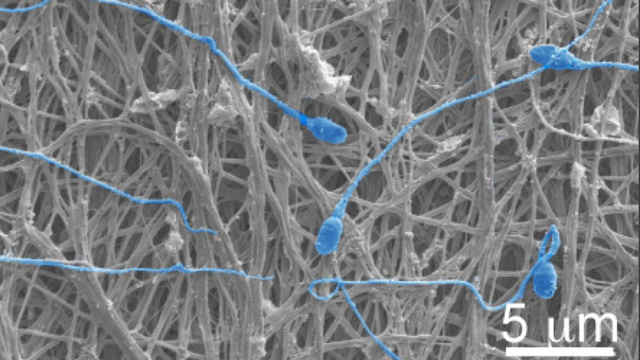
Doesn’t that sound like a tall order? A nanofabricated condom that delivers an anti-HIV drug, prevents pregnancy, then disappears so as not to create waste. Did I say tall order, or something out of a dream? Hard to say. The point is, its could soon be reality thanks to researchers at the University of Washington who just published a paper in describing how they’ll use “electrospinning” to create next-generation female condoms made from specially customized nano-fibers.
For those unfamiliar with the terminology, electrospinning is a process where an electrical charge is used to draw very fine fibers (typically on the micro or nano scale) from a liquid. Using this method, the UofW researchers hope to weave an ultra-thin series of cloth-like fibers and medicine together to create female condoms that will boast all the necessary protection and contraceptives to make recreational sex perfectly safe. And the rate of disolution, which can be engineered to take place in a matter of minutes, hours or days, ensures that women don’t need to remove it after sex is had.
According to their abstract, the new condom is based in the field of “Multipurpose prevention technologies (MPTs)”, a relatively new concept that seeks to “simultaneously prevent sexually transmitted infections (STIs) and unintended pregnancy”. Given the current rate of population growth and the ongoing epidemic of HIV/AIDS and other STI’s, this new field is considered to be a possible answer to a growing global health concern. What’s more, they claim that “combining chemical and physical barriers offers the greatest potential to design effective MPTs, but integrating both functional modalities into a single device has been challenging.”
The abstract also goes on to describe the process that they will be relying on and the results:
“Using FDA-approved polymers, we fabricated nanofiber meshes with tunable fiber size and controlled degradation kinetics that facilitate simultaneous release of multiple agents against HIV-1, HSV-2, and sperm. We observed that drug-loaded meshes inhibited HIV-1 infection in vitro and physically obstructed sperm penetration. Furthermore, we report on a previously unknown activity of glycerol monolaurate (GML) to potently inhibit sperm motility and viability.”
Despite the challenges in the process, the results thus far have been encouraging, and even garnered the attention of Bill and Melinda Gates. Apparently, their Foundation has pledged a research grant of one million dollars to develop the technology which will make these condoms possible. I don’t know about you, but I feel safer!
The concept of technological progress and its potential consequences has been the subject of quite a bit of attention lately. First, there was the announcement from Harvard University and Human Rights Watch that a ban on killer robots was needed before the current pace of innovation led to the machines that could so without human oversight.
Then came the University of Cambridge’s announcement about the creation of the Center for the Study of Existential Risk (CSER) to evaluate new technologies. And last, there was the news the news that the DOD had signing a series of instructions to “minimize the probability and consequences of failures that could lead to unintended engagements,” starting at the design stage.
Concordantly, back in early November, the Royal Society along with the Academy of Medical Sciences, British Academy, and Royal Academy of Engineering concluded a workshop called “Human Enhancement and the Future of Work” in which they considered the growing impact and potential risks of augmentation technologies. In their final report, they raised serious concerns about the burgeoning trend and how humanity is moving from a model of therapy to one in which human capacities are greatly improved. The implications, they concluded, should be part of a much wider public discussion.
Specifically, the report raised concerns on drugs and digital enhancements that will allow people to work longer, hard and faster. Such technologies could easily give rise to a culture of enhanced competitiveness, more than we currently know, where the latest in cybernetics, bionics and biomedical devices are used to gain and edge, not to remedy medical problems. Currently, things like bionic prosthesis are being created to aid amputees and injury victims; but as the technology improves and such devices become more effective than organic limbs, the purpose could change.
What’s more, there are the ethical implications of having such technology available to human beings. If people can upgrade their bodies to enhance their natural abilities, what will it means for those who get “left behind”? Will the already enormous gulf between the rich and poor expand even further and take on a new dimension? Will those who want to succeed in the business world be forced to scrounge so they can get the latest upgrades.
Or, as the panel’s final report put it:
“Work will evolve over the next decade, with enhancement technologies potentially making a significant contribution. Widespread use of enhancements might influence an individual’s ability to learn or perform tasks and perhaps even to enter a profession; influence motivation; enable people to work in more extreme conditions or into old age, reduce work-related illness; or facilitate earlier return to work after illness.”
At the same time however, they acknowledge the potential efficacy and demand for such technologies, prompting the call for open discourse. Again, from the report:
“Although enhancement technologies might bring opportunities, they also raise several health, safety, ethical, social and political challenges, which warrant proactive discussion. Very different regulatory regimes are currently applied: for example, digital services and devices (with significant cognitive enhancing effects) attract less, if any, regulatory oversight than pharmacological interventions. This raises significant questions, such as whether any form of self-regulation would be appropriate and whether there are circumstances where enhancements should be encouraged or even mandatory, particularly where work involves responsibility for the safety of others (e.g. bus drivers or airline pilots).”
In many ways, this report is overdue, as it is offering some rather obvious commentary on a subject which has been the subject of speculation and fiction for some time. For example, in the Sprawl Trilogy, William Gibson explored the idea of human enhancement and the disparity between rich and poor at length. In his world, the rich were ensured clinical immortality through AI and biotech while everyone else was forced to spend their savings just to afford the latest tech, merely so they could stay in the running.
However, just about all of the panel’s recommendations were most appropriate. They included further investigations into ensuring safety, affordability, and accessibility, not to mention that some of these enhancement technologies — be they pharmaceutical, regenerative medicines, or cybernetics — should be regulated by the government. This last article is especially appropriate given the potential for personal misuse, not to mention the potential exploitation by employers.
With all the harm that could result from having technologies that could render human beings “postmortal” or “posthuman”, some degree of oversight is certainly necessary. But of course, the real key is a public educated and informed on the issue of cybernetics, bionics, and human enhancement, and what they could mean for us. As with so much else, the issue is one of choice, and awareness of what the consequences could be. Choose wisely, that’s the only guarantee! Hey, that rhymed… I smell a quote!
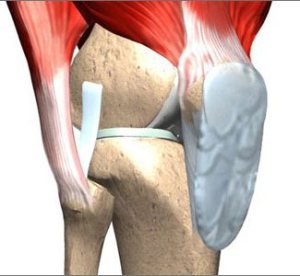
Since it’s development as a viable technology, 3-D printing has presented us with some very interesting possibilities. In addition to objects made of plastic, metal, and possibly meat (a proposed idea still in development), printers may be used to create something else entirely: cartilage! Yes, in a recent announcement, scientists at the Wake Forest Institute of Regenerative Medicine claimed to have pioneered an approach to replace damaged cartilage.
The process combines two low-cost techniques – electronspinning and inkjet/bioprinting – to create the world’s first class of synthetic implantable biomaterial. The first is a method that that is used to create synthetic, polymer-based nanoscale-fibrous materials for implants and wound dressing, while the second is currently used to create tissue and organ material.
Each process is viable, but comes with its own share of shortcomings. Electrospun materials typically don’t have the ability to promote cellular growth, nor do they have the flexibility needed for cartilage replacement. And inkjet printed materials lack the structure and strength needed to support the loads that cartilage carries. But by merging to two systems together, the researchers at Wake Forest to overcome these limitations and create something viable.
Their hybrid approach alternates microscopic layers of electrospun fiber and printed, living cartilage cells cultivated from rabbit ears, thus generating an artificial cartilage pad that is suitable for implanting. An eight-week study in mice showed that the implanted pads developed cellular structure similar to natural cartilage, while separate mechanical strength tests demonstrated that it was equivalent to the real thing.
For medical practitioners, the benefits of this breakthrough are obvious. Natural cartilage not only takes a long time to heal, it has almost no ability to regrow itself. At present, doctors rely on approach that combines removing small sections of damaged cartilage with microscopic grafts. However, neither of these methods are effective at restoring the cushioning, lubricating tissue that allows for full range of motion or impact on the limbs. What’s more, the long term effects of bone on bone contact can require eventual joint replacement.
Though the research is still in the early stages, the initial results have been quite positive. With time, and assuming the results continue to be as positive, we could be looking at a cheap and effective way to rehabilitate damaged limbs.
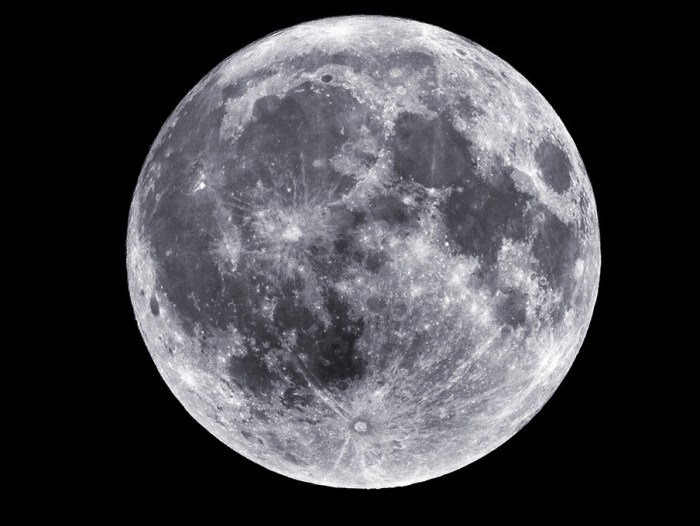
The buzz about NASA is that the human race is once again going to the moon, and planning to stay there! According to space policy expert John Logsdon, there are plans to establish a manned base on the dark side of the moon under the Obama administration. He further indicated that with the election pending, this news has been kept under wraps. But with Obama now secure in a second term, it is expected that there will be an announcement soon.
“NASA has been evolving its thinking, and its latest charts have inserted a new element of cislunar/lunar gateway/Earth-moon L2 sort of stuff into the plan,” said Logsdon in a recent interview with SPACE.com. “They’ve been holding off announcing that until after the election, noting that NASA’s mission, direction, and budget could have been revised under a Romney administration.”
For those who have been following the Obama administration’s plans for space, this should not come as a surprise. In 2010, the president signed the NASA 2010 Authorization Act into law, a bill which freed up $60 billion for NASA through 2013. This move was intended to reignite space exploration at a time when the US found itself lagging behind Russia, China, the European Union and India in terms of bold new space projects.
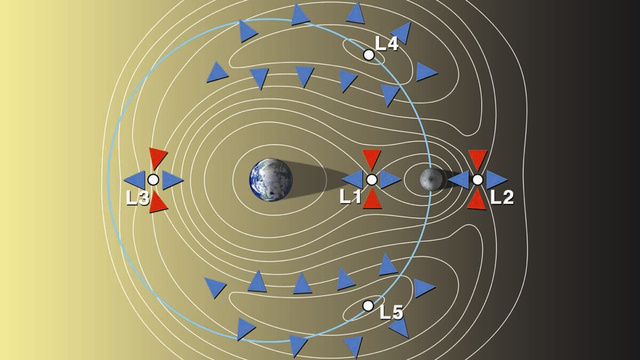
These project include a planned asteroid visit by 2025 and a manned mission to Mars in 2030. A manned outpost at the Earth-moon L2 “gateway” (shown in the diagram below) could serve as an important stepping stone to the outer solar system. But right now, NASA’s eyes are firmly fixed on Mars itself, since a manned mission is the next logical step in their research of the Red Planet.
“There are many options – and many routes – being discussed on our way to the Red Planet. In addition to the moon and an asteroid, other options may be considered as we look for ways to buy down risk – and make it easier – to get to Mars.” At a conference held this past September, NASA deputy chief Lori Garver went even further to outline NASA’s goals for the coming years:
“We just recently delivered a comprehensive report to Congress outlining our destinations which makes clear that SLS – NASA’s new heavy-lift “Space Launch System” – will go way beyond low-Earth orbit to explore the expansive space around the Earth-moon system, near-Earth asteroids, the moon, and ultimately, Mars. Let me say that again, we’re going back to the moon, attempting a first-ever mission to send humans to an asteroid and actively developing a plan to take Americans to Mars.”
Suffice it to say, NASA is happy the election turned out the way it did. With their budget secure, the course of future space exploration has been set and remains in effect. Who’s to say where it will take us beyond Mars? To the Jovian satellites of Europa, Ganymede and Io? The Saturnalian moons of Titan, Rhea, Dione and Enceladus? I call Gliese 581 after that. I want to know for sure if the fourth planet (the setting of our story Yuva) is inhabitable or not already!
Some very interesting things have been taking place in the last month, all of concerning the possibility that humanity may someday face the extinction at the hands of killer AIs. The first took place on November 19th, when Human Rights Watch and Harvard University teamed up to release a report calling for the ban of “killer robots”, a preemptive move to ensure that we as a species never develop machines that could one day turn against us.
The second came roughly a week later when the Pentagon announced that measures were being taken to ensure that wherever robots do kill – as with drones, remote killer bots, and cruise missiles – the controller will always be a human being. Yes, while Americans were preparing for Thanksgiving, Deputy Defense Secretary Ashton Carter signed a series of instructions to “minimize the probability and consequences of failures that could lead to unintended engagements,” starting at the design stage.
X-47A Drone, the latest “hunter-killer”
And then most recently, and perhaps in response to Harvard’s and HRW’s declaration, the University of Cambridge announced the creation of the Centre for the Study of Existential Risk (CSER). This new body, which is headed up by such luminaries as Huw Price, Martin Rees, and Skype co-founder Jaan Tallinn, will investigate whether recent advances in AI, biotechnology, and nanotechnology might eventually trigger some kind of extinction-level event. The Centre will also look at anthropomorphic (human-caused) climate change, as it might not be robots that eventually kill us, but a swelteringly hot climate instead.
All of these developments stem from the same thing: ongoing developments in the field of computer science, remotes, and AIs. Thanks in part to the creation of the Google Neural Net, increasingly sophisticated killing machines, and predictions that it is only a matter of time before they are capable of making decisions on their own, there is some worry that machines programs to kill will be able to do so without human oversight. By creating bodies that can make recommendations on the application of technologies, it is hopes that ethical conundrums and threats can be nipped in the bud. And by legislating that human agency be the deciding factor, it is further hoped that such will never be the case.
The question is, is all this overkill, or is it make perfect sense given the direction military technology and the development of AI is taking? Or, as a third possibility, might it not go far enough? Given the possibility of a “Judgement Day”-type scenario, might it be best to ban all AI’s and autonomous robots altogether? Hard to say. All I know is, its exciting to live in a time when such things are being seriously contemplated, and are not merely restricted to the realm of science fiction.
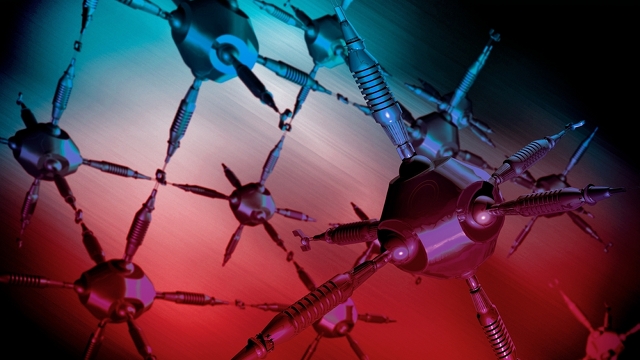
It’s called a Utility Fog, swarms of networked microscopic robots that can assume the shape and texture of virtually anything. Originally proposed by J. Storrs Hall, a speculative science writer back in 1993, the concept has gone on to inspired futurists and science fiction writers for years. These include Warren Ellis’s foglets in Transmetropolitan and Neal Stephenson’s personal nanodefense systems in The Diamond Age, among others.
As an extension of the nanotechnological principle – where microscopic machines are able to self-replicate and construct just about anything – the Utility Fog idea goes a step further by proposing that we have a series of robots linked, arm and arm, to form a solid mass that can assume the shape of anything we need. Another term that is often used is “Smart Matter”, because it entails the creation of materials that are capable of responding to input, storing info, and thereby predicting what a users desires.
And since they are composed by tiny robots that could be capable of computing and networking with larger machines, they could even form interfaces that allow us to store information, send emails, or take pictures. Each “foglet” would function as its own discreet computer network, in this model, making sure that separate clouds are discernible and perform different tasks. The possibilities are truly limitless, and though it may be a few decades away at this point (by liberal estimates), we can only imagine how it will alter our daily lives.
During a recent interview with IO9, Hall reminisced about how he first came up with the idea:
“I came up with this vision of form fitting foam — one that could take on the shape of anything inside it and on the fly, which got me to wondering if we could ever possibly build something like that.”
The answer, according to Hall, came to him by considering the nascent field of molecular nanotechnology. By designing and creating objects at the molecular scale, Hall envisioned a fog that could quickly morph along with the movements of anything around it — including the passengers of cars. However, the greatest potential, to Hall lies in the creation of virtual environments. In truth, there could come a day when utility fogs will blend seamlessly with the real and virtual worlds, creating a kind of hybrid reality in between.
“You could actually push this technology to the point of creating a virtual world around you. You’d essentially get Star Trek’s holodeck — one that could actually cut you and make you bleed.You could put yourself in a virtual environment where you’re interacting with something that leads to a real environment, and it’s this interface between what’s real and virtual that will prove to be the most important thing about it.”
However, the most radical possibility could be in the field of clinical immortality. Amongst science fiction writers such as William Gibson, the idea that human beings could upload their minds into constructs and interfaces has been toyed with for some time. However, why upload your mind into a box or some kind of portable hard drive when you could render it seamlessly into the form of a fog?
“You could very realistically imagine uploading into it, and then you’d be this sort of formless data amoeba controlling this formless physical amoeba and take any size or form you wanted.”
Of course, there are limitation to the whole concept, not the least of which is the fact that the constituent components of the technology are still any decades away. For starters, there’s the ability to construct robots on the scale required, then the need to fashion computers that are small enough to fit. Then there’s the software required to program such machines. Hall figures that it could take a team of experts as much as a half decade to come up with the first set of algorithms required for the most basic functions.
“To navigate that hairy interface between the continuous and the discreet — that’s more difficult, the foglets will have to link up hands, let go, walk, crawl, and so forth — it’ll be like a three dimensional square dance.”
But above all, the main issue is one of cost:
“The system will have to be capable of keeping track of any changes to the environment and to keep track of you — and this will require incredibly sophisticated simulation, sensing, and interfacing software and that’s going to be tremendously expensive.”
Not surprising really. At this juncture in time, the greatest leaps in technology that will forever alter the future and make it impossible to predict – to a point anyway – are still highly speculative. But then again, major breakthroughs are being made all the time, and are occurring at a greater and greater pace. Who’s to say when the future will arrive. It never seems to show up on schedule!
Yes, the announcement from the Curiosity team yesterday that no organics have been found on Mars (yet) certainly came as a big disappointment. However, people may be interested to hear that organic molecules were discovered on a different planet in our Solar System, along with water and ice. Would you believe it, the planet is Mercury? Yes, the world famous for lakes of molten metal and extreme heat may actually boast the building blocks of life.
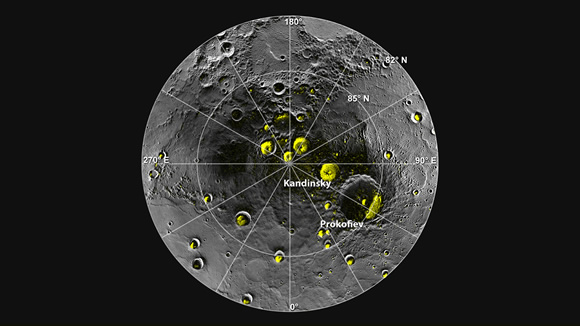
This information is the latest to come from NASA’s MESSENGER spacecraft, which is now orbiting the closest planet to our Sun. It confirms what was postulated 20 years ago, after images were taken of the polar region and detected radar-bright materials which were beleived to be water and ice. And where water and ice occur, organic molecules are often sure to follow. Though Mercury boasts the hottest environment of any planet in the Solar System, the area in question lies within a permanent shadowed series of craters on the northern pole.
Scientists today said that Mercury could hold between 100 billion to 1 trillion tons of water ice at both poles, and the ice could be up to 20 meters deep in places. Additionally, intriguing dark material which covers the ice could hold other volatiles such as organics. Unfortunately, all of this water comes in the form of ice, as surface temperatures in the poles are too cold to allow for a thaw. In addition, the total lack of atmosphere on Mercury would mean that any liquid would evaporate and be sucked into space very quickly.
At a briefing which was held yesterday, Sean Solomon – MESSENGER Principal Investigator – has this to say about the news: “These findings reveal a very important chapter of the story of how water ice has been delivered to the inner planets by comets and water rich asteroids over time.” In short, it is believed that these ice deposits and organic molecules were delivered to the planet through a series of meteor impacts, and which have survived thanks to the existence of Mercury’s permanently shadowed polar regions.
Granted, no settlers are ever likely to be making a home on Mercury – not without some serious technological innovations! – but the discovery is a very interesting find and does help scientists to understand how life may have begun here on Earth. What’s more, this news may help Curiosity and other science teams to determine where and how organic molecules and ice could be found on Mars. The challenges there are similar to those on Mars, since she too is an inner planet that has virtually no atmosphere and a great deal of surface radiation, not to mention that she too would have been the recipient of water ice and organics through meteoric impacts.
So c’mon Mars! Show us what you got. You don’t want to be outdone by your Hermian cousin do ya?
For some time now, researchers and scientists have been trying to develop a way to immunize people against the common flu. Traditional vaccines are available, but for most people, the need to get a shot once a year seems like a bit of a bother. For others, potential side effects are reason enough not to get one, especially when getting one doesn’t guarantee they’ll stay healthy. However, that all may be coming to an end, thanks to research being conducted at the Friedrich-Loeffler Institute in Riems Island, Germany.
The key, apparently, is to use an RNA-based vaccine. Traditional vaccines work by teaching our immune systems to recognize a pair of key proteins, known as HA and NA, found on viruses. But those proteins constantly change due to mutation, and at a rate that requires that new vaccines be produced every year. However, the proposed new kind of vaccine would work by targeting the underlying RNA-driven processes that create the NA and HA proteins, regardless of their precise form.
According to an interview conduct by New Scientist with Lothar Stitz, “the mRNA that controls the production of HA and NA in a flu virus can be mass-produced in a few weeks. An injection of mRNA is picked up by immune cells, which translate it into protein… These proteins are then recognized by the body as foreign, generating an immune response. The immune system will then recognize the proteins if it encounters the virus subsequently, allowing it to fight off that strain of flu.”
What’s more, this new type of vaccine could be produced in the form of a powder, which would eliminate the need for refrigeration. And an RNA vaccine is more appealing to researchers than proposed DNA vaccines because there’s no chance of them getting spliced into the human genome and disrupting normal genetic behavior. In addition, the German research team has also discovered a protein known as protamine, which protects the RNA vaccines from being ripped apart in the bloodstream.
Naturally, there is plenty of testing to be done, and human trials to be conducted to make sure the entire sequence works within the human immune system, sans harmful side effects. But the early results are encouraging and researchers are optimistic. Between this news and the possibility of an HIV vaccine, we could be looking at the end of infectious diseases sometime in the not-too-distant future. But I wouldn’t say that definitively though, since don’t I want to jinx it 😉
Now if only we could find a cure for the common cold…

 For years, Richard Branson has been promising the world commercial spaceflight with his proposed aerospace line, Virgin Galactic. And with the advent of SpaceShipTwo, the rocket-powered vehicle designed for this end, the company has been promising to conduct a successful test flight by the end of the year. This past Wednesday, Virgin and the development company – Scaled Composites – delivered on that promise, as SS2 conducted its first fully-loaded glide test successfully and landed safe and sound.





 Stories by Williams