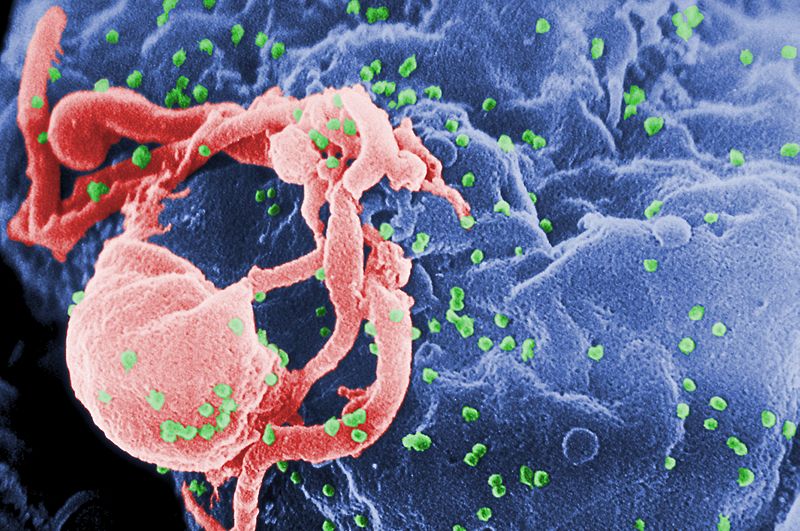
The End of HIV?

Since it was first observed clinically in 1981, HIV and AIDS have come to be viewed as one of the most deadly and infectious diseases in history, exceeded only by the Bubonic Plague and Smallpox. As of 2010, it was estimated that roughly 34 million people were living with HIV/AIDS, an increase of close to three million from the previous year. And although accurate statistics are sometimes difficult to come by, due to the fact that motrality rates are especially high in underdeveloped regions of sub-Saharan Africa, it is widely believed that anywhere from 1.5 to 2 million people die every year as a result of the disease.

However, researchers at Caltech have been working on a potential solution which may eventually lead to the development of an HIV vaccine. In recent years, biologists have identified a strain of antibodies that are capable of neutralizing most strains of HIV. Led by Nobel Laureate David Baltimore, the Caltech research team is experimenting with introducing these antibodies into test subjects (lab mice) to see if it would act as an effective barrier to infection.

The approach, known as Vectored ImmunoProphylaxis (VIP), is essentially an inversion of the traditional vaccination method. Previously, researchers would focus on designing substances that activate the immune system so as to block infection via antibodies or attack infected cells via T cells. The VIP approach differs in that it provides protective antibodies from the start, thereby ensuring that the HIV virus is killed before it can develop into AIDS, and providing a respite for the immune system which is usually called on to do the work.

And so far, the results have been encouraging. After introducing the antibodies into a series of lab mice, the researchers found that the mice were then able to generate a high concentration of the antibodies throughout their circulatory systems. When they then proceeded to introduce the HIV virus intravenously to the mice, the antibodies protected them from infection.

Naturally, there were concerns going in that human bodies might not react in the same way as the mices’, either in terms of their production of the antibodies or their resistance to infection. However, Baltimore and his team were sure to use mice which have been known to be more susceptible to the HIV virus than others, and administered doses of the virus that were well in excess of what would be needed to lead to infection. In the end, they introduced the mice to 125 nanograms of the virus, 100 times what would be required to cause infection, and yet still the mice were protected.

For those living with HIV, this is exciting news! Though it does not represent a cure for those already carrying the infection, it does mean that future generations can live without fear of the contracting the terrible disease. What’s more, those who have it will no longer have to fear passing it on, either through sexual intercourse to their partner, or through pregnancy to their children. Yes, with continued testing and some eventual human trials, HIV may very well come to share the same fate as Polio, Tetanus amd Typhoid, diseases which were once considered terribly infectious, fatal, and untreatable.

Source: news.cnet.com

News From Mars!

An interesting slew of news has been coming from NASA recently, courtesy of the Curiosity Rover and its mission to Mars. First, there was the announcement by John Grotzinger on NPR radio that Curiosity’s science team had discovered something potentially “earth-shattering” on the Red Planet, which came just two days ago. Since then, researchers over at NASA have been keeping a tight lip on what that might be, though it seems to be taking an extraodinary effort to do so. One can only imagine what they’re dying to tell us…

But it seems more stories are coming in the wake of this. First, there was the revelation by the Curiosity Rover that Mars radiation levels, once thought to be problematic for life, are actually safe for humans. According to Don Hassler, the principal investigator on Curiosity’s Radiation Assessment Detector instrument (RAD), Curiosity determined that “the Mars atmosphere is acting as a shield for the radiation on the surface and as the atmosphere gets thicker, that provides more of a shield and therefore we see a dip in our radiation dose.”

Apparently, the levels are equal to what astronauts deal with on the International Space Station, which means people in suits will be able to walk on the Red Planet safely once a manned mission is mounted. Knowing that they can conduct surveys on the surface without additional radiation shields should prove to be a boon for colonization as well. More settlers will certainly be drawn to Mars now that they know they can settle in without having to worry about little things like radiation sickness or mutations!

Third, there was the news that in the wake of making its “one for the history books” discovery, that Curiosity has finished collecting and analyzing soil samples and is preparing to move on. The final checks and preps were made amidst ethereal whirlwinds and twisters, which are characteristic of the region known as the “Gale Crater”, where it has been conducting its research for the past month. The rover is now being prepared to move on in search of suitable targets for a compact rock drill, the final major sample acquisition system to be tested.

Ashwin Vasavada, the deputy project scientist for the Mars Science Laboratory rover at the Jet Propulsion Laboratory in Pasadena, Calif, had this to say on the next phase of the mission: “We still would like to get a little further into this Glenelg region where we see this diversity of rocks and layered rocks and other really interesting terrain. And then we still have a goal in the next month or two of doing the big U-turn and heading up to Mount Sharp.”

Mount Sharp is a 3-mile-high mound of layered terrain that sits in the center of the Gale Crater, where Curiosity is expected to spend the bulk of its planned two-year mission. In the meantime, the research team needs to go over all the information Curiosity has sent back, including an ongoing analysis of the martian weather.

On top of all that, there’s still the matter of that “earth shaking news”. How about it NASA? You too, Grotzinger? We’re ready and waiting… how much more time do your researchers need before they’re sure and are free to break the news they are so clearly dying to share? I still say its organic molecules, but what do I know?

Source: news.cnet.com

Brazil to Clone Endangered Animals

Countless species of wildlife are on the endangered list today, as a result of ongoing urbanization, deforestation, and pollution. Compared to these combined destructive forces, all attempts at wildlife enhancement and preservation – especially in the developing and underdeveloped parts of the world – seem ill-suited or limited in scope. However, scientists in Brazil have announced a new and startling plan which might just be the difference because success and failure.

The groundbreaking initiative is being carried out as a partnership between the Brasilia Zoological Garden and the Brazilian government’s agricultural research agency, aka. EMBRAPA. Thus far, their efforts include such species as the jaguar, the maned wolf, and the black lion, as well as numerous others that are on the Red List of Threatened Species, as compiled by the Chico Mendes Institute for Biodiversity Conservation (ICMBio) and the International Union for Conservation of Nature (IUCN).

Currently, the initiative is in phase two of development. Phase one involved the collection of samples of genetic material, or germplasm, in the form of blood, sperm, somatic cells and umbilical cord cells, which were gathered over the course of two years. The researchers harvested the genetic material primarily from dead specimens of animals native to the Cerrado, the vast tropical savannah biome that stretches across central Brazil. The next phase will be the training of researchers at the zoo.

According to Carlos Frederico Martins, an EMBRAPA researcher, their organization has already been responsible for the cloning of cows. This began in 2001 with birth of a calf named Vitória, and has since gone on to include over 100 specimens made up largely of cows and horses. They hope to transfer the knowledge gained from these experiments to the staff over at Brasilia Zoological Gardens so the techniques can be adapted to wildlife. Currently, the plan is reserved to increasing the number of captive specimens of endangered animals, but that they are prepared to release these cloned animals into the wild if need be.

Countries like the US and South Korea are also working on similar plans to rehabilitate endangered species of wild animals. In there cases, as well as Brazil’s, the lack of prior knowledge is cited as an potential obstacle to success. As such it may be many years yet before animals such as wild tigers, jaguars, the Gray Brocket Deer, Bison and even simians are successfully cloned in captivity. In the meantime, here’s hoping other conservation efforts fare better than they have in the past! As well all know, humans aren’t the only ones in danger of suffering from Climate Change!

Source: Inter Press Service News Agency