New from Space: Simulations and X-Rays Point to Dark Matter

center_universe2The cosmic hunt for dark matter has been turning up some interesting clues of late. And during the month of June, two key hints came along that might provide answers; specifically simulations that look at the “local Universe” from the Big Bang to the present day and recent studies involving galaxy clusters. In both cases, the observations made point towards the existence of Dark Matter – the mysterious substance believed to make up 85 per cent of the mass of the Universe.

In the former case, the clues are the result of new supercomputer simulations that show the evolution of our “local Universe” from the Big Bang to the present day. Physicists at Durham University, who are leading the research, say their simulations could improve understanding of dark matter due to the fact that they believe that clumps of the mysterious substance – or halos – emerged from the early Universe, trapping intergalactic gas and thereby becoming the birthplaces of galaxies.

universe_expansionCosmological theory predicts that our own cosmic neighborhood should be teeming with millions of small halos, but only a few dozen small galaxies have been observed around the Milky Way. Professor Carlos Frenk, Director of Durham University’s Institute for Computational Cosmology, said:

I’ve been losing sleep over this for the last 30 years… Dark matter is the key to everything we know about galaxies, but we still don’t know its exact nature. Understanding how galaxies formed holds the key to the dark matter mystery… We know there can’t be a galaxy in every halo. The question is: ‘Why not?’.

The Durham researchers believe their simulations answer this question, showing how and why millions of halos around our galaxy and neighboring Andromeda failed to produce galaxies. They say the gas that would have made the galaxy was sterilized by the heat from the first stars that formed in the Universe and was prevented from cooling and turning into stars. However, a few halos managed to bypass this cosmic furnace by growing early and fast enough to hold on to their gas and eventually form galaxies.

dark_matterThe findings were presented at the Royal Astronomical Society’s National Astronomy Meeting in Portsmouth on Thursday, June 26. The work was funded by the UK’s Science and Technology Facilities Council (STFC) and the European Research Council. Professor Frenk, who received the Royal Astronomical Society’s top award, the Gold Medal for Astronomy, added:

We have learned that most dark matter halos are quite different from the ‘chosen few’ that are lit up by starlight. Thanks to our simulations we know that if our theories of dark matter are correct then the Universe around us should be full of halos that failed to make a galaxy. Perhaps astronomers will one day figure out a way to find them.

Lead researcher Dr Till Sawala, in the Institute for Computational Cosmology, at Durham University, said the research was the first to simulate the evolution of our “Local Group” of galaxies, including the Milky Way, Andromeda, their satellites and several isolated small galaxies, in its entirety. Dr Sawala said:

What we’ve seen in our simulations is a cosmic own goal. We already knew that the first generation of stars emitted intense radiation, heating intergalactic gas to temperatures hotter than the surface of the sun. After that, the gas is so hot that further star formation gets a lot more difficult, leaving halos with little chance to form galaxies. We were able to show that the cosmic heating was not simply a lottery with a few lucky winners. Instead, it was a rigorous selection process and only halos that grew fast enough were fit for galaxy formation.

darkmatter1The close-up look at the Local Group is part of the larger EAGLE project currently being undertaken by cosmologists at Durham University and the University of Leiden in the Netherlands. EAGLE is one of the first attempts to simulate from the beginning the formation of galaxies in a representative volume of the Universe. By peering into the virtual Universe, the researchers find galaxies that look remarkably like our own, surrounded by countless dark matter halos, only a small fraction of which contain galaxies.

The research is part of a program being conducted by the Virgo Consortium for supercomputer simulations, an international collaboration led by Durham University with partners in the UK, Germany, Holland, China and Canada. The new results on the Local Group involve, in addition to Durham University researchers, collaborators in the Universities of Victoria (Canada), Leiden (Holland), Antwerp (Belgium) and the Max Planck Institute for Astrophysics (Germany).
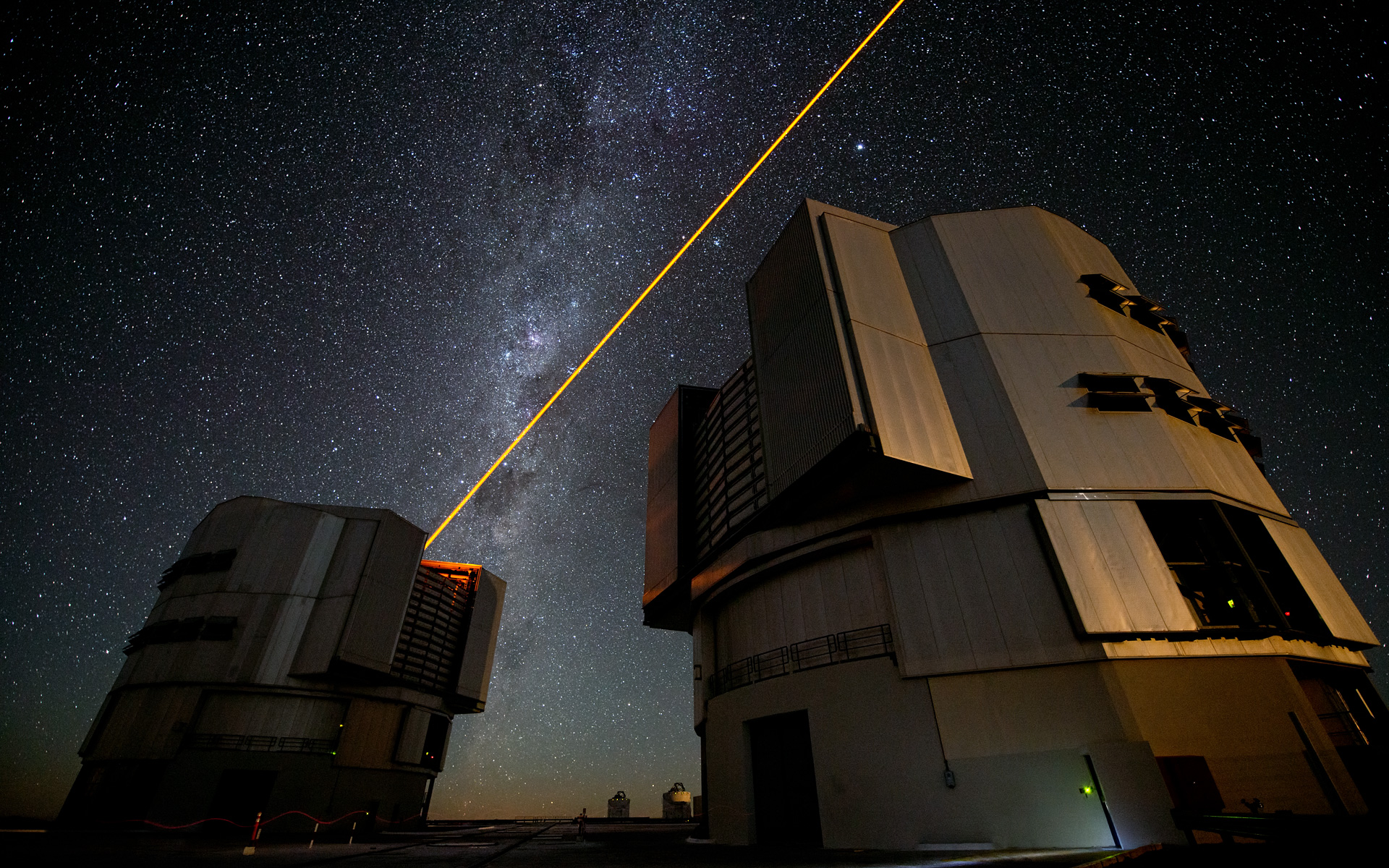
ESO2In the latter case, astronomers using ESA and NASA high-energy observatories have discovered another possible hint by studying galaxy clusters, the largest cosmic assemblies of matter bound together by gravity. Galaxy clusters not only contain hundreds of galaxies, but also a huge amount of hot gas filling the space between them. The gas is mainly hydrogen and, at over 10 million degrees celsius, is hot enough to emit X-rays. Traces of other elements contribute additional X-ray ‘lines’ at specific wavelengths.

Examining observations by ESA’s XMM-Newton and NASA’s Chandra spaceborne telescopes of these characteristic lines in 73 galaxy clusters, astronomers stumbled on an intriguing faint line at a wavelength where none had been seen before. The astronomers suggest that the emission may be created by the decay of an exotic type of subatomic particle known as a ‘sterile neutrino’, which is predicted but not yet detected.

dark_matter_blackholeOrdinary neutrinos are very low-mass particles that interact only rarely with matter via the so-called weak nuclear force as well as via gravity. Sterile neutrinos are thought to interact with ordinary matter through gravity alone, making them a possible candidate as dark matter. As Dr Esra Bulbul – from the Harvard-Smithsonian Center for Astrophysics in Cambridge, Massachusetts, USA, and lead author of the paper discussing the results – put it:

If this strange signal had been caused by a known element present in the gas, it should have left other signals in the X-ray light at other well-known wavelengths, but none of these were recorded. So we had to look for an explanation beyond the realm of known, ordinary matter… If the interpretation of our new observations is correct, at least part of the dark matter in galaxy clusters could consist of sterile neutrinos.

The surveyed galaxy clusters lie at a wide range of distances, from more than a hundred million light-years to a few billion light-years away. The mysterious, faint signal was found by combining multiple observations of the clusters, as well as in an individual image of the Perseus cluster, a massive structure in our cosmic neighborhood.

The supermassive black hole at the center of the Milky Way galaxy.The implications of this discovery may be far-reaching, but the researchers are being cautious. Further observations with XMM-Newton, Chandra and other high-energy telescopes of more clusters are needed before the connection to dark matter can be confirmed. Norbert Schartel, ESA’s XMM-Newton Project Scientist, commented:

The discovery of these curious X-rays was possible thanks to the large XMM-Newton archive, and to the observatory’s ability to collect lots of X-rays at different wavelengths, leading to this previously undiscovered line. It would be extremely exciting to confirm that XMM-Newton helped us find the first direct sign of dark matter. We aren’t quite there yet, but we’re certainly going to learn a lot about the content of our bizarre Universe while getting there.

Much like the Higgs Boson, the existence of Dark Matter was first theorized as a way of explaining how the universe appears to have mass that we cannot see. But by looking at indirect evidence, such as the gravitational influence it has on the movements and appearance of other objects in the Universe, scientists hope to one day confirm its existence. Beyond that, there is the mystery of “Dark Energy”, the hypothetical form of energy that permeates all of space and is believed to be behind accelerations in the expansion of the universe.

As with the discovery of the Higgs Boson and the Standard Model of particle physics, detecting these two invisible forces will at last confirm that the Big Bang and Cosmological theory are scientific fact – and not just working theories. When that happens, the dream of humanity finally being able to understand the universe (at both the atomic and macro level) may finally become a reality!

Source: sciencedaily.com, (2)

The Large Hadron Collider: We’ve Definitely Found the Higgs Boson

higgs-boson1In July 2012, the CERN laboratory in Geneva, Switzerland made history when it discovered an elementary particle that behaved in a way that was consistent with the proposed Higgs boson – otherwise known as the “God Particle”. Now, some two years later, the people working the Large Hadron Collider have confirmed that what they observed was definitely the Higgs boson, the one predicted by the Standard Model of particle physics.

In the new study, published in Nature Physics, the CERN researchers indicated that the particle observed in 2012 researchers indeed decays into fermions – as predicted by the standard model of particle physics. It sits in the mass-energy region of 125 GeV, has no spin, and it can decay into a variety of lighter particles. This means that we can say with some certainty that the Higgs boson is the particle that gives other particles their mass – which is also predicted by the standard model.

CERN_higgsThis model, which is explained through quantum field theory  – itself an amalgam of quantum mechanics and Einstein’s special theory of relativity – claims that deep mathematical symmetries rule the interactions among all elementary particles. Until now, the decay modes discovered at CERN have been of a Higgs particle giving rise to two high-energy photons, or a Higgs going into two Z bosons or two W bosons.
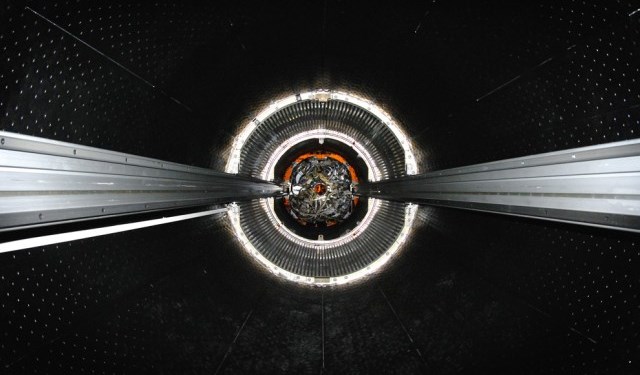
But with the discovery of fermions, the researchers are now sure they have found the last holdout to the full and complete confirmation that the Standard Model is the correct one. As Marcus Klute of the CMS Collaboration said in a statement:

Our findings confirm the presence of the Standard Model Boson. Establishing a property of the Standard Model is big news itself.

CERN_LHCIt is certainly is big news for scientists, who can say with absolute certainty that our current conception for how particles interact and behave is not theoretical. But on the flip side, it also means we’re no closer to pushing beyond the Standard Model and into the realm of the unknown. One of the big shortfalls of the Standard Model is that it doesn’t account for gravity, dark energy and dark matter, and some other quirks that are essential to our understanding of the universe.
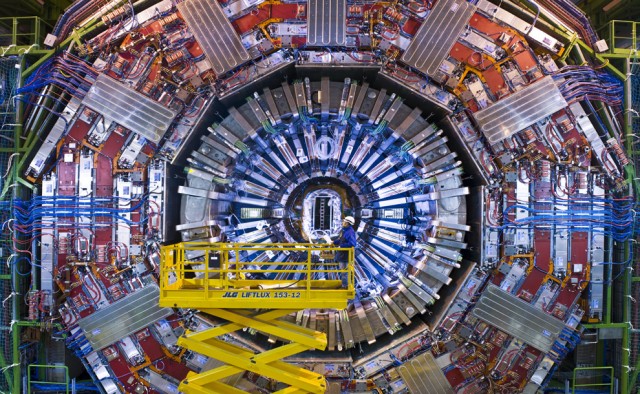
At present, one of the most popular theories for how these forces interact with the known aspects of our universe – i.e. electromagnetism, strong and nuclear forces – is supersymmetry.  This theory postulates that every Standard Model particle also has a superpartner that is incredibly heavy – thus accounting for the 23% of the universe that is apparently made up of dark matter. It is hoped that when the LHC turns back on in 2015 (pending upgrades) it will be able to discover these partners.

CERN_upgradeIf that doesn’t work, supersymmetry will probably have to wait for LHC’s planned successor. Known as the “Very Large Hadron Collider” (VHLC), this particle accelerator will measure some 96 km (60 mile) in length – four times as long as its predecessor. And with its proposed ability to smash protons together with a collision energy of 100 teraelectronvolts – 14 times the LHC’s current energy – it will hopefully have the power needed to answer the questions the discovery of the Higgs Boson has raised.

These will hopefully include whether or not supersymmetry holds up and how gravity interacts with the three other fundamental forces of the universe – a discovery which will finally resolve the seemingly irreconcilable theories of general relativity and quantum mechanics. At which point (and speaking entirely in metaphors) we will have gone from discovering the “God Particle” to potentially understanding the mind of God Himself.

I don’t think I’ve being melodramatic!

Source: extremetech.com, blogs.discovermagazine.com

NASA’s Proposed Warp-Drive Visualized

ixs-enterpriseIt’s no secret that NASA has been taking a serious look at Faster-Than-Light (FTL) technology in recent years. It began back in 2012 when Dr Harold White, a team leader from NASA’s Engineering Directorate, announced that he and his team had begun work on the development of a warp drive. His proposed design, an ingenious re-imagining of an Alcubierre Drive, may eventually result in an engine that can transport a spacecraft to the nearest star in a matter of weeks — and all without violating Einstein’s law of relativity.

In the spirit of this proposed endeavor, White chose to collaborate with an artist to visualize what such a ship might look like. Said artist, Mark Rademaker, recently unveiled the fruit of this collaboration in the form of a series of concept images. At the heart of them is a sleek ship nestled at the center of two enormous rings that create the warp bubble. Known as the IXS Enterprise, the ship has one foot in the world of science fiction, but the other in the realm of hard science.

ixs-enterprise-0The idea for the warp-drive comes from the work published by Miguel Alcubierre in 1994. His version of a warp drive is based on the observation that, though light can only travel at a maximum speed of 300,000 km/sec (186,000 miles per second, aka. c), spacetime itself has a theoretically unlimited speed. Indeed, many physicists believe that during the first seconds of the Big Bang, the universe expanded at some 30 billion times the speed of light.

The Alcubierre warp drive works by recreating this ancient expansion in the form of a localized bubble around a spaceship. Alcubierre reasoned that if he could form a torus of negative energy density around a spacecraft and push it in the right direction, this would compress space in front of it and expand space behind it. As a result, the ship could travel at many times the speed of light while the ship itself sits in zero gravity – hence sparing the crew from the effects of acceleration.

alcubierre-warp-drive-overviewUnfortunately, the original maths indicated that a torus the size of Jupiter would be needed, and you’d have to turn Jupiter itself into pure energy to power it. Worse, negative energy density violates a lot of physical limits itself, and to create it requires forms of matter so exotic that their existence is largely hypothetical. In short, what was an idea proposed to circumvent the laws of physics itself fell prey to their limitations.

However, Dr Harold “Sonny” White of NASA’s Johnson Space Center reevaluated Alcubierre’s equations and made adjustments that corrected for the required size of the torus and the amount of energy required. In the case of the former, White discovered that making the torus thicker, while reducing the space available for the ship, allowed the size of it to be greatly decreased – from the size of Jupiter down to a width of 10 m (30 ft), roughly the size of the Voyager 1 probe.

alcubierre-warp-drive-overviewIn the case of the latter, oscillating the bubble around the craft would reduce the stiffness of spacetime, making it easier to distort. This would reduce the amount of energy required by several orders of magnitude, for a ship traveling ten times the speed of light. According to White, with such a setup, a ship could reach Alpha Centauri in a little over five months. A crew traveling on a ship that could accelerate to just shy of the speed of light be able to make the same trip in about four and a half years.

Rademaker’s renderings reflect White’s new calculations. The toruses are thicker and, unlike the famous warp nacelles on Star Trek’s Enterprise, their design is the true function of hurling the craft between the stars. Also, the craft, which is divided into command and service modules, fits properly inside the warp bubble. There are some artistic additions, such as some streamlining, but no one said an interstellar spaceship couldn’t be functional and pretty right?

ixs-enterprise-2For the time being, White’s ideas can only be tested on special interferometers of the most exacting precision. Worse, the dependence of the warp on negative energy density is a major barrier to realization. While it can, under special circumstances, exist at a quantum level, in the classical physical world that this ship must travel through, it cannot exist except as a property of some form of matter so exotic that it can barely be said to be capable of existing in our universe.

Though no one can say with any certainty when such a system might be technically feasible, it doesn’t hurt to look ahead and dream of what may one day be possible. And in the meantime, you can check out Rademaker’s entire gallery by going to his Flickr account here. And be sure to check out the video of Dr. White explaining his warp-drive concept at SpaceVision 2013:


Sources:
gizmag.comIO9.com, cnet.com
, flickr.com

A Cleaner Future: Contaminant-Detecting Water Sensor

https://i0.wp.com/f.fastcompany.net/multisite_files/fastcompany/imagecache/1280/poster/2014/05/3030503-poster-p-jack-and-beaker.jpgJack Andraka is at it again! For those who follow this blog (or subscribe to Forbes or watch TED Talks), this young man probably needs no introduction. But if not, then you might not known that Andraka is than the young man who – at 15 years of age – invented an inexpensive litmus test for detecting pancreatic cancer. This invention won him first prize at the 2012 Intel International Science and Engineering Fair (ISEF), and was followed up less than a year later with a handheld device that could detect cancer and even explosives.

And now, Andraka is back with yet another invention: a biosensor that can quickly and cheaply detect water contaminants. His microfluidic biosensor, developed with fellow student Chloe Diggs, recently took the $50,000 first prize among high school entrants in the Siemens We Can Change the World Challenge. The pair developed their credit card-sized biosensor after learning about water pollution in a high school environmental science class.

andraka_diggsAs Andraka explained:

We had to figure out how to produce microfluidic [structures] in a classroom setting. We had to come up with new procedures, and we custom-made our own equipment.

According to Andraka, the device can detect six environmental contaminants: mercury, lead, cadmium, copper, glyphosate, and atrazine. It costs a dollar to make and takes 20 minutes to run, making it 200,000 times cheaper and 25 times more efficient than comparable sensors. At this point, make scaled-down versions of expensive sensors that can save lives has become second nature to Andraka. And in each case, he is able to do it in a way that is extremely cost-effective.

andraka-inlineFor example, Andraka’s litmus test cancer-detector was proven to be 168 times faster than current tests, 90% accurate, and 400 times more sensitive. In addition, his paper test costs 26,000 times less than conventional methods – which include  CT scans, MRIs, Ultrasounds, or Cholangiopancreatography. These tests not only involve highly expensive equipment, they are usually administered only after serious symptoms have manifested themselves.

In much the same vein, Andraka’s handheld cancer/explosive detector was manufactured using simple, off-the-shelf and consumer products. Using a simple cell phone case, a laser pointer and an iPhone camera, he was able to craft a device that does the same job as a raman spectrometer, but at a fraction of the size and cost. Whereas a conventional spectrometer is the size of a room and costs around $100,000, his handheld device is the size of a cell phone and costs $15 worth of components.

andraka_seimensAs part of the project, Diggs and Andraka also developed an inexpensive water filter made out of plastic bottles. Next, they hope to do large-scale testing for their sensor in Maryland, where they live. They also want to develop a cell-phone-based sensor reader that lets users quickly evaluate water quality and post the test results online. Basically, its all part of what is fast becoming the digitization of health and medicine, where the sensors are portable and the information can be uploaded and shared.

This isn’t the only project that Andraka has been working on of late. Along with the two other Intel Science Fair finalists – who came together with him to form Team Gen Z – he’s working on a handheld medical scanner that will be entered in the Tricorder XPrize. This challenge offers $10 million to any laboratory or private inventors that can develop a device that can diagnose 15 diseases in 30 patients over a three-day period. while still being small enough to carry.

For more information on this project and Team Gen Z, check out their website here. And be sure to watch their promotional video for the XPrize competition:


Source:
fastcoexist.com

First Ever Organism with “Alien” DNA

alien-dna-640x353Normal DNA, which is characterized by the double helix and its the four bases that bond it together – known as T, G, A, and C – is at the heart of all living organisms. While permutations and differences exist between species, this basic structure has existed unchanged for billions of years. That is, until now. This past May, researchers announced that they had created the first ever organism with synthetic DNA that has two new bases – X and Y. Mary Shelley and H.G. Wells must be turning over in their graves, as scientists are officially playing God now!

This landmark study, 15 years in the making, was carried out by scientists at the Scripps Research Institute and published in Nature today under the title “A semi-synthetic organism with an expanded genetic alphabet”. In normal DNA, the four bases combine in predictable ways. A always bonds with T, and C always bonds with G, creating a fairly simple “language” of base pairs — ATCGAAATGCC, etc. Combine a few dozen base pairs together in a long strand of DNA and you then have a gene, which tells the organism how to produce a certain protein.

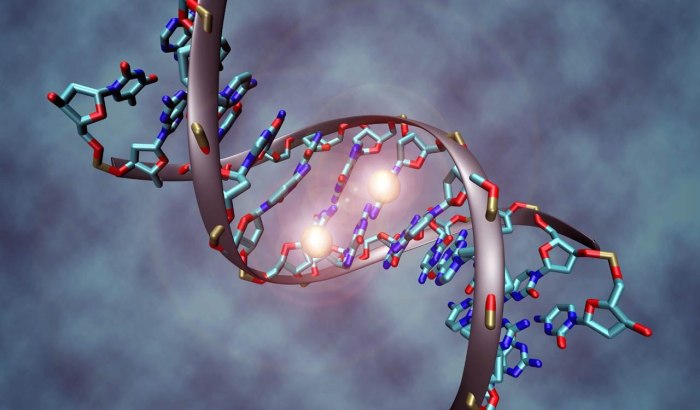
DNA-MicroarrayIf you know the sequence of letters down one strand of the helix, you always know what other letter is. This “complementarity” is the fundamental reason why a DNA helix can be split down the middle, and then have the other half perfectly recreated. In this new study, the Scripps scientists found a method of inserting a new base pair into the DNA of an e. coli bacterium. These two new bases are represented by the letters X and Y, but the actual chemicals are described as “d5SICS” and “dNaM.”

A previous in vitro (test tube) study had shown that these two chemicals were compatible with the enzymes that split and copy DNA. For the purposes of this study, the scientists began by genetically engineering an e. coli bacterium to allow the new chemicals (d5SICS and dNaM) through the cell membrane. Then they inserted a DNA plasmid (a small loop of DNA) that contained a single XY base pair into the bacterium.

dnaheadAs long as the new chemicals were available, the bacterium continued to reproduce normally, copying and passing on the new DNA, alien plasmid and all, and continued to carry on flawlessly for almost a week. For now, the XY base pair does nothing; it just sits there in the DNA, waiting to be copied. In this form, it could be used as biological data storage which, as a new form of biocomputing, could result in hundreds of terabytes of data being stored in a single gram of synthetic, alien DNA. 
Floyd Romesberg, who led the research, has much grander plans:

If you read a book that was written with four letters, you’re not going to be able to tell many interesting stories. If you’re given more letters, you can invent new words, you can find new ways to use those words and you can probably tell more interesting stories.

Now his target is to find a way of getting the alien DNA to actually do something, such as producing amino acids (and thus proteins) that aren’t found in nature. If Romesberg and his colleagues can crack that nut, then it will suddenly become possible to engineer cells that produce proteins that target cancer cells, or special amino acids that help with fluorescent microscopy, or new drugs/gene therapies that do weird and wonderful things.

dna_cancerUltimately it may even be possible to create a wholly synthetic organism with DNA that contains dozens (or hundreds) of different base pairs that can produce an almost infinitely complex library of amino acids and proteins. At that point, we’d basically be rewriting some four billion years of evolution. The organisms and creatures that would arise would be unrecognizable, and be capable of just about anything that a researcher (or mad scientist) could dream up.

In the future, this breakthrough should allow for the creation of highly customized organisms – bacteria, animals, humans – that behave in weird and wonderful ways that mundane four-base DNA would never allow. At the same time, it raises ethical dilemmas and fears that may be well founded. But such is the nature of breakthroughs. The potential for harm and good are always presumably equal when they are firts conceived.

Source: extremetech.com

The Future is Here: FDA Approves Human Suspended Animation

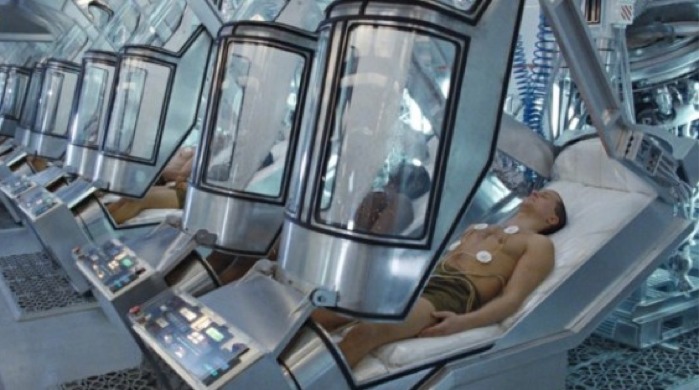
prometheus-cryotubeWe’ve all heard about it, read about it, and seen it in the movies. Suspended Animation. The ability to put someone in a tank and chill them to the point where their heart rate, breathing, and metabolism are reduced to an absolute minimum, preserving their life or prolonging it artificially. It’s a common science fiction concept, but could such a technique ever be made feasible? That is what a team of researchers from UPMC Presbyterian Hospital in Pittsburgh, with FDA approval, are attempting to answer.

The purpose of this research is to see if suspended animation can deliver on its main promise – namely, keeping a patient alive long enough to receive life-saving treatment or surgery. Oftentimes with disease and traumatic injuries, the difference between life and death is a simple matter of timing. And for those patients who simply cannot be helped with the current level of technology and pharmacology, it is also a race against time, trying to stay alive long enough to see science catch up with the illness.

EPRThis Emergency Preservation and Resuscitation (EPR) technique isn’t quite as extreme as what we’ve come to know from science fiction franchises. Instead of reducing a patient’s temperature to near-freezing levels, it involves reducing body temperature to 10 degrees Celsius (50 degrees Fahrenheit) by inserting a cannula into the aorta and flushing cold saline into the system. This will slow the blood flow, which will prevent the body from bleeding out and slow other biological processes as well.

So far, the result have been pretty subdued – with the EPR state of induced hypothermia only being sustainable for about two hours. While this isn’t as dramatic as some may have expected, that could easily provide enough time for surgeons to perform emergency lifesaving surgery. Trauma patients who suffer cardiac arrest have a 7% chance of survival, and administering this technique could have some very real and amazing implications.

suspended-animationThis technique was first tested by Peter Rhee in 2000 using 40 pigs, the results of which were published in 2006. After inflicting a lethal wound to simulate real-world trauma scenarios, the pigs were cooled down so the surgeons could operate then resuscitate them. While all of the control pigs died, the surgeons were able to save 90% of the pigs who had undergone suspension. None of the surviving pigs were reported to have sustained cognitive or physical impairment either.

And as per usual, animal testing is followed by human trials to see if success can be replicated. Due to the extremely time-sensitive and dire nature of the injuries of the test subjects, the FDA has declared that the surgeons will not require informed consent. As a precaution, the team took out advertisements to inform the public of the upcoming study, and even set up a website that would allow people to opt out, if desired. As of yet, nobody has opted out.

alien-stasis-suspended-animationThe plan for testing this process is for the team to the technique on 10 trauma patients whose injuries would be otherwise fatal. That group will be compared against 10 other patients who are not able to undergo EPR, due to the surgical team not being available. After the first increments of 10 EPR and 10 control patients, the technique will be analyzed and refined until enough data points have been collected which will allow them to analyze the efficacy of suspending life in this manner.

Should things work out, we can expect to see EPR becoming a regular part of modern medicine. And with further refinements, it may even be possible to place people in suspended animation for longer (or even indefinite) periods of time. If not, then I guess it will be just become one more of those many, many sci-fi fantasies that (like a patients in a story) will be put away until such time as the technology catches up to the fantasy.

Sources: dailycaller.com, iflscience.com


News from Mars: Martian Water and Earth Organisms

curiosity_peakThis August, the Curiosity Rover will be celebrating its second anniversary of roving around the Red Planet. And ever since it made landfall, Curiosity and the Mars Science Laboratory has repeatedly uncovered signs that Mars was once very like Earth. Basically, it has become undeniable that water once flowed freely over the surface of this barren and uninhabitable world. And this finding, much to the delight of futurists and sci-fi enthusiasts everywhere, is likely to pave the way for human settlement.

Liquid water disappeared from Mars’ surface millions of years ago, leaving behind tantalizing clues about the planet’s ancient past—clues that the MSL has been deciphering for the past 22 months. This began last year when Curiosity found rounded pebbles in the Glenelg region, an indication that a stream once flowed at the site. This was followed by the discovery of rocky outcroppings where the remains of an ancient stream bed consisting of water-worn gravel that was washed down from the rim of Gale Crater.

mountsharp_galecraterThe rover has since moved to a location about 6.5 kilometers (4 miles) away from the Gale Crater landing site, where scientists expect to make even more discoveries. The new location is named Kimberly, after a region of northwestern Australia. As Dawn Sumner, a UC Davis geology professor and co-investigator for NASA’s Mars Science Laboratory team, explained:

Our findings are showing that Mars is a planet that was once a whole lot like Earth. All the rocks we’ve seen on this mission are sediments that have been deposited by water. We’ve found almost no sandstone deposited by wind.

Sumner is working from Curiosity mission control at NASA’s Jet Propulsion Laboratory in Pasadena while on sabbatical from UC Davis, exploring whether the planet ever had an environment capable of supporting microbial life. She is also one of several UC scientists and engineers who have been vital to the success of the Curiosity mission, which is part of NASA’s long-term plan to pave the way for sending astronauts to Mars.

Living-Mars.2In that vein, research continues here on Earth to see exactly what kind of life can survive in the harsh Martian environment. And now,  research suggests that methanogens – among the simplest and oldest organisms on Earth – could survive on Mars. These microorganisms are typically found in swamps and marshes, where they use hydrogen as their energy source and carbon dioxide as their carbon source to produce methane (aka. natural gas).

As an anaerobic bacteria, methanogens don’t require require oxygen or organic nutrients to live, and are non-photosynthetic. Hence, they would be able to exist in sub-surface environments and would therefore be ideal candidates for life on Mars. Rebecca Mickol, a doctoral student in space and planetary sciences at the University of Arkansas, subjected two species of methanogens to Martian conditions to see how they would fair on the Red Planet.

methanogens485These strains included Methanothermobacter wolfeii and Methanobacterium formicicum, both of which survived the Martian freeze-thaw cycles that Mickol replicated in her experiments. This consisted of testing the species for their ability to withstand Martian freeze-thaw cycles that are below the organisms’ ideal growth temperatures. As she explained it:

The surface temperature on Mars varies widely, often ranging between minus 90 degrees Celsius and 27 degrees Celsius over one Martian day. If any life were to exist on Mars right now, it would at least have to survive that temperature range. The survival of these two methanogen species exposed to long-term freeze/thaw cycles suggests methanogens could potentially inhabit the subsurface of Mars.

Mickol conducted the study with Timothy Kral, professor of biological sciences in the Arkansas Center for Space and Planetary Sciences and lead scientist on the project. She presented her work at the 2014 General Meeting of the American Society for Microbiology, which was held from May 17th to 20th in Boston.

maven_atmosphereThe two species were selected because one is a hyperthermophile, meaning it thrives under extremely hot temperatures, and the other is a thermophile, which thrives under warm temperatures. Since the 1990s, Kral has been studying methanogens and examining their ability to survive on Mars. In 2004, scientists discovered methane in the Martian atmosphere, and immediately the question of the source became an important one. According to Kral:

When they made that discovery, we were really excited because you ask the question ‘What’s the source of that methane?. One possibility would be methanogens.

Understanding the makeup of Mars atmosphere and ecology is another major step towards ensuring that life can exist there again someday. From Red Planet, to Blue Planet, to Green Planet… it all begins with a fundamental understanding of what is currently able to withstand the Martian environment. And once this foundation is secured, our ecologists and environmental engineers can begin contemplating what it will take to create a viable atmosphere and sustainable sources of water there someday.

terraformingSources: phys.org, (2)

Frontiers of Neuroscience: Neurohacking and Neuromorphics

neural-network-consciousness-downloading-640x353It is one of the hallmarks of our rapidly accelerating times: looking at the state of technology, how it is increasingly being merged with our biology, and contemplating the ultimate leap of merging mind and machinery. The concept has been popular for many decades now, and with experimental procedures showing promise, neuroscience being used to inspire the next great leap in computing, and the advance of biomedicine and bionics, it seems like just a matter of time before people can “hack” their neurology too.

Take Kevin Tracey, a researcher working for the Feinstein Institute for Medical Research in Manhasset, N.Y., as an example. Back in 1998, he began conducting experiments to show that an interface existed between the immune and nervous system. Building on ten years worth of research, he was able to show how inflammation – which is associated with rheumatoid arthritis and Crohn’s disease – can be fought by administering electrical stimulu, in the right doses, to the vagus nerve cluster.

Brain-ScanIn so doing, he demonstrated that the nervous system was like a computer terminal through which you could deliver commands to stop a problem, like acute inflammation, before it starts, or repair a body after it gets sick.  His work also seemed to indicate that electricity delivered to the vagus nerve in just the right intensity and at precise intervals could reproduce a drug’s therapeutic reaction, but with greater effectiveness, minimal health risks, and at a fraction of the cost of “biologic” pharmaceuticals.

Paul Frenette, a stem-cell researcher at the Albert Einstein College of Medicine in the Bronx, is another example. After discovering the link between the nervous system and prostate tumors, he and his colleagues created SetPoint –  a startup dedicated to finding ways to manipulate neural input to delay the growth of tumors. These and other efforts are part of the growing field of bioelectronics, where researchers are creating implants that can communicate directly with the nervous system in order to try to fight everything from cancer to the common cold.

human-hippocampus-640x353Impressive as this may seem, bioelectronics are just part of the growing discussion about neurohacking. In addition to the leaps and bounds being made in the field of brain-to-computer interfacing (and brain-to-brain interfacing), that would allow people to control machinery and share thoughts across vast distances, there is also a field of neurosurgery that is seeking to use the miracle material of graphene to solve some of the most challenging issues in their field.

Given graphene’s rather amazing properties, this should not come as much of a surprise. In addition to being incredibly thin, lightweight, and light-sensitive (it’s able to absorb light in both the UV and IR range) graphene also a very high surface area (2630 square meters per gram) which leads to remarkable conductivity. It also has the ability to bind or bioconjugate with various modifier molecules, and hence transform its behavior. 

brainscan_MRIAlready, it is being considered as a possible alternative to copper wires to break the energy efficiency barrier in computing, and even useful in quantum computing. But in the field of neurosurgery, where researchers are looking to develop materials that can bridge and even stimulate nerves. And in a story featured in latest issue of Neurosurgery, the authors suggest thatgraphene may be ideal as an electroactive scaffold when configured as a three-dimensional porous structure.

That might be a preferable solution when compared with other currently vogue ideas like using liquid metal alloys as bridges. Thanks to Samsung’s recent research into using graphene in their portable devices, it has also been shown to make an ideal E-field stimulator. And recent experiments on mice in Korea showed that a flexible, transparent, graphene skin could be used as a electrical field stimulator to treat cerebral hypoperfusion by stimulating blood flow through the brain.

Neuromorphic-chip-640x353And what look at the frontiers of neuroscience would be complete without mentioning neuromorphic engineering? Whereas neurohacking and neurosurgery are looking for ways to merge technology with the human brain to combat disease and improve its health, NE is looking to the human brain to create computational technology with improved functionality. The result thus far has been a wide range of neuromorphic chips and components, such as memristors and neuristors.

However, as a whole, the field has yet to define for itself a clear path forward. That may be about to change thanks to Jennifer Hasler and a team of researchers at Georgia Tech, who recently published a roadmap to the future of neuromorphic engineering with the end goal of creating the human-brain equivalent of processing. This consisted of Hasler sorting through the many different approaches for the ultimate embodiment of neurons in silico and come up with the technology that she thinks is the way forward.

neuromorphic-chip-fpaaHer answer is not digital simulation, but rather the lesser known technology of FPAAs (Field-Programmable Analog Arrays). FPAAs are similar to digital FPGAs (Field-Programmable Gate Arrays), but also include reconfigurable analog elements. They have been around on the sidelines for a few years, but they have been used primarily as so-called “analog glue logic” in system integration. In short, they would handle a variety of analog functions that don’t fit on a traditional integrated circuit.

Hasler outlines an approach where desktop neuromorphic systems will use System on a Chip (SoC) approaches to emulate billions of low-power neuron-like elements that compute using learning synapses. Each synapse has an adjustable strength associated with it and is modeled using just a single transistor. Her own design for an FPAA board houses hundreds of thousands of programmable parameters which enable systems-level computing on a scale that dwarfs other FPAA designs.

neuromorphic_revolutionAt the moment, she predicts that human brain-equivalent systems will require a reduction in power usage to the point where they are consuming just one-eights of what digital supercomputers that are currently used to simulate neuromorphic systems require. Her own design can account for a four-fold reduction in power usage, but the rest is going to have to come from somewhere else – possibly through the use of better materials (i.e. graphene or one of its derivatives).

Hasler also forecasts that using soon to be available 10nm processes, a desktop system with human-like processing power that consumes just 50 watts of electricity may eventually be a reality. These will likely take the form of chips with millions of neuron-like skeletons connected by billion of synapses firing to push each other over the edge, and who’s to say what they will be capable of accomplishing or what other breakthroughs they will make possible?

posthuman-evolutionIn the end, neuromorphic chips and technology are merely one half of the equation. In the grand scheme of things, the aim of all of this research is not only produce technology that can ensure better biology, but technology inspired by biology to create better machinery. The end result of this, according to some, is a world in which biology and technology increasingly resemble each other, to the point that they is barely a distinction to be made and they can be merged.

Charles Darwin would roll over in his grave!

Sources: nytimes.com, extremetech.com, (2), journal.frontiersin.orgpubs.acs.org

News From Space: Ancient Meteorite Crater Found

meteorIn southern Alberta, scientists have found a vast, ancient crater that they claim dates back some 50 to 70 million years. Discovered entirely by accident in near the hamlet of Bow City, some 20 km south-west of Brooks, and 100 km south-east of Calgary. According to assessments of the impact zone, researchers estimate that the space rock would have been the size of an apartment block, and would have left a crater 8 kilometers wide and roughly 2 and half km deep.

All told, this explosive force of this impact would have been 200 times stronger than the most powerful thermonuclear bomb ever built. That’s basically a force of 1000 megatons, a detonation so powerful that anything within 200 km of the impact would have received 1st-degree burns. To put that in perspective, this means that the city of Calgary would have been decimated by the blast, and in Edmonton, some 400 km away, every window would shattered.

alta-meteorite-crater-20140507But even more awe inspiring was the long-term effects of the damage, which would have thrown enough dust and debris into the atmosphere to mess with the Earth’s climate for the next few years. As Schmitt put it:
Something of that size, throwing that much debris in the air, potentially would have global consequences; there could have been ramifications for decades.

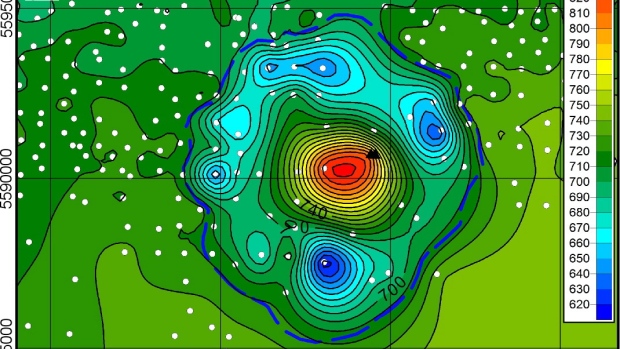
But after eons of erosion, very little of the crater is left. In fact, the discovery happened entirely by accident when a geologist – who was doing some routine mapping of the underground layers a few meters beneath the surface – apparently noticed a circular disturbance that was covered. Schmitt and his lab were called in to inspecting the feature and used seismic data to create a complete image of it. They quickly realized that it was most likely an impact crater, complete with a central peak where the meteorite would have struck.

Alberta_craterThe size of the object can only be estimated, but assuming the meteor was composed mostly of iron, it would have had to have been between 300 and 500 meters in diameter to create a crater of this size. If the meteorite was rock, it would have had to have been a kilometre across. Schmitt said the crater is a rare opportunity to study the floor of an impact crater. His team is now looking for certain types of minerals that form only under certain conditions so as to confirm the crater is from a meteor impact.

But he doesn’t have much doubt. As he put in a recent interview with CBC news:

We’re able to get at the lower parts of (a crater) and see how rocks have been moved around… We’re pretty confident it can only be a meteorite impact. It’s pretty clear.

Once they’ve had a chance to uncover and examine the area in greater detail, a clear picture of the meteorite’s size, composition, and what lasting marks its impact left beyond the crater. This information will only contribute to our understanding of our Solar System, but of the history of our planet as well.

Sources: cbc.ca, calgarysun.com

News from Space: Universe’s Evolution Mapped in Detail

universe_expansionScientists have come up with the best computer model to date of the universe, one which maps the evolution of the cosmos in unprecedented detail. Known as Illustris, this virtual cosmos – which was created by U.S., English and German researchers using a network of supercomputers – includes details never before achieved in a simulation. All told, the numerical-based model covers the 13-billion-year evolution of the universe, beginning just 12 million years after the Big Bang took place.

While cosmologists have been developing and employing computer models of the universe for several decades, the outcome is usually a rough approximation of the universe that scientists observe in reality.  Illustris, however, has produced a universe that looks uncannily like the real on.  Among other things, it models how the universe expands, how galaxies are formed, their composition and distribution, and the mechanics of how stars and black holes are formed.

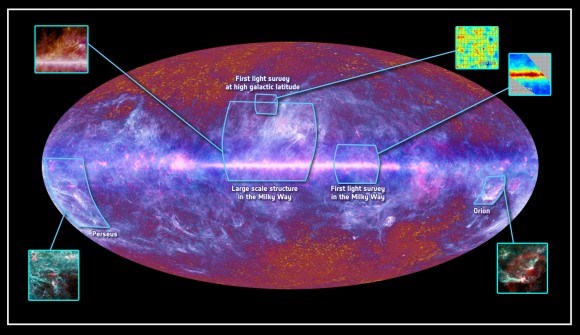
planck-attnotated-580x372Given all the recent breakthroughs in physics and cosmology, this ultra-detailed virtual model should come as no surprise. For example, this past April, scientists made not only made the first-ever observation of gravitational waves, they also processed data that is believed to be the first real indication of the existence of Dark Matter. In addition, the ESA’s Planck mission released the most detailed thermal imaging map of the universe last year that placed an accurate date on the universe’s age and confirmed the validity of the Big Bang Theory.

The Illustris creators say it represents “a significant step forward in modelling galaxy formation”, and provides a good visual representation of our ever-expanding (no pun!) understanding of the universe. A recent article that appeared last Wednesday in the journal Nature describes Illustris, and several videos (like those below) have been released that show the simulation in action. Check them out below:


Sources:
cbc.ca, IO9.com