Climate Crisis: Present Changes and Coming Impacts

climate-changeThis Tuesday, the Whitehouse received the latest draft of the Climate Assessment Report, a scientific study produced by the National Climate Assessment to determine the impacts of Climate Change. In addition to outlining the risks it poses to various regions in the US, the report also addresses the apparent increase in the number of severe weather events that have taken place in the past few years, and how these events affect local economies and communities.

According to the 840-page report, America is fast becoming a stormy and dangerous place, with rising seas and disasters effecting regions from flood-stricken Florida to the wildfire-ravaged West. The report concluded that Climate change’s assorted harms “are expected to become increasingly disruptive across the nation throughout this century and beyond.” It also emphasized how warming and its all-too-wild weather are changing daily lives, even using the phrase “climate disruption” as another way of saying global warming.
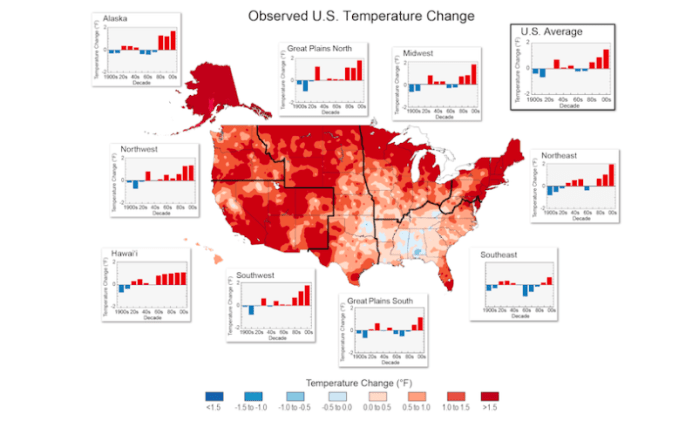
Climate_Change_vulnerability_USHenry Jacoby, co-director of the Joint Program on the Science and Policy of Global Change at the MIT, was joined by other scientists and White House officials when he claimed that this is the most detailed and U.S.-focused scientific report on global warming. Above all, the most chilling claim contained within is the fact that “Climate change, once considered an issue for a distant future, has moved firmly into the present.”

The report also examined the effects at the regional and state-level, compared with recent reports from the UN that examined North America as a single case study. In a recent interview with CBC’s The Lang & O’Leary Exchange, Jacoby pointed to a range of impacts of global warming that people see everyday, from the change in the growing season, to extreme heat, severe Atlantic storms and drought in some areas.
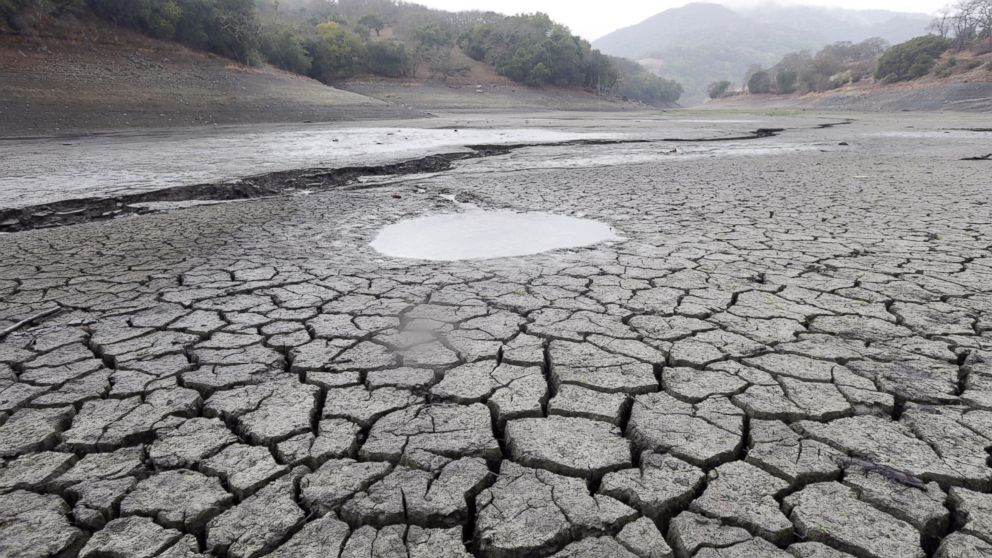
climate_change_variableweatherAs he explained, these changes are far more than just variable weather:

If you look at what’s happening to the Arctic ice at your northern border, you are seeing changes to the ice like you haven’t seen in hundreds of years. We’re seeing change on a scale that’s going beyond variability.

A draft of the report was released in January 2013, but this version has been reviewed by more scientists, the National Academy of Science, 13 other government agencies, and was subject to public comment. It is written in a bit more simple language so people could realize “that there’s a new source of risk in their lives,” said study lead author Gary Yohe of Wesleyan University in Connecticut.

Even though the nation’s average temperature has risen by as much as 1.9 degrees since record keeping began in 1895, it’s in the big, wild weather where the average person feels climate change the most. As the report’s co-author Katharine Hayhoe – a Texas Tech University climate scientist – put it, extreme weather like droughts, storms and heat waves hit us in the pocketbooks and can be seen by our own eyes. And it’s happening a lot more often lately.

climate_change_precipThe report says the intensity, frequency and duration of the strongest Atlantic hurricanes have increased since the early 1980s. Winter storms have increased in frequency and intensity and shifted northward since the 1950s, with heavy downpours increasing by 71 per cent in the northeast alone. Heat waves are projected to intensify nationwide, with droughts in the southwest expected to get stronger. Sea levels have risen 20 centimetres since 1880 and are projected to rise between 0.3 meters and 1.2 metres by 2100.

The report was also clear that the 2010’s have been a record-setting decade. For example, since January 2010, 43 of the lower 48 states have set at least one monthly record for heat, such as California having its warmest January on record this year. In the past 51 months, states have set 80 monthly records for heat, 33 records for being too wet, 12 for lack of rain and just three for cold, according to an Associated Press analysis of federal weather records.

climate_change_tempsAs she described it, America is basically in a boxing match, and is currently on the ropes:

We’re being hit hard. We’re holding steady, and we’re getting hit in the jaw. We’re starting to recover from one punch, and another punch comes.

John Podesta, an adviser to President Barack Obama, said on Monday that the report includes “a huge amount of practical, usable knowledge that state and local decision-makers can take advantage of.” The report also stressed that climate change threatens human health and well-being in a number of ways. Those include smoke-filled air from more wildfires, smoggy air from pollution, more diseases from tainted food, water, mosquitoes and ticks.

climate_change_lossAnd then there’s more pollen because of warming weather and the effects of carbon dioxide on plants. Ragweed pollen season has lengthened by 24 days in the Minnesota-North Dakota region between 1995 and 2011, the report says. In other parts of the Midwest, the pollen season has gotten longer by anywhere from 11 days to 20 days. And all of this has associated costs, not the least of which is in damages, insurance costs, and health care expenses.

Flooding alone may cost $325 billion by the year 2100 in one of the worst-case scenarios, with $130 billion of that in Florida, the report says. Already the droughts and heat waves of 2011 and 2012 added about $10 billion to farm costs, the report says. Billion-dollar weather disasters have hit everywhere across the nation, but have hit Texas, Oklahoma and the southeast most often, the report says. And there is the impact on agricultural producers, which is also stressed:

Corn producers in Iowa, oyster growers in Washington state and maple syrup producers in Vermont are all observing climate-related changes that are outside of recent experience.
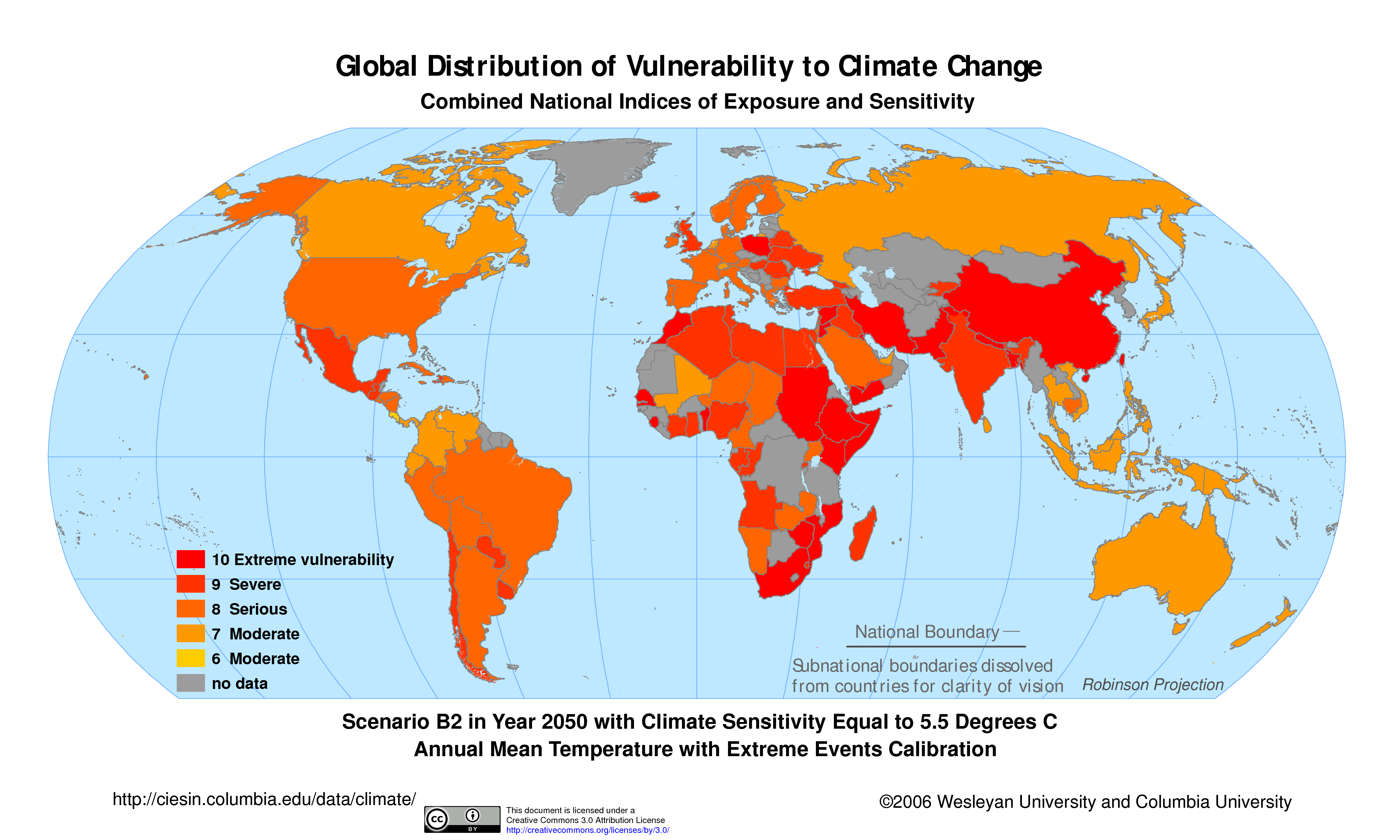
Climate_Change_vulnerability1Still, it’s not too late to prevent the worst of climate change, says the 840-page report, which the White House is highlighting as it tries to jump-start often stalled efforts to curb heat-trapping gases. However, if the U.S. and the world don’t change the way they use energy, the current effects will continue to intensify to the point where property damage, wildfires, storms, flooding and agricultural collapse will become untenable.

Already, the report has its detractors, many of whom appeared together for a Special Report segment on Fox News. In addition to commentator George Will questioning the scientific consensus – which accounts for 97% of the scientific community – Charles Krauthammer compared to the findings to a bargaining process, and ultimately condemned it as “superstition”. As he put it:

What we’re ultimately talking about here is human sin, through the production of carbon. It’s the oldest superstition around. It was in the Old Testament. It’s in the rain dance of the Native Americans. If you sin, the skies will not cooperate. This is quite superstitious and I’m waiting for science that doesn’t declare itself definitive but is otherwise convincing.
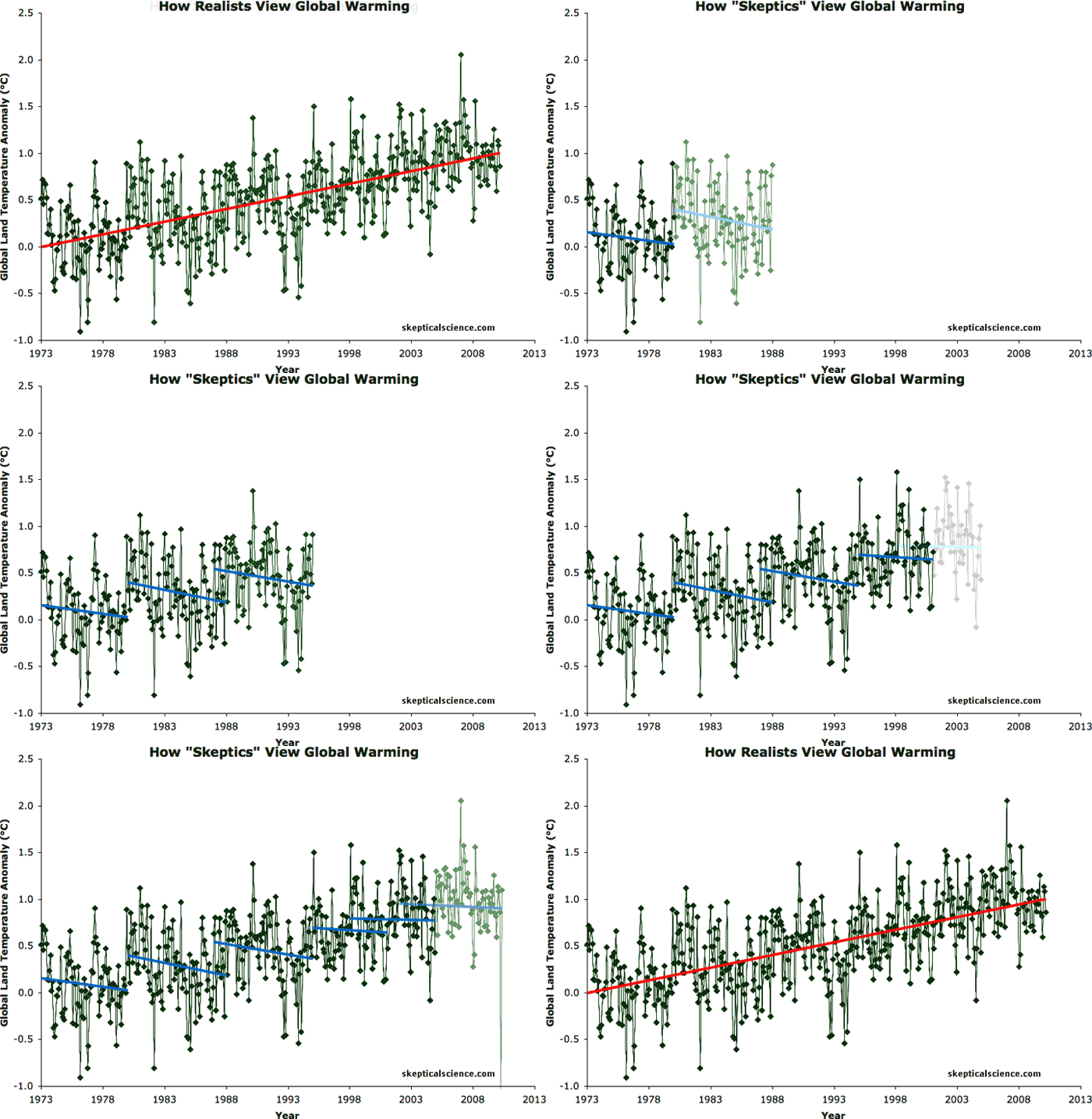
climate_change_denialNot to belabor the point, but superstition is what happens when people trust in rituals and practices that have no discernible effect whatsoever on a problem to protect themselves from said problem. Conducting research, performing field studies, and compiling statistics that cover hundreds, thousands, and even millions of years – this is called the scientific method. And Krauthammer would do well to realize that it is this same method that has done away with countless superstitious rituals throughout history.

He and other so-called skeptics (though a more accurate term is deniers) would also do well to understand the difference between superstition and a little thing known as cause and effect. For example, avoiding black cats, not walking under ladders, or sacrificing human beings to make the sun rise or the crops grow is superstition. Pumping thousands of tons of carbon dioxide into the air, which is known to have the effect of absorbing the sun’s thermal energy (aka. radiant forcing), is cause and effect.

See? Easily distinguished. But if there’s one thing that the “denial machine” has shown an affinity for, its remaining divorced from the scientific consensus. Luckily, they have been in full-retreat for some time, leaving only the most die hard behind to fight their battles. One can only hope their influence continues to diminish as time goes on and the problems associated with Climate Change get worse.

You can read the  full Climate Assessment Report here.

Sources: cbc.ca, abcnews.go.com, IO9.com, (2), nca2014.globalchange.gov
News From Space: Curiosity’s Latest Photos

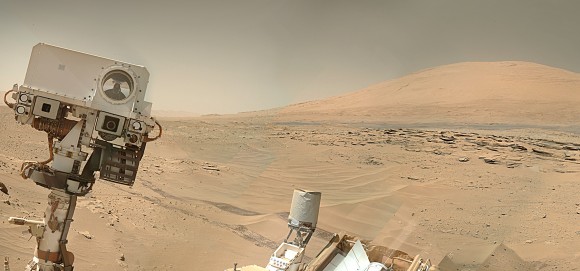
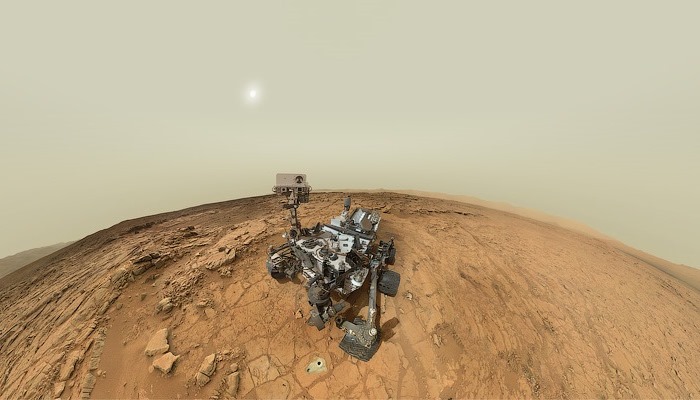
curiosity_sol-177-1April was a busy month for the very photo-talented (and photogenic) Curiosity Rover. In addition to another panoramic shot of the Martian landscape – which included Curiosity looking back at itself, making it a “selfie” – the rover also managed to capture a night-sky image that captured two minor planets and the Martian moon of Deimos in the same picture. At a time when Curiosity and Opportunity are both busy on long-haul missions to find evidence of life, these latest pictures remind us that day-to-day operations on Mars are still relevant.

The first shot took place on April 20th (Sol 606), when rover scientists used the Mast Camera to capture the minor planets of Ceres and Vesta, as well as the moon of Deimos, in the same frame. Ceres is a minor planet with a diameter of about 950 km, and is the largest object in the main asteroid belt. With a diameter of about 563 km, Vesta is the third-largest object in the asteroid belt. Deimos, meanwhile, is the smaller of Mars’ two moons, with a mean radius of 6 km.

curiosity_nightskyIn the main portion of the new image (seen above), Vesta, Ceres and three stars appear as short streaks due to the duration of a 12-second exposure. In other camera pointings the same night, the Curiosity’s camera also imaged Phobos and the planets Jupiter and Saturn, which are shown as insets on the left.  Dr Mark Lemmon from Texas A&M University, a Curiosity team member, explained:

this imaging was part of an experiment checking the opacity of the atmosphere at night in Curiosity’s location on Mars, where water-ice clouds and hazes develop during this season… The two Martian moons were the main targets that night, but we chose a time when one of the moons was near Ceres and Vesta in the sky.

Deimos was much brighter than the visible stars, Vesta and Ceres in the same part of the sky, in the main image. The circular inset covers a patch of sky the size that Earth’s full moon appears to observers on Earth. At the center of that circular inset, Deimos appears at its correct location in the sky, in a 0.25 second exposure.

Curiosity_selfieAs for the latest in Curiosity’s long-line of panoramic self-portraits, this one comes to us courtesy of Jason Major. As a graphic designer and amateur space explorer, Major assembled the picture from about the dozen or so images acquired with the rover’s Mars Hand Lens Imager (MAHLI) instrument on April 27-28, 2014 (Sol 613). In the background, one can see the 5.5-km-high (3.4 miles) Mount Sharp (Aeolis Mons) that sits in the center of the Gale Crater.
One thing that Major noted about the picture he assembled is the way the cylindrical RUHF antenna and the bit of the RTG that is visible in the lower center seem to form a “toothy (if slightly dusty) grin”. But, as he stated:

…with almost 21 Earth-months on Mars and lots of discoveries already under her robot belt, Curiosity (and her team) certainly have plenty to smile about!

And the best is likely to still be coming. As we speak, Curiosity is making its way towards Mount Sharp and is expected to arrive there sometime in August. As the primary goal in its mission, Curiosity set off for this destination back in June after spending months studying Glenelg area. She is expected to arrive at the foot of the mountain in August, where she will begin drilling in an effort to study the mountain’s vast caches of minerals – which could potentially support a habitable environment.

mountsharp_galecraterIf Curiosity does find evidence of organic molecules in this cache, it will be one of the greatest scientific finds ever made, comparable only to the discovery of hominid remains in the Olduvai Gorge, or the first recorded discovery of dinosaur remains. For not only will we have definitive proof that life once existed on Mars, we will know with some certainly that it may again someday…

Stay tuned for more news from the Red Planet. And in the meantime, keep on trucking Curiosity!

Sources: sci-news.com, universetoday.com

The Future is Fusion: Surpassing the “Break-Even” Point

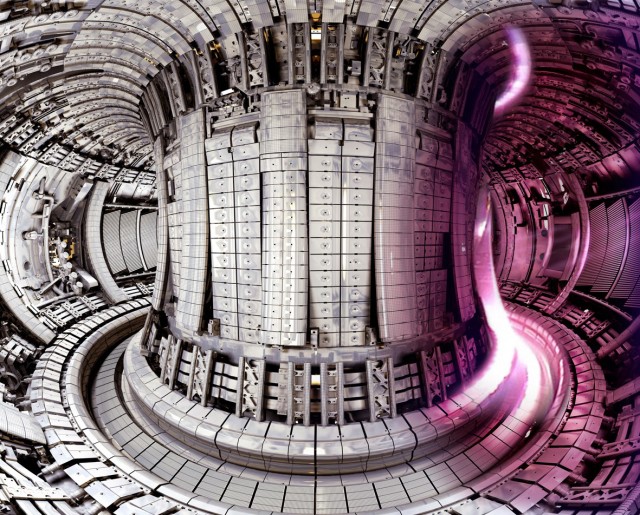
JET_fusionreactorFor decades, scientists have dreamed of the day when cold fusion – and the clean, infinite energy it promises – could be made possible. And in recent years, many positive strides have been taken in that direction, to the point where scientists are now able to “break-even”. What this means is, it has become the norm for research labs to be able to produce as much energy from a cold fusion reaction as it takes in triggering that reaction in the first place.

And now, the world’s best fusion reactor – located in Oxfordshire, Engand – will become the first fusion power experiment to attempt to surpass it. This experiment, known as the Joint European Torus (JET), has held the world record for fusion reactor efficiency since 1997. If JET can reach break-even point, there’s a very good chance that the massive International Thermonuclear Experimental Reactor (ITER) currently being built in France will be able to finally achieve the dream of self-sustaining fusion. 

NASA_fusionchamber

Originally built in 1983, the JET project was conceived by the European Community (precursor to the EU) as a means of making fusion power a reality. After being unveiled the following year at a former Royal Navy airfield near Culham in Oxfordshire, with Queen Elizabeth II herself in attendance, experiments began on triggering a cold fusion reaction. By 1997, 16 megawatts of fusion power were produced from an input power of 24 megawatts, for a fusion energy gain factor of around 0.7.

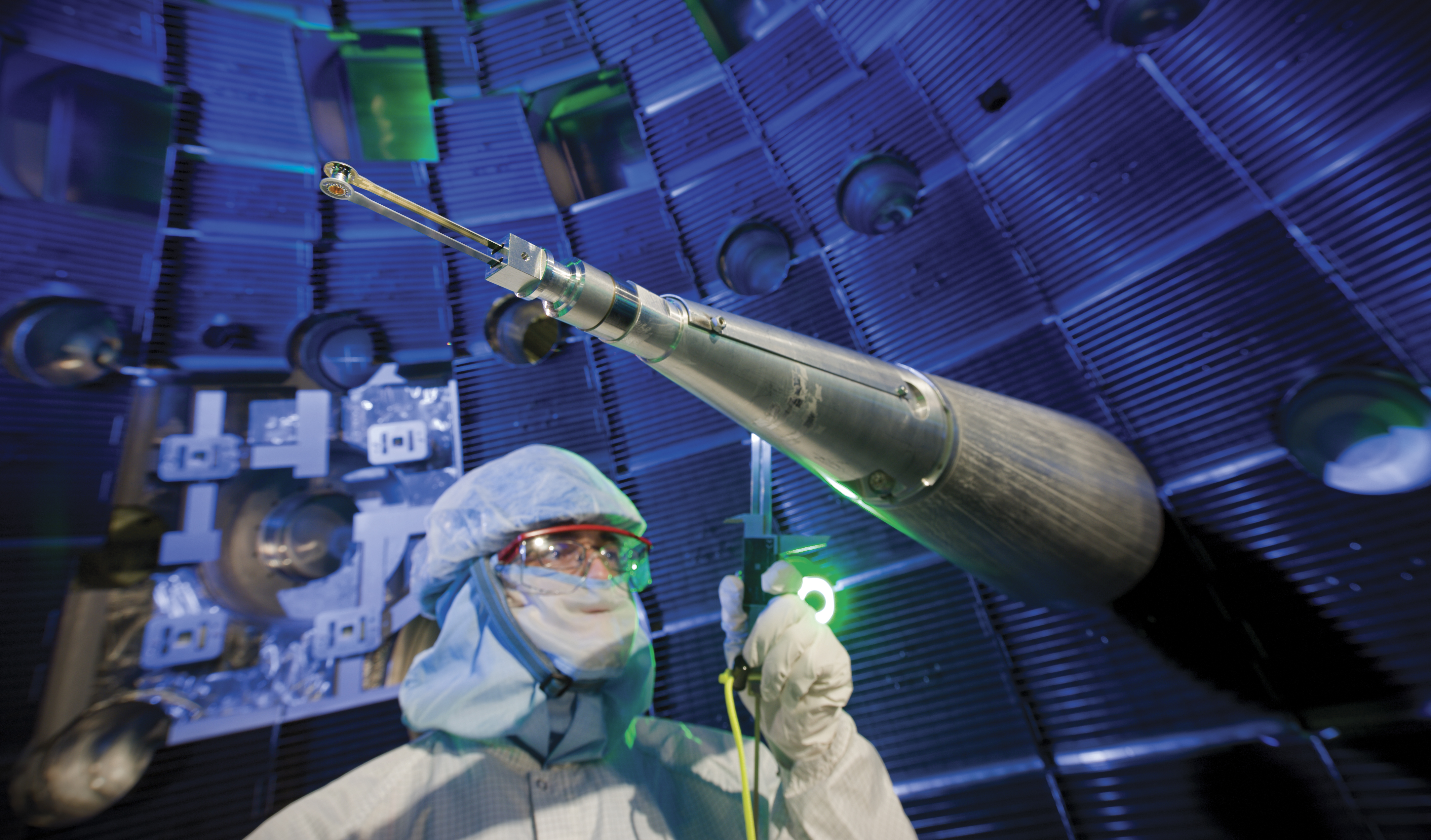
Since that time, no one else has come close. The National Ignition Facility – the only other “large gain” fusion experiment on the planet, located in California – recently claimed to have broken the break-even point with their  laser-powered process. However, these claims are apparently mitigated by the fact that their 500 terrawat process (that’s 500 trillion watts!) is highly inefficient when compared to what is being used in Europe.

NIF Livermore July 2008Currently, there are two competing approaches for the artificial creation of nuclear fusion. Whereas the NIF uses “inertial confinement” – which uses lasers to create enough heat and pressure to trigger nuclear fusion – the JET project uses a process known as “magnetic confinement”. This process, where deuterium and tritium fuel are fused within a doughnut-shaped device (a tokamak) and the resulting thermal and electrical energy that is released provides power.

Of the two, magnetic confinement is usually considered a better prospect for the limitless production of clean energy, and this is the process the 500-megawatt ITER fusion reactor once its up and running. And while JET itself is a fairly low-power experiment (38 megawatts), it’s still very exciting because it’s essentially a small-scale prototype of the larger ITER. For instance, JET has been upgraded in the past few years with features that are part of the ITER design.

fusion_energyThese include a wall of solid beryllium that can withstand being bombarded by ultra-high-energy neutrons and temperatures in excess of 200 million degrees. This is a key part of achieving a sustained fusion reaction, which requires that a wall is in place to bounce all the hot neutrons created by the fusion of deuterium and tritium back into the reaction, rather than letting them escape. With this new wall in place, the scientists at JET are preparing to pump up the reaction and pray that more energy is created.

Here’s hoping they are successful! As it stands, there are still many who feel that fusion is a pipe-dream, and not just because previous experiments that claimed success turned out to be hoaxes. With so much riding on humanity’s ability to find a clean, alternative energy source, the prospects of a breakthrough do seem like the stuff of dreams. I sincerely hope those dreams become a reality within my own lifetime…

Sources: extremetech.com, (2)

Happy DNA Day!

dna_cancerThough I am a week late in expressing this sentiment, I feel I must acknowledge this rather interesting of events. As it stands, this past April 22nd was the sixty-first anniversary of the molecular structure of DNA being revealed to the world. What began as a publication in the magazine Nature has now become emblematic of the programming language of life, and our understanding of DNA has grown by leaps and bounds over the past six decades.

To commemorate such an important landmark in the history of humanity, a look back at some of the more recent developments in the field of genetic research would seem to be in order. For example, it was on April 22nd of this year that a rather interesting study was published in the Proceedings of the National Academy of Sciences. The lead on this study was none other than Svante Pääbo – the world’s foremost expert in Neanderthal genetics.

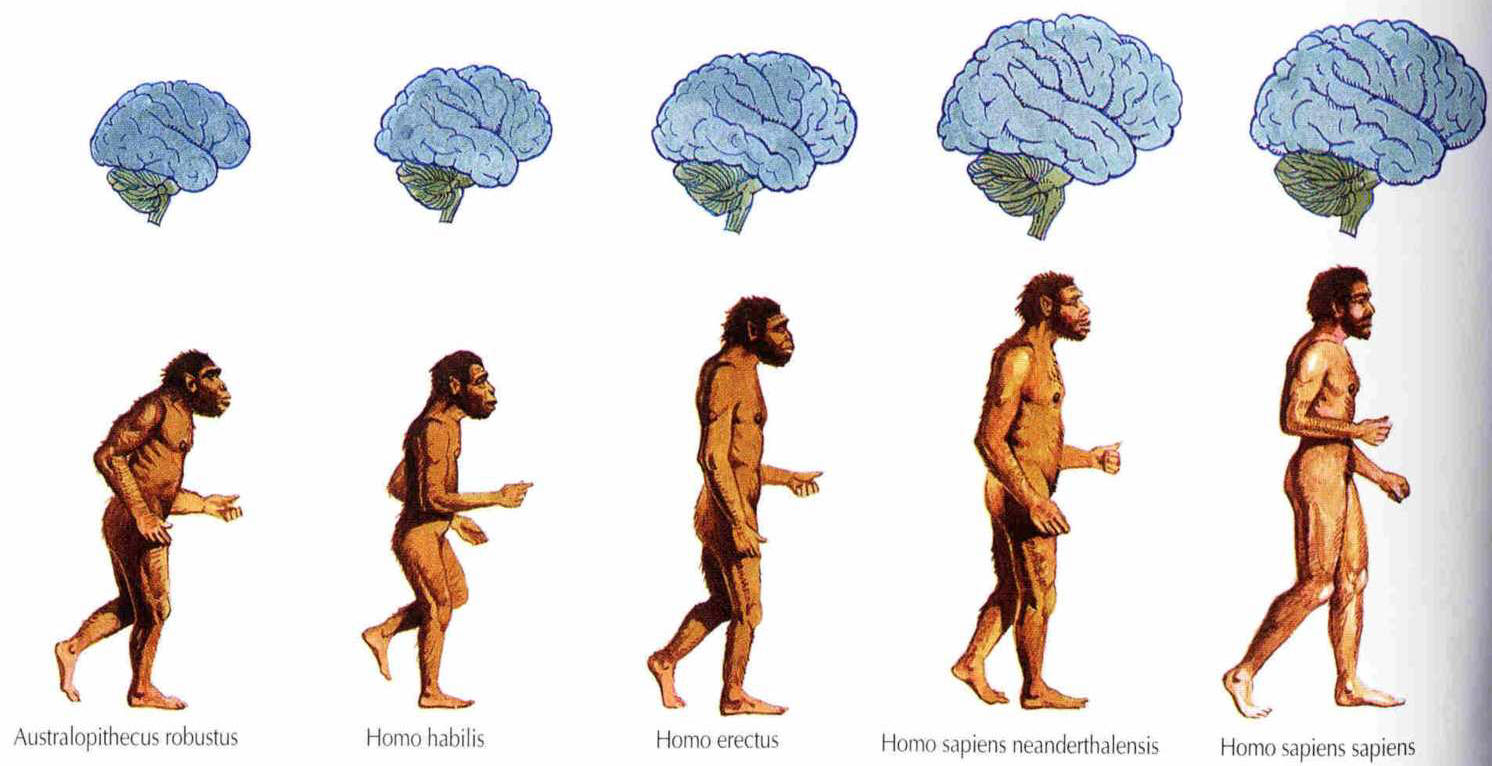
humanEvolutionBased on the genomes of three neanderthals that were found in disparate locations in Eurasia, Pääbo and his colleagues have concluded that the genetic diversity in Neanderthals is significantly less when compared to present-day Homo sapiens. It also appears as if the Neanderthal populations were relatively isolated and tiny, so gene flow was extremely limited for these groups. In short, our homonid cousins didn’t get around and interbreed quite as much as we’ve done, which may shed some light on their disappearance.

On the very same day, an article was published in the Proceedings of the Royal Society B that proposed that skin cancer from the sun’s damaging UV rays was actually a driving force in the national selection for dark skin in early humans. In the article, Mel Greaves delivers a compelling argument that the deadliness of skin cancer in young albino children in Africa and Central America demonstrates just how vital it was for early humans to develop dark skin.

GenoChipAnd on April 25th, National Geographic and Family Tree DNA teamed up to announce the release of a brand new version of the human Y-DNA tree. This new tree of Y chromosome mutations has over 1,200 branches — almost double the number of branches that the Genographic Project was displaying before. With this much refinement, it’s now even easier to track the historical migrations of your distant ancestors.

To celebrate this monumental roll-out, Family Tree DNA offered a 20% discount on the 37-marker Y-DNA test and all individual Y-DNA SNP (single-nucleotide polymorphism) tests, an offer which sadly expired on April 27th. However, interested parties can still have this cutting-edge anthropological genetic test performed for $200. And it’s something to keep in mind for next year certainly. What better way to celebrate DNA day than to have a full genetic profile of yourself made?

encodeAnd let’s not forget, 2012 was also the year that the Encyclopedia of DNA Elements (ENCODE) Consortium – an international collaboration of research groups funded by the National Human Genome Research Institute (NHGRI) – released the world’s most complete report on the human genome to date. Unlike the Human Genome Project, which released the first catalog of human DNA back in 2003, ENCODE was not only able to catalog the human genome’s various parts, but also what those components actually do.

Among the initiative’s many findings was that so-called “junk DNA” – outlier DNA sequences that do not encode for protein sequences – are not junk at all, and are in fact responsible for such things as gene regulation, disease onset, and even human height. As I’ve said before, these findings will go a long way towards developing gene therapy, biotechnology that seeks to create artificial DNA and self-assembling structures, and even cloning.

Tree-600x405Yes, it’s an exciting time for the field of DNA research, and not just because of the many doors its likely to open. Beyond medical and bioresearch, it helps us to understand of ourselves as a species, our collective origins, and may perhaps help us to see just how interconnected we all truly are. For centuries now, a great many evils and prejudices have been committed in the name of “racial superiority” or racial differences.

Armed with this new knowledge, we might just come to realize that this great organism known as humanity is all fruit of the same tree.

Sources: extremetech.com, genome.ucsc.edu, newswatch.nationalgeographic.com

News From Space: Cosmic Inflation and Dark Matter

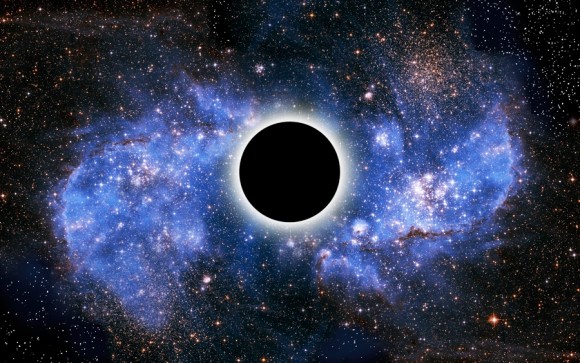
big bang_blackholeHello again! In another attempt to cover events that built up while I was away, here are some stories that took place back in March and early April of this year, and which may prove to be some of the greatest scientific finds of the year. In fact, they may prove to be some of the greatest scientific finds in recent history, as they may help to answer the most fundamental questions of all – namely, what is the universe made of, and how did it come to exist?

First up, in a development that can only be described as cosmic in nature (pun intended), back in March, astrophysicists at the Harvard-Smithsonian Center announced the first-ever observation of gravitational waves. This discovery, which is the first direct evidence of the Big Bang, is comparable to significance to CERN’s confirmation of the Higgs boson in 2012. And there is already talk about a Nobel Prize for the Harvard crew because of their discovery.

big_bangThis theory, which states that the entire universe sprung into existence from a tiny spot in the universe some 13.8 billion years ago, has remained the scientific consensus for almost a century. But until now, scientists have had little beyond theory and observations to back it up. As the name would suggest, gravitational waves are basically ripples in spacetime that have been propagating outward from the center of the universe ever since the Big Bang took place.

Originally predicted as part of Einstein’s General Theory of Relativity in 1916, these waves are believed to have existed since a trillionth of a trillionth of a trillionth of a second after the Big Bang took place, and have been propagating outward for roughly 14 billion years. The theory also predicts that, if we can detect some gravitational waves, it’s proof of the initial expansion during the Big Bang and the continued inflation that has been taking place ever since.

bicep2-640x425Between 2010 and 2012, the BICEP2 – a radio telescope situated at the Amundsen–Scott South Pole Station (pictured above) – the research team listened to the Cosmic Microwave Background (CMB). They were looking for hints of B-mode polarization, a twist in the CMB that could only have been caused by the ripples of gravitational waves. Following a lot of data analysis, the leaders announced that they found that B-mode polarization.

The work will now be scrutinized by the rest of the scientific community, of course, but the general consensus seems confident that it will stand up. In terms of scientific significance, the confirmation of gravitational waves would be the first direct evidence that the universe started out as nothing, erupted into existence 13.8 billion years ago, and has continued to expand ever since. This would confirm that cosmic inflation really exists and that the entire structure of the universe was decided in the beginning by the tiniest flux of gravitational waves.

planck-attnotated-580x372And that’s not only discovery of cosmic significance that was made in recent months. In this case, the news comes from NASA’s Fermi Gamma-ray Space Telescope, which has been analyzing high-energy gamma rays emanating from the galaxy’s center since 2008. After pouring over the results, an independent group of scientists claimed that they had found an unexplained source of emissions that they say is “consistent with some forms of dark matter.”
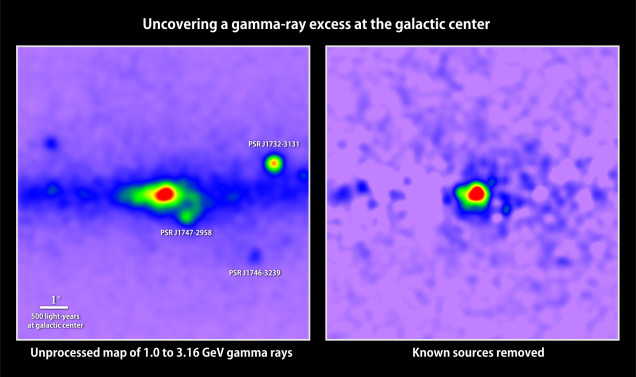
These scientists found that by removing all known sources of gamma rays, they were left with gamma-ray emissions that so far they cannot explain. And while they were cautious that more observations will be needed to characterize these emissions, this is the first time that potential evidence has been found that may confirm that this mysterious, invisible mass that accounts for roughly 26.8% of the universe actually exists.

darkmatter1To be fair, scientists aren’t even sure what dark matter is made of. In fact, it’s very existence is inferred from gravitational effects on visible matter and gravitational lensing of background radiation. Originally, it was hypothesized to account for the discrepancies that were observed between the calculations of the mass of galaxies, clusters and entire universe made through dynamical and general relativistic means, and  the mass of the visible “luminous” matter.

The most widely accepted explanation for these phenomena is that dark matter exists and that it is most probably composed of Weakly Interacting Massive Particles (WIMPs) that interact only through gravity and the weak force. If this is true, then dark matter could produce gamma rays in ranges that Fermi could detect. Also, the location of the radiation at the galaxy’s center is an interesting spot, since scientists believe that’s where dark matter would lurk since the insofar invisible substance would be the base of normal structures like galaxies.

fermi_gamma-raysThe galactic center teems with gamma-ray sources, from interacting binary systems and isolated pulsars to supernova remnants and particles colliding with interstellar gas. It’s also where astronomers expect to find the galaxy’s highest density of dark matter, which only affects normal matter and radiation through its gravity. Large amounts of dark matter attract normal matter, forming a foundation upon which visible structures, like galaxies, are built.

Dan Hooper, an astrophysicist at Fermilab and lead author of the study, had this to say on the subject:

The new maps allow us to analyze the excess and test whether more conventional explanations, such as the presence of undiscovered pulsars or cosmic-ray collisions on gas clouds, can account for it. The signal we find cannot be explained by currently proposed alternatives and is in close agreement with the predictions of very simple dark matter models.

Hooper and his colleagues suggest that if WIMPs were destroying each other, this would be “a remarkable fit” for a dark matter signal. They again caution, though, that there could be other explanations for the phenomenon. Writing in a paper submitted to the journal Physical Review D, the researchers say that these features are difficult to reconcile with other explanations proposed so far, although they note that plausible alternatives not requiring dark matter may yet materialize.

CERN_LHCAnd while a great deal more work is required before Dark Matter can be safely said to exist, much of that work can be done right here on Earth using CERN’s own equipment. Tracy Slatyer, a theoretical physicist at the Massachusetts Institute of Technology and co-author of the report, explains:

Dark matter in this mass range can be probed by direct detection and by the Large Hadron Collider (LHC), so if this is dark matter, we’re already learning about its interactions from the lack of detection so far.This is a very exciting signal, and while the case is not yet closed, in the future we might well look back and say this was where we saw dark matter annihilation for the first time.

Still, they caution that it will take multiple sightings – in other astronomical objects, the LHC, or direct-detection experiments being conducted around the world – to validate their dark matter interpretation. Even so, this is the first time that scientists have had anything, even tentative, to base the existence of Dark Matter’s on. Much like until very recently with the Big Bang Theory, it has remained a process of elimination – getting rid of explanations that do not work rather than proving one that does.

So for those hoping that 2014 will be the year that the existence of Dark Matter is finally proven – similar to how 2012 was the year the Higgs Boson was discovered or 2013 was the year the Amplituhedron was found – there are plenty of reasons to hope. And in the meantime, check out this video of a gamma-ray map of the galactic center, courtesy of NASA’s Goddard Space Center.


Sources:
extremetech.com, IO9.com, nasa.gov, cfa.harvard.edu, news.nationalgeographic.com

The Glucose Economy

hacking-bacteria-fuel-ecoli-670In the long search to find alternatives to fossil fuels and industrial processes that produce tons of waste, several ideas have been forward. These include alternative energy – ranging from solar, wind, geothermal, and tidal – additive manufacturing, and cleaner burning fuels. All of these ideas have begun to bear some serious fruit in recent years thanks to ongoing research and development. But looking to the long term, it is clear that a complete overhaul of our industrial economy is needed.

That’s where more ambitious ideas come to the fore, ideas like nanotechnology, biotechnology, and what’s known as the “Glucose Economy”. Coined by Steven Chu, a Nobel Prize-winning Chinese-American physicist who also had the honor of serving as the 12th Secretary of Energy under Barack Obama, this concept calls for the development of an economic model that would replace oil with high-glucose alternative fuels.

110302_steven_chu_ap_328Chu conceived of the idea while working as a professor of physics and molecular and cellular biology at the University of California, Berkeley. In short, the plan calls for fast-growing crops to be planted in the tropics – where sunlight is abundant – converted into glucose (of which cellulose, which makes up much of the dry weight of a plant, is a polymer). The resulting glucose and cellulose would then be shipped around much as oil is today, for eventual conversion into biofuels and bioplastics.
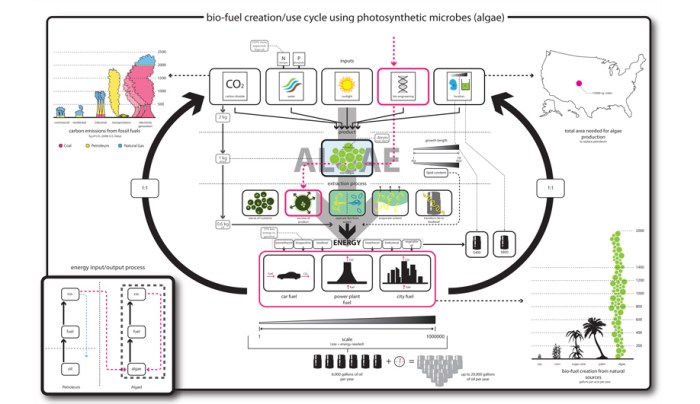
As expected, this would render the current system of converting oil into gasoline and plastics – a process which produces immense amounts of carbon dioxide through processing and burning – obsolete. By comparison, glucose fuels would burn clean and produce very little in the way of chemical by-products, and bioplastics would be far more resilient and eco-friendly than regular plastics, and not just because they won’t cause a terrible disposal and waste problem (see Garbage Island).

David-Benjamin-and-the-future-of-architecture-01Another benefit of the this new model is the economic development it will bring to the tropical regions of the world. As far as production is concerned, those regions that stand to benefit the most are Sub-Saharan Africa, Central and South America, and South-East Asia. These regions are already seeing significant economic growth, and a shift like this would ensure their continued growth and development (not to mention improved quality of life) for many generations  to come.
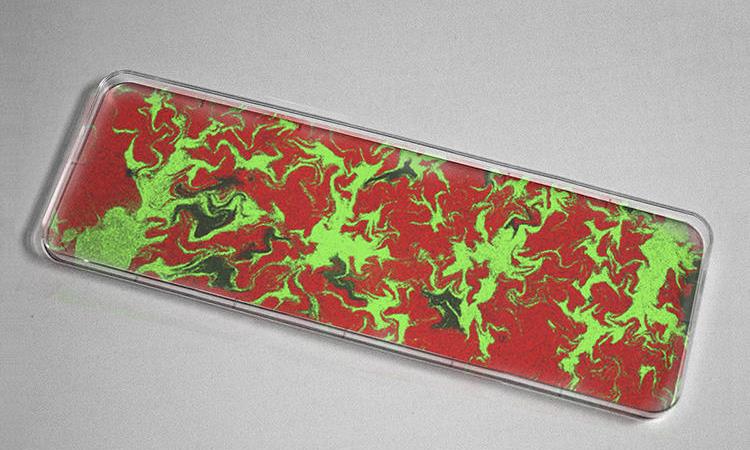
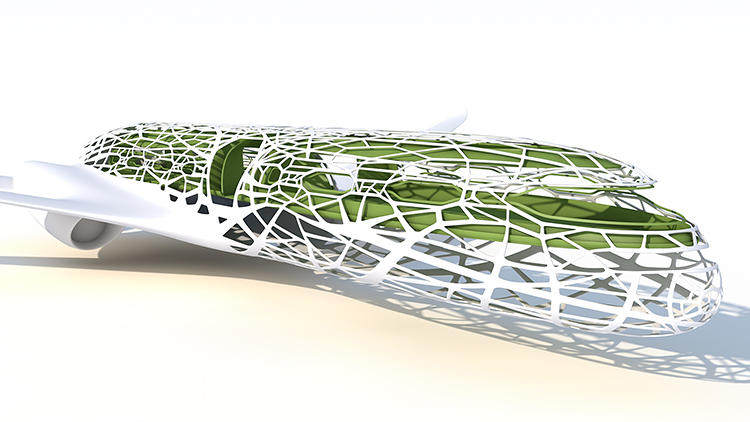
But above and beyond all that is the revolutionary potential that exists for design and manufacturing, with architects relying on specially-designed software to create multi-material objects fashioned in part from biomass. This unique combination of biological processes, computer-assisted design (CAD), and human intelligence is looking to trigger a revolution in manufacturing and construction, with everyday materials to buildings created from eco-friendly, structurally sound, biomaterials.

bio-buildingOne such architect is David Benjamin, a computational architect and principal of the New York-based practice The Living. Together with his collaborators, Benjamin is conducting experiments with plant cells, the latest of which is the production of xylem cells – long hollow tubes plants use to transport water. These are computer modeled and grown in a Cambridge University lab and studied to create materials that combine the desired properties of different types of bacteria.

In addition, they are working with sheets of calcium and cellulose, seeking to create structures that will be strong, flexible, and filigreed. And beyond The Living Thing, there are also initiatives like the Living Foundries Program, a Department of Defense initiative that is hoping to hasten the developmental process and create an emergent bio-industry that would create “on-demand” production.

1394231762-re-making-manufacturing-united-statesNot only would this shave decades off the development process, but also hundreds of millions of dollars. What’s more, Benjamin claims it could take only 8 to 10 years to see this type of biotechnology enter commercial production. Naturally, there are those who oppose the development of a “glucose economy” as advocated by Chu. Beyond the proponents of fossil fuel energy, there are also those advocate nationally self-sufficient resources bases, rather than foreign dependence.
To these critics, the aim of a future economy should be energy independence. In their view, the glucose economy is flawed in that it merely shifts energy dependence of nations like the US from the Middle East and OPEC to the tropics, which could create a whole new slew of geopolitical problems. However, one cannot deny that as alternatives go, Chu’s proposal is far preferable to the current post-peak oil model of frakking, tar sands, natural gas, and coal.

bio-building1And it also offers some new and exciting possibilities for the future, where building processes like additive manufacturing (which is already making inroads into the construction industry with anti-gravity 3D printing, and the KamerMaker House) would be supplemented by using “biohacked” bacteria to grow structures. These structures would in turn be composed of resilient materials such as cellulose and organic minerals, or possibly carbon nanotubes that are assembled by organic processes.

And the amount of money, waste, energy and lives saved would be immense, as construction is currently one of the most dangerous and inefficient industries on the planet. In terms of on the job accidents, it causes some 10,000 deaths and 400,000 injuries a year in the US alone. And in terms of resource allocation and money, construction is labor intensive, produces tons of waste, and is almost always over budget.

hacking-bacteria-bio-light-670Compared to all that, a system the utilizes environmentally-friendly molecules and materials, enhances growing operations, fostered greater development and economic cooperation, and leads to a safer, cheaper, less wasteful construction industry seems immensely preferable. And it does offer a solution of what to do about two major industries that are ailing and in desperate need of modernization.

Boy, it feels like a long time since i’ve done a conceptual post, and the topics do appear to be getting more and more serious. Can anyone recall when I used to do posts about Cool Ships and Cool Guns? Yeah, me too, vaguely. Somehow, stuff like that seems like a far cry from the Internet of Things, Interstellar Travel, O’Neill Cylinders, Space Elevators, and timelines of the future. I guess this little blog of mine has been growing up in recent years, huh?

Stay tuned for more conceptual posts, hopefully something a little lighter and fluffier next time 😉

Sources: inhabitat.com, aspenideas.org, tampabay.com

News From Space: “Rosetta Stone” Meteorite Lands in Ontario

meteorite_st.thomasA search is underway in the small community St. Thomas, Ontario for a rare meteorite that may prove to be a major scientific find. That’s what the Canadian and NASA researchers believe, and they are urging local residents to comb their fields and neighborhoods for one or more of the rock’s fragments. It all began on Tuesday, March 18th at 10:45 p.m., when a fireball streaked across the sky some 75 kilometres above Port Dover, Ont.

The fireball then headed in a westerly direction before vanishing at an altitude of 32 kilometres between Aylmer and St. Thomas. It was widely seen in Toronto, Hamilton, London and other parts of southern Ontario, where skies were clear. Peter Brown, the director of Western University’s Center for Planetary Science and Exploration, estimated the space rock was originally the size of a basketball, which then broke up upon entry.

????????????????????????????????????????????????????????????????????????????????????????????????????????????????????????????????????????????????????????????????????????????????????????????????????????????????????????????????????????????????????His colleague, Western University meteorite curator Phil McCausland, said one or more fragments “about the size of a golf ball or baseball” likely landed about five kilometers north or northwest of St. Thomas. The meteorite from this event is particularly rare and valuable because the fireball was captured by seven all-sky cameras of Western University’s Southern Ontario Meteor Network, allowing researchers to calculate its orbit.

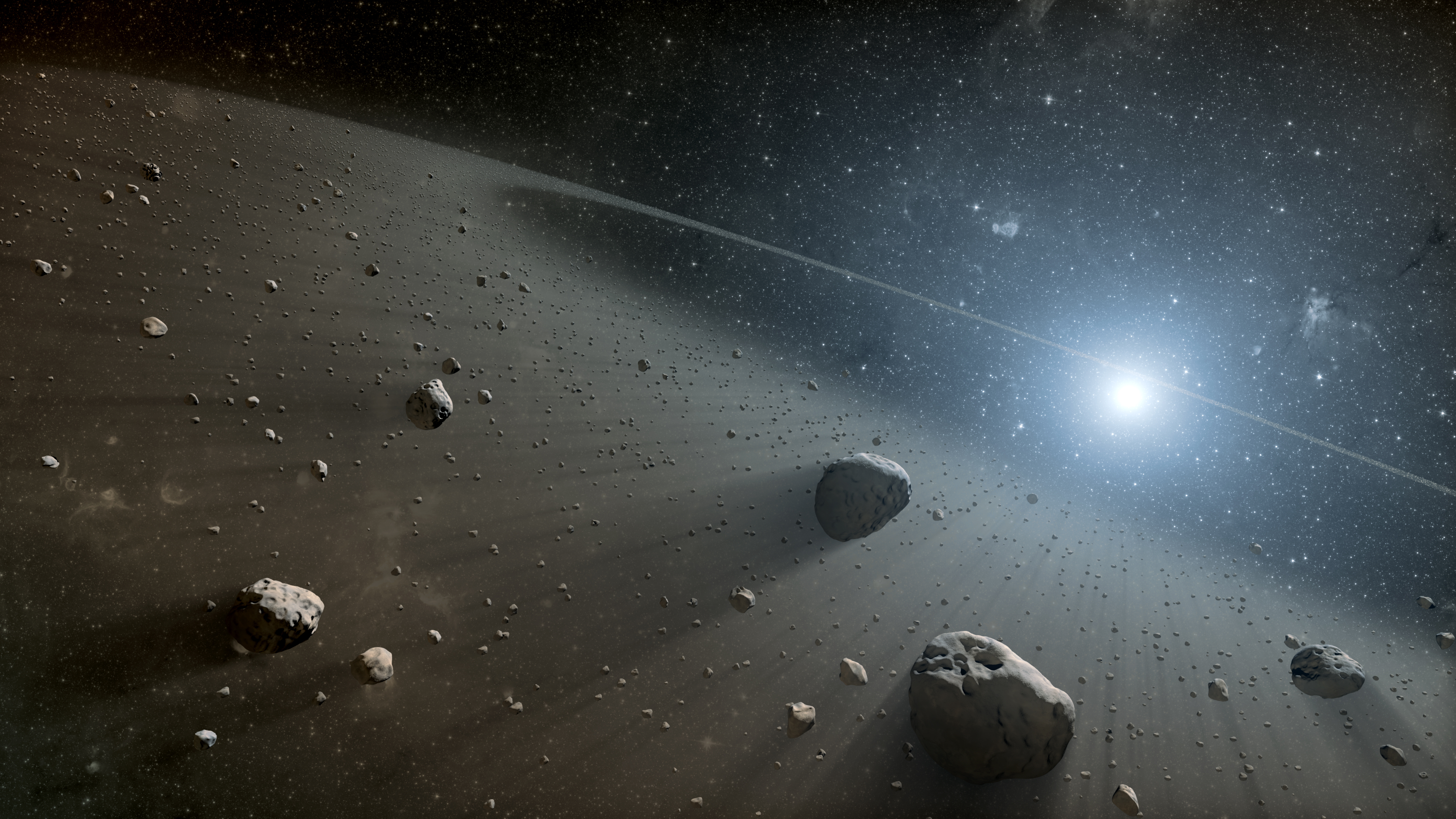
Not only were they able to obtain solid data on the space rock’s orbit, but that orbit itself was special. Before entering Earth’s atmosphere, the object spent most of time circling closer to the sun than the Earth, having left its original orbit in the asteroid belt between Mars and Jupiter long ago. Bill Cooke, head of NASA’s meteoroid environment office, said only one other meteorite known to have come from that kind of orbit has ever been recorded.

asteroids1As Cooke said during a recent press conference:

This is not your run-of-the-mill meteor fall. This is a very unusual orbit. We’re really interested in knowing what type of object was in this … We won’t know that until we find a piece of it.

According to Brown, this makes each of the meteorite’s fragments something of a “Rosetta Stone”, referring to the famous Egyptian artifact that was the key to translating ancient hieroglyphics. The comparison is not an exaggeration, as the meteor is likely to tell scientists quite a bit about the history of the early Solar System. As he described it:

This is like a poor man’s space probe. It comes to us. It’s going to tell us … what made the Earth, what made the other planets.

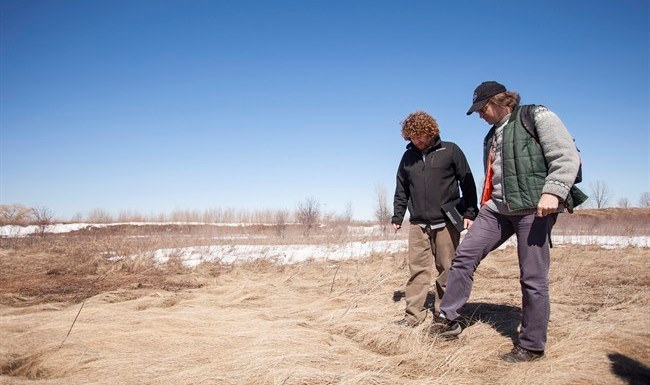
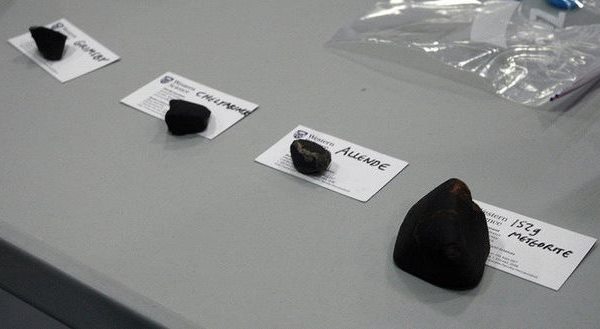
st.thomas_meteor1Hence why Brown is asking for the public to help look for the meteorite, which has been described as a rock that looks like it was painted black, and contact the researchers if they find it. The researchers are also interested in hearing accounts from anyone who may have heard a whistling sound “like artillery coming in” or a thud after witnessing the fireball, indicating that it may have landed within a few hundred metres. That may help narrow down the area for the search.
Brown noted that it’s the first time in five years that such a meteor fall has taken place in southern Ontario. The last time researchers issued a callout like this, the meteorite was recovered days later by a member of the public near Grimsby, Ont., where it had crashed through the windshield of an SUV. The fact that this meteorite did not cause injuries or property damage, unlike the one that exploded in the sky over Russia, is also a plus!

Source: cbc.ca

Ann Makosinski and I Have a Chat!

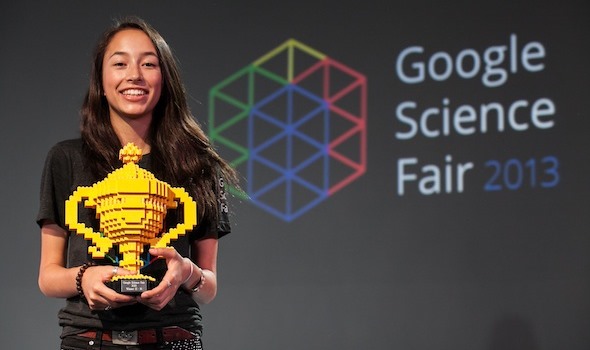
Ann-Makosinski-Google-Science-Fair-2It’s a rare thing when a humble blogger like yours truly gets the chance to speak to someone who has truly made a difference in the world. And this time around, that person is Ann Makosinki, inventor of the body heat-powered flashlight and winner of last year’s Google Science Fair. In addition to being a young inventor, she also happens to hail from my neck of the woods here in Victoria, British Columbia. So you can imagine the enthusiasm I felt when she agreed to this interview!

As many of you may already know  – since you all faithfully read this blog 😉 – Ann Makosinki is winner of the 2013 Google Science Fair Award for her invention that uses the warmth of a person’s own hand to power an LED flashlight. Using Peltier tiles, which produce electricity when heated on one side and cooled on the other, she developed a flashlight which she believes will be of use in the developing world where electrical outlets and batteries are not always available.

body_heat_flashlightAnn’s inspiration comes from her commitment to science, renewable energy, the environment, and her roots in the Philippines. Ultimately, her goal is to bring light and energy to those who live without it all over the world. After winning the gold medal at the 2013 Canada-Wide Science Fair Gold Medal, her flashlight won at the Google Science Fair’s top prize of a $25,000 scholarship and the choice of a “once-in-a-lifetime experience” from CERN, LEGO or Google.

In addition, she has been a keynote speaker at TEDx in three different cities (Vancouver, Redmond and Edmonton), at Techtoria here in Victoria, earned a spot on Jimmy Fallon Live, and will be representing Canada at the 2014 International Science and Engineering Fair this coming May. The following is a transcript of our interview, which occurred via email in spite of her (very) busy schedule:

1. When did you first discover your love for science? What are some of your earliest memories of doing something science-related?

My love for science started when I was very young. My first toy was actually a box of transistors! I was always also interested in insects, and used to collect them and keep them in jars. I would feed them and spray them each morning before I would head out to school. My parents were very supportive of my interests, even if I was looking through the garbage, hot gluing disposed objects together and creating “inventions” (of course nothing ever worked). My dad also always took me to the local island science fair, and I was very shy to ask the other kids questions, but I always thought it was so cool that they had chosen their own topic in science and now were presenting on it.

2. When did you take part in your first science fair? What was your project?

I started participating in the local science fair, the Vancouver Island Regional Science Fair, when I was in grade 6. My science project was one from that I had done in class, comparing two laundry detergents.

3. How did you come to be interested in renewable energy?

I realized early on that energy is a key issue in today’s world, because of our increased reliance on energy and its effect on global warming. It is a challenging problem, and I wished to explore alternative energy sources and find solutions. I focused on the problem of battery elimination, because that’s something I understand and can think around.

4. You’re invention of the body-heat powered flashlight was a big hit at the 2013 Google Science Fair. What was it like competing with people your age who have such a passion for science?

For me, it wasn’t about competing with the other people, but more of getting know them and seeing how we were all alike in some ways. It inspired me to see how passionate they were about science, and while we could have conversations about technical aspects that I usually wouldn’t get to talk about with my friends, they were all still like normal teenagers.

5. This past December you were named one of Time Magazines Top 30 under 30. What other accolades have you earned since winning at the Google Fair?

Hmm, well I have given three TEDx talks since then and many other speeches locally. I have had numerous interviews/film crew from US and Europe making short documentaries. I also appeared on the Tonight Show with Jimmy Fallon’s during the show’s premiere week, and I have a few more things lined up. However, I think what matters most to me is the fact that my project has brought so much awareness to the problem of people without electricity, and to the potential that thermoelectricity has.

6. Since winning at Google Fair, you’ve presented at TEDx RenfrewCollingwood, the Techtoria conference in Victoria, and got a spot on Jimmy Fallon Live. Is it fair to say your life has changed since debuting your invention? Do you feel like a celebrity?

I definitely do not feel like a celebrity. Sure, I get recognized once in a blue moon, or people want to have their picture with me, but I know that will soon end. I think something that has changed is the fact that I really value the time when I can wind down and relax, because with so much going on I’m always on the go and worrying about my next due date.

7. What is the future hold for renewable energy, in your opinion?

I think we are already seeing a huge increase in the interest in renewable energy and alternative energy sources. As global warming and the greenhouse effect closes in on us, we will be obliged to look around to harvest natural energy, whether it be from heat, sun, water, wind etc. It holds a lot of potential, but our technologies for harvesting the energy efficiently are still developing. If my flashlight can eliminate even a fraction of batteries from the city dumps, I will have achieved my aim.

8. What does the future hold for Ann Makosinki?

I hope to commercialize the flashlight and make it available to children in the world who need light the most. Beyond that, I hope to get into college and make my little contribution towards a cleaner and better world to come.

She hopes to commercialize the flashlight? I for one can’t believe that she hasn’t been approached by every company from GE to Applied Solar. But it is great to know that young minds are coming up with breakthroughs that could be making a very real difference in the world of tomorrow. I, for one, consider to be right up there with the Darfur Stove and Quetsol solar-powered lights.

And be sure to check out the video of Ann’s speech at TEDx RenfewCollingwood which took place in October 2013, entitled “Be the Source”:


And here is her guest spot on Jimmy Fallon Live, as part of GE’s “Fallonventions”, from this past February:

Work Begins on Successor to Large Hadron Collider

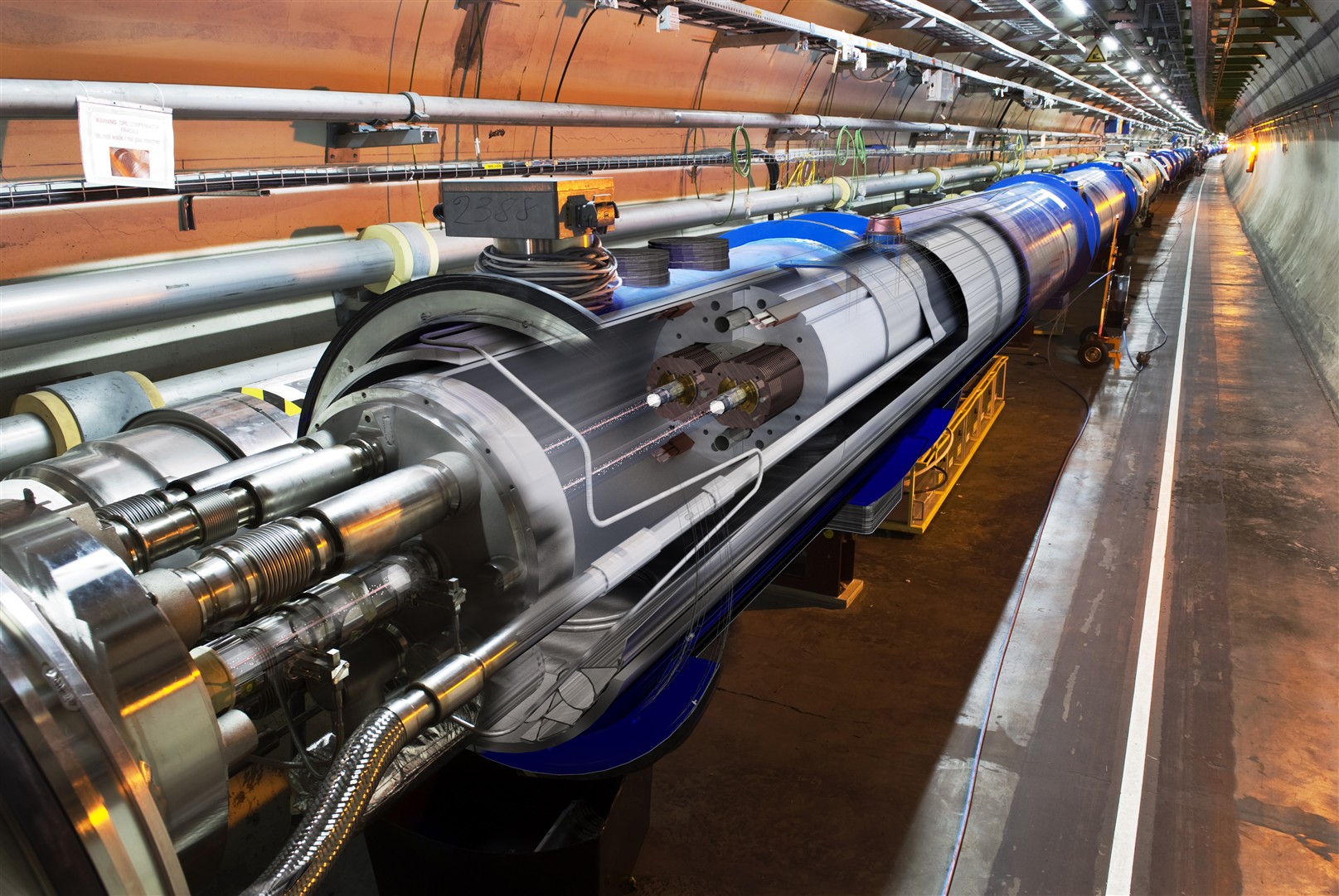
CERN_upgradeIn 2012, scientists working for the CERN laboratory in Switzerland announced the discovery of the Higgs Boson. After confirming this momentous discovery, CERN scientists indicated in April of 2013 that the Large Hadron Collider was being taken offline in order to upgrade its instruments for the next great project in its ongoing goal of studying the universe. And this past February, work began in earnest on planning for the LHC’s successor.

This massive new marvel of scientific instrumentation, which has been dubbed the “Very Large Hadron Collider”, will measure some 96 km (60 mile) in length – four times as long as its predecessor – and smash protons together with a collision energy of 100 teraelectronvolts (which is 14 times the LHC’s current energy). All of this will be dedicated to answering the questions that the first-time detection of the Higgs Boson raised.

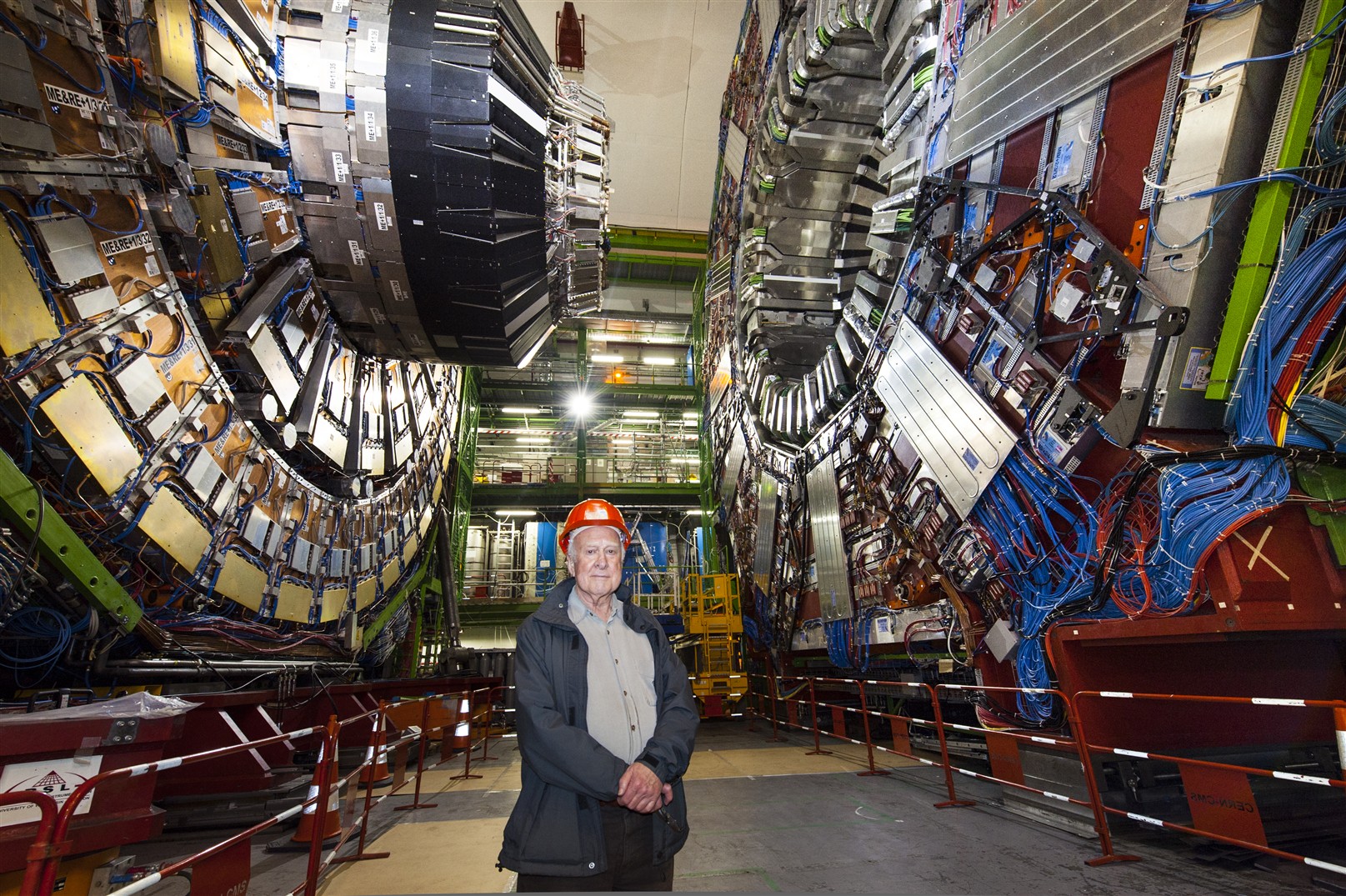
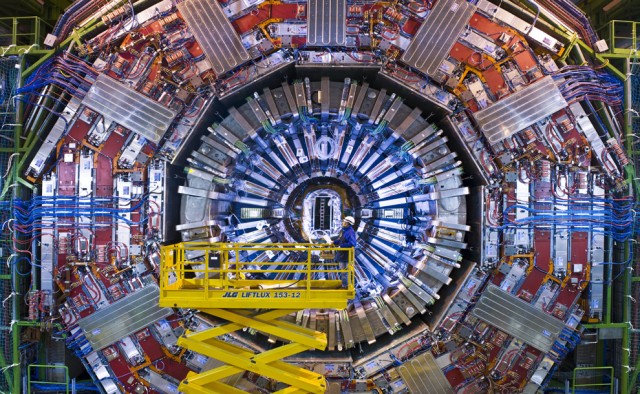
Peter Higgs (who proposed the Higgs boson), hanging out at LHC’s CMS detector

While this discovery was a watershed moment, its existence poses more questions than it answers; and those answers probably can’t be answered by the LHC. Thus, to keep high-energy physics moving forward, the international team of scientists at CERN knew they needed something more accurate and powerful. And while the LHC is slated to remain in operation until 2035, it is the VLHC that will addressing the question of how the Higgs get’s its mass.

Basically, while the discovery of the Higgs Boson did prove that the Standard Model of particle physics is correct, it raised some interesting possibilities. For one, it suggests that particles do indeed gain their mass by interacting with a pervasive, ubiquitous Higgs field. Another possibility is that the Higgs boson gains its heaviness through supersymmetry — a theory that proposes that there’s a second, “superpartner” particle coupled to each and every Higgs boson.

CERN_LHCScientists have not yet observed any of these superpartners, and to discover them, a stronger collider will be necessary. It is hoped that, when the LHC powers up to 14 TeV by the end of 2014, its scientists will discover some signs of supersymmetry. This will, in turn, inform the creation of the LHC’s successor, which still remains a work in progress. And at this point, there are two groups presenting options for what the future of the VLHC will be.

One group consists of Michael Peskin and a research group from the SLAC accelerator in California, who presented an early VLHC concept to the US government back in November. This past February, CERN itself convened the Future Circular Collider study at the University of Geneva. In both cases, the plan calls for a 80-100km (50-62mi) circular accelerator with a collision energy of around 100 TeV.

large_hadron_colliderAs the name “Very Large Hadron Collider” implies, the plans are essentially talking about the same basic build and functionality as the LHC — just with longer tunnels and stronger magnets. The expected cost for either collider is around $10 billion. No telling which candidate will be built, but CERN has said that if it builds the successor, excavation will probably begin in the 2020s, so that it’s completed before the LHC is retired in 2035.

In the shorter term, the International Linear Collider, a 31-kilometer-long (19.2 mile) particle accelerator, is already set for construction and is expected to be completed in or around 2026. The purpose of this device will be to conduct further tests involving the Higgs Boson, as well as to smash electrons together instead of protons in order to investigate the existence of dark energy and multiple dimensions.

center_universe2The future of high-energy physics is bright indeed, and with all this research into the deeper mysteries of the universe, we can expect it to become a much more interesting place, rather than less of one. After all, investigating theories does not dispel the mystery of it all, it only lets you know where and how they fell short. And in most cases, it only confirms that this thing we know of as reality is beyond what we previously imagined.

Sources: extremetech.com, indico.cern.ch

Space Video: Could Jupiter Become a Star?

jupiterMy buddy and mentor in all things space and internet-related, Fraser Cain, has produced yet another informative video that I wish to share today. The subject in question is, “Could Jupiter Become a Star”? Naturally, this question has a wider context which needs to be understood if it is to make any sense. You see, for decades scientists have wondered whether or not a gas giant could be converted into a smaller version of own sun.

This is mainly due to the fact that gas giants and brown dwarves are very similar; in some cases, it’s even considered acceptable to say that a gas giant represents a failed star. This is not entirely accurate, since a gas giant does not have the necessary mass to trigger a deuterium reaction (aka. fusion) in order to create one. But, as Fraser points out, there are those who have wondered if an explosion – like that created by the Galileo space probe crashing into Jupiter – could cause a sun-birthing explosion.

sun_magneticfieldThis question has become relevant once again thanks to Cassini’s ongoing mission around Saturn. Thanks to the prevalence of noble (and flammable) gases that make up this planet as well, some worry that crashing a nuclear powered satellite into it will trigger a massive thermonuclear reaction. But, as Cain points out in a blow-by-blow manner, the answer to this question is a “series of nos”. Put simply, the raw materials and mass simply aren’t there.

Still, it’s a cool idea, and it was the focal point of Arthur C. Clarke’s 2001: A Space Odyssey and all subsequent novels in the series. In this seminal collection of classic sci-fi, we are told that an ancient race (the First Born) tampered with our evolution eons ago, thus giving rise to the hominid we see every time we look in the mirror. By 2001, when the story opens up, we see a space-faring humanity uncovering evidence of this face, in the form of a strange Monolith buried on the Moon.

2010_3After learning that this strange object is sending signals towards Jupiter, several missions are mounted which determined that these same extra-terrestrials are one again at work, this time in the outer Solar System. Believing there is life trapped underneath the heavy ice sheets of Europa, the First Born use their superior technology and know-how to convert Jupiter into a sun, which in turn melts Europa’s ice, giving rise to an atmosphere and letting the life out to flourish.

So while it’s sci-fi gold, its not exactly science. But then again, that’s the beauty of science fiction – you can always postulate that the means will exist somewhere down the road. But until such time as we can manipulate matter, download our consciousness into rectangular monoliths with perfect dimensions, and travel through the cosmos in said same objects, we’re going to have to get used to NOT looking up at night and seeing this:

2010_4In the meantime, enjoy the video. Like all Universe Today videos, articles and podcasts, it’s really quite informative. And be sure to subscribe if you like having all your questions about space, science and the answers to the big questions addressed: