The Future is Here: The Hybrid Tank!

hybrid_IFVIt’s a strange thing when military planners and environmentalists find themselves seeing to eye to eye. And yet, the latest crop of proposals being considered by the Pentagon to replace their aging vehicles includes a design for a hybrid tank. Designed to replace the venerable M2 Bradley Infantry Fighting Vehicle, the GFV (Ground Fighting Vehicle) is a gas-electric hybrid that will save the army on gas and reduce their impact on the environment.

In truth, the GFV is but one of several clean energy alternatives that is being considered by the Pentagon. As far as they are concerned, the next-generation of military hardware will need to take advantage of advances made in solar, electric, hybrid and other technologies. But of course, this is not motivated out of a desire to save the environment, but to save on fuel costs.

hybrid_IFVsideWith peak oil supplies diminishing worldwide and the only remaining sources confined to geopolitcally unstable regions, the current high-cost of gasoline is only likely to get worse in the near future. What’s more, the Pentagon and every other army in the developed world understands the dangers of Climate Change, with most scenarios taking into account dwindling fuel supplies and wars being fought for what little will be left. Little wonder then why they would consider cutting their consumption!

As for the GFV, the design calls for a large, highly modifiable ground combat vehicle that grew out of years of military and defense contractor studies. Designed by BAE Systems, the engine is the result of collaboration with a number of firms who helped adapt the design of a civilian hybrid gas-electric engine. Compared to competing designs, it presents a number of advantages.

hybrid_IFVfrontIf BAE’s proposal is adopted by the military, the Defense Department is expected to save approximately 20% on its fuel costs, compared to an alternate GCV vehicle design that uses traditional propulsion. Additional advantages include the ability to switch to pure electric mode for short periods of time, the elimination of significant heat traces from the battlefield, and the ability to operate more quietly at night.

In a recent interview, BAE Systems’ Mark Signorelli further indicated the advantages of the design:

There are also 40% fewer moving parts with higher reliability, requiring less maintenance and decreasing vehicle lifetime cost. Vehicle acceleration, handling and dash speed are improved even over fuel hungry turbine systems. Finally, the system’s ability to provide large amounts of electrical power accommodates the integration of future communications and weapons technology for the next 30 to 40 years.

What’s more, the GFV is capable of undergoing extensive modification, which is a strength in and of itself. With just a few added accessories, the vehicle can work as a tank, hence why it is named a Ground Fighting Vehicle (GFV) and not an Infantry Fighting Vehicle (IFV), which is specifically designed to transport and defend infantry.

hybrid_IFVfleetThe vehicle can also be augmented with electric armor, jammers, and experimental energy weapons thanks to the in-vehicle electric power source. Most of these weapons are currently being developed by the military and are expected to be making the rounds in the not-too-distant future. As such, BAE also stressed that their vehicles could be operational for decades to come without becoming obsolete.

So telling when the decision will be made, thanks to the vagaries of politics and the military-industrial complex. However, the scuttlebutt indicates that the odds of the BAE design being adopted are good, and the company spokespeople indicated that the first GFV’s could be rolling off the line by 2020 and fielded by 2022. I guess Prius owners will have new reasons to brag!

Source: fastcoexist.com

News From Space: SpaceShipTwo Completes First Test Flight!

spaceshiptwo_flightWell, technically this news come from the lower atmosphere, but seeing as how the ultimate purpose is to get into space, I think it qualifies. Earlier this week, Virgin Galactic made history when it’s aerospace carrier, SpaceShipTwo, conducted its first powered test flight and broke the sound barrier. As the latest in a long series of successful flights, it shouldn’t be too long before Virgin Galactic conducts its maiden flight and flies actual passengers into low orbit.

The test flight took place on Monday as the plane took off from the Mojave Air and Space Port in southern California, not far from where the Bell X-1 piloted by the then Capt. Chuck Yeager first broke the sound barrier in 1947. This latest test comes on the heels of the SS2’s first glide test with its rocket engine on board, which it conducted back in December of 2012, and its first glide flight in 2010.

spaceshiptwoThe flight began after the SS2 was carried to a ceiling of 14,300 meters (47,000 feet) by its mothership, WhiteKnightTwo, where it was then released at 7:48 a.m. PDT. Shortly thereafter, pilots Mark Stucky and Mike Alsbury ignited the rocket engine and accelerated to a speed of Mach 1.2 as they climbed to over 17,000 meters (55,000 feet). According to Virgin Galactic, the rocket burn lasted 16 seconds, and demonstrated the efficacy of their engine design.

Granted, in order to get into the realm of the sub-orbital, the engine will have to make longer burns, most likely in the vicinity of 80 or 90 seconds. SS2’s predecessor, SpaceShipOne, had to run its engine this long in order to break the 100 kilometer (328,000 feet) back in 2004, when it reached what the international community holds as the accepted altitude for reaching the soft edge of space.

spaceshiponeIt’s has been over eight years since Virgin Galactic’s space tourism program began, and though progress has come slower than planned, Branson was nevertheless enthusiastic about the flight test and expressed his feelings on his blog after the flight:

It marks the moment when we put together two key elements of our spaceflight system – the spacecraft and its rocket motor, which have both been tested extensively by themselves over several years. And start the phase of testing that will demonstrate our vehicle’s ability to go to space (hopefully later this year).

More than 500 people have signed up for sub-orbital rides aboard the six passenger SpaceShipTwo once it becomes operational. Those who go will have the chance to float weightlessly for a few minutes while enjoying the spectacular view of the edge of space. Tickets go for $200,000 a pop, quite the price tag for a plane flight. But in return, those who go will get to experience something only astronauts have ever had the pleasure of.

Richard Branson has said all along that he plans on being on the maiden voyage, something he reiterated after the test flight was done:

Like our hundreds of customers from around the world, my children and I cannot wait to get on board this fantastic vehicle for our own trip to space and am delighted that today’s milestone brings that day much closer.

Check out the video of the SpaceShipTwo conducting its first engine test below:


Powered by the Sun: The Artificial Leaf

solar_power1Despite progress made in recent decades, solar power still has some obstacles to overcome before it can be completely adopted. Thanks to several innovations, the price of manufacturing and installing solar panels has dropped substantially, intermittency remains a problem. So long as solar power remains limited by both geography and weather, we can expect to remain limited in terms of use.

And short of building Space-Based Solar Power (SBSP) arrays, or producing super-capacitor batteries with graphene – both of which are being explored – the only other option is to find ways to turn solar power into other forms of usable fuel. When the sun isn’t shining, people will need something else to power their homes, appliances, heating and AC. And given that the point is to reduce pollution, it will also have to be clean.

??????And that’s precisely what Daniel Nocera and his team are doing over at the University of Harvard. Their “artificial leaf” – a piece of silicon (solar cell) coated with two catalysts – is a means of turning sunshine into hydrogen fuel. Basically, when sunlight shines in, the leaf splits the water into bubbles of hydrogen and oxygen on each side, which can then be used in a fuel cell.

Efforts in the past to build similar solar cells have faltered, due largely to the costs involved. However, with the price of solar-related materials dropping in recent years, this latest device may prove commercially viable. And built to a larger scale, the device could provide a super-cheap and storable energy source from which could then be piped off and used in a fuel cell to make electricity. And combined with arrays of solar panels, we could have the energy crisis licked!

artificial-leafNocera and his team first announced the technology back in 2011, back when he was still a chemist at MIT. Since that time, they have published a follow-up paper showing how the team has improved the leaf’s efficiency, laying out future challenges, and how these might be overcome. Foremost amongst these are a field trial, with the eventual aim of building a commercial device for the developing world.

Beyond that, Nocera hopes to commercialize the technology through his company, the Massachusetts-based Sun Catalytix. Once realized, he plans to to put his dream of giving the poor “their first 100 watts of energy” into action. Here’s hoping he succeeds. The poor need power, and the environment needs a break from all our polluting!

Thank you all for reading the latest installment of PBTS! And be sure to check out this video of the artificial leaf in action:

News From Space: Meteors Hits Saturns’ Rings

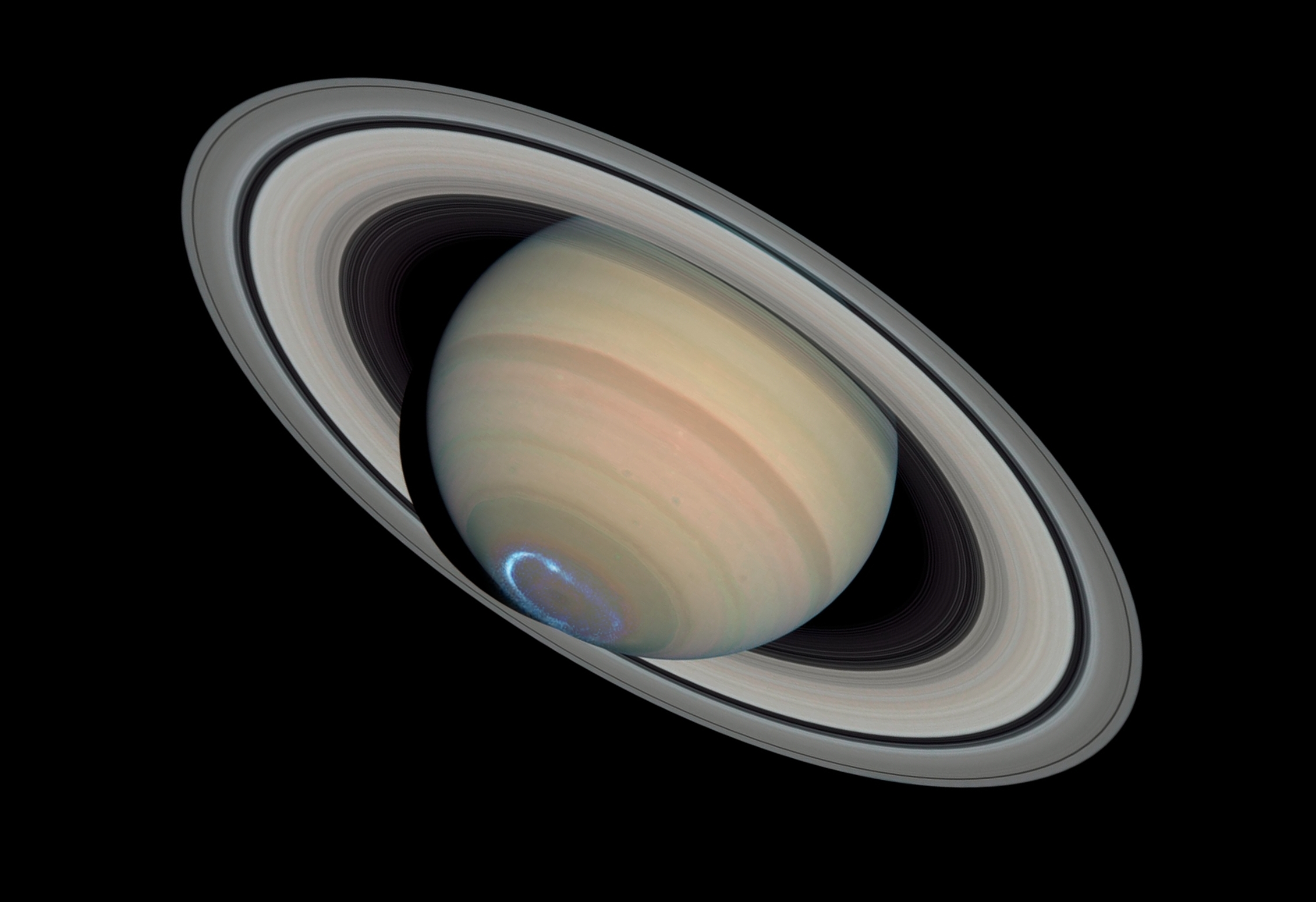
Saturn_with_aurorasFor some time, scientists have been aware of the fact that Earth, the Moon, and every body in our Solar System is subject to impacts by meteors, asteroids and comets. And sometimes, on rare occasions, we get to watch it happen, and its a pretty spectacular sight.  Now, for the first time ever, the Cassini spacecraft has provided direct evidence of small meteoroids crashing into Saturn’s rings.

In addition to being a pretty spellbinding site, studying the impact rate of meteoroids from outside the Saturnian system presents scientists with the opportunity to study how planets in our Solar System are formed. This is due to Saturn’s rings, which act a very effective detector of surrounding phenomena, including the interior structure of the planet and the orbits of its moons.

Linda Spilker, Cassini project scientist at NASA’s Jet Propulsion Laboratory in Pasadena, Calif, spoke on record about the observed impacts:

These new results imply the current-day impact rates for small particles at Saturn are about the same as those at Earth — two very different neighborhoods in our solar system — and this is exciting to see. It took Saturn’s rings acting like a giant meteoroid detector — 100 times the surface area of the Earth — and Cassini’s long-term tour of the Saturn system to address this question.

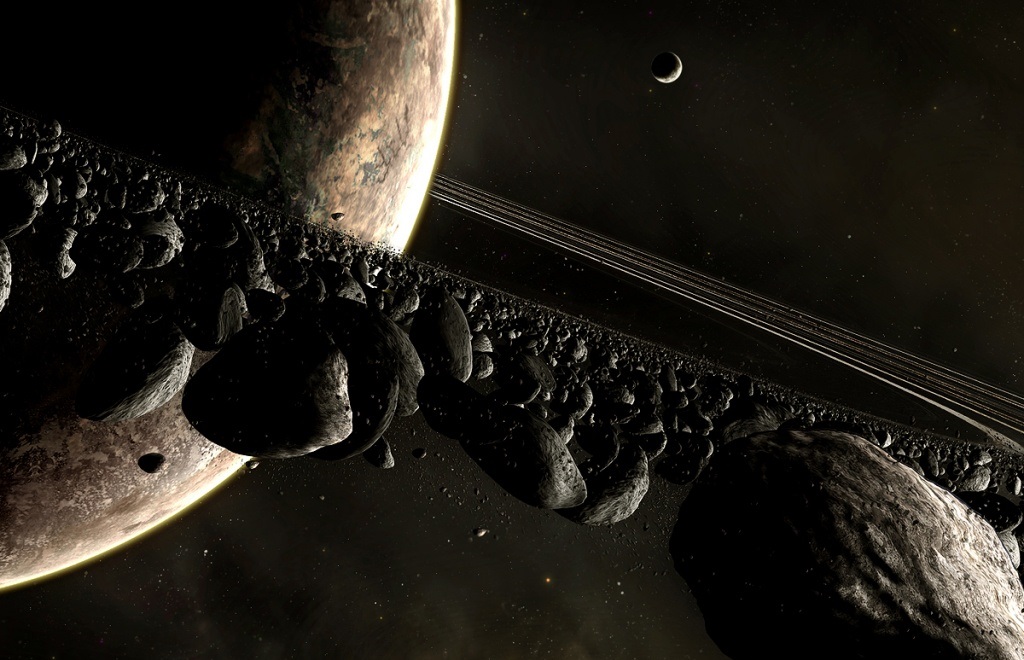
asteroid_belt1In the past, changes in the disposition of Saturn’s rings indicated that impacts were taking place. One such example came in 1983, when an extensive corrogation of 19,000 km (12,000 miles) across the innermost rings told of a very large meteoroid impact. And after the Saturnian equinox back in summer of 2009, astronomers were able to detect a great deal of debris left behind by several meteoroids striking the rings.

However, as Matt Tiscareno, a Cassini scientist at Cornell University explains, this was the first time the impacts were observed directly:

We knew these little impacts were constantly occurring, but we didn’t know how big or how frequent they might be, and we didn’t necessarily expect them to take the form of spectacular shearing clouds. The sunlight shining edge-on to the rings at the Saturnian equinox acted like an anti-cloaking device, so these usually invisible features became plain to see.

Comet1What’s more, Tiscareno and his colleagues were also to come up with some rather new and interesting theories about Saturn itself and how it came to be. Jeff Cuzzi, a Cassini interdisciplinary scientist specializing in planetary rings and dust at NASA’s Ames Research Center, explains:

Saturn’s rings are unusually bright and clean, leading some to suggest that the rings are actually much younger than Saturn. To assess this dramatic claim, we must know more about the rate at which outside material is bombarding the rings. This latest analysis helps fill in that story with detection of impactors of a size that we weren’t previously able to detect directly.

Meteoric impacts and asteroids have been taking place since the formation of our Solar System. In addition to having a serious impact (no pun) on the formation of the planets, they have also played a prominent role in the evolution of life here on planet Earth. And with the expansion in space exploration afforded to us by space probes, satellites, and planetary rovers, we can expect to witness more of these events firsthand.

Source: universetoday.com

The Future is Here: The Neuromimetic Processor

Neuromorphic-chip-640x353It’s known as mimetic technology, machinery that mimics the function and behavior of organic life. For some time, scientists have been using this philosophy to further develop computing, a process which many believe to be paradoxical. In gleaming inspiration from the organic world to design better computers, scientists are basically creating the machinery that could lead to better organics.

But when it comes to Neuromoprhic processors, computers that mimic the function of the human brain, scientists have been lagging behind sequential computing. For instance, IBM announced this past November that its Blue Gene/Q Sequoia supercomputer could clock 16 quadrillion calculations per second, and could crudely simulate more than 530 billion neurons – roughly five times that of a human brain. However, doing this required 8 megawatts of power, enough to power 1600 homes.

connectomeHowever, Kwabena Boahen, a bioengineering professor at Stanford University recently developed a new computing platform that he calls the “Neurogrid”. Each Neurogrid board, running at only 5 watts, can simulate detailed neuronal activity of one million neurons — and it can now do it in real time. Giving the processing to cost ratio in electricity, this means that his new chip is roughly 100,000 times more efficient than other supercomputer.

What’s more, its likely to mean the wide-scale adoption of processors that mimic human neuronal behavior over traditional computer chips. Whereas sequential computing relies on simulated ion-channels to create software-generated “neurons”, the neuromorphic approach involves the flow of ions through channels in a way that emulates the flow of electrons through transistors. Basically, the difference in emulation is a difference between software that mimics the behavior, and hardware.

AI_picWhat’s more, its likely to be a major stepping stone towards the creation of AI and MMI. That’s Artificial Intelligence and Man-Machine Interface for those who don’t speak geek. With computer chips imitating human brains and achieving a measure of intelligence which can be measured in terms of neurons and connections, the likelihood that they will be able to merge with a person’s brain, and thus augment their intelligence, becomes that much more likely.

Source: Extremetech.com

Xeno

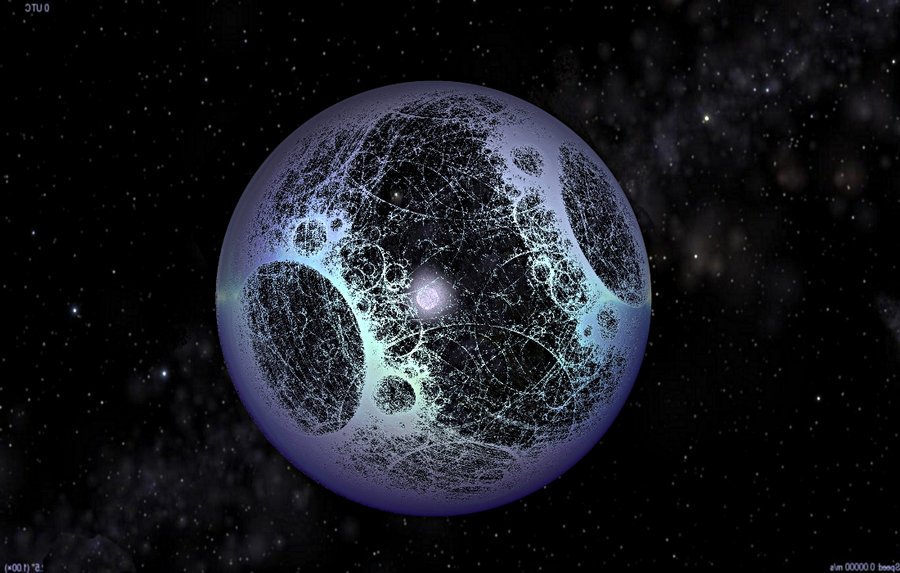
fractal_dyson_sphere_by_eburacum45-d2yum16The size and shape of the deep space field resolved itself into a million piercing points of light. From a mottled mass of brilliance, it slowly transitioned into the blue spectrum, then white, keeping pace with the Relativistic Engines that powered their vessel. As soon as they finished powering down, the instruments starting humming, beeping, and generally carrying out their functions. And all hands aboard her bridge began to listen very carefully for the desired sounds of contact.

For several minutes, sensor returns came back negative. The far-flung planet in the system, its many moons, and the thin trail of asteroids that constituted all stellar mass this far out were about the only things they were picking up. In time, the Captain began to wonder if they were even in the right place.

“We’re sure about these coordinates?” said Mikka, addressing Thoreau at the nav terminal. His hands waved above his touchscreen, absorbing information through contact and assimilating it at near-instantaneous speed. His eyes cleared as he looked up to see her, momentarily breaking from his sensory link.

“The shippers said they found it at the edge of the space lanes. They said it interfered with their nav console, but they made a note of it after they returned to port.”

“I read the report,” Mikka said. “Not very encouraging stuff.”

A few heads turned towards her. Not every member of her crew was privy to the details and she was sure not to say anything more. Hearing about a strange, floating shape in space, one which had given a hauler some serious lumps and its crew nightmares was not something that would go over well with them.

Taking her seat, the Captain accessed the memory file and ran the briefing notes through her mind again. The particulars were a bore, but the holographic representation, reconstructed from what scanner data could be retrieved from the haulers records, were quite interesting. And naturally, the Chairman’s voice droned on in the background, providing the relevant details…

[“…from the basic outline, it appears that what the ship detected has structure to it. It’s roughly spherical in shape… and though it’s dimensions are unclear, our technicians believe that it should measure the size of a small meteoroid.]

Structure, Mikka thought. A buzzword the xeno-types loved to use, employed whenever they found something they thought conformed to their expectations. Chairman Bukhari continued…

[“what is less mysterious is the effect it had on the commercial ship that made the approach. As soon as they got within a single AU of the object, they detected some high-energy gravimetric field. But instead of being pulled in, the ship was essentially pushed away. The crew tried to engage their engines to fight against the force of it, but that only made things worse. By the time they stopped spinning backwards and regained control of their vessel, they hightailed it back to Lagos station and filed a report.”]

And Explorations decided to send us out, the good old guinea pigs, she thought.

[“Luckily, our astrophysicists have a theory. We believe an approach will be possible if done by a ship that does not have significant mass and is simultaneously running in on minimal power. I don’t pretend to understand the physics, but I’m counting on you and your crew to get it done. Getting within close proximity is key, since we plan…]

“Captain,” said Thoreau, interrupting her Recall. “Sensor returns are coming back and it looks like we have something.”

“Something,” said Mikka. “Care to elaborate?”

Thoreau chuckled, his eyes staring at something far off that on one else could see. “It’s got a gravimetric signature, which is why its coming up at all. But from the looks of it, its not much bigger that a commsat.”

“Helmsman,” she said, calling out to the man in the pilot’s chair. “Plot an intercept course and bring us to within five AUs.”

“Yes, Captain,” said Joshan, relaying the coordinates provided by Thoreau and bringing the sublights on line. The ship slowly began to move forward, her hull shuttering slightly as the engines fired off a burst of ionic propulsion.

The sensors pinged loudly, each chime getting more pronounced the closer they got. Outside the bridge window, the starfield shifted as the ship tilted and groaned as Joshan altered their course periodically. Every course change brought them closer, dodging between major stellar objects and avoiding their gravitational influences.

The chimes reached a crescendo. Thoreau looked up with a start when something new entered into his augmented perceptions.

“Captain, I’ve got the object on my screens. Shall I bring up a visual?”

“Yes,” she replied. “And turn off that damn noise, we all know we’re in the ballpark.”

In the center of the bridge, an image formed as billions of targeted photons came together to form the shape of a red sphere. The surface was mottled and opaque, indicating that they were too far out to get an accurate reading on its features. It appeared the reports had been semi-accurate. At this distance, their sensors should have been able to map out every nook and cranny on its surfaces. Only a powerful gravity well, concentrated in such a small object.

However, they had been off in one respect. Bukhari had said in his briefing that it was “roughly spherical” in shape. But even through an incomplete visual construct, Mikka could tell its shape was anything but rough. In fact, she was willing to bet good money, perhaps even her entire commission from this find, that it was a perfect sphere, right down to its microscopic dimensions.

One had to assume there was something especially significant about that. Perhaps the xeno-freaks would finally have something to pour over after all…

“Coming up on five astronomical units, Captain. Firing reverse-thrusters now.”

There was a quick burst of white light as the stopping thrusters fired, the ionic trails showing up just outside the bridge window. When they came to a total stop, the ship issued one last groan as the structure flexed to absorb the change in inertia. 

“We’ve reached pre-specified distance, Captain. Retro thrusters firing to maintain position and attitude.”

“Very good, pilot,” she said. “Maintain our position and prep a shuttle. We’re going in for a retrieval.”

Joshan and everyone else on the bridge turned to look at her. Everyone except Thoreau, who’s senses were too inundated with sensor data to look at her directly. However, he still leered over his shoulder.

“Captain, are you sure about this?”

“Company order,” she said, standing up from her chair. “Whatever this thing is, its need to be brought back.”

“But Captain…” said Thoreau. “How are we going to get close to this thing? The last people who tried we sent back home with their tails tucked between their legs.”

“A theory,” she said. “One which we’re forced to carry out.”

_____

The bay doors slid open to admit the man himself. For those watching, the techs and security personnel called in to guard the object, the sudden presence of the boss was the perfect reason to straighten up and either look busy or vigilant. Of course, none of them could fail to notice the presence of the woman walking beside him. Not exactly prim or proper, and from her flight jacket and slacks to the small protrusions on her face that indicated sub-dermal implants, she looked every bit the spacer.

No one could say why the boss would have a grunt in tow with him, but then again, the day staff didn’t ask questions. They simply tended to “the artifact” – the spherical object that sat within a series of restraints in the center of the room – and kept their speculations to themselves.

Only those who had entered together really knew what was going on and who stood to benefit. And only they were talking on this particular morning as they stepped into the containment area.

“I imagine this is not quite as exciting as seeing it for the first time, no?” said Bukhari to Mikka.

“Well… it’s hard to recreate the thrill of first contact. But this was still very kind of you.”

“Nonsense,” said Bhukari with a wave of the hand. “We all owe its capture to you, so I thought it only fitting you get another look at it before its shipped off to an undisclosed facility, to be poured over by legions of specialists and xenologists.”

She chuckled. “Yeah, we did suspect it would disappear the moment we brought it back to port. Good to see it didn’t.”

“And yet, I imagine when it does move on, we won’t learn a thing. Even I can expect the findings to be classified beyond my level of clearance. Pity.”

She knew exactly what he meant. Seeing it again, she could recall with perfect clarity just how awestruck she was when she first saw it. Hell, she didn’t even need to go through Recall to experience it again, playing the memory back courtesy of the digital backup she had archived. It had been that memorable that she only needed to see it again to remember exactly how small and insignificant it made her feel.

Considering the that sphere was less than a meter across, that was no small feet. But the size was not the issue. It was the intricate patterns it had all over the surface. These consisted of winding lines that seemed to delineate grid spaces, each of which was etched with symbols and grooves off different sizes, lengths, and depths. And at what had been designated the center of the thing, three circles were placed, tiny indentations in a small triangle formation. Nobody in Explorations had been able to make heads or tails of it all. She wondered if anybody back in the Colonies would fare any better…

It was strange, but she felt the oddest feeling again, looking at it. Somehow, the spacing and placement of those three indentations made her think about an interface terminal. Could it be that the species that had created this, whoever they were, possessed this idiosyncrasy as well? Simply place your hand to a touchscreen or finger sized portal, and be able to transmit or receive information?

Looking to her right, she noticed that Bukhari was busy speaking to the head of the security detail. She couldn’t hear what they were saying at the moment, and really didn’t care much. The technicians appeared to be on the other side of the sphere, and the remaining security guards all seemed blissfully unaware of what was going on. No doubt, they were deliberately attempting to not notice the presence of the Chairman and the strange woman he had arrived with.

It was a standard underling thing, she knew. Standing still and doing nothing when the boss was around reduced the chance of making a mistake, and hence being reprimanded.

Looking to the sphere again, she carefully stepped towards it, obsessively checking over her shoulder to make sure no one was looking. She eyed the three holes, once again appraising them to be perfectly spaced apart for her purpose. Three holes, three fingers, making direct contact, achieving a union that would –

“Captain!” The shout rang out just as her fingers landed. Not in time to stop her. She felt a curious sensation, like a big thump or some kind of tremor. No pain, but the sensation of a force strong enough to break her contact with the waking world…

_____

The sounds of hands clapping and a bright light were what she remembered next. She couldn’t tell how long she had been under, whether it had been seconds or days. But she was aware of the fact that she was lying on the deck, and Bukhari and the rest were all standing over her.

“Captain… are you alright?” he asked.

She let out a loud utterance, then drew a deep breath. She could faintly recall something dark and terrible, hanging on her mind and pushing her downward. That darkness seemed to last for some time, stretching on from the last moment she had had before. She looked up again and saw the sphere… and remembered.

Yes, she had reached out to it. Everything after that point was shrouded and black, but she could feel something terrible lurking beneath. And that point in her mind stretched onwards for some time. And now she was back in the light. It was piercing and the sounds around her quite intense, but she could feel her body and mind adjusting. Something was demanding she come back and do something… say something…

After taking several breaths, Bukhari and one of the guards sat her up.

“Why did you do that? Why did you touch the artifact?”

“Artifact?” she said. The word didn’t seem to fit somehow. “What are you talking about?”

“The artifact. You touched it,” he said, pointing. “Why did you do that? No one has touched it since it was procured without protection. You know that!”

She could feel something else rising up from the depths. Slowly, the sense of purpose she had felt a moment ago was taking shape. The word artifact made even less sense to her now, and she was even beginning to understand why…

“Captain, are you sure you’re alright? We have a med tech coming, but I need you tell me, why would you expose yourself like that to the artifact like that?”

“It’s not an artifact!” she said finally. “It’s a message…”

There was a moment of silence. Those around her looked at each other incredulously. “What do you mean, a message?”

“That’s what it contains,” she added, placing her fingers to her temples. The dark space in her mind was becoming perfectly clear now. The transmission, the way it had overwhelmed her when it passed into her body. Never before had anything been so clear, even through Recall.

Slowly, she found the strength to get to her feet and share with the rest of them the terrible knowledge that had come into possession of.

“This thing is some kind of emissary. It contains a message in it, and I made contact when I touched it.”

Bukhari drew a deep breath and stepped closer to her, his eyes now fixed on the sphere with a sudden, reverential fear. “What was the message?”

“The people that built this,” she said, with a slight pause. “They just demanded our unconditional surrender. It says they have an armada heading towards us as we speak, and asks that we lay down our weapons and welcome them.”

“And if we don’t?” asked Bukhari, though unnecessarily. For the tremble in his voice, it was clear he knew the answer.

“Or else, we all die.” Mikka nodded, her face grim and white. “We just made contact with an extra-terrestrial intelligence, sir. And they saw fit to give us an ultimatum…”

“An ultimatum,” Bukhari echoed, his voice barely more than a whisper.

And for what felt like an eternity, every face in the room remained fixed on the sphere that hung before them. Whatever trace of awe and wonder they had once felt for it were now gone, replaced instead with a horrid understanding, and plenty of dread!

News from the Red Planet: Mars’ Bygone Atmosphere

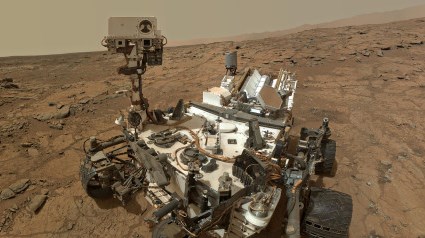
??????In this latest video update from the Mars Science Laboratory team, Ashwin Vasavada, the mission’s Deputy Project Scientist, discusses the recent findings by the Curiosity Rover. As always, these include ongoing studies of Mars atmosphere, in addition to soil and rock analysis, to determine what the Martian landscape may have looked like millions of years ago.

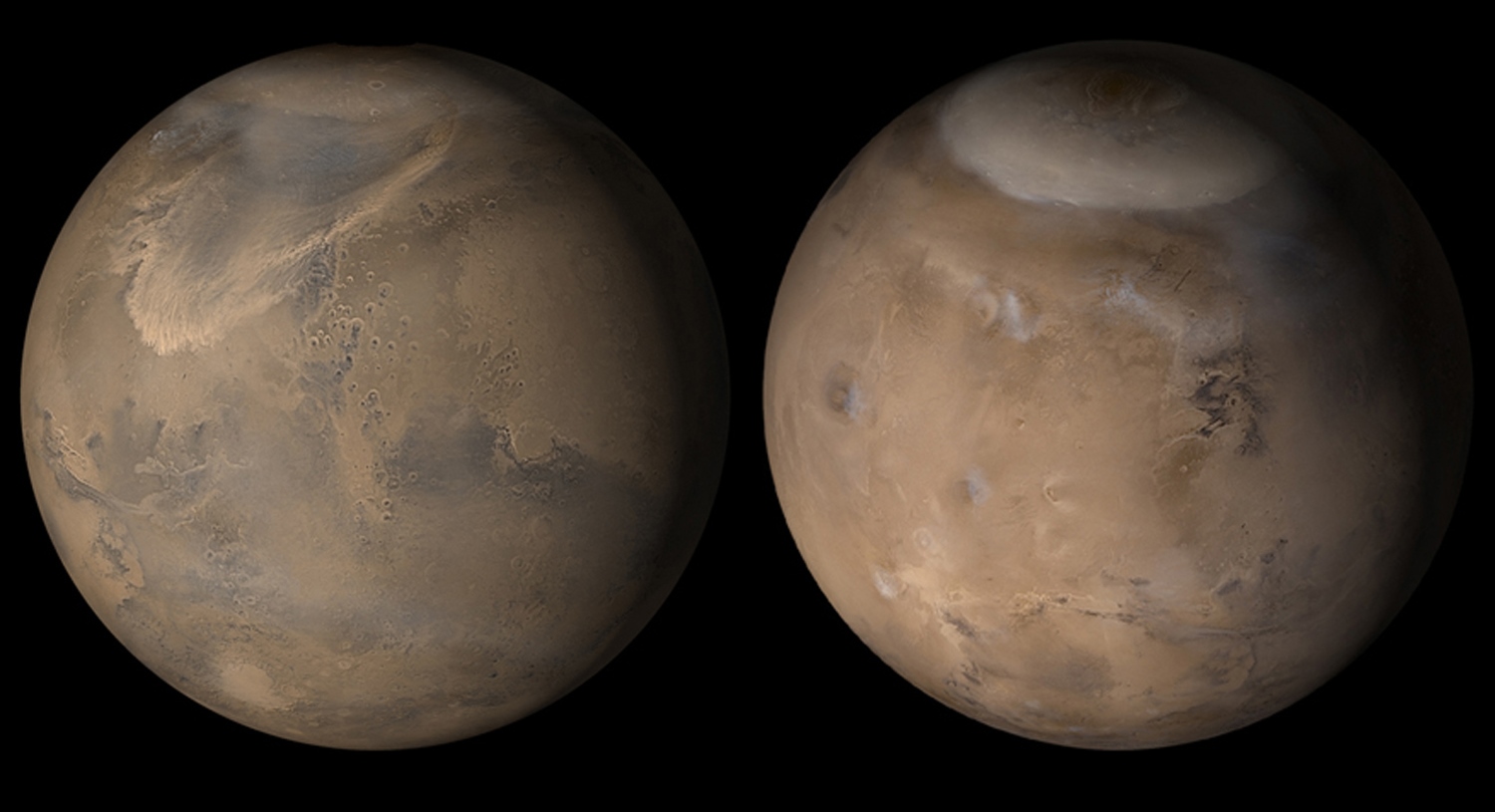
And in its latest research breakthrough, the rover has determined that Mars doesn’t have the same atmosphere it used to. Relying on its microwave oven-sized Sample Analysis at Mars (SAM) instrument, the rover analyzed a sample of Martian air early in April, and the results that came back provided the most precise measurements ever made of in the Martian atmosphere.

SolarConjunctionWhat it noticed in particular was the isotopes of Argon, a basic element that is present in Earth’s atmosphere, Jupiter’s and even the Sun. In Mars case, the mix of light and heavy Argon – two different isotopes of the element – is heavier than in all the other cases. What this suggests is that the Martian atmosphere has thinned over the course of the past few million years.

This data conclusively confirms another long-held suspicion by scientists, that Mars did indeed have an atmosphere capable of supporting life. Alongside the voluminous evidence obtained by Curiosity for the existence of water, we now know that Mars may have supported life at one time, and that it did not always have the arid, cold climate it now does. More good news for those looking to build a case for settling there one day…

solarConjunction02Check out the video below to hear Ashwin Vasavada speak about these latest findings, including the Solar Conjunction which kept them from communicating with the Rover until today. Now that the conjunction has ended, we can expect plenty more updates and interesting finds from the rover. Who knows? Maybe even some evidence about the existence of a Martian civilization.

Don’t be looking at me like that! It could happen…


Source: universetoday.com

Cyberwars: The Credit Card Info Stealing App

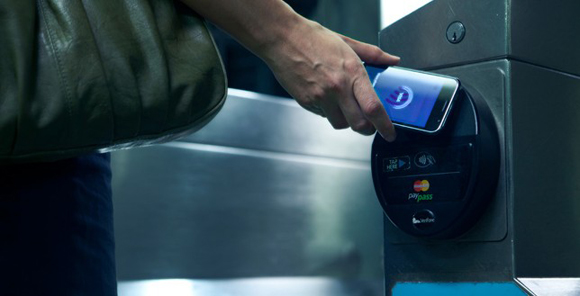
theft_creditcard1Want to steal someone’s credit card information? There’s an App for that! Yes, it seems that smartphones are the latest tool in the identity and info thief’s arsenal, just a few years after it was reported that laptops were being used for to read people’s passports. And the worst part of it is, it can be done using a technology that is perfectly legal, and worse, was designed to make the life of consumers that much easier.

MasterCard calls the App PayPass, while Visa calls it payWave. Simply wave your credit card over a sensor and you’ve made a transaction, without the hassle of having to remember or enter a PIN number. But one of the unintended downsides is that it also makes it that much easier for a third party to steal your credit card information, and just as quickly and conveniently.

theft_creditcard3An investigative report was recently performed by CBC News and Mandy Woodland, a St. John’s lawyer who specializes in technology and privacy law. Using a Samsung Galaxy SIII, one of the most popular on the market today, the team downloaded a free app from the Google Play store to read information such as a card number, expiry date and cardholder name simply holding the smartphone over a debit or credit card.

According to their report, a thief can simply walk by, pause and read the information through an unwitting person’s coat and wallet, and then the information can be sent to another phone. The entire process only takes five minutes to download the App, and just seconds to obtain the credit card info. After conducting the process with a team members credit card, they used the stolen information to buy a coke.

??????????????Naturally, the process could be used to pay for gas, a new computer, or plane tickets to a vacation paradise! And as Woodlands said in an interview with CBC:

It’s always a concern when a stranger could obtain my personal information and my banking and financial information just from a simple walk by, particularly the fact that that worked so quickly.

Furthermore, Michael Legary, who runs a security company called Seccuris Inc., claims they have investigated cases where phones paired with these apps were used to commit credit card fraud. Legary also claims that the app has become a tool for organized crime in Europe:

They don’t even need to talk to you or touch you, they can get information about who you are. That may make you more of a target for certain types of crime.

theft_creditcardBut of course, credit card companies would like their clients not to worry. In a written statement, Visa claimed that there have been no reports of fraud perpetrated by reading its payWave cards, in the manner shown by the CBC. Citing the many layers of protection and identity security, Visa points to its record, which it claims shows historic lows of fraud. Mastercard similarly claimed that its customers are protected, specifically their MasterCard’s Zero Liability Policy. My only answer to that is, wait a while…

At the same time, Google has announced, in response to this investigation, that it would remove any app that violated Google’s developer distribution agreement or content policies. However, the app in question is still available on Google’s download site.

In conjunction with other forms of identity theft and RFID skimming, this latest revelation only adds to the growing concern that technologies which are designed for convenience are being abused to make our lives more harassed and insecure. It also raises an important issue about corporate security in the digital age.

Much like with internet security and hackers, there appears to be a constant back and forth between thieves and credit card companies, the one erecting more and more barriers of security and the other coming up with more elaborate ways to beat them. As for the rest of us, it seems we can only be vigilant. But if possible, it might be smart to purchase an Faraday pouch for your personal effects!

In the meantime, here is a demonstration of the credit card “skimming” at work.


Sources: CBC.ca, huffingtonpost.ca

The Future is Here: The Hyundai E4U Eggmobile

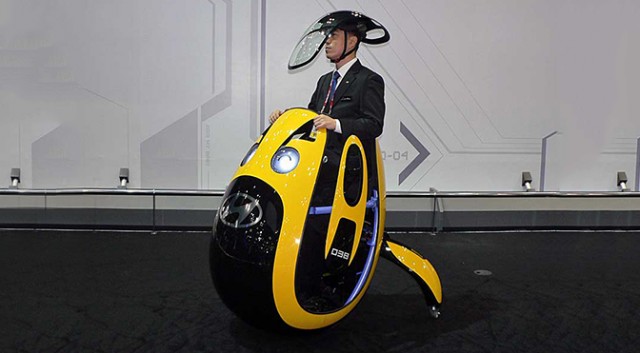
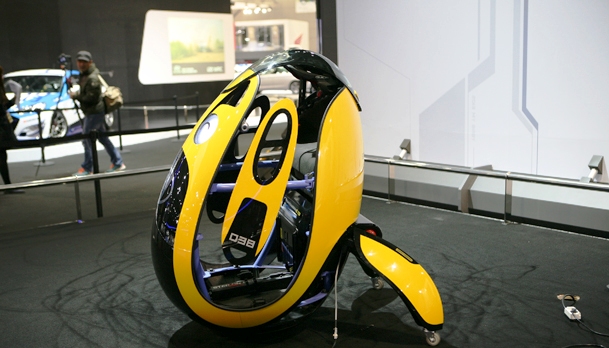
hyundai-e4u-640x353As the world’s cities continue to grow, and air quality and Climate Change continue to worsen, people will need to find cleaner and more effective ways of getting from point A to point B. One option which is being widely considered is personal transit: vehicles that are smaller, smarter, convenient, and more energy-efficient than automobiles. That’s the concept behind the Hyundai E4U Eggmobile, a personal vehicle that merges the convenience of a bicycle with a car.

Another important aspect of the Hyundai concept vehicle is to create a personal transport that will succeed where Mopeds, scooters, and Segways have failed. Though these vehicles are all perfectly good means of getting around, they have not made much of a dent in most major cities, which are still clogged with cars and have public transit that is choked by daily armies of commuters.

hyundai_e4u-640x592The Eggmobile debuted at the Seoul Motor Show this year, where Hyundai was amongst many other automobile makers that were presenting ideas for personal mobility vehicles (PMV). Amongst its advantages is the ability to maneuver in any direction, even though its motor only moves in one. This is made possible by the “semisphere” that the Eggmobile uses, which unlike conventional tires, can rotate in all directions.

When the top of the semisphere is touching and vertically aligned to the ground, the vehicle moves by rotating the semisphere horizontally. Meanwhile, the two rear-mounted training wheels prevent it from spinning uncontrollably. In order to move the vehicle in any direction without hindrance from the training wheels, the E4U simply tilts, much in the same way a helicopter works by tilting its rotors.

hyundia_e4UThe driver, meanwhile, propels the vehicle with their feet, inclining them this way or that in order to generate propulsion. The severity of the tilt determines how fast the vehicle is to go. If this sounds a bit complicated, that’s because it is. At the Motor Show, the demonstration model only moved at a walking pace and the early reports say controlling one will take some getting used to.

What’s more, Hyundai has not yet released the crucial info on what kind of fuel the Eggmobile uses. However, odds are good it is either powered by a clean burning fuel or electricity. Only time will tell. The same holds true of when Hyundai plans to release it, or whether they truly intend to spearhead a fleet of PMVs with this particular mobile. However, given the time and money they invested in this concept, it’s hard to imagine they only pulled it for a single auto show.

Sources: Extremetech.com, news.cnet.com


Drone Wars: Hiding Your Home from a UAV

(U.S. Air Force photo/Staff Sgt. Brian Ferguson)(Released)In a world increasingly permeated by surveillance systems, especially ones that are airborne and remotely operated, it was only a matter of time before some struck back. Much like Steve Mann’s concept of sousveillance – using camera devices and wearable computers to help people spy back against “Big Brother” – it seems that there are individuals out there looking for ways to help the common people avoid UAV detection.

In this case, the individual is Tim Faucett, CEO of APlus Mobile. When his company is not manufacturing mobile computer units that manage robots and UAVs for clients like the U.S. Navy and Lockheed Martin, they are contemplating ways to shield us from the technology they help create. Might seem a bit ironic, but looking to the future, Faucett and his colleagues are concerned about people other than government and military having access to the technology.

drone_target_1Alongside the FAA, which estimates that there could be tens of thousands of unmanned aircrafts circling overhead by the end of this decade, Faucett believes the future will be permeated by privately-owned unmanned aerial vehicles:

There are going to be private drones, there’s going to be commercial drones. Everybody’s going to have access to a drone. And people are going to have good intentions with them, and people are going to have bad intentions with them.

An interesting idea, and not one the public has fully considered yet. Most concerns vis a vis UAVs and their unlawful use are targeted at the governments who use them, mainly with the intention of “combating terrorism” overseas. But to Faucett, the real threat comes from our neighbors and private groups, people who are harder to discern, identify and fight than a monolithic organization.

drone-laser-targeting_620x374In keeping with this mindset, a few weeks ago, his startup Domestic Drone Countermeasures filed its first of what he said would be nine patents for a system that will detect and disable drones before they have the chance to film their targets. Few details have been made available yet as to what these systems involve, mainly because it’s new and Faucett hopes to keep the cat in the bag until its time to unveil.

Still, some details have managed to trickle out, such as Faucett’s own reference to a system that includes software and sensors that will be able to identify nearby UAVs based on their electromagnetic signature, alert the owner of the system, and then “neutralize the drone’s capability to see you with its camera.” But Faucett was also sure to emphasize the non-military nature of all this, responding to rumors that his company is developing some sort of weaponry:

We don’t interfere with the drones navigation in any way. We don’t jam anything. We don’t intercept anything … This is non-combative. That’s really important. We’ve taken great pains to design systems that aren’t going to get shut down or be outlawed or become illegal. … We’ve taken the combat elements out so [the former military technology] can’t be viewed as unlawful.

???????????????????In fact, the new system may actually be capable of doing something creative and comical, should anyone attempt to spy on you. And all without causing harm to the camera that’s attempting to see you :

The camera just won’t be able to look at you. Actually, at some point, we can show the operator at the other end a little movie or something.

So try to misuse a UAV, and you may end with an eye full of porn bombs, or several hours of Desperate Housewives, playing on a loop. Take that, nosy neighbor! You too, Big Brother!

Faucett says his team of three full-time engineers and several part-time staffers should be able to bring the system to market in a matter of months. It’ll be scalable to suit the needs of someone who just wants their home protected, ranging from a home owner who some added security, to larger property owners or institutional clients. You might say, spying will become the new type of Cold War, with government, security and surveillance companies all engaged in a game of one-upmanship.

And as usual, I sense an idea for a novel… Patent Pending!

Source: fastcoexist.com