The Autonomous Robotic 3D Printer!

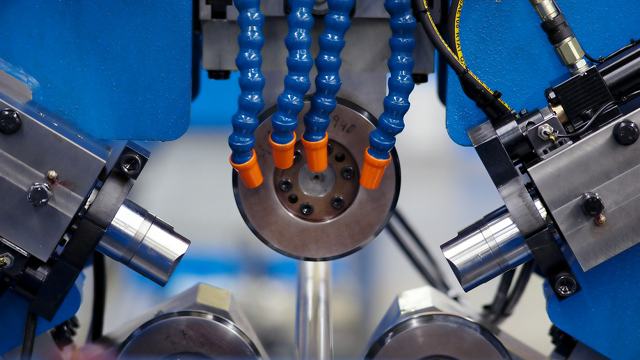
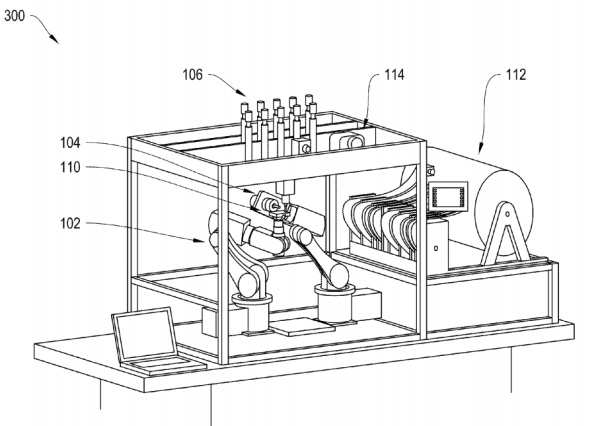
Robo-printerTechnophiles and fans of post-apocalyptic robo-fiction, your attention please! As if the field of 3D printing was not already impressive and/or scary enough, it seems that patents have been filed for the creation of a machine that can perform the job autonomously. It’s called the Robotic Fabricator, a robot-assisted all-in-one design that can print, mill, drill, and finish a final product — and all without human intervention.

Typically, 3D printers require human handlers to oversee the production process, removing unwanted materials such as burrs on plastic and metal parts, repositioning and removing printed objects, getting rid of powdery residue from the interiors of intricate structures. But this machine, once complete, will take away the need for an operator entirely.

Roomba780_oben

The company responsible for this new concept is iRobot (no joke), the same people who brought us the Roomba vacuum robot. It features a flexible pair of robot arms and grippers that exhibit an impressive six degrees of freedom. And the platform is equipped with a series of sensors that tells the computer where it’s at in terms of the production, and when to employ the additive technique of 3D printing or the subtractive technique of milling and drilling.
3D_robotprinter

Naturally, iRobot plans to make the machine readily available to industries for the sake of producing and repairing a wide-range of consumer products. In terms of materials, the company claims it will be able to handle everything from ABS, polycarbonate, and silicone rubbers, to urethane rubbers, plastics, and low-melting-temperature metals, as well as combinations of these. What’s more, it will even be able to manufacture components for more autonomous 3D printers!

Picture it, if you dare. If this machine proves successful, it may very well become the precursor for a new breed of machinery that can assemble just about anything from scratch – including itself! As Futurists and Apocalyptics love to point out, machines that are capable of self-replicating and producing new and ever-increasing complex forms machinery is the key to the future, or to Armageddon.

Both fine choices, depends on what floats your boat!

Source: IO9.com, www.3ders.org

AR Glasses Restore Sight to the Blind

projectglass01As I’m sure most readers are aware, blindness comes in many forms. It’s not simply a matter of the afflicted not being able to see. In fact, there are many degrees of blindness and in most cases, depth perception is limited. But as it turns out, researchers at the University of Yamanashi in Japan have found a way to improve depth perception for the visually challenged using simple augmented reality glasses.

The process involved a pair of Wrap 920 ARs, an off-the-shelf brand of glasses that allow their wearer to interface with their PC, watch video or surf the internet, all the while staying mobile and carrying out their daily chores. The team then recorded images as seen by the wearer from the angle of both eyes, processed it with a quad-core Windows 7 machine, and then merged the images as they would appear to the healthy eye.

AR_glassesEssentially, the glasses perform the task of rendering a scene as it would be seen through “binocular vision” – i.e. in 3D. By taking two images, merging them together and defining what is near and what is far by their relative resolution, they were able to free the wearer’s brain from having to it for them. This in turn allowed them to interact more freely and effectively with their test environment: a dinner table with chop sticks and food in small bowls, arguably a tricky meal to navigate!

Naturally, the technology is still in its infancy. For one, the processed imagery has a fairly low resolution and frame rate, and it requires the glasses to be connected to a laptop. Newer tech will provide better resolution, faster frames per second, and a larger viewport. In addiiton, mobile computing with smartphones and tablets ought to provide for a greater degree of portability, to the point where all the required technology is in the glasses themselves.

posthumanLooking ahead, it is possible that there could be a f0rm of AR glasses specially programmed to deliver this kind of vision correction. The glasses would then act as a prosthesis, giving people with visual impairment an increased level of visual acuity, bringing them one step closer to vision recovery. And since this is also a development which will blurring the lines between humans and computers even more, it’s arguably another step closer to transhumanism!

Source: Extremetech.com

DIY Prosthetics on Demand

DIY_prostheticThe field of prosthetics has seen some rather stark and amazing developments in recent years. And considering the rise in DIY cybernetics, biohacking and 3D printing, it was just a matter of time before a bunch of hobbyists found a way to create their own. And that’s precisely what Ivan Owen and Richard Van, a special effects artist and a woodworker, have managed to do.

Despite living hundreds of kilometers from each other, these two men managed to collaborate on the creation of an artificial limb. And in an especially heartwarming twist, they did it on demand for a South African boy named Liam who war born without fingers on his right hand. For some time, they had been working together to create prosthetics relying only on their general know-how and technology that is available to the general public, all the while keeping tabs on their progress and sharing it with the general public through their blog comingupshorthanded.com.

DIY_prosth_LiamAfter stumbling onto this website, Liam’s mother contacted Ivan and Richard and asked if they could create an artificial hand for her son. They obliged and, using a 3D printer, bits of cable, bungee cord returns and rubber thimbles, the two men collaborated over the internet to make it happen. And not only have they changed the life of young Liam, who is capable of doing things he never thought possible, they now hope to do the same for others looking for low-cost prosthetic alternatives.

For years, these two had been working on a “Robohand” together, in part due to the fact that Van As lost his right hand fingers in a woodworking accident. But until now, they had not considered the wider implications of their work. And after talking to Liam’s mom and seeing the difference it made in Liam’s life, they have set up a fundraising page are take requests for people looking for devices or who are interesting in offering help. Thanks to the open-source nature of the project, a number of improvements have already been made to their designs, with more sure to follow.

bionic_handsIn addition to showcasing the trend of DIY device-making and open-source development, this is also good news for anyone in the market for an artificial hand or limb and who does not have $10,000 kicking around. That’s the standard price for a prosthetic these days, which despite incredible leaps in terms of sophistication have not gotten any cheaper! But with the right know-how, and some technical assistance, a person can find their way to a cheap, printed alternative and see similar results.

Overal, prosthetics offer people the opportunity to restore mobility and retain their independence. And now, thanks to the internet and 3D printing capabilities, they can manufacture these devices independently. The power to restore your own mobility is in your own hands… Interesting, and one might even say cosmically convergent!

Rock on Liam! You’ve got a great mom and some talented friends. As for the rest of you, be sure to check out this video of the 5 year old boy in action with his new prosthetic hand.

Source: IO9.com, comingupshort.com, fundly.com

NASA Engine Will Take Us To The Moon (And Beyond)

NASA_Moon1For almost a year now, NASA has been discussing plans which will eventually culminate in a return to the Moon. Initially, such plans were kept under wraps just in case NASA found itself in a budget environment that did not favor renewed space exploration. But since the 2012 election, and the re-election of President Obama, NASA publicly announced its plans, confident that the budget voted on in 2010 (which included lucrative funding for them) would continue.

And now, NASA has been unveiling the tools that will take us there and beyond in the coming years. Far from simply shooting for the Moon for the first time in decades, NASA’s plans also include manned missions to Mars, and exploratory missions which will take it out to Jupiter and the outer Solar System. And since they are thinking big, its clear some budget-friendly and powerful tools will be needed for the job.

jx-2rocketAbove, we have the latest. It’s called the JX-2, a liquid-fuel cryogenic rocket engine is the modernized version of the J-2, the engine that NASA used in the late-’60s and early-’70s to thrust humans beyond low Earth orbit. With the conclusion of the Apollo program, these babies fell into disuse. But with the upgrades made to these new versions, NASA hopes to send people back to the Moon, and a few places beyond.

Of course, there are other noted improvements in NASA’s arsenal that will also come into play. For starters, the J-2 was part of the general assembly of the Saturn V rocket, the mainstay of the space agency’s fleet at the time. In the years to come, NASA will be deploying its new Space Launch System (SLS) and the Orion Multi-Purpose Crew Vehicle (MPCV).

NASA_marsThe SLS is NASA’s next-generation rocket, a larger, souped-up version of the Saturn V’s that took the Apollo teams into space and men like Neil Armstrong to the Moon. According to NASA spokesmen, the SLS rocket will “incorporate technological investments” and “proven hardware” from previous space exploration programs.” Essentially, this means that projects which have been shelved and retired have been updated and incorporated to create a rocket that can do the job of sending men into deep space again.

The Orion MPCV, on the other hand, is the module that will sit atop the SLS, carrying its crew compliment and delivering them to their destination once the rocket has put them into space and disassembled itself. Announced back in September of 2011, the SLS and MPCV constitute the largest and most powerful space rocket system ever built by a space agency.

No date has been given as to when the SLS and MPCV will be sent into space, courtesy of the new JX-2 rocket engine. But NASA claims there will be a launch sometime next year. As for the Moon, well, we’re waiting on that too, but it’s clear that with Mars slated for 2030, a manned mission to the Moon is sure to happen before this decade is out.

In the meantime, check out the infographic on the new rocket system below, and keep your eyes on the skies! We’re going back, and this time, we mean to stay!

nasa-spaceship-mpcv-orion-capsule-comparison-apollo-shuttle-infographic-110525b-02

Sources: IO9.com, (2), Space.com

Mercury Mapped for the First Time

mercury_mapMercury is the smallest planet in the Solar System and has the closest proximity to our sun. As a result, it’s one of the most neglected when it comes to scientific study. While Mars, Venus, Jupiter and Saturn have been probed and photographed in exquisite detail during the space age, the closest planet to the Sun has had to make do with a few flybys from the Mariner 10 spacecraft in the early 1970s.

However, that is now changing thanks to NASA’s Messenger spacecraft. In addition to confirming the existence of ice and organic molecules back in November, the probe has also transmitted thousands of images of the planet over the past year. These have allowed NASA personnel to construct the first high-resolution maps of the planet, its own high-resolution maps, down to the scale of kilometers.

Global Map Of Mercury From Messenger.According to David Blewett, a scientist at the Applied Physics Laboratory at Johns Hopkins University and part of the Messenger team, part of the reason it has taken more than 30 years to revisit the planet since the Mariner 10 flybys was because a lack of public interest. Messenger, he claims, has changed all that. Speaking ahead of a briefing on Friday at the annual meeting of the American Association for the Advancement of Science in Boston, Blewett had this say:

“Messenger has revealed Mercury to be a fascinating, dynamic and complex world. We know now that it is an oddball planet. It’s the smallest of the eight planets but has the highest density. The interior structure is different than the other planets. The geologic surface is different to the moon and Mars. The surface composition is enigmatic because … it consists of rock types that we don’t have much experience with. It has a global, Earth-like magnetic field, Venus and Mars do not.”

messenger_mercuryThe new global map is an enhanced image that shows the different compositions of rocks on the surface of Mercury by color-coding them. The more orange areas are volcanic plains while the make-up of the rocks in the deep blue areas is unknown. Though Messenger was able to detect an abundance of individual elements on Mercury’s surface – including iron, titanium, sulphur and potassium – without rock samples to study, scientists cannot determine the exact compounds or minerals in which those elements are arranged.

But the biggest surprise came on the surface, where there was an abundance of relatively volatile elements such as potassium and sulphur was seen to be very high. Most of the models for the formation of Mercury predict that these elements should have evaporated away during the planet’s formation. So in addition to learning more about its surface features, scientists are now presented with the opportunity to study and learn more about the planet’s early history as well.

But of course, much of that information and research are going to have to wait for future generations of Rovers. These are likely to be similar in nature to Curiosity, in that they are remote controlled, networked robots with internal labs. But unlike those currently combing the Red Planet, these ones will have to be able to withstand surface temperatures in excess of 400 C and some dangerous surface activity. Hard to know exactly when NASA will be rolling any of those out, but the simplest answer is, not too bloody soon!

Check out the video of Mercury’s new color map as it rotates to show its fully-detailed surface. And FYI, this bit of breaking news has become my 900th post! Woohoo!

Source: gaurdian.co.uk

DARPA’s Next-Generation Spygear!

super-soldier-in-repose Remember how not that long ago some researchers were able to produce a new breed of dissolving electronics? Well as it turns out, there are those who want to find a way to militarize this technology. Those people are the Defense Advanced Research Projects Agency (DARPA), who are looking to create a breed of “suicide sensors” as part of what they call the VAPR (Vanishing Programmable Resources) program.

As it stands, war zones are often littered with “sophisticated electronic microsystems” that create enticing opportunities for adversaries to collect, study and reverse-engineer their enemy’s technology. And since it’s not practical for advanced armies to pick up all their microscopic gear when they withdraw from an area, it would be nice if there was a way to push a button that would cause all of those deployed electronics to dissolve, destruct or biodegrade.

super_soldierOf particular interest is the “degradation” involving implants in a soldier’s body. Given DARPA’s efforts to develop super soldiers – enhanced with bionic limbs, cybernetics, and implantable sensors and medical devices – future armies will run the risk of seeing that technology fall into enemy hands whenever a soldier is killed or taken prisoner. Here especially, a super soldier would be inclined to see their advanced bio-implants to break down and be irretrievable.

In order to accomplish this, it will be inviting a number of companies to a Virginia conference to kick around ideas for creating what it calls “triggered degradation.” In a recent interview with Wired, program manager Dr. Alicia Jackson expressed the goal of the program as follows:

“VAPR will focus on developing and establishing a basic set of materials, components, integration, and manufacturing capabilities to undergird this new class of electronics defined by their performance and transience.”

VAPR_imageSometimes the hardware will be pre-programmed to self-destruct and in others biodegrade into the surrounding environment. In other cases, such as where human implants are concerned, the electronics will be triggered to dissolve into a liquid. In this last respect, DARPA is already making headway, as they demonstrated last year with a super-thin electronic circuit made out of silicon and magnesium could be fabricated to dissolve in liquid.

Naturally, DARPA concedes that things are not quite where they need to be for everything to work. As they stated in part of the VAPR press release, “key technological breakthroughs are required across the entire electronics production process, from starting materials to components to finished products.” But of course, where there is a will – and unlimited funding – there’s usually a way.

Source: Wired.com, DARPA.mil

North Korea’s Video Game Propaganda

nkvideogamesIt’s no secret that North Korea uses all means at its disposal to indoctrinate its citizens to share the same world view. Intrinsic to this is the idea that the West is evil, South Koreans are their pawns, and that the north is bastion of “proletarian freedom” that must triumph over them all. Even if it does find itself cornered, embargoed, run by loons, and wasting most of its GDP on displays of nuclear might.

And on tool which is coming to light is the use of cartoonish-style violent video games. Unlike the military parades and the cult of the leader, these are by comparison a bit crude. Actually, they are very crude, and will no doubt remind most westerns of their Nintendo or Sega gaming system, with a few exceptions where flash media games are concerned. But overall, the point is clear: when it comes to video games, North Korea is seriously behind the times!

uriminzokki-posterFor starters, there is Uriminzokkiri, a web portal that pushes North Korean propaganda from the country’s central news agency. It’s based in China, but is apparently controlled from the North Korean capitol of Pyongyang. So basically, the government was forced to outsource its web-based needs to a neighboring country that is ostensibly allied and far more advanced. A tell-tale sign for sure!

In any case, on Uriminzokkiri, there are a handful of flash games you can play on your computer. Some examples include “Treasure Key”, where the player navigates a crudely animated maze and is forced to deal with enemies such as George W. Bush (rendered as a rat) and Japanese politicians who are his monkeys. The ultimate goal is to collect all the keys and in so doing, unify Korea.

Then there is “Hang A Traitor”, where players attempt to hang a noose around the moving icon of South Korean conservative politician Lee Hoi-chang. That is rivaled by “Beating Up Rat LMB”, where players get to beat up the image of the current South Korean president, Lee Myung-bak, apparently to death!  And that’s all topped off with games like “Fly Swatting” and “Hitting South Korean Politicians”, where players simply swat of hit (whack-a-mole style) images of South Korean politicians and George W. Bush.

twominuteshateI’m put in mind of the Two Minutes of Hate. Anybody else getting that vibe? What’s more, I’m wondering how often they choose to update these games. Are North Korea’s authorities aware that Dubya hasn’t been president for four blessed years? And of course, there’s the pathos I feel for all those souls who are forced to live in this kind of environment, where hate is fostered and the means used to do so are so very crude, ugly and transparent.

I look forward to the day when the last Stalinist regime on Earth joins its brethren on the ash heap of history and the people are permitted a look at how their southern cousins live. I also hope they have an easier transition that some of their Eastern European counterparts. But then again, after all they’ve endured, any change is likely to be painful!

Source: kotaku.com

The Future is Here: The Personal Fitness Band

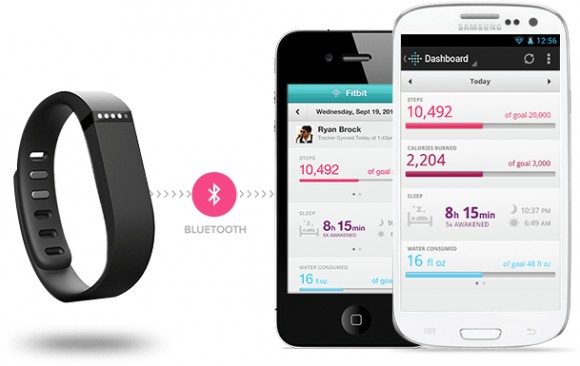
Fitbit-FlexOf all the important new gadgets to make it to the Consumer Electronics Show this year, one stood out as far as morning joggers and fitness gurus were concerned. It’s called the Fitbit Flex, an activity tracker designed to be worn all day and monitor movement, sleep, and calories burned. In an age where electronics are getting more personal, flexible, and wearable, it seems that fitness industry is determined not to be left behind.

While the concept of a wearable fitness tracker is not entirely new, the Flex incorporates a number of new developments in the field of personalized technology. For starters, as the name suggests, its a flexible bracelet that is comfortable enough to be worn all day long and malleable enough to stay firmly wrapped around your wrist. And unlike pedometers or heart rate monitors which monitor a single vital function or activity, the Flex is designed to monitor all simultaneously and in terms of the individuals stated fitness goals.

fitbit_flex_syncAnd to top it all off, the band uses a wireless Bluetooth connection to sync with PCs and smartphones. This last aspect is something Fitbit is quite proud off, as the Flex is the first fitness band to sync using the latest Bluetooth 4.0 standard. In addition, the company has announced that it will eventually support Bluetooth syncing of fitness data with Android devices once an update becomes available, hopefully by late January or early February.

nike-fuelband-01Already, other companies have released fitness monitors similar to this new product. The Nike Fuelband is one such competitor, a flexible band that also used LED lights to indicate heart rate, distance, and overall fitness performance. It is also designed to sync up with mobile devices using the Nike+ iPod accessory. What’s more, the company claims that the band and a users Nike+ account will keep long-term track of a person’s fitness and offer incentives (such as awards badges) and motivational tips.

jawbone-upA third contender is the Jawbone Up band, another monitoring band that is even slimmer and more ergonic, as far as wearing it all day is concerned. Like it’s co-competitors, it too is syncable to an iPhone thanks to its specialized app. But unlike the others, it is designed to literally be worn 24/7, thus painting a more complete picture of a person’s health and fitness. What’s more, it has no screen, making its results only available through syncing.

All told, these bands and those like them range in cost from $100 to $269.99, and are somewhat limited in that not all are Bluetooth capable or able to link up with devices other than iPhones or unless you have an account with them (Nike+ being the big example here). But of course, that’s par for the course when it comes to competition between designers, who only want you to use their products and those they have business ties with.

All that aside, these and other products like them made a big impact at CES this year because they signaled that the fitness industry is on board with some of the latest trends and innovations. As technology continues to improve, we can expect more and more of our needs and wants to be handled by portable, wearable and (coming soon!) implantable electronics that are capable of interfacing with external computers to monitor, store and share our data.

Source: news.cnet.com, (2), (3)

DARPA’s New Sub-Hunting Robot

robot_sub-hunterWhen it comes to planning for the next possible conflict, military planners are often forced to take into account emerging trends in technology, and find both uses and countermeasures for them. And when it comes to future wars at sea, possibly fought in the Straight of Hormuz or the Sea of Japan, a number of startling developments are being taken into account, and solutions drawn up!

One such “solution” is the new robot sub-hunter being jointly created by the Science Applications International Corporation and DARPA – the Defense Advanced Research Projects Agency. That unmanned maritime robot, called the Anti-Submarine Warfare Continuous Trail Unmanned Vehicle, or ACTUV, doesn’t exist yet and won’t for years. But the SAIC’s plan does have the backing it needs, and presents an idea that is likely to inspire fear in submariners everywhere!

knifefish-drone-640x353For one, the unmanned vehicle will be capable of operating for periods ranging between 60 and 90 days, significantly longer than any aerial drone is capable of staying airborne. What’s more, SAIC is designing the ACTUV to be way more autonomous than contemporary drone aircraft. Once powered up, all a ship need do is release the drone and allow it to rely on its long-range acquisition sonar and other advanced sensors to scan for submarines, while at the same time steering clear of any nearby surface ships.

And then there is the advanced technology powering the drone’s sonar arrays. Unlike other ships, the ACTUV’s sensors create an acoustic image of its target to know it has the right one. Once the ACTUV thinks it’s got something, it pings nearby Navy ships through a satellite link, which they can either confirm or deny, either giving the ship the green light to hunt or instructions to search elsewhere.

And last, but not least, the ACTUV can operate alongside its surface fleet, remain in constant communication with a mothership as well as naval aircraft as they deploy sonar charges to help it hunt subs. This is a level of coordination that is rarely seen in aerial drones, which are either sent into action far from the front lines or controlled remotely by infantry in the field to offer fire support.

X-47BAh, but there’s one thing: the drone isn’t armed. Primarilyy developed to help Naval ships with hunting silent subs and/or cheap diesel-electric models, the ship may be capable of operating autonomously, but cannot take action to end lives. This feature may be the result of the Pentagon’s recent decision to limit the killing powers of UAV and autonomous drones, which amounted to ensuring that a human being will always be at the helm wherever the death of human beings is involved.

What’s more, the drone is designed with all kinds of futuristic and present-day scenarios in mind. While silent subs – ones that use advanced drive systems to generate little to no noise (a la The Hunt for Red October) – are one likely scenario, there is also the possibility of the US Navy running into the cheap diesel models which are technologically inferior, but can be much quieter and harder to track than anything nuclear. Russia is known to sell them and Iran claims to have them, so any military analyst worth his salt would advise being prepared to meet them wherever they present themselves.

And of course, the SAIC was sure to create a video showing the ACTUV in action:


Source:
Wired.com

Nokia Morph Concept Phone

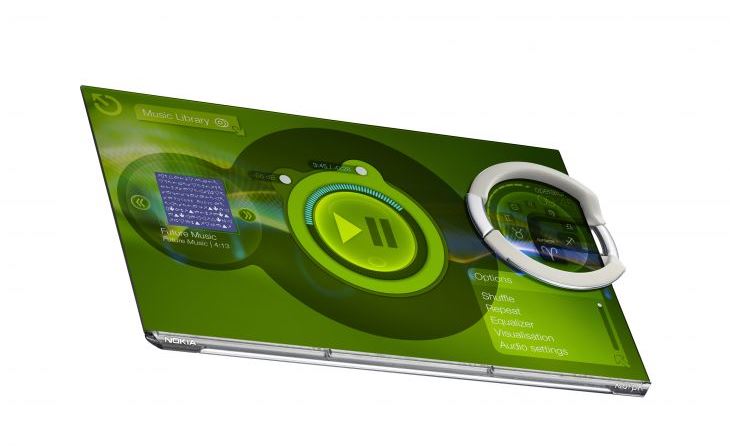
nokia_morphThis story is a bit of an expansion on a preview post, and one which I’ve put off since I spent so much time talking about phones a few weeks ago. And the concept is a little dated at this point, but since it’s still in the works and just as revolutionary. And trust me, its quite cool and to read about!

It seems that there is no shortage of new and radical ideas when it comes to the field of personal communications these days! And when it comes to personal phones, it seems the sky’s the limit. In keeping with the trend to build smaller, ergonomic, flexible and thinner smartphones and PDA’s, Nokia has another concept which is making waves.

It’s known as the Morph, a new concept that showcases some revolutionary leaps being made in numerous fields. Thanks to ongoing collaboration between the Nokia Research Center (NRC) and the Cambridge Nanoscience Centre in the UK, this device incorporates numerous advances being made in terms of thin displays, flexible housings and nanotechnological processes. Once feasible, this phone will literary be assembled at the microscopic levels, leading to a phone made of “smart matter”.

In addition to the revolutionary nanoscale manufacturing process, the phone will present a number of radical new possibilities for users and device manufacturers everywhere. They include:

  • Newly-enabled flexible and transparent materials that blend more seamlessly with the way we live
  • Devices that are self-cleaning and self-preserving
  • Transparent electronics that offer an entirely new aesthetic dimension
  • Built-in solar absorption that charge a device and batteries that are smaller, longer lasting and faster to charge
  • Integrated sensors that allow people to learn more about the environment, empowering them to make better choices

In addition to the advances above, the integrated electronics shown in the Morph concept could cost less and include more functionality in a much smaller space, even as interfaces are simplified and usability is enhanced. What’s more, the development and combination of these technologies will have far-reaching benefits for the fields of communication and personal computing, revolutionizing how people do these in their daily lives.

And of course, Nokia was sure to create an animated video displaying the Morph concept in action. Take a gander:

Source: press.nokia.com, youtube.com