The Future is Here: Autonomos Mineroller Vehicles

terramax-inlineImprovised explosive devices (IEDs), landmines and other kinds of roadside bombs are a major threat to Coalition troops serving overseas. And even though combat operations in Afghanistan are coming to a close in the near future, military planners and developers are still looking for ways to address the kinds of threats that are all too common in these fields of engagement.

One such developer is U.S. defense contractor Oshkosh Defense, which recently unveiled its new M-ATV, an armored vehicle specially designed to resist blasts from IEDs and mines. This specialized, high-tech troop transport detects explosives using special ground penetrating radar and a 12-wheeled mineroller which attaches to the front. But now, the company is going a step further.

M-ATV_Light_P7A1130_rgb_720x300Oshkosh now claims it wants to move soldiers even further from the danger zone by putting them in another vehicle entirely and making the minesweeping truck drive itself. For the past decade, the company has been developing an autonomous driving technology called TerraMax. This self-driving system can be applied to vehicles already on the road, and was unveiled during the 2004 DARPA Grand Challenge.

It’s now equipped with radar and LIDAR, which uses lasers to detect nearby objects, along with a drive-by-wire system that electronically controls engine speed, transmission, braking, and steering. The system does more than steer and hit the throttle and brakes. It can intelligently control a central tire inflation system and driveline locks to navigate deep sand or mud, all without any input from the operator.

terramax-inline2Similar to the technology that powers Google’s self-driving cars, TerraMax is adapted for use in much tougher conditions. But whereas Google and big auto manufacturers can carefully map roads, lane markings, and speed limit signs before its vehicles are even on the road, Oshkosh doesn’t have those advantages. It’s vehicles must navigate hostile terrain in territories that have not been thoroughly mapped and imaged.

So it made TerraMax capable of combining overhead imagery from satellites and planes with standard military maps generated through geographic information systems. That lets soldiers define roads and other obstacles, much like with a commercial GPS system. Once given a defined course, the vehicles can navigate themselves while operators set things like vehicle speed and following distance.

M-ATV_withTerraMax_J4A1330_720x300-CO1Granted, these aren’t entirely autonomous vehicles. Whenever a convoy reaches an impasse  of some kind, the M-ATV will need to alert an operator and ask what to do. However, it is still an impressive system that achieves two key objectives. One, it allows the military to move more cargo with fewer personnel; and two, it makes a convoy look like it’s carrying more personnel than it really is, which is likely to deter attacks.

Oshkosh’s unmanned vehicle technology is still in testing, but the company has spent the last three years working with the Marine Corp Warfighting Lab and the Office of Naval Research to get it ready for the battlefield. And while the technology is currently being developed for combat vehicles, it could also be used in civilian settings – like autonomous snow clearing at airports or police bomb disposal units.

mfc-amas-photo-02-hThough Coaltion forces are drawing down their presence in Afghanistan, Oshkosh’s and other unmanned ground vehicle concepts will likely be used in conflicts around the world in the years to come. Company representatives gave demonstrations of the technology at Eurosatory 2014, a defense industry trade show, and say they received positive feedback from other nations as well.

And it is only one of several military-grade autonomous technology project currently in development. Lockheed Martin is also working on the Autonomous Mobility Appliqué System (AMAS), which also allows for autonomous or semi-autonomous driving. With the development of unmanned systems showing no signs of slowing down, autonomous-vehicle technology is likely to advance considerably in the coming years.

And be sure to check out this video of Oshkosh showcasing the M-ATV and TerraMax system at Eurosatory 2014:


Sources: wired.com, oshkoshdefense.com, humanisticrobotics.com

Nanotech News: Tiny Propellers for Drug Delivery

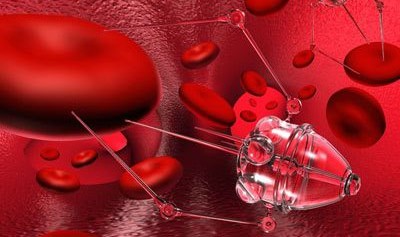
NanopropellersThe scientific and medical research communities have been looking to develop robots that measure in the nanometer range (that’s one-billionth of a meter) for quite some time. Being so small, they would be able to perform difficult tasks, such as targeted drug delivery to specific cells, or the elimination of harmful antigens, pathogens or viruses. However, the development of such machines raises numerous challenges.

For one, making them small enough to fit between cells remains tricky, and these tiny bots would also need a propulsion system that will allow them to navigate their way through the human body. But now, in a paper published in the June 2014 issue of ACS Nano, an Israeli and German team announced the creation of the smallest nanobot yet, a magnet-guided corkscrew which is propelled by a tiny helical propeller.

Nanopropellers1The team is comprised of researchers from the Technion-Israel Institute of Technology, the Max Planck Institute for Intelligent Systems, and the Institute for Physical Chemistry at the University of Stuttgart, Germany. Led by Dr. Peer Fischer at the Max Planck Institute, the research team created the tiny helical nanopropeller from a filament of silica and nickel that measures just 70 nanometers in diameter and 400 in length.

That’s more than 1,000 times smaller than the width of a human hair, or 100 times smaller than a single red blood cell, making the wee machine the tiniest nanopropeller humanity has ever created. Instead of carrying its own motor, the propeller is powered by an externally-applied weak rotating magnetic field which causes the prop to spin, driving it and its attached payload forward.

nanotech-2In order to test it, the scientist placed it in a hyaluronan gel, which is similar in consistency to bodily fluids. Like those fluids, the gel contains a mesh of entangled long polymer protein chains. In previous studies, larger micrometer-sized propellers got caught in these chains, slowing or completely halting their progress. The new nanoprop, however, was able to move relatively quickly by simply passing through the gaps in the mesh.

The study’s co-author, Associate Professor Alex Leshanksy of the Technion Faculty of Chemical Engineering, said that the nanobots:

actually display significantly enhanced propulsion velocities, exceeding the highest speeds measured in glycerin as compared with micro-propellers, which show very low or negligible propulsion.

The applications for this device certainly include targeted drug delivery, where the nanobots would be equipped with insulin, antibiotics, or even chemotherapy drugs which they could then deliver to specific cells in the body to speed up the delivery process and reduce side-effects. Scientists could also attach “active molecules” to the tips of the propellers, or use the propellers to deliver tiny doses of radiation.

nanobotsThe applications seem wide, varied, and exciting, from combating diabetes to fighting cancer and HIV with surgical precision. And developments like these, though they measure in the billionth of meters, they add up to a future where lives are healthier, longer and more prosperous.

Sources: engadget.com, gizmag.com, ats.org

An End to HIV: HIV Remove from Cultured Cells

https://i0.wp.com/292fc373eb1b8428f75b-7f75e5eb51943043279413a54aaa858a.r38.cf3.rackcdn.com/health-fitness_01_temp-1357384489-50e80b29-620x348.jpgAt the closing ceremony of the AIDS 2014 conference a few weeks ago in Melbourne, Australia, many of the speakers – including longtime AIDS researcher and International AIDS Society Presidential Award winner Eric Goosby – told of how utterly terrifying the disease seemed 30 years ago. And while that fear is not gone, it has since diminished, replaced by and large with a sense of hope that the disease will be eradicated.

According to UNAIDS – the Joint United Nations Programme on HIV/AIDS, which is dedicated to destroying the disease by 2030 – the medical community has learned much in the past few years and stands a good chance at accomplishing this goal. And with new advances being announced every few months, hopes for a world in which this terrible disease no longer exists all seem firmly on track.

UNAIDSConsider this latest development, which comes from the Temple University School of Medicine in Philadelphia. Here, researchers have discovered how to permanently extricate HIV-1 from human cells, effectively curing a patient of the disease. Combined with new vaccines that have shown the ability to block infection (and in some cases, even reverse it), this news may yet be reason for even greater hope.

One of the main issues in the treatment of HIV-1 is not simply that it is expensive, but that antiretroviral therapy have terrible side effects that can speed up diseases more commonly associated with aging or can cause co-infections, such as Hepatitis C, to become worse.  Added to this is that HIV is a tricky and tenacious disease that becomes part of a patient’s DNA, making it virtually impossible to eradicate.

https://i0.wp.com/images.gizmag.com/gallery_lrg/scientistseliminatehivfromhumancells.jpgHowever, researchers from Temple University School of Medicine have found a way to cut the infected genes out, potentially eradicating the virus for good and negating the need for lifelong ARV treatment. The technique uses a DNA-snipping enzyme, a nuclease, and a targeting RNA strand to hunt down the genome and cuts the HIV-1 DNA from it. The cell is able to repair its own genomes, essentially sewing itself together again, only now HIV-free.
This treatment will work in varied cell types such as the T-cells and monocytic cells that harbor HIV. In designing the molecular tools, researchers chose nucleotide sequences that do not appear in any coding sequences of human DNA to avoid what they call off-target effects, where patient’s cells or own DNA might be damaged. The technique may also be applicable against many other viruses.

There are still serious hurdles, like how to get the treatment into each, individual cell. Also, HIV-1 is known for mutations, and every patient has their own viral sequence. This means that there can be no single, prescriptive treatment for it. However, another potential upside is that there is the chance this may be used not simply as a treatment but also a vaccine as cells containing the nuclease-RNA combination do not acquire the HIV infection.

http://www.templehealth.org/AssetMgmt/getImage.aspx?assetid=1152Dr. Kamel Khalili, Professor and Chair of the Department of Neuroscience at Temple, calls it an “important step” towards the eradication of AIDS, though it is still years away from the clinical stage. As he put it:

We want to eradicate every single copy of HIV-1 from the patient. That will cure AIDS. I think this technology is the way we can do it.

Though it is not the one-shot breakthrough many have been hoping for, this enzyme-based treatment is another step along the long road towards the end of HIV and another nail in its coffin. As long as treatments exist that are not only able to treat and block, but also fight the disease, there is much reason for hope.

And be sure to check out this video from Temple University, where Dr. Khalili explains the medical breakthrough:


Sources:
gizmag.com, templehealth.org

News from Space: NASA Showcases New Rover Tools

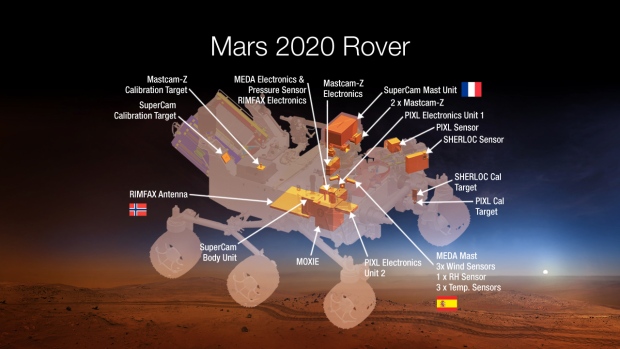
NASA_2020rover1Last Thursday at the agency’s headquarters in Washington, NASA unveiled more information about its Mars 2020 rover, which is scheduled to join Opportunity and Curiosity on the Red Planet by the end of the decade. The subject of this latest press release was the rover’s payload, which will consist of seven carefully-selected instruments that will conduct unprecedented science and exploratory investigations, and cost about $130 million to develop.

These instruments were selected from 58 proposals that were submitted back in January by researchers and engineers from all around the world. This is twice the usual number of proposals that NASA has received during instrument competitions in the recent past, and is a strong indicator of the extraordinary level of interest the scientific community is taking in the exploration of the Mars.

NASA_2020roverThese seven new instruments include:

  • Mars Oxygen ISRU Experiment (MOXIE): this technology package will process the Martian atmosphere into oxygen. ISRU stands for In Situ Resource Utilization.
  • Planetary Instrument for X-ray Lithochemistry (PIXL): this spectrometer will use a high-resolution imager and X-ray fluorescence for detailed elemental analysis to a finer degree than possible with any prior equipment.
  • Scanning Habitable Environments with Raman & Luminescence for Organics and Chemicals (SHERLOC): this sensor suite will use an ultraviolet laser for fine-scale mineralogy, detecting organic compounds, and high-resolution imaging.
  • Mastcam-Z: an advanced camera system that will send home panoramic and stereoscopic images and assist with rover operations and help determine surface mineralogy.
  • SuperCam: an imaging device with super capacities to perform chemical composition analysis and more mineralogy. This tool will allow the rover to peer around hunting for organic compounds within rocks or weathered soils from a distance, helping identify interesting locations to sample in greater detail.
  • Mars Environmental Dynamics Analyzer (MEDA): This sensor suite to measure temperature, wind speed and direction, pressure, and relative humidity. As dust is such a defining characteristic of weather on the red planet, it’s also going to measure dust size and shape, helping characterize how big of a hassle it will make housekeeping.
  • Radar Imager for Mars’ Subsurface Exploration (RIMFAX): a ground-penetrating radar to imagine the subsurface to centimeter-scale resolution.

These instruments will be used to determine how future human explorers could exploit natural resources to live on Mars, pinning down limits to how much we could rely on using local materials. In addition, demonstration technology will test out processing atmospheric carbon dioxide to produce oxygen, a key step towards using local resources for manufacturing oxidizers for rocket fuel and suitable for humans.

NASA_2020rover5This is perhaps the most exciting aspect of the proposed mission, which is looking ahead to the possibility of manned Martian exploration and even settlement. To quote William Gerstenmaier, the associate administrator for the Human Exploration and Operations Mission Directorate at NASA Headquarters in Washington:

Mars has resources needed to help sustain life, which can reduce the amount of supplies that human missions will need to carry. Better understanding the Martian dust and weather will be valuable data for planning human Mars missions. Testing ways to extract these resources and understand the environment will help make the pioneering of Mars feasible.

At the same time, and in keeping with plans for a manned mission, it will carry on in NASA’s long-term goal of unlocking Mars’ past and determining if life ever existed there. As John Grunsfeld, astronaut and associate administrator of NASA’s Science Mission Directorate in Washington, explained:

The Mars 2020 rover, with these new advanced scientific instruments, including those from our international partners, holds the promise to unlock more mysteries of Mars’ past as revealed in the geological record. This mission will further our search for life in the universe and also offer opportunities to advance new capabilities in exploration technology.

Mars_footprintNASA addressed these goals and more two weeks ago with their mission to Mars panel at the 2014 Comic-Con. This event, which featured retired astronaut and living legend Buzz Aldrin, spoke at length to a packed room about how Apollo 11 represented the “the first Giant Leap”. According to Aldrin, the Next Giant Leap could be “Apollo 45 landing humans on Mars.”

The panel discussion also included enthusiastic support of Orion and the Space Launch System which are currently under development and will be used when it finally comes time to send human explorers to join the rovers on Mars. The Mars 2020 mission will be based on the design of the highly successful Mars Science Laboratory rover, Curiosity, which landed almost two years ago.

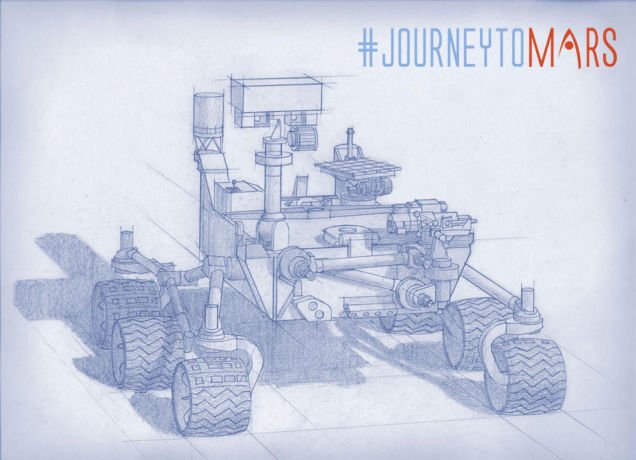
NASA_2020rover2Not only does it look virtually identical to Curiosity – from its six-wheeled chassis, on-board laboratory, and instrument-studded retractable arms – and will even be partly built using Curiosity’s spare parts.It will also land on Mars using the same lowered-to-the-surface-by-a-giant-sky-crane method. NASA als0 plans to use the rover to identify and select a collection of rock and soil samples that will be stored for potential return to Earth by a future mission.

These rock samples will likely have to wait until the proposed manned mission of 2030 to be picked up, but NASA seems hopeful that such a mission is in the cards. In the meantime, NASA is waiting for their MAVEN orbiter to reach Mars and begin exploring it’s atmosphere (it is expected to arrive by September), while the InSight Lander – which will examine Mars’ interior geology – is slated for launch by March 2016.

terraformingSo we can expect a lot more news and revelations about the Red Planet in the coming months and years. Who knows? Maybe we may finally find evidence of organic molecules or microbial life there soon, a find which will prove once and for all that life exists on other planets within our Solar System. And if we’re really lucky, we might just find that it could feasibly support life once again…

Sources: cbc.ca, fastcompany.com, nasa.gov, space.io9.com, (2), extremetech.com

Powered by the Sun: The “Energy Duck”

Magnificent CME Erupts on the Sun - August 31Part of the challenge of paving the way towards a future where solar power is able to meet our energy needs is finding ways to integrate it into our daily lives. Basically, until such time as efficiency limits, storage and intermittency problems are truly overcome, one of the best ways to do this is to place photovoltaic arrays where the demand is highest and to get creative with how they collect it.

For example, a group of British artists have conceptualized a giant solar harvesting floating duck as part of the 2014 Land Art Generator Initiative Copenhagen design competition. Dubbed “Energy Duck”, the giant structure has been designed not only to generate clean electricity for the local residents of Copenhagen, but to also provide a unique visitor center. In short, it comes renewable energy with a cautionary message about the effects of Climate Change.

energyduckInspired by the arctic eider duck, Energy Duck not only hopes to offer a unique renewable energy source, but also highlight the impact that climate change has had on the local population and breeding habitats of the eider duck in recent years. As its creators – Hareth Pochee, Adam Khan, Louis Leger and Patrick Fryer – explained:

Energy Duck is an entertaining iconic sculpture, a renewable energy generator, a habitable tourist destination and a celebration of local wildlife.

Covered in photovoltaic panels, the Energy Duck is designed to harvest solar energy from every inch of its exterior shell. Solar cells mounted around the base are also positioned to take advantage of the sun’s rays being reflected off the water’s surface. Additionally, the facility features hydro turbines which use water pressure to provide stored energy to the grid after sunset and during the evening.

https://i0.wp.com/images.gizmag.com/gallery_lrg/energyduck-2.jpgAll of this helps the Energy Duck overcome the all-important issue of intermittency. By being able to generate energy around the clock, the Duck is not dependent on the sun shining in order to continue operating and providing power. As the team explained:
When stored energy needs to be delivered, the duck is flooded through one or more hydro turbines to generate electricity, which is transmitted to the national grid by the same route as the PV panel-generated electricity. Solar energy is later used to pump the water back out of the duck, and buoyancy brings it to the surface. The floating height of the duck indicates the relative cost of electricity as a function of city-wide use: as demand peaks the duck sinks.

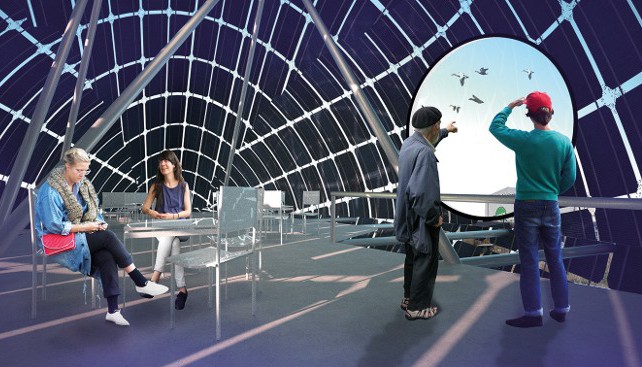
Inside the giant Energy Duck, visitors can get a unique look into the working mechanics of the hydro turbines, watching as the water levels rise and fall. Sunlight also filters through small spaces between the exterior solar panels, providing a kaleidoscope-like view of Copenhagen. However, another interesting feature about the Energy Duck is its environmental message.

energyduck-5So while people are visiting the interior and taking note of the impressive technology, they will also be getting a lesson in why it is important. And really, the inherent message of the concept is really very appropriate. A clean, renewable, alternative energy source designed to look like, and inspired by, one of the many creatures that is endangered because of humanity’s dependence on unclean fuels.

Now if we could just design a land-roving solar farm in the shape of a polar bear!

Sources: gizmag.com, inhabitat.com

Biomedical Breakthroughs: “Biological” Pacemakers

biologicalpacemakersSince they were first developed some forty years ago, pacemakers have served an invaluable medical function. By stimulating the heart with electrical stimulation, they ensure that the recipients heart continues to beat at a steady rate. However, the implantation process calls for a major medical procedure, and the presence of the machine inside the body can lead to complications – i.e. infections.

Little wonder then why researchers are looking to create a better design to replace it with. However, up until now, proposed upgrades have focused on eliminating batteries (that require additional surgery to be replaced) with perpetual motion or piezeoelectric-powered devices. But this most recent proposal, which comes from the Cedars-Sinai Heart Institute in Los Angeles, looks to use the heart’s own cells to regulate it and keep it in working order.

piezoelectric-pacemakerIn an effort that was apparently the result of “dozens of years” worth of research, Dr. Eduardo Marbán and his research team used genes injected into the defective hearts of pigs to convert unspecialized heart cells into “biological pacemakers”. The pigs, all of which suffered from complete heart blocks, had the gene TBX18 injected into their hearts via what is described as a minimally invasive catheter procedure.

This caused some of the existing unspecialized cardiac cells to transform into sinuatrial node cells, which consist of tissue that initiates the electrical impulses that set the rhythm of the heart. The day after the procedure, the recipient pigs’ hearts were already beating faster than those of a control group and lasted for the duration of the 14-day study – indicating that the treatment could be a longer-term solution than previously thought.

biomedicineInitially, Marbán and his colleagues conceived of it more as a temporary fix for patients who were having problems with their man-made pacemakers. Now, they’re considering the possibility that it could be a long-term biological treatment. It could also be used on infants still in the womb, who can’t currently receive mechanical pacemakers. And while the research has so far been confined to pigs, human clinical studies could begin in as soon as three years.

In keeping with a trends in modern medicine, this gene therapy offers a potential third alternative to medical machiners and biomimetics. The one seeks to enhance the workings of our biological bodies through the addition of machinery while the other seeks to create machinery that mimics the bodies natural functions. But by simply programming the body to perform the role of machinery, we can cut out the middle man.

Sources: gizmag.com, cedars-sinai.edu

News From Space: Astronaut Robots

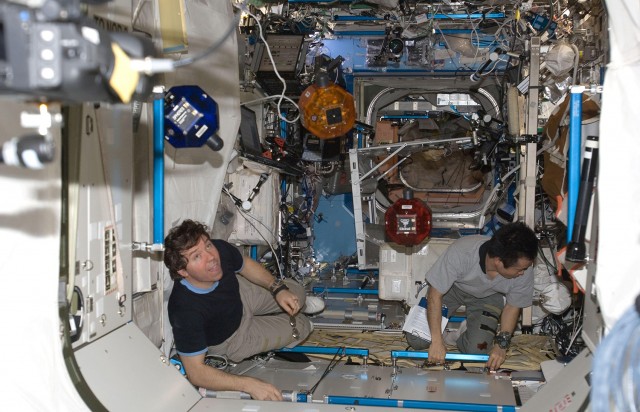
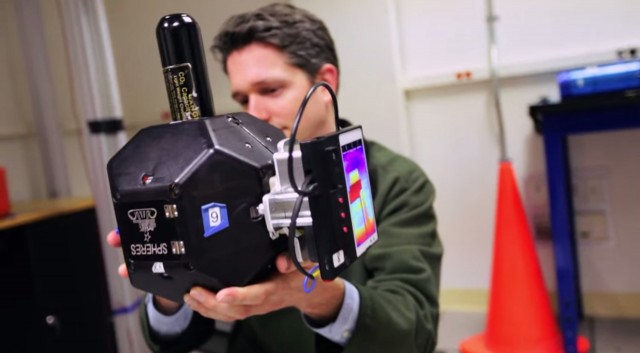
spheres_1As if it weren’t bad enough that they are replacing workers here on Earth, now they are being designed to replace us in space! At least, that’s the general idea behind Google and NASA’s collaborative effort to make SPHERES (Synchronized Position Hold, Engage, Reorient, Experimental Satellites). As the name suggests, these robots are spherical, floating machines that use small CO2 thrusters to move about and performing chores usually done by astronauts.

Earlier this month, NASA announced it’s plan to launch some SPHERES aboard an unmanned Cygnus spacecraft to the International Space Station to begin testing. That launch took place on July 11th, and the testing has since begun. Powered by Tango, Google’s prototype smartphone that comes with 3D sensors that map the environment around them, the three satellites were used to perform routine tasks.

nasa-antares-launch-photoNASA has sent SPHERES to the ISS before, but all they could really do was move around using their small CO2 thruster. With the addition of a Tango “brain” though, the hope is that the robots will actually be able to assist astronauts on some tasks, or even completely carry out some mundane chores. In addition, the mission is to prepare the robots for long-term use and harmonized them to the ISS’ environment.

This will consist of the ISS astronauts testing SPHERES ability to fly around and dock themselves to recharge (since their batteries only last 90 minutes), and use the Tango phones to map the Space Station three-dimensionally. This data will be fed into the robots so they have a baseline for their flight patterns. The smartphones will be attached to the robots for future imaging tasks, and they will help with mathematical calculations and transmitting a Wi-Fi signal.

spheres_0In true science fiction fashion, the SPHERES project began in 2000 after MIT professor David W. Miller was inspired by the “Star Wars” scene where Luke Skywalker is being trained in handling a lightsaber by a small flying robot. Miller asked his students to create a similar robot for the aerospace Industry. Their creations were then sent to the ISS in 2006, where they have been ever since.
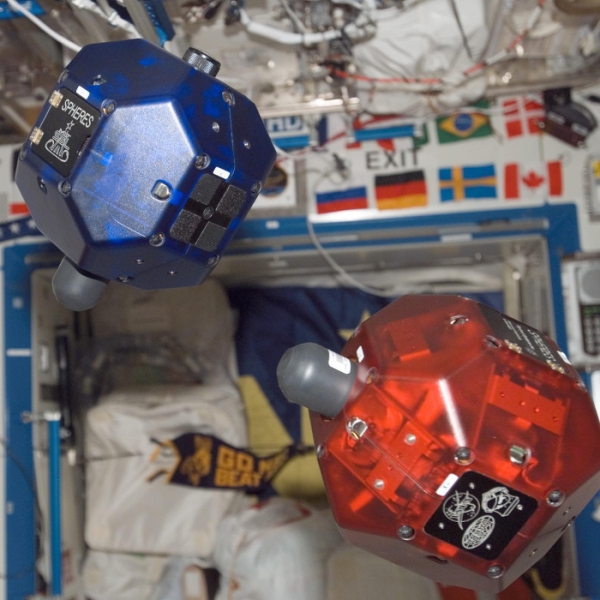
As these early SPHERES aren’t equipped with tools, they will mostly just fly around the ISS, testing out their software. The eventual goal is to have a fleet of these robots flying around in formation, fixing things, docking with and moving things about, and autonomously looking for misplaced items. If SPHERES can also perform EVAs (extra-vehicular activity, space walks), then the risk of being an astronaut would be significantly reduced.

spheresIn recent years there has been a marked shift towards the use of off-the-shelf hardware in space (and military) applications. This is partly due to tighter budgets, and partly because modern technology has become pretty damn sophisticated. As Chris Provencher, SPHERES project manager, said in an interview with Reuters:

We wanted to add communication, a camera, increase the processing capability, accelerometers and other sensors [to the SPHERES]. As we were scratching our heads thinking about what to do, we realized the answer was in our hands. Let’s just use smartphones.

The SPHERES system is currently planned to be in use on the ISS until at least 2017. Combined with NASA’s Robonaut, there are some fears that this is the beginning of a trend where astronauts are replaced entirely by robots. But considering how long it would take to visit a nearby star, maybe that’s not such a bad thing. At least until all of the necessary terraforming have been carried out in advance of the settlers.

So perhaps robots will only be used to do the heavy lifting, or the work that is too dull, dangerous or dirty for regular astronauts – just like drones. Hopefully, they won’t be militarized though. We all saw how that went! And be sure to check out this video of SPHERES being upgraded with Project Tango, courtesy of Google’s Advanced Technology and Projects group (ATAP):


Sources:
nasa.gov, extremetech.com, techtimes.com

The Future is Here: Flexible, Paper Thin Ultra-HD Screens

amoledThe explosion in computing and personal devices in recent years has led to a world where we are constantly surrounded by displays. Whether they belong to personal computers, laptops, smartphones, LCDs, PDAs, or MP3 players, there is no shortage to the amount of screens we can consult. In turn, this proliferation has led computer scientists and engineers to address a number of imperfections these displays have.
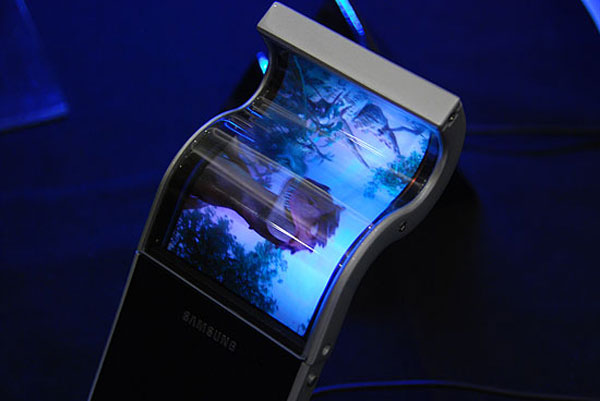
For instance, some of these displays don’t work in direct sunlight or are subject to glare. Others are horridly energy-inefficient and will drain their battery life very quickly. Some don’t have high-definition, rich color, and can’t display true black color. Just about all of them are rigid, and all can be broken given a solid enough impact. Luckily, a new age of flexible, ultra-HD screens are on the way that promise to resolve all of this.

amoled-display-3The first examples of this concept were rolled out at the 2011 Consumer Electronics Show, where Samsung unveiled its revolutionary new AMOLED display on a number of devices. This was followed up in September of 2012 when Nokia unveiled its Kinetic Device at the World Nokia Conference in London. Both devices showcased displays that could bend and flex, and were followed by concept videos produced by electronic giants Sony, 3M and Microsoft.

Since that time, numerous strides have been taken to improve on the technology before it hits the open market. In research published earlier this month in Nature, scientists describe what may be the first steps toward creating a new type of ultrathin, superfast, low-power, high-resolution, flexible color screen. If successful, these displays could combine some of the best features of current display technologies.

ultra-thin-displayThe new displays work with familiar materials, including the metal alloy already used to store data on some CDs and DVDs. The key property of these materials is that they can exist in two states – when warmed by heat, light, or electricity, they switch from one state to the other. Scientists call them phase-change materials (PCMs); and as Alex Kolobov, a researcher at Japan’s Nanoelectronics Research Institute who was not involved in the new work, explains:

It is really fascinating that phase-change materials, now widely used in optical and nonvolatile electronic memory devices, found a potentially new application in display technology.

A PCM display would work similar to the electronic paper used in products like Amazon’s Kindle reader. Both are made by sandwiching a material that has two states, one lighter and one darker, in between layers of transparent conductors. The inner material is a viscous black oil filled with tiny white titanium balls. To make a pixel black or white, a current is run through a tiny area of the glass to either pull the reflective balls to the front, or cause them to recede.

gst-phase-change-nanopixel-display-640x352In a PCM display, the inner material is a substance made of silicon’s heavier cousins: germanium, antimony, and tellurium. The two states of this material (known as GST) are actually two different phases of matter: one an ordered crystal and the other a disordered glass. To switch between them, current pulses are used to melt a tiny column, and either cooled gently to make the crystal or rapidly to make the glass.

This cycle can be done remarkably quickly, more than 1 million times per second. That speed could be a big advantage in consumer products. While scrolling on a Kindle can be terribly slow because the screen only refreshes once per second, the refresh rate on a PCM display would be fast enough to play movies, stream videos, and perform all the tasks people routinely do with their devices.

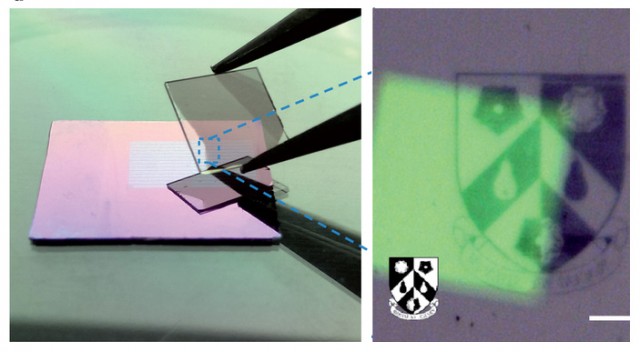
https://i0.wp.com/www.extremetech.com/wp-content/uploads/2014/07/nanopixelspr.jpgTo make the new displays, the research team – led by Harish Bhaskaran, a nanoscale manufacturing expert from Oxford University – used a 35-year-old machine developed by the semiconductor industry. They then laid down three layers that were a few nanometers thick of conducting glass, GST, and another layer of conducting glass. Then they used current from the tip of an atomic force microscope to draw pictures on the surface.

These images included everything from a Japanese print of a tidal wave to fleas and antique cars – each one smaller than the width of a human hair. With this sort of flexible, ultra-high resolution screen, a PCM display could be made into everything from a bendable laptop and personal device to a programmable contact lens — like Apple’s Retina Display, except that it would actually fit on your retina.

https://i0.wp.com/images.gizmag.com/gallery_lrg/lg-display-oled-2.jpgTurning this technology into products will require years of labor and hundreds of millions of dollars. Nevertheless, Bhaskaran and his colleagues are optimistic. The electronics industry has lots of experience with all the components, so there are plenty of well-known tricks to try to improve this first draft. And they are hardly alone in their efforts to bring flexible displays to market.

For instance, LG unveiled their new line of flexible OLED TVs at CES earlier this year. Now, they are taking things a step further with the unveiling of two new 18-inch OLED panels, the first of which is a transparent display, while the second can be rolled up. Although both fall short of the 77-inch flexible TV on show at CES, the company says the new panels prove that it has the technology to bring rollable TVs with screens in excess of 50 inches to market in the future.

lg-display-oledUnlike their 77-inch flexible TV that has a fairly limited range of changeable curvature, LG Display’s latest flexible OLED panel can be rolled up into a cylinder with a radius of 3 cm (1.18 in) without the function of the 1,200 x 810 pixel display being affected. This is made possible though the use of a high molecular substance-based polyimide film to create the backplane, rather than conventional plastic .

The transparent OLED panel, on the other hand, was created using LG Display’s transparent pixel design technology. With transmittance of 30 percent, the company says the panel is superior to existing transparent LCD panels that generally achieve around 10 to 15 percent transmittance. LG Display claims to have also reduced the haze of the panel, caused by circuit devices and film components, to just 2 percent.

https://i0.wp.com/images.gizmag.com/gallery_lrg/lg-display-oled-1.jpgAs In-Byung Kang, Senior Vice President and Head of the R&D Center at LG Display, explained:

LG Display pioneered the OLED TV market and is now leading the next-generation applied OLED technology. We are confident that by 2017, we will successfully develop an Ultra HD flexible and transparent OLED panel of more than 60 inches, which will have transmittance of more than 40 percent and a curvature radius of 100R, thereby leading the future display market.

Granted, it will be still be a few years and several hundred million dollars before such displays become the norm for computers and all other devices. However, the progress that is being made is quite impressive and with all the electronics megagiants committed to making it happen, an age where computing and communications are truly portable and much more survivable is likely just around the corner.

Sources: wired.com, gizmag.com, extremetech.com

The Future is Here: Glucose-Monitoring Contact Lenses

google-novartis-alcon-smart-contact-lens-0Earlier this year, Google announced that it was developing a contact lens that would be capable of monitoring blood glucose levels. By monitoring a person’s glucose levels through their tears, and sending that information to a smartphone, the device promised to do away with tests that require regular blood samples and pinpricks. And now, a partnership has been announced between that will help see this project through to completion.

Alcon, the eye care division of Novartis – a Swiss multinational pharmaceutical company – recently joined Google’s project to commercialize “smart contact lens” technology. The project, which came out of the Google X blue-sky innovation arm of the company, aimed to utilize a “tiny wireless chip and miniaturized glucose sensor that are embedded between two layers of soft contact lens material,” in order to detect glucose levels present in tears.

google-novartis-alcon-smart-contact-lensAt the time of the initial announcement in January, Google said its prototypes were able to take one glucose reading per second and that they was investigating ways for the device to act as an early warning system for the wearer should glucose levels become abnormal. All that was needed was a partner with the infrastructure and experience in the medical industry to see the prototypes put into production.

Under the terms of the new agreement, Google will license the technology to Alcon “for all ocular medical uses” and the two companies will collaborate to develop the lens and bring it to market. Novartis says that it sees Google’s advances in the miniaturization of electronics as complementary to its own expertise in pharmaceuticals and medical device. No doubt, the company also sees this as an opportunity to get in on the new trend of digitized, personalized medicine.

future_medicineAs Novartis said in a recent press release:

The agreement marries Google’s expertise in miniaturized electronics, low power chip design and microfabrication with Alcon’s expertise in physiology and visual performance of the eye, clinical development and evaluation, as well as commercialization of contact and intraocular lenses.

The transaction remains subject to anti-trust approvals, but assuming it goes through, Alcon hopes it will help to accelerate its product innovation. And with that, diabetics can look forward to yet another innovative device that simplifies the blood monitoring process and offers better early warning detection that can help reduce the risk of heart disease, stroke, kidney failure, foot ulcers, loss of vision, and coma.

Sources: gizmag.com, novartis.com

Encoding Equality: Girl Geek Academy

girlgeekWhen it comes to the gaming industry, there appears to be something of a glass ceiling. According to a developer satisfaction survey that was released last month from the International Game Developers Association, only 22 percent of people working in the gaming industry are women. And while this presents a twofold increase from five years ago (11.5%), it’s proportionally low considering that women make up some 48% of the gaming community.

This disparity is pretty common across software, app development, and tech startups (even though startups led by women produce 12 per cent higher returns). The logical next step would be to encourage more women to enter these fields. This is where Girl Geek Academy comes in, an initiative aimed at teaching women the skills they need to start their own ventures – everything from coding classes to mentoring programs from successful start-ups.

girlgeek_dinnerAnd there’s definitely demand for it, according to co-founder, programmer and senior digital strategist Tammy Butow:

We have seen over the years that female-focused groups have helped increase the number of women attending technology events and learning technology skills. Over the last few years I have run Girl Geek Dinners Melbourne – in January 2013 we had 350 members – and we then ran a series of tech workshops to teach skills such as HTML, CSS and JS…

Girl Geek Dinners Melbourne now has over 1000 members. [Fellow co-founder] April [Staines] and I also ran Australia’s first all-female hackathon She Hacks in Melbourne. She Hacks sold out in one week, a few weeks later we also ran Australia’s first Startup Weekend Women event and that sold out too.

After running these workshops and discovering just how many women were interested in learning these skills, Butow and her associates decided to widen their scope. This they did by opening up a series of classes and programs for women of all ages (above the age of 18) and skill levels with a target of achieving a total of one million women building apps and learning to create startups by the year 2025.

girlgeek_acadAs Butow explained, it’s all about taking the next step in the development of the internet as we know it:

The internet we know now was primarily built by men. We are interested in finding out what women would like to create. At the Startup Weekend Women event we recently ran, there were several teams that created apps focusing on flexible work opportunities for women. This was a very clear theme for the weekend. We had several women in attendance who were expecting children or had small children; they are interested in using technology to solve the problems they are experiencing.

Partnered with Google, Aduro and 99Designs, the Academy offers a number of classes – either as face-to-face workshops, or via Google Hangouts and Aduro. The two-hour classes include learning different programming languages, such as JavaScript and Ruby, down to the basics of founding a startup, such as a public speaking class and how to manage your finances.

https://i0.wp.com/klausandfritz.com/wp-content/uploads/2014/07/GGAcademyLaunch-19.jpgMore experienced women are encouraged to teach classes, and the Academy already boasts a variety of events, ranging from hackathons, makerfests, code getaways and study tours. The team is already organising the very first study tour, hoping to take Australian women to visit global startup hotspots such as Silicon Valley and Tel Aviv. And though women are the focus, men are welcome too, as long as they attend with a girl geek and are willing to lend a helping hand.

The first class took place on July 15th in Richmond, Victoria. For the price of AU$35, people got a healthy dinner and a seminar that focused on the very first issue relating to development: how to pitch an idea. For an additional AU$10, people were able to get tickets for the Google Hangout. For those interested in getting in on events held in the next 12 months, they can look them up on the Girl Geek Academy website.

Personally, I think this is a great initiative with a noble purpose. Despite great strides being made by women in all walks of professional life, certain industries remain tougher than others to crack. By creating an organization and atmosphere that fosters support, guidance and welcomes contribution, the gaming industry is likely to see a lot more women on the supply side in coming years.

the_evolution_by_pedro_croft-d5qxi09-600x259Perhaps then we can look forward to more positive representations of women in games, yes?

Sources: cnet.com, girlgeekacademy.com