Stealth Aircraft of the World

F-35Like many guys, I went through a period in which I was highly fascinated by aircraft, to the point that I wanted to be a fighter pilot. Years later… well, not much has changed. I still love aircraft and sometimes entertain fantasies of flying one! Perhaps an aerospace fighter if and when aliens try to invade us! But I digress…

Of all the aircraft that I’ve ever studied, stealth aircraft remain the coolest and most interesting. And in honor of this ongoing fascination, I’ve decided to do a list of the world’s various stealth fighters, stealth bombers, and miscellaneous stealth craft. Due to the fact that many new ones are under development and the subject of much secrecy, I’ve decided to stick to those that are currently or have been in operation.

I present them now in alphabetical order. Enjoy!

B-2 Spirit:
B-2There’s nothing like a classic… a big, bad classic! A strategic stealth bomber, the Spirit is one of the first stealth craft to be developed, though its entry into service was overshadowed by the F-117 (see below). A long-range aircraft, the Spirit is capable of carrying both conventional and nuclear weapons. Developed in conjunction being Boeing and Northrop Grumman, development began during the late 70s and continued into the ’80s.

Its original purpose was to penetrate Soviet anti-aircraft defenses and deploy nuclear weapons against high-value targets. With the end of the Cold War, the program was scaled back, and the B2 did not see active service until 1997. It was has participated in the Kosovo War in 99 and was deployed to both Afghanistan and Iraq for conventional, long-range bombing missions.

The Spirit requires a crew of two and contains two internal bomb bays in which munitions are stored, either on a rotary launcher or two bomb racks. The B2 was the first to carry weapons in this fashion, which results in less radar visibility than externally-mounted munitions. These internal weapons bays are capable of equipping conventional bombs, cruise missiles, and nuclear weapons. However, the bomber carries no surface-to-air missiles or guns, relying on its stealth technology to avoid encounters with enemy fighters.

Chengdu J-20:
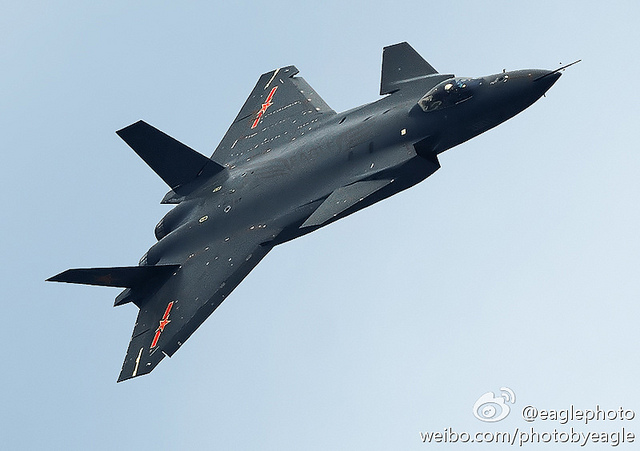
Chendu-J20China’s been making a lot of waves in the news lately thanks to the development of its stealth fighter program. And though they may be thirty years late to the party, they are in a perfect position to take advantage of all the latest developments. Much like all 5th generation stealth craft, the J-20 is based on the concept of a twin-engine multi-role fighter aircraft that is stealthy, not undetectable.

Beginning in the 1990s, the J-20 was unveiled in 2011, though it is not expected to enter service between 2017 to 2019. However, China has publicized the creation of this fighter extensively as part of its modernization efforts. The source of the technology remains unknown, though some speculate that it was reverse-engineered from samples taken from the downed F-117 in Serbia (see below). Chinese sources deny this, however, claiming it was the result of home-grown innovation.

And like other 5th Generation aircraft, the J-20 has a belly-mounted internal weapons bay for short and long-range air-to-air missiles and two smaller lateral weapon bays behind the air inlets for short-range weapons. From some photos obtained of the fighter, the armament capacity appears to be the same as the F-22 Raptor, with six weapons mounts.

F-117 Nighthawk:
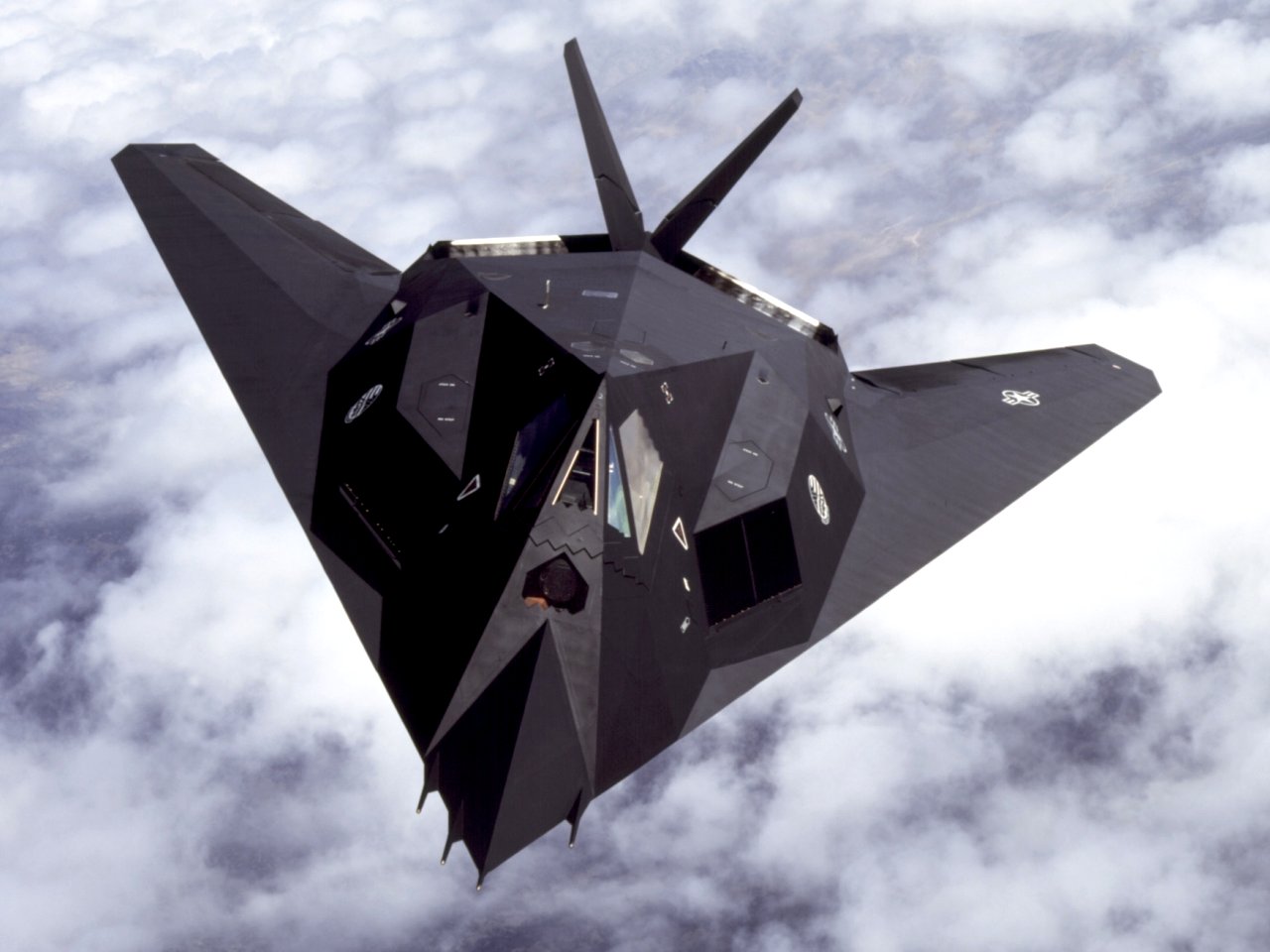
F117-NighthawkThe first ever stealth craft to be unveiled, the Nighthawk will forever be known as the “Stealth Fighter”, despite its ground-attack role. A single-seat, twin-engine craft, the Nighthawk was developed in the late ’70s by Lockheed Martin. By 1983, it was introduced to the US Air Force but was not officially unveiled until 1988, when it began participating in military operations.

The first was in 1989 during the US invasion of Panama. However, this would be overshadowed by its more publicized role in the 1991 Persian Gulf War. There, it took part in 1,300 sorties, scored direct hits on 1,600 high-value targets in Iraq and was one of the few US and Allied aircraft to actually take part in strikes on downtown Baghdad. Throughout that war, and despite the proliferation of AAA, not a single craft was shot down.

During the Kosovo War in 1999, the first F-117 was shot down outside of Belgrade by a Serbian missile brigade that had been experimenting with short-wave detection. This one incident remains the only combat loss in the aircraft’s operational history, which ended in 2003 due to the introduction of the F-22 and other newer generations of stealth aircraft.

F-22 Raptor:
F-22A_Raptor_-03-4058
The original 5th generation fighter, the Raptor is a single-seat, twin-engine supermaneuverable fighter aircraft that uses stealth technology in a revolutionary way. Unlike previous generations of fighters, like the F-117, that attempted to be invisible on radar, the F-22 was designed to be difficult to detect, thus affording it a tactical advantage against enemy aircraft. Hence, it was designed primarily as an air superiority fighter but has additional capabilities that include ground attack, electronic warfare, and signals intelligence roles.

Development of this fighter craft began in the early 80s with the intention of replacing the older F-15 and F-16 fighters, largely in response to the development of newer Soviet aircraft (such as the SU-27 and MiG-29). By the early ’90s, the first prototypes were released and highly publicized, with the first test flight taking place in 1997. In addition to its internal bays, thrust vectoring, and state-of-the-art control systems, the F-22 also incorporated stealthy materials and molded surfaces to minimize radar signature.

Since it entered service in 2005, the production of F-22’s has been stalled and restarted a few times over, largely in response to the development of the F-35. In 2010, funding for further production was officially cut. Nevertheless, the F-22 remains one of the most imitated designs in the world, inspiring the Sukhoi PAK FA and the Chengdu J-20.

F-35 Lightning II:
f-35s
The latest 5th generation stealth craft to be developed in the US, the Lighting II is a revolutionary design that incorporates all previous innovations in the field of stealth fighters. Developed in the ’90s as part of the Joint Strike Fighter (JSF) program, the F-35 was intended to replace the aging F-16, A-10, F/A-18, and the British and American Harrier jump jets.

Though not officially in service yet, it made its debut flight in 2006 and is expected to join the US Air Force by 2016. In total, three variants have been proposed, each designed to fill a different type of mission profile. The F-35A is a conventional take and landing fighter, the B variant incorporates short-take off and vertical-landing capabilities, while the C is designed to be a carrier-based model.

Much like its predecessor, the F-22, the Lightning II possesses thrust vectoring, meaning it can adjust the angle of its thruster to assist in difficult turns. In the F-35B model, the engine nozzle is capable of being aimed straight down and, combined with a centrally-mounted turbofan, allows the craft to hover in place and land vertically. Its internal weapons bays, stealthy shape, and materials – all of which are adapted from the F-22 – also give it a low radar signature. In summary, it is the most advanced and versatile stealth fighter yet to be introduced to the world.

Sukhoi T-50:
Sukhoi_T-50
Last, we have Russia’s answer to the 5th generation stealth fighter challenge. Beginning in the late 1980s as a successor to the Mig-29 and SU-27, the T-50 is the culmination of Russia’s PAK FA (Prospective Airborne Complex of Frontline Aviation) program. A single-seat, twin-engine jet fighter, the T-50 represents the former Soviet bloc’s efforts to develop weapons comparable to the Western Allies.

The T-50 made its first flight in 2010 and is expected to join the Russian Air Force by 2015/16. Much like all 5th generation fighters currently in development or in operation, its armaments consist of two internal bays for missiles and either one or two GSh-301 30mm cannons.

In terms of its profile, the T-50 bears a striking resemblance to the F-22. It also takes advantage of some of the latest in avionics technology. These include three X-band arrays planted in the front and sides of the plane, as well as two L-band placed in the wings. This allows for greater detection abilities, especially where stealth aircraft are involved. What’s more, the new technology enables fighter-to-fighter information sharing.

Final Thoughts:
Pretty cool huh? Given the advance of technology over the years, it seems like only a matter of time before fighters incorporate direct control through neural links, and polymorphic frames that can change shape based on altitude and air resistance. What’s more, in a few years time, we’re likely to see aircraft that can take advantage of the latest in adaptive camouflage and real-life cloaking technology, making the terms “stealth fighter” and “undetectable” quite literal! Cool indeed!

3D Meat, On the Way

According to a series of articles in your local science periodicals, a billionaire by the name of Peter Thiel has donated a small fortune to a series of biotechnology startups, one of which is researching ways to “print” 3D meat. The name of the company is Modern Meadow, a Missouri-based startup that believes 3D printing could be the answer to meeting (I swear, no pun!) the world’s high demand for meat.

The process involves the careful layering of mixed cells in a specific structure, thus rendering an in-vitro meat product. Thanks to Thiel’s donation of 350,000 dollars, they hope to create a prototype very soon – which will consist of a sliver of meat that measures two centimeters by one centimeter and is less than half a millimeter thick. Not the biggest slice of meat you ever saw, but as they say, start small!

If feasible, this concept will be a boon for food production and green initiatives. For decades now, vegetarians and environmentalists have been toying with the idea of artificially produced meat for a number of reasons. For the former, the benefits include a source of protein that doesn’t involve animal cruelty. For the latter, it means providing for Earth’s voracious appetite for meat – roughly 240 billion kilograms a year – without the need to clear rainforests for pasture land or the dangers of producing new and deadly diseases. Within the last thirty years, the world has seen outbreaks of Mad Cow Disease, Hoof in Mouth Disease, and Avian Bird Flu, all due to globalization and increased demands for meat.

Modern Meadow explained these advantages in a recent submission to the United States Department of Agriculture:

“The technology has several advantages in comparison to earlier attempts to engineer meat in vitro. The bio-ink particles can be reproducibly prepared with mixtures of cells of different type. Printing ensures consistent shape, while post-printing structure formation and maturation in the bioreactor facilitates conditioning.”

As for the rest of us, there’s just the question of what it would mean to actually eat this stuff. Are we comfortable with meat created by a machine? The company admits that this is one of the biggest challenges facing them and the development of this process. In a separate statement they claimed:

“The consumer acceptance of such products may not be without challenges. We expect it will first appeal to culinary early-adopter consumers and the segment of the vegetarian community that rejects meat for ethical reasons. With reduction in price, it can reach the masses with religious restrictions on meat consumption (people restricted to Hindu, Kosher, Halal diets) and finally populations with limited access to safe meat production.”

I like the sound of that, especially the part where low cost means better access. And in truth, the process could be made incredibly affordable once all the components are perfected, tested and become regular items manufactured by components industries. Unlike a lot of the technologies that I’ve been hearing about of late, this is not one that will appeal only to the super-rich and powerful. And there’s an upside to the planet and it’s developing nations, ones which are forced to destroy their environments for the sake of providing cheap sources of meat and poultry.

Still, not sure how I’d feel about this stuff if and when it shows up on the shelf at the local grocery store. Then again, if it meets all the right safety and health standards and the price is right, I’ll give it a shot!

The Future is Here: The Airport Virtual Assistant

You ever walk into a Walmart, look at the greeter and think to yourself, “I bet a hologram could do that guy’s job.” Yeah, I’m guessing probably not, huh? But in all seriousness, these individuals and other members of the service industry may find themselves being declared redundant pretty soon. Thanks to the introduction of the AVA (Airport Virtual Assistant) by airportONE, the job of being the happy, smiling face that people see when they arrive and leave and get their helpful info from may soon be filled by a virtual lady. That’s right, holograms are taking our jobs!

Already, the technology has been installed in three major New York City Airports, including La Guardia, Newark, and JFK. Washington Dulles and Boston Logan are following suit, and expect to have theirs up and running soon. At present, the capabilities of the AVA are limited to reciting a 90 second loop of general airport information to anyone looking for guidance. However, airportONE is looking to expand on that by adding voice-recognition software and a fully interactive program which can answer people’s questions. They also plan to make future versions multilingual so that they can assist international travelers.

According to the company’s own promotional material, which isn’t creepy at all, the benefits of this technology are obvious:

“She works 24 hours a day, seven days a week and doesn’t charge for overtime. She never gets sick and doesn’t require a background check.”

Isn’t that exactly what Mr. Dyson, the guy who built Skynet, said in Terminator 2? Anyone remember how that out? And according to airportONE, plans are underway to create new and different models that can be used in hospitals, business offices, stores and museums. Very soon, the entire service industry could be outsourced once more… to a land of microchips and directed photons.

So far, reaction to the AVA has been a bit mixed. But I can imagine what the folks at South Park have to say about this act of technological outsourcing!

Envisioning Emerging Technology

Where are we headed when it comes to technology? Which fields will advance before others? When will certain devices and tools be available? How long before we can expect things like flying cars, interactive holograms, space travel, and intelligent robots? These are the questions currently being addressed by Envisioning Technology and its founder, Mitchell Zappa.

The purpose is pretty straightforward: by examining the wider context, one can see not only where technology is going in the near future, but how developments in one field will stimulate others. Once we have a better understanding of what lies ahead, according to Zappa, we can make better decisions of what to create today.

To illustrate this, ET has prepared a helpful interactive infographic, one which allows users to hover over an item and see a detailed description. The target dates range from 2012 to 2040, beginning with tablets and cloud computing and culminating in the development of Avatars, Space Elevators, and AIs. Some additional predictions include:

  • 2018: Self-driving cars
  • 2019: Space tourism
  • 2026: Domestic robots
  • 2030: Blood-powered displays embedded into human skin
  • 2033: Remote presence
  • 2035: Human missions to Mars
  • 2035: Thorium reactors
  • 2036: Space elevators
  • 2036: Climate engineering
  • 2037: Anti-aging drugs
  • 2039: Nanotechnology utility fogs
  • 2040: Arcologies (massive cities)

For a more detailed breakdown and description, check out the infographic below, or follow the link to the website for a more detailed interactive experience:

Immortality Is On The Way!

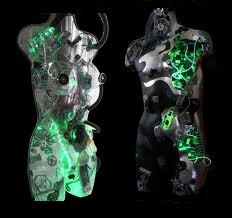
William Gibson must get a kick out of news items like these. According to a recent article over at IO9, it seems that an entrepreneur named Dmitry Itskova and a team of Russian scientists are developing a project that could render humans immortal by the year 2045, after a fashion. According to the plan, which is called the 2045 Initiative, they hope to create a fully functional, holographic avatar of a human being.

At the core of this avatar will be an artificial brain containing all the thoughts, memories, and emotions of the person being simulated. Given the advancements in the field of computer technology, which includes the Google Neural Net, the team estimates that it won’t be long before a construct can be made which can store the sum total of a human’s mind.

If this concept sounds familiar, then chances are you’ve been reading either from Gibson’s Sprawl Trilogy or Ray Kurzweil’s wishlist. Intrinsic to the former’s cyberpunk novels and the latter’s futurist predictions is the concept of people being able to merge their intelligence with machines for the sake of preserving their very essence for all time. Men like Kurzweil want this technology because it will ensure them the ability to live forever, while novelists like Gibson predicted that this would be something the mega-rich alone would have access to.

Which brings me to another aspect of this project. It seems that Itskova has gone to great lengths to secure investment capital to realize this dream. This included an open letter to roughly the world’s 1226 wealthiest citizens, everybody on Forbes Magazine’s list of the world’s richest people, offering them a chance to invest and make their mark on history. If any of them have already chosen to invest, it’s pretty obvious why. Being so rich and powerful, they can’t be too crazy about the idea of dying. In addition, the process isn’t likely to come cheap. Hence, if and when the technology is realized, the world’s richest people will be the first to create avatars of themselves.

No indication of when the technology will be commercially viable for say, the rest of us. But the team has provided a helpful infographic of when the project’s various steps will be realized (see above). The dates are a little flexible, but they anticipate that they will be able to create a robotic copy of a human body (i.e. an android) within three to eight years. In eight to thirteen, they would be able to build a robotic body capable of housing a brain. By eighteen to twenty-three, a robotic humanoid with a mechanical brain that can house human memories will be realizable. And last, and most impressive, will be a holographic program that is capable of preserving a person’s memories and neural patterns (aka. their personality) indefinitely.

You have to admit, this kind of technology raises an awful lot of questions. For one, there’s the inevitable social consequences of it. If the wealthiest citizens in the world are never going to die, what becomes of their spoiled children? Do they no longer inherit their parent’s wealth, or simply live on forever as they do? And won’t this cramp this style, knowing that mommy and daddy are living forever in the box next to theirs?

What’s more, if there’s no generational turn-over, won’t this effect the whole nature and culture of wealth? It is, by its very nature, something which is passed on from generation to generation, ensuring the creation of elites and their influence over society. In this scenario, the same people are likely to exert influence generation after generation, wielding a sort of power which is virtually godlike.

And let’s not forget the immense spiritual and existential implications! Does technology like this disprove the concept of the immortal soul, or its very transcendent nature? If the human personality can be reduced to a connectome, which can in turn be digitized and stored, then what room is left for the soul? Or, alternately, if the soul really does exist, won’t people who partake in this experiment be committing the ultimate sin?

All stuff to ponder as the project either approaches realization or falls flat on its face, leaving such matters for future generations to ponder. In the meantime, we shouldn’t worry to much. As this century progresses and technology grows, we will have plenty of other chances to desecrate the soul. And given the advance of overpopulation and climate change, odds are we’ll be dying off before any of those plans reach fruition. Always look on the bright side, as they say 😉

The Future is Here: Cyborg Flesh!

My thanks to Futurist Foresight for turning me onto this article. I would have reblogged, but it was just easier to follow the links and post on my own. You may recall some weeks back when the news hit the airwaves, about how researchers at Caltech developed the medusoid, a cybernetic jellyfish that was capable of mimicking the behavior of the original. Well, it turns out bioengineers at Harvard University have gone a step a further.

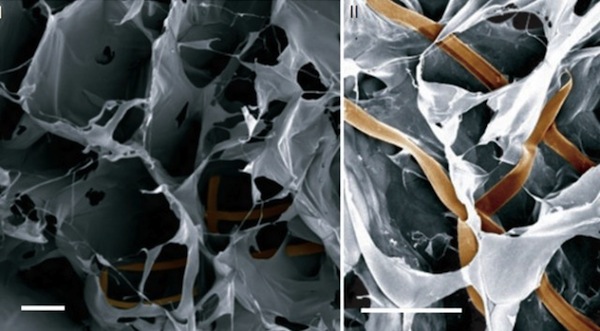
Merging the neurons, muscle cells, and blood vessels of various rats with nanowires and transistors that can monitor bioelectric impulses, these researchers were able to create the world’s first hybrid living/electronic cells. Much like the medusiod, the cells were controlled through electrical impulses, which allowed them to function like normal cells, except controlled via a computerized interface.

In time, they anticipate that this will lead to the development of nanotechnology that will allow them to make subtle changes in a person’s biochemistry. More than that, they could become the basis of tiny medical machines, such as microscopic pacemakers, or as microcircuits for prosthetics and silicate implants. On top of all that, this research is a big step along the road to the development of nanorobots, machines so tiny that they alter or maintain a person’s health at a cellular level.

“It allows one to effectively blur the boundary between electronic, inorganic systems and organic, biological ones,” said Charles Lieber, the team leader in an interview with New Scientist. And he’s absolutely right. With developments such as these and the boundaries they are pushing, human-machine interface, implant technology, robotic prosthetics and upgrades, and even the merging of our minds with computers could all be on the horizon. For some, this will mean the arrival of the long awaited Homo Superior, the new age man. For others, its a chance to tremble at the specter of a cybernetic future!

Both are fine choices, whatever floats your boat 😉

Masdar City

Imagine a city that runs entirely on solar energy and other renewable energy source. A city that generates entirely no carbon and no waste, with mass transit that relies on electronic, computer-controlled pod cars. That is the concept behind Masdar City, a planned urban environment located 17 km south-east of the capital of the United Arab Emirates (Abu Dhabi).

Designed by the British architectural firm Foster and Partners, and with the majority of the seed capital coming from the government of Abu Dhabi, Masdar is a blueprint for future cities based on sustainability, clean energy, and the latest and best in manufacturing, recycling and waste management technology. On top of that, it will contain some of the most advanced facilities in the world, dedicated to science, commerce and eduction.

In essence, it is the answer of what to do about rapidly advancing technology, urban growth, and development in the developing world. Point of interest include:

Masdar Institute:
Wouldn’t you know it? At the heart of a city based on sustainability and clean energy is an institute dedicated to the furtherance of these very things. Known as the Masdar Institute of Science and Technology (MIST), this research-oriented university was developed in conjunction with the Massachusetts Institute of Technology and focuses on the development of alternative energy, sustainability, and the environment.

In addition, its facilities use 70% less electricity and potable water than normal buildings of similar size and is fitted with a metering system that constantly observes power consumption. It’s full range of programs include Chemical Engineering, Mechanical Engineering, Material Science and Engineering, Engineering Systems and Management, Water and Environmental Engineering, Computing & Information Science, Electrical Power Engineering and Microsystems.

Renewable Energy:
In addition to its planned 40 to 60 megawatt solar power plant, which will power further construction projects, with additional solar panels to  be placed on rooftops, for a total output of 130 megawatts. In addition, wind farms will be established outside the city’s perimeter capable of producing up to 20 megawatts, and the city intends to utilise geothermal energy as well.In addition, Masdar plans to host the world’s largest hydrogen power plant, a major breakthrough in terms of clean energy!

Water Management:
When it comes to water consumption, that too will be handled in an environmentally-friendly way that also utilizes solar energy. At the hear of this plan lies a solar-powered desalination plant. Approximately 80 percent of the water used will be recycled and waste greywater will be reused for crop irrigation and other purposes.

Waste Management:
As already noted, the city will also attempt to reduce waste to zero. Biological waste will be used to create nutrient-rich soil and fertiliser, and plans exist to incinerate it for the sake of generating additional power. Industrial waste, such as plastics and metals, will be recycled or re-purposed for other uses. The exterior wood used throughout the city is Palmwood, a sustainable hardwood-substitute developed by Pacific Green using plantation coconut palms that no longer bear fruit.

Transportation:
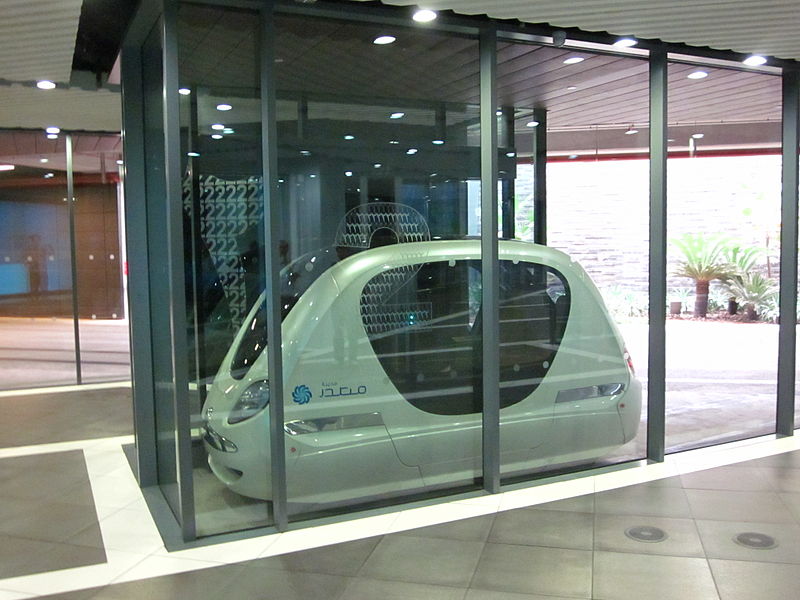
Initially, the planners for Masdar considered banning the use of automobiles altogether, focusing instead on mass transit and personal rapid transit (PRT) systems, with existing road and railways connecting to other locations outside the city. This systems utilize a series of podcars, designed by the company 2getthere, contains 10 passenger and 3 freight vehicles and serves 2 passenger and 3 freight stations connected by 1.2 kilometers of one-way track.

The cars travel at an average of 20km/h (12mph), trips take about 2 and a half minutes and are presently free of charge. Last year, a system of 10 Mitsubishi i-MiEV electric cars was deployed as part of a one-year pilot to test a point-to-point transportation solution for the city to complement the PRT and the freight rapid transit (FRT).

Summary:
Given the mounting environmental crisis this planet faces, cities like Masdar may very well be the solution to future urban planning and expansion. But of course, as an incurable sci-fi geek, I also consider cities like this to be a handy blueprint for the day when it comes time to plan extra-solar and even exoplanet settlements. Not only are they effective at curbing our carbon footprint and environmental impact, they are also a  good way to start over fresh on a new world!

Related links:
Masdar Institute (http://www.masdar.ac.ae/)
Masdar City (http://www.masdar.ae/en/home/index.aspx)

Alien Chestbuster T-Shirts Now Available!

In recent years, augmented reality has become all the rage. Simply aim your handheld device or glasses at any AR compatible object or location, and prepare to get a visual treat! Such is the reasoning behind this new Alien-themed AR shirt. Simply have a friend put on the shirt, aim your device at it, and watch the superimposed image of an Alien Chesbuster punch a hole through their chest!

The shirt can be bought online, and the app and marker image downloaded for free, available for both Android and iOS. Follow the link to the original story for more details…

T-shirt available at Fingerfunk. App for Android and iOS


Via Super Punch


The Future…

A recent article from The Futurist concerning trends in the coming decade got me thinking… If we can expect major shifts in the technological and economic landscape, but at the same time be experiencing worries about climate change and resource shortages, what will the future look like? Two competing forces are warring for possession of our future; which one will win?

To hear Singularitarians and Futurists tell it, in the not-too-distant future we will be capable of downloading our consciousness and merging our brains with machine technology. At about the same time, we’re likely to perfect nanobots that will be capable of altering matter at the atomic level. We will be living in a post-mortal, post-scarcity future where just about anything is possible and we will be able to colonize the Solar System and beyond.

But to hear environmentalists and crisis planners tell it, we will be looking at a worldwide shortage of basic commodities and food due to climate change. The world’s breadbaskets, like the American Midwest, Canada’s Prairiers, and the Russian Steppe, will suffer from repeated droughts, putting a strain on food production and food prices. Places that are already hard pressed to feed their growing populations, like China and India, will be even harder pressed. Many countries in the mid-latitudes that are already suffering from instability due to lack of irrigation and hunger – Pakistan, North Africa, the Middle East, Saharan Africa – will become even more unstable.

Polar ice regions will continue to melt, wreaking havoc with the Gulf Stream and forcing Europe to experience freezing winters and their own crop failures. And to top if off, tropical regions will suffer from increased tropical storm activity and flooding. This will be create a massive refugee crisis, where up to 25% of the world’s population will try to shift north and south to occupy the cooler climes and more developed parts of the world. And this, of course, will lead to all kinds of political upheaval and incidents as armed forces are called out to keep them away.

Makes you wonder…

To hear the future characterized in such dystopian and utopian terms is nothing new. But at this juncture, it now seems like both of these visions are closer to coming true than ever before. With the unprecedented growth in computing, information technology, and biology, we could very well be making DNA based computers and AI’s in a few decades. But the climate crisis is already happening, with record heat, terrible wildfires, tropical storms and food shortages already gripping the world. Two tidal waves are rising and heading on a collision course, both threatening to sweep humanity up in their wake. Which will prove successful, or will one come first, rendering the other completely ineffective?

Hard to say, in the meantime, check out the article. It proves to be an interesting read!

The Futurist – Seven Themes For the Coming Decade