Episode 52 – Going Interstellar: Generation Ships! – is now Live!

Episode 52 – Going Interstellar: Generation Ships! – is now Live!

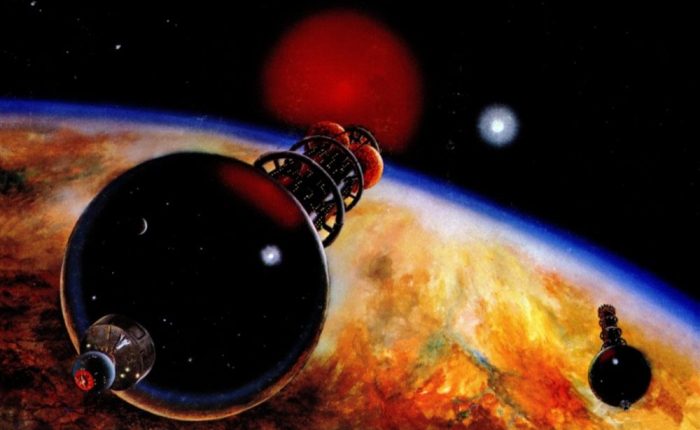
This week’s episode focuses on a time-honored proposal for interstellar travel. Known as a Generation Ship (or Interstellar Ark, Arkship, etc.), the concept envisions a massive starship that can accommodate multiple generations of crews as they travel to nearby stars. The basic philosophy is that if you can’t go fast enough to get there within a single lifetime, then pack for the long haul! But of course, there are lots of considerations that need to be addressed in advance.

A lot can happen on a multi-generational interstellar voyage, which is why Generation Ships are a wonderful setting for science fiction stories! These include Robert A. Heinlein’s Orphans of the Sky, Poul Anderson’s Tau Zero, Arthur C. Clarke’s Rendezvous with Rama, Ursula K. LeGuin’s Paradises Lost, Kim Stanley’s Robinson’s Aurora, and something I’m currently working on (titled Traverse). Check out the episode below…

Where to Listen:

Episode 51 – The Relativity Revolution: The Life and Times of Albert Einstein – Part II – is now live!

Episode 51 – The Relativity Revolution: The Life and Times of Albert Einstein – Part II – is now live!

In Part I, we looked at the early life and education of Einstein and the steps that would eventually lead him to his groundbreaking theory of Relativity. In this second installment, we examine the implications of his theories, his later contributions to the sciences, and the years he spent in exile due to the rise of Nazi Germany. And, of course, there’s his enduring legacy, which includes theories like Dark Matter, Dark Energy, and the most predominantly accepted cosmological model that is still in use to this day.

Here’s where you can check it out…

Where to Listen:

Episode 50 – “The Relativity Revolution: The Life and Times of Albert Einstein – Part I” – is now Live!

Episode 50 – “The Relativity Revolution: The Life and Times of Albert Einstein – Part I” – is now Live!

This week’s episode was a doozy! Not only did I get into the big man himself – Albert Einstein – I also attempted to explain how Relativity works. Only this time, I used grown-up science-y terms and tried extra hard to explain how he arrived at it. To do that, I also had to explain all the scientists he drew inspiration from arrived at theirs! And to think, I only got to the halfway mark in his life and didn’t even cover the years when he was a refugee and his involvement in the Manhattan Project.

All that will be the subject of Part II, as well as the legacy he left in his wake. Check out Part I by following the links below. And please, let me know if I explained it in a way that made sense to you. As Einstein is often quoted as saying, “If you can’t explain it to a six-year-old, you don’t understand it yourself.” That’s a pretty high bar, but it’s a challenge I accepted. Please let me know how I did.

Where to Listen:

A New Scale for Classifying Intelligence?

A New Scale for Classifying Intelligence?

In the Search for Extraterrestrial Intelligence (SETI), there are many limiting factors. These go beyond the usual technical limitations, where SETI researchers are reliant on existing radio telescopes that can only be used for limited amounts of time. A far greater one is the very limited frame of reference we have for measuring intelligence.

Let’s face it, our notions of intelligence are entirely self-centered and anthropocentric. We think of intelligence in terms of ourselves and rarely consider that intelligence can occur under other domains, even though many exist here on Earth, and there is a considerable body of research that takes a wider view.

Given the way SETI research has become reinvigorated in recent decades, there are many who believe it’s time to expand our notions on what forms life and intelligence could take. For my purposes, the following scheme is motivated mainly by my interest in science fiction and its unparalleled ability to explore the deeper mysteries of the Universe.

Therefore, for your viewing pleasure, I present the Intelligence Scale. It is arranged based on the nature of the intelligence (labels are frustrating and inexact) and the scale it occupies.

Class:

Type a — Distributed: Consisting of individual intelligent beings connected together through social relationships
Type b — Collective: Consisting of large groups of organisms that make up a cohesive intelligent unit
Type c — Cooperative: Consisting of individual intelligence that has merged to form a larger whole
Type d — Adaptive: Consisting of intelligence that is capable of functioning in more than one mode or environment
Type e — Assimilative: Consisting of intelligence that is collective and incorporates all organisms in its environment into a greater whole

Scale:

Type I — Micrometer: Organisms measuring a few micrometers to a few centimeters in scale (ranging from microbes to insect-like creatures)
Type II — Meter: Organisms measuring in the meter range, mammals to high-order primates
Type III — Planetary: Organisms encompassing a large geographic region to an entire planet
Type IV — Stellar: Organisms extending beyond a single planet to an entire solar system
Type V — Cosmic: Organisms occupying a large region of space, extending for light-years and possibly entire galaxies

For reference, humanity is a Type IIa species, which is arguably making the transition to a Type IIIa thanks to the digital age. Will we ever give rise to different classes ourselves, or will we find examples that challenge our notions out there in the cosmos? In both cases, I sincerely hope so!

Episode 38: “The Great Migration: How Can Humans Live on Venus?”

Episode 38: “The Great Migration: How Can Humans Live on Venus?”

This week’s episode was the third installment of the “Settling the Solar System” (or “Great Migration”) segment. Previous episodes covered how humans could one day live on the Moon and Mars. In this latest installment, I discussed how humans (with the right technology and strategies) could live on Venus. Well, not exactly on Venus, since the planet is a total hellhole!

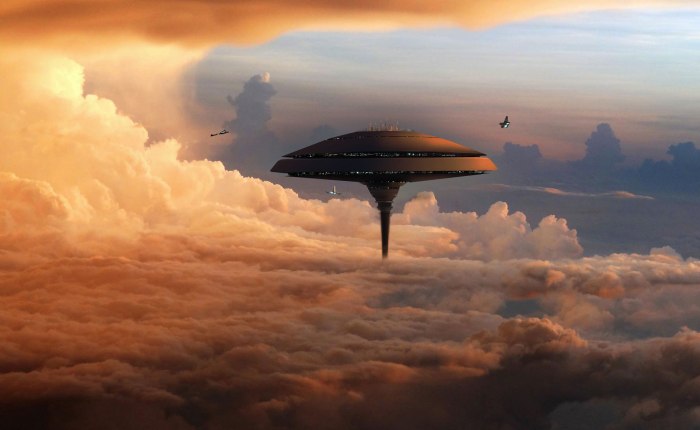
The air pressure alone is enough to crush your bones, the average temperature is literally hot enough to melt lead, and there’s also sulfuric acid rain! Basically, Venus is the WORST piece of real estate in the Solar System! At least… it is on the surface. But above the cloud tops, where temperatures are mild, the air pressure is decent, and the sulfuric acid rain is sparse, floating cities could be established.

Over time, these settlements could be used to terraform the planet into an ocean paradise. Check out the episode to hear how it could be done!

Where to Listen:

The Reviews Are In! The Formist Series is a Hit!

The Reviews Are In! The Formist Series is a Hit!

A few months back, my publisher announced that, unfortunately, they could no longer publish my trilogy, known as the Formist Series. The pandemic had hit the publishing industry pretty hard, especially smaller operations, and they were no longer able to keep producing their clients’ books. Fortunately, there’s a wealth of independent author resources out there, and I have some experience with them.

So as soon as I reacquired the rights to my books – The Cronian Incident, The Jovian Manifesto, and The Frost Line Fracture – I reissued them immediately via Kindle Direct Publishing. For the first little while, nothing much changed. But a few short weeks ago, I noticed that the number of ratings had climbed considerably, especially for the first novel. Allow me to present it in table format. I like doing that!

BookCronian IncidentJovian ManifestoFrost Line Fracture
Ratings (formerly)38 (13)11 (8)2 (1)
Reviews1661
Avg. Rating4.34.54.5

Doing the math, CI’s ratings have increased by 292%, JV’s have increased by a comparatively modest 37.5%, and FLF’s have increased by 100% (but only because it went from 1 to 2). I’m not sure what led to this uptick, but I think the way my online profile has increased in the past decade has directed more people to my books. And it seems likely to me that this is recent since the increase has been concentrated on the first installment in the series so far.

While it’s certainly the case that most readers will pick up the first book in a series and hesitate to buy more, that much of a gap between the first books and the sequels suggests to me that anyone who bought the first one (and left a rating) are still deciding if they want to read further. Personally, I hope they do because (imho) the second book is the best one, while my publisher claimed that the third one is. I invite readers to decide for themselves!

Sharing the gift of astronomy: The Asif Astronomy Club

Sharing the gift of astronomy: The Asif Astronomy Club

The field of astronomy has become increasingly accessible in recent years, thanks to the growth of online astronomical communities, citizen astronomers, and open-access databases. This growth has paralleled the creation of next-generation telescopes, instruments, and data-sharing methods allowing greater collaboration between observatories and the general public. 

Unfortunately, despite these positive developments, there are still millions of people around the world who do not have access to astronomy and would like to. This problem mirrors disparities that exist worldwide, where many communities experience lower education, health, and economic outcomes. These exist not only between nations but between urban and rural communities, where a lack of infrastructure can translate into a lack of access. 

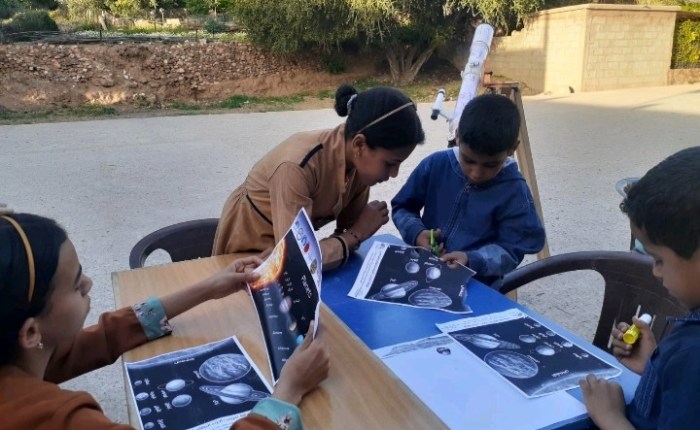
To address this disparity, a growing number of organizations are looking to bring STEM education to traditionally underserved communities. This includes the Asif Astronomy Club, which has engaged with students in remote communities in Morocco’s Atlas Mountains since 2020.

Through its efforts, the club and its leader (El-Mehdi Essaidi) are spreading the culture of astronomy and its central message: “Space is for everyone.” They are also helping to inspire the next generation of scientists and change-makers to reach for the stars (literally and figuratively).

Continue reading “Sharing the gift of astronomy: The Asif Astronomy Club”

Episode 37 of Stories from Space – “Where Are All the Aliens? The Planetarium Hypothesis” – is Now Live!

Episode 37 of Stories from Space – “Where Are All the Aliens? The Planetarium Hypothesis” – is Now Live!

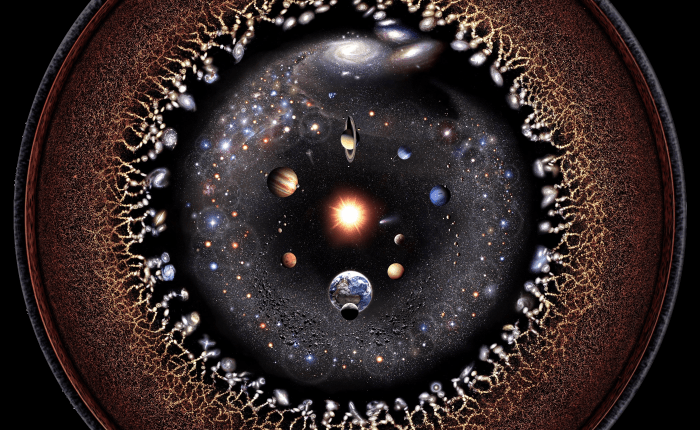
This week, I got into another favorite proposed resolution to the Fermi Paradox. In 2001, famed scientist and SF author Stephen Baxter wrote a paper titled “The Planetarium Hypothesis – A Resolution of the Fermi Paradox.” Addressing Fermi’s question, Baxter suggested that the reason humanity hasn’t heard from advanced civilizations is that the Universe (as we know it) is a simulation.

To put it another way, what we see when we look up at the night sky is a giant virtual reality “planetarium” built by an advanced species to give the illusion of an empty Universe. The purpose of this could be to keep humanity contained, possibly for its own good or that of other species (i.e., intelligent life is dangerous), or to keep less-advanced species from developing too quickly and becoming a threat.

Like the Berserker Hypothesis, the idea is science fiction gold but admittedly unlikely (phew!) Another problem is that the hypothesis is untestable. While Baxter and other scientists suggested ways this theory could be tested (based on the principles of quantum mechanics and thermodynamics), critics have pointed out that the laws of physics themselves could be part of the simulation.

Personally, I think that the laws of physics and the fact that they make space exploration so challenging is the most compelling evidence for the hypothesis. What better way is there to control the growth of a species than to set the physics model to “extra hard”? If I were an advanced civilization looking to keep a species in the dark, this is precisely what I’d do! Check it out below:

Where to Listen:

Episode 36 of Stories from Space, “How Can We Live on the Mars?” is Now Live!

Episode 36 of Stories from Space, “How Can We Live on the Mars?” is Now Live!

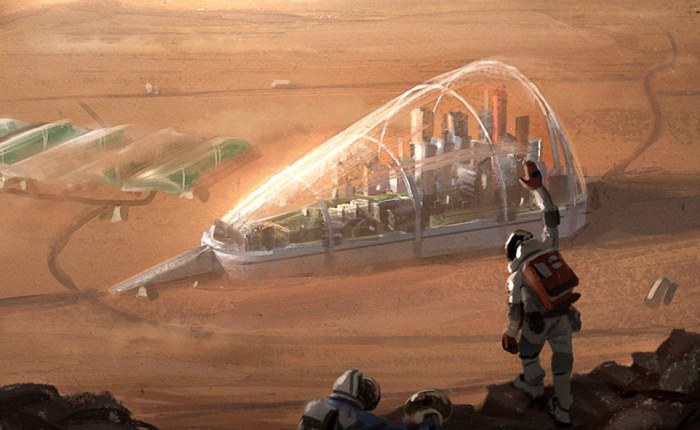
The second episode of my new segment, “Settling the Solar System,” has now aired. This week’s topic, how can humans settle on “Earth’s Twin” and create the first “Martians”? The subject has been explored for generations by scientists, speculative thinkers, science fiction writers, and more! And in the coming years, space agencies hope to send the first human explorers there. There are even plans to create a permanent human outpost there.

There’s no shortage of challenges, like the high radiation levels, low gravity, temperature extremes, and the planet’s thin and toxic atmosphere. But with the right strategies, there are incredible benefits too. These include becoming a multiplanetary species, having a “backup location” for humanity, and ushering in an era of post-scarcity economics. There’s also the potential for scientific breakthroughs. Aside from technological developments that would have countless applications here on Earth, there’s also the potential for astrobiological research Mars holds.

If humans were to find evidence of past (or present) life on Mars, we could finally answer some of the deepest mysteries – like how and when life emerged in the Solar System and if life on our two planets came from the same source. Can it be done? What will it take? And are we prepared to address the challenges, make the sacrifices, and bind ourselves to a multi-generational commitment?

Where to Listen:

Episode 35 – Living on the Moon – of Stories from Space is Now Live!

Episode 35 – Living on the Moon – of Stories from Space is Now Live!

We come to it at last! The first installment of a new segment on my podcast series, titled “Settling the Solar System” (or “the Great Migration”) has just aired. In this episode, I started with our nearest celestial neighbor and the first stop for any migration beyond Earth – the Moon. Human beings will be returning there soon. Only this time, we plan to leave more than “footprints and flags.”

This time, we plan to build the necessary infrastructure that will allow for ongoing exploration and development. That means creating lunar habitats, resource exploration (and exploitation), commercial missions, and lunar tourism. If all goes as planned, these efforts could even lead to a permanent lunar settlement. The challenges are legion, but they are surmountable given enough time, money, strategies, and a long-term commitment. Have a listen to find out!

Where to Listen: