The Future of Medicine: “Hacking” Neurological Disorders

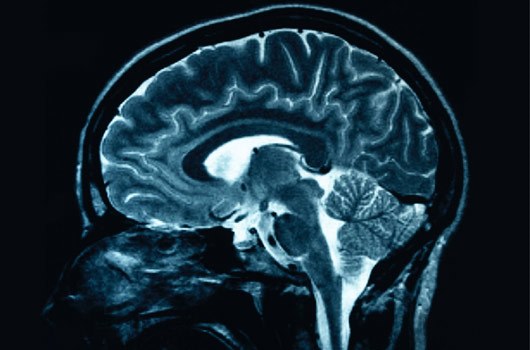
brain-scan_530Officially, it’s known as “neurohacking” – a method of biohacking that seeks to manipulate or interfere with the structure and/or function of neurons and the central nervous system to improve or repair the human brain. In recent years, scientists and researchers have been looking at how Deep Brain Stimulation (DBS) could be used for just such a purpose. And the results are encouraging, indicating that the technology could be used to correct for neurological disorders.

The key in this research has to do with the subthalamic nucleus (STN) – a component of the basal ganglia control system that is interconnected to the motor areas of the brain. Researchers initially hit upon the STN as a site for stimulation when studying monkeys with artificially induced movement disorders. When adding electrical stimulation to this center, the result was a complete elimination of debilitating tremors and involuntary movements.

DIY biohacker Anthony Johnson – aka. “Cyber AJ” – also recently released a dramatic video where he showed the effects of DBS on himself. As a Parkison’s sufferer, Johnson was able to demonstrate how the applications of a mild electrical stimulus from his Medtronic DBS to the STN region of his brain completely eliminated the tremors he has had to deal with ever since he was diagnosed.


But in spite of these positive returns, tests on humans have been slow-going and somewhat inconclusive. Basically, scientists have been unable to conclude why stimulating the STN would eliminate tremors, as the function of this region of the brain is still somewhat of a mystery. What’s more, they also determined that putting electrodes in any number of surrounding brain nuclei, or passing fiber tracts, seems to have similar beneficial effects.

In truth, when dealing with people who suffer from neurological disorders, any form of stimulation is likely to have a positive effect. Whether it is Parkinson’s, Alzheimer’s, Tourettes, Autism, Aspergers, or neurological damage, electrical stimulation is likely to produce moments of lucidity, greater recall, and more focused attention. Good news for some, but until such time as we know how and in what ways the treatment needs to happen, lasting treatment will be difficult.

brain-activityLuckily, research conducted by the Movement Disorders Group at Oxford University, led by Peter Brown, has provided some degree of progress in this field. Since DBS was first discovered, they have been busily recording activity through what is essentially a brain-computer interface (BCI) in the hopes of amassing meaningful data from the brain as it undergoes stimulation moment-by-moment.

For starters, it is known that the symptoms of Parkinson’s and other such disorders fluctuate continuously and any form of smart control needs to be fast to be effective. Hence, DBS modules need to be responsive, and not simply left on all the time. Hence, in addition to their being electrodes that can provide helpful stimulus, there also need to be sensors that can detect when the brain is behaving erratically.
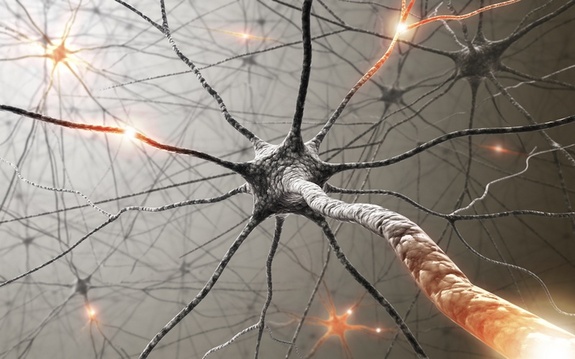
neuronsHere too, it was the Oxford group that came up with a solution. Rather than simply implanting more junk into the brain – expensive and potentially dangerous – Brown and his colleagues realized that the stimulation electrodes themselves can be used to take readings from the local areas of the brain and send signals to the DBS device to respond.

By combining BCI with DBS – lot of acronyms, I know! – the Oxford group and those like them have come away with many ideas for improvements, and are working towards an age where a one-size-fits-all DBS system will be replaced with a new series of personalized implants.
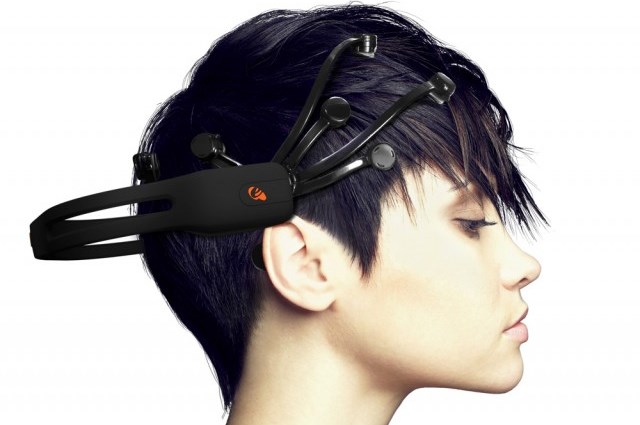
tcdsIn the meantime, a number of recreational possibilities also exist that do not involve electrodes in the brain. The tDCS headband is one example, a headset that provides transcranial direct current stimulation to the brain without the need for neurosurgery or any kind of brain implant. In addition to restoring neuroplasticity – the ability of the brain to be flexible and enable learning and growth – it has also been demonstrated to promote deeper sleep and greater awareness in users.

But it is in the field of personalized medical implants, the kinds that can correct for neurological disorders, that the real potential really exists. In the long-run, such neurological prosthesis could not only going to lead to the elimination of everything from mental illness to learning disabilities, they would also be the first step towards true and lasting brain enhancement.

transhuman3It is a staple of both science fiction and futurism that merging the human brain with artificial components and processors is central to the dream of transhumanism. By making our brains smarter, faster, and correcting for any troubling hiccups that might otherwise slow us down, we would effectively be playing with an entirely new deck. And what we would be capable of inventing and producing would be beyond anything we currently have at our disposal.

Sources: Extremetech.com, (2)

The Future of Medicine: Smartphone Medicine!

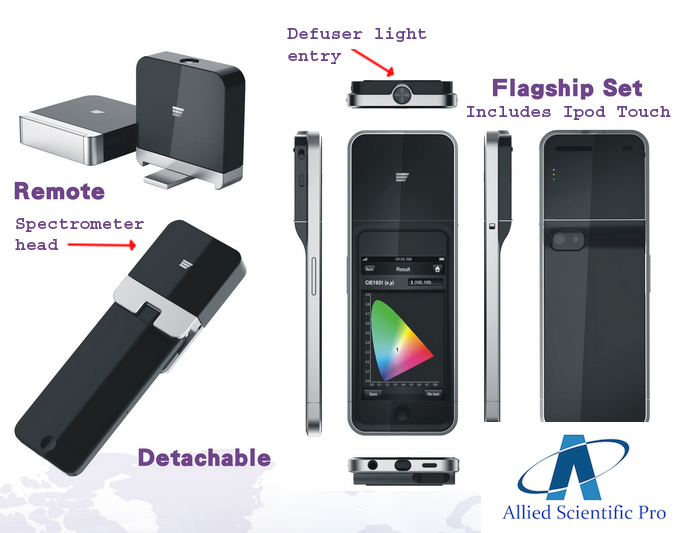
iphone_specIt’s no secret that the exponential growth in smartphone use has been paralleled by a similar growth in what they can do. Everyday, new and interesting apps are developed which give people the ability to access new kinds of information, interface with other devices, and even perform a range of scans on themselves. It is this latter two aspect of development which is especially exciting, as it is opening the door to medical applications.

Yes, in addition to temporary tattoos and tiny medimachines that can be monitored from your smartphone or other mobile computing device, there is also a range of apps that allow you to test your eyesight and even conduct ultrasounds on yourself. But perhaps most impressive is the new Smartphone Spectrometer, an iPhone program which will allow users to diagnose their own illnesses.

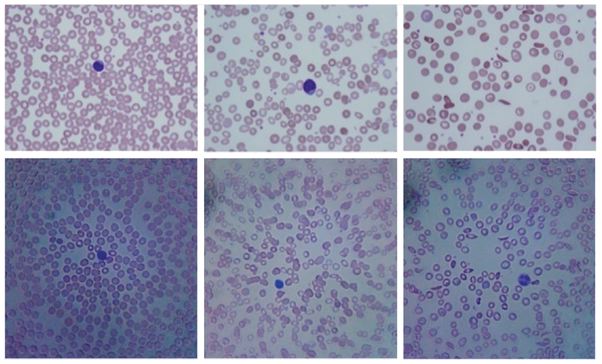
iphone_spec2Consisting of an iPhone cradle, phone and app, this spectrometer costs just $200 and has the same level of diagnostic accuracy as a $50,000 machine, according to Brian Cunningham, a professor at the University of Illinois, who developed it with his students. Using the phone’s camera and a series of optical components in the cradle, the machine detects the light spectrum passing through a liquid sample.

This liquid can consist of urine or blood, any of the body’s natural fluids that are exhibit traces of harmful infection when they are picked up by the body. By comparing the sample’s spectrum to spectrums for target molecules, such as toxins or bacteria, it’s possible to work out how much is in the sample. In short, a quickie diagnosis for the cost of a fancy new phone.

Granted there are limitations at this point. For one, the device is nowhere near as efficient as its industrial counterpart. Whereas automated $50,000 version can process up to 100 samples at a time, the iPhone spectrometer can only do one at a time. But by the time Cunningham and his team plan on commercializing the design, they hope to increase that efficiency by a few magnitudes.

iphone_spec1On the plus side, the device is far more portable than any other known spectrometer. Whereas a lab is fixed in place and has to process thousands of samples at any given time, leading to waiting lists, this device can be used just about anywhere. In addition, there’s no loss of accuracy. As Cunningham explained:

We were using the same kits you can use to detect cancer markers, HIV infections, or certain toxins, putting the liquid into our cartridge and measuring it on the phone. We have compared the measurements from full pieces of equipment, and we get the same outcome.

Cunningham is currently filing a patent application and looking for investment. He also has a grant from the National Science Foundation to develop an Android version. And while he doesn’t think smartphone-based devices will replace standard spectrometry machines with long track records, and F.D.A approval, he does believe they could enable more testing.

publiclaboratoryThis is especially in countries where government-regulated testing is harder to come by, or where medical facilities are under-supplied or waiting lists are prohibitively long. With diseases like cancer and HIV, early detection can be the difference between life and death, which is a major advantage, according to Cunningham:

In the future, it’ll be possible for someone to monitor themselves without having to go to a hospital. For example, that might be monitoring their cardiac disease or cancer treatment. They could do a simple test at home every day, and all that information could be monitored by their physician without them having to go in.

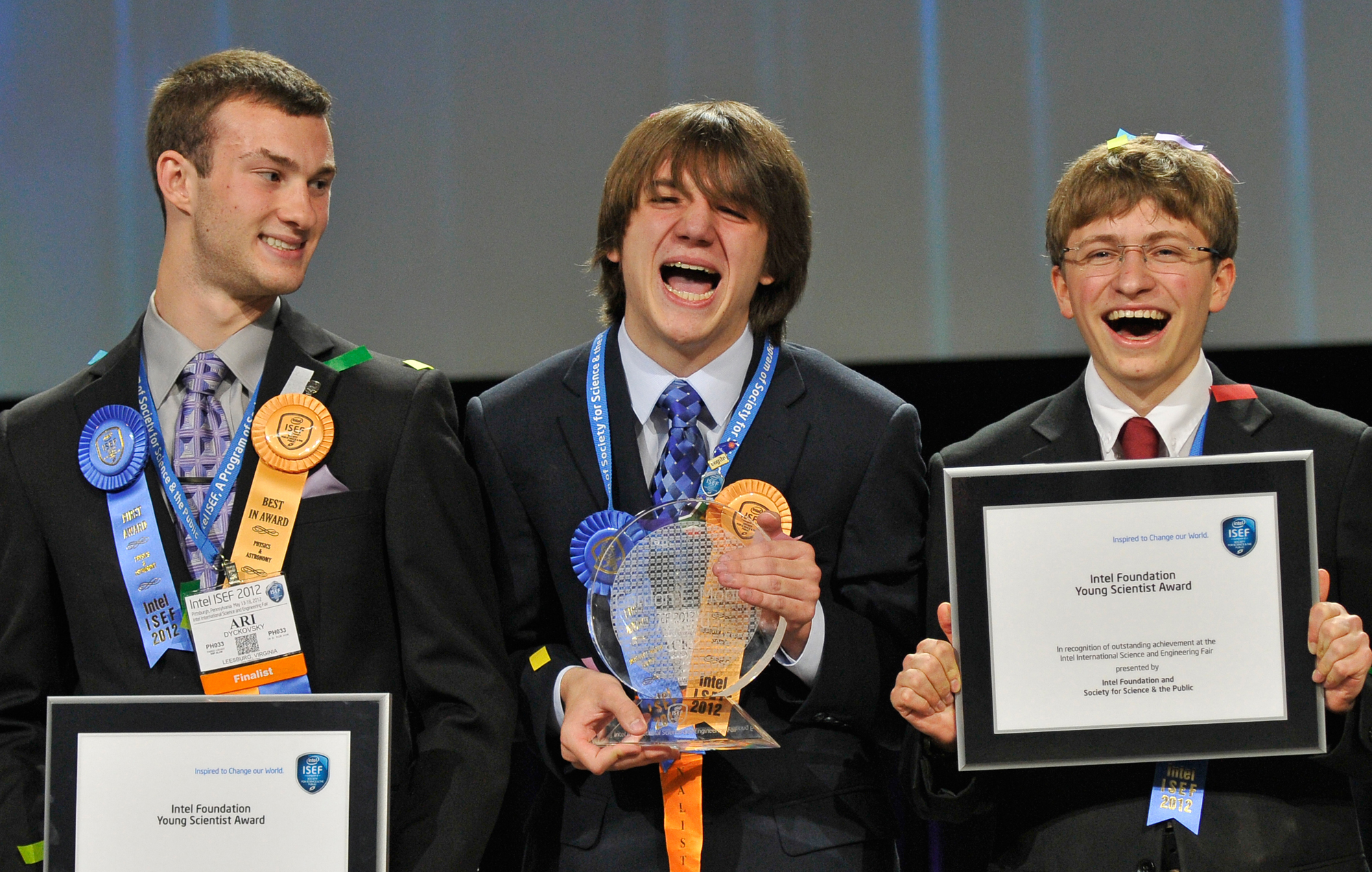
But of course, the new iPhone is not alone. Many other variations are coming out, such as the PublicLaboratory Mobile Spectrometer, or Androids own version of the Spectral Workbench. And of course, this all calls to mind the miniature spectrometer that Jack Andraka, the 16-year old who invented a low-cost litmus test for pancreatic cancer and who won the 2012 Intel International Science and Engineering Fair (ISEF). That’s him in the middle of the picture below:

ISEF2012-Top-Three-WinnersIt’s the age of mobile medicine, my friends. Thanks to miniaturization, nanofabrication, wireless technology, mobile devices, and an almost daily rate of improvement in medical technology, we are entering into an age where early detection and cost-saving devices are making medicine more affordable and accessible.

In addition, all this progress is likely to add up to many lives being saved, especially in developing regions or low-income communities. It’s always encouraging when technological advances have the effect of narrowing the gap between the haves and the have nots, rather than widening it.

And of course, there’s a video of the smartphone spectrometer at work, courtesy of Cunningham’s research team and the University of Illinois:


Source:
fast.coexist.com

First Look at Walking Dead Season 4

The-Walking-Dead-Season-4-RenewalOne of the best things about Comic Con is the fact that it is an opportunity for fans of specific genre movies and TV shows to catch never before seen trailers. This past Friday, fans of The Walking Dead series got treated to the first look at footage from season four, several days before the rest of us! Lucky for us, footage like this doesn’t take long to get out, and now I do my bit to pass it on.

In addition to the four and half minute video, fans were given a rundown of how the new season will premiere. Like season three, it will be airing in two parts, the first in October 18th with the second following up in February of 2014. What’s more, beyond the preview, some hints have already been given as to what might be happening in the course of the season.

the-walking-dead-season-4For instance, the show’s new producer, Scott Gimple, said in an interview with The Hollywood Reporter that he wants to have a “greatest hits” approach to the new season. What this means is that he wants to take the things fans know and love from former producers Frank Darabont and Glen Mazzara’s time on the show and keep it going in a compelling way.

I’m trying to take a greatest-hits approach and take the best of both those runs and run with it. As far as my own personal stamp, it’s more of what we do here already with character-driven stories and really delving into these characters while having some amazing, horrible scares and exciting sequences but all in service to a greater story that builds. A phrase that I’ve been caught using a bunch is ‘cumulative storytelling.’ It’s about having everything stack up so it means something. When The Walking Dead has been its best, all that stuff is happening at once: the emotion, action, horror, scares. I’m very proud that I was able to write an episode where a little zombie girl could walk out of a barn after a horrific zombie execution and have people cry. That’s one of the proudest things I’ve ever done.

He also hinted that Rick might be dying in this season… yeah, I think he’s bluffing! While they’ve strayed so far from the comic at this point that just about anything’s possible, I’m thinking no one has the kind of brass danglers necessary to kill off the show’s main character. Who does he think he is, George RR Martin?!

In any case, the footage does look pretty awesome. I’m thinking I’ll tune in just to see what happens…

Sources: wired.com, blastr.com


New Trailer: Elysium!

ElysiumHey folks. Here we have the third trailer for the upcoming movie Elysium, which is set to be released on August 9th. I’m sure everyone’s familiar with the plot already. And if not, this trailer does a pretty good job of getting you up to speed. So enjoy it, because after the disappointing Man of Steel and an adaptation of Ender’s Game which I don’t plan on seeing, this movie may be all that’s left to fill my quota of summer sci-fi blockbusters!

News from Space: The Canadarm2!

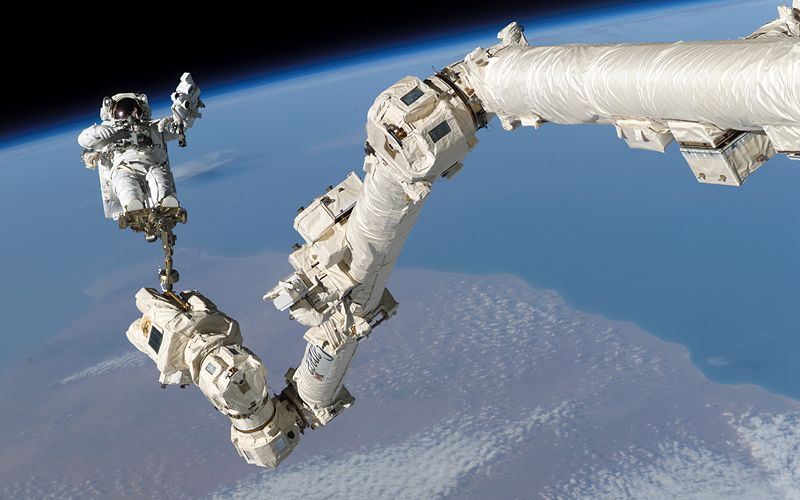
Astronaut Steve K. Robertson during STS-114

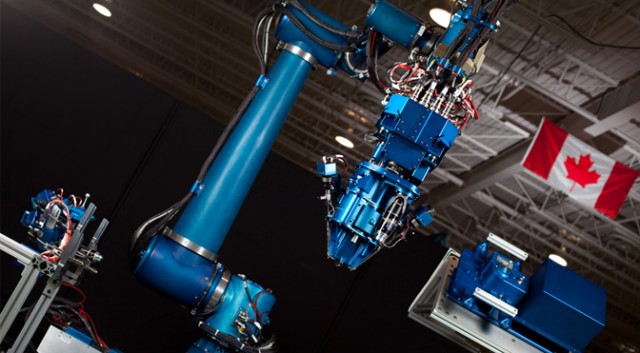
For decades, the Canadian Space Agency has been building the Shuttle Remote Manipulator System (SRMS) – also known as the Canadarm. Since 1981, aboard the shuttle STS-2 Columbia, this model of robotic arm has come standard on all NASA shuttles and was used as its main grasper. However, due to the progress made in the field of robotics over the past thirty years and the need for equipment to evolve to meet new challenges, the Canadarm was retired in 2011.

Luckily, the CSA is busy at work producing its successor, the Mobile Service System – aka. Canadarm2. The latest versions are in testing right now, and their main purpose, once deployed, will be to save satellites. Currently, an earlier version of this arm serves as the main grasper aboard the ISS, where it is used to move payloads around and guide objects to the docking port.

canadarm2However, the newest models – dubbed Next Generation Canadarm (NGC) – are somewhat different and come in two parts. First, there is the 15 meter arm that has six degrees of freedom, extreme flexibility, and handles grappling and heavy lifting. The second is a 2.58 meter arm that comes attached to the larger arm, is similarly free and flexible, and handles more intricate repair and replacement work.

This new model improves upon the old in several respects. In addition to being more intricate, mobile, and handle a wider array of tasks, it is also considerably lighter than than its predecessor. When not in use, it is also capable of telescoping down to 5 meters of cubic space, which is a huge upshot for transporting it aboard a shuttle craft. All of this is expected to come in handy once they start the lucrative business of protecting our many satellites.

canadarm2_missioncontrolIt’s no secret that there is abundance of space junk clogging the Earth’s upper atmosphere. This moving debris is a serious danger to both manned and unmanned missions and is only expected to get worse. Because of this, the ability to repair and retool satellites to keep them in operation longer is of prime importance to space agencies.

Naturally, every piece of equipment needs to undergo rigorous testing before its deployed into space. And the Canadarm2 is no exception, which is currently being put through countless simulations. This battery of tests allows operators to guide dummy satellites together for docking using the arms in both full manual and semi-autonomous mode.

canadarm2_chrishadfieldNo indication on when they will be ready for service, but it seems like a safe bet that any manned missions to Mars will likely feature a Canadarm2 or two. And as you can see, Chris Hadfield – another major Canadian contribution to space – is on hand to help out. Maybe he and the new arm can perform a duet together, provided it can handle a guitar!

And be sure to check out this video of the NGC Canadarm2 in action, courtesy of the Canadian Space Agency:


Source:
Wired.com

Judgement Day Update: e-David the Painting Robot

robot_bartenderRobots have been making quite the stir in the news lately. And no, that’s not a delicious pun on the robotic bartender – aka. the Makr Shakr, it’s just a frank appraisal of the leap and bounds by which robots and their integration to society is proceeding. Between developing machines that can imitate human movements, human facial expressions, and carry out specialized tasks, it appears that we may actually be on the verge on a world where robots are a common feature.

Just a few days ago, DARPA and Boston Dynamics unveiled their most anthropomorphic robot to date – the Atlas Robot. And this came less than a month after the Global Future 2045 conference took place in Moscow, where Geminoid robot clones – so realistic that they were virtually indistinguishable from their human counterparts – were put on display. And yet, it seems that the Singularitarians and roboticists of the world were not yet finished for the season.

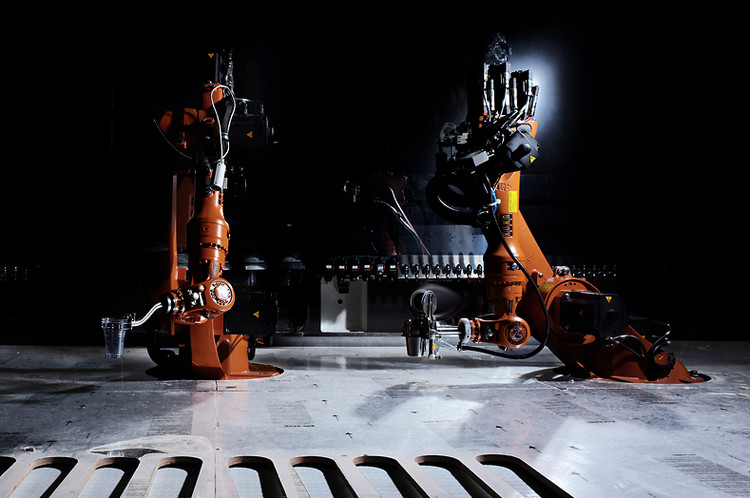
e-DavidNow it appears that there is a robotic arm that is capable of performing another highly-specialized task: painting. Created by a team at the University of Konstanz in Germany, the E-David is capable of performing the artistic variety of painting, not the kind which involves spraying enamel onto car frames – something robots have been doing for decades, much to the chagrin of auto workers.

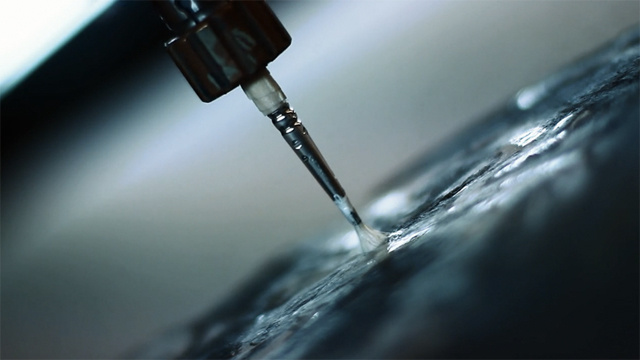
Granted, it is not capable of “artistic inspiration”, but instead takes a picture of what it wants to copy and takes it from there. What’s more, it e-David doesn’t require programming directions that tell it how to paint, relying instead on a concept known as “visual optimization” to make its own decisions. After each brush stroke, e-David takes a picture, and its software calculates where the next stroke needs to fall, what colors are needed, and whether it needs to be lighter or darker, etc.

e_David1In short, e-David can do the time-consuming and often monotonous task of reproducing original works of art, or cleaning them up, but cannot create someone all on its own. Now lets all join the artists of the world in breathing a collective sigh of relief. The team of university researchers described the e-David’s “process” in a release in which they stated:

We equipped a standard robot with all necessary means for painting. Five different brushes can be used, color can be selected from a repository with 24 colors, brushes can be cleaned, and colors can be distributed precisely on the canvas. The machine watches itself while painting and decides independently where to add new strokes. This way, paintings are created that are not completely defined by the programmer, but are the result of a visual optimization process.

While E-David isn’t the first robot capable of painting, it is in a class by itself when it comes to the quality of the images it creates. Much like the supercomputer Iamus that composed classical music which was performed by the London Symphony Orchestra and recorded on an album, it is impossible to tell when looking at the finished product if the paintings were crafted by hand or machine. An interesting twist on the Turing Test, I think!

What’s next? A robot that can compose pop songs? I don’t think I can stand another version of “Friday”! And be sure to enjoy this video of e-David at work:


Sources: news.cnet.com, (2), fastcoexist.com

Climate Crisis: Coming Trends in CO2

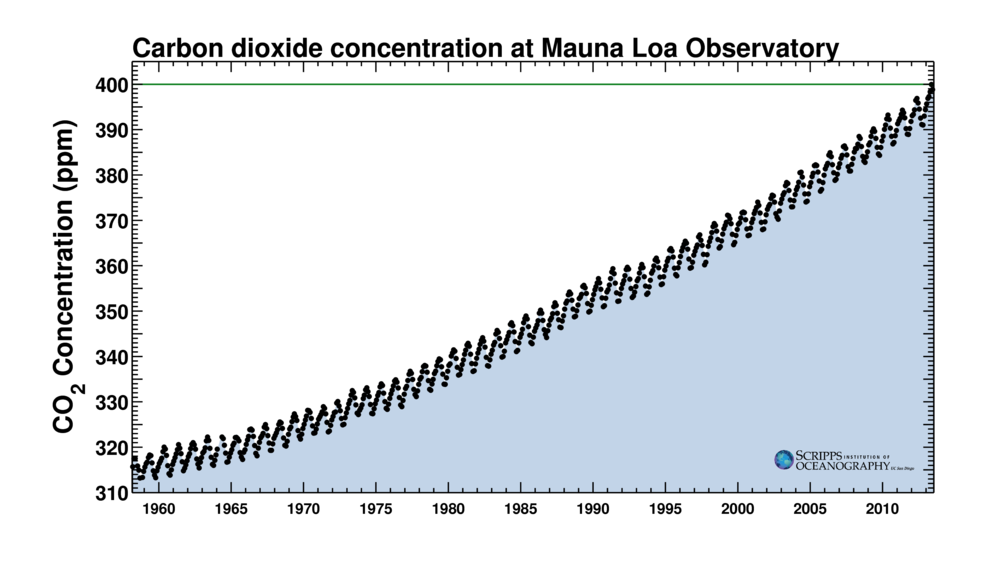
Pollution over Mexico CityGood news everybody! Okay, not exactly good, but it is news, and on a rather important subject. Recently, the National Oceanic and Atmospheric Administration (NOAA) announced that the Manua Loa observatory in Hawaii had recorded atmospheric levels of carbon dioxide which exceeded 400 parts per million. This represented a major milestone, one which climatological researchers and scientists have feared for some time.

However, they have since amended that statement, saying that the readings were a fraction of a point lower at 399.89 ppm. Not exactly a reason to celebrate, and not that surprising either, since individual readings at any of NOAA’s observation stations are subject to revision on a regular basis. And regardless of whether or not the 400 ppm milestone has been passed, scientists are still adamant that this reading is cause for concern.

keeling_curveAs has been stated repeatedly, when it comes to the buildup of human created greenhouse gases, it is the rate of increase which is most important. That rate, which is measured by the Keeling Curve, shows that atmospheric CO2 levels are rising at unprecedented rates, driven largely by the burning of fossil fuels over the past two centuries.

Originally pioneered by scientist Charles D. Keeling in 1958 , this curve is the longest-running tally of carbon dioxide levels in the atmosphere and is maintained by the Scripps Institution of Oceanography in San Diego. The saw-tooth pattern of the incline reflects small seasonal variations within the long-term upward trend, which peak annually around the month of May.

Combining this studies conducted on glacial melting patterns, pollination patterns, geological and oceanographic surveys, a long-term picture emerges. For the past 800,000 years, CO2 levels have never exceeded 300 ppm, and there is no known geologic period in which rates increased as sharply as they are now. That level was at about 280 ppm at the advent of the Industrial Revolution in the 18th century, the period when the burning of fossil fuels began to soar.

trafficScripps geochemist Ralph Keeling, who has taken over the Keeling curve measurement from his late father, had this to say about the news:

I wish it weren’t true, but it looks like the world is going to blow through the 400-ppm level without losing a beat. At this pace we’ll hit 450 ppm within a few decades.

Tim Lueker, an oceanographer and carbon cycle researcher who is a longtime member of the Scripps CO2 Group, also weighed in on the significance of these latest readings:

The 400-ppm threshold is a sobering milestone and should serve as a wake-up call for all of us to support clean-energy technology and reduce emissions of greenhouse gases before it’s too late for our children and grandchildren.

What’s especially frightening about a rating of 400 ppm is the fact that planet Earth has not experienced that kind of CO2 concentration for over 3 million years, during the Pliocene Era. At that time, sea levels were between 60 and 80 feet higher than their current levels. If sea levels rise by this much in the coming decades, roughly 1 billion of the Earths inhabitants will be left homeless.

climate_changetideAdd to this the widespread droughts, wildfires and flooding taking place in inland communities, where unpredictable weather will cause rivers to overflow erode river banks and turn millions more into refugees. And as crops fail due to increased heat and depleted topsoil, the ability to feed the world’s population will also begin to plummet.

Of course, these are the most dire predictions and are often used to remind us just how important it is to clean up our act before its too late. Researching and developing cleaner methods is one approach, as is finding ways to capture the carbon emissions we are generating on a daily basis. But in the end, the greatest weapon in our arsenal is and always will be public awareness.

Consider yourselves informed. Now go spread the word!

In the meantime, enjoy this animated “Carbon Tracker” graph that shows us the time history of atmospheric carbon dioxide – courtesy of the National Oceanic & Atmospheric Administration.


Source:
articles.latimes.com
, esrl.noaa.gov, keelingcurve.ucsd.edu

Judgement Day Update: The DARPA Atlas Robot

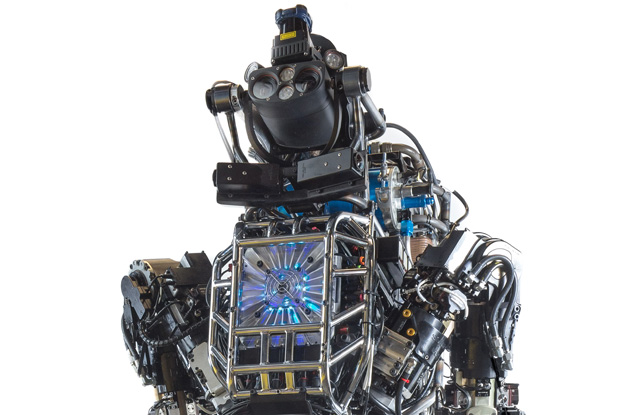
Atlas_robotJudgement Day has come early this year! At least that’s the impression I got when I took a look at this new DARPA prototype for a future robotic infantryman. With its anthropomorphic frame, servomotors and cables, sensor-clustered face, and the shining lights on its chest, this machine just screams Terminator! Yet surprisingly, it is being developed to help humans beings. Yeah, that’s what they said about Skynet, right before it nuked us!

Yes, this 6-foot, 330-pound robot, which was unveiled this past Thursday, was in fact designed as a testbed humanoid for disaster response. Designed to carry tools and tackle rough terrain, this robot – and those like it – are intended to operate in hazardous or disaster-stricken areas, assisting in rescue efforts and performing tasks that would ordinarily endanger the lives of human workers.

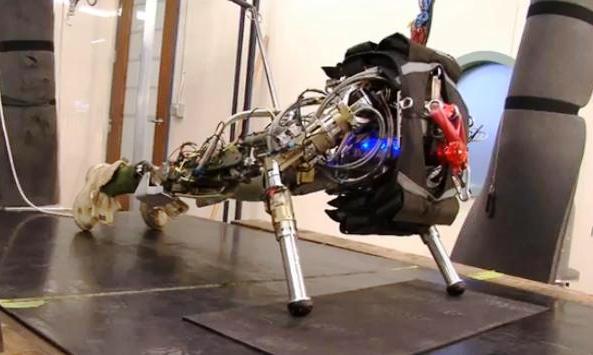
LS3-AlphaDog6reducedFunded by DARPA as part of their Robotics Challenge, the robot was developed by Boston Dynamics, the same people who brought you the AlphaDog – aka the Legged Squad Support System (LS3, pictured above) – and the Petman soldier robot. The former was developed as an all-terrain quadruped robot that could as an infantry-support vehicle by carrying a squad’s heavy ordinance over rough terrain.

The latter, like Atlas, was developed as testbed to see just how anthropomorphic a robot can be – i.e. whether or not it could move, run and jump with fluidity rather than awkward “robot” movements, and handle different surfaces. Some of you may recall seeing a video or two of it doing pushups and running on a treadmill back in 2011.

PetmanAlas, Atlas represents something vastly different and more complex than these other two machines. It was designed to not only walk and carry things, but can travel over rough terrain and climb using its hands and feet. Its head includes stereo cameras and a laser range finder to help it navigate its environment.

And, as Boston Dynamics claimed in a press release, the bot also possesses “sensate hands” that are capable of using human tools, and “28 hydraulically actuated degrees of freedom”. Its only weakness, at present, is the electrical power supply it is tethered to. But other than that, it is the most “human” robot – purely in terms physical capabilities – to date. Not only that, but it also looks pretty badass when seen in this full-profile pic, doesn’t it?

Atlas_4437_shrunk-1373567699341_610x903The DARPA Robotics Challenge is designed to help evolve machines that can cope with disasters and hazardous environments like nuclear power plant accidents. The seven teams currently in the challenge will get their own Atlas bot and then program it until December, when trials will be held at the Homestead Miami Speedway in Florida – where they will be presented with a series of challenges.

In the meantime, check out the video below of the Atlas robot as it demonstrates it full range of motion while busting a move! Then tell me if the robot is any less frightening to you. Can’t help but look at the full-length picture and imagine a plasma cannon in its hands, can you?


Source: news.cnet.com


Futurama does 3D Printing!

benderIt’s a good day when a show like Futurama begins turning out new episodes. This past week’s featured a story where Bender began taking advantage of 3D printing to create a famous folk singer’s one-of-a-kind guitar. Naturally, things got out of control, and the story was chock full of social commentary and the concept that the printing revolution might actually be ushering an age where artificial replicas could infringe on the real thing.

For the life of me, I can’t find clips of this episode anywhere. Guess it’s too soon to expect anyone to upload it to Youtube, lazy piraters! But I found the next best thing: a time-lapse video of a Bender figurine being printed out on a Maker Bot. It’s set to the extended cut of Futurama’s theme, and the result is a pretty cool replica of the jive-talking, amoral alcoholic robot himself!

A Musical Tribute to Game of Thrones

Game-of-Thrones-game-of-thrones-20131987-1280-800For fans of George RR Martin, there are few things more controversial about his work than his tendency to kill off beloved characters. From King Robert, to Ned Stark, to Khal Drogo, to the Red Wedding – and that’s just what’s been showcased by the miniseries thus far – it seems no one is safe, regardless of how much we may like them.

As such, it seems fitting that the ladies of Not Literally are back with another pop culture-parodying video honoring those characters who died in GOT season 1. Set to the tune of Goyte’s “Somebody that I Used to Know”, they address their grievances to George RR Martin through a musical row known as “A Character I Used to Know.”

And really, they’ve only covered season 1 here. Now that the Red Wedding has been shown, I’m sure these ladies are off fashioning the remix of the song, angrier, longer, and more angst-ridden! Either that or they are curled up in a ball somewhere, rocking back and forth and sucking their sums to the tune of “The Rains of Castamere”.

Enjoy!