A Sneak Preview – Transverse

A Sneak Preview – Transverse

Boy, this has been a long time in the making! Years ago, as I was finishing work on the Formist series, I began working on my next project: Transverse. For years, I worked on it, but found that I was only moving the ball incrementally forward. And then life intervened when my wife had a stroke brought on by kidney disease. As you can imagine, this left little time or energy for creative writing.

However, as things got easier in our lives, I found myself returning to my Work-In-Progress (WIP). And a few months ago, I found the creative energy to finish chapter after chapter! As I write this post, I am nearing the completion of this project. In the spirit of this, I wanted to give you all a preview of my WIP by offering the first few chapters.

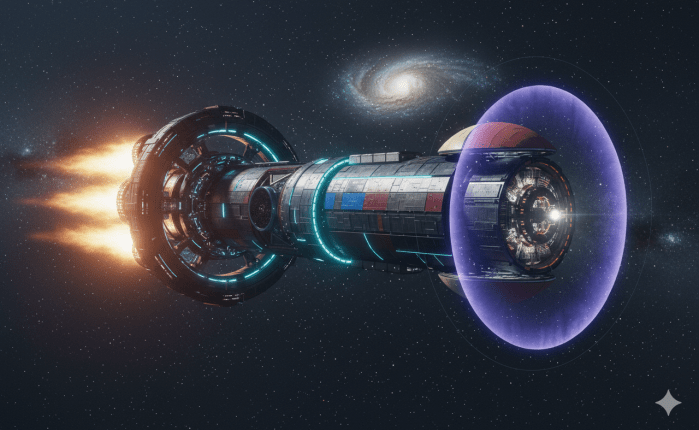
To recap, Transverse takes place aboard a Generation Ship en route to the not-so-distant system of Delta Pavonis. This Sun-like star is roughly 20 light-years from Earth and currently has no confirmed exoplanets, making it perfect for writing fiction. In my story, this star is named Tōnatiuh by the ship’s crew, which is Nahuatl for “Fifth Sun” (since it’s the fifth Sun-like star beyond the Solar System), and also the name of the Aztecs’ Sun god.

The world they are looking to settle is Delta Pavonis d, the third planet from the star, which they’ve named Çatalhöyük after the ancient neolithic settlement, one of the earliest known human settlements (dated to ca. 7500 BCE). The people aboard are highly advanced, led by a team of 9 Engineers and thousands of crew who tend to the ship on a rotational basis. While one-third of the Engineers and crew are awake, the others are kept in cryogenic preservation.

The rest, I hope, will become clear as the chapters go on…


The doors opened onto a vast theatre, dark, but with glowing patches where strategically placed lamps hovered next to the walls. Their light catches small surface spaces across the cavernous room: cream-colored walls, dark wood panels, russet seat cushions. The level of illumination is intentionally kept low; to the point that it makes the space and the few hundred people seated just discernible. On the stage, the focal point of the whole place, the lights are slightly brighter, drawing attention to a backdrop that not currently in operation.

Over ten thousand seats fill the room, arranged in a typical half-moon crescent on the ground floor. Dube knows there are just as many located in the gallery above, along with boxes along the walls that offer an elevated view of the stage. The place is familiar, though he knew somehow that he had never been here before.

Of the handful of patrons who’ve made themselves at home, a few looked at him when he entered. Of these people, Dube could make out some facial features, thanks to the brightened screens of their folios. A handful have no faces, just irises that beam light at him from the active display diodes embedded in them.

Dube felt inexplicably confused. The atmosphere that filled the theatre seemed very much calm. So many people, sprawled out in a room not ordinarily intended for self-directed tasks. No one appeared to be talking or calling in anyone else’s direction. Just the sound of their breathing the circulation of the ship’s air.

And yet, Dube felt that a strange tingle of unease.

He could think of nothing to justify that feeling. He recognized the room, the people were not behaving threateningly in any way, and there was sufficient light to see by.

Walking down the central walkway, he looked left and right for a familiar face. Strangely, everyone looked alien to him. That did not seem right, but he still couldn’t think of anything to contradict what he was seeing.

He smiled when he finally saw someone he recognized.

“Welcome home, Obuya,” she said.

“Home?”

She looked at him queerly.

“Of course. This has always been our home.”

She said the words in such a matter-of-fact way, as if it were somehow academic.

“I’m confused.”

“Can you remember a time before we were here?”

Dube sighed. He seemed to remember images of a distant place. He terrain was alpine, undulating in every direction. Where it ended, a cool valley stretched almost to the horizon, abutted by another mountainous outcropping. The ground before him was covered in shrubs and dotted with all manner of Acacia and Eucalypt trees. The sensations began to pile on: the warm Sun on his face, the cool shadow of the Blue Mountains on his back. And he could feel a gentle breeze coming up from the valley, the smell of wildflowers and eucalyptus oil.

His eyes snapped opened and he beheld the landscape with a new sense of disapproval.

“This is not my home.”

“Not anymore,” said Edennu, sternly. “We brought it all with us.”

These words made Dube feel a strange tingle. How did she know what he was thinking? He had not linked with her, nor had she reached out to him. He tried to do so now but couldn’t get a connection. Reaching out, he found no bandwidth with which to do so either.

He looked around again, harder this time. Somewhere in the sleepy room, there had to be some clue to what was going on. He couldn’t remember what he was looking for when he came in, but suspected it was here somewhere. And then there was the matter of where he had been before. He tried to call up the mental image again; perhaps what he sought was there.

“The trees…” he whispered. “I remember Baobabs, Umkwakwa, and Cinnamonum. Bushwillow blossoms, as many as the stars.”

Edennu quickly retorted, almost chiding him.

“Don’t worry about the trees, Obuya. We brought them all with us.”

He didn’t know why, but her words made perfect sense to him. He inquired further.

“And the oxen? And the aurochs?”

“We brought them too, Obuya.”

“And the Sun,” he said queerly. “What about that?”

She shook her head. “No, Obuya. We didn’t bring that with us. We just have to hope they have enough for all of us.”

“They? Who are you talking about?”

She didn’t reply. Her eyes remained fixed on her book. Dube tried again.

“What did you mean by that? Sandra?”

Edennu went dark. Her physical form was still there. But what was behind it was gone. In the space she occupied, it was as if an absence had formed. Dube looked around the room and noticed that the same thing was happening in other places too. He also noted the way it was spreading. In every seat, in every corner, the people were still there – and yet, not.

The room followed too. The stage, the auditorium, the lights – all of it became bathed in the same interminable darkness. And soon, an ill sound followed. The still quiet gave way to a terrible scurrying, as if something was crawling through the airways.

“What is that?” he asked. Edennu did not answer. She had gone dark and quiet, like everyone else. Nothing around him would answer. The only thing making any noise now was the one thing he couldn’t identify, and that was getting louder the closer the darkness came to envelop him. It was not in the airwaves. It was all around him now.

It only stopped once the darkness completely encompassed him.

He felt surrounded. Enveloped.

Yet strangely, he was unafraid.

He could still breathe, still feel, and was aware of an emptiness that surrounded him. The protective bubble, and his ignorance of what lay beyond it, staved off panic. He was alone, submersed in complete quiet and total darkness.

It felt like an eternity. But then again, it was. For the average mortal, centuries of sleep qualified as an eternity…
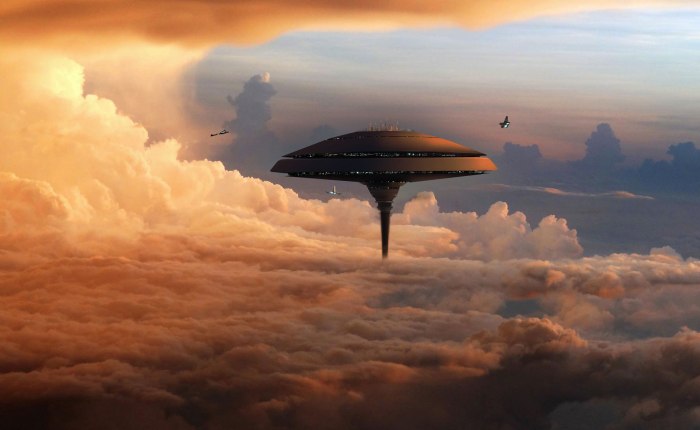
Behold! The Venus Calendar!

Behold! The Venus Calendar!

Recently, I learned that there’s an actual Martian calendar, known as the Darian Calendar. It was crafted by aerospace engineer Thomas Gangale in 1985, who named it after his son Darius. It was also adopted by the Mars Society in 1998 and will be the official calendar of Martian settlers (if and when permanent settlements are built on Mars someday).

Continue reading “Behold! The Venus Calendar!”

Revitalizing an Old Idea: Thirteenth

Revitalizing an Old Idea: Thirteenth

It came to me when I was in University and eventually grew to become the seed of my very first written work. It was intended to become part of a series called Legacies, and I had big plans for it. I even wrote a few short stories over the years that were part of this fictional universe. However, as years passed and I became more committed to hard science fiction, I fell out of love with the series. Since it was my first effort, I also felt that the writing was amateurish and needed serious polishing.

But the other day, I found myself musing about the seed. It wasn’t a bad idea, and I could still recall the sense of inspiration I felt when plotting it all out. And over the years, the basic concept was still there, always trying to find expression in new form or variation on the old. I can’t help it. There’s just something about ancient migrations, long-lost tribes, and forgotten histories that is so damn intriguing!

And since I’m at a transitional point in my writing – my first trilogy down and an open field in front of me – I’m once again contemplating if this idea has a future. While it’s not exactly hard science-fiction (more space opera), I still think it has the potential to be fun and intriguing.

Continue reading “Revitalizing an Old Idea: Thirteenth”

Talking About “the Process” – Part the Second

Talking About “the Process” – Part the Second

The last time I got into one of these, it was because a friend asked me some engaging questions. And so I talked about the one thing I never liked to talk about. And wouldn’t you know it? I actually enjoyed it. And it turns out that some people actually read it and found it interesting. So I thought I’d suck it up yet again and get into something else that is process-related. Again, this is something I don’t normally like to talk about. But it’s something that writers are frequently asked, myself included:

“Where do your ideas come from?”

Continue reading “Talking About “the Process” – Part the Second”

Talking About “the Process” – Part the First

Talking About “the Process” – Part the First

Recently, a friend of mine raised the subject of my writing process, how I go from receiving an assignment and/or getting ideas to researching the topic, deciding on an approach, and so forth. In short, he said that if I were ever to write an article where I share my personal experiences and preferences, he would happily read it. While I was understandably flattered, my first instinct was to groan at the mere mention of those two words:

“The Process”

I don’t why, but for about as long as I’ve been writing at a professional level, I’ve found this kind of talk both painful and tedious. Maybe it’s the way I’ve grown tired of introspection over the years, or maybe the way I prefer that discourse be focused on material rather than method. It’s like that witty line David Hyde Pierce once uttered on Frasier: “This is boring, yet difficult.”

Still, it’s an important subject and a crucial part in how things get created. For the sci-comm (science communicator), it’s all about taking raw information that is often inaccessible and translating it into an accessible narrative. It’s also about taking discoveries and developments that might otherwise appear to be happening in a vacuum and relating the context in which it happened, and the implications going forward.

So I decided to suck it up and relate what I could about this topic. For convenience sake, I have decided to address it in a Q&A format:

Continue reading “Talking About “the Process” – Part the First”

Writing No-Go List

Writing No-Go List

Hey folks. For starters, I want to emphasize that the following is an attempt at satire. It was inspired by a skit I recently saw on the Baroness Von Sketch Show (good show, btw!) about a writing class where they are hoping to avoid the usual cliches. It got me thinking about sci-fi cliches, and what I would tell a writing class if I were in charge.

I would love to teach such a class and someday. And so I would consider the following list canon if anyone were to actually look to me for writing advice.

Continue reading “Writing No-Go List”

How Science Journalism Helped Me Become a Better Sci-Fi Writer

How Science Journalism Helped Me Become a Better Sci-Fi Writer

The following is an article that I recently published with Universe Today. And since it concerns my recently-published novels, I felt absolutely obliged to share it here. Enjoy!

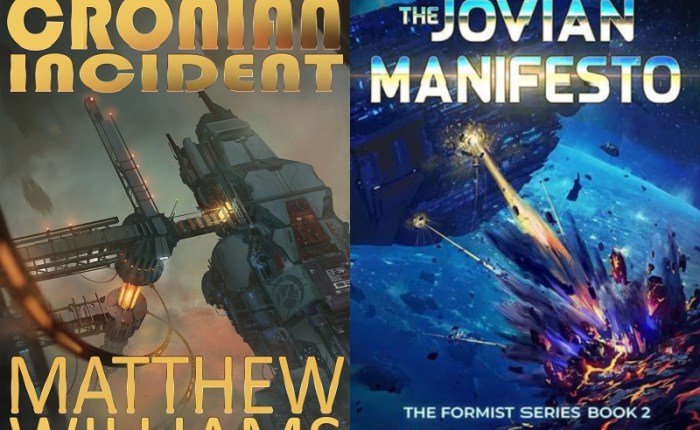
Hello all. I hope our readers don’t mind that I’m taking a bit of a diversion here today to engage in a little shameless self-promotion. Basically, I wanted to talk about my recently-published novel – The Jovian Manifesto. This book is the sequel to The Cronian Incident, which was published last year (and was a little  shamelessly promoted at the time).

Continue reading “How Science Journalism Helped Me Become a Better Sci-Fi Writer”

Ten Day Book Challenge: Day Five

Ten Day Book Challenge: Day Five

Okay, I admit it. I’ve been completely derelict when it comes to this challenge. But I hope to amend that by finishing it things up and acknowledging all the books that have inspired me in the past.

Okay, so as usual, here are the rules of this challenge:

  • Thank whoever nominated you with big, bold print. If they have a blog, link to the post where you got tagged there.
  • Explain the rules.
  • Post the cover of a book that was influential on you or that you love dearly.
  • Explain why it was so influential to you.
  • Tag someone else to do the challenge, and let them know they’ve been tagged.

Thanks once again to RAMI UNGAR for the nomination, and you can find him at ramiungarthewriter.com. And for this latest entry, I would like to select the Singularity-themed sci-fi classic Accelerando, by Charles Stross.

Have you ever read a book that felt it came along at exactly the right time? Or one that spoke to you and your particular interests at the time? Well, this was one such book for me. Rather than being a single story, this book is actually a collection of shorts that Stross wrote during the early 2000s, but which were all connected by a common theme. Essentially, the six shorts tell the story of three generations of the Macx family, and take place before, during and after the Technological Singularity.

What I loved about this book is how it takes a look at the near-future and how the accelerated pace of technological innovation will make life very interesting (and complicated). It also speaks about several key innovations that are expected, ranging from AI, additive manufacturing (3-D printing), nanotechnology, neural uploads, and commercial space travel.

Looking at the more distant future, it shows how these trends will lead to a breakneck pace of change that will leave most of humanity struggling to remain human. It also throws is some truly interesting and entertaining bits about extra-terrestrial intelligence, a possible answer to the Fermi Paradox, and humanity’s long-term destiny among the stars.

Basically, this book covered all the bases that I was voraciously trying to learn about at the time for the sake of my own writing. It made predictions, both realistic and fantastical, that just spoke to me. And what especially impressed was the way that Stross, writing these stories at a least decade prior to me reading them, predicted so many trends that were slowly coming true. As such, I consider this book to be both inspirational and quintessential to my more recent education as a science fiction writer.

Next up, I nominate Joachim Boaz and his blog, Science Fiction and Other Suspect Ruminations!

The Ten Day Book Challenge: Day Two

The Ten Day Book Challenge: Day Two

Hello again, all. First, please forgive my tardiness in posting this. It’s been a busy weekend and an even busier year! I shall try to catch up over the next few days, though I can’t imagine life is going to get any less busy in the near future. Even so, I got plenty more books to talk about that have had a profound effect on me and influenced my decision to become a writer.

But first, here are the rules of this challenge again!

  • Thank whoever nominated you with big, bold print. If they have a blog, link to the post where you got tagged there.
  • Explain the rules.
  • Post the cover of a book that was influential on you or that you love dearly.
  • Explain why it was so influential to you.
  • Tag someone else to do the challenge, and let them know they’ve been tagged.

Again, I would like to thank RAMI UNGAR for the nomination, and you can find him at ramiungarthewriter.com. And for day two of the challenge, I would like to select the book that taught people to take science fiction seriously – Dune!

dune

Much like Lord of the Rings, this timeless classic was one I learned about growing up, but didn’t get around to reading until my 20s. And just like with LOTR, once I did read it, I could see why its influence has been so pervasive. While Frank Herbert wrote many science fiction novels during his lifetime, none have had the same impact as the first installment in his six-book Dune series. And while I myself read all six twice, the first book is arguably the best.

For starters, the story involved one of the richest, most-inspired and most-detailed universes ever created in the history science fiction. Based on the concept of a galactic empire where politics, the economy and all social norms are essentially combination of the futuristic and medieval, the setting of Dune would go on to inspire Lucas’ Star Wars universe, not to mention countless other franchises that combine sci-fi with fantasy. What’s more, many of the planets in the novel have been formally adopted by the International Astronomical Union (IAU) as place names for features on the Moon and Saturn’s largest moon, Titan.

But it was the complex interweaving of real history, religion, environmentalism, resource dependency, and cultural and social commentary that blew me away and has ensured that this book is likely to be included in any top ten lists of science fiction books that you can find – not to mention one of the top ten books people pretend to have read. And to round it all out, it has a very deep plot that examines the enduring mystery of prophets and messiahs in human history, and the paradox of prescience. As Frank Herbert himself wrote, “to know the future is to become trapped by it.”

I could go on and on, but I’ve already reviewed this book more than once and don’t want to spoil it for anyone who hasn’t read it yet. And if you’re one of those people who haven’t, get on it!

And now it’s time for me to nominate someone new. And so I call upon Lady Muse herself, Khaalidah Mohammed Ali!

Almost Done!

Almost Done!

Hey all! I have more in the way of novel-writing news. For starters, The Cronian Incident is now just a few chapters short of completion. After over a year of writing, editing, and back and forth with my prospective-publisher, the novel is just about finished. All told, it is now 31 chapters long and just over 85,000 words in length. I anticipate it will be about 100,000 by the time its finished, though I have been known to exceed estimates in the past!

And as per my agreement with my publisher, I have begun working on its sequel. Apparently, publishers like to know the people they sign have more books in them. And they prefer to release sequels within a few months of the first book, to ensure that any buzz they generate with the first release can be capitalized on. Lucky for me I had plans for a second and third novel before my publisher and I started talking, not to mention some spin offs.

So here’s the commercial description for the proposed sequel (i.e. what you’d read on the back of the dust jacket), as well as a rundown on some other ideas I’m working on:

The Jovian Manifesto:

The Solar System is in the midst of a crisis. In the Jovian and Cronian systems, the populations are up in arms, thanks to an inflammatory document that has appeared on the local nets. Known as “The Jovian Manifesto”, this document details how a powerful faction in the Inner Solar System conspired to seize control over the moons of Callisto and Titan and forcibly alter them. Behind the leak is a mysterious personality known only as Clio, who is threatening to release all the details unless the guilty parties come forward.

Back on Venus, a former analyst named Valéria Gallego is called before the Solar Assembly to investigate the Manifesto and its author. In this, she is assisted by Kadera, an infiltration specialist who can get in and out of any location in the Solar System. If they can determine its authenticity, perhaps they can prevent open conflict. But if not, the Inner Worlds may have no choice but to send armed forces to the Outer Worlds to ensure peace and stability.

Meanwhile, a string of violent acts has threatened to bring things ever closer to the brink. For Gallego and all those who are seeking the truth, time is running out…

Luna Invictus:

Now this is a book that doesn’t come with a commercial description, just a general one. But it is set in the same universe as The Cronian Incident and The Jovian Manifesto. Here’s what I am thinking. Basically, I wanted to do a story set on the Moon, ca. the 22nd century, when the Moon is now effectively colonized,,,

Between the European Space Agency (ESA), NASA, the Russians (Roscosmos), India (the ISRO), and China (CNSA), the lunar surface now has multiple permanent settlements. Whereas the ESA and NASA have established themselves at the southern polar region – in a domed settlement in the Shackleton Crater – and the Chinese have established a colony in the northern polar region, the Russians and Indians have claimed the mid-latitudes, where stable lava tubes have allowed for the creation of underground cities.

And on the “Dark Side” of the Moon – that is to say, the side looking away from Earth – are a series of installations known as the Unrestricted Zones. It is here that all kinds of weird research, development and experiments take place. Nanotechnology, biotechnology, quantum computing, and man-machine interface – anything goes in these places! Ever since the explosion in learning that took place during the previous century, places all over Earth and the Moon have become dedicated to pursuing technological progress and integration without restriction.

And it is here that a young man named Frankling Houte is seeking to go. Years ago, his sister – named Constant Houte – chose to undergo a procedure where her organic brain would be augmented by merging it with quantum components. But after all contact ceased, he is determined to find her and return her home. But whereas Franklin fancies himself a brave rescuer, it is his sister who will come to save him.

Transverse:

This story will take place entirely in a generation ship that is making its way towards the nearby star system. Within the confines of this self-contained world, thousands of humans have committed to waiting and working for generations as their massive ship – the Traverse Velocity, which in astronomical terms refers to the speed at which a star moves perpendicular to our line of sight – transports them to an Earth-like world outside of our Solar System.

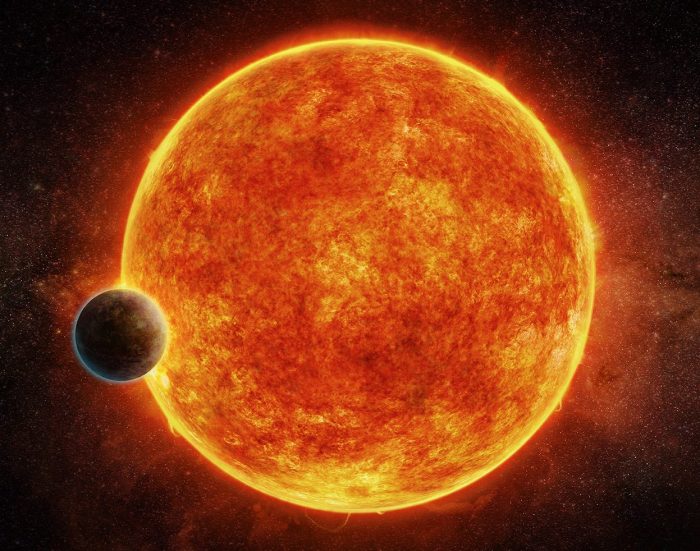
The location of that world is up for grabs at the moment, mainly because new discoveries are being made all the time. Did you hear about the latest exoplanet discovery, located about 39 light years away and already said to be the “best place to look for signs of life beyond the Solar System”? Between that and new findings that claims how previous discoveries are not likely to be habitable after all, I’ve decided to leave the destination blank until I actually start writing it!

But of course, no story would be complete without some intrigue and big ol’ inciting event! And the way I see it, things begin to go awry when the Captain and crew get notification that one of the passengers has awakened from cryosleep prematurely and disappeared into the ship. Shortly thereafter, one of the crew is found dead in what appears to be a sabotage attempt gone wrong. A ship-wide search begins to find the culprit while the atmosphere quickly devolves into one of paranoia and suspicion.

To make matter worse, the crew becomes aware of another ship that is threatening to catch up and overtake them. It seems that another faction from the Solar System, which was also intent on settling (insert exoplanet here) is now trying to get their ahead of them. What began as a journey to a new world, characterized by hopes and dreams, has become a race to lay claim to a planet. And it appears that the planet may have inhabitants of its own, ones which are not interested in welcoming the intruders.