This week, I sat down with NASA astronomer and exoplanet researcher Dr. Charles Beichman, the Executive Director of the NASA Exoplanet Science Institute (NExScI) at Caltech. He’s an esteemed scientist who has spent decades searching for exoplanets and led several path-finding missions. These include the Space Interferometer Mission (SIM), the Infrared Astronomical Satellite (IRAS),the Spitzer Space Telescope, and the 2 Micron All Sky Survey (2MASS).
One could say that he was looking for exoplanets before it was “cool.” Suffice it to say, the man has some very interesting stories. Very soon, he and a team of astronomers will be using the James WebbSpace Telescope (JWST) to observe Alpha Centauri, where they hope to find the first definitive proof of exoplanets in that system. I think I speak for everyone when I wish him and his colleagues the best of luck!
This week’s episode was the third installment of the “Settling the Solar System” (or “Great Migration”) segment. Previous episodes covered how humans could one day live on the Moon and Mars. In this latest installment, I discussed how humans (with the right technology and strategies) could live on Venus. Well, not exactly on Venus, since the planet is a total hellhole!
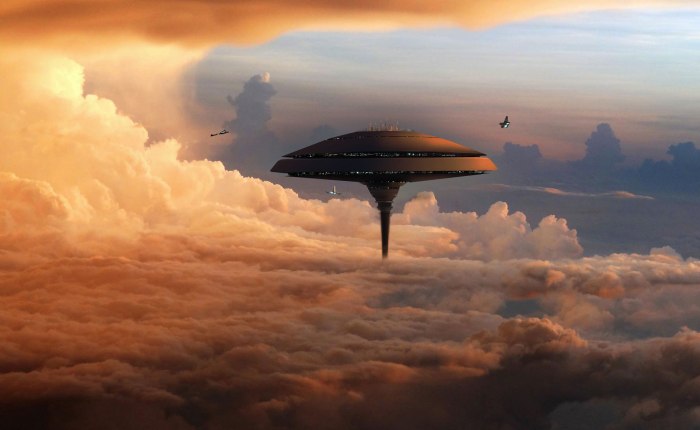
The air pressure alone is enough to crush your bones, the average temperature is literally hot enough to melt lead, and there’s also sulfuric acid rain! Basically, Venus is the WORST piece of real estate in the Solar System! At least… it is on the surface. But above the cloud tops, where temperatures are mild, the air pressure is decent, and the sulfuric acid rain is sparse, floating cities could be established.
Over time, these settlements could be used to terraform the planet into an ocean paradise. Check out the episode to hear how it could be done!
A few months back, my publisher announced that, unfortunately, they could no longer publish my trilogy, known as the Formist Series. The pandemic had hit the publishing industry pretty hard, especially smaller operations, and they were no longer able to keep producing their clients’ books. Fortunately, there’s a wealth of independent author resources out there, and I have some experience with them.
So as soon as I reacquired the rights to my books – The Cronian Incident, The Jovian Manifesto, and The Frost Line Fracture – I reissued them immediately via Kindle Direct Publishing. For the first little while, nothing much changed. But a few short weeks ago, I noticed that the number of ratings had climbed considerably, especially for the first novel. Allow me to present it in table format. I like doing that!
Book
Cronian Incident
Jovian Manifesto
Frost Line Fracture
Ratings(formerly)
38 (13)
11 (8)
2 (1)
Reviews
16
6
1
Avg. Rating
4.3
4.5
4.5
Doing the math, CI’s ratings have increased by 292%, JV’s have increased by a comparatively modest 37.5%, and FLF’s have increased by 100% (but only because it went from 1 to 2). I’m not sure what led to this uptick, but I think the way my online profile has increased in the past decade has directed more people to my books. And it seems likely to me that this is recent since the increase has been concentrated on the first installment in the series so far.
While it’s certainly the case that most readers will pick up the first book in a series and hesitate to buy more, that much of a gap between the first books and the sequels suggests to me that anyone who bought the first one (and left a rating) are still deciding if they want to read further. Personally, I hope they do because (imho) the second book is the best one, while my publisher claimed that the third one is. I invite readers to decide for themselves!
The field of astronomy has become increasingly accessible in recent years, thanks to the growth of online astronomical communities, citizen astronomers, and open-access databases. This growth has paralleled the creation of next-generation telescopes, instruments, and data-sharing methods allowing greater collaboration between observatories and the general public.
Unfortunately, despite these positive developments, there are still millions of people around the world who do not have access to astronomy and would like to. This problem mirrors disparities that exist worldwide, where many communities experience lower education, health, and economic outcomes. These exist not only between nations but between urban and rural communities, where a lack of infrastructure can translate into a lack of access.
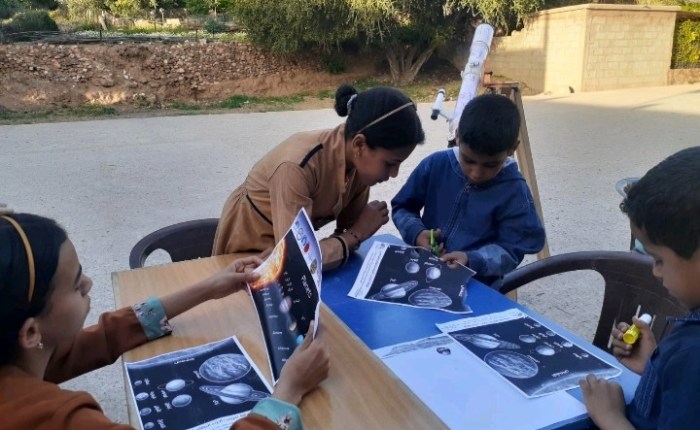
To address this disparity, a growing number of organizations are looking to bring STEM education to traditionally underserved communities. This includes the Asif Astronomy Club, which has engaged with students in remote communities in Morocco’s Atlas Mountains since 2020.
Through its efforts, the club and its leader (El-Mehdi Essaidi) are spreading the culture of astronomy and its central message: “Space is for everyone.” They are also helping to inspire the next generation of scientists and change-makers to reach for the stars (literally and figuratively).
I have to this, this was a complete surprise and I didn’t even realize anyone was keeping track. And yet, my friend and colleague James Maynard brought this bit of news to my attention. The list comes from PlayPodcast.net, a site that that offers free listening for hundreds of podcasts and (apparently) ranks them according to various categories. For this list, they ranked the best astronomy podcasts this year.
I’m not sure if this represents their own assessment or based on reviews, but I’ll take it. Also, note that The Cosmic Companion is the podcast of my buddy James. I invite you to check it out seeing as how he has some very cool stories, is a NASA alumni, and interviews some very interesting people (scientists, researchers, astronauts, etc.).
This week, I got into another favorite proposed resolution to the Fermi Paradox. In 2001, famed scientist and SF author Stephen Baxter wrote a paper titled “The Planetarium Hypothesis – A Resolution of the Fermi Paradox.” Addressing Fermi’s question, Baxter suggested that the reason humanity hasn’t heard from advanced civilizations is that the Universe (as we know it) is a simulation.
To put it another way, what we see when we look up at the night sky is a giant virtual reality “planetarium” built by an advanced species to give the illusion of an empty Universe. The purpose of this could be to keep humanity contained, possibly for its own good or that of other species (i.e., intelligent life is dangerous), or to keep less-advanced species from developing too quickly and becoming a threat.
Like the Berserker Hypothesis, the idea is science fiction gold but admittedly unlikely (phew!) Another problem is that the hypothesis is untestable. While Baxter and other scientists suggested ways this theory could be tested (based on the principles of quantum mechanics and thermodynamics), critics have pointed out that the laws of physics themselves could be part of the simulation.
Personally, I think that the laws of physics and the fact that they make space exploration so challenging is the most compelling evidence for the hypothesis. What better way is there to control the growth of a species than to set the physics model to “extra hard”? If I were an advanced civilization looking to keep a species in the dark, this is precisely what I’d do! Check it out below:
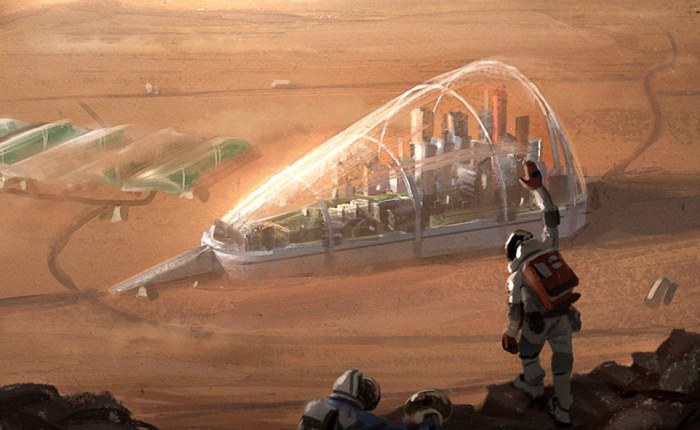
The second episode of my new segment, “Settling the Solar System,” has now aired. This week’s topic, how can humans settle on “Earth’s Twin” and create the first “Martians”? The subject has been explored for generations by scientists, speculative thinkers, science fiction writers, and more! And in the coming years, space agencies hope to send the first human explorers there. There are even plans to create a permanent human outpost there.
There’s no shortage of challenges, like the high radiation levels, low gravity, temperature extremes, and the planet’s thin and toxic atmosphere. But with the right strategies, there are incredible benefits too. These include becoming a multiplanetary species, having a “backup location” for humanity, and ushering in an era of post-scarcity economics. There’s also the potential for scientific breakthroughs. Aside from technological developments that would have countless applications here on Earth, there’s also the potential for astrobiological research Mars holds.
If humans were to find evidence of past (or present) life on Mars, we could finally answer some of the deepest mysteries – like how and when life emerged in the Solar System and if life on our two planets came from the same source. Can it be done? What will it take? And are we prepared to address the challenges, make the sacrifices, and bind ourselves to a multi-generational commitment?
We come to it at last! The first installment of a new segment on my podcast series, titled “Settling the Solar System” (or “the Great Migration”) has just aired. In this episode, I started with our nearest celestial neighbor and the first stop for any migration beyond Earth – the Moon. Human beings will be returning there soon. Only this time, we plan to leave more than “footprints and flags.”
This time, we plan to build the necessary infrastructure that will allow for ongoing exploration and development. That means creating lunar habitats, resource exploration (and exploitation), commercial missions, and lunar tourism. If all goes as planned, these efforts could even lead to a permanent lunar settlement. The challenges are legion, but they are surmountable given enough time, money, strategies, and a long-term commitment. Have a listen to find out!
In last week’s episode, I addressed the topic of how astrobiologists look for extraterrestrial life by searching for telltale indicators of biological processes at work (aka. “biosignatures”). This week, the subject was how scientists engaged in the Search for Extraterrestrial Intelligence (SETI) look for advanced life. In this case, they are looking for signs of technological activity that we would recognize (aka. “technosignatures”).
This field is evolving rather rapidly, and there are some big developments expected in the near future. To date, the vast majority of SETI surveys have been limited in scope and confined to looking for radio transmissions. But in the future, observatories worldwide and in space could be working in concert to search for everything from neutrinos and directed energy (lasers) to gravitational waves and megastructures! Check it out below!
This week, I got into the subject of astrobiology and how scientists look for life beyond Earth. Since we can’t explore exoplanets directly, astrobiologists are confined to looking for the telltale chemical signatures that we associate with life and organic processes here on Earth (aka. biosignatures). Some examples include oxygen, nitrogen, carbon dioxide, water, methane, and ammonia. In this episode, I explain how this is done and how next-generation telescopes are going to make it a lot easier!
And, of course, I get into how this whole process is complicated b our very limited frame of reference. As it stands, humans know of only one planet and chemical arrangement under which life can emerge and thrive. In short, planet Earth, with its nitrogen-oxygen atmosphere (and trace amounts of CO2), water on its surface, and orbiting around a G-type yellow star. As a result, we are confined to the “low-hanging fruit” approach.
But as long as we’re looking, we can expand the scope of “life as we know it.” Check it out below!