Robert Kirkman’s “The Walking Dead”

the-walking-dead_comicYou know how it is, when you find yourself loving a particular TV show or movie and someone tells you “you should really check out the original”? Well, that has happened to me three times now; first with The Lord of Rings, then with Game of Thrones, and then shortly thereafter with The Walking Dead.

From these three experiences, I’ve come to learn that I have a sort of rule of threes. Basically, if three friends tell me I need to read the original source material, then I definitely do! And in all cases, I came to identify with the self-professed franchise geeks who acted they had some prized inside knowledge and were insufferably critical about the adaptations.

And now that I’ve read the entire series, all 112 issues that have been published so far, I feel I am in a position to do a comparative analysis to the show. But for the sake of avoiding spoilers, I figured I would only cover the material that has been adapted into the miniseries thus far. So if it hasn’t happened beyond season three of the show, you won’t have to worry about it being mentioned here.

Robert Kirkman’s The Walking Dead:
*Note: For simplicity’s sake, I will be breaking down the plot of the comic book series by trade paperback volume. So far, Kirkland has released 112 issues, the first 108 of which are available in 18 volumes, each one containing six issues grouped by common theme. The show has so far adapted material from the first 8 volumes or 48 issues.

Volume 1 – Days Gone Bye:

WD_Volume_1-Days_Gone_ByeThe story begins in Georgia with the story’s protagonist – Rick Grimes, a sheriff – being wounded in the line of duty. He awakens sometime later to find the hospital apparently deserted and comes to a set of barred doors. Inside are a mess of zombies that try to bite him, and he is forced to flee. Once outside, he realizes the chaos has effected the entire town, and finds more examples of reanimated corpses as he heads for home.

Once he gets there, Rick can find no trace of his family and it appears as though every house is deserted. He is then nearly killed by a young boy who hits him in the head with a shovel but is saved when the boy’s father sees that he isn’t a zombie and takes him in. This good Samaritan – Morgan – tells Rick that he and son son Duane have been held up since the trouble began and explain to him what they know.

Rick learns from them that the zombies are basically reanimated corpses that are the result of some new type of virus, a virus which spreads through bites and scratches from the afflicted. He also learns that the government, before all TV and radio broadcasts went dark, urged citizens to converge on major cities where the armed forces would be doling out services and providing protection.

the-walking-dead-002-days-gone-bye-v1-12-page-11After going to his old police station and dividing up the weapons that remain, Rick decides to head out in search of his family, who he assumes will have gone to Atlanta. After quickly running out of gas and finding the local stations tapped out, Rick procures a horse and rides to the city limits. He quickly realizes the city has been overrun and is beset by hordes of zombies which kill his horse and try to eat him.

Rick attempts to flee and is once again saved when a young man named Glenn pulls him into an alley. After escaping, Glenn explains to him that the cities have all been overrun, and he only ever goes in to do supply runs for his camp. He proceeds to lead Rick to it on the outskirts of the city, where he is shocked and relieved to see Lori and Carl – his wife and son.
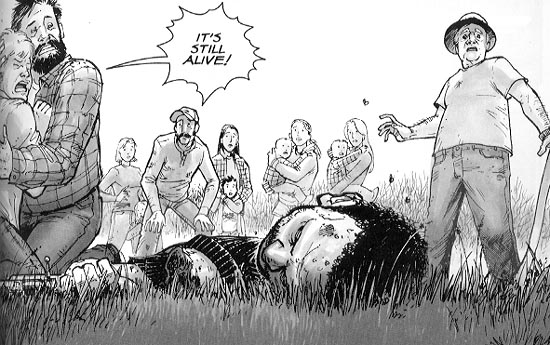
walking-dead-headHis best friend and ex-partner Shane is there with them too. After the disaster struck, they feared the worse and assumed he was dead and came to Atlanta. But having found the city in a state of crisis, they formed a camp with some others. This includes Dale, a retired man who owns an RV and who has been keeping company with two sisters, Andrea and Amy; Allen and Donna, a married couple and their twin boys, Ben and Billy; Jim, a distant man from Atlanta who lost his wife; Carol, a woman who lost her husband, and her daughter, Sophia.

Rick is greeted by everyone but is warned by Dale that Shane is not as happy to see him as he would like to think. As the days come and go, Rick and Shane hunt while the women do laundry, and everyone tries to maintain some degree of normalcy. It isn’t long before the camp is attacked by a single Walker and Dale manages to take its head off. But this fails to kill it and they quickly realize that taking out the brain is the only way to kill them.
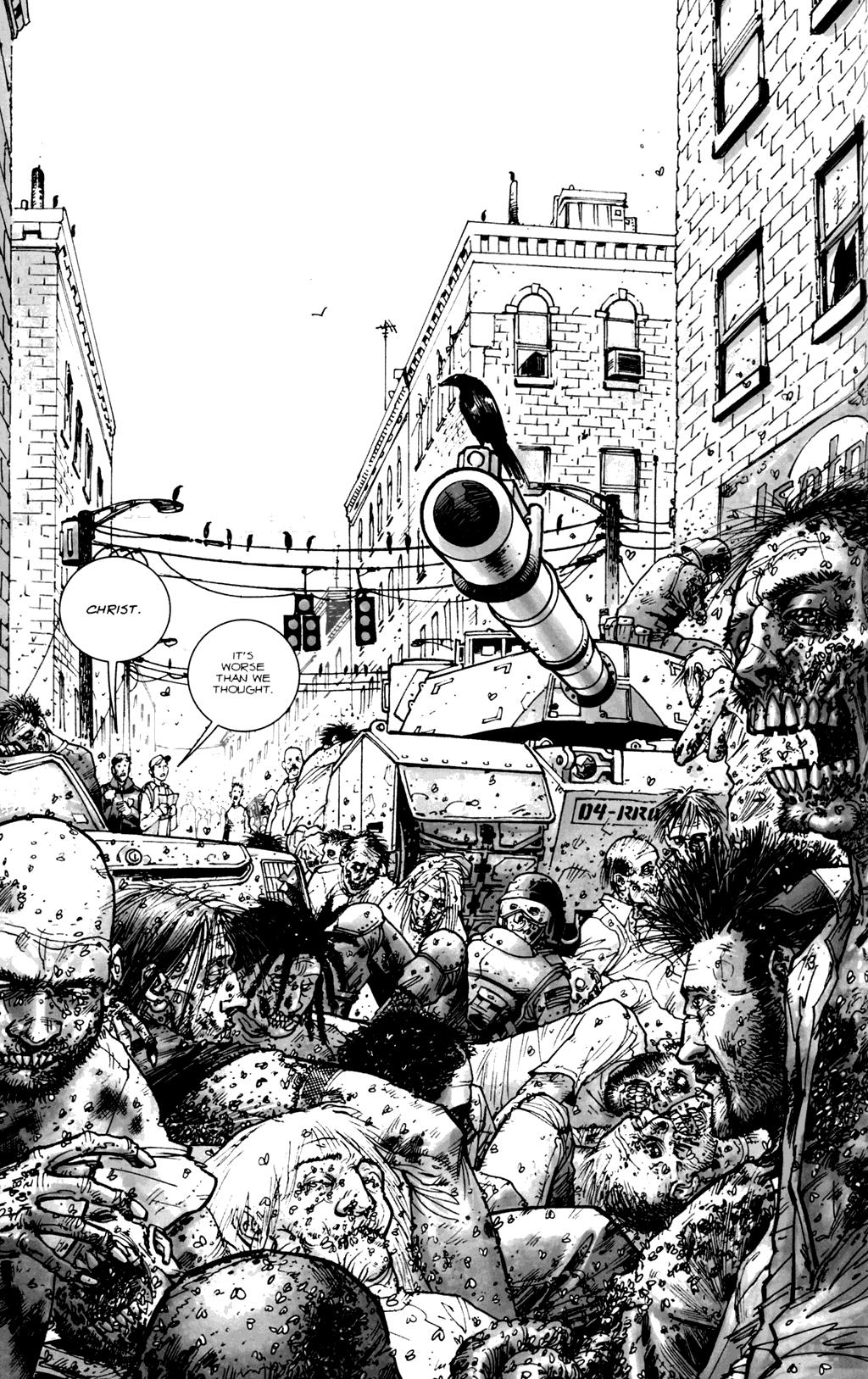
the-walking-dead-004-days-gone-bye-v1-12-page-13Rick begins to accompany Glenn on supply runs into the city, hoping to find guns and ammo to outfit the camp. This proves difficult as the city is choked by Walkers and the two have to get creative to survive – which includes smearing themselves in the gore of dead Walkers. Back at camp, Lori and Shane discuss Rick’s arrival and the subject of a romantic liaison between them comes up. Lori tells him it was a mistake, and Shane is heartbroken.

Having made it back with guns and ammo aplenty, Rick and Shane begin to teach the camp how to shoot. That night, as they sit around the camp fire, they are attacked by Walkers that bite Amy and wound Jim. Andrea shoots her dying sister in the head to keep her from turning, and Jim is asked to be left on the outskirts of the city to await his fate.

Back at camp, Shane and Rick get into a confrontation and Shane begins to lose it. He almost shoots Rick, but Carl fires a shot through Shane’s neck, killing him instantly.

Volume 2- Miles Behind Us:

WD_volume_2-miles-behind-us
The second volume opens Lori having flashbacks to the night she and Shane slept together. Apparently, it happened on the night that they came to the outskirts of Atlanta, and between thinking Rick was dead and fearing for their safety, she took comfort in his arms. She also remembers that he told he’s always had feelings for her. Coming back to the present, we see them having a service for Shane, where she curses him and spits on his grave.

Afterward, they pack up Dale’s RV and decide its time to move on. With winter now upon them and no signs of help coming, they seek out in search of more permanent shelter. While on the road, they run into another group of people – Tyreese, his daughter Julie and her boyfriend Chris. They ask to join Rick’s crew, as they are also in desperate need of food and a place to stay.

They quickly integrate with Rick’s camp, as Tyreese proves adept at killing Walkers with his hammer, and he and Carol begin to hit it off as well. After clearing a field of Walkers, they sit around a fire and enjoy some supplies Glenn picked up. Things seem to be going well, but Lori tells Rick in private that she’s pregnant. Worse yet is the fact that it may not be his.

the-walking-dead-wiltshireAfter days on the road, killing Walkers hand-to-hand fashion, siphoning gas, and grabbing whatever they can from abandoned vehicles, they come upon a suburban development called Wilshire Estates. The gated community appears to be deserted except for a few Walkers. After clearing them out, they settle in. It also become clear at this time that Andrea and Dale have started a relationship. Tyreese and Carol appear to be getting closer too.

Things appear to be looking up, until Rick notices a sign at the front gate that says “All Dead, Do Not Enter”, which had previously been obscured by snow. Rick runs back to alert people, but is too late to stop them from being attacked by Walkers who begin emerging from one of the houses. Donna is killed and her husband Allen fires off his gun, which alerts more Walkers.

the-walking-dead-carl_shotThey throw everything and everyone back into the RV and head for the road, stopping many times along the way to try and pick up food. Finding most places picked clean, they decide to pull in near a wooded area and mount a hunting party. However, while in the woods, Carl is shot by a hunter who mistakes him for a Walker. Rick nearly kills the man, but stops when Tyreese tells him Carl is still alive.

The man tells him his name is Otis, and that he lives on a nearby farm owned by a veterinarian who has some experience dealing with bullet wounds. He and Rick begin carrying Carl to the farm while Tyreese doubles back to let the others know what’s happened. They meet up at the farm where Herschel, the farm’s owner, goes to work and is able to save Carl. With everyone together, introductions follow…

Herschel introduces his six children – his oldest daughter Lacey, son Arnold, Maggie, youngest son Billy, Rachel and Susie. Otis and his girlfriend Patricia are their neighbors who moved in when the trouble began and have lived with them ever since. Rick’s crew begin to settle in, Andrea attempts to speak to Allen, who is despondent after Donna’s death, and Carl soon wakes up.

the-walking-dead_herschelsfarmIn the days that follow, the two groups begin to bond. Glenn finds a willing partner with Maggie, who is about his age and also feeling lonely after being surrounded by nothing but relatives for so long. Meanwhile, Rick begins to talk to Herschel about his farm and learns that they have a special barn where they keep their dead… their living dead!

He’s naturally appalled by this, but Herschel is similarly appalled that Rick and his crew have been killing the them at every encounter. After a heated fight, Herschel storms off, but in the morning, they talk it out and Rick agrees to respect his rules while they stay on his farm. However, this proves difficult, as Rick’s crew begin doing practice shooting again which draws a Walker.

Herschel attempts to stick it in the barn rather than let Rick shoot it, but this allows several Walkers to break out. Pandemonium ensues as Arnold tries to save his father and is bit, forcing Herschel to shoot all the Walkers and Arnold himself. He tries to shoot himself next, but Rick stops him. They bury Arnold and Herschel tells Rick he was right. Everyone is given their own gun to carry from this point onward, and Julie and Chris agree to a suicide pact.

walking_dead-prisonIn the aftermath, Rick appeals to Herschel to let them stay on, but Herschel is determined to see them go the moment Carl is healed. Lori confronts him and things become very heated, and Rick agrees that they’ll leave to prevent violence from breaking out. They hit the road shortly thereafter and drive for days. They then spot a prison not far from the road and Rick tells them to stop. He tells them they’ve arrived home.

Difference to AMC’s The Walking Dead:
Even at this early juncture, the difference between the comic book and miniseries are very noticeable. For the first few episodes, things seemed largely consistent with the source material. But by the end of the first season, there were some wide divergences that could not fail to go unnoticed. In some cases, the reasons for obvious, having to do with the vagaries of television.

Shane-and-RickFor starters, Shane and Rick’s confrontation was something was resolved relatively quickly in the comic book series. And while his eventual break was certainly hinted at in the show, it took a very long time for it to manifest itself in his decision to kill Rick. This was something I found annoying frankly. It was like, how many more episodes do we have to endure where they argue, fight, and he sneaks off to talk to Lori before they finally try to kill each other?

Shane being around for what was essentially volume two material also meant that the story in the second season changed drastically. Not only was the conflict between him and Rick prolonged, he was also a source of conflict between their camp and Herschel and the reason the barn was opened in the first place.

On top of that, he was responsible for killing Otis, a character who survived far beyond the farm thread in the comic and later returned. The fact that they had to go out to find penicillin and other medical supplies was due to Carl’s wounds being made life-threatening, which they weren’t in the comic. They also killed off Dale and Sophia in this season, which seemed rather odd since both lived on in the comic and played a rather important roles.
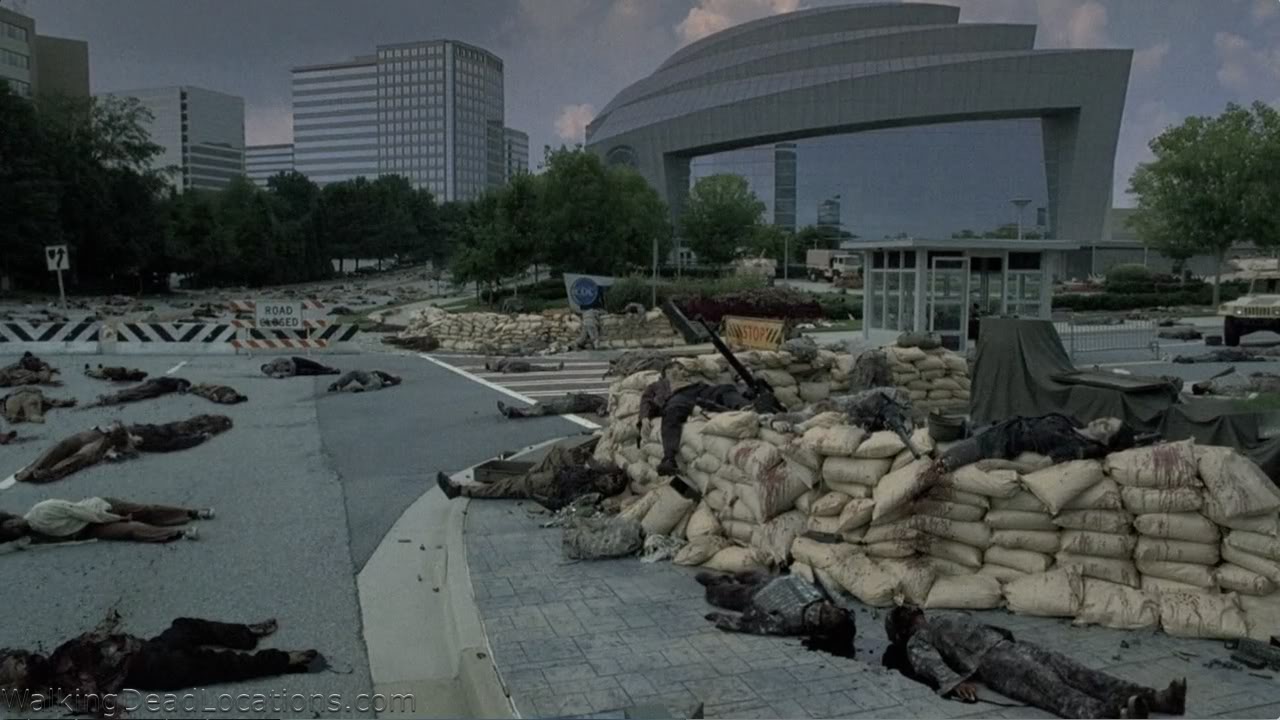
the-walking-dead-cdc1Second, there was the final episode in season one where the camp travels into Atlanta to go to the Center for Disease Control. Personally, I liked this episode best of the first season, so I was a little disappointed to not see it in the comic. But of course, it was easy to see how this episode was expositional. Since the CDC is in Atlanta, the show writers no doubt saw an opportunity to address the disease itself and lend it some mystery and background.

Third, and perhaps most importantly, their was the shuffle they did with characters. In addition to not introducing Tyreese until much later in the series, they also added characters who were not in the original. Daryl and Merle I could understand; these two were colorful, dynamic characters that added to the story. But Tyreese was central to the original story and its dynamic, so dropping him seemed inexplicable.

walking_dead_merle_darylThen there was also the addition of such people as Carol’s husband Ed, who was an abusive butthole, Morales and his wife Miranda, their two kids, Jacqui, and of course T-Dog. With the exception of T-Dog, all of these people died within the few episodes, Jacqui having committed suicide by the end of season one and the latter who lived well into season two but never seemed to get a back story. As a friend of mine said, “he was the highest paid extra in television”.

Between all of these characters, I have to wonder what the point was of including them. Was it just to pad the story? If so, why kill them off so casually? Why not simply incorporate Tyreese, Julie and Chris? Oh yes, and having Daryl and Merle meant there was more time spent in Atlanta, which led to the introduction of the small community of apparent gunmen who were in fact good Samaritans that were protecting a group of senior citizens. Again, a departure, but not a bad one.

Last, but certainly not least, the farm thread was also extended considerably and – in my opinion – unnecessarily. After the showdown at the barn, there was no reason to expect Herschel would allow Rick and his group to stay. But instead, the season went on, introducing a group of roamers that wanted access to Hershel’s farm the moment they learned about it, Rick and Shane’s showdown, and a massive Walker attack that divided the group in two and sent them running.

None of this happened in the original. Rick and his crew packed up and left as one group because Herschel could not bring himself to trust them. What’s more, he and his family did NOT travel with them to the prison. Glenn, however, did stay behind to be with Maggie.

Summary:
And that brings us to the end of part I of this comparative review of Robert Kirkman’s The Walking Dead. Stay tuned for the next installment which will cover volume 3 and 4 of the comic book series and the first half of season three of the show. I was hoping to wrap this up in a two installments – but hey, I’ve got to be realistic!

The Future is Here: Bionic Eye Approved by FDA!

Argus-IIAfter more than 20 years in the making, the Argus II bionic eye was finally approved this past February by the Food and Drug Administration for commercial sale in the US. For people suffering from the rare genetic condition known as retinitis pigmentosa – an inherited, degenerative eye disease that causes severe vision impairment and often blindness – this is certainly good news indeed.

Developed by Second Sight, the Argus II is what is known as a “Retinal Prosthesis System” (RPS) that corrects the main effect of retinitis pigmentosa, which is the diminished ability to distinguish light from dark. While it doesn’t actually restore vision to people who suffer from this condition, it can improve their perceptions of light and dark, and thus identify the movement or location of objects.

argusII_1The Argus II works by using a series of electrodes implanted onto the retina that are wirelessly connected to a video camera mounted on the eyeglasses. The eye-electrodes use electrical impulses transmitted from the camera to stimulate the part of the retina that allows for image perception. By circumventing the parts of the eye effected by the disease, the bionic device is a prosthetic in every sense of the word.

According to Suber S. Huang, director of the University Hospital Eye Institute’s Center for Retina and Macular Disease, the breakthrough treatment is:

 [R]emarkable. The system offers a profound benefit for people who are blind from RP and who currently have no therapy available to them. Argus II allows patients to reclaim their independence and improve their lives.

ArgusIIArgus II boasts 20-plus years of research, three clinical trials, and more than $200 million in private and public investment behind it. Still, the system has been categorized by the FDA as a humanitarian use device, meaning there is a “reasonable assurance” that the device is safe and its “probable benefit outweighs the risk of illness or injury.”

Good news for people with vision impairment, and a big step in the direction of restoring sight. And of course, a possible step on the road to human enhancement and augmentation. As always, every development that is made in the direction of correcting human impairment offers the future possibility of augmenting otherwise unimpaired human beings.

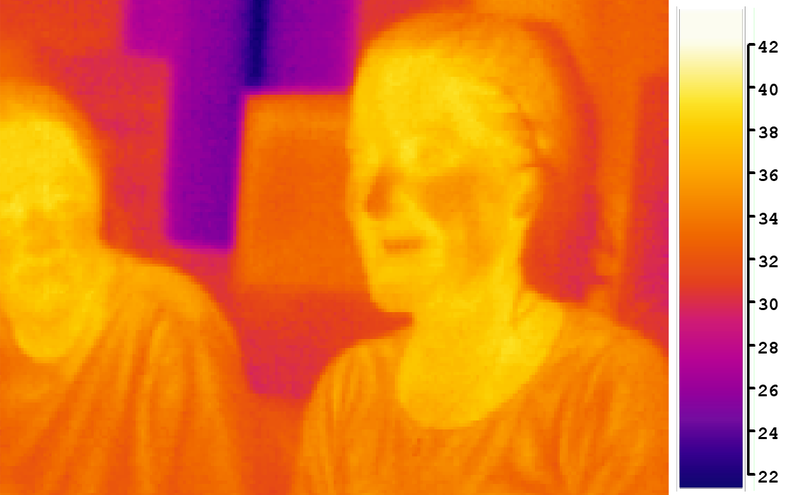
infraredAs such, it might not be long before there are devices that can give the average human the ability to see in the invisible spectrum, such as IR and ultra-violet frequencies. Perhaps also something that can detect x-rays, gamma ray radiation, and other harmful particles. Given that the very definition of cyborg is “a being with both organic and cybernetic parts”, the integration of this device means the birth of the cybernetic age.

And be sure to check out this promotional video by Second Sight showing how the device works:

Source: news.cnet.com

Judgement Day Update: e-David the Painting Robot

robot_bartenderRobots have been making quite the stir in the news lately. And no, that’s not a delicious pun on the robotic bartender – aka. the Makr Shakr, it’s just a frank appraisal of the leap and bounds by which robots and their integration to society is proceeding. Between developing machines that can imitate human movements, human facial expressions, and carry out specialized tasks, it appears that we may actually be on the verge on a world where robots are a common feature.

Just a few days ago, DARPA and Boston Dynamics unveiled their most anthropomorphic robot to date – the Atlas Robot. And this came less than a month after the Global Future 2045 conference took place in Moscow, where Geminoid robot clones – so realistic that they were virtually indistinguishable from their human counterparts – were put on display. And yet, it seems that the Singularitarians and roboticists of the world were not yet finished for the season.

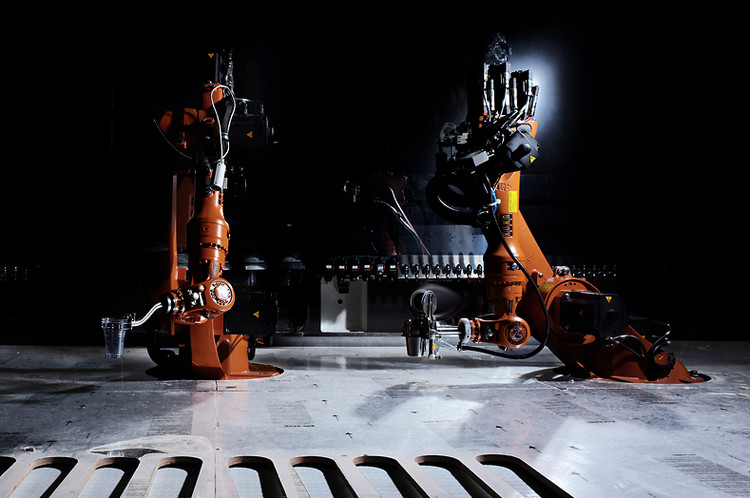
e-DavidNow it appears that there is a robotic arm that is capable of performing another highly-specialized task: painting. Created by a team at the University of Konstanz in Germany, the E-David is capable of performing the artistic variety of painting, not the kind which involves spraying enamel onto car frames – something robots have been doing for decades, much to the chagrin of auto workers.

Granted, it is not capable of “artistic inspiration”, but instead takes a picture of what it wants to copy and takes it from there. What’s more, it e-David doesn’t require programming directions that tell it how to paint, relying instead on a concept known as “visual optimization” to make its own decisions. After each brush stroke, e-David takes a picture, and its software calculates where the next stroke needs to fall, what colors are needed, and whether it needs to be lighter or darker, etc.

e_David1In short, e-David can do the time-consuming and often monotonous task of reproducing original works of art, or cleaning them up, but cannot create someone all on its own. Now lets all join the artists of the world in breathing a collective sigh of relief. The team of university researchers described the e-David’s “process” in a release in which they stated:

We equipped a standard robot with all necessary means for painting. Five different brushes can be used, color can be selected from a repository with 24 colors, brushes can be cleaned, and colors can be distributed precisely on the canvas. The machine watches itself while painting and decides independently where to add new strokes. This way, paintings are created that are not completely defined by the programmer, but are the result of a visual optimization process.

While E-David isn’t the first robot capable of painting, it is in a class by itself when it comes to the quality of the images it creates. Much like the supercomputer Iamus that composed classical music which was performed by the London Symphony Orchestra and recorded on an album, it is impossible to tell when looking at the finished product if the paintings were crafted by hand or machine. An interesting twist on the Turing Test, I think!

What’s next? A robot that can compose pop songs? I don’t think I can stand another version of “Friday”! And be sure to enjoy this video of e-David at work:


Sources: news.cnet.com, (2), fastcoexist.com

Climate Crisis: Coming Trends in CO2

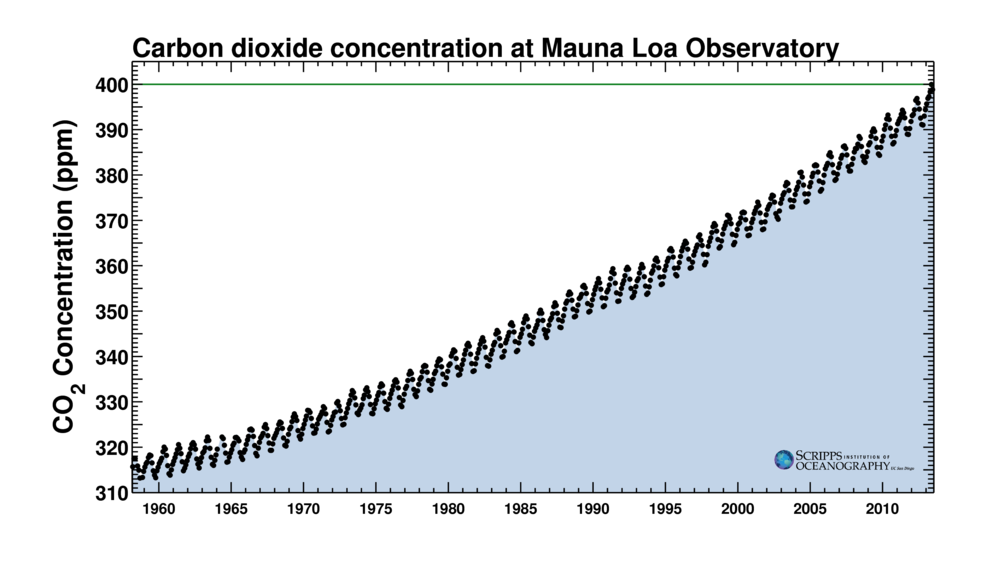
Pollution over Mexico CityGood news everybody! Okay, not exactly good, but it is news, and on a rather important subject. Recently, the National Oceanic and Atmospheric Administration (NOAA) announced that the Manua Loa observatory in Hawaii had recorded atmospheric levels of carbon dioxide which exceeded 400 parts per million. This represented a major milestone, one which climatological researchers and scientists have feared for some time.

However, they have since amended that statement, saying that the readings were a fraction of a point lower at 399.89 ppm. Not exactly a reason to celebrate, and not that surprising either, since individual readings at any of NOAA’s observation stations are subject to revision on a regular basis. And regardless of whether or not the 400 ppm milestone has been passed, scientists are still adamant that this reading is cause for concern.

keeling_curveAs has been stated repeatedly, when it comes to the buildup of human created greenhouse gases, it is the rate of increase which is most important. That rate, which is measured by the Keeling Curve, shows that atmospheric CO2 levels are rising at unprecedented rates, driven largely by the burning of fossil fuels over the past two centuries.

Originally pioneered by scientist Charles D. Keeling in 1958 , this curve is the longest-running tally of carbon dioxide levels in the atmosphere and is maintained by the Scripps Institution of Oceanography in San Diego. The saw-tooth pattern of the incline reflects small seasonal variations within the long-term upward trend, which peak annually around the month of May.

Combining this studies conducted on glacial melting patterns, pollination patterns, geological and oceanographic surveys, a long-term picture emerges. For the past 800,000 years, CO2 levels have never exceeded 300 ppm, and there is no known geologic period in which rates increased as sharply as they are now. That level was at about 280 ppm at the advent of the Industrial Revolution in the 18th century, the period when the burning of fossil fuels began to soar.

trafficScripps geochemist Ralph Keeling, who has taken over the Keeling curve measurement from his late father, had this to say about the news:

I wish it weren’t true, but it looks like the world is going to blow through the 400-ppm level without losing a beat. At this pace we’ll hit 450 ppm within a few decades.

Tim Lueker, an oceanographer and carbon cycle researcher who is a longtime member of the Scripps CO2 Group, also weighed in on the significance of these latest readings:

The 400-ppm threshold is a sobering milestone and should serve as a wake-up call for all of us to support clean-energy technology and reduce emissions of greenhouse gases before it’s too late for our children and grandchildren.

What’s especially frightening about a rating of 400 ppm is the fact that planet Earth has not experienced that kind of CO2 concentration for over 3 million years, during the Pliocene Era. At that time, sea levels were between 60 and 80 feet higher than their current levels. If sea levels rise by this much in the coming decades, roughly 1 billion of the Earths inhabitants will be left homeless.

climate_changetideAdd to this the widespread droughts, wildfires and flooding taking place in inland communities, where unpredictable weather will cause rivers to overflow erode river banks and turn millions more into refugees. And as crops fail due to increased heat and depleted topsoil, the ability to feed the world’s population will also begin to plummet.

Of course, these are the most dire predictions and are often used to remind us just how important it is to clean up our act before its too late. Researching and developing cleaner methods is one approach, as is finding ways to capture the carbon emissions we are generating on a daily basis. But in the end, the greatest weapon in our arsenal is and always will be public awareness.

Consider yourselves informed. Now go spread the word!

In the meantime, enjoy this animated “Carbon Tracker” graph that shows us the time history of atmospheric carbon dioxide – courtesy of the National Oceanic & Atmospheric Administration.


Source:
articles.latimes.com
, esrl.noaa.gov, keelingcurve.ucsd.edu

Judgement Day Update: The DARPA Atlas Robot

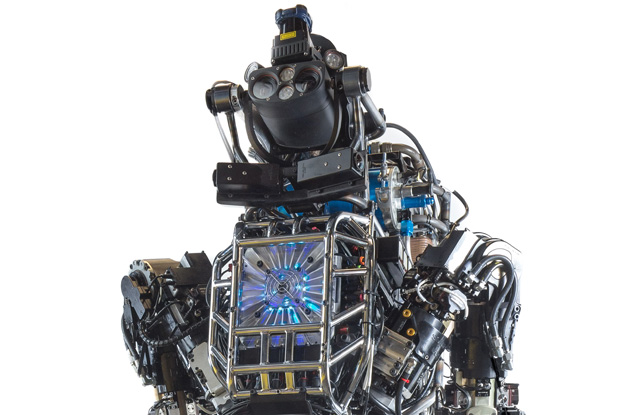
Atlas_robotJudgement Day has come early this year! At least that’s the impression I got when I took a look at this new DARPA prototype for a future robotic infantryman. With its anthropomorphic frame, servomotors and cables, sensor-clustered face, and the shining lights on its chest, this machine just screams Terminator! Yet surprisingly, it is being developed to help humans beings. Yeah, that’s what they said about Skynet, right before it nuked us!

Yes, this 6-foot, 330-pound robot, which was unveiled this past Thursday, was in fact designed as a testbed humanoid for disaster response. Designed to carry tools and tackle rough terrain, this robot – and those like it – are intended to operate in hazardous or disaster-stricken areas, assisting in rescue efforts and performing tasks that would ordinarily endanger the lives of human workers.

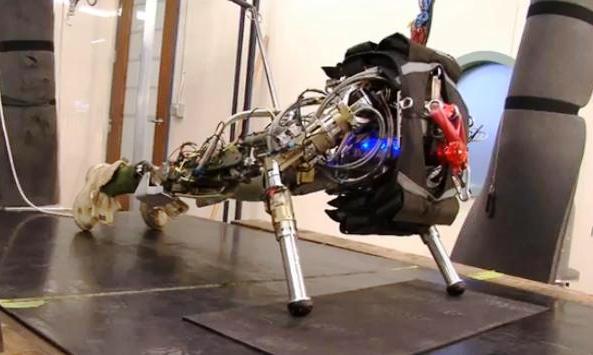
LS3-AlphaDog6reducedFunded by DARPA as part of their Robotics Challenge, the robot was developed by Boston Dynamics, the same people who brought you the AlphaDog – aka the Legged Squad Support System (LS3, pictured above) – and the Petman soldier robot. The former was developed as an all-terrain quadruped robot that could as an infantry-support vehicle by carrying a squad’s heavy ordinance over rough terrain.

The latter, like Atlas, was developed as testbed to see just how anthropomorphic a robot can be – i.e. whether or not it could move, run and jump with fluidity rather than awkward “robot” movements, and handle different surfaces. Some of you may recall seeing a video or two of it doing pushups and running on a treadmill back in 2011.

PetmanAlas, Atlas represents something vastly different and more complex than these other two machines. It was designed to not only walk and carry things, but can travel over rough terrain and climb using its hands and feet. Its head includes stereo cameras and a laser range finder to help it navigate its environment.

And, as Boston Dynamics claimed in a press release, the bot also possesses “sensate hands” that are capable of using human tools, and “28 hydraulically actuated degrees of freedom”. Its only weakness, at present, is the electrical power supply it is tethered to. But other than that, it is the most “human” robot – purely in terms physical capabilities – to date. Not only that, but it also looks pretty badass when seen in this full-profile pic, doesn’t it?

Atlas_4437_shrunk-1373567699341_610x903The DARPA Robotics Challenge is designed to help evolve machines that can cope with disasters and hazardous environments like nuclear power plant accidents. The seven teams currently in the challenge will get their own Atlas bot and then program it until December, when trials will be held at the Homestead Miami Speedway in Florida – where they will be presented with a series of challenges.

In the meantime, check out the video below of the Atlas robot as it demonstrates it full range of motion while busting a move! Then tell me if the robot is any less frightening to you. Can’t help but look at the full-length picture and imagine a plasma cannon in its hands, can you?


Source: news.cnet.com


The 3D Printing Revolution

3D-printing1From the way people have been going on about 3D printing in the past few months, you’d think it was some kind of fad or something! But of course, there’s a reason for that. Far from being a simple prescriptive technology that requires us all to update our software or buy the latest version in order to “stay current”, 3D printing is ushering in a revolution that will literally change the world.

From design models and manufactured products, the range of possibilities is now venturing into printed food and even artificial organs. The potential for growth is undeniable, and the pace at which progress is happening is astounding. And on one of my usual jaunts through the tech journals and video-sharing websites, I found a few more examples of the latest applications.

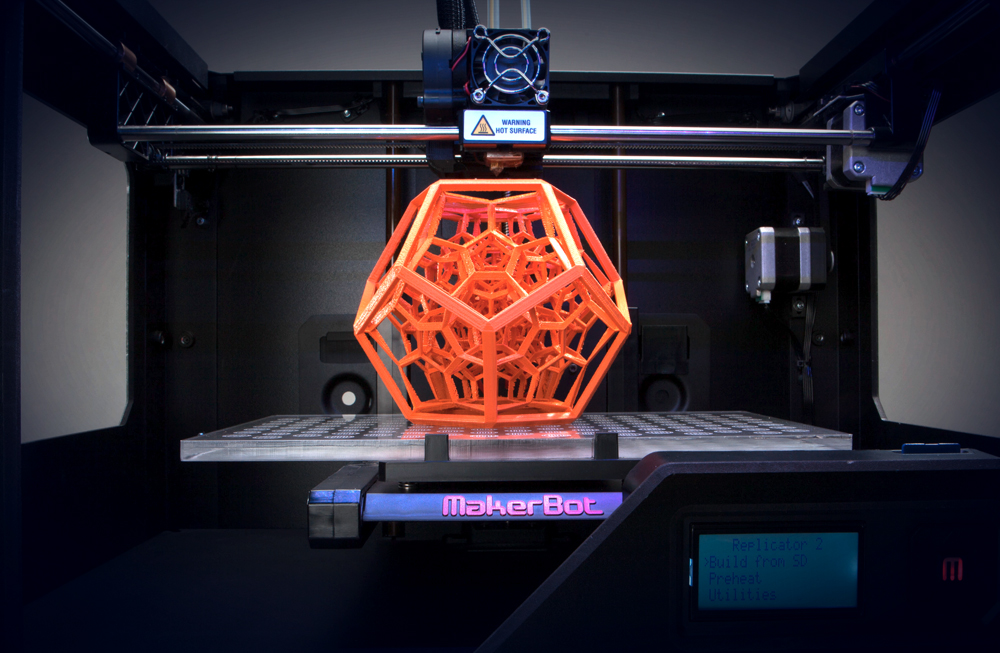
ord_bot_2_2_display_mediumFirst up is this story from Mashable, a social media news source, that discusses NYU student Marko Manriquez’s new invention: the BurritoBot. Essentially a 3D food printer that uses tortillas, salsa, guacamole and other quintessential ingredients, Manriquez’s built this machine for his master’s thesis using open-source hardware – including the ORD bot, a 3D printing mechanical platform (pictured above).

The result is a food printer that an tailor-make Burritos and other Mexican delights, giving users the ability to specify which ingredients they want, in which proportion, and all through an app on their smartphone. No demos available online as of yet, but Mashable provides a pretty good breakdown on how it works, as well as Manrquez’s inspiration and intent behind its creation:


Next up, there’s Cornell University’s food printer that allows users to created desserts. In this CNN video, Chef David Arnold at the French Culinary Institute shows off the printer by creating a chocolate cake, layer by layer, dough and icing. A grad student from Cornell’s Computational Synthesis Lab was on hand to explain that their design is also open-source, with the blueprints and technical design made available online so anyone can build their own.

As Chef Arnold explained, his kitchen has been using the printer to work with ingredients ranging from cookie dough, to icing to masa – the corn meal tortillas are made from. It also allows for a degree of accuracy that many may not possess, while still offering plenty of opportunities to be creative. “The only real limitation now is that the product has to be able to go through a syringe,” he said. “Other than that, skies the limit.”


But even more exciting for some are the opportunities that are now being explored using metals. Using metal powder and an electron beam to form manufactured components, this type of “additive manufacturing” is capable of turning out parts that are amazingly complex, far more so than anything created through the machining-process.

In this next video, the crew from CNNMoney travel to the Oakridge National Lab in Tenessee to speak to the Automation, Manufacturing and Robotics Group. This government-funded lab specializes in making parts that are basically “structures within structures”, the kind of things that are used in advanced prosthetic limbs, machinery, and robots. As they claim, this sort of manufacturing is made possible thanks to the new generation of 3D ABS and metal printers.

Oakridge_natlabWhat’s more, this new process is far more efficient. Compared to old fashioned forms of machining, it consumes less energy and generates far less waste in terms of materials used. And the range of applications is extensive, embracing fields as divergent as robotics and construction to biomedical and aerospace. At present, the only real prohibition is the cost of the equipment itself, but that is expected to come down as 3D printing and additive manufacturers receive more market penetration.


But of course, all of this pales in comparison to the prospect of 3D printed buildings. As Behrokh Khoshnevis – a professor of Industrial & Systems Engineering at USC – explains in this last video from TEDxTalks, conventional construction methods are not only inefficient, labor intensive and dangerous, they may very well be hampering development efforts in the poorer parts of the world.

As anyone with a rudimentary knowledge of poverty and underdevelopment knows, slums and shanty-towns suffer disproportionately from the problems of crime, disease, illiteracy, and infant mortality. Unfortunately, government efforts to create housing in regions where these types of communities are common are restrained by budgets and resource shortages. With one billion people living in shanties and slum-like shelters, a new means of creating shelter needs to be found for the 21st century.

contour-craftingThe solution, according to Khoshnevis, lies in Contour Crafting and Automated Construction –  a process which can create a custom house in just 20 hours! As a proponent of Computer-Assisted Design and Computer-Assisted Manufacturing (CAD/CAM), he sees automated construction as a cost-effective and less labor resource-intensive means of creating homes for these and other people who are likely to live in unsafe, unsanitary conditions.

The technology is already in place, so any claims of that is of a “theoretical nature” are moot. What’s more, such processes are already being designed to construct settlements on the moon, incorporating robotics and 3D printing with advanced computer-assisted simulations. As such, Khoshnevis is hardly alone in advocating similar usages here on planet Earth.

The benefits, as he outlines them, are dignity, safety, and far more sanitary conditions for the inhabitants, as well as the social benefits of breaking the pathological cycle of underdevelopment. Be sure to check out his video below. It’s a bit long, but very enlightening!


Once in awhile, its good to take stock of the future and see that it’s not all creepy robots and questionable inventions. Much of the time, technological progress really does promise to make life better, and not just “more convenient”. It’s also especially good to see how it can be made to improve the lives of all people, rather than perpetuating the gap between the haves and the have nots.

Until next time, keep your heads high and your eyes to the horizon!


Futurama does 3D Printing!

benderIt’s a good day when a show like Futurama begins turning out new episodes. This past week’s featured a story where Bender began taking advantage of 3D printing to create a famous folk singer’s one-of-a-kind guitar. Naturally, things got out of control, and the story was chock full of social commentary and the concept that the printing revolution might actually be ushering an age where artificial replicas could infringe on the real thing.

For the life of me, I can’t find clips of this episode anywhere. Guess it’s too soon to expect anyone to upload it to Youtube, lazy piraters! But I found the next best thing: a time-lapse video of a Bender figurine being printed out on a Maker Bot. It’s set to the extended cut of Futurama’s theme, and the result is a pretty cool replica of the jive-talking, amoral alcoholic robot himself!

Judgement Day Update: Geminoid Robotic Clones

geminoidWe all know it’s coming: the day when machines would be indistinguishable from human beings. And with a robot that is capable of imitating human body language and facial expressions, it seems we are that much closer to realizing it. It’s known as the Geminoid HI-2, a robotic clone of its maker, famed Japanese roboticist Hiroshi Ishiguro.

Ishiguro unveiled his latest creation at this year’s Global Future 2045 conference, an annual get-together for all sorts of cybernetics enthusiasts, life extension researchers, and singularity proponents. As one of the world’s top experts on human-mimicking robots, Ishiguro wants his creations to be as close to human as possible.

avatar_imageAlas, this has been difficult, since human beings tend to fidget and experience involuntary tics and movements. But that’s precisely what his latest bot excels at. Though it still requires a remote controller, the Ishiguro clone has all his idiosyncrasies hard-wired into his frame, and can even give you dirty looks.

geminoidfThis is not the first robot Ishiguro has built, as his female androids Repliee Q1Expo and Geminoid F will attest. But above all, Ishiguro loves to make robotic versions of himself, since one of his chief aims with robotics is to make human proxies. As he said during his talk, “Thanks to my android, when I have two meetings I can be in two places simultaneously.” I honestly think he was only half-joking!

During the presentation, Ishiguro’s robotic clone was on stage with him, where it realistically fidgeted as he pontificated and joked with the audience. The Geminoid was controlled from off-stage, where an unseen technician guided it, and fidgeted, yawned, and made annoyed facial expressions. At the end of the talk, Ishiguro’s clone suddenly jumped to life and told a joke that startled the crowd.

geminoid_uncanny_valleyIn Ishiguro’s eyes, robotic clones can outperform humans at basic human behaviors thanks to modern engineering. And though they are not yet to the point where the term “android” can be applied, he believes it is only a matter of time before they can rival and surpass the real thing. Roboticists and futurists refer to this as the “uncanny valley” – that strange, off-putting feeling people get when robots begin to increasingly resemble humans. If said valley was a physical place, I think we can all agree that Ishiguro would be its damn mayor!

And judging by these latest creations, the time when robots are indistinguishable from humans may be coming sooner than we think. As you can see from the photos, there seems to be very little difference in appearance between his robots and their human counterparts. And those who viewed them live have attested to them being surprisingly life-like. And once they are able to control themselves and have an artificial neural net that can rival a human one in terms of complexity, we can expect them to mimic many of our other idiosyncrasies as well.

As usual, there are those who will respond to this news with anticipation and those who respond with trepidation. Where do you fall? Maybe these videos from the conference of Ishiguro’s inventions in action will help you make up your mind:

Ishiguro Clone:


Geminoid F:

Sources: fastcoexist.com, geminoid.jp

News From Space: First Blue Exoplanet Discovered!

HD_189733_b_deep_blue_dotEver since our astronomers have gained the ability to see into deep space and discern what lies in distant solar systems, a total of 910 extra-solar planets have been discovered. Of those, only a handful have been confirmed as potentially habitable by Earth scientists. Despite these discovered, it was not until recently that a “blue planet” outside of the Solar System, thanks to NASAs Hubble telescope.

But here’s the kicker: as it turns out, the planet is not blue due to the presence of liquid water. The blue color likely comes from clouds in the atmosphere made of molten glass. The planet is known as HD 189733 b, located roughly 63 light years away from Earth in the constellation of Vulpecula (aka. the Fox). Initially discovered in 2005 by French astronomers who observed it passing in front of its star, HD 189733 b is one of the best-studied exoplanets.

Hd189733b_blue_planet_artPrior to this new finding, it was already known that the planet was a hot Jupiter — a massive gas giant that orbits very close to its parent star — and that, using polarimetry, it was most likely blue. Since that time, the blue color has been confirmed by a spectrograph aboard Hubble which scanned the planet during an eclipse. As it passed behind its parent star and out of our vision, Hubble recorded less blue light coming from the star, while the other colors remained the same.

This strongly indicates that the light reflected by HD 189733 b’s atmosphere is blue and thus, if we were close enough to directly observe the planet, it would appear blue. This is an apparent first for astrophysicists and astronomers, who wouldn’t normally be able to observe such a fluctuation from 63 light years away. But the size of the planet, plus the amount of light reflecting off it from its very-close-by star, mean that Hubble can do its thing.

blue_planet_image2-640x660As for the cause of the color itself, the current theory is that the planets atmosphere is full of clouds that contain tiny silicate particles, which absorb some light frequencies but reflect and scatter blue light. In the words of NASA, because the surface of the planet is around  815 Celsius (1,500 Fahrenheit), these particles are likely in a molten, liquid state that periodically turn into rain. Yes, you read that right, the planet experiences periods of molten glass rain!

In addition to that, it is also known that its orbital period (length of a year) is only 2.2 days. The planet is also tidally locked, meaning that one side is always facing towards the sun while the other experiences perpetual night. So basically, outside of its blue color, HD 189733 b is about as uninhabitable as it gets.

Ah well, the search for a truly Earth-like exoplanet continues I guess! And in the meantime, enjoy this short video from Hubble ESA – a computer graphic representation of the universe’s other “blue planet”:

Source: Extremetech.com

300,000 Views!

fireworks1Oh dear. It seems a milestone was passed this week, one which slipped under my nose once again. Ever since I hit 200,000 views, which seemed like forever ago, the milestones have been fewer and further between. You tend to stop keeping track of noticing when they roll around. But when the stock ticker hits a number with five zeroes behind it, you suddenly find yourself taking notice.

And when I did, I noticed some other important milestones had also slipped by unnoticed. For example, back in March  Stories by Williams celebrated its second anniversary. That alone was reason to celebrate, but since that time, the site also surpassed 2000 followers, 5000 comments, and 10,000 likes. Oh yes, and I also passed 1000 posts by a significant margin (1148, as of this posting). Awful lot of number here!

Oh yeah, it was also since the second anniversary – roughly one month later in April – that Whiskey Delta was published and sold over 1300 copies. A special shout out to all those who helped make it possible – Rami, Audrey, Carla (my darling wife-editor), and of course, Mr. Max Brooks himself!

Looking ahead, there’s always plenty more to do. First, I want to publish part II of the zombie-fiction series, Papa Zulu! And of course, there’s a few anthologies to take care, such as Yuva and Flash Forward. And then there’s the ongoing Revengers saga that’s been growing some serious legs of late. And I imagine there will be plenty of science, tech, and pop culture news to share in the meantime…