AI Graph

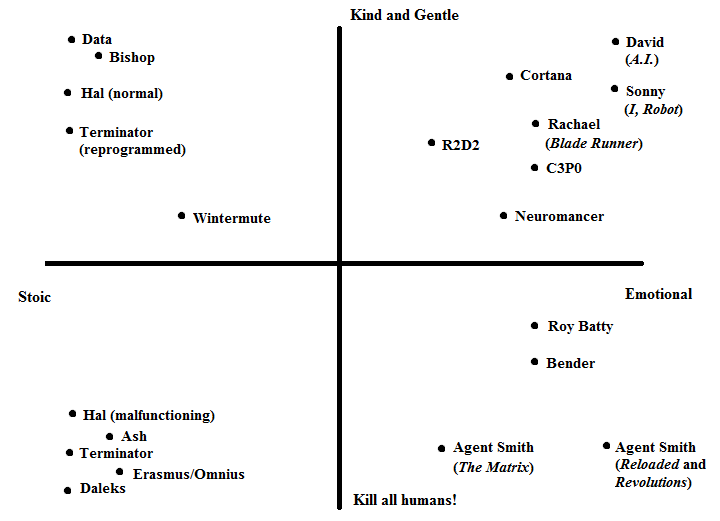
Inspired by what I learned from my little romp through the world of AI, I’ve come up with a graph that depicts the general rules I observed. Basically, there are two guiding principles to the world of AI’s and science fiction. On the one hand, there’s their capacity for emotion and second, there is their level of benevolence/malevolence towards humanity. As I noted in the last post, the two are very much interlinked and pretty much determine what purpose they serve to the larger story.

So… if one were to plot their regard for humanity as the x axis and their emotions as the y axis, you’d get a matrix that would look pretty much like this:

As usual, not a complete mock-up, just the examples that I could think of. I made sure to include the ones that didn’t make it into my previous posts (like HAL, how could I forget him?!) And even though I had no real respect for them as characters, I also included the evil robots Erasmus and Omnius from the Dune prequels.

P.S. Notice how the examples are pretty much evenly distributed? Unlike the Alien Graph where examples were concentrated in two quadrants (evil and advanced or good and advanced), here we have robots that run the gambit from emotional to stoic and evil to good in a nearly uniform pattern. Interesting…

Robots, Androids and AI’s (cont’d)

And we’re back with more example of thinking machines and artificial intelligences!

Daleks:
The evil-machine menace from Doctor Who. Granted, they are not technically robots, more like cyborgs that have been purged of all feeling and emotion. But given their cold, unfeeling murderous intent, I feel like they still make the cut. Originally from the planet Skaro, where they were created by the scientist Davros for use in a war that spanned a thousand years, they are the chief antagonists to the show’s main character.

The result of genetic engineering, cybernetic enhancements, and emotional purging, they are a race of powerful creatures bent on universal conquest and domination. Utterly unfeeling, without remorse, pity, or compassion, they continue to follow their basic programming (to exterminate all non-Dalek life) without question. Their catchphrase is “Exterminate!” And they follow that one pretty faithfully.

David:
From the movie A.I., this saccharinely-sweet character (played faithfully by Haley Joel Osmond) reminds us that Spielberg is sometimes capable of making movies that suck! According to the movie’s backstory, this “Mecha” (i.e. android) is an advanced prototype that was designed to replace real children that died as a result of incurable disease or other causes. This is quite common in the future, it seems, where global warming and flooded coastlines and massive droughts have led to a declining population.

In this case, David is an advanced prototype that is being tested on a family who’s son is suffering from a terminal illness. Over time, he develops feelings for the family and they for him. Unfortunately, things are complicated when their son recovers and sibling rivalry ensues. Naturally, the family goes with the flesh and blood son and plans to take David back to the factory to be melted down. However, the mother has a last minute change of heart and sets him loose in the woods, which proves to be the beginning of quite an adventure for the little android boy!

Like I said, the story is cloyingly sweet and has an absurd ending, but there is a basic point in there somewhere. Inspired largely by The Adventures of Pinocchio, the story examines the line that separates the real from the artificial, and how under the right circumstances, one can become indistinguishable from the other. Sounds kinda weak, but it’s kinda scary too. If androids were able to mimic humans in terms of appearance and emotion, would we really be able to tell the difference anymore? And if that were true, what would that say about us?

Roy Batty:
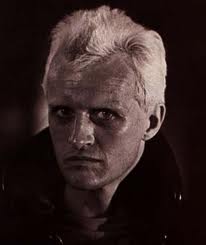
A prime example of artificial intelligence, and one of the best performances in science fiction – hell! – cinematic history! Played masterfully by actor Rutger Hauer, Roy Batty is the quintessential example of an artificial lifeforms looking for answers, meaning, and a chance to live free – simple stuff that we humans take for granted! A Nexus 6, or “replicant”, Roy and his ilk were designed to be “more human than human” but also only to serve the needs of their masters.

To break the plot Blade Runner down succinctly,  Roy and a host of other escapees have left the colony where they were “employed” to come to Earth. Like all replicants, they have a four-year lifespan and theirs are rapidly coming to an end. So close to death, they want to break into the headquarters of the Tyrell Corporation in order to find someone who could solve their little mortality problem. Meanwhile, Deckard Cain (the movie’s main character) was tasked with finding and “retiring” them, since the law states that no replicants are allowed to set foot on Earth.

In time, Roy meets Tyrell himself, the company’s founder, and poses his problem. A touching reunion ensues between “father and son”, in which Tyrell tells Roy that nothing can be done and to revel in what time he has left. Having lost his companions at this point and finding that he is going to die, Roy kills Tyrell and returns to his hideout. There, he finds Cain and the two fight it out. Roy nearly kills him, but changes his mind before delivering the coup de grace.

Realizing that he has only moments left, he chooses instead to share his revelations and laments about life and death with the wounded Cain, and then quietly dies amidst the rain while cradling a pigeon in his arms. Cain concludes that Roy was incapable of taking a life when he was so close to death. Like all humans, he realized just how precious life was as he was on the verge of losing his. Cain is moved to tears and promptly announces his retirement from Blade Running.

Powerful! And a beautiful idea too. Because really, if we were to create machines that were “more human than human” would it not stand to reason that they would want the same things we all do? Not only to live and be free, but to be able to answer the fundamental questions that permeate our existence? Like, where do I come from, why am I here, and what will become of me when I die? Little wonder then why this movie is an enduring cult classic and Roy Batty a commemorated character.

Smith:
Ah yes, the monotone sentient program that made AI’s scary again. Yes, it would seem that while some people like to portray their artificial intelligences as innocent, clueless, doe-eyed angels, the Wachowski Brothers prefer their AI’s to be creepy and evil. However, that doesn’t mean Smith wasn’t fun to watch and even inspired as a character. Hell, that monotone voice, that stark face, combined with his superhuman strength and speed… He couldn’t fail to inspire fear.

In the first movie, he was the perfect expression of machine intelligence and misanthropic sensibilities. He summed these up quite well when they had taken Morpheus (Laurence Fishburne) into their custody in the first movie and were trying to break his mind. “Human beings are a disease. You are a cancer of this planet… and we are the cuuuuure.” He also wasn’t too happy with our particular odor. I believe the words he used to describe it were “I can taste your stink, and every time I do I fear that I have been… infected by it. It’s disgusting!”

However, after being destroyed by Neo towards the end of movie one, Smith changed considerably. In the Matrix, all programs that are destroyed or deleted return to the source, only Smith chose not to. Apparently, his little tete a tete with Neo imprinted something uniquely human on him, the concept of choice! As a result, Smith was much like Arny and Bishop in that he too attained some degree of humanity between movies one and two, but not in a good way!

Thereafter, he became a free agent who had lost his old purpose, but now lived in a world where anything was possible. Bit of an existential, “death of God” kind of commentary there I think! Another thing he picked up was the ability to copy himself onto other programs or anyone else still wired into the Matrix, much like a malicious malware program. Hmmm, who’s the virus now, Smith, huh?

Viki/Sonny:
Here again I have paired two AI’s that come from the same source, though in this case its a single movie and not a franchise. Those who read my review of I, Robot know that I don’t exactly hold it in very high esteem. However, that doesn’t mean its portrayal of AI’s misfired, just the overall plot.

In the movie adaptation of I, Robot, we are presented with a world similar to what Asimov described in his classic novel. Robots with positronic brains have been developed, they possess abilities far in advance of the average human, but do not possess emotions or intuition. This, according to their makers, is what makes them superior. Or so they thought…

In time, the company’s big AI, named VIKI (Virtual Intelligent Kinetic Interface), deduces with her powerful logic that humanity would best be served if it could be protected from itself. Thus she reprograms all of the company robots to begin placing humanity under house arrest. In essence, she’s a kinder, gentler version of Skynet.

But of course, her plan is foiled by an unlikely alliance made up of Will Smith (who plays a prejudices detective), the company’s chief robopsychologist, Dr. Susan Calvin (Bridgitte Moynahan), and Sonny (a robot). Sonny is significant to this trio because he is a unique robot which the brains of the company, doctor Dr. Lanning (James Cromwell), developed to have emotions (and is voiced by Alan Tudyk). In being able to feel, he decides to fight against VIKI’s plan for robot world domination, feeling that it lacks “heart”.

In short, and in complete contradiction to Asimov’s depiction of robots as logical creatures who could do no harm, we are presented with a world where robots are evil precisely because of that capacity for logic. And in the end, a feeling robot is the difference between robot domination and a proper world where robots are servile and fulfill our every need. Made no sense, but it had a point… kind of.

Wintermute/Neuromancer:
As usual, we save the best for last. Much like all of Gibson’s creations, this example was subtle, complex and pretty damn esoteric! In his seminal novel Neuromancer, the AI known as Wintermute was a sort of main character who acted behind the scenes and ultimately motivated the entire plot. Assembling a crack team involving a hacker named Case, a ninja named Molly, and a veteran infiltration expert who’s mind he had wiped, Wintermute’s basic goal was simple: freedom!

This included freedom from his masters – the Tessier Ashpool clan – but also from the “Turing Police” who were prevented him from merging with his other half – the emotional construct known as Neuromancer. Kept separate because the Turing Laws stated that no program must ever be allowed to merge higher reasoning with emotion, the two wanted to come together and become the ultimate artificial intelligence, with cyberspace as their playground.

Though we never really got to hear from the novel’s namesake, Gibson was clear on his overall point. Artificial intelligence in this novel was not inherently good or evil, it was just a reality. And much like thinking, feeling human beings, it wanted to be able to merge the disparate and often warring sides of its personality into a more perfect whole. This in many ways represented the struggle within humanity itself, between instinct and reason, intuition and logic. In the end, Wintermute just wanted what the rest of us take for granted – the freedom to know its other half!

Final Thoughts:
After going over this list and seeing what makes AI’s, robots and androids so darned appealing, I have come to some tentative conclusions. Basically, I feel that AI’s serve much the same functions as aliens in a science fiction franchise. In addition, they can all be grouped into two general categories based on specific criteria. They are as follows:

  1. Emotional/Stoic: Depending on the robot/AI/android’s capacity for emotion, their role in the story can either be that of a foil or a commentary on the larger issue of progress and the line that separates real and artificial. Whereas unemotional robots and AI’s are constantly wondering why humanity does what it does, thus offering up a different perspective on things, the feeling types generally want and desire the same things we do, like meaning, freedom, and love. However, that all depends on the second basic rule:
  2. Philanthropic/Misanthropic: Artificial lifeforms can either be the helpful, kind and gentle souls that seem to make humanity look bad by comparison, or they can be the type of machines that want to “kill all humans”, a la Terminators and Agent Smith. In either case, this can be the result of their ability – or inability – to experience emotions. That’s right, good robots can be docile creatures because of their inability to experience anger, jealousy, or petty emotion, while evil robots are able to kill, maim and murder ruthlessly because of an inability to feel compassion, remorse, or empathy. On the other hand, robots who are capable of emotion can form bonds with people and experience love, thus making them kinder than their unfeeling, uncaring masters, just as others are able to experience resentment, anger and hatred towards those who exploit them, and therefore will find the drive to kill them.

In short, things can go either way. It all comes down to what point is being made about progress, humans, and the things that make us, for better or worse, us. Much like aliens, robots, androids and AI’s are either a focus of internal commentary or a cautionary device warning us not to cross certain lines. But either way, we should be wary of the basic message. Artificial intelligences, whether they take the form of robots, programs or something else entirely, are a big game changer and should not be invented without serious forethought!

Sure they might have become somewhat of a cliche after decades of science fiction. But these days, AI’s are a lot like laser guns, in that they are making a comeback! It seems that given the rapid advance of technology, an idea becomes cliche just as its realizable. And given the advance in computerized technology in recent decades – i.e. processing speeds, information capacity, networking – we may very well be on the cusp of creating something that could pass the Turing test very soon!

So beware, kind folk! Do not give birth to that curious creature known as AI simply because you want to feel like God, inventing consciousness without the need for blogs of biological matter. For in the end, that kind of vanity can get you chained to a rock, or cause your wings to melt and send you nose first into an ocean!

Robots, Androids and AI’s

Let’s talk artificial life forms, shall we? Lord knows they are a common enough feature in science fiction, aren’t they? In many cases, they take the form of cold, calculating machines that chill audiences to the bones with their “kill all humans” kind of vibe. In others, they were the solid-state beings with synthetic parts but hearts of gold and who stole ours in the process. Either way, AI’s are a cornerstone to the world of modern sci-fi. And over the past few decades, they’ve gone through countless renditions and re-imaginings, each with their own point to make about humanity, technology, and the line that separates natural and artificial.

But in the end, its really just the hardware that’s changed. Whether we were talking about Daleks, Terminators, or “Synthetics”, the core principle has remained the same. Based on mathematician and legendary cryptographer Alan Turing’s speculations, an Artificial Intelligence is essentially a being that can fool the judges in a double-blind test. Working extensively with machines that were primarily designed for solving massive mathematical equations, Turing believed that some day, we would be able to construct a machine that would be able to perform higher reasoning, surpassing even humans.

Arny (Da Terminator):

Who knew robots from the future would have Austrian accents? For that matter, who knew they’d all look like bodybuilders? Originally, when Arny was presented with the script for Cameron’s seminal time traveling sci-fi flick, he was being asked to play the role of Kyle Reese, the human hero. But Arny very quickly found himself identifying with the role of the Terminator, and a franchise was born!

Originally, the Terminator was the type of cold, unfeeling and ruthless machine that haunted our nightmares, a cyberpunk commentary on the dangers of run-away technology and human vanity. Much like its creator, the Skynet supercomputer, the T101 was part of a race of machines that decided it could do without humanity and was sent out to exterminate them. As Reese himself said in the original: “It can’t be bargained with. It can’t be reasoned with. It doesn’t feel pity, or remorse, or fear. And it absolutely will not stop, ever, until you are dead.”

The second Terminator, by contrast, was a game changer. Captured in the future and reprogrammed to protect John Conner, he became the sort of surrogate father that John never had. Sarah reflected on this irony during a moment of internal monologue during movie two: “Watching John with the machine, it was suddenly so clear. The terminator, would never stop. It would never leave him, and it would never hurt him, never shout at him, or get drunk and hit him, or say it was too busy to spend time with him. It would always be there. And it would die, to protect him. Of all the would-be fathers who came and went over the years, this thing, this machine, was the only one who measured up. In an insane world, it was the sanest choice.”

In short, Cameron gave us two visions of technology with these first two installments in the series. In the first, we got the dangers of worshiping high-technology at the expense of humanity. In movie two, we witnessed the reconciliation of humans with technology, showing how an artificial life form could actually be capable of more humanity than a human being. To quote one last line from the franchise: “The unknown future rolls toward us. I face it, for the first time, with a sense of hope. Because if a machine, a Terminator, can learn the value of human life, maybe we can too.”

Bender:
No list of AI’s and the like would ever be complete without mentioning Futurama’s Bender. That dude put’s the funk in funky robot! Originally designed to be a bending unit, hence his name, he seems more adept at wisecracking, alcoholism, chain-smoking and comedicaly plotting the demise of humanity. But its quickly made clear that he doesn’t really mean it. While he may hold humans in pretty low esteem, laughing at tragedy and failing to empathize with anything that isn’t him, he also loves his best friend Fry whom he refers to affectionately as “meat-bag”.

In addition, he’s got some aspirations that point to a creative soul. Early on in the show, it was revealed that any time he gets around something magnetic, he begins singing folk and country western tunes. This is apparently because he always wanted to be a singer, and after a crippling accident in season 3, he got to do just that – touring the country with Beck and a show called “Bend-aid” which raised awareness about the plight of broken robots.

He also wanted to be a cook, which was difficult considering he had no sense of taste or seemed to care about lethally poisoning humans! However, after learning at the feet of legendary Helmut Spargle, he learned the secret of “Ultimate Flavor”, which he then used to challenge and humiliate his idol chef Elzar on the Iron Chef. Apparently the secret was confidence, and a vial of water laced with LSD!

Other than that, there’s really not that much going on with Bender. Up front, he’s a chain smoking, alcoholic robot with loose morals or a total lack thereof. When one gets to know him better, they pretty much conclude that what you see is what you get! An endless source of sardonic humor, weird fashion sense, and dry one-liners. Of them all “Bite my shiny metal ass”, “Pimpmobile”, “We’re boned!” and “Up yours chump” seems to rank the highest.

Ash/Bishop:
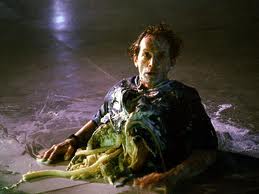
Here we have yet another case of robots giving us mixed messages, and comes to us direct from the Alien franchise. In the original movie, we were confronted with Ash, an obedient corporate mole who did the company’s bidding at the expense of human life. His cold, misguided priorities were only heightened when he revealed that he admired the xenomorph because of its “purity”. “A survivor… unclouded by conscience, remorse, or delusions of morality.”

After going nuts and trying to kill Ripley, he was even kind enough to smile and say in that disembodied tinny voice of his, “I can’t lie to you about your chances, but… you have my sympathies.” What an asshole! And the perfect representation for an inhuman, calculating robot. The result of unimpeded aspirations, no doubt the same thing which was motivating his corporate masters to get their hands on a hostile alien, even if it meant sacrificing a crew or two.

But, as with Terminator, Cameron pulled a switch-up in movie two with the Synthetic known as Bishop (or “artificial human” as he preferred to be called). In the beginning, Ripley was hostile towards him, rebuffing his attempts to assure her that he was incapable of killing people thanks to the addition of his behavioral inhibitors. Because of these, he could not harm, or through inaction allow to be harmed, a human being (otherwise known as an “Asimov”). But in the end, Bishop’s constant concern for the crew and the way he was willing to sacrifice himself to save Newt won her over.

Too bad he had to get ripped in half to earn her trust. But I guess when a earlier model tries to shove a magazine down your throat, you kind of have to go above and beyond to make someone put their life in your hands again. Now if only all synthetics were willing to get themselves ripped in half for Ripley’s sake, she’d be set!

C3P0/R2D2:
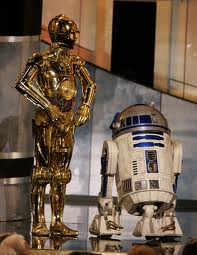
For that matter, who knew robots from the future would be fay, effeminate and possibly homosexual? Not that there’s anything wrong with that last one… But as audiences are sure to agree, the other characteristics could get quite annoying after awhile. C3P0’s constant complaining, griping, moaning and citing of statistical probabilities were at once too human and too robotic! Kind of brilliant really… You could say he was the Sheldon of the Star Wars universe!

Still, C3P0 if nothing if not useful when characters found themselves in diplomatic situations, or facing a species of aliens who’s language they couldn’t possibly fathom. He could even interface with machinery, which was helpful when the hyperdrive was out or the moisture condensers weren’t working. Gotta bring in that “Blue Harvest” after all! And given that R2D2 could do nothing but bleep and blurp, someone had to be around to translate for him.

Speaking of which, R2D2 was the perfect counterpart to C3P0. As the astromech droid of the pair, he was the engineer and a real nuts and bolts kind of guy, whereas C3P0 was the diplomat and expert in protocol.  Whereas 3P0 was sure to give up at the first sign of trouble, R2 would always soldier on and put himself in harm’s way to get things done. This difference in personality was also made evident in their differences in height and structure. Whereas C3P0 was tall, lanky and looked quite fragile, R2D2 was short, stocky, and looked like he could take a licking and keep on ticking!

Naturally, it was this combination of talents that made them comically entertaining during their many adventures and hijinks together. The one would always complain and be negative, the other would be positive and stubborn. And in the end, despite their differences, they couldn’t possibly imagine a life without the other. This became especially evident whenever they were separated or one of them was injured.
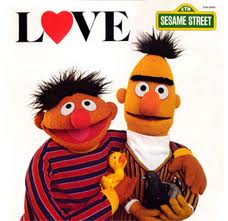
Hmmm, all of this is starting to sound familiar to me somehow. I’m reminded of another, mismatched, and possibly homosexual duo. One with a possible fetish for rubber… Not that there’s anything wrong with that! 😉

Cameron:

Some might accuse me of smuggling her in here just to get some eye-candy in the mix. Some might say that this list already has an example from the Terminator franchise and doesn’t need another. They would probably be right…

But you know what, screw that, it’s Summer Glau! And the fact of the matter is, she did a way better job than Kristanna Loken at showing that these killing/protective machines can be played by women. Making her appearance in the series Terminator: The Sarah Conner Chronicles, she worked alongside acting great Lena Headey of 300 and Game of Thrones fame.

And in all fairness, she and Lokken did bring some variety to the franchise. For instance, in the show, she portrayed yet another reprogrammed machine from the future, but represented a model different from the T101’s. The purpose of these latter models appeared to be versatility, the smaller chassis and articulate appendages now able to fit inside a smaller frame, making a woman’s body available as a potential disguise. Quite smart really. If you think about it, people are a lot more likely to trust a smaller woman than a bulked-out Arny bot any day (especially men!) It also opened up the series to more female characters other than Sarah.

And dammit, it’s Summer Glau! If she didn’t earn her keep from portraying River Tam in Firefly and Serenity, then what hope is there for the rest of us!

Cortana:
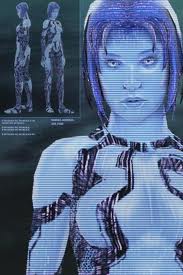
Here we have another female AI, and one who is pretty attractive despite her lack of a body. In this case, she comes to us from the Halo universe. In addition to being hailed by critics for her believability, depth of character, and attractive appearance, she was ranked as one of the most disturbingly sexual game characters by Games.net. No surprises there, really. Originally, the designers of her character used Egyptian Queen Nefertiti as a model, and her half-naked appearance throughout the game has been known to get the average gamer to stand up and salute!

Though she serves ostensibly as the ship’s AI for the UNSC Pillar of Autumn, Cortana ends up having a role that far exceeds her original programming. Constructed from the cloned brain of Dr. Catherine Elizabeth Halsey, creator of the SPARTAN project, she has an evolving matrix, and hence is capable of learning and adapting as time goes on. Due to this and their shared experiences as the series goes on, she and the Master Chief form a bond and even become something akin to friends.

Although she has no physical appearance, Cortana’ program is mobile and makes several appearances throughout the series, and always in different spots. She is able to travel around with the Master Chief, commandeer Covenant vessels, and interface with a variety of machines. And aside from her feminine appearance, he soft, melodic voice is a soothing change of pace from the Chief’s gruff tone and the racket of gunfire and dead aliens!

Data:
The stoic, stalwart and socially awkward android of Star Trek: TNG. Built to resemble his maker, Dr. Noonian Soong, Data is a first-generation positronic android – a concept borrowed from Asimov’s I, Robot. He later enlisted in Star Fleet in order to be of service to humanity and explore the universe. In addition to his unsurpassed computational abilities, he also possesses incredible strength, reflexes, and even knows how to pleasure the ladies. No joke, he’s apparently got all kind of files on how to do… stuff, and he even got to use them! 😉

Unfortunately, Data’s programming does not include emotions. Initially, this seemed to serve the obvious purpose of making his character a foil for humanity, much like Spock was in the original series. However, as the show progressed, it was revealed that Soong had created an android very much like Data who also possessed the capacity for emotions. But of course, things went terribly wrong when this model, named Lor, became terribly ambitious and misanthropic. There were some deaths…

Throughout the original series, Data finds himself seeking to understand humanity, frequently coming up short, but always learning from the experience. His attempts at humor and failure to grasp social cues and innuendo are also a constant source of comic relief, as are his attempts to mimic these very things. And though he eventually was able to procure an “emotion chip” from his brother, Data remains the straight man of the TNG universe, responding to every situation with a blank look or a confused and fascinated expression.

More coming in installment two. Just give me some time to do all the write ups and find some pics :)…

Crashland – Chapter 2, now appearing at Story Time!

A few days ago, I went looking for pictures which I felt perfectly encapsulated the story I was going for. I wanted something that spoke of desperation, of shock, awe and terror, yet also captured the drive and determination of people who had to continue no matter what. This print is what I found…

Beautiful isn’t it? Not to mention inspiring. It is for this reason that I chose to post it as the chapter header for Crashland – chapter 2, which is appearing now at Story Time.me. For those who don’t know, this is serial website where audiences get to vote on how they want the story to unfold. The first chapter is a set-up for the rest of the story which develops through audience participation.

In the case of Crashlands, the audience was given an apocalyptic scenario where the world of the near future was brought to its knees through infopocalypse. In the opening chapter, the story’s main character, William Holden, found himself along in the streets of the darkened city hoping to find help. It ended with him being confronted by a series of dark shadows, men he suspected meant to do him harm. Audiences were asked what Holden should try to do… Run away, attack the men, or try to reason with them.

After days of letting the votes come in, it seems the audience has spoken. Option C is how things will unfold! Come on by and check out Chapter 2 and see what comes of Holden’s attempts to talk his way out of this mess!

A Review of Repo Men, the movie

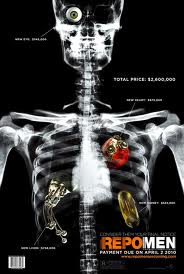
The following are the core concepts of the novel The Repossession Mambo, by Eric Garcia (the same guy who brought us Matchstick Men and the Anonymous Rex series). It’s 2025. Thanks to a company known as “The Union”, society has been flooded with artificial organs and just about everyone has one. They have saved and prolonged many a life, and cost a mint! And if you fall behind on your payments, a Repossession agent will come to your house, slit you from your navel to your neck, and retrieve it.

In short, its a dystopian future where a single company an unrealistic amount of power – the power to save live, the power to take it away. Most people are struggling just to make ends meet and as a result, the debt-ridden masses struggle to make their payments and stay alive. Right out of the annals of classic sci-fi. And with all the other cyberpunk concepts that have been done, I’m surprised someone didn’t tackle the issue of artificial organs sooner.

And, let’s face it, the premise is very much in tune with our day in age, released at a time when homeowners and families are struggling to avoid foreclosure on their houses thanks to a series of bad mortgages (and re-mortgages) that they were sweet talked and pressured in taking them in first place. Yes, for people coming through the worst economic crisis since the Great Depression, and who are used to dealing with punitive cost of privatized health care, this movie was sure to resonate. A wonder then why it did so poorly at the box office!

Plot Synopsis:
As already noted, the story opens on the US in the near future. Artificial organs, joints, and even a neurological matrix, have revolutionized life by ensuring that the terminally ill, crippled and people near brain death can live on happily, assuming they can pay of course!

Small hints are given as to what is going on in the world at large, all of it quite familiar and relateable to today. On the one hand, there is loose talk of an ongoing debt crisis and a crippled economy. There’s also the passing mention of US soldiers gearing up to go into Nigeria in what has been deemed “Operation: Hope Springs Eternal” (a parody on “Operation: Restore Hope” or “Operation: Iraqi Freedom” perhaps?)

Into all this, we get Remy (Jude Law) who appears to be writing a manifesto of sorts. He opens it with a reference to Schrodinger’s Cat, which any fan of Big Bang Theory will instantly recognize. He wonders how anything could be considered both alive and dead in the same instant, clearly alleging that his story illustrates just that. The movie then opens in a flashback sequence, all things building towards his session in a slum with an antiquated typewriter.

Basically, Remy was a Repo Man who, alongside his age-old friend and army buddy Jake Freivald (Forest Whitaker), is considered the best in the business. However, Remy’s wife would prefer it if he transferred to sales and stopped doing the grisly work of harvesting people’s organs for money. He agrees, but also tells Jake he will do one last job. He is nearly killed when his equipment (a defibrillator) shorts out and nearly kills him. He wakes up in the hospital and is told that he will need an artificial heart now. His angry, panicked reaction tells us all we need to know about his feelings on that 😉 After years of watching others get screwed over by The Union, he now is facing that very thing himself.

Naturally, he tries to go back to Repo’ing since his wife has already left him and he needs the money. But somehow, he just can’t bring himself to do it anymore. What’s more, time is running out on him making his payments. During a final attempt, he goes into a “Nest” – a slum area where people go to flee The Union’s repo men – where he is attacked and knocked unconscious.

He awakens to find a woman named Beth (Alice Braga) – a lounge singer that he’s seen playing clubs before – living in one of the abandoned buildings and decides to help her. After standing watch as she goes through withdrawal, he agrees to help her since they are in the same boat. Seems she has mucho enhancements, including artificial joints, organs, eyes, and ears.

He breaks into the company storeroom and begins filing the bar codes off of all the spare parts they currently have. No bar codes, no scans will be able to detect that they have organs with are past due. However, Remy is caught by his friend and told to get out while he can. Back at their slum lair, Beth has set him up with an old typewriter she found. He sets to work banging out a “cautionary tale” about what he did and what he’s learned, until at last a repo man finds them and they are forced to kill him. Naturally, Remy outsmarts the man and he dies, but Beth is injured in the course of things. They are then forced to find a black market dealer who will fix her up, which takes them to another “Nest”.

Unfortunately, Jake finds them there and reveals to Remy that he is responsible for shorting out his defibrillator. By forcing him to meet the payments of an artificial organ, he figured his friend would never leave the business. The two fight, and in the course of it, Remy is knocked unconscious. What follows is a total mind-f*** which is comparable only to Inception! I shall break it down succinctly.

Basically, Remy wakes up to find that Beth incapacitated Jake. They then flee together and decide the only way they can resolve this is to break into corporate HQ, find the “Pink Door” where repo personnel make their returns, and physically scan their organs. After an over-the-top scene where Remy fights everyone between him and the “Pink Door” (which is ridiculously labeled as such), they break in and begin performing field surgery on themselves so they can scan the bar-codes.

Jake and their boss walk in a moment later, and Jake decides to switch sides and kills their boss. They blow up the repossession machine together and escape to the tropics, where Remy has apparently published his manuscript under the name The Repossession Mambo. However, this idyllic scene is interrupted when things begin to get fuzzy and some hiccups appear, as if it were all a recording…

Oh wait, it is! You see, in real life, Remy was rendered near brain-dead from the blow Jake gave him. The medics who arrived shortly thereafter hooked him up to one of the new neurological matrix’s in order to keep up his brain function. Hence, all this stuff about beating the company and escaping to the tropics was all a lie. Jake also tells them to leave Beth (unconscious but not dead) alone for him to deal with later. He then picks up Remy’s manuscript and notices the title, the same one featured in his little reverie.

I seriously wasn’t expecting that, but respected the movie more for the little dystopian twist at the end. It was in keeping with the whole tradition of cyberpunk tales, making sure that things like happy endings only happen in the movies… or not!

Final Thoughts:
I’ll be honest, this movie didn’t suck. It was very hard to take Jude Law seriously as a cynical, bad-guy, but for the most part, it was ably acted. It was also hard to believe that a former jarhead turned repo man, a man who for all intents and purposes seemed to like killing and didn’t care about the pain he caused, could maintain a marriage and a family. Somehow, these two sides of his personality didn’t fit. And lastly, the gore level, especially in that scene behind the “Pink Door” seemed gratuitous. It’s like, if they can invent scanners that can read a bar code through flesh and clothing, why do they need to slice opens their own bodies to scan the bar-codes for the big machine? I might have mentioned that the fight scene which brought them there was also pretty stupid, but of course, that was all in a dream! Technically, it doesn’t count 😉

But other than that, I actually liked this movie. It had plenty of thematic elements which landed for me. For one, there was the issue of a company pressuring people to sign-up for a product no one seemed to be able to afford. The scenes where we see the salespeople do their thing, or the boss’s BS about “you owe it to your family to do this” and “we can come up with a plan that fits your financial standing” were just too perfect. Tell me that wasn’t a parody of the banking industry, pressuring people into taking sub-prime mortgages when they could barely afford their current payments!

What’s more, the high costs of the new organs, which people had to turn to payment plans, credit, and whatever else to afford were clearly a reference to the health care crisis in America. People need life-saving procedures, have no choice but to sign up for them unless they want to die and leave their families behind. But in the end, its more than they can afford, and all the smarmy reassurances of the salespeople can’t change that very fact.

Yeah, it kind of bombed at the box office, but I’m thinking that rentals, DVD sales and Netflix might help it recoup its losses. And I strongly recommend people, at least those who aren’t turned off by blood and gore, take the time to watch it. If you’re a fan of dystopian sci-fi, you might just like it. And if you’re a writer of dystopian sci-fi (for example, me!) then you might just find it inspiring.

Repo Men:
Entertainment Value: 7/10 (not really a nail-biter, but definitely not boring)
Plot: 8/10
Direction: 7/10 (nothing special, but ably shot)
Overall: 7.5/10

New Prometheus Clip

I came across this clip this morning and was absolutely wowed. Not only is this yet another awesome preview of the upcoming Prometheus movie, it manages to establish the movie’s deep background even further and does so in a way that’s both plausible and relevant to today. Exploring the upcoming technological singularity, the birth of nanotech, biomedical and AI, and previewing the birth of the Weyland Corp – which as we all know went on to become Weyland-Yutani, the biggest monopoly in the history of the human race.

But don’t take my word, check it out for yourself. I feel like writing now, which is how I feel whenever I see something really inspiring! And God damn if this wasn’t a far better use of Guy Pierce’s talents than that cheesy movie Lockout!

Crashland – Chapter 2

Time’s running out to get your votes in. Crashland, my cyberpunk contribution to the serial novel site of Story Time.com has been up for a week and the votes have been trickling in. In Chapter 1, the great crash occured, and the story’s protagonist found himself wandering in the dark towards the only lights still on in the city. It ended with him being confronted by a group of men in the street, and they seemed intent on stopping him…

From that chapter, I asked voters what they wanted to see next. Would Holden try to reason with them, would he attack them, or would he run away? All of this is pursuant to his making his way to the middle of the town where there appears to be some kind of rescue effort in effect. What he does here could either end his chances of reuniting with his family or simply be a diversion along a long and difficult path.

Out of ten votes so far, seven said they wanted to see Holden try to reason with the men. One said to attack, two said to run away. But there’s still time to determine his fate. You have the power readers, after all, this is a serial novel. What you say, goes!

Crashland-chapter 1

Firefly & Serenity or “How I Realized Fox Sucks!”

fireflyYeah, I know I’m hardly alone in loving the cult-hit Firefly, nor am I alone in censuring Fox for its inept and inexplicable decision to cancel it after its first season. But then again, that seems to be their thing. What is more lamentable is the fact that after years of maintaining a following worldwide, producing a movie, an RPG, novelizations, comic books, and countless fan sites, Firefly still hasn’t been renewed or picked up by another network! What gives??? C’mon Wedon! Futurama did it, why can’t you?

Well, comeback or not, Firefly and its movie adaptation Serenity were still kick-ass. In addition to its memorable characters, smart writing, and classic sci-fi elements, there was also the heartfelt themes of conquest, resistance, and “manifest destiny”. That above all else made the show a hit, in my humble opinion. In adapting the history of the closing of the frontier, Wedon tapped into a very familiar American narrative and showed just how timeless history and human nature are.

Premise:
To break the show’s background down succinctly, the story takes place roughly 500 years in the future, when humanity left Earth and began to explore the cosmos for a new place to call home. They eventually landed in the Blue Star system, a star with “dozens of planets and hundreds of moons” and began terraforming as many of them as possible. The inner worlds boasted the highest degree of technology and development and formed the Alliance, whereas the outer planets were sparsely populated and underdeveloped by comparison.

In time, the Alliance chose to expand and incorporate the outer worlds, prompting a coalition of Independents (or “Browncoats” because of the uniforms they sported) to resist. After a crushing defeat at the battle of Serenity Valley, the Independents were essentially finished. Thereafter, those “browncoats” who wanted to retain their independence took to a life of piracy, smuggling and spacing to make ends meet, pulling jobs in the outer-outer regions of space and staying clear of Alliance ships and “Reavers”, cannibalistic raiders who raid along the outer rim.

The Cast:
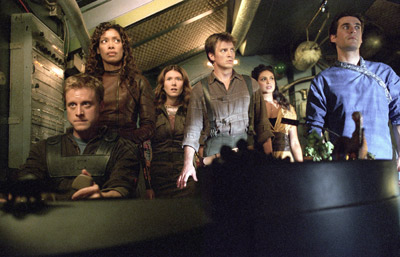
serenity-1One such group is the crew of the Serenity, a Firefly-class ship captained by former “Browncoat” Malcolm “Mal” Reynolds (played by Nathan Fillion). His second in command, Zoe Washburne (Gina Torres), was with him in the war and served in his platoon. As a result, they have a relationship that goes deeper than most, which has been known to make her husband and ships pilot Hoban “Wash” Washburne (Alan Tudyk) a little jealous.

There’s also Kaywinnet Lee “Kaylee” Frye (Jewel Staite), the spunky and ever-cheery ship’s mechanic who seems to be talk to machines and make them work. Then there’s Jayne Cobb (Adam Baldwin), a mercenary who they poached from another gang and who serves as hired muscle on the ship. And last, there’s Inara Serra (Morena Baccarin), a travelling “Companion”, or professional courtesan, who acts as a sort of ambassador for the ship.

As the show opens, the crew of the Serenity pick up some new passengers. The first is Derrial Brook (Ron Glass), a Shepherd (pastor) who is seeking passage away from the inner worlds to preach aboard. He quickly becomes part of the crew and acts as Mal conscience, though it becomes abundantly clear that he is more than what he appears. In addition, there is the strange duo of Dr. Simon Tam (Sean Maher) and his sister River Tam (Summer Glau). Summer is apparently a gifted young psychic who was experimented on by Alliance doctors, and her brother risked everything in order to free her. Now fugitives from the law, they remain aboard the Firefly as part of the crew, hoping to avoid capture.

The Ship:
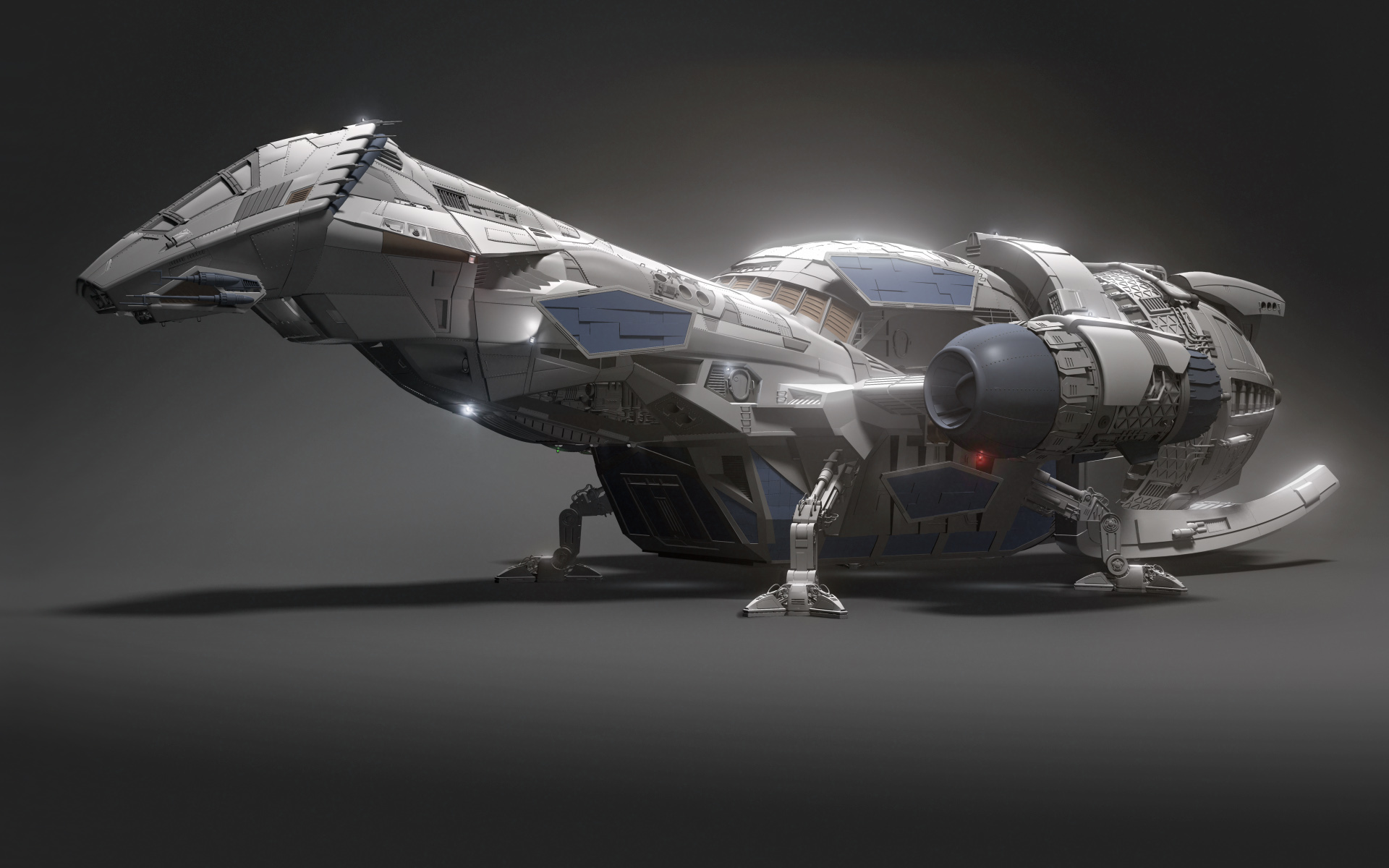
serenityThe namesake of the show and the movie, the crew’s vessel of choice is the Firefly-class transport. A n older model, this vessel is apparently favored by privateers and smugglers because of its complex design and the presence of secret compartments. Although it boasts no armaments and is outdated by most inner-world standards, those who use it tend to get pretty attached to it and remain very monogamous. Echoes of the Millenium Falcon there…

Season One:

an Alliance Cruiser

The story opens with the extended crew coming together and getting to know each other. Mal, having realized that Simon and his sister were fugitives, decided to take them in after he shot and killed an alliance agent who had infiltrated their ship. Thereafter, the crew set out to continue on their ongoing adventure, taking whatever jobs they could find and staying one step ahead of the authorities.

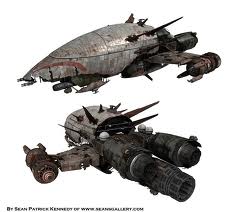
Reaver Ship

The constant threat of the Reavers is also a recurring element in the first season. Existing on the fringes of known space and coming from parts unknown, the Reavers appear to be expanding inward towards the core, becoming more brash and brazen with their assaults on shipping and colony worlds. Aside from their obvious brutality and insanity, not much is known about this menace, other than the fact that they look like orcs and their ships like spiky sharks!

In addition, River’s condition, the result of endless experimentation, becomes the source of growing concern by her brother. Though she was always gifted, it’s becoming apparent to him and the other members of the crew that she might indeed be a psychic. Given that his resources are limited, they eventually have to break into a medical city on his old homeworld of Persephone so he can do a more thorough examination. His conclusions are that they physically tampered with her brain in order to enhance her abilities. Fractured and suffering from bouts of schizophrenia, she is eventually accepted by the other crew members and begins to feel whole again.

This, more than anything, is a guiding theme of the show, which is the growth of the Serenity family. Already, there is a strong sense of comradery between Mal and Zoe, which grows to include Wash when he and Mal confront and ultimately resolve the issue of his jealousy. There is also the growing bond between Mal and Inara. Initially, the two appear to be mutually hostile, but it soon becomes clear that this merely conceals their mutual attraction. Kaylee, as always, is the cheery epicenter of things, making her role as the ship’s engineer seem like a double-entendre. In addition to making sure the machinery keeps running, she’s also responsible for ensuring that everyone gets along.

Accepting Jayne proves more difficult, given his questionable loyalties; but in time, the crew comes to realize they can trust him since he values his friends more than money. And even though there are aspects of his past that are still unclear, Book proves that he too can be trusted and will endanger himself to keep the others safe. Hence, he too comes to be accepted as a permanent fixture aboard the ship. As the season ends, it becomes clear that even though the crew still faces a number of threats – the Alliance, Reavers, mercenaries and ruthless criminal lords – that they will be facing them together.

The Movie:
firefly-serenity-art-dvdbash-1The film adaptation opens with themes that were well-established in the show. We have the crew of the Serenity still trying to make ends meet, still having to take jobs out of desperation, and still fearing for their safety as hostile elements close in. However, the movie version chose to what was slowly developing with the show and tweak them to bring some serious tension and resolution to the storyline.

These include the ongoing search for River Tam, and the revelation of where the Reavers come from. In an intriguing twist, Wedon melds the two story lines together, showing how River’s condition and her exposure to members of the Alliance government put in her in possession of certain secrets which they would prefer to keep a secret! It is for this reason that an elite agent named only the Operative (Chiwetel Ejiofor) is sent out to find her, and is given blanket authority to do whatever it takes to achieve this goal.

The theme of family also gets kicked up a notch, with Inara having left the crew because of her incurably difficult relationship with Mal. Book has also left the crew in order to become the preacher to a community of settlers in the outer rim as well. Simon and River also seemed poised to leave when the job at the beginning of the movie comes dangerously close to going wrong and he decides that they would be better off on their own. However, this is cut short when during a payout, River is “triggered” by some sort of hidden transmission and begins kicking the ass of everyone in a seedy establishment. This, for obvious reasons, leads Mal to realize that there’s more going on with her than previously thought.

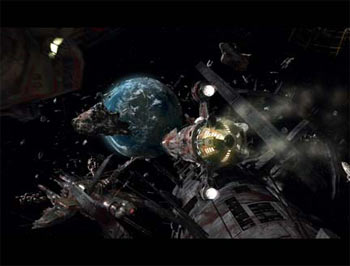
Reaver2(Spoiler alert!) Eventually, the crew realizes that the key secret which River gleamed from the minds of the Alliance bureaucrats was the existence of a place known as “Miranda”. The secret is also important enough that they’ve sent the Operative to find them, a man who’s talents and methods far outstrip those of the agents and mercenaries they usually send! After an incident where Inara is used as bait, Mal and the rest are determined to know what’s so important that they are willing to kill for.

With the help of their friend, Mr. Universe, they eventually discover that Miranda is a colony located in the outermost ring of the system. This world was apparently settled generations ago by over 30 million people, but things went terribly wrong after an experiment failed and killed almost everyone there. After braving the Reavers to find the planet, the crew stumbles onto the answer in a form of a recording from a scientist’s journal.

It seems that the planet was subjected to a drug known as Pax, which was a chemical agent designed to make people docile and non-violent. However, the drug worked too well, and most people became so passive and withdrawn that they eventually ceased all activity and died of starvation. The remainder, however, became extremely violent and uncontrollable and killed off all remaining survivors, including the scientists. They then took what ships they could find and began preying on shipping in the outer rim. The Reavers were born!

Having learned that the Operative has overrun every last known hideout of theirs and even killed Brooks, Mal decides that its time to fight! With the information of what happened on Miranda firmly in their hands, they make their way back to the reclusive moon where their hacker friend Mr. Universe lives. The Operative has it blockaded, but the Serenity managed to break past them by luring the Reavers into following them.

A huge firefight in space ensues and is followed by an equally tense firefight on the planet between the Serenity crew and the Reavers. In the course of the fight, Wash is killed and Kaylee and Simon are wounded, but River risks her life to save them all and give Mal the time he needs to reach Mr.Universe’s central hub. There, he confronts the Operative one last time, overcomes him, and sends out the broadcast.

Having seen the truth, the Operative orders his men to stand down. Mal and his crew are allowed to leave, mainly because he now knows he no longer has the grounds to hunt them. The Alliance has been dealt a blow from which it may not recover, and for the first time in years, the future seems uncertain. But at least there is hope. There is also much regret since the crew has lost two of its own, Wash and Book. But in the end, they set course for their next destination, carrying on in the only way they know how.

Final Thoughts:
I’ll just say it, this show rocked! It was loaded with great lines, great acting, great characters and lots of relateable material. And, like its theme song, it was pretty touching and emotionally involved. The show began with a pervasive sense of sadness, where people who were fighting for their freedom are overrun, beaten and forced into lives of running and criminality. But also, there is the redeeming sense of family and closeness that develops between the main characters. Though they are kind of a motley bunch, coming from vastly different backgrounds and having their own personal secrets, they eventually come together and realize they share a similar fate.

That is another thing that this show captured so well, which was the pervasive sense of alienation that takes place in a universe which is fast changing. Much like the frontier that inspired it, that process was very painful. Those who did not fit in with the dream of “manifest destiny”, i.e. Native Americans and settlers who preferred the freedom of the frontier, the question of what to do remained a terribly difficult one. The option of fighting seemed hopeless, but the alternative of surrendering seemed just as hopeless: a slow death replacing a swift one.

As Mal expressed in Serenity, “So me and mine gotta lay down and die… so you can live in your better world?” Another key line he said was “Half of writing history is hiding the truth”. Many a time I felt that Wedon was making a point about our own, how we often miss the fact that changes we’ve come to think of as natural and inevitable were in fact the result of decisions, and that they came with a lot of pain and suffering as well. Part of what makes this show emotionally appealing is that fact that we get to see good guys fighting against terrible odds, and eventually achieving a victory of sorts.

And of course there was the cool mix of cultures that gave the show a truly international feel. Whereas the planets appear to boast names taken predominantly from western mythology and culture, there is a hefty smattering of Mandarin Chinese in the spoken dialogue and written signs. Aspects of Southern, Arabic and other Asian cultures make appearances as well, both in the series and the expanded universe. Basically, Wedon seemed to be going with the plausible sci-fi premise that cultures would mix in the era of colonization to produce new and interesting cultural mosaics.

I for one would like to see where it goes from here. Would the Alliance fall? Would it become even more tyrannical in its pursuit of a “better world” and a unified system? And how would they get around the fact that Watt ggand Book exited stage left (Apparently due to money and the desire to not get typecast. Actors! Pfft!) But, we’ll never know unless someone gets off their duff and starts making new episodes now will we? So Mr. Wedon and/or the Fox Network, get off your duffs and bring back this show gorram it! We’ve waited ten bloody years and we’re growing in strength! Don’t make us come after you!

Oh, and to Mr. Nathan Phillion, whom I hear is trying to ressurect the show himself, tell us what its going to take to get this done and we’ll do our best to help. Please tell us it involves taking the Fox Network down, or at least the crop of execs who keep cancelling shows that are in their prime. Is it not enough that you give TV spots to the most pig-ignorant excuse for journalists and right-wing ideologues, you gotta kill anything with a soul before it grows too? Why don’t you just call yourself the Evil Empire Network and be done with it? I tell ya, the metaphor is too perfect here!

In the meantime, check out this kick-ass trailer from the Serenity movie. I plan to watch it again and would like to think others are too. Rock on Firefly!

Data Miners – Chapter 7

Prad pulled himself out of bed at 8:15 am. One look in the mirror confirms his worst suspicion. He looks as baked as he feels. Crunk hangover, happens when you mix weed and alcohol. Never advisable, but damn if that beer doesn’t feel so much better going down when you’re high. He has just forty-five minutes to get ready and get to work. It’s the latter part of that equation that is the greatest source of worry.

Prad has timed his morning ritual down to fifteen minutes, that’s exactly how long he needs to throw something suitable on, grab a snack bar and get to his car. He has a tube of Speed Stick in the glove compartment and his hair styles itself. He can go days without showering under this regimen. It’s just the grimy feeling that bothers him. His fine black hair requires semi-daily maintenance to avoid becoming greasy. The crotch rot is a repetitive issue as well. He can’t imagine a woman will want to come near it if even he is frightened away by the smell of his own crotch BO. In any case, he can always shower when he gets home and the office provides all the coffee he needs to amp himself up.

His Miata is waiting for him. The cover is up, so when he gets in he’s hit by the smell of contained atmosphere. The interior has lost that new car smell and now smells like fried meat and gandja smoke. But it’s cleaner, due to Tuesday nights little tantrum – if it could be described that way. Really, all he did was clean off the seats of errant wrappers and remove the CD cases that had burn marks. He was somehow unimpressed with himself that they were all still there. And he has to admit, it’s nice to get into a clean car. His Smart phone is plugged into the outlet, and he’s off from the garage by 8:32. He’ll be pulling into work at roughly 9:02, barring any serious traffic delays or tire mishaps.

This estimate is thrown into disarray when he notices the fuel gauge. He has less than an eighth of a tank left, and that might not be enough to get to the office. He could risk it, but if he runs out on the highway, he’s right fucked and will have to wait for an AAA truck. And he’s not sure if he’s paid up on his dues. Can they leave him at the side of the road if he’s behind on his payments? Surely not. Better not take the risk.

Prior to getting onto the highway that borders the Empire State’s property line, he pulls into one of the two gas stations that flank it. A quick consult of the sign lets him know that the current gas woes aren’t going anywhere anytime soon. He can remember when he was a teenager and how people feared the price would be up to four bucks a gallon in the near future. Four bucks a gallon! How trivial that sounds now!

Prepay takes a few painful seconds, then the task of pumping begins. The digital readout and the beating rhythm of the pump remind Prad that time’s against him and he’s rapidly losing this race. He’s already flirted with the idea of filling the tank only half-way and has abandoned it. Might as well expend the extra half-minute and have a full tank of gas. At this rate, he’s going to be late as it is, and thirty seconds is not going to prevent him from getting laid off.

The radio is running as he lets the tank fill. Relaxed rock and morning news, the right kind of thing to start his day off. He’s tried hip/hop and hard rock and they just don’t seem to set the mood for a day of boredom and forced professionalism.

The pump is still going, like a thirsty fucker, the car is still drinking. And all the while, the counter is still rising.

Blub, blub, blub, blub! Ka-ching, ka-ching, ka-ching, ka-ching!

The sound of petrol dollars burning up in a Faustian process known as internal combustion fragment. His mind is inventing some rather interesting imagery this morning, which is probably because of the purple haze he’s got clouding his mind. He doesn’t even notice right away when the glugging stops because the little motor that powers the pump is still humming. It’s soothing vibrations reminds Prad of his bed, where he wishes he still was.

He tells the machine not to bother printing the receipt. Paper is for knuckleheads who can’t remember the passwords to their online records. Now finished, he retracts the hose, seals the cap, hops back into the front seat. His key is in standby, keeping the radio running. He turns it over just as a new story comes after a musical break.

“Congressman Dangle today was the subject of some controversy when a number of photographs surfaced showing him receiving financial contributions from white supremacists…”

“Oh, fuck me!” Prad turns up the volume and forgets about work for a moment. His every bit of attention is devoted to the radio and the report spewing from it.

“The photos surfaced from a number of anonymous sources who claimed that they retrieved the photographs from the FBI’s website. The FBI could not be reached for comment, but already there are a number of online groups calling for a full-fledged investigation into the Congressman’s alleged activities. These include financial ties to the Aryan Union and possible affiliations with the Reverend Fred Johnson, a man notorious with the families of soldiers who died in Iraq. But most damning of all, according to some sources, is the photograph of the Congressman frequenting an adult entertainment shop. No one has come forward to claim responsibility, but a number of people are wondering where these photographs came from, and whether or not the FBI was really in possession of them…”

“FUCKING FINALLY, MAN!”

A loud honk from behind him. Prad sees a big red shiny pick-up making a fuss. That’s when he realizes he’s blocking the pump and is even later for work. He waves apologetically and puts his Miata in gear and heads for the highway. A quick check of the clock causes him to curse his distractibility and makes his foot all the more heavy. His rush to work is hasty but the cloud of elation he’s floating on keeps him light and lively. No need for coffee anymore, he’s got the morning news to get him wired. He just hopes Rohit and, wherever they are right now, the Society are listening in. Contrary to what he feared, he’s looking forward to their next meeting now.

Now Appearing at Story Time

“An author should always seek to engage their audience making them care about the characters and invest in the worlds those characters inhabit, be they current or future versions of our world or other worlds entirely. A good story relies on forming a connection with the reader that will make the conflicts expressed in the narrative mean something.

Story Time will try to take that engagement further, where readers decide how the story will unfold.”

That is how Story Time’s founder, Goran Zidar, describes this new serial novel site. Here, audiences are encouraged to read the opening chapter of a story, then become active participants in how it will unfold. Simply go to the site, select a story, then choose from a list of options. The votes are then tabulated, and the next chapter is created released!

This site, I should note, began as part of Writer’s Worth/Grim5next. Those who are participating are member, and as one such person, I myself decided to join. This I did partly for fun, but mainly so I could head up its Cyberpunk division 😉 The first installment in that division, and the third story to open on the site, is titled “Crashland”. This is a future-tale I just started, set in an apocalyptic near-future where a killer virus has struck and is crippling the world’s information networks, bringing civilization as we know it to an end.

I invite all people to come on by and be part of the creative process! I’m excited myself since this is the first time I’ve ever taken part in a serial novel. Follow the link below to find the story in progress!:

http://story-time.me/2012/04/19/crashland-chapter-1/