New Idea: The Cronian Incident

terraform_MarsA friend and mentor once told me that you shouldn’t be too worried about people stealing your ideas. To paraphrase what he said, you’ll have thousands of ideas, and no one can steal your work unless you’re careless. Those words rung true to me, mainly because I have far too many ideas, and not nearly enough of them are developed. Case in point, I’ve got four projects in the works, and none of them are near to completion.

And yet, I find myself once again adding an idea to the mix. It came to me over the course of the last few months while working for Universe Today and trying to refine my ideas on science fiction. Basically, I have been thinking for some time that any piece written by me should focus on the paradoxical issues of Climate Change and technological change, and how these will play out to shape our near, not-too-distant, and distant future.

And then an idea started forming. I would have filed it in the “not now, maybe later” column, but I think it might be something that could really work. And given the way I’ve been bugging people constantly over the past few months with it, asking their opinions, soliciting thoughts on the first few chapters, I clearly have become emotionally invested in it. So I thought perhaps it was time to commit to it, as I always do, by sharing the idea, and thus ensuring that there’s a record of it somewhere so no one can steal it! 😉
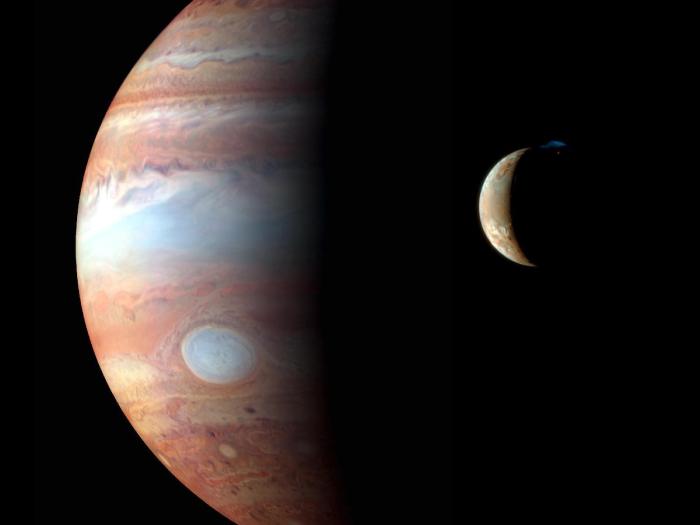
Jupiter-and-Io2
The Cronian Incident:
It is the late 22nd century, and humanity has grown to colonize almost every corner of the Solar System. Earth is now recovering from the worst aspects of “The Anthropocene”. Temperatures are dropping, species extinctions have stopped and are being reversed, and the population is stable, with over 13 billion people living in its cities, arcologies, and orbital habs. Over 1 million people live on the Moon, in cities built in lava tubes beneath the surface.

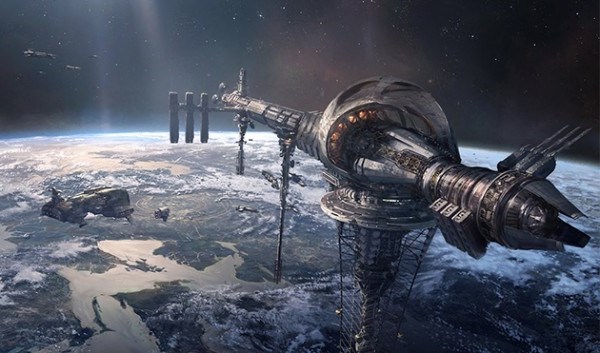
Mars and Venus are also home to humanity. On Mars, the Martian people live in domes that crisscross the surface, a Space Elevator brings people to and from the planet, and a constant flow of shipping to and from the Asteroid Belt and Solar System keeps the place busy. On Venus, the Cythereans live in cities that float atop the planet’s extremely dense atmosphere, harnessing carbon from the clouds to create graphene and diamond-based materials.

On all these worlds, humanity exists as a series of factions that know no national boundaries, and are collectively referred to as “Extros” – short for Extoprian. Thanks to over a century of runaway technological progress, diseases and disabilities have been eliminated, implants and embedded machinery allow for constant connectivity to the Nexus (future version of the Internet), and all vestiges of life are assisted by sentient programs and algorithms of various complexity.
space_elevator2
Meanwhile, the Outer Solar System hosts an entirely different mix of people. On the moons of Jupiter (the Jovians), Saturn (the Cronians), and Uranus (the Uranians), people enjoy a simpler existence. While they have access to plenty of advanced technology, many types of nanotech, biotech, and embeddadles are eschewed in favor of organic living, portable machines, and non-sentient computing.

Despite the fact that the Jovians, Cronians and Uranians are made up of countless peoples and factions, collectively, they are often referred to as “Retros” – a pejorative used to refer to their regressive lifestyle. But whether it is for religious reasons, personal reasons, or because they fear that Earth and the Inner Colonies have become consumed by runaway change and progress, the people who call these moons home prefer to maintain a balance.

Whereas these colonies were established in the latter half of the 21st century to ensure that humanity would have backup locations in case Earth died one day, by the 22nd century, they became dedicated to the preservation of something else. In this day in age, it is no longer about ensuring humanity’s physical survival, but rather preserving its spirit or a certain way of life.

Callisto_baseThe Plot:
Enter into this universe Jeremiah Ward, a disgraced former-detective who developed a drug problem as a result of his stressful work and the pace of life in the Inner Colonies. After an incident where two witnesses were murdered – which was attributed to negligence on his part – he is given a hefty prison sentence, which he decided to serve out in a penal colony on Mercury.

On this planet, where the day-side is hellish and unlivable, and the night-side is freezing and unlivable, mining crews live in the northern crater known as Prokofiev. Given the planet’s slow rotation (which takes 58 days to rotate once on its axis), mining crews go out to the night-side, spend days harvesting ore, and then transport it back to Prokofiev, where it then processed and fired off into space.

After a few years of this miserable existence, Ward is approached by a faction from Mars. Known as the Formists, this well-connected and powerful faction has a very strong standing on Mars. And they have a problem. One of their prospectors, who was traveling to the Outer Colonies to investigate their resource extraction operations, has gone missing. Worse yet, this prospector apparently had “sensitive materials” on his person that the Formists don’t want falling into the wrong hands.
titan_surface
These materials, they claim, detail a plan to convert Mars into a livable environment over the next few generations. Consistent with the Formists long term plan to terraform Mars into a new Earth, they are hoping to expand their contracts with the Outer Colonies for the vast amounts of resources they will need to do so. If these plans are made public, they worry that one of the rival factions – the Dysonists, the Habitationists, Settlers or Seedlings – will try to take advantage.

In exchange for finding their colleague and obtaining this information, Ward will have his sentence reduced to time served. He is told that his experience as an investigator makes him well-suited to the task, as well as the contacts he made in the Outer Colonies during his many years of service. But of course, he knows the real reason why he was selected: as a convict, he will be well-motivated to get the job done, and will be less likely to ask questions.

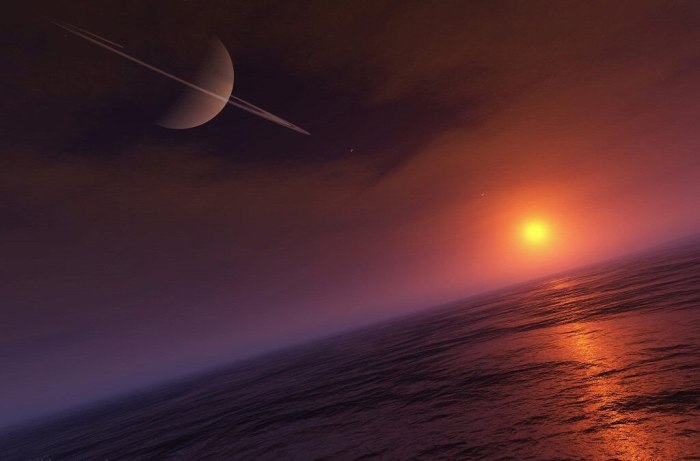
His journey takes him from Mars, to Jupiter’s moons of Ganymede and Callisto, and eventually to Titan – Saturn’s largest moon and the last stop of the prospector before he disappeared. When he finally comes to the end of his investigation, what he finds is far more than he bargained for. Rather than simply being a case of kidnapping or a hate-crime perpetrated by angry Retros, the prospector’s disappearance is part of a conspiracy that goes right to the heart of the Formist’s agenda.

alien-world
More than that, it goes right to the heart of an ongoing struggle, one which humanity has been preoccupied with for over a century. For in the end, the issue of humanity’s long-term survival has not been settled. And the solution to this problem just might mean sacrificing the few to save the many. In the end, Ward will be faced with a terrible decision: expose the agenda and spend the rest of his life on the run, or complete his mission and let things fall where they may?

***Of course, I can’t say what the big “conspiracy” is, for that would be spoilers galore! But suffice it to say, I have that worked out and its where the story gets particularly detailed, and brings up a lot of the intricacies of terraforming and space colonization.***

So that’s the idea. How does it sound? I’m five chapters in and quite hopeful that it will turn out to be something “magnum opus-y”.

Featured Guest Post: “Realistic Sci-Fi – The Best Films That Accurately Portray the Modern World” by Maria Ramos

interstellar_voyage-3840x2160

Please welcome back to the site, Maria Ramos. You may recall her last contribution, which dealt with Contemporary Dystopian Novels that are worth reading and not part of the current, overplayed YA fad. Well she’s back, this time with contemporary science fiction movies that are definitely worth watching. Enjoy!

The world of science fiction is full of fantastical tales that have no place in reality. Some of the best stories could never happen in real life. Still, the ones that really capture our imagination are those that contain a hint of truth. These five films are fascinating examples of realistic sci-fi films that may provide a glimpse into our future.

Many films of the past have been able to accurately predict things like tablet computers, home security and automation, cell phones and wearable tech. It’s a strange thought that these objects, when shown for the first time on the silver screen, seemed so far fetched and borderline ridiculous, but today are as commonplace as a coffee maker. Let’s take a look at some of the films that have gotten it disturbingly right in their predictions.

Metropolis (1927):
This film from the 1920s is set in a seemingly perfect city filled with wealthy people living a charmed life, with no idea that a vast population of oppressed workers are forced to stay underground, operating the machines that keep life going for the upper class. Although created decades before the advent of computers or even television, Metropolis predicted video calls through programs like Skype with its “television phone,” which characters in the movie use to communicate.

The Andromeda Strain (1971):
This film based on the novel by Michael Crichton tells the story of an alien virus that comes into contact with humans, mutating as it goes, almost destroying civilization. From biological warfare to satellites and laser weaponry, a lot of what is used throughout The Andromeda Strain mirrors the technology we have available to us today. Even the premise of the movie in general is not completely outlandish; microbiologists believe that it is possible that we may one day contract an extraterrestrial disease. If that were to happen, it’s unclear whether we would have the tools to combat it.

Gattaca (1997):
The premise of this 1997 flick may seem completely impossible: society is structured based on genetic sequencing, which reveals everyone’s genetic makeup. Clear lines are drawn, giving those who are genetically superior special privileges over everyone else. The discrimination the main character faces for his inferior dreams isn’t yet a reality, but as we work towards sequencing complete genomes, we will find ourselves closer to uncovering the secrets of our genes, and the consequences of this knowledge may not all be good. The film’s basic premise echos the recent controversy surrounding genetic testing to detect cancer.

Interstellar (2014):
In this movie, the world has become uninhabitable due to drought brought on by global warming, forcing mankind to search for somewhere to live. Although we haven’t reached this point, scientists stress the very real possibility of climate change ending life on Earth. If this were to happen now, humanity would be doomed, since we haven’t quite mastered the art of long-distance space travel yet. Still, scientists say that a trek on the scale of the one taken in Interstellar is possible. Ideas for how to accomplish this are still being explored, but thermonuclear fusion, light sails and gravitational slingshots are all potential solutions.

Mad Max: Fury Road (2015):
One of this year’s most popular films is also one of the most noteworthy as far as realism in science fiction goes. While apocalyptic settings aren’t uncommon in sci-fi, the psychology of the characters in Mad Max: Fury Road is unique. Instead of the stereotypical hero who beats the villain and gets the girl, Max shows the kind of psychological damage you might expect in a harsh environment like the apocalypse. The other people in the movie also show the influence of this trauma through their behaviors, making for a realistic portrayal of what the end of the world might really be like.

Scientifically accurate sci-fi can both educate and inspire its viewers. Films like the ones listed above offer a window to the future, letting us see what might happen if we continue on the path that we are on. These predictions are sometimes an encouragement to innovate, but also sometimes a warning to change course before it’s too late. Either way, realism in science fiction makes for quality films that can be enjoyed for decades to come.

Madmax

New Movie Trailer: The Martian

the_martianThe latest trailer for the The Martian has just hit cyberspace! And as you can see, its quite the doozy. Based on the novel by Andy Weir, The Martian tells the story of Mark Watney – a botanist and space engineer who is part of a manned mission to Mars. When an unexpected storm strikes in the course of that mission, Watney is lost during evacuation and presumed dead.

However, the crew soon learns that Watney survived the storm and has been living on the planet ever since. With a return mission expected to take years before it can reach him, NASA must struggle with a terrible dilemma – risk the lives of many astronauts to save one, or let Watney die alone on a distant planet?

I will definitely seeing this movie, but not before I read the original novel! And I can proudly say that after learning about this movie, I ordered a copy of the book a few weeks back and it now sits on my nightstand. I still got finish a few things before getting to it, but I plan to have it read before the movie comes out in October. There is no way in hell I’ll be waiting for this movie to come out on DVD or Netflix!

New Trailer: The Expanse

expanseHey folks, long time! I’ll get right to the point. I came across these trailers lately while chatting with my fellow fans of SF and Space Opera (SO). As you may know, one of the highlights from SD Comic Con every year are the trailers for upcoming movies and SF television series. Well, this year, a particularly interesting looking trailer was featured, one which got a lot of people excited.

Based on the novels of James S. A. Corey, the Expanse is set 200 years into the future, when humanity has colonized Mars and established a mining colony on Ceres. Tensions are brewing between Earth and Mars and a full-scale conflict is feared. Meanwhile, the people who work the Asteroid Belt (known as Belters) are resentful over the ways they are exploited by planetary governments and are threatening to revolt.

Enter into this a detective looking to solve a murder, but who naturally gets caught up in a web of intrigue. Naturally, the trailer impressed quite a few people, and Lauren Davis, the writer from IO9 who was there to write about it, even went as far as to say that this is the kind of show fans of SF have been “wanting since Battlestar Galactica”.

You can see why from the trailers. The show is dark, gritty, and has a realistic feel that puts human nature at the center of all its predictions for the future. Below is the first full-length trailer that made it to ComicCon, followed by the expanded trailer that aired just before it:

Source: IO9

Featured Guest Post: “Contemporary Dystopian Novels Worth the Read” by Maria Ramos

dystopiaGood afternoon folks! Today, I have the honor of featuring a guest writer, something that I have never done before. Her name is Mario Ramos, a fellow writer that has been following storiesbywilliams and asked to add her thoughts about this contemporary dystopian literature craze. Take it away, Ramos!

*               *               *

The teenage wastelands of The Hunger Games and Divergent have made their way to the big screen and people can’t seem to get enough of it. However, many others seem to think science fiction isn’t what it used to be. Despite the glut of novels and films catering to young adults today, there is still plenty of well-written dystopian novels (without teenaged love triangles). Although they do not fall into the same particular category of classics such as Brave New World, there are still worthy examples written in the past few years. Check out some of them below:

The Handmaid’s Tale (1985) by Margaret Atwood:

Christian fundamentalists stage a terrorist attack in America, allowing them to suspend the Constitution and install a patriarchal theocracy. This story follows Offred, a concubine for the elite class who undergoes a sexual awakening and joins a resistance movement against the fundamentalists. This critique of repressive religious fundamentalism has taken on added significance since the 9/11 attacks, showing us how a crisis can lead to authoritarianism. Because it speaks to these important issues, the novel remains relevant today. The book was adapted into a film in 1990 starring Natasha Richardson and Robert Duvall.

The Children of Men (1992) by P.D. James:

A global disease has made all men infertile, leaving the human race unable to reproduce. Without any hope for the future, English society collapses and falls under the control of a ruthless dictator. Criminals are dumped into prisons to kill or be killed and the elderly are compulsorily euthanized. This book is an admonition against the cynicism of our times. If we lose hope, we accept all kinds of callousness and oppression and lose sight of the human life’s value. In 2006, a film adaptation starring Julianne Moore and Clive Owen was released.

The Road (2006) by Cormac McCarthy:

A man and his son brave an ashy lifeless landscape populated by cannibals in the hopes of escaping the harsh black winter. Through their actions and words, the man and the boy constantly emphasize love’s power. No matter how bleak things get, the father always looks out for his son and encourages him to maintain hope no matter what. This powerful message resonates with many families, making this novel a contemporary classic. The 2009 film adaptation received critical acclaim with Viggo Mortensen’s excellent portrayal of The Man.

 The Windup Girl (2009) by Paulo Bacigalupi:

In 23rd century Thailand, a genetically engineered humanoid organism, an economic hitman and representative of a biotech mega-corporation, a crooked Chinese refugee, and a leader of an armed environmental enforcement agency cross paths in The Windup Girl. This novel tells a tale of intrigue that critiques environmental exploitation, reckless genetic engineering, the international sex trade, unfettered capitalism, and globalization. The Windup Girl combines a compelling story with dense thematic material, making it a quality science fiction read on par with the classics.

Ready Player One (2011) by Ernest Cline:

In 2044, people spend most of their free time in Oasis — a globally networked virtual reality that transports users to any world they can imagine — as a way of escaping a scrappy existence on an impoverished and depleted planet. The story follows Wade Watts, a high school student that embarks on a digital Easter egg hunt designed by the deceased creator of Oasis in order to inherit his vast estate. Ready Player One shows a world in which people alienate themselves through video games, instead of trying to solve the world’s problems.

*               *               *

Despite recent films focusing on romance and teenaged angst, there are still many novels that generate conversation over our concerns about the world today. This subgenre of science fiction showcases our anxieties about the future and has raised questions surrounding the concepts of totalitarian governments, environmental catastrophes, and technological overreach. Many have become aware of these concerns and have been trying to positively change the way we impact our Earth. From companies making direct energy more accessible to NASA using advanced technology to help the environment, these dystopian fictions are helping save the world — one novel at a time.dystopian list

New Trailer: Star Wars Episode VII – Trailer #2

star-wars-episode-7Here it is, at last! The second teaser trailer for the upcoming release of Star Wars Episode VII – The Force Awakens, just hit the internets! As always, the bastards as being sparse with their hints and giving us droplets that only make us thirstier. Still, the highlights in this one are pretty darn clear.

First, we get some more glimpses of how the legacy of the Skywalkers and the battle between the good and the dark sides continues. We get shots of a resurgent Empire and some Sith badguy  fighting it out with the good guys. There’s an ominous scene where Luke (or someone else) is holding Vader’s crumbled helmet. And to top it all off, we get Han and Chewie showing their faces for the first time!

Check it out. And if you were to tell me that you’re not counting down the days until December, I will call you a lying scumbag!

The ReFlow G2R2 Going Live!

reflowg2r2Hey folks! Just wanted to give people a heads-up about what’s been going on these past few weeks. Well, as of yesterday the company I’ve been working with for the past two months – Green Water Solution – finally put its concept up for funding. The idea is known as the G2R2 Grey-Water Recycling System, a compact water treatment unit that turns bath and shower water into toilet water.

The final prototype, with the running lights on

The reason I signed on to this project is twofold. One, the guy running it is a good friend of mine and the family’s and we go way back. Two, the idea has got to be one the cleverest things I’ve ever heard of. People living in developed nations already consume too much water. But the fact that all the household water we use, whether it is for eating and drinking or just flushing our toilets, is treated to the drinking standard is just downright wasteful.

This system solves much of this problem by turning used bath and shower water into clean, flushable water, thereby reusing roughly a third of the water we dispose of on a regular basis, while also cutting utility bills by up to 30%. The system also doesn’t require any renovations since it can be retrofitted to existing plumbing, and therefore is also a third of the price of conventional grey-water systems.

Designer Derek standing next to his baby!

Anyhoo, the system went live on Indiegogo as of Monday evening, and they are looking for people to pledge money so they can make this system commercially viable. Already, they have completed and tested several prototypes, but they need funding if they are going to be able to ramp up production and create more. If they get them, apartment, home, and condo owners all over North America will be able to place orders for them by the end of the year.

Naturally, I wouldn’t ask people to pledge their hard-earned money on something, but do please come and check it out. Also, feel free to leave comments, since the more people commenting on an Indiegogo campaign, the better a reach it has.

https://www.indiegogo.com/projects/the-reflow-g2rs-shower-to-toilet-recycling-system/x/1964233

Feel free to check out their website and comment there as well. Note, you will my name and picture if you go to the Our Team page:

http://greenwatersolution4u.com/

Oscar Mike – Making Progress

Power of WordsHey folks! Back with some good news on the creative writing front. A few weeks ago, I was given a bit of a reprieve when I took a step back from my responsibilities as Communications Manager with my friend’s startup company (Green Water Solution). As you may recall, they are the makers of the the ReFlow grey-water recycling toilette, a device that turns your bath water into toilet water to save about 40% of fresh water consumption.

And after two successful media blitz’s, I told the boss man I would like to step back and relegate myself to helping instead of being in charge. This I did largely because it was cutting into my article writing and teaching, which he totally understood. And with some of the time it freed up, I managed to get a little work done on my two biggest writing projects – Reciprocity and Oscar Mike.

Oscar MikeIn the case of the former, this involved ironing out the plot, selecting an antagonist, and finishing off the first five chapters. In the case of the latter, it meant polishing off a few chapters, and doing some research into where the third and fourth book in the series will go. The credit for this plot-related research goes to a newfound friend, Laurie Snyder.

After joining a Facebook discussion group called “Faith or Fact”, we got into a discussion and I noticed she was with the USAF and served in Colorado Springs. This is a location I was considering for the plot of the third book, so naturally I started asking questions about the armed forces and what life is like where she serves. What she revealed to me was most interesting!

cheyenne_mountainNot only is Colorado Springs home to several major airbases, it is also not far from the Cheyenne Mountain Complex. For those of you who didn’t grow up during the Cold War, see Terminator 3, or watch Star Gate, perhaps some explanations are necessary. Cheyenne Mountain is the site the military installation and nuclear bunker that served as the nerve center for NORAD (the North American Aerospace Defense Command) during the Cold War, as well as numerous other defense and emergency services today.

The reason I thought this location might be useful to the plot of Oscar Mike is because of it’s proximity to New Mexico, where the series has been taking place so far. I knew that there were military bases in this city, but when she told me about Cheyenne Mountain, I seriously needed to slap myself upside the head! ***Spoilers ahead, so if you’re planning on reading Oscar Mike, you might want to tune out now…***

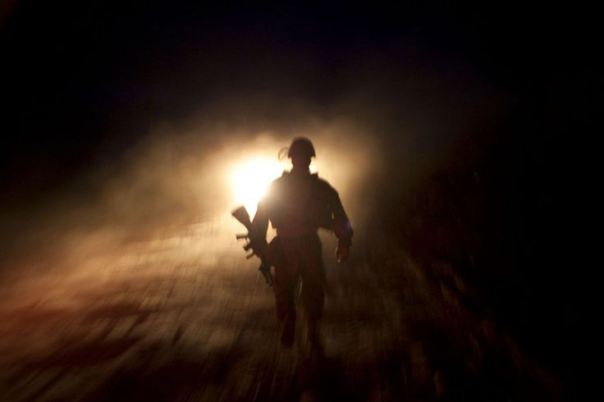
post-apocalyptic_soldier2Basically, I decided that for a third story-twist, the Rattlesnakes (i.e. the main characters of the story) would come into some frightening information about how the zombies migrate and the likelihood that they’d be moving north – through New Mexico and the American Southwest – in the near future. However, this information also came with an upside, in that the people who knew of this had also found a potential weakness to the zombies.

For years, military scientists had been working to discern a means of taking out zombie hordes that would not pose a significant risk to civilians. Being such a terrible pandemic, which turned every populated area into a battleground between infected and uninfected, they knew that any weapon of mass destruction – i.e. chemical, biological, nuclear, or incendiary – would cause massive collateral damage and civilian casualties.

shutterstock_102844133However, one weapon proved to be most effective against zombies while sparing humans, provided they had basic protection – nerve gas! Reasoning that the zombie virus infected the nerve stem and turned its victims into atavistic, blood-thirsty cannibals, it seems logical that an agent that attacked the nervous system directly and disrupted nerve signals would neutralize them.

Their hypothesis proved correct, and once the Rattlesnakes (aka. the main characters) learned of this, the task of finding an adequate store of nerve agents became paramount. As a result, the Rattlesnakes set out to establish contact with other military elements that are still active, and not hostile. To the north, Peterson Air Force Base is still believed to be intact, though direct communications had not taken place for some time.

A mission is therefore planned which will send a team of grunts there to re-establish contact, or take possession of the base should it prove to have fallen. Once that is done, they will need to get their assess to Cheyenne Mountain and retrieve the stores of chemical weapons that are believed to still be cached inside. Ultimately, what they find there will tell them much about the war, the pandemic, and the politics that have set in amidst all the chaos.

shutterstock_99981176After the events in Papa Zulu, where military elements out of the east attacked the Rattlesnakes (hoping to steal their research on a vaccine) the Rattlesnakes were left with a whole lot of unanswered questions. And while it was clear that Major General Thur (“The Mage”) knew something about it, he is unable to provide them since he was severely wounded in the attack and remains in a coma. So book three, I am hoping, will fill in all the blanks I’ve deliberately left so far.

And I had to admit, the idea that nerve gas could be a potential instrument for winning the war seemed like an interesting twist too. One of the most heinous and terrible weapons ever created, now offering humanity with a chance for salvation. And naturally, there are those who are thinking of misusing it, allowing their own bitterness and hatred towards the zombies to consume them and commit great evil. What do you think?

At the moment, book three – aka. Oscar Mike – is about half done. I am hoping to get it all done before the summertime and finally put it on the shelves. For those who’ve been following the series regularly (though they are few in number, but strong in their commitment) I feel I’ve kept them waiting unfairly. A writer should never keep his audience in suspense for years on end, even if he is rich enough to get away with it (finish them books, George RR Martin!)

Reciprocity – Making Progress

future-city-1Hey all. Just wanted to let people know that I’m still around. And as luck would have it, I’ve found myself with some free time; free time that I’ve put towards creative writing again! In the past two weeks in fact, I have come up with a lot of new ideas for both Oscar Mike and (more importantly) Reciprocity. On this latter project, I’ve spent the past few days working through the half-written spots, and now I have a full five chapters done.

More importantly, I have revised the overall plot yet again. The last time I did this (not that long ago), I chose to change the nature of the antagonist to that of a Chinese ex-pat who was a former member of Unit 61398 – the People’s Liberation Army’s cyber warfare division. His name was Shen, and his plot involved a string of kidnapping, double-dealing, and cyber-terrorism that threatened to change the global geopolitical balance.

I liked this idea because I felt that after a good deal of research, the focus of the story should be on post-communist China, where a great deal of social confusion and economic turmoil was leading to the emergence of a semi-fascist state. In a pattern that is reminiscent to modern-day Russia, Shen sought to take advantage of these changes in order to unleash a massive cyber attack.

The downtown district of Shanghai. One of many locations in the story.
The downtown business district of Shanghai. One of many locations in the story.

This would have the effect of completely preoccupying the west, disabling the US Pacific Fleet, and allowing China’s new government to occupy Taiwan and the South China Sea, thus asserting their territorial sovereignty over the region. While this was interesting (at least to me), it still fell short. What I really wanted was an antagonist in the story that would make the focus be all about the two greatest issues we will be facing in the not-too-distant future.

These issues are none other than climate change, which will result in more in the way of droughts, wildfires, flooding, coastal storms, tornadoes, and diminishing resources; and technological progress, which will result in the pace of change and getting faster and faster to the point of total unpredictability.

For awhile, I’ve been writing about these subjects, and they were supposed to be the centerpiece of the story. So here’s the new plot, in a nutshell: The year, same as always, is 2030. A technological magnate’s child disappears while slumming in the Pacific Northwest in what appears to be an act of kidnapping. However, his disappearance is in fact orchestrated as part of a complex cyber intrusion designed to steal company data.

InternettrafficThe man leading this theft – who is known only as Zeke – intends to leverage this data in mainland China, where a former member of Unit 61398, now himself a technological magnate, is in possession of a quantum-based cyber virus of last resort, a weapon that was created for a war that never happened. This virus is known as “Baoying”, which in Chinese, loosely translates to Reciprocity.

Zeke knows about this weapon because he spent years developing contacts around the world, bringing together gun runners, terrorists, socialist and anarchist militias, and Chinese ex-pats that reaches from Central Asia and the Middle East all the way to South America and the South Pacific. Though separated by ideological differences, these organizations are united in wanting to see an end to the status quo.

Zeke, however, has his own agenda. A one-time member of the technological magnates he is now using as pawns, he saw so much of the world and witnessed atrocities firsthand. He also witnessed how the privilege of developed countries is paid for in the blood of others. After a scandal in which he publicly aired all of his companies many shady dealings, his partners crucified him and cast him to the fringes of society.

^In an age where the richer nations are facing the prospect of limitless energy, quantum computing, abundant resources and post-mortality while other states are failing due to displacement and mass starvation, Zeke is hoping to level the playing field once and for all. He is a genius and a man moved by a personal sense of justice. But most of all, he is a man dealing with terrible demons and some deep trauma that he can’t begin to suppress.

This kind of plot, I think, works so much better. The antagonist seems much more socially relevant, the story more focused on the big issues I like to explore, and it all seems a little less hawkish than a story where the Chinese are essentially the bad guys. But most of all, I envisioned a climactic scene where the antagonist – while explaining his motivations – says something like this:

I want a future I can control. I want a future where I have a choice. I am sick of unpredictability, or chaos and confusion. I’m sick of people being left behind, and our world being torn apart. Tomorrow, everyone will find themselves on common footing. Tomorrow, we will begin thinking towards our common future.

Try getting something like that out of a former communist who just wants to see his country win a war! Well, that’s the idea as I see it right now. What do you think? Sound good?

Universe Today Stats for January and February

internet-of-things-2

Good news, folks! It seems that the traffic report came in for the previous two months from Universe Today. And in my haste, I forgot to publish them. But luckily, there are no deadlines on a blog, just chances to catch up. How’s everybody doing? Oh, and I should also mention that my stint working with Green Tree Recycling is done for now, so there will be more time in the near future for posts like these. 🙂

In any case, things have changed over at Universe Today lately in terms of format. Basically, the managers wanted to do fewer publications a month overall and focus on those that were likely to draw more of a crowd. This means that the total number of articles I got to do for January/February was less than in previous months, but that didn’t seem to hurt viewership that much.

In fact, February has been my best month so far, with a record-topping 282,176 views! Check out the total stats below:

January:

1/1/2015 2015 Expected to be a Record-Breaking Year for Soyuz-2 Workhorse 1965
1/2/2015 Rogue Star HIP 85605 on Collision Course with our Solar System, but Earthlings Need Not Worry 17554
1/6/2015 Exoplanet-Hunting TESS Satellite to be Launched by SpaceX 1161
1/6/2015 Japan’s Akatsuki Spacecraft to Make Second Attempt to Enter Orbit of Venus in December 2015 2317
1/9/2015 New Mission: DSCOVR Satellite will Monitor the Solar Wind 886
1/13/2015 Faster-Than-Light Lasers Could “Illuminate” the Universe 36082
1/13/2015 One of the Milky Way’s Arms Might Encircle the Entire Galaxy 10543
1/16/2015 Some of the Best Pictures of the Planets in our Solar System 25777
1/16/2015 Elon Musk Releases Dramatic Imagery of Mostly Successful Falcon 9 1st Recovery Attempt, Hard Landing on Drone Ship 9009
1/30/2015 Exploring the Universe with Nuclear Power 21687
Total Views 126981

February:

Which Planets Have Rings?  2/5/2015  8910
What Could Explain the Mysterious Ring in Antarctica?  2/9/2015 239263
How Can Mars Sometimes Be Warmer Than Earth?  2/9/2015  11509
What is Hooke’s Law?  2/13/2015  6229
Here’s a Better Use for Fighter Jets: Launching Satellites  2/13/2015  7937
What is Mars Made Of?  2/25/2015  8328
 Total Views  282176