When it comes to diseases and conditions that have long been thought to be incurable – i.e. cancer, diabetes, HIV – nanoparticles are making a big impact. In the case of HIV, solutions have been developed where gold nanoparticles can deliver bee venom or HIV medication to cells of the virus, while leaving healthy tissue alone. As for diabetes and cancer, the same concept has proven useful at both seeking out and delivering medication to the requisite cells.
However, a new breakthrough may be offering cancer patients something more in the coming years. In what appears to be a promising development, researchers at the University of California Davis (UC Davis) Cancer Center have created a multi-tasking nanoparticle shown to be effective both in the diagnosis of a tumor and attacking its cells – a flexibility that could lead to new treatment options for cancer patients.
One of the big challenges in developing multitasking nanoparticles is that they are traditional designed with one purpose in mind. They are constructed using either inorganic or organic compounds, each with strengths of their own. Inorganic nanoparticles, such those made from gold, are effective in imaging and diagnostics. Organic nanoparticles, on the other hand, are biocompatible and provide a safe method of drug delivery.
The nanoparticles developed at UC Davis are made from a polymer composed of organic compounds porphyrin and cholic acid, which is produced by the liver. The researchers then added cysteine – an amino acid that prevents it from releasing its payload prematurely – to create a fluorescent carbon nanoparticle (CNP). The team then tested the new nanoparticle with a range of tasks, both in vitro and in vivo (aka. in a solution of cells and in living organisms).
They found the particle was effective in delivering cancer-fighting drugs such as doxorubicin (commonly used in chemotherapy). In addition, they found that while applying light (known as photodynamic therapy), the nanoparticles release reactive molecules called singlet oxygen that destroy tumor cells, while heating them with a laser (known as photothermal therapy) provided another way for the particles to destroy tumors.
One notable finding was that the release of a payload sped up as the nanoparticle was exposed to light. The researchers claim this ability to manipulate the rate at which the particles release chemotherapy drugs from inside the tumor could help to minimize toxicity. This is a big plus considering that all known cancer treatments – i.e. chemotherapy, medication, radiation – all come with side effects and have a high risk causing damage to the patient’s healthy tissue.
In relation to imaging and phototherapy, the nanoparticle remained in the body for extended periods and bonded with imaging agents. And because CNPs are drawn more to tumor tissue than normal tissue, it helps to improve contrast and light them up for MRI and PET scans. This effectively makes the UC Davis nanoparticle a triple threat as far as cancer treatments are concerned.
As Yuanpei Li, research faculty member from the UC Davis Cancer Center, explains it:
This is the first nanoparticle to perform so many different jobs. From delivering chemo, photodynamic and photothermal therapies to enhancing diagnostic imaging, it’s the complete package.
The team is now focusing on further pre-clinical studies, with a view to advancing to human trials if all goes to plan. And this is not the only breakthrough inolving cancer-fighting nanoparticles to be made in recent months. Back in April, scientists at MIT reported the creation a revolutionary building block technique that’s enabled them to load a nanoparticle with three drugs, and claim it could be expanded to allow one to carry hundreds more.
Typical nanoparticle designs don’t allow for scaling, since they call for building a nanoparticle first, then encapsulating the drug molecules within it or chemically attaching the molecules to it. Attempting to add more drugs makes assembling the final nanoparticle exponentially more difficult. To overcome these limitations, Jeremiah Johnson, an assistant professor of chemistry at MIT, created nanoparticle building blocks that already included the desired drug.
Called “brush first polymerization,” the approach allows the researchers to incorporate many drugs within a single nanoparticle and control the precise amounts of each. In addition to the drug, each tiny building block contains a linking unit enabling it to easily connect to other blocks, and a protective compound to ensure that the drug stays intact until it enters the cell.
The approach not only allows different drug-containing blocks to be assembled into specific structures, but it also enables each drug to be released separately via different triggers. The team has tested its triple threat nanoparticles, containing drugs typically used to treat ovarian cancer – such as doxorubicin, cisplatin and camptothecin – against lab-grown ovarian cancer cells.
The results demonstrated the new nanoparticles’ ability to destroy cancer cells at a higher rate than those carrying fewer drugs. As Johnson explained it:
This is a new way to build the particles from the beginning. If I want a particle with five drugs, I just take the five building blocks I want and have those assemble into a particle. In principle, there’s no limitation on how many drugs you can add, and the ratio of drugs carried by the particles just depends on how they are mixed together in the beginning… We think it’s the first example of a nanoparticle that carries a precise ratio of three drugs and can release those drugs in response to three distinct triggering mechanisms.
In this case, the cisplatin is delivered the instant the particle enters the cell, as it reacts to the presence of an antioxidant found in the cells called glutathione. When the nanoparticle encounters a cellular enzyme called esterases it releases the second drug, camptothecin. Shining ultraviolet light triggers the release of the remaining doxorubicin, leaving behind only the biodegradable remnants of the nanoparticle.
The researchers believe this approach can potentially be used to link hundreds of building blocks to create multidrug-carrying nanoparticles, and pave the way for entirely new types of cancer treatments, free from the damaging side effects that accompany traditional chemotherapy. The MIT team is currently working on making nanoparticles that can deliver four drugs, and are also engaged in tests that treat tumor cells in animals.
Until recently, the fight against cancer has been characterized by attrition. While treatments exist, they tend to be a balancing act – inflicting harm and poisoning the patient in small doses with the hope of killing the cancer and not the host. Smarter treatments that target the disease while sparing the patient from harm are just what is needed to turn the tide in this fight and bring cancer to an end.
There have been lots of high-speed bio-inspired robots in recent years, as exemplified by Boston Dynamics WildCat. But MIT’s Cheetah robot, which made its big debut earlier this month, is in a class by itself. In addition to being able to run at impressive speeds, bound, and jump over obstacles, this particular biomimetic robot is also being battery-and-motor driven rather than by a gasoline engine and hydraulics, and can function untethered (i.e. not connected to a power source).
While gasoline-powered robots are still very much bio-inspired, they are dependent on sheer power to try and match the force and speed of their flesh-and-blood counterparts. They’re also pretty noisy, as the demonstration of the WildCat certainly showed (video below). MIT’s Cheetah takes the alternate route of applying less power but doing so more efficiently, more closely mimicking the musculoskeletal system of a living creature.
This is not only a reversal on contemporary robotics, but a break from history. Historically, to make a robot run faster, engineers made the legs move faster. The alternative is to keep the same kind of frequency, but to push down harder at the ground with each step. As MIT’s Sangbae Kim explained:
Our robot can be silent and as efficient as animals. The only things you hear are the feet hitting the ground… Many sprinters, like Usain Bolt, don’t cycle their legs really fast. They actually increase their stride length by pushing downward harder and increasing their ground force, so they can fly more while keeping the same frequency.
MIT’s Cheetah uses much the same approach as a sprinter, combining custom-designed high-torque-density electric motors made at MIT with amplifiers that control the motors (also a custom MIT job). These two technologies, combined with a bio-inspired leg, allow the Cheetah to apply exactly the right amount of force to successfully bound across the ground and navigate obstacles without falling over.
When it wants to jump over an obstacle, it simply pushes down harder; and as you can see from the video below, the results speak for themselves. For now, the Cheetah can run untethered at around 16 km/h (10 mph) across grass, and hurdle over obstacles up to 33 centimeters high. The Cheetah currently bounds – a fairly simple gait where the front and rear legs move almost in unison – but galloping, where all four legs move asymmetrically, is the ultimate goal.
With a new gait, and a little byte surgery to the control algorithms, MIT hopes that the current Cheetah can hit speeds of up to 48 km/h (30 mph), which would make it the fastest untethered quadruped robot in the world. While this is still a good deal slower than the real thing – real cheetah’s can run up to 60 km/h (37 mph) – it will certainly constitute another big step for biomimetics and robotics.
Be sure to check out the video of the Cheetah’s test, and see how it differs from the Boston Dynamics/DARPA’s WildCat’s tests from October of last year:
There are drones for aerial reconnaissance, drones for domestic surveillance, and drones for raining hell, death and destruction down on enemy combatants. But drones for making personal deliveries? That’s a relatively new one. But it is a not-too-surprising part of an age where unmanned aerial vehicles are becoming more frequent and used for just about every commercial applications imaginable.
After working on secret for quite some time, Google’s secretive projects lab (Google X) recently unveiled its drone-based delivery system called Project Wing. On the surface, the project doesn’t look much different from Amazon’s Prime Air aut0nomous quadcopter delivery service. However, on closer inspection, Project Wing appears to be much more ambitious, and with more far-reaching goals.
The original concept behind Project Wing — which has been in development for more than two years — was to deliver defibrillators to heart attack sufferers within two minutes. But after running into issues trying to integrate its tech with the US’s existing 911 and emergency services systems, the focus shifted to the much more general problem of same-day deliveries, disaster relief, and delivering to places that same- and next-day couriers might not reach.
For their first test flights, the Google team traveled to Australia to conduct deliveries of dog food to a farmer in Queensland. All 31 of Project Wing’s full-scale test flights have been conducted in Australia, which has a more permissive “remotely piloted aircraft” (i.e. domestic drones) policy than the US. There’s no word on when Project Wing might be commercialized, but it is estimated that it will be at least a couple of years.
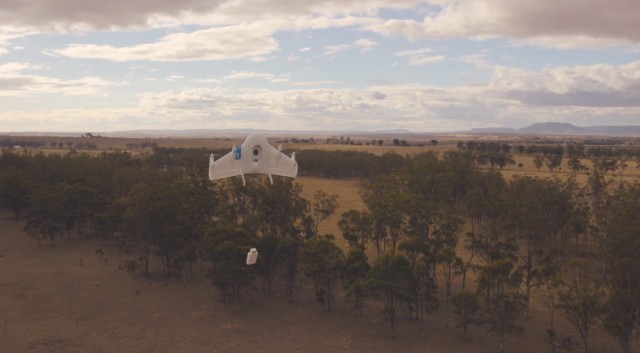
While most work in small-scale autonomous drones and remotely piloted aircraft generally revolves around quadcopters, Google X instead opted for a tail-sitter design. Basically, the Project Wing aircraft takes off and lands on its tail, but cruises horizontally like a normal plane. This method of vertical-takeoff-and-landing (VTOL) was trialed in some early aircraft designs, but thrust vectoring was ultimately deemed more practical for manned flight.
The Project Wing aircraft has four electric motors, a wingspan of around 1.5m (five feet), and weighs just under 8.6 kg (19 pounds). Fully loaded, the drones apparently weigh about 10 kg (22 pounds) and are outfitted with the usual set of radios and sensors to allow for autonomous flight. But there’s also a camera, which can be used by a remote pilot to ensure that the aircraft drops its package in a sensible location.
As you can see from the video below, the packages are dropped from altitude, using a winch and fishing line. Early in the project, Google found that people wanted to collect packages directly from the drone, which was impractical when the engines were running. The air-drop solution is much more graceful, and also allows the drone to stay away from a large variety of low-altitude obstacles (humans, dogs, cars, telephone lines, trees…)
This is another major different with Amazon Prime Air’s drones, which carry their package on the drone’s undercarriage and land in order to make the delivery. And while their octocopters do have slightly better range – 1.6 km (1 mile), compared to Project Wing’s 800 meters (half a mile) – Google is confident its delivery system is safer. And they may be right, since its not quite clear how small children and animals will react to a landing object with spinning rotors!
For the moment, Google has no specific goal in mind, but the intent appears to be on the development for a full-scale same-day delivery service that can transport anything that meets the weight requirements. As Astro Teller, director of Google X labs, said in an interview with The Atlantic:
Throughout history there have been a series of innovations that have each taken a huge chunk out of the friction of moving things around. FedEx overnight delivery has absolutely changed the world again. We’re starting to see same-day service actually change the world. Why would we think that the next 10x — being able to get something in just a minute or two — wouldn’t change the world?
Nevertheless, both projects are still years away from realization, as both have to content with FAA regulations and all the red tape that come with it. Still, it would not be farfetched to assume that by the 2020’s, we could be living in a world where drones are a regular feature, performing everything from traffic monitoring and aerial reconnaissance to package delivery.
And be sure to check out these videos from CNET and Amazon, showing both Project Wing and Prime Air in action:
Few politicians today elicit the same level of controversy as Vladimir Putin. Adored by many Russians at home and abroad, he is also reviled by many for his near-absolute grip on power, intimidation of political opponents, political repression, and military aggression against neighboring states. But in this latest coup de grace, Putin may be seeking the kind of power that few modern states enjoy – the ability to shut down his country’s access to the internet.
According to the Russian business newspaper Vedomosti, Putin and his security council met this past Monday to discuss a way to disconnect Russia’s internet should it be deemed necessary. According to various sources, it is a tool that could be enacted in times of war, massive anti-government protests, or in order to “protect” Russians from Western countries like the United States or members of the European Union.
Citing an intelligence officer as their source, Vedomosti claims that this is the result of the Ministry of Communications conducting exercises to test vulnerabilities in Russia’s internet and can now successfully disable IP addresses outside of Russia. All of this is being done in order to see if the Runet (Russia’s internet) can operate on its own without Western web access, with the hope that it will be functional next year.
It is not hard to imagine the Kremlin justifying such a clamp-down by whipping up fears that it’s the West that wants to disconnect Russia from the web, said industry experts. In Russia’s current political environment, anti-western propaganda has been used effectively to create the impression of a siege mentality, used largely to justify their current economic woes and the ongoing Ukrainian Crisis.
Analysts say similar measures have been introduced by countries such as Iran and Cuba, which developed national Internet limits to curb the spread of Western culture and ideas. Prior to the meeting, Putin’s spokesman Dmitry Peskov confirmed that the Security Council meeting on Internet security would be taking place, but he declined to discuss details of the agenda.
In addition, he denied that Russian authorities have plans to disconnect the Internet, instead insisting this is a question for other countries to answer. He also added that Russia needs a way to protect itself from the West. Peskov cited the “unpredictability” of the European Union and the United States before implying that these countries would in fact disconnect Russia from the Internet and not the reverse.
In a statement to Russia Today – a government-run website launched in 2005 by Putin as a “PR campaign to improve [Russia’s] image in the eyes of the world.”- Russia’s communications minister, Nikolay Nikiforov, said:
Russia is being addressed in a language of unilateral sanctions: first, our credit cards are being cut off; then the European Parliament says that they’ll disconnect us from SWIFT*. In these circumstances, we are working on a scenario where our esteemed partners would suddenly decide to disconnect us from the internet.
*Society for Worldwide Interbank Financial Telecommunication
The “unilateral sanctions” he refers to are the ones that were placed upon Russia by the US and the EU in response to its seizure of the Crimea, which have since escalated thanks to Russia’s ongoing involvement in the eastern portions of Ukraine where rebels – whom many claim have been supplied with Russian-made weapons and are now being supported by Russian troops – continue to fight against the new Kiev government.
Interestingly enough, whether it is the West that disconnects Russia from the Internet or if it is Putin that does so, both possibilities highlight the world’s dependence on Western internet. In fact, many countries, including Brazil and Germany, have been complaining about this since Edward Snowden’s revelations last year. Putin himself has expressed concern over the NSA spying on him via the web and the security of the internet in his country in the past.
Nevertheless, the question remains as to whether or not it could be done. According to Andrei Soldatov, a Russian spy expert who recently spoke to the Guardian on the subject, claims that it is technically possible given how few internet exchange points Russia has. However, it seems unlikely at this point that Putin would do this given the repercussions for Russian businesses that rely on the Western internet to function.
Already, Russia has been feeling the pinch because of Western sanctions, particularly sanctions targeting its oil industry that have been leading to a drop in prices. At this rate, several economists and even Russian ministers are predicting a recession in the near future. This in turn could present Putin with a scenario whereby he would have to disconnect the internet, in order to block mass protests sites in the event of people protesting the economic downturn.
Similar measures have been taken in the past by countries like Egypt, Iran, Syria, China, the UK, and Thailand, who chose to block Facebook at various points because protesters were using it to organize. Venezuela also blocked Twitter this year during times of political unrest to prevent people from sharing information and real-time updates. But a total disconnect has yet to be seen, or even seriously contemplated.
Whether or not Putin and Russia’s ruling party is the first to do so remains to be seen. But it is not entirely unfeasible that he wouldn’t, even if economic consequences were entailed. For as the saying goes, people will “cut off their nose to spite their face”, and Putin has already shown a willingness to challenge his country’s economic interdependence with the world in order to ensure control over neighboring territories.
One can only hope that he won’t feel the need to snip his country’s connection to the rest of the world. In addition to ensuring its ec0nomic isolation – which would have dire consequences and reduce the country to the status of a developing nation – it will also resurrect the specter of the Cold War years where Russians were effectively cut off from the outside world and entirely dependent on state-controlled media.
We’ve simply come too far to go back to an age where two superpowers are constantly aiming nuclear warheads at each other and entire blocs of nations are forbidden to trade or interact with each other because of political rivalries. History does not respect regression, and the only way to make progress is to keep moving forward. So let’s keep the internet open and focus on building connections instead of walls!
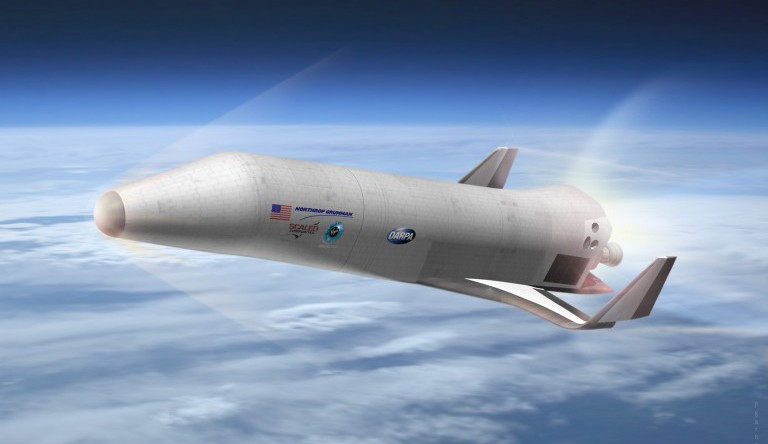
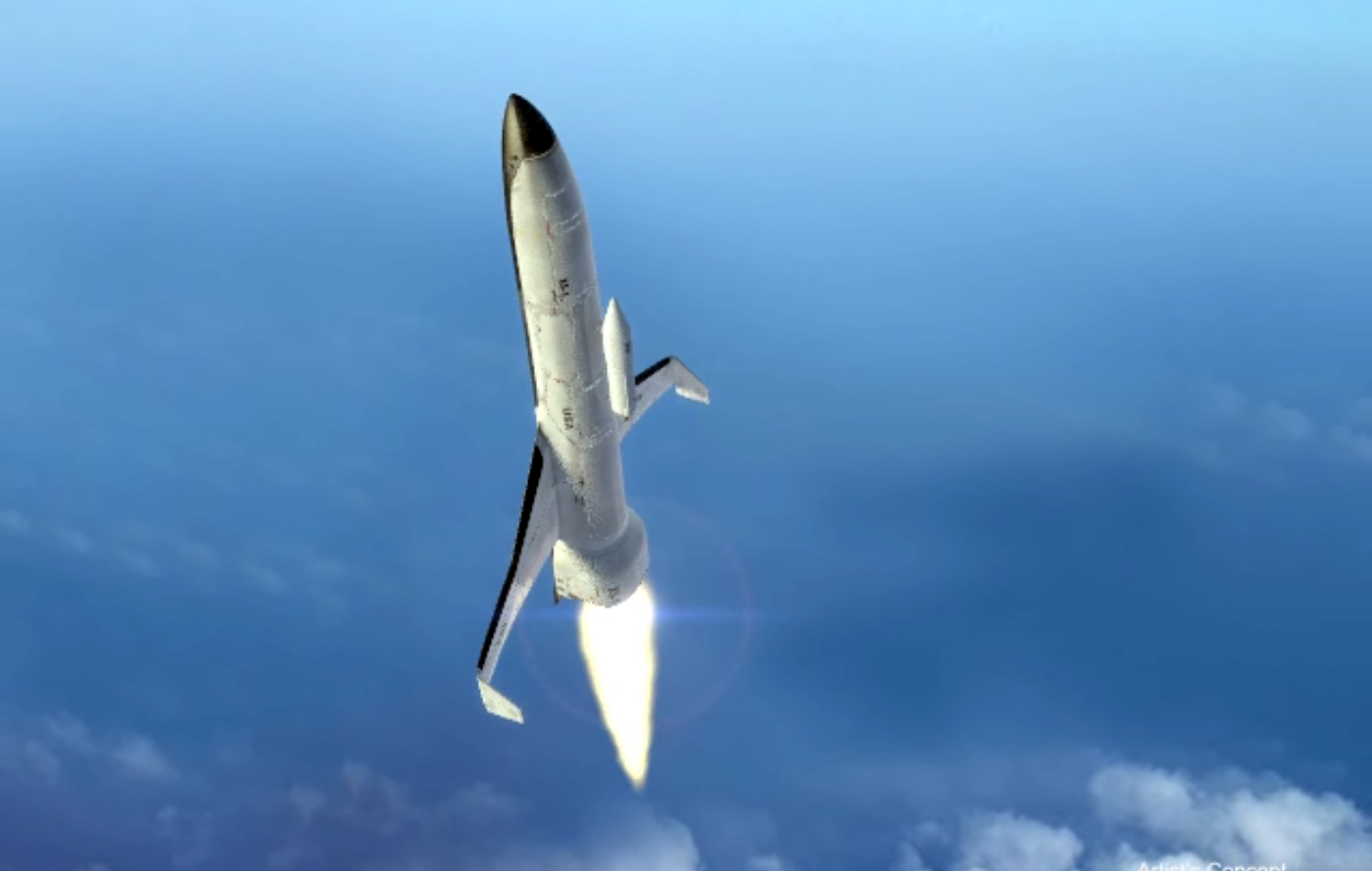
The race to produce a new era or reusable and cost-effective spacecraft has been turning out some rather creative and interesting designs. DARPA’s XS-1 Spaceplane is certainly no exception. Developed by Northrop Grumman, in partnership with Scaled Composites and Virgin Galactic, this vehicle is a major step towards producing launch systems that will dramatically reduce the costs of getting into orbit.
Key to DARPA’s vision is to develop a space-delivery system for the US military that will restore the ability of the US to deploy military satellites ingeniously. In a rather ambitious twist, they want a vehicle that can be launched 10 times over a 10-day period, fly in a suborbital trajectory at speeds in excess of Mach 10, release a satellite launch vehicle while in flight, and reduce the cost of putting a payload into orbit to US$5 million (a tenth of the current cost).
Under DARPA contracts, Boeing, Masten Space Systems, and Northrop Grumman are working on their own versions of the spaceplane. The Northrop plan is to employ a reusable spaceplane booster that, when coupled with an expendable upper stage, can send a 1360 kgs (3,000 pounds) spacecraft into low Earth orbit. By comping reusable boosters with aircraft-like operations on landing, a more cost-effective and resilient spacecraft results.
In flight, the Northrop version of the XS-1 will take advantage of the company’s experience in unmanned aircraft to use a highly autonomous flight system and will release an expendable upper stage, which takes the final payload into orbit. While this is happening, the XS-1 will fly back to base and land on a standard runway like a conventional aircraft, refuel, and reload for the next deployment.
Northrop is working under a $3.9 million phase one contract with DARPA to produce a design and flight demonstration plan that will allow the XS-1 to not only act as a space launcher, but as a testbed for next-generation hypersonic aircraft. Meanwhile Scaled Composites, based in Mojave, will be in charge of fabrication and assembly while Virgin Galactic will handle commercial spaceplane operations and transition.
Doug Young, the vice president of missile defense and advanced missions at Northrop Grumman Aerospace Systems, had this to say about the collaboration:
Our team is uniquely qualified to meet DARPA’s XS-1 operational system goals, having built and transitioned many developmental systems to operational use, including our current work on the world’s only commercial spaceline, Virgin Galactic’s SpaceShipTwo. We plan to bundle proven technologies into our concept that we developed during related projects for DARPA, NASA and the U.S. Air Force Research Laboratory, giving the government maximum return on those investments.
Regardless of which contractor’s design bears fruit, the future of space exploration is clear. In addition to focusing on cutting costs and reusability, it will depend heavily upon public and private sector collaboration. As private space companies grab a larger share of the space tourism and shipping market, they will be called upon to help pick up the slack, and lend their expertise to more ambitious projects.
Examples abound, from putting satellites, supplies and astronauts into orbit, to landing settlers on Mars itself. And who knows? In the foreseeable future, NASA, Russia, China, the ESA and Japan may also be working hand-in-hand with transport and energy companies to make space-based solar power and a space elevator a reality!
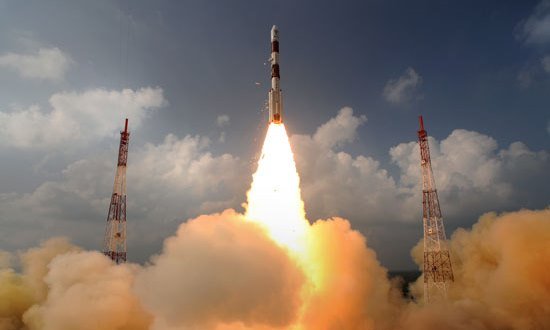
History was made this week as India’s Mars Orbiter Mission successfully fired its braking rockets and arrived in Mars’ orbit. The arrival of India’s maiden interplanetary voyager was confirmed at 7:30am, India Standard Time (02:00 UTC, or 8:00pm EDT in the U.S. on Tuesday, Sept 23rd). MOM is the nation’s first attempt to explore the Red Planet, and represents a new era is space exploration.
By putting a probe in orbit around Earth’s neighbor, India has officially joined the elite club of only three other entities who have launched probes that successfully investigated Mars – i.e. Russia, the United States, and the European Space Agency (ESA). It also represents an expansion in the space exploration, a competition once confined to two superpowers, to five major participants – the US, Russia, ESA, India and China.
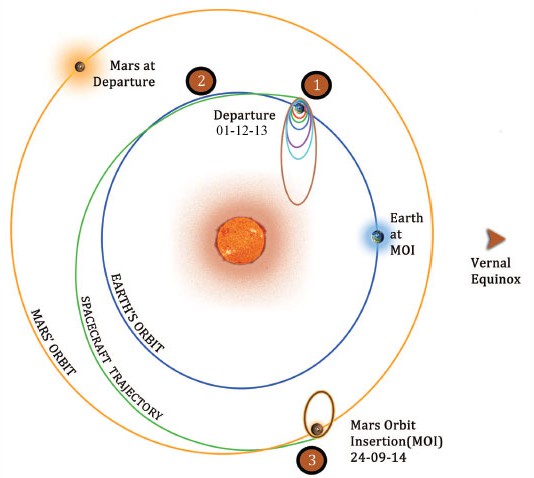
It took over ten months for MOM to cross the roughly 225 million kilometers (140 million miles) of interplanetary space that lie between Earth and Mars. Nevertheless, the 12.5 minutes that it took for the signal to reach Earth were far more intense and exciting. And the good news, which arrived at 10:30pm EDT (Sept. 23rd) or 8:00 IST (Sept. 24th) was met with wild applause and beaming smiles at India’s Bangalore mission control center.
MOM’s Red Planet arrival was webcast live worldwide by the Indian Space Research Organization (ISRO), India’s space agency which designed and developed the orbiter. ISRO’s website also gave a play by play in real time, announcing the results of critical spacecraft actions along the arrival timeline just moments after they became known. Indian PM Narenda Modi was watching the events unfold at ISRO’s Telemetry, Tracking and Command Network (ISTRAC).
Upon the announced arrival, Modi addressed the team, the nation and a global audience, lauding the accomplishment and outlining the benefits and importance of India’s space program. In a speech that echoes John F. Kennedy’s own from 50 years ago, Modi also implored the team to strive for even greater space exploration challenges:
India has successfully reached Mars! History has been created today. We have dared to reach out into the unknown and have achieved the near-impossible. I congratulate all ISRO scientists as well as all my fellow Indians on this historic occasion… We have gone beyond the boundaries of human enterprise and imagination. We have accurately navigated our spacecraft through a route known to very few. And we have done it from a distance so large that it took even a command signal from Earth to reach it more than it takes sunlight to reach us.
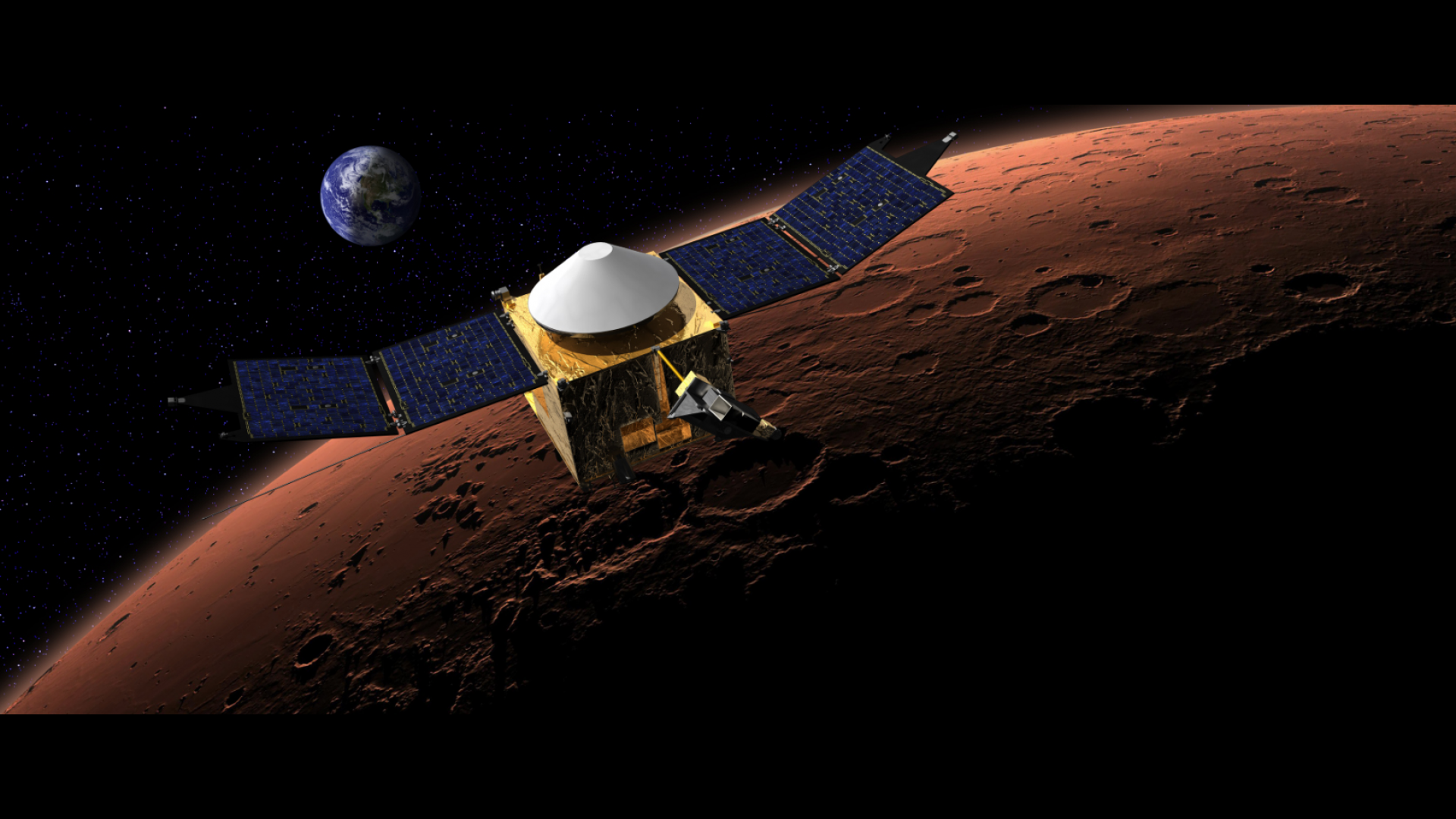
MOM’s success follows closely on the heels of NASA’s MAVEN orbiter which also successfully achieved orbit barely two days earlier on Sept. 21. Together, they will assess the extent to which Mars’ atmosphere decayed over the course of billions of years, and hopefully be able to reconstruct what it once looked like, and how it came to deteriorate. From all this, scientists hope to learn whether or not Mars once hosted life, and still is in some form.
MOM now joins Earth’s newly fortified armada of seven spacecraft currently operating on Mars surface or in orbit – which includes MAVEN, Mars Odyssey (MO), Mars Reconnaissance Orbiter (MRO), Mars Express (MEX), Curiosity and Opportunity. Bruce Jakosky, MAVEN Principal Investigator, related well-wished on behalf of NASA in a post on the ISRO MOM Facebook page:
Congratulations to the MOM team on behalf of the entire MAVEN team! Here’s to exciting science from the two latest missions to join the Mars fleet!
MOM was launched on Nov. 5, 2013 from India’s spaceport at the Satish Dhawan Space Centre, Sriharikota, atop the nations indigenous four stage Polar Satellite Launch Vehicle (PSLV). The flight path of the approximately $73 Million probe was being continuously monitored by the Indian Deep Space Network (IDSN) and NASA JPL’s Deep Space Network (DSN) to maintain its course.
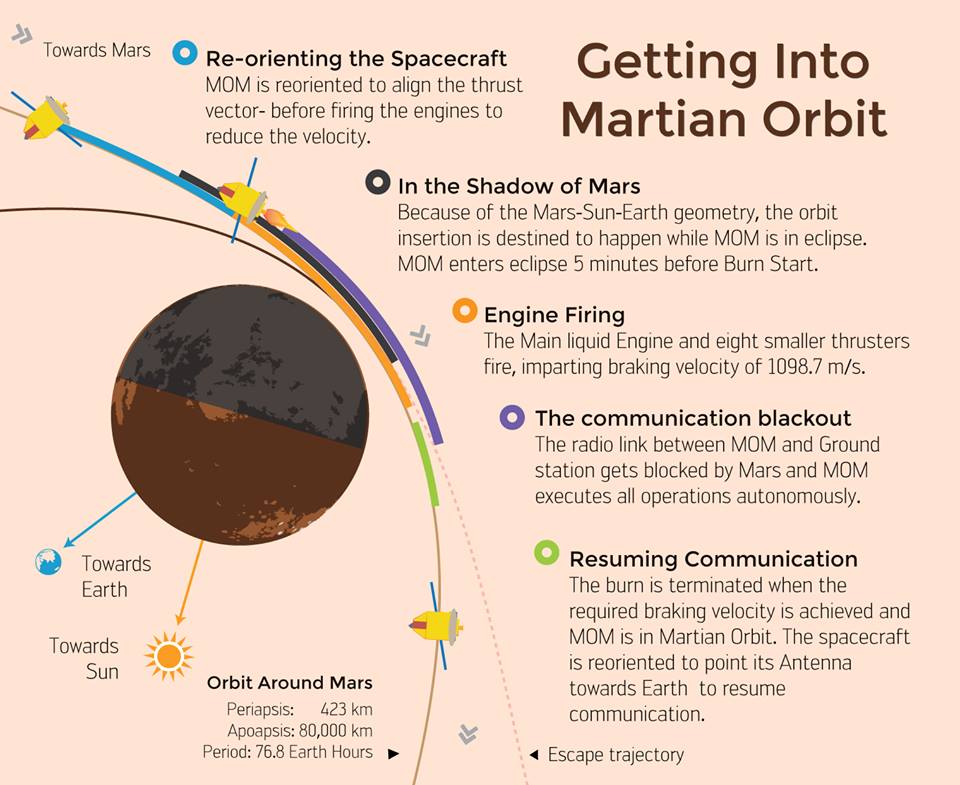
The do-or-die breaking maneuver that put MOM into orbit, known as the Mars Orbital Insertion (MOI), involved the craft’s engines firing for 24 minutes and 13 seconds. The entire maneuver took place autonomously under the spacecrafts preprogrammed sole control due to the long communications lag time and also during a partial communications blackout when the probe was traveling behind Mars and the signal was blocked.
As the ISRO said in a statement:
The events related to Mars Orbit Insertion progressed satisfactorily and the spacecraft performance was normal. The Spacecraft is now circling Mars in an orbit whose nearest point to Mars (periapsis) is at 421.7 km and farthest point (apoapsis) at 76,993.6 km. The inclination of orbit with respect to the equatorial plane of Mars is 150 degree, as intended. In this orbit, the spacecraft takes 72 hours 51 minutes 51 seconds to go round the Mars once.
MOM is expected to investigate the Red Planet for at least six months. Although it’s main objective is a demonstration of technological capabilities, it will also study the planet’s atmosphere and surface using five indigenous instruments – including a tri color imager (MCC) and a methane gas sniffer (MSM). Methane on Earth originates from both geological and biological sources – and could be a potential marker for the existence of Martian microbes.
Both MAVEN and MOM’s goal is to study the Martian atmosphere , unlock the mysteries of its current atmosphere and determine how, why and when the atmosphere and liquid water was lost – and how this transformed Mars climate into its cold, desiccated state of today. This will shed light not only on whether or not Mars supported life in the past, but if it still does in some form, and could possibly do so again.
This is an exciting time for space exploration, when ground-breaking news is happening on a regular basis and promises to lead to potentially Earth-shattering news in the future! And in the meantime, be sure to check out this video that recap’s MOM’s historic mission and arrival, courtesy of WorldBreakingNews:
This past summer, the FBI was compelled to release information about the operational facial recognition database they working on. As part of its Next Generation Identification (NGI) program, this database is part of the FBIs efforts to build a “bigger, faster and better” means of biometric identification. Earlier this month, the FBI announced that the system is now working at “full operational capability”, and many people are worried…
To break it down, the NGI database is made up of millions of stored mugshots and other photos, which are then used when analyzing footage taken by CCTV feeds or other cameras around the country. The full deployment of the program comes three months after James Comey, the bureau’s director, announced that the agency was “piloting the use of mug shots” alongside the bureau’s other databases, in order to catch wanted criminals.
Designed to replace the bureau’s aging fingerprint database, the NGI is different in that it is designed to be multimodal. This means that it will link multiple forms of biometric data to biographical information such as name, address, ID number, age and ethnicity. It’s currently focused on fingerprint and facial records, but it will also be capable of holding iris scans and palm prints, with the possibility of added voice recognition and gate analysis (i.e. how people walk).
As the FBI said in a statement on Monday, Sept. 15th, the NGI, combined with fingerprint database:
[W]ill provide the nation’s law enforcement community with an investigative tool that provides an image-searching capability of photographs associated with criminal identities.
Naturally, the worries that this database will be another step towards “Big Brother” monitoring. However, what is equally (if not more) worrisome is the fact that the details of the program are only a matter of public record thanks to a lawsuit filed by the Electronic Frontier Foundation. The lawsuit was issued in June of 2013, wherein the EFF compelled the FBI to produce records in accordance Freedom of Information Act to detail the program and its face-recognition components.
Citing the FBI documents, the EFF claims that the facial recognition technology is not very reliable and that the way the database returns results is fundamentally flawed, as well as pointing out that it will indiscriminately combine the details of both criminals and non-criminals. Based on their own interpretation, they claim it could fail 20 percent of the time, which could lead to innocent persons becoming the subject of police investigations.
Nevertheless, the bureau remains confident that the system will simplify and enhance law enforcement both locally and federally. As they said of the program when it was first announced back in 2011:
The NGI system has introduced enhanced automated fingerprint and latent search capabilities, mobile fingerprint identification, and electronic image storage, all while adding enhanced processing speed and automation for electronic exchange of fingerprints to more than 18,000 law enforcement agencies and other authorized criminal justice partners 24 hours a day, 365 days a year.
In 2012, the NGI database already contained 13.6 million images (of seven to eight million individuals) and by mid-2013, it had 16 million images. We now know it aims to have 52 million facial records in its system by next year, and those will include some regular citizens. This is another source of concern for the EFF and civil liberties advocates, which is the estimated 4.3 million images taken for non-criminal purposes.
Whenever someone applies for a job that requires a background check, they are required to submit fingerprint records. These records are then entered into federal databases. Right now, the FBI’s fingerprint database contains around 70 million criminal profiles, and 34 million non-criminal records. With the NGI database now up and running, photographs can be submitted by employers and other sources along with fingerprints, which puts non-criminals on file.
The database, while maintained by the FBI, can be searched by law enforcement at all levels. According to Jennifer Lynch, the EFF attorney behind the lawsuit:
Your image would be searched every time there is a criminal investigation. The problem with that is the face recognition is still not 100 percent accurate.” This means that the system is liable to make mismatches with data. If a camera catches a criminal’s face and that is compared to images in the database, there’s no guarantee that it will pop up an accurate result.
What’s more, when the database is searched it does not return a completely positive result; but instead provides the top hits, ranked by probability of match. So if your face just happens to be similar to a snapshot of a criminal caught in CCTV footage, you may become a suspect in that case. Combined with other forms of biometric readers and scanners, it is part of a general trend where privacy is shrinking and public spaces are increasingly permeated by digital surveillance.
This sort of data exchange and on-the-ground scanning will be made possible by – and is one of the explicit aims of – FirstNet, the nationwide broadband network for law enforcement and first responders, colloquially referred to by some as the “internet of cops”. Much like all things pertaining the expansion of the internet into the “internet of things”, this sort of growth has the capacity to affect privacy and become invasive as well as connective.
As always, fears of an “Orwellian” situation can be allayed by reminding people that the best defense is public access to the information – to know what is taking place and how it works. While there are doubts as to the efficacy of the NGI database and the potential for harm, the fact that we know about its inner workings and limitations could serve as a legal defense wherever a potentially innocent person is targeted by it.
And of course, as the issue of domestic surveillance grows, there are also countless efforts being put forth by “Little Brother” to protect privacy and resist identification. The internet revolution cuts both ways, and ensures that everyone registered in the torrential data stream has a degree of input. Fight the power! Peace out!
As a young man, there were few things cooler to me than tanks. Sure, I wanted to be a pilot at the time, with visions of fighter jets dancing in my head. But armored warfare and the cool and advanced designs of modern MBTs (Main Battle Tanks) were never far behind. And so I thought it was high time I did a post dedicated to the world of these behemoths and what the current crop have to offer.
British Mark V tank, ca. 1917
Originally invented in World War I as a means of infantry support, tanks quickly evolved over the ensuing decades to become a distinct and fearsome weapon of war. In 1917, they were deployed as a means of breaking the stalemate caused by trench warfare, and were little more than lumbering, thinly-skinned land fortresses. But by 1939/40, their use as fast, cohesive offensive weapons that could break through enemy lines and encircle entire armies was demonstrated.
Russian T-34/76 in World War II
Throughout the Second World War, tanks continued to evolve to sport heavier armor and guns with increased size, range, and muzzle velocity. By the end of the war, some truly interesting designs had been produced by all sides, ranging from the light to the super-heavy. But these were largely abandoned in favor of designs that could be mass produced and had a good balance of speed, durability, firepower and protection.
American M1 Abrams MBT
And by the 1970’s, the Cold War spurred on numerous developments that would culminate in the c0ncept of the MBT. These included the development of lighter, composite armor and advanced anti-armor systems. In addition, the MBT concept was intended to fill the heavy direct fire role of modern armies and replace the light, medium, heavy and super-heavy tanks that were common.
Since that time, every major world power has produced its own variant of the MBT. Here are all the top contenders, group in alphabetical order…
AMX Leclerc: Named in honor of General Philippe Leclerc de Hauteclocque, who led the French element of the drive towards Paris during World War II, the AMX Leclerc is The Main Battle Tank of France. Beginning production in 1991, the tank is now in service with the French Army, the army of the United Arab Emirates, and is also renowned for being the most expensive tank in history.
The tank’s main gun is the GIAT (Nexter) CN120-26 120mm smoothbore cannon, which is capable of firing the same NATO standard 120mm rounds as the German Leopard 2 and US M1 Abrams. Unlike other MBTs of its generation, the Leclerc comes with an autoloading system which reduces the crew to three, and has an ammo capacity of 40 rounds. It is also equipped with a 12.7 mm coaxial machine gun and a remote-controlled 7.62mm machine gun,
The hull and the turret are made of welded steel fitted with modular armor, which can be replaced easily for repair or upgraded over the years. Unlike other NATO tanks, the Leclerc does not use the standard Chobham composite armor and relies instead on a French variant that includes composite armor, titanium inserts on the sides of the turret, and Explosive Reactive Armor (ERA) blocks.
It’s eight-cylinder 1,000KW (1,500 hp) diesel engine can achieve a top speed of 72 km/h (45 mph) and it has an operational range of 550 km (342 mi) or 650 km (400 mi) with external fuel tanks.
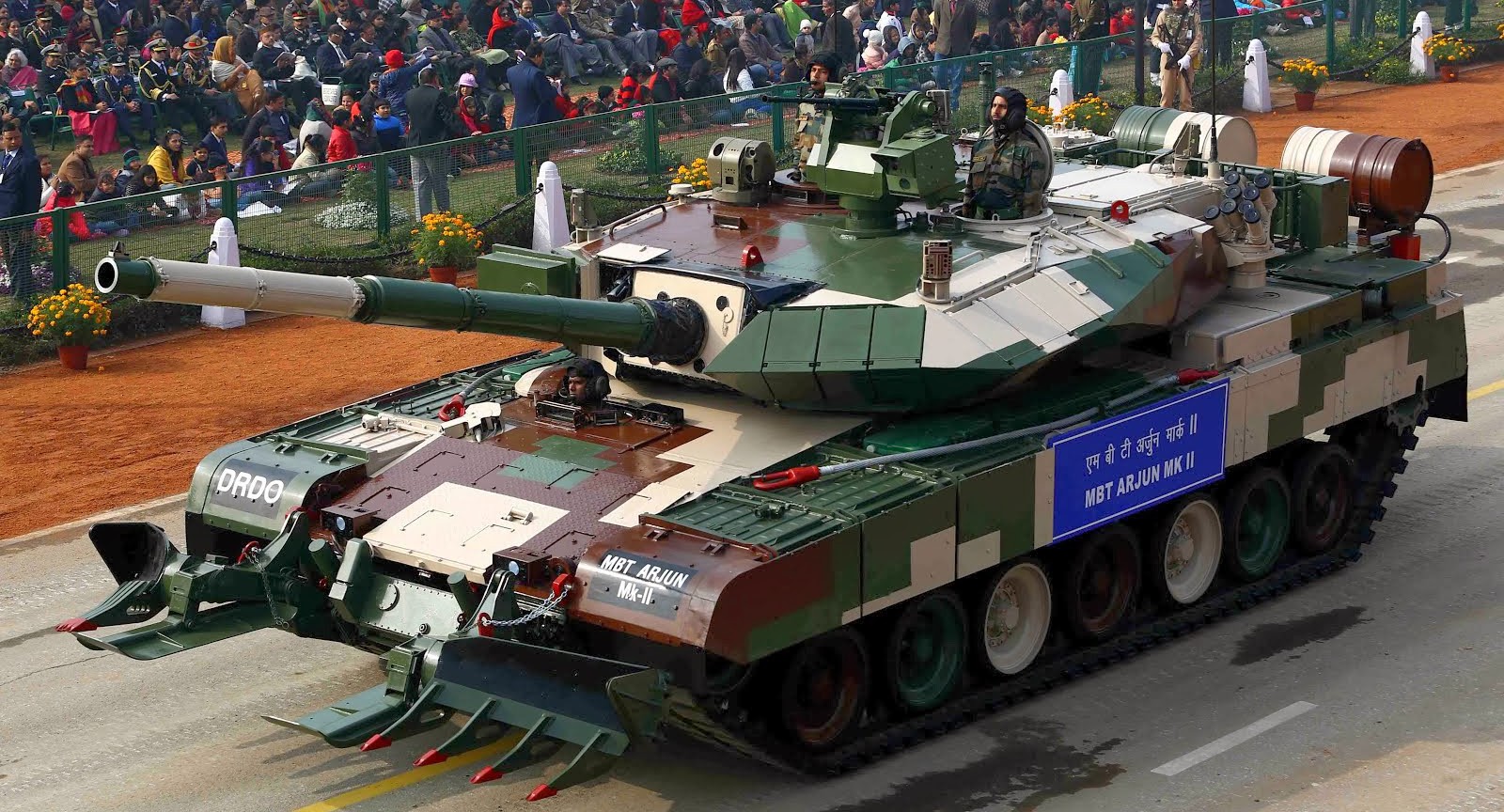
Arjun: The MBT of India and produced by the Defence Research and Development Organization (DRDO), the Arjun is named after the main protagonist and world’s greatest archer from the Indian epic, The Mahabharata. Design of the tank began in 1974 as a way of providing the Indian Army with an indigenously-designed and built tank. But delays prevented it from being officially developed until 2004.
The Arjun sports a 120 mm main rifled gun with indigenously developed Armor-Piercing Fin-Stabilized Discarding-Sabot (APFSDS) ammunition, one 7.62 mm coaxial machine gun, and a 12.7 mm machine gun. The tanks is protected by the modular composite Kanchan armor that is composed of layers of composite alongside rolled homogenous steel, and a new honeycomb design of non-explosive and non-energetic reactive armor (NERA) is reportedly being tested as well.
Like most MBTs of its generation, the Arjun has a four-man crew, including the commander, gunner, loader and a driver. It is powered by a single MTU multi-fuel diesel engine rated at 1,400 hp, and can achieve a maximum speed of 70 km/h (43 mph) and a cross-country speed of 40 km/h (25 mph).
C1 Ariete: The MBT of the Italian Army, the Ariete was developed by a consortium formed by Iveco-Fiat and Oto Melara (aka CIO, Consorzio Iveco Oto Melara), with the chassis and engine produced by Iveco and the turret and fire-control system supplied by Oto Melara. Development began in 1988, with the first prototypes being delivered by 1995 and the tank entering into full service by 2002.
The Ariete’s main armament is a native 120 mm smoothbore cannon that uses the APFSDS-T, HEAT, and most NATO-standard rounds of the same caliber. The tank has a capacity of 42 rounds and secondary armaments consist of a 7.62 mm MG 42/59 coaxial machine gun and an additional 7.62 mm MG 42/59 configured as an anti-aircraft weapon that is fired from the hatch.
The vehicle carries the latest optical and digital-imaging and fire-control systems, which include a laser range-finder, thermal optics and a digital fire-control computer that can be networked. The Ariete’s armor is a steel and composite blend, similar to the British Challenger 2 and the American M1 Abrams. The tank is powered by a 25.8-litre turbo-charged Fiat-Iveco MTCA 12-cylinder diesel engine rated at 937 kilowatts (1,250 hp) that allows for a top cruising speed of 65 km/h.
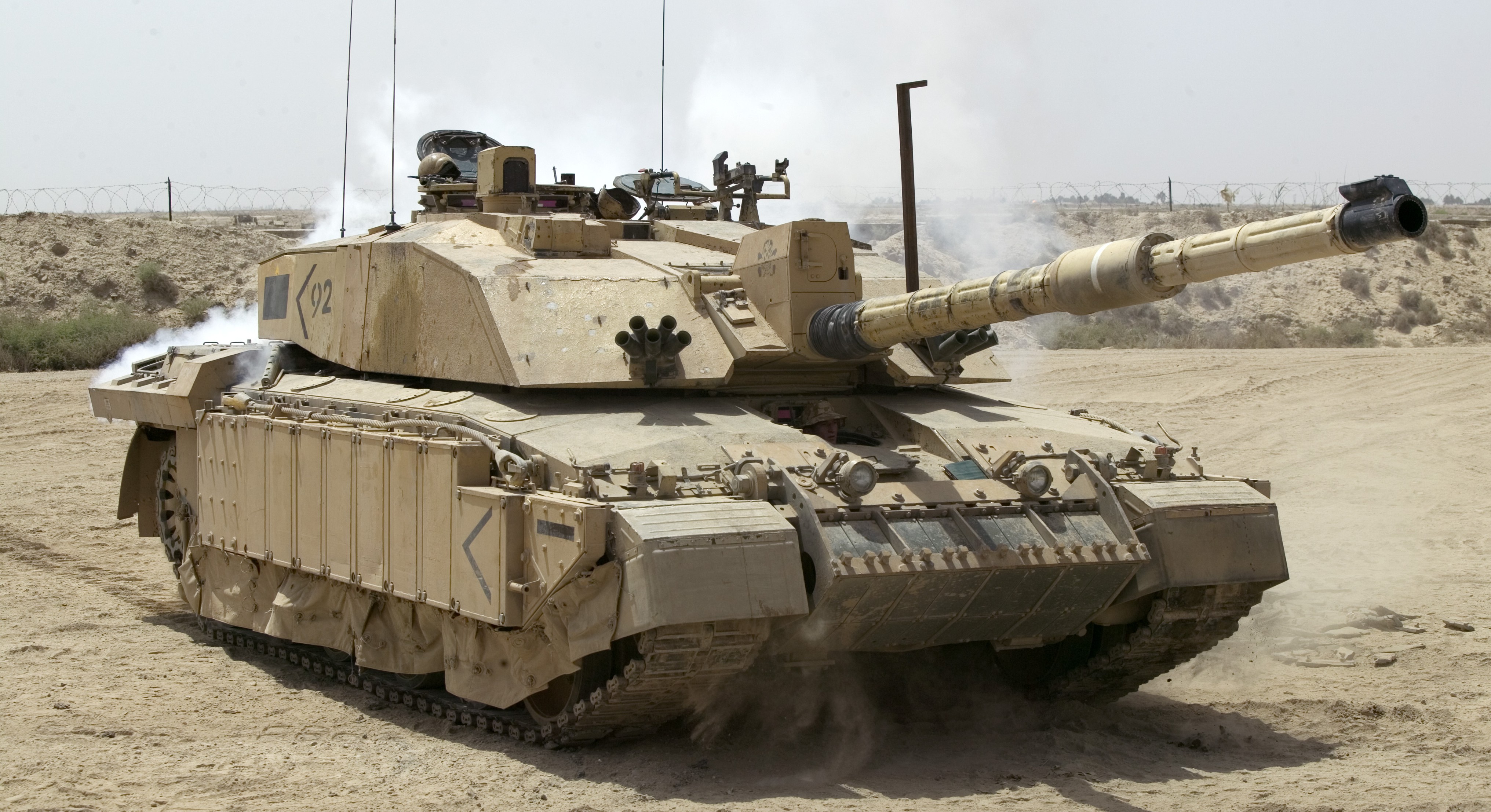
Challenger 2: The MBT of the British Army, the Challenger 2 was designed and built by the British company Vickers Defence Systems (now known as BAE Systems Land and Armaments). Development of the tank began back in 1986 as an eventual replacement for the Challenger 1, which served as the mainstay of the British armor forces from the early 80s to the mid-90s.
The tanks main gun is the 120 millimeters L30A1 cannon which, unlike other NATO MBT’s, is rifled so that it can fire the high explosive squash head (HESH) rounds in addition to APFSDS armor-piercing rounds. The Challenger 2 is also armed with a 7.62 mm coaxial chain gun. a 7.62 mm roof-mounted machine gun, and can also mount a remote weapons system with a 7.62 mm machine gun, a 12.7mm heavy machine gun, or a 40mm automatic grenade launcher.
Challenger 2 is one of the most heavily armored and best protected tanks in the world, employing second-generation Chobham armor (aka. Dorchester) that is sloped in order to deflect the explosive energy of anti-tank weapons. Explosive Reactive Armor (ERA) kits are also fitted as necessary along with additional bar armor and the tank’s shape is also designed with stealth technology to reduce radar signature.
The tank’s advanced targeting systems include a laser range-finder, night vision, thermal vision, digital fire control, and the option of a Battlefield Information Control System. It’s drive system consists of a Perkins 26.6 liter CV12 diesel engine delivering 890 kW (1,200 hp). It is capable of reaching 60 km/h (37 mph) on open road for 450 km (280 mi), or 40 km/h (25 mph) cross-country for 250 km (156 mi).
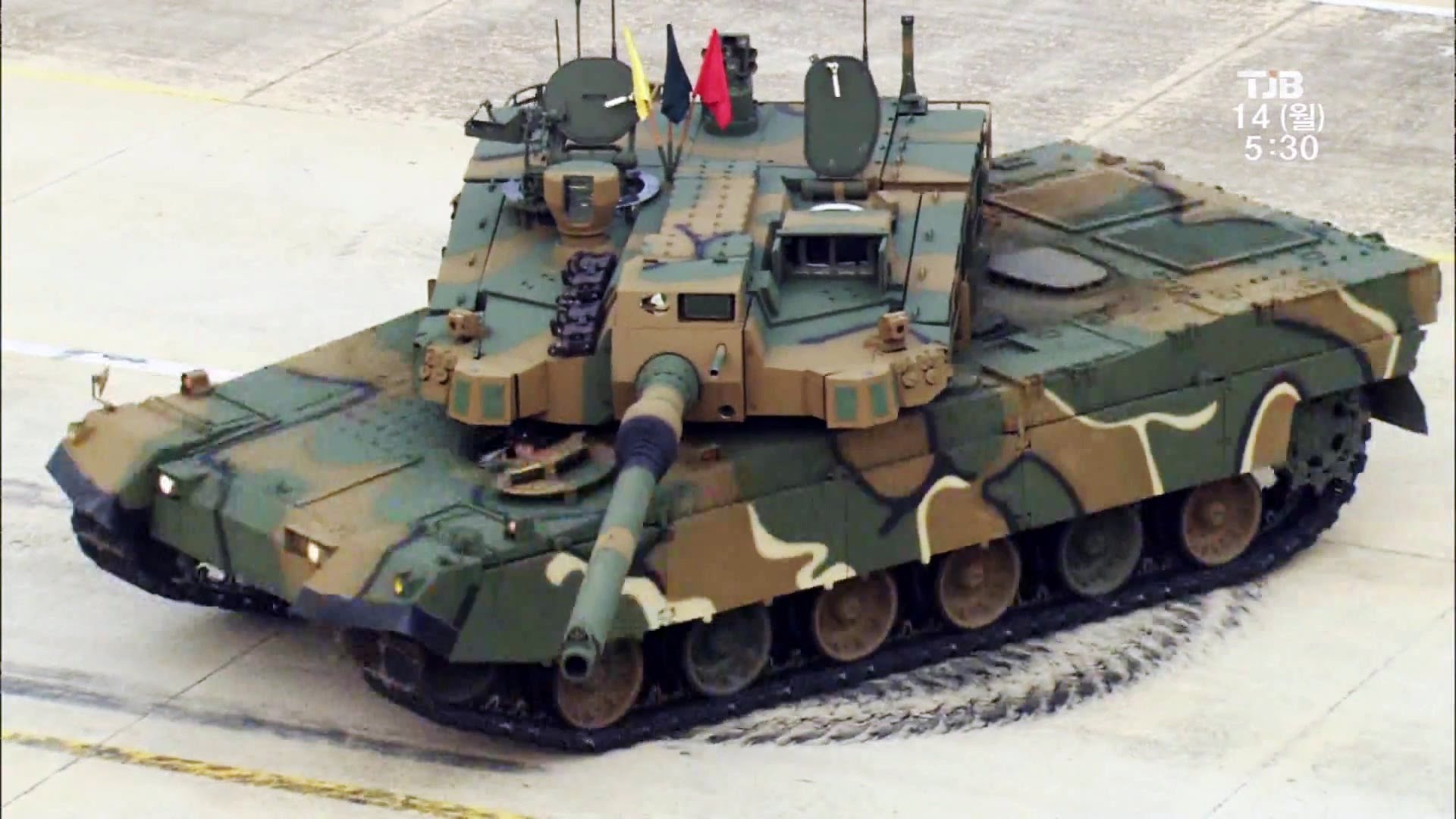
K2 Black Panther: A fourth-generation MBT in service with the South Korean armed forces, the K2 began development in 1995 and officially entered service in 2014. Despite enjoying technical superiority over North Korea’s aging army of T-55 and T-59 tanks, the purpose of the K2 was to create an MBT using entirely indigenous technology which could also be sold on the foreign export.
In terms of armament, the K2 comes equipped with L55 120 mm 55 caliber smoothbore gun that – capable of firing standard APFSDS rounds, as well as the Korean Smart Top-Attack Munition (KSTAM) anti-tank missile – a 12.7 mm heavy machine gun and a 7.62 mm coaxial machine gun. It also comes equipped with an advanced Fire Control System (FCS) linked to a millimeter band radar system along with a traditional laser range-finder and crosswind sensor.
In terms of protection, the K2 employs a classified type of composite armor with ERA and NERA modular add-ons, in addition to soft-kill and hard-kill anti-missile defense systems. It also has a Radar Warning Receiver (RWR), radar jammer and Laser Warning Receivers (LWR) to alert the crew if the vehicle becomes “painted” and to deploy Visual and Infrared Screening Smoke (VIRSS) grenades.
The tanks drive system is a 4-cycle, 12-cylinder water-cooled diesel engine capable of generating 1,100 kW (1500 hp), with an operation range of 450 kilometers (280 mi). Its top speed on paved road is 70 km/h (43 mph), and 50 km/h (31 mph) cross-country.
Leopard 2: Developed by Krauss-Maffei in the early 1970s for the West German Army, the Leopard 2 entered service in 1979 to replace the older Leopard 1 models. In addition to being the MBT of a united Germany after 1989, the Leopard 2 is also one of the most widely-used tanks in the world, serving in a total of 16 armies that range from Germany and Austria, to Canada, Turkey, Singapore and Indonesia. Due to improved technology, the tank has also gone through many variations.
The primary gun on the Leopard 2 is the Rheinmetall L/44 120 mm smoothbore gun, which is capable of firing APFSDS warheads as well as the German DM12 multipurpose anti-tank projectile (MPAT) and the LAHAT anti-tank guided missile. It also has two 7.62mm machine guns, a coaxially-mounted one in the turret, and the other on an external anti-aircraft mount. The tank also has a stabilization system, a laser rangefinder, thermal imaging and a fire control computer.
For protection, the Leopard 2 uses spaced, multi-layered composite armor that incorporates Rolled Homogenous Armor (RHA), interior spall liners and the option of slat armor on the sides to protect from Rocket-Propelled Grenades (RPGs). The Leopard 2 is also equipped with a fire protection system that automatically dispenses halomethane foam in the event that the interior temperature rises above a certain point.
It is powered by a 1,103 kW (1,479 hp) V-12 liquid-cooled twin-turbo diesel engine with a fuel capacity of 1200 liters (317 gallons). It has a top speed of 72 km/h (45 mph) and an operational range of 550 km (340 mi).
M1 Abrams:The M1 is a third-generation tank and the MBT of the US Army US Marine Corps, Australian, Egyptian, Kuwaiti and Saudi Arabian armies. Development began in 1972 and culminated in 79, with the first tanks entering service in 1980 to replace the older M60 Patton tank. Since that time, it has gone through multiple upgrades and variants in order to take advantage of the latest in technology.
Though the original M1 was equipped with the M68A1 105 mm rifled tank gun, it was quickly upgraded to a 44 and then 55 caliber 120 mm smoothbore gun (variants on Rheinmetall’s L/44 and L/55 used by the Leopard 2). It is capable of firing the APFSDS and HEAT rounds, as well as the M1028 anti-personnel canister cartridge. It also comes with two 7.62mm machine guns – one coaxial and one turret-mounted – and a 12.7mm machine gun mounted by the commander’s hatch.
The tank also has a full-stabilization system for the main gun an comes equipped with a laser rangefinder, crosswind sensor, a pendulum static cant sensor, thermal imaging and a firing computer. The tank’s crew is protected by a halon firefighting system similar to the Leopard 2’s, and a rear ammo compartment with blowout panels that protect the crew from its own ammo exploding.
The tank is protected by composite armor that is composed of alloys of steel, ceramics, plastic composites, and Kevlar, similar to British Chobam armor. It may also be fitted with reactive armor over the track skirts if needed and slat armor over the rear of the tank and rear fuel cells to protect against RPGs. Beginning in 1987, M1A1 tanks also received armor packages that incorporated depleted uranium components at the front of the turret and hull.
The M1 is powered by a 1,120 kW (1500 hp) turbine engine that is capable of running on gas or diesel with a fuel capacity of 1900 liters (500 gallons) and an operational range of 426 km (265 mi). The M1 and M1A1 have a a top speed of 67/72 km/h (42/45 mph) on the road and or 40/48 km/h (25/30 mph) off-road respectively.
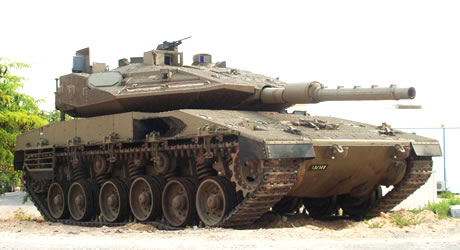
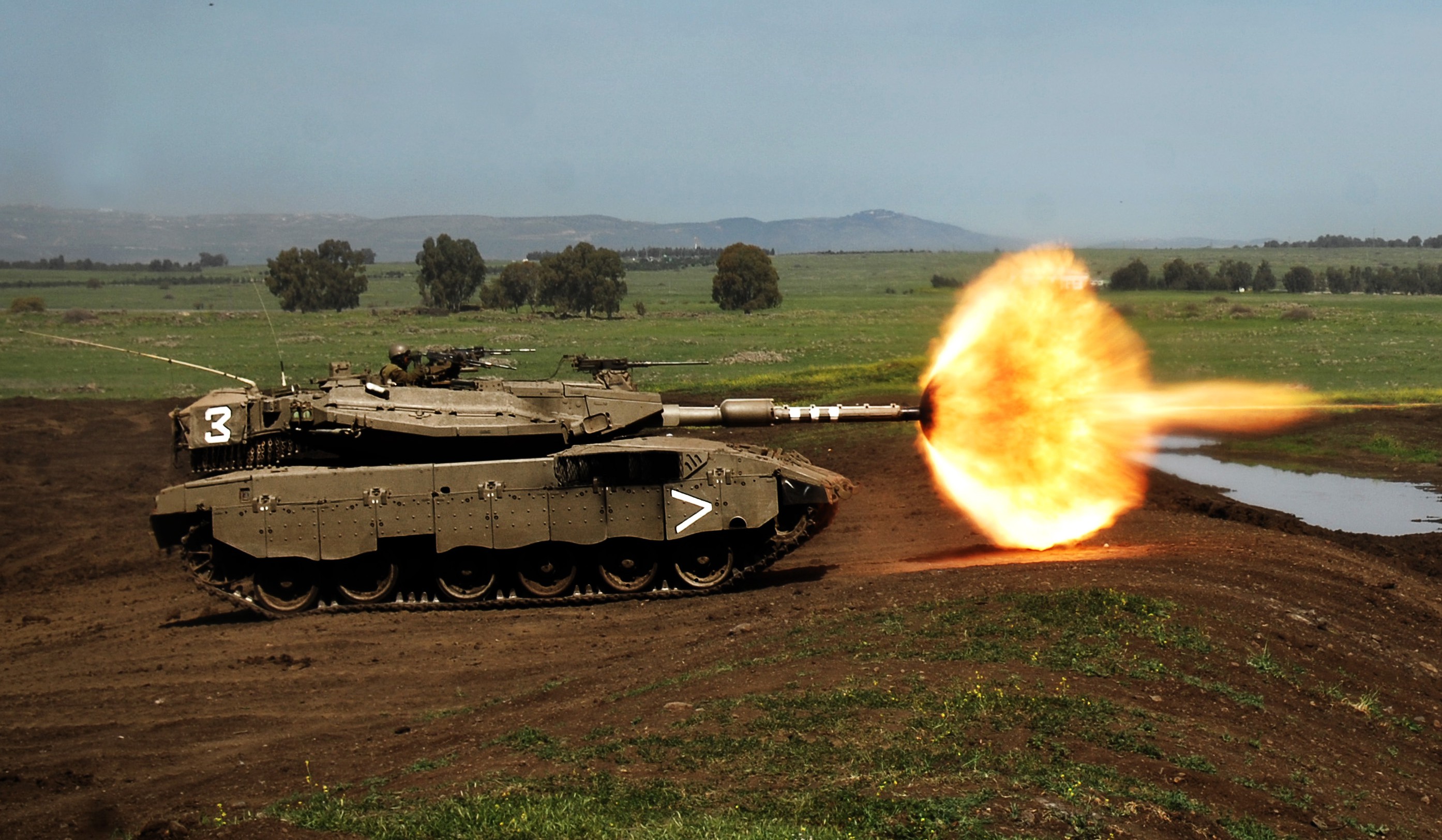
Merkava IV: The latest MBT of the Israeli Defense Forces, the Merkava and its predecessors have the distinction of being designed with considerable input from soldiers themselves. The fourth variant of the Merkava program, the Mark IV began development in 1999 and entered service by 2004. Like its predecessors, it was designed for rapid repair of battle damage, survivability, cost-effectiveness and off-road performance.
Following the model of contemporary self-propelled howitzers, the turret assembly is located closer to the rear than in most main battle tanks and has the engine in front to provide additional protection against a frontal attack. It also has a rear entrance to the main crew compartment allowing easy access under enemy fire. This allows the tank to be used as a platform for medical disembarkation, a forward command and control station, and an armored personnel carrier.
The Mark IV includes the larger 120 mm smoothbore gun that can the HEAT and APFSDS rounds, using an electrical semi-automatic revolving magazine for 10 rounds. It also includes two 7.62 machine guns for anti-infantry defense. a 60 mm mortar, and a 12.7 mm machine gun for anti-vehicle operations. The tank’s 1112 KW (1,500 hp) turbocharged diesel engine can achieve a top road speed of 64 km/h (40 mph).
Some features, such as hull shaping, exterior non-reflective paints, and shielding for engine heat plumes mixing with air particles are designed to confuse enemy thermal imagers and make the tank harder to spot by heat sensors and radar. It also comes equipped with sectioned, modular armor that can be easily removed and replaced and carries the BMS (Battle Management System) – a centralized system that networks and shares data from all over the battlefield.
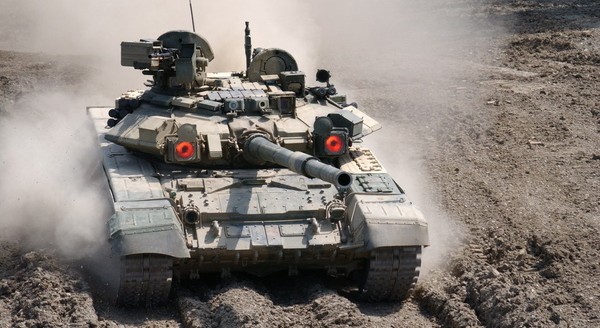
T-90: A third-generation MBT that is essentially a modernization of the T-72B and incorporating many of the features of the T-80U, the T-90 is the mainstay of the Russian armed forces. Proposed as a way of creating a single design that would cost less than employing tanks at once, the T-90 sought to marry the mass-production-friendly aspects of the T-72B with the modern amenities of the T-80U. Production began in 1992 and has continued unabated since.
The T-90’s main armament is a 125 mm smoothbore cannon that is capable of firing APFSDS rounds, high-explosive anti-tank (HEAT-FS), and high explosive fragmentation (HE-FRAG) rounds, as well as the Refleks anti-tank guided missile. It also comes with a 12.7mm remotely controlled anti-aircraft heavy machine gun above the commanders hatch and a coaxial 7.62 mm machine gun.
The T-90 is fitted with a “three-tiered” protection system, the first of which is composite armor in the turret that consists of a basic armor shell with an insert of alternating layers of aluminum and plastics and a controlled deformation section. The second tier is third generation Kontakt-5 ERA blocks which, along with sandwiching steel plates and composite filler, make up the turret’s forward armor package.
The third tier is a Shtora-1 (“curtain”) countermeasures suite that includes two electro-optical/IR “dazzlers” on the front of the turret (the distinct Red Eyes), four Laser warning receivers, two 3D6 aerosol grenade discharging systems and a computerized control system. The Shtora-1 warns the tank’s crew when the tank has been ‘painted’ and infrared jammer jams the guidance system of some anti-tank guided missiles.
The tank is powered by a 12-cylinder diesel engine that comes in the 618 kW (840 hp), 746 kW (950 hp), and 930 kW (1250 hp) varieties. Depending on the type of engine, the T-90 has an operational range of 550-700 kms (340-430 mi) and a top speed of 60–65 km/h (37–40 mph).
Type 10 Hitomaru: Designed to replace Japan’s aging Type 90, the Type 10 is a fourth-generation MBT and the second to be entirely developed by Japan for use by the Japan Ground Self-Defense Force. Development began in the 1990’s, the first prototypes being showcased at the 2008 Technology Research and Development Institute (TRDI), and the tank officially entered service with the armed forces by 2012.
In terms of armaments, the Type 10 is believed to use a 120 mm smoothbore gun developed by Japan Steel Works, similar to the L/44, L/50, and L/55 guns licensed by Rheinmetall. The gun is capable of firing all standard 120 mm NATO ammunition, including the newly developed APFSDS round. It also has a roof-mounted 12.7 mm machine gun and a coaxial 7.62 mm machine gun.
The vehicle’s armor consists of modular sections, composed of nano-crystal steel (or Triple Hardness Steel) and modular ceramic composite armor. The tank also has an auto loader which reduces the crew size to three, and comes with day and night sights as standard features. It also has the C4I (Command, Control, Communication, Computer & Intelligence) system which can be incorporated into the JGSDF network to enable sharing of information among units.
The tanks is powered by a 883 kW (12oo hp) V8 Diesel engine that is capable of acheiving speeds of up to 70 km/h (43 mph) in both forward and reverse, and has an operational range of 440 km (273 mi).
Type 99: Also known as ZTZ-99 and WZ-123, and developed from the Type 98, the Type 99 is a third generation main battle tank (MBT) fielded by the Chinese People’s Liberation Army (PLA). Much like its predecessor, the T-99 is designed to compete with both contemporary Russian and western designs. Development began in 2001 and a prototype was unveiled at the China People’s Revolution Military Museum in Beijing during the 2007 Our troops towards the sun exhibition.
The main armament is the 125 mm smoothbore gun which is capable of firing sabot APFSDS, HEAT, and HE-FRAG projectiles, as well as the Soviet AT-11 laser-guided anti-tank missiles and a specially-developed depleted uranium round. It also comes with a remotely operated 12.7 mm machine gun, a commander’s 12.7 mm machine gun, and coaxially-mounted 7.62 mm machine gun.
Though the nature of the Type 99’s armor protection remains classified, it is assumed to be of comparable RHA strength to other third-generation designs, as well as an experimental composite armor known as transparent ceramic. There is also observational evidence that the armor includes modular composite armor that comes in block form, or the addition of ERA blocks.
The Type 99 is powered by a 1100 kW (1500 hp) liquid-cooled diesel engine, with a special (2100 hp) engine for the
Type 99KM model. The tank has a maximum speed of 80 km/h (50 mph) with an operational range of 600 km (373 mi).
Summary/The Future: When looking at the full spectrum of third-generation and fourth-generation tank designs, a few common features become clear. Tanks that were conceived and designed during and after the 1970’s were all intended to take advantage of the latest in tank and anti-tank systems, and for good reason. Since their inception in the second decade of the 20th century, tanks grew in speed, lethality and versatility. Hence, countless systems were devised to knock them out.
In addition to anti-tank rifles and guns that were used throughout the 1920’s and 30’s, these ensuing decades added rockets and rocket-propelled grenades. At the same time, tanks themselves began to sport larger caliber guns with increased range, velocity and more sophisticated warheads. By the 1960’s, optically-tracked and computer-guided missiles were introduced and led to more rounds of innovation.
This led to the introduction of composite armor, which included aluminum alloy, ceramics, depleted uranium, and rolled homogenous steel. This was developed simultaneously with the advent of depleted uranium sabot rounds, shaped charge plasma rounds, and guided missiles that could be fired from a tank gun. Basically, third-generation tanks would combined the ultimate in tank protection and anti-tank weaponry.
Stabilization systems were also introduced along the way which had a revolutionary impact. Prior to their use, tanks were forced to stop driving in order to fire a shot at the enemy, which made them temporarily vulnerable. But with the new stabilizers – as well as targeting computers, night vision, and laser range finders – tanks were now extremely accurate, could fire while on the move, and could engage the enemy day or night.
Today’s fourth-generation tanks take advantage of all of this, and add to it with networking capabilities, more sophisticated computers, and defensive systems that let the crew know when they are being targeted by laser-guided munitions. Armor is also becoming increasingly modular and component-based so tanks can add to their protection or strip down to lighten their loads and increase their speeds.
When it comes to the future of tank warfare, the same forces appear to be at work. Basically, tank systems need to be smarter, stealthier, and more adaptable rather than simply heavier and more lethal. As such, there are numerous projects being developed by DARPA and other defense agencies around the world to create “stealth tanks”, vehicles that would be invisible to thermal imagine and could take advantage of adaptive camouflage to avoid being spotted.
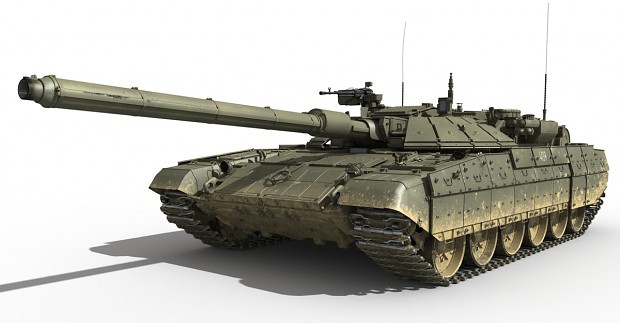
Armata UCP concept
At the same time, there are efforts to create universal combat systems, such as a heavy military vehicle platform that can be fitted to serve in a number of roles. A perfect example of this is Russia’s Armata Universal Combat Platform, a tracked platform will be the basis for a main battle tank, a heavy infantry fighting vehicle, a combat engineering vehicle, an armored recovery vehicle, a heavy armored personnel carrier, a tank support combat vehicle or a self-propelled artillery gun.
With such a system, combat engineers would be able to mount whatever turret or additional components they need to create a vehicle of their choice, one which is suited to the combat role or mission it is expected to perform. This sort of adaptability and versatility also informs ideas for a new class of AFVs (Armored Fighting Vehicles) that would be lighter, more mobile, and could be retrofitted to act as a tank, APC, IFV, command vehicle, or anything else needed.
There are even plans to develop a whole new race of warmachines that would rely on a combination of avoidance, stealth, speed and maneuverability rather than heavy, modular armor for protection. Who can tell which will bear fruit ultimately? At this point though, one thing is clear: in the coming years, tanks will continue to get smarter and become increasingly networked, turning each one into a mobile command and combat platform.
Never let it be said that the zombie apocalypse is going out of vogue, as it now seems that The Walking Dead has some competition. It’s called Z Nation – a show that premiered on Sept 12th on the SyFy channel – and which takes a similar, but altogether different approach for dealing with the zombie pandemic. Whereas the former is dark in tone and the characters seem to lurch from one tragedy to the next, this new series is all about zombie smashing!
As creator Karl Schaefer said of his creation, comparing it to its immediate rival:
If you’re going to go through the apocalypse, would you rather be with the people onThe Walking Dead, who are always kind of miserable and not having any fun, or our guys that are out to go kick some zombie ass?
I know my answer, and I have to say I’m a little peeved as well as impressed. Kicking zombie ass was what my series Whiskey Delta was supposed to be about! In fact, reviewers of that series have said how much they like a story where, for once, the military isn’t totally incompetent and knows how to deal with the infected and the undead hordes. Man, I haven’t felt this ripped-off since J J Abrams’ Revolution first aired!
But enough about my half-assed grievances. As with The Walking Dead, World War Z, and a slew of other zombie franchises, the storyline revolves around a motley group of survivors who have come together in the aftermath of the collapse of civil order. In addition, the zombie concept is based on a virus that takes people over and reanimates their bodies once they die. But alas, there’s a big twist, which you will see in the trailer below.
Z Nation debuted to 1.6 million views for its premiere on Friday, September 12th, which is fairly modest for a Syfy drama series. But the network pointed out that this is a record for an acquired show produced by an outside party (Sharkado production company The Asylum made ZNation), and that noted more viewers watched Z Nation than the most recent telecasts of The Leftovers on HBO, Teen Wolf on MTV and Doctor Who on BBCA.
And interestingly enough, those ratings were comparable to the premier of The Walking Dead‘s fourth season fall premier, provided you add a decimal point in there. Yes, in a strange case of convergence, the WD episode “30 Days Without an Accident” garnered a total of some 16 million viewers, beating out the 2014 Winter Olympics AND the Beatles TV movie entitled The Beatles: The Night That Changed America.
So yes, it’s got some catchup work to do if it wants to be a contender for the top spot, but it’s really just getting started. Suffice it to say, I will be watching this show from now on! Check out the trailer and see if you agree:
Between artificial knees, total hip replacements, cataract surgery, hearing aids, dentures, and cochlear implants, we are a society that is fast becoming transhuman. Basically, this means we are dedicated to improving human health through substitution and augmentation of our body parts. Lately, bioprinting has begun offering solutions for replacement organs; but so far, a perfectly healthy heart, has remained elusive.
Heart disease is the number one killer in North America, comparable only to strokes, and claiming nearly 600,000 lives every year in the US and 70,000 in Canada. But radical new medical technology may soon change that. There have been over 1,000 artificial heart transplant surgeries carried out in humans over the last 35 years, and over 11,000 more heart surgeries where valve pumps were installed have also been performed.
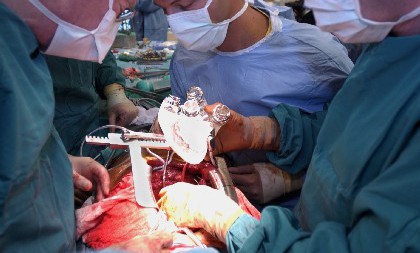
And earlier this month, a major step was taken when the French company Carmat implanted a permanent artificial heart in a patient. This was the second time in history that this company performed a total artificial heart implant, the first time being back in December when they performed the implant surgery on a 76-year-old man in which no additional donor heart was sought. This was a major development for two reasons.
For one, robotic organs are still limited to acting as a temporary bridge to buy patients precious time until a suitable biological heart becomes available. Second, transplanted biological hearts, while often successful, are very difficult to come by due to a shortage of suitable organs. Over 100,000 people around the world at any given time are waiting for a heart and there simply are not enough healthy hearts available for the thousands who need them.
This shortage has prompted numerous medical companies to begin looking into the development of artificial hearts, where the creation of a successful and permanent robotic heart could generate billions of dollars and help revolutionize medicine and health care. Far from being a stopgap or temporary measure, these new hearts would be designed to last many years, maybe someday extending patients lives indefinitely.
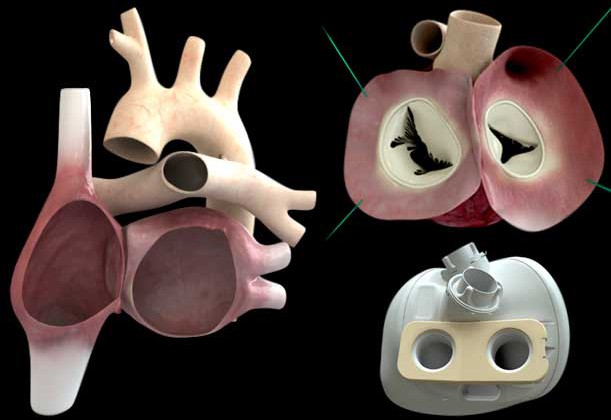
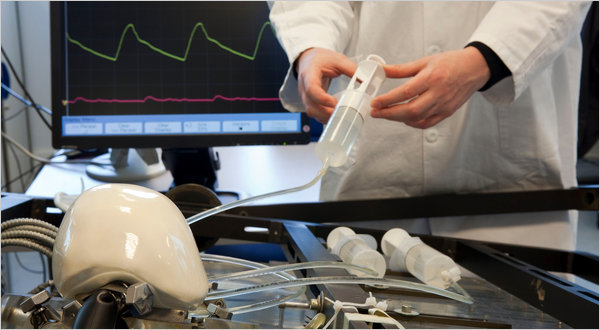
Carmat – led by co-founder and heart transplant specialist Dr. Alain Carpentier – spent 25 years developing the heart. The device weighs three times that of an average human heart, is made of soft “biomaterials,” and operates off a five-year lithium battery. The key difference between Carmat’s heart and past efforts is that Carmat’s is self-regulating, and actively seeks to mimic the real human heart, via an array of sophisticated sensors.
Unfortunately, the patient who received the first Carmat heart died prematurely only a few months after its installation. Early indications showed that there was a short circuit in the device, but Carmat is still investigating the details of the death. On September 5th, however, another patient in France received the Carmat heart, and according to French Minister Marisol Touraine the “intervention confirms that heart transplant procedures are entering a new era.”
More than just pumping blood, future artificial hearts are expected to bring numerous other advantages with them. Futurists and developers predict they will have computer chips and wi-fi capacity built into them, and people could be able to control their hearts with smart phones, tuning down its pumping capacity when they want to sleep, or tuning it up when they want to run marathons.
The benefits are certainly apparent in this. With people able to tailor their own heart rates, they could control their stress reaction (thus eliminating the need for Xanax and beta blockers) and increase the rate of blood flow to ensure maximum physical performance. Future artificial hearts may also replace the need for some doctor visits and physicals, since it will be able to monitor health and vitals and relay that information to a database or device.
In fact, much of the wearable medical tech that is in vogue right now will likely become obsolete once the artificial heart arrives in its perfected form. Naturally, health experts would find this problematic, since our hearts respond to our surroundings for a reason, and such stimuli could very well have unintended consequences. People tampering with their own heart rate could certainly do so irresponsibly, and end up causing damage other parts of their body.
One major downside of artificial hearts is their exposure to being hacked thanks to their Wi-Fi capability. If organized criminals, an authoritarian government, or malignant hackers were dedicated enough, they could cause targeted heart failure. Viruses could also be sent into the heart’s software, or the password to the app controlling your heart could be stolen and misused.
Naturally, there are also some critics who worry that, beyond the efficacy of the device itself, an artificial heart is too large a step towards becoming a cyborg. This is certainly true when it comes to all artificial replacements, such as limbs and biomedical implants, technology which is already available. Whenever a new device or technique is revealed, the specter of “cyborgs” is raised with uncomfortable implications.
However, the benefit of an artificial heart is that it will be hidden inside the body, and it will soon be better than the real thing. And given that it could mean the difference between life and death, there are likely to be millions of people who will want one and are even willing to electively line up for one once they become available. The biggest dilemma with the heart will probably be affordability.
Currently, the Carmat heart costs about $200,000. However, this is to be expected when a new technology is still in its early development phase. In a few years time, when the technology becomes more widely available, it will likely drop in price to the point that they become much more affordable. And in time, it will be joined by other biotechnological replacements that, while artificial, are an undeniably improvement on the real thing.

 When it comes to diseases and conditions that have long been thought to be incurable – i.e. cancer, diabetes, HIV – nanoparticles are making a big impact. In the case of HIV, solutions have been developed where gold nanoparticles can deliver bee venom or HIV medication to cells of the virus, while leaving healthy tissue alone. As for diabetes and cancer, the same concept has proven useful at both seeking out and delivering medication to the requisite cells.
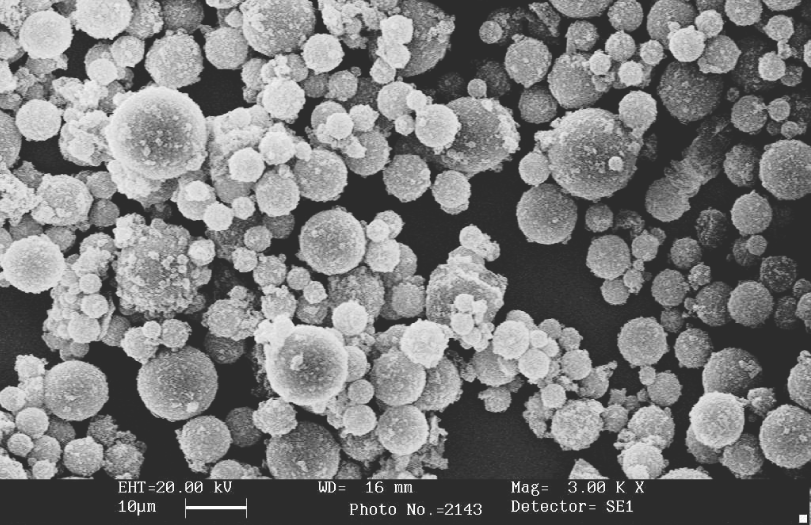 One of the big challenges in developing multitasking nanoparticles is that they are traditional designed with one purpose in mind. They are constructed using either inorganic or organic compounds, each with strengths of their own. Inorganic nanoparticles, such those made from gold, are effective in imaging and diagnostics. Organic nanoparticles, on the other hand, are biocompatible and provide a safe method of drug delivery.
 They found the particle was effective in delivering cancer-fighting drugs such as doxorubicin (commonly used in chemotherapy). In addition, they found that while applying light (known as photodynamic therapy), the nanoparticles release reactive molecules called singlet oxygen that destroy tumor cells, while heating them with a laser (known as photothermal therapy) provided another way for the particles to destroy tumors.
 In relation to imaging and phototherapy, the nanoparticle remained in the body for extended periods and bonded with imaging agents. And because CNPs are drawn more to tumor tissue than normal tissue, it helps to improve contrast and light them up for MRI and PET scans. This effectively makes the UC Davis nanoparticle a triple threat as far as cancer treatments are concerned.
 Typical nanoparticle designs don’t allow for scaling, since they call for building a nanoparticle first, then encapsulating the drug molecules within it or chemically attaching the molecules to it. Attempting to add more drugs makes assembling the final nanoparticle exponentially more difficult. To overcome these limitations, Jeremiah Johnson, an assistant professor of chemistry at MIT, created nanoparticle building blocks that already included the desired drug.
 The approach not only allows different drug-containing blocks to be assembled into specific structures, but it also enables each drug to be released separately via different triggers. The team has tested its triple threat nanoparticles, containing drugs typically used to treat ovarian cancer – such as doxorubicin, cisplatin and camptothecin – against lab-grown ovarian cancer cells.
 The researchers believe this approach can potentially be used to link hundreds of building blocks to create multidrug-carrying nanoparticles, and pave the way for entirely new types of cancer treatments, free from the damaging side effects that accompany traditional chemotherapy. The MIT team is currently working on making nanoparticles that can deliver four drugs, and are also engaged in tests that treat tumor cells in animals.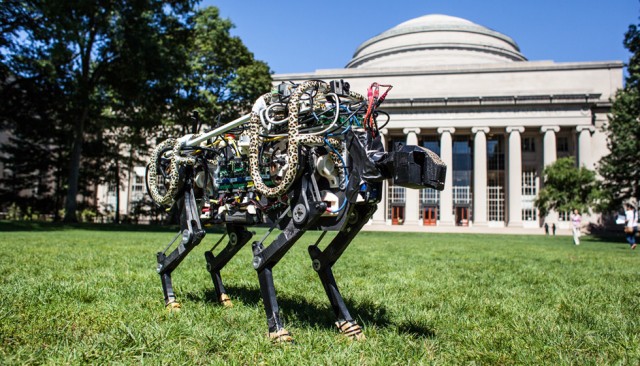



























 Never let it be said that the zombie apocalypse is going out of vogue, as it now seems that The Walking Dead has some competition. It’s called Z Nation – a show that premiered on Sept 12th on the SyFy channel – and which takes a similar, but altogether different approach for dealing with the zombie pandemic. Whereas the former is dark in tone and the characters seem to lurch from one tragedy to the next, this new series is all about zombie smashing!
 But enough about my half-assed grievances. As with The Walking Dead, World War Z, and a slew of other zombie franchises, the storyline revolves around a motley group of survivors who have come together in the aftermath of the collapse of civil order. In addition, the zombie concept is based on a virus that takes people over and reanimates their bodies once they die. But alas, there’s a big twist, which you will see in the trailer below.
 And interestingly enough, those ratings were comparable to the premier of The Walking Dead‘s fourth season fall premier, provided you add a decimal point in there. Yes, in a strange case of convergence, the WD episode “30 Days Without an Accident” garnered a total of some 16 million viewers, beating out the 2014 Winter Olympics AND the Beatles TV movie entitled The Beatles: The Night That Changed America.



 Stories by Williams