The Future of Naval Warfare: Supersonic Submarines

Chinese_subsResearchers in China are reporting that they’ve taken a big step towards creating a truly revolutionary submarine. For years, the nation has been dedicated to the expansion of the People’s Liberation Army Navy (PLAN) Submarine Force. That latest announcement in this plan is the intended development of supersonic submarines. And if feasible, it could a sub to travel from Shanghai to San Francisco a distance of about 9650 km (6,000 miles) – in just 100 minutes.

The research behind this proposed development comes from the Harbin Institute of Technology’s Complex Flow and Heat Transfer Lab, where researchers are applying a concept known as supercavitation. Originally conceived by the Soviets in the ’60s to create high-speed torpedoes, the Harbin researchers are looking to take things to the next level by applying it to a much larger sea-faring vessel.

https://i0.wp.com/www.extremetech.com/wp-content/uploads/2014/08/supercavitation-diagram.jpgAs is commonly known, objects moving through water have a harder time than those moving through air. While automobiles are only able to travel so fast before succumbing to wind resistance (aka. drag), surface ships and submarines must content with fluid-dynamics, which are much more tricky. Compared to air, water is far more dense and viscous, which means more energy is required to get up to a certain speed.
Even the most modern and advanced nuclear submarine cannot travel much faster than 40 knots (74 kph/46 mph), and the same applies to torpedoes. Higher speeds are possible, but would require so much power to make it impractical. That’s where supercavitation comes into play, a technique devised with the explicit purpose of creating high-speed torpedoes during the Cold War.

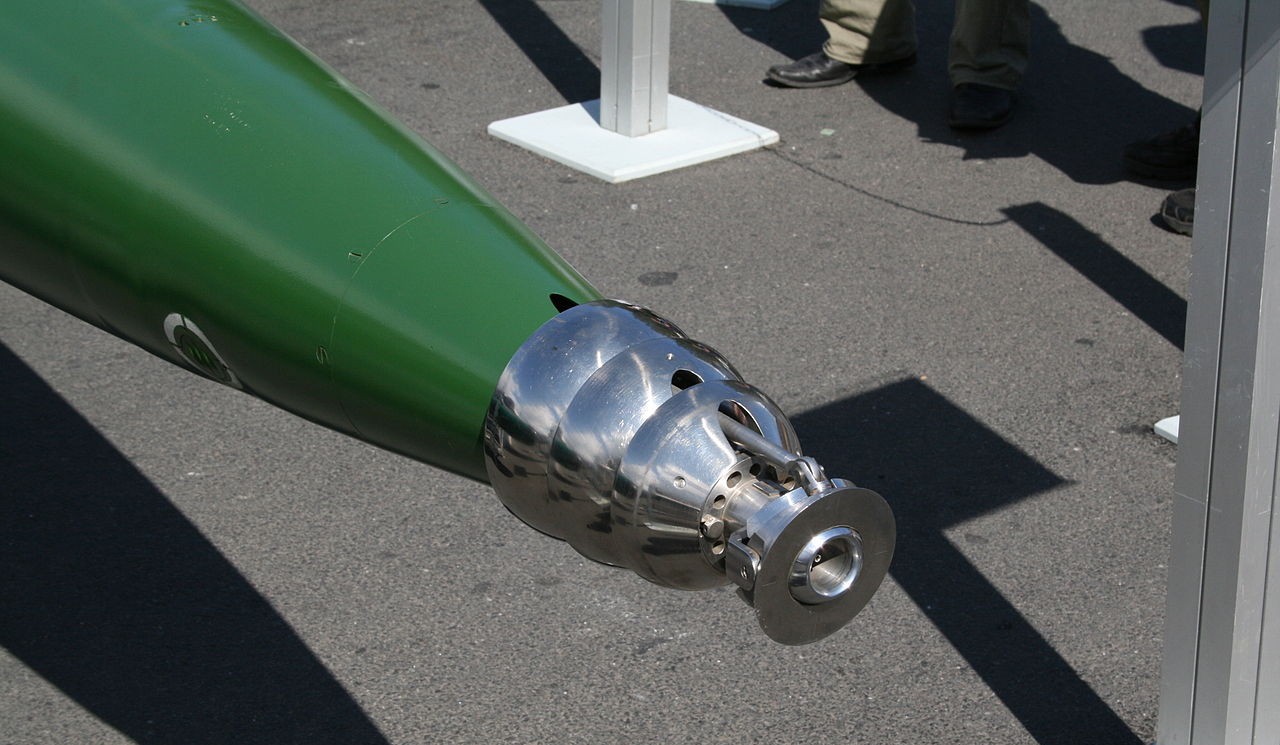
Shkval_headThis technique gets around the drag of water by creating a bubble of gas for the object to travel through. In the hands of the Soviet’s, the research resulted in the Shkval torpedo, which uses a special nose cone to create the supercavitation envelope that allows it to travel through the water at speeds of up to 200 knots (370 kph/230 mph) – much, much faster than the standard torpedoes fielded by the US.

The only other countries with supercavitational weapons are Iran – which most likely reverse-engineered the Russian Shkval – and Germany, the creators of the Superkavitierender Unterwasserlaufkörper (“supercavitating underwater running body”). The US is researching its own supercavitational torpedo, but there’s very little public information available. Meanwhile, China is not only looking to create supercavitating torpedoes, but an underwater vessel.

supercavitational-torpedo-techUnlike previous designs, which had to be launched at speeds of 95 km (60 mph) to create a supercavitation bubble, the method described by the Harbin researchers uses a “special liquid membrane” to reduce friction at low speeds. This liquid is showered over the object to replenish the membrane as it’s worn off by the passage of water, and once the object gets up to speed, it would theoretically use the same nose-cone technique to achieve supercavitation.

In theory, supercavitation could allow for speeds up to the speed of sound — which underwater is 5343 kph (3,320 mph) – which would allow a sub to go from Shanghai to San Francisco in well under two hours. For any nation with a nuclear arsenal – i.e. China, Russia, France, the UK, the US – the ability to deploy nuclear missile subs speedily around the world is certainly desirable.

https://i0.wp.com/grupocaos2007.brinkster.net/supercav2/BancoPruebMini.JPGBut of course, there are some challenges posed by the concept and any ship that is equipped to run on it. For one, it is very difficult to steer a supercavitating vessel and conventional methods (like rudders) don’t work without water contact. Second, developing an underwater engine that’s capable of high velocity over long distances is very difficult. Jet engines do not work underwater and generally, rockets only have enough fuel to burn for a few minutes.

Nuclear power might be a possibility as far as supersonic submarines go, but that’s strictly academic at this point. Li Fengchen, a professor at the Harbin Institute, says their technology isn’t limited to military use. While supersonic submarines and torpedoes are at top of the list, the same technology could also boost civilian transport, or even boost the speed of swimmers. As Li put it:

If a swimsuit can create and hold many tiny bubbles in water, it can significantly reduce the water drag; swimming in water could be as effortless as flying in the sky.

https://storiesbywilliams.com/wp-content/uploads/2014/09/e1095-chinese_submarine.jpgAs always with such advanced (and potentially weaponized) technology, it’s hard to say how far away it is from real-world application. Given that this is primarily a military research project within China, one can expect that it will remain shrouded in secrecy until it is ready. And if civilian researchers are making good progress, then it’s a fairly safe bet that the military is even further along.

While the future of transit is already exciting – what with hyperloops, aerospace travel, robotaxis and robot cars – the idea that people could travel under the waves as fast as on they could on the Concorde is pretty cool! At the same time, the idea that subs equipped with nuclear missiles could reach our shores within two hours is pretty scary. But futuristic military technology has never been known to inspire warm and fuzzy feelings, has it?

Sources: extremetech.com, scmp.com

Finalists Selected for Qualcomm Tricorder XPrize

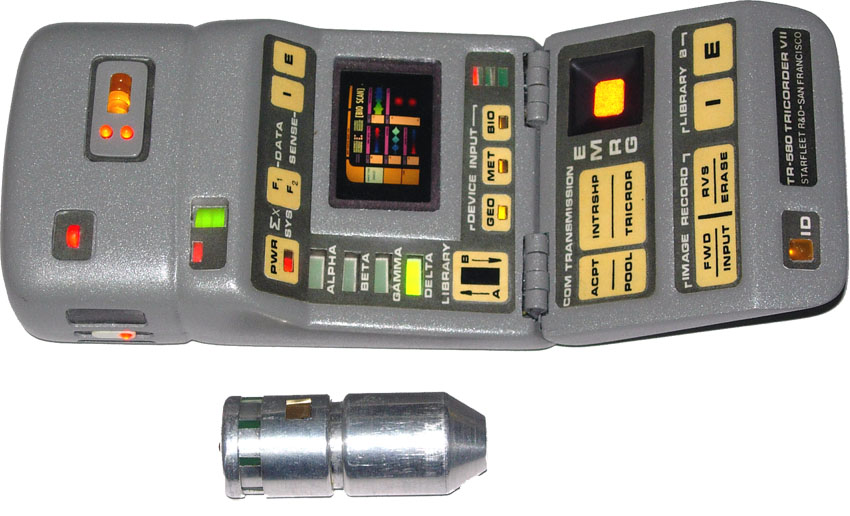
Tricorder X_prizeFirst announced in 2012, the Qualcomm Tricorder XPRIZE has sought to bring together the best and brightest minds in the field together to make science fiction science fact. In short, they sought to create a handheld device that could would mimic some of the key functions of the iconic Star Trek tricorder, allowing consumers access to reliable, easy to use diagnostic equipment any time, anywhere, with near instantaneous results.

And now, the list of potential candidates has been whittled down to ten finalists. And while they might be able to live up to the fictitious original, the devices being developed are quite innovative and could represent a significant technological advancement in the diagnostic domain. Qualcomm is offering a US$10 million prize purse in the hope of stimulating the research and development of precision diagnostic equipment.

medical_tricorderIn order to qualify for the prize, the successful scanner must comply with an ambitious set of parameters. First, the device must be able to reliably capture an individual’s heart rate, respiratory rate, blood pressure, and oxygen saturation in an easy to use and completely non-invasive fashion. It must also diagnose 13 core diseases – including pneumonia, tuberculosis and diabetes – along with three additional health conditions to be chosen by each team.

Each device varies widely in terms of appearance and composition, but that’s hardly surprising. The only limitations placed on the teams in terms of construction is that the entire apparatus must have a mass of less than 2.3kg (5 lb). Due to the wide range of tests needed to be carried out by the tricorder in order to capture the necessary health metrics, it is highly unlikely that any of the scanners will take the form of a single device.

qualcommtricorderchallenge-3The shortlisted entries include Scanadu (pictured above), a company which is currently developing an entire portfolio of handheld medical devices. The circular sensor is programmed to measure blood pressure, temperature, ECG, oximetry, heart rate, and the breathing rate of a patient or subject – all from a simple, ten second scan. Then there’s Aezon, an American-based team comprised of student engineers from Johns Hopkins University, Maryland.

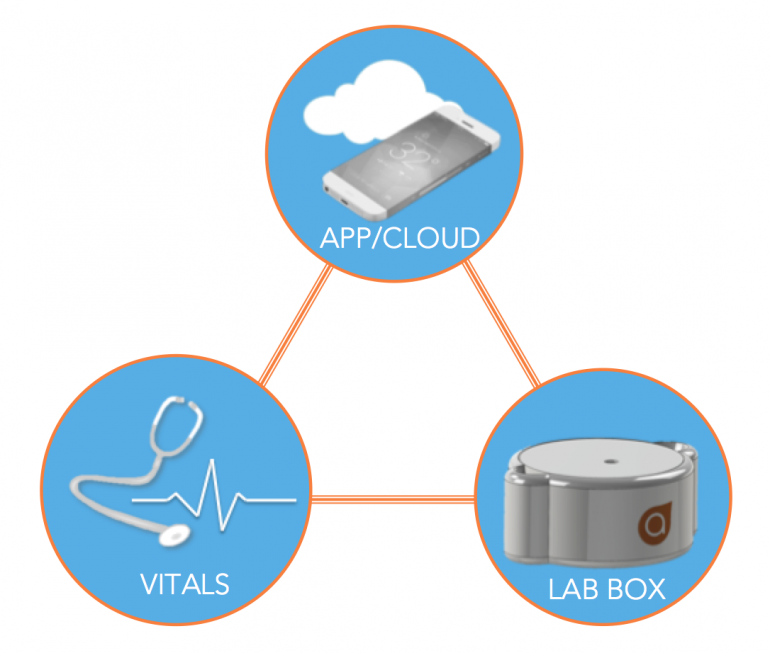
The Aezon device is made up of a wearable Vitals Monitoring Unit – designed to capture oxygen saturation, blood pressure, respiration rate and ECG metrics – and The Lab Box, a small portable device that makes use of microfluidic chip technology in order to diagnose diseases ranging from streptococcal pharyngitis to a urinary tract infection by analyzing biological samples.

Tricorder XThe other finalists include CloudDX, a Canadian company from Mississauga, Ontario; Danvantri, from Chennai, India; DMI from Cambridge, Mass; the Dynamical Biomarkers Group from Zhongli City, Taiwan; Final Frontier Medical Devices from Paoli, PA; MESI Simplifying Diagnostics from Ljubljana, Slovenia; SCANurse from London, England; and the Zensor from Belfast, Ireland.

In all cases, the entrants are compact, lightweight and efficient devices that push the information obtained through their multiple sensors to a smartphone or tablet interface. This appears to be done with a proprietary smartphone app via the cloud, where it can also be analyzed by a web application. Users will also be able to access their test results, discover information regarding possible symptoms and use big data to form a possible diagnosis.


qualcommtricorderchallenge-2

The next and final round of tests for the teams will take place next year between November and December. The scanners will be put through a diagnostic competition involving 15-30 patients whilst judges evaluate the consumers user experience. The final test will also assess the scanners’ adequacy in high-frequency data logging, and the overall winners will be announced in early 2016, and awarded the lucrative $10 million prize to develop their product and bring it to market.

If such a device could be simple enough to allow for self-diagnosis by the general public, it could play a key part in alleviating the pressure on overburdened healthcare systems by cutting down on unnecessary hospital visits. It will also be a boon for personalized medicine, making regular hospital visits quicker, easier, and much less expensive. And let’s not forget, it’s science fiction and Trekky-nerd gold!

Be sure to check out the video below that outlines the aims and potential benefits of the Qualcomm Tricorder XPRIZE challenge. And for more information on the finalists, and to see their promotional videos, check out the Qualcomm website here.


Source:
gizmag.com, tricorder.xprize.org

Anniversary of Canada Joining World War II

WWII_letsgocanadaposter75 years ago today, Canada joined its Commonwealth allies and declared war on Nazi Germany, signalling its entrance into the Second World War. And today, Canadians come together to celebrate and pay their respects to this national effort that saw a small nation rise to the greatest challenge in history, and commit sacrifices that would earn the respect of people the world over and stand the test of time.

The declaration came roughly a week after the German invasion of Poland on Sept. 1st, 1939 and the subsequent declaration of war by both Britain and France. Unlike the First World War, where Canada was obliged to become involved as part of the Commonwealth, Canada enjoyed a measure of self-determination in foreign affairs at this time and declared war autonomously. Though it was generally understood that Canada would become involved to support its allies, this decision was a significant event in the evolution of our nation.

British_Columbia_Regiment_1940Over the course of the next six years, Canada would enjoy a changing role in the war effort. Beginning the war as a largely unprepared participant, Canada would go on to become Britain’s most important ally for the next two years. Thereafter, Canadian forces would be a crucial arm of the British war effort, taking part in some of the toughest offensives on the Western Front and in both the air war and the war at sea.

Our first taste of combat came in the Battle of the Atlantic, which lasted from Sept. 1939 to war’s end in May of 1945. This would prove to be the longest battle of the war, and certainly one of the most crucial. Between the Royal Canadian Navy, the Canadian Merchant Navy, and the Royal Canadian Air Force (RCAF), thousands of Canadians fought and died to ensure the safe passage of troops and goods across the Atlantic to Britain.

operation-overlordThis not only ensured that Britain did not collapse during the darkest days of the war in 1940 and 41. From 1942 onward, it was part of the largest buildup in military history, which in turn led to the D-Day landings, the liberation of France, and victory in Europe. During the Battle of Normandy (June 6th – Aug. 25th, 1944), Canadian forces distinguished themselves in the Battle of Caen and the Falaise Pocket, two key operations that led to the defeat of the Nazis in France.

Between 1939 and 1945, Canada also made major contribution to the air war through the British Commonwealth Air Training Plan and the Royal Canadian Air Force. Given that Britain was vulnerable to air strikes from Germany early in the war, Canada became the site of the Commonwealth’s pilot training, and provided countless men and women with the skills they needed to fly fighters, bombers, supply planes and sub hunters.

battle_of_britainThe RCAF would also participate heavily in the Battle of Britain and combat operations in Europe, the north Atlantic, north Africa, southern Asia, and at home. By war’s end, it would be the fourth largest air force in the world. Similarly, the Royal Canadian Navy, which provided escort to British and Allied shipping across the Atlantic, was intrinsic in hunting U-boats, and would become the world’s fifth largest surface fleet by wars end.

In addition, Canada participated in some of the most costly and ugly defeats in the war. This included the Battle of Hong Kong, one of the first battles of the Pacific Campaign which occurred on the same morning as the attack on Pearl Harbor. Here, a total of 14,000 British, Canadian, Indian and Chinese troops faced off against 52,000 Japanese Imperial soldiers and were defeated. Those that survived were taken as slaves, while those countless others were mercilessly slaughtered.

dieppe-dsAnd on August 19th, 1942, the 2nd Canadian Infantry Division took part in one of the most poorly-planned operations of the war – the Dieppe Raid. Here, Canadian, British, Free French and Polish troops stormed a well-defended occupied port in Northern France and were forced to retreat. Of the nearly 5,000-strong Canadian contingent that went ashore, 3,367 were killed, wounded or taken prisoner – an exceptional casualty rate of 68%.

All told, a total of 1,187,334 Canadian men and women were mobilized to fight in the war from a population that numbered 11 million before the war. Afterward, Canada would go on to become a major voice for peacekeeping and human rights on the international stage. This was exemplified by John Peters Humphrey (a Canadian) being the principle drafter of the UN Universal Declaration of Human Rights, and Canadian troops participating in peacekeeping missions all around the world.

My father placing soil from Bramford by Wilmot's headstone
My father placing soil from Brantford by Wilmot’s headstone

At the same time, some 45,400 Canadians would make the ultimate sacrifice to defeat Fascism, militarism, and genocide – close to half a percent of Canada’s total population. And I am honored to say that this past April, I was able to pay my respects at several Commonwealth cemeteries where many of them were laid to rest. This included Beny-sur-Mer, Ranville, and the Bayeux Commonwealth Cemetery.

My first cousin, twice removed, Wilmot Pettit was one of those individuals who did not make it home. As a member of the Royal Air Force, he was tasked with towing gliders into Normandy on D-Day as part of the Eastern Task Force. While flying over Grangues, his plane was shot down and he and his crew were killed. Today, his body rests at Ranville Cemetery, surrounded by many fellow Canadians and British soldiers who perished on that “Day of Days”.

Canada_ww2This past year has been an ongoing procession of anniversaries. From the seventieth anniversary of the Normandy Invasion, to the Centennial of the outbreak of World War I, to the seventy-fifth anniversary of World War II, and now the seventy-fifth of Canada entering the war… It certainly makes one feel thankful. At the same time, it reminds us of just how fragile peace and civility are – not to mention how important.

In today’s world, there are still many people who – either out of selfishness, stupidity, grief or ignorance – seek to cause harm or profit from violence. Sadly, these people often finds themselves at the head of an army of willing supplicants. One can only hope that something other than a global effort and a major expenditure of life will not be needed to stop them before it’s too late!

The Future is Here: DARPA’s Nervous System Implants

DARPA_implantHard on the heels of their proposed BRAIN initiative – a collaborative research initiative to map the activity of every neuron in the human brain – DARPA has announced a bold new program to develop tiny electronic implants that will be able to interface directly with the human nervous system to control and regulate many different diseases and chronic conditions, such as arthritis, PTSD, Crohn’s disease, and depression.

The program, called ElectRx (pronounced ‘electrics’), ultimately aims to replace medication with “closed-loop” neural implants which monitor the state of your health and then provide the necessary nerve stimulation to keep your organs and biological systems functioning properly. The work is primarily being carried out with US soldiers and veterans in mind, but the technology will certainly percolate down to civilians as well.

electrx-darpaThe ElectRx program will focus the relatively new area of medical therapies called neuromodulation, which seeks to modulate the nervous system to improve neurological problem. Notable examples of this are cochlear implants which restore hearing by modulating your brain’s auditory nerve system, and deep brain stimulation (DBS) which is apparently capable of curing/regulating conditions  like depression and Parkinson’s by overriding erroneous neural spikes.

So far, these implants have been fairly large, which makes implantation fairly invasive and risky. Most state-of-the-art implants also lack precision, with most placing the stimulating electrodes in roughly the right area, but which are unable to target a specific bundles of nerves. With ElectRx, DARPA wants to miniaturize these neuromodulation implants so that they’re the same size as a nerve fiber.

electrx-darpa-implant-diagramThis way they can be implanted with a minimally invasive procedure (through a needle) and attached to specific nerve fibers, for very precise stimulation. While these implants can’t regulate every condition or replace every medication (yet), they could be very effective at mitigating a large number of conditions. A large number of conditions are caused by the nervous system misfiring, like inflammatory diseases, brain and mental health disorders.

Currently, a variety of drugs are used to try and cajole these awry neurons and nerves back in-line by manipulating various neurotransmitters. However, the science behind these drugs is not yet exact, relying heavily on a trial-and-error approach and often involving serious side-effects. Comparatively, an electronic implant that could “catch” the misfire, cleans up the signal, and then retransmits it would be much more effective.

cochlear_implantAs DARPA’s Doug Weber explained:

The technology DARPA plans to develop through the ElectRx program could fundamentally change the manner in which doctors diagnose, monitor and treat injury and illness. Instead of relying only on medication — we envision a closed-loop system that would work in concept like a tiny, intelligent pacemaker. It would continually assess conditions and provide stimulus patterns tailored to help maintain healthy organ function, helping patients get healthy and stay healthy using their body’s own systems.

Despite requiring a lot of novel technological breakthroughs, DARPA is planning to perform human trials of ElectRx in about five years. The initial goal will be improving the quality of life for US soldiers and veterans. And while they have yet to announce which conditions they will be focusing on, it is expected that something basic like arthritis will be the candidate – though there are expectations that PTSD will become a source sooner other than later.

AI'sAnd this is just the latest neurological technology being developed by DARPA. Earlier in the year, the agency announced a similar program to develop a brain implant that can restore lost memories and experiences. A joint fact sheet released by the Department of Defense and the Veteran’s Association revealed that DARPA also secured 78 million dollars to build the chips as part of the government’s Brain Research through Advancing Innovative Neurotechnologies (BRAIN) program.

While DARPA’s ElectRx announcement is purely focused on the medical applications of miniature neural implants, there are of course a variety of other uses that might arise from elective implantation – for soldiers as well as civilians. With a few well-placed implants in a person’s spine, they could flip a switch and ignore any pain reported by your limbs, allowing them to withstand greater physical stress or ignore injuries.

posthumanImplants placed in muscle fibers could also provide added electrostimulation to provide extra boosts of raw muscle power. And With precision-placed implants around the right nerve fibers, people could gain manual control of their organs, allowing them to speed up or slow down their hearts, turbo-charge their livers, or tweak just about any other function of their bodies.

The age of the Transhuman looms, people!

Source: extremetech.com, motherboard.vice.com, darpa.mil

Is the Universe One Big Hologram?

universe_nightsky“You know how I can tell we’re not in the Matrix?  If we were, the food would be better.” Thus spoke Sheldon Cooper, the socially-challenged nerd from The Big Bang Theory. And yet, there is actually a scientific theory that posits that the universe itself could be a 2D hologram that is painted on some kind of cosmological horizon and only pops into 3D whenever we observe it (aka. always).

And in what may be the most mind-boggling experiment ever, the US Department of Energy’s Fermi National Accelerator Laboratory (Fermilab) seeks to test this theory for the first time. Their tool for this is the Holometer, a device which has been under construction for a couple of years. It is now operating at full power and will gather data for the next year or so, at which time it will seek to uncover if the universe is a hologram, and what it’s composed of.

big_bangThe current prevailing theories about how the universe came to be are the Big Bang, the Standard Model of particle physics, quantum mechanics, and classical physics. These hypotheses and models don’t fully answer every question about how the universe came to be or continues to persist – which is why scientists are always investigating other ideas, such as supersymmetry or string theory.

The holographic universe principle is part of string theory – or at least not inconsistent with it – and goes something like this: From our zoomed out vantage point, the universe seems to be a perfectly formed enclave of 4D spacetime. But what happens if you keep zooming in, past the atomic and subatomic, until you get down to the smallest possible unit that can exist in the universe?

fermi_holometer-3In explaining their theory, the scientists involved make much of the analogy of moving closer to an old-style TV until you can see the individual pixels. The holographic principle suggests that, if you zoom in far enough, we will eventually see the pixels of the universe. It’s theorized that these universal pixels are about 10 trillion trillion times smaller than an atom (where things are measured in Planck units).

The Holometer at Fermilab, which on the hunt for these pixels of the universe, is essentially an incredibly accurate clock. It consists of a twin-laser interferometer, which – as the name suggests – extracts information from the universe by measuring interference to the laser beams. Each interferometer directs a one-kilowatt laser beam at a beam splitter and then down two 40-m (130-ft) arms located at right-angles to one another.

holometer-interferometer-diagramThese beams are then reflected back towards the source, where they are combined and analyzed for any traces of interference. As Craig Hogan, the developer of the holographic noise theory and a director at Fermilab, explained:

We want to find out whether space-time is a quantum system just like matter is. If we see something, it will completely change ideas about space we’ve used for thousands of years.

After any outside influences are removed, any remaining fluctuations – measured by slightly different frequencies or arrival times – could be caused by the ever-so-slight quantum jitter of these universal pixels. If these universal pixels exist, then everything we see, feel, and experience in the universe is actually encoded in these 2D pixels. One major difficulty in such a test will be noise – aka. “Holographic noise” – which they expect to be present at all frequencies.

fermi_holometerTo mitigate this, the Holometer is testing at frequencies of many megahertz so that motions contained in normal matter are claimed not to be a problem. The dominant background noise of radio wave interference will be the most difficult to filter out, according to the team. As Holometer lead scientist Aaron Chou explained:

If we find a noise we can’t get rid of, we might be detecting something fundamental about nature – a noise that is intrinsic to space-time.

This would have some serious repercussions. For a start, it would mean that spacetime itself is a quantum system, just like matter. The theory that the universe consists of matter and energy would be annulled, replaced with the concept that the universe is made of information encoded into these universal pixels, which in turn create the classical concepts of matter and energy.

fermi_holometer-1And of course, if the universe is just a 3D projection from a 2D cosmological horizon, where exactly is that cosmological horizon? And does this mean that everything we know and love is just a collection of quantum information carrying 2D bits? And perhaps most importantly (from our point of view at least) what does that make us? Is all life just a collection of pixels designed to entertain some capricious audience?

All good and, if you think about it, incredibly time-honored questions. For has it not been suggested by many renowned philosophies that life is a deception, and death an escape? And do not the Hindu, Buddhist and Abrahamic religions tells us that our material existence is basically a facade that conceals our true reality? And were the ancient religions not all based on the idea that man was turned loose in a hostile world for the entertainment of the gods?

Well, could be that illusion is being broadcast in ultra-high definition! And getting back to The Big Bang Theory, here’s Leonard explaining the hologram principle to Penny, complete with holograms:


Sources:
extremetech.com, gizmag.com

The Future is Here: Sweat-Powered Smart Tatoo

smart_tatoosSmart tattoos are the hot ticket item of modern medicine, combining ultra-thin electronics with flexible materials. When they become commonplace, they will be a great way to monitor vital signs and health. The only thing that seems to be holding them back, is finding a way to power them. Tiny batteries are one possibility, but lack practicality, and microwaves are several years away from being feasible.

Luckily, Joseph Wang – a researchers from UCSD – has come up with a way to generate power for these devices without using any external equipment. The secret, is to harness electrons from lactate acid secreted in sweat. These acids are produced when our muscles work to exhaustion, a waste product that causes muscles to “burn”, but which the brain thrives upon. Hence why it is the endpoint in lactate’s metabolization cycle.

https://i0.wp.com/www.extremetech.com/wp-content/uploads/2014/08/Tattoo-640x353.jpgWhen lactate was discovered to be released in sweat, exercise physiologists began developing sensor technology to measure its levels in the sweat and blood. Wang has taken the next logical step of adding provisions to accumulate charge when lactate is enzymatically sensed. By embedding enzymes that process lactate into the tattoo, he was able to extract 70 microwatts per cm² of skin.

The only catch with this tattoo is that you need to be hot – as in pedaling your heart out on a bike for 30 minutes – to get the lactate out. That, however, may not be a barrier to this technology, since it is possible to selectively activate the sympathetic nerves that control the sweat glands in a discrete patch of skin. That way, you override the normal control and can sweat without the heat or exertion.

flexible_elecThe other part of the puzzle would be to actually generate the lactic acid. Preferably, this would be done locally as well, rather than having to have high levels circulating in the blood. But in the end, such steps would not even be necessary considering that a vitals and health monitoring that occurs into a workout – after an initial warm-up and good sweat have taken place – could be just what the doctor ordered (no pun intended!).

Other researchers have already imagined e-tattoos to read your thoughts and desires, either by reading unvocalized words or EEG readings. And compared to past generations of sensor devices, these tattoos represent a sophisticated electronic package with on-board signal processing and communications. With a discrete way to power such devices, a formidable tool for self discovery might be had.


Source:
extremetech.com
, acs.org

News from Space: Space Launch Systems Good to Go!

SLS_goNASA’s Space Launch System, the US’s first exploration-class spacecraft since the Space Shuttle, is a central component in the agency’s plan to restore its ability to independently launch missions into space. An after a thorough review of cost and engineering issues, NASA managers formally approved the mammoth rocket past the whiteboard formulation stage and moved it into full-scale development.

As the world’s most powerful rocket ever built and is intended to take astronauts farther beyond Earth into deep space than ever before possible. This includes the first-ever manned mission to Mars, the Asteroid Belt, and perhaps other planets and moons throughout the Solar System as well. The first SLS mission should lift off no later than 2018, sending the Orion capsule around the Moon, with asteroid and Mars-bound missions following after 2030 or 2032.

Space_Shuttle_Atlantis_launchNASA began the SLS’s design process back in 2011. Back then, the stated goal was to try and re-use as many Space Shuttle components and get back into deep space as quickly and as cost effectively as possible. But now that the formulation stage has been completed, and focus has shifted to actually developing and fabricating the launch system’s millions of constituent components, what kind of missions the SLS will be capable of has become much clearer.

At a press briefing that took place at their Operations Mission Directorate in Washington, Aug. 27th, NASA officials shared  details about the maiden test launch. Known as EM-1, the launch is targeted for November 2018 and will involve the SLS  carrying an uncrewed Orion spacecraft on a journey lasting roughly three weeks that will take it beyond the Moon to a distant retrograde orbit.

Orion_with_ATV_SMPreviously NASA had been targeting Dec. 2017 for the inaugural launch from the Kennedy Space Center in Florida. But the new Nov. 2018 target date has resulted from the rigorous assessment of the technical, cost and scheduling issues. The decision to move forward with the SLS comes after a wide ranging review of the technical risks, costs, schedules and timing known as Key Decision Point C (KDP-C).

As Associate Administrator Robert Lightfoot, who oversaw the review process, said at the briefing:

After rigorous review, we’re committing today to a funding level and readiness date that will keep us on track to sending humans to Mars in the 2030s – and we’re going to stand behind that commitment. Our nation is embarked on an ambitious space exploration program. We are making excellent progress on SLS designed for missions beyond low Earth orbit. We owe it to the American taxpayers to get it right.

spaceX-falcon9The SLS involved in the test flight will be configured to its 70-metric-ton (77-ton) version. By comparison, the Saturn V — which took NASA astronauts to the Moon — had a max Low-Earth Orbit (LEO) payload capacity of 118 metric tons, but it has long since been retired. SpaceX’s Falcon Heavy, which is a much smaller and cheaper rocket than the SLS, will be able to put 55 metric tons into LEO.

With the retirement of the Space Shuttle, there aren’t really any heavy lift launchers in operation. Ariane 5, produced by commercial spacecraft manufacturer Arianespace, can only do 21 metric tons to LEO, while the Delta IV (United Launch Alliance) can do 29 metric tons to LEO. In short, NASA’s Space Launch System should be by far the most powerful operational rocket when it arrives in 2017-2018.

CST_Main_Header2-process-sc938x350-t1386173951SpaceX could decide to scale-up the Falcon Heavy, but the rocket’s main purpose is to compete with United Launch Alliance and Arianespace, which currently own the incredibly lucrative heavy lift market. A payload capacity of 55 tons is more than enough for that purpose. A capacity of 150 tons is only for rockets that are intended to aim at targets that are much farther than geostationary orbit — such as the Moon, Mars or Europa.

The SLS’s primary payload will be the Orion Multi-Purpose Crew Vehicle (MPCV), though it will undoubtedly be used to send other large spacecraft into deep space. The Orion capsule is what NASA will use to land astronauts on the Moon, captured asteroids, Mars, and any other manned missions throughout the Solar System. The first manned Orion launch, to a captured asteroid in lunar orbit, is scheduled to occur in 2021.

mars_roverCombined with SpaceX’s crewed Dragon spacecraft, Boeing’s CST-100, and a slew of crowd-funded projects to place boots on Mars and Europa in the next few decades, things are looking up for human space exploration!

Source: universetoday.com, extremetech.com

News from Mars: Beam Me to Mars

marsIn the latest ambitious plan to make space exploration accessible to the general public, Uwingu has unveiled a new campaign where people can send messages and pictures to the Red Planet. It’s called “Beam Me to Mars”, and the company is inviting people to contribute, for a fee, to a “digital shout-out” that will send messages from Earth to Mars on Nov. 28 — the 50th anniversary of Mars exploration.

The first successful Mars mission, NASA’s Mariner 4 – launched on Nov. 28, 1964 – performed the first flyby of the Red Planet and returned the first pictures of the Martian surface. This was the first time that images were captured of another planet and returned from deep space. and their depiction of a cratered, seemingly dead world largely changed the view of the scientific community on life on Mars.

beam-me-to-mars-uwinguAccording to representative from Uwingu, “Beam Me to Mars” celebrates that landmark effort in a new and original way by inspiring people to get on board with Martian exploration. Other goals include raising lots of money to fund space science, exploration and education (Uwingu’s stated chief purpose) and letting policymakers know how important space exploration is to their constituents.

As CEO Alan Sterm, a planetary scientist and former NASA science chief, said in an interview with Space.com:

We want it to inspire people. There has never been an opportunity before for people of Earth to shout out across the solar system their hopes and wishes for space exploration, for the future of mankind — for any of that… We want to make an impression on leaders. The more messages, the bigger impression it makes. If this thing goes viral, and it becomes the thing to do, then it’ll make a huge impression.

ESO2For $4.95, people can beam their name (or someone else’s) to Mars, whereas $9.95 gets people a chance to beam a name and a 100-character message. $19.95 gets a 1,000-character note instead of the shorter one, and for those willing to spend $99 will be able to send their name, a long message and an image of their choosing. All messages submitted for “Beam Me to Mars” will also be hand-delivered to Congress, NASA and the United Nations.

Submissions must be made via uwingu.com by Nov. 5. And the company – whose name means “sky” in Swahili – and its transmission partner, communications provider Universal Space Network, will use radio telescopes to beam the messages at Mars on Nov. 28 at the rate of 1 million bits per second. The transmission, traveling at the speed of light, will reach the Red Planet on that day in just 15 minutes.

mariner-4-poster-art.enFor comparison, it took Mariner 4 more than seven months to get to Mars a half-century ago. The probe didn’t touch down, but its historic flyby in July 1965 provided the first up-close look at the surface of another planet from deep space. Mariner 4’s observations revealed that Mars is a dry and mostly desolate world, dashing the hopes of those who had viewed it as a world crisscrossed by canals and populated by little green men.

Already, several celebrities have signed on to the campaign, including actors Seth Green and wife Clare Grant, George (“Sulu”) Takei of Star Trek fame and his husband Brad, Bill Nye “The Science Guy”, astronaut and former ISS commander Chris Hadfield, commercial astronaut Richard Garriott, former NASA senior executive Lori Garver, Pulitzer winning author and playwright Dava Sobel, and Author and screenwriter Homer Hickam.

Uwingu-CelebritiesThis is not the first Mars effort for Uwingu, which was founded in 2012. In February, the company launched its “People’s Map of Mars,” asking the public to name Red Planet landmarks for a small fee. To date, people have named more than 12,000 Mars craters, and Uwingu has set aside more than $100,000 for grants. And when it comes to getting the general public involved with space science and travel, they are merely one amongst many. The age of public space exploration is near, people!

Sources: space.com, uwingu.com, (2)

The Future is Here: First Brain-to-Brain Interface!

https://i0.wp.com/www.extremetech.com/wp-content/uploads/2014/09/professor-x-x-men-telepathy-helmet-640x352.jpgIn a first amongst firsts, a team of international researchers have reported that they have built the first human-to-human brain-to-brain interface; allowing two humans — separated by the internet — to consciously communicate with each other. One researcher, attached to a brain-computer interface (BCI) in India, successfully sent words into the brain of another researcher in France, who was wearing a computer-to-brain interface (CBI).

In short, the researchers have created a device that allows people to communicate telepathically. And it’s no surprise, given the immense amount of progress being made in the field. Over the last few years, brain-computer interfaces that you can plug into your computer’s USB port have been commercially available. And in the last couple of years we’ve seen advanced BCIs that can be implanted directly into your brain.

BCICreating a brain-to-brain connection is a bit more difficult though, as it requires that brain activity not only be read, but inputted into someone else’s brain. Now, however, a team of international researchers have cracked it. On the BCI side of things, the researchers used a fairly standard EEG (electroencephalogram) from Neuroelectrics. For the CBI, which requires a more involved setup, a transcranial magnetic stimulation (TMS) rig was used.

To break the process down, the BCI reads the sender’s thoughts, like to move their hands or feet, which are then broken down into binary 1s and 0s. These encoded thoughts are then transmitted via the internet (or some other network) to the recipient, who is wearing a TMS. The TMS is focused on the recipient’s visual cortex, and it receives a “1″ from the sender, it stimulates a region in the visual cortex that produces a phosphene.

https://i0.wp.com/www.extremetech.com/wp-content/uploads/2014/09/brain-to-brain-bci-eeg-tms.jpgThis is a phenomenon whereby a person sees flashes of light, without light actually hitting the retina. The recipient “sees” these phosphenes at the bottom of their visual field, and by decoding the flashes — phosphene flash = 1, no phosphene = 0 — the recipient can “read” the word being sent. While this is certainly a rather complex way of sending messages from one brain to another, for now, it is truly state of the art.

TMS is somewhat similar to TDCS (transcranial direct-current stimulation), in that it can stimulate regions of neurons in your brain. But instead of electrical current, it uses magnetism, and is a completely non-invasive way of stimulating certain sections of the brain and allowing a person to think and feel a certain way. In short, there doesn’t need to be any surgery or electrodes implanted into the user’s brain to make it happen.

brain-to-brain-interfacingThis method also neatly sidestep the fact that we really don’t know how the human brain encodes information. And so, for now, instead of importing a “native” message, we have to use our own encoding scheme (binary) and a quirk of the visual cortex. And even if it does seem a little bit like hard work, there’s no denying that this is a conscious, non-invasive brain-to-brain connection.

With some refinement, it’s not hard to imagine a small, lightweight EEG that allows the sender to constantly stream thoughts back to the receiver. In the future, rather than vocalizing speech, or vainly attempting to vocalize one’s own emotions, people could very well communicate their thoughts and feelings via a neural link that is accommodated by simple headbands with embedded sensors.

Brain-ScanAnd imagine a world where instant messaging and video conferencing have the added feature of direct thought sharing. Or an The Internet of Thoughts, where people can transfer terabytes worth of brain activity the same way they share video, messages and documents. Remember, the internet began as a small-scale connection between a few universities, labs and research projects.

I can foresee a similar network being built between research institutions where professors and students could do the same thing. And this could easily be followed by a militarized version where thoughts are communicated instantly between command centers and bunkers to ensure maximum clarity and speed of communication. My how the world is shaping up to be a science fiction novel!

Sources: extremetech.com, neurogadget.com, dailymail.co.uk

Climate Crisis: Solar-Powered Oasis to Feed Desert Cities

https://i0.wp.com/f.fastcompany.net/multisite_files/fastcompany/imagecache/slideshow_large/slideshow/2014/08/3034601-slide-s-6-a-solar-powered-oasis.jpgDesertification is one of the biggest threats associated with Climate Change. In places like North Africa and the Middle East, where countries already import up to 90% of their food, the spread of the desert due to increasing temperatures and diminished rainfall is made worse by the fact that cities in the region continue to grow. It’s a situation that is getting more expensive and energy-intensive at a time when things need to be getting more cost-effective and sustainable.

Luckily, a team of architects hopes to create a new agricultural system that could grow and deliver food in the desert. It’s called OAXIS, a conceptual design for a modular set of prefab greenhouses, covered in solar panels, which would extend from a city into the desert. The design of the buildings aims to keep out intense summer heat while the solar panels would power the rest of the building’s infrastructure and send extra energy back into the city.

https://i0.wp.com/a.fastcompany.net/multisite_files/fastcompany/imagecache/slideshow_large/slideshow/2014/08/3034601-slide-s-3-a-solar-powered-oasis.jpgConceived by Forward Thinking Architecture, a Barcelona-based firm, the concept seeks to combine flexibility with a minimal carbon footprint. Towards this end, they chose to forgo usual transportation and create a unique conveyor system that would deliver produce without the use of any fossil fuels. The conveyor belt would be underground so it could keep running in a straight line even if buildings were in the way.

Inside the prefab greenhouses, farmers would grow crops like tomatoes, lettuce, and strawberries using a hydroponic system that can reduce fertilizers and pesticides and save 80% of the water used in traditional agriculture, in part by recycling and reusing it. As for where the water comes from, the designers suggest that groundwater could supply the farm’s needs, but many Middle Eastern countries already rely on desalination.

https://i0.wp.com/a.fastcompany.net/multisite_files/fastcompany/imagecache/inline-large/inline/2014/08/3034601-inline-i-1-a-solar-powered-oasis.jpgIdeally, desert populations would be small enough that the region’s sparse rainfall could support local crops. But that’s not the reality. In addition, a small part of the recycled water would also be used to create an outdoor garden for education. As architect Javier Ponce, principal and founder of Forward Thinking Architecture, explained:

We thought it cannot only be a farming-only building, it must have a pedagogical approach and have to be attractive in order to become a biodiversity hub which can be visited by the local people and visitors… The cities should be smaller, denser, and compact, but this is not the current situation for some of the Arabian peninsula cities since they have exponentially grown and attract more people and workers. There has been a rapid urbanization in the area since the middle of the 20th century.

The project, he hopes, could help supply food as climate change makes the situation even more challenging. Already, countries in the worst-affected regions are desperately looking for solutions. For example, Qatar has already invested hundreds of millions in a plan to grow as much local food as possible by 2030. Other countries in the region, like Kuwait, Dubai, Abu Dhabi, Jordan, and the desert-locked Saudi Arabia are expected to follow.

https://i0.wp.com/e.fastcompany.net/multisite_files/fastcompany/imagecache/slideshow_large/slideshow/2014/08/3034601-slide-s-7-a-solar-powered-oasis.jpgThese regions in particular have felt the pressure brought on by the escalating price of importing food. This pressure is exacerbated due to the disappearance of peak oil, which accounted for the vast majority of this region’s wealth. However, the project has farther-reaching implications, as Climate Change threatens to turn much of the world’s arable land into dry, drought-ridden plains.

At the same time, it takes into account the need to reduce reliance on water and fossil-fuels. As our population continues to skyrocket, a smarter and more sustainable use of available resources are always needed. As Ponce explained:

The OAXIS project is an alternative or complementary way to respond to the food insecurity and water scarcity of the region in a self-sufficient way. It aims to help reduce the food imports to feed part of the people in a nearby future based on renewable energies.

And be sure to check out this OAXIS promotional video, courtesy of Forward Thinking Architecture:


Sources:
fastcoexist.com, forwardthinkingarchitecture