
 In a first amongst firsts, a team of international researchers have reported that they have built the first human-to-human brain-to-brain interface; allowing two humans — separated by the internet — to consciously communicate with each other. One researcher, attached to a brain-computer interface (BCI) in India, successfully sent words into the brain of another researcher in France, who was wearing a computer-to-brain interface (CBI).
In short, the researchers have created a device that allows people to communicate telepathically. And it’s no surprise, given the immense amount of progress being made in the field. Over the last few years, brain-computer interfaces that you can plug into your computer’s USB port have been commercially available. And in the last couple of years we’ve seen advanced BCIs that can be implanted directly into your brain.
 Creating a brain-to-brain connection is a bit more difficult though, as it requires that brain activity not only be read, but inputted into someone else’s brain. Now, however, a team of international researchers have cracked it. On the BCI side of things, the researchers used a fairly standard EEG (electroencephalogram) from Neuroelectrics. For the CBI, which requires a more involved setup, a transcranial magnetic stimulation (TMS) rig was used.
To break the process down, the BCI reads the sender’s thoughts, like to move their hands or feet, which are then broken down into binary 1s and 0s. These encoded thoughts are then transmitted via the internet (or some other network) to the recipient, who is wearing a TMS. The TMS is focused on the recipient’s visual cortex, and it receives a “1″ from the sender, it stimulates a region in the visual cortex that produces a phosphene.
 This is a phenomenon whereby a person sees flashes of light, without light actually hitting the retina. The recipient “sees” these phosphenes at the bottom of their visual field, and by decoding the flashes — phosphene flash = 1, no phosphene = 0 — the recipient can “read” the word being sent. While this is certainly a rather complex way of sending messages from one brain to another, for now, it is truly state of the art.
TMS is somewhat similar to TDCS (transcranial direct-current stimulation), in that it can stimulate regions of neurons in your brain. But instead of electrical current, it uses magnetism, and is a completely non-invasive way of stimulating certain sections of the brain and allowing a person to think and feel a certain way. In short, there doesn’t need to be any surgery or electrodes implanted into the user’s brain to make it happen.
 This method also neatly sidestep the fact that we really don’t know how the human brain encodes information. And so, for now, instead of importing a “native” message, we have to use our own encoding scheme (binary) and a quirk of the visual cortex. And even if it does seem a little bit like hard work, there’s no denying that this is a conscious, non-invasive brain-to-brain connection.
With some refinement, it’s not hard to imagine a small, lightweight EEG that allows the sender to constantly stream thoughts back to the receiver. In the future, rather than vocalizing speech, or vainly attempting to vocalize one’s own emotions, people could very well communicate their thoughts and feelings via a neural link that is accommodated by simple headbands with embedded sensors.
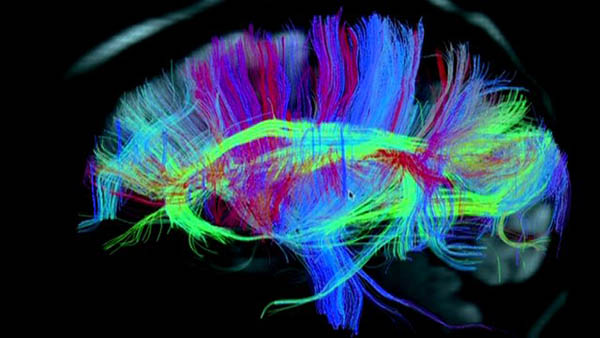 And imagine a world where instant messaging and video conferencing have the added feature of direct thought sharing. Or an The Internet of Thoughts, where people can transfer terabytes worth of brain activity the same way they share video, messages and documents. Remember, the internet began as a small-scale connection between a few universities, labs and research projects.
I can foresee a similar network being built between research institutions where professors and students could do the same thing. And this could easily be followed by a militarized version where thoughts are communicated instantly between command centers and bunkers to ensure maximum clarity and speed of communication. My how the world is shaping up to be a science fiction novel!
Sources: extremetech.com, neurogadget.com, dailymail.co.uk
 Desertification is one of the biggest threats associated with Climate Change. In places like North Africa and the Middle East, where countries already import up to 90% of their food, the spread of the desert due to increasing temperatures and diminished rainfall is made worse by the fact that cities in the region continue to grow. It’s a situation that is getting more expensive and energy-intensive at a time when things need to be getting more cost-effective and sustainable.
 Conceived by Forward Thinking Architecture, a Barcelona-based firm, the concept seeks to combine flexibility with a minimal carbon footprint. Towards this end, they chose to forgo usual transportation and create a unique conveyor system that would deliver produce without the use of any fossil fuels. The conveyor belt would be underground so it could keep running in a straight line even if buildings were in the way.
 Ideally, desert populations would be small enough that the region’s sparse rainfall could support local crops. But that’s not the reality. In addition, a small part of the recycled water would also be used to create an outdoor garden for education. As architect Javier Ponce, principal and founder of Forward Thinking Architecture, explained:
 These regions in particular have felt the pressure brought on by the escalating price of importing food. This pressure is exacerbated due to the disappearance of peak oil, which accounted for the vast majority of this region’s wealth. However, the project has farther-reaching implications, as Climate Change threatens to turn much of the world’s arable land into dry, drought-ridden plains.
 One of the greatest challenges facing future urban planning is the very real prospect of running out of land. In addition to urban sprawl encroaching on neighboring farmlands, the concentration of people at the core eventually creates a situation where open spaces become incredibly scarce. Luckily, the city of London – one of the largest and most densely populated cities in the world – is coming up with some innovative solutions.
 Experts from the Netherlands are helping to plan the new “floating village,” which will include 50 floating homes around a neighborhood square that comes complete with floating restaurants, offices, and shops, and possibly a floating swimming pool (more on that below). A floating walkway will lead back to land, where the city plans a much larger development with tens of thousands of new homes.
 As Richard Blakeway, the city’s deputy mayor for housing, land and property
 The Thames Baths Project is similar, aiming to create a freshwater lagoon amid the meandering old waterway. The consortium responsible consists of Studio Octopi, Civic Engineers and Jonathan Cook Landscape Architects, all of whom won the competition last year to come up with new river uses. Initially, they hoped to create a pool using water from the Thames that would be filtered and treated.

 Anyone who has ever observed a lizard must not have failed to notice that they are capable of detaching their tails, and then regenerating them from scratch. This propensity for “spontaneous regeneration” is something that few organisms possess, and mammals are sadly not one of them. But thanks to a team of Arizona State University scientists, the genetic recipe behind this ability has finally been unlocked.








 This emitted infrared light is guided to the edge of plastic, where thin strips of conventional photovoltaic solar cell convert it into electricity. Currently, the Michigan TLSC has an efficiency of around 1%, but they think 5% should be possible. On their own, these aren’t huge figures, but on a larger scale — every window in a house or office block — the numbers quickly add up to a significant electrical yield.


 This is the largest known attack to involve hospital patient information since the US government began tracking these types of data breaches in 2009. According to Elysium Digital data security expert Joseph Calandrino:






 Stories by Williams