
(WARNING: SPOILERS AHEAD!)
Just the other day, I saw the finale for season four of Game of Thrones, and it got me thinking. While the episode was hailed by some critics as the show’s best finale so far, others raised the obvious point that Thrones geeks did not fail to miss. That being the absence of Lady Stoneheart from the proceedings. In the novel, A Storm of Swords, which provided the material for seasons three and four, things ended with the appearance of a resurrected Lady Catelyn Stark, who now went by the name Lady Stoneheart.
Like most GOT geeks, I felt surprised and disappointed, a sentiment that has been echoing throughout this season. In fact, though I felt that the finale was the best episode of the season, I also had to conclude that season four was the worst season to date. And the reasons for this seemed to be pretty clear after ten episodes with some pretty consistent mistakes. So I thought I might go over them…
1. Pointless Changes that don’t go Anywhere:
One of the biggest annoyance for me this season was the fact they made some rather drastic changes to the storyline, ones which would have altered the plot significantly if they had been allowed to truly unfold. However, not wanting to get terribly off-script, the writers were then forced to tie these divergences up by making sure they didn’t have any lasting effect. As a result, we were left with sequences that were truly pointless.
 The worst of the lot had to do with Theon. In the novels, Theon was presumed dead after A Clash of Kings after he was betrayed and defeated at Winterfell. He didn’t appear again until book V (A Dance with Dragons) where it was revealed that he had been Ramsay Snow’s prisoner the entire time. At this point, he is compelled by his father to use Theon to persuade the Ironborn to leave Deepwood Motte and other captured territories.
But in the show, Ramsay decides to openly advertise that he has taken Theon prisoners and is torturing him in order to persuade the Iron Islanders to leave the North. This prompts Asha Greyjoy (renamed Yara) to sail up the river and mount a rescue. This made little sense, since the Dreadfort is not reachable by river, but the real fault was in how things turned out. After finding Theon, Asha and her men are quickly dispatched when Ramsay decides to unleash his hounds.
Asha retreats, claiming her brother is dead. Not long before, she claimed that rescuing her brother was a matter of honor and an injury to him was an injury to all Ironborn. But after seeing him terrified and brainwashed, and frightened by Ramsay’s dogs, she decides to leave him to his fate. Not surprising, since there really was no other way this thread could have been resolved without seriously altering the plot down the road. But this only made the whole attempted rescue seem pointless.
 Another pointless change that was clumsily resolved was Jon Snow’s mission to Craster’s Keep to kill the mutineers. In the novel, Jon only real concern at this point was the Wildling army riding to the Wall, not to mention the Wildling raiding party that was making its way towards Castle Black. The mutineers were all suspected of being dead, which made sense since Mance’s army was practically upon the Wall at this point.
Another thing, Jon did not know that Bran and Rickon were alive. And so, he didn’t venture out to Craster’s Keep in part because he figured they would be stopping here on their way further north. As a result, there was no close shave where Bran very nearly met up with Jon but then didn’t. What’s more, the fact that Jon was willing to ride out and risk running into Mance’s invading army, but would not ride south to engage Tormund and Ygritte’s raiding party made even less sense as a result.
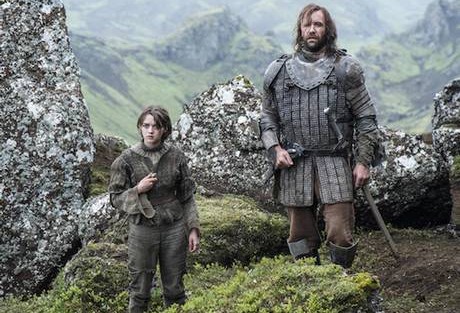 And last, Brienne’s encounter with Arya was something that never happened in the books, and therefore necessitated that it end in a way that didn’t violate the plot. This one they actually did pretty well, in my opinion. Not only was the fight between Brienne and the Hound well executed, but it even made a bit of a sense that Arya would choose not to go with her and slip off, for fear that Brienne was working for the Lannisters. Still, it was a made up addition, and one which has to be included since it necessitated a contrived resolution.
2. Padding/Mining:
At the same time, there were additions to the story that never happened in the books and were pure filler. And in just about all cases, it involved the same threads – Theon and Jon Snow in the North, Daenerys in Slaver’s Bay, and Stannis and co. at Dragonstone. In just about all instances, the writer’s were scrambling for stuff for these characters to do because their storylines were exhausted at this point in the book and did not come upon again until book V, which required that material from that book be brought forward and used.
For instance, Roose Bolton did not concern himself with the whereabouts Bran, Rickon, or Jon Snow upon returning from the Red Wedding. His only concern was cementing his rule by having his son marry a Stark and be declared legitimate, which meant that he never sent Locke to the Wall to find them and kill anybody. And so, Locke’s attempted murder of Bran, his death at the hands of Hodor, and the plot to kill the last of the Starks was entirely made up.
 Much the same holds true for Daenerys entire storyline after the sack of Mereen. Having proceeded to cover her sack of Slaver’s Bay in a very speedy and topical way, the writer’s of the show were now left with a very important thread where the characters essentially had nothing to do. As a result, they mined material from book V to keep her busy, or just threw in some added material that never happened in the novels and really accomplished nothing.
In the former case, this included Daenerys’ affair with Daario Naharis and her learning that Drogo has killed a herders child, thus prompting her to lock her dragons up beneath one of the city’s pyramids. In the latter, it involved the relationship between Grey Worm and Missandei, which makes little sense seeing as how he is an Unsullied and completely castrated. But to confound this, the writer’s decided that Missandei was suddenly unclear as to whether or not the Unsullied’s castration involved both the “pillar and the stones”.
Much the same held true for Stannis’ thread this season. After being defeated at the Battle of Blackwater, very little was heard from Stannis until his forces appeared in the North and overran Mance Rayder’s Wildling army. However, to ensure he had something to do, the writer’s added many superfluous scenes where we simply see him and his people droning on about very little. And, similar to what they did with Daenerys, they even mined material from book V where Stannis meets with representatives from the Iron Bank.
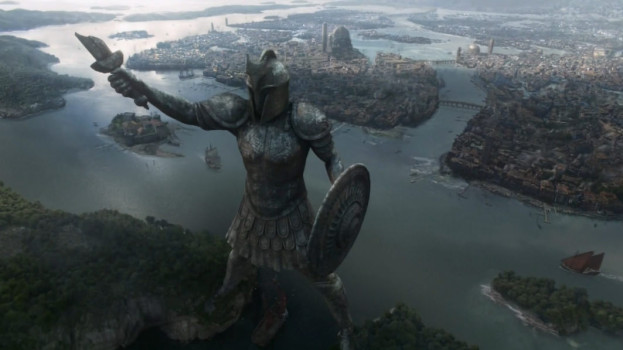 In the novels, the representatives came to Stannis only after he had come to the Wall and routed Mance’s army. The reason being, Lord Tywin was dead, Cersei was in charge of King’s Landing, and she had made it clear that they would not be making payments to the bank just yet. Ergo, the Iron Bank was backing her enemies to ensure that whoever won would make good on the Thrones massive debts. So basically, they took material that happened later, changed it, and moved it forward to keep Stannis’ story going.
The same held true for Stannis’ decision to sacrifice a child of royal blood so Missandre’s could divine the future. This wasn’t to happen until he reached the Wall, and involved entirely different people than Gendry (who was gone from the story at this point). Here too, the material was moved forward and altered just so the character remained in the show.
3. Boring and Superfluous:
Something else that kept popping up for me this season was the endless array of short scenes with pointless talk, the prolonged scenes with pointless talk, and the scenes that tried to be dramatic but were just filled with superfluous stuff. This I generally filed under the heading of “filler”, and there was some crossover with stuff in item two. Still, I felt that it deserved its own category since there was quite a lot of it.
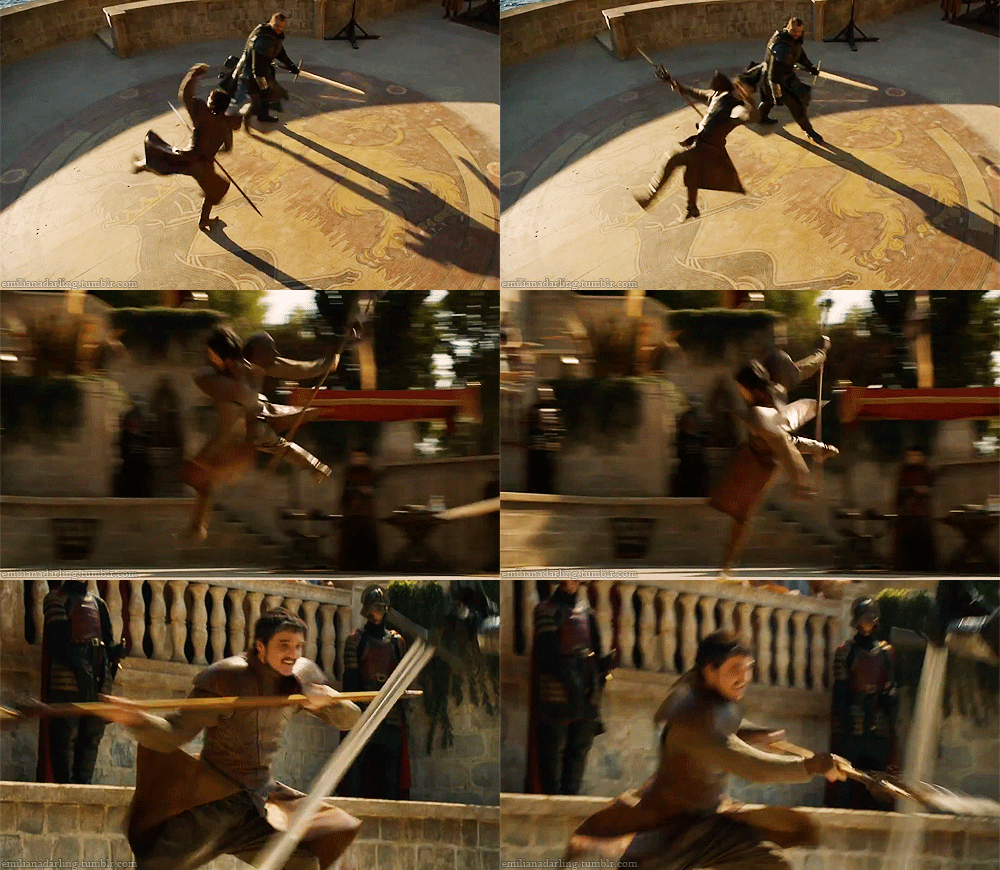
For example, the episode The Mountain and the Viper was one of the most anticipated of the season, and the fight scene that provided the climax was quiet awesome. However, everything leading up to it was some of the most boring material I’ve seen in years. This included Missandei and Grey Worm carrying on like teenagers, Tyrion talking endlessly before the fight about his simple cousin for no apparent reason, and a slew of other scenes in the North or Slaver’s Bay.
 Much the same was true of Daenerys’ siege of Mereen in episodes five and six. What was essentially a major undertaking in the books was covered in three short scenes in the show. It begins with the fight between Daario (it was actually Strong Belwas in the books) and Mereen’s champion, which ended far too quickly. Then the siege itself which involved them throwing barrels filled with broken chains in, and then a quick sneak attack that opened the next episode.
Speaking of which, episode five, Breaker of Chains – what can you say about an episode where just about the only scene of consequence is a rape scene? Seriously, what were the writers thinking with that? It was completely different from what happened in the books, was ugly and unnecessary, and was the only point of interest in an episode that had nothing but after-the-fact dialogue and a slow, plodding pace to it.
4. No Stoneheart!:
But by far, the biggest inexplicable change this season was the absense of Lady Stoneheart (aka. Catelyn Stark) at the end of the season. Not only was she introduced at the end of the third book to preview what was coming in the next two volumes, it also provided a surprise ending that shocked readers and gave them hope. After getting away with bloody murder, it now seemed that the Freys were going to pay for their crimes! But first, a little explanation as to how Catelyn was up and walking again…
Basically, Catelyn became Stoneheart after she was murdered at the Red Wedding and her body cast into the river to float downstream, where it washed up and was found by the Brotherhood Without Banners. There, Beric Dondarion begged Thoros of Myr to use his Red Priest magic to bring her back to life, as he had done with Ser Beric so many times now. However, Thoros was tired of playing God and refused, which led Beric to kiss Lady Catelyn on the lips and pass his life force to her.
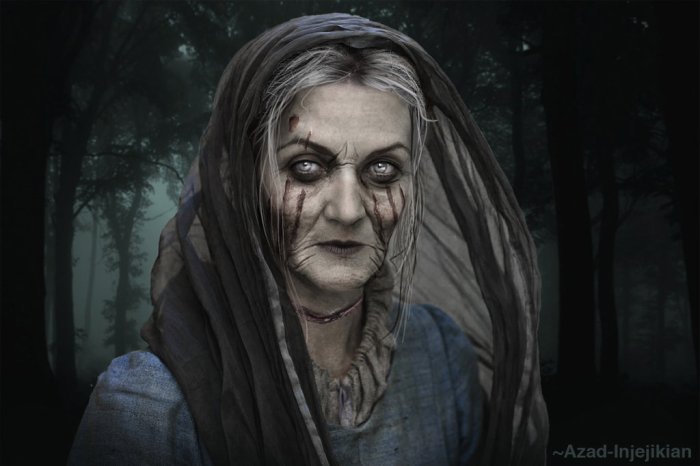 Tired of being brought back from the dead, he decided he would let the magic which had resurrected him many times bring her back. Ser Beric died on that riverbank, and Lady Catelyn came back – albeit in a scarred, muted form. Not only did she have a hideous scar on her throat and a bloated face, she was also functionally mute. And she was some pissed, and sought revenge against the Freys for their betrayal. As such, she now led the Brothers through the Riverlands to find all those who had betrayed her family and execute them.
So the question is, why was she left out? Well, Alex Graves, who has directed several pivotal episodes of show, commented on this and other issues after the final episode of the season aired:
They [showrunners David Benioff and Dan Weiss] have such a challenge adapting the books into a really focused television experience. It’s very hard, it’s very complicated, it’s much harder then they’ve been given credit for, I think — and they do a brilliant job. But to bring back Michelle Fairley, one of the greatest actresses around, to be a zombie for a little while — and just kill people? It is really sort of, what are we doing with that? How does it play into the whole story in a way that we’re really going to like? It just didn’t end up being a part of what was going to happen this season. And finally one [more] reason: In case you didn’t notice, a lot happens this season … To add that in is something they opted out of. But what’s funny is that it was never going to be in the season, yet it took off on the Internet like it was going to happen.
Wait, so they didn’t want to show Catelyn as a zombie and because they were too busy with other things? Well okay, except that she’s NOT a walking corpse, she’s a reanimated, living being, who just happens to look a bit the worse for wear. As for the latter explanation, that they were busy, this sort of makes sense since they chose to change things in the final episode where Brienne and the Hound fight it out. But as I said, that never happened in the books and it also served little purpose.
 So if Graves is saying they chose to forgo a major plot point to focus on something that, while fun to watch, really didn’t effect the story, I would have to check my BS meter. As for whether or not Lady Stoneheart will be appearing in the next season, the director basically said that this was up to the writers and they were not being forthcoming on that point:
As somebody who’s worked deep inside the show, begged to have an answer and wants more than anybody, I have no idea. They won’t tell me. They’re very good at being secretive.
Hmm, so Lady Stoneheart may or may not be making an appearance in the next season, huh? There’s just one problem with that. SHE HAS TO! She’s an integral part of the plot as far as the next chapter in the story – A Feast for Crows – goes. To leave her out would be to leave a big, gaping plot hole where Brienne and Jaime’s story threads are concerned. I mean, its one thing to not bring her back just so she won’t be appearing for a few minutes at the tail end of a season. But to leave her out entirely when her character is central? That’s just plain weak.
But that wasn’t the last thing Graves commented on as far as this season’s finale and future shows were concerned. Fans also wanted to know if that semi-tragic scene involving the Hound was in fact his stand. Graves was strongly suggested that it was:
As far as The Hound, as I told the story … he’s gone. How is he going to survive that? The real point of it was that she walks away, it wasn’t that it’s left open ended.
Yet another problem. In the original novels, when Brienne came to the Riverlands and began tracking down leads, she was told that the Hound had been spotted and was carrying a Stark with him. Initially, Brienne thought it might be Sansa, but later learned it was Arya that was with him, and that she left the Hound to die underneath a tree on the Trident. But later on, reports began to circulate that the Hound was in fact not dead, and had been spotted on the move once again in the Riverlands.
 Honestly, Graves’ guesswork on these topics makes it sound like he really isn’t familiar with the source material. But to be fair, only Martin knows for sure if the Hound is coming back, so announcing things either way at this point would be premature.
Summary:
Of course, its easy to pass judgement of television writers for making changes from original material. And Graves was right when he said that the writing team have their work cut out for them and are working hard to bring George RR Martin’s novels to life. But the problems this season seemed to stem from one central thing: they split the book in half. While this seemed logical since it was clear they couldn’t possibly make all of A Storm of Swords fit into one season, the decision to split it into two meant they didn’t have enough materiel for this season.
After all, ASOS is one of the most eventful and shocking installments in the series, and ten episodes simply wasn’t enough to cover the Red Wedding, Joffrey’s Wedding, Tyrion’s trial and escape, the battle at Castle Black, Mance’s assault on the Wall, Stannis’ assault on the North, and Daenerys’ sacking of the cities of Slaver’s Bay. But twenty episodes was too much, which meant the writers had to make stuff up, take stuff from the next books, or just expand what they had to make it fit.
And the result was a season with some bad parts to it. Still, there were plenty of highlights too. Joffrey’s wedding and his death scene was some pretty good viewing, Tyrion’s trial did not disappoint, the fight between Prince Oberyn and the Mountain was badass, the battle at the Wall was hectic, and the Hound’s (supposed) death scene was quite well done. And the finale was one of the better episodes in the series, and perhaps one of the better finales as well.
And the additions, though they went nowhere, weren’t all bad. In fact, the only thing I would say was done poorly this season was the entire Daenerys thread, which gravitated between boring and superficial. I mean, the woman’s leading an army through the entire Slaver’s Bay and conquering cities! Why did they skim these things so quickly and then give her nothing but boring administrative duties for the rest of the season? Budgets? …ah, maybe.
In any case, I will be watching next season, and look forward to what they will be doing with it. Thanks to how George RR Martin wrote books IV and V (A Feast for Crows, A Dance with Dragons), we will be seeing aspects of both books presented simultaneously, but there will be enough material for two seasons this time. Which is good, seeing as how Martin needs time to produce book VI – The Winds of Winter – which will inevitably provide the basis for season seven.
Yeah, the man’s wheels grind slow, and exceedingly bloody! Until next season folks…

 A new “net neutrality” bill is on its way towards Congress, one which seeks to reinstate the free and open nature of the net – something that has been under fire in recent years. And one week ago, Senator Patrick Leahy of Vermont and Representative Doris Matsui of California took another decisive step when they announced that they will propose a bill to stop the Federal Communications Commission from allowing paid “fast lanes” on the internet.
 And this past spring, after a federal court struck down the FCC’s existing net neutrality rules – which sought to ensure that ISPs didn’t discriminate against certain internet traffic – the commission proposed a new set of rules that has left many worried that ISPs could start charging web companies like Google and Netflix to deliver their content at faster speeds. Such an arrangement, these sources say, would squeeze out newer and smaller operations that can’t pay the fees.
 After holding a hearing on net neutrality in Vermont this past summer, Leahy came to an invariable conclusion:
 The new bill would provide a mandate regarding how the FCC deals with any sort of paid prioritization, but it wouldn’t reclassify providers. Also, the new bill would only apply to connections from internet service providers to customers’ homes, commonly referred to as last mile connections. It wouldn’t pertain to “peering”, the deals governing the ways that internet service providers connect with each other or with content providers like Netflix and Google.
 The bill may face serious challenges, however. Republicans control the House and have proposed their own bill to block the FCC from reclassifying internet service providers. In this respect, net neutrality is dividing lawmakers along partisan lines, and Republicans are not expected to support the proposed Leahy-Matsui bill. But in theory, a bipartisan agreement could be reached, especially since the Leahy-Matsui bill leaves reclassification off the table.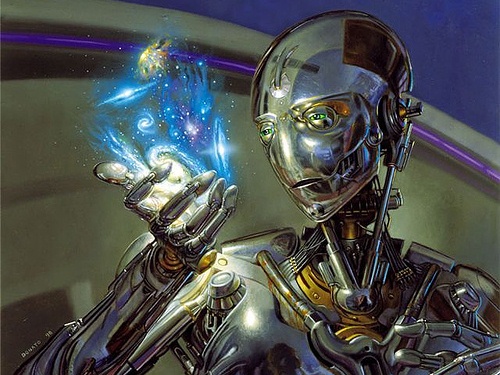
 This is the central focus of the story – and Stross’ particular obsession – which he explores in serious depth. The title, which in Italian means “speeding up” and is used as a tempo marking in musical notation, refers to the accelerating rate of technological progress and its impact on humanity. Beginning in the 21st century with the character of Manfred Mancx, a “venture altruist”; moving to his daughter Amber in the mid 21st century; the story culminates with Sirhan al-Khurasani, Amber’s son in the late 21st century and distant future.
 Part I, Slow Takeoff, begins with the short story “Lobsters“, which opens in early-21st century Amsterdam. Here, we see Manfred Macx, a “venture altruist”, going about his business, making business ideas happen for others and promoting development. In the course of things, Manfred receives a call on a courier-delivered phone from entities claiming to be a net-based AI working through a KGB website, seeking his help on how to defect.
 Part II, Point of Inflection, opens a decade later in the early/mid-21st century and centers on Amber Macx, now a teen-ager, in the outer Solar System. The first story, entitled “Halo“, centers around Amber’s plot (with Annette and Manfred’s help) to break free from her domineering mother by enslaving herself via s Yemeni shell corporation and enlisting aboard a Franklin-Collective owned spacecraft that is mining materials from Amalthea, Jupiter’s fourth moon.
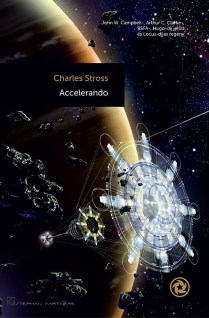 Part III, Singularity, things take place back in the Solar System from the point of view of Sirhan – the son of the physical Amber and Sadeq who stayed behind. In “Curator“, the crew of the Field Circus comes home to find that the inner planets of the Solar System have been disassembled to build a Matrioshka brain similar to the one they encountered through the router. They arrive at Saturn, which is where normal humans now reside, and come to a floating habitat in Saturn’s upper atmosphere being run by Sirhan.
 Earlier this month, Computex 2014 wrapped up in Taipei. And while this trade show may not have all the glitz and glamor of its counterpart in Vegas (aka. the Consumer Electronics Show), it is still an important launch pad for new IT products slated for release during the second half of the year. Compared to other venues, the Taiwanese event is more formal, more business-oriented, and for those people who love to tinker with their PCs.
 For example, big name brands like Asus typically use the event to launch a wide range of products. This year, this included such items as the super-slim Asus Book Chi and the multi-mode Book V, which like their other products, have demonstrated that the company has a flair for innovation that easily rivals the big western and Korean names. In addition, Intel has been a long stalwart at Computex, premiered its fanless reference design tablet that runs on the Llama Mountain chipset.
 And then there was the Asus wireless storage, a gadget that looks like an air freshener, but is actually a wireless storage device that can be paired with a smartphone using near-field communication (NFC) technology – essentially being able to transfer info simply by bringing a device into near-proximity with it. And as always, there were plenty of cameras, display headsets, mobile devices, and wearables. This last aspect was particularly ever-present, in the form of look-alike big-name wearables.
 In his keynote speech, Microsoft’s Nick Parker talked about the age of ubiquitous computing, and the “devices we carry on us, as opposed to with us.” What this means is, we may very well be entering a PC-less age, where computing is embedded in devices of increasingly diminished size. Eventually, it could even be miniaturized to the point where it is stitched into our clothing as accessed through contacts, never mind glasses or headsets!
 A Martian year is 687 Earth days long. Accordingly, NASA’s Curiosity Rover reaches its one-year Martian Anniversary on June 24, 2014 (Earth Calendar), 687 days after its mission began.
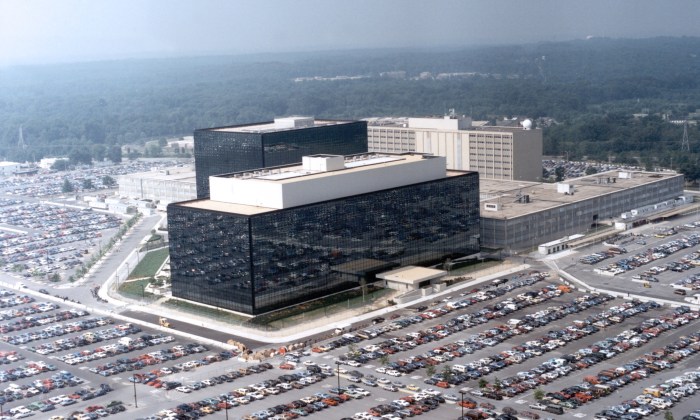 The Davis case brought this issue to the fore because the tracking was used to make an arrest. Basically, mobile phones send signals to the nearest cell towers so that the communications network system knows where to route a call should one come in. Many providers collect and store the location of towers a customer connects to at the beginning and end of the call for billing purposes. In this case, FBI agentsobtained these records without a search warrant and used them to place the defendant, Quartavious Davis, near the scene of a number of robberies.
 Additionally, Smith built on the 1976 case of United States v. Miller, which held that a person does not have Fourth Amendment rights in their bank records because they are the bank’s business records and not the customer’s private data. Together the cases are known as the “third-party doctrine,” which says that you have no Fourth Amendment interest in a third party’s business records because you have voluntarily disclosed information to the business and assumed the risk of that information being further disclosed to the government.
 Last December, a District of Columbia judge held that the bulk collection of phone records violates the Fourth Amendment – regardless of Smith – and called the program “almost Orwellian.” Shortly thereafter, a different district court judge relied on Smith to give the program his stamp of approval. This month, a third federal judge was obligated to allow the warrantless collection of records to continue, but opined that the Supreme Court should overturn Smith v. Maryland.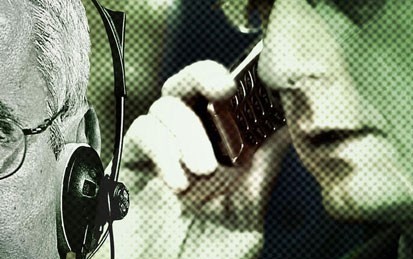
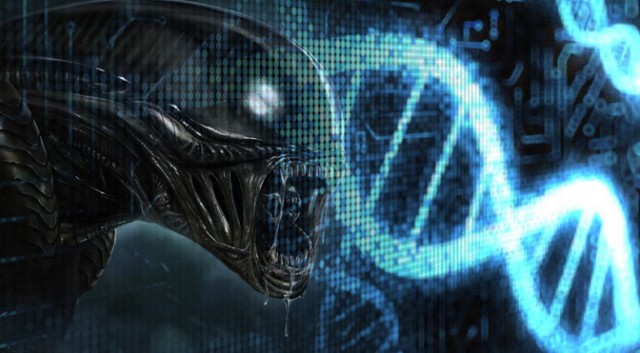
 If you know the sequence of letters down one strand of the helix, you always know what other letter is. This “complementarity” is the fundamental reason why a DNA helix can be split down the middle, and then have the other half perfectly recreated.
  As long as the new chemicals were available, the bacterium continued to reproduce normally, copying and passing on the new DNA, alien plasmid and all, and continued to carry on flawlessly for almost a week.
  Ultimately it may even be possible to create a wholly synthetic organism with DNA that contains dozens (or hundreds) of different base pairs that can produce an almost infinitely complex library of amino acids and proteins. At that point, we’d basically be rewriting some four billion years of evolution. The organisms and creatures that would arise would be unrecognizable, and be capable of just about anything that a researcher (or mad scientist) could dream up.



 The episode opens with Jon Snow meeting Mance Rayder in his camp beyond the Wall. Inside Mance’s tent, they drink to fallen comrades and discuss a possible negotiated settlement. However, their talks are interrupted when riders begin pouring in, bearing the standard of House Baratheon. Stannis and Davos ride up to Mance, who surrenders, and Jon Snow introduces himself. He advises that Stannis take Mance prisoner and burn the dead before long.
 In Mereen, Daenerys is troubled by two developments. First, she learns that former slaves are returning to their old professions because they have no means to support themselves otherwise. She is then made aware of the fact that Drogon, who escaped her care, has escalated and murdered a small child. She has Aggo and Jhogo chained up in the catacombs for the time being to prevent any further incidents, though it tears her apart to do so.
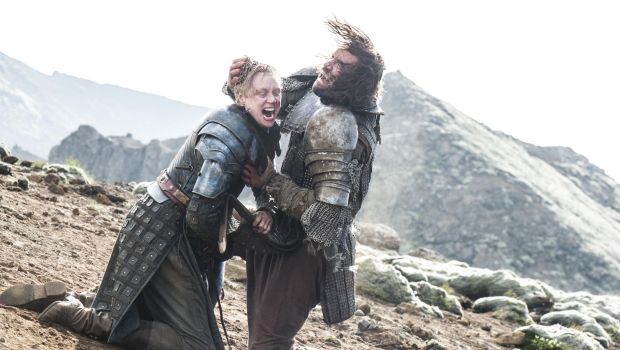
 In the Vale, Brienne and Pod come upon Arya practicing her sword dance. When they approach, the Hound presents himself, and some difficult introductions are made. The Hound believes she is there to collect the bounty on him, but she insists she is there to bring Arya home. A fight brutal fight ensues, and Sandor is pushed from a cliff and falls below. Arya slips away to come to his side, and denies him when he begs her for a merciful death.
 On the night before his execution, Jaime sneaks into Tyrion’s cell and frees him, telling him to meet with Varys. However, Tyrion instead goes to the Hand of the King’s room and finds Shae sleeping in his father’s bed. They fight and he strangles her with her necklace, then fetches a crossbow from the wall and finds his father in the privy. After speaking briefly, Tyrion shoots him in the chest with two bolts, and escapes to find Varys. He takes him to the docks, where a ship is waiting to take him to Essos.
 In the backstory to ASOIAF, it is said that Bran the Builder, the Northern King who built the Wall and Winterhold, used the Horn of Winter (aka. the Horn of Joramun) to erect the Wall of ice that separated the Wildlings from the “knee-benders”. By using it again, Mance believed he could melt the Wall in one swift move, thus rendering the Black Brother’s only real defense against him moot. It was then that Stannis’ men attacked, and Mance was taken prisoner.
 Third, Brienne and Pod never caught up to Arya and the Hound in the books. Rather, the Hound supposedly died from wounds he sustained in the fight at the Inn with the Lannister men. It was in the Riverlands that Arya left him to die, and then rode to the nearest port to go to Braavos. The closest Brienne ever came to her was learning from various sources that he was seen with a Stark girl, who she initially thought was Sansa. She later learned that it was Arya, and that the Hound had apparently died.
 This, like many other elements left out, was a very important part of the story’s rich background. Tyrion’s attraction to ladies of the evening, coupled with a deep-seated mistrust of them, all grows from this romance that ended in heartbreak for him. The story of the Horn of Winter is also one of the more mythical and fantasy-based elements of the ASOIAF universe, so I was sad to see it left out.
 It washed up downstream where the Brothers Without Banners found it. And it was there that Ser Beric Dondarion, asked Thoros of Myr to resurrect her as he had done for him so many times. However, tired of playing God, Thoros refused, and Dondarion, himself sick of life, passed his life force to Catelyn with a kiss. You may recall these characters from Season Two, where Arya spent time amongst them before being kidnapped by the Hound.
 And the fight scene between the Hound and Brienne, while it didn’t happen in the novel and was much like other unpleasant changes, it made for some good watching. While it didn’t effect any changes in the plot, it wasn’t useless like Yara’s attempted rescue of Theon or Jon’s and Bran’s near-reunion at Craster’s Keep. And the way they handled the Hound’s death scene was not only faithful to the books, but really well done!
 When it comes to the future, it is clear that the concept of the “Internet of Things” holds sway. This idea – which states that all objects will someday be identifiable thanks to a virtual representations on the internet – is at the center of a great deal of innovation that drives our modern economy. Be it wearables, wireless, augmented reality, voice or image recognition, that which helps us combine the real with the virtual are on the grow.
 As Ambarish Mitra, the head of Blippar stated, AR is already gaining traction among consumers thanks to some of the world’s biggest industrial players recognizing the shift to visually mediated lifestyles. Examples include IKEA’s interactive catalog, Heinz’s AR recipe booklet or Amazon’s recent integration of the Flow AR technology into its primary shopping app. As this trend continues, we will need a Wikipedia-like database for 3-D objects that will be available to us anytime, anywhere.
 For better or for worse, wearable designs of consumer electronics have come to reflect a new understanding in the past few years. Basically, they have come to be extensions of our senses, much as Marshall McCluhan wrote in his 1964 book Understanding Media: The Extensions of Man. Google Glass is representative of this revolutionary change, a step in the direction of users interacting with the environment around them through technology.
 Augmented reality has already proven itself to be a multi-million dollar industry – with 60 million users and around half a billion dollars in global revenues in 2013 alone. It’s expected to exceed $1 billion annually by 2015, and combined with a Google-Glass type device, this AR could eventually allow individuals to build vast libraries of data that will be the foundation for finding any 3-D object in the physical world.
 Stories by Williams