 In the long search to find alternatives to fossil fuels and industrial processes that produce tons of waste, several ideas have been forward. These include alternative energy – ranging from solar, wind, geothermal, and tidal – additive manufacturing, and cleaner burning fuels. All of these ideas have begun to bear some serious fruit in recent years thanks to ongoing research and development. But looking to the long term, it is clear that a complete overhaul of our industrial economy is needed.
That’s where more ambitious ideas come to the fore, ideas like nanotechnology, biotechnology, and what’s known as the “Glucose Economy”. Coined by Steven Chu, a Nobel Prize-winning Chinese-American physicist who also had the honor of serving as the 12th Secretary of Energy under Barack Obama, this concept calls for the development of an economic model that would replace oil with high-glucose alternative fuels.
 Chu conceived of the idea while working as a professor of physics and molecular and cellular biology at the University of California, Berkeley. In short, the plan calls for fast-growing crops to be planted in the tropics – where sunlight is abundant – converted into glucose (of which cellulose, which makes up much of the dry weight of a plant, is a polymer). The resulting glucose and cellulose would then be shipped around much as oil is today, for eventual conversion into biofuels and bioplastics.
As expected, this would render the current system of converting oil into gasoline and plastics – a process which produces immense amounts of carbon dioxide through processing and burning – obsolete. By comparison, glucose fuels would burn clean and produce very little in the way of chemical by-products, and bioplastics would be far more resilient and eco-friendly than regular plastics, and not just because they won’t cause a terrible disposal and waste problem (see Garbage Island).
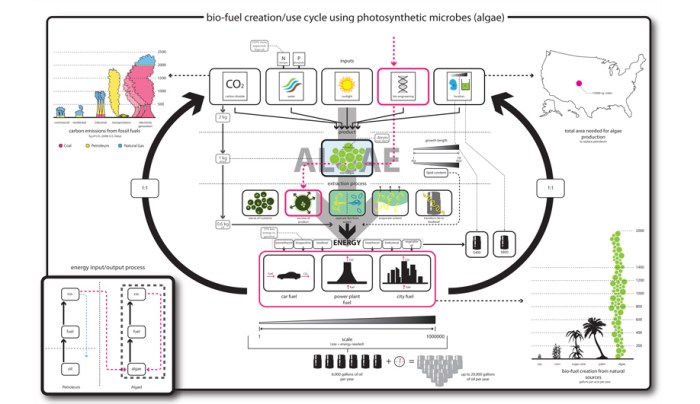 Another benefit of the this new model is the economic development it will bring to the tropical regions of the world. As far as production is concerned, those regions that stand to benefit the most are Sub-Saharan Africa, Central and South America, and South-East Asia. These regions are already seeing significant economic growth, and a shift like this would ensure their continued growth and development (not to mention improved quality of life) for many generations to come.
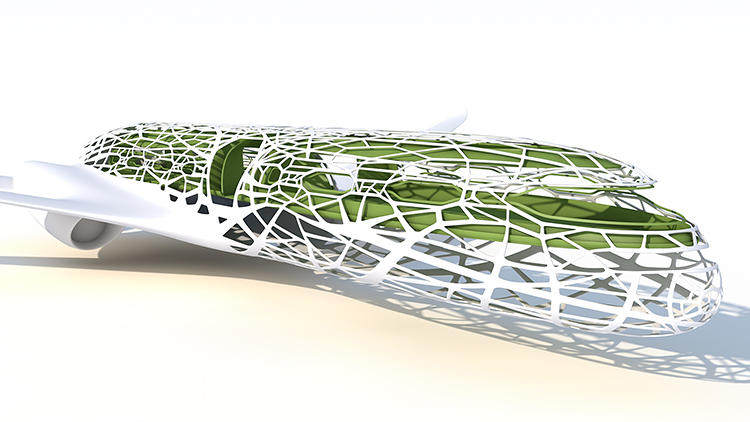
But above and beyond all that is the revolutionary potential that exists for design and manufacturing, with architects relying on specially-designed software to create multi-material objects fashioned in part from biomass. This unique combination of biological processes, computer-assisted design (CAD), and human intelligence is looking to trigger a revolution in manufacturing and construction, with everyday materials to buildings created from eco-friendly, structurally sound, biomaterials.
 One such architect is David Benjamin, a computational architect and principal of the New York-based practice The Living. Together with his collaborators, Benjamin is conducting experiments with plant cells, the latest of which is the production of xylem cells – long hollow tubes plants use to transport water. These are computer modeled and grown in a Cambridge University lab and studied to create materials that combine the desired properties of different types of bacteria.
In addition, they are working with sheets of calcium and cellulose, seeking to create structures that will be strong, flexible, and filigreed. And beyond The Living Thing, there are also initiatives like the Living Foundries Program, a Department of Defense initiative that is hoping to hasten the developmental process and create an emergent bio-industry that would create “on-demand” production.
 Not only would this shave decades off the development process, but also hundreds of millions of dollars. What’s more, Benjamin claims it could take only 8 to 10 years to see this type of biotechnology enter commercial production. Naturally, there are those who oppose the development of a “glucose economy” as advocated by Chu. Beyond the proponents of fossil fuel energy, there are also those advocate nationally self-sufficient resources bases, rather than foreign dependence.
To these critics, the aim of a future economy should be energy independence. In their view, the glucose economy is flawed in that it merely shifts energy dependence of nations like the US from the Middle East and OPEC to the tropics, which could create a whole new slew of geopolitical problems. However, one cannot deny that as alternatives go, Chu’s proposal is far preferable to the current post-peak oil model of frakking, tar sands, natural gas, and coal.
 And it also offers some new and exciting possibilities for the future, where building processes like additive manufacturing (which is already making inroads into the construction industry with anti-gravity 3D printing, and the KamerMaker House) would be supplemented by using “biohacked” bacteria to grow structures. These structures would in turn be composed of resilient materials such as cellulose and organic minerals, or possibly carbon nanotubes that are assembled by organic processes.
And the amount of money, waste, energy and lives saved would be immense, as construction is currently one of the most dangerous and inefficient industries on the planet. In terms of on the job accidents, it causes some 10,000 deaths and 400,000 injuries a year in the US alone. And in terms of resource allocation and money, construction is labor intensive, produces tons of waste, and is almost always over budget.
 Compared to all that, a system the utilizes environmentally-friendly molecules and materials, enhances growing operations, fostered greater development and economic cooperation, and leads to a safer, cheaper, less wasteful construction industry seems immensely preferable. And it does offer a solution of what to do about two major industries that are ailing and in desperate need of modernization.
Boy, it feels like a long time since i’ve done a conceptual post, and the topics do appear to be getting more and more serious. Can anyone recall when I used to do posts about Cool Ships and Cool Guns? Yeah, me too, vaguely. Somehow, stuff like that seems like a far cry from the Internet of Things, Interstellar Travel, O’Neill Cylinders, Space Elevators, and timelines of the future. I guess this little blog of mine has been growing up in recent years, huh?
Stay tuned for more conceptual posts, hopefully something a little lighter and fluffier next time 😉
Sources: inhabitat.com, aspenideas.org, tampabay.com

 Fleeing a horde of flesh-eating zombies? There’s an app for that. Seriously though, it seems that some cheeky IT developer recently created a fitness app for Google Glass that motivated runners by letting them know if they pace they are setting would be enough to flee from a pursuing zombie. But of course, that’s just one option that comes with this Glass application – known as Race Yourself – which first previewed this past January.
 While it is still in development, early reviews state that the app would be of use to both casual runners and those training for a big race. In addition to keeping track of your time and distance, runners are able to see how many calories they’ve burned and the pace they are setting. In the end, these useful stats, which can be consulted at a glance, are the real point of the app. The games (which require far more concentration) are just a fun bonus.




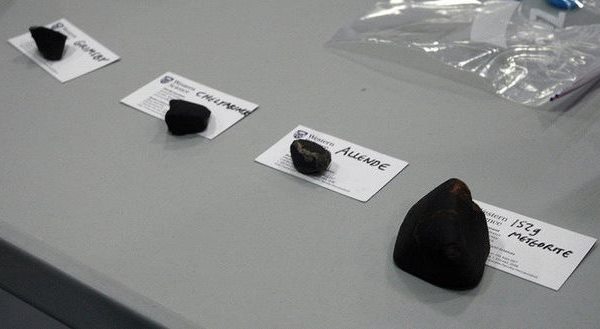 Hence why Brown is asking for the public to help look for the meteorite, which has been described as a rock that looks like it was painted black, and contact the researchers if they find it. The researchers are also interested in hearing accounts from anyone who may have heard a whistling sound “like artillery coming in” or a thud after witnessing the fireball, indicating that it may have landed within a few hundred metres. That may help narrow down the area for the search.


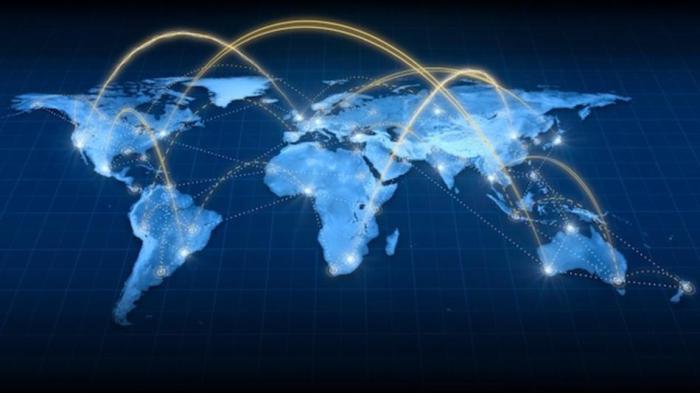 However, TechCrunch reports that Facebook would launch 11,000 Solara 60 drones. Their coverage would begin with Africa, and then spread out from there. There’s no word on how fast these connections might be, nor how much such a connection would cost per user. Perhaps more importantly, there’s also no word on how Facebook intends to connect these 11,000 satellites to the internet, though it is obvious that Facebook would need to build a series of ground stations.

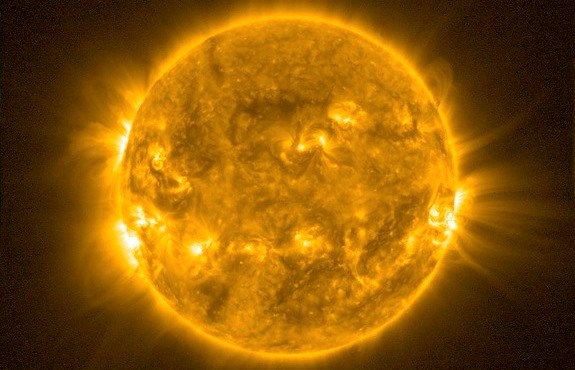
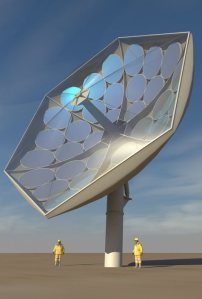 This not only ensures a much larger yield, but also makes the energy it harvests cheap. Bruno Michel, the manager for advanced thermal packaging at IBM Research, believes the design could be three-times cheaper than “comparable” systems. Officially, the estimate he provides claim that the cost per kilowatt hour will work out to less than 10 cents, which works out to 0.01 cents per watt (significantly cheaper than the $0.74 per watt of standard solar).
 A combined system of this kind could be an incredible boon to economies in parts of the world that are surrounded by deserts, such as North Africa or Mongolia. But given the increasing risk of worldwide droughts caused by Climate Change, it may also become a necessity in the developed world. Here, such dishes could not only provide clean energy that would reduce our carbon footprint, but also process water for agricultural use, thus combating the problem on two fronts.





 Stories by Williams