2014’s Master To-Do List

Colourful 2014 in fiery sparklersWith this year in full swing and the events of 2013 now a memory, I thought it was high time to take stock of everything I need to do in the coming twelve months. As always, I got a lot of projects in the works and plenty of things I want to get done, some of which I was supposed to be finished with already. And I seem to recall mentioning a few of these items in the course of my New Year’s resolutions…

So here goes…

1. Finish Editing Papa Zulu and Release It:
Now this is one I’ve been letting linger for quite some time! Originally, I had hoped to have this book ready a year ago, but editing has proven to be a more arduous process than previously expected. However, I got my trusty and professional editor (hi Leslie!) in my corner, and she’s editing both it and Whiskey Delta. So sometime before the Spring season hits us, I plan to release the one and re-release the other. It will be a kind of one-two, launch/relaunch combo!

2. Edit Fast Forward and Release it:
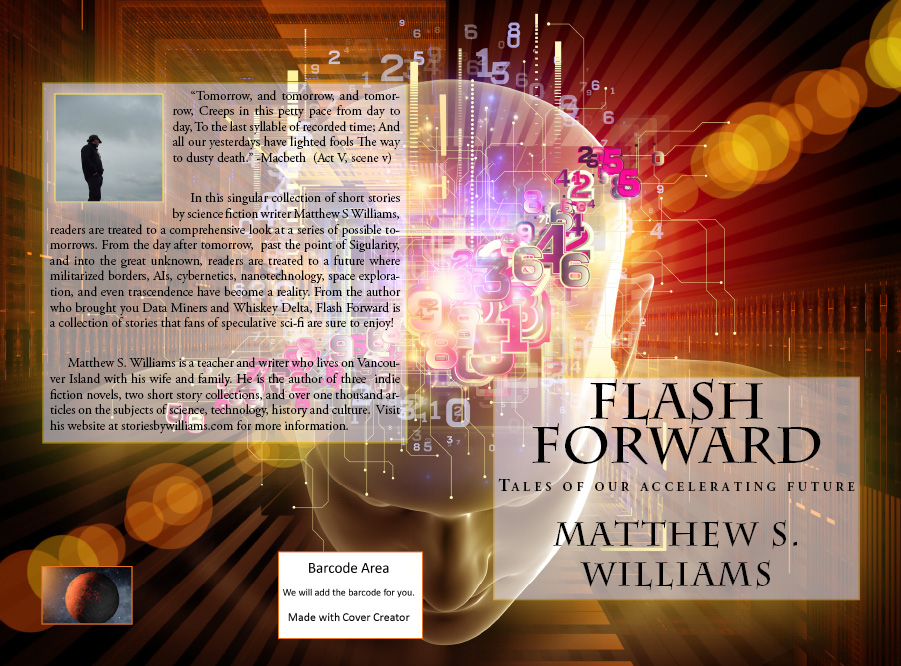
Back in April of 2013, I penned a number of short stories for the A to Z Challenge. Since that time, I’m coalesced the best stories, added a few extras from over the years, and created a volume of futuristic tales that I named “Fast Forward”. And with my membership over at Shutterstock.com, I also prepped a new and eyepopping cover that I think will get some attention once its published. But before that can happen, I need to go through it again and make sure its all cleaned up.
FlashForward_2

3. Bring Yuva Anthology to Completion:
Khaalidah and I – a friend and fellow indie writer over at Writer’s Worth – started this anthology of space travel and colonization two years ago. At first, we found ourselves joined by several friends and respected colleagues who also wanted to see the project come to fruition. But after several months of initial progress, things began to slow down and linger.

But I’m pleased to say that in the past few weeks, things have really picked up again. Owing to a full-court press to recruit new talent, we have just about all our stories accounted for and I’m waiting for drafts from all the participants. It would be really nice if we could get this book – a tribute to Ray Bradbury and a tale that is more relevant than ever now – finished by the end of the year.

Yuva_cover

4. Finish Reading List and Review Them:
Yeah, my reading list is, as always glutted and filled with stuff I was supposed to have finished a long time ago. It seemed to take me forever to finish reading World War Z: An Oral History of the Zombie War, by Max Brooks. And now that that’s finished, I am hoping to finish the last three books that I have started but not finished, and then move on to the many other novels on my nightstand.

These books include Accelerando by Charles Stross, a story about this century that is required reading for anyone trying to write about the Technological Singularity; We by Yevgeny Zamyatin, the quintessential dystopian tale about social engineering, failed utopias, and the inspiration behind such classics as 1984 and (arguably) Brave New World. And last, but certainly not least, The Quiet Game: Five Tales To Chill Your Bones by Rami Ungar.

we_zamyatinAnd when I’m done all those books, which I’ve been reading simultaneously and in bursts, I can move on to Ready Player One, The Giver, and Back To The Front, an account of one man’s walking tour of the battlefields of World War I. Hey, I don’t just deal in science fiction, you know!

And with all that done and put away with, maybe the wife and I can finally find a bigger place, which is something we’ve been working on for some time. And of course, there will be the walking tour that we will be doing with my family this coming April. I need to do some research to prepare for that, and you can bet your bottom dollar you’ll be hearing about it too!

So yeah, 2014 is shaping up to be an eventful year. I hope it proves to be as productive and enjoyable as I hope, and that you all get what you want from it as well. Take care and Happy New Year!

News From Space: Mars Needs Money!

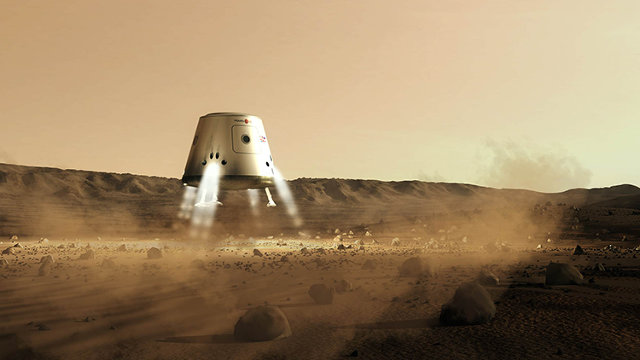
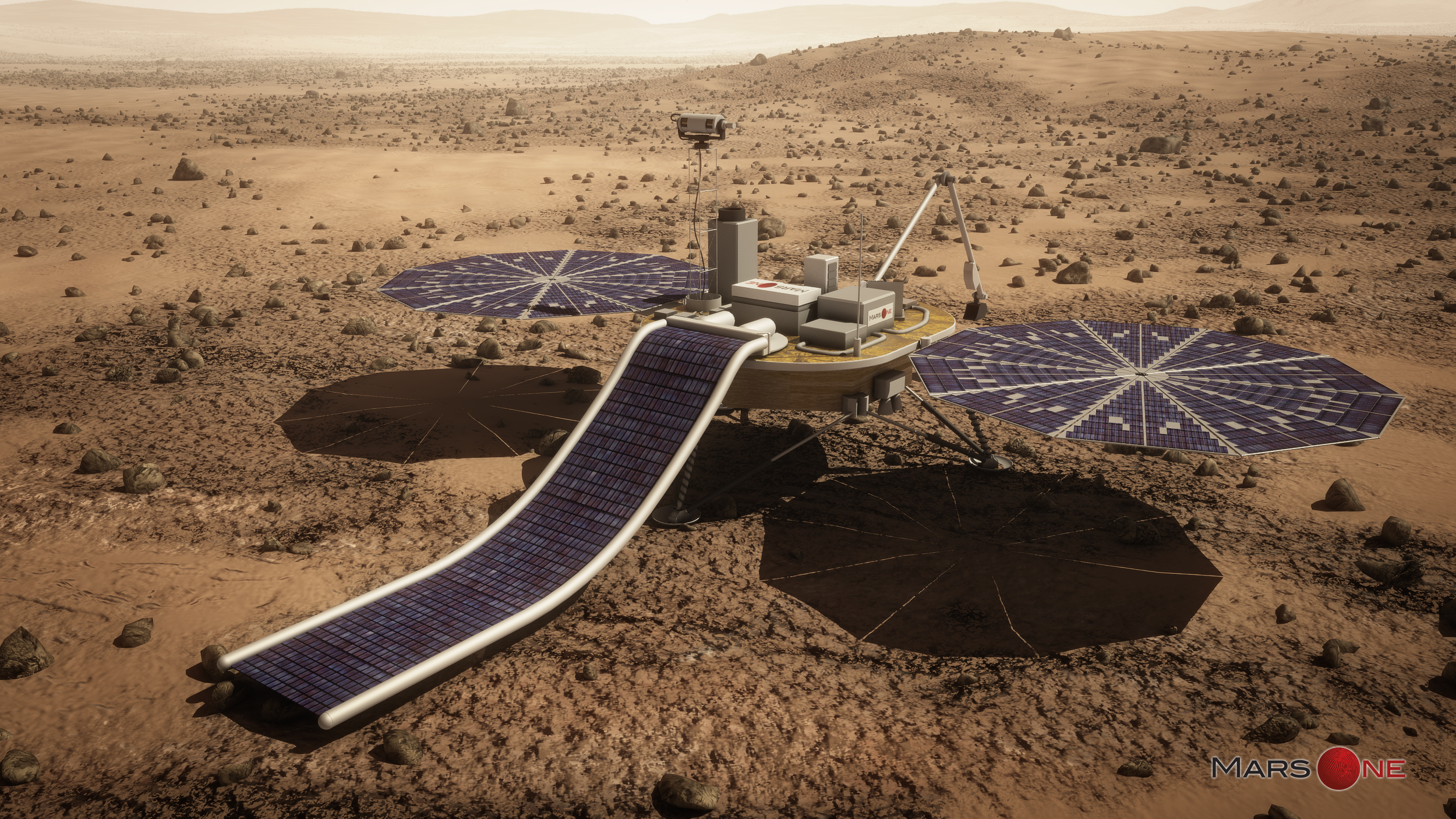
Mars_OneRemember Mars One, the Netherlands-based nonprofit that began seeking recruits for a one-way trip to the Red Planet during the summer of 2012? Well, it turns out the company is looking to take the next step towards its goal of establishing a human settlement on Mars by 2023. Basically, they are looking to raise the funds to get the ball rolling on the eventual manned mission.

Towards this end, they have started a crowdfunding campaign through Indiegogo – and in partnership with Lockheed Martin – to raise the money for some concept studies, which will test the lander and a satellite that will conduct a demonstration mission in just four years time. The lander is based on Lockheed’s design for the NASA lander successfully used on Mars in 2007 (pictured below).

Mars-One-2018-LanderTheir campaign is seeking to raise $400,000, which will cover the costs of the concept studies, and is a mere drop in the bucket compared to the $6 billion the team estimates will be necessary to get humans to Mars. However, most of that money is expected to come from media broadcasting rights as citizen astronauts are selected and, if all goes as planned, start living on the Martian surface.

As has been stated many times over, Mars One is an evolving idea that seeks to make something historic happen. A future, larger crowdfunding campaign will allow universities to compete to send a full experiment to Mars on the 2018 mission, which will be unmanned. Mars One hopes to send four human colonists to the planet by 2025, selected from a pool of more than 200,000 people who have already applied.

mars_one1And as Hans Lansdorp, CEO of Mars One recently said, this crowdfunding campaign is important to the team to get more people involved. Not only does the project require public interest and participation in order for it to become a reality, Lansdorp and his colleagues also want it to be as international and inclusive as possible:

We really see this as a break with the history of space exploration, and especially Mars exploration, because in this mission anyone can participate in some way… For the U.S., Mars exploration is pretty common. But all of Asia has never sent an experiment to Mars. Now, suddenly we allow anyone, everywhere in the world, to send something to Mars. That’s a complete break with Mars exploration in the past.

Naturally, there are plenty of issues that need to be worked out before anything real can happen, and plenty of naysayers who emphasize the stumbling blocks in sending a manned mission to Mars. These include, but are not restricted to, radiation, microgravity, technological limitations, and the sheer amount of time involved.

mars_one2Despite all that, Lansdorp and the Mars One team remain committed and dedicated to their goal, and have been taking on all challengers with their usual combination of optimism and entrepreneurial spirit. And they firmly believe that given time, all of these hurdles will be negotiable. What’s more, they’ve convinced more than a few critics of the validity of the mission:

If we have some time to talk to people and explain the details of our plan, and as long as they’re commenting on their own field of expertise, I’ve never met someone who could not be convinced that this is possible. It will be very difficult of course–there are thousands of hurdles on the road between now and landing on Mars–but there are no hurdles that we can identify that we cannot take.

As of the penning of this article, the Mars One campaign has been open since December 10th and has raised $209,677 of its $400,000 goal, with 18 more days to go. And there are certainly no shortage of volunteers, as the company is currently processing applications from 150,000 people. So even if it can’t happen by the proposed date, it is clear that they have grabbed the world’s attention.

And in the meantime, enjoy these videos of the proposed Mars One lander design (which will take place in the 2018 demo mission) and the company’s latest promotional video:

Mars One 2018 Lander:


Mars One 2018 Mission:


Sources: fastcoexist.com, theguardian.com, mars-one.com, indiegogo.com

Looking for Time Travelers… on Twitter!

DoctorWho_TardisIf time travelers were real, a la Doctor Who or Doc Emmett Brown style, how would they go about sharing their gift with the world? According to astrophysicist Robert Nemiroff and physics graduate student Teresa Wilson at Michigan Technological University, they would tweet about it. And so, the two began what has proven to be one of the most interesting searches on today’s social media.

To break it down succinctly, the pair began to search the backlogs of Facebook and Twitter for any indications of time travellers posting about the future. This they did by entering search terms for two major events – the appearance Comet ISON in September of 2012 and the election of Pope Francis in March 2013 – to see if there was any mention of them before they happened.

comet_ISONTheir theory, as presented in a paper published last month on Cornell University’s Library website, was that if there were any postings containing “Comet ISON,” “#cometison,” “Pope Francis” or “#popefrancis” from before those dates, they may very well be from a time traveler. Unfortunately, their searchers on Facebook turned up results which, in their own words, “were clearly not comprehensive.

Granted, a time-traveler would be quick to delete any status updates that appeared prescient, using Facebook’s new Graph Search privacy features. However, the the time-traveler hunting due had no better luck on Twitter, where a majority of people keep their tweets public. But of course, they went on to say in their paper that just because they didn’t see any time travelers doesn’t mean they don’t exist.

time-slipAs they argue it, it might not be possible for time travelers to leave any evidence of their journey behind.

…it may be physically impossible for us to find such information as that would violate some yet-unknown law of physics… time travelers may not want to be found, and may be good at covering their tracks.

Another thing to consider is that time travelers might actively try to erase any mention of their existence. For example, in the first season of the Doctor Who reboot, where the Doctor used a special virus to delete any digital trace of himself before leaving the present age. It’s academic stuff really, and the pair really shouldn’t have expected such careless errors to show up on the internet.

the_time_machine_croppedAnd as Donald Rumsfeld, another man who went searching for something and came up empty, said: “the absence of evidence is not the evidence of absence”. Yes, I know, the comparison really doesn’t help, does it? And right now, I’m sure you might be wondering if all those tax dollars that fund research grants might be better used elsewhere.

And let’s face it, it’s something many of us would wonder, and possible check for ourselves, given half a chance…

Sources: universetoday.com, huffingtonpost.com

The Future is Here: AirMule’s Autonomous Demo Flight

airmule1Vertical Take-Off and Landing craft have been the subject of military developers for some time. In addition to being able to deploy from landing strips that are damaged or small for conventional aircraft, they are also able to navigate terrain and land where other craft cannot. Add to that the ability to hover and fly close to the ground, and you have a craft that can also provide support while avoiding IEDs and landmines.

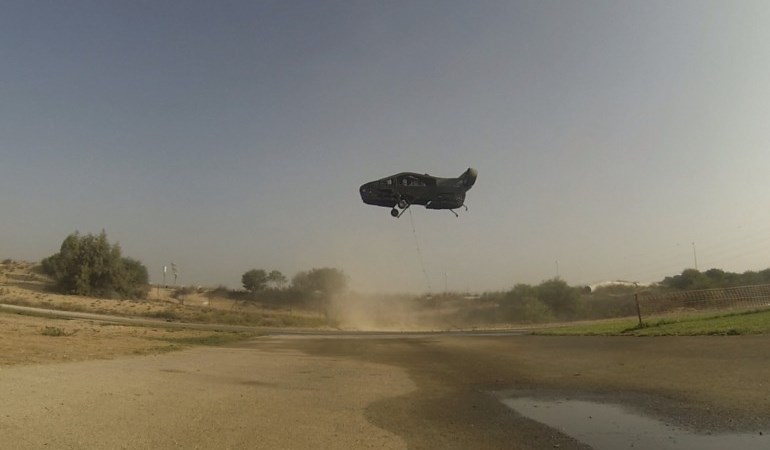
One concept that incorporates all of these features is the AirMule, a compact, unmanned, single-engine vehicle that is being developed by Tactical Robotics in Israel. In January of 2013, the company unveiled the prototype which they claimed was created for the sake of supporting military personnel,  evacuating the wounded, and conducting remote reconnaissance missions.

airmule-1Now, less than a year later, the company conducted a demonstration with their prototype aircraft recently demonstrated its ability to fly autonomously, bringing it one step closer to carrying out a full mission demo. During the test, which took place in December, the craft autonomously performed a vertical take-off, flew to the end of a runway, then turned around on the spot and flew back to its starting point.

All the while, it maintained altitude using two laser altimeters, while maintaining positioning via a combination of GPS, an inertial navigation system, and optical reference to markers on the ground. These autonomous systems, which allow it to fly on its own, can also be countermanded in favor of remote control, in case a mission seems particularly harry and requires a human controller.

airmule-0In its current form, the AirMule possesses many advantages over other VTOL craft, such as helicopters. For starters, it weighs only 770 kg (1,700 lb) – as opposed to a Bell UH-1 empty weights of 2,365 kg (5,215 lbs) – can carry a payload of up to 640 kg (1,400 lb), has a top speed of 180 km/h (112 mph), and can reach a maximum altitude of 12,000 ft (3,658 m).

In short, it has a better mass to carrying capacity ratio than a helicopter, comparable performance, and can land and take-off within an area of 40 square meters (430.5 sq ft), which is significantly smaller than what a manned helicopter requires for a safe landing. The internal rotor blades are reportedly also much quieter than those of a helicopter, giving the matte-black AirMule some added stealth.

BD_atlasrobotPlans now call for “full mission demonstrations” next year, utilizing a second prototype that is currently under construction. And when complete, this vehicle and those like it can expected to be deployed to many areas of the world, assisting Coalition and other forces in dirty, dangerous environments where landmines, IEDs and other man-made and natural hazards are common.

Alongside machines like the Alpha Dog, LS3 or Wildcat, machines that were built by Boston Dynamics (recently acquired by Google) to offer transport and support to infantry in difficult terrain, efforts to “unman the front lines” through the use of autonomous drones or remote-controlled robots continue. Clearly, the future battlefield is a place where robots where will be offering a rather big hand!


And be sure to check this video of the AirMule demonstration, showing the vehicle take-off, hover, fly around, and then come in for a landing:


Sources: gizmag.com, tactical-robotics.com

Judgement Day Update: Super-Strong Robotic Muscle

robot-arm-wrestling-03-20-09In their quest to build better, smarter and faster machines, researchers are looking to human biology for inspiration. As has been clear for some time, anthropomorphic robot designs cannot be expected to do the work of a person or replace human rescue workers if they are composed of gears, pullies, and hydraulics. Not only would they be too slow, but they would be prone to breakage.

Because of this, researchers have been working looking to create artificial muscles, synthetics tissues that respond to electrical stimuli, are flexible, and able to carry several times their own weight – just like the real thing. Such muscles will not only give robots the ability to move and perform tasks with the same ambulatory range as a human, they are likely to be far stronger than the flesh and blood variety.

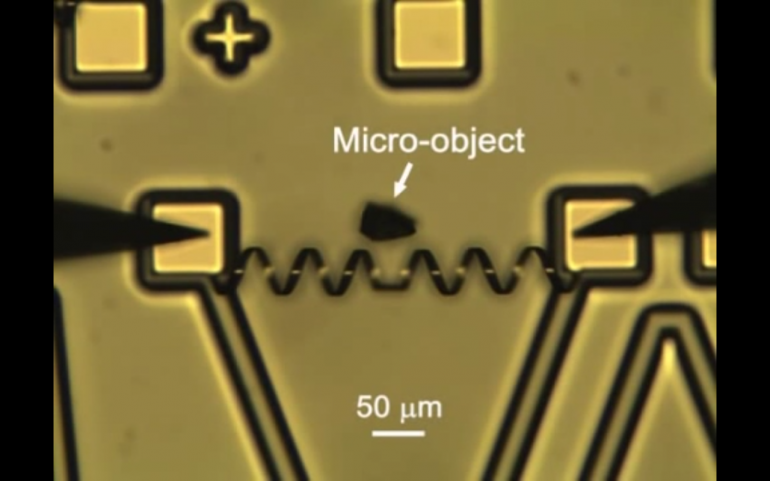
micro_robot_muscleAnd of late, there have been two key developments on this front which may make this vision come true. The first comes from the US Department of Energy ’s Lawrence Berkeley National Laboratory, where a team of researchers have demonstrated a new type of robotic muscle that is 1,000 times more powerful than that of a human’s, and has the ability to catapult an item 50 times its own weight.

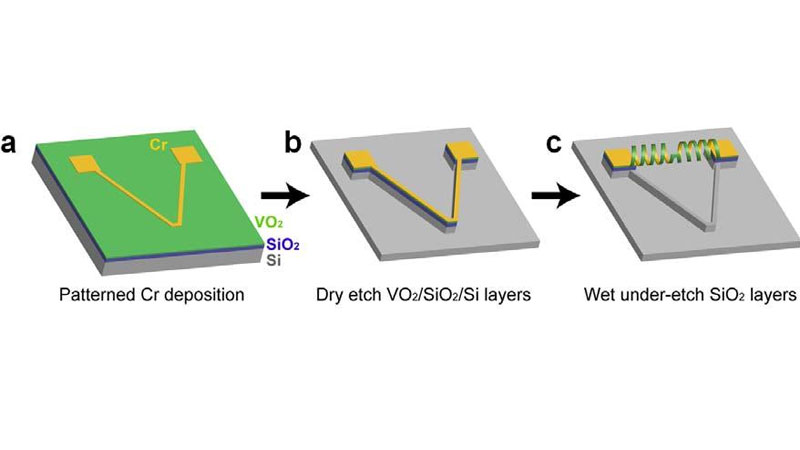
The artificial muscle was constructed using vanadium dioxide, a material known for its ability to rapidly change size and shape. Combined with chromium and fashioned with a silicone substrate, the team formed a V-shaped ribbon which formed a coil when released from the substrate. The coil when heated turned into a micro-catapult with the ability to hurl objects – in this case, a proximity sensor.

micro_robot_muscle2pngVanadium dioxide boasts several useful qualities for creating miniaturized artificial muscles and motors. An insulator at low temperatures, it abruptly becomes a conductor at 67° Celsius (152.6° F), a quality which makes it an energy efficient option for electronic devices. In addition, the vanadium dioxide crystals undergo a change in their physical form when warmed, contracting along one dimension while expanding along the other two.

Junqiao Wu, the team’s project leader, had this to say about their invention in a press statement:

Using a simple design and inorganic materials, we achieve superior performance in power density and speed over the motors and actuators now used in integrated micro-systems… With its combination of power and multi-functionality, our micro-muscle shows great potential for applications that require a high level of functionality integration in a small space.

In short, the concept is a big improvement over existing gears and motors that are currently employed in electronic systems. However, since it is on the scale of nanometers, it’s not exactly Terminator-compliant. However, it does provide some very interesting possibilities for machines of the future, especially where the functionality of micro-systems are concerned.

graphene_flexibleAnother development with the potential to create robotic muscles comes from Duke University, where a team of engineers have found a possible way to turn graphene into a stretchable, retractable material. For years now, the miracle properties of graphene have made it an attractive option for batteries, circuits, capacitors, and transistors.

However, graphene’s tendency to stick together once crumpled has had a somewhat limiting effect on its applications. But by attacking the material to a stretchy polymer film, the Duke researchers were able to crumple and then unfold the material, resulting in a properties that lend it to a broader range of applications- including artificial muscles.

robot_muscle1Before adhering the graphene to the rubber film, the researchers first pre-stretched the film to multiple times its original size. The graphene was then attached and, as the rubber film relaxed, the graphene layer compressed and crumpled, forming a pattern where tiny sections were detached. It was this pattern that allowed the graphene to “unfold” when the rubber layer was stretched out again.

The researchers say that by crumpling and stretching, it is possible to tune the graphene from being opaque to transparent, and different polymer films can result in different properties. These include a “soft” material that acts like an artificial muscle. When electricity is applied, the material expands, and when the electricity is cut off, it contracts; the degree of which depends on the amount of voltage used.

robot_muscle2Xuanhe Zhao, an Assistant Professor at the Pratt School of Engineering, explained the implications of this discovery:

New artificial muscles are enabling diverse technologies ranging from robotics and drug delivery to energy harvesting and storage. In particular, they promise to greatly improve the quality of life for millions of disabled people by providing affordable devices such as lightweight prostheses and full-page Braille displays.

Currently, artificial muscles in robots are mostly of the pneumatic variety, relying on pressurized air to function. However, few robots use them because they can’t be controlled as precisely as electric motors. It’s possible then, that future robots may use this new rubberized graphene and other carbon-based alternatives as a kind of muscle tissue that would more closely replicate their biological counterparts.

artificial-muscle-1This would not only would this be a boon for robotics, but (as Zhao notes) for amputees and prosthetics as well. Already, bionic devices are restoring ability and even sensation to accident victims, veterans and people who suffer from physical disabilities. By incorporating carbon-based, piezoelectric muscles, these prosthetics could function just like the real thing, but with greater strength and carrying capacity.

And of course, there is the potential for cybernetic enhancement, at least in the long-term. As soon as such technology becomes commercially available, even affordable, people will have the option of swapping out their regular flesh and blood muscles for something a little more “sophisticated” and high-performance. So in addition to killer robots, we might want to keep an eye out for deranged cyborg people!

And be sure to check out this video from the Berkley Lab showing the vanadium dioxide muscle in action:


Source:
gizmag.com, (2)
, extremetech.com, pratt.duke.edu

Tech News: Google Seeking “Conscious Homes”

nest_therm1In Google’s drive for world supremacy, a good number of start-ups and developers have been bought up. Between their acquisition of eight robotics companies in the space of sixth months back in 2013 to their ongoing  buyout of anyone in the business of aerospace, voice and facial recognition, and artificial intelligence, Google seems determined to have a controlling interest in all fields of innovation.

And in what is their second-largest acquisition to date, Google announced earlier this month that they intend get in on the business of smart homes. The company in question is known as Nest Labs, a home automation company that was founded by former Apple engineers Tony Fadell and Matt Rogers in 2010 and is behind the creation of The Learning Thermostat and the Protect smoke and carbon monoxide detector.

nest-thermostatThe Learning Thermostat, the company’s flagship product, works by learning a home’s heating and cooling preferences over time, removing the need for manual adjustments or programming. Wi-Fi networking and a series of apps also let users control and monitor the unit Nest from afar, consistent with one of the biggest tenets of smart home technology, which is connectivity.

Similarly, the Nest Protect, a combination smoke and carbon monoxide detector, works by differentiating between burnt toast and real fires. Whenever it detects smoke, one alarm goes off, which can be quieted by simply waving your hand in front of it. But in a real fire, or where deadly carbon monoxide is detected, a much louder alarm sounds to alert its owners.

nest_smoke_detector_(1_of_9)_1_610x407In addition, the device sends a daily battery status report to the Nest mobile app, which is the same one that controls the thermostats, and is capable of connecting with other units in the home. And, since Nest is building a platform for all its devices, if a Nest thermostat is installed in the same home, the Protect and automatically shut it down in the event that carbon monoxide is detected.

According to a statement released by co-f0under Tony Fadell, Nest will continue to be run in-house, but will be partnered with Google in their drive to create a conscious home. On his blog, Fadell explained his company’s decision to join forces with the tech giant:

Google will help us fully realize our vision of the conscious home and allow us to change the world faster than we ever could if we continued to go it alone. We’ve had great momentum, but this is a rocket ship. Google has the business resources, global scale, and platform reach to accelerate Nest growth across hardware, software, and services for the home globally.

smarthomeYes, and I’m guessing that the $3.2 billion price tag added a little push as well! Needless to say, some wondered why Apple didn’t try to snatch up this burgeoning company, seeing as how its being run by two of its former employees. But according to Fadell, Google founder Sergey Brin “instantly got what we were doing and so did the rest of the Google team” when they got a Nest demo at the 2011 TED conference.

In a press release, Google CEO Larry Page had this to say about bringing Nest into their fold:

They’re already delivering amazing products you can buy right now – thermostats that save energy and smoke/[carbon monoxide] alarms that can help keep your family safe. We are excited to bring great experiences to more homes in more countries and fulfill their dreams!

machine_learningBut according to some, this latest act by Google goes way beyond wanting to develop devices. Sara Watson at Harvard University’s Berkman Center for Internet and Society is one such person, who believes Google is now a company obsessed with viewing everyday activities as “information problems” to be solved by machine learning and algorithms.

Consider Google’s fleet of self-driving vehicles as an example, not to mention their many forays into smartphone and deep learning technology. The home is no different, and a Google-enabled smart home of the future, using a platform such as the Google Now app – which already gathers data on users’ travel habits – could adapt energy usage to your life in even more sophisticated ways.

Larry_PageSeen in these terms, Google’s long terms plans of being at the forefront of the new technological paradigm  – where smart technology knows and anticipates and everything is at our fingertips – certainly becomes more clear. I imagine that their next goal will be to facilitate the creation of household AIs, machine minds that monitor everything within our household, provide maintenance, and ensure energy efficiency.

However, another theory has it that this is in keeping with Google’s push into robotics, led by the former head of Android, Andy Rubin. According to Alexis C. Madrigal of the Atlantic, Nest always thought of itself as a robotics company, as evidence by the fact that their VP of technology is none other than Yoky Matsuoka – a roboticist and artificial intelligence expert from the University of Washington.

yokymatsuoka1During an interview with Madrigal back in 2012, she explained why this was. Apparently, Matsuoka saw Nest as being positioned right in a place where it could help machine and human intelligence work together:

The intersection of neuroscience and robotics is about how the human brain learns to do things and how machine learning comes in to augment that.

In short, Nest is a cryptorobotics company that deals in sensing, automation, and control. It may not make a personable, humanoid robot, but it is producing machine intelligences that can do things in the physical world. Seen in this respect, the acquisition was not so much part of Google’s drive to possess all our personal information, but a mere step along the way towards the creation of a working artificial intelligence.

It’s a Brave New World, and it seems that people like Musk, Page, and a slew of futurists that are determined to make it happen, are at the center of it.

Sources: cnet.news.com, (2), newscientist.com, nest.com, theatlantic.com

The Future is Here: 3-D Printed Candy

chefjet_candyRemember the Easy Bake Oven, that little toy appliance that came equipped with an especially hot light-bulb and allowed kids to bake (a limited array of) edible goods? Well, it just may be that 3-D food printers will give the children of tomorrow that same ability, except with a much wider array of options; not to mention little risk of burning themselves.

Already, pizza, pancakes, and desserts are all options for food printers, and even Google’s cafeteria has a 3-D printer for pasta. And at this years Consumer Electronics Show (CES 2014), 3D Systems unveiled two of their latest designs – the ChefJet and the ChefJet Pro – showcasing printers that use sugar and water to crystallize frosting in real time.

chefjet-sugar-2-hires3D Systems is no stranger to printer technology. At last years CES, they won Best Emerging Tech award for their Cubify printer – a low cost device geared towards kids, artists, and other consumers inexperienced with the technology. And though the reviews coming out of CES are mixed on the nature of the flavor, the colors and shapes it can render into candy form are quite impressive.

The ChefJet only prints sugar or chocolate-colored confections while the Pro takes it up a notch with an inkjet filled with food coloring allowing for a plethora of colorful, and edible, results. These range from spirals and squares to 3-D pentagons and spheres, to incredibly elaborate designs that resemble chorals or casings for cakes. And of course, the candy can come in the form of pure sugar, or as white or dark chocolate.

chef-jet-pro1Other developments in the 3-D printing of food – such as NASA’s research on printing food in space (including pizza!), or printing food with personalized nutritional content – aren’t yet fully formed. ChefJet could be a little easier to integrate into small industries right away, since it has the ability to tailor make frosting in shapes that could easily be added to high-end desserts (like wedding cakes).

Even more exciting is the potential for home applications. Parents could rent a ChefJet Pro for a kids’ birthday party to create cakes or candy in the shape of their child’s favorite characters, or let children customize the Halloween candy that they would hand out. And just like the Easy Bake Oven of old, the result may not be totally tasty, but the process is still fun and gives people a chance to be creative.

The ChefJet and ChefJet Pro will likely be available in the second half of 2014, for an estimated $5,000 and $10,000 apiece. And while you’re waiting on one to become commercially available (and affordable), check out this video of the ChefJet in action at CES 2014:

Source: fastcodesign.com, nasa.gov

The Future of Computing: Brain-Like Computers

neuronsIt’s no secret that computer scientists and engineers are looking to the human brain as means of achieving the next great leap in computer evolution. Already, machines are being developed that rely on machine blood, can continue working despite being damaged, and recognize images and speech. And soon, a computer chip that is capable of learning from its mistakes will also be available.

The new computing approach, already in use by some large technology companies, is based on the biological nervous system – specifically on how neurons react to stimuli and connect with other neurons to interpret information. It allows computers to absorb new information while carrying out a task, and adjust what they do based on the changing signals.

brain_chip2The first commercial version of the new kind of computer chip is scheduled to be released in 2014, and was the result of a collaborative effort between I.B.M. and Qualcomm, as well as a Stanford research team. This “neuromorphic processor” can not only automate tasks that once required painstaking programming, but can also sidestep and even tolerate errors, potentially making the term “computer crash” obsolete.

In coming years, the approach will make possible a new generation of artificial intelligence systems that will perform some functions that humans do with ease: see, speak, listen, navigate, manipulate and control. That can hold enormous consequences for tasks like facial and speech recognition, navigation and planning, which are still in elementary stages and rely heavily on human programming.

googleneuralnetworkFor example, computer vision systems only “recognize” objects that can be identified by the statistics-oriented algorithms programmed into them. An algorithm is like a recipe, a set of step-by-step instructions to perform a calculation. But last year, Google researchers were able to get a machine-learning algorithm, known as a “Google Neural Network”, to perform an identification task (involving cats) without supervision.

And this past June, the company said it had used those neural network techniques to develop a new search service to help customers find specific photos more accurately. And this past November, researchers at Standford University came up with a new algorithm that could give computers the power to more reliably interpret language. It’s known as the Neural Analysis of Sentiment (NaSent).

deep_learning_laptopA similar concept known as Deep Leaning is also looking to endow software with a measure of common sense. Google is using this technique with their voice recognition technology to aid in performing searches. In addition, the social media giant Facebook is looking to use deep learning to help them improve Graph Search, an engine that allows users to search activity on their network.

Until now, the design of computers was dictated by ideas originated by the mathematician John von Neumann about 65 years ago. Microprocessors perform operations at lightning speed, following instructions programmed using long strings of binary code (0s and 1s). The information is stored separately in what is known as memory, either in the processor itself, in adjacent storage chips or in higher capacity magnetic disk drives.

neural-networksBy contrast, the new processors consist of electronic components that can be connected by wires that mimic biological synapses. Because they are based on large groups of neuron-like elements, they are known as neuromorphic processors, a term credited to the California Institute of Technology physicist Carver Mead, who pioneered the concept in the late 1980s.

These processors are not “programmed”, in the conventional sense. Instead, the connections between the circuits are “weighted” according to correlations in data that the processor has already “learned.” Those weights are then altered as data flows in to the chip, causing them to change their values and to “spike.” This, in turn, strengthens some connections and weakens others, reacting much the same way the human brain does.

Neuromorphic-chip-640x353In the words of Dharmendra Modha, an I.B.M. computer scientist who leads the company’s cognitive computing research effort:

Instead of bringing data to computation as we do today, we can now bring computation to data. Sensors become the computer, and it opens up a new way to use computer chips that can be everywhere.

One great advantage of the new approach is its ability to tolerate glitches, whereas traditional computers are cannot work around the failure of even a single transistor. With the biological designs, the algorithms are ever changing, allowing the system to continuously adapt and work around failures to complete tasks. Another benefit is energy efficiency, another inspiration drawn from the human brain.

IBM_stacked3dchipsThe new computers, which are still based on silicon chips, will not replace today’s computers, but augment them; at least for the foreseeable future. Many computer designers see them as coprocessors, meaning they can work in tandem with other circuits that can be embedded in smartphones and the centralized computers that run computing clouds.

However, the new approach is still limited, thanks to the fact that scientists still do not fully understand how the human brain functions. As Kwabena Boahen, a computer scientist who leads Stanford’s Brains in Silicon research program, put it:

We have no clue. I’m an engineer, and I build things. There are these highfalutin theories, but give me one that will let me build something.

calit2PhotoLuckily, there are efforts underway that are designed to remedy this, with the specific intention of directing that knowledge towards the creation of better computers and AIs. One such effort comes from the National Science Foundation financed the Center for Brains, Minds and Machines, a new research center based at the Massachusetts Institute of Technology, with Harvard and Cornell.

Another is the California Institute for Telecommunications and Information Technology (aka. Calit2) – a center dedicated to innovation in nanotechnology, life sciences, information technology, and telecommunications. As
Larry Smarr, an astrophysicist and director of Institute, put it:

We’re moving from engineering computing systems to something that has many of the characteristics of biological computing.

Human-Brain-project-Alp-ICTAnd last, but certainly not least, is the Human Brain Project, an international group of 200 scientists from 80 different research institutions and based in Lausanne, Switzerland. Having secured the $1.6 billion they need to fund their efforts, these researchers will spend the next ten years conducting research that cuts across multiple disciplines.

This initiative, which has been compared to the Large Hadron Collider, will attempt to reconstruct the human brain piece-by-piece and gradually bring these cognitive components into an overarching supercomputer. The expected result of this research will be new platforms for “neuromorphic computing” and “neurorobotics,” allowing for the creation of computing and robotic architectures that mimic the functions of the human brain.

neuromorphic_revolutionWhen future generations look back on this decade, no doubt they will refer to it as the birth of the neuromophic computing revolution. Or maybe just Neuromorphic Revolution for short, but that sort of depends on the outcome. With so many technological revolutions well underway, it is difficult to imagine how the future will look back and characterize this time.

Perhaps, as Charles Stross suggest, it will simply be known as “the teens”, that time in pre-Singularity history where it was all starting to come together, but was yet to explode and violently change everything we know. I for one am looking forward to being around to witness it all!

Sources: nytimes.com, technologyreview.com, calit2.net, humanbrainproject.eu

The Future is Here: 3-D Printed Eye Cells

printed_eyecells3In the past few years, medical researchers have been able to replicate real, living tissues samples using 3-D printing technology – ranging from replacement ears and printed cartilage to miniature kidneys and even liver cells. Well now, thanks to a team of researchers from the University of Cambridge, eye cells have been added to that list.

Using a standard ink-jet printer to form layers of two types of cells,  the research team managed to print two types of central nervous system cells from the retinas of adult rats – ganglion cells (which transmit information from the eye to the brain), and glial cells (which provide protection and support for neurons). The resulting cells were able to grow normally and remain healthy in culture.

printed_eyecells2Ink-jet printing has been used to deposit cells before, but this is the first time cells from an adult animal’s central nervous system have been printed. The research team published its research in the IOP Publishing’s open-access journal Biofabrication and plans to extend this study to print other cells of the retina and light-sensitive photoreceptors.

In the report, Keith Martin and Barbara Lorber – the co-authors of the paper who work at the John van Geest Centre for Brain Repair at the University of Cambridge – explained the experiment in detail:

Our study has shown, for the first time, that cells derived from the mature central nervous system, the eye, can be printed using a piezoelectric inkjet printer. Although our results are preliminary and much more work is still required, the aim is to develop this technology for use in retinal repair in the future.

printed_eyecellsThis is especially good news for people with impaired visual acuity, or those who fear losing their sight, as it could lead to new therapies for retinal disorders such as blindness and macular degeneration. Naturally, more tests are needed before human trials can begin. But the research and its conclusions are quite reassuring that eye cells can not only be produced synthetically, but will remain healthy after they are produced.

Clara Eaglen, a spokesperson for the Royal National Institute of Blind People (RNIB), had this to say about the breakthrough:

The key to this research, once the technology has moved on, will be how much useful vision is restored. Even a small bit of sight can make a real difference, for some people it could be the difference between leaving the house on their own or not. It could help boost people’s confidence and in turn their independence.

printed_eyecells1Combined with bionic eyes that are now approved for distribution in the US, and stem cell treatments that have restores sight in mice, this could be the beginning of the end of blindness. And with all the strides being made in bioprinting and biofabrication, it could also be another step on the long road to replacement organs and print-on-demand body parts.

Sources: news.cnet.com, singularityhub.com, cam.ca.uk, bbc.co.uk

The Future is Weird: Cyborg Sperm!

cyborg_sperm1Finding ways to merge the biological and the technological, thus creating the best of both worlds, is one of the hallmarks of our new age. Already, we have seen how bionic appendages that connect and calibrate to people’s nerve signals can restore mobility and sensation to injured patients. And EEG devices that can read and interpret brainwaves are allowing man-machine interface like never before.

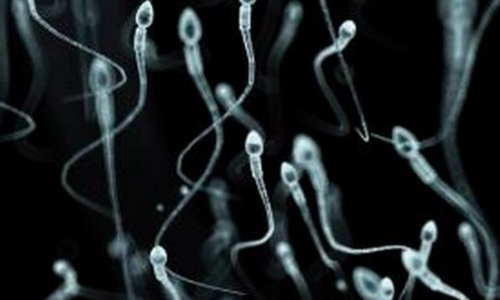
But cyborg sperm? That is something that might require an explanation. You see, sperm cells have an awesome swimming ability. And wanting to take advantage of this, Oliver Schmidt and a team researchers at the Institute for Integrative Nanosciences in Dresden, Germany, combined individual sperm cells with tiny magnetic metal tubes to create the first sperm-based biobots.

Cyborg_Sperm3This means we now have a way to control a cell’s direction inside the body, a breakthrough that could lead to efficient microscopic robots – one which are not entirely mechanical. To make the “biohybrid micro-robot,” Schmidt and his colleagues captured and trapped bull sperm inside magnetic microtubes, leaving the tail outside.

To create the spermbots, the team made microtubes 50 microns long, by 5 to 8 microns in diameter from iron and titanium nanoparticles. They added the tubes to a fluid containing thawed bull sperm. Because one end of each tube was slightly narrower than the other, sperm that swam into the wider end become trapped, headfirst, with their flagella still free.

cyborg_sperm2With mobility taken care of, the team moved on to the matter of how to control and direct the microtubes. For this, they chose to rely on a system of external magnetic fields which work the same way as a compass needle does, by aligning with the Earth’s magnetic field. This enabled the team to control the direction in which the sperm swam, adjusting their speed through the application of heat.

According to the researchers, the option of using sperm as the basis for a biohybrid micro-robot is attractive because they are harmless to the human body, they provide their own power, and they can swim through viscous liquids – such as blood and other bodily fluids. As the researchers said in their paper:

The combination of a biological power source and a microdevice is a compelling approach to the development of new microrobotic devices with fascinating future application.

cyborg_spermGranted, the idea of cybernetic sperm swimming through our systems might not seem too appealing. But think of the benefits for fertility treatments and inter-uteran health. In the future, tiny biohybrid robots like these could be used to shepherd individual sperm to eggs, making for more effective artificial insemination. They could also  deliver targeted doses of drugs to uteran tissue that is either infected or cancerous.

And if nothing else, it helps to demonstrate the leaps and bounds that are being made in the field of  biotechnology and nanotechnology of late. At its current rate of development, we could be seeing advanced medimachines and DNA-based nanobots becoming a part of regular medical procedures in just a few years time.

And while we’re waiting, check out this video of the “cyborg sperm” in action, courtesy of New Scientist:


Sources:
IO9, newscientist.com