Episode 45 – The Great Migration: Living in the Belt – is now Live!

Episode 45 – The Great Migration: Living in the Belt – is now Live!

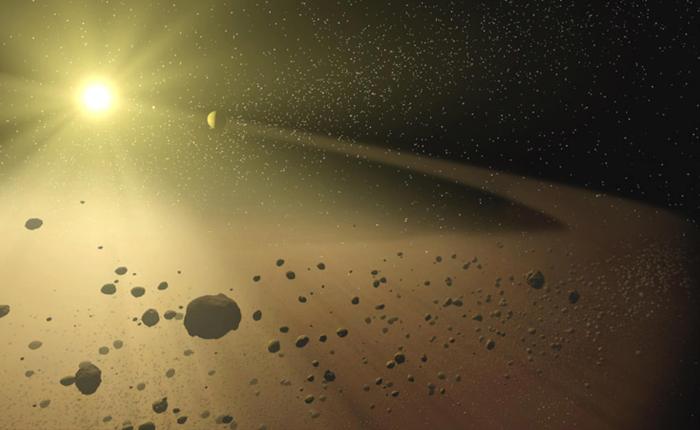
The Great Migration continues! The next stop: the Main Asteroid Belt! The idea that humans could someday settle among the many, many rocks and planetoids that sit between Mars and Jupiter has been explored extensively in science fiction and scientific literature. Beyond the larger bodies, Ceres, Vesta, Pallas, and Hygiea, pinwheel stations or cylinders could be established that could accommodate millions of people in environments that mimic Earth’s biospheres. There are also countless smaller rocks that could be hollowed out and spun up to simulate gravity.

The benefits of settling the Main Belt are also innumerable. Foremost among them, there’s the potential for becoming a post-scarcity species thanks to the incredible abundance of minerals, ores, precious metals, and rare Earth elements. There are also opportunities for scientific research since asteroids are essentially material left over from the formation of the Solar System. On top of that, there’s the opportunities for socio-political experiments. With so many habitats available, countless new cultures and societies could form.

Before long, a thriving economy and a new segment of humanity known as “Belters” could emerge. Check out the episode below:

Where to Listen:


Episode 44 – The Brief Window Hypothesis – is now Live!

Episode 44 – The Brief Window Hypothesis – is now Live!

In this week’s episode, I returned to the well of the Fermi Paradox to address another of my favorite resolutions. While this one is not an official hypothesis, it encapsulates elements from several proposals and asks the big question – is intelligent life doomed? If humanity is any indication, intelligent creatures may eventually outgrow their resource base, ruin their natural environment, and build weapons of mass destruction that they may eventually use. This raises a key parameter of the Drake Equation, the thought experiment created by astronomer and SETI researcher Dr. Frank Drake:

N = R* x fp x ne x fl x fi x fc x L

For those who are unfamiliar, the equation basically states that the number of intelligent species (N) in our galaxy that humanity could communicate with comes down to a series of parameters (planets per star, habitable planets per system, those that have life, etc.,) multiplied by the length of time (L) a species is likely to transmit signals to space. If intelligent life is prone to destructive behavior or has a limited life expectancy, then L is the key parameter for finding evidence of it out there.

Basically, the transmission will begin when a species achieves an advanced state of development and will end when they succumb to their fate. If our antennas are not set to the right frequencies, and we don’t manage to detect their transmissions within this window, then we will never hear from them. There’s also the possibility that intelligent life undergoes a seismic shift at some point, which borrows from the Transcension Hypothesis and the concept of the “Technological Singularity.”

The idea here is that intelligent life will eventually transcend its physical biology and become something radically different. At this point, species may not be likely to communicate via radiowaves but with something radically advanced – like neutrinos or gravitational waves – or may not be interested in communicating at all. Once again, the window will have closed. But in this case, it will be due to a pattern in the evolutionary development of intelligent life. Check it out by following the links below:

Where to Listen:

Stories from Space Passes 5000 Downloads!

Stories from Space Passes 5000 Downloads!

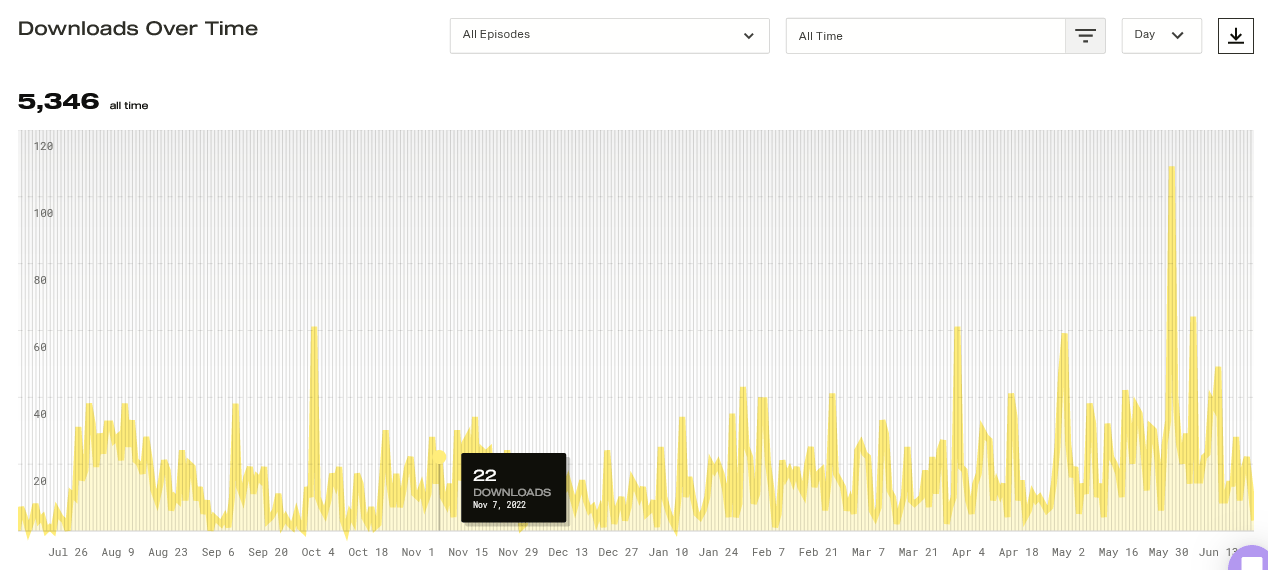
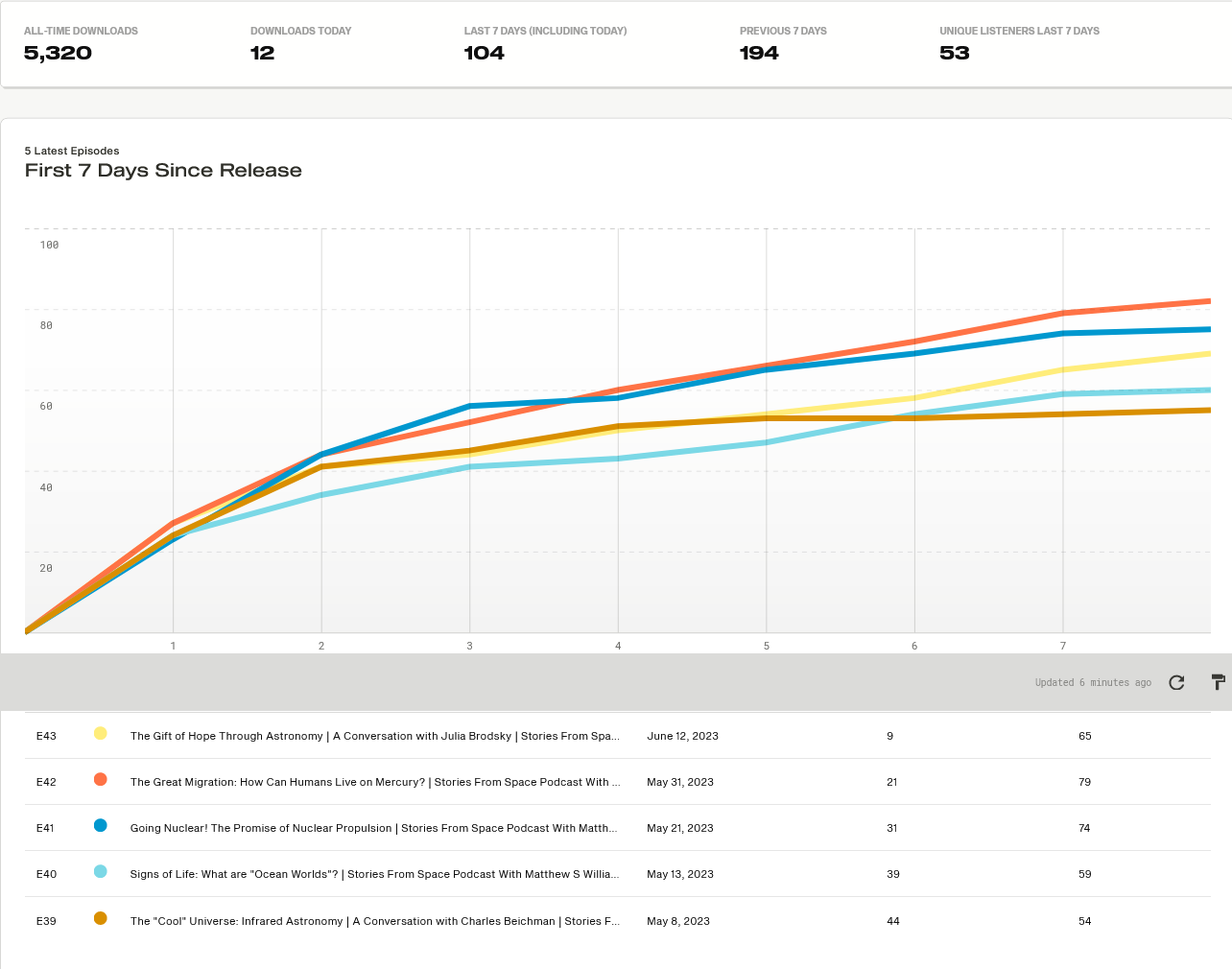
Good news, everybody! Stories from Space, the humble ship that launched one year ago (as of last week), has surpassed 5000 downloads – 5,346, to be exact. And since the show first aired, 43 episodes have been released. Doing the math, this works out to about 0.83 episodes a day, 14 downloads a day, and about 124 downloads an episode. Of course, that’s just the averages. Some episodes have done better than others, and the number of downloads has fluctuated over time (though the trend is upward).

It appears that of all the host platforms, Apple Podcasts was the greatest source, accounting for 1,359 downloads (or 26.32% of the total), followed closely behind by Spotify (1,153 downloads; 22.33%). According to the analytics, the following episodes were the ten most popular:

  1. The Great Filter Hypothesis | Guest: Dr. Robin Hanson – 371 views
  2. The Alcubierre Warp Drive | Guest: Dr. Harold “Sonny” White – 364 views
  3. Behind The Scenes At NASA | Guest: Nancy Atkinson – 260 views
  4. We’re Going to Mars! – 258 views
  5. Where Are All the Aliens? The Transcension Hypothesis – 198 views
  6. Building An Elevator To Space! | Guests: Dr. Peter Swan & Adrian Nixon – 160 views
  7. Where Are All the Aliens? The Planetarium Hypothesis – 155 views
  8. What Is The Future Of Space Law? | Guests: Christopher M. Hearsey & Nathan Johnson – 149 views
  9. Going Interstellar | Guest: Les Johnson – 140 views
  10. Marschitecture | Guest: Vera Mulyani – 124 views

According to my publishers at ITSPMagazine, this is a pretty good start. Now if we could just get some sponsorship, we’d be in business! In addition, I’m interested to know what subjects people are interested in and want to know more about. This could be anything from historical tidbits, past & future missions, and general knowledge stuff to concepts in astrophysics and the wild and wonderful world of the truly deep and speculative stuff.

The show is growing, ongoing, and evolving. And I’m hoping interested parties will share their ideas on where it should go. Let me know in the comments!

Episode 43 – The Gift of Hope Through Astronomy: Earthlings Hub with Julia Brodsky

Episode 43 – The Gift of Hope Through Astronomy: Earthlings Hub with Julia Brodsky

This week, I sat down with Julia Brodsky, astrophysicist, educator, former NASA astronaut trainer, founder and CEO of the Art of Inquiry, and researcher with the Blue Marble Space Institute of Science. She’s also a co-founder of Earthlings Hub, an education and outreach organization that conducts astronomy and STEM education programs for orphans, refugee children, and families in Ukraine.

Continue reading “Episode 43 – The Gift of Hope Through Astronomy: Earthlings Hub with Julia Brodsky”

A Visit to the Ideas Folder

A Visit to the Ideas Folder

People who know me and are familiar with my work understand that I suffer from literary OCD and ADD. This is to say, when I get an idea, I become obsessive about developing it and usually spend days writing out a framework, chapter summaries, character profiles, or random stuff related to it. On the other hand, I will immediately lose focus the moment another idea comes to me or an old one recaptures my attention. You might say that ideas are like shiny objects to me, always capturing my attention and distracting me.

The following are ideas that have come to me over the years but which I have had no luck developing so far. In some cases, it was a time thing. In others, it’s a matter of inspiration being a fickle SOB. Oh, the tyranny of the Idea Folder and all the undeveloped ideas it contains! I’m sure everyone whose ever put pen to paper (or fingers to keys) knows what this is like. But at the same time, it’s good to know there’s a stack of ideas somewhere that you can pick up and dust off occasionally.

Continue reading “A Visit to the Ideas Folder”

Episode 42 – The Great Migration: How Can Humans Live on Mercury?

Episode 42 – The Great Migration: How Can Humans Live on Mercury?

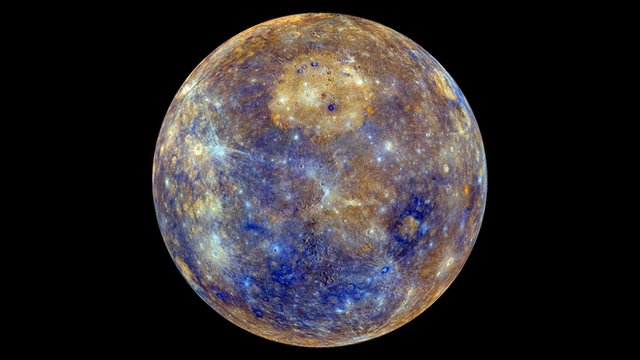
The series continues with the latest stop in the Solar System: Mercury! Hold up, that can’t be right! And yet, it is. Contrary to popular opinion, humans could actually live on Mercury, the closest planet to our Sun. Granted, it won’t exactly be a cakewalk. In addition to being an airless body (i.e., no atmosphere to speak of), Mercury is exposed to almost seven times as much radiation as Earth.

And because of its slow rotation and rapid orbit, surface temperatures range from hot enough to melt lead to cryogenically freezing! But with the right know-how, technology, and strategies, we could build a thriving outpost of civilization and economy on Mrcury based on the export of mineral wealth and energy, as well as art and ideas!

The idea has been explored in science fiction and scientific literature alike. And assuming there are enough people adventurous enough to settle there, there’d be a new branch of humanity known as “Hermeans.” Follow the links below to learn more.

Where to Listen:

A New Scale for Classifying Intelligence?

A New Scale for Classifying Intelligence?

In the Search for Extraterrestrial Intelligence (SETI), there are many limiting factors. These go beyond the usual technical limitations, where SETI researchers are reliant on existing radio telescopes that can only be used for limited amounts of time. A far greater one is the very limited frame of reference we have for measuring intelligence.

Let’s face it, our notions of intelligence are entirely self-centered and anthropocentric. We think of intelligence in terms of ourselves and rarely consider that intelligence can occur under other domains, even though many exist here on Earth, and there is a considerable body of research that takes a wider view.

Given the way SETI research has become reinvigorated in recent decades, there are many who believe it’s time to expand our notions on what forms life and intelligence could take. For my purposes, the following scheme is motivated mainly by my interest in science fiction and its unparalleled ability to explore the deeper mysteries of the Universe.

Therefore, for your viewing pleasure, I present the Intelligence Scale. It is arranged based on the nature of the intelligence (labels are frustrating and inexact) and the scale it occupies.

Class:

Type a — Distributed: Consisting of individual intelligent beings connected together through social relationships
Type b — Collective: Consisting of large groups of organisms that make up a cohesive intelligent unit
Type c — Cooperative: Consisting of individual intelligence that has merged to form a larger whole
Type d — Adaptive: Consisting of intelligence that is capable of functioning in more than one mode or environment
Type e — Assimilative: Consisting of intelligence that is collective and incorporates all organisms in its environment into a greater whole

Scale:

Type I — Micrometer: Organisms measuring a few micrometers to a few centimeters in scale (ranging from microbes to insect-like creatures)
Type II — Meter: Organisms measuring in the meter range, mammals to high-order primates
Type III — Planetary: Organisms encompassing a large geographic region to an entire planet
Type IV — Stellar: Organisms extending beyond a single planet to an entire solar system
Type V — Cosmic: Organisms occupying a large region of space, extending for light-years and possibly entire galaxies

For reference, humanity is a Type IIa species, which is arguably making the transition to a Type IIIa thanks to the digital age. Will we ever give rise to different classes ourselves, or will we find examples that challenge our notions out there in the cosmos? In both cases, I sincerely hope so!

A Humble Attempt at Predicting Future History

A Humble Attempt at Predicting Future History

There’s an old saying by Kierkegaard, “Life can only be understood backward; but it must be lived forwards.” I’ve heard this adage many times, except that the word “history” was always substituted for “life.” This is certainly true, to a point. After all, history is subject to prejudices, bias, and the good old human tendency to look for patterns. In my experience, how we remember history is no less about “the winners write the books” as “the writers impose their organization principle.”

That’s what I love about science fiction’s future histories. The sub-genre owes its existence to Olaf Stapledon’s Last and First Men, a science fiction novel released in 1930. In this “future history,” Stapledon presented an imaginative romp through several futures where the descendants of humanity rise and fall many times, creating advanced civilizations and periodically slipping back into barbarism.

Continue reading “A Humble Attempt at Predicting Future History”

Episode 41 of Stories from Space – Going Nuclear! The Promise Nuclear Propulsion

Episode 41 of Stories from Space – Going Nuclear! The Promise Nuclear Propulsion

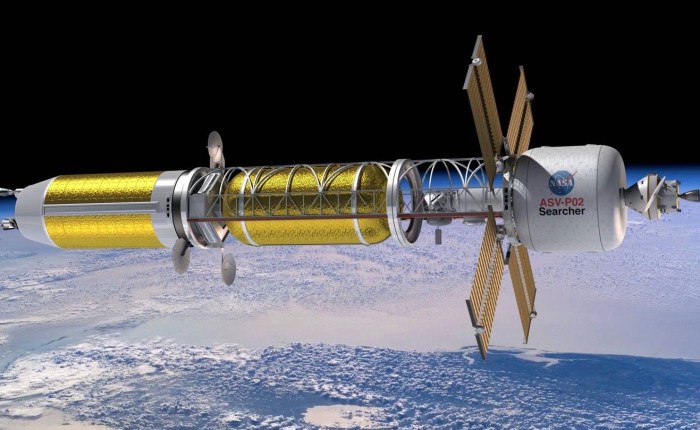
This week’s topic is near and dear to my heart (I know, when aren’t they?). But this one is especially so since so much depends on it. Around the world today, space agencies and commercial space entities are developing nuclear propulsion systems. These systems come in the form of Nuclear-Thermal (NTP), Nuclear-Electric (NEP), and Bimodal Nuclear Propulsion (BNP) – where both methods are used by a spacecraft.

Continue reading “Episode 41 of Stories from Space – Going Nuclear! The Promise Nuclear Propulsion”

Episode 40 of Stories from Space – Signs of Life: What are “Ocean Worlds”?

Episode 40 of Stories from Space – Signs of Life: What are “Ocean Worlds”?

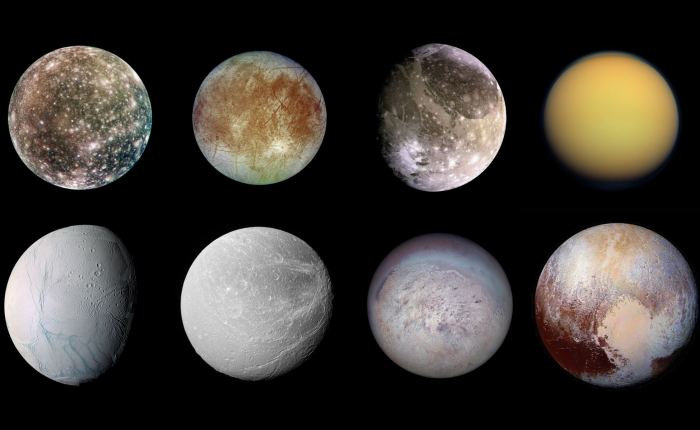
This week, I got into one of the more intriguing aspects of astrobiology – the search for life in the cosmos! Right now, all of our astrobiology efforts are focused on Mars, the most “habitable” planet (by our standards) beyond Earth. But what of the icy moons that orbit Jupiter, Saturn, and beyond? For decades, scientists have speculated that moons orbiting gas giants beyond the “Frost Line” could have warm-water oceans that could support life.

These oceans result from the gravitational pull of the gas giants they orbit, causing tidal flexing in their interiors. This, it was theorized, would lead to hydrothermal activity at the core-mantle boundary, where the icy outer shell meets the rocky and metallic core. The energy this released would maintain a liquid-water ocean rich in the chemical elements we associate with life.

The theory emerged by the 1970s after scientists got a good look at some of Jupiter’s largest moons – Europa and Ganymede – which showed evidence of resurfacing, plume activity, and their interactions with Jupiter”s magnetic field. In recent years, the list of “Ocean Worlds” has expanded to include moons like Titan, Enceladus, Dione, Ariel, Umbriel, Titania, Oberon, Triton, Charon, and even Pluto!

In all cases, these bodies have geological activity or sufficient nuclear elements (which decay to produce heat) to maintain liquid water in their interiors. The plethora of “Ocean Worlds” in our Solar System also has implications for the search for life in extrasolar systems. After all, if icy satellites in our outer Solar System could support life, then similar bodies are sure to exist out there (in abundance). Check it out below!

Where to Listen: