World’s First 3-D Printed Metal Gun

3dmetalgun-640x353Earlier this year, Distributed Defense became the source of much controversy after they unveiled the world’s first 3-D printed gun. Known as the Liberator, this single-shot weapon was entirely composed of ABS plastic, and was the first weapon that could be created using open-source software and a 3-D printer, giving anyone with access the means to build their own firearms.

Predictably, the website was shut down and the design specs were removed, thanks to an injunction filed by the U.S. Department of Defense Trade Control just a few days after the unveiling. However, the issue was far from closed, as the case of Distributed Defense and the Liberator were clearly just a drop in the bucket of a much larger trend.liberatorAnd now, just six months later, the issue is once again rearing its head as the world’s first 3-D printed metal gun was unveiled. Created by the rapid prototyping and 3-D printing company known as Solid Concepts, this 1911 Colt .45 is a major step forward in the realm of weapons that can be built by just about anyone and counted on to remain functional after firing.

The gun was built using the relatively new process known as Selective Laser Sintering (SLS), a process that combines lasers and powdered metals to create finished products. Basically, a high-powered laser is used to fuse small particles of powder together, layer by layer, until the desired shape is created. In addition to being able to create highly intricate objects, sintering is far more efficient than the machining process.
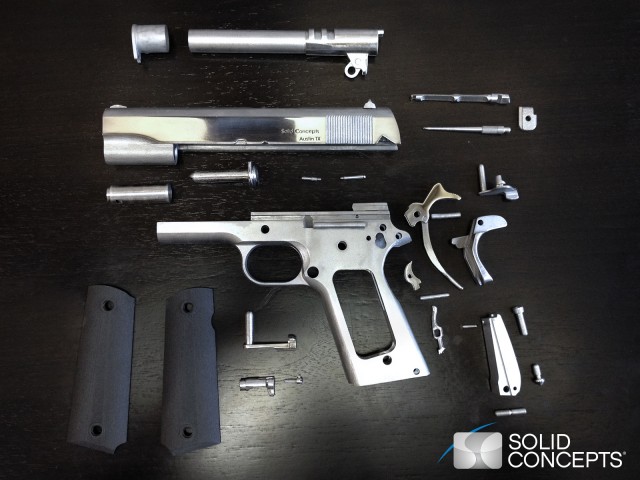
3D-Printed-Metal-Gun-Components-Disassembled-Low-Res-640x480This latest weapon was also an improvement over the Liberator in that it was able to fire over 50 rounds with considerable accuracy, whereas the Liberator broke down after just a few shots. Made of of over 30 separate 3D printed parts, the gun is composed of stainless steel and Inconel 625 (a nickel-chromium superalloy), consistent with the original Colt design.

But before people begin to worry that this is bad news, Solid Concepts was quick to point out that the gun was printed using an industrial printer, the price of which is out of range of your average citizen. In addition, the software is not open-source, meaning people can’t simply download it from any 3-D printing website and begin producing their own private arsenal.
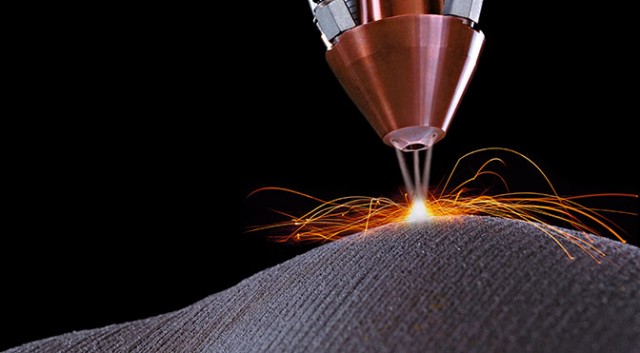
sinteringSolid Concepts also claims that they produced this weapon to demonstrate how 3-D printing is not just for hobbyists anymore, and how sintering is a viable way to produce delicate, precise, specific consumer and professional grade products. The company said that it is currently the only 3D printing service provider with a federal firearms license, and will be looking to provide printed gun parts for legal gun owners.

Regardless, this story serves as an example of how far the technology of 3-D printing has come in just a short amount of time. From printing models with plastic, the technology is now pushing the boundaries of industrial manufacturing and bioprinting, using everything from steel and titanium to liver and kidney cells.

Give more time and refinement, we could be entering into an age where all consumer products and necessities are created from powder and individual cells, possibly even at the atomic level. For those wondering what the next industrial revolution will look like, I suggest you look no further!

And of course, Solid Concepts captured the test firing of their 1911 Colt on video. Check it out:


Source: extremetech.com
The Future is Here: Cleaning Micro-Robots

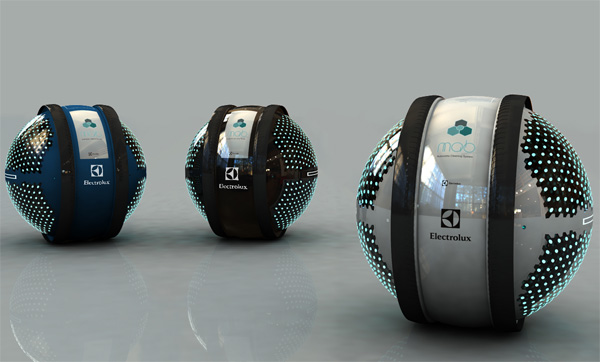
mab1No one likes the idea of having to clean their homes or living spaces. Its time consuming, repetitive, and never seems to end. But thanks to some new concepts, which were featured this year at the Electrolux Design Labs competition, a day may be coming when all such maintenance can be handled by machines, and not the large, bulky kinds that are often featured in sci-fi shows and novels.

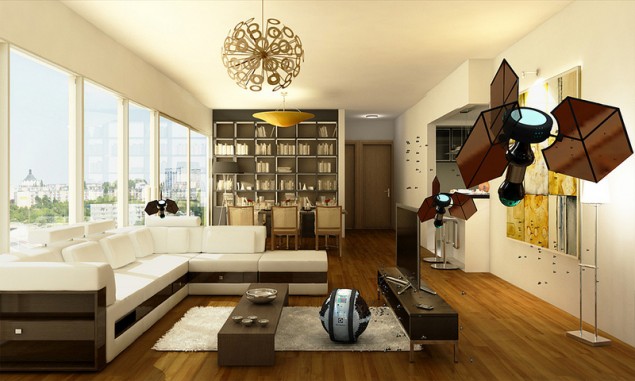
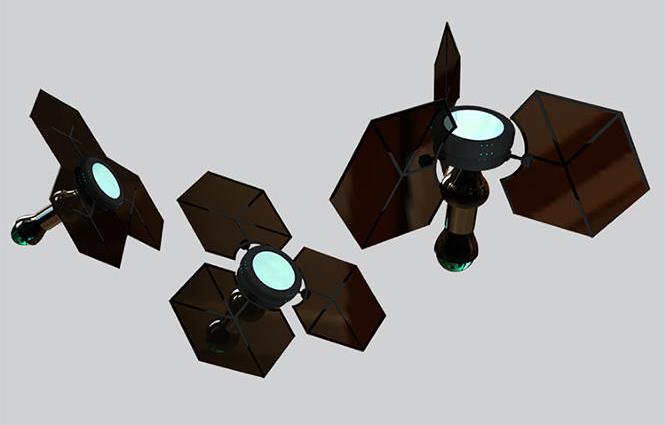
Instead, the new concept for household cleaning robots focuses on the growing field of swarm robotics. That was the concept behind Mab, a series to tiny robots that fly around the house and determine what needs cleaning. Designed by Adrian Perez Zapata, a 23-year old student from Bolivia, the Mab concept utilizes swarm programming to allow all 908 of its insect-like robots to carry out group functions.

mabEach of the tiny robots lives within a spherical core (picture above), and once they are released, they venture out and depositing tiny amounts of water and cleaning solution onto surfaces that have been identified as dirty. Then, having sucked up the dirty liquid, the swarm returns to their core where they unload and await further instructions or the next schedules cleaning cycle.

The robots fly around by means of several tiny, spinning propellers, and their energy comes from built-in solar panels and a battery unit that is recharged whenever they are in the core unit. Zapata claimed that he derived much of his inspiration for the design from the “robo-bee” research being conducted at Harvard, but initially got the idea from watching actual insects at work one day:

I was in my university gardens when I observed the controlled flight of bees pollinating a flower, and how magical it is to see swarms of bees working together. My concept Mab only requires a short initial configuration to function autonomously, so you could arrive home and see a swarm of mini-robots roaming around cleaning independently. This means you could sit back and relax, as you observe with great astonishment the little Mab fairies working their magic.

Mab2Zapata’s design won first place in the 2013 Electrolux Design Labs competition, an annual contest created to encourage designer students from all over the world to come up with ideas and solutions for future living. This year’s theme was Inspired Urban Living, featuring three focus areas to choose from: Social Cooking, Natural Air and Effortless Cleaning, and drew some rather impressive ideas!

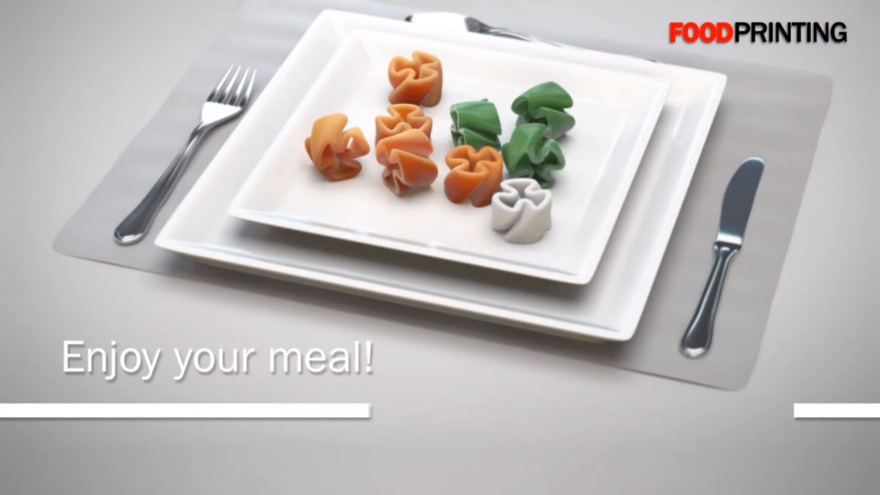
For example, second place went to Luiza Silva of Brazil for her design concept known as Atomium, a home 3-D printer for food that uses molecular ingredients to construct food layer by layer. You simply draw the shape of the food you would like to eat and show it to the Atomium, which then scans the image and prints the specified food in the desired shape.

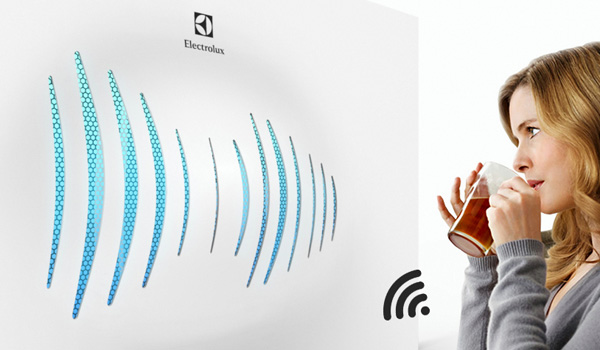
atomiumThird place went to Jeabyun Yeon from South Korea for the Breathing Wall, an “air cleaning concept which pulsates and changes shape as it cleans the air.” Inspired by fish gills, It can also be customized to suit individual needs as it scents the air you breathe and changes color according to your choice.

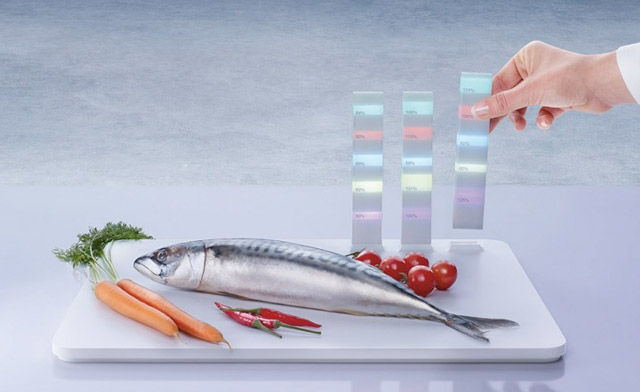
After that, the finalists included: Nutrima, a device for instantly assessing food’s nutritional value and possible toxicity; Kitchen Hub, an app to keep track of food in the fridge, encourage healthy eating, and reduce waste; OZ-1, an air purifier worn as a necklace; 3F, a shape-shifting autonomous vacuum cleaner; and Global Chef, a hologramatic device for bringing virtual guests to the dinner-table.

breathing_wallTaken together, these small bits of innovation are indicative of a much larger trend, where touchscreens, 3-D printing, scanners, swarm robots, and smart environments address our needs in ways that are intuitive, automated, efficient, and very user friendly. The only downside… they are likely to make us ever lazier than we already are!

In the meantime, check out these videos of the Mab, Atomium, Breathing Wall, and other cool inventions that were featured at the 2013 Electrolux Design Labs competition:

Mab:

Atomium:

Breathing Wall:

Nurtima:

Kitchen Hub:

OZ-1:

3F:

Global Chef:


Sources: fastcoexist.com, (2), electroluxdesignlabs.com

The Future is Here: The Factory in a Box

factory_box3-D Printing has proven itself quite useful when it comes to creating components, toys, and models. But when it comes to assembling complicated parts, or full-on products, other machines are often necessary. That’s where the Microfactory comes in, a veritable “multi-tool” machine that merges the best of 3-D printing and machining.

Being touted as “a machine shop in a box”, the creators of the device (the Mebotics company) were inspired to create this multi-tool kit after collaborating at the Boston-area Artisans Asylum. Artisans Asylum is a non-profit organization dedicated to promoting hobbyists, artisans, fabricators and entrepreneurs through a series of open maker space presentations.

factory_box2In addition, the team was also inspired by the fact that most manufacturing systems suffer from two major downfalls: noise and mess. By “closing the system”, as they put it, they eliminated both hassles while still ensuring that their device is capable of both producing tailor-made objects and altering them to order.

The Microfactory dramatically expands the range of products a person with no other equipment could make. It is basically able to 3-D print in four colors, out of multiple materials, and also etch, and mill the final products. This process, which combines machining and printing, is what the makers refer to as “hybrid manufacturing.”

3D-printing-in-spaceAs Co-founder of Mebotics, Jeremy Fryer-Biggs, explains:

I wanted to have a machine that was capable of making parts for all the crazy stuff people people would ask me [to make]. I wanted a tool that would allow me to do a whole wide range of things.

As Fryer-Biggs and the team envision it, the Microfactory could also offer users the ability to create devices and components where they are needed, regardless of the location. With a fully-functional computer incorporated to provide the blueprints, they foresee some extreme scenarios where objects could be created and finished where no stores are available:

You’re at base camp in the Himalayas, you’re in the middle of Afghanistan and you wanna make a part. So you connect this thing to a Wi-Fi hotspot–if you have a Wi-Fi card in the machine that you put in. You can then download from the server whatever the replacement part is you need, and in the middle of nowhere, get your replacement.

3d_ISSThis vision is in keeping with what many scientific organizations – such as NASA, the ESA, and other space agencies – are foreseeing. Already, such devices are being considered for use on the International Space Station and on future space missions, where astronauts will always be in need of specialized tools and may not have the ability to have them shipped out to them.

The team currently has several working prototypes but is planning to bring the project to market by raising $1 million through Kickstarter. MicroFactory units are being pre-sold for between $4,000 and $10,000 in several models. Though the team admits that the price is high, the science fiction appeal alone is well worth it! As Marie Staver, a project manager on the team, put it: “The science fiction future is officially here.”

Couldn’t agree more. And in the meantime, check out this video of the Microfactory in action:

Sources: fastcoexist.com, mebotics.com, artisansasylum.com

3-D Printed Prosthetics: The Open Hand Project

Open_Hand3-D Printing has been a boon for a number of industries, offering a cheaper method of production and sending those savings onto the consumer. One such industry is prosthetics, which is taking advantage of the new technology to cheaply generate all the components needed to create robotic replacement limbs. And with the proliferation of models, amputees and accident victims have a range of options that was previously unimaginable.

The latest comes to us from Bristol in the UK, where the robotics company known as The Open Hand Project has developed a robot limb that is cheaply produced and can be purchased for under £650 (or roughly $1000 US). At this price, their prosthetic device – known as the Dextrus robot hand = is significantly cheaper than existing robotics technology.

Open_hand3Inventor Joel Gibbard first came up with the idea for the Dextrus robotic hand while studying Robotics at the University of Plymouth in 2011. He developed a prototype for his final-year project before leaving to work for National Instruments. After two years in the workplace, he left his job in March 2013 to launch the Open Hand Project, an open-source venture that aims to make robotic prosthetic hands accessible for people in the developing world.

Gibbard’s hand relies entirely on off-the-shelf DC motors with a spool on the end that connects to a steel “tendon” that can be tightened and loosened when the user wants to move their fingers. The outer casing is composed of 3D-printed plastic parts that act like bones while a rubber coating acts as the skin. The user can control the fingers using electomyographical signals picked up from the muscle in their arm using stick-on electrodes.

open_hand2As Gibbard explained in an interview with Wired magazine:

Each finger is individually actuated so you can grasp funny shaped objects. It’s not all that complicated. I’ve put a little tensioner in between each one so you have a bit of mechanical compliance. Even if an amputee has lost their hand, all of the muscles are still in the forearm and they can still flex them, so you can use that signal.

Already, the prosthesis was tested out by a chef named Liam Corbett, who lost his hand to meningitis two years ago and contacted Gibbard via Facebook when he heard about the Open Hand Project. According to Corbett, he was very impressed with the device and said that:

I think it’s certainly going to enable me to do the finer things in life which I certainly haven’t been able to do with a hook… I would be proud to wear this, it would make me feel more confident.

open_hand1Gibbard hopes to refine the design to cut down on the electrical noise it produces, and to develop specialized software to configure the electrodes to simplify the calibration process. Back in September, he opened up a crowdfunding campaign with Indiegogo to raise the necessary money. As of writing this article, he has surpassed his goal of £39,000 and raised a total of £41,065.

However, there is still four days left before the campaign closes. So if you want to donate, thus enabling GIbbard and his colleagues to refine the design further, simply click here and follow the prompts. And be sure to check out the Indiegogo video to see how the hand works:


Sources: wired.co.uk, indiegogo.com

News From Space: 3-D Printed Spacecraft

3D_spaceprinting13D-Printing has led to many breakthroughs in the manufacturing industry in recent years. From its humble beginnings assembling models out of ABS plastic, the technology has been growing by leaps and bounds, with everything from construction and food printing to bioprinting becoming available. And as it happens, another major application is being developed by a private company that wants to bring the technology into orbit.

It’s called SpiderFab, a system of technologies that incorporates 3-D printing and robotic assembly to create  “on-orbit” structures and spaceship components (such as apertures, solar arrays, and shrouds). Developed by tech firm Tethers Unlimited, Inc. (TUI), the project is now in its second phase and recently landed a $500,000 development contract from NASA.

spiderfabOne of the greatest challenges of space exploration is the fact that all the technology must first be manufactured on Earth and then shuttled into orbit aboard a rocket or a shroud. The heavier the cargo, the larger the rocket needs to be. Hence, any major undertaking is likely to have a massive price tag attached to it. But by relocating the manufacturing process to a place on-site, aka. in orbit, the entire process will be much cheaper.

Towards this end, the SpiderFab, incorporates two major innovations in terms of transportation and manufacture. The first makes it possible to pack and launch raw materials, like spools of printable polymer, in a cost-effective way using smaller rockets. The second uses patented robotic fabrication systems that will process that material and aggregate it into structural arrangements.

3D_spaceprintingDr. Rob Hoyt, CEO of TUI, had this to say of his company’s brainchild in a recent interview with Co.Design:

SpiderFab is certainly an unconventional approach to creating space systems, and it will enable significant improvements for a wide range of missions.

The unorthodox system is also a solution to the problem that Hoyt began working on two decades ago when he first began working with NASA. While there, he experimented with on-orbit fabrication as a concept, but was limited due to the fact that there were no means available to make it reality. However, once 3-D printing became mainstream, he seized the opportunity presented. As he explains:

I didn’t strike on anything dramatically better than [previous investigations] until about six years ago, when additive manufacturing was really starting to take off. I realized that those techniques could be evolved to enable some dramatic improvements in what we can build in space.

spiderfab3At present, TUI is working on several different models of what the SpiderFab will eventually look like. The first of these is known as the Trusselator, one of many building blocks that will form the factory responsible for producing spacecraft components. The Trusselator is designed to print high-performance truss elements, while another, the Spinneret, will use 3-D printing-like techniques to connect and fuse together clusters of trusses.

Hoyt says that the TUI team will be further testing these processes in the next couple of months, first in the lab and then in a thermal-vacuum chamber. He hopes, however, that they will be able to conduct an on-orbit demonstration of SpiderFab a few years down the line. And with any luck, and more funding, NASA and other agencies may just convert their production process over to orbital 3-D printing facilities.

Alongside concepts like the SpaceX Grasshopper reusable rocket and reusable space craft, 3-D space printing is yet another revolutionary idea that is likely to bring the astronomical (no pun!) costs of space exploration down considerably. With affordability will come growth; and with growth, greater exploration will follow…

Star-Trek-universe

Sources: fastcodesign.com, tethers.com

Building the Future: 3D Printing and Silkworms

arcology_crystalWhen it comes to building the homes, apartment blocks and businesses headquarters of the future,  designers and urban planners are forced to contend with a few undeniable realities. No only are these buildings going to be need to be greener and more sustainable, they will need to be built in such a way that doesn’t unnecessarily burden the environment.

Currently, the methods for erecting a large city building are criminally inefficient. Between producing the building materials – concrete, steel, wood, granite – and putting it all together, a considerable amount of energy is expended in the form of emissions and electricity, and several tons of waste are produced.

anti-grav3d2Luckily, there are many concepts currently on the table that will alter this trend. Between using smarter materials, more energy-efficient design concepts, and environmentally-friendly processes, the future of construction and urban planning may someday become sustainable and clean.

At the moment, many such concepts involve advances made in 3-D printing, a technology that has been growing by leaps and bounds in recent years. Between anti-gravity printers and sintering, there seems to be incredible potential for building everything from settlements on the moon to bridges and even buildings here on Earth.

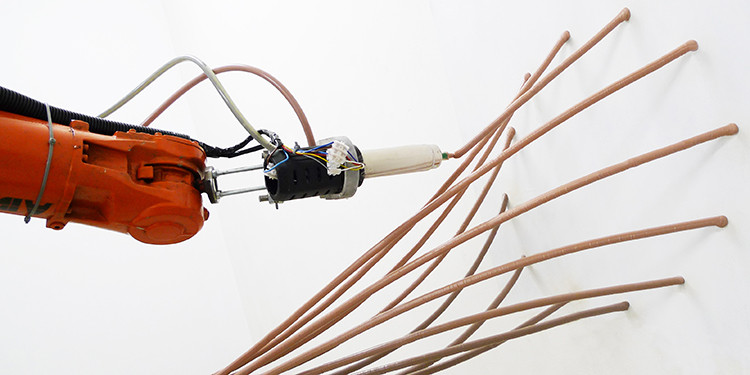
bridge_3One case in particular comes to us from Spain, where four students from the Institute for Advanced Architecture of Catalonia have created a revolutionary 3-D printing robot. It’s known as Stone Spray, a machine that can turn dirt and sand into finished objects such as chairs, walls, and even full-blown bridges.

The brainchild of Anna Kulik, Inder Prakash, Singh Shergill, and Petr Novikov, the robot takes sand or soil, adds a special binding agent, then spews out a fully formed architectural object of the designers’ choosing. As Novikov said in an interview with Co.Design:

The shape of the resulting object is created in 3-D CAD software and then transferred to the robot, defining its movements. So the designer has the full control of the shape.

robot-on-site_0So far, all the prototypes – which include miniature stools and sculptures – are just 20 inches long, about the size of a newborn. But the team is actively planning on increasing the sizes of the objects this robot can produce to architectural size. And they are currently working on their first full-scale engineering model: a bridge (pictured above).

If successful, the robot could represent a big leap forward in the field of sustainable design. Growing a structure from the earth at your feet circumvents one of the most resource-intensive aspects of architecture, which is the construction process.

And speaking of process, check out this video of the Stone Spray in action:


At the same time, however, there are plans to use biohacking to engineer tiny life forms and even bacteria that would be capable of assembling complex structures. In a field that closely resembles “swarm robotics” – where thousands of tiny drones are programmed to build thing – “swarm biologics” seeks to use thousands of little creatures for the same purpose.

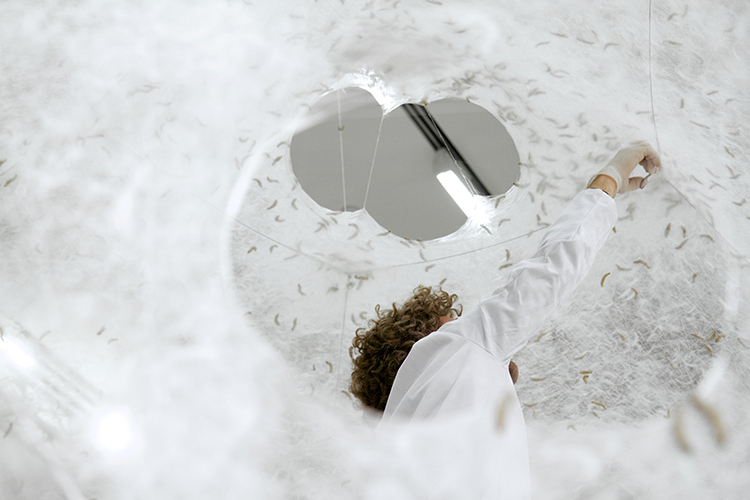
silkpavilionMIT has taken a bold step in this arena, thanks to their creation by the Mediated Matter Group that has rebooted the entire concept of “printed structures”. It’s called the Silk Pavilion, a beautiful structures whose hexagonal framework was laid by a robot, but whose walls were shell was created by a swarm of 6,500 live silkworms.

It’s what researchers call a “biological swarm approach to 3-D printing”, but could also be the most innovate example of biohacking to date. While silkworms have been used for millennia to give us silk, that process has always required a level of harvesting. MIT has discovered how to manipulate the worms to shape silk for us natively.

silkpavilion-2The most immediate implications may be in the potential for a “templated swarm” approach, which could involve a factory making clothes just by releasing silkworms across a series of worm-hacking mannequins. But the silkworms’ greater potential may be in sheer scale.

As Mediated Matter’s director Neri Oxman told Co.Design, the real bonus to their silkworm swarm its that it embodies everything an additive fabrication system currently lacks. 

It’s small in size and mobile in movement, it produces natural material of variable mechanical properties, and it spins a non-homogeneous, non-woven textile-like structure.

What’s more, the sheer scale is something that could come in very handy down the road. By bringing 3-D printing together with artificial intelligence to generate printing swarms operating in architectural scales, we could break beyond the bounds of any 3-D printing device or robot, and build structures in their actual environments.

silkpavilion-1In addition, consider the fact that the 6,500 silkworms were still viable after they built the pavilion. Eventually, the silkworms could all pupate into moths on the structure, and those moths can produce 1.5 million eggs. That’s enough to theoretically supply what the worms need to create another 250 pavilions.

So on top of everything else, this silkworm fabrication process is self-propagating, but unlike plans that would involve nanorobots, no new resources need to be consumed to make this happen. Once again, it seems that when it comes to the future of technology, the line between organic and synthetic is once more blurred!

And of course, MIT Media Lab was sure to produce a video of their silkworms creating the Silk Pavilion. Check it out:


Sources:
fastcodesign.com, (2)

Feeding the Future: 3D Printing to End World Hunger?

3DfoodThe Systems & Materials Research Corporation, a 3D printing development firm, received a lot of attention after it became revealed that NASA had hired him (to the tune of $125,000) to develop a printer that could create pizza. Looking ahead to the era of deep-space exploration, NASA wanted something that could provide its astronauts with food that was tasty, nutritious, and not subject to a shelf life.

But to Anjan Contractor, the head of SMRC, 3D printing also presents a solution to a much more terrestrial problem: world hunger. He sees a day when every kitchen has a 3D printer, and the earth’s 12 billion people feed themselves customized, nutritionally-appropriate meals synthesized one layer at a time, from cartridges of powder and oils they buy at the corner grocery store.

3dfood1Contractor’s vision would mean the end of food waste, because the powder his system will use is shelf-stable for up to 30 years. Each cartridge, whether it contains sugars, complex carbohydrates, protein or some other basic building block, would therefore be fully exhausted before ever needing to be returned to the store. So in addition to providing for our daily needs, this process would also eliminate a massive proportion of the waste we generate on a daily basis.

In addition, the proliferation of food synthesizers is also likely lead to new and diverse ways of producing the basic calories on which we rely. Since a powder is a powder, the inputs could be anything that contain the right organic molecules. And with open source software, where people can upload and download recipes all the time, people will have a chance to get creative and expand the repertoire.

OLYMPUS DIGITAL CAMERAAnd in addition to alleviating hunger, there is the added (and arguably bigger) bonus of relieving pressure on the natural environment. Already, environmentalists are gravelly concerned about the amount of land that is consumed every year by urban sprawl. But even more disconcerting is the amount of land, forests, wetlands, and natural habitats, that are consumed and destroyed by the need to farm food for these environments, and dispose of their waste.

And he is hardly alone when it comes to the concept of turning powdered ingredients and pastes into food. The Dutch holding company known as TNO Research, which owns several technology firms, has also been contemplating the possibilities of turning any food-like starting material into an edible meal. According to an outline provided by their researchers, 3D printed meals of the future could include any of the following “alternative ingredients”:

  • algae
  • duckweed
  • grass
  • lupine seeds
  • beet leafs
  • insects

As long as the biological properties of the base materials are appropriate – meaning they have the requisite carbohydrates, protein, fatty acids, etc – than it should be possible to synthesize just about anything.

3dfood2In addition, companies like Philips and institutions like MIT have been working on the concept of food printers for many years. In Philip’s case, this research led to the creation of the Diagnostic Kitchen program. This led to ideas for a Food Printer, which was inspired by the concept of ‘molecular gastronomists’, chefs who deconstruct meals and then reassemble it in completely different ways.

In much the same way, a Food Printer would take various edible ingredients and then combine and ‘print’ them in the desired shape and consistency. The nutritional value and relevance of what was being ‘printed’ would also be adjusted based on input from the diagnostic kitchen’s nutrition monitor. If, for example, you were trying to carbo-load for an athletic event, wanted to build muscle, or lower your cholesterol, you could tweek the levels of carbs, protein, or fatty acids to suit your needs.

MIT_3DprinterAnd there’s the Cornucopia,  a 3D printer that was unveiled by MIT’s gastronomy geeks back in 2010. Here, a series of refrigerated food canisters provide the food ingredients, which are then deposited into a built-in mixer which delivers concoctions that can be either heated or cooled thanks to a temperature controlled print head. A touch screen allows users to dial in what they want, and adjust ingredients to get the desired end.

Granted, there are those who won’t likely see this as an appetizing prospect. But as Contractor notes, that’s probably because they haven’t tried the high-end stuff yet. As the technology improves, attitudes about printed food products are likely to change. What’s more, he also believes overpopulation might add a little incentive to the mix:

I think, and many economists think, that current food systems can’t supply 12 billion people sufficiently. So we eventually have to change our perception of what we see as food.

Quite right. When the world is bursting at the seems and so many people are forced to live together in close quarters, hardly anyone is likely to raise a fuss about assembled food. Not when the alternative is an empty belly or a planet that will collapse from the weight of so much farming and waste. So if you’re the kind of person who likes their meat, veggies and fruits to be farmed locally and organically, you may want to consider moving to the country!

And be sure to check out this concept video produced by NTO that showcases the future of 3D printing, which of course includes food production:


Source:
qz.com, popucity.net, geek.com

3-D Printing Now Offering Cartiledge!

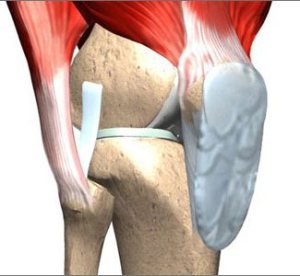
3-D cartilageSince it’s development as a viable technology, 3-D printing has presented us with some very interesting possibilities. In addition to objects made of plastic, metal, and possibly meat (a proposed idea still in development), printers may be used to create something else entirely: cartilage! Yes, in a recent announcement, scientists at the Wake Forest Institute of Regenerative Medicine claimed to have pioneered an approach to replace damaged cartilage.

The process combines two low-cost techniques – electronspinning and inkjet/bioprinting – to create the world’s first class of synthetic implantable biomaterial. The first is a method that that is used to create synthetic, polymer-based nanoscale-fibrous materials for implants and wound dressing, while the second is currently used to create tissue and organ material.

cartilage1Each process is viable, but comes with its own share of shortcomings. Electrospun materials typically don’t have the ability to promote cellular growth, nor do they have the flexibility needed for cartilage replacement. And inkjet printed materials lack the structure and strength needed to support the loads that cartilage carries. But by merging to two systems together, the researchers at Wake Forest to overcome these limitations and create something viable.

Their hybrid approach alternates microscopic layers of electrospun fiber and printed, living cartilage cells cultivated from rabbit ears, thus generating an artificial cartilage pad that is suitable for implanting. An eight-week study in mice showed that the implanted pads developed cellular structure similar to natural cartilage, while separate mechanical strength tests demonstrated that it was equivalent to the real thing.

For medical practitioners, the benefits of this breakthrough are obvious. Natural cartilage not only takes a long time to heal, it has almost no ability to regrow itself. At present, doctors rely on approach that combines removing small sections of damaged cartilage with microscopic grafts. However, neither of these methods are effective at restoring the cushioning, lubricating tissue that allows for full range of motion or impact on the limbs. What’s more, the long term effects of bone on bone contact can require eventual joint replacement.

Though the research is still in the early stages, the initial results have been quite positive. With time, and assuming the results continue to be as positive, we could be looking at a cheap and effective way to rehabilitate damaged limbs.

Source: Wired.com