
 Hey again, all. I find myself with some spare time for the first time in awhile. So I thought I might take a moment to share an idea I’ve been working with, in a bit more detail. Last post I made, I talked about the bare bones of a story I am working on known as Reciprocity, the successor to the story known as Apocrypha. But as it turns out, there are a lot of details to that story idea that I still want to share and get people’s opinion on.
You might say this is a story that I am particularly serious about. Should it work out, it would be my break from both space-opera sci-fi and zombie fiction. A foray into the world of hard-hitting social commentary and speculative science fiction.
The Story:
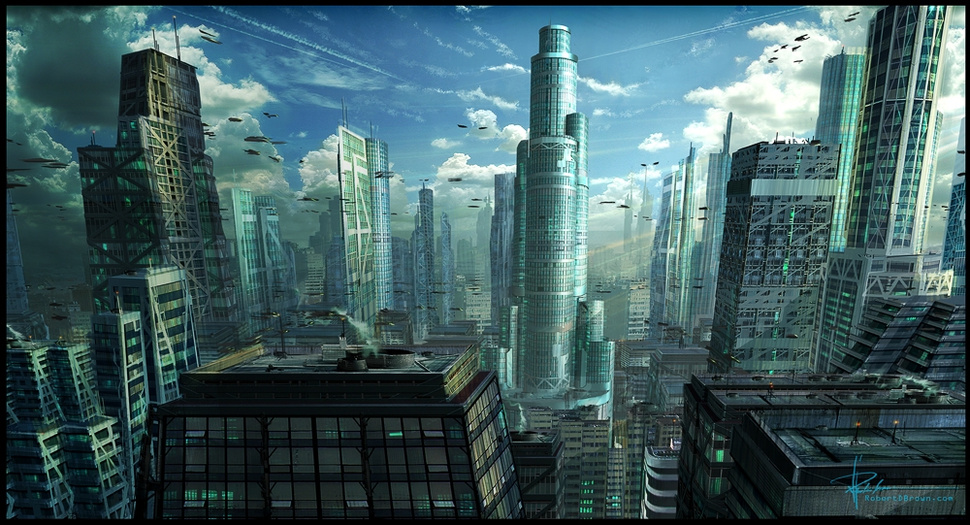
So the year is 2030. The world is reeling from the effects of widespread drought, wildfires, coastal storms, flooding, and population displacement. At the same time, a revolution is taking place in terms of computing, robotics, biomachinery, and artificial intelligence. As a result, the world’s population finds itself being pulled in two different directions – between a future of scarcity and the promise of plenty.
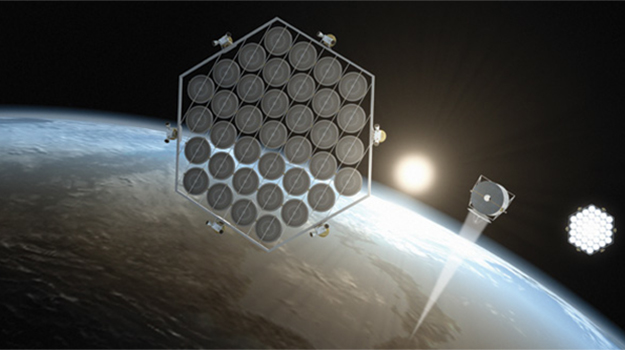 Space exploration continues as private aerospace and space agencies all race to put boots on Mars, a settlement on the Moon, and lay claim to the resources of the Solar System. India, China, the US, the EU, Russia, Argentina, Brazil, and Iran are all taking part now – using robotic probes and rovers to telexplore the System and prospect asteroids. Humanity’s future as an interplanetary species seems all but guaranteed at this point.
Meanwhile, a new global balance of power is shaping up. While the US and the EU struggle with food and fuel shortages, Russia remains firmly in the grips of quasi-fascist interests, having spurned the idea of globalization and amicable relations with NATO and the EU in favor of its Collective Security Treaty, which in recent years has expanded to include Iran, Afghanistan and Pakistan.
 Meanwhile, China is going through a period of transition. After the fall of Communism in 2023, the Chinese state is lurching between the forces of reform and ultra-nationalism, and no one is sure which side it will fall on. The economy has largely recovered, but the divide between rich and poor is all too apparent. And given the sense of listless frustration and angst, there is fear that a skilled politician could exploit it all too well.
It’s an era of uncertainty, high hopes and renewed Cold War.
The MacGuffin:
The central item of the story is a cybervirus known as Baoying, a quantum-decryption algorithm that was designed by Unit 61398 in the early 2020’s to take down America’s quantum networks in the event of open war. When the Party fell from power, the Unit was dissolved and the virus itself was destroyed. However, rumors persisted that one or more copies still exist…
 Notable Characters:
For this ensemble to work, it had to represent a good cross-section of the world that will be, with all its national, social and economic boundaries represented. And so I came up with the following people, individuals who find themselves on different sides of what’s right, and are all their own mix of good, bad, and ambiguous.
William Harding: A privileged high school senior with an big of a drug problem who lives in Port Coquitlam, just outside of the Pacific Northwest megalopolis of Cascadia. Like many people his age, he carries all his personal computing in the form of implants. However, a kidnapping and a close brush with death suddenly expand his worldview. Being at the mercy of others and deprived of his hardware, he realizes that his lifestyle have shielded him from the real world.
Amy Dixon: A young refugee who has moved to Cascadia from the American South. Her socioeconomic status places her and her family at the fringes of society, and she is determined to change their fortunes by plying her talents and being the first in her family to get a comprehensive education.
 Fernie Dixon: Amy’s brother, a twenty-something year-old man who lives away from her and claims to be a software developer. In reality, he is a member of the local Aryan Brotherhood, one of many gangs that run rampant in the outlying districts of the city. Not a true believer like his “brothers”, he seeks money and power so he can give his sister the opportunities he knows she deserves.
Shen Zhou: A former Lieutenant in the People’s Liberation Army and member of Unit 61398 during the Cyberwars of the late teens. After the fall of Communism, he did not ingratiate himself to the new government and was accused of spying for foreign interests. As result, he left the country to pursue his own agenda, which places him in the cross hairs of both the new regime and western governments.
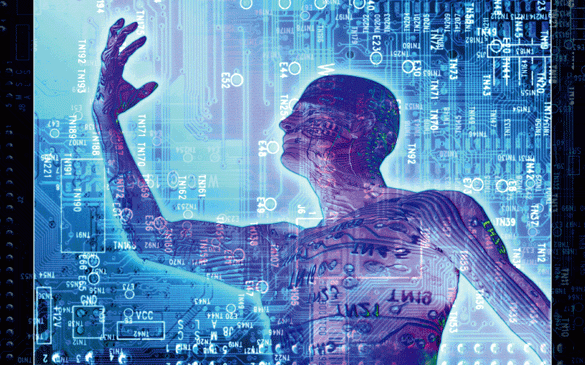 Arthur Banks: A major industrialist and part-owner of Harding Enterprises, a high-tech multinational that specializes in quantum computing and the development of artificial intelligence. For years, Banks and his associates have been working on a project known as QuaSI – a Quantum-based Sentient Intelligence that would revolutionize the world and usher in the Technological Singularity.
Rhianna Sanchez: Commander of Joint Task Force 2, an elite unit attached to National Security Agency’s Cyberwarfare Division. For years, she and her task force have been charged with locating terror cells that are engaged in private cyberwarfare with the US and its allies. And Shen Zhou, a suspected terrorist with many troubling connections, gets on their radar after a mysterious kidnapping and high-profile cyberintrusion coincide.
And that about covers the particulars. Naturally, there are a lot of other details, but I haven’t got all day and neither do you fine folks 😉 In any case, the idea is in the queue and its getting updated regularly. But I don’t plan to have it finished until I’ve polished off Oscar Mike, Arrivals, and a bunch of other projects first!

 The Optionally Piloted Black Hawk (OPBH) operates under Sikorsky’s Manned/Unmanned Resupply Aerial Lifter (MURAL) program, which couples the company’s advanced Matrix aviation software with its man-portable Ground Control Station (GCS) technology. Matrix, introduced a year ago, gives rotary and fixed-wing vertical take-off and landing (VTOL) aircraft a high level of system intelligence to complete missions with little human oversight.
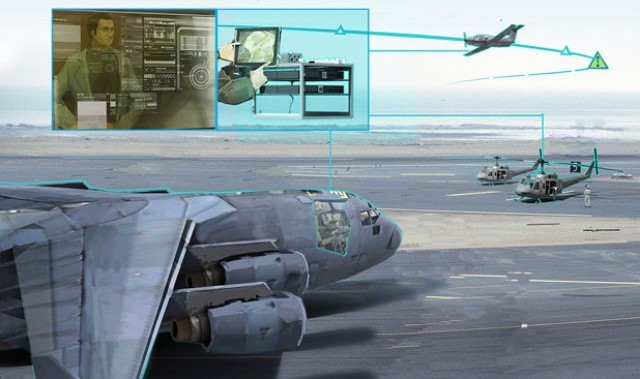 The Optionally Piloted Black Hawk fits into the larger trend of the military finding technological ways of reducing troop numbers. While it can be controlled from a ground control station, it can also make crucial flying decisions without any human input, relying solely on its ‘Matrix’ proprietary artificial intelligence technology. Under the guidance of these systems, it can fly a fully autonomous cargo mission and can operate both ways: unmanned or piloted by a human.
 Military aircraft have grown increasingly complex over the past few decades, and automated systems have also evolved to the point that some aircraft can’t be flown without them. However, the complex controls and interfaces require intensive training to master and can still overwhelm even experienced flight crews in emergency situations. In addition, many aircraft, especially older ones, require large crews to handle the workload.
 DARPA says that it wants ALIAS to not only be capable of executing a complete mission from takeoff to landing, but also handle emergencies. It would do this through the use of autonomous capabilities that can be programmed for particular missions, as well as constantly monitoring the aircraft’s systems. But according to DARPA, the development of the ALIAS system will require advances in three key areas.




















 Stories by Williams